mirror of
https://github.com/huggingface/diffusers.git
synced 2026-01-29 23:15:00 +08:00

400 lines
18 KiB
Markdown
400 lines
18 KiB
Markdown
<!--Copyright 2025 The HuggingFace Team. All rights reserved.
|
|
|
|
Licensed under the Apache License, Version 2.0 (the "License"); you may not use this file except in compliance with
|
|
the License. You may obtain a copy of the License at
|
|
|
|
http://www.apache.org/licenses/LICENSE-2.0
|
|
|
|
Unless required by applicable law or agreed to in writing, software distributed under the License is distributed on
|
|
an "AS IS" BASIS, WITHOUT WARRANTIES OR CONDITIONS OF ANY KIND, either express or implied. See the License for the
|
|
specific language governing permissions and limitations under the License.
|
|
-->
|
|
|
|
[[open-in-colab]]
|
|
|
|
|
|
# Diffusion 모델을 학습하기
|
|
|
|
Unconditional 이미지 생성은 학습에 사용된 데이터셋과 유사한 이미지를 생성하는 diffusion 모델에서 인기 있는 어플리케이션입니다. 일반적으로, 가장 좋은 결과는 특정 데이터셋에 사전 훈련된 모델을 파인튜닝하는 것으로 얻을 수 있습니다. 이 [허브](https://huggingface.co/search/full-text?q=unconditional-image-generation&type=model)에서 이러한 많은 체크포인트를 찾을 수 있지만, 만약 마음에 드는 체크포인트를 찾지 못했다면, 언제든지 스스로 학습할 수 있습니다!
|
|
|
|
이 튜토리얼은 나만의 🦋 나비 🦋를 생성하기 위해 [Smithsonian Butterflies](https://huggingface.co/datasets/huggan/smithsonian_butterflies_subset) 데이터셋의 하위 집합에서 [`UNet2DModel`] 모델을 학습하는 방법을 가르쳐줄 것입니다.
|
|
|
|
> [!TIP]
|
|
> 💡 이 학습 튜토리얼은 [Training with 🧨 Diffusers](https://colab.research.google.com/github/huggingface/notebooks/blob/main/diffusers/training_example.ipynb) 노트북 기반으로 합니다. Diffusion 모델의 작동 방식 및 자세한 내용은 노트북을 확인하세요!
|
|
|
|
시작 전에, 🤗 Datasets을 불러오고 전처리하기 위해 데이터셋이 설치되어 있는지 다수 GPU에서 학습을 간소화하기 위해 🤗 Accelerate 가 설치되어 있는지 확인하세요. 그 후 학습 메트릭을 시각화하기 위해 [TensorBoard](https://www.tensorflow.org/tensorboard)를 또한 설치하세요. (또한 학습 추적을 위해 [Weights & Biases](https://docs.wandb.ai/)를 사용할 수 있습니다.)
|
|
|
|
```bash
|
|
!pip install diffusers[training]
|
|
```
|
|
|
|
커뮤니티에 모델을 공유할 것을 권장하며, 이를 위해서 Hugging Face 계정에 로그인을 해야 합니다. (계정이 없다면 [여기](https://hf.co/join)에서 만들 수 있습니다.) 노트북에서 로그인할 수 있으며 메시지가 표시되면 토큰을 입력할 수 있습니다.
|
|
|
|
```py
|
|
>>> from huggingface_hub import notebook_login
|
|
|
|
>>> notebook_login()
|
|
```
|
|
|
|
또는 터미널로 로그인할 수 있습니다:
|
|
|
|
```bash
|
|
hf auth login
|
|
```
|
|
|
|
모델 체크포인트가 상당히 크기 때문에 [Git-LFS](https://git-lfs.com/)에서 대용량 파일의 버전 관리를 할 수 있습니다.
|
|
|
|
```bash
|
|
!sudo apt -qq install git-lfs
|
|
!git config --global credential.helper store
|
|
```
|
|
|
|
|
|
## 학습 구성
|
|
|
|
편의를 위해 학습 파라미터들을 포함한 `TrainingConfig` 클래스를 생성합니다 (자유롭게 조정 가능):
|
|
|
|
```py
|
|
>>> from dataclasses import dataclass
|
|
|
|
|
|
>>> @dataclass
|
|
... class TrainingConfig:
|
|
... image_size = 128 # 생성되는 이미지 해상도
|
|
... train_batch_size = 16
|
|
... eval_batch_size = 16 # 평가 동안에 샘플링할 이미지 수
|
|
... num_epochs = 50
|
|
... gradient_accumulation_steps = 1
|
|
... learning_rate = 1e-4
|
|
... lr_warmup_steps = 500
|
|
... save_image_epochs = 10
|
|
... save_model_epochs = 30
|
|
... mixed_precision = "fp16" # `no`는 float32, 자동 혼합 정밀도를 위한 `fp16`
|
|
... output_dir = "ddpm-butterflies-128" # 로컬 및 HF Hub에 저장되는 모델명
|
|
|
|
... push_to_hub = True # 저장된 모델을 HF Hub에 업로드할지 여부
|
|
... hub_private_repo = None
|
|
... overwrite_output_dir = True # 노트북을 다시 실행할 때 이전 모델에 덮어씌울지
|
|
... seed = 0
|
|
|
|
|
|
>>> config = TrainingConfig()
|
|
```
|
|
|
|
|
|
## 데이터셋 불러오기
|
|
|
|
🤗 Datasets 라이브러리와 [Smithsonian Butterflies](https://huggingface.co/datasets/huggan/smithsonian_butterflies_subset) 데이터셋을 쉽게 불러올 수 있습니다.
|
|
|
|
```py
|
|
>>> from datasets import load_dataset
|
|
|
|
>>> config.dataset_name = "huggan/smithsonian_butterflies_subset"
|
|
>>> dataset = load_dataset(config.dataset_name, split="train")
|
|
```
|
|
|
|
💡[HugGan Community Event](https://huggingface.co/huggan) 에서 추가의 데이터셋을 찾거나 로컬의 [`ImageFolder`](https://huggingface.co/docs/datasets/image_dataset#imagefolder)를 만듦으로써 나만의 데이터셋을 사용할 수 있습니다. HugGan Community Event 에 가져온 데이터셋의 경우 리포지토리의 id로 `config.dataset_name` 을 설정하고, 나만의 이미지를 사용하는 경우 `imagefolder` 를 설정합니다.
|
|
|
|
🤗 Datasets은 [`~datasets.Image`] 기능을 사용해 자동으로 이미지 데이터를 디코딩하고 [`PIL.Image`](https://pillow.readthedocs.io/en/stable/reference/Image.html)로 불러옵니다. 이를 시각화 해보면:
|
|
|
|
```py
|
|
>>> import matplotlib.pyplot as plt
|
|
|
|
>>> fig, axs = plt.subplots(1, 4, figsize=(16, 4))
|
|
>>> for i, image in enumerate(dataset[:4]["image"]):
|
|
... axs[i].imshow(image)
|
|
... axs[i].set_axis_off()
|
|
>>> fig.show()
|
|
```
|
|
|
|

|
|
|
|
이미지는 모두 다른 사이즈이기 때문에, 우선 전처리가 필요합니다:
|
|
|
|
- `Resize` 는 `config.image_size` 에 정의된 이미지 사이즈로 변경합니다.
|
|
- `RandomHorizontalFlip` 은 랜덤적으로 이미지를 미러링하여 데이터셋을 보강합니다.
|
|
- `Normalize` 는 모델이 예상하는 [-1, 1] 범위로 픽셀 값을 재조정 하는데 중요합니다.
|
|
|
|
```py
|
|
>>> from torchvision import transforms
|
|
|
|
>>> preprocess = transforms.Compose(
|
|
... [
|
|
... transforms.Resize((config.image_size, config.image_size)),
|
|
... transforms.RandomHorizontalFlip(),
|
|
... transforms.ToTensor(),
|
|
... transforms.Normalize([0.5], [0.5]),
|
|
... ]
|
|
... )
|
|
```
|
|
|
|
학습 도중에 `preprocess` 함수를 적용하려면 🤗 Datasets의 [`~datasets.Dataset.set_transform`] 방법이 사용됩니다.
|
|
|
|
```py
|
|
>>> def transform(examples):
|
|
... images = [preprocess(image.convert("RGB")) for image in examples["image"]]
|
|
... return {"images": images}
|
|
|
|
|
|
>>> dataset.set_transform(transform)
|
|
```
|
|
|
|
이미지의 크기가 조정되었는지 확인하기 위해 이미지를 다시 시각화해보세요. 이제 [DataLoader](https://pytorch.org/docs/stable/data#torch.utils.data.DataLoader)에 데이터셋을 포함해 학습할 준비가 되었습니다!
|
|
|
|
```py
|
|
>>> import torch
|
|
|
|
>>> train_dataloader = torch.utils.data.DataLoader(dataset, batch_size=config.train_batch_size, shuffle=True)
|
|
```
|
|
|
|
|
|
## UNet2DModel 생성하기
|
|
|
|
🧨 Diffusers에 사전학습된 모델들은 모델 클래스에서 원하는 파라미터로 쉽게 생성할 수 있습니다. 예를 들어, [`UNet2DModel`]를 생성하려면:
|
|
|
|
```py
|
|
>>> from diffusers import UNet2DModel
|
|
|
|
>>> model = UNet2DModel(
|
|
... sample_size=config.image_size, # 타겟 이미지 해상도
|
|
... in_channels=3, # 입력 채널 수, RGB 이미지에서 3
|
|
... out_channels=3, # 출력 채널 수
|
|
... layers_per_block=2, # UNet 블럭당 몇 개의 ResNet 레이어가 사용되는지
|
|
... block_out_channels=(128, 128, 256, 256, 512, 512), # 각 UNet 블럭을 위한 출력 채널 수
|
|
... down_block_types=(
|
|
... "DownBlock2D", # 일반적인 ResNet 다운샘플링 블럭
|
|
... "DownBlock2D",
|
|
... "DownBlock2D",
|
|
... "DownBlock2D",
|
|
... "AttnDownBlock2D", # spatial self-attention이 포함된 일반적인 ResNet 다운샘플링 블럭
|
|
... "DownBlock2D",
|
|
... ),
|
|
... up_block_types=(
|
|
... "UpBlock2D", # 일반적인 ResNet 업샘플링 블럭
|
|
... "AttnUpBlock2D", # spatial self-attention이 포함된 일반적인 ResNet 업샘플링 블럭
|
|
... "UpBlock2D",
|
|
... "UpBlock2D",
|
|
... "UpBlock2D",
|
|
... "UpBlock2D",
|
|
... ),
|
|
... )
|
|
```
|
|
|
|
샘플의 이미지 크기와 모델 출력 크기가 맞는지 빠르게 확인하기 위한 좋은 아이디어가 있습니다:
|
|
|
|
```py
|
|
>>> sample_image = dataset[0]["images"].unsqueeze(0)
|
|
>>> print("Input shape:", sample_image.shape)
|
|
Input shape: torch.Size([1, 3, 128, 128])
|
|
|
|
>>> print("Output shape:", model(sample_image, timestep=0).sample.shape)
|
|
Output shape: torch.Size([1, 3, 128, 128])
|
|
```
|
|
|
|
훌륭해요! 다음, 이미지에 약간의 노이즈를 더하기 위해 스케줄러가 필요합니다.
|
|
|
|
|
|
## 스케줄러 생성하기
|
|
|
|
스케줄러는 모델을 학습 또는 추론에 사용하는지에 따라 다르게 작동합니다. 추론시에, 스케줄러는 노이즈로부터 이미지를 생성합니다. 학습시 스케줄러는 diffusion 과정에서의 특정 포인트로부터 모델의 출력 또는 샘플을 가져와 *노이즈 스케줄* 과 *업데이트 규칙*에 따라 이미지에 노이즈를 적용합니다.
|
|
|
|
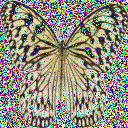
`DDPMScheduler`를 보면 이전으로부터 `sample_image`에 랜덤한 노이즈를 더하는 `add_noise` 메서드를 사용합니다:
|
|
|
|
```py
|
|
>>> import torch
|
|
>>> from PIL import Image
|
|
>>> from diffusers import DDPMScheduler
|
|
|
|
>>> noise_scheduler = DDPMScheduler(num_train_timesteps=1000)
|
|
>>> noise = torch.randn(sample_image.shape)
|
|
>>> timesteps = torch.LongTensor([50])
|
|
>>> noisy_image = noise_scheduler.add_noise(sample_image, noise, timesteps)
|
|
|
|
>>> Image.fromarray(((noisy_image.permute(0, 2, 3, 1) + 1.0) * 127.5).type(torch.uint8).numpy()[0])
|
|
```
|
|
|
|
|
|
|
|
모델의 학습 목적은 이미지에 더해진 노이즈를 예측하는 것입니다. 이 단계에서 손실은 다음과 같이 계산될 수 있습니다:
|
|
|
|
```py
|
|
>>> import torch.nn.functional as F
|
|
|
|
>>> noise_pred = model(noisy_image, timesteps).sample
|
|
>>> loss = F.mse_loss(noise_pred, noise)
|
|
```
|
|
|
|
## 모델 학습하기
|
|
|
|
지금까지, 모델 학습을 시작하기 위해 많은 부분을 갖추었으며 이제 남은 것은 모든 것을 조합하는 것입니다.
|
|
|
|
우선 옵티마이저(optimizer)와 학습률 스케줄러(learning rate scheduler)가 필요할 것입니다:
|
|
|
|
```py
|
|
>>> from diffusers.optimization import get_cosine_schedule_with_warmup
|
|
|
|
>>> optimizer = torch.optim.AdamW(model.parameters(), lr=config.learning_rate)
|
|
>>> lr_scheduler = get_cosine_schedule_with_warmup(
|
|
... optimizer=optimizer,
|
|
... num_warmup_steps=config.lr_warmup_steps,
|
|
... num_training_steps=(len(train_dataloader) * config.num_epochs),
|
|
... )
|
|
```
|
|
|
|
그 후, 모델을 평가하는 방법이 필요합니다. 평가를 위해, `DDPMPipeline`을 사용해 배치의 이미지 샘플들을 생성하고 그리드 형태로 저장할 수 있습니다:
|
|
|
|
```py
|
|
>>> from diffusers import DDPMPipeline
|
|
>>> import math
|
|
>>> import os
|
|
|
|
|
|
>>> def make_grid(images, rows, cols):
|
|
... w, h = images[0].size
|
|
... grid = Image.new("RGB", size=(cols * w, rows * h))
|
|
... for i, image in enumerate(images):
|
|
... grid.paste(image, box=(i % cols * w, i // cols * h))
|
|
... return grid
|
|
|
|
|
|
>>> def evaluate(config, epoch, pipeline):
|
|
... # 랜덤한 노이즈로 부터 이미지를 추출합니다.(이는 역전파 diffusion 과정입니다.)
|
|
... # 기본 파이프라인 출력 형태는 `List[PIL.Image]` 입니다.
|
|
... images = pipeline(
|
|
... batch_size=config.eval_batch_size,
|
|
... generator=torch.manual_seed(config.seed),
|
|
... ).images
|
|
|
|
... # 이미지들을 그리드로 만들어줍니다.
|
|
... image_grid = make_grid(images, rows=4, cols=4)
|
|
|
|
... # 이미지들을 저장합니다.
|
|
... test_dir = os.path.join(config.output_dir, "samples")
|
|
... os.makedirs(test_dir, exist_ok=True)
|
|
... image_grid.save(f"{test_dir}/{epoch:04d}.png")
|
|
```
|
|
|
|
TensorBoard에 로깅, 그래디언트 누적 및 혼합 정밀도 학습을 쉽게 수행하기 위해 🤗 Accelerate를 학습 루프에 함께 앞서 말한 모든 구성 정보들을 묶어 진행할 수 있습니다. 허브에 모델을 업로드 하기 위해 리포지토리 이름 및 정보를 가져오기 위한 함수를 작성하고 허브에 업로드할 수 있습니다.
|
|
|
|
💡아래의 학습 루프는 어렵고 길어 보일 수 있지만, 나중에 한 줄의 코드로 학습을 한다면 그만한 가치가 있을 것입니다! 만약 기다리지 못하고 이미지를 생성하고 싶다면, 아래 코드를 자유롭게 붙여넣고 작동시키면 됩니다. 🤗
|
|
|
|
```py
|
|
>>> from accelerate import Accelerator
|
|
>>> from huggingface_hub import create_repo, upload_folder
|
|
>>> from tqdm.auto import tqdm
|
|
>>> from pathlib import Path
|
|
>>> import os
|
|
|
|
|
|
>>> def train_loop(config, model, noise_scheduler, optimizer, train_dataloader, lr_scheduler):
|
|
... # Initialize accelerator and tensorboard logging
|
|
... accelerator = Accelerator(
|
|
... mixed_precision=config.mixed_precision,
|
|
... gradient_accumulation_steps=config.gradient_accumulation_steps,
|
|
... log_with="tensorboard",
|
|
... project_dir=os.path.join(config.output_dir, "logs"),
|
|
... )
|
|
... if accelerator.is_main_process:
|
|
... if config.output_dir is not None:
|
|
... os.makedirs(config.output_dir, exist_ok=True)
|
|
... if config.push_to_hub:
|
|
... repo_id = create_repo(
|
|
... repo_id=config.hub_model_id or Path(config.output_dir).name, exist_ok=True
|
|
... ).repo_id
|
|
... accelerator.init_trackers("train_example")
|
|
|
|
... # 모든 것이 준비되었습니다.
|
|
... # 기억해야 할 특정한 순서는 없으며 준비한 방법에 제공한 것과 동일한 순서로 객체의 압축을 풀면 됩니다.
|
|
... model, optimizer, train_dataloader, lr_scheduler = accelerator.prepare(
|
|
... model, optimizer, train_dataloader, lr_scheduler
|
|
... )
|
|
|
|
... global_step = 0
|
|
|
|
... # 이제 모델을 학습합니다.
|
|
... for epoch in range(config.num_epochs):
|
|
... progress_bar = tqdm(total=len(train_dataloader), disable=not accelerator.is_local_main_process)
|
|
... progress_bar.set_description(f"Epoch {epoch}")
|
|
|
|
... for step, batch in enumerate(train_dataloader):
|
|
... clean_images = batch["images"]
|
|
... # 이미지에 더할 노이즈를 샘플링합니다.
|
|
... noise = torch.randn(clean_images.shape, device=clean_images.device)
|
|
... bs = clean_images.shape[0]
|
|
|
|
... # 각 이미지를 위한 랜덤한 타임스텝(timestep)을 샘플링합니다.
|
|
... timesteps = torch.randint(
|
|
... 0, noise_scheduler.config.num_train_timesteps, (bs,), device=clean_images.device,
|
|
... dtype=torch.int64
|
|
... )
|
|
|
|
... # 각 타임스텝의 노이즈 크기에 따라 깨끗한 이미지에 노이즈를 추가합니다.
|
|
... # (이는 foward diffusion 과정입니다.)
|
|
... noisy_images = noise_scheduler.add_noise(clean_images, noise, timesteps)
|
|
|
|
... with accelerator.accumulate(model):
|
|
... # 노이즈를 반복적으로 예측합니다.
|
|
... noise_pred = model(noisy_images, timesteps, return_dict=False)[0]
|
|
... loss = F.mse_loss(noise_pred, noise)
|
|
... accelerator.backward(loss)
|
|
|
|
... accelerator.clip_grad_norm_(model.parameters(), 1.0)
|
|
... optimizer.step()
|
|
... lr_scheduler.step()
|
|
... optimizer.zero_grad()
|
|
|
|
... progress_bar.update(1)
|
|
... logs = {"loss": loss.detach().item(), "lr": lr_scheduler.get_last_lr()[0], "step": global_step}
|
|
... progress_bar.set_postfix(**logs)
|
|
... accelerator.log(logs, step=global_step)
|
|
... global_step += 1
|
|
|
|
... # 각 에포크가 끝난 후 evaluate()와 몇 가지 데모 이미지를 선택적으로 샘플링하고 모델을 저장합니다.
|
|
... if accelerator.is_main_process:
|
|
... pipeline = DDPMPipeline(unet=accelerator.unwrap_model(model), scheduler=noise_scheduler)
|
|
|
|
... if (epoch + 1) % config.save_image_epochs == 0 or epoch == config.num_epochs - 1:
|
|
... evaluate(config, epoch, pipeline)
|
|
|
|
... if (epoch + 1) % config.save_model_epochs == 0 or epoch == config.num_epochs - 1:
|
|
... if config.push_to_hub:
|
|
... upload_folder(
|
|
... repo_id=repo_id,
|
|
... folder_path=config.output_dir,
|
|
... commit_message=f"Epoch {epoch}",
|
|
... ignore_patterns=["step_*", "epoch_*"],
|
|
... )
|
|
... else:
|
|
... pipeline.save_pretrained(config.output_dir)
|
|
```
|
|
|
|
휴, 코드가 꽤 많았네요! 하지만 🤗 Accelerate의 [`~accelerate.notebook_launcher`] 함수와 학습을 시작할 준비가 되었습니다. 함수에 학습 루프, 모든 학습 인수, 학습에 사용할 프로세스 수(사용 가능한 GPU의 수를 변경할 수 있음)를 전달합니다:
|
|
|
|
```py
|
|
>>> from accelerate import notebook_launcher
|
|
|
|
>>> args = (config, model, noise_scheduler, optimizer, train_dataloader, lr_scheduler)
|
|
|
|
>>> notebook_launcher(train_loop, args, num_processes=1)
|
|
```
|
|
|
|
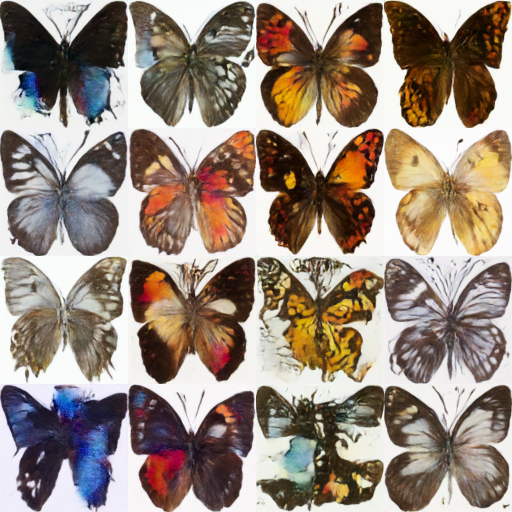
한번 학습이 완료되면, diffusion 모델로 생성된 최종 🦋이미지🦋를 확인해보길 바랍니다!
|
|
|
|
```py
|
|
>>> import glob
|
|
|
|
>>> sample_images = sorted(glob.glob(f"{config.output_dir}/samples/*.png"))
|
|
>>> Image.open(sample_images[-1])
|
|
```
|
|
|
|
|
|
|
|
## 다음 단계
|
|
|
|
Unconditional 이미지 생성은 학습될 수 있는 작업 중 하나의 예시입니다. 다른 작업과 학습 방법은 [🧨 Diffusers 학습 예시](../training/overview) 페이지에서 확인할 수 있습니다. 다음은 학습할 수 있는 몇 가지 예시입니다:
|
|
|
|
- [Textual Inversion](../training/text_inversion), 특정 시각적 개념을 학습시켜 생성된 이미지에 통합시키는 알고리즘입니다.
|
|
- [DreamBooth](../training/dreambooth), 주제에 대한 몇 가지 입력 이미지들이 주어지면 주제에 대한 개인화된 이미지를 생성하기 위한 기술입니다.
|
|
- [Guide](../training/text2image) 데이터셋에 Stable Diffusion 모델을 파인튜닝하는 방법입니다.
|
|
- [Guide](../training/lora) LoRA를 사용해 매우 큰 모델을 빠르게 파인튜닝하기 위한 메모리 효율적인 기술입니다.
|