mirror of
https://github.com/huggingface/diffusers.git
synced 2026-04-20 06:31:17 +08:00
Compare commits
369 Commits
single-fil
...
v0.32.1-pa
| Author | SHA1 | Date | |
|---|---|---|---|

|
e8aacda762 | ||
|
|
12184f4015 | ||
|
|
6e1d2da194 | ||
|
|
11b1151840 | ||
|
|
cd4d0d8ffb | ||
|
|
4b557132ce | ||
|
|
851dfa30ae | ||
|
|
ea1ba0ba53 | ||
|
|
9d27df8071 | ||
|
|
055d95543a | ||
|
|
71cc2013fe | ||
|
|
c34fc34563 | ||
|
|
5fcee4a447 | ||
|
|
76e2727b5c | ||
|
|
02c777c065 | ||
|
|
6a970a45c5 | ||
|
|
ffc0eaab6d | ||
|
|
3c2e2aa8a9 | ||
|
|
b58868e6f4 | ||
|
|
da21d590b5 | ||
|
|
7c2f0afb1c | ||
|
|
f615f00f58 | ||
|
|
6aaa0518e3 | ||
|
|
233dffdc3f | ||
|
|
be2070991f | ||
|
|
bf9a641f1a | ||
|
|
a756694bf0 | ||
|
|
d41388145e | ||
|
|
a6288a5571 | ||
|
|
7d4db57037 | ||
|
|
902008608a | ||
|
|
c8ee4af228 | ||
|
|
b64ca6c11c | ||
|
|
e12d610faa | ||
|
|
bf6eaa8aec | ||
|
|
17128c42a4 | ||
|
|
dbc1d505f0 | ||
|
|
151b74cd77 | ||
|
|
41ba8c0bf6 | ||
|
|
3191248472 | ||
|
|
648d968cfc | ||
|
|
b756ec6e80 | ||
|
|
d8825e7697 | ||
|
|
074798b299 | ||
|
|
3ee966950b | ||
|
|
9764f229d4 | ||
|
|
1826a1e7d3 | ||
|
|
0ed09a17bb | ||
|
|
2f7a417d1f | ||
|
|
4450d26b63 | ||
|
|
f781b8c30c | ||
|
|
9c0e20de61 | ||
|
|
f35a38725b | ||
|
|
f66bd3261c | ||
|
|
c4c99c3907 | ||
|
|
862a7d5038 | ||
|
|
8304adce2a | ||
|
|
b389f339ec | ||
|
|
e222246b4e | ||
|
|
83709d5a06 | ||
|
|
8eb73c872a | ||
|
|
88b015dc9f | ||
|
|
63cdf9c0ba | ||
|
|
0ac52d6f09 | ||
|
|
ba6fd6eb30 | ||
|
|
9408aa2dfc | ||
|
|
ec1c7a793f | ||
|
|
9c68c945e9 | ||
|
|
2739241ad1 | ||
|
|
1524781b88 | ||
|
|
128b96f369 | ||
|
|
e24941b2a7 | ||
|
|
f9d5a9324d | ||
|
|
ac86393487 | ||
|
|
0d96a894a7 | ||
|
|
6fb94d51cb | ||
|
|
7667cfcb41 | ||
|
|
9f00c617a0 | ||
|
|
aafed3f8dd | ||
|
|
5ed761a6f2 | ||
|
|
2f023d7b84 | ||
|
|
e9a3911b67 | ||
|
|
7186bb45f0 | ||
|
|
438bd60549 | ||
|
|
87e8157437 | ||
|
|
3f421fe09f | ||
|
|
a7d50524dd | ||
|
|
672bd49573 | ||
|
|
ea893a9ae7 | ||
|
|
5fb3a98517 | ||
|
|
aace1f412b | ||
|
|
8957324363 | ||
|
|
e68092a471 | ||
|
|
3bf5400a64 | ||
|
|
02cbe972c3 | ||
|
|
5a196e3d46 | ||
|
|
22c4f079b1 | ||
|
|
96a9097445 | ||
|
|
a5f35ee473 | ||
|
|
63243406ba | ||
|
|
6bd30ba748 | ||
|
|
cef0e3677e | ||
|
|
ec9bfa9e14 | ||
|
|
bdbaea8f64 | ||
|
|
e8b65bffa2 | ||
|
|
f2d348d904 | ||
|
|
c002724dd5 | ||
|
|
96c376a5ff | ||
|
|
8170dc368d | ||
|
|
25f3e91c81 | ||
|
|
a6a18cff5e | ||
|
|
7db9463e52 | ||
|
|
26e80e0143 | ||
|
|
914a585be8 | ||
|
|
ad40e26515 | ||
|
|
d041dd5040 | ||
|
|
0967593400 | ||
|
|
43534a8d1f | ||
|
|
65b98b5da4 | ||
|
|
49a9143479 | ||
|
|
4c4b323c1f | ||
|
|
22d3a82651 | ||
|
|
c9e4fab42c | ||
|
|
0e50401e34 | ||
|
|
6131a93b96 | ||
|
|
3cb7b8628c | ||
|
|
fa3a9100be | ||
|
|
188bca3084 | ||
|
|
cd892041e2 | ||
|
|
6394d905da | ||
|
|
18f9b99088 | ||
|
|
bf64b32652 | ||
|
|
3335e2262d | ||
|
|
65ab1052b8 | ||
|
|
40fc389c44 | ||
|
|
98d0cd5778 | ||
|
|
0d11ab26c4 | ||
|
|
243d9a4986 | ||
|
|
96220390a2 | ||
|
|
73dac0c49e | ||
|
|
04bba38725 | ||
|
|
a2d424eb2e | ||
|
|
25ddc7945b | ||
|
|
e8da75dff5 | ||
|
|
8a450c3da0 | ||
|
|
9ff72433fa | ||
|
|
c1926cef6b | ||
|
|
8421c1461b | ||
|
|
cfdeebd4a8 | ||
|
|
6a51427b6a | ||
|
|
5effcd3e64 | ||
|
|
619b9658e2 | ||
|
|
b58f67f2d5 | ||
|
|
8ac6de963c | ||
|
|
2be66e6aa0 | ||
|
|
cf258948b2 | ||
|
|
63b631f383 | ||
|
|
acf79b3487 | ||
|
|
fc72e0f261 | ||
|
|
0763a7edf4 | ||
|
|
963ffca434 | ||
|
|
30f2e9bd20 | ||
|
|
2312b27f79 | ||
|
|
6db33337a4 | ||
|
|
beb856685d | ||
|
|
a9d3f6c359 | ||
|
|
cd344393e2 | ||
|
|
c44fba8899 | ||
|
|
922c5f5c3c | ||
|
|
8d386f7990 | ||
|
|
827b6c25f9 | ||
|
|
784b351f32 | ||
|
|
c96bfa5c80 | ||
|
|
6b288ec44d | ||
|
|
fdec8bd675 | ||
|
|
069186fac5 | ||
|
|
69c83d6eed | ||
|
|
e44fc75acb | ||
|
|
e47cc1fc1a | ||
|
|
75bd1e83cb | ||
|
|
8d477daed5 | ||
|
|
ad5ecd1251 | ||
|
|
074e12358b | ||
|
|
047bf49291 | ||
|
|
c4b5d2ff6b | ||
|
|
7ac6e286ee | ||
|
|
b5fd6f13f5 | ||
|
|
64b3e0f539 | ||
|
|
2e86a3f023 | ||
|
|
cd6ca9df29 | ||
|
|
e564abe292 | ||
|
|
3139d39fa7 | ||
|
|
12358622e5 | ||
|
|
805aa93789 | ||
|
|
f6f7afa1d7 | ||
|
|
637e2302ac | ||
|
|
99c0483b67 | ||
|
|
cc7d88f247 | ||
|
|
ea40933f36 | ||
|
|
0583a8d12a | ||
|
|
7d0b9c4d4e | ||
|
|
acf479bded | ||
|
|
03bf77c4af | ||
|
|
3b2830618d | ||
|
|
c3c94fe71b | ||
|
|
365a938884 | ||
|
|
345907f32d | ||
|
|
07d0fbf3ec | ||
|
|
1d2204d3a0 | ||
|
|
d38c50c8dd | ||
|
|
e255920719 | ||
|
|
40ab1c03f3 | ||
|
|
5c94937dc7 | ||
|
|
d74483c47a | ||
|
|
1dbd26fa23 | ||
|
|
dac623b59f | ||
|
|
8d6dc2be5d | ||
|
|
d720b2132e | ||
|
|
9cc96a64f1 | ||
|
|
5b972fbd6a | ||
|
|
0be52c07d6 | ||
|
|
1b392544c7 | ||
|
|
5588725e8e | ||
|
|
ded3db164b | ||
|
|
76b7d86a9a | ||
|
|
e2b3c248d8 | ||
|
|
a03bf4a531 | ||
|
|
08ac5cbc7f | ||
|
|
3f329a426a | ||
|
|
a3cc641f78 | ||
|
|
13e8fdecda | ||
|
|
c10f875ff0 | ||
|
|
a98a839de7 | ||
|
|
3deed729e6 | ||
|
|
7ffbc2525f | ||
|
|
f55f1f7ee5 | ||
|
|
9dcac83057 | ||
|
|
c75431843f | ||
|
|
d2e5cb3c10 | ||
|
|
41e4779d98 | ||
|
|
ff182ad669 | ||
|
|
4adf6affbb | ||
|
|
8ce37ab055 | ||
|
|
09b8aebd67 | ||
|
|
c1d4a0dded | ||
|
|
9a92b8177c | ||
|
|
0d1d267b12 | ||
|
|
c5376c5695 | ||
|
|
743a5697f2 | ||
|
|
db5b6a9630 | ||
|
|
493aa74312 | ||
|
|
3b5b1c5698 | ||
|
|
fddbab7993 | ||
|
|
298ab6eb01 | ||
|
|
73b59f5203 | ||
|
|
52d4449810 | ||
|
|
df073ba137 | ||
|
|
94643fac8a | ||
|
|
435f6b7e47 | ||
|
|
1d1e1a2888 | ||
|
|
24c7d578ba | ||
|
|
bfa0aa4ff2 | ||
|
|
ab1b7b2080 | ||
|
|
9366c8f84b | ||
|
|
e45c25d03a | ||
|
|
76c00c7236 | ||
|
|
0d9d98fe5f | ||
|
|
60ffa84253 | ||
|
|
0f079b932d | ||
|
|
b0ffe92230 | ||
|
|
1b64772b79 | ||
|
|
2d280f173f | ||
|
|
63a0c9e5f7 | ||
|
|
e2d037bbf1 | ||
|
|
bcd61fd349 | ||
|
|
d27ecc5960 | ||
|
|
6b915672f4 | ||
|
|
b821f006d0 | ||
|
|
24281f8036 | ||
|
|
2a1d2f6218 | ||
|
|
56d6d21bae | ||
|
|
89565e9171 | ||
|
|
5d3e7bdaaa | ||
|
|
2541d141d5 | ||
|
|
5704376d03 | ||
|
|
9a7f824645 | ||
|
|
d9029f2c59 | ||
|
|
d204e53291 | ||
|
|
8cabd4a0db | ||
|
|
5783286d2b | ||
|
|
ee4ab23892 | ||
|
|
cef4f65cf7 | ||
|
|
29a2c5d1ca | ||
|
|
0d935df67d | ||
|
|
3e9a28a8a1 | ||
|
|
2ffbb88f1c | ||
|
|
d40da7b68a | ||
|
|
a3e8d3f7de | ||
|
|
fff4be8e23 | ||
|
|
355bb641e3 | ||
|
|
92d2baf643 | ||
|
|
dccf39f01e | ||
|
|
99d87474fd | ||
|
|
79b118e863 | ||
|
|
9d0616189e | ||
|
|
5f0df17703 | ||
|
|
957e5cabff | ||
|
|
3e4c5707c3 | ||
|
|
1bcd19e4d0 | ||
|
|
22ed39f571 | ||
|
|
56c21150d8 | ||
|
|
5956b68a69 | ||
|
|
8d81564b27 | ||
|
|
68d16f7806 | ||
|
|
86bcbc389e | ||
|
|
6a5f06488c | ||
|
|
c7a6d77b5f | ||
|
|
0f8fb75c7b | ||
|
|
3033f08201 | ||
|
|
164ec9f423 | ||
|
|
38a3e4df92 | ||
|
|
e16fd93d0a | ||
|
|
07bd2fabb6 | ||
|
|
af28ae2d5b | ||
|
|
31058cdaef | ||
|
|
ec9e5264c0 | ||
|
|
acd6d2c42f | ||
|
|
86bd991ee5 | ||
|
|
02eeb8e77e | ||
|
|
66eef9a6dc | ||
|
|
63a5c8742a | ||
|
|
1287822973 | ||
|
|
a80f689200 | ||
|
|
2cb383f591 | ||
|
|
31010ecc45 | ||
|
|
3159e60d59 | ||
|
|
99f608218c | ||
|
|
7f323f0f31 | ||
|
|
61d37640ad | ||
|
|
33fafe3d14 | ||
|
|
c4a8979f30 | ||
|
|
f9fd511466 | ||
|
|
8e7d6c03a3 | ||
|
|
b28675c605 | ||
|
|
bd4df2856a | ||
|
|
11542431a5 | ||
|
|
81cf3b2f15 | ||
|
|
534848c370 | ||
|
|
2daedc0ad3 | ||
|
|
665c6b47a2 | ||
|
|
066ea374c8 | ||
|
|
9cd37557d5 | ||
|
|
1c6ede9371 | ||
|
|
aa3c46d99a | ||
|
|
c76e88405c | ||
|
|
d9c969172d | ||
|
|
065ce07ac3 | ||
|
|
6ca5a58e43 | ||
|
|
b52684c3ed | ||
|
|
bac8a2412d | ||
|
|
28f9d84549 | ||
|
|
2b5bc5be0b | ||
|
|
bab17789b5 | ||
|
|
19547a5734 | ||
|
|
3e69e241f7 | ||
|
|
65f9439b56 | ||
|
|
00f5b41862 | ||
|
|
14f6464bef | ||
|
|
ba5af5aebb |
1
.github/workflows/benchmark.yml
vendored
1
.github/workflows/benchmark.yml
vendored
@@ -7,6 +7,7 @@ on:
|
||||
|
||||
env:
|
||||
DIFFUSERS_IS_CI: yes
|
||||
HF_HUB_ENABLE_HF_TRANSFER: 1
|
||||
HF_HOME: /mnt/cache
|
||||
OMP_NUM_THREADS: 8
|
||||
MKL_NUM_THREADS: 8
|
||||
|
||||
@@ -25,7 +25,7 @@ jobs:
|
||||
env:
|
||||
SLACK_WEBHOOK_URL: ${{ secrets.SLACK_WEBHOOK_URL_COMMUNITY_MIRROR }}
|
||||
|
||||
runs-on: ubuntu-latest
|
||||
runs-on: ubuntu-22.04
|
||||
steps:
|
||||
# Checkout to correct ref
|
||||
# If workflow dispatch
|
||||
|
||||
125
.github/workflows/nightly_tests.yml
vendored
125
.github/workflows/nightly_tests.yml
vendored
@@ -180,14 +180,71 @@ jobs:
|
||||
pip install slack_sdk tabulate
|
||||
python utils/log_reports.py >> $GITHUB_STEP_SUMMARY
|
||||
|
||||
run_big_gpu_torch_tests:
|
||||
name: Torch tests on big GPU
|
||||
strategy:
|
||||
fail-fast: false
|
||||
max-parallel: 2
|
||||
runs-on:
|
||||
group: aws-g6e-xlarge-plus
|
||||
container:
|
||||
image: diffusers/diffusers-pytorch-cuda
|
||||
options: --shm-size "16gb" --ipc host --gpus 0
|
||||
steps:
|
||||
- name: Checkout diffusers
|
||||
uses: actions/checkout@v3
|
||||
with:
|
||||
fetch-depth: 2
|
||||
- name: NVIDIA-SMI
|
||||
run: nvidia-smi
|
||||
- name: Install dependencies
|
||||
run: |
|
||||
python -m venv /opt/venv && export PATH="/opt/venv/bin:$PATH"
|
||||
python -m uv pip install -e [quality,test]
|
||||
python -m uv pip install peft@git+https://github.com/huggingface/peft.git
|
||||
pip uninstall accelerate -y && python -m uv pip install -U accelerate@git+https://github.com/huggingface/accelerate.git
|
||||
python -m uv pip install pytest-reportlog
|
||||
- name: Environment
|
||||
run: |
|
||||
python utils/print_env.py
|
||||
- name: Selected Torch CUDA Test on big GPU
|
||||
env:
|
||||
HF_TOKEN: ${{ secrets.DIFFUSERS_HF_HUB_READ_TOKEN }}
|
||||
# https://pytorch.org/docs/stable/notes/randomness.html#avoiding-nondeterministic-algorithms
|
||||
CUBLAS_WORKSPACE_CONFIG: :16:8
|
||||
BIG_GPU_MEMORY: 40
|
||||
run: |
|
||||
python -m pytest -n 1 --max-worker-restart=0 --dist=loadfile \
|
||||
-m "big_gpu_with_torch_cuda" \
|
||||
--make-reports=tests_big_gpu_torch_cuda \
|
||||
--report-log=tests_big_gpu_torch_cuda.log \
|
||||
tests/
|
||||
- name: Failure short reports
|
||||
if: ${{ failure() }}
|
||||
run: |
|
||||
cat reports/tests_big_gpu_torch_cuda_stats.txt
|
||||
cat reports/tests_big_gpu_torch_cuda_failures_short.txt
|
||||
- name: Test suite reports artifacts
|
||||
if: ${{ always() }}
|
||||
uses: actions/upload-artifact@v4
|
||||
with:
|
||||
name: torch_cuda_big_gpu_test_reports
|
||||
path: reports
|
||||
- name: Generate Report and Notify Channel
|
||||
if: always()
|
||||
run: |
|
||||
pip install slack_sdk tabulate
|
||||
python utils/log_reports.py >> $GITHUB_STEP_SUMMARY
|
||||
|
||||
run_flax_tpu_tests:
|
||||
name: Nightly Flax TPU Tests
|
||||
runs-on: docker-tpu
|
||||
runs-on:
|
||||
group: gcp-ct5lp-hightpu-8t
|
||||
if: github.event_name == 'schedule'
|
||||
|
||||
container:
|
||||
image: diffusers/diffusers-flax-tpu
|
||||
options: --shm-size "16gb" --ipc host -v /mnt/hf_cache:/mnt/cache/ --privileged
|
||||
options: --shm-size "16gb" --ipc host --privileged ${{ vars.V5_LITEPOD_8_ENV}} -v /mnt/hf_cache:/mnt/hf_cache
|
||||
defaults:
|
||||
run:
|
||||
shell: bash
|
||||
@@ -291,6 +348,68 @@ jobs:
|
||||
pip install slack_sdk tabulate
|
||||
python utils/log_reports.py >> $GITHUB_STEP_SUMMARY
|
||||
|
||||
run_nightly_quantization_tests:
|
||||
name: Torch quantization nightly tests
|
||||
strategy:
|
||||
fail-fast: false
|
||||
max-parallel: 2
|
||||
matrix:
|
||||
config:
|
||||
- backend: "bitsandbytes"
|
||||
test_location: "bnb"
|
||||
- backend: "gguf"
|
||||
test_location: "gguf"
|
||||
- backend: "torchao"
|
||||
test_location: "torchao"
|
||||
runs-on:
|
||||
group: aws-g6e-xlarge-plus
|
||||
container:
|
||||
image: diffusers/diffusers-pytorch-cuda
|
||||
options: --shm-size "20gb" --ipc host --gpus 0
|
||||
steps:
|
||||
- name: Checkout diffusers
|
||||
uses: actions/checkout@v3
|
||||
with:
|
||||
fetch-depth: 2
|
||||
- name: NVIDIA-SMI
|
||||
run: nvidia-smi
|
||||
- name: Install dependencies
|
||||
run: |
|
||||
python -m venv /opt/venv && export PATH="/opt/venv/bin:$PATH"
|
||||
python -m uv pip install -e [quality,test]
|
||||
python -m uv pip install -U ${{ matrix.config.backend }}
|
||||
python -m uv pip install pytest-reportlog
|
||||
- name: Environment
|
||||
run: |
|
||||
python utils/print_env.py
|
||||
- name: ${{ matrix.config.backend }} quantization tests on GPU
|
||||
env:
|
||||
HF_TOKEN: ${{ secrets.DIFFUSERS_HF_HUB_READ_TOKEN }}
|
||||
# https://pytorch.org/docs/stable/notes/randomness.html#avoiding-nondeterministic-algorithms
|
||||
CUBLAS_WORKSPACE_CONFIG: :16:8
|
||||
BIG_GPU_MEMORY: 40
|
||||
run: |
|
||||
python -m pytest -n 1 --max-worker-restart=0 --dist=loadfile \
|
||||
--make-reports=tests_${{ matrix.config.backend }}_torch_cuda \
|
||||
--report-log=tests_${{ matrix.config.backend }}_torch_cuda.log \
|
||||
tests/quantization/${{ matrix.config.test_location }}
|
||||
- name: Failure short reports
|
||||
if: ${{ failure() }}
|
||||
run: |
|
||||
cat reports/tests_${{ matrix.config.backend }}_torch_cuda_stats.txt
|
||||
cat reports/tests_${{ matrix.config.backend }}_torch_cuda_failures_short.txt
|
||||
- name: Test suite reports artifacts
|
||||
if: ${{ always() }}
|
||||
uses: actions/upload-artifact@v4
|
||||
with:
|
||||
name: torch_cuda_${{ matrix.config.backend }}_reports
|
||||
path: reports
|
||||
- name: Generate Report and Notify Channel
|
||||
if: always()
|
||||
run: |
|
||||
pip install slack_sdk tabulate
|
||||
python utils/log_reports.py >> $GITHUB_STEP_SUMMARY
|
||||
|
||||
# M1 runner currently not well supported
|
||||
# TODO: (Dhruv) add these back when we setup better testing for Apple Silicon
|
||||
# run_nightly_tests_apple_m1:
|
||||
@@ -405,4 +524,4 @@ jobs:
|
||||
# if: always()
|
||||
# run: |
|
||||
# pip install slack_sdk tabulate
|
||||
# python utils/log_reports.py >> $GITHUB_STEP_SUMMARY
|
||||
# python utils/log_reports.py >> $GITHUB_STEP_SUMMARY
|
||||
|
||||
@@ -7,7 +7,7 @@ on:
|
||||
|
||||
jobs:
|
||||
build:
|
||||
runs-on: ubuntu-latest
|
||||
runs-on: ubuntu-22.04
|
||||
|
||||
steps:
|
||||
- uses: actions/checkout@v3
|
||||
|
||||
2
.github/workflows/pr_dependency_test.yml
vendored
2
.github/workflows/pr_dependency_test.yml
vendored
@@ -16,7 +16,7 @@ concurrency:
|
||||
|
||||
jobs:
|
||||
check_dependencies:
|
||||
runs-on: ubuntu-latest
|
||||
runs-on: ubuntu-22.04
|
||||
steps:
|
||||
- uses: actions/checkout@v3
|
||||
- name: Set up Python
|
||||
|
||||
@@ -16,7 +16,7 @@ concurrency:
|
||||
|
||||
jobs:
|
||||
check_flax_dependencies:
|
||||
runs-on: ubuntu-latest
|
||||
runs-on: ubuntu-22.04
|
||||
steps:
|
||||
- uses: actions/checkout@v3
|
||||
- name: Set up Python
|
||||
|
||||
132
.github/workflows/pr_test_peft_backend.yml
vendored
132
.github/workflows/pr_test_peft_backend.yml
vendored
@@ -1,132 +0,0 @@
|
||||
name: Fast tests for PRs - PEFT backend
|
||||
|
||||
on:
|
||||
pull_request:
|
||||
branches:
|
||||
- main
|
||||
paths:
|
||||
- "src/diffusers/**.py"
|
||||
- "tests/**.py"
|
||||
|
||||
concurrency:
|
||||
group: ${{ github.workflow }}-${{ github.head_ref || github.run_id }}
|
||||
cancel-in-progress: true
|
||||
|
||||
env:
|
||||
DIFFUSERS_IS_CI: yes
|
||||
OMP_NUM_THREADS: 4
|
||||
MKL_NUM_THREADS: 4
|
||||
PYTEST_TIMEOUT: 60
|
||||
|
||||
jobs:
|
||||
check_code_quality:
|
||||
runs-on: ubuntu-latest
|
||||
steps:
|
||||
- uses: actions/checkout@v3
|
||||
- name: Set up Python
|
||||
uses: actions/setup-python@v4
|
||||
with:
|
||||
python-version: "3.8"
|
||||
- name: Install dependencies
|
||||
run: |
|
||||
python -m pip install --upgrade pip
|
||||
pip install .[quality]
|
||||
- name: Check quality
|
||||
run: make quality
|
||||
- name: Check if failure
|
||||
if: ${{ failure() }}
|
||||
run: |
|
||||
echo "Quality check failed. Please ensure the right dependency versions are installed with 'pip install -e .[quality]' and run 'make style && make quality'" >> $GITHUB_STEP_SUMMARY
|
||||
|
||||
check_repository_consistency:
|
||||
needs: check_code_quality
|
||||
runs-on: ubuntu-latest
|
||||
steps:
|
||||
- uses: actions/checkout@v3
|
||||
- name: Set up Python
|
||||
uses: actions/setup-python@v4
|
||||
with:
|
||||
python-version: "3.8"
|
||||
- name: Install dependencies
|
||||
run: |
|
||||
python -m pip install --upgrade pip
|
||||
pip install .[quality]
|
||||
- name: Check repo consistency
|
||||
run: |
|
||||
python utils/check_copies.py
|
||||
python utils/check_dummies.py
|
||||
make deps_table_check_updated
|
||||
- name: Check if failure
|
||||
if: ${{ failure() }}
|
||||
run: |
|
||||
echo "Repo consistency check failed. Please ensure the right dependency versions are installed with 'pip install -e .[quality]' and run 'make fix-copies'" >> $GITHUB_STEP_SUMMARY
|
||||
|
||||
run_fast_tests:
|
||||
needs: [check_code_quality, check_repository_consistency]
|
||||
strategy:
|
||||
fail-fast: false
|
||||
matrix:
|
||||
lib-versions: ["main", "latest"]
|
||||
|
||||
|
||||
name: LoRA - ${{ matrix.lib-versions }}
|
||||
|
||||
runs-on:
|
||||
group: aws-general-8-plus
|
||||
|
||||
container:
|
||||
image: diffusers/diffusers-pytorch-cpu
|
||||
options: --shm-size "16gb" --ipc host -v /mnt/hf_cache:/mnt/cache/
|
||||
|
||||
defaults:
|
||||
run:
|
||||
shell: bash
|
||||
|
||||
steps:
|
||||
- name: Checkout diffusers
|
||||
uses: actions/checkout@v3
|
||||
with:
|
||||
fetch-depth: 2
|
||||
|
||||
- name: Install dependencies
|
||||
run: |
|
||||
python -m venv /opt/venv && export PATH="/opt/venv/bin:$PATH"
|
||||
python -m uv pip install -e [quality,test]
|
||||
if [ "${{ matrix.lib-versions }}" == "main" ]; then
|
||||
python -m pip install -U peft@git+https://github.com/huggingface/peft.git
|
||||
python -m uv pip install -U transformers@git+https://github.com/huggingface/transformers.git
|
||||
pip uninstall accelerate -y && python -m uv pip install -U accelerate@git+https://github.com/huggingface/accelerate.git
|
||||
else
|
||||
python -m uv pip install -U peft transformers accelerate
|
||||
fi
|
||||
|
||||
- name: Environment
|
||||
run: |
|
||||
python -m venv /opt/venv && export PATH="/opt/venv/bin:$PATH"
|
||||
python utils/print_env.py
|
||||
|
||||
- name: Run fast PyTorch LoRA CPU tests with PEFT backend
|
||||
run: |
|
||||
python -m venv /opt/venv && export PATH="/opt/venv/bin:$PATH"
|
||||
python -m pytest -n 4 --max-worker-restart=0 --dist=loadfile \
|
||||
-s -v \
|
||||
--make-reports=tests_${{ matrix.lib-versions }} \
|
||||
tests/lora/
|
||||
python -m pytest -n 4 --max-worker-restart=0 --dist=loadfile \
|
||||
-s -v \
|
||||
--make-reports=tests_models_lora_${{ matrix.lib-versions }} \
|
||||
tests/models/ -k "lora"
|
||||
|
||||
|
||||
- name: Failure short reports
|
||||
if: ${{ failure() }}
|
||||
run: |
|
||||
cat reports/tests_${{ matrix.lib-versions }}_failures_short.txt
|
||||
cat reports/tests_models_lora_${{ matrix.lib-versions }}_failures_short.txt
|
||||
|
||||
- name: Test suite reports artifacts
|
||||
if: ${{ always() }}
|
||||
uses: actions/upload-artifact@v4
|
||||
with:
|
||||
name: pr_${{ matrix.lib-versions }}_test_reports
|
||||
path: reports
|
||||
69
.github/workflows/pr_tests.yml
vendored
69
.github/workflows/pr_tests.yml
vendored
@@ -22,13 +22,14 @@ concurrency:
|
||||
|
||||
env:
|
||||
DIFFUSERS_IS_CI: yes
|
||||
HF_HUB_ENABLE_HF_TRANSFER: 1
|
||||
OMP_NUM_THREADS: 4
|
||||
MKL_NUM_THREADS: 4
|
||||
PYTEST_TIMEOUT: 60
|
||||
|
||||
jobs:
|
||||
check_code_quality:
|
||||
runs-on: ubuntu-latest
|
||||
runs-on: ubuntu-22.04
|
||||
steps:
|
||||
- uses: actions/checkout@v3
|
||||
- name: Set up Python
|
||||
@@ -48,7 +49,7 @@ jobs:
|
||||
|
||||
check_repository_consistency:
|
||||
needs: check_code_quality
|
||||
runs-on: ubuntu-latest
|
||||
runs-on: ubuntu-22.04
|
||||
steps:
|
||||
- uses: actions/checkout@v3
|
||||
- name: Set up Python
|
||||
@@ -233,3 +234,67 @@ jobs:
|
||||
with:
|
||||
name: pr_${{ matrix.config.report }}_test_reports
|
||||
path: reports
|
||||
|
||||
run_lora_tests:
|
||||
needs: [check_code_quality, check_repository_consistency]
|
||||
strategy:
|
||||
fail-fast: false
|
||||
|
||||
name: LoRA tests with PEFT main
|
||||
|
||||
runs-on:
|
||||
group: aws-general-8-plus
|
||||
|
||||
container:
|
||||
image: diffusers/diffusers-pytorch-cpu
|
||||
options: --shm-size "16gb" --ipc host -v /mnt/hf_cache:/mnt/cache/
|
||||
|
||||
defaults:
|
||||
run:
|
||||
shell: bash
|
||||
|
||||
steps:
|
||||
- name: Checkout diffusers
|
||||
uses: actions/checkout@v3
|
||||
with:
|
||||
fetch-depth: 2
|
||||
|
||||
- name: Install dependencies
|
||||
run: |
|
||||
python -m venv /opt/venv && export PATH="/opt/venv/bin:$PATH"
|
||||
python -m uv pip install -e [quality,test]
|
||||
# TODO (sayakpaul, DN6): revisit `--no-deps`
|
||||
python -m pip install -U peft@git+https://github.com/huggingface/peft.git --no-deps
|
||||
python -m uv pip install -U transformers@git+https://github.com/huggingface/transformers.git --no-deps
|
||||
pip uninstall accelerate -y && python -m uv pip install -U accelerate@git+https://github.com/huggingface/accelerate.git --no-deps
|
||||
|
||||
- name: Environment
|
||||
run: |
|
||||
python -m venv /opt/venv && export PATH="/opt/venv/bin:$PATH"
|
||||
python utils/print_env.py
|
||||
|
||||
- name: Run fast PyTorch LoRA tests with PEFT
|
||||
run: |
|
||||
python -m venv /opt/venv && export PATH="/opt/venv/bin:$PATH"
|
||||
python -m pytest -n 4 --max-worker-restart=0 --dist=loadfile \
|
||||
-s -v \
|
||||
--make-reports=tests_peft_main \
|
||||
tests/lora/
|
||||
python -m pytest -n 4 --max-worker-restart=0 --dist=loadfile \
|
||||
-s -v \
|
||||
--make-reports=tests_models_lora_peft_main \
|
||||
tests/models/ -k "lora"
|
||||
|
||||
- name: Failure short reports
|
||||
if: ${{ failure() }}
|
||||
run: |
|
||||
cat reports/tests_lora_failures_short.txt
|
||||
cat reports/tests_models_lora_failures_short.txt
|
||||
|
||||
- name: Test suite reports artifacts
|
||||
if: ${{ always() }}
|
||||
uses: actions/upload-artifact@v4
|
||||
with:
|
||||
name: pr_main_test_reports
|
||||
path: reports
|
||||
|
||||
|
||||
@@ -16,7 +16,7 @@ concurrency:
|
||||
|
||||
jobs:
|
||||
check_torch_dependencies:
|
||||
runs-on: ubuntu-latest
|
||||
runs-on: ubuntu-22.04
|
||||
steps:
|
||||
- uses: actions/checkout@v3
|
||||
- name: Set up Python
|
||||
|
||||
12
.github/workflows/push_tests.yml
vendored
12
.github/workflows/push_tests.yml
vendored
@@ -14,6 +14,7 @@ env:
|
||||
DIFFUSERS_IS_CI: yes
|
||||
OMP_NUM_THREADS: 8
|
||||
MKL_NUM_THREADS: 8
|
||||
HF_HUB_ENABLE_HF_TRANSFER: 1
|
||||
PYTEST_TIMEOUT: 600
|
||||
PIPELINE_USAGE_CUTOFF: 50000
|
||||
|
||||
@@ -80,7 +81,7 @@ jobs:
|
||||
- name: Environment
|
||||
run: |
|
||||
python utils/print_env.py
|
||||
- name: Slow PyTorch CUDA checkpoint tests on Ubuntu
|
||||
- name: PyTorch CUDA checkpoint tests on Ubuntu
|
||||
env:
|
||||
HF_TOKEN: ${{ secrets.HF_TOKEN }}
|
||||
# https://pytorch.org/docs/stable/notes/randomness.html#avoiding-nondeterministic-algorithms
|
||||
@@ -160,10 +161,11 @@ jobs:
|
||||
|
||||
flax_tpu_tests:
|
||||
name: Flax TPU Tests
|
||||
runs-on: docker-tpu
|
||||
runs-on:
|
||||
group: gcp-ct5lp-hightpu-8t
|
||||
container:
|
||||
image: diffusers/diffusers-flax-tpu
|
||||
options: --shm-size "16gb" --ipc host -v /mnt/cache/.cache/huggingface:/mnt/cache/ --privileged
|
||||
options: --shm-size "16gb" --ipc host --privileged ${{ vars.V5_LITEPOD_8_ENV}} -v /mnt/hf_cache:/mnt/hf_cache
|
||||
defaults:
|
||||
run:
|
||||
shell: bash
|
||||
@@ -183,7 +185,7 @@ jobs:
|
||||
run: |
|
||||
python utils/print_env.py
|
||||
|
||||
- name: Run slow Flax TPU tests
|
||||
- name: Run Flax TPU tests
|
||||
env:
|
||||
HF_TOKEN: ${{ secrets.HF_TOKEN }}
|
||||
run: |
|
||||
@@ -231,7 +233,7 @@ jobs:
|
||||
run: |
|
||||
python utils/print_env.py
|
||||
|
||||
- name: Run slow ONNXRuntime CUDA tests
|
||||
- name: Run ONNXRuntime CUDA tests
|
||||
env:
|
||||
HF_TOKEN: ${{ secrets.HF_TOKEN }}
|
||||
run: |
|
||||
|
||||
1
.github/workflows/push_tests_fast.yml
vendored
1
.github/workflows/push_tests_fast.yml
vendored
@@ -18,6 +18,7 @@ env:
|
||||
HF_HOME: /mnt/cache
|
||||
OMP_NUM_THREADS: 8
|
||||
MKL_NUM_THREADS: 8
|
||||
HF_HUB_ENABLE_HF_TRANSFER: 1
|
||||
PYTEST_TIMEOUT: 600
|
||||
RUN_SLOW: no
|
||||
|
||||
|
||||
3
.github/workflows/push_tests_mps.yml
vendored
3
.github/workflows/push_tests_mps.yml
vendored
@@ -13,6 +13,7 @@ env:
|
||||
HF_HOME: /mnt/cache
|
||||
OMP_NUM_THREADS: 8
|
||||
MKL_NUM_THREADS: 8
|
||||
HF_HUB_ENABLE_HF_TRANSFER: 1
|
||||
PYTEST_TIMEOUT: 600
|
||||
RUN_SLOW: no
|
||||
|
||||
@@ -45,7 +46,7 @@ jobs:
|
||||
shell: arch -arch arm64 bash {0}
|
||||
run: |
|
||||
${CONDA_RUN} python -m pip install --upgrade pip uv
|
||||
${CONDA_RUN} python -m uv pip install -e [quality,test]
|
||||
${CONDA_RUN} python -m uv pip install -e ".[quality,test]"
|
||||
${CONDA_RUN} python -m uv pip install torch torchvision torchaudio
|
||||
${CONDA_RUN} python -m uv pip install accelerate@git+https://github.com/huggingface/accelerate.git
|
||||
${CONDA_RUN} python -m uv pip install transformers --upgrade
|
||||
|
||||
6
.github/workflows/pypi_publish.yaml
vendored
6
.github/workflows/pypi_publish.yaml
vendored
@@ -10,7 +10,7 @@ on:
|
||||
|
||||
jobs:
|
||||
find-and-checkout-latest-branch:
|
||||
runs-on: ubuntu-latest
|
||||
runs-on: ubuntu-22.04
|
||||
outputs:
|
||||
latest_branch: ${{ steps.set_latest_branch.outputs.latest_branch }}
|
||||
steps:
|
||||
@@ -36,7 +36,7 @@ jobs:
|
||||
|
||||
release:
|
||||
needs: find-and-checkout-latest-branch
|
||||
runs-on: ubuntu-latest
|
||||
runs-on: ubuntu-22.04
|
||||
|
||||
steps:
|
||||
- name: Checkout Repo
|
||||
@@ -68,7 +68,7 @@ jobs:
|
||||
- name: Test installing diffusers and importing
|
||||
run: |
|
||||
pip install diffusers && pip uninstall diffusers -y
|
||||
pip install -i https://testpypi.python.org/pypi diffusers
|
||||
pip install -i https://test.pypi.org/simple/ diffusers
|
||||
python -c "from diffusers import __version__; print(__version__)"
|
||||
python -c "from diffusers import DiffusionPipeline; pipe = DiffusionPipeline.from_pretrained('fusing/unet-ldm-dummy-update'); pipe()"
|
||||
python -c "from diffusers import DiffusionPipeline; pipe = DiffusionPipeline.from_pretrained('hf-internal-testing/tiny-stable-diffusion-pipe', safety_checker=None); pipe('ah suh du')"
|
||||
|
||||
3
.github/workflows/ssh-runner.yml
vendored
3
.github/workflows/ssh-runner.yml
vendored
@@ -4,12 +4,13 @@ on:
|
||||
workflow_dispatch:
|
||||
inputs:
|
||||
runner_type:
|
||||
description: 'Type of runner to test (aws-g6-4xlarge-plus: a10 or aws-g4dn-2xlarge: t4)'
|
||||
description: 'Type of runner to test (aws-g6-4xlarge-plus: a10, aws-g4dn-2xlarge: t4, aws-g6e-xlarge-plus: L40)'
|
||||
type: choice
|
||||
required: true
|
||||
options:
|
||||
- aws-g6-4xlarge-plus
|
||||
- aws-g4dn-2xlarge
|
||||
- aws-g6e-xlarge-plus
|
||||
docker_image:
|
||||
description: 'Name of the Docker image'
|
||||
required: true
|
||||
|
||||
2
.github/workflows/stale.yml
vendored
2
.github/workflows/stale.yml
vendored
@@ -8,7 +8,7 @@ jobs:
|
||||
close_stale_issues:
|
||||
name: Close Stale Issues
|
||||
if: github.repository == 'huggingface/diffusers'
|
||||
runs-on: ubuntu-latest
|
||||
runs-on: ubuntu-22.04
|
||||
permissions:
|
||||
issues: write
|
||||
pull-requests: write
|
||||
|
||||
2
.github/workflows/trufflehog.yml
vendored
2
.github/workflows/trufflehog.yml
vendored
@@ -5,7 +5,7 @@ name: Secret Leaks
|
||||
|
||||
jobs:
|
||||
trufflehog:
|
||||
runs-on: ubuntu-latest
|
||||
runs-on: ubuntu-22.04
|
||||
steps:
|
||||
- name: Checkout code
|
||||
uses: actions/checkout@v4
|
||||
|
||||
2
.github/workflows/typos.yml
vendored
2
.github/workflows/typos.yml
vendored
@@ -5,7 +5,7 @@ on:
|
||||
|
||||
jobs:
|
||||
build:
|
||||
runs-on: ubuntu-latest
|
||||
runs-on: ubuntu-22.04
|
||||
|
||||
steps:
|
||||
- uses: actions/checkout@v3
|
||||
|
||||
@@ -112,9 +112,9 @@ Check out the [Quickstart](https://huggingface.co/docs/diffusers/quicktour) to l
|
||||
| **Documentation** | **What can I learn?** |
|
||||
|---------------------------------------------------------------------|-------------------------------------------------------------------------------------------------------------------------------------------------------------------------------------------------|
|
||||
| [Tutorial](https://huggingface.co/docs/diffusers/tutorials/tutorial_overview) | A basic crash course for learning how to use the library's most important features like using models and schedulers to build your own diffusion system, and training your own diffusion model. |
|
||||
| [Loading](https://huggingface.co/docs/diffusers/using-diffusers/loading_overview) | Guides for how to load and configure all the components (pipelines, models, and schedulers) of the library, as well as how to use different schedulers. |
|
||||
| [Pipelines for inference](https://huggingface.co/docs/diffusers/using-diffusers/pipeline_overview) | Guides for how to use pipelines for different inference tasks, batched generation, controlling generated outputs and randomness, and how to contribute a pipeline to the library. |
|
||||
| [Optimization](https://huggingface.co/docs/diffusers/optimization/opt_overview) | Guides for how to optimize your diffusion model to run faster and consume less memory. |
|
||||
| [Loading](https://huggingface.co/docs/diffusers/using-diffusers/loading) | Guides for how to load and configure all the components (pipelines, models, and schedulers) of the library, as well as how to use different schedulers. |
|
||||
| [Pipelines for inference](https://huggingface.co/docs/diffusers/using-diffusers/overview_techniques) | Guides for how to use pipelines for different inference tasks, batched generation, controlling generated outputs and randomness, and how to contribute a pipeline to the library. |
|
||||
| [Optimization](https://huggingface.co/docs/diffusers/optimization/fp16) | Guides for how to optimize your diffusion model to run faster and consume less memory. |
|
||||
| [Training](https://huggingface.co/docs/diffusers/training/overview) | Guides for how to train a diffusion model for different tasks with different training techniques. |
|
||||
## Contribution
|
||||
|
||||
|
||||
@@ -3,7 +3,7 @@ import sys
|
||||
|
||||
import pandas as pd
|
||||
from huggingface_hub import hf_hub_download, upload_file
|
||||
from huggingface_hub.utils._errors import EntryNotFoundError
|
||||
from huggingface_hub.utils import EntryNotFoundError
|
||||
|
||||
|
||||
sys.path.append(".")
|
||||
|
||||
@@ -43,6 +43,7 @@ RUN python3 -m pip install --no-cache-dir --upgrade pip uv==0.1.11 && \
|
||||
numpy==1.26.4 \
|
||||
scipy \
|
||||
tensorboard \
|
||||
transformers
|
||||
transformers \
|
||||
hf_transfer
|
||||
|
||||
CMD ["/bin/bash"]
|
||||
@@ -45,6 +45,7 @@ RUN python3 -m pip install --no-cache-dir --upgrade pip uv==0.1.11 && \
|
||||
numpy==1.26.4 \
|
||||
scipy \
|
||||
tensorboard \
|
||||
transformers
|
||||
transformers \
|
||||
hf_transfer
|
||||
|
||||
CMD ["/bin/bash"]
|
||||
@@ -43,6 +43,7 @@ RUN python3 -m pip install --no-cache-dir --upgrade pip uv==0.1.11 && \
|
||||
numpy==1.26.4 \
|
||||
scipy \
|
||||
tensorboard \
|
||||
transformers
|
||||
transformers \
|
||||
hf_transfer
|
||||
|
||||
CMD ["/bin/bash"]
|
||||
@@ -44,6 +44,7 @@ RUN python3.10 -m pip install --no-cache-dir --upgrade pip uv==0.1.11 && \
|
||||
numpy==1.26.4 \
|
||||
scipy \
|
||||
tensorboard \
|
||||
transformers
|
||||
transformers \
|
||||
hf_transfer
|
||||
|
||||
CMD ["/bin/bash"]
|
||||
@@ -44,6 +44,7 @@ RUN python3.10 -m pip install --no-cache-dir --upgrade pip uv==0.1.11 && \
|
||||
numpy==1.26.4 \
|
||||
scipy \
|
||||
tensorboard \
|
||||
transformers
|
||||
transformers \
|
||||
hf_transfer
|
||||
|
||||
CMD ["/bin/bash"]
|
||||
|
||||
@@ -44,6 +44,7 @@ RUN python3.10 -m pip install --no-cache-dir --upgrade pip uv==0.1.11 && \
|
||||
numpy==1.26.4 \
|
||||
scipy \
|
||||
tensorboard \
|
||||
transformers matplotlib
|
||||
transformers matplotlib \
|
||||
hf_transfer
|
||||
|
||||
CMD ["/bin/bash"]
|
||||
|
||||
@@ -45,6 +45,7 @@ RUN python3.10 -m pip install --no-cache-dir --upgrade pip uv==0.1.11 && \
|
||||
scipy \
|
||||
tensorboard \
|
||||
transformers \
|
||||
pytorch-lightning
|
||||
pytorch-lightning \
|
||||
hf_transfer
|
||||
|
||||
CMD ["/bin/bash"]
|
||||
|
||||
@@ -45,6 +45,7 @@ RUN python3.10 -m pip install --no-cache-dir --upgrade pip uv==0.1.11 && \
|
||||
scipy \
|
||||
tensorboard \
|
||||
transformers \
|
||||
xformers
|
||||
xformers \
|
||||
hf_transfer
|
||||
|
||||
CMD ["/bin/bash"]
|
||||
|
||||
@@ -55,8 +55,10 @@
|
||||
- sections:
|
||||
- local: using-diffusers/overview_techniques
|
||||
title: Overview
|
||||
- local: using-diffusers/create_a_server
|
||||
title: Create a server
|
||||
- local: training/distributed_inference
|
||||
title: Distributed inference with multiple GPUs
|
||||
title: Distributed inference
|
||||
- local: using-diffusers/merge_loras
|
||||
title: Merge LoRAs
|
||||
- local: using-diffusers/scheduler_features
|
||||
@@ -75,6 +77,8 @@
|
||||
title: Outpainting
|
||||
title: Advanced inference
|
||||
- sections:
|
||||
- local: using-diffusers/cogvideox
|
||||
title: CogVideoX
|
||||
- local: using-diffusers/sdxl
|
||||
title: Stable Diffusion XL
|
||||
- local: using-diffusers/sdxl_turbo
|
||||
@@ -129,6 +133,8 @@
|
||||
title: T2I-Adapters
|
||||
- local: training/instructpix2pix
|
||||
title: InstructPix2Pix
|
||||
- local: training/cogvideox
|
||||
title: CogVideoX
|
||||
title: Models
|
||||
- isExpanded: false
|
||||
sections:
|
||||
@@ -146,6 +152,16 @@
|
||||
title: Reinforcement learning training with DDPO
|
||||
title: Methods
|
||||
title: Training
|
||||
- sections:
|
||||
- local: quantization/overview
|
||||
title: Getting Started
|
||||
- local: quantization/bitsandbytes
|
||||
title: bitsandbytes
|
||||
- local: quantization/gguf
|
||||
title: gguf
|
||||
- local: quantization/torchao
|
||||
title: torchao
|
||||
title: Quantization Methods
|
||||
- sections:
|
||||
- local: optimization/fp16
|
||||
title: Speed up inference
|
||||
@@ -178,6 +194,8 @@
|
||||
title: Metal Performance Shaders (MPS)
|
||||
- local: optimization/habana
|
||||
title: Habana Gaudi
|
||||
- local: optimization/neuron
|
||||
title: AWS Neuron
|
||||
title: Optimized hardware
|
||||
title: Accelerate inference and reduce memory
|
||||
- sections:
|
||||
@@ -205,6 +223,8 @@
|
||||
title: Logging
|
||||
- local: api/outputs
|
||||
title: Outputs
|
||||
- local: api/quantization
|
||||
title: Quantization
|
||||
title: Main Classes
|
||||
- isExpanded: false
|
||||
sections:
|
||||
@@ -218,6 +238,8 @@
|
||||
title: Textual Inversion
|
||||
- local: api/loaders/unet
|
||||
title: UNet
|
||||
- local: api/loaders/transformer_sd3
|
||||
title: SD3Transformer2D
|
||||
- local: api/loaders/peft
|
||||
title: PEFT
|
||||
title: Loaders
|
||||
@@ -236,28 +258,42 @@
|
||||
title: SD3ControlNetModel
|
||||
- local: api/models/controlnet_sparsectrl
|
||||
title: SparseControlNetModel
|
||||
- local: api/models/controlnet_union
|
||||
title: ControlNetUnionModel
|
||||
title: ControlNets
|
||||
- sections:
|
||||
- local: api/models/allegro_transformer3d
|
||||
title: AllegroTransformer3DModel
|
||||
- local: api/models/aura_flow_transformer2d
|
||||
title: AuraFlowTransformer2DModel
|
||||
- local: api/models/cogvideox_transformer3d
|
||||
title: CogVideoXTransformer3DModel
|
||||
- local: api/models/cogview3plus_transformer2d
|
||||
title: CogView3PlusTransformer2DModel
|
||||
- local: api/models/dit_transformer2d
|
||||
title: DiTTransformer2DModel
|
||||
- local: api/models/flux_transformer
|
||||
title: FluxTransformer2DModel
|
||||
- local: api/models/hunyuan_transformer2d
|
||||
title: HunyuanDiT2DModel
|
||||
- local: api/models/hunyuan_video_transformer_3d
|
||||
title: HunyuanVideoTransformer3DModel
|
||||
- local: api/models/latte_transformer3d
|
||||
title: LatteTransformer3DModel
|
||||
- local: api/models/lumina_nextdit2d
|
||||
title: LuminaNextDiT2DModel
|
||||
- local: api/models/ltx_video_transformer3d
|
||||
title: LTXVideoTransformer3DModel
|
||||
- local: api/models/mochi_transformer3d
|
||||
title: MochiTransformer3DModel
|
||||
- local: api/models/pixart_transformer2d
|
||||
title: PixArtTransformer2DModel
|
||||
- local: api/models/prior_transformer
|
||||
title: PriorTransformer
|
||||
- local: api/models/sd3_transformer2d
|
||||
title: SD3Transformer2DModel
|
||||
- local: api/models/sana_transformer2d
|
||||
title: SanaTransformer2DModel
|
||||
- local: api/models/stable_audio_transformer
|
||||
title: StableAudioDiTModel
|
||||
- local: api/models/transformer2d
|
||||
@@ -284,10 +320,20 @@
|
||||
- sections:
|
||||
- local: api/models/autoencoderkl
|
||||
title: AutoencoderKL
|
||||
- local: api/models/autoencoderkl_allegro
|
||||
title: AutoencoderKLAllegro
|
||||
- local: api/models/autoencoderkl_cogvideox
|
||||
title: AutoencoderKLCogVideoX
|
||||
- local: api/models/autoencoder_kl_hunyuan_video
|
||||
title: AutoencoderKLHunyuanVideo
|
||||
- local: api/models/autoencoderkl_ltx_video
|
||||
title: AutoencoderKLLTXVideo
|
||||
- local: api/models/autoencoderkl_mochi
|
||||
title: AutoencoderKLMochi
|
||||
- local: api/models/asymmetricautoencoderkl
|
||||
title: AsymmetricAutoencoderKL
|
||||
- local: api/models/autoencoder_dc
|
||||
title: AutoencoderDC
|
||||
- local: api/models/consistency_decoder_vae
|
||||
title: ConsistencyDecoderVAE
|
||||
- local: api/models/autoencoder_oobleck
|
||||
@@ -302,6 +348,8 @@
|
||||
sections:
|
||||
- local: api/pipelines/overview
|
||||
title: Overview
|
||||
- local: api/pipelines/allegro
|
||||
title: Allegro
|
||||
- local: api/pipelines/amused
|
||||
title: aMUSEd
|
||||
- local: api/pipelines/animatediff
|
||||
@@ -320,6 +368,8 @@
|
||||
title: BLIP-Diffusion
|
||||
- local: api/pipelines/cogvideox
|
||||
title: CogVideoX
|
||||
- local: api/pipelines/cogview3
|
||||
title: CogView3
|
||||
- local: api/pipelines/consistency_models
|
||||
title: Consistency Models
|
||||
- local: api/pipelines/controlnet
|
||||
@@ -336,6 +386,8 @@
|
||||
title: ControlNet-XS
|
||||
- local: api/pipelines/controlnetxs_sdxl
|
||||
title: ControlNet-XS with Stable Diffusion XL
|
||||
- local: api/pipelines/controlnet_union
|
||||
title: ControlNetUnion
|
||||
- local: api/pipelines/dance_diffusion
|
||||
title: Dance Diffusion
|
||||
- local: api/pipelines/ddim
|
||||
@@ -350,8 +402,12 @@
|
||||
title: DiT
|
||||
- local: api/pipelines/flux
|
||||
title: Flux
|
||||
- local: api/pipelines/control_flux_inpaint
|
||||
title: FluxControlInpaint
|
||||
- local: api/pipelines/hunyuandit
|
||||
title: Hunyuan-DiT
|
||||
- local: api/pipelines/hunyuan_video
|
||||
title: HunyuanVideo
|
||||
- local: api/pipelines/i2vgenxl
|
||||
title: I2VGen-XL
|
||||
- local: api/pipelines/pix2pix
|
||||
@@ -372,10 +428,14 @@
|
||||
title: Latte
|
||||
- local: api/pipelines/ledits_pp
|
||||
title: LEDITS++
|
||||
- local: api/pipelines/ltx_video
|
||||
title: LTXVideo
|
||||
- local: api/pipelines/lumina
|
||||
title: Lumina-T2X
|
||||
- local: api/pipelines/marigold
|
||||
title: Marigold
|
||||
- local: api/pipelines/mochi
|
||||
title: Mochi
|
||||
- local: api/pipelines/panorama
|
||||
title: MultiDiffusion
|
||||
- local: api/pipelines/musicldm
|
||||
@@ -390,6 +450,8 @@
|
||||
title: PixArt-α
|
||||
- local: api/pipelines/pixart_sigma
|
||||
title: PixArt-Σ
|
||||
- local: api/pipelines/sana
|
||||
title: Sana
|
||||
- local: api/pipelines/self_attention_guidance
|
||||
title: Self-Attention Guidance
|
||||
- local: api/pipelines/semantic_stable_diffusion
|
||||
|
||||
@@ -15,40 +15,135 @@ specific language governing permissions and limitations under the License.
|
||||
An attention processor is a class for applying different types of attention mechanisms.
|
||||
|
||||
## AttnProcessor
|
||||
|
||||
[[autodoc]] models.attention_processor.AttnProcessor
|
||||
|
||||
## AttnProcessor2_0
|
||||
[[autodoc]] models.attention_processor.AttnProcessor2_0
|
||||
|
||||
## AttnAddedKVProcessor
|
||||
[[autodoc]] models.attention_processor.AttnAddedKVProcessor
|
||||
|
||||
## AttnAddedKVProcessor2_0
|
||||
[[autodoc]] models.attention_processor.AttnAddedKVProcessor2_0
|
||||
|
||||
## CrossFrameAttnProcessor
|
||||
[[autodoc]] pipelines.text_to_video_synthesis.pipeline_text_to_video_zero.CrossFrameAttnProcessor
|
||||
[[autodoc]] models.attention_processor.AttnProcessorNPU
|
||||
|
||||
## CustomDiffusionAttnProcessor
|
||||
[[autodoc]] models.attention_processor.CustomDiffusionAttnProcessor
|
||||
|
||||
## CustomDiffusionAttnProcessor2_0
|
||||
[[autodoc]] models.attention_processor.CustomDiffusionAttnProcessor2_0
|
||||
|
||||
## CustomDiffusionXFormersAttnProcessor
|
||||
[[autodoc]] models.attention_processor.CustomDiffusionXFormersAttnProcessor
|
||||
|
||||
## FusedAttnProcessor2_0
|
||||
[[autodoc]] models.attention_processor.FusedAttnProcessor2_0
|
||||
|
||||
## Allegro
|
||||
|
||||
[[autodoc]] models.attention_processor.AllegroAttnProcessor2_0
|
||||
|
||||
## AuraFlow
|
||||
|
||||
[[autodoc]] models.attention_processor.AuraFlowAttnProcessor2_0
|
||||
|
||||
[[autodoc]] models.attention_processor.FusedAuraFlowAttnProcessor2_0
|
||||
|
||||
## CogVideoX
|
||||
|
||||
[[autodoc]] models.attention_processor.CogVideoXAttnProcessor2_0
|
||||
|
||||
[[autodoc]] models.attention_processor.FusedCogVideoXAttnProcessor2_0
|
||||
|
||||
## CrossFrameAttnProcessor
|
||||
|
||||
[[autodoc]] pipelines.text_to_video_synthesis.pipeline_text_to_video_zero.CrossFrameAttnProcessor
|
||||
|
||||
## Custom Diffusion
|
||||
|
||||
[[autodoc]] models.attention_processor.CustomDiffusionAttnProcessor
|
||||
|
||||
[[autodoc]] models.attention_processor.CustomDiffusionAttnProcessor2_0
|
||||
|
||||
[[autodoc]] models.attention_processor.CustomDiffusionXFormersAttnProcessor
|
||||
|
||||
## Flux
|
||||
|
||||
[[autodoc]] models.attention_processor.FluxAttnProcessor2_0
|
||||
|
||||
[[autodoc]] models.attention_processor.FusedFluxAttnProcessor2_0
|
||||
|
||||
[[autodoc]] models.attention_processor.FluxSingleAttnProcessor2_0
|
||||
|
||||
## Hunyuan
|
||||
|
||||
[[autodoc]] models.attention_processor.HunyuanAttnProcessor2_0
|
||||
|
||||
[[autodoc]] models.attention_processor.FusedHunyuanAttnProcessor2_0
|
||||
|
||||
[[autodoc]] models.attention_processor.PAGHunyuanAttnProcessor2_0
|
||||
|
||||
[[autodoc]] models.attention_processor.PAGCFGHunyuanAttnProcessor2_0
|
||||
|
||||
## IdentitySelfAttnProcessor2_0
|
||||
|
||||
[[autodoc]] models.attention_processor.PAGIdentitySelfAttnProcessor2_0
|
||||
|
||||
[[autodoc]] models.attention_processor.PAGCFGIdentitySelfAttnProcessor2_0
|
||||
|
||||
## IP-Adapter
|
||||
|
||||
[[autodoc]] models.attention_processor.IPAdapterAttnProcessor
|
||||
|
||||
[[autodoc]] models.attention_processor.IPAdapterAttnProcessor2_0
|
||||
|
||||
[[autodoc]] models.attention_processor.SD3IPAdapterJointAttnProcessor2_0
|
||||
|
||||
## JointAttnProcessor2_0
|
||||
|
||||
[[autodoc]] models.attention_processor.JointAttnProcessor2_0
|
||||
|
||||
[[autodoc]] models.attention_processor.PAGJointAttnProcessor2_0
|
||||
|
||||
[[autodoc]] models.attention_processor.PAGCFGJointAttnProcessor2_0
|
||||
|
||||
[[autodoc]] models.attention_processor.FusedJointAttnProcessor2_0
|
||||
|
||||
## LoRA
|
||||
|
||||
[[autodoc]] models.attention_processor.LoRAAttnProcessor
|
||||
|
||||
[[autodoc]] models.attention_processor.LoRAAttnProcessor2_0
|
||||
|
||||
[[autodoc]] models.attention_processor.LoRAAttnAddedKVProcessor
|
||||
|
||||
[[autodoc]] models.attention_processor.LoRAXFormersAttnProcessor
|
||||
|
||||
## Lumina-T2X
|
||||
|
||||
[[autodoc]] models.attention_processor.LuminaAttnProcessor2_0
|
||||
|
||||
## Mochi
|
||||
|
||||
[[autodoc]] models.attention_processor.MochiAttnProcessor2_0
|
||||
|
||||
[[autodoc]] models.attention_processor.MochiVaeAttnProcessor2_0
|
||||
|
||||
## Sana
|
||||
|
||||
[[autodoc]] models.attention_processor.SanaLinearAttnProcessor2_0
|
||||
|
||||
[[autodoc]] models.attention_processor.SanaMultiscaleAttnProcessor2_0
|
||||
|
||||
[[autodoc]] models.attention_processor.PAGCFGSanaLinearAttnProcessor2_0
|
||||
|
||||
[[autodoc]] models.attention_processor.PAGIdentitySanaLinearAttnProcessor2_0
|
||||
|
||||
## Stable Audio
|
||||
|
||||
[[autodoc]] models.attention_processor.StableAudioAttnProcessor2_0
|
||||
|
||||
## SlicedAttnProcessor
|
||||
|
||||
[[autodoc]] models.attention_processor.SlicedAttnProcessor
|
||||
|
||||
## SlicedAttnAddedKVProcessor
|
||||
[[autodoc]] models.attention_processor.SlicedAttnAddedKVProcessor
|
||||
|
||||
## XFormersAttnProcessor
|
||||
|
||||
[[autodoc]] models.attention_processor.XFormersAttnProcessor
|
||||
|
||||
## AttnProcessorNPU
|
||||
[[autodoc]] models.attention_processor.AttnProcessorNPU
|
||||
[[autodoc]] models.attention_processor.XFormersAttnAddedKVProcessor
|
||||
|
||||
## XLAFlashAttnProcessor2_0
|
||||
|
||||
[[autodoc]] models.attention_processor.XLAFlashAttnProcessor2_0
|
||||
|
||||
@@ -24,6 +24,12 @@ Learn how to load an IP-Adapter checkpoint and image in the IP-Adapter [loading]
|
||||
|
||||
[[autodoc]] loaders.ip_adapter.IPAdapterMixin
|
||||
|
||||
## SD3IPAdapterMixin
|
||||
|
||||
[[autodoc]] loaders.ip_adapter.SD3IPAdapterMixin
|
||||
- all
|
||||
- is_ip_adapter_active
|
||||
|
||||
## IPAdapterMaskProcessor
|
||||
|
||||
[[autodoc]] image_processor.IPAdapterMaskProcessor
|
||||
@@ -17,6 +17,9 @@ LoRA is a fast and lightweight training method that inserts and trains a signifi
|
||||
- [`StableDiffusionLoraLoaderMixin`] provides functions for loading and unloading, fusing and unfusing, enabling and disabling, and more functions for managing LoRA weights. This class can be used with any model.
|
||||
- [`StableDiffusionXLLoraLoaderMixin`] is a [Stable Diffusion (SDXL)](../../api/pipelines/stable_diffusion/stable_diffusion_xl) version of the [`StableDiffusionLoraLoaderMixin`] class for loading and saving LoRA weights. It can only be used with the SDXL model.
|
||||
- [`SD3LoraLoaderMixin`] provides similar functions for [Stable Diffusion 3](https://huggingface.co/blog/sd3).
|
||||
- [`FluxLoraLoaderMixin`] provides similar functions for [Flux](https://huggingface.co/docs/diffusers/main/en/api/pipelines/flux).
|
||||
- [`CogVideoXLoraLoaderMixin`] provides similar functions for [CogVideoX](https://huggingface.co/docs/diffusers/main/en/api/pipelines/cogvideox).
|
||||
- [`Mochi1LoraLoaderMixin`] provides similar functions for [Mochi](https://huggingface.co/docs/diffusers/main/en/api/pipelines/mochi).
|
||||
- [`AmusedLoraLoaderMixin`] is for the [`AmusedPipeline`].
|
||||
- [`LoraBaseMixin`] provides a base class with several utility methods to fuse, unfuse, unload, LoRAs and more.
|
||||
|
||||
@@ -38,6 +41,18 @@ To learn more about how to load LoRA weights, see the [LoRA](../../using-diffuse
|
||||
|
||||
[[autodoc]] loaders.lora_pipeline.SD3LoraLoaderMixin
|
||||
|
||||
## FluxLoraLoaderMixin
|
||||
|
||||
[[autodoc]] loaders.lora_pipeline.FluxLoraLoaderMixin
|
||||
|
||||
## CogVideoXLoraLoaderMixin
|
||||
|
||||
[[autodoc]] loaders.lora_pipeline.CogVideoXLoraLoaderMixin
|
||||
|
||||
## Mochi1LoraLoaderMixin
|
||||
|
||||
[[autodoc]] loaders.lora_pipeline.Mochi1LoraLoaderMixin
|
||||
|
||||
## AmusedLoraLoaderMixin
|
||||
|
||||
[[autodoc]] loaders.lora_pipeline.AmusedLoraLoaderMixin
|
||||
|
||||
29
docs/source/en/api/loaders/transformer_sd3.md
Normal file
29
docs/source/en/api/loaders/transformer_sd3.md
Normal file
@@ -0,0 +1,29 @@
|
||||
<!--Copyright 2024 The HuggingFace Team. All rights reserved.
|
||||
|
||||
Licensed under the Apache License, Version 2.0 (the "License"); you may not use this file except in compliance with
|
||||
the License. You may obtain a copy of the License at
|
||||
|
||||
http://www.apache.org/licenses/LICENSE-2.0
|
||||
|
||||
Unless required by applicable law or agreed to in writing, software distributed under the License is distributed on
|
||||
an "AS IS" BASIS, WITHOUT WARRANTIES OR CONDITIONS OF ANY KIND, either express or implied. See the License for the
|
||||
specific language governing permissions and limitations under the License.
|
||||
-->
|
||||
|
||||
# SD3Transformer2D
|
||||
|
||||
This class is useful when *only* loading weights into a [`SD3Transformer2DModel`]. If you need to load weights into the text encoder or a text encoder and SD3Transformer2DModel, check [`SD3LoraLoaderMixin`](lora#diffusers.loaders.SD3LoraLoaderMixin) class instead.
|
||||
|
||||
The [`SD3Transformer2DLoadersMixin`] class currently only loads IP-Adapter weights, but will be used in the future to save weights and load LoRAs.
|
||||
|
||||
<Tip>
|
||||
|
||||
To learn more about how to load LoRA weights, see the [LoRA](../../using-diffusers/loading_adapters#lora) loading guide.
|
||||
|
||||
</Tip>
|
||||
|
||||
## SD3Transformer2DLoadersMixin
|
||||
|
||||
[[autodoc]] loaders.transformer_sd3.SD3Transformer2DLoadersMixin
|
||||
- all
|
||||
- _load_ip_adapter_weights
|
||||
30
docs/source/en/api/models/allegro_transformer3d.md
Normal file
30
docs/source/en/api/models/allegro_transformer3d.md
Normal file
@@ -0,0 +1,30 @@
|
||||
<!-- Copyright 2024 The HuggingFace Team. All rights reserved.
|
||||
|
||||
Licensed under the Apache License, Version 2.0 (the "License"); you may not use this file except in compliance with
|
||||
the License. You may obtain a copy of the License at
|
||||
|
||||
http://www.apache.org/licenses/LICENSE-2.0
|
||||
|
||||
Unless required by applicable law or agreed to in writing, software distributed under the License is distributed on
|
||||
an "AS IS" BASIS, WITHOUT WARRANTIES OR CONDITIONS OF ANY KIND, either express or implied. See the License for the
|
||||
specific language governing permissions and limitations under the License. -->
|
||||
|
||||
# AllegroTransformer3DModel
|
||||
|
||||
A Diffusion Transformer model for 3D data from [Allegro](https://github.com/rhymes-ai/Allegro) was introduced in [Allegro: Open the Black Box of Commercial-Level Video Generation Model](https://huggingface.co/papers/2410.15458) by RhymesAI.
|
||||
|
||||
The model can be loaded with the following code snippet.
|
||||
|
||||
```python
|
||||
from diffusers import AllegroTransformer3DModel
|
||||
|
||||
vae = AllegroTransformer3DModel.from_pretrained("rhymes-ai/Allegro", subfolder="transformer", torch_dtype=torch.bfloat16).to("cuda")
|
||||
```
|
||||
|
||||
## AllegroTransformer3DModel
|
||||
|
||||
[[autodoc]] AllegroTransformer3DModel
|
||||
|
||||
## Transformer2DModelOutput
|
||||
|
||||
[[autodoc]] models.modeling_outputs.Transformer2DModelOutput
|
||||
72
docs/source/en/api/models/autoencoder_dc.md
Normal file
72
docs/source/en/api/models/autoencoder_dc.md
Normal file
@@ -0,0 +1,72 @@
|
||||
<!-- Copyright 2024 The HuggingFace Team. All rights reserved.
|
||||
|
||||
Licensed under the Apache License, Version 2.0 (the "License"); you may not use this file except in compliance with
|
||||
the License. You may obtain a copy of the License at
|
||||
|
||||
http://www.apache.org/licenses/LICENSE-2.0
|
||||
|
||||
Unless required by applicable law or agreed to in writing, software distributed under the License is distributed on
|
||||
an "AS IS" BASIS, WITHOUT WARRANTIES OR CONDITIONS OF ANY KIND, either express or implied. See the License for the
|
||||
specific language governing permissions and limitations under the License. -->
|
||||
|
||||
# AutoencoderDC
|
||||
|
||||
The 2D Autoencoder model used in [SANA](https://huggingface.co/papers/2410.10629) and introduced in [DCAE](https://huggingface.co/papers/2410.10733) by authors Junyu Chen\*, Han Cai\*, Junsong Chen, Enze Xie, Shang Yang, Haotian Tang, Muyang Li, Yao Lu, Song Han from MIT HAN Lab.
|
||||
|
||||
The abstract from the paper is:
|
||||
|
||||
*We present Deep Compression Autoencoder (DC-AE), a new family of autoencoder models for accelerating high-resolution diffusion models. Existing autoencoder models have demonstrated impressive results at a moderate spatial compression ratio (e.g., 8x), but fail to maintain satisfactory reconstruction accuracy for high spatial compression ratios (e.g., 64x). We address this challenge by introducing two key techniques: (1) Residual Autoencoding, where we design our models to learn residuals based on the space-to-channel transformed features to alleviate the optimization difficulty of high spatial-compression autoencoders; (2) Decoupled High-Resolution Adaptation, an efficient decoupled three-phases training strategy for mitigating the generalization penalty of high spatial-compression autoencoders. With these designs, we improve the autoencoder's spatial compression ratio up to 128 while maintaining the reconstruction quality. Applying our DC-AE to latent diffusion models, we achieve significant speedup without accuracy drop. For example, on ImageNet 512x512, our DC-AE provides 19.1x inference speedup and 17.9x training speedup on H100 GPU for UViT-H while achieving a better FID, compared with the widely used SD-VAE-f8 autoencoder. Our code is available at [this https URL](https://github.com/mit-han-lab/efficientvit).*
|
||||
|
||||
The following DCAE models are released and supported in Diffusers.
|
||||
|
||||
| Diffusers format | Original format |
|
||||
|:----------------:|:---------------:|
|
||||
| [`mit-han-lab/dc-ae-f32c32-sana-1.0-diffusers`](https://huggingface.co/mit-han-lab/dc-ae-f32c32-sana-1.0-diffusers) | [`mit-han-lab/dc-ae-f32c32-sana-1.0`](https://huggingface.co/mit-han-lab/dc-ae-f32c32-sana-1.0)
|
||||
| [`mit-han-lab/dc-ae-f32c32-in-1.0-diffusers`](https://huggingface.co/mit-han-lab/dc-ae-f32c32-in-1.0-diffusers) | [`mit-han-lab/dc-ae-f32c32-in-1.0`](https://huggingface.co/mit-han-lab/dc-ae-f32c32-in-1.0)
|
||||
| [`mit-han-lab/dc-ae-f32c32-mix-1.0-diffusers`](https://huggingface.co/mit-han-lab/dc-ae-f32c32-mix-1.0-diffusers) | [`mit-han-lab/dc-ae-f32c32-mix-1.0`](https://huggingface.co/mit-han-lab/dc-ae-f32c32-mix-1.0)
|
||||
| [`mit-han-lab/dc-ae-f64c128-in-1.0-diffusers`](https://huggingface.co/mit-han-lab/dc-ae-f64c128-in-1.0-diffusers) | [`mit-han-lab/dc-ae-f64c128-in-1.0`](https://huggingface.co/mit-han-lab/dc-ae-f64c128-in-1.0)
|
||||
| [`mit-han-lab/dc-ae-f64c128-mix-1.0-diffusers`](https://huggingface.co/mit-han-lab/dc-ae-f64c128-mix-1.0-diffusers) | [`mit-han-lab/dc-ae-f64c128-mix-1.0`](https://huggingface.co/mit-han-lab/dc-ae-f64c128-mix-1.0)
|
||||
| [`mit-han-lab/dc-ae-f128c512-in-1.0-diffusers`](https://huggingface.co/mit-han-lab/dc-ae-f128c512-in-1.0-diffusers) | [`mit-han-lab/dc-ae-f128c512-in-1.0`](https://huggingface.co/mit-han-lab/dc-ae-f128c512-in-1.0)
|
||||
| [`mit-han-lab/dc-ae-f128c512-mix-1.0-diffusers`](https://huggingface.co/mit-han-lab/dc-ae-f128c512-mix-1.0-diffusers) | [`mit-han-lab/dc-ae-f128c512-mix-1.0`](https://huggingface.co/mit-han-lab/dc-ae-f128c512-mix-1.0)
|
||||
|
||||
This model was contributed by [lawrence-cj](https://github.com/lawrence-cj).
|
||||
|
||||
Load a model in Diffusers format with [`~ModelMixin.from_pretrained`].
|
||||
|
||||
```python
|
||||
from diffusers import AutoencoderDC
|
||||
|
||||
ae = AutoencoderDC.from_pretrained("mit-han-lab/dc-ae-f32c32-sana-1.0-diffusers", torch_dtype=torch.float32).to("cuda")
|
||||
```
|
||||
|
||||
## Load a model in Diffusers via `from_single_file`
|
||||
|
||||
```python
|
||||
from difusers import AutoencoderDC
|
||||
|
||||
ckpt_path = "https://huggingface.co/mit-han-lab/dc-ae-f32c32-sana-1.0/blob/main/model.safetensors"
|
||||
model = AutoencoderDC.from_single_file(ckpt_path)
|
||||
|
||||
```
|
||||
|
||||
The `AutoencoderDC` model has `in` and `mix` single file checkpoint variants that have matching checkpoint keys, but use different scaling factors. It is not possible for Diffusers to automatically infer the correct config file to use with the model based on just the checkpoint and will default to configuring the model using the `mix` variant config file. To override the automatically determined config, please use the `config` argument when using single file loading with `in` variant checkpoints.
|
||||
|
||||
```python
|
||||
from diffusers import AutoencoderDC
|
||||
|
||||
ckpt_path = "https://huggingface.co/mit-han-lab/dc-ae-f128c512-in-1.0/blob/main/model.safetensors"
|
||||
model = AutoencoderDC.from_single_file(ckpt_path, config="mit-han-lab/dc-ae-f128c512-in-1.0-diffusers")
|
||||
```
|
||||
|
||||
|
||||
## AutoencoderDC
|
||||
|
||||
[[autodoc]] AutoencoderDC
|
||||
- encode
|
||||
- decode
|
||||
- all
|
||||
|
||||
## DecoderOutput
|
||||
|
||||
[[autodoc]] models.autoencoders.vae.DecoderOutput
|
||||
|
||||
32
docs/source/en/api/models/autoencoder_kl_hunyuan_video.md
Normal file
32
docs/source/en/api/models/autoencoder_kl_hunyuan_video.md
Normal file
@@ -0,0 +1,32 @@
|
||||
<!-- Copyright 2024 The HuggingFace Team. All rights reserved.
|
||||
|
||||
Licensed under the Apache License, Version 2.0 (the "License"); you may not use this file except in compliance with
|
||||
the License. You may obtain a copy of the License at
|
||||
|
||||
http://www.apache.org/licenses/LICENSE-2.0
|
||||
|
||||
Unless required by applicable law or agreed to in writing, software distributed under the License is distributed on
|
||||
an "AS IS" BASIS, WITHOUT WARRANTIES OR CONDITIONS OF ANY KIND, either express or implied. See the License for the
|
||||
specific language governing permissions and limitations under the License. -->
|
||||
|
||||
# AutoencoderKLHunyuanVideo
|
||||
|
||||
The 3D variational autoencoder (VAE) model with KL loss used in [HunyuanVideo](https://github.com/Tencent/HunyuanVideo/), which was introduced in [HunyuanVideo: A Systematic Framework For Large Video Generative Models](https://huggingface.co/papers/2412.03603) by Tencent.
|
||||
|
||||
The model can be loaded with the following code snippet.
|
||||
|
||||
```python
|
||||
from diffusers import AutoencoderKLHunyuanVideo
|
||||
|
||||
vae = AutoencoderKLHunyuanVideo.from_pretrained("hunyuanvideo-community/HunyuanVideo", subfolder="vae", torch_dtype=torch.float16)
|
||||
```
|
||||
|
||||
## AutoencoderKLHunyuanVideo
|
||||
|
||||
[[autodoc]] AutoencoderKLHunyuanVideo
|
||||
- decode
|
||||
- all
|
||||
|
||||
## DecoderOutput
|
||||
|
||||
[[autodoc]] models.autoencoders.vae.DecoderOutput
|
||||
37
docs/source/en/api/models/autoencoderkl_allegro.md
Normal file
37
docs/source/en/api/models/autoencoderkl_allegro.md
Normal file
@@ -0,0 +1,37 @@
|
||||
<!-- Copyright 2024 The HuggingFace Team. All rights reserved.
|
||||
|
||||
Licensed under the Apache License, Version 2.0 (the "License"); you may not use this file except in compliance with
|
||||
the License. You may obtain a copy of the License at
|
||||
|
||||
http://www.apache.org/licenses/LICENSE-2.0
|
||||
|
||||
Unless required by applicable law or agreed to in writing, software distributed under the License is distributed on
|
||||
an "AS IS" BASIS, WITHOUT WARRANTIES OR CONDITIONS OF ANY KIND, either express or implied. See the License for the
|
||||
specific language governing permissions and limitations under the License. -->
|
||||
|
||||
# AutoencoderKLAllegro
|
||||
|
||||
The 3D variational autoencoder (VAE) model with KL loss used in [Allegro](https://github.com/rhymes-ai/Allegro) was introduced in [Allegro: Open the Black Box of Commercial-Level Video Generation Model](https://huggingface.co/papers/2410.15458) by RhymesAI.
|
||||
|
||||
The model can be loaded with the following code snippet.
|
||||
|
||||
```python
|
||||
from diffusers import AutoencoderKLAllegro
|
||||
|
||||
vae = AutoencoderKLCogVideoX.from_pretrained("rhymes-ai/Allegro", subfolder="vae", torch_dtype=torch.float32).to("cuda")
|
||||
```
|
||||
|
||||
## AutoencoderKLAllegro
|
||||
|
||||
[[autodoc]] AutoencoderKLAllegro
|
||||
- decode
|
||||
- encode
|
||||
- all
|
||||
|
||||
## AutoencoderKLOutput
|
||||
|
||||
[[autodoc]] models.autoencoders.autoencoder_kl.AutoencoderKLOutput
|
||||
|
||||
## DecoderOutput
|
||||
|
||||
[[autodoc]] models.autoencoders.vae.DecoderOutput
|
||||
37
docs/source/en/api/models/autoencoderkl_ltx_video.md
Normal file
37
docs/source/en/api/models/autoencoderkl_ltx_video.md
Normal file
@@ -0,0 +1,37 @@
|
||||
<!-- Copyright 2024 The HuggingFace Team. All rights reserved.
|
||||
|
||||
Licensed under the Apache License, Version 2.0 (the "License"); you may not use this file except in compliance with
|
||||
the License. You may obtain a copy of the License at
|
||||
|
||||
http://www.apache.org/licenses/LICENSE-2.0
|
||||
|
||||
Unless required by applicable law or agreed to in writing, software distributed under the License is distributed on
|
||||
an "AS IS" BASIS, WITHOUT WARRANTIES OR CONDITIONS OF ANY KIND, either express or implied. See the License for the
|
||||
specific language governing permissions and limitations under the License. -->
|
||||
|
||||
# AutoencoderKLLTXVideo
|
||||
|
||||
The 3D variational autoencoder (VAE) model with KL loss used in [LTX](https://huggingface.co/Lightricks/LTX-Video) was introduced by Lightricks.
|
||||
|
||||
The model can be loaded with the following code snippet.
|
||||
|
||||
```python
|
||||
from diffusers import AutoencoderKLLTXVideo
|
||||
|
||||
vae = AutoencoderKLLTXVideo.from_pretrained("Lightricks/LTX-Video", subfolder="vae", torch_dtype=torch.float32).to("cuda")
|
||||
```
|
||||
|
||||
## AutoencoderKLLTXVideo
|
||||
|
||||
[[autodoc]] AutoencoderKLLTXVideo
|
||||
- decode
|
||||
- encode
|
||||
- all
|
||||
|
||||
## AutoencoderKLOutput
|
||||
|
||||
[[autodoc]] models.autoencoders.autoencoder_kl.AutoencoderKLOutput
|
||||
|
||||
## DecoderOutput
|
||||
|
||||
[[autodoc]] models.autoencoders.vae.DecoderOutput
|
||||
32
docs/source/en/api/models/autoencoderkl_mochi.md
Normal file
32
docs/source/en/api/models/autoencoderkl_mochi.md
Normal file
@@ -0,0 +1,32 @@
|
||||
<!-- Copyright 2024 The HuggingFace Team. All rights reserved.
|
||||
|
||||
Licensed under the Apache License, Version 2.0 (the "License"); you may not use this file except in compliance with
|
||||
the License. You may obtain a copy of the License at
|
||||
|
||||
http://www.apache.org/licenses/LICENSE-2.0
|
||||
|
||||
Unless required by applicable law or agreed to in writing, software distributed under the License is distributed on
|
||||
an "AS IS" BASIS, WITHOUT WARRANTIES OR CONDITIONS OF ANY KIND, either express or implied. See the License for the
|
||||
specific language governing permissions and limitations under the License. -->
|
||||
|
||||
# AutoencoderKLMochi
|
||||
|
||||
The 3D variational autoencoder (VAE) model with KL loss used in [Mochi](https://github.com/genmoai/models) was introduced in [Mochi 1 Preview](https://huggingface.co/genmo/mochi-1-preview) by Tsinghua University & ZhipuAI.
|
||||
|
||||
The model can be loaded with the following code snippet.
|
||||
|
||||
```python
|
||||
from diffusers import AutoencoderKLMochi
|
||||
|
||||
vae = AutoencoderKLMochi.from_pretrained("genmo/mochi-1-preview", subfolder="vae", torch_dtype=torch.float32).to("cuda")
|
||||
```
|
||||
|
||||
## AutoencoderKLMochi
|
||||
|
||||
[[autodoc]] AutoencoderKLMochi
|
||||
- decode
|
||||
- all
|
||||
|
||||
## DecoderOutput
|
||||
|
||||
[[autodoc]] models.autoencoders.vae.DecoderOutput
|
||||
30
docs/source/en/api/models/cogview3plus_transformer2d.md
Normal file
30
docs/source/en/api/models/cogview3plus_transformer2d.md
Normal file
@@ -0,0 +1,30 @@
|
||||
<!--Copyright 2024 The HuggingFace Team. All rights reserved.
|
||||
|
||||
Licensed under the Apache License, Version 2.0 (the "License"); you may not use this file except in compliance with
|
||||
the License. You may obtain a copy of the License at
|
||||
|
||||
http://www.apache.org/licenses/LICENSE-2.0
|
||||
|
||||
Unless required by applicable law or agreed to in writing, software distributed under the License is distributed on
|
||||
an "AS IS" BASIS, WITHOUT WARRANTIES OR CONDITIONS OF ANY KIND, either express or implied. See the License for the
|
||||
specific language governing permissions and limitations under the License. -->
|
||||
|
||||
# CogView3PlusTransformer2DModel
|
||||
|
||||
A Diffusion Transformer model for 2D data from [CogView3Plus](https://github.com/THUDM/CogView3) was introduced in [CogView3: Finer and Faster Text-to-Image Generation via Relay Diffusion](https://huggingface.co/papers/2403.05121) by Tsinghua University & ZhipuAI.
|
||||
|
||||
The model can be loaded with the following code snippet.
|
||||
|
||||
```python
|
||||
from diffusers import CogView3PlusTransformer2DModel
|
||||
|
||||
vae = CogView3PlusTransformer2DModel.from_pretrained("THUDM/CogView3Plus-3b", subfolder="transformer", torch_dtype=torch.bfloat16).to("cuda")
|
||||
```
|
||||
|
||||
## CogView3PlusTransformer2DModel
|
||||
|
||||
[[autodoc]] CogView3PlusTransformer2DModel
|
||||
|
||||
## Transformer2DModelOutput
|
||||
|
||||
[[autodoc]] models.modeling_outputs.Transformer2DModelOutput
|
||||
@@ -39,7 +39,7 @@ pipe = StableDiffusionControlNetPipeline.from_single_file(url, controlnet=contro
|
||||
|
||||
## ControlNetOutput
|
||||
|
||||
[[autodoc]] models.controlnet.ControlNetOutput
|
||||
[[autodoc]] models.controlnets.controlnet.ControlNetOutput
|
||||
|
||||
## FlaxControlNetModel
|
||||
|
||||
@@ -47,4 +47,4 @@ pipe = StableDiffusionControlNetPipeline.from_single_file(url, controlnet=contro
|
||||
|
||||
## FlaxControlNetOutput
|
||||
|
||||
[[autodoc]] models.controlnet_flax.FlaxControlNetOutput
|
||||
[[autodoc]] models.controlnets.controlnet_flax.FlaxControlNetOutput
|
||||
|
||||
@@ -38,5 +38,5 @@ pipe = StableDiffusion3ControlNetPipeline.from_pretrained("stabilityai/stable-di
|
||||
|
||||
## SD3ControlNetOutput
|
||||
|
||||
[[autodoc]] models.controlnet_sd3.SD3ControlNetOutput
|
||||
[[autodoc]] models.controlnets.controlnet_sd3.SD3ControlNetOutput
|
||||
|
||||
|
||||
35
docs/source/en/api/models/controlnet_union.md
Normal file
35
docs/source/en/api/models/controlnet_union.md
Normal file
@@ -0,0 +1,35 @@
|
||||
<!--Copyright 2024 The HuggingFace Team and The InstantX Team. All rights reserved.
|
||||
|
||||
Licensed under the Apache License, Version 2.0 (the "License"); you may not use this file except in compliance with
|
||||
the License. You may obtain a copy of the License at
|
||||
|
||||
http://www.apache.org/licenses/LICENSE-2.0
|
||||
|
||||
Unless required by applicable law or agreed to in writing, software distributed under the License is distributed on
|
||||
an "AS IS" BASIS, WITHOUT WARRANTIES OR CONDITIONS OF ANY KIND, either express or implied. See the License for the
|
||||
specific language governing permissions and limitations under the License.
|
||||
-->
|
||||
|
||||
# ControlNetUnionModel
|
||||
|
||||
ControlNetUnionModel is an implementation of ControlNet for Stable Diffusion XL.
|
||||
|
||||
The ControlNet model was introduced in [ControlNetPlus](https://github.com/xinsir6/ControlNetPlus) by xinsir6. It supports multiple conditioning inputs without increasing computation.
|
||||
|
||||
*We design a new architecture that can support 10+ control types in condition text-to-image generation and can generate high resolution images visually comparable with midjourney. The network is based on the original ControlNet architecture, we propose two new modules to: 1 Extend the original ControlNet to support different image conditions using the same network parameter. 2 Support multiple conditions input without increasing computation offload, which is especially important for designers who want to edit image in detail, different conditions use the same condition encoder, without adding extra computations or parameters.*
|
||||
|
||||
## Loading
|
||||
|
||||
By default the [`ControlNetUnionModel`] should be loaded with [`~ModelMixin.from_pretrained`].
|
||||
|
||||
```py
|
||||
from diffusers import StableDiffusionXLControlNetUnionPipeline, ControlNetUnionModel
|
||||
|
||||
controlnet = ControlNetUnionModel.from_pretrained("xinsir/controlnet-union-sdxl-1.0")
|
||||
pipe = StableDiffusionXLControlNetUnionPipeline.from_pretrained("stabilityai/stable-diffusion-xl-base-1.0", controlnet=controlnet)
|
||||
```
|
||||
|
||||
## ControlNetUnionModel
|
||||
|
||||
[[autodoc]] ControlNetUnionModel
|
||||
|
||||
30
docs/source/en/api/models/hunyuan_video_transformer_3d.md
Normal file
30
docs/source/en/api/models/hunyuan_video_transformer_3d.md
Normal file
@@ -0,0 +1,30 @@
|
||||
<!-- Copyright 2024 The HuggingFace Team. All rights reserved.
|
||||
|
||||
Licensed under the Apache License, Version 2.0 (the "License"); you may not use this file except in compliance with
|
||||
the License. You may obtain a copy of the License at
|
||||
|
||||
http://www.apache.org/licenses/LICENSE-2.0
|
||||
|
||||
Unless required by applicable law or agreed to in writing, software distributed under the License is distributed on
|
||||
an "AS IS" BASIS, WITHOUT WARRANTIES OR CONDITIONS OF ANY KIND, either express or implied. See the License for the
|
||||
specific language governing permissions and limitations under the License. -->
|
||||
|
||||
# HunyuanVideoTransformer3DModel
|
||||
|
||||
A Diffusion Transformer model for 3D video-like data was introduced in [HunyuanVideo: A Systematic Framework For Large Video Generative Models](https://huggingface.co/papers/2412.03603) by Tencent.
|
||||
|
||||
The model can be loaded with the following code snippet.
|
||||
|
||||
```python
|
||||
from diffusers import HunyuanVideoTransformer3DModel
|
||||
|
||||
transformer = HunyuanVideoTransformer3DModel.from_pretrained("hunyuanvideo-community/HunyuanVideo", subfolder="transformer", torch_dtype=torch.bfloat16)
|
||||
```
|
||||
|
||||
## HunyuanVideoTransformer3DModel
|
||||
|
||||
[[autodoc]] HunyuanVideoTransformer3DModel
|
||||
|
||||
## Transformer2DModelOutput
|
||||
|
||||
[[autodoc]] models.modeling_outputs.Transformer2DModelOutput
|
||||
30
docs/source/en/api/models/ltx_video_transformer3d.md
Normal file
30
docs/source/en/api/models/ltx_video_transformer3d.md
Normal file
@@ -0,0 +1,30 @@
|
||||
<!-- Copyright 2024 The HuggingFace Team. All rights reserved.
|
||||
|
||||
Licensed under the Apache License, Version 2.0 (the "License"); you may not use this file except in compliance with
|
||||
the License. You may obtain a copy of the License at
|
||||
|
||||
http://www.apache.org/licenses/LICENSE-2.0
|
||||
|
||||
Unless required by applicable law or agreed to in writing, software distributed under the License is distributed on
|
||||
an "AS IS" BASIS, WITHOUT WARRANTIES OR CONDITIONS OF ANY KIND, either express or implied. See the License for the
|
||||
specific language governing permissions and limitations under the License. -->
|
||||
|
||||
# LTXVideoTransformer3DModel
|
||||
|
||||
A Diffusion Transformer model for 3D data from [LTX](https://huggingface.co/Lightricks/LTX-Video) was introduced by Lightricks.
|
||||
|
||||
The model can be loaded with the following code snippet.
|
||||
|
||||
```python
|
||||
from diffusers import LTXVideoTransformer3DModel
|
||||
|
||||
transformer = LTXVideoTransformer3DModel.from_pretrained("Lightricks/LTX-Video", subfolder="transformer", torch_dtype=torch.bfloat16).to("cuda")
|
||||
```
|
||||
|
||||
## LTXVideoTransformer3DModel
|
||||
|
||||
[[autodoc]] LTXVideoTransformer3DModel
|
||||
|
||||
## Transformer2DModelOutput
|
||||
|
||||
[[autodoc]] models.modeling_outputs.Transformer2DModelOutput
|
||||
30
docs/source/en/api/models/mochi_transformer3d.md
Normal file
30
docs/source/en/api/models/mochi_transformer3d.md
Normal file
@@ -0,0 +1,30 @@
|
||||
<!-- Copyright 2024 The HuggingFace Team. All rights reserved.
|
||||
|
||||
Licensed under the Apache License, Version 2.0 (the "License"); you may not use this file except in compliance with
|
||||
the License. You may obtain a copy of the License at
|
||||
|
||||
http://www.apache.org/licenses/LICENSE-2.0
|
||||
|
||||
Unless required by applicable law or agreed to in writing, software distributed under the License is distributed on
|
||||
an "AS IS" BASIS, WITHOUT WARRANTIES OR CONDITIONS OF ANY KIND, either express or implied. See the License for the
|
||||
specific language governing permissions and limitations under the License. -->
|
||||
|
||||
# MochiTransformer3DModel
|
||||
|
||||
A Diffusion Transformer model for 3D video-like data was introduced in [Mochi-1 Preview](https://huggingface.co/genmo/mochi-1-preview) by Genmo.
|
||||
|
||||
The model can be loaded with the following code snippet.
|
||||
|
||||
```python
|
||||
from diffusers import MochiTransformer3DModel
|
||||
|
||||
vae = MochiTransformer3DModel.from_pretrained("genmo/mochi-1-preview", subfolder="transformer", torch_dtype=torch.float16).to("cuda")
|
||||
```
|
||||
|
||||
## MochiTransformer3DModel
|
||||
|
||||
[[autodoc]] MochiTransformer3DModel
|
||||
|
||||
## Transformer2DModelOutput
|
||||
|
||||
[[autodoc]] models.modeling_outputs.Transformer2DModelOutput
|
||||
34
docs/source/en/api/models/sana_transformer2d.md
Normal file
34
docs/source/en/api/models/sana_transformer2d.md
Normal file
@@ -0,0 +1,34 @@
|
||||
<!-- Copyright 2024 The HuggingFace Team. All rights reserved.
|
||||
|
||||
Licensed under the Apache License, Version 2.0 (the "License"); you may not use this file except in compliance with
|
||||
the License. You may obtain a copy of the License at
|
||||
|
||||
http://www.apache.org/licenses/LICENSE-2.0
|
||||
|
||||
Unless required by applicable law or agreed to in writing, software distributed under the License is distributed on
|
||||
an "AS IS" BASIS, WITHOUT WARRANTIES OR CONDITIONS OF ANY KIND, either express or implied. See the License for the
|
||||
specific language governing permissions and limitations under the License. -->
|
||||
|
||||
# SanaTransformer2DModel
|
||||
|
||||
A Diffusion Transformer model for 2D data from [SANA: Efficient High-Resolution Image Synthesis with Linear Diffusion Transformers](https://huggingface.co/papers/2410.10629) was introduced from NVIDIA and MIT HAN Lab, by Enze Xie, Junsong Chen, Junyu Chen, Han Cai, Haotian Tang, Yujun Lin, Zhekai Zhang, Muyang Li, Ligeng Zhu, Yao Lu, Song Han.
|
||||
|
||||
The abstract from the paper is:
|
||||
|
||||
*We introduce Sana, a text-to-image framework that can efficiently generate images up to 4096×4096 resolution. Sana can synthesize high-resolution, high-quality images with strong text-image alignment at a remarkably fast speed, deployable on laptop GPU. Core designs include: (1) Deep compression autoencoder: unlike traditional AEs, which compress images only 8×, we trained an AE that can compress images 32×, effectively reducing the number of latent tokens. (2) Linear DiT: we replace all vanilla attention in DiT with linear attention, which is more efficient at high resolutions without sacrificing quality. (3) Decoder-only text encoder: we replaced T5 with modern decoder-only small LLM as the text encoder and designed complex human instruction with in-context learning to enhance the image-text alignment. (4) Efficient training and sampling: we propose Flow-DPM-Solver to reduce sampling steps, with efficient caption labeling and selection to accelerate convergence. As a result, Sana-0.6B is very competitive with modern giant diffusion model (e.g. Flux-12B), being 20 times smaller and 100+ times faster in measured throughput. Moreover, Sana-0.6B can be deployed on a 16GB laptop GPU, taking less than 1 second to generate a 1024×1024 resolution image. Sana enables content creation at low cost. Code and model will be publicly released.*
|
||||
|
||||
The model can be loaded with the following code snippet.
|
||||
|
||||
```python
|
||||
from diffusers import SanaTransformer2DModel
|
||||
|
||||
transformer = SanaTransformer2DModel.from_pretrained("Efficient-Large-Model/Sana_1600M_1024px_BF16_diffusers", subfolder="transformer", torch_dtype=torch.bfloat16)
|
||||
```
|
||||
|
||||
## SanaTransformer2DModel
|
||||
|
||||
[[autodoc]] SanaTransformer2DModel
|
||||
|
||||
## Transformer2DModelOutput
|
||||
|
||||
[[autodoc]] models.modeling_outputs.Transformer2DModelOutput
|
||||
34
docs/source/en/api/pipelines/allegro.md
Normal file
34
docs/source/en/api/pipelines/allegro.md
Normal file
@@ -0,0 +1,34 @@
|
||||
<!-- Copyright 2024 The HuggingFace Team. All rights reserved.
|
||||
|
||||
Licensed under the Apache License, Version 2.0 (the "License"); you may not use this file except in compliance with
|
||||
the License. You may obtain a copy of the License at
|
||||
|
||||
http://www.apache.org/licenses/LICENSE-2.0
|
||||
|
||||
Unless required by applicable law or agreed to in writing, software distributed under the License is distributed on
|
||||
an "AS IS" BASIS, WITHOUT WARRANTIES OR CONDITIONS OF ANY KIND, either express or implied. See the License for the
|
||||
specific language governing permissions and limitations under the License. -->
|
||||
|
||||
# Allegro
|
||||
|
||||
[Allegro: Open the Black Box of Commercial-Level Video Generation Model](https://huggingface.co/papers/2410.15458) from RhymesAI, by Yuan Zhou, Qiuyue Wang, Yuxuan Cai, Huan Yang.
|
||||
|
||||
The abstract from the paper is:
|
||||
|
||||
*Significant advancements have been made in the field of video generation, with the open-source community contributing a wealth of research papers and tools for training high-quality models. However, despite these efforts, the available information and resources remain insufficient for achieving commercial-level performance. In this report, we open the black box and introduce Allegro, an advanced video generation model that excels in both quality and temporal consistency. We also highlight the current limitations in the field and present a comprehensive methodology for training high-performance, commercial-level video generation models, addressing key aspects such as data, model architecture, training pipeline, and evaluation. Our user study shows that Allegro surpasses existing open-source models and most commercial models, ranking just behind Hailuo and Kling. Code: https://github.com/rhymes-ai/Allegro , Model: https://huggingface.co/rhymes-ai/Allegro , Gallery: https://rhymes.ai/allegro_gallery .*
|
||||
|
||||
<Tip>
|
||||
|
||||
Make sure to check out the Schedulers [guide](../../using-diffusers/schedulers.md) to learn how to explore the tradeoff between scheduler speed and quality, and see the [reuse components across pipelines](../../using-diffusers/loading.md#reuse-a-pipeline) section to learn how to efficiently load the same components into multiple pipelines.
|
||||
|
||||
</Tip>
|
||||
|
||||
## AllegroPipeline
|
||||
|
||||
[[autodoc]] AllegroPipeline
|
||||
- all
|
||||
- __call__
|
||||
|
||||
## AllegroPipelineOutput
|
||||
|
||||
[[autodoc]] pipelines.allegro.pipeline_output.AllegroPipelineOutput
|
||||
@@ -29,12 +29,32 @@ Make sure to check out the Schedulers [guide](../../using-diffusers/schedulers.m
|
||||
|
||||
This pipeline was contributed by [zRzRzRzRzRzRzR](https://github.com/zRzRzRzRzRzRzR). The original codebase can be found [here](https://huggingface.co/THUDM). The original weights can be found under [hf.co/THUDM](https://huggingface.co/THUDM).
|
||||
|
||||
There are two models available that can be used with the text-to-video and video-to-video CogVideoX pipelines:
|
||||
- [`THUDM/CogVideoX-2b`](https://huggingface.co/THUDM/CogVideoX-2b): The recommended dtype for running this model is `fp16`.
|
||||
- [`THUDM/CogVideoX-5b`](https://huggingface.co/THUDM/CogVideoX-5b): The recommended dtype for running this model is `bf16`.
|
||||
There are three official CogVideoX checkpoints for text-to-video and video-to-video.
|
||||
|
||||
There is one model available that can be used with the image-to-video CogVideoX pipeline:
|
||||
- [`THUDM/CogVideoX-5b-I2V`](https://huggingface.co/THUDM/CogVideoX-5b-I2V): The recommended dtype for running this model is `bf16`.
|
||||
| checkpoints | recommended inference dtype |
|
||||
|:---:|:---:|
|
||||
| [`THUDM/CogVideoX-2b`](https://huggingface.co/THUDM/CogVideoX-2b) | torch.float16 |
|
||||
| [`THUDM/CogVideoX-5b`](https://huggingface.co/THUDM/CogVideoX-5b) | torch.bfloat16 |
|
||||
| [`THUDM/CogVideoX1.5-5b`](https://huggingface.co/THUDM/CogVideoX1.5-5b) | torch.bfloat16 |
|
||||
|
||||
There are two official CogVideoX checkpoints available for image-to-video.
|
||||
|
||||
| checkpoints | recommended inference dtype |
|
||||
|:---:|:---:|
|
||||
| [`THUDM/CogVideoX-5b-I2V`](https://huggingface.co/THUDM/CogVideoX-5b-I2V) | torch.bfloat16 |
|
||||
| [`THUDM/CogVideoX-1.5-5b-I2V`](https://huggingface.co/THUDM/CogVideoX-1.5-5b-I2V) | torch.bfloat16 |
|
||||
|
||||
For the CogVideoX 1.5 series:
|
||||
- Text-to-video (T2V) works best at a resolution of 1360x768 because it was trained with that specific resolution.
|
||||
- Image-to-video (I2V) works for multiple resolutions. The width can vary from 768 to 1360, but the height must be 768. The height/width must be divisible by 16.
|
||||
- Both T2V and I2V models support generation with 81 and 161 frames and work best at this value. Exporting videos at 16 FPS is recommended.
|
||||
|
||||
There are two official CogVideoX checkpoints that support pose controllable generation (by the [Alibaba-PAI](https://huggingface.co/alibaba-pai) team).
|
||||
|
||||
| checkpoints | recommended inference dtype |
|
||||
|:---:|:---:|
|
||||
| [`alibaba-pai/CogVideoX-Fun-V1.1-2b-Pose`](https://huggingface.co/alibaba-pai/CogVideoX-Fun-V1.1-2b-Pose) | torch.bfloat16 |
|
||||
| [`alibaba-pai/CogVideoX-Fun-V1.1-5b-Pose`](https://huggingface.co/alibaba-pai/CogVideoX-Fun-V1.1-5b-Pose) | torch.bfloat16 |
|
||||
|
||||
## Inference
|
||||
|
||||
@@ -118,6 +138,12 @@ It is also worth noting that torchao quantization is fully compatible with [torc
|
||||
- all
|
||||
- __call__
|
||||
|
||||
## CogVideoXFunControlPipeline
|
||||
|
||||
[[autodoc]] CogVideoXFunControlPipeline
|
||||
- all
|
||||
- __call__
|
||||
|
||||
## CogVideoXPipelineOutput
|
||||
|
||||
[[autodoc]] pipelines.cogvideo.pipeline_output.CogVideoXPipelineOutput
|
||||
|
||||
40
docs/source/en/api/pipelines/cogview3.md
Normal file
40
docs/source/en/api/pipelines/cogview3.md
Normal file
@@ -0,0 +1,40 @@
|
||||
<!--Copyright 2024 The HuggingFace Team. All rights reserved.
|
||||
#
|
||||
# Licensed under the Apache License, Version 2.0 (the "License");
|
||||
# you may not use this file except in compliance with the License.
|
||||
# You may obtain a copy of the License at
|
||||
#
|
||||
# http://www.apache.org/licenses/LICENSE-2.0
|
||||
#
|
||||
# Unless required by applicable law or agreed to in writing, software
|
||||
# distributed under the License is distributed on an "AS IS" BASIS,
|
||||
# WITHOUT WARRANTIES OR CONDITIONS OF ANY KIND, either express or implied.
|
||||
# See the License for the specific language governing permissions and
|
||||
# limitations under the License.
|
||||
-->
|
||||
|
||||
# CogView3Plus
|
||||
|
||||
[CogView3: Finer and Faster Text-to-Image Generation via Relay Diffusion](https://huggingface.co/papers/2403.05121) from Tsinghua University & ZhipuAI, by Wendi Zheng, Jiayan Teng, Zhuoyi Yang, Weihan Wang, Jidong Chen, Xiaotao Gu, Yuxiao Dong, Ming Ding, Jie Tang.
|
||||
|
||||
The abstract from the paper is:
|
||||
|
||||
*Recent advancements in text-to-image generative systems have been largely driven by diffusion models. However, single-stage text-to-image diffusion models still face challenges, in terms of computational efficiency and the refinement of image details. To tackle the issue, we propose CogView3, an innovative cascaded framework that enhances the performance of text-to-image diffusion. CogView3 is the first model implementing relay diffusion in the realm of text-to-image generation, executing the task by first creating low-resolution images and subsequently applying relay-based super-resolution. This methodology not only results in competitive text-to-image outputs but also greatly reduces both training and inference costs. Our experimental results demonstrate that CogView3 outperforms SDXL, the current state-of-the-art open-source text-to-image diffusion model, by 77.0% in human evaluations, all while requiring only about 1/2 of the inference time. The distilled variant of CogView3 achieves comparable performance while only utilizing 1/10 of the inference time by SDXL.*
|
||||
|
||||
<Tip>
|
||||
|
||||
Make sure to check out the Schedulers [guide](../../using-diffusers/schedulers.md) to learn how to explore the tradeoff between scheduler speed and quality, and see the [reuse components across pipelines](../../using-diffusers/loading.md#reuse-a-pipeline) section to learn how to efficiently load the same components into multiple pipelines.
|
||||
|
||||
</Tip>
|
||||
|
||||
This pipeline was contributed by [zRzRzRzRzRzRzR](https://github.com/zRzRzRzRzRzRzR). The original codebase can be found [here](https://huggingface.co/THUDM). The original weights can be found under [hf.co/THUDM](https://huggingface.co/THUDM).
|
||||
|
||||
## CogView3PlusPipeline
|
||||
|
||||
[[autodoc]] CogView3PlusPipeline
|
||||
- all
|
||||
- __call__
|
||||
|
||||
## CogView3PipelineOutput
|
||||
|
||||
[[autodoc]] pipelines.cogview3.pipeline_output.CogView3PipelineOutput
|
||||
89
docs/source/en/api/pipelines/control_flux_inpaint.md
Normal file
89
docs/source/en/api/pipelines/control_flux_inpaint.md
Normal file
@@ -0,0 +1,89 @@
|
||||
<!--Copyright 2024 The HuggingFace Team, The Black Forest Team. All rights reserved.
|
||||
|
||||
Licensed under the Apache License, Version 2.0 (the "License"); you may not use this file except in compliance with
|
||||
the License. You may obtain a copy of the License at
|
||||
|
||||
http://www.apache.org/licenses/LICENSE-2.0
|
||||
|
||||
Unless required by applicable law or agreed to in writing, software distributed under the License is distributed on
|
||||
an "AS IS" BASIS, WITHOUT WARRANTIES OR CONDITIONS OF ANY KIND, either express or implied. See the License for the
|
||||
specific language governing permissions and limitations under the License.
|
||||
-->
|
||||
|
||||
# FluxControlInpaint
|
||||
|
||||
FluxControlInpaintPipeline is an implementation of Inpainting for Flux.1 Depth/Canny models. It is a pipeline that allows you to inpaint images using the Flux.1 Depth/Canny models. The pipeline takes an image and a mask as input and returns the inpainted image.
|
||||
|
||||
FLUX.1 Depth and Canny [dev] is a 12 billion parameter rectified flow transformer capable of generating an image based on a text description while following the structure of a given input image. **This is not a ControlNet model**.
|
||||
|
||||
| Control type | Developer | Link |
|
||||
| -------- | ---------- | ---- |
|
||||
| Depth | [Black Forest Labs](https://huggingface.co/black-forest-labs) | [Link](https://huggingface.co/black-forest-labs/FLUX.1-Depth-dev) |
|
||||
| Canny | [Black Forest Labs](https://huggingface.co/black-forest-labs) | [Link](https://huggingface.co/black-forest-labs/FLUX.1-Canny-dev) |
|
||||
|
||||
|
||||
<Tip>
|
||||
|
||||
Flux can be quite expensive to run on consumer hardware devices. However, you can perform a suite of optimizations to run it faster and in a more memory-friendly manner. Check out [this section](https://huggingface.co/blog/sd3#memory-optimizations-for-sd3) for more details. Additionally, Flux can benefit from quantization for memory efficiency with a trade-off in inference latency. Refer to [this blog post](https://huggingface.co/blog/quanto-diffusers) to learn more. For an exhaustive list of resources, check out [this gist](https://gist.github.com/sayakpaul/b664605caf0aa3bf8585ab109dd5ac9c).
|
||||
|
||||
</Tip>
|
||||
|
||||
```python
|
||||
import torch
|
||||
from diffusers import FluxControlInpaintPipeline
|
||||
from diffusers.models.transformers import FluxTransformer2DModel
|
||||
from transformers import T5EncoderModel
|
||||
from diffusers.utils import load_image, make_image_grid
|
||||
from image_gen_aux import DepthPreprocessor # https://github.com/huggingface/image_gen_aux
|
||||
from PIL import Image
|
||||
import numpy as np
|
||||
|
||||
pipe = FluxControlInpaintPipeline.from_pretrained(
|
||||
"black-forest-labs/FLUX.1-Depth-dev",
|
||||
torch_dtype=torch.bfloat16,
|
||||
)
|
||||
# use following lines if you have GPU constraints
|
||||
# ---------------------------------------------------------------
|
||||
transformer = FluxTransformer2DModel.from_pretrained(
|
||||
"sayakpaul/FLUX.1-Depth-dev-nf4", subfolder="transformer", torch_dtype=torch.bfloat16
|
||||
)
|
||||
text_encoder_2 = T5EncoderModel.from_pretrained(
|
||||
"sayakpaul/FLUX.1-Depth-dev-nf4", subfolder="text_encoder_2", torch_dtype=torch.bfloat16
|
||||
)
|
||||
pipe.transformer = transformer
|
||||
pipe.text_encoder_2 = text_encoder_2
|
||||
pipe.enable_model_cpu_offload()
|
||||
# ---------------------------------------------------------------
|
||||
pipe.to("cuda")
|
||||
|
||||
prompt = "a blue robot singing opera with human-like expressions"
|
||||
image = load_image("https://huggingface.co/datasets/huggingface/documentation-images/resolve/main/robot.png")
|
||||
|
||||
head_mask = np.zeros_like(image)
|
||||
head_mask[65:580,300:642] = 255
|
||||
mask_image = Image.fromarray(head_mask)
|
||||
|
||||
processor = DepthPreprocessor.from_pretrained("LiheYoung/depth-anything-large-hf")
|
||||
control_image = processor(image)[0].convert("RGB")
|
||||
|
||||
output = pipe(
|
||||
prompt=prompt,
|
||||
image=image,
|
||||
control_image=control_image,
|
||||
mask_image=mask_image,
|
||||
num_inference_steps=30,
|
||||
strength=0.9,
|
||||
guidance_scale=10.0,
|
||||
generator=torch.Generator().manual_seed(42),
|
||||
).images[0]
|
||||
make_image_grid([image, control_image, mask_image, output.resize(image.size)], rows=1, cols=4).save("output.png")
|
||||
```
|
||||
|
||||
## FluxControlInpaintPipeline
|
||||
[[autodoc]] FluxControlInpaintPipeline
|
||||
- all
|
||||
- __call__
|
||||
|
||||
|
||||
## FluxPipelineOutput
|
||||
[[autodoc]] pipelines.flux.pipeline_output.FluxPipelineOutput
|
||||
@@ -1,4 +1,4 @@
|
||||
<!--Copyright 2024 The HuggingFace Team and The InstantX Team. All rights reserved.
|
||||
<!--Copyright 2024 The HuggingFace Team, The InstantX Team, and the XLabs Team. All rights reserved.
|
||||
|
||||
Licensed under the Apache License, Version 2.0 (the "License"); you may not use this file except in compliance with
|
||||
the License. You may obtain a copy of the License at
|
||||
@@ -31,6 +31,14 @@ This controlnet code is implemented by [The InstantX Team](https://huggingface.c
|
||||
| Depth | [The InstantX Team](https://huggingface.co/InstantX) | [Link](https://huggingface.co/Shakker-Labs/FLUX.1-dev-ControlNet-Depth) |
|
||||
| Union | [The InstantX Team](https://huggingface.co/InstantX) | [Link](https://huggingface.co/InstantX/FLUX.1-dev-Controlnet-Union) |
|
||||
|
||||
XLabs ControlNets are also supported, which was contributed by the [XLabs team](https://huggingface.co/XLabs-AI).
|
||||
|
||||
| ControlNet type | Developer | Link |
|
||||
| -------- | ---------- | ---- |
|
||||
| Canny | [The XLabs Team](https://huggingface.co/XLabs-AI) | [Link](https://huggingface.co/XLabs-AI/flux-controlnet-canny-diffusers) |
|
||||
| Depth | [The XLabs Team](https://huggingface.co/XLabs-AI) | [Link](https://huggingface.co/XLabs-AI/flux-controlnet-depth-diffusers) |
|
||||
| HED | [The XLabs Team](https://huggingface.co/XLabs-AI) | [Link](https://huggingface.co/XLabs-AI/flux-controlnet-hed-diffusers) |
|
||||
|
||||
|
||||
<Tip>
|
||||
|
||||
|
||||
@@ -28,6 +28,7 @@ This controlnet code is mainly implemented by [The InstantX Team](https://huggin
|
||||
| ControlNet type | Developer | Link |
|
||||
| -------- | ---------- | ---- |
|
||||
| Canny | [The InstantX Team](https://huggingface.co/InstantX) | [Link](https://huggingface.co/InstantX/SD3-Controlnet-Canny) |
|
||||
| Depth | [The InstantX Team](https://huggingface.co/InstantX) | [Link](https://huggingface.co/InstantX/SD3-Controlnet-Depth) |
|
||||
| Pose | [The InstantX Team](https://huggingface.co/InstantX) | [Link](https://huggingface.co/InstantX/SD3-Controlnet-Pose) |
|
||||
| Tile | [The InstantX Team](https://huggingface.co/InstantX) | [Link](https://huggingface.co/InstantX/SD3-Controlnet-Tile) |
|
||||
| Inpainting | [The AlimamaCreative Team](https://huggingface.co/alimama-creative) | [link](https://huggingface.co/alimama-creative/SD3-Controlnet-Inpainting) |
|
||||
|
||||
35
docs/source/en/api/pipelines/controlnet_union.md
Normal file
35
docs/source/en/api/pipelines/controlnet_union.md
Normal file
@@ -0,0 +1,35 @@
|
||||
<!--Copyright 2024 The HuggingFace Team. All rights reserved.
|
||||
|
||||
Licensed under the Apache License, Version 2.0 (the "License"); you may not use this file except in compliance with
|
||||
the License. You may obtain a copy of the License at
|
||||
|
||||
http://www.apache.org/licenses/LICENSE-2.0
|
||||
|
||||
Unless required by applicable law or agreed to in writing, software distributed under the License is distributed on
|
||||
an "AS IS" BASIS, WITHOUT WARRANTIES OR CONDITIONS OF ANY KIND, either express or implied. See the License for the
|
||||
specific language governing permissions and limitations under the License.
|
||||
-->
|
||||
|
||||
# ControlNetUnion
|
||||
|
||||
ControlNetUnionModel is an implementation of ControlNet for Stable Diffusion XL.
|
||||
|
||||
The ControlNet model was introduced in [ControlNetPlus](https://github.com/xinsir6/ControlNetPlus) by xinsir6. It supports multiple conditioning inputs without increasing computation.
|
||||
|
||||
*We design a new architecture that can support 10+ control types in condition text-to-image generation and can generate high resolution images visually comparable with midjourney. The network is based on the original ControlNet architecture, we propose two new modules to: 1 Extend the original ControlNet to support different image conditions using the same network parameter. 2 Support multiple conditions input without increasing computation offload, which is especially important for designers who want to edit image in detail, different conditions use the same condition encoder, without adding extra computations or parameters.*
|
||||
|
||||
|
||||
## StableDiffusionXLControlNetUnionPipeline
|
||||
[[autodoc]] StableDiffusionXLControlNetUnionPipeline
|
||||
- all
|
||||
- __call__
|
||||
|
||||
## StableDiffusionXLControlNetUnionImg2ImgPipeline
|
||||
[[autodoc]] StableDiffusionXLControlNetUnionImg2ImgPipeline
|
||||
- all
|
||||
- __call__
|
||||
|
||||
## StableDiffusionXLControlNetUnionInpaintPipeline
|
||||
[[autodoc]] StableDiffusionXLControlNetUnionInpaintPipeline
|
||||
- all
|
||||
- __call__
|
||||
@@ -22,12 +22,20 @@ Flux can be quite expensive to run on consumer hardware devices. However, you ca
|
||||
|
||||
</Tip>
|
||||
|
||||
Flux comes in two variants:
|
||||
Flux comes in the following variants:
|
||||
|
||||
* Timestep-distilled (`black-forest-labs/FLUX.1-schnell`)
|
||||
* Guidance-distilled (`black-forest-labs/FLUX.1-dev`)
|
||||
| model type | model id |
|
||||
|:----------:|:--------:|
|
||||
| Timestep-distilled | [`black-forest-labs/FLUX.1-schnell`](https://huggingface.co/black-forest-labs/FLUX.1-schnell) |
|
||||
| Guidance-distilled | [`black-forest-labs/FLUX.1-dev`](https://huggingface.co/black-forest-labs/FLUX.1-dev) |
|
||||
| Fill Inpainting/Outpainting (Guidance-distilled) | [`black-forest-labs/FLUX.1-Fill-dev`](https://huggingface.co/black-forest-labs/FLUX.1-Fill-dev) |
|
||||
| Canny Control (Guidance-distilled) | [`black-forest-labs/FLUX.1-Canny-dev`](https://huggingface.co/black-forest-labs/FLUX.1-Canny-dev) |
|
||||
| Depth Control (Guidance-distilled) | [`black-forest-labs/FLUX.1-Depth-dev`](https://huggingface.co/black-forest-labs/FLUX.1-Depth-dev) |
|
||||
| Canny Control (LoRA) | [`black-forest-labs/FLUX.1-Canny-dev-lora`](https://huggingface.co/black-forest-labs/FLUX.1-Canny-dev-lora) |
|
||||
| Depth Control (LoRA) | [`black-forest-labs/FLUX.1-Depth-dev-lora`](https://huggingface.co/black-forest-labs/FLUX.1-Depth-dev-lora) |
|
||||
| Redux (Adapter) | [`black-forest-labs/FLUX.1-Redux-dev`](https://huggingface.co/black-forest-labs/FLUX.1-Redux-dev) |
|
||||
|
||||
Both checkpoints have slightly difference usage which we detail below.
|
||||
All checkpoints have different usage which we detail below.
|
||||
|
||||
### Timestep-distilled
|
||||
|
||||
@@ -77,7 +85,228 @@ out = pipe(
|
||||
out.save("image.png")
|
||||
```
|
||||
|
||||
### Fill Inpainting/Outpainting
|
||||
|
||||
* Flux Fill pipeline does not require `strength` as an input like regular inpainting pipelines.
|
||||
* It supports both inpainting and outpainting.
|
||||
|
||||
```python
|
||||
import torch
|
||||
from diffusers import FluxFillPipeline
|
||||
from diffusers.utils import load_image
|
||||
|
||||
image = load_image("https://huggingface.co/datasets/YiYiXu/testing-images/resolve/main/cup.png")
|
||||
mask = load_image("https://huggingface.co/datasets/YiYiXu/testing-images/resolve/main/cup_mask.png")
|
||||
|
||||
repo_id = "black-forest-labs/FLUX.1-Fill-dev"
|
||||
pipe = FluxFillPipeline.from_pretrained(repo_id, torch_dtype=torch.bfloat16).to("cuda")
|
||||
|
||||
image = pipe(
|
||||
prompt="a white paper cup",
|
||||
image=image,
|
||||
mask_image=mask,
|
||||
height=1632,
|
||||
width=1232,
|
||||
max_sequence_length=512,
|
||||
generator=torch.Generator("cpu").manual_seed(0)
|
||||
).images[0]
|
||||
image.save(f"output.png")
|
||||
```
|
||||
|
||||
### Canny Control
|
||||
|
||||
**Note:** `black-forest-labs/Flux.1-Canny-dev` is _not_ a [`ControlNetModel`] model. ControlNet models are a separate component from the UNet/Transformer whose residuals are added to the actual underlying model. Canny Control is an alternate architecture that achieves effectively the same results as a ControlNet model would, by using channel-wise concatenation with input control condition and ensuring the transformer learns structure control by following the condition as closely as possible.
|
||||
|
||||
```python
|
||||
# !pip install -U controlnet-aux
|
||||
import torch
|
||||
from controlnet_aux import CannyDetector
|
||||
from diffusers import FluxControlPipeline
|
||||
from diffusers.utils import load_image
|
||||
|
||||
pipe = FluxControlPipeline.from_pretrained("black-forest-labs/FLUX.1-Canny-dev", torch_dtype=torch.bfloat16).to("cuda")
|
||||
|
||||
prompt = "A robot made of exotic candies and chocolates of different kinds. The background is filled with confetti and celebratory gifts."
|
||||
control_image = load_image("https://huggingface.co/datasets/huggingface/documentation-images/resolve/main/robot.png")
|
||||
|
||||
processor = CannyDetector()
|
||||
control_image = processor(control_image, low_threshold=50, high_threshold=200, detect_resolution=1024, image_resolution=1024)
|
||||
|
||||
image = pipe(
|
||||
prompt=prompt,
|
||||
control_image=control_image,
|
||||
height=1024,
|
||||
width=1024,
|
||||
num_inference_steps=50,
|
||||
guidance_scale=30.0,
|
||||
).images[0]
|
||||
image.save("output.png")
|
||||
```
|
||||
|
||||
Canny Control is also possible with a LoRA variant of this condition. The usage is as follows:
|
||||
|
||||
```python
|
||||
# !pip install -U controlnet-aux
|
||||
import torch
|
||||
from controlnet_aux import CannyDetector
|
||||
from diffusers import FluxControlPipeline
|
||||
from diffusers.utils import load_image
|
||||
|
||||
pipe = FluxControlPipeline.from_pretrained("black-forest-labs/FLUX.1-dev", torch_dtype=torch.bfloat16).to("cuda")
|
||||
pipe.load_lora_weights("black-forest-labs/FLUX.1-Canny-dev-lora")
|
||||
|
||||
prompt = "A robot made of exotic candies and chocolates of different kinds. The background is filled with confetti and celebratory gifts."
|
||||
control_image = load_image("https://huggingface.co/datasets/huggingface/documentation-images/resolve/main/robot.png")
|
||||
|
||||
processor = CannyDetector()
|
||||
control_image = processor(control_image, low_threshold=50, high_threshold=200, detect_resolution=1024, image_resolution=1024)
|
||||
|
||||
image = pipe(
|
||||
prompt=prompt,
|
||||
control_image=control_image,
|
||||
height=1024,
|
||||
width=1024,
|
||||
num_inference_steps=50,
|
||||
guidance_scale=30.0,
|
||||
).images[0]
|
||||
image.save("output.png")
|
||||
```
|
||||
|
||||
### Depth Control
|
||||
|
||||
**Note:** `black-forest-labs/Flux.1-Depth-dev` is _not_ a ControlNet model. [`ControlNetModel`] models are a separate component from the UNet/Transformer whose residuals are added to the actual underlying model. Depth Control is an alternate architecture that achieves effectively the same results as a ControlNet model would, by using channel-wise concatenation with input control condition and ensuring the transformer learns structure control by following the condition as closely as possible.
|
||||
|
||||
```python
|
||||
# !pip install git+https://github.com/huggingface/image_gen_aux
|
||||
import torch
|
||||
from diffusers import FluxControlPipeline, FluxTransformer2DModel
|
||||
from diffusers.utils import load_image
|
||||
from image_gen_aux import DepthPreprocessor
|
||||
|
||||
pipe = FluxControlPipeline.from_pretrained("black-forest-labs/FLUX.1-Depth-dev", torch_dtype=torch.bfloat16).to("cuda")
|
||||
|
||||
prompt = "A robot made of exotic candies and chocolates of different kinds. The background is filled with confetti and celebratory gifts."
|
||||
control_image = load_image("https://huggingface.co/datasets/huggingface/documentation-images/resolve/main/robot.png")
|
||||
|
||||
processor = DepthPreprocessor.from_pretrained("LiheYoung/depth-anything-large-hf")
|
||||
control_image = processor(control_image)[0].convert("RGB")
|
||||
|
||||
image = pipe(
|
||||
prompt=prompt,
|
||||
control_image=control_image,
|
||||
height=1024,
|
||||
width=1024,
|
||||
num_inference_steps=30,
|
||||
guidance_scale=10.0,
|
||||
generator=torch.Generator().manual_seed(42),
|
||||
).images[0]
|
||||
image.save("output.png")
|
||||
```
|
||||
|
||||
Depth Control is also possible with a LoRA variant of this condition. The usage is as follows:
|
||||
|
||||
```python
|
||||
# !pip install git+https://github.com/huggingface/image_gen_aux
|
||||
import torch
|
||||
from diffusers import FluxControlPipeline, FluxTransformer2DModel
|
||||
from diffusers.utils import load_image
|
||||
from image_gen_aux import DepthPreprocessor
|
||||
|
||||
pipe = FluxControlPipeline.from_pretrained("black-forest-labs/FLUX.1-dev", torch_dtype=torch.bfloat16).to("cuda")
|
||||
pipe.load_lora_weights("black-forest-labs/FLUX.1-Depth-dev-lora")
|
||||
|
||||
prompt = "A robot made of exotic candies and chocolates of different kinds. The background is filled with confetti and celebratory gifts."
|
||||
control_image = load_image("https://huggingface.co/datasets/huggingface/documentation-images/resolve/main/robot.png")
|
||||
|
||||
processor = DepthPreprocessor.from_pretrained("LiheYoung/depth-anything-large-hf")
|
||||
control_image = processor(control_image)[0].convert("RGB")
|
||||
|
||||
image = pipe(
|
||||
prompt=prompt,
|
||||
control_image=control_image,
|
||||
height=1024,
|
||||
width=1024,
|
||||
num_inference_steps=30,
|
||||
guidance_scale=10.0,
|
||||
generator=torch.Generator().manual_seed(42),
|
||||
).images[0]
|
||||
image.save("output.png")
|
||||
```
|
||||
|
||||
### Redux
|
||||
|
||||
* Flux Redux pipeline is an adapter for FLUX.1 base models. It can be used with both flux-dev and flux-schnell, for image-to-image generation.
|
||||
* You can first use the `FluxPriorReduxPipeline` to get the `prompt_embeds` and `pooled_prompt_embeds`, and then feed them into the `FluxPipeline` for image-to-image generation.
|
||||
* When use `FluxPriorReduxPipeline` with a base pipeline, you can set `text_encoder=None` and `text_encoder_2=None` in the base pipeline, in order to save VRAM.
|
||||
|
||||
```python
|
||||
import torch
|
||||
from diffusers import FluxPriorReduxPipeline, FluxPipeline
|
||||
from diffusers.utils import load_image
|
||||
device = "cuda"
|
||||
dtype = torch.bfloat16
|
||||
|
||||
|
||||
repo_redux = "black-forest-labs/FLUX.1-Redux-dev"
|
||||
repo_base = "black-forest-labs/FLUX.1-dev"
|
||||
pipe_prior_redux = FluxPriorReduxPipeline.from_pretrained(repo_redux, torch_dtype=dtype).to(device)
|
||||
pipe = FluxPipeline.from_pretrained(
|
||||
repo_base,
|
||||
text_encoder=None,
|
||||
text_encoder_2=None,
|
||||
torch_dtype=torch.bfloat16
|
||||
).to(device)
|
||||
|
||||
image = load_image("https://huggingface.co/datasets/YiYiXu/testing-images/resolve/main/style_ziggy/img5.png")
|
||||
pipe_prior_output = pipe_prior_redux(image)
|
||||
images = pipe(
|
||||
guidance_scale=2.5,
|
||||
num_inference_steps=50,
|
||||
generator=torch.Generator("cpu").manual_seed(0),
|
||||
**pipe_prior_output,
|
||||
).images
|
||||
images[0].save("flux-redux.png")
|
||||
```
|
||||
|
||||
## Combining Flux Turbo LoRAs with Flux Control, Fill, and Redux
|
||||
|
||||
We can combine Flux Turbo LoRAs with Flux Control and other pipelines like Fill and Redux to enable few-steps' inference. The example below shows how to do that for Flux Control LoRA for depth and turbo LoRA from [`ByteDance/Hyper-SD`](https://hf.co/ByteDance/Hyper-SD).
|
||||
|
||||
```py
|
||||
from diffusers import FluxControlPipeline
|
||||
from image_gen_aux import DepthPreprocessor
|
||||
from diffusers.utils import load_image
|
||||
from huggingface_hub import hf_hub_download
|
||||
import torch
|
||||
|
||||
control_pipe = FluxControlPipeline.from_pretrained("black-forest-labs/FLUX.1-dev", torch_dtype=torch.bfloat16)
|
||||
control_pipe.load_lora_weights("black-forest-labs/FLUX.1-Depth-dev-lora", adapter_name="depth")
|
||||
control_pipe.load_lora_weights(
|
||||
hf_hub_download("ByteDance/Hyper-SD", "Hyper-FLUX.1-dev-8steps-lora.safetensors"), adapter_name="hyper-sd"
|
||||
)
|
||||
control_pipe.set_adapters(["depth", "hyper-sd"], adapter_weights=[0.85, 0.125])
|
||||
control_pipe.enable_model_cpu_offload()
|
||||
|
||||
prompt = "A robot made of exotic candies and chocolates of different kinds. The background is filled with confetti and celebratory gifts."
|
||||
control_image = load_image("https://huggingface.co/datasets/huggingface/documentation-images/resolve/main/robot.png")
|
||||
|
||||
processor = DepthPreprocessor.from_pretrained("LiheYoung/depth-anything-large-hf")
|
||||
control_image = processor(control_image)[0].convert("RGB")
|
||||
|
||||
image = control_pipe(
|
||||
prompt=prompt,
|
||||
control_image=control_image,
|
||||
height=1024,
|
||||
width=1024,
|
||||
num_inference_steps=8,
|
||||
guidance_scale=10.0,
|
||||
generator=torch.Generator().manual_seed(42),
|
||||
).images[0]
|
||||
image.save("output.png")
|
||||
```
|
||||
|
||||
## Running FP16 inference
|
||||
|
||||
Flux can generate high-quality images with FP16 (i.e. to accelerate inference on Turing/Volta GPUs) but produces different outputs compared to FP32/BF16. The issue is that some activations in the text encoders have to be clipped when running in FP16, which affects the overall image. Forcing text encoders to run with FP32 inference thus removes this output difference. See [here](https://github.com/huggingface/diffusers/pull/9097#issuecomment-2272292516) for details.
|
||||
|
||||
FP16 inference code:
|
||||
@@ -188,3 +417,27 @@ image.save("flux-fp8-dev.png")
|
||||
[[autodoc]] FluxControlNetImg2ImgPipeline
|
||||
- all
|
||||
- __call__
|
||||
|
||||
## FluxControlPipeline
|
||||
|
||||
[[autodoc]] FluxControlPipeline
|
||||
- all
|
||||
- __call__
|
||||
|
||||
## FluxControlImg2ImgPipeline
|
||||
|
||||
[[autodoc]] FluxControlImg2ImgPipeline
|
||||
- all
|
||||
- __call__
|
||||
|
||||
## FluxPriorReduxPipeline
|
||||
|
||||
[[autodoc]] FluxPriorReduxPipeline
|
||||
- all
|
||||
- __call__
|
||||
|
||||
## FluxFillPipeline
|
||||
|
||||
[[autodoc]] FluxFillPipeline
|
||||
- all
|
||||
- __call__
|
||||
|
||||
43
docs/source/en/api/pipelines/hunyuan_video.md
Normal file
43
docs/source/en/api/pipelines/hunyuan_video.md
Normal file
@@ -0,0 +1,43 @@
|
||||
<!-- Copyright 2024 The HuggingFace Team. All rights reserved.
|
||||
#
|
||||
# Licensed under the Apache License, Version 2.0 (the "License");
|
||||
# you may not use this file except in compliance with the License.
|
||||
# You may obtain a copy of the License at
|
||||
#
|
||||
# http://www.apache.org/licenses/LICENSE-2.0
|
||||
#
|
||||
# Unless required by applicable law or agreed to in writing, software
|
||||
# distributed under the License is distributed on an "AS IS" BASIS,
|
||||
# WITHOUT WARRANTIES OR CONDITIONS OF ANY KIND, either express or implied.
|
||||
# See the License for the specific language governing permissions and
|
||||
# limitations under the License. -->
|
||||
|
||||
# HunyuanVideo
|
||||
|
||||
[HunyuanVideo](https://www.arxiv.org/abs/2412.03603) by Tencent.
|
||||
|
||||
*Recent advancements in video generation have significantly impacted daily life for both individuals and industries. However, the leading video generation models remain closed-source, resulting in a notable performance gap between industry capabilities and those available to the public. In this report, we introduce HunyuanVideo, an innovative open-source video foundation model that demonstrates performance in video generation comparable to, or even surpassing, that of leading closed-source models. HunyuanVideo encompasses a comprehensive framework that integrates several key elements, including data curation, advanced architectural design, progressive model scaling and training, and an efficient infrastructure tailored for large-scale model training and inference. As a result, we successfully trained a video generative model with over 13 billion parameters, making it the largest among all open-source models. We conducted extensive experiments and implemented a series of targeted designs to ensure high visual quality, motion dynamics, text-video alignment, and advanced filming techniques. According to evaluations by professionals, HunyuanVideo outperforms previous state-of-the-art models, including Runway Gen-3, Luma 1.6, and three top-performing Chinese video generative models. By releasing the code for the foundation model and its applications, we aim to bridge the gap between closed-source and open-source communities. This initiative will empower individuals within the community to experiment with their ideas, fostering a more dynamic and vibrant video generation ecosystem. The code is publicly available at [this https URL](https://github.com/Tencent/HunyuanVideo).*
|
||||
|
||||
<Tip>
|
||||
|
||||
Make sure to check out the Schedulers [guide](../../using-diffusers/schedulers.md) to learn how to explore the tradeoff between scheduler speed and quality, and see the [reuse components across pipelines](../../using-diffusers/loading.md#reuse-a-pipeline) section to learn how to efficiently load the same components into multiple pipelines.
|
||||
|
||||
</Tip>
|
||||
|
||||
Recommendations for inference:
|
||||
- Both text encoders should be in `torch.float16`.
|
||||
- Transformer should be in `torch.bfloat16`.
|
||||
- VAE should be in `torch.float16`.
|
||||
- `num_frames` should be of the form `4 * k + 1`, for example `49` or `129`.
|
||||
- For smaller resolution videos, try lower values of `shift` (between `2.0` to `5.0`) in the [Scheduler](https://huggingface.co/docs/diffusers/main/en/api/schedulers/flow_match_euler_discrete#diffusers.FlowMatchEulerDiscreteScheduler.shift). For larger resolution images, try higher values (between `7.0` and `12.0`). The default value is `7.0` for HunyuanVideo.
|
||||
- For more information about supported resolutions and other details, please refer to the original repository [here](https://github.com/Tencent/HunyuanVideo/).
|
||||
|
||||
## HunyuanVideoPipeline
|
||||
|
||||
[[autodoc]] HunyuanVideoPipeline
|
||||
- all
|
||||
- __call__
|
||||
|
||||
## HunyuanVideoPipelineOutput
|
||||
|
||||
[[autodoc]] pipelines.hunyuan_video.pipeline_output.HunyuanVideoPipelineOutput
|
||||
156
docs/source/en/api/pipelines/ltx_video.md
Normal file
156
docs/source/en/api/pipelines/ltx_video.md
Normal file
@@ -0,0 +1,156 @@
|
||||
<!-- Copyright 2024 The HuggingFace Team. All rights reserved.
|
||||
#
|
||||
# Licensed under the Apache License, Version 2.0 (the "License");
|
||||
# you may not use this file except in compliance with the License.
|
||||
# You may obtain a copy of the License at
|
||||
#
|
||||
# http://www.apache.org/licenses/LICENSE-2.0
|
||||
#
|
||||
# Unless required by applicable law or agreed to in writing, software
|
||||
# distributed under the License is distributed on an "AS IS" BASIS,
|
||||
# WITHOUT WARRANTIES OR CONDITIONS OF ANY KIND, either express or implied.
|
||||
# See the License for the specific language governing permissions and
|
||||
# limitations under the License. -->
|
||||
|
||||
# LTX Video
|
||||
|
||||
[LTX Video](https://huggingface.co/Lightricks/LTX-Video) is the first DiT-based video generation model capable of generating high-quality videos in real-time. It produces 24 FPS videos at a 768x512 resolution faster than they can be watched. Trained on a large-scale dataset of diverse videos, the model generates high-resolution videos with realistic and varied content. We provide a model for both text-to-video as well as image + text-to-video usecases.
|
||||
|
||||
<Tip>
|
||||
|
||||
Make sure to check out the Schedulers [guide](../../using-diffusers/schedulers.md) to learn how to explore the tradeoff between scheduler speed and quality, and see the [reuse components across pipelines](../../using-diffusers/loading.md#reuse-a-pipeline) section to learn how to efficiently load the same components into multiple pipelines.
|
||||
|
||||
</Tip>
|
||||
|
||||
Available models:
|
||||
|
||||
| Model name | Recommended dtype |
|
||||
|:-------------:|:-----------------:|
|
||||
| [`LTX Video 0.9.0`](https://huggingface.co/Lightricks/LTX-Video/blob/main/ltx-video-2b-v0.9.safetensors) | `torch.bfloat16` |
|
||||
| [`LTX Video 0.9.1`](https://huggingface.co/Lightricks/LTX-Video/blob/main/ltx-video-2b-v0.9.1.safetensors) | `torch.bfloat16` |
|
||||
|
||||
Note: The recommended dtype is for the transformer component. The VAE and text encoders can be either `torch.float32`, `torch.bfloat16` or `torch.float16` but the recommended dtype is `torch.bfloat16` as used in the original repository.
|
||||
|
||||
## Loading Single Files
|
||||
|
||||
Loading the original LTX Video checkpoints is also possible with [`~ModelMixin.from_single_file`]. We recommend using `from_single_file` for the Lightricks series of models, as they plan to release multiple models in the future in the single file format.
|
||||
|
||||
```python
|
||||
import torch
|
||||
from diffusers import AutoencoderKLLTXVideo, LTXImageToVideoPipeline, LTXVideoTransformer3DModel
|
||||
|
||||
# `single_file_url` could also be https://huggingface.co/Lightricks/LTX-Video/ltx-video-2b-v0.9.1.safetensors
|
||||
single_file_url = "https://huggingface.co/Lightricks/LTX-Video/ltx-video-2b-v0.9.safetensors"
|
||||
transformer = LTXVideoTransformer3DModel.from_single_file(
|
||||
single_file_url, torch_dtype=torch.bfloat16
|
||||
)
|
||||
vae = AutoencoderKLLTXVideo.from_single_file(single_file_url, torch_dtype=torch.bfloat16)
|
||||
pipe = LTXImageToVideoPipeline.from_pretrained(
|
||||
"Lightricks/LTX-Video", transformer=transformer, vae=vae, torch_dtype=torch.bfloat16
|
||||
)
|
||||
|
||||
# ... inference code ...
|
||||
```
|
||||
|
||||
Alternatively, the pipeline can be used to load the weights with [`~FromSingleFileMixin.from_single_file`].
|
||||
|
||||
```python
|
||||
import torch
|
||||
from diffusers import LTXImageToVideoPipeline
|
||||
from transformers import T5EncoderModel, T5Tokenizer
|
||||
|
||||
single_file_url = "https://huggingface.co/Lightricks/LTX-Video/ltx-video-2b-v0.9.safetensors"
|
||||
text_encoder = T5EncoderModel.from_pretrained(
|
||||
"Lightricks/LTX-Video", subfolder="text_encoder", torch_dtype=torch.bfloat16
|
||||
)
|
||||
tokenizer = T5Tokenizer.from_pretrained(
|
||||
"Lightricks/LTX-Video", subfolder="tokenizer", torch_dtype=torch.bfloat16
|
||||
)
|
||||
pipe = LTXImageToVideoPipeline.from_single_file(
|
||||
single_file_url, text_encoder=text_encoder, tokenizer=tokenizer, torch_dtype=torch.bfloat16
|
||||
)
|
||||
```
|
||||
|
||||
Loading [LTX GGUF checkpoints](https://huggingface.co/city96/LTX-Video-gguf) are also supported:
|
||||
|
||||
```py
|
||||
import torch
|
||||
from diffusers.utils import export_to_video
|
||||
from diffusers import LTXPipeline, LTXVideoTransformer3DModel, GGUFQuantizationConfig
|
||||
|
||||
ckpt_path = (
|
||||
"https://huggingface.co/city96/LTX-Video-gguf/blob/main/ltx-video-2b-v0.9-Q3_K_S.gguf"
|
||||
)
|
||||
transformer = LTXVideoTransformer3DModel.from_single_file(
|
||||
ckpt_path,
|
||||
quantization_config=GGUFQuantizationConfig(compute_dtype=torch.bfloat16),
|
||||
torch_dtype=torch.bfloat16,
|
||||
)
|
||||
pipe = LTXPipeline.from_pretrained(
|
||||
"Lightricks/LTX-Video",
|
||||
transformer=transformer,
|
||||
torch_dtype=torch.bfloat16,
|
||||
)
|
||||
pipe.enable_model_cpu_offload()
|
||||
|
||||
prompt = "A woman with long brown hair and light skin smiles at another woman with long blonde hair. The woman with brown hair wears a black jacket and has a small, barely noticeable mole on her right cheek. The camera angle is a close-up, focused on the woman with brown hair's face. The lighting is warm and natural, likely from the setting sun, casting a soft glow on the scene. The scene appears to be real-life footage"
|
||||
negative_prompt = "worst quality, inconsistent motion, blurry, jittery, distorted"
|
||||
|
||||
video = pipe(
|
||||
prompt=prompt,
|
||||
negative_prompt=negative_prompt,
|
||||
width=704,
|
||||
height=480,
|
||||
num_frames=161,
|
||||
num_inference_steps=50,
|
||||
).frames[0]
|
||||
export_to_video(video, "output_gguf_ltx.mp4", fps=24)
|
||||
```
|
||||
|
||||
Make sure to read the [documentation on GGUF](../../quantization/gguf) to learn more about our GGUF support.
|
||||
|
||||
<!-- TODO(aryan): Update this when official weights are supported -->
|
||||
|
||||
Loading and running inference with [LTX Video 0.9.1](https://huggingface.co/Lightricks/LTX-Video/blob/main/ltx-video-2b-v0.9.1.safetensors) weights.
|
||||
|
||||
```python
|
||||
import torch
|
||||
from diffusers import LTXPipeline
|
||||
from diffusers.utils import export_to_video
|
||||
|
||||
pipe = LTXPipeline.from_pretrained("a-r-r-o-w/LTX-Video-0.9.1-diffusers", torch_dtype=torch.bfloat16)
|
||||
pipe.to("cuda")
|
||||
|
||||
prompt = "A woman with long brown hair and light skin smiles at another woman with long blonde hair. The woman with brown hair wears a black jacket and has a small, barely noticeable mole on her right cheek. The camera angle is a close-up, focused on the woman with brown hair's face. The lighting is warm and natural, likely from the setting sun, casting a soft glow on the scene. The scene appears to be real-life footage"
|
||||
negative_prompt = "worst quality, inconsistent motion, blurry, jittery, distorted"
|
||||
|
||||
video = pipe(
|
||||
prompt=prompt,
|
||||
negative_prompt=negative_prompt,
|
||||
width=768,
|
||||
height=512,
|
||||
num_frames=161,
|
||||
decode_timestep=0.03,
|
||||
decode_noise_scale=0.025,
|
||||
num_inference_steps=50,
|
||||
).frames[0]
|
||||
export_to_video(video, "output.mp4", fps=24)
|
||||
```
|
||||
|
||||
Refer to [this section](https://huggingface.co/docs/diffusers/main/en/api/pipelines/cogvideox#memory-optimization) to learn more about optimizing memory consumption.
|
||||
|
||||
## LTXPipeline
|
||||
|
||||
[[autodoc]] LTXPipeline
|
||||
- all
|
||||
- __call__
|
||||
|
||||
## LTXImageToVideoPipeline
|
||||
|
||||
[[autodoc]] LTXImageToVideoPipeline
|
||||
- all
|
||||
- __call__
|
||||
|
||||
## LTXPipelineOutput
|
||||
|
||||
[[autodoc]] pipelines.ltx.pipeline_output.LTXPipelineOutput
|
||||
231
docs/source/en/api/pipelines/mochi.md
Normal file
231
docs/source/en/api/pipelines/mochi.md
Normal file
@@ -0,0 +1,231 @@
|
||||
<!-- Copyright 2024 The HuggingFace Team. All rights reserved.
|
||||
#
|
||||
# Licensed under the Apache License, Version 2.0 (the "License");
|
||||
# you may not use this file except in compliance with the License.
|
||||
# You may obtain a copy of the License at
|
||||
#
|
||||
# http://www.apache.org/licenses/LICENSE-2.0
|
||||
#
|
||||
# Unless required by applicable law or agreed to in writing, software
|
||||
# distributed under the License is distributed on an "AS IS" BASIS,
|
||||
# WITHOUT WARRANTIES OR CONDITIONS OF ANY KIND, either express or implied.
|
||||
# See the License for the specific language governing permissions and
|
||||
# limitations under the License.
|
||||
-->
|
||||
|
||||
# Mochi 1 Preview
|
||||
|
||||
[Mochi 1 Preview](https://huggingface.co/genmo/mochi-1-preview) from Genmo.
|
||||
|
||||
*Mochi 1 preview is an open state-of-the-art video generation model with high-fidelity motion and strong prompt adherence in preliminary evaluation. This model dramatically closes the gap between closed and open video generation systems. The model is released under a permissive Apache 2.0 license.*
|
||||
|
||||
<Tip>
|
||||
|
||||
Make sure to check out the Schedulers [guide](../../using-diffusers/schedulers.md) to learn how to explore the tradeoff between scheduler speed and quality, and see the [reuse components across pipelines](../../using-diffusers/loading.md#reuse-a-pipeline) section to learn how to efficiently load the same components into multiple pipelines.
|
||||
|
||||
</Tip>
|
||||
|
||||
## Generating videos with Mochi-1 Preview
|
||||
|
||||
The following example will download the full precision `mochi-1-preview` weights and produce the highest quality results but will require at least 42GB VRAM to run.
|
||||
|
||||
```python
|
||||
import torch
|
||||
from diffusers import MochiPipeline
|
||||
from diffusers.utils import export_to_video
|
||||
|
||||
pipe = MochiPipeline.from_pretrained("genmo/mochi-1-preview")
|
||||
|
||||
# Enable memory savings
|
||||
pipe.enable_model_cpu_offload()
|
||||
pipe.enable_vae_tiling()
|
||||
|
||||
prompt = "Close-up of a chameleon's eye, with its scaly skin changing color. Ultra high resolution 4k."
|
||||
|
||||
with torch.autocast("cuda", torch.bfloat16, cache_enabled=False):
|
||||
frames = pipe(prompt, num_frames=85).frames[0]
|
||||
|
||||
export_to_video(frames, "mochi.mp4", fps=30)
|
||||
```
|
||||
|
||||
## Using a lower precision variant to save memory
|
||||
|
||||
The following example will use the `bfloat16` variant of the model and requires 22GB VRAM to run. There is a slight drop in the quality of the generated video as a result.
|
||||
|
||||
```python
|
||||
import torch
|
||||
from diffusers import MochiPipeline
|
||||
from diffusers.utils import export_to_video
|
||||
|
||||
pipe = MochiPipeline.from_pretrained("genmo/mochi-1-preview", variant="bf16", torch_dtype=torch.bfloat16)
|
||||
|
||||
# Enable memory savings
|
||||
pipe.enable_model_cpu_offload()
|
||||
pipe.enable_vae_tiling()
|
||||
|
||||
prompt = "Close-up of a chameleon's eye, with its scaly skin changing color. Ultra high resolution 4k."
|
||||
frames = pipe(prompt, num_frames=85).frames[0]
|
||||
|
||||
export_to_video(frames, "mochi.mp4", fps=30)
|
||||
```
|
||||
|
||||
## Reproducing the results from the Genmo Mochi repo
|
||||
|
||||
The [Genmo Mochi implementation](https://github.com/genmoai/mochi/tree/main) uses different precision values for each stage in the inference process. The text encoder and VAE use `torch.float32`, while the DiT uses `torch.bfloat16` with the [attention kernel](https://pytorch.org/docs/stable/generated/torch.nn.attention.sdpa_kernel.html#torch.nn.attention.sdpa_kernel) set to `EFFICIENT_ATTENTION`. Diffusers pipelines currently do not support setting different `dtypes` for different stages of the pipeline. In order to run inference in the same way as the the original implementation, please refer to the following example.
|
||||
|
||||
<Tip>
|
||||
The original Mochi implementation zeros out empty prompts. However, enabling this option and placing the entire pipeline under autocast can lead to numerical overflows with the T5 text encoder.
|
||||
|
||||
When enabling `force_zeros_for_empty_prompt`, it is recommended to run the text encoding step outside the autocast context in full precision.
|
||||
</Tip>
|
||||
|
||||
<Tip>
|
||||
Decoding the latents in full precision is very memory intensive. You will need at least 70GB VRAM to generate the 163 frames in this example. To reduce memory, either reduce the number of frames or run the decoding step in `torch.bfloat16`.
|
||||
</Tip>
|
||||
|
||||
```python
|
||||
import torch
|
||||
from torch.nn.attention import SDPBackend, sdpa_kernel
|
||||
|
||||
from diffusers import MochiPipeline
|
||||
from diffusers.utils import export_to_video
|
||||
from diffusers.video_processor import VideoProcessor
|
||||
|
||||
pipe = MochiPipeline.from_pretrained("genmo/mochi-1-preview", force_zeros_for_empty_prompt=True)
|
||||
pipe.enable_vae_tiling()
|
||||
pipe.enable_model_cpu_offload()
|
||||
|
||||
prompt = "An aerial shot of a parade of elephants walking across the African savannah. The camera showcases the herd and the surrounding landscape."
|
||||
|
||||
with torch.no_grad():
|
||||
prompt_embeds, prompt_attention_mask, negative_prompt_embeds, negative_prompt_attention_mask = (
|
||||
pipe.encode_prompt(prompt=prompt)
|
||||
)
|
||||
|
||||
with torch.autocast("cuda", torch.bfloat16):
|
||||
with sdpa_kernel(SDPBackend.EFFICIENT_ATTENTION):
|
||||
frames = pipe(
|
||||
prompt_embeds=prompt_embeds,
|
||||
prompt_attention_mask=prompt_attention_mask,
|
||||
negative_prompt_embeds=negative_prompt_embeds,
|
||||
negative_prompt_attention_mask=negative_prompt_attention_mask,
|
||||
guidance_scale=4.5,
|
||||
num_inference_steps=64,
|
||||
height=480,
|
||||
width=848,
|
||||
num_frames=163,
|
||||
generator=torch.Generator("cuda").manual_seed(0),
|
||||
output_type="latent",
|
||||
return_dict=False,
|
||||
)[0]
|
||||
|
||||
video_processor = VideoProcessor(vae_scale_factor=8)
|
||||
has_latents_mean = hasattr(pipe.vae.config, "latents_mean") and pipe.vae.config.latents_mean is not None
|
||||
has_latents_std = hasattr(pipe.vae.config, "latents_std") and pipe.vae.config.latents_std is not None
|
||||
if has_latents_mean and has_latents_std:
|
||||
latents_mean = (
|
||||
torch.tensor(pipe.vae.config.latents_mean).view(1, 12, 1, 1, 1).to(frames.device, frames.dtype)
|
||||
)
|
||||
latents_std = (
|
||||
torch.tensor(pipe.vae.config.latents_std).view(1, 12, 1, 1, 1).to(frames.device, frames.dtype)
|
||||
)
|
||||
frames = frames * latents_std / pipe.vae.config.scaling_factor + latents_mean
|
||||
else:
|
||||
frames = frames / pipe.vae.config.scaling_factor
|
||||
|
||||
with torch.no_grad():
|
||||
video = pipe.vae.decode(frames.to(pipe.vae.dtype), return_dict=False)[0]
|
||||
|
||||
video = video_processor.postprocess_video(video)[0]
|
||||
export_to_video(video, "mochi.mp4", fps=30)
|
||||
```
|
||||
|
||||
## Running inference with multiple GPUs
|
||||
|
||||
It is possible to split the large Mochi transformer across multiple GPUs using the `device_map` and `max_memory` options in `from_pretrained`. In the following example we split the model across two GPUs, each with 24GB of VRAM.
|
||||
|
||||
```python
|
||||
import torch
|
||||
from diffusers import MochiPipeline, MochiTransformer3DModel
|
||||
from diffusers.utils import export_to_video
|
||||
|
||||
model_id = "genmo/mochi-1-preview"
|
||||
transformer = MochiTransformer3DModel.from_pretrained(
|
||||
model_id,
|
||||
subfolder="transformer",
|
||||
device_map="auto",
|
||||
max_memory={0: "24GB", 1: "24GB"}
|
||||
)
|
||||
|
||||
pipe = MochiPipeline.from_pretrained(model_id, transformer=transformer)
|
||||
pipe.enable_model_cpu_offload()
|
||||
pipe.enable_vae_tiling()
|
||||
|
||||
with torch.autocast(device_type="cuda", dtype=torch.bfloat16, cache_enabled=False):
|
||||
frames = pipe(
|
||||
prompt="Close-up of a chameleon's eye, with its scaly skin changing color. Ultra high resolution 4k.",
|
||||
negative_prompt="",
|
||||
height=480,
|
||||
width=848,
|
||||
num_frames=85,
|
||||
num_inference_steps=50,
|
||||
guidance_scale=4.5,
|
||||
num_videos_per_prompt=1,
|
||||
generator=torch.Generator(device="cuda").manual_seed(0),
|
||||
max_sequence_length=256,
|
||||
output_type="pil",
|
||||
).frames[0]
|
||||
|
||||
export_to_video(frames, "output.mp4", fps=30)
|
||||
```
|
||||
|
||||
## Using single file loading with the Mochi Transformer
|
||||
|
||||
You can use `from_single_file` to load the Mochi transformer in its original format.
|
||||
|
||||
<Tip>
|
||||
Diffusers currently doesn't support using the FP8 scaled versions of the Mochi single file checkpoints.
|
||||
</Tip>
|
||||
|
||||
```python
|
||||
import torch
|
||||
from diffusers import MochiPipeline, MochiTransformer3DModel
|
||||
from diffusers.utils import export_to_video
|
||||
|
||||
model_id = "genmo/mochi-1-preview"
|
||||
|
||||
ckpt_path = "https://huggingface.co/Comfy-Org/mochi_preview_repackaged/blob/main/split_files/diffusion_models/mochi_preview_bf16.safetensors"
|
||||
|
||||
transformer = MochiTransformer3DModel.from_pretrained(ckpt_path, torch_dtype=torch.bfloat16)
|
||||
|
||||
pipe = MochiPipeline.from_pretrained(model_id, transformer=transformer)
|
||||
pipe.enable_model_cpu_offload()
|
||||
pipe.enable_vae_tiling()
|
||||
|
||||
with torch.autocast(device_type="cuda", dtype=torch.bfloat16, cache_enabled=False):
|
||||
frames = pipe(
|
||||
prompt="Close-up of a chameleon's eye, with its scaly skin changing color. Ultra high resolution 4k.",
|
||||
negative_prompt="",
|
||||
height=480,
|
||||
width=848,
|
||||
num_frames=85,
|
||||
num_inference_steps=50,
|
||||
guidance_scale=4.5,
|
||||
num_videos_per_prompt=1,
|
||||
generator=torch.Generator(device="cuda").manual_seed(0),
|
||||
max_sequence_length=256,
|
||||
output_type="pil",
|
||||
).frames[0]
|
||||
|
||||
export_to_video(frames, "output.mp4", fps=30)
|
||||
```
|
||||
|
||||
## MochiPipeline
|
||||
|
||||
[[autodoc]] MochiPipeline
|
||||
- all
|
||||
- __call__
|
||||
|
||||
## MochiPipelineOutput
|
||||
|
||||
[[autodoc]] pipelines.mochi.pipeline_output.MochiPipelineOutput
|
||||
@@ -48,13 +48,26 @@ Since RegEx is supported as a way for matching layer identifiers, it is crucial
|
||||
- all
|
||||
- __call__
|
||||
|
||||
## StableDiffusionPAGInpaintPipeline
|
||||
[[autodoc]] StableDiffusionPAGInpaintPipeline
|
||||
- all
|
||||
- __call__
|
||||
|
||||
## StableDiffusionPAGPipeline
|
||||
[[autodoc]] StableDiffusionPAGPipeline
|
||||
- all
|
||||
- __call__
|
||||
|
||||
## StableDiffusionPAGImg2ImgPipeline
|
||||
[[autodoc]] StableDiffusionPAGImg2ImgPipeline
|
||||
- all
|
||||
- __call__
|
||||
|
||||
## StableDiffusionControlNetPAGPipeline
|
||||
[[autodoc]] StableDiffusionControlNetPAGPipeline
|
||||
|
||||
## StableDiffusionControlNetPAGInpaintPipeline
|
||||
[[autodoc]] StableDiffusionControlNetPAGInpaintPipeline
|
||||
- all
|
||||
- __call__
|
||||
|
||||
@@ -88,6 +101,10 @@ Since RegEx is supported as a way for matching layer identifiers, it is crucial
|
||||
- all
|
||||
- __call__
|
||||
|
||||
## StableDiffusion3PAGImg2ImgPipeline
|
||||
[[autodoc]] StableDiffusion3PAGImg2ImgPipeline
|
||||
- all
|
||||
- __call__
|
||||
|
||||
## PixArtSigmaPAGPipeline
|
||||
[[autodoc]] PixArtSigmaPAGPipeline
|
||||
|
||||
67
docs/source/en/api/pipelines/sana.md
Normal file
67
docs/source/en/api/pipelines/sana.md
Normal file
@@ -0,0 +1,67 @@
|
||||
<!-- Copyright 2024 The HuggingFace Team. All rights reserved.
|
||||
#
|
||||
# Licensed under the Apache License, Version 2.0 (the "License");
|
||||
# you may not use this file except in compliance with the License.
|
||||
# You may obtain a copy of the License at
|
||||
#
|
||||
# http://www.apache.org/licenses/LICENSE-2.0
|
||||
#
|
||||
# Unless required by applicable law or agreed to in writing, software
|
||||
# distributed under the License is distributed on an "AS IS" BASIS,
|
||||
# WITHOUT WARRANTIES OR CONDITIONS OF ANY KIND, either express or implied.
|
||||
# See the License for the specific language governing permissions and
|
||||
# limitations under the License. -->
|
||||
|
||||
# SanaPipeline
|
||||
|
||||
[SANA: Efficient High-Resolution Image Synthesis with Linear Diffusion Transformers](https://huggingface.co/papers/2410.10629) from NVIDIA and MIT HAN Lab, by Enze Xie, Junsong Chen, Junyu Chen, Han Cai, Haotian Tang, Yujun Lin, Zhekai Zhang, Muyang Li, Ligeng Zhu, Yao Lu, Song Han.
|
||||
|
||||
The abstract from the paper is:
|
||||
|
||||
*We introduce Sana, a text-to-image framework that can efficiently generate images up to 4096×4096 resolution. Sana can synthesize high-resolution, high-quality images with strong text-image alignment at a remarkably fast speed, deployable on laptop GPU. Core designs include: (1) Deep compression autoencoder: unlike traditional AEs, which compress images only 8×, we trained an AE that can compress images 32×, effectively reducing the number of latent tokens. (2) Linear DiT: we replace all vanilla attention in DiT with linear attention, which is more efficient at high resolutions without sacrificing quality. (3) Decoder-only text encoder: we replaced T5 with modern decoder-only small LLM as the text encoder and designed complex human instruction with in-context learning to enhance the image-text alignment. (4) Efficient training and sampling: we propose Flow-DPM-Solver to reduce sampling steps, with efficient caption labeling and selection to accelerate convergence. As a result, Sana-0.6B is very competitive with modern giant diffusion model (e.g. Flux-12B), being 20 times smaller and 100+ times faster in measured throughput. Moreover, Sana-0.6B can be deployed on a 16GB laptop GPU, taking less than 1 second to generate a 1024×1024 resolution image. Sana enables content creation at low cost. Code and model will be publicly released.*
|
||||
|
||||
<Tip>
|
||||
|
||||
Make sure to check out the Schedulers [guide](../../using-diffusers/schedulers.md) to learn how to explore the tradeoff between scheduler speed and quality, and see the [reuse components across pipelines](../../using-diffusers/loading.md#reuse-a-pipeline) section to learn how to efficiently load the same components into multiple pipelines.
|
||||
|
||||
</Tip>
|
||||
|
||||
This pipeline was contributed by [lawrence-cj](https://github.com/lawrence-cj) and [chenjy2003](https://github.com/chenjy2003). The original codebase can be found [here](https://github.com/NVlabs/Sana). The original weights can be found under [hf.co/Efficient-Large-Model](https://huggingface.co/Efficient-Large-Model).
|
||||
|
||||
Available models:
|
||||
|
||||
| Model | Recommended dtype |
|
||||
|:-----:|:-----------------:|
|
||||
| [`Efficient-Large-Model/Sana_1600M_1024px_BF16_diffusers`](https://huggingface.co/Efficient-Large-Model/Sana_1600M_1024px_BF16_diffusers) | `torch.bfloat16` |
|
||||
| [`Efficient-Large-Model/Sana_1600M_1024px_diffusers`](https://huggingface.co/Efficient-Large-Model/Sana_1600M_1024px_diffusers) | `torch.float16` |
|
||||
| [`Efficient-Large-Model/Sana_1600M_1024px_MultiLing_diffusers`](https://huggingface.co/Efficient-Large-Model/Sana_1600M_1024px_MultiLing_diffusers) | `torch.float16` |
|
||||
| [`Efficient-Large-Model/Sana_1600M_512px_diffusers`](https://huggingface.co/Efficient-Large-Model/Sana_1600M_512px_diffusers) | `torch.float16` |
|
||||
| [`Efficient-Large-Model/Sana_1600M_512px_MultiLing_diffusers`](https://huggingface.co/Efficient-Large-Model/Sana_1600M_512px_MultiLing_diffusers) | `torch.float16` |
|
||||
| [`Efficient-Large-Model/Sana_600M_1024px_diffusers`](https://huggingface.co/Efficient-Large-Model/Sana_600M_1024px_diffusers) | `torch.float16` |
|
||||
| [`Efficient-Large-Model/Sana_600M_512px_diffusers`](https://huggingface.co/Efficient-Large-Model/Sana_600M_512px_diffusers) | `torch.float16` |
|
||||
|
||||
Refer to [this](https://huggingface.co/collections/Efficient-Large-Model/sana-673efba2a57ed99843f11f9e) collection for more information.
|
||||
|
||||
Note: The recommended dtype mentioned is for the transformer weights. The text encoder and VAE weights must stay in `torch.bfloat16` or `torch.float32` for the model to work correctly. Please refer to the inference example below to see how to load the model with the recommended dtype.
|
||||
|
||||
<Tip>
|
||||
|
||||
Make sure to pass the `variant` argument for downloaded checkpoints to use lower disk space. Set it to `"fp16"` for models with recommended dtype as `torch.float16`, and `"bf16"` for models with recommended dtype as `torch.bfloat16`. By default, `torch.float32` weights are downloaded, which use twice the amount of disk storage. Additionally, `torch.float32` weights can be downcasted on-the-fly by specifying the `torch_dtype` argument. Read about it in the [docs](https://huggingface.co/docs/diffusers/v0.31.0/en/api/pipelines/overview#diffusers.DiffusionPipeline.from_pretrained).
|
||||
|
||||
</Tip>
|
||||
|
||||
## SanaPipeline
|
||||
|
||||
[[autodoc]] SanaPipeline
|
||||
- all
|
||||
- __call__
|
||||
|
||||
## SanaPAGPipeline
|
||||
|
||||
[[autodoc]] SanaPAGPipeline
|
||||
- all
|
||||
- __call__
|
||||
|
||||
## SanaPipelineOutput
|
||||
|
||||
[[autodoc]] pipelines.sana.pipeline_output.SanaPipelineOutput
|
||||
@@ -54,9 +54,81 @@ image = pipe(
|
||||
image.save("sd3_hello_world.png")
|
||||
```
|
||||
|
||||
**Note:** Stable Diffusion 3.5 can also be run using the SD3 pipeline, and all mentioned optimizations and techniques apply to it as well. In total there are three official models in the SD3 family:
|
||||
- [`stabilityai/stable-diffusion-3-medium-diffusers`](https://huggingface.co/stabilityai/stable-diffusion-3-medium-diffusers)
|
||||
- [`stabilityai/stable-diffusion-3.5-large`](https://huggingface.co/stabilityai/stable-diffusion-3-5-large)
|
||||
- [`stabilityai/stable-diffusion-3.5-large-turbo`](https://huggingface.co/stabilityai/stable-diffusion-3-5-large-turbo)
|
||||
|
||||
## Image Prompting with IP-Adapters
|
||||
|
||||
An IP-Adapter lets you prompt SD3 with images, in addition to the text prompt. This is especially useful when describing complex concepts that are difficult to articulate through text alone and you have reference images. To load and use an IP-Adapter, you need:
|
||||
|
||||
- `image_encoder`: Pre-trained vision model used to obtain image features, usually a CLIP image encoder.
|
||||
- `feature_extractor`: Image processor that prepares the input image for the chosen `image_encoder`.
|
||||
- `ip_adapter_id`: Checkpoint containing parameters of image cross attention layers and image projection.
|
||||
|
||||
IP-Adapters are trained for a specific model architecture, so they also work in finetuned variations of the base model. You can use the [`~SD3IPAdapterMixin.set_ip_adapter_scale`] function to adjust how strongly the output aligns with the image prompt. The higher the value, the more closely the model follows the image prompt. A default value of 0.5 is typically a good balance, ensuring the model considers both the text and image prompts equally.
|
||||
|
||||
```python
|
||||
import torch
|
||||
from PIL import Image
|
||||
|
||||
from diffusers import StableDiffusion3Pipeline
|
||||
from transformers import SiglipVisionModel, SiglipImageProcessor
|
||||
|
||||
image_encoder_id = "google/siglip-so400m-patch14-384"
|
||||
ip_adapter_id = "InstantX/SD3.5-Large-IP-Adapter"
|
||||
|
||||
feature_extractor = SiglipImageProcessor.from_pretrained(
|
||||
image_encoder_id,
|
||||
torch_dtype=torch.float16
|
||||
)
|
||||
image_encoder = SiglipVisionModel.from_pretrained(
|
||||
image_encoder_id,
|
||||
torch_dtype=torch.float16
|
||||
).to( "cuda")
|
||||
|
||||
pipe = StableDiffusion3Pipeline.from_pretrained(
|
||||
"stabilityai/stable-diffusion-3.5-large",
|
||||
torch_dtype=torch.float16,
|
||||
feature_extractor=feature_extractor,
|
||||
image_encoder=image_encoder,
|
||||
).to("cuda")
|
||||
|
||||
pipe.load_ip_adapter(ip_adapter_id)
|
||||
pipe.set_ip_adapter_scale(0.6)
|
||||
|
||||
ref_img = Image.open("image.jpg").convert('RGB')
|
||||
|
||||
image = pipe(
|
||||
width=1024,
|
||||
height=1024,
|
||||
prompt="a cat",
|
||||
negative_prompt="lowres, low quality, worst quality",
|
||||
num_inference_steps=24,
|
||||
guidance_scale=5.0,
|
||||
ip_adapter_image=ref_img
|
||||
).images[0]
|
||||
|
||||
image.save("result.jpg")
|
||||
```
|
||||
|
||||
<div class="justify-center">
|
||||
<img src="https://huggingface.co/datasets/huggingface/documentation-images/resolve/main/diffusers/sd3_ip_adapter_example.png"/>
|
||||
<figcaption class="mt-2 text-sm text-center text-gray-500">IP-Adapter examples with prompt "a cat"</figcaption>
|
||||
</div>
|
||||
|
||||
|
||||
<Tip>
|
||||
|
||||
Check out [IP-Adapter](../../../using-diffusers/ip_adapter) to learn more about how IP-Adapters work.
|
||||
|
||||
</Tip>
|
||||
|
||||
|
||||
## Memory Optimisations for SD3
|
||||
|
||||
SD3 uses three text encoders, one if which is the very large T5-XXL model. This makes it challenging to run the model on GPUs with less than 24GB of VRAM, even when using `fp16` precision. The following section outlines a few memory optimizations in Diffusers that make it easier to run SD3 on low resource hardware.
|
||||
SD3 uses three text encoders, one of which is the very large T5-XXL model. This makes it challenging to run the model on GPUs with less than 24GB of VRAM, even when using `fp16` precision. The following section outlines a few memory optimizations in Diffusers that make it easier to run SD3 on low resource hardware.
|
||||
|
||||
### Running Inference with Model Offloading
|
||||
|
||||
@@ -308,6 +380,26 @@ image = pipe("a picture of a cat holding a sign that says hello world").images[0
|
||||
image.save('sd3-single-file-t5-fp8.png')
|
||||
```
|
||||
|
||||
### Loading the single file checkpoint for the Stable Diffusion 3.5 Transformer Model
|
||||
|
||||
```python
|
||||
import torch
|
||||
from diffusers import SD3Transformer2DModel, StableDiffusion3Pipeline
|
||||
|
||||
transformer = SD3Transformer2DModel.from_single_file(
|
||||
"https://huggingface.co/stabilityai/stable-diffusion-3.5-large-turbo/blob/main/sd3.5_large.safetensors",
|
||||
torch_dtype=torch.bfloat16,
|
||||
)
|
||||
pipe = StableDiffusion3Pipeline.from_pretrained(
|
||||
"stabilityai/stable-diffusion-3.5-large",
|
||||
transformer=transformer,
|
||||
torch_dtype=torch.bfloat16,
|
||||
)
|
||||
pipe.enable_model_cpu_offload()
|
||||
image = pipe("a cat holding a sign that says hello world").images[0]
|
||||
image.save("sd35.png")
|
||||
```
|
||||
|
||||
## StableDiffusion3Pipeline
|
||||
|
||||
[[autodoc]] StableDiffusion3Pipeline
|
||||
|
||||
@@ -40,6 +40,7 @@ To generate a video from prompt, run the following Python code:
|
||||
```python
|
||||
import torch
|
||||
from diffusers import TextToVideoZeroPipeline
|
||||
import imageio
|
||||
|
||||
model_id = "stable-diffusion-v1-5/stable-diffusion-v1-5"
|
||||
pipe = TextToVideoZeroPipeline.from_pretrained(model_id, torch_dtype=torch.float16).to("cuda")
|
||||
|
||||
40
docs/source/en/api/quantization.md
Normal file
40
docs/source/en/api/quantization.md
Normal file
@@ -0,0 +1,40 @@
|
||||
<!--Copyright 2024 The HuggingFace Team. All rights reserved.
|
||||
|
||||
Licensed under the Apache License, Version 2.0 (the "License"); you may not use this file except in compliance with
|
||||
the License. You may obtain a copy of the License at
|
||||
|
||||
http://www.apache.org/licenses/LICENSE-2.0
|
||||
|
||||
Unless required by applicable law or agreed to in writing, software distributed under the License is distributed on
|
||||
an "AS IS" BASIS, WITHOUT WARRANTIES OR CONDITIONS OF ANY KIND, either express or implied. See the License for the
|
||||
specific language governing permissions and limitations under the License.
|
||||
|
||||
-->
|
||||
|
||||
# Quantization
|
||||
|
||||
Quantization techniques reduce memory and computational costs by representing weights and activations with lower-precision data types like 8-bit integers (int8). This enables loading larger models you normally wouldn't be able to fit into memory, and speeding up inference. Diffusers supports 8-bit and 4-bit quantization with [bitsandbytes](https://huggingface.co/docs/bitsandbytes/en/index).
|
||||
|
||||
Quantization techniques that aren't supported in Transformers can be added with the [`DiffusersQuantizer`] class.
|
||||
|
||||
<Tip>
|
||||
|
||||
Learn how to quantize models in the [Quantization](../quantization/overview) guide.
|
||||
|
||||
</Tip>
|
||||
|
||||
|
||||
## BitsAndBytesConfig
|
||||
|
||||
[[autodoc]] BitsAndBytesConfig
|
||||
|
||||
## GGUFQuantizationConfig
|
||||
|
||||
[[autodoc]] GGUFQuantizationConfig
|
||||
## TorchAoConfig
|
||||
|
||||
[[autodoc]] TorchAoConfig
|
||||
|
||||
## DiffusersQuantizer
|
||||
|
||||
[[autodoc]] quantizers.base.DiffusersQuantizer
|
||||
@@ -45,6 +45,15 @@ Many schedulers are implemented from the [k-diffusion](https://github.com/crowso
|
||||
| N/A | [`DEISMultistepScheduler`] | |
|
||||
| N/A | [`UniPCMultistepScheduler`] | |
|
||||
|
||||
## Noise schedules and schedule types
|
||||
| A1111/k-diffusion | 🤗 Diffusers |
|
||||
|--------------------------|----------------------------------------------------------------------------|
|
||||
| Karras | init with `use_karras_sigmas=True` |
|
||||
| sgm_uniform | init with `timestep_spacing="trailing"` |
|
||||
| simple | init with `timestep_spacing="trailing"` |
|
||||
| exponential | init with `timestep_spacing="linspace"`, `use_exponential_sigmas=True` |
|
||||
| beta | init with `timestep_spacing="linspace"`, `use_beta_sigmas=True` |
|
||||
|
||||
All schedulers are built from the base [`SchedulerMixin`] class which implements low level utilities shared by all schedulers.
|
||||
|
||||
## SchedulerMixin
|
||||
|
||||
@@ -75,4 +75,8 @@ Happy exploring, and thank you for being part of the Diffusers community!
|
||||
<td><a href="https://github.com/cumulo-autumn/StreamDiffusion"> StreamDiffusion </a></td>
|
||||
<td>A Pipeline-Level Solution for Real-Time Interactive Generation</td>
|
||||
</tr>
|
||||
<tr style="border-top: 2px solid black">
|
||||
<td><a href="https://github.com/Netwrck/stable-diffusion-server"> Stable Diffusion Server </a></td>
|
||||
<td>A server configured for Inpainting/Generation/img2img with one stable diffusion model</td>
|
||||
</tr>
|
||||
</table>
|
||||
|
||||
@@ -181,7 +181,7 @@ Then we load the [v1-5 checkpoint](https://huggingface.co/stable-diffusion-v1-5/
|
||||
|
||||
```python
|
||||
model_ckpt_1_5 = "stable-diffusion-v1-5/stable-diffusion-v1-5"
|
||||
sd_pipeline_1_5 = StableDiffusionPipeline.from_pretrained(model_ckpt_1_5, torch_dtype=weight_dtype).to(device)
|
||||
sd_pipeline_1_5 = StableDiffusionPipeline.from_pretrained(model_ckpt_1_5, torch_dtype=torch.float16).to("cuda")
|
||||
|
||||
images_1_5 = sd_pipeline_1_5(prompts, num_images_per_prompt=1, generator=generator, output_type="np").images
|
||||
```
|
||||
@@ -280,7 +280,7 @@ from diffusers import StableDiffusionInstructPix2PixPipeline
|
||||
|
||||
instruct_pix2pix_pipeline = StableDiffusionInstructPix2PixPipeline.from_pretrained(
|
||||
"timbrooks/instruct-pix2pix", torch_dtype=torch.float16
|
||||
).to(device)
|
||||
).to("cuda")
|
||||
```
|
||||
|
||||
Now, we perform the edits:
|
||||
@@ -326,9 +326,9 @@ from transformers import (
|
||||
|
||||
clip_id = "openai/clip-vit-large-patch14"
|
||||
tokenizer = CLIPTokenizer.from_pretrained(clip_id)
|
||||
text_encoder = CLIPTextModelWithProjection.from_pretrained(clip_id).to(device)
|
||||
text_encoder = CLIPTextModelWithProjection.from_pretrained(clip_id).to("cuda")
|
||||
image_processor = CLIPImageProcessor.from_pretrained(clip_id)
|
||||
image_encoder = CLIPVisionModelWithProjection.from_pretrained(clip_id).to(device)
|
||||
image_encoder = CLIPVisionModelWithProjection.from_pretrained(clip_id).to("cuda")
|
||||
```
|
||||
|
||||
Notice that we are using a particular CLIP checkpoint, i.e., `openai/clip-vit-large-patch14`. This is because the Stable Diffusion pre-training was performed with this CLIP variant. For more details, refer to the [documentation](https://huggingface.co/docs/transformers/model_doc/clip).
|
||||
@@ -350,7 +350,7 @@ class DirectionalSimilarity(nn.Module):
|
||||
|
||||
def preprocess_image(self, image):
|
||||
image = self.image_processor(image, return_tensors="pt")["pixel_values"]
|
||||
return {"pixel_values": image.to(device)}
|
||||
return {"pixel_values": image.to("cuda")}
|
||||
|
||||
def tokenize_text(self, text):
|
||||
inputs = self.tokenizer(
|
||||
@@ -360,7 +360,7 @@ class DirectionalSimilarity(nn.Module):
|
||||
truncation=True,
|
||||
return_tensors="pt",
|
||||
)
|
||||
return {"input_ids": inputs.input_ids.to(device)}
|
||||
return {"input_ids": inputs.input_ids.to("cuda")}
|
||||
|
||||
def encode_image(self, image):
|
||||
preprocessed_image = self.preprocess_image(image)
|
||||
@@ -459,6 +459,7 @@ with ZipFile(local_filepath, "r") as zipper:
|
||||
```python
|
||||
from PIL import Image
|
||||
import os
|
||||
import numpy as np
|
||||
|
||||
dataset_path = "sample-imagenet-images"
|
||||
image_paths = sorted([os.path.join(dataset_path, x) for x in os.listdir(dataset_path)])
|
||||
@@ -477,6 +478,7 @@ Now that the images are loaded, let's apply some lightweight pre-processing on t
|
||||
|
||||
```python
|
||||
from torchvision.transforms import functional as F
|
||||
import torch
|
||||
|
||||
|
||||
def preprocess_image(image):
|
||||
@@ -498,6 +500,10 @@ dit_pipeline = DiTPipeline.from_pretrained("facebook/DiT-XL-2-256", torch_dtype=
|
||||
dit_pipeline.scheduler = DPMSolverMultistepScheduler.from_config(dit_pipeline.scheduler.config)
|
||||
dit_pipeline = dit_pipeline.to("cuda")
|
||||
|
||||
seed = 0
|
||||
generator = torch.manual_seed(seed)
|
||||
|
||||
|
||||
words = [
|
||||
"cassette player",
|
||||
"chainsaw",
|
||||
|
||||
@@ -95,7 +95,7 @@ print(f"Model downloaded at {model_path}")
|
||||
Once you have downloaded a snapshot of the model, you can test it using Apple's Python script.
|
||||
|
||||
```shell
|
||||
python -m python_coreml_stable_diffusion.pipeline --prompt "a photo of an astronaut riding a horse on mars" -i models/coreml-stable-diffusion-v1-4_original_packages -o </path/to/output/image> --compute-unit CPU_AND_GPU --seed 93
|
||||
python -m python_coreml_stable_diffusion.pipeline --prompt "a photo of an astronaut riding a horse on mars" -i ./models/coreml-stable-diffusion-v1-4_original_packages/original/packages -o </path/to/output/image> --compute-unit CPU_AND_GPU --seed 93
|
||||
```
|
||||
|
||||
Pass the path of the downloaded checkpoint with `-i` flag to the script. `--compute-unit` indicates the hardware you want to allow for inference. It must be one of the following options: `ALL`, `CPU_AND_GPU`, `CPU_ONLY`, `CPU_AND_NE`. You may also provide an optional output path, and a seed for reproducibility.
|
||||
|
||||
61
docs/source/en/optimization/neuron.md
Normal file
61
docs/source/en/optimization/neuron.md
Normal file
@@ -0,0 +1,61 @@
|
||||
<!--Copyright 2024 The HuggingFace Team. All rights reserved.
|
||||
|
||||
Licensed under the Apache License, Version 2.0 (the "License"); you may not use this file except in compliance with
|
||||
the License. You may obtain a copy of the License at
|
||||
|
||||
http://www.apache.org/licenses/LICENSE-2.0
|
||||
|
||||
Unless required by applicable law or agreed to in writing, software distributed under the License is distributed on
|
||||
an "AS IS" BASIS, WITHOUT WARRANTIES OR CONDITIONS OF ANY KIND, either express or implied. See the License for the
|
||||
specific language governing permissions and limitations under the License.
|
||||
-->
|
||||
|
||||
# AWS Neuron
|
||||
|
||||
Diffusers functionalities are available on [AWS Inf2 instances](https://aws.amazon.com/ec2/instance-types/inf2/), which are EC2 instances powered by [Neuron machine learning accelerators](https://aws.amazon.com/machine-learning/inferentia/). These instances aim to provide better compute performance (higher throughput, lower latency) with good cost-efficiency, making them good candidates for AWS users to deploy diffusion models to production.
|
||||
|
||||
[Optimum Neuron](https://huggingface.co/docs/optimum-neuron/en/index) is the interface between Hugging Face libraries and AWS Accelerators, including AWS [Trainium](https://aws.amazon.com/machine-learning/trainium/) and AWS [Inferentia](https://aws.amazon.com/machine-learning/inferentia/). It supports many of the features in Diffusers with similar APIs, so it is easier to learn if you're already familiar with Diffusers. Once you have created an AWS Inf2 instance, install Optimum Neuron.
|
||||
|
||||
```bash
|
||||
python -m pip install --upgrade-strategy eager optimum[neuronx]
|
||||
```
|
||||
|
||||
<Tip>
|
||||
|
||||
We provide pre-built [Hugging Face Neuron Deep Learning AMI](https://aws.amazon.com/marketplace/pp/prodview-gr3e6yiscria2) (DLAMI) and Optimum Neuron containers for Amazon SageMaker. It's recommended to correctly set up your environment.
|
||||
|
||||
</Tip>
|
||||
|
||||
The example below demonstrates how to generate images with the Stable Diffusion XL model on an inf2.8xlarge instance (you can switch to cheaper inf2.xlarge instances once the model is compiled). To generate some images, use the [`~optimum.neuron.NeuronStableDiffusionXLPipeline`] class, which is similar to the [`StableDiffusionXLPipeline`] class in Diffusers.
|
||||
|
||||
Unlike Diffusers, you need to compile models in the pipeline to the Neuron format, `.neuron`. Launch the following command to export the model to the `.neuron` format.
|
||||
|
||||
```bash
|
||||
optimum-cli export neuron --model stabilityai/stable-diffusion-xl-base-1.0 \
|
||||
--batch_size 1 \
|
||||
--height 1024 `# height in pixels of generated image, eg. 768, 1024` \
|
||||
--width 1024 `# width in pixels of generated image, eg. 768, 1024` \
|
||||
--num_images_per_prompt 1 `# number of images to generate per prompt, defaults to 1` \
|
||||
--auto_cast matmul `# cast only matrix multiplication operations` \
|
||||
--auto_cast_type bf16 `# cast operations from FP32 to BF16` \
|
||||
sd_neuron_xl/
|
||||
```
|
||||
|
||||
Now generate some images with the pre-compiled SDXL model.
|
||||
|
||||
```python
|
||||
>>> from optimum.neuron import NeuronStableDiffusionXLPipeline
|
||||
|
||||
>>> stable_diffusion_xl = NeuronStableDiffusionXLPipeline.from_pretrained("sd_neuron_xl/")
|
||||
>>> prompt = "a pig with wings flying in floating US dollar banknotes in the air, skyscrapers behind, warm color palette, muted colors, detailed, 8k"
|
||||
>>> image = stable_diffusion_xl(prompt).images[0]
|
||||
```
|
||||
|
||||
<img
|
||||
src="https://huggingface.co/datasets/Jingya/document_images/resolve/main/optimum/neuron/sdxl_pig.png"
|
||||
width="256"
|
||||
height="256"
|
||||
alt="peggy generated by sdxl on inf2"
|
||||
/>
|
||||
|
||||
Feel free to check out more guides and examples on different use cases from the Optimum Neuron [documentation](https://huggingface.co/docs/optimum-neuron/en/inference_tutorials/stable_diffusion#generate-images-with-stable-diffusion-models-on-aws-inferentia)!
|
||||
@@ -9,7 +9,7 @@ Optimization orthogonal to parallelization focuses on accelerating single GPU pe
|
||||
The overview of xDiT is shown as follows.
|
||||
|
||||
<div class="flex justify-center">
|
||||
<img src="https://github.com/xdit-project/xDiT/raw/main/assets/methods/xdit_overview.png">
|
||||
<img src="https://huggingface.co/datasets/xDiT/documentation-images/resolve/main/methods/xdit_overview.png">
|
||||
</div>
|
||||
You can install xDiT using the following command:
|
||||
|
||||
@@ -78,37 +78,36 @@ A subset of Diffusers models are supported in xDiT, such as Flux.1, Stable Diffu
|
||||
## Benchmark
|
||||
We tested different models on various machines, and here is some of the benchmark data.
|
||||
|
||||
|
||||
### Flux.1-schnell
|
||||
<div class="flex justify-center">
|
||||
<img src="https://github.com/xdit-project/xDiT/raw/main/assets/performance/flux/Flux-2k-L40.png">
|
||||
<img src="https://huggingface.co/datasets/xDiT/documentation-images/resolve/main/performance/flux/Flux-2k-L40.png">
|
||||
</div>
|
||||
|
||||
|
||||
<div class="flex justify-center">
|
||||
<img src="https://github.com/xdit-project/xDiT/raw/main/assets/performance/flux/Flux-2K-A100.png">
|
||||
<img src="https://huggingface.co/datasets/xDiT/documentation-images/resolve/main/performance/flux/Flux-2K-A100.png">
|
||||
</div>
|
||||
|
||||
### Stable Diffusion 3
|
||||
<div class="flex justify-center">
|
||||
<img src="https://github.com/xdit-project/xDiT/raw/main/assets/performance/sd3/L40-SD3.png">
|
||||
<img src="https://huggingface.co/datasets/xDiT/documentation-images/resolve/main/performance/sd3/L40-SD3.png">
|
||||
</div>
|
||||
|
||||
<div class="flex justify-center">
|
||||
<img src="https://github.com/xdit-project/xDiT/raw/main/assets/performance/sd3/A100-SD3.png">
|
||||
<img src="https://huggingface.co/datasets/xDiT/documentation-images/resolve/main/performance/sd3/A100-SD3.png">
|
||||
</div>
|
||||
|
||||
### HunyuanDiT
|
||||
<div class="flex justify-center">
|
||||
<img src="https://github.com/xdit-project/xDiT/raw/main/assets/performance/hunuyuandit/L40-HunyuanDiT.png">
|
||||
<img src="https://huggingface.co/datasets/xDiT/documentation-images/resolve/main/performance/hunuyuandit/L40-HunyuanDiT.png">
|
||||
</div>
|
||||
|
||||
<div class="flex justify-center">
|
||||
<img src="https://github.com/xdit-project/xDiT/raw/main/assets/performance/hunuyuandit/A100-HunyuanDiT.png">
|
||||
<img src="https://huggingface.co/datasets/xDiT/documentation-images/resolve/main/performance/hunuyuandit/V100-HunyuanDiT.png">
|
||||
</div>
|
||||
|
||||
<div class="flex justify-center">
|
||||
<img src="https://github.com/xdit-project/xDiT/raw/main/assets/performance/hunuyuandit/T4-HunyuanDiT.png">
|
||||
<img src="https://huggingface.co/datasets/xDiT/documentation-images/resolve/main/performance/hunuyuandit/T4-HunyuanDiT.png">
|
||||
</div>
|
||||
|
||||
More detailed performance metric can be found on our [github page](https://github.com/xdit-project/xDiT?tab=readme-ov-file#perf).
|
||||
|
||||
416
docs/source/en/quantization/bitsandbytes.md
Normal file
416
docs/source/en/quantization/bitsandbytes.md
Normal file
@@ -0,0 +1,416 @@
|
||||
<!--Copyright 2024 The HuggingFace Team. All rights reserved.
|
||||
|
||||
Licensed under the Apache License, Version 2.0 (the "License"); you may not use this file except in compliance with
|
||||
the License. You may obtain a copy of the License at
|
||||
|
||||
http://www.apache.org/licenses/LICENSE-2.0
|
||||
|
||||
Unless required by applicable law or agreed to in writing, software distributed under the License is distributed on
|
||||
an "AS IS" BASIS, WITHOUT WARRANTIES OR CONDITIONS OF ANY KIND, either express or implied. See the License for the
|
||||
specific language governing permissions and limitations under the License.
|
||||
|
||||
-->
|
||||
|
||||
# bitsandbytes
|
||||
|
||||
[bitsandbytes](https://huggingface.co/docs/bitsandbytes/index) is the easiest option for quantizing a model to 8 and 4-bit. 8-bit quantization multiplies outliers in fp16 with non-outliers in int8, converts the non-outlier values back to fp16, and then adds them together to return the weights in fp16. This reduces the degradative effect outlier values have on a model's performance.
|
||||
|
||||
4-bit quantization compresses a model even further, and it is commonly used with [QLoRA](https://hf.co/papers/2305.14314) to finetune quantized LLMs.
|
||||
|
||||
This guide demonstrates how quantization can enable running
|
||||
[FLUX.1-dev](https://huggingface.co/black-forest-labs/FLUX.1-dev)
|
||||
on less than 16GB of VRAM and even on a free Google
|
||||
Colab instance.
|
||||
|
||||

|
||||
|
||||
To use bitsandbytes, make sure you have the following libraries installed:
|
||||
|
||||
```bash
|
||||
pip install diffusers transformers accelerate bitsandbytes -U
|
||||
```
|
||||
|
||||
Now you can quantize a model by passing a [`BitsAndBytesConfig`] to [`~ModelMixin.from_pretrained`]. This works for any model in any modality, as long as it supports loading with [Accelerate](https://hf.co/docs/accelerate/index) and contains `torch.nn.Linear` layers.
|
||||
|
||||
<hfoptions id="bnb">
|
||||
<hfoption id="8-bit">
|
||||
|
||||
Quantizing a model in 8-bit halves the memory-usage:
|
||||
|
||||
bitsandbytes is supported in both Transformers and Diffusers, so you can quantize both the
|
||||
[`FluxTransformer2DModel`] and [`~transformers.T5EncoderModel`].
|
||||
|
||||
For Ada and higher-series GPUs. we recommend changing `torch_dtype` to `torch.bfloat16`.
|
||||
|
||||
> [!TIP]
|
||||
> The [`CLIPTextModel`] and [`AutoencoderKL`] aren't quantized because they're already small in size and because [`AutoencoderKL`] only has a few `torch.nn.Linear` layers.
|
||||
|
||||
```py
|
||||
from diffusers import BitsAndBytesConfig as DiffusersBitsAndBytesConfig
|
||||
from transformers import BitsAndBytesConfig as TransformersBitsAndBytesConfig
|
||||
|
||||
from diffusers import FluxTransformer2DModel
|
||||
from transformers import T5EncoderModel
|
||||
|
||||
quant_config = TransformersBitsAndBytesConfig(load_in_8bit=True,)
|
||||
|
||||
text_encoder_2_8bit = T5EncoderModel.from_pretrained(
|
||||
"black-forest-labs/FLUX.1-dev",
|
||||
subfolder="text_encoder_2",
|
||||
quantization_config=quant_config,
|
||||
torch_dtype=torch.float16,
|
||||
)
|
||||
|
||||
quant_config = DiffusersBitsAndBytesConfig(load_in_8bit=True,)
|
||||
|
||||
transformer_8bit = FluxTransformer2DModel.from_pretrained(
|
||||
"black-forest-labs/FLUX.1-dev",
|
||||
subfolder="transformer",
|
||||
quantization_config=quant_config,
|
||||
torch_dtype=torch.float16,
|
||||
)
|
||||
```
|
||||
|
||||
By default, all the other modules such as `torch.nn.LayerNorm` are converted to `torch.float16`. You can change the data type of these modules with the `torch_dtype` parameter.
|
||||
|
||||
```diff
|
||||
transformer_8bit = FluxTransformer2DModel.from_pretrained(
|
||||
"black-forest-labs/FLUX.1-dev",
|
||||
subfolder="transformer",
|
||||
quantization_config=quant_config,
|
||||
+ torch_dtype=torch.float32,
|
||||
)
|
||||
```
|
||||
|
||||
Let's generate an image using our quantized models.
|
||||
|
||||
Setting `device_map="auto"` automatically fills all available space on the GPU(s) first, then the
|
||||
CPU, and finally, the hard drive (the absolute slowest option) if there is still not enough memory.
|
||||
|
||||
```py
|
||||
pipe = FluxPipeline.from_pretrained(
|
||||
"black-forest-labs/FLUX.1-dev",
|
||||
transformer=transformer_8bit,
|
||||
text_encoder_2=text_encoder_2_8bit,
|
||||
torch_dtype=torch.float16,
|
||||
device_map="auto",
|
||||
)
|
||||
|
||||
pipe_kwargs = {
|
||||
"prompt": "A cat holding a sign that says hello world",
|
||||
"height": 1024,
|
||||
"width": 1024,
|
||||
"guidance_scale": 3.5,
|
||||
"num_inference_steps": 50,
|
||||
"max_sequence_length": 512,
|
||||
}
|
||||
|
||||
image = pipe(**pipe_kwargs, generator=torch.manual_seed(0),).images[0]
|
||||
```
|
||||
|
||||
<div class="flex justify-center">
|
||||
<img src="https://huggingface.co/datasets/huggingface/documentation-images/resolve/main/diffusers/quant-bnb/8bit.png"/>
|
||||
</div>
|
||||
|
||||
When there is enough memory, you can also directly move the pipeline to the GPU with `.to("cuda")` and apply [`~DiffusionPipeline.enable_model_cpu_offload`] to optimize GPU memory usage.
|
||||
|
||||
Once a model is quantized, you can push the model to the Hub with the [`~ModelMixin.push_to_hub`] method. The quantization `config.json` file is pushed first, followed by the quantized model weights. You can also save the serialized 8-bit models locally with [`~ModelMixin.save_pretrained`].
|
||||
|
||||
</hfoption>
|
||||
<hfoption id="4-bit">
|
||||
|
||||
Quantizing a model in 4-bit reduces your memory-usage by 4x:
|
||||
|
||||
bitsandbytes is supported in both Transformers and Diffusers, so you can can quantize both the
|
||||
[`FluxTransformer2DModel`] and [`~transformers.T5EncoderModel`].
|
||||
|
||||
For Ada and higher-series GPUs. we recommend changing `torch_dtype` to `torch.bfloat16`.
|
||||
|
||||
> [!TIP]
|
||||
> The [`CLIPTextModel`] and [`AutoencoderKL`] aren't quantized because they're already small in size and because [`AutoencoderKL`] only has a few `torch.nn.Linear` layers.
|
||||
|
||||
```py
|
||||
from diffusers import BitsAndBytesConfig as DiffusersBitsAndBytesConfig
|
||||
from transformers import BitsAndBytesConfig as TransformersBitsAndBytesConfig
|
||||
|
||||
from diffusers import FluxTransformer2DModel
|
||||
from transformers import T5EncoderModel
|
||||
|
||||
quant_config = TransformersBitsAndBytesConfig(load_in_4bit=True,)
|
||||
|
||||
text_encoder_2_4bit = T5EncoderModel.from_pretrained(
|
||||
"black-forest-labs/FLUX.1-dev",
|
||||
subfolder="text_encoder_2",
|
||||
quantization_config=quant_config,
|
||||
torch_dtype=torch.float16,
|
||||
)
|
||||
|
||||
quant_config = DiffusersBitsAndBytesConfig(load_in_4bit=True,)
|
||||
|
||||
transformer_4bit = FluxTransformer2DModel.from_pretrained(
|
||||
"black-forest-labs/FLUX.1-dev",
|
||||
subfolder="transformer",
|
||||
quantization_config=quant_config,
|
||||
torch_dtype=torch.float16,
|
||||
)
|
||||
```
|
||||
|
||||
By default, all the other modules such as `torch.nn.LayerNorm` are converted to `torch.float16`. You can change the data type of these modules with the `torch_dtype` parameter.
|
||||
|
||||
```diff
|
||||
transformer_4bit = FluxTransformer2DModel.from_pretrained(
|
||||
"black-forest-labs/FLUX.1-dev",
|
||||
subfolder="transformer",
|
||||
quantization_config=quant_config,
|
||||
+ torch_dtype=torch.float32,
|
||||
)
|
||||
```
|
||||
|
||||
Let's generate an image using our quantized models.
|
||||
|
||||
Setting `device_map="auto"` automatically fills all available space on the GPU(s) first, then the CPU, and finally, the hard drive (the absolute slowest option) if there is still not enough memory.
|
||||
|
||||
```py
|
||||
pipe = FluxPipeline.from_pretrained(
|
||||
"black-forest-labs/FLUX.1-dev",
|
||||
transformer=transformer_4bit,
|
||||
text_encoder_2=text_encoder_2_4bit,
|
||||
torch_dtype=torch.float16,
|
||||
device_map="auto",
|
||||
)
|
||||
|
||||
pipe_kwargs = {
|
||||
"prompt": "A cat holding a sign that says hello world",
|
||||
"height": 1024,
|
||||
"width": 1024,
|
||||
"guidance_scale": 3.5,
|
||||
"num_inference_steps": 50,
|
||||
"max_sequence_length": 512,
|
||||
}
|
||||
|
||||
image = pipe(**pipe_kwargs, generator=torch.manual_seed(0),).images[0]
|
||||
```
|
||||
|
||||
<div class="flex justify-center">
|
||||
<img src="https://huggingface.co/datasets/huggingface/documentation-images/resolve/main/diffusers/quant-bnb/4bit.png"/>
|
||||
</div>
|
||||
|
||||
When there is enough memory, you can also directly move the pipeline to the GPU with `.to("cuda")` and apply [`~DiffusionPipeline.enable_model_cpu_offload`] to optimize GPU memory usage.
|
||||
|
||||
Once a model is quantized, you can push the model to the Hub with the [`~ModelMixin.push_to_hub`] method. The quantization `config.json` file is pushed first, followed by the quantized model weights. You can also save the serialized 4-bit models locally with [`~ModelMixin.save_pretrained`].
|
||||
|
||||
</hfoption>
|
||||
</hfoptions>
|
||||
|
||||
<Tip warning={true}>
|
||||
|
||||
Training with 8-bit and 4-bit weights are only supported for training *extra* parameters.
|
||||
|
||||
</Tip>
|
||||
|
||||
Check your memory footprint with the `get_memory_footprint` method:
|
||||
|
||||
```py
|
||||
print(model.get_memory_footprint())
|
||||
```
|
||||
|
||||
Quantized models can be loaded from the [`~ModelMixin.from_pretrained`] method without needing to specify the `quantization_config` parameters:
|
||||
|
||||
```py
|
||||
from diffusers import FluxTransformer2DModel, BitsAndBytesConfig
|
||||
|
||||
quantization_config = BitsAndBytesConfig(load_in_4bit=True)
|
||||
|
||||
model_4bit = FluxTransformer2DModel.from_pretrained(
|
||||
"hf-internal-testing/flux.1-dev-nf4-pkg", subfolder="transformer"
|
||||
)
|
||||
```
|
||||
|
||||
## 8-bit (LLM.int8() algorithm)
|
||||
|
||||
<Tip>
|
||||
|
||||
Learn more about the details of 8-bit quantization in this [blog post](https://huggingface.co/blog/hf-bitsandbytes-integration)!
|
||||
|
||||
</Tip>
|
||||
|
||||
This section explores some of the specific features of 8-bit models, such as outlier thresholds and skipping module conversion.
|
||||
|
||||
### Outlier threshold
|
||||
|
||||
An "outlier" is a hidden state value greater than a certain threshold, and these values are computed in fp16. While the values are usually normally distributed ([-3.5, 3.5]), this distribution can be very different for large models ([-60, 6] or [6, 60]). 8-bit quantization works well for values ~5, but beyond that, there is a significant performance penalty. A good default threshold value is 6, but a lower threshold may be needed for more unstable models (small models or finetuning).
|
||||
|
||||
To find the best threshold for your model, we recommend experimenting with the `llm_int8_threshold` parameter in [`BitsAndBytesConfig`]:
|
||||
|
||||
```py
|
||||
from diffusers import FluxTransformer2DModel, BitsAndBytesConfig
|
||||
|
||||
quantization_config = BitsAndBytesConfig(
|
||||
load_in_8bit=True, llm_int8_threshold=10,
|
||||
)
|
||||
|
||||
model_8bit = FluxTransformer2DModel.from_pretrained(
|
||||
"black-forest-labs/FLUX.1-dev",
|
||||
subfolder="transformer",
|
||||
quantization_config=quantization_config,
|
||||
)
|
||||
```
|
||||
|
||||
### Skip module conversion
|
||||
|
||||
For some models, you don't need to quantize every module to 8-bit which can actually cause instability. For example, for diffusion models like [Stable Diffusion 3](../api/pipelines/stable_diffusion/stable_diffusion_3), the `proj_out` module can be skipped using the `llm_int8_skip_modules` parameter in [`BitsAndBytesConfig`]:
|
||||
|
||||
```py
|
||||
from diffusers import SD3Transformer2DModel, BitsAndBytesConfig
|
||||
|
||||
quantization_config = BitsAndBytesConfig(
|
||||
load_in_8bit=True, llm_int8_skip_modules=["proj_out"],
|
||||
)
|
||||
|
||||
model_8bit = SD3Transformer2DModel.from_pretrained(
|
||||
"stabilityai/stable-diffusion-3-medium-diffusers",
|
||||
subfolder="transformer",
|
||||
quantization_config=quantization_config,
|
||||
)
|
||||
```
|
||||
|
||||
|
||||
## 4-bit (QLoRA algorithm)
|
||||
|
||||
<Tip>
|
||||
|
||||
Learn more about its details in this [blog post](https://huggingface.co/blog/4bit-transformers-bitsandbytes).
|
||||
|
||||
</Tip>
|
||||
|
||||
This section explores some of the specific features of 4-bit models, such as changing the compute data type, using the Normal Float 4 (NF4) data type, and using nested quantization.
|
||||
|
||||
|
||||
### Compute data type
|
||||
|
||||
To speedup computation, you can change the data type from float32 (the default value) to bf16 using the `bnb_4bit_compute_dtype` parameter in [`BitsAndBytesConfig`]:
|
||||
|
||||
```py
|
||||
import torch
|
||||
from diffusers import BitsAndBytesConfig
|
||||
|
||||
quantization_config = BitsAndBytesConfig(load_in_4bit=True, bnb_4bit_compute_dtype=torch.bfloat16)
|
||||
```
|
||||
|
||||
### Normal Float 4 (NF4)
|
||||
|
||||
NF4 is a 4-bit data type from the [QLoRA](https://hf.co/papers/2305.14314) paper, adapted for weights initialized from a normal distribution. You should use NF4 for training 4-bit base models. This can be configured with the `bnb_4bit_quant_type` parameter in the [`BitsAndBytesConfig`]:
|
||||
|
||||
```py
|
||||
from diffusers import BitsAndBytesConfig as DiffusersBitsAndBytesConfig
|
||||
from transformers import BitsAndBytesConfig as TransformersBitsAndBytesConfig
|
||||
|
||||
from diffusers import FluxTransformer2DModel
|
||||
from transformers import T5EncoderModel
|
||||
|
||||
quant_config = TransformersBitsAndBytesConfig(
|
||||
load_in_4bit=True,
|
||||
bnb_4bit_quant_type="nf4",
|
||||
)
|
||||
|
||||
text_encoder_2_4bit = T5EncoderModel.from_pretrained(
|
||||
"black-forest-labs/FLUX.1-dev",
|
||||
subfolder="text_encoder_2",
|
||||
quantization_config=quant_config,
|
||||
torch_dtype=torch.float16,
|
||||
)
|
||||
|
||||
quant_config = DiffusersBitsAndBytesConfig(
|
||||
load_in_4bit=True,
|
||||
bnb_4bit_quant_type="nf4",
|
||||
)
|
||||
|
||||
transformer_4bit = FluxTransformer2DModel.from_pretrained(
|
||||
"black-forest-labs/FLUX.1-dev",
|
||||
subfolder="transformer",
|
||||
quantization_config=quant_config,
|
||||
torch_dtype=torch.float16,
|
||||
)
|
||||
```
|
||||
|
||||
For inference, the `bnb_4bit_quant_type` does not have a huge impact on performance. However, to remain consistent with the model weights, you should use the `bnb_4bit_compute_dtype` and `torch_dtype` values.
|
||||
|
||||
### Nested quantization
|
||||
|
||||
Nested quantization is a technique that can save additional memory at no additional performance cost. This feature performs a second quantization of the already quantized weights to save an additional 0.4 bits/parameter.
|
||||
|
||||
```py
|
||||
from diffusers import BitsAndBytesConfig as DiffusersBitsAndBytesConfig
|
||||
from transformers import BitsAndBytesConfig as TransformersBitsAndBytesConfig
|
||||
|
||||
from diffusers import FluxTransformer2DModel
|
||||
from transformers import T5EncoderModel
|
||||
|
||||
quant_config = TransformersBitsAndBytesConfig(
|
||||
load_in_4bit=True,
|
||||
bnb_4bit_use_double_quant=True,
|
||||
)
|
||||
|
||||
text_encoder_2_4bit = T5EncoderModel.from_pretrained(
|
||||
"black-forest-labs/FLUX.1-dev",
|
||||
subfolder="text_encoder_2",
|
||||
quantization_config=quant_config,
|
||||
torch_dtype=torch.float16,
|
||||
)
|
||||
|
||||
quant_config = DiffusersBitsAndBytesConfig(
|
||||
load_in_4bit=True,
|
||||
bnb_4bit_use_double_quant=True,
|
||||
)
|
||||
|
||||
transformer_4bit = FluxTransformer2DModel.from_pretrained(
|
||||
"black-forest-labs/FLUX.1-dev",
|
||||
subfolder="transformer",
|
||||
quantization_config=quant_config,
|
||||
torch_dtype=torch.float16,
|
||||
)
|
||||
```
|
||||
|
||||
## Dequantizing `bitsandbytes` models
|
||||
|
||||
Once quantized, you can dequantize a model to its original precision, but this might result in a small loss of quality. Make sure you have enough GPU RAM to fit the dequantized model.
|
||||
|
||||
```python
|
||||
from diffusers import BitsAndBytesConfig as DiffusersBitsAndBytesConfig
|
||||
from transformers import BitsAndBytesConfig as TransformersBitsAndBytesConfig
|
||||
|
||||
from diffusers import FluxTransformer2DModel
|
||||
from transformers import T5EncoderModel
|
||||
|
||||
quant_config = TransformersBitsAndBytesConfig(
|
||||
load_in_4bit=True,
|
||||
bnb_4bit_use_double_quant=True,
|
||||
)
|
||||
|
||||
text_encoder_2_4bit = T5EncoderModel.from_pretrained(
|
||||
"black-forest-labs/FLUX.1-dev",
|
||||
subfolder="text_encoder_2",
|
||||
quantization_config=quant_config,
|
||||
torch_dtype=torch.float16,
|
||||
)
|
||||
|
||||
quant_config = DiffusersBitsAndBytesConfig(
|
||||
load_in_4bit=True,
|
||||
bnb_4bit_use_double_quant=True,
|
||||
)
|
||||
|
||||
transformer_4bit = FluxTransformer2DModel.from_pretrained(
|
||||
"black-forest-labs/FLUX.1-dev",
|
||||
subfolder="transformer",
|
||||
quantization_config=quant_config,
|
||||
torch_dtype=torch.float16,
|
||||
)
|
||||
|
||||
text_encoder_2_4bit.dequantize()
|
||||
transformer_4bit.dequantize()
|
||||
```
|
||||
|
||||
## Resources
|
||||
|
||||
* [End-to-end notebook showing Flux.1 Dev inference in a free-tier Colab](https://gist.github.com/sayakpaul/c76bd845b48759e11687ac550b99d8b4)
|
||||
* [Training](https://gist.github.com/sayakpaul/05afd428bc089b47af7c016e42004527)
|
||||
69
docs/source/en/quantization/gguf.md
Normal file
69
docs/source/en/quantization/gguf.md
Normal file
@@ -0,0 +1,69 @@
|
||||
<!--Copyright 2024 The HuggingFace Team. All rights reserved.
|
||||
|
||||
Licensed under the Apache License, Version 2.0 (the "License"); you may not use this file except in compliance with
|
||||
the License. You may obtain a copy of the License at
|
||||
|
||||
http://www.apache.org/licenses/LICENSE-2.0
|
||||
|
||||
Unless required by applicable law or agreed to in writing, software distributed under the License is distributed on
|
||||
an "AS IS" BASIS, WITHOUT WARRANTIES OR CONDITIONS OF ANY KIND, either express or implied. See the License for the
|
||||
specific language governing permissions and limitations under the License.
|
||||
|
||||
-->
|
||||
|
||||
# GGUF
|
||||
|
||||
The GGUF file format is typically used to store models for inference with [GGML](https://github.com/ggerganov/ggml) and supports a variety of block wise quantization options. Diffusers supports loading checkpoints prequantized and saved in the GGUF format via `from_single_file` loading with Model classes. Loading GGUF checkpoints via Pipelines is currently not supported.
|
||||
|
||||
The following example will load the [FLUX.1 DEV](https://huggingface.co/black-forest-labs/FLUX.1-dev) transformer model using the GGUF Q2_K quantization variant.
|
||||
|
||||
Before starting please install gguf in your environment
|
||||
|
||||
```shell
|
||||
pip install -U gguf
|
||||
```
|
||||
|
||||
Since GGUF is a single file format, use [`~FromSingleFileMixin.from_single_file`] to load the model and pass in the [`GGUFQuantizationConfig`].
|
||||
|
||||
When using GGUF checkpoints, the quantized weights remain in a low memory `dtype`(typically `torch.uint8`) and are dynamically dequantized and cast to the configured `compute_dtype` during each module's forward pass through the model. The `GGUFQuantizationConfig` allows you to set the `compute_dtype`.
|
||||
|
||||
The functions used for dynamic dequantizatation are based on the great work done by [city96](https://github.com/city96/ComfyUI-GGUF), who created the Pytorch ports of the original [`numpy`](https://github.com/ggerganov/llama.cpp/blob/master/gguf-py/gguf/quants.py) implementation by [compilade](https://github.com/compilade).
|
||||
|
||||
```python
|
||||
import torch
|
||||
|
||||
from diffusers import FluxPipeline, FluxTransformer2DModel, GGUFQuantizationConfig
|
||||
|
||||
ckpt_path = (
|
||||
"https://huggingface.co/city96/FLUX.1-dev-gguf/blob/main/flux1-dev-Q2_K.gguf"
|
||||
)
|
||||
transformer = FluxTransformer2DModel.from_single_file(
|
||||
ckpt_path,
|
||||
quantization_config=GGUFQuantizationConfig(compute_dtype=torch.bfloat16),
|
||||
torch_dtype=torch.bfloat16,
|
||||
)
|
||||
pipe = FluxPipeline.from_pretrained(
|
||||
"black-forest-labs/FLUX.1-dev",
|
||||
transformer=transformer,
|
||||
torch_dtype=torch.bfloat16,
|
||||
)
|
||||
pipe.enable_model_cpu_offload()
|
||||
prompt = "A cat holding a sign that says hello world"
|
||||
image = pipe(prompt, generator=torch.manual_seed(0)).images[0]
|
||||
image.save("flux-gguf.png")
|
||||
```
|
||||
|
||||
## Supported Quantization Types
|
||||
|
||||
- BF16
|
||||
- Q4_0
|
||||
- Q4_1
|
||||
- Q5_0
|
||||
- Q5_1
|
||||
- Q8_0
|
||||
- Q2_K
|
||||
- Q3_K
|
||||
- Q4_K
|
||||
- Q5_K
|
||||
- Q6_K
|
||||
|
||||
40
docs/source/en/quantization/overview.md
Normal file
40
docs/source/en/quantization/overview.md
Normal file
@@ -0,0 +1,40 @@
|
||||
<!--Copyright 2024 The HuggingFace Team. All rights reserved.
|
||||
|
||||
Licensed under the Apache License, Version 2.0 (the "License"); you may not use this file except in compliance with
|
||||
the License. You may obtain a copy of the License at
|
||||
|
||||
http://www.apache.org/licenses/LICENSE-2.0
|
||||
|
||||
Unless required by applicable law or agreed to in writing, software distributed under the License is distributed on
|
||||
an "AS IS" BASIS, WITHOUT WARRANTIES OR CONDITIONS OF ANY KIND, either express or implied. See the License for the
|
||||
specific language governing permissions and limitations under the License.
|
||||
|
||||
-->
|
||||
|
||||
# Quantization
|
||||
|
||||
Quantization techniques focus on representing data with less information while also trying to not lose too much accuracy. This often means converting a data type to represent the same information with fewer bits. For example, if your model weights are stored as 32-bit floating points and they're quantized to 16-bit floating points, this halves the model size which makes it easier to store and reduces memory-usage. Lower precision can also speedup inference because it takes less time to perform calculations with fewer bits.
|
||||
|
||||
<Tip>
|
||||
|
||||
Interested in adding a new quantization method to Diffusers? Refer to the [Contribute new quantization method guide](https://huggingface.co/docs/transformers/main/en/quantization/contribute) to learn more about adding a new quantization method.
|
||||
|
||||
</Tip>
|
||||
|
||||
<Tip>
|
||||
|
||||
If you are new to the quantization field, we recommend you to check out these beginner-friendly courses about quantization in collaboration with DeepLearning.AI:
|
||||
|
||||
* [Quantization Fundamentals with Hugging Face](https://www.deeplearning.ai/short-courses/quantization-fundamentals-with-hugging-face/)
|
||||
* [Quantization in Depth](https://www.deeplearning.ai/short-courses/quantization-in-depth/)
|
||||
|
||||
</Tip>
|
||||
|
||||
## When to use what?
|
||||
|
||||
Diffusers currently supports the following quantization methods.
|
||||
- [BitsandBytes](./bitsandbytes)
|
||||
- [TorchAO](./torchao)
|
||||
- [GGUF](./gguf)
|
||||
|
||||
[This resource](https://huggingface.co/docs/transformers/main/en/quantization/overview#when-to-use-what) provides a good overview of the pros and cons of different quantization techniques.
|
||||
156
docs/source/en/quantization/torchao.md
Normal file
156
docs/source/en/quantization/torchao.md
Normal file
@@ -0,0 +1,156 @@
|
||||
<!-- Copyright 2024 The HuggingFace Team. All rights reserved.
|
||||
|
||||
Licensed under the Apache License, Version 2.0 (the "License"); you may not use this file except in compliance with
|
||||
the License. You may obtain a copy of the License at
|
||||
|
||||
http://www.apache.org/licenses/LICENSE-2.0
|
||||
|
||||
Unless required by applicable law or agreed to in writing, software distributed under the License is distributed on
|
||||
an "AS IS" BASIS, WITHOUT WARRANTIES OR CONDITIONS OF ANY KIND, either express or implied. See the License for the
|
||||
specific language governing permissions and limitations under the License. -->
|
||||
|
||||
# torchao
|
||||
|
||||
[TorchAO](https://github.com/pytorch/ao) is an architecture optimization library for PyTorch. It provides high-performance dtypes, optimization techniques, and kernels for inference and training, featuring composability with native PyTorch features like [torch.compile](https://pytorch.org/tutorials/intermediate/torch_compile_tutorial.html), FullyShardedDataParallel (FSDP), and more.
|
||||
|
||||
Before you begin, make sure you have Pytorch 2.5+ and TorchAO installed.
|
||||
|
||||
```bash
|
||||
pip install -U torch torchao
|
||||
```
|
||||
|
||||
|
||||
Quantize a model by passing [`TorchAoConfig`] to [`~ModelMixin.from_pretrained`] (you can also load pre-quantized models). This works for any model in any modality, as long as it supports loading with [Accelerate](https://hf.co/docs/accelerate/index) and contains `torch.nn.Linear` layers.
|
||||
|
||||
The example below only quantizes the weights to int8.
|
||||
|
||||
```python
|
||||
import torch
|
||||
from diffusers import FluxPipeline, FluxTransformer2DModel, TorchAoConfig
|
||||
|
||||
model_id = "black-forest-labs/FLUX.1-dev"
|
||||
dtype = torch.bfloat16
|
||||
|
||||
quantization_config = TorchAoConfig("int8wo")
|
||||
transformer = FluxTransformer2DModel.from_pretrained(
|
||||
model_id,
|
||||
subfolder="transformer",
|
||||
quantization_config=quantization_config,
|
||||
torch_dtype=dtype,
|
||||
)
|
||||
pipe = FluxPipeline.from_pretrained(
|
||||
model_id,
|
||||
transformer=transformer,
|
||||
torch_dtype=dtype,
|
||||
)
|
||||
pipe.to("cuda")
|
||||
|
||||
# Without quantization: ~31.447 GB
|
||||
# With quantization: ~20.40 GB
|
||||
print(f"Pipeline memory usage: {torch.cuda.max_memory_reserved() / 1024**3:.3f} GB")
|
||||
|
||||
prompt = "A cat holding a sign that says hello world"
|
||||
image = pipe(
|
||||
prompt, num_inference_steps=50, guidance_scale=4.5, max_sequence_length=512
|
||||
).images[0]
|
||||
image.save("output.png")
|
||||
```
|
||||
|
||||
TorchAO is fully compatible with [torch.compile](./optimization/torch2.0#torchcompile), setting it apart from other quantization methods. This makes it easy to speed up inference with just one line of code.
|
||||
|
||||
```python
|
||||
# In the above code, add the following after initializing the transformer
|
||||
transformer = torch.compile(transformer, mode="max-autotune", fullgraph=True)
|
||||
```
|
||||
|
||||
For speed and memory benchmarks on Flux and CogVideoX, please refer to the table [here](https://github.com/huggingface/diffusers/pull/10009#issue-2688781450). You can also find some torchao [benchmarks](https://github.com/pytorch/ao/tree/main/torchao/quantization#benchmarks) numbers for various hardware.
|
||||
|
||||
torchao also supports an automatic quantization API through [autoquant](https://github.com/pytorch/ao/blob/main/torchao/quantization/README.md#autoquantization). Autoquantization determines the best quantization strategy applicable to a model by comparing the performance of each technique on chosen input types and shapes. Currently, this can be used directly on the underlying modeling components. Diffusers will also expose an autoquant configuration option in the future.
|
||||
|
||||
The `TorchAoConfig` class accepts three parameters:
|
||||
- `quant_type`: A string value mentioning one of the quantization types below.
|
||||
- `modules_to_not_convert`: A list of module full/partial module names for which quantization should not be performed. For example, to not perform any quantization of the [`FluxTransformer2DModel`]'s first block, one would specify: `modules_to_not_convert=["single_transformer_blocks.0"]`.
|
||||
- `kwargs`: A dict of keyword arguments to pass to the underlying quantization method which will be invoked based on `quant_type`.
|
||||
|
||||
## Supported quantization types
|
||||
|
||||
torchao supports weight-only quantization and weight and dynamic-activation quantization for int8, float3-float8, and uint1-uint7.
|
||||
|
||||
Weight-only quantization stores the model weights in a specific low-bit data type but performs computation with a higher-precision data type, like `bfloat16`. This lowers the memory requirements from model weights but retains the memory peaks for activation computation.
|
||||
|
||||
Dynamic activation quantization stores the model weights in a low-bit dtype, while also quantizing the activations on-the-fly to save additional memory. This lowers the memory requirements from model weights, while also lowering the memory overhead from activation computations. However, this may come at a quality tradeoff at times, so it is recommended to test different models thoroughly.
|
||||
|
||||
The quantization methods supported are as follows:
|
||||
|
||||
| **Category** | **Full Function Names** | **Shorthands** |
|
||||
|--------------|-------------------------|----------------|
|
||||
| **Integer quantization** | `int4_weight_only`, `int8_dynamic_activation_int4_weight`, `int8_weight_only`, `int8_dynamic_activation_int8_weight` | `int4wo`, `int4dq`, `int8wo`, `int8dq` |
|
||||
| **Floating point 8-bit quantization** | `float8_weight_only`, `float8_dynamic_activation_float8_weight`, `float8_static_activation_float8_weight` | `float8wo`, `float8wo_e5m2`, `float8wo_e4m3`, `float8dq`, `float8dq_e4m3`, `float8_e4m3_tensor`, `float8_e4m3_row` |
|
||||
| **Floating point X-bit quantization** | `fpx_weight_only` | `fpX_eAwB` where `X` is the number of bits (1-7), `A` is exponent bits, and `B` is mantissa bits. Constraint: `X == A + B + 1` |
|
||||
| **Unsigned Integer quantization** | `uintx_weight_only` | `uint1wo`, `uint2wo`, `uint3wo`, `uint4wo`, `uint5wo`, `uint6wo`, `uint7wo` |
|
||||
|
||||
Some quantization methods are aliases (for example, `int8wo` is the commonly used shorthand for `int8_weight_only`). This allows using the quantization methods described in the torchao docs as-is, while also making it convenient to remember their shorthand notations.
|
||||
|
||||
Refer to the official torchao documentation for a better understanding of the available quantization methods and the exhaustive list of configuration options available.
|
||||
|
||||
## Serializing and Deserializing quantized models
|
||||
|
||||
To serialize a quantized model in a given dtype, first load the model with the desired quantization dtype and then save it using the [`~ModelMixin.save_pretrained`] method.
|
||||
|
||||
```python
|
||||
import torch
|
||||
from diffusers import FluxTransformer2DModel, TorchAoConfig
|
||||
|
||||
quantization_config = TorchAoConfig("int8wo")
|
||||
transformer = FluxTransformer2DModel.from_pretrained(
|
||||
"black-forest-labs/Flux.1-Dev",
|
||||
subfolder="transformer",
|
||||
quantization_config=quantization_config,
|
||||
torch_dtype=torch.bfloat16,
|
||||
)
|
||||
transformer.save_pretrained("/path/to/flux_int8wo", safe_serialization=False)
|
||||
```
|
||||
|
||||
To load a serialized quantized model, use the [`~ModelMixin.from_pretrained`] method.
|
||||
|
||||
```python
|
||||
import torch
|
||||
from diffusers import FluxPipeline, FluxTransformer2DModel
|
||||
|
||||
transformer = FluxTransformer2DModel.from_pretrained("/path/to/flux_int8wo", torch_dtype=torch.bfloat16, use_safetensors=False)
|
||||
pipe = FluxPipeline.from_pretrained("black-forest-labs/Flux.1-Dev", transformer=transformer, torch_dtype=torch.bfloat16)
|
||||
pipe.to("cuda")
|
||||
|
||||
prompt = "A cat holding a sign that says hello world"
|
||||
image = pipe(prompt, num_inference_steps=30, guidance_scale=7.0).images[0]
|
||||
image.save("output.png")
|
||||
```
|
||||
|
||||
Some quantization methods, such as `uint4wo`, cannot be loaded directly and may result in an `UnpicklingError` when trying to load the models, but work as expected when saving them. In order to work around this, one can load the state dict manually into the model. Note, however, that this requires using `weights_only=False` in `torch.load`, so it should be run only if the weights were obtained from a trustable source.
|
||||
|
||||
```python
|
||||
import torch
|
||||
from accelerate import init_empty_weights
|
||||
from diffusers import FluxPipeline, FluxTransformer2DModel, TorchAoConfig
|
||||
|
||||
# Serialize the model
|
||||
transformer = FluxTransformer2DModel.from_pretrained(
|
||||
"black-forest-labs/Flux.1-Dev",
|
||||
subfolder="transformer",
|
||||
quantization_config=TorchAoConfig("uint4wo"),
|
||||
torch_dtype=torch.bfloat16,
|
||||
)
|
||||
transformer.save_pretrained("/path/to/flux_uint4wo", safe_serialization=False, max_shard_size="50GB")
|
||||
# ...
|
||||
|
||||
# Load the model
|
||||
state_dict = torch.load("/path/to/flux_uint4wo/diffusion_pytorch_model.bin", weights_only=False, map_location="cpu")
|
||||
with init_empty_weights():
|
||||
transformer = FluxTransformer2DModel.from_config("/path/to/flux_uint4wo/config.json")
|
||||
transformer.load_state_dict(state_dict, strict=True, assign=True)
|
||||
```
|
||||
|
||||
## Resources
|
||||
|
||||
- [TorchAO Quantization API](https://github.com/pytorch/ao/blob/main/torchao/quantization/README.md)
|
||||
- [Diffusers-TorchAO examples](https://github.com/sayakpaul/diffusers-torchao)
|
||||
291
docs/source/en/training/cogvideox.md
Normal file
291
docs/source/en/training/cogvideox.md
Normal file
@@ -0,0 +1,291 @@
|
||||
<!--Copyright 2024 The HuggingFace Team. All rights reserved.
|
||||
|
||||
Licensed under the Apache License, Version 2.0 (the "License"); you may not use this file except in compliance with
|
||||
the License. You may obtain a copy of the License at
|
||||
|
||||
http://www.apache.org/licenses/LICENSE-2.0
|
||||
|
||||
Unless required by applicable law or agreed to in writing, software distributed under the License is distributed on
|
||||
an "AS IS" BASIS, WITHOUT WARRANTIES OR CONDITIONS OF ANY KIND, either express or implied. See the License for the
|
||||
specific language governing permissions and limitations under the License.
|
||||
-->
|
||||
# CogVideoX
|
||||
|
||||
CogVideoX is a text-to-video generation model focused on creating more coherent videos aligned with a prompt. It achieves this using several methods.
|
||||
|
||||
- a 3D variational autoencoder that compresses videos spatially and temporally, improving compression rate and video accuracy.
|
||||
|
||||
- an expert transformer block to help align text and video, and a 3D full attention module for capturing and creating spatially and temporally accurate videos.
|
||||
|
||||
The actual test of the video instruction dimension found that CogVideoX has good effects on consistent theme, dynamic information, consistent background, object information, smooth motion, color, scene, appearance style, and temporal style but cannot achieve good results with human action, spatial relationship, and multiple objects.
|
||||
|
||||
Finetuning with Diffusers can help make up for these poor results.
|
||||
|
||||
## Data Preparation
|
||||
|
||||
The training scripts accepts data in two formats.
|
||||
|
||||
The first format is suited for small-scale training, and the second format uses a CSV format, which is more appropriate for streaming data for large-scale training. In the future, Diffusers will support the `<Video>` tag.
|
||||
|
||||
### Small format
|
||||
|
||||
Two files where one file contains line-separated prompts and another file contains line-separated paths to video data (the path to video files must be relative to the path you pass when specifying `--instance_data_root`). Let's take a look at an example to understand this better!
|
||||
|
||||
Assume you've specified `--instance_data_root` as `/dataset`, and that this directory contains the files: `prompts.txt` and `videos.txt`.
|
||||
|
||||
The `prompts.txt` file should contain line-separated prompts:
|
||||
|
||||
```
|
||||
A black and white animated sequence featuring a rabbit, named Rabbity Ribfried, and an anthropomorphic goat in a musical, playful environment, showcasing their evolving interaction.
|
||||
A black and white animated sequence on a ship's deck features a bulldog character, named Bully Bulldoger, showcasing exaggerated facial expressions and body language. The character progresses from confident to focused, then to strained and distressed, displaying a range of emotions as it navigates challenges. The ship's interior remains static in the background, with minimalistic details such as a bell and open door. The character's dynamic movements and changing expressions drive the narrative, with no camera movement to distract from its evolving reactions and physical gestures.
|
||||
...
|
||||
```
|
||||
|
||||
The `videos.txt` file should contain line-separate paths to video files. Note that the path should be _relative_ to the `--instance_data_root` directory.
|
||||
|
||||
```
|
||||
videos/00000.mp4
|
||||
videos/00001.mp4
|
||||
...
|
||||
```
|
||||
|
||||
Overall, this is how your dataset would look like if you ran the `tree` command on the dataset root directory:
|
||||
|
||||
```
|
||||
/dataset
|
||||
├── prompts.txt
|
||||
├── videos.txt
|
||||
├── videos
|
||||
├── videos/00000.mp4
|
||||
├── videos/00001.mp4
|
||||
├── ...
|
||||
```
|
||||
|
||||
When using this format, the `--caption_column` must be `prompts.txt` and `--video_column` must be `videos.txt`.
|
||||
|
||||
### Stream format
|
||||
|
||||
You could use a single CSV file. For the sake of this example, assume you have a `metadata.csv` file. The expected format is:
|
||||
|
||||
```
|
||||
<CAPTION_COLUMN>,<PATH_TO_VIDEO_COLUMN>
|
||||
"""A black and white animated sequence featuring a rabbit, named Rabbity Ribfried, and an anthropomorphic goat in a musical, playful environment, showcasing their evolving interaction.""","""00000.mp4"""
|
||||
"""A black and white animated sequence on a ship's deck features a bulldog character, named Bully Bulldoger, showcasing exaggerated facial expressions and body language. The character progresses from confident to focused, then to strained and distressed, displaying a range of emotions as it navigates challenges. The ship's interior remains static in the background, with minimalistic details such as a bell and open door. The character's dynamic movements and changing expressions drive the narrative, with no camera movement to distract from its evolving reactions and physical gestures.""","""00001.mp4"""
|
||||
...
|
||||
```
|
||||
|
||||
In this case, the `--instance_data_root` should be the location where the videos are stored and `--dataset_name` should be either a path to local folder or a [`~datasets.load_dataset`] compatible dataset hosted on the Hub. Assuming you have videos of Minecraft gameplay at `https://huggingface.co/datasets/my-awesome-username/minecraft-videos`, you would have to specify `my-awesome-username/minecraft-videos`.
|
||||
|
||||
When using this format, the `--caption_column` must be `<CAPTION_COLUMN>` and `--video_column` must be `<PATH_TO_VIDEO_COLUMN>`.
|
||||
|
||||
You are not strictly restricted to the CSV format. Any format works as long as the `load_dataset` method supports the file format to load a basic `<PATH_TO_VIDEO_COLUMN>` and `<CAPTION_COLUMN>`. The reason for going through these dataset organization gymnastics for loading video data is because `load_dataset` does not fully support all kinds of video formats.
|
||||
|
||||
> [!NOTE]
|
||||
> CogVideoX works best with long and descriptive LLM-augmented prompts for video generation. We recommend pre-processing your videos by first generating a summary using a VLM and then augmenting the prompts with an LLM. To generate the above captions, we use [MiniCPM-V-26](https://huggingface.co/openbmb/MiniCPM-V-2_6) and [Llama-3.1-8B-Instruct](https://huggingface.co/meta-llama/Meta-Llama-3.1-8B-Instruct). A very barebones and no-frills example for this is available [here](https://gist.github.com/a-r-r-o-w/4dee20250e82f4e44690a02351324a4a). The official recommendation for augmenting prompts is [ChatGLM](https://huggingface.co/THUDM?search_models=chatglm) and a length of 50-100 words is considered good.
|
||||
|
||||
>![NOTE]
|
||||
> It is expected that your dataset is already pre-processed. If not, some basic pre-processing can be done by playing with the following parameters:
|
||||
> `--height`, `--width`, `--fps`, `--max_num_frames`, `--skip_frames_start` and `--skip_frames_end`.
|
||||
> Presently, all videos in your dataset should contain the same number of video frames when using a training batch size > 1.
|
||||
|
||||
<!-- TODO: Implement frame packing in future to address above issue. -->
|
||||
|
||||
## Training
|
||||
|
||||
You need to setup your development environment by installing the necessary requirements. The following packages are required:
|
||||
- Torch 2.0 or above based on the training features you are utilizing (might require latest or nightly versions for quantized/deepspeed training)
|
||||
- `pip install diffusers transformers accelerate peft huggingface_hub` for all things modeling and training related
|
||||
- `pip install datasets decord` for loading video training data
|
||||
- `pip install bitsandbytes` for using 8-bit Adam or AdamW optimizers for memory-optimized training
|
||||
- `pip install wandb` optionally for monitoring training logs
|
||||
- `pip install deepspeed` optionally for [DeepSpeed](https://github.com/microsoft/DeepSpeed) training
|
||||
- `pip install prodigyopt` optionally if you would like to use the Prodigy optimizer for training
|
||||
|
||||
To make sure you can successfully run the latest versions of the example scripts, we highly recommend **installing from source** and keeping the install up to date as we update the example scripts frequently and install some example-specific requirements. To do this, execute the following steps in a new virtual environment:
|
||||
|
||||
Before running the script, make sure you install the library from source:
|
||||
```bash
|
||||
git clone https://github.com/huggingface/diffusers
|
||||
cd diffusers
|
||||
pip install -e .
|
||||
```
|
||||
|
||||
|
||||
|
||||
Then navigate to the example folder containing the training script and install the required dependencies for the script you're using:
|
||||
|
||||
- PyTorch
|
||||
|
||||
```bash
|
||||
cd examples/cogvideo
|
||||
pip install -r requirements.txt
|
||||
```
|
||||
|
||||
And initialize an [🤗 Accelerate](https://github.com/huggingface/accelerate/) environment with:
|
||||
|
||||
```bash
|
||||
accelerate config
|
||||
```
|
||||
|
||||
Or for a default accelerate configuration without answering questions about your environment
|
||||
|
||||
```bash
|
||||
accelerate config default
|
||||
```
|
||||
|
||||
Or if your environment doesn't support an interactive shell (e.g., a notebook)
|
||||
|
||||
```python
|
||||
from accelerate.utils import write_basic_config
|
||||
write_basic_config()
|
||||
```
|
||||
|
||||
When running `accelerate config`, if you use torch.compile, there can be dramatic speedups. The PEFT library is used as a backend for LoRA training, so make sure to have `peft>=0.6.0` installed in your environment.
|
||||
|
||||
If you would like to push your model to the Hub after training is completed with a neat model card, make sure you're logged in:
|
||||
|
||||
```bash
|
||||
huggingface-cli login
|
||||
|
||||
# Alternatively, you could upload your model manually using:
|
||||
# huggingface-cli upload my-cool-account-name/my-cool-lora-name /path/to/awesome/lora
|
||||
```
|
||||
|
||||
Make sure your data is prepared as described in [Data Preparation](#data-preparation). When ready, you can begin training!
|
||||
|
||||
Assuming you are training on 50 videos of a similar concept, we have found 1500-2000 steps to work well. The official recommendation, however, is 100 videos with a total of 4000 steps. Assuming you are training on a single GPU with a `--train_batch_size` of `1`:
|
||||
- 1500 steps on 50 videos would correspond to `30` training epochs
|
||||
- 4000 steps on 100 videos would correspond to `40` training epochs
|
||||
|
||||
```bash
|
||||
#!/bin/bash
|
||||
|
||||
GPU_IDS="0"
|
||||
|
||||
accelerate launch --gpu_ids $GPU_IDS examples/cogvideo/train_cogvideox_lora.py \
|
||||
--pretrained_model_name_or_path THUDM/CogVideoX-2b \
|
||||
--cache_dir <CACHE_DIR> \
|
||||
--instance_data_root <PATH_TO_WHERE_VIDEO_FILES_ARE_STORED> \
|
||||
--dataset_name my-awesome-name/my-awesome-dataset \
|
||||
--caption_column <CAPTION_COLUMN> \
|
||||
--video_column <PATH_TO_VIDEO_COLUMN> \
|
||||
--id_token <ID_TOKEN> \
|
||||
--validation_prompt "<ID_TOKEN> Spiderman swinging over buildings:::A panda, dressed in a small, red jacket and a tiny hat, sits on a wooden stool in a serene bamboo forest. The panda's fluffy paws strum a miniature acoustic guitar, producing soft, melodic tunes. Nearby, a few other pandas gather, watching curiously and some clapping in rhythm. Sunlight filters through the tall bamboo, casting a gentle glow on the scene. The panda's face is expressive, showing concentration and joy as it plays. The background includes a small, flowing stream and vibrant green foliage, enhancing the peaceful and magical atmosphere of this unique musical performance" \
|
||||
--validation_prompt_separator ::: \
|
||||
--num_validation_videos 1 \
|
||||
--validation_epochs 10 \
|
||||
--seed 42 \
|
||||
--rank 64 \
|
||||
--lora_alpha 64 \
|
||||
--mixed_precision fp16 \
|
||||
--output_dir /raid/aryan/cogvideox-lora \
|
||||
--height 480 --width 720 --fps 8 --max_num_frames 49 --skip_frames_start 0 --skip_frames_end 0 \
|
||||
--train_batch_size 1 \
|
||||
--num_train_epochs 30 \
|
||||
--checkpointing_steps 1000 \
|
||||
--gradient_accumulation_steps 1 \
|
||||
--learning_rate 1e-3 \
|
||||
--lr_scheduler cosine_with_restarts \
|
||||
--lr_warmup_steps 200 \
|
||||
--lr_num_cycles 1 \
|
||||
--enable_slicing \
|
||||
--enable_tiling \
|
||||
--optimizer Adam \
|
||||
--adam_beta1 0.9 \
|
||||
--adam_beta2 0.95 \
|
||||
--max_grad_norm 1.0 \
|
||||
--report_to wandb
|
||||
```
|
||||
|
||||
To better track our training experiments, we're using the following flags in the command above:
|
||||
* `--report_to wandb` will ensure the training runs are tracked on Weights and Biases. To use it, be sure to install `wandb` with `pip install wandb`.
|
||||
* `validation_prompt` and `validation_epochs` to allow the script to do a few validation inference runs. This allows us to qualitatively check if the training is progressing as expected.
|
||||
|
||||
Setting the `<ID_TOKEN>` is not necessary. From some limited experimentation, we found it works better (as it resembles [Dreambooth](https://huggingface.co/docs/diffusers/en/training/dreambooth) training) than without. When provided, the `<ID_TOKEN>` is appended to the beginning of each prompt. So, if your `<ID_TOKEN>` was `"DISNEY"` and your prompt was `"Spiderman swinging over buildings"`, the effective prompt used in training would be `"DISNEY Spiderman swinging over buildings"`. When not provided, you would either be training without any additional token or could augment your dataset to apply the token where you wish before starting the training.
|
||||
|
||||
> [!NOTE]
|
||||
> You can pass `--use_8bit_adam` to reduce the memory requirements of training.
|
||||
|
||||
> [!IMPORTANT]
|
||||
> The following settings have been tested at the time of adding CogVideoX LoRA training support:
|
||||
> - Our testing was primarily done on CogVideoX-2b. We will work on CogVideoX-5b and CogVideoX-5b-I2V soon
|
||||
> - One dataset comprised of 70 training videos of resolutions `200 x 480 x 720` (F x H x W). From this, by using frame skipping in data preprocessing, we created two smaller 49-frame and 16-frame datasets for faster experimentation and because the maximum limit recommended by the CogVideoX team is 49 frames. Out of the 70 videos, we created three groups of 10, 25 and 50 videos. All videos were similar in nature of the concept being trained.
|
||||
> - 25+ videos worked best for training new concepts and styles.
|
||||
> - We found that it is better to train with an identifier token that can be specified as `--id_token`. This is similar to Dreambooth-like training but normal finetuning without such a token works too.
|
||||
> - Trained concept seemed to work decently well when combined with completely unrelated prompts. We expect even better results if CogVideoX-5B is finetuned.
|
||||
> - The original repository uses a `lora_alpha` of `1`. We found this not suitable in many runs, possibly due to difference in modeling backends and training settings. Our recommendation is to set to the `lora_alpha` to either `rank` or `rank // 2`.
|
||||
> - If you're training on data whose captions generate bad results with the original model, a `rank` of 64 and above is good and also the recommendation by the team behind CogVideoX. If the generations are already moderately good on your training captions, a `rank` of 16/32 should work. We found that setting the rank too low, say `4`, is not ideal and doesn't produce promising results.
|
||||
> - The authors of CogVideoX recommend 4000 training steps and 100 training videos overall to achieve the best result. While that might yield the best results, we found from our limited experimentation that 2000 steps and 25 videos could also be sufficient.
|
||||
> - When using the Prodigy opitimizer for training, one can follow the recommendations from [this](https://huggingface.co/blog/sdxl_lora_advanced_script) blog. Prodigy tends to overfit quickly. From my very limited testing, I found a learning rate of `0.5` to be suitable in addition to `--prodigy_use_bias_correction`, `prodigy_safeguard_warmup` and `--prodigy_decouple`.
|
||||
> - The recommended learning rate by the CogVideoX authors and from our experimentation with Adam/AdamW is between `1e-3` and `1e-4` for a dataset of 25+ videos.
|
||||
>
|
||||
> Note that our testing is not exhaustive due to limited time for exploration. Our recommendation would be to play around with the different knobs and dials to find the best settings for your data.
|
||||
|
||||
<!-- TODO: Test finetuning with CogVideoX-5b and CogVideoX-5b-I2V and update scripts accordingly -->
|
||||
|
||||
## Inference
|
||||
|
||||
Once you have trained a lora model, the inference can be done simply loading the lora weights into the `CogVideoXPipeline`.
|
||||
|
||||
```python
|
||||
import torch
|
||||
from diffusers import CogVideoXPipeline
|
||||
from diffusers.utils import export_to_video
|
||||
|
||||
pipe = CogVideoXPipeline.from_pretrained("THUDM/CogVideoX-2b", torch_dtype=torch.float16)
|
||||
# pipe.load_lora_weights("/path/to/lora/weights", adapter_name="cogvideox-lora") # Or,
|
||||
pipe.load_lora_weights("my-awesome-hf-username/my-awesome-lora-name", adapter_name="cogvideox-lora") # If loading from the HF Hub
|
||||
pipe.to("cuda")
|
||||
|
||||
# Assuming lora_alpha=32 and rank=64 for training. If different, set accordingly
|
||||
pipe.set_adapters(["cogvideox-lora"], [32 / 64])
|
||||
|
||||
prompt = "A vast, shimmering ocean flows gracefully under a twilight sky, its waves undulating in a mesmerizing dance of blues and greens. The surface glints with the last rays of the setting sun, casting golden highlights that ripple across the water. Seagulls soar above, their cries blending with the gentle roar of the waves. The horizon stretches infinitely, where the ocean meets the sky in a seamless blend of hues. Close-ups reveal the intricate patterns of the waves, capturing the fluidity and dynamic beauty of the sea in motion."
|
||||
frames = pipe(prompt, guidance_scale=6, use_dynamic_cfg=True).frames[0]
|
||||
export_to_video(frames, "output.mp4", fps=8)
|
||||
```
|
||||
|
||||
|
||||
## Reduce memory usage
|
||||
|
||||
While testing using the diffusers library, all optimizations included in the diffusers library were enabled. This
|
||||
scheme has not been tested for actual memory usage on devices outside of **NVIDIA A100 / H100** architectures.
|
||||
Generally, this scheme can be adapted to all **NVIDIA Ampere architecture** and above devices. If optimizations are
|
||||
disabled, memory consumption will multiply, with peak memory usage being about 3 times the value in the table.
|
||||
However, speed will increase by about 3-4 times. You can selectively disable some optimizations, including:
|
||||
|
||||
```
|
||||
pipe.enable_sequential_cpu_offload()
|
||||
pipe.vae.enable_slicing()
|
||||
pipe.vae.enable_tiling()
|
||||
```
|
||||
|
||||
+ For multi-GPU inference, the `enable_sequential_cpu_offload()` optimization needs to be disabled.
|
||||
+ Using INT8 models will slow down inference, which is done to accommodate lower-memory GPUs while maintaining minimal
|
||||
video quality loss, though inference speed will significantly decrease.
|
||||
+ The CogVideoX-2B model was trained in `FP16` precision, and all CogVideoX-5B models were trained in `BF16` precision.
|
||||
We recommend using the precision in which the model was trained for inference.
|
||||
+ [PytorchAO](https://github.com/pytorch/ao) and [Optimum-quanto](https://github.com/huggingface/optimum-quanto/) can be
|
||||
used to quantize the text encoder, transformer, and VAE modules to reduce the memory requirements of CogVideoX. This
|
||||
allows the model to run on free T4 Colabs or GPUs with smaller memory! Also, note that TorchAO quantization is fully
|
||||
compatible with `torch.compile`, which can significantly improve inference speed. FP8 precision must be used on
|
||||
devices with NVIDIA H100 and above, requiring source installation of `torch`, `torchao`, `diffusers`, and `accelerate`
|
||||
Python packages. CUDA 12.4 is recommended.
|
||||
+ The inference speed tests also used the above memory optimization scheme. Without memory optimization, inference speed
|
||||
increases by about 10%. Only the `diffusers` version of the model supports quantization.
|
||||
+ The model only supports English input; other languages can be translated into English for use via large model
|
||||
refinement.
|
||||
+ The memory usage of model fine-tuning is tested in an `8 * H100` environment, and the program automatically
|
||||
uses `Zero 2` optimization. If a specific number of GPUs is marked in the table, that number or more GPUs must be used
|
||||
for fine-tuning.
|
||||
|
||||
|
||||
| **Attribute** | **CogVideoX-2B** | **CogVideoX-5B** |
|
||||
| ------------------------------------ | ---------------------------------------------------------------------- | ---------------------------------------------------------------------- |
|
||||
| **Model Name** | CogVideoX-2B | CogVideoX-5B |
|
||||
| **Inference Precision** | FP16* (Recommended), BF16, FP32, FP8*, INT8, Not supported INT4 | BF16 (Recommended), FP16, FP32, FP8*, INT8, Not supported INT4 |
|
||||
| **Single GPU Inference VRAM** | FP16: Using diffusers 12.5GB* INT8: Using diffusers with torchao 7.8GB* | BF16: Using diffusers 20.7GB* INT8: Using diffusers with torchao 11.4GB* |
|
||||
| **Multi GPU Inference VRAM** | FP16: Using diffusers 10GB* | BF16: Using diffusers 15GB* |
|
||||
| **Inference Speed** | Single A100: ~90 seconds, Single H100: ~45 seconds | Single A100: ~180 seconds, Single H100: ~90 seconds |
|
||||
| **Fine-tuning Precision** | FP16 | BF16 |
|
||||
| **Fine-tuning VRAM Consumption** | 47 GB (bs=1, LORA) 61 GB (bs=2, LORA) 62GB (bs=1, SFT) | 63 GB (bs=1, LORA) 80 GB (bs=2, LORA) 75GB (bs=1, SFT) |
|
||||
@@ -1,6 +1,6 @@
|
||||
# Create a dataset for training
|
||||
|
||||
There are many datasets on the [Hub](https://huggingface.co/datasets?task_categories=task_categories:text-to-image&sort=downloads) to train a model on, but if you can't find one you're interested in or want to use your own, you can create a dataset with the 🤗 [Datasets](hf.co/docs/datasets) library. The dataset structure depends on the task you want to train your model on. The most basic dataset structure is a directory of images for tasks like unconditional image generation. Another dataset structure may be a directory of images and a text file containing their corresponding text captions for tasks like text-to-image generation.
|
||||
There are many datasets on the [Hub](https://huggingface.co/datasets?task_categories=task_categories:text-to-image&sort=downloads) to train a model on, but if you can't find one you're interested in or want to use your own, you can create a dataset with the 🤗 [Datasets](https://huggingface.co/docs/datasets) library. The dataset structure depends on the task you want to train your model on. The most basic dataset structure is a directory of images for tasks like unconditional image generation. Another dataset structure may be a directory of images and a text file containing their corresponding text captions for tasks like text-to-image generation.
|
||||
|
||||
This guide will show you two ways to create a dataset to finetune on:
|
||||
|
||||
@@ -87,4 +87,4 @@ accelerate launch --mixed_precision="fp16" train_text_to_image.py \
|
||||
|
||||
Now that you've created a dataset, you can plug it into the `train_data_dir` (if your dataset is local) or `dataset_name` (if your dataset is on the Hub) arguments of a training script.
|
||||
|
||||
For your next steps, feel free to try and use your dataset to train a model for [unconditional generation](unconditional_training) or [text-to-image generation](text2image)!
|
||||
For your next steps, feel free to try and use your dataset to train a model for [unconditional generation](unconditional_training) or [text-to-image generation](text2image)!
|
||||
|
||||
@@ -10,7 +10,7 @@ an "AS IS" BASIS, WITHOUT WARRANTIES OR CONDITIONS OF ANY KIND, either express o
|
||||
specific language governing permissions and limitations under the License.
|
||||
-->
|
||||
|
||||
# Distributed inference with multiple GPUs
|
||||
# Distributed inference
|
||||
|
||||
On distributed setups, you can run inference across multiple GPUs with 🤗 [Accelerate](https://huggingface.co/docs/accelerate/index) or [PyTorch Distributed](https://pytorch.org/tutorials/beginner/dist_overview.html), which is useful for generating with multiple prompts in parallel.
|
||||
|
||||
@@ -109,3 +109,131 @@ torchrun run_distributed.py --nproc_per_node=2
|
||||
|
||||
> [!TIP]
|
||||
> You can use `device_map` within a [`DiffusionPipeline`] to distribute its model-level components on multiple devices. Refer to the [Device placement](../tutorials/inference_with_big_models#device-placement) guide to learn more.
|
||||
|
||||
## Model sharding
|
||||
|
||||
Modern diffusion systems such as [Flux](../api/pipelines/flux) are very large and have multiple models. For example, [Flux.1-Dev](https://hf.co/black-forest-labs/FLUX.1-dev) is made up of two text encoders - [T5-XXL](https://hf.co/google/t5-v1_1-xxl) and [CLIP-L](https://hf.co/openai/clip-vit-large-patch14) - a [diffusion transformer](../api/models/flux_transformer), and a [VAE](../api/models/autoencoderkl). With a model this size, it can be challenging to run inference on consumer GPUs.
|
||||
|
||||
Model sharding is a technique that distributes models across GPUs when the models don't fit on a single GPU. The example below assumes two 16GB GPUs are available for inference.
|
||||
|
||||
Start by computing the text embeddings with the text encoders. Keep the text encoders on two GPUs by setting `device_map="balanced"`. The `balanced` strategy evenly distributes the model on all available GPUs. Use the `max_memory` parameter to allocate the maximum amount of memory for each text encoder on each GPU.
|
||||
|
||||
> [!TIP]
|
||||
> **Only** load the text encoders for this step! The diffusion transformer and VAE are loaded in a later step to preserve memory.
|
||||
|
||||
```py
|
||||
from diffusers import FluxPipeline
|
||||
import torch
|
||||
|
||||
prompt = "a photo of a dog with cat-like look"
|
||||
|
||||
pipeline = FluxPipeline.from_pretrained(
|
||||
"black-forest-labs/FLUX.1-dev",
|
||||
transformer=None,
|
||||
vae=None,
|
||||
device_map="balanced",
|
||||
max_memory={0: "16GB", 1: "16GB"},
|
||||
torch_dtype=torch.bfloat16
|
||||
)
|
||||
with torch.no_grad():
|
||||
print("Encoding prompts.")
|
||||
prompt_embeds, pooled_prompt_embeds, text_ids = pipeline.encode_prompt(
|
||||
prompt=prompt, prompt_2=None, max_sequence_length=512
|
||||
)
|
||||
```
|
||||
|
||||
Once the text embeddings are computed, remove them from the GPU to make space for the diffusion transformer.
|
||||
|
||||
```py
|
||||
import gc
|
||||
|
||||
def flush():
|
||||
gc.collect()
|
||||
torch.cuda.empty_cache()
|
||||
torch.cuda.reset_max_memory_allocated()
|
||||
torch.cuda.reset_peak_memory_stats()
|
||||
|
||||
del pipeline.text_encoder
|
||||
del pipeline.text_encoder_2
|
||||
del pipeline.tokenizer
|
||||
del pipeline.tokenizer_2
|
||||
del pipeline
|
||||
|
||||
flush()
|
||||
```
|
||||
|
||||
Load the diffusion transformer next which has 12.5B parameters. This time, set `device_map="auto"` to automatically distribute the model across two 16GB GPUs. The `auto` strategy is backed by [Accelerate](https://hf.co/docs/accelerate/index) and available as a part of the [Big Model Inference](https://hf.co/docs/accelerate/concept_guides/big_model_inference) feature. It starts by distributing a model across the fastest device first (GPU) before moving to slower devices like the CPU and hard drive if needed. The trade-off of storing model parameters on slower devices is slower inference latency.
|
||||
|
||||
```py
|
||||
from diffusers import FluxTransformer2DModel
|
||||
import torch
|
||||
|
||||
transformer = FluxTransformer2DModel.from_pretrained(
|
||||
"black-forest-labs/FLUX.1-dev",
|
||||
subfolder="transformer",
|
||||
device_map="auto",
|
||||
torch_dtype=torch.bfloat16
|
||||
)
|
||||
```
|
||||
|
||||
> [!TIP]
|
||||
> At any point, you can try `print(pipeline.hf_device_map)` to see how the various models are distributed across devices. This is useful for tracking the device placement of the models. You can also try `print(transformer.hf_device_map)` to see how the transformer model is sharded across devices.
|
||||
|
||||
Add the transformer model to the pipeline for denoising, but set the other model-level components like the text encoders and VAE to `None` because you don't need them yet.
|
||||
|
||||
```py
|
||||
pipeline = FluxPipeline.from_pretrained(
|
||||
"black-forest-labs/FLUX.1-dev",
|
||||
text_encoder=None,
|
||||
text_encoder_2=None,
|
||||
tokenizer=None,
|
||||
tokenizer_2=None,
|
||||
vae=None,
|
||||
transformer=transformer,
|
||||
torch_dtype=torch.bfloat16
|
||||
)
|
||||
|
||||
print("Running denoising.")
|
||||
height, width = 768, 1360
|
||||
latents = pipeline(
|
||||
prompt_embeds=prompt_embeds,
|
||||
pooled_prompt_embeds=pooled_prompt_embeds,
|
||||
num_inference_steps=50,
|
||||
guidance_scale=3.5,
|
||||
height=height,
|
||||
width=width,
|
||||
output_type="latent",
|
||||
).images
|
||||
```
|
||||
|
||||
Remove the pipeline and transformer from memory as they're no longer needed.
|
||||
|
||||
```py
|
||||
del pipeline.transformer
|
||||
del pipeline
|
||||
|
||||
flush()
|
||||
```
|
||||
|
||||
Finally, decode the latents with the VAE into an image. The VAE is typically small enough to be loaded on a single GPU.
|
||||
|
||||
```py
|
||||
from diffusers import AutoencoderKL
|
||||
from diffusers.image_processor import VaeImageProcessor
|
||||
import torch
|
||||
|
||||
vae = AutoencoderKL.from_pretrained(ckpt_id, subfolder="vae", torch_dtype=torch.bfloat16).to("cuda")
|
||||
vae_scale_factor = 2 ** (len(vae.config.block_out_channels))
|
||||
image_processor = VaeImageProcessor(vae_scale_factor=vae_scale_factor)
|
||||
|
||||
with torch.no_grad():
|
||||
print("Running decoding.")
|
||||
latents = FluxPipeline._unpack_latents(latents, height, width, vae_scale_factor)
|
||||
latents = (latents / vae.config.scaling_factor) + vae.config.shift_factor
|
||||
|
||||
image = vae.decode(latents, return_dict=False)[0]
|
||||
image = image_processor.postprocess(image, output_type="pil")
|
||||
image[0].save("split_transformer.png")
|
||||
```
|
||||
|
||||
By selectively loading and unloading the models you need at a given stage and sharding the largest models across multiple GPUs, it is possible to run inference with large models on consumer GPUs.
|
||||
|
||||
@@ -75,7 +75,7 @@ For convenience, create a `TrainingConfig` class containing the training hyperpa
|
||||
|
||||
... push_to_hub = True # whether to upload the saved model to the HF Hub
|
||||
... hub_model_id = "<your-username>/<my-awesome-model>" # the name of the repository to create on the HF Hub
|
||||
... hub_private_repo = False
|
||||
... hub_private_repo = None
|
||||
... overwrite_output_dir = True # overwrite the old model when re-running the notebook
|
||||
... seed = 0
|
||||
|
||||
|
||||
@@ -56,7 +56,7 @@ image
|
||||
|
||||
With the `adapter_name` parameter, it is really easy to use another adapter for inference! Load the [nerijs/pixel-art-xl](https://huggingface.co/nerijs/pixel-art-xl) adapter that has been fine-tuned to generate pixel art images and call it `"pixel"`.
|
||||
|
||||
The pipeline automatically sets the first loaded adapter (`"toy"`) as the active adapter, but you can activate the `"pixel"` adapter with the [`~diffusers.loaders.UNet2DConditionLoadersMixin.set_adapters`] method:
|
||||
The pipeline automatically sets the first loaded adapter (`"toy"`) as the active adapter, but you can activate the `"pixel"` adapter with the [`~PeftAdapterMixin.set_adapters`] method:
|
||||
|
||||
```python
|
||||
pipe.load_lora_weights("nerijs/pixel-art-xl", weight_name="pixel-art-xl.safetensors", adapter_name="pixel")
|
||||
@@ -75,11 +75,17 @@ image
|
||||
|
||||
|
||||
|
||||
<Tip>
|
||||
|
||||
By default, if the most up-to-date versions of PEFT and Transformers are detected, `low_cpu_mem_usage` is set to `True` to speed up the loading time of LoRA checkpoints.
|
||||
|
||||
</Tip>
|
||||
|
||||
## Merge adapters
|
||||
|
||||
You can also merge different adapter checkpoints for inference to blend their styles together.
|
||||
|
||||
Once again, use the [`~diffusers.loaders.UNet2DConditionLoadersMixin.set_adapters`] method to activate the `pixel` and `toy` adapters and specify the weights for how they should be merged.
|
||||
Once again, use the [`~PeftAdapterMixin.set_adapters`] method to activate the `pixel` and `toy` adapters and specify the weights for how they should be merged.
|
||||
|
||||
```python
|
||||
pipe.set_adapters(["pixel", "toy"], adapter_weights=[0.5, 1.0])
|
||||
@@ -108,7 +114,7 @@ Impressive! As you can see, the model generated an image that mixed the characte
|
||||
> [!TIP]
|
||||
> Through its PEFT integration, Diffusers also offers more efficient merging methods which you can learn about in the [Merge LoRAs](../using-diffusers/merge_loras) guide!
|
||||
|
||||
To return to only using one adapter, use the [`~diffusers.loaders.UNet2DConditionLoadersMixin.set_adapters`] method to activate the `"toy"` adapter:
|
||||
To return to only using one adapter, use the [`~PeftAdapterMixin.set_adapters`] method to activate the `"toy"` adapter:
|
||||
|
||||
```python
|
||||
pipe.set_adapters("toy")
|
||||
@@ -121,7 +127,7 @@ image = pipe(
|
||||
image
|
||||
```
|
||||
|
||||
Or to disable all adapters entirely, use the [`~diffusers.loaders.UNet2DConditionLoadersMixin.disable_lora`] method to return the base model.
|
||||
Or to disable all adapters entirely, use the [`~PeftAdapterMixin.disable_lora`] method to return the base model.
|
||||
|
||||
```python
|
||||
pipe.disable_lora()
|
||||
@@ -134,7 +140,8 @@ image
|
||||
|
||||
|
||||
### Customize adapters strength
|
||||
For even more customization, you can control how strongly the adapter affects each part of the pipeline. For this, pass a dictionary with the control strengths (called "scales") to [`~diffusers.loaders.UNet2DConditionLoadersMixin.set_adapters`].
|
||||
|
||||
For even more customization, you can control how strongly the adapter affects each part of the pipeline. For this, pass a dictionary with the control strengths (called "scales") to [`~PeftAdapterMixin.set_adapters`].
|
||||
|
||||
For example, here's how you can turn on the adapter for the `down` parts, but turn it off for the `mid` and `up` parts:
|
||||
```python
|
||||
@@ -189,7 +196,7 @@ image
|
||||
|
||||
|
||||
|
||||
## Manage active adapters
|
||||
## Manage adapters
|
||||
|
||||
You have attached multiple adapters in this tutorial, and if you're feeling a bit lost on what adapters have been attached to the pipeline's components, use the [`~diffusers.loaders.StableDiffusionLoraLoaderMixin.get_active_adapters`] method to check the list of active adapters:
|
||||
|
||||
@@ -206,3 +213,11 @@ list_adapters_component_wise = pipe.get_list_adapters()
|
||||
list_adapters_component_wise
|
||||
{"text_encoder": ["toy", "pixel"], "unet": ["toy", "pixel"], "text_encoder_2": ["toy", "pixel"]}
|
||||
```
|
||||
|
||||
The [`~PeftAdapterMixin.delete_adapters`] function completely removes an adapter and their LoRA layers from a model.
|
||||
|
||||
```py
|
||||
pipe.delete_adapters("toy")
|
||||
pipe.get_active_adapters()
|
||||
["pixel"]
|
||||
```
|
||||
|
||||
@@ -171,14 +171,13 @@ def latents_to_rgb(latents):
|
||||
weights = (
|
||||
(60, -60, 25, -70),
|
||||
(60, -5, 15, -50),
|
||||
(60, 10, -5, -35)
|
||||
(60, 10, -5, -35),
|
||||
)
|
||||
|
||||
weights_tensor = torch.t(torch.tensor(weights, dtype=latents.dtype).to(latents.device))
|
||||
biases_tensor = torch.tensor((150, 140, 130), dtype=latents.dtype).to(latents.device)
|
||||
rgb_tensor = torch.einsum("...lxy,lr -> ...rxy", latents, weights_tensor) + biases_tensor.unsqueeze(-1).unsqueeze(-1)
|
||||
image_array = rgb_tensor.clamp(0, 255)[0].byte().cpu().numpy()
|
||||
image_array = image_array.transpose(1, 2, 0)
|
||||
image_array = rgb_tensor.clamp(0, 255).byte().cpu().numpy().transpose(1, 2, 0)
|
||||
|
||||
return Image.fromarray(image_array)
|
||||
```
|
||||
@@ -189,7 +188,7 @@ def latents_to_rgb(latents):
|
||||
def decode_tensors(pipe, step, timestep, callback_kwargs):
|
||||
latents = callback_kwargs["latents"]
|
||||
|
||||
image = latents_to_rgb(latents)
|
||||
image = latents_to_rgb(latents[0])
|
||||
image.save(f"{step}.png")
|
||||
|
||||
return callback_kwargs
|
||||
|
||||
120
docs/source/en/using-diffusers/cogvideox.md
Normal file
120
docs/source/en/using-diffusers/cogvideox.md
Normal file
@@ -0,0 +1,120 @@
|
||||
<!--Copyright 2024 The HuggingFace Team. All rights reserved.
|
||||
|
||||
Licensed under the Apache License, Version 2.0 (the "License"); you may not use this file except in compliance with
|
||||
the License. You may obtain a copy of the License at
|
||||
|
||||
http://www.apache.org/licenses/LICENSE-2.0
|
||||
|
||||
Unless required by applicable law or agreed to in writing, software distributed under the License is distributed on
|
||||
an "AS IS" BASIS, WITHOUT WARRANTIES OR CONDITIONS OF ANY KIND, either express or implied. See the License for the
|
||||
specific language governing permissions and limitations under the License.
|
||||
-->
|
||||
# CogVideoX
|
||||
|
||||
CogVideoX is a text-to-video generation model focused on creating more coherent videos aligned with a prompt. It achieves this using several methods.
|
||||
|
||||
- a 3D variational autoencoder that compresses videos spatially and temporally, improving compression rate and video accuracy.
|
||||
|
||||
- an expert transformer block to help align text and video, and a 3D full attention module for capturing and creating spatially and temporally accurate videos.
|
||||
|
||||
|
||||
|
||||
## Load model checkpoints
|
||||
Model weights may be stored in separate subfolders on the Hub or locally, in which case, you should use the [`~DiffusionPipeline.from_pretrained`] method.
|
||||
|
||||
|
||||
```py
|
||||
from diffusers import CogVideoXPipeline, CogVideoXImageToVideoPipeline
|
||||
pipe = CogVideoXPipeline.from_pretrained(
|
||||
"THUDM/CogVideoX-2b",
|
||||
torch_dtype=torch.float16
|
||||
)
|
||||
|
||||
pipe = CogVideoXImageToVideoPipeline.from_pretrained(
|
||||
"THUDM/CogVideoX-5b-I2V",
|
||||
torch_dtype=torch.bfloat16
|
||||
)
|
||||
|
||||
```
|
||||
|
||||
## Text-to-Video
|
||||
For text-to-video, pass a text prompt. By default, CogVideoX generates a 720x480 video for the best results.
|
||||
|
||||
```py
|
||||
import torch
|
||||
from diffusers import CogVideoXPipeline
|
||||
from diffusers.utils import export_to_video
|
||||
|
||||
prompt = "An elderly gentleman, with a serene expression, sits at the water's edge, a steaming cup of tea by his side. He is engrossed in his artwork, brush in hand, as he renders an oil painting on a canvas that's propped up against a small, weathered table. The sea breeze whispers through his silver hair, gently billowing his loose-fitting white shirt, while the salty air adds an intangible element to his masterpiece in progress. The scene is one of tranquility and inspiration, with the artist's canvas capturing the vibrant hues of the setting sun reflecting off the tranquil sea."
|
||||
|
||||
pipe = CogVideoXPipeline.from_pretrained(
|
||||
"THUDM/CogVideoX-5b",
|
||||
torch_dtype=torch.bfloat16
|
||||
)
|
||||
|
||||
pipe.enable_model_cpu_offload()
|
||||
pipe.vae.enable_tiling()
|
||||
|
||||
video = pipe(
|
||||
prompt=prompt,
|
||||
num_videos_per_prompt=1,
|
||||
num_inference_steps=50,
|
||||
num_frames=49,
|
||||
guidance_scale=6,
|
||||
generator=torch.Generator(device="cuda").manual_seed(42),
|
||||
).frames[0]
|
||||
|
||||
export_to_video(video, "output.mp4", fps=8)
|
||||
|
||||
```
|
||||
|
||||
|
||||
<div class="flex justify-center">
|
||||
<img src="https://huggingface.co/datasets/huggingface/documentation-images/resolve/main/diffusers/cogvideox/cogvideox_out.gif" alt="generated image of an astronaut in a jungle"/>
|
||||
</div>
|
||||
|
||||
|
||||
## Image-to-Video
|
||||
|
||||
|
||||
You'll use the [THUDM/CogVideoX-5b-I2V](https://huggingface.co/THUDM/CogVideoX-5b-I2V) checkpoint for this guide.
|
||||
|
||||
```py
|
||||
import torch
|
||||
from diffusers import CogVideoXImageToVideoPipeline
|
||||
from diffusers.utils import export_to_video, load_image
|
||||
|
||||
prompt = "A vast, shimmering ocean flows gracefully under a twilight sky, its waves undulating in a mesmerizing dance of blues and greens. The surface glints with the last rays of the setting sun, casting golden highlights that ripple across the water. Seagulls soar above, their cries blending with the gentle roar of the waves. The horizon stretches infinitely, where the ocean meets the sky in a seamless blend of hues. Close-ups reveal the intricate patterns of the waves, capturing the fluidity and dynamic beauty of the sea in motion."
|
||||
image = load_image(image="cogvideox_rocket.png")
|
||||
pipe = CogVideoXImageToVideoPipeline.from_pretrained(
|
||||
"THUDM/CogVideoX-5b-I2V",
|
||||
torch_dtype=torch.bfloat16
|
||||
)
|
||||
|
||||
pipe.vae.enable_tiling()
|
||||
pipe.vae.enable_slicing()
|
||||
|
||||
video = pipe(
|
||||
prompt=prompt,
|
||||
image=image,
|
||||
num_videos_per_prompt=1,
|
||||
num_inference_steps=50,
|
||||
num_frames=49,
|
||||
guidance_scale=6,
|
||||
generator=torch.Generator(device="cuda").manual_seed(42),
|
||||
).frames[0]
|
||||
|
||||
export_to_video(video, "output.mp4", fps=8)
|
||||
```
|
||||
|
||||
<div class="flex gap-4">
|
||||
<div>
|
||||
<img class="rounded-xl" src="https://huggingface.co/datasets/huggingface/documentation-images/resolve/main/diffusers/cogvideox/cogvideox_rocket.png"/>
|
||||
<figcaption class="mt-2 text-center text-sm text-gray-500">initial image</figcaption>
|
||||
</div>
|
||||
<div>
|
||||
<img class="rounded-xl" src="https://huggingface.co/datasets/huggingface/documentation-images/resolve/main/diffusers/cogvideox/cogvideox_outrocket.gif"/>
|
||||
<figcaption class="mt-2 text-center text-sm text-gray-500">generated video</figcaption>
|
||||
</div>
|
||||
</div>
|
||||
|
||||
61
docs/source/en/using-diffusers/create_a_server.md
Normal file
61
docs/source/en/using-diffusers/create_a_server.md
Normal file
@@ -0,0 +1,61 @@
|
||||
|
||||
# Create a server
|
||||
|
||||
Diffusers' pipelines can be used as an inference engine for a server. It supports concurrent and multithreaded requests to generate images that may be requested by multiple users at the same time.
|
||||
|
||||
This guide will show you how to use the [`StableDiffusion3Pipeline`] in a server, but feel free to use any pipeline you want.
|
||||
|
||||
|
||||
Start by navigating to the `examples/server` folder and installing all of the dependencies.
|
||||
|
||||
```py
|
||||
pip install .
|
||||
pip install -f requirements.txt
|
||||
```
|
||||
|
||||
Launch the server with the following command.
|
||||
|
||||
```py
|
||||
python server.py
|
||||
```
|
||||
|
||||
The server is accessed at http://localhost:8000. You can curl this model with the following command.
|
||||
```
|
||||
curl -X POST -H "Content-Type: application/json" --data '{"model": "something", "prompt": "a kitten in front of a fireplace"}' http://localhost:8000/v1/images/generations
|
||||
```
|
||||
|
||||
If you need to upgrade some dependencies, you can use either [pip-tools](https://github.com/jazzband/pip-tools) or [uv](https://github.com/astral-sh/uv). For example, upgrade the dependencies with `uv` using the following command.
|
||||
|
||||
```
|
||||
uv pip compile requirements.in -o requirements.txt
|
||||
```
|
||||
|
||||
|
||||
The server is built with [FastAPI](https://fastapi.tiangolo.com/async/). The endpoint for `v1/images/generations` is shown below.
|
||||
```py
|
||||
@app.post("/v1/images/generations")
|
||||
async def generate_image(image_input: TextToImageInput):
|
||||
try:
|
||||
loop = asyncio.get_event_loop()
|
||||
scheduler = shared_pipeline.pipeline.scheduler.from_config(shared_pipeline.pipeline.scheduler.config)
|
||||
pipeline = StableDiffusion3Pipeline.from_pipe(shared_pipeline.pipeline, scheduler=scheduler)
|
||||
generator = torch.Generator(device="cuda")
|
||||
generator.manual_seed(random.randint(0, 10000000))
|
||||
output = await loop.run_in_executor(None, lambda: pipeline(image_input.prompt, generator = generator))
|
||||
logger.info(f"output: {output}")
|
||||
image_url = save_image(output.images[0])
|
||||
return {"data": [{"url": image_url}]}
|
||||
except Exception as e:
|
||||
if isinstance(e, HTTPException):
|
||||
raise e
|
||||
elif hasattr(e, 'message'):
|
||||
raise HTTPException(status_code=500, detail=e.message + traceback.format_exc())
|
||||
raise HTTPException(status_code=500, detail=str(e) + traceback.format_exc())
|
||||
```
|
||||
The `generate_image` function is defined as asynchronous with the [async](https://fastapi.tiangolo.com/async/) keyword so that FastAPI knows that whatever is happening in this function won't necessarily return a result right away. Once it hits some point in the function that it needs to await some other [Task](https://docs.python.org/3/library/asyncio-task.html#asyncio.Task), the main thread goes back to answering other HTTP requests. This is shown in the code below with the [await](https://fastapi.tiangolo.com/async/#async-and-await) keyword.
|
||||
```py
|
||||
output = await loop.run_in_executor(None, lambda: pipeline(image_input.prompt, generator = generator))
|
||||
```
|
||||
At this point, the execution of the pipeline function is placed onto a [new thread](https://docs.python.org/3/library/asyncio-eventloop.html#asyncio.loop.run_in_executor), and the main thread performs other things until a result is returned from the `pipeline`.
|
||||
|
||||
Another important aspect of this implementation is creating a `pipeline` from `shared_pipeline`. The goal behind this is to avoid loading the underlying model more than once onto the GPU while still allowing for each new request that is running on a separate thread to have its own generator and scheduler. The scheduler, in particular, is not thread-safe, and it will cause errors like: `IndexError: index 21 is out of bounds for dimension 0 with size 21` if you try to use the same scheduler across multiple threads.
|
||||
@@ -134,14 +134,16 @@ The [`~loaders.StableDiffusionLoraLoaderMixin.load_lora_weights`] method loads L
|
||||
- the LoRA weights don't have separate identifiers for the UNet and text encoder
|
||||
- the LoRA weights have separate identifiers for the UNet and text encoder
|
||||
|
||||
But if you only need to load LoRA weights into the UNet, then you can use the [`~loaders.UNet2DConditionLoadersMixin.load_attn_procs`] method. Let's load the [jbilcke-hf/sdxl-cinematic-1](https://huggingface.co/jbilcke-hf/sdxl-cinematic-1) LoRA:
|
||||
To directly load (and save) a LoRA adapter at the *model-level*, use [`~PeftAdapterMixin.load_lora_adapter`], which builds and prepares the necessary model configuration for the adapter. Like [`~loaders.StableDiffusionLoraLoaderMixin.load_lora_weights`], [`PeftAdapterMixin.load_lora_adapter`] can load LoRAs for both the UNet and text encoder. For example, if you're loading a LoRA for the UNet, [`PeftAdapterMixin.load_lora_adapter`] ignores the keys for the text encoder.
|
||||
|
||||
Use the `weight_name` parameter to specify the specific weight file and the `prefix` parameter to filter for the appropriate state dicts (`"unet"` in this case) to load.
|
||||
|
||||
```py
|
||||
from diffusers import AutoPipelineForText2Image
|
||||
import torch
|
||||
|
||||
pipeline = AutoPipelineForText2Image.from_pretrained("stabilityai/stable-diffusion-xl-base-1.0", torch_dtype=torch.float16).to("cuda")
|
||||
pipeline.unet.load_attn_procs("jbilcke-hf/sdxl-cinematic-1", weight_name="pytorch_lora_weights.safetensors")
|
||||
pipeline.unet.load_lora_adapter("jbilcke-hf/sdxl-cinematic-1", weight_name="pytorch_lora_weights.safetensors", prefix="unet")
|
||||
|
||||
# use cnmt in the prompt to trigger the LoRA
|
||||
prompt = "A cute cnmt eating a slice of pizza, stunning color scheme, masterpiece, illustration"
|
||||
@@ -153,6 +155,8 @@ image
|
||||
<img src="https://huggingface.co/datasets/huggingface/documentation-images/resolve/main/diffusers/load_attn_proc.png" />
|
||||
</div>
|
||||
|
||||
Save an adapter with [`~PeftAdapterMixin.save_lora_adapter`].
|
||||
|
||||
To unload the LoRA weights, use the [`~loaders.StableDiffusionLoraLoaderMixin.unload_lora_weights`] method to discard the LoRA weights and restore the model to its original weights:
|
||||
|
||||
```py
|
||||
|
||||
@@ -23,6 +23,59 @@ This guide will show you how to generate videos, how to configure video model pa
|
||||
|
||||
[Stable Video Diffusions (SVD)](https://huggingface.co/stabilityai/stable-video-diffusion-img2vid), [I2VGen-XL](https://huggingface.co/ali-vilab/i2vgen-xl/), [AnimateDiff](https://huggingface.co/guoyww/animatediff), and [ModelScopeT2V](https://huggingface.co/ali-vilab/text-to-video-ms-1.7b) are popular models used for video diffusion. Each model is distinct. For example, AnimateDiff inserts a motion modeling module into a frozen text-to-image model to generate personalized animated images, whereas SVD is entirely pretrained from scratch with a three-stage training process to generate short high-quality videos.
|
||||
|
||||
[CogVideoX](https://huggingface.co/collections/THUDM/cogvideo-66c08e62f1685a3ade464cce) is another popular video generation model. The model is a multidimensional transformer that integrates text, time, and space. It employs full attention in the attention module and includes an expert block at the layer level to spatially align text and video.
|
||||
|
||||
### CogVideoX
|
||||
|
||||
[CogVideoX](../api/pipelines/cogvideox) uses a 3D Variational Autoencoder (VAE) to compress videos along the spatial and temporal dimensions.
|
||||
|
||||
Begin by loading the [`CogVideoXPipeline`] and passing an initial text or image to generate a video.
|
||||
<Tip>
|
||||
|
||||
CogVideoX is available for image-to-video and text-to-video. [THUDM/CogVideoX-5b-I2V](https://huggingface.co/THUDM/CogVideoX-5b-I2V) uses the [`CogVideoXImageToVideoPipeline`] for image-to-video. [THUDM/CogVideoX-5b](https://huggingface.co/THUDM/CogVideoX-5b) and [THUDM/CogVideoX-2b](https://huggingface.co/THUDM/CogVideoX-2b) are available for text-to-video with the [`CogVideoXPipeline`].
|
||||
|
||||
</Tip>
|
||||
|
||||
```py
|
||||
import torch
|
||||
from diffusers import CogVideoXImageToVideoPipeline
|
||||
from diffusers.utils import export_to_video, load_image
|
||||
|
||||
prompt = "A vast, shimmering ocean flows gracefully under a twilight sky, its waves undulating in a mesmerizing dance of blues and greens. The surface glints with the last rays of the setting sun, casting golden highlights that ripple across the water. Seagulls soar above, their cries blending with the gentle roar of the waves. The horizon stretches infinitely, where the ocean meets the sky in a seamless blend of hues. Close-ups reveal the intricate patterns of the waves, capturing the fluidity and dynamic beauty of the sea in motion."
|
||||
image = load_image(image="cogvideox_rocket.png")
|
||||
pipe = CogVideoXImageToVideoPipeline.from_pretrained(
|
||||
"THUDM/CogVideoX-5b-I2V",
|
||||
torch_dtype=torch.bfloat16
|
||||
)
|
||||
|
||||
pipe.vae.enable_tiling()
|
||||
pipe.vae.enable_slicing()
|
||||
|
||||
video = pipe(
|
||||
prompt=prompt,
|
||||
image=image,
|
||||
num_videos_per_prompt=1,
|
||||
num_inference_steps=50,
|
||||
num_frames=49,
|
||||
guidance_scale=6,
|
||||
generator=torch.Generator(device="cuda").manual_seed(42),
|
||||
).frames[0]
|
||||
|
||||
export_to_video(video, "output.mp4", fps=8)
|
||||
```
|
||||
|
||||
<div class="flex gap-4">
|
||||
<div>
|
||||
<img class="rounded-xl" src="https://huggingface.co/datasets/huggingface/documentation-images/resolve/main/diffusers/cogvideox/cogvideox_rocket.png"/>
|
||||
<figcaption class="mt-2 text-center text-sm text-gray-500">initial image</figcaption>
|
||||
</div>
|
||||
<div>
|
||||
<img class="rounded-xl" src="https://huggingface.co/datasets/huggingface/documentation-images/resolve/main/diffusers/cogvideox/cogvideox_outrocket.gif"/>
|
||||
<figcaption class="mt-2 text-center text-sm text-gray-500">generated video</figcaption>
|
||||
</div>
|
||||
</div>
|
||||
|
||||
|
||||
### Stable Video Diffusion
|
||||
|
||||
[SVD](../api/pipelines/svd) is based on the Stable Diffusion 2.1 model and it is trained on images, then low-resolution videos, and finally a smaller dataset of high-resolution videos. This model generates a short 2-4 second video from an initial image. You can learn more details about model, like micro-conditioning, in the [Stable Video Diffusion](../using-diffusers/svd) guide.
|
||||
|
||||
@@ -121,7 +121,7 @@ image = pipe(prompt=prompt, image=init_image, mask_image=mask_image, num_inferen
|
||||
|
||||
### 이미지 결과물을 정제하기
|
||||
|
||||
[base 모델 체크포인트](https://huggingface.co/stabilityai/stable-diffusion-xl-base-1.0)에서, StableDiffusion-XL 또한 고주파 품질을 향상시키는 이미지를 생성하기 위해 낮은 노이즈 단계 이미지를 제거하는데 특화된 [refiner 체크포인트](huggingface.co/stabilityai/stable-diffusion-xl-refiner-1.0)를 포함하고 있습니다. 이 refiner 체크포인트는 이미지 품질을 향상시키기 위해 base 체크포인트를 실행한 후 "두 번째 단계" 파이프라인에 사용될 수 있습니다.
|
||||
[base 모델 체크포인트](https://huggingface.co/stabilityai/stable-diffusion-xl-base-1.0)에서, StableDiffusion-XL 또한 고주파 품질을 향상시키는 이미지를 생성하기 위해 낮은 노이즈 단계 이미지를 제거하는데 특화된 [refiner 체크포인트](https://huggingface.co/stabilityai/stable-diffusion-xl-refiner-1.0)를 포함하고 있습니다. 이 refiner 체크포인트는 이미지 품질을 향상시키기 위해 base 체크포인트를 실행한 후 "두 번째 단계" 파이프라인에 사용될 수 있습니다.
|
||||
|
||||
refiner를 사용할 때, 쉽게 사용할 수 있습니다
|
||||
- 1.) base 모델과 refiner을 사용하는데, 이는 *Denoisers의 앙상블*을 위한 첫 번째 제안된 [eDiff-I](https://research.nvidia.com/labs/dir/eDiff-I/)를 사용하거나
|
||||
@@ -215,7 +215,7 @@ image = refiner(
|
||||
|
||||
#### 2.) 노이즈가 완전히 제거된 기본 이미지에서 이미지 출력을 정제하기
|
||||
|
||||
일반적인 [`StableDiffusionImg2ImgPipeline`] 방식에서, 기본 모델에서 생성된 완전히 노이즈가 제거된 이미지는 [refiner checkpoint](huggingface.co/stabilityai/stable-diffusion-xl-refiner-1.0)를 사용해 더 향상시킬 수 있습니다.
|
||||
일반적인 [`StableDiffusionImg2ImgPipeline`] 방식에서, 기본 모델에서 생성된 완전히 노이즈가 제거된 이미지는 [refiner checkpoint](https://huggingface.co/stabilityai/stable-diffusion-xl-refiner-1.0)를 사용해 더 향상시킬 수 있습니다.
|
||||
|
||||
이를 위해, 보통의 "base" text-to-image 파이프라인을 수행 후에 image-to-image 파이프라인으로써 refiner를 실행시킬 수 있습니다. base 모델의 출력을 잠재 공간에 남겨둘 수 있습니다.
|
||||
|
||||
|
||||
@@ -1,7 +1,7 @@
|
||||
# 학습을 위한 데이터셋 만들기
|
||||
|
||||
[Hub](https://huggingface.co/datasets?task_categories=task_categories:text-to-image&sort=downloads) 에는 모델 교육을 위한 많은 데이터셋이 있지만,
|
||||
관심이 있거나 사용하고 싶은 데이터셋을 찾을 수 없는 경우 🤗 [Datasets](hf.co/docs/datasets) 라이브러리를 사용하여 데이터셋을 만들 수 있습니다.
|
||||
관심이 있거나 사용하고 싶은 데이터셋을 찾을 수 없는 경우 🤗 [Datasets](https://huggingface.co/docs/datasets) 라이브러리를 사용하여 데이터셋을 만들 수 있습니다.
|
||||
데이터셋 구조는 모델을 학습하려는 작업에 따라 달라집니다.
|
||||
가장 기본적인 데이터셋 구조는 unconditional 이미지 생성과 같은 작업을 위한 이미지 디렉토리입니다.
|
||||
또 다른 데이터셋 구조는 이미지 디렉토리와 text-to-image 생성과 같은 작업에 해당하는 텍스트 캡션이 포함된 텍스트 파일일 수 있습니다.
|
||||
|
||||
@@ -36,7 +36,7 @@ specific language governing permissions and limitations under the License.
|
||||
|
||||
[cloneofsimo](https://github.com/cloneofsimo)는 인기 있는 [lora](https://github.com/cloneofsimo/lora) GitHub 리포지토리에서 Stable Diffusion을 위한 LoRA 학습을 최초로 시도했습니다. 🧨 Diffusers는 [text-to-image 생성](https://github.com/huggingface/diffusers/tree/main/examples/text_to_image#training-with-lora) 및 [DreamBooth](https://github.com/huggingface/diffusers/tree/main/examples/dreambooth#training-with-low-rank-adaptation-of-large-language-models-lora)을 지원합니다. 이 가이드는 두 가지를 모두 수행하는 방법을 보여줍니다.
|
||||
|
||||
모델을 저장하거나 커뮤니티와 공유하려면 Hugging Face 계정에 로그인하세요(아직 계정이 없는 경우 [생성](hf.co/join)하세요):
|
||||
모델을 저장하거나 커뮤니티와 공유하려면 Hugging Face 계정에 로그인하세요(아직 계정이 없는 경우 [생성](https://huggingface.co/join)하세요):
|
||||
|
||||
```bash
|
||||
huggingface-cli login
|
||||
|
||||
@@ -76,7 +76,7 @@ huggingface-cli login
|
||||
... output_dir = "ddpm-butterflies-128" # 로컬 및 HF Hub에 저장되는 모델명
|
||||
|
||||
... push_to_hub = True # 저장된 모델을 HF Hub에 업로드할지 여부
|
||||
... hub_private_repo = False
|
||||
... hub_private_repo = None
|
||||
... overwrite_output_dir = True # 노트북을 다시 실행할 때 이전 모델에 덮어씌울지
|
||||
... seed = 0
|
||||
|
||||
|
||||
351
examples/advanced_diffusion_training/README_flux.md
Normal file
351
examples/advanced_diffusion_training/README_flux.md
Normal file
@@ -0,0 +1,351 @@
|
||||
# Advanced diffusion training examples
|
||||
|
||||
## Train Dreambooth LoRA with Flux.1 Dev
|
||||
> [!TIP]
|
||||
> 💡 This example follows some of the techniques and recommended practices covered in the community derived guide we made for SDXL training: [LoRA training scripts of the world, unite!](https://huggingface.co/blog/sdxl_lora_advanced_script).
|
||||
> As many of these are architecture agnostic & generally relevant to fine-tuning of diffusion models we suggest to take a look 🤗
|
||||
|
||||
[DreamBooth](https://arxiv.org/abs/2208.12242) is a method to personalize text-to-image models like flux, stable diffusion given just a few(3~5) images of a subject.
|
||||
|
||||
LoRA - Low-Rank Adaption of Large Language Models, was first introduced by Microsoft in [LoRA: Low-Rank Adaptation of Large Language Models](https://arxiv.org/abs/2106.09685) by *Edward J. Hu, Yelong Shen, Phillip Wallis, Zeyuan Allen-Zhu, Yuanzhi Li, Shean Wang, Lu Wang, Weizhu Chen*
|
||||
In a nutshell, LoRA allows to adapt pretrained models by adding pairs of rank-decomposition matrices to existing weights and **only** training those newly added weights. This has a couple of advantages:
|
||||
- Previous pretrained weights are kept frozen so that the model is not prone to [catastrophic forgetting](https://www.pnas.org/doi/10.1073/pnas.1611835114)
|
||||
- Rank-decomposition matrices have significantly fewer parameters than the original model, which means that trained LoRA weights are easily portable.
|
||||
- LoRA attention layers allow to control to which extent the model is adapted towards new training images via a `scale` parameter.
|
||||
[cloneofsimo](https://github.com/cloneofsimo) was the first to try out LoRA training for Stable Diffusion in
|
||||
the popular [lora](https://github.com/cloneofsimo/lora) GitHub repository.
|
||||
|
||||
The `train_dreambooth_lora_flux_advanced.py` script shows how to implement dreambooth-LoRA, combining the training process shown in `train_dreambooth_lora_flux.py`, with
|
||||
advanced features and techniques, inspired and built upon contributions by [Nataniel Ruiz](https://twitter.com/natanielruizg): [Dreambooth](https://dreambooth.github.io), [Rinon Gal](https://twitter.com/RinonGal): [Textual Inversion](https://textual-inversion.github.io), [Ron Mokady](https://twitter.com/MokadyRon): [Pivotal Tuning](https://arxiv.org/abs/2106.05744), [Simo Ryu](https://twitter.com/cloneofsimo): [cog-sdxl](https://github.com/replicate/cog-sdxl),
|
||||
[ostris](https://x.com/ostrisai):[ai-toolkit](https://github.com/ostris/ai-toolkit), [bghira](https://github.com/bghira):[SimpleTuner](https://github.com/bghira/SimpleTuner), [Kohya](https://twitter.com/kohya_tech/): [sd-scripts](https://github.com/kohya-ss/sd-scripts), [The Last Ben](https://twitter.com/__TheBen): [fast-stable-diffusion](https://github.com/TheLastBen/fast-stable-diffusion) ❤️
|
||||
|
||||
> [!NOTE]
|
||||
> 💡If this is your first time training a Dreambooth LoRA, congrats!🥳
|
||||
> You might want to familiarize yourself more with the techniques: [Dreambooth blog](https://huggingface.co/blog/dreambooth), [Using LoRA for Efficient Stable Diffusion Fine-Tuning blog](https://huggingface.co/blog/lora)
|
||||
|
||||
## Running locally with PyTorch
|
||||
|
||||
### Installing the dependencies
|
||||
|
||||
Before running the scripts, make sure to install the library's training dependencies:
|
||||
|
||||
**Important**
|
||||
|
||||
To make sure you can successfully run the latest versions of the example scripts, we highly recommend **installing from source** and keeping the install up to date as we update the example scripts frequently and install some example-specific requirements. To do this, execute the following steps in a new virtual environment:
|
||||
```bash
|
||||
git clone https://github.com/huggingface/diffusers
|
||||
cd diffusers
|
||||
pip install -e .
|
||||
```
|
||||
|
||||
Then cd in the `examples/advanced_diffusion_training` folder and run
|
||||
```bash
|
||||
pip install -r requirements.txt
|
||||
```
|
||||
|
||||
And initialize an [🤗Accelerate](https://github.com/huggingface/accelerate/) environment with:
|
||||
|
||||
```bash
|
||||
accelerate config
|
||||
```
|
||||
|
||||
Or for a default accelerate configuration without answering questions about your environment
|
||||
|
||||
```bash
|
||||
accelerate config default
|
||||
```
|
||||
|
||||
Or if your environment doesn't support an interactive shell e.g. a notebook
|
||||
|
||||
```python
|
||||
from accelerate.utils import write_basic_config
|
||||
write_basic_config()
|
||||
```
|
||||
|
||||
When running `accelerate config`, if we specify torch compile mode to True there can be dramatic speedups.
|
||||
Note also that we use PEFT library as backend for LoRA training, make sure to have `peft>=0.6.0` installed in your environment.
|
||||
|
||||
### Target Modules
|
||||
When LoRA was first adapted from language models to diffusion models, it was applied to the cross-attention layers in the Unet that relate the image representations with the prompts that describe them.
|
||||
More recently, SOTA text-to-image diffusion models replaced the Unet with a diffusion Transformer(DiT). With this change, we may also want to explore
|
||||
applying LoRA training onto different types of layers and blocks. To allow more flexibility and control over the targeted modules we added `--lora_layers`- in which you can specify in a comma seperated string
|
||||
the exact modules for LoRA training. Here are some examples of target modules you can provide:
|
||||
- for attention only layers: `--lora_layers="attn.to_k,attn.to_q,attn.to_v,attn.to_out.0"`
|
||||
- to train the same modules as in the fal trainer: `--lora_layers="attn.to_k,attn.to_q,attn.to_v,attn.to_out.0,attn.add_k_proj,attn.add_q_proj,attn.add_v_proj,attn.to_add_out,ff.net.0.proj,ff.net.2,ff_context.net.0.proj,ff_context.net.2"`
|
||||
- to train the same modules as in ostris ai-toolkit / replicate trainer: `--lora_blocks="attn.to_k,attn.to_q,attn.to_v,attn.to_out.0,attn.add_k_proj,attn.add_q_proj,attn.add_v_proj,attn.to_add_out,ff.net.0.proj,ff.net.2,ff_context.net.0.proj,ff_context.net.2,norm1_context.linear, norm1.linear,norm.linear,proj_mlp,proj_out"`
|
||||
> [!NOTE]
|
||||
> `--lora_layers` can also be used to specify which **blocks** to apply LoRA training to. To do so, simply add a block prefix to each layer in the comma seperated string:
|
||||
> **single DiT blocks**: to target the ith single transformer block, add the prefix `single_transformer_blocks.i`, e.g. - `single_transformer_blocks.i.attn.to_k`
|
||||
> **MMDiT blocks**: to target the ith MMDiT block, add the prefix `transformer_blocks.i`, e.g. - `transformer_blocks.i.attn.to_k`
|
||||
> [!NOTE]
|
||||
> keep in mind that while training more layers can improve quality and expressiveness, it also increases the size of the output LoRA weights.
|
||||
|
||||
### Pivotal Tuning (and more)
|
||||
**Training with text encoder(s)**
|
||||
|
||||
Alongside the Transformer, LoRA fine-tuning of the text encoders is also supported. In addition to the text encoder optimization
|
||||
available with `train_dreambooth_lora_flux_advanced.py`, in the advanced script **pivotal tuning** is also supported.
|
||||
[pivotal tuning](https://huggingface.co/blog/sdxl_lora_advanced_script#pivotal-tuning) combines Textual Inversion with regular diffusion fine-tuning -
|
||||
we insert new tokens into the text encoders of the model, instead of reusing existing ones.
|
||||
We then optimize the newly-inserted token embeddings to represent the new concept.
|
||||
|
||||
To do so, just specify `--train_text_encoder_ti` while launching training (for regular text encoder optimizations, use `--train_text_encoder`).
|
||||
Please keep the following points in mind:
|
||||
|
||||
* Flux uses two text encoders - [CLIP](https://huggingface.co/docs/diffusers/main/en/api/pipelines/flux#diffusers.FluxPipeline.text_encoder) & [T5](https://huggingface.co/docs/diffusers/main/en/api/pipelines/flux#diffusers.FluxPipeline.text_encoder_2) , by default `--train_text_encoder_ti` performs pivotal tuning for the **CLIP** encoder only.
|
||||
To activate pivotal tuning for both encoders, add the flag `--enable_t5_ti`.
|
||||
* When not fine-tuning the text encoders, we ALWAYS precompute the text embeddings to save memory.
|
||||
* **pure textual inversion** - to support the full range from pivotal tuning to textual inversion we introduce `--train_transformer_frac` which controls the amount of epochs the transformer LoRA layers are trained. By default, `--train_transformer_frac==1`, to trigger a textual inversion run set `--train_transformer_frac==0`. Values between 0 and 1 are supported as well, and we welcome the community to experiment w/ different settings and share the results!
|
||||
* **token initializer** - similar to the original textual inversion work, you can specify a concept of your choosing as the starting point for training. By default, when enabling `--train_text_encoder_ti`, the new inserted tokens are initialized randomly. You can specify a token in `--initializer_concept` such that the starting point for the trained embeddings will be the embeddings associated with your chosen `--initializer_concept`.
|
||||
|
||||
## Training examples
|
||||
|
||||
Now let's get our dataset. For this example we will use some cool images of 3d rendered icons: https://huggingface.co/datasets/linoyts/3d_icon.
|
||||
|
||||
Let's first download it locally:
|
||||
|
||||
```python
|
||||
from huggingface_hub import snapshot_download
|
||||
|
||||
local_dir = "./3d_icon"
|
||||
snapshot_download(
|
||||
"LinoyTsaban/3d_icon",
|
||||
local_dir=local_dir, repo_type="dataset",
|
||||
ignore_patterns=".gitattributes",
|
||||
)
|
||||
```
|
||||
|
||||
Let's review some of the advanced features we're going to be using for this example:
|
||||
- **custom captions**:
|
||||
To use custom captioning, first ensure that you have the datasets library installed, otherwise you can install it by
|
||||
```bash
|
||||
pip install datasets
|
||||
```
|
||||
|
||||
Now we'll simply specify the name of the dataset and caption column (in this case it's "prompt")
|
||||
|
||||
```
|
||||
--dataset_name=./3d_icon
|
||||
--caption_column=prompt
|
||||
```
|
||||
|
||||
You can also load a dataset straight from by specifying it's name in `dataset_name`.
|
||||
Look [here](https://huggingface.co/blog/sdxl_lora_advanced_script#custom-captioning) for more info on creating/loadin your own caption dataset.
|
||||
|
||||
- **optimizer**: for this example, we'll use [prodigy](https://huggingface.co/blog/sdxl_lora_advanced_script#adaptive-optimizers) - an adaptive optimizer
|
||||
- **pivotal tuning**
|
||||
|
||||
### Example #1: Pivotal tuning
|
||||
**Now, we can launch training:**
|
||||
|
||||
```bash
|
||||
export MODEL_NAME="black-forest-labs/FLUX.1-dev"
|
||||
export DATASET_NAME="./3d_icon"
|
||||
export OUTPUT_DIR="3d-icon-Flux-LoRA"
|
||||
|
||||
accelerate launch train_dreambooth_lora_flux_advanced.py \
|
||||
--pretrained_model_name_or_path=$MODEL_NAME \
|
||||
--dataset_name=$DATASET_NAME \
|
||||
--instance_prompt="3d icon in the style of TOK" \
|
||||
--output_dir=$OUTPUT_DIR \
|
||||
--caption_column="prompt" \
|
||||
--mixed_precision="bf16" \
|
||||
--resolution=1024 \
|
||||
--train_batch_size=1 \
|
||||
--repeats=1 \
|
||||
--report_to="wandb"\
|
||||
--gradient_accumulation_steps=1 \
|
||||
--gradient_checkpointing \
|
||||
--learning_rate=1.0 \
|
||||
--text_encoder_lr=1.0 \
|
||||
--optimizer="prodigy"\
|
||||
--train_text_encoder_ti\
|
||||
--train_text_encoder_ti_frac=0.5\
|
||||
--lr_scheduler="constant" \
|
||||
--lr_warmup_steps=0 \
|
||||
--rank=8 \
|
||||
--max_train_steps=700 \
|
||||
--checkpointing_steps=2000 \
|
||||
--seed="0" \
|
||||
--push_to_hub
|
||||
```
|
||||
|
||||
To better track our training experiments, we're using the following flags in the command above:
|
||||
|
||||
* `report_to="wandb` will ensure the training runs are tracked on Weights and Biases. To use it, be sure to install `wandb` with `pip install wandb`.
|
||||
* `validation_prompt` and `validation_epochs` to allow the script to do a few validation inference runs. This allows us to qualitatively check if the training is progressing as expected.
|
||||
|
||||
Our experiments were conducted on a single 40GB A100 GPU.
|
||||
|
||||
### Example #2: Pivotal tuning with T5
|
||||
Now let's try that with T5 as well, so instead of only optimizing the CLIP embeddings associated with newly inserted tokens, we'll optimize
|
||||
the T5 embeddings as well. We can do this by simply adding `--enable_t5_ti` to the previous configuration:
|
||||
```bash
|
||||
export MODEL_NAME="black-forest-labs/FLUX.1-dev"
|
||||
export DATASET_NAME="./3d_icon"
|
||||
export OUTPUT_DIR="3d-icon-Flux-LoRA"
|
||||
|
||||
accelerate launch train_dreambooth_lora_flux_advanced.py \
|
||||
--pretrained_model_name_or_path=$MODEL_NAME \
|
||||
--dataset_name=$DATASET_NAME \
|
||||
--instance_prompt="3d icon in the style of TOK" \
|
||||
--output_dir=$OUTPUT_DIR \
|
||||
--caption_column="prompt" \
|
||||
--mixed_precision="bf16" \
|
||||
--resolution=1024 \
|
||||
--train_batch_size=1 \
|
||||
--repeats=1 \
|
||||
--report_to="wandb"\
|
||||
--gradient_accumulation_steps=1 \
|
||||
--gradient_checkpointing \
|
||||
--learning_rate=1.0 \
|
||||
--text_encoder_lr=1.0 \
|
||||
--optimizer="prodigy"\
|
||||
--train_text_encoder_ti\
|
||||
--enable_t5_ti\
|
||||
--train_text_encoder_ti_frac=0.5\
|
||||
--lr_scheduler="constant" \
|
||||
--lr_warmup_steps=0 \
|
||||
--rank=8 \
|
||||
--max_train_steps=700 \
|
||||
--checkpointing_steps=2000 \
|
||||
--seed="0" \
|
||||
--push_to_hub
|
||||
```
|
||||
|
||||
### Example #3: Textual Inversion
|
||||
To explore a pure textual inversion - i.e. only optimizing the text embeddings w/o training transformer LoRA layers, we
|
||||
can set the value for `--train_transformer_frac` - which is responsible for the percent of epochs in which the transformer is
|
||||
trained. By setting `--train_transformer_frac == 0` and enabling `--train_text_encoder_ti` we trigger a textual inversion train
|
||||
run.
|
||||
```bash
|
||||
export MODEL_NAME="black-forest-labs/FLUX.1-dev"
|
||||
export DATASET_NAME="./3d_icon"
|
||||
export OUTPUT_DIR="3d-icon-Flux-LoRA"
|
||||
|
||||
accelerate launch train_dreambooth_lora_flux_advanced.py \
|
||||
--pretrained_model_name_or_path=$MODEL_NAME \
|
||||
--dataset_name=$DATASET_NAME \
|
||||
--instance_prompt="3d icon in the style of TOK" \
|
||||
--output_dir=$OUTPUT_DIR \
|
||||
--caption_column="prompt" \
|
||||
--mixed_precision="bf16" \
|
||||
--resolution=1024 \
|
||||
--train_batch_size=1 \
|
||||
--repeats=1 \
|
||||
--report_to="wandb"\
|
||||
--gradient_accumulation_steps=1 \
|
||||
--gradient_checkpointing \
|
||||
--learning_rate=1.0 \
|
||||
--text_encoder_lr=1.0 \
|
||||
--optimizer="prodigy"\
|
||||
--train_text_encoder_ti\
|
||||
--enable_t5_ti\
|
||||
--train_text_encoder_ti_frac=0.5\
|
||||
--train_transformer_frac=0\
|
||||
--lr_scheduler="constant" \
|
||||
--lr_warmup_steps=0 \
|
||||
--rank=8 \
|
||||
--max_train_steps=700 \
|
||||
--checkpointing_steps=2000 \
|
||||
--seed="0" \
|
||||
--push_to_hub
|
||||
```
|
||||
### Inference - pivotal tuning
|
||||
|
||||
Once training is done, we can perform inference like so:
|
||||
1. starting with loading the transformer lora weights
|
||||
```python
|
||||
import torch
|
||||
from huggingface_hub import hf_hub_download, upload_file
|
||||
from diffusers import AutoPipelineForText2Image
|
||||
from safetensors.torch import load_file
|
||||
|
||||
username = "linoyts"
|
||||
repo_id = f"{username}/3d-icon-Flux-LoRA"
|
||||
|
||||
pipe = AutoPipelineForText2Image.from_pretrained("black-forest-labs/FLUX.1-dev", torch_dtype=torch.bfloat16).to('cuda')
|
||||
|
||||
|
||||
pipe.load_lora_weights(repo_id, weight_name="pytorch_lora_weights.safetensors")
|
||||
```
|
||||
2. now we load the pivotal tuning embeddings
|
||||
> [!NOTE] #1 if `--enable_t5_ti` wasn't passed, we only load the embeddings to the CLIP encoder.
|
||||
|
||||
> [!NOTE] #2 the number of tokens (i.e. <s0>,...,<si>) is either determined by `--num_new_tokens_per_abstraction` or by `--initializer_concept`. Make sure to update inference code accordingly :)
|
||||
```python
|
||||
text_encoders = [pipe.text_encoder, pipe.text_encoder_2]
|
||||
tokenizers = [pipe.tokenizer, pipe.tokenizer_2]
|
||||
|
||||
embedding_path = hf_hub_download(repo_id=repo_id, filename="3d-icon-Flux-LoRA_emb.safetensors", repo_type="model")
|
||||
|
||||
state_dict = load_file(embedding_path)
|
||||
# load embeddings of text_encoder 1 (CLIP ViT-L/14)
|
||||
pipe.load_textual_inversion(state_dict["clip_l"], token=["<s0>", "<s1>"], text_encoder=pipe.text_encoder, tokenizer=pipe.tokenizer)
|
||||
# load embeddings of text_encoder 2 (T5 XXL) - ignore this line if you didn't enable `--enable_t5_ti`
|
||||
pipe.load_textual_inversion(state_dict["t5"], token=["<s0>", "<s1>"], text_encoder=pipe.text_encoder_2, tokenizer=pipe.tokenizer_2)
|
||||
```
|
||||
|
||||
3. let's generate images
|
||||
|
||||
```python
|
||||
instance_token = "<s0><s1>"
|
||||
prompt = f"a {instance_token} icon of an orange llama eating ramen, in the style of {instance_token}"
|
||||
|
||||
image = pipe(prompt=prompt, num_inference_steps=25, cross_attention_kwargs={"scale": 1.0}).images[0]
|
||||
image.save("llama.png")
|
||||
```
|
||||
|
||||
### Inference - pure textual inversion
|
||||
In this case, we don't load transformer layers as before, since we only optimize the text embeddings. The output of a textual inversion train run is a
|
||||
`.safetensors` file containing the trained embeddings for the new tokens either for the CLIP encoder, or for both encoders (CLIP and T5)
|
||||
|
||||
1. starting with loading the embeddings.
|
||||
💡note that here too, if you didn't enable `--enable_t5_ti`, you only load the embeddings to the CLIP encoder
|
||||
|
||||
```python
|
||||
import torch
|
||||
from huggingface_hub import hf_hub_download, upload_file
|
||||
from diffusers import AutoPipelineForText2Image
|
||||
from safetensors.torch import load_file
|
||||
|
||||
username = "linoyts"
|
||||
repo_id = f"{username}/3d-icon-Flux-LoRA"
|
||||
|
||||
pipe = AutoPipelineForText2Image.from_pretrained("black-forest-labs/FLUX.1-dev", torch_dtype=torch.bfloat16).to('cuda')
|
||||
|
||||
text_encoders = [pipe.text_encoder, pipe.text_encoder_2]
|
||||
tokenizers = [pipe.tokenizer, pipe.tokenizer_2]
|
||||
|
||||
embedding_path = hf_hub_download(repo_id=repo_id, filename="3d-icon-Flux-LoRA_emb.safetensors", repo_type="model")
|
||||
|
||||
state_dict = load_file(embedding_path)
|
||||
# load embeddings of text_encoder 1 (CLIP ViT-L/14)
|
||||
pipe.load_textual_inversion(state_dict["clip_l"], token=["<s0>", "<s1>"], text_encoder=pipe.text_encoder, tokenizer=pipe.tokenizer)
|
||||
# load embeddings of text_encoder 2 (T5 XXL) - ignore this line if you didn't enable `--enable_t5_ti`
|
||||
pipe.load_textual_inversion(state_dict["t5"], token=["<s0>", "<s1>"], text_encoder=pipe.text_encoder_2, tokenizer=pipe.tokenizer_2)
|
||||
```
|
||||
2. let's generate images
|
||||
|
||||
```python
|
||||
instance_token = "<s0><s1>"
|
||||
prompt = f"a {instance_token} icon of an orange llama eating ramen, in the style of {instance_token}"
|
||||
|
||||
image = pipe(prompt=prompt, num_inference_steps=25, cross_attention_kwargs={"scale": 1.0}).images[0]
|
||||
image.save("llama.png")
|
||||
```
|
||||
|
||||
### Comfy UI / AUTOMATIC1111 Inference
|
||||
The new script fully supports textual inversion loading with Comfy UI and AUTOMATIC1111 formats!
|
||||
|
||||
**AUTOMATIC1111 / SD.Next** \
|
||||
In AUTOMATIC1111/SD.Next we will load a LoRA and a textual embedding at the same time.
|
||||
- *LoRA*: Besides the diffusers format, the script will also train a WebUI compatible LoRA. It is generated as `{your_lora_name}.safetensors`. You can then include it in your `models/Lora` directory.
|
||||
- *Embedding*: the embedding is the same for diffusers and WebUI. You can download your `{lora_name}_emb.safetensors` file from a trained model, and include it in your `embeddings` directory.
|
||||
|
||||
You can then run inference by prompting `a y2k_emb webpage about the movie Mean Girls <lora:y2k:0.9>`. You can use the `y2k_emb` token normally, including increasing its weight by doing `(y2k_emb:1.2)`.
|
||||
|
||||
**ComfyUI** \
|
||||
In ComfyUI we will load a LoRA and a textual embedding at the same time.
|
||||
- *LoRA*: Besides the diffusers format, the script will also train a ComfyUI compatible LoRA. It is generated as `{your_lora_name}.safetensors`. You can then include it in your `models/Lora` directory. Then you will load the LoRALoader node and hook that up with your model and CLIP. [Official guide for loading LoRAs](https://comfyanonymous.github.io/ComfyUI_examples/lora/)
|
||||
- *Embedding*: the embedding is the same for diffusers and WebUI. You can download your `{lora_name}_emb.safetensors` file from a trained model, and include it in your `models/embeddings` directory and use it in your prompts like `embedding:y2k_emb`. [Official guide for loading embeddings](https://comfyanonymous.github.io/ComfyUI_examples/textual_inversion_embeddings/).
|
||||
@@ -0,0 +1,8 @@
|
||||
accelerate>=0.31.0
|
||||
torchvision
|
||||
transformers>=4.41.2
|
||||
ftfy
|
||||
tensorboard
|
||||
Jinja2
|
||||
peft>=0.11.1
|
||||
sentencepiece
|
||||
@@ -0,0 +1,283 @@
|
||||
# coding=utf-8
|
||||
# Copyright 2024 HuggingFace Inc.
|
||||
#
|
||||
# Licensed under the Apache License, Version 2.0 (the "License");
|
||||
# you may not use this file except in compliance with the License.
|
||||
# You may obtain a copy of the License at
|
||||
#
|
||||
# http://www.apache.org/licenses/LICENSE-2.0
|
||||
#
|
||||
# Unless required by applicable law or agreed to in writing, software
|
||||
# distributed under the License is distributed on an "AS IS" BASIS,
|
||||
# WITHOUT WARRANTIES OR CONDITIONS OF ANY KIND, either express or implied.
|
||||
# See the License for the specific language governing permissions and
|
||||
# limitations under the License.
|
||||
|
||||
import logging
|
||||
import os
|
||||
import sys
|
||||
import tempfile
|
||||
|
||||
import safetensors
|
||||
|
||||
|
||||
sys.path.append("..")
|
||||
from test_examples_utils import ExamplesTestsAccelerate, run_command # noqa: E402
|
||||
|
||||
|
||||
logging.basicConfig(level=logging.DEBUG)
|
||||
|
||||
logger = logging.getLogger()
|
||||
stream_handler = logging.StreamHandler(sys.stdout)
|
||||
logger.addHandler(stream_handler)
|
||||
|
||||
|
||||
class DreamBoothLoRAFluxAdvanced(ExamplesTestsAccelerate):
|
||||
instance_data_dir = "docs/source/en/imgs"
|
||||
instance_prompt = "photo"
|
||||
pretrained_model_name_or_path = "hf-internal-testing/tiny-flux-pipe"
|
||||
script_path = "examples/advanced_diffusion_training/train_dreambooth_lora_flux_advanced.py"
|
||||
|
||||
def test_dreambooth_lora_flux(self):
|
||||
with tempfile.TemporaryDirectory() as tmpdir:
|
||||
test_args = f"""
|
||||
{self.script_path}
|
||||
--pretrained_model_name_or_path {self.pretrained_model_name_or_path}
|
||||
--instance_data_dir {self.instance_data_dir}
|
||||
--instance_prompt {self.instance_prompt}
|
||||
--resolution 64
|
||||
--train_batch_size 1
|
||||
--gradient_accumulation_steps 1
|
||||
--max_train_steps 2
|
||||
--learning_rate 5.0e-04
|
||||
--scale_lr
|
||||
--lr_scheduler constant
|
||||
--lr_warmup_steps 0
|
||||
--output_dir {tmpdir}
|
||||
""".split()
|
||||
|
||||
run_command(self._launch_args + test_args)
|
||||
# save_pretrained smoke test
|
||||
self.assertTrue(os.path.isfile(os.path.join(tmpdir, "pytorch_lora_weights.safetensors")))
|
||||
|
||||
# make sure the state_dict has the correct naming in the parameters.
|
||||
lora_state_dict = safetensors.torch.load_file(os.path.join(tmpdir, "pytorch_lora_weights.safetensors"))
|
||||
is_lora = all("lora" in k for k in lora_state_dict.keys())
|
||||
self.assertTrue(is_lora)
|
||||
|
||||
# when not training the text encoder, all the parameters in the state dict should start
|
||||
# with `"transformer"` in their names.
|
||||
starts_with_transformer = all(key.startswith("transformer") for key in lora_state_dict.keys())
|
||||
self.assertTrue(starts_with_transformer)
|
||||
|
||||
def test_dreambooth_lora_text_encoder_flux(self):
|
||||
with tempfile.TemporaryDirectory() as tmpdir:
|
||||
test_args = f"""
|
||||
{self.script_path}
|
||||
--pretrained_model_name_or_path {self.pretrained_model_name_or_path}
|
||||
--instance_data_dir {self.instance_data_dir}
|
||||
--instance_prompt {self.instance_prompt}
|
||||
--resolution 64
|
||||
--train_batch_size 1
|
||||
--train_text_encoder
|
||||
--gradient_accumulation_steps 1
|
||||
--max_train_steps 2
|
||||
--learning_rate 5.0e-04
|
||||
--scale_lr
|
||||
--lr_scheduler constant
|
||||
--lr_warmup_steps 0
|
||||
--output_dir {tmpdir}
|
||||
""".split()
|
||||
|
||||
run_command(self._launch_args + test_args)
|
||||
# save_pretrained smoke test
|
||||
self.assertTrue(os.path.isfile(os.path.join(tmpdir, "pytorch_lora_weights.safetensors")))
|
||||
|
||||
# make sure the state_dict has the correct naming in the parameters.
|
||||
lora_state_dict = safetensors.torch.load_file(os.path.join(tmpdir, "pytorch_lora_weights.safetensors"))
|
||||
is_lora = all("lora" in k for k in lora_state_dict.keys())
|
||||
self.assertTrue(is_lora)
|
||||
|
||||
starts_with_expected_prefix = all(
|
||||
(key.startswith("transformer") or key.startswith("text_encoder")) for key in lora_state_dict.keys()
|
||||
)
|
||||
self.assertTrue(starts_with_expected_prefix)
|
||||
|
||||
def test_dreambooth_lora_pivotal_tuning_flux_clip(self):
|
||||
with tempfile.TemporaryDirectory() as tmpdir:
|
||||
test_args = f"""
|
||||
{self.script_path}
|
||||
--pretrained_model_name_or_path {self.pretrained_model_name_or_path}
|
||||
--instance_data_dir {self.instance_data_dir}
|
||||
--instance_prompt {self.instance_prompt}
|
||||
--resolution 64
|
||||
--train_batch_size 1
|
||||
--train_text_encoder_ti
|
||||
--gradient_accumulation_steps 1
|
||||
--max_train_steps 2
|
||||
--learning_rate 5.0e-04
|
||||
--scale_lr
|
||||
--lr_scheduler constant
|
||||
--lr_warmup_steps 0
|
||||
--output_dir {tmpdir}
|
||||
""".split()
|
||||
|
||||
run_command(self._launch_args + test_args)
|
||||
# save_pretrained smoke test
|
||||
self.assertTrue(os.path.isfile(os.path.join(tmpdir, "pytorch_lora_weights.safetensors")))
|
||||
# make sure embeddings were also saved
|
||||
self.assertTrue(os.path.isfile(os.path.join(tmpdir, f"{os.path.basename(tmpdir)}_emb.safetensors")))
|
||||
|
||||
# make sure the state_dict has the correct naming in the parameters.
|
||||
lora_state_dict = safetensors.torch.load_file(os.path.join(tmpdir, "pytorch_lora_weights.safetensors"))
|
||||
is_lora = all("lora" in k for k in lora_state_dict.keys())
|
||||
self.assertTrue(is_lora)
|
||||
|
||||
# make sure the state_dict has the correct naming in the parameters.
|
||||
textual_inversion_state_dict = safetensors.torch.load_file(
|
||||
os.path.join(tmpdir, f"{os.path.basename(tmpdir)}_emb.safetensors")
|
||||
)
|
||||
is_clip = all("clip_l" in k for k in textual_inversion_state_dict.keys())
|
||||
self.assertTrue(is_clip)
|
||||
|
||||
# when performing pivotal tuning, all the parameters in the state dict should start
|
||||
# with `"transformer"` in their names.
|
||||
starts_with_transformer = all(key.startswith("transformer") for key in lora_state_dict.keys())
|
||||
self.assertTrue(starts_with_transformer)
|
||||
|
||||
def test_dreambooth_lora_pivotal_tuning_flux_clip_t5(self):
|
||||
with tempfile.TemporaryDirectory() as tmpdir:
|
||||
test_args = f"""
|
||||
{self.script_path}
|
||||
--pretrained_model_name_or_path {self.pretrained_model_name_or_path}
|
||||
--instance_data_dir {self.instance_data_dir}
|
||||
--instance_prompt {self.instance_prompt}
|
||||
--resolution 64
|
||||
--train_batch_size 1
|
||||
--train_text_encoder_ti
|
||||
--enable_t5_ti
|
||||
--gradient_accumulation_steps 1
|
||||
--max_train_steps 2
|
||||
--learning_rate 5.0e-04
|
||||
--scale_lr
|
||||
--lr_scheduler constant
|
||||
--lr_warmup_steps 0
|
||||
--output_dir {tmpdir}
|
||||
""".split()
|
||||
|
||||
run_command(self._launch_args + test_args)
|
||||
# save_pretrained smoke test
|
||||
self.assertTrue(os.path.isfile(os.path.join(tmpdir, "pytorch_lora_weights.safetensors")))
|
||||
# make sure embeddings were also saved
|
||||
self.assertTrue(os.path.isfile(os.path.join(tmpdir, f"{os.path.basename(tmpdir)}_emb.safetensors")))
|
||||
|
||||
# make sure the state_dict has the correct naming in the parameters.
|
||||
lora_state_dict = safetensors.torch.load_file(os.path.join(tmpdir, "pytorch_lora_weights.safetensors"))
|
||||
is_lora = all("lora" in k for k in lora_state_dict.keys())
|
||||
self.assertTrue(is_lora)
|
||||
|
||||
# make sure the state_dict has the correct naming in the parameters.
|
||||
textual_inversion_state_dict = safetensors.torch.load_file(
|
||||
os.path.join(tmpdir, f"{os.path.basename(tmpdir)}_emb.safetensors")
|
||||
)
|
||||
is_te = all(("clip_l" in k or "t5" in k) for k in textual_inversion_state_dict.keys())
|
||||
self.assertTrue(is_te)
|
||||
|
||||
# when performing pivotal tuning, all the parameters in the state dict should start
|
||||
# with `"transformer"` in their names.
|
||||
starts_with_transformer = all(key.startswith("transformer") for key in lora_state_dict.keys())
|
||||
self.assertTrue(starts_with_transformer)
|
||||
|
||||
def test_dreambooth_lora_latent_caching(self):
|
||||
with tempfile.TemporaryDirectory() as tmpdir:
|
||||
test_args = f"""
|
||||
{self.script_path}
|
||||
--pretrained_model_name_or_path {self.pretrained_model_name_or_path}
|
||||
--instance_data_dir {self.instance_data_dir}
|
||||
--instance_prompt {self.instance_prompt}
|
||||
--resolution 64
|
||||
--train_batch_size 1
|
||||
--gradient_accumulation_steps 1
|
||||
--max_train_steps 2
|
||||
--cache_latents
|
||||
--learning_rate 5.0e-04
|
||||
--scale_lr
|
||||
--lr_scheduler constant
|
||||
--lr_warmup_steps 0
|
||||
--output_dir {tmpdir}
|
||||
""".split()
|
||||
|
||||
run_command(self._launch_args + test_args)
|
||||
# save_pretrained smoke test
|
||||
self.assertTrue(os.path.isfile(os.path.join(tmpdir, "pytorch_lora_weights.safetensors")))
|
||||
|
||||
# make sure the state_dict has the correct naming in the parameters.
|
||||
lora_state_dict = safetensors.torch.load_file(os.path.join(tmpdir, "pytorch_lora_weights.safetensors"))
|
||||
is_lora = all("lora" in k for k in lora_state_dict.keys())
|
||||
self.assertTrue(is_lora)
|
||||
|
||||
# when not training the text encoder, all the parameters in the state dict should start
|
||||
# with `"transformer"` in their names.
|
||||
starts_with_transformer = all(key.startswith("transformer") for key in lora_state_dict.keys())
|
||||
self.assertTrue(starts_with_transformer)
|
||||
|
||||
def test_dreambooth_lora_flux_checkpointing_checkpoints_total_limit(self):
|
||||
with tempfile.TemporaryDirectory() as tmpdir:
|
||||
test_args = f"""
|
||||
{self.script_path}
|
||||
--pretrained_model_name_or_path={self.pretrained_model_name_or_path}
|
||||
--instance_data_dir={self.instance_data_dir}
|
||||
--output_dir={tmpdir}
|
||||
--instance_prompt={self.instance_prompt}
|
||||
--resolution=64
|
||||
--train_batch_size=1
|
||||
--gradient_accumulation_steps=1
|
||||
--max_train_steps=6
|
||||
--checkpoints_total_limit=2
|
||||
--checkpointing_steps=2
|
||||
""".split()
|
||||
|
||||
run_command(self._launch_args + test_args)
|
||||
|
||||
self.assertEqual(
|
||||
{x for x in os.listdir(tmpdir) if "checkpoint" in x},
|
||||
{"checkpoint-4", "checkpoint-6"},
|
||||
)
|
||||
|
||||
def test_dreambooth_lora_flux_checkpointing_checkpoints_total_limit_removes_multiple_checkpoints(self):
|
||||
with tempfile.TemporaryDirectory() as tmpdir:
|
||||
test_args = f"""
|
||||
{self.script_path}
|
||||
--pretrained_model_name_or_path={self.pretrained_model_name_or_path}
|
||||
--instance_data_dir={self.instance_data_dir}
|
||||
--output_dir={tmpdir}
|
||||
--instance_prompt={self.instance_prompt}
|
||||
--resolution=64
|
||||
--train_batch_size=1
|
||||
--gradient_accumulation_steps=1
|
||||
--max_train_steps=4
|
||||
--checkpointing_steps=2
|
||||
""".split()
|
||||
|
||||
run_command(self._launch_args + test_args)
|
||||
|
||||
self.assertEqual({x for x in os.listdir(tmpdir) if "checkpoint" in x}, {"checkpoint-2", "checkpoint-4"})
|
||||
|
||||
resume_run_args = f"""
|
||||
{self.script_path}
|
||||
--pretrained_model_name_or_path={self.pretrained_model_name_or_path}
|
||||
--instance_data_dir={self.instance_data_dir}
|
||||
--output_dir={tmpdir}
|
||||
--instance_prompt={self.instance_prompt}
|
||||
--resolution=64
|
||||
--train_batch_size=1
|
||||
--gradient_accumulation_steps=1
|
||||
--max_train_steps=8
|
||||
--checkpointing_steps=2
|
||||
--resume_from_checkpoint=checkpoint-4
|
||||
--checkpoints_total_limit=2
|
||||
""".split()
|
||||
|
||||
run_command(self._launch_args + resume_run_args)
|
||||
|
||||
self.assertEqual({x for x in os.listdir(tmpdir) if "checkpoint" in x}, {"checkpoint-6", "checkpoint-8"})
|
||||
File diff suppressed because it is too large
Load Diff
@@ -39,7 +39,7 @@ from accelerate.logging import get_logger
|
||||
from accelerate.utils import DistributedDataParallelKwargs, ProjectConfiguration, set_seed
|
||||
from huggingface_hub import create_repo, upload_folder
|
||||
from packaging import version
|
||||
from peft import LoraConfig
|
||||
from peft import LoraConfig, set_peft_model_state_dict
|
||||
from peft.utils import get_peft_model_state_dict
|
||||
from PIL import Image
|
||||
from PIL.ImageOps import exif_transpose
|
||||
@@ -59,19 +59,21 @@ from diffusers import (
|
||||
)
|
||||
from diffusers.loaders import StableDiffusionLoraLoaderMixin
|
||||
from diffusers.optimization import get_scheduler
|
||||
from diffusers.training_utils import compute_snr
|
||||
from diffusers.training_utils import _set_state_dict_into_text_encoder, cast_training_params, compute_snr
|
||||
from diffusers.utils import (
|
||||
check_min_version,
|
||||
convert_all_state_dict_to_peft,
|
||||
convert_state_dict_to_diffusers,
|
||||
convert_state_dict_to_kohya,
|
||||
convert_unet_state_dict_to_peft,
|
||||
is_wandb_available,
|
||||
)
|
||||
from diffusers.utils.hub_utils import load_or_create_model_card, populate_model_card
|
||||
from diffusers.utils.import_utils import is_xformers_available
|
||||
|
||||
|
||||
# Will error if the minimal version of diffusers is not installed. Remove at your own risks.
|
||||
check_min_version("0.31.0.dev0")
|
||||
check_min_version("0.32.0")
|
||||
|
||||
logger = get_logger(__name__)
|
||||
|
||||
@@ -79,30 +81,27 @@ logger = get_logger(__name__)
|
||||
def save_model_card(
|
||||
repo_id: str,
|
||||
use_dora: bool,
|
||||
images=None,
|
||||
base_model=str,
|
||||
images: list = None,
|
||||
base_model: str = None,
|
||||
train_text_encoder=False,
|
||||
train_text_encoder_ti=False,
|
||||
token_abstraction_dict=None,
|
||||
instance_prompt=str,
|
||||
validation_prompt=str,
|
||||
instance_prompt=None,
|
||||
validation_prompt=None,
|
||||
repo_folder=None,
|
||||
vae_path=None,
|
||||
):
|
||||
img_str = "widget:\n"
|
||||
lora = "lora" if not use_dora else "dora"
|
||||
for i, image in enumerate(images):
|
||||
image.save(os.path.join(repo_folder, f"image_{i}.png"))
|
||||
img_str += f"""
|
||||
- text: '{validation_prompt if validation_prompt else ' ' }'
|
||||
output:
|
||||
url:
|
||||
"image_{i}.png"
|
||||
"""
|
||||
if not images:
|
||||
img_str += f"""
|
||||
- text: '{instance_prompt}'
|
||||
"""
|
||||
|
||||
widget_dict = []
|
||||
if images is not None:
|
||||
for i, image in enumerate(images):
|
||||
image.save(os.path.join(repo_folder, f"image_{i}.png"))
|
||||
widget_dict.append(
|
||||
{"text": validation_prompt if validation_prompt else " ", "output": {"url": f"image_{i}.png"}}
|
||||
)
|
||||
else:
|
||||
widget_dict.append({"text": instance_prompt})
|
||||
embeddings_filename = f"{repo_folder}_emb"
|
||||
instance_prompt_webui = re.sub(r"<s\d+>", "", re.sub(r"<s\d+>", embeddings_filename, instance_prompt, count=1))
|
||||
ti_keys = ", ".join(f'"{match}"' for match in re.findall(r"<s\d+>", instance_prompt))
|
||||
@@ -137,24 +136,7 @@ pipeline.load_textual_inversion(state_dict["clip_l"], token=[{ti_keys}], text_en
|
||||
trigger_str += f"""
|
||||
to trigger concept `{key}` → use `{tokens}` in your prompt \n
|
||||
"""
|
||||
|
||||
yaml = f"""---
|
||||
tags:
|
||||
- stable-diffusion
|
||||
- stable-diffusion-diffusers
|
||||
- diffusers-training
|
||||
- text-to-image
|
||||
- diffusers
|
||||
- {lora}
|
||||
- template:sd-lora
|
||||
{img_str}
|
||||
base_model: {base_model}
|
||||
instance_prompt: {instance_prompt}
|
||||
license: openrail++
|
||||
---
|
||||
"""
|
||||
|
||||
model_card = f"""
|
||||
model_description = f"""
|
||||
# SD1.5 LoRA DreamBooth - {repo_id}
|
||||
|
||||
<Gallery />
|
||||
@@ -202,8 +184,28 @@ Pivotal tuning was enabled: {train_text_encoder_ti}.
|
||||
Special VAE used for training: {vae_path}.
|
||||
|
||||
"""
|
||||
with open(os.path.join(repo_folder, "README.md"), "w") as f:
|
||||
f.write(yaml + model_card)
|
||||
model_card = load_or_create_model_card(
|
||||
repo_id_or_path=repo_id,
|
||||
from_training=True,
|
||||
license="openrail++",
|
||||
base_model=base_model,
|
||||
prompt=instance_prompt,
|
||||
model_description=model_description,
|
||||
inference=True,
|
||||
widget=widget_dict,
|
||||
)
|
||||
|
||||
tags = [
|
||||
"text-to-image",
|
||||
"diffusers",
|
||||
"diffusers-training",
|
||||
lora,
|
||||
"template:sd-lora" "stable-diffusion",
|
||||
"stable-diffusion-diffusers",
|
||||
]
|
||||
model_card = populate_model_card(model_card, tags=tags)
|
||||
|
||||
model_card.save(os.path.join(repo_folder, "README.md"))
|
||||
|
||||
|
||||
def import_model_class_from_model_name_or_path(
|
||||
@@ -1318,6 +1320,37 @@ def main(args):
|
||||
else:
|
||||
raise ValueError(f"unexpected save model: {model.__class__}")
|
||||
|
||||
lora_state_dict, network_alphas = StableDiffusionPipeline.lora_state_dict(input_dir)
|
||||
|
||||
unet_state_dict = {f'{k.replace("unet.", "")}': v for k, v in lora_state_dict.items() if k.startswith("unet.")}
|
||||
unet_state_dict = convert_unet_state_dict_to_peft(unet_state_dict)
|
||||
incompatible_keys = set_peft_model_state_dict(unet_, unet_state_dict, adapter_name="default")
|
||||
if incompatible_keys is not None:
|
||||
# check only for unexpected keys
|
||||
unexpected_keys = getattr(incompatible_keys, "unexpected_keys", None)
|
||||
if unexpected_keys:
|
||||
logger.warning(
|
||||
f"Loading adapter weights from state_dict led to unexpected keys not found in the model: "
|
||||
f" {unexpected_keys}. "
|
||||
)
|
||||
|
||||
if args.train_text_encoder:
|
||||
# Do we need to call `scale_lora_layers()` here?
|
||||
_set_state_dict_into_text_encoder(lora_state_dict, prefix="text_encoder.", text_encoder=text_encoder_one_)
|
||||
|
||||
_set_state_dict_into_text_encoder(
|
||||
lora_state_dict, prefix="text_encoder_2.", text_encoder=text_encoder_one_
|
||||
)
|
||||
|
||||
# Make sure the trainable params are in float32. This is again needed since the base models
|
||||
# are in `weight_dtype`. More details:
|
||||
# https://github.com/huggingface/diffusers/pull/6514#discussion_r1449796804
|
||||
if args.mixed_precision == "fp16":
|
||||
models = [unet_]
|
||||
if args.train_text_encoder:
|
||||
models.extend([text_encoder_one_])
|
||||
# only upcast trainable parameters (LoRA) into fp32
|
||||
cast_training_params(models)
|
||||
lora_state_dict, network_alphas = StableDiffusionLoraLoaderMixin.lora_state_dict(input_dir)
|
||||
StableDiffusionLoraLoaderMixin.load_lora_into_unet(lora_state_dict, network_alphas=network_alphas, unet=unet_)
|
||||
|
||||
@@ -1358,10 +1391,7 @@ def main(args):
|
||||
else args.adam_weight_decay,
|
||||
"lr": args.text_encoder_lr if args.text_encoder_lr else args.learning_rate,
|
||||
}
|
||||
params_to_optimize = [
|
||||
unet_lora_parameters_with_lr,
|
||||
text_lora_parameters_one_with_lr,
|
||||
]
|
||||
params_to_optimize = [unet_lora_parameters_with_lr, text_lora_parameters_one_with_lr]
|
||||
else:
|
||||
params_to_optimize = [unet_lora_parameters_with_lr]
|
||||
|
||||
@@ -1423,7 +1453,6 @@ def main(args):
|
||||
|
||||
optimizer = optimizer_class(
|
||||
params_to_optimize,
|
||||
lr=args.learning_rate,
|
||||
betas=(args.adam_beta1, args.adam_beta2),
|
||||
beta3=args.prodigy_beta3,
|
||||
weight_decay=args.adam_weight_decay,
|
||||
|
||||
@@ -79,7 +79,7 @@ if is_wandb_available():
|
||||
import wandb
|
||||
|
||||
# Will error if the minimal version of diffusers is not installed. Remove at your own risks.
|
||||
check_min_version("0.31.0.dev0")
|
||||
check_min_version("0.32.0")
|
||||
|
||||
logger = get_logger(__name__)
|
||||
|
||||
@@ -1794,7 +1794,6 @@ def main(args):
|
||||
|
||||
optimizer = optimizer_class(
|
||||
params_to_optimize,
|
||||
lr=args.learning_rate,
|
||||
betas=(args.adam_beta1, args.adam_beta2),
|
||||
beta3=args.prodigy_beta3,
|
||||
weight_decay=args.adam_weight_decay,
|
||||
|
||||
@@ -10,6 +10,11 @@ In a nutshell, LoRA allows adapting pretrained models by adding pairs of rank-de
|
||||
|
||||
At the moment, LoRA finetuning has only been tested for [CogVideoX-2b](https://huggingface.co/THUDM/CogVideoX-2b).
|
||||
|
||||
> [!NOTE]
|
||||
> The scripts for CogVideoX come with limited support and may not be fully compatible with different training techniques. They are not feature-rich either and simply serve as minimal examples of finetuning to take inspiration from and improve.
|
||||
>
|
||||
> A repository containing memory-optimized finetuning scripts with support for multiple resolutions, dataset preparation, captioning, etc. is available [here](https://github.com/a-r-r-o-w/cogvideox-factory), which will be maintained jointly by the CogVideoX and Diffusers team.
|
||||
|
||||
## Data Preparation
|
||||
|
||||
The training scripts accepts data in two formats.
|
||||
@@ -132,6 +137,8 @@ Assuming you are training on 50 videos of a similar concept, we have found 1500-
|
||||
- 1500 steps on 50 videos would correspond to `30` training epochs
|
||||
- 4000 steps on 100 videos would correspond to `40` training epochs
|
||||
|
||||
The following bash script launches training for text-to-video lora.
|
||||
|
||||
```bash
|
||||
#!/bin/bash
|
||||
|
||||
@@ -172,6 +179,8 @@ accelerate launch --gpu_ids $GPU_IDS examples/cogvideo/train_cogvideox_lora.py \
|
||||
--report_to wandb
|
||||
```
|
||||
|
||||
For launching image-to-video finetuning instead, run the `train_cogvideox_image_to_video_lora.py` file instead. Additionally, you will have to pass `--validation_images` as paths to initial images corresponding to `--validation_prompts` for I2V validation to work.
|
||||
|
||||
To better track our training experiments, we're using the following flags in the command above:
|
||||
* `--report_to wandb` will ensure the training runs are tracked on Weights and Biases. To use it, be sure to install `wandb` with `pip install wandb`.
|
||||
* `validation_prompt` and `validation_epochs` to allow the script to do a few validation inference runs. This allows us to qualitatively check if the training is progressing as expected.
|
||||
@@ -180,6 +189,7 @@ Note that setting the `<ID_TOKEN>` is not necessary. From some limited experimen
|
||||
|
||||
> [!TIP]
|
||||
> You can pass `--use_8bit_adam` to reduce the memory requirements of training.
|
||||
> You can pass `--video_reshape_mode` video cropping functionality, supporting options: ['center', 'random', 'none']. See [this](https://gist.github.com/glide-the/7658dbfd5f555be0a1a687a4139dba40) notebook for examples.
|
||||
|
||||
> [!IMPORTANT]
|
||||
> The following settings have been tested at the time of adding CogVideoX LoRA training support:
|
||||
@@ -196,8 +206,6 @@ Note that setting the `<ID_TOKEN>` is not necessary. From some limited experimen
|
||||
>
|
||||
> Note that our testing is not exhaustive due to limited time for exploration. Our recommendation would be to play around with the different knobs and dials to find the best settings for your data.
|
||||
|
||||
<!-- TODO: Test finetuning with CogVideoX-5b and CogVideoX-5b-I2V and update scripts accordingly -->
|
||||
|
||||
## Inference
|
||||
|
||||
Once you have trained a lora model, the inference can be done simply loading the lora weights into the `CogVideoXPipeline`.
|
||||
@@ -226,3 +234,5 @@ prompt = (
|
||||
frames = pipe(prompt, guidance_scale=6, use_dynamic_cfg=True).frames[0]
|
||||
export_to_video(frames, "output.mp4", fps=8)
|
||||
```
|
||||
|
||||
If you've trained a LoRA for `CogVideoXImageToVideoPipeline` instead, everything in the above example remains the same except you must also pass an image as initial condition for generation.
|
||||
|
||||
1619
examples/cogvideo/train_cogvideox_image_to_video_lora.py
Normal file
1619
examples/cogvideo/train_cogvideox_image_to_video_lora.py
Normal file
File diff suppressed because it is too large
Load Diff
@@ -21,27 +21,28 @@ import shutil
|
||||
from pathlib import Path
|
||||
from typing import List, Optional, Tuple, Union
|
||||
|
||||
import numpy as np
|
||||
import torch
|
||||
import torchvision.transforms as TT
|
||||
import transformers
|
||||
from accelerate import Accelerator
|
||||
from accelerate import Accelerator, DistributedType
|
||||
from accelerate.logging import get_logger
|
||||
from accelerate.utils import DistributedDataParallelKwargs, ProjectConfiguration, set_seed
|
||||
from huggingface_hub import create_repo, upload_folder
|
||||
from peft import LoraConfig, get_peft_model_state_dict, set_peft_model_state_dict
|
||||
from torch.utils.data import DataLoader, Dataset
|
||||
from torchvision import transforms
|
||||
from torchvision.transforms import InterpolationMode
|
||||
from torchvision.transforms.functional import resize
|
||||
from tqdm.auto import tqdm
|
||||
from transformers import AutoTokenizer, T5EncoderModel, T5Tokenizer
|
||||
|
||||
import diffusers
|
||||
from diffusers import AutoencoderKLCogVideoX, CogVideoXDPMScheduler, CogVideoXPipeline, CogVideoXTransformer3DModel
|
||||
from diffusers.image_processor import VaeImageProcessor
|
||||
from diffusers.models.embeddings import get_3d_rotary_pos_embed
|
||||
from diffusers.optimization import get_scheduler
|
||||
from diffusers.pipelines.cogvideo.pipeline_cogvideox import get_resize_crop_region_for_grid
|
||||
from diffusers.training_utils import (
|
||||
cast_training_params,
|
||||
clear_objs_and_retain_memory,
|
||||
)
|
||||
from diffusers.training_utils import cast_training_params, free_memory
|
||||
from diffusers.utils import check_min_version, convert_unet_state_dict_to_peft, export_to_video, is_wandb_available
|
||||
from diffusers.utils.hub_utils import load_or_create_model_card, populate_model_card
|
||||
from diffusers.utils.torch_utils import is_compiled_module
|
||||
@@ -51,7 +52,7 @@ if is_wandb_available():
|
||||
import wandb
|
||||
|
||||
# Will error if the minimal version of diffusers is not installed. Remove at your own risks.
|
||||
check_min_version("0.31.0.dev0")
|
||||
check_min_version("0.32.0")
|
||||
|
||||
logger = get_logger(__name__)
|
||||
|
||||
@@ -217,6 +218,12 @@ def get_args():
|
||||
default=720,
|
||||
help="All input videos are resized to this width.",
|
||||
)
|
||||
parser.add_argument(
|
||||
"--video_reshape_mode",
|
||||
type=str,
|
||||
default="center",
|
||||
help="All input videos are reshaped to this mode. Choose between ['center', 'random', 'none']",
|
||||
)
|
||||
parser.add_argument("--fps", type=int, default=8, help="All input videos will be used at this FPS.")
|
||||
parser.add_argument(
|
||||
"--max_num_frames", type=int, default=49, help="All input videos will be truncated to these many frames."
|
||||
@@ -416,6 +423,7 @@ class VideoDataset(Dataset):
|
||||
video_column: str = "video",
|
||||
height: int = 480,
|
||||
width: int = 720,
|
||||
video_reshape_mode: str = "center",
|
||||
fps: int = 8,
|
||||
max_num_frames: int = 49,
|
||||
skip_frames_start: int = 0,
|
||||
@@ -432,6 +440,7 @@ class VideoDataset(Dataset):
|
||||
self.video_column = video_column
|
||||
self.height = height
|
||||
self.width = width
|
||||
self.video_reshape_mode = video_reshape_mode
|
||||
self.fps = fps
|
||||
self.max_num_frames = max_num_frames
|
||||
self.skip_frames_start = skip_frames_start
|
||||
@@ -535,6 +544,38 @@ class VideoDataset(Dataset):
|
||||
|
||||
return instance_prompts, instance_videos
|
||||
|
||||
def _resize_for_rectangle_crop(self, arr):
|
||||
image_size = self.height, self.width
|
||||
reshape_mode = self.video_reshape_mode
|
||||
if arr.shape[3] / arr.shape[2] > image_size[1] / image_size[0]:
|
||||
arr = resize(
|
||||
arr,
|
||||
size=[image_size[0], int(arr.shape[3] * image_size[0] / arr.shape[2])],
|
||||
interpolation=InterpolationMode.BICUBIC,
|
||||
)
|
||||
else:
|
||||
arr = resize(
|
||||
arr,
|
||||
size=[int(arr.shape[2] * image_size[1] / arr.shape[3]), image_size[1]],
|
||||
interpolation=InterpolationMode.BICUBIC,
|
||||
)
|
||||
|
||||
h, w = arr.shape[2], arr.shape[3]
|
||||
arr = arr.squeeze(0)
|
||||
|
||||
delta_h = h - image_size[0]
|
||||
delta_w = w - image_size[1]
|
||||
|
||||
if reshape_mode == "random" or reshape_mode == "none":
|
||||
top = np.random.randint(0, delta_h + 1)
|
||||
left = np.random.randint(0, delta_w + 1)
|
||||
elif reshape_mode == "center":
|
||||
top, left = delta_h // 2, delta_w // 2
|
||||
else:
|
||||
raise NotImplementedError
|
||||
arr = TT.functional.crop(arr, top=top, left=left, height=image_size[0], width=image_size[1])
|
||||
return arr
|
||||
|
||||
def _preprocess_data(self):
|
||||
try:
|
||||
import decord
|
||||
@@ -545,15 +586,14 @@ class VideoDataset(Dataset):
|
||||
|
||||
decord.bridge.set_bridge("torch")
|
||||
|
||||
videos = []
|
||||
train_transforms = transforms.Compose(
|
||||
[
|
||||
transforms.Lambda(lambda x: x / 255.0 * 2.0 - 1.0),
|
||||
]
|
||||
progress_dataset_bar = tqdm(
|
||||
range(0, len(self.instance_video_paths)),
|
||||
desc="Loading progress resize and crop videos",
|
||||
)
|
||||
videos = []
|
||||
|
||||
for filename in self.instance_video_paths:
|
||||
video_reader = decord.VideoReader(uri=filename.as_posix(), width=self.width, height=self.height)
|
||||
video_reader = decord.VideoReader(uri=filename.as_posix())
|
||||
video_num_frames = len(video_reader)
|
||||
|
||||
start_frame = min(self.skip_frames_start, video_num_frames)
|
||||
@@ -579,10 +619,16 @@ class VideoDataset(Dataset):
|
||||
assert (selected_num_frames - 1) % 4 == 0
|
||||
|
||||
# Training transforms
|
||||
frames = frames.float()
|
||||
frames = torch.stack([train_transforms(frame) for frame in frames], dim=0)
|
||||
videos.append(frames.permute(0, 3, 1, 2).contiguous()) # [F, C, H, W]
|
||||
frames = (frames - 127.5) / 127.5
|
||||
frames = frames.permute(0, 3, 1, 2) # [F, C, H, W]
|
||||
progress_dataset_bar.set_description(
|
||||
f"Loading progress Resizing video from {frames.shape[2]}x{frames.shape[3]} to {self.height}x{self.width}"
|
||||
)
|
||||
frames = self._resize_for_rectangle_crop(frames)
|
||||
videos.append(frames.contiguous()) # [F, C, H, W]
|
||||
progress_dataset_bar.update(1)
|
||||
|
||||
progress_dataset_bar.close()
|
||||
return videos
|
||||
|
||||
|
||||
@@ -697,8 +743,13 @@ def log_validation(
|
||||
|
||||
videos = []
|
||||
for _ in range(args.num_validation_videos):
|
||||
video = pipe(**pipeline_args, generator=generator, output_type="np").frames[0]
|
||||
videos.append(video)
|
||||
pt_images = pipe(**pipeline_args, generator=generator, output_type="pt").frames[0]
|
||||
pt_images = torch.stack([pt_images[i] for i in range(pt_images.shape[0])])
|
||||
|
||||
image_np = VaeImageProcessor.pt_to_numpy(pt_images)
|
||||
image_pil = VaeImageProcessor.numpy_to_pil(image_np)
|
||||
|
||||
videos.append(image_pil)
|
||||
|
||||
for tracker in accelerator.trackers:
|
||||
phase_name = "test" if is_final_validation else "validation"
|
||||
@@ -726,7 +777,8 @@ def log_validation(
|
||||
}
|
||||
)
|
||||
|
||||
clear_objs_and_retain_memory([pipe])
|
||||
del pipe
|
||||
free_memory()
|
||||
|
||||
return videos
|
||||
|
||||
@@ -842,10 +894,9 @@ def prepare_rotary_positional_embeddings(
|
||||
crops_coords=grid_crops_coords,
|
||||
grid_size=(grid_height, grid_width),
|
||||
temporal_size=num_frames,
|
||||
device=device,
|
||||
)
|
||||
|
||||
freqs_cos = freqs_cos.to(device=device)
|
||||
freqs_sin = freqs_sin.to(device=device)
|
||||
return freqs_cos, freqs_sin
|
||||
|
||||
|
||||
@@ -870,7 +921,7 @@ def get_optimizer(args, params_to_optimize, use_deepspeed: bool = False):
|
||||
)
|
||||
args.optimizer = "adamw"
|
||||
|
||||
if args.use_8bit_adam and not (args.optimizer.lower() not in ["adam", "adamw"]):
|
||||
if args.use_8bit_adam and args.optimizer.lower() not in ["adam", "adamw"]:
|
||||
logger.warning(
|
||||
f"use_8bit_adam is ignored when optimizer is not set to 'Adam' or 'AdamW'. Optimizer was "
|
||||
f"set to {args.optimizer.lower()}"
|
||||
@@ -917,7 +968,6 @@ def get_optimizer(args, params_to_optimize, use_deepspeed: bool = False):
|
||||
|
||||
optimizer = optimizer_class(
|
||||
params_to_optimize,
|
||||
lr=args.learning_rate,
|
||||
betas=(args.adam_beta1, args.adam_beta2),
|
||||
beta3=args.prodigy_beta3,
|
||||
weight_decay=args.adam_weight_decay,
|
||||
@@ -1159,7 +1209,7 @@ def main(args):
|
||||
)
|
||||
use_deepspeed_scheduler = (
|
||||
accelerator.state.deepspeed_plugin is not None
|
||||
and "scheduler" not in accelerator.state.deepspeed_plugin.deepspeed_config
|
||||
and "scheduler" in accelerator.state.deepspeed_plugin.deepspeed_config
|
||||
)
|
||||
|
||||
optimizer = get_optimizer(args, params_to_optimize, use_deepspeed=use_deepspeed_optimizer)
|
||||
@@ -1173,6 +1223,7 @@ def main(args):
|
||||
video_column=args.video_column,
|
||||
height=args.height,
|
||||
width=args.width,
|
||||
video_reshape_mode=args.video_reshape_mode,
|
||||
fps=args.fps,
|
||||
max_num_frames=args.max_num_frames,
|
||||
skip_frames_start=args.skip_frames_start,
|
||||
@@ -1181,19 +1232,28 @@ def main(args):
|
||||
id_token=args.id_token,
|
||||
)
|
||||
|
||||
def encode_video(video):
|
||||
def encode_video(video, bar):
|
||||
bar.update(1)
|
||||
video = video.to(accelerator.device, dtype=vae.dtype).unsqueeze(0)
|
||||
video = video.permute(0, 2, 1, 3, 4) # [B, C, F, H, W]
|
||||
latent_dist = vae.encode(video).latent_dist
|
||||
return latent_dist
|
||||
|
||||
train_dataset.instance_videos = [encode_video(video) for video in train_dataset.instance_videos]
|
||||
progress_encode_bar = tqdm(
|
||||
range(0, len(train_dataset.instance_videos)),
|
||||
desc="Loading Encode videos",
|
||||
)
|
||||
train_dataset.instance_videos = [
|
||||
encode_video(video, progress_encode_bar) for video in train_dataset.instance_videos
|
||||
]
|
||||
progress_encode_bar.close()
|
||||
|
||||
def collate_fn(examples):
|
||||
videos = [example["instance_video"].sample() * vae.config.scaling_factor for example in examples]
|
||||
prompts = [example["instance_prompt"] for example in examples]
|
||||
|
||||
videos = torch.cat(videos)
|
||||
videos = videos.permute(0, 2, 1, 3, 4)
|
||||
videos = videos.to(memory_format=torch.contiguous_format).float()
|
||||
|
||||
return {
|
||||
@@ -1315,7 +1375,7 @@ def main(args):
|
||||
models_to_accumulate = [transformer]
|
||||
|
||||
with accelerator.accumulate(models_to_accumulate):
|
||||
model_input = batch["videos"].permute(0, 2, 1, 3, 4).to(dtype=weight_dtype) # [B, F, C, H, W]
|
||||
model_input = batch["videos"].to(dtype=weight_dtype) # [B, F, C, H, W]
|
||||
prompts = batch["prompts"]
|
||||
|
||||
# encode prompts
|
||||
@@ -1394,7 +1454,7 @@ def main(args):
|
||||
progress_bar.update(1)
|
||||
global_step += 1
|
||||
|
||||
if accelerator.is_main_process:
|
||||
if accelerator.is_main_process or accelerator.distributed_type == DistributedType.DEEPSPEED:
|
||||
if global_step % args.checkpointing_steps == 0:
|
||||
# _before_ saving state, check if this save would set us over the `checkpoints_total_limit`
|
||||
if args.checkpoints_total_limit is not None:
|
||||
@@ -1434,7 +1494,6 @@ def main(args):
|
||||
args.pretrained_model_name_or_path,
|
||||
transformer=unwrap_model(transformer),
|
||||
text_encoder=unwrap_model(text_encoder),
|
||||
vae=unwrap_model(vae),
|
||||
scheduler=scheduler,
|
||||
revision=args.revision,
|
||||
variant=args.variant,
|
||||
@@ -1478,6 +1537,10 @@ def main(args):
|
||||
transformer_lora_layers=transformer_lora_layers,
|
||||
)
|
||||
|
||||
# Cleanup trained models to save memory
|
||||
del transformer
|
||||
free_memory()
|
||||
|
||||
# Final test inference
|
||||
pipe = CogVideoXPipeline.from_pretrained(
|
||||
args.pretrained_model_name_or_path,
|
||||
|
||||
@@ -10,21 +10,23 @@ Please also check out our [Community Scripts](https://github.com/huggingface/dif
|
||||
|
||||
| Example | Description | Code Example | Colab | Author |
|
||||
|:--------------------------------------------------------------------------------------------------------------------------------------|:---------------------------------------------------------------------------------------------------------------------------------------------------------------------------------------------------------------------------------------------------------------------------------------------------------------------------------------------------------------------------------------------------------------------------------------------------------------------------------------------------------|:------------------------------------------------------------------------------------------|:-------------------------------------------------------------------------------------------------------------------------------------------------------------------------------------------------------------------|--------------------------------------------------------------:|
|
||||
|Adaptive Mask Inpainting|Adaptive Mask Inpainting algorithm from [Beyond the Contact: Discovering Comprehensive Affordance for 3D Objects from Pre-trained 2D Diffusion Models](https://github.com/snuvclab/coma) (ECCV '24, Oral) provides a way to insert human inside the scene image without altering the background, by inpainting with adapting mask.|[Adaptive Mask Inpainting](#adaptive-mask-inpainting)|-|[Hyeonwoo Kim](https://sshowbiz.xyz),[Sookwan Han](https://jellyheadandrew.github.io)|
|
||||
|Flux with CFG|[Flux with CFG](https://github.com/ToTheBeginning/PuLID/blob/main/docs/pulid_for_flux.md) provides an implementation of using CFG in [Flux](https://blackforestlabs.ai/announcing-black-forest-labs/).|[Flux with CFG](#flux-with-cfg)|[Notebook](https://github.com/huggingface/notebooks/blob/main/diffusers/flux_with_cfg.ipynb)|[Linoy Tsaban](https://github.com/linoytsaban), [Apolinário](https://github.com/apolinario), and [Sayak Paul](https://github.com/sayakpaul)|
|
||||
|Differential Diffusion|[Differential Diffusion](https://github.com/exx8/differential-diffusion) modifies an image according to a text prompt, and according to a map that specifies the amount of change in each region.|[Differential Diffusion](#differential-diffusion)|[](https://huggingface.co/spaces/exx8/differential-diffusion) [](https://colab.research.google.com/github/exx8/differential-diffusion/blob/main/examples/SD2.ipynb)|[Eran Levin](https://github.com/exx8) and [Ohad Fried](https://www.ohadf.com/)|
|
||||
| HD-Painter | [HD-Painter](https://github.com/Picsart-AI-Research/HD-Painter) enables prompt-faithfull and high resolution (up to 2k) image inpainting upon any diffusion-based image inpainting method. | [HD-Painter](#hd-painter) | [](https://huggingface.co/spaces/PAIR/HD-Painter) | [Manukyan Hayk](https://github.com/haikmanukyan) and [Sargsyan Andranik](https://github.com/AndranikSargsyan) |
|
||||
| Marigold Monocular Depth Estimation | A universal monocular depth estimator, utilizing Stable Diffusion, delivering sharp predictions in the wild. (See the [project page](https://marigoldmonodepth.github.io) and [full codebase](https://github.com/prs-eth/marigold) for more details.) | [Marigold Depth Estimation](#marigold-depth-estimation) | [](https://huggingface.co/spaces/toshas/marigold) [](https://colab.research.google.com/drive/12G8reD13DdpMie5ZQlaFNo2WCGeNUH-u?usp=sharing) | [Bingxin Ke](https://github.com/markkua) and [Anton Obukhov](https://github.com/toshas) |
|
||||
| LLM-grounded Diffusion (LMD+) | LMD greatly improves the prompt following ability of text-to-image generation models by introducing an LLM as a front-end prompt parser and layout planner. [Project page.](https://llm-grounded-diffusion.github.io/) [See our full codebase (also with diffusers).](https://github.com/TonyLianLong/LLM-groundedDiffusion) | [LLM-grounded Diffusion (LMD+)](#llm-grounded-diffusion) | [Huggingface Demo](https://huggingface.co/spaces/longlian/llm-grounded-diffusion) [](https://colab.research.google.com/drive/1SXzMSeAB-LJYISb2yrUOdypLz4OYWUKj) | [Long (Tony) Lian](https://tonylian.com/) |
|
||||
| CLIP Guided Stable Diffusion | Doing CLIP guidance for text to image generation with Stable Diffusion | [CLIP Guided Stable Diffusion](#clip-guided-stable-diffusion) | [](https://colab.research.google.com/github/huggingface/notebooks/blob/main/diffusers/CLIP_Guided_Stable_diffusion_with_diffusers.ipynb) | [Suraj Patil](https://github.com/patil-suraj/) |
|
||||
| One Step U-Net (Dummy) | Example showcasing of how to use Community Pipelines (see <https://github.com/huggingface/diffusers/issues/841>) | [One Step U-Net](#one-step-unet) | - | [Patrick von Platen](https://github.com/patrickvonplaten/) |
|
||||
| Stable Diffusion Interpolation | Interpolate the latent space of Stable Diffusion between different prompts/seeds | [Stable Diffusion Interpolation](#stable-diffusion-interpolation) | - | [Nate Raw](https://github.com/nateraw/) |
|
||||
| Stable Diffusion Mega | **One** Stable Diffusion Pipeline with all functionalities of [Text2Image](https://github.com/huggingface/diffusers/blob/main/src/diffusers/pipelines/stable_diffusion/pipeline_stable_diffusion.py), [Image2Image](https://github.com/huggingface/diffusers/blob/main/src/diffusers/pipelines/stable_diffusion/pipeline_stable_diffusion_img2img.py) and [Inpainting](https://github.com/huggingface/diffusers/blob/main/src/diffusers/pipelines/stable_diffusion/pipeline_stable_diffusion_inpaint.py) | [Stable Diffusion Mega](#stable-diffusion-mega) | - | [Patrick von Platen](https://github.com/patrickvonplaten/) |
|
||||
| Long Prompt Weighting Stable Diffusion | **One** Stable Diffusion Pipeline without tokens length limit, and support parsing weighting in prompt. | [Long Prompt Weighting Stable Diffusion](#long-prompt-weighting-stable-diffusion) | - | [SkyTNT](https://github.com/SkyTNT) |
|
||||
| Speech to Image | Using automatic-speech-recognition to transcribe text and Stable Diffusion to generate images | [Speech to Image](#speech-to-image) | - | [Mikail Duzenli](https://github.com/MikailINTech)
|
||||
| Wild Card Stable Diffusion | Stable Diffusion Pipeline that supports prompts that contain wildcard terms (indicated by surrounding double underscores), with values instantiated randomly from a corresponding txt file or a dictionary of possible values | [Wildcard Stable Diffusion](#wildcard-stable-diffusion) | - | [Shyam Sudhakaran](https://github.com/shyamsn97) |
|
||||
| Stable Diffusion Interpolation | Interpolate the latent space of Stable Diffusion between different prompts/seeds | [Stable Diffusion Interpolation](#stable-diffusion-interpolation) | [Notebook](https://github.com/huggingface/notebooks/blob/main/diffusers/stable_diffusion_interpolation.ipynb) | [Nate Raw](https://github.com/nateraw/) |
|
||||
| Stable Diffusion Mega | **One** Stable Diffusion Pipeline with all functionalities of [Text2Image](https://github.com/huggingface/diffusers/blob/main/src/diffusers/pipelines/stable_diffusion/pipeline_stable_diffusion.py), [Image2Image](https://github.com/huggingface/diffusers/blob/main/src/diffusers/pipelines/stable_diffusion/pipeline_stable_diffusion_img2img.py) and [Inpainting](https://github.com/huggingface/diffusers/blob/main/src/diffusers/pipelines/stable_diffusion/pipeline_stable_diffusion_inpaint.py) | [Stable Diffusion Mega](#stable-diffusion-mega) | [Notebook](https://github.com/huggingface/notebooks/blob/main/diffusers/stable_diffusion_mega.ipynb) | [Patrick von Platen](https://github.com/patrickvonplaten/) |
|
||||
| Long Prompt Weighting Stable Diffusion | **One** Stable Diffusion Pipeline without tokens length limit, and support parsing weighting in prompt. | [Long Prompt Weighting Stable Diffusion](#long-prompt-weighting-stable-diffusion) | [Notebook](https://github.com/huggingface/notebooks/blob/main/diffusers/long_prompt_weighting_stable_diffusion.ipynb) | [SkyTNT](https://github.com/SkyTNT) |
|
||||
| Speech to Image | Using automatic-speech-recognition to transcribe text and Stable Diffusion to generate images | [Speech to Image](#speech-to-image) |[Notebook](https://github.com/huggingface/notebooks/blob/main/diffusers/speech_to_image.ipynb) | [Mikail Duzenli](https://github.com/MikailINTech)
|
||||
| Wild Card Stable Diffusion | Stable Diffusion Pipeline that supports prompts that contain wildcard terms (indicated by surrounding double underscores), with values instantiated randomly from a corresponding txt file or a dictionary of possible values | [Wildcard Stable Diffusion](#wildcard-stable-diffusion) | [Notebook](https://github.com/huggingface/notebooks/blob/main/diffusers/wildcard_stable_diffusion.ipynb) | [Shyam Sudhakaran](https://github.com/shyamsn97) |
|
||||
| [Composable Stable Diffusion](https://energy-based-model.github.io/Compositional-Visual-Generation-with-Composable-Diffusion-Models/) | Stable Diffusion Pipeline that supports prompts that contain "|" in prompts (as an AND condition) and weights (separated by "|" as well) to positively / negatively weight prompts. | [Composable Stable Diffusion](#composable-stable-diffusion) | - | [Mark Rich](https://github.com/MarkRich) |
|
||||
| Seed Resizing Stable Diffusion | Stable Diffusion Pipeline that supports resizing an image and retaining the concepts of the 512 by 512 generation. | [Seed Resizing](#seed-resizing) | - | [Mark Rich](https://github.com/MarkRich) |
|
||||
| Imagic Stable Diffusion | Stable Diffusion Pipeline that enables writing a text prompt to edit an existing image | [Imagic Stable Diffusion](#imagic-stable-diffusion) | - | [Mark Rich](https://github.com/MarkRich) |
|
||||
| Multilingual Stable Diffusion | Stable Diffusion Pipeline that supports prompts in 50 different languages. | [Multilingual Stable Diffusion](#multilingual-stable-diffusion-pipeline) | - | [Juan Carlos Piñeros](https://github.com/juancopi81) |
|
||||
| Multilingual Stable Diffusion | Stable Diffusion Pipeline that supports prompts in 50 different languages. | [Multilingual Stable Diffusion](#multilingual-stable-diffusion-pipeline) | [Notebook](https://github.com/huggingface/notebooks/blob/main/diffusers/multilingual_stable_diffusion.ipynb) | [Juan Carlos Piñeros](https://github.com/juancopi81) |
|
||||
| GlueGen Stable Diffusion | Stable Diffusion Pipeline that supports prompts in different languages using GlueGen adapter. | [GlueGen Stable Diffusion](#gluegen-stable-diffusion-pipeline) | - | [Phạm Hồng Vinh](https://github.com/rootonchair) |
|
||||
| Image to Image Inpainting Stable Diffusion | Stable Diffusion Pipeline that enables the overlaying of two images and subsequent inpainting | [Image to Image Inpainting Stable Diffusion](#image-to-image-inpainting-stable-diffusion) | - | [Alex McKinney](https://github.com/vvvm23) |
|
||||
| Text Based Inpainting Stable Diffusion | Stable Diffusion Inpainting Pipeline that enables passing a text prompt to generate the mask for inpainting | [Text Based Inpainting Stable Diffusion](#text-based-inpainting-stable-diffusion) | - | [Dhruv Karan](https://github.com/unography) |
|
||||
@@ -39,8 +41,8 @@ Please also check out our [Community Scripts](https://github.com/huggingface/dif
|
||||
| DDIM Noise Comparative Analysis Pipeline | Investigating how the diffusion models learn visual concepts from each noise level (which is a contribution of [P2 weighting (CVPR 2022)](https://arxiv.org/abs/2204.00227)) | [DDIM Noise Comparative Analysis Pipeline](#ddim-noise-comparative-analysis-pipeline) | - | [Aengus (Duc-Anh)](https://github.com/aengusng8) |
|
||||
| CLIP Guided Img2Img Stable Diffusion Pipeline | Doing CLIP guidance for image to image generation with Stable Diffusion | [CLIP Guided Img2Img Stable Diffusion](#clip-guided-img2img-stable-diffusion) | - | [Nipun Jindal](https://github.com/nipunjindal/) |
|
||||
| TensorRT Stable Diffusion Text to Image Pipeline | Accelerates the Stable Diffusion Text2Image Pipeline using TensorRT | [TensorRT Stable Diffusion Text to Image Pipeline](#tensorrt-text2image-stable-diffusion-pipeline) | - | [Asfiya Baig](https://github.com/asfiyab-nvidia) |
|
||||
| EDICT Image Editing Pipeline | Diffusion pipeline for text-guided image editing | [EDICT Image Editing Pipeline](#edict-image-editing-pipeline) | - | [Joqsan Azocar](https://github.com/Joqsan) |
|
||||
| Stable Diffusion RePaint | Stable Diffusion pipeline using [RePaint](https://arxiv.org/abs/2201.09865) for inpainting. | [Stable Diffusion RePaint](#stable-diffusion-repaint ) | - | [Markus Pobitzer](https://github.com/Markus-Pobitzer) |
|
||||
| EDICT Image Editing Pipeline | Diffusion pipeline for text-guided image editing | [EDICT Image Editing Pipeline](#edict-image-editing-pipeline) | [Notebook](https://github.com/huggingface/notebooks/blob/main/diffusers/edict_image_pipeline.ipynb) | [Joqsan Azocar](https://github.com/Joqsan) |
|
||||
| Stable Diffusion RePaint | Stable Diffusion pipeline using [RePaint](https://arxiv.org/abs/2201.09865) for inpainting. | [Stable Diffusion RePaint](#stable-diffusion-repaint )|[Notebook](https://github.com/huggingface/notebooks/blob/main/diffusers/stable_diffusion_repaint.ipynb)| [Markus Pobitzer](https://github.com/Markus-Pobitzer) |
|
||||
| TensorRT Stable Diffusion Image to Image Pipeline | Accelerates the Stable Diffusion Image2Image Pipeline using TensorRT | [TensorRT Stable Diffusion Image to Image Pipeline](#tensorrt-image2image-stable-diffusion-pipeline) | - | [Asfiya Baig](https://github.com/asfiyab-nvidia) |
|
||||
| Stable Diffusion IPEX Pipeline | Accelerate Stable Diffusion inference pipeline with BF16/FP32 precision on Intel Xeon CPUs with [IPEX](https://github.com/intel/intel-extension-for-pytorch) | [Stable Diffusion on IPEX](#stable-diffusion-on-ipex) | - | [Yingjie Han](https://github.com/yingjie-han/) |
|
||||
| CLIP Guided Images Mixing Stable Diffusion Pipeline | Сombine images using usual diffusion models. | [CLIP Guided Images Mixing Using Stable Diffusion](#clip-guided-images-mixing-with-stable-diffusion) | - | [Karachev Denis](https://github.com/TheDenk) |
|
||||
@@ -59,20 +61,22 @@ Please also check out our [Community Scripts](https://github.com/huggingface/dif
|
||||
| Regional Prompting Pipeline | Assign multiple prompts for different regions | [Regional Prompting Pipeline](#regional-prompting-pipeline) | - | [hako-mikan](https://github.com/hako-mikan) |
|
||||
| LDM3D-sr (LDM3D upscaler) | Upscale low resolution RGB and depth inputs to high resolution | [StableDiffusionUpscaleLDM3D Pipeline](https://github.com/estelleafl/diffusers/tree/ldm3d_upscaler_community/examples/community#stablediffusionupscaleldm3d-pipeline) | - | [Estelle Aflalo](https://github.com/estelleafl) |
|
||||
| AnimateDiff ControlNet Pipeline | Combines AnimateDiff with precise motion control using ControlNets | [AnimateDiff ControlNet Pipeline](#animatediff-controlnet-pipeline) | [](https://colab.research.google.com/drive/1SKboYeGjEQmQPWoFC0aLYpBlYdHXkvAu?usp=sharing) | [Aryan V S](https://github.com/a-r-r-o-w) and [Edoardo Botta](https://github.com/EdoardoBotta) |
|
||||
| DemoFusion Pipeline | Implementation of [DemoFusion: Democratising High-Resolution Image Generation With No $$$](https://arxiv.org/abs/2311.16973) | [DemoFusion Pipeline](#demofusion) | - | [Ruoyi Du](https://github.com/RuoyiDu) |
|
||||
| Instaflow Pipeline | Implementation of [InstaFlow! One-Step Stable Diffusion with Rectified Flow](https://arxiv.org/abs/2309.06380) | [Instaflow Pipeline](#instaflow-pipeline) | - | [Ayush Mangal](https://github.com/ayushtues) |
|
||||
| DemoFusion Pipeline | Implementation of [DemoFusion: Democratising High-Resolution Image Generation With No $$$](https://arxiv.org/abs/2311.16973) | [DemoFusion Pipeline](#demofusion) | [Notebook](https://github.com/huggingface/notebooks/blob/main/diffusers/demo_fusion.ipynb) | [Ruoyi Du](https://github.com/RuoyiDu) |
|
||||
| Instaflow Pipeline | Implementation of [InstaFlow! One-Step Stable Diffusion with Rectified Flow](https://arxiv.org/abs/2309.06380) | [Instaflow Pipeline](#instaflow-pipeline) | [Notebook](https://github.com/huggingface/notebooks/blob/main/diffusers/insta_flow.ipynb) | [Ayush Mangal](https://github.com/ayushtues) |
|
||||
| Null-Text Inversion Pipeline | Implement [Null-text Inversion for Editing Real Images using Guided Diffusion Models](https://arxiv.org/abs/2211.09794) as a pipeline. | [Null-Text Inversion](https://github.com/google/prompt-to-prompt/) | - | [Junsheng Luan](https://github.com/Junsheng121) |
|
||||
| Rerender A Video Pipeline | Implementation of [[SIGGRAPH Asia 2023] Rerender A Video: Zero-Shot Text-Guided Video-to-Video Translation](https://arxiv.org/abs/2306.07954) | [Rerender A Video Pipeline](#rerender-a-video) | - | [Yifan Zhou](https://github.com/SingleZombie) |
|
||||
| StyleAligned Pipeline | Implementation of [Style Aligned Image Generation via Shared Attention](https://arxiv.org/abs/2312.02133) | [StyleAligned Pipeline](#stylealigned-pipeline) | [](https://drive.google.com/file/d/15X2E0jFPTajUIjS0FzX50OaHsCbP2lQ0/view?usp=sharing) | [Aryan V S](https://github.com/a-r-r-o-w) |
|
||||
| AnimateDiff Image-To-Video Pipeline | Experimental Image-To-Video support for AnimateDiff (open to improvements) | [AnimateDiff Image To Video Pipeline](#animatediff-image-to-video-pipeline) | [](https://drive.google.com/file/d/1TvzCDPHhfFtdcJZe4RLloAwyoLKuttWK/view?usp=sharing) | [Aryan V S](https://github.com/a-r-r-o-w) |
|
||||
| IP Adapter FaceID Stable Diffusion | Stable Diffusion Pipeline that supports IP Adapter Face ID | [IP Adapter Face ID](#ip-adapter-face-id) | - | [Fabio Rigano](https://github.com/fabiorigano) |
|
||||
| IP Adapter FaceID Stable Diffusion | Stable Diffusion Pipeline that supports IP Adapter Face ID | [IP Adapter Face ID](#ip-adapter-face-id) |[Notebook](https://github.com/huggingface/notebooks/blob/main/diffusers/ip_adapter_face_id.ipynb)| [Fabio Rigano](https://github.com/fabiorigano) |
|
||||
| InstantID Pipeline | Stable Diffusion XL Pipeline that supports InstantID | [InstantID Pipeline](#instantid-pipeline) | [](https://huggingface.co/spaces/InstantX/InstantID) | [Haofan Wang](https://github.com/haofanwang) |
|
||||
| UFOGen Scheduler | Scheduler for UFOGen Model (compatible with Stable Diffusion pipelines) | [UFOGen Scheduler](#ufogen-scheduler) | - | [dg845](https://github.com/dg845) |
|
||||
| Stable Diffusion XL IPEX Pipeline | Accelerate Stable Diffusion XL inference pipeline with BF16/FP32 precision on Intel Xeon CPUs with [IPEX](https://github.com/intel/intel-extension-for-pytorch) | [Stable Diffusion XL on IPEX](#stable-diffusion-xl-on-ipex) | - | [Dan Li](https://github.com/ustcuna/) |
|
||||
| Stable Diffusion BoxDiff Pipeline | Training-free controlled generation with bounding boxes using [BoxDiff](https://github.com/showlab/BoxDiff) | [Stable Diffusion BoxDiff Pipeline](#stable-diffusion-boxdiff) | - | [Jingyang Zhang](https://github.com/zjysteven/) |
|
||||
| FRESCO V2V Pipeline | Implementation of [[CVPR 2024] FRESCO: Spatial-Temporal Correspondence for Zero-Shot Video Translation](https://arxiv.org/abs/2403.12962) | [FRESCO V2V Pipeline](#fresco) | - | [Yifan Zhou](https://github.com/SingleZombie) |
|
||||
| AnimateDiff IPEX Pipeline | Accelerate AnimateDiff inference pipeline with BF16/FP32 precision on Intel Xeon CPUs with [IPEX](https://github.com/intel/intel-extension-for-pytorch) | [AnimateDiff on IPEX](#animatediff-on-ipex) | - | [Dan Li](https://github.com/ustcuna/) |
|
||||
| HunyuanDiT Differential Diffusion Pipeline | Applies [Differential Diffsuion](https://github.com/exx8/differential-diffusion) to [HunyuanDiT](https://github.com/huggingface/diffusers/pull/8240). | [HunyuanDiT with Differential Diffusion](#hunyuandit-with-differential-diffusion) | [](https://colab.research.google.com/drive/1v44a5fpzyr4Ffr4v2XBQ7BajzG874N4P?usp=sharing) | [Monjoy Choudhury](https://github.com/MnCSSJ4x) |
|
||||
PIXART-α Controlnet pipeline | Implementation of the controlnet model for pixart alpha and its diffusers pipeline | [PIXART-α Controlnet pipeline](#pixart-α-controlnet-pipeline) | - | [Raul Ciotescu](https://github.com/raulc0399/) |
|
||||
| HunyuanDiT Differential Diffusion Pipeline | Applies [Differential Diffusion](https://github.com/exx8/differential-diffusion) to [HunyuanDiT](https://github.com/huggingface/diffusers/pull/8240). | [HunyuanDiT with Differential Diffusion](#hunyuandit-with-differential-diffusion) | [](https://colab.research.google.com/drive/1v44a5fpzyr4Ffr4v2XBQ7BajzG874N4P?usp=sharing) | [Monjoy Choudhury](https://github.com/MnCSSJ4x) |
|
||||
| [🪆Matryoshka Diffusion Models](https://huggingface.co/papers/2310.15111) | A diffusion process that denoises inputs at multiple resolutions jointly and uses a NestedUNet architecture where features and parameters for small scale inputs are nested within those of the large scales. See [original codebase](https://github.com/apple/ml-mdm). | [🪆Matryoshka Diffusion Models](#matryoshka-diffusion-models) | [](https://huggingface.co/spaces/pcuenq/mdm) [](https://colab.research.google.com/gist/tolgacangoz/1f54875fc7aeaabcf284ebde64820966/matryoshka_hf.ipynb) | [M. Tolga Cangöz](https://github.com/tolgacangoz) |
|
||||
|
||||
To load a custom pipeline you just need to pass the `custom_pipeline` argument to `DiffusionPipeline`, as one of the files in `diffusers/examples/community`. Feel free to send a PR with your own pipelines, we will merge them quickly.
|
||||
|
||||
@@ -82,6 +86,197 @@ pipe = DiffusionPipeline.from_pretrained("stable-diffusion-v1-5/stable-diffusion
|
||||
|
||||
## Example usages
|
||||
|
||||
### Adaptive Mask Inpainting
|
||||
|
||||
**Hyeonwoo Kim\*, Sookwan Han\*, Patrick Kwon, Hanbyul Joo**
|
||||
|
||||
**Seoul National University, Naver Webtoon**
|
||||
|
||||
Adaptive Mask Inpainting, presented in the ECCV'24 oral paper [*Beyond the Contact: Discovering Comprehensive Affordance for 3D Objects from Pre-trained 2D Diffusion Models*](https://snuvclab.github.io/coma), is an algorithm designed to insert humans into scene images without altering the background. Traditional inpainting methods often fail to preserve object geometry and details within the masked region, leading to false affordances. Adaptive Mask Inpainting addresses this issue by progressively specifying the inpainting region over diffusion timesteps, ensuring that the inserted human integrates seamlessly with the existing scene.
|
||||
|
||||
Here is the demonstration of Adaptive Mask Inpainting:
|
||||
|
||||
<video controls>
|
||||
<source src="https://snuvclab.github.io/coma/static/videos/adaptive_mask_inpainting_vis.mp4" type="video/mp4">
|
||||
Your browser does not support the video tag.
|
||||
</video>
|
||||
|
||||
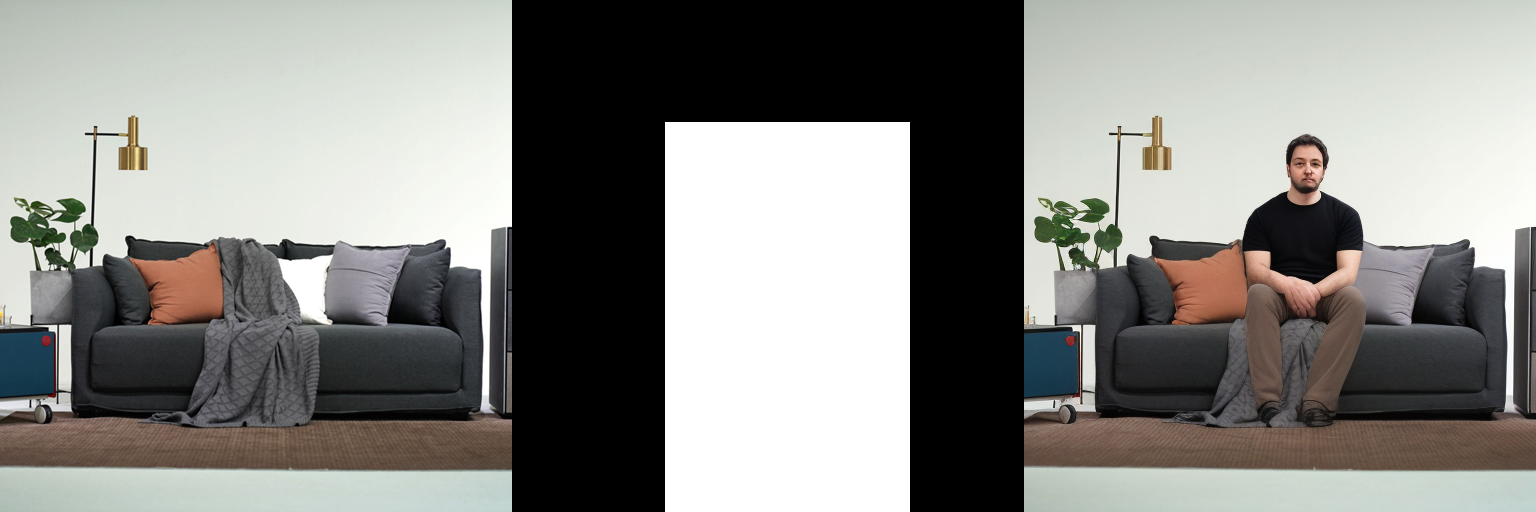
|
||||
|
||||
|
||||
You can find additional information about Adaptive Mask Inpainting in the [paper](https://arxiv.org/pdf/2401.12978) or in the [project website](https://snuvclab.github.io/coma).
|
||||
|
||||
#### Usage example
|
||||
First, clone the diffusers github repository, and run the following command to set environment.
|
||||
```Shell
|
||||
git clone https://github.com/huggingface/diffusers.git
|
||||
cd diffusers
|
||||
|
||||
conda create --name ami python=3.9 -y
|
||||
conda activate ami
|
||||
|
||||
conda install pytorch==1.10.1 torchvision==0.11.2 torchaudio==0.10.1 cudatoolkit=11.3 -c pytorch -c conda-forge -y
|
||||
python -m pip install detectron2==0.6 -f https://dl.fbaipublicfiles.com/detectron2/wheels/cu113/torch1.10/index.html
|
||||
pip install easydict
|
||||
pip install diffusers==0.20.2 accelerate safetensors transformers
|
||||
pip install setuptools==59.5.0
|
||||
pip install opencv-python
|
||||
pip install numpy==1.24.1
|
||||
```
|
||||
Then, run the below code under 'diffusers' directory.
|
||||
```python
|
||||
import numpy as np
|
||||
import torch
|
||||
from PIL import Image
|
||||
|
||||
from diffusers import DDIMScheduler
|
||||
from diffusers import DiffusionPipeline
|
||||
from diffusers.utils import load_image
|
||||
|
||||
from examples.community.adaptive_mask_inpainting import download_file, AdaptiveMaskInpaintPipeline, AMI_INSTALL_MESSAGE
|
||||
|
||||
print(AMI_INSTALL_MESSAGE)
|
||||
|
||||
from easydict import EasyDict
|
||||
|
||||
|
||||
|
||||
if __name__ == "__main__":
|
||||
"""
|
||||
Download Necessary Files
|
||||
"""
|
||||
download_file(
|
||||
url = "https://huggingface.co/datasets/jellyheadnadrew/adaptive-mask-inpainting-test-images/resolve/main/model_final_edd263.pkl?download=true",
|
||||
output_file = "model_final_edd263.pkl",
|
||||
exist_ok=True,
|
||||
)
|
||||
download_file(
|
||||
url = "https://huggingface.co/datasets/jellyheadnadrew/adaptive-mask-inpainting-test-images/resolve/main/pointrend_rcnn_R_50_FPN_3x_coco.yaml?download=true",
|
||||
output_file = "pointrend_rcnn_R_50_FPN_3x_coco.yaml",
|
||||
exist_ok=True,
|
||||
)
|
||||
download_file(
|
||||
url = "https://huggingface.co/datasets/jellyheadnadrew/adaptive-mask-inpainting-test-images/resolve/main/input_img.png?download=true",
|
||||
output_file = "input_img.png",
|
||||
exist_ok=True,
|
||||
)
|
||||
download_file(
|
||||
url = "https://huggingface.co/datasets/jellyheadnadrew/adaptive-mask-inpainting-test-images/resolve/main/input_mask.png?download=true",
|
||||
output_file = "input_mask.png",
|
||||
exist_ok=True,
|
||||
)
|
||||
download_file(
|
||||
url = "https://huggingface.co/datasets/jellyheadnadrew/adaptive-mask-inpainting-test-images/resolve/main/Base-PointRend-RCNN-FPN.yaml?download=true",
|
||||
output_file = "Base-PointRend-RCNN-FPN.yaml",
|
||||
exist_ok=True,
|
||||
)
|
||||
download_file(
|
||||
url = "https://huggingface.co/datasets/jellyheadnadrew/adaptive-mask-inpainting-test-images/resolve/main/Base-RCNN-FPN.yaml?download=true",
|
||||
output_file = "Base-RCNN-FPN.yaml",
|
||||
exist_ok=True,
|
||||
)
|
||||
|
||||
"""
|
||||
Prepare Adaptive Mask Inpainting Pipeline
|
||||
"""
|
||||
# device
|
||||
device = torch.device("cuda") if torch.cuda.is_available() else torch.device("cpu")
|
||||
num_steps = 50
|
||||
|
||||
# Scheduler
|
||||
scheduler = DDIMScheduler(
|
||||
beta_start=0.00085,
|
||||
beta_end=0.012,
|
||||
beta_schedule="scaled_linear",
|
||||
clip_sample=False,
|
||||
set_alpha_to_one=False
|
||||
)
|
||||
scheduler.set_timesteps(num_inference_steps=num_steps)
|
||||
|
||||
## load models as pipelines
|
||||
pipeline = AdaptiveMaskInpaintPipeline.from_pretrained(
|
||||
"Uminosachi/realisticVisionV51_v51VAE-inpainting",
|
||||
scheduler=scheduler,
|
||||
torch_dtype=torch.float16,
|
||||
requires_safety_checker=False
|
||||
).to(device)
|
||||
|
||||
## disable safety checker
|
||||
enable_safety_checker = False
|
||||
if not enable_safety_checker:
|
||||
pipeline.safety_checker = None
|
||||
|
||||
"""
|
||||
Run Adaptive Mask Inpainting
|
||||
"""
|
||||
default_mask_image = Image.open("./input_mask.png").convert("L")
|
||||
init_image = Image.open("./input_img.png").convert("RGB")
|
||||
|
||||
|
||||
seed = 59
|
||||
generator = torch.Generator(device=device)
|
||||
generator.manual_seed(seed)
|
||||
|
||||
image = pipeline(
|
||||
prompt="a man sitting on a couch",
|
||||
negative_prompt="worst quality, normal quality, low quality, bad anatomy, artifacts, blurry, cropped, watermark, greyscale, nsfw",
|
||||
image=init_image,
|
||||
default_mask_image=default_mask_image,
|
||||
guidance_scale=11.0,
|
||||
strength=0.98,
|
||||
use_adaptive_mask=True,
|
||||
generator=generator,
|
||||
enforce_full_mask_ratio=0.0,
|
||||
visualization_save_dir="./ECCV2024_adaptive_mask_inpainting_demo", # DON'T CHANGE THIS!!!
|
||||
human_detection_thres=0.015,
|
||||
).images[0]
|
||||
|
||||
|
||||
image.save(f'final_img.png')
|
||||
```
|
||||
#### [Troubleshooting]
|
||||
|
||||
If you run into an error `cannot import name 'cached_download' from 'huggingface_hub'` (issue [1851](https://github.com/easydiffusion/easydiffusion/issues/1851)), remove `cached_download` from the import line in the file `diffusers/utils/dynamic_modules_utils.py`.
|
||||
|
||||
For example, change the import line from `.../env/lib/python3.8/site-packages/diffusers/utils/dynamic_modules_utils.py`.
|
||||
|
||||
|
||||
### Flux with CFG
|
||||
|
||||
Know more about Flux [here](https://blackforestlabs.ai/announcing-black-forest-labs/). Since Flux doesn't use CFG, this implementation provides one, inspired by the [PuLID Flux adaptation](https://github.com/ToTheBeginning/PuLID/blob/main/docs/pulid_for_flux.md).
|
||||
|
||||
Example usage:
|
||||
|
||||
```py
|
||||
from diffusers import DiffusionPipeline
|
||||
import torch
|
||||
|
||||
model_name = "black-forest-labs/FLUX.1-dev"
|
||||
prompt = "a watercolor painting of a unicorn"
|
||||
negative_prompt = "pink"
|
||||
|
||||
# Load the diffusion pipeline
|
||||
pipeline = DiffusionPipeline.from_pretrained(
|
||||
model_name,
|
||||
torch_dtype=torch.bfloat16,
|
||||
custom_pipeline="pipeline_flux_with_cfg"
|
||||
)
|
||||
pipeline.enable_model_cpu_offload()
|
||||
|
||||
# Generate the image
|
||||
img = pipeline(
|
||||
prompt=prompt,
|
||||
negative_prompt=negative_prompt,
|
||||
true_cfg=1.5,
|
||||
guidance_scale=3.5,
|
||||
generator=torch.manual_seed(0)
|
||||
).images[0]
|
||||
|
||||
# Save the generated image
|
||||
img.save("cfg_flux.png")
|
||||
print("Image generated and saved successfully.")
|
||||
```
|
||||
|
||||
### Differential Diffusion
|
||||
|
||||
**Eran Levin, Ohad Fried**
|
||||
@@ -652,6 +847,8 @@ out = pipe(
|
||||
wildcard_files=["object.txt", "animal.txt"],
|
||||
num_prompt_samples=1
|
||||
)
|
||||
out.images[0].save("image.png")
|
||||
torch.cuda.empty_cache()
|
||||
```
|
||||
|
||||
### Composable Stable diffusion
|
||||
@@ -2428,16 +2625,17 @@ for obj in range(bs):
|
||||
|
||||
### Stable Diffusion XL Reference
|
||||
|
||||
This pipeline uses the Reference. Refer to the [stable_diffusion_reference](https://github.com/huggingface/diffusers/blob/main/examples/community/README.md#stable-diffusion-reference).
|
||||
This pipeline uses the Reference. Refer to the [Stable Diffusion Reference](https://github.com/huggingface/diffusers/blob/main/examples/community/README.md#stable-diffusion-reference) section for more information.
|
||||
|
||||
```py
|
||||
import torch
|
||||
from PIL import Image
|
||||
# from diffusers import DiffusionPipeline
|
||||
from diffusers.utils import load_image
|
||||
from diffusers import DiffusionPipeline
|
||||
from diffusers.schedulers import UniPCMultistepScheduler
|
||||
|
||||
input_image = load_image("https://hf.co/datasets/huggingface/documentation-images/resolve/main/diffusers/input_image_vermeer.png")
|
||||
from .stable_diffusion_xl_reference import StableDiffusionXLReferencePipeline
|
||||
|
||||
input_image = load_image("https://huggingface.co/datasets/huggingface/documentation-images/resolve/main/diffusers/sdxl_reference_input_cat.jpg")
|
||||
|
||||
# pipe = DiffusionPipeline.from_pretrained(
|
||||
# "stabilityai/stable-diffusion-xl-base-1.0",
|
||||
@@ -2455,7 +2653,7 @@ pipe = StableDiffusionXLReferencePipeline.from_pretrained(
|
||||
pipe.scheduler = UniPCMultistepScheduler.from_config(pipe.scheduler.config)
|
||||
|
||||
result_img = pipe(ref_image=input_image,
|
||||
prompt="1girl",
|
||||
prompt="a dog",
|
||||
num_inference_steps=20,
|
||||
reference_attn=True,
|
||||
reference_adain=True).images[0]
|
||||
@@ -2463,14 +2661,14 @@ result_img = pipe(ref_image=input_image,
|
||||
|
||||
Reference Image
|
||||
|
||||

|
||||

|
||||
|
||||
Output Image
|
||||
|
||||
`prompt: 1 girl`
|
||||
`prompt: a dog`
|
||||
|
||||
`reference_attn=True, reference_adain=True, num_inference_steps=20`
|
||||

|
||||
`reference_attn=False, reference_adain=True, num_inference_steps=20`
|
||||

|
||||
|
||||
Reference Image
|
||||

|
||||
@@ -2492,6 +2690,88 @@ Output Image
|
||||
`reference_attn=True, reference_adain=True, num_inference_steps=20`
|
||||
|
||||
|
||||
### Stable Diffusion XL ControlNet Reference
|
||||
|
||||
This pipeline uses the Reference Control and with ControlNet. Refer to the [Stable Diffusion ControlNet Reference](https://github.com/huggingface/diffusers/blob/main/examples/community/README.md#stable-diffusion-controlnet-reference) and [Stable Diffusion XL Reference](https://github.com/huggingface/diffusers/blob/main/examples/community/README.md#stable-diffusion-xl-reference) sections for more information.
|
||||
|
||||
```py
|
||||
from diffusers import ControlNetModel, AutoencoderKL
|
||||
from diffusers.schedulers import UniPCMultistepScheduler
|
||||
from diffusers.utils import load_image
|
||||
import numpy as np
|
||||
import torch
|
||||
|
||||
import cv2
|
||||
from PIL import Image
|
||||
|
||||
from .stable_diffusion_xl_controlnet_reference import StableDiffusionXLControlNetReferencePipeline
|
||||
|
||||
# download an image
|
||||
canny_image = load_image(
|
||||
"https://huggingface.co/datasets/huggingface/documentation-images/resolve/main/diffusers/sdxl_reference_input_cat.jpg"
|
||||
)
|
||||
|
||||
ref_image = load_image(
|
||||
"https://hf.co/datasets/hf-internal-testing/diffusers-images/resolve/main/sd_controlnet/hf-logo.png"
|
||||
)
|
||||
|
||||
# initialize the models and pipeline
|
||||
controlnet_conditioning_scale = 0.5 # recommended for good generalization
|
||||
controlnet = ControlNetModel.from_pretrained(
|
||||
"diffusers/controlnet-canny-sdxl-1.0", torch_dtype=torch.float16
|
||||
)
|
||||
vae = AutoencoderKL.from_pretrained("madebyollin/sdxl-vae-fp16-fix", torch_dtype=torch.float16)
|
||||
pipe = StableDiffusionXLControlNetReferencePipeline.from_pretrained(
|
||||
"stabilityai/stable-diffusion-xl-base-1.0", controlnet=controlnet, vae=vae, torch_dtype=torch.float16
|
||||
).to("cuda:0")
|
||||
|
||||
pipe.scheduler = UniPCMultistepScheduler.from_config(pipe.scheduler.config)
|
||||
|
||||
# get canny image
|
||||
image = np.array(canny_image)
|
||||
image = cv2.Canny(image, 100, 200)
|
||||
image = image[:, :, None]
|
||||
image = np.concatenate([image, image, image], axis=2)
|
||||
canny_image = Image.fromarray(image)
|
||||
|
||||
# generate image
|
||||
image = pipe(
|
||||
prompt="a cat",
|
||||
num_inference_steps=20,
|
||||
controlnet_conditioning_scale=controlnet_conditioning_scale,
|
||||
image=canny_image,
|
||||
ref_image=ref_image,
|
||||
reference_attn=False,
|
||||
reference_adain=True,
|
||||
style_fidelity=1.0,
|
||||
generator=torch.Generator("cuda").manual_seed(42)
|
||||
).images[0]
|
||||
```
|
||||
|
||||
Canny ControlNet Image
|
||||
|
||||

|
||||
|
||||
Reference Image
|
||||
|
||||

|
||||
|
||||
Output Image
|
||||
|
||||
`prompt: a cat`
|
||||
|
||||
`reference_attn=True, reference_adain=True, num_inference_steps=20, style_fidelity=1.0`
|
||||
|
||||

|
||||
|
||||
`reference_attn=False, reference_adain=True, num_inference_steps=20, style_fidelity=1.0`
|
||||
|
||||

|
||||
|
||||
`reference_attn=True, reference_adain=False, num_inference_steps=20, style_fidelity=1.0`
|
||||
|
||||

|
||||
|
||||
### Stable diffusion fabric pipeline
|
||||
|
||||
FABRIC approach applicable to a wide range of popular diffusion models, which exploits
|
||||
@@ -2625,7 +2905,7 @@ image with mask mech_painted.png
|
||||
|
||||
<img src=https://github.com/noskill/diffusers/assets/733626/c334466a-67fe-4377-9ff7-f46021b9c224 width="25%" >
|
||||
|
||||
result:
|
||||
result:
|
||||
|
||||
<img src=https://github.com/noskill/diffusers/assets/733626/5043fb57-a785-4606-a5ba-a36704f7cb42 width="25%" >
|
||||
|
||||
@@ -3187,6 +3467,20 @@ best quality, 3persons in garden, a boy blue shirt BREAK
|
||||
best quality, 3persons in garden, an old man red suit
|
||||
```
|
||||
|
||||
### Use base prompt
|
||||
|
||||
You can use a base prompt to apply the prompt to all areas. You can set a base prompt by adding `ADDBASE` at the end. Base prompts can also be combined with common prompts, but the base prompt must be specified first.
|
||||
|
||||
```
|
||||
2d animation style ADDBASE
|
||||
masterpiece, high quality ADDCOMM
|
||||
(blue sky)++ BREAK
|
||||
green hair twintail BREAK
|
||||
book shelf BREAK
|
||||
messy desk BREAK
|
||||
orange++ dress and sofa
|
||||
```
|
||||
|
||||
### Negative prompt
|
||||
|
||||
Negative prompts are equally effective across all regions, but it is possible to set region-specific prompts for negative prompts as well. The number of BREAKs must be the same as the number of prompts. If the number of prompts does not match, the negative prompts will be used without being divided into regions.
|
||||
@@ -3217,6 +3511,7 @@ pipe(prompt=prompt, rp_args=rp_args)
|
||||
### Optional Parameters
|
||||
|
||||
- `save_mask`: In `Prompt` mode, choose whether to output the generated mask along with the image. The default is `False`.
|
||||
- `base_ratio`: Used with `ADDBASE`. Sets the ratio of the base prompt; if base ratio is set to 0.2, then resulting images will consist of `20%*BASE_PROMPT + 80%*REGION_PROMPT`
|
||||
|
||||
The Pipeline supports `compel` syntax. Input prompts using the `compel` structure will be automatically applied and processed.
|
||||
|
||||
@@ -3545,6 +3840,7 @@ The original repo can be found at [repo](https://github.com/PRIS-CV/DemoFusion).
|
||||
|
||||
```py
|
||||
from diffusers import DiffusionPipeline
|
||||
import torch
|
||||
|
||||
pipe = DiffusionPipeline.from_pretrained(
|
||||
"stabilityai/stable-diffusion-xl-base-1.0",
|
||||
@@ -3668,9 +3964,10 @@ You can also combine it with LORA out of the box, like <https://huggingface.co/a
|
||||
from diffusers import DiffusionPipeline
|
||||
import torch
|
||||
|
||||
device = torch.device("cuda" if torch.cuda.is_available() else "cpu")
|
||||
|
||||
pipe = DiffusionPipeline.from_pretrained("XCLIU/instaflow_0_9B_from_sd_1_5", torch_dtype=torch.float16, custom_pipeline="instaflow_one_step")
|
||||
pipe.to("cuda") ### if GPU is not available, comment this line
|
||||
pipe.to(device) ### if GPU is not available, comment this line
|
||||
pipe.load_lora_weights("artificialguybr/logo-redmond-1-5v-logo-lora-for-liberteredmond-sd-1-5")
|
||||
prompt = "logo, A logo for a fitness app, dynamic running figure, energetic colors (red, orange) ),LogoRedAF ,"
|
||||
images = pipe(prompt=prompt,
|
||||
@@ -4293,6 +4590,50 @@ image = pipe(
|
||||
|
||||
A colab notebook demonstrating all results can be found [here](https://colab.research.google.com/drive/1v44a5fpzyr4Ffr4v2XBQ7BajzG874N4P?usp=sharing). Depth Maps have also been added in the same colab.
|
||||
|
||||
### 🪆Matryoshka Diffusion Models
|
||||
|
||||

|
||||
|
||||
The Abstract of the paper:
|
||||
>Diffusion models are the _de-facto_ approach for generating high-quality images and videos but learning high-dimensional models remains a formidable task due to computational and optimization challenges. Existing methods often resort to training cascaded models in pixel space, or using a downsampled latent space of a separately trained auto-encoder. In this paper, we introduce Matryoshka Diffusion (MDM), **a novel framework for high-resolution image and video synthesis**. We propose a diffusion process that denoises inputs at multiple resolutions jointly and uses a **NestedUNet** architecture where features and parameters for small scale inputs are nested within those of the large scales. In addition, MDM enables a progressive training schedule from lower to higher resolutions which leads to significant improvements in optimization for high-resolution generation. We demonstrate the effectiveness of our approach on various benchmarks, including class-conditioned image generation, high-resolution text-to-image, and text-to-video applications. Remarkably, we can train a **_single pixel-space model_ at resolutions of up to 1024 × 1024 pixels**, demonstrating strong zero shot generalization using the **CC12M dataset, which contains only 12 million images**. Code and pre-trained checkpoints are released at https://github.com/apple/ml-mdm.
|
||||
|
||||
- `64×64, nesting_level=0`: 1.719 GiB. With `50` DDIM inference steps:
|
||||
|
||||
**64x64**
|
||||
:-------------------------:
|
||||
| <img src="https://github.com/user-attachments/assets/032738eb-c6cd-4fd9-b4d7-a7317b4b6528" width="222" height="222" alt="bird_64_64"> |
|
||||
|
||||
- `256×256, nesting_level=1`: 1.776 GiB. With `150` DDIM inference steps:
|
||||
|
||||
**64x64** | **256x256**
|
||||
:-------------------------:|:-------------------------:
|
||||
| <img src="https://github.com/user-attachments/assets/21b9ad8b-eea6-4603-80a2-31180f391589" width="222" height="222" alt="bird_256_64"> | <img src="https://github.com/user-attachments/assets/fc411682-8a36-422c-9488-395b77d4406e" width="222" height="222" alt="bird_256_256"> |
|
||||
|
||||
- `1024×1024, nesting_level=2`: 1.792 GiB. As one can realize the cost of adding another layer is really negligible in this context! With `250` DDIM inference steps:
|
||||
|
||||
**64x64** | **256x256** | **1024x1024**
|
||||
:-------------------------:|:-------------------------:|:-------------------------:
|
||||
| <img src="https://github.com/user-attachments/assets/febf4b98-3dee-4a8e-9946-fd42e1f232e6" width="222" height="222" alt="bird_1024_64"> | <img src="https://github.com/user-attachments/assets/c5f85b40-5d6d-4267-a92a-c89dff015b9b" width="222" height="222" alt="bird_1024_256"> | <img src="https://github.com/user-attachments/assets/ad66b913-4367-4cb9-889e-bc06f4d96148" width="222" height="222" alt="bird_1024_1024"> |
|
||||
|
||||
```py
|
||||
from diffusers import DiffusionPipeline
|
||||
from diffusers.utils import make_image_grid
|
||||
|
||||
# nesting_level=0 -> 64x64; nesting_level=1 -> 256x256 - 64x64; nesting_level=2 -> 1024x1024 - 256x256 - 64x64
|
||||
pipe = DiffusionPipeline.from_pretrained("tolgacangoz/matryoshka-diffusion-models",
|
||||
nesting_level=0,
|
||||
trust_remote_code=False, # One needs to give permission for this code to run
|
||||
).to("cuda")
|
||||
|
||||
prompt0 = "a blue jay stops on the top of a helmet of Japanese samurai, background with sakura tree"
|
||||
prompt = f"breathtaking {prompt0}. award-winning, professional, highly detailed"
|
||||
image = pipe(prompt, num_inference_steps=50).images
|
||||
make_image_grid(image, rows=1, cols=len(image))
|
||||
|
||||
# pipe.change_nesting_level(<int>) # 0, 1, or 2
|
||||
# 50+, 100+, and 250+ num_inference_steps are recommended for nesting levels 0, 1, and 2 respectively.
|
||||
```
|
||||
|
||||
# Perturbed-Attention Guidance
|
||||
|
||||
[Project](https://ku-cvlab.github.io/Perturbed-Attention-Guidance/) / [arXiv](https://arxiv.org/abs/2403.17377) / [GitHub](https://github.com/KU-CVLAB/Perturbed-Attention-Guidance)
|
||||
@@ -4369,3 +4710,94 @@ grid_image.save(grid_dir + "sample.png")
|
||||
`pag_scale` : guidance scale of PAG (ex: 5.0)
|
||||
|
||||
`pag_applied_layers_index` : index of the layer to apply perturbation (ex: ['m0'])
|
||||
|
||||
# PIXART-α Controlnet pipeline
|
||||
|
||||
[Project](https://pixart-alpha.github.io/) / [GitHub](https://github.com/PixArt-alpha/PixArt-alpha/blob/master/asset/docs/pixart_controlnet.md)
|
||||
|
||||
This the implementation of the controlnet model and the pipelne for the Pixart-alpha model, adapted to use the HuggingFace Diffusers.
|
||||
|
||||
## Example Usage
|
||||
|
||||
This example uses the Pixart HED Controlnet model, converted from the control net model as trained by the authors of the paper.
|
||||
|
||||
```py
|
||||
import sys
|
||||
import os
|
||||
import torch
|
||||
import torchvision.transforms as T
|
||||
import torchvision.transforms.functional as TF
|
||||
|
||||
from pipeline_pixart_alpha_controlnet import PixArtAlphaControlnetPipeline
|
||||
from diffusers.utils import load_image
|
||||
|
||||
from diffusers.image_processor import PixArtImageProcessor
|
||||
|
||||
from controlnet_aux import HEDdetector
|
||||
|
||||
sys.path.append(os.path.dirname(os.path.dirname(os.path.abspath(__file__))))
|
||||
from pixart.controlnet_pixart_alpha import PixArtControlNetAdapterModel
|
||||
|
||||
controlnet_repo_id = "raulc0399/pixart-alpha-hed-controlnet"
|
||||
|
||||
weight_dtype = torch.float16
|
||||
image_size = 1024
|
||||
|
||||
device = torch.device("cuda" if torch.cuda.is_available() else "cpu")
|
||||
|
||||
torch.manual_seed(0)
|
||||
|
||||
# load controlnet
|
||||
controlnet = PixArtControlNetAdapterModel.from_pretrained(
|
||||
controlnet_repo_id,
|
||||
torch_dtype=weight_dtype,
|
||||
use_safetensors=True,
|
||||
).to(device)
|
||||
|
||||
pipe = PixArtAlphaControlnetPipeline.from_pretrained(
|
||||
"PixArt-alpha/PixArt-XL-2-1024-MS",
|
||||
controlnet=controlnet,
|
||||
torch_dtype=weight_dtype,
|
||||
use_safetensors=True,
|
||||
).to(device)
|
||||
|
||||
images_path = "images"
|
||||
control_image_file = "0_7.jpg"
|
||||
|
||||
prompt = "battleship in space, galaxy in background"
|
||||
|
||||
control_image_name = control_image_file.split('.')[0]
|
||||
|
||||
control_image = load_image(f"{images_path}/{control_image_file}")
|
||||
print(control_image.size)
|
||||
height, width = control_image.size
|
||||
|
||||
hed = HEDdetector.from_pretrained("lllyasviel/Annotators")
|
||||
|
||||
condition_transform = T.Compose([
|
||||
T.Lambda(lambda img: img.convert('RGB')),
|
||||
T.CenterCrop([image_size, image_size]),
|
||||
])
|
||||
|
||||
control_image = condition_transform(control_image)
|
||||
hed_edge = hed(control_image, detect_resolution=image_size, image_resolution=image_size)
|
||||
|
||||
hed_edge.save(f"{images_path}/{control_image_name}_hed.jpg")
|
||||
|
||||
# run pipeline
|
||||
with torch.no_grad():
|
||||
out = pipe(
|
||||
prompt=prompt,
|
||||
image=hed_edge,
|
||||
num_inference_steps=14,
|
||||
guidance_scale=4.5,
|
||||
height=image_size,
|
||||
width=image_size,
|
||||
)
|
||||
|
||||
out.images[0].save(f"{images_path}//{control_image_name}_output.jpg")
|
||||
|
||||
```
|
||||
|
||||
In the folder examples/pixart there is also a script that can be used to train new models.
|
||||
Please check the script `train_controlnet_hf_diffusers.sh` on how to start the training.
|
||||
|
||||
@@ -6,8 +6,9 @@ If a community script doesn't work as expected, please open an issue and ping th
|
||||
|
||||
| Example | Description | Code Example | Colab | Author |
|
||||
|:--------------------------------------------------------------------------------------------------------------------------------------|:---------------------------------------------------------------------------------------------------------------------------------------------------------------------------------------------------------------------------------------------------------------------------------------------------------------------------------------------------------------------------------------------------------------------------------------------------------------------------------------------------------|:------------------------------------------------------------------------------------------|:-------------------------------------------------------------------------------------------------------------------------------------------------------------------------------------------------------------------|--------------------------------------------------------------:|
|
||||
| Using IP-Adapter with negative noise | Using negative noise with IP-adapter to better control the generation (see the [original post](https://github.com/huggingface/diffusers/discussions/7167) on the forum for more details) | [IP-Adapter Negative Noise](#ip-adapter-negative-noise) | | [Álvaro Somoza](https://github.com/asomoza)|
|
||||
| asymmetric tiling |configure seamless image tiling independently for the X and Y axes | [Asymmetric Tiling](#asymmetric-tiling ) | | [alexisrolland](https://github.com/alexisrolland)|
|
||||
| Using IP-Adapter with Negative Noise | Using negative noise with IP-adapter to better control the generation (see the [original post](https://github.com/huggingface/diffusers/discussions/7167) on the forum for more details) | [IP-Adapter Negative Noise](#ip-adapter-negative-noise) |[Notebook](https://github.com/huggingface/notebooks/blob/main/diffusers/ip_adapter_negative_noise.ipynb) | [Álvaro Somoza](https://github.com/asomoza)|
|
||||
| Asymmetric Tiling |configure seamless image tiling independently for the X and Y axes | [Asymmetric Tiling](#Asymmetric-Tiling ) |[Notebook](https://github.com/huggingface/notebooks/blob/main/diffusers/asymetric_tiling.ipynb) | [alexisrolland](https://github.com/alexisrolland)|
|
||||
| Prompt Scheduling Callback |Allows changing prompts during a generation | [Prompt Scheduling-Callback](#Prompt-Scheduling-Callback ) |[Notebook](https://github.com/huggingface/notebooks/blob/main/diffusers/prompt_scheduling_callback.ipynb) | [hlky](https://github.com/hlky)|
|
||||
|
||||
|
||||
## Example usages
|
||||
@@ -229,4 +230,210 @@ seamless_tiling(pipeline=pipeline, x_axis=False, y_axis=False)
|
||||
|
||||
torch.cuda.empty_cache()
|
||||
image.save('image.png')
|
||||
```
|
||||
```
|
||||
|
||||
### Prompt Scheduling callback
|
||||
|
||||
Prompt scheduling callback allows changing prompts during a generation, like [prompt editing in A1111](https://github.com/AUTOMATIC1111/stable-diffusion-webui/wiki/Features#prompt-editing)
|
||||
|
||||
```python
|
||||
from diffusers import StableDiffusionPipeline
|
||||
from diffusers.callbacks import PipelineCallback, MultiPipelineCallbacks
|
||||
from diffusers.configuration_utils import register_to_config
|
||||
import torch
|
||||
from typing import Any, Dict, Tuple, Union
|
||||
|
||||
|
||||
class SDPromptSchedulingCallback(PipelineCallback):
|
||||
@register_to_config
|
||||
def __init__(
|
||||
self,
|
||||
encoded_prompt: Union[torch.Tensor, Tuple[torch.Tensor, torch.Tensor]],
|
||||
cutoff_step_ratio=None,
|
||||
cutoff_step_index=None,
|
||||
):
|
||||
super().__init__(
|
||||
cutoff_step_ratio=cutoff_step_ratio, cutoff_step_index=cutoff_step_index
|
||||
)
|
||||
|
||||
tensor_inputs = ["prompt_embeds"]
|
||||
|
||||
def callback_fn(
|
||||
self, pipeline, step_index, timestep, callback_kwargs
|
||||
) -> Dict[str, Any]:
|
||||
cutoff_step_ratio = self.config.cutoff_step_ratio
|
||||
cutoff_step_index = self.config.cutoff_step_index
|
||||
if isinstance(self.config.encoded_prompt, tuple):
|
||||
prompt_embeds, negative_prompt_embeds = self.config.encoded_prompt
|
||||
else:
|
||||
prompt_embeds = self.config.encoded_prompt
|
||||
|
||||
# Use cutoff_step_index if it's not None, otherwise use cutoff_step_ratio
|
||||
cutoff_step = (
|
||||
cutoff_step_index
|
||||
if cutoff_step_index is not None
|
||||
else int(pipeline.num_timesteps * cutoff_step_ratio)
|
||||
)
|
||||
|
||||
if step_index == cutoff_step:
|
||||
if pipeline.do_classifier_free_guidance:
|
||||
prompt_embeds = torch.cat([negative_prompt_embeds, prompt_embeds])
|
||||
callback_kwargs[self.tensor_inputs[0]] = prompt_embeds
|
||||
return callback_kwargs
|
||||
|
||||
|
||||
pipeline: StableDiffusionPipeline = StableDiffusionPipeline.from_pretrained(
|
||||
"stable-diffusion-v1-5/stable-diffusion-v1-5",
|
||||
torch_dtype=torch.float16,
|
||||
variant="fp16",
|
||||
use_safetensors=True,
|
||||
).to("cuda")
|
||||
pipeline.safety_checker = None
|
||||
pipeline.requires_safety_checker = False
|
||||
|
||||
callback = MultiPipelineCallbacks(
|
||||
[
|
||||
SDPromptSchedulingCallback(
|
||||
encoded_prompt=pipeline.encode_prompt(
|
||||
prompt=f"prompt {index}",
|
||||
negative_prompt=f"negative prompt {index}",
|
||||
device=pipeline._execution_device,
|
||||
num_images_per_prompt=1,
|
||||
# pipeline.do_classifier_free_guidance can't be accessed until after pipeline is ran
|
||||
do_classifier_free_guidance=True,
|
||||
),
|
||||
cutoff_step_index=index,
|
||||
) for index in range(1, 20)
|
||||
]
|
||||
)
|
||||
|
||||
image = pipeline(
|
||||
prompt="prompt"
|
||||
negative_prompt="negative prompt",
|
||||
callback_on_step_end=callback,
|
||||
callback_on_step_end_tensor_inputs=["prompt_embeds"],
|
||||
).images[0]
|
||||
torch.cuda.empty_cache()
|
||||
image.save('image.png')
|
||||
```
|
||||
|
||||
```python
|
||||
from diffusers import StableDiffusionXLPipeline
|
||||
from diffusers.callbacks import PipelineCallback, MultiPipelineCallbacks
|
||||
from diffusers.configuration_utils import register_to_config
|
||||
import torch
|
||||
from typing import Any, Dict, Tuple, Union
|
||||
|
||||
|
||||
class SDXLPromptSchedulingCallback(PipelineCallback):
|
||||
@register_to_config
|
||||
def __init__(
|
||||
self,
|
||||
encoded_prompt: Union[torch.Tensor, Tuple[torch.Tensor, torch.Tensor]],
|
||||
add_text_embeds: Union[torch.Tensor, Tuple[torch.Tensor, torch.Tensor]],
|
||||
add_time_ids: Union[torch.Tensor, Tuple[torch.Tensor, torch.Tensor]],
|
||||
cutoff_step_ratio=None,
|
||||
cutoff_step_index=None,
|
||||
):
|
||||
super().__init__(
|
||||
cutoff_step_ratio=cutoff_step_ratio, cutoff_step_index=cutoff_step_index
|
||||
)
|
||||
|
||||
tensor_inputs = ["prompt_embeds", "add_text_embeds", "add_time_ids"]
|
||||
|
||||
def callback_fn(
|
||||
self, pipeline, step_index, timestep, callback_kwargs
|
||||
) -> Dict[str, Any]:
|
||||
cutoff_step_ratio = self.config.cutoff_step_ratio
|
||||
cutoff_step_index = self.config.cutoff_step_index
|
||||
if isinstance(self.config.encoded_prompt, tuple):
|
||||
prompt_embeds, negative_prompt_embeds = self.config.encoded_prompt
|
||||
else:
|
||||
prompt_embeds = self.config.encoded_prompt
|
||||
if isinstance(self.config.add_text_embeds, tuple):
|
||||
add_text_embeds, negative_add_text_embeds = self.config.add_text_embeds
|
||||
else:
|
||||
add_text_embeds = self.config.add_text_embeds
|
||||
if isinstance(self.config.add_time_ids, tuple):
|
||||
add_time_ids, negative_add_time_ids = self.config.add_time_ids
|
||||
else:
|
||||
add_time_ids = self.config.add_time_ids
|
||||
|
||||
# Use cutoff_step_index if it's not None, otherwise use cutoff_step_ratio
|
||||
cutoff_step = (
|
||||
cutoff_step_index
|
||||
if cutoff_step_index is not None
|
||||
else int(pipeline.num_timesteps * cutoff_step_ratio)
|
||||
)
|
||||
|
||||
if step_index == cutoff_step:
|
||||
if pipeline.do_classifier_free_guidance:
|
||||
prompt_embeds = torch.cat([negative_prompt_embeds, prompt_embeds])
|
||||
add_text_embeds = torch.cat([negative_add_text_embeds, add_text_embeds])
|
||||
add_time_ids = torch.cat([negative_add_time_ids, add_time_ids])
|
||||
callback_kwargs[self.tensor_inputs[0]] = prompt_embeds
|
||||
callback_kwargs[self.tensor_inputs[1]] = add_text_embeds
|
||||
callback_kwargs[self.tensor_inputs[2]] = add_time_ids
|
||||
return callback_kwargs
|
||||
|
||||
|
||||
pipeline: StableDiffusionXLPipeline = StableDiffusionXLPipeline.from_pretrained(
|
||||
"stabilityai/stable-diffusion-xl-base-1.0",
|
||||
torch_dtype=torch.float16,
|
||||
variant="fp16",
|
||||
use_safetensors=True,
|
||||
).to("cuda")
|
||||
|
||||
callbacks = []
|
||||
for index in range(1, 20):
|
||||
(
|
||||
prompt_embeds,
|
||||
negative_prompt_embeds,
|
||||
pooled_prompt_embeds,
|
||||
negative_pooled_prompt_embeds,
|
||||
) = pipeline.encode_prompt(
|
||||
prompt=f"prompt {index}",
|
||||
negative_prompt=f"prompt {index}",
|
||||
device=pipeline._execution_device,
|
||||
num_images_per_prompt=1,
|
||||
# pipeline.do_classifier_free_guidance can't be accessed until after pipeline is ran
|
||||
do_classifier_free_guidance=True,
|
||||
)
|
||||
text_encoder_projection_dim = int(pooled_prompt_embeds.shape[-1])
|
||||
add_time_ids = pipeline._get_add_time_ids(
|
||||
(1024, 1024),
|
||||
(0, 0),
|
||||
(1024, 1024),
|
||||
dtype=prompt_embeds.dtype,
|
||||
text_encoder_projection_dim=text_encoder_projection_dim,
|
||||
)
|
||||
negative_add_time_ids = pipeline._get_add_time_ids(
|
||||
(1024, 1024),
|
||||
(0, 0),
|
||||
(1024, 1024),
|
||||
dtype=prompt_embeds.dtype,
|
||||
text_encoder_projection_dim=text_encoder_projection_dim,
|
||||
)
|
||||
callbacks.append(
|
||||
SDXLPromptSchedulingCallback(
|
||||
encoded_prompt=(prompt_embeds, negative_prompt_embeds),
|
||||
add_text_embeds=(pooled_prompt_embeds, negative_pooled_prompt_embeds),
|
||||
add_time_ids=(add_time_ids, negative_add_time_ids),
|
||||
cutoff_step_index=index,
|
||||
)
|
||||
)
|
||||
|
||||
|
||||
callback = MultiPipelineCallbacks(callbacks)
|
||||
|
||||
image = pipeline(
|
||||
prompt="prompt",
|
||||
negative_prompt="negative prompt",
|
||||
callback_on_step_end=callback,
|
||||
callback_on_step_end_tensor_inputs=[
|
||||
"prompt_embeds",
|
||||
"add_text_embeds",
|
||||
"add_time_ids",
|
||||
],
|
||||
).images[0]
|
||||
```
|
||||
|
||||
1465
examples/community/adaptive_mask_inpainting.py
Normal file
1465
examples/community/adaptive_mask_inpainting.py
Normal file
File diff suppressed because it is too large
Load Diff
@@ -898,13 +898,16 @@ class GaussianSmoothing(nn.Module):
|
||||
Apply gaussian smoothing on a
|
||||
1d, 2d or 3d tensor. Filtering is performed seperately for each channel
|
||||
in the input using a depthwise convolution.
|
||||
Arguments:
|
||||
channels (int, sequence): Number of channels of the input tensors. Output will
|
||||
have this number of channels as well.
|
||||
kernel_size (int, sequence): Size of the gaussian kernel.
|
||||
sigma (float, sequence): Standard deviation of the gaussian kernel.
|
||||
dim (int, optional): The number of dimensions of the data.
|
||||
Default value is 2 (spatial).
|
||||
|
||||
Args:
|
||||
channels (`int` or `sequence`):
|
||||
Number of channels of the input tensors. The output will have this number of channels as well.
|
||||
kernel_size (`int` or `sequence`):
|
||||
Size of the Gaussian kernel.
|
||||
sigma (`float` or `sequence`):
|
||||
Standard deviation of the Gaussian kernel.
|
||||
dim (`int`, *optional*, defaults to `2`):
|
||||
The number of dimensions of the data. Default is 2 (spatial dimensions).
|
||||
"""
|
||||
|
||||
def __init__(self, channels, kernel_size, sigma, dim=2):
|
||||
@@ -944,10 +947,14 @@ class GaussianSmoothing(nn.Module):
|
||||
def forward(self, input):
|
||||
"""
|
||||
Apply gaussian filter to input.
|
||||
Arguments:
|
||||
input (torch.Tensor): Input to apply gaussian filter on.
|
||||
|
||||
Args:
|
||||
input (`torch.Tensor` of shape `(N, C, H, W)`):
|
||||
Input to apply Gaussian filter on.
|
||||
|
||||
Returns:
|
||||
filtered (torch.Tensor): Filtered output.
|
||||
`torch.Tensor`:
|
||||
The filtered output tensor with the same shape as the input.
|
||||
"""
|
||||
return self.conv(input, weight=self.weight.to(input.dtype), groups=self.groups, padding="same")
|
||||
|
||||
|
||||
@@ -43,8 +43,7 @@ from diffusers.utils import BaseOutput, check_min_version
|
||||
|
||||
|
||||
# Will error if the minimal version of diffusers is not installed. Remove at your own risks.
|
||||
check_min_version("0.31.0.dev0")
|
||||
|
||||
check_min_version("0.32.0")
|
||||
|
||||
class MarigoldDepthOutput(BaseOutput):
|
||||
"""
|
||||
|
||||
Some files were not shown because too many files have changed in this diff Show More
Reference in New Issue
Block a user