mirror of
https://github.com/huggingface/diffusers.git
synced 2026-04-04 23:01:43 +08:00
Compare commits
1 Commits
fix-widget
...
tests-back
| Author | SHA1 | Date | |
|---|---|---|---|

|
747039b5c8 |
52
.github/workflows/benchmark.yml
vendored
52
.github/workflows/benchmark.yml
vendored
@@ -1,52 +0,0 @@
|
||||
name: Benchmarking tests
|
||||
|
||||
on:
|
||||
schedule:
|
||||
- cron: "30 1 1,15 * *" # every 2 weeks on the 1st and the 15th of every month at 1:30 AM
|
||||
|
||||
env:
|
||||
DIFFUSERS_IS_CI: yes
|
||||
HF_HOME: /mnt/cache
|
||||
OMP_NUM_THREADS: 8
|
||||
MKL_NUM_THREADS: 8
|
||||
|
||||
jobs:
|
||||
torch_pipelines_cuda_benchmark_tests:
|
||||
name: Torch Core Pipelines CUDA Benchmarking Tests
|
||||
strategy:
|
||||
fail-fast: false
|
||||
max-parallel: 1
|
||||
runs-on: [single-gpu, nvidia-gpu, a10, ci]
|
||||
container:
|
||||
image: diffusers/diffusers-pytorch-cuda
|
||||
options: --shm-size "16gb" --ipc host -v /mnt/hf_cache:/mnt/cache/ --gpus 0
|
||||
steps:
|
||||
- name: Checkout diffusers
|
||||
uses: actions/checkout@v3
|
||||
with:
|
||||
fetch-depth: 2
|
||||
- name: NVIDIA-SMI
|
||||
run: |
|
||||
nvidia-smi
|
||||
- name: Install dependencies
|
||||
run: |
|
||||
apt-get update && apt-get install libsndfile1-dev libgl1 -y
|
||||
python -m pip install -e .[quality,test]
|
||||
python -m pip install pandas
|
||||
- name: Environment
|
||||
run: |
|
||||
python utils/print_env.py
|
||||
- name: Diffusers Benchmarking
|
||||
env:
|
||||
HUGGING_FACE_HUB_TOKEN: ${{ secrets.DIFFUSERS_BOT_TOKEN }}
|
||||
BASE_PATH: benchmark_outputs
|
||||
run: |
|
||||
export TOTAL_GPU_MEMORY=$(python -c "import torch; print(torch.cuda.get_device_properties(0).total_memory / (1024**3))")
|
||||
cd benchmarks && mkdir ${BASE_PATH} && python run_all.py && python push_results.py
|
||||
|
||||
- name: Test suite reports artifacts
|
||||
if: ${{ always() }}
|
||||
uses: actions/upload-artifact@v2
|
||||
with:
|
||||
name: benchmark_test_reports
|
||||
path: benchmarks/benchmark_outputs
|
||||
8
.github/workflows/pr_test_fetcher.yml
vendored
8
.github/workflows/pr_test_fetcher.yml
vendored
@@ -1,6 +1,12 @@
|
||||
name: Fast tests for PRs - Test Fetcher
|
||||
|
||||
on: workflow_dispatch
|
||||
on:
|
||||
pull_request:
|
||||
branches:
|
||||
- main
|
||||
push:
|
||||
branches:
|
||||
- ci-*
|
||||
|
||||
env:
|
||||
DIFFUSERS_IS_CI: yes
|
||||
|
||||
1
.github/workflows/pr_tests.yml
vendored
1
.github/workflows/pr_tests.yml
vendored
@@ -113,7 +113,6 @@ jobs:
|
||||
- name: Run example PyTorch CPU tests
|
||||
if: ${{ matrix.config.framework == 'pytorch_examples' }}
|
||||
run: |
|
||||
python -m pip install peft
|
||||
python -m pytest -n 2 --max-worker-restart=0 --dist=loadfile \
|
||||
--make-reports=tests_${{ matrix.config.report }} \
|
||||
examples
|
||||
|
||||
1
.github/workflows/push_tests_fast.yml
vendored
1
.github/workflows/push_tests_fast.yml
vendored
@@ -98,7 +98,6 @@ jobs:
|
||||
- name: Run example PyTorch CPU tests
|
||||
if: ${{ matrix.config.framework == 'pytorch_examples' }}
|
||||
run: |
|
||||
python -m pip install peft
|
||||
python -m pytest -n 2 --max-worker-restart=0 --dist=loadfile \
|
||||
--make-reports=tests_${{ matrix.config.report }} \
|
||||
examples
|
||||
|
||||
2
Makefile
2
Makefile
@@ -3,7 +3,7 @@
|
||||
# make sure to test the local checkout in scripts and not the pre-installed one (don't use quotes!)
|
||||
export PYTHONPATH = src
|
||||
|
||||
check_dirs := examples scripts src tests utils benchmarks
|
||||
check_dirs := examples scripts src tests utils
|
||||
|
||||
modified_only_fixup:
|
||||
$(eval modified_py_files := $(shell python utils/get_modified_files.py $(check_dirs)))
|
||||
|
||||
@@ -77,7 +77,7 @@ Please refer to the [How to use Stable Diffusion in Apple Silicon](https://huggi
|
||||
|
||||
## Quickstart
|
||||
|
||||
Generating outputs is super easy with 🤗 Diffusers. To generate an image from text, use the `from_pretrained` method to load any pretrained diffusion model (browse the [Hub](https://huggingface.co/models?library=diffusers&sort=downloads) for 16000+ checkpoints):
|
||||
Generating outputs is super easy with 🤗 Diffusers. To generate an image from text, use the `from_pretrained` method to load any pretrained diffusion model (browse the [Hub](https://huggingface.co/models?library=diffusers&sort=downloads) for 15000+ checkpoints):
|
||||
|
||||
```python
|
||||
from diffusers import DiffusionPipeline
|
||||
@@ -219,7 +219,7 @@ Also, say 👋 in our public Discord channel <a href="https://discord.gg/G7tWnz9
|
||||
- https://github.com/deep-floyd/IF
|
||||
- https://github.com/bentoml/BentoML
|
||||
- https://github.com/bmaltais/kohya_ss
|
||||
- +7000 other amazing GitHub repositories 💪
|
||||
- +6000 other amazing GitHub repositories 💪
|
||||
|
||||
Thank you for using us ❤️.
|
||||
|
||||
|
||||
@@ -1,316 +0,0 @@
|
||||
import os
|
||||
import sys
|
||||
|
||||
import torch
|
||||
|
||||
from diffusers import (
|
||||
AutoPipelineForImage2Image,
|
||||
AutoPipelineForInpainting,
|
||||
AutoPipelineForText2Image,
|
||||
ControlNetModel,
|
||||
LCMScheduler,
|
||||
StableDiffusionAdapterPipeline,
|
||||
StableDiffusionControlNetPipeline,
|
||||
StableDiffusionXLAdapterPipeline,
|
||||
StableDiffusionXLControlNetPipeline,
|
||||
T2IAdapter,
|
||||
WuerstchenCombinedPipeline,
|
||||
)
|
||||
from diffusers.utils import load_image
|
||||
|
||||
|
||||
sys.path.append(".")
|
||||
|
||||
from utils import ( # noqa: E402
|
||||
BASE_PATH,
|
||||
PROMPT,
|
||||
BenchmarkInfo,
|
||||
benchmark_fn,
|
||||
bytes_to_giga_bytes,
|
||||
flush,
|
||||
generate_csv_dict,
|
||||
write_to_csv,
|
||||
)
|
||||
|
||||
|
||||
RESOLUTION_MAPPING = {
|
||||
"runwayml/stable-diffusion-v1-5": (512, 512),
|
||||
"lllyasviel/sd-controlnet-canny": (512, 512),
|
||||
"diffusers/controlnet-canny-sdxl-1.0": (1024, 1024),
|
||||
"TencentARC/t2iadapter_canny_sd14v1": (512, 512),
|
||||
"TencentARC/t2i-adapter-canny-sdxl-1.0": (1024, 1024),
|
||||
"stabilityai/stable-diffusion-2-1": (768, 768),
|
||||
"stabilityai/stable-diffusion-xl-base-1.0": (1024, 1024),
|
||||
"stabilityai/stable-diffusion-xl-refiner-1.0": (1024, 1024),
|
||||
"stabilityai/sdxl-turbo": (512, 512),
|
||||
}
|
||||
|
||||
|
||||
class BaseBenchmak:
|
||||
pipeline_class = None
|
||||
|
||||
def __init__(self, args):
|
||||
super().__init__()
|
||||
|
||||
def run_inference(self, args):
|
||||
raise NotImplementedError
|
||||
|
||||
def benchmark(self, args):
|
||||
raise NotImplementedError
|
||||
|
||||
def get_result_filepath(self, args):
|
||||
pipeline_class_name = str(self.pipe.__class__.__name__)
|
||||
name = (
|
||||
args.ckpt.replace("/", "_")
|
||||
+ "_"
|
||||
+ pipeline_class_name
|
||||
+ f"-bs@{args.batch_size}-steps@{args.num_inference_steps}-mco@{args.model_cpu_offload}-compile@{args.run_compile}.csv"
|
||||
)
|
||||
filepath = os.path.join(BASE_PATH, name)
|
||||
return filepath
|
||||
|
||||
|
||||
class TextToImageBenchmark(BaseBenchmak):
|
||||
pipeline_class = AutoPipelineForText2Image
|
||||
|
||||
def __init__(self, args):
|
||||
pipe = self.pipeline_class.from_pretrained(args.ckpt, torch_dtype=torch.float16)
|
||||
pipe = pipe.to("cuda")
|
||||
|
||||
if args.run_compile:
|
||||
if not isinstance(pipe, WuerstchenCombinedPipeline):
|
||||
pipe.unet.to(memory_format=torch.channels_last)
|
||||
print("Run torch compile")
|
||||
pipe.unet = torch.compile(pipe.unet, mode="reduce-overhead", fullgraph=True)
|
||||
|
||||
if hasattr(pipe, "movq") and getattr(pipe, "movq", None) is not None:
|
||||
pipe.movq.to(memory_format=torch.channels_last)
|
||||
pipe.movq = torch.compile(pipe.movq, mode="reduce-overhead", fullgraph=True)
|
||||
else:
|
||||
print("Run torch compile")
|
||||
pipe.decoder = torch.compile(pipe.decoder, mode="reduce-overhead", fullgraph=True)
|
||||
pipe.vqgan = torch.compile(pipe.vqgan, mode="reduce-overhead", fullgraph=True)
|
||||
|
||||
pipe.set_progress_bar_config(disable=True)
|
||||
self.pipe = pipe
|
||||
|
||||
def run_inference(self, pipe, args):
|
||||
_ = pipe(
|
||||
prompt=PROMPT,
|
||||
num_inference_steps=args.num_inference_steps,
|
||||
num_images_per_prompt=args.batch_size,
|
||||
)
|
||||
|
||||
def benchmark(self, args):
|
||||
flush()
|
||||
|
||||
print(f"[INFO] {self.pipe.__class__.__name__}: Running benchmark with: {vars(args)}\n")
|
||||
|
||||
time = benchmark_fn(self.run_inference, self.pipe, args) # in seconds.
|
||||
memory = bytes_to_giga_bytes(torch.cuda.max_memory_allocated()) # in GBs.
|
||||
benchmark_info = BenchmarkInfo(time=time, memory=memory)
|
||||
|
||||
pipeline_class_name = str(self.pipe.__class__.__name__)
|
||||
flush()
|
||||
csv_dict = generate_csv_dict(
|
||||
pipeline_cls=pipeline_class_name, ckpt=args.ckpt, args=args, benchmark_info=benchmark_info
|
||||
)
|
||||
filepath = self.get_result_filepath(args)
|
||||
write_to_csv(filepath, csv_dict)
|
||||
print(f"Logs written to: {filepath}")
|
||||
flush()
|
||||
|
||||
|
||||
class TurboTextToImageBenchmark(TextToImageBenchmark):
|
||||
def __init__(self, args):
|
||||
super().__init__(args)
|
||||
|
||||
def run_inference(self, pipe, args):
|
||||
_ = pipe(
|
||||
prompt=PROMPT,
|
||||
num_inference_steps=args.num_inference_steps,
|
||||
num_images_per_prompt=args.batch_size,
|
||||
guidance_scale=0.0,
|
||||
)
|
||||
|
||||
|
||||
class LCMLoRATextToImageBenchmark(TextToImageBenchmark):
|
||||
lora_id = "latent-consistency/lcm-lora-sdxl"
|
||||
|
||||
def __init__(self, args):
|
||||
super().__init__(args)
|
||||
self.pipe.load_lora_weights(self.lora_id)
|
||||
self.pipe.fuse_lora()
|
||||
self.pipe.scheduler = LCMScheduler.from_config(self.pipe.scheduler.config)
|
||||
|
||||
def get_result_filepath(self, args):
|
||||
pipeline_class_name = str(self.pipe.__class__.__name__)
|
||||
name = (
|
||||
self.lora_id.replace("/", "_")
|
||||
+ "_"
|
||||
+ pipeline_class_name
|
||||
+ f"-bs@{args.batch_size}-steps@{args.num_inference_steps}-mco@{args.model_cpu_offload}-compile@{args.run_compile}.csv"
|
||||
)
|
||||
filepath = os.path.join(BASE_PATH, name)
|
||||
return filepath
|
||||
|
||||
def run_inference(self, pipe, args):
|
||||
_ = pipe(
|
||||
prompt=PROMPT,
|
||||
num_inference_steps=args.num_inference_steps,
|
||||
num_images_per_prompt=args.batch_size,
|
||||
guidance_scale=1.0,
|
||||
)
|
||||
|
||||
def benchmark(self, args):
|
||||
flush()
|
||||
|
||||
print(f"[INFO] {self.pipe.__class__.__name__}: Running benchmark with: {vars(args)}\n")
|
||||
|
||||
time = benchmark_fn(self.run_inference, self.pipe, args) # in seconds.
|
||||
memory = bytes_to_giga_bytes(torch.cuda.max_memory_allocated()) # in GBs.
|
||||
benchmark_info = BenchmarkInfo(time=time, memory=memory)
|
||||
|
||||
pipeline_class_name = str(self.pipe.__class__.__name__)
|
||||
flush()
|
||||
csv_dict = generate_csv_dict(
|
||||
pipeline_cls=pipeline_class_name, ckpt=self.lora_id, args=args, benchmark_info=benchmark_info
|
||||
)
|
||||
filepath = self.get_result_filepath(args)
|
||||
write_to_csv(filepath, csv_dict)
|
||||
print(f"Logs written to: {filepath}")
|
||||
flush()
|
||||
|
||||
|
||||
class ImageToImageBenchmark(TextToImageBenchmark):
|
||||
pipeline_class = AutoPipelineForImage2Image
|
||||
url = "https://huggingface.co/datasets/diffusers/docs-images/resolve/main/benchmarking/1665_Girl_with_a_Pearl_Earring.jpg"
|
||||
image = load_image(url).convert("RGB")
|
||||
|
||||
def __init__(self, args):
|
||||
super().__init__(args)
|
||||
self.image = self.image.resize(RESOLUTION_MAPPING[args.ckpt])
|
||||
|
||||
def run_inference(self, pipe, args):
|
||||
_ = pipe(
|
||||
prompt=PROMPT,
|
||||
image=self.image,
|
||||
num_inference_steps=args.num_inference_steps,
|
||||
num_images_per_prompt=args.batch_size,
|
||||
)
|
||||
|
||||
|
||||
class TurboImageToImageBenchmark(ImageToImageBenchmark):
|
||||
def __init__(self, args):
|
||||
super().__init__(args)
|
||||
|
||||
def run_inference(self, pipe, args):
|
||||
_ = pipe(
|
||||
prompt=PROMPT,
|
||||
image=self.image,
|
||||
num_inference_steps=args.num_inference_steps,
|
||||
num_images_per_prompt=args.batch_size,
|
||||
guidance_scale=0.0,
|
||||
strength=0.5,
|
||||
)
|
||||
|
||||
|
||||
class InpaintingBenchmark(ImageToImageBenchmark):
|
||||
pipeline_class = AutoPipelineForInpainting
|
||||
mask_url = "https://huggingface.co/datasets/diffusers/docs-images/resolve/main/benchmarking/overture-creations-5sI6fQgYIuo_mask.png"
|
||||
mask = load_image(mask_url).convert("RGB")
|
||||
|
||||
def __init__(self, args):
|
||||
super().__init__(args)
|
||||
self.image = self.image.resize(RESOLUTION_MAPPING[args.ckpt])
|
||||
self.mask = self.mask.resize(RESOLUTION_MAPPING[args.ckpt])
|
||||
|
||||
def run_inference(self, pipe, args):
|
||||
_ = pipe(
|
||||
prompt=PROMPT,
|
||||
image=self.image,
|
||||
mask_image=self.mask,
|
||||
num_inference_steps=args.num_inference_steps,
|
||||
num_images_per_prompt=args.batch_size,
|
||||
)
|
||||
|
||||
|
||||
class ControlNetBenchmark(TextToImageBenchmark):
|
||||
pipeline_class = StableDiffusionControlNetPipeline
|
||||
aux_network_class = ControlNetModel
|
||||
root_ckpt = "runwayml/stable-diffusion-v1-5"
|
||||
|
||||
url = "https://huggingface.co/datasets/diffusers/docs-images/resolve/main/benchmarking/canny_image_condition.png"
|
||||
image = load_image(url).convert("RGB")
|
||||
|
||||
def __init__(self, args):
|
||||
aux_network = self.aux_network_class.from_pretrained(args.ckpt, torch_dtype=torch.float16)
|
||||
pipe = self.pipeline_class.from_pretrained(self.root_ckpt, controlnet=aux_network, torch_dtype=torch.float16)
|
||||
pipe = pipe.to("cuda")
|
||||
|
||||
pipe.set_progress_bar_config(disable=True)
|
||||
self.pipe = pipe
|
||||
|
||||
if args.run_compile:
|
||||
pipe.unet.to(memory_format=torch.channels_last)
|
||||
pipe.controlnet.to(memory_format=torch.channels_last)
|
||||
|
||||
print("Run torch compile")
|
||||
pipe.unet = torch.compile(pipe.unet, mode="reduce-overhead", fullgraph=True)
|
||||
pipe.controlnet = torch.compile(pipe.controlnet, mode="reduce-overhead", fullgraph=True)
|
||||
|
||||
self.image = self.image.resize(RESOLUTION_MAPPING[args.ckpt])
|
||||
|
||||
def run_inference(self, pipe, args):
|
||||
_ = pipe(
|
||||
prompt=PROMPT,
|
||||
image=self.image,
|
||||
num_inference_steps=args.num_inference_steps,
|
||||
num_images_per_prompt=args.batch_size,
|
||||
)
|
||||
|
||||
|
||||
class ControlNetSDXLBenchmark(ControlNetBenchmark):
|
||||
pipeline_class = StableDiffusionXLControlNetPipeline
|
||||
root_ckpt = "stabilityai/stable-diffusion-xl-base-1.0"
|
||||
|
||||
def __init__(self, args):
|
||||
super().__init__(args)
|
||||
|
||||
|
||||
class T2IAdapterBenchmark(ControlNetBenchmark):
|
||||
pipeline_class = StableDiffusionAdapterPipeline
|
||||
aux_network_class = T2IAdapter
|
||||
root_ckpt = "CompVis/stable-diffusion-v1-4"
|
||||
|
||||
url = "https://huggingface.co/datasets/diffusers/docs-images/resolve/main/benchmarking/canny_for_adapter.png"
|
||||
image = load_image(url).convert("L")
|
||||
|
||||
def __init__(self, args):
|
||||
aux_network = self.aux_network_class.from_pretrained(args.ckpt, torch_dtype=torch.float16)
|
||||
pipe = self.pipeline_class.from_pretrained(self.root_ckpt, adapter=aux_network, torch_dtype=torch.float16)
|
||||
pipe = pipe.to("cuda")
|
||||
|
||||
pipe.set_progress_bar_config(disable=True)
|
||||
self.pipe = pipe
|
||||
|
||||
if args.run_compile:
|
||||
pipe.unet.to(memory_format=torch.channels_last)
|
||||
pipe.adapter.to(memory_format=torch.channels_last)
|
||||
|
||||
print("Run torch compile")
|
||||
pipe.unet = torch.compile(pipe.unet, mode="reduce-overhead", fullgraph=True)
|
||||
pipe.adapter = torch.compile(pipe.adapter, mode="reduce-overhead", fullgraph=True)
|
||||
|
||||
self.image = self.image.resize(RESOLUTION_MAPPING[args.ckpt])
|
||||
|
||||
|
||||
class T2IAdapterSDXLBenchmark(T2IAdapterBenchmark):
|
||||
pipeline_class = StableDiffusionXLAdapterPipeline
|
||||
root_ckpt = "stabilityai/stable-diffusion-xl-base-1.0"
|
||||
|
||||
url = "https://huggingface.co/datasets/diffusers/docs-images/resolve/main/benchmarking/canny_for_adapter_sdxl.png"
|
||||
image = load_image(url)
|
||||
|
||||
def __init__(self, args):
|
||||
super().__init__(args)
|
||||
@@ -1,26 +0,0 @@
|
||||
import argparse
|
||||
import sys
|
||||
|
||||
|
||||
sys.path.append(".")
|
||||
from base_classes import ControlNetBenchmark, ControlNetSDXLBenchmark # noqa: E402
|
||||
|
||||
|
||||
if __name__ == "__main__":
|
||||
parser = argparse.ArgumentParser()
|
||||
parser.add_argument(
|
||||
"--ckpt",
|
||||
type=str,
|
||||
default="lllyasviel/sd-controlnet-canny",
|
||||
choices=["lllyasviel/sd-controlnet-canny", "diffusers/controlnet-canny-sdxl-1.0"],
|
||||
)
|
||||
parser.add_argument("--batch_size", type=int, default=1)
|
||||
parser.add_argument("--num_inference_steps", type=int, default=50)
|
||||
parser.add_argument("--model_cpu_offload", action="store_true")
|
||||
parser.add_argument("--run_compile", action="store_true")
|
||||
args = parser.parse_args()
|
||||
|
||||
benchmark_pipe = (
|
||||
ControlNetBenchmark(args) if args.ckpt == "lllyasviel/sd-controlnet-canny" else ControlNetSDXLBenchmark(args)
|
||||
)
|
||||
benchmark_pipe.benchmark(args)
|
||||
@@ -1,29 +0,0 @@
|
||||
import argparse
|
||||
import sys
|
||||
|
||||
|
||||
sys.path.append(".")
|
||||
from base_classes import ImageToImageBenchmark, TurboImageToImageBenchmark # noqa: E402
|
||||
|
||||
|
||||
if __name__ == "__main__":
|
||||
parser = argparse.ArgumentParser()
|
||||
parser.add_argument(
|
||||
"--ckpt",
|
||||
type=str,
|
||||
default="runwayml/stable-diffusion-v1-5",
|
||||
choices=[
|
||||
"runwayml/stable-diffusion-v1-5",
|
||||
"stabilityai/stable-diffusion-2-1",
|
||||
"stabilityai/stable-diffusion-xl-refiner-1.0",
|
||||
"stabilityai/sdxl-turbo",
|
||||
],
|
||||
)
|
||||
parser.add_argument("--batch_size", type=int, default=1)
|
||||
parser.add_argument("--num_inference_steps", type=int, default=50)
|
||||
parser.add_argument("--model_cpu_offload", action="store_true")
|
||||
parser.add_argument("--run_compile", action="store_true")
|
||||
args = parser.parse_args()
|
||||
|
||||
benchmark_pipe = ImageToImageBenchmark(args) if "turbo" not in args.ckpt else TurboImageToImageBenchmark(args)
|
||||
benchmark_pipe.benchmark(args)
|
||||
@@ -1,28 +0,0 @@
|
||||
import argparse
|
||||
import sys
|
||||
|
||||
|
||||
sys.path.append(".")
|
||||
from base_classes import InpaintingBenchmark # noqa: E402
|
||||
|
||||
|
||||
if __name__ == "__main__":
|
||||
parser = argparse.ArgumentParser()
|
||||
parser.add_argument(
|
||||
"--ckpt",
|
||||
type=str,
|
||||
default="runwayml/stable-diffusion-v1-5",
|
||||
choices=[
|
||||
"runwayml/stable-diffusion-v1-5",
|
||||
"stabilityai/stable-diffusion-2-1",
|
||||
"stabilityai/stable-diffusion-xl-base-1.0",
|
||||
],
|
||||
)
|
||||
parser.add_argument("--batch_size", type=int, default=1)
|
||||
parser.add_argument("--num_inference_steps", type=int, default=50)
|
||||
parser.add_argument("--model_cpu_offload", action="store_true")
|
||||
parser.add_argument("--run_compile", action="store_true")
|
||||
args = parser.parse_args()
|
||||
|
||||
benchmark_pipe = InpaintingBenchmark(args)
|
||||
benchmark_pipe.benchmark(args)
|
||||
@@ -1,28 +0,0 @@
|
||||
import argparse
|
||||
import sys
|
||||
|
||||
|
||||
sys.path.append(".")
|
||||
from base_classes import T2IAdapterBenchmark, T2IAdapterSDXLBenchmark # noqa: E402
|
||||
|
||||
|
||||
if __name__ == "__main__":
|
||||
parser = argparse.ArgumentParser()
|
||||
parser.add_argument(
|
||||
"--ckpt",
|
||||
type=str,
|
||||
default="TencentARC/t2iadapter_canny_sd14v1",
|
||||
choices=["TencentARC/t2iadapter_canny_sd14v1", "TencentARC/t2i-adapter-canny-sdxl-1.0"],
|
||||
)
|
||||
parser.add_argument("--batch_size", type=int, default=1)
|
||||
parser.add_argument("--num_inference_steps", type=int, default=50)
|
||||
parser.add_argument("--model_cpu_offload", action="store_true")
|
||||
parser.add_argument("--run_compile", action="store_true")
|
||||
args = parser.parse_args()
|
||||
|
||||
benchmark_pipe = (
|
||||
T2IAdapterBenchmark(args)
|
||||
if args.ckpt == "TencentARC/t2iadapter_canny_sd14v1"
|
||||
else T2IAdapterSDXLBenchmark(args)
|
||||
)
|
||||
benchmark_pipe.benchmark(args)
|
||||
@@ -1,23 +0,0 @@
|
||||
import argparse
|
||||
import sys
|
||||
|
||||
|
||||
sys.path.append(".")
|
||||
from base_classes import LCMLoRATextToImageBenchmark # noqa: E402
|
||||
|
||||
|
||||
if __name__ == "__main__":
|
||||
parser = argparse.ArgumentParser()
|
||||
parser.add_argument(
|
||||
"--ckpt",
|
||||
type=str,
|
||||
default="stabilityai/stable-diffusion-xl-base-1.0",
|
||||
)
|
||||
parser.add_argument("--batch_size", type=int, default=1)
|
||||
parser.add_argument("--num_inference_steps", type=int, default=4)
|
||||
parser.add_argument("--model_cpu_offload", action="store_true")
|
||||
parser.add_argument("--run_compile", action="store_true")
|
||||
args = parser.parse_args()
|
||||
|
||||
benchmark_pipe = LCMLoRATextToImageBenchmark(args)
|
||||
benchmark_pipe.benchmark(args)
|
||||
@@ -1,40 +0,0 @@
|
||||
import argparse
|
||||
import sys
|
||||
|
||||
|
||||
sys.path.append(".")
|
||||
from base_classes import TextToImageBenchmark, TurboTextToImageBenchmark # noqa: E402
|
||||
|
||||
|
||||
ALL_T2I_CKPTS = [
|
||||
"runwayml/stable-diffusion-v1-5",
|
||||
"segmind/SSD-1B",
|
||||
"stabilityai/stable-diffusion-xl-base-1.0",
|
||||
"kandinsky-community/kandinsky-2-2-decoder",
|
||||
"warp-ai/wuerstchen",
|
||||
"stabilityai/sdxl-turbo",
|
||||
]
|
||||
|
||||
|
||||
if __name__ == "__main__":
|
||||
parser = argparse.ArgumentParser()
|
||||
parser.add_argument(
|
||||
"--ckpt",
|
||||
type=str,
|
||||
default="runwayml/stable-diffusion-v1-5",
|
||||
choices=ALL_T2I_CKPTS,
|
||||
)
|
||||
parser.add_argument("--batch_size", type=int, default=1)
|
||||
parser.add_argument("--num_inference_steps", type=int, default=50)
|
||||
parser.add_argument("--model_cpu_offload", action="store_true")
|
||||
parser.add_argument("--run_compile", action="store_true")
|
||||
args = parser.parse_args()
|
||||
|
||||
benchmark_cls = None
|
||||
if "turbo" in args.ckpt:
|
||||
benchmark_cls = TurboTextToImageBenchmark
|
||||
else:
|
||||
benchmark_cls = TextToImageBenchmark
|
||||
|
||||
benchmark_pipe = benchmark_cls(args)
|
||||
benchmark_pipe.benchmark(args)
|
||||
@@ -1,72 +0,0 @@
|
||||
import glob
|
||||
import sys
|
||||
|
||||
import pandas as pd
|
||||
from huggingface_hub import hf_hub_download, upload_file
|
||||
from huggingface_hub.utils._errors import EntryNotFoundError
|
||||
|
||||
|
||||
sys.path.append(".")
|
||||
from utils import BASE_PATH, FINAL_CSV_FILE, GITHUB_SHA, REPO_ID, collate_csv # noqa: E402
|
||||
|
||||
|
||||
def has_previous_benchmark() -> str:
|
||||
csv_path = None
|
||||
try:
|
||||
csv_path = hf_hub_download(repo_id=REPO_ID, repo_type="dataset", filename=FINAL_CSV_FILE)
|
||||
except EntryNotFoundError:
|
||||
csv_path = None
|
||||
return csv_path
|
||||
|
||||
|
||||
def filter_float(value):
|
||||
if isinstance(value, str):
|
||||
return float(value.split()[0])
|
||||
return value
|
||||
|
||||
|
||||
def push_to_hf_dataset():
|
||||
all_csvs = sorted(glob.glob(f"{BASE_PATH}/*.csv"))
|
||||
collate_csv(all_csvs, FINAL_CSV_FILE)
|
||||
|
||||
# If there's an existing benchmark file, we should report the changes.
|
||||
csv_path = has_previous_benchmark()
|
||||
if csv_path is not None:
|
||||
current_results = pd.read_csv(FINAL_CSV_FILE)
|
||||
previous_results = pd.read_csv(csv_path)
|
||||
|
||||
numeric_columns = current_results.select_dtypes(include=["float64", "int64"]).columns
|
||||
numeric_columns = [
|
||||
c for c in numeric_columns if c not in ["batch_size", "num_inference_steps", "actual_gpu_memory (gbs)"]
|
||||
]
|
||||
|
||||
for column in numeric_columns:
|
||||
previous_results[column] = previous_results[column].map(lambda x: filter_float(x))
|
||||
|
||||
# Calculate the percentage change
|
||||
current_results[column] = current_results[column].astype(float)
|
||||
previous_results[column] = previous_results[column].astype(float)
|
||||
percent_change = ((current_results[column] - previous_results[column]) / previous_results[column]) * 100
|
||||
|
||||
# Format the values with '+' or '-' sign and append to original values
|
||||
current_results[column] = current_results[column].map(str) + percent_change.map(
|
||||
lambda x: f" ({'+' if x > 0 else ''}{x:.2f}%)"
|
||||
)
|
||||
# There might be newly added rows. So, filter out the NaNs.
|
||||
current_results[column] = current_results[column].map(lambda x: x.replace(" (nan%)", ""))
|
||||
|
||||
# Overwrite the current result file.
|
||||
current_results.to_csv(FINAL_CSV_FILE, index=False)
|
||||
|
||||
commit_message = f"upload from sha: {GITHUB_SHA}" if GITHUB_SHA is not None else "upload benchmark results"
|
||||
upload_file(
|
||||
repo_id=REPO_ID,
|
||||
path_in_repo=FINAL_CSV_FILE,
|
||||
path_or_fileobj=FINAL_CSV_FILE,
|
||||
repo_type="dataset",
|
||||
commit_message=commit_message,
|
||||
)
|
||||
|
||||
|
||||
if __name__ == "__main__":
|
||||
push_to_hf_dataset()
|
||||
@@ -1,97 +0,0 @@
|
||||
import glob
|
||||
import subprocess
|
||||
import sys
|
||||
from typing import List
|
||||
|
||||
|
||||
sys.path.append(".")
|
||||
from benchmark_text_to_image import ALL_T2I_CKPTS # noqa: E402
|
||||
|
||||
|
||||
PATTERN = "benchmark_*.py"
|
||||
|
||||
|
||||
class SubprocessCallException(Exception):
|
||||
pass
|
||||
|
||||
|
||||
# Taken from `test_examples_utils.py`
|
||||
def run_command(command: List[str], return_stdout=False):
|
||||
"""
|
||||
Runs `command` with `subprocess.check_output` and will potentially return the `stdout`. Will also properly capture
|
||||
if an error occurred while running `command`
|
||||
"""
|
||||
try:
|
||||
output = subprocess.check_output(command, stderr=subprocess.STDOUT)
|
||||
if return_stdout:
|
||||
if hasattr(output, "decode"):
|
||||
output = output.decode("utf-8")
|
||||
return output
|
||||
except subprocess.CalledProcessError as e:
|
||||
raise SubprocessCallException(
|
||||
f"Command `{' '.join(command)}` failed with the following error:\n\n{e.output.decode()}"
|
||||
) from e
|
||||
|
||||
|
||||
def main():
|
||||
python_files = glob.glob(PATTERN)
|
||||
|
||||
for file in python_files:
|
||||
print(f"****** Running file: {file} ******")
|
||||
|
||||
# Run with canonical settings.
|
||||
if file != "benchmark_text_to_image.py":
|
||||
command = f"python {file}"
|
||||
run_command(command.split())
|
||||
|
||||
command += " --run_compile"
|
||||
run_command(command.split())
|
||||
|
||||
# Run variants.
|
||||
for file in python_files:
|
||||
if file == "benchmark_text_to_image.py":
|
||||
for ckpt in ALL_T2I_CKPTS:
|
||||
command = f"python {file} --ckpt {ckpt}"
|
||||
|
||||
if "turbo" in ckpt:
|
||||
command += " --num_inference_steps 1"
|
||||
|
||||
run_command(command.split())
|
||||
|
||||
command += " --run_compile"
|
||||
run_command(command.split())
|
||||
|
||||
elif file == "benchmark_sd_img.py":
|
||||
for ckpt in ["stabilityai/stable-diffusion-xl-refiner-1.0", "stabilityai/sdxl-turbo"]:
|
||||
command = f"python {file} --ckpt {ckpt}"
|
||||
|
||||
if ckpt == "stabilityai/sdxl-turbo":
|
||||
command += " --num_inference_steps 2"
|
||||
|
||||
run_command(command.split())
|
||||
command += " --run_compile"
|
||||
run_command(command.split())
|
||||
|
||||
elif file == "benchmark_sd_inpainting.py":
|
||||
sdxl_ckpt = "stabilityai/stable-diffusion-xl-base-1.0"
|
||||
command = f"python {file} --ckpt {sdxl_ckpt}"
|
||||
run_command(command.split())
|
||||
|
||||
command += " --run_compile"
|
||||
run_command(command.split())
|
||||
|
||||
elif file in ["benchmark_controlnet.py", "benchmark_t2i_adapter.py"]:
|
||||
sdxl_ckpt = (
|
||||
"diffusers/controlnet-canny-sdxl-1.0"
|
||||
if "controlnet" in file
|
||||
else "TencentARC/t2i-adapter-canny-sdxl-1.0"
|
||||
)
|
||||
command = f"python {file} --ckpt {sdxl_ckpt}"
|
||||
run_command(command.split())
|
||||
|
||||
command += " --run_compile"
|
||||
run_command(command.split())
|
||||
|
||||
|
||||
if __name__ == "__main__":
|
||||
main()
|
||||
@@ -1,98 +0,0 @@
|
||||
import argparse
|
||||
import csv
|
||||
import gc
|
||||
import os
|
||||
from dataclasses import dataclass
|
||||
from typing import Dict, List, Union
|
||||
|
||||
import torch
|
||||
import torch.utils.benchmark as benchmark
|
||||
|
||||
|
||||
GITHUB_SHA = os.getenv("GITHUB_SHA", None)
|
||||
BENCHMARK_FIELDS = [
|
||||
"pipeline_cls",
|
||||
"ckpt_id",
|
||||
"batch_size",
|
||||
"num_inference_steps",
|
||||
"model_cpu_offload",
|
||||
"run_compile",
|
||||
"time (secs)",
|
||||
"memory (gbs)",
|
||||
"actual_gpu_memory (gbs)",
|
||||
"github_sha",
|
||||
]
|
||||
|
||||
PROMPT = "ghibli style, a fantasy landscape with castles"
|
||||
BASE_PATH = os.getenv("BASE_PATH", ".")
|
||||
TOTAL_GPU_MEMORY = float(os.getenv("TOTAL_GPU_MEMORY", torch.cuda.get_device_properties(0).total_memory / (1024**3)))
|
||||
|
||||
REPO_ID = "diffusers/benchmarks"
|
||||
FINAL_CSV_FILE = "collated_results.csv"
|
||||
|
||||
|
||||
@dataclass
|
||||
class BenchmarkInfo:
|
||||
time: float
|
||||
memory: float
|
||||
|
||||
|
||||
def flush():
|
||||
"""Wipes off memory."""
|
||||
gc.collect()
|
||||
torch.cuda.empty_cache()
|
||||
torch.cuda.reset_max_memory_allocated()
|
||||
torch.cuda.reset_peak_memory_stats()
|
||||
|
||||
|
||||
def bytes_to_giga_bytes(bytes):
|
||||
return f"{(bytes / 1024 / 1024 / 1024):.3f}"
|
||||
|
||||
|
||||
def benchmark_fn(f, *args, **kwargs):
|
||||
t0 = benchmark.Timer(
|
||||
stmt="f(*args, **kwargs)",
|
||||
globals={"args": args, "kwargs": kwargs, "f": f},
|
||||
num_threads=torch.get_num_threads(),
|
||||
)
|
||||
return f"{(t0.blocked_autorange().mean):.3f}"
|
||||
|
||||
|
||||
def generate_csv_dict(
|
||||
pipeline_cls: str, ckpt: str, args: argparse.Namespace, benchmark_info: BenchmarkInfo
|
||||
) -> Dict[str, Union[str, bool, float]]:
|
||||
"""Packs benchmarking data into a dictionary for latter serialization."""
|
||||
data_dict = {
|
||||
"pipeline_cls": pipeline_cls,
|
||||
"ckpt_id": ckpt,
|
||||
"batch_size": args.batch_size,
|
||||
"num_inference_steps": args.num_inference_steps,
|
||||
"model_cpu_offload": args.model_cpu_offload,
|
||||
"run_compile": args.run_compile,
|
||||
"time (secs)": benchmark_info.time,
|
||||
"memory (gbs)": benchmark_info.memory,
|
||||
"actual_gpu_memory (gbs)": f"{(TOTAL_GPU_MEMORY):.3f}",
|
||||
"github_sha": GITHUB_SHA,
|
||||
}
|
||||
return data_dict
|
||||
|
||||
|
||||
def write_to_csv(file_name: str, data_dict: Dict[str, Union[str, bool, float]]):
|
||||
"""Serializes a dictionary into a CSV file."""
|
||||
with open(file_name, mode="w", newline="") as csvfile:
|
||||
writer = csv.DictWriter(csvfile, fieldnames=BENCHMARK_FIELDS)
|
||||
writer.writeheader()
|
||||
writer.writerow(data_dict)
|
||||
|
||||
|
||||
def collate_csv(input_files: List[str], output_file: str):
|
||||
"""Collates multiple identically structured CSVs into a single CSV file."""
|
||||
with open(output_file, mode="w", newline="") as outfile:
|
||||
writer = csv.DictWriter(outfile, fieldnames=BENCHMARK_FIELDS)
|
||||
writer.writeheader()
|
||||
|
||||
for file in input_files:
|
||||
with open(file, mode="r") as infile:
|
||||
reader = csv.DictReader(infile)
|
||||
for row in reader:
|
||||
writer.writerow(row)
|
||||
@@ -19,8 +19,6 @@
|
||||
title: Train a diffusion model
|
||||
- local: tutorials/using_peft_for_inference
|
||||
title: Inference with PEFT
|
||||
- local: tutorials/fast_diffusion
|
||||
title: Accelerate inference of text-to-image diffusion models
|
||||
title: Tutorials
|
||||
- sections:
|
||||
- sections:
|
||||
@@ -200,8 +198,6 @@
|
||||
title: Outputs
|
||||
title: Main Classes
|
||||
- sections:
|
||||
- local: api/loaders/ip_adapter
|
||||
title: IP-Adapter
|
||||
- local: api/loaders/lora
|
||||
title: LoRA
|
||||
- local: api/loaders/single_file
|
||||
@@ -246,12 +242,14 @@
|
||||
- sections:
|
||||
- local: api/pipelines/overview
|
||||
title: Overview
|
||||
- local: api/pipelines/amused
|
||||
title: aMUSEd
|
||||
- local: api/pipelines/alt_diffusion
|
||||
title: AltDiffusion
|
||||
- local: api/pipelines/animatediff
|
||||
title: AnimateDiff
|
||||
- local: api/pipelines/attend_and_excite
|
||||
title: Attend-and-Excite
|
||||
- local: api/pipelines/audio_diffusion
|
||||
title: Audio Diffusion
|
||||
- local: api/pipelines/audioldm
|
||||
title: AudioLDM
|
||||
- local: api/pipelines/audioldm2
|
||||
@@ -266,6 +264,8 @@
|
||||
title: ControlNet
|
||||
- local: api/pipelines/controlnet_sdxl
|
||||
title: ControlNet with Stable Diffusion XL
|
||||
- local: api/pipelines/cycle_diffusion
|
||||
title: Cycle Diffusion
|
||||
- local: api/pipelines/dance_diffusion
|
||||
title: Dance Diffusion
|
||||
- local: api/pipelines/ddim
|
||||
@@ -296,14 +296,26 @@
|
||||
title: MusicLDM
|
||||
- local: api/pipelines/paint_by_example
|
||||
title: Paint by Example
|
||||
- local: api/pipelines/paradigms
|
||||
title: Parallel Sampling of Diffusion Models
|
||||
- local: api/pipelines/pix2pix_zero
|
||||
title: Pix2Pix Zero
|
||||
- local: api/pipelines/pixart
|
||||
title: PixArt-α
|
||||
- local: api/pipelines/pndm
|
||||
title: PNDM
|
||||
- local: api/pipelines/repaint
|
||||
title: RePaint
|
||||
- local: api/pipelines/score_sde_ve
|
||||
title: Score SDE VE
|
||||
- local: api/pipelines/self_attention_guidance
|
||||
title: Self-Attention Guidance
|
||||
- local: api/pipelines/semantic_stable_diffusion
|
||||
title: Semantic Guidance
|
||||
- local: api/pipelines/shap_e
|
||||
title: Shap-E
|
||||
- local: api/pipelines/spectrogram_diffusion
|
||||
title: Spectrogram Diffusion
|
||||
- sections:
|
||||
- local: api/pipelines/stable_diffusion/overview
|
||||
title: Overview
|
||||
@@ -338,16 +350,26 @@
|
||||
title: Stable Diffusion
|
||||
- local: api/pipelines/stable_unclip
|
||||
title: Stable unCLIP
|
||||
- local: api/pipelines/stochastic_karras_ve
|
||||
title: Stochastic Karras VE
|
||||
- local: api/pipelines/model_editing
|
||||
title: Text-to-image model editing
|
||||
- local: api/pipelines/text_to_video
|
||||
title: Text-to-video
|
||||
- local: api/pipelines/text_to_video_zero
|
||||
title: Text2Video-Zero
|
||||
- local: api/pipelines/unclip
|
||||
title: unCLIP
|
||||
- local: api/pipelines/latent_diffusion_uncond
|
||||
title: Unconditional Latent Diffusion
|
||||
- local: api/pipelines/unidiffuser
|
||||
title: UniDiffuser
|
||||
- local: api/pipelines/value_guided_sampling
|
||||
title: Value-guided sampling
|
||||
- local: api/pipelines/versatile_diffusion
|
||||
title: Versatile Diffusion
|
||||
- local: api/pipelines/vq_diffusion
|
||||
title: VQ Diffusion
|
||||
- local: api/pipelines/wuerstchen
|
||||
title: Wuerstchen
|
||||
title: Pipelines
|
||||
|
||||
@@ -1,25 +0,0 @@
|
||||
<!--Copyright 2023 The HuggingFace Team. All rights reserved.
|
||||
|
||||
Licensed under the Apache License, Version 2.0 (the "License"); you may not use this file except in compliance with
|
||||
the License. You may obtain a copy of the License at
|
||||
|
||||
http://www.apache.org/licenses/LICENSE-2.0
|
||||
|
||||
Unless required by applicable law or agreed to in writing, software distributed under the License is distributed on
|
||||
an "AS IS" BASIS, WITHOUT WARRANTIES OR CONDITIONS OF ANY KIND, either express or implied. See the License for the
|
||||
specific language governing permissions and limitations under the License.
|
||||
-->
|
||||
|
||||
# IP-Adapter
|
||||
|
||||
[IP-Adapter](https://hf.co/papers/2308.06721) is a lightweight adapter that enables prompting a diffusion model with an image. This method decouples the cross-attention layers of the image and text features. The image features are generated from an image encoder. Files generated from IP-Adapter are only ~100MBs.
|
||||
|
||||
<Tip>
|
||||
|
||||
Learn how to load an IP-Adapter checkpoint and image in the [IP-Adapter](../../using-diffusers/loading_adapters#ip-adapter) loading guide.
|
||||
|
||||
</Tip>
|
||||
|
||||
## IPAdapterMixin
|
||||
|
||||
[[autodoc]] loaders.ip_adapter.IPAdapterMixin
|
||||
@@ -49,12 +49,12 @@ make_image_grid([original_image, mask_image, image], rows=1, cols=3)
|
||||
|
||||
## AsymmetricAutoencoderKL
|
||||
|
||||
[[autodoc]] models.autoencoders.autoencoder_asym_kl.AsymmetricAutoencoderKL
|
||||
[[autodoc]] models.autoencoder_asym_kl.AsymmetricAutoencoderKL
|
||||
|
||||
## AutoencoderKLOutput
|
||||
|
||||
[[autodoc]] models.autoencoders.autoencoder_kl.AutoencoderKLOutput
|
||||
[[autodoc]] models.autoencoder_kl.AutoencoderKLOutput
|
||||
|
||||
## DecoderOutput
|
||||
|
||||
[[autodoc]] models.autoencoders.vae.DecoderOutput
|
||||
[[autodoc]] models.vae.DecoderOutput
|
||||
|
||||
@@ -54,4 +54,4 @@ image
|
||||
|
||||
## AutoencoderTinyOutput
|
||||
|
||||
[[autodoc]] models.autoencoders.autoencoder_tiny.AutoencoderTinyOutput
|
||||
[[autodoc]] models.autoencoder_tiny.AutoencoderTinyOutput
|
||||
|
||||
@@ -36,11 +36,11 @@ model = AutoencoderKL.from_single_file(url)
|
||||
|
||||
## AutoencoderKLOutput
|
||||
|
||||
[[autodoc]] models.autoencoders.autoencoder_kl.AutoencoderKLOutput
|
||||
[[autodoc]] models.autoencoder_kl.AutoencoderKLOutput
|
||||
|
||||
## DecoderOutput
|
||||
|
||||
[[autodoc]] models.autoencoders.vae.DecoderOutput
|
||||
[[autodoc]] models.vae.DecoderOutput
|
||||
|
||||
## FlaxAutoencoderKL
|
||||
|
||||
|
||||
47
docs/source/en/api/pipelines/alt_diffusion.md
Normal file
47
docs/source/en/api/pipelines/alt_diffusion.md
Normal file
@@ -0,0 +1,47 @@
|
||||
<!--Copyright 2023 The HuggingFace Team. All rights reserved.
|
||||
|
||||
Licensed under the Apache License, Version 2.0 (the "License"); you may not use this file except in compliance with
|
||||
the License. You may obtain a copy of the License at
|
||||
|
||||
http://www.apache.org/licenses/LICENSE-2.0
|
||||
|
||||
Unless required by applicable law or agreed to in writing, software distributed under the License is distributed on
|
||||
an "AS IS" BASIS, WITHOUT WARRANTIES OR CONDITIONS OF ANY KIND, either express or implied. See the License for the
|
||||
specific language governing permissions and limitations under the License.
|
||||
-->
|
||||
|
||||
# AltDiffusion
|
||||
|
||||
AltDiffusion was proposed in [AltCLIP: Altering the Language Encoder in CLIP for Extended Language Capabilities](https://huggingface.co/papers/2211.06679) by Zhongzhi Chen, Guang Liu, Bo-Wen Zhang, Fulong Ye, Qinghong Yang, Ledell Wu.
|
||||
|
||||
The abstract from the paper is:
|
||||
|
||||
*In this work, we present a conceptually simple and effective method to train a strong bilingual/multilingual multimodal representation model. Starting from the pre-trained multimodal representation model CLIP released by OpenAI, we altered its text encoder with a pre-trained multilingual text encoder XLM-R, and aligned both languages and image representations by a two-stage training schema consisting of teacher learning and contrastive learning. We validate our method through evaluations of a wide range of tasks. We set new state-of-the-art performances on a bunch of tasks including ImageNet-CN, Flicker30k-CN, COCO-CN and XTD. Further, we obtain very close performances with CLIP on almost all tasks, suggesting that one can simply alter the text encoder in CLIP for extended capabilities such as multilingual understanding. Our models and code are available at [this https URL](https://github.com/FlagAI-Open/FlagAI).*
|
||||
|
||||
## Tips
|
||||
|
||||
`AltDiffusion` is conceptually the same as [Stable Diffusion](./stable_diffusion/overview).
|
||||
|
||||
<Tip>
|
||||
|
||||
Make sure to check out the Schedulers [guide](../../using-diffusers/schedulers) to learn how to explore the tradeoff between scheduler speed and quality, and see the [reuse components across pipelines](../../using-diffusers/loading#reuse-components-across-pipelines) section to learn how to efficiently load the same components into multiple pipelines.
|
||||
|
||||
</Tip>
|
||||
|
||||
## AltDiffusionPipeline
|
||||
|
||||
[[autodoc]] AltDiffusionPipeline
|
||||
- all
|
||||
- __call__
|
||||
|
||||
## AltDiffusionImg2ImgPipeline
|
||||
|
||||
[[autodoc]] AltDiffusionImg2ImgPipeline
|
||||
- all
|
||||
- __call__
|
||||
|
||||
## AltDiffusionPipelineOutput
|
||||
|
||||
[[autodoc]] pipelines.alt_diffusion.AltDiffusionPipelineOutput
|
||||
- all
|
||||
- __call__
|
||||
@@ -1,42 +0,0 @@
|
||||
<!--Copyright 2023 The HuggingFace Team. All rights reserved.
|
||||
|
||||
Licensed under the Apache License, Version 2.0 (the "License"); you may not use this file except in compliance with
|
||||
the License. You may obtain a copy of the License at
|
||||
|
||||
http://www.apache.org/licenses/LICENSE-2.0
|
||||
|
||||
Unless required by applicable law or agreed to in writing, software distributed under the License is distributed on
|
||||
an "AS IS" BASIS, WITHOUT WARRANTIES OR CONDITIONS OF ANY KIND, either express or implied. See the License for the
|
||||
specific language governing permissions and limitations under the License.
|
||||
-->
|
||||
|
||||
# aMUSEd
|
||||
|
||||
Amused is a lightweight text to image model based off of the [muse](https://arxiv.org/pdf/2301.00704.pdf) architecture. Amused is particularly useful in applications that require a lightweight and fast model such as generating many images quickly at once.
|
||||
|
||||
Amused is a vqvae token based transformer that can generate an image in fewer forward passes than many diffusion models. In contrast with muse, it uses the smaller text encoder CLIP-L/14 instead of t5-xxl. Due to its small parameter count and few forward pass generation process, amused can generate many images quickly. This benefit is seen particularly at larger batch sizes.
|
||||
|
||||
| Model | Params |
|
||||
|-------|--------|
|
||||
| [amused-256](https://huggingface.co/amused/amused-256) | 603M |
|
||||
| [amused-512](https://huggingface.co/amused/amused-512) | 608M |
|
||||
|
||||
## AmusedPipeline
|
||||
|
||||
[[autodoc]] AmusedPipeline
|
||||
- __call__
|
||||
- all
|
||||
- enable_xformers_memory_efficient_attention
|
||||
- disable_xformers_memory_efficient_attention
|
||||
|
||||
[[autodoc]] AmusedImg2ImgPipeline
|
||||
- __call__
|
||||
- all
|
||||
- enable_xformers_memory_efficient_attention
|
||||
- disable_xformers_memory_efficient_attention
|
||||
|
||||
[[autodoc]] AmusedInpaintPipeline
|
||||
- __call__
|
||||
- all
|
||||
- enable_xformers_memory_efficient_attention
|
||||
- disable_xformers_memory_efficient_attention
|
||||
@@ -38,21 +38,16 @@ The following example demonstrates how to use a *MotionAdapter* checkpoint with
|
||||
|
||||
```python
|
||||
import torch
|
||||
from diffusers import AnimateDiffPipeline, DDIMScheduler, MotionAdapter
|
||||
from diffusers import MotionAdapter, AnimateDiffPipeline, DDIMScheduler
|
||||
from diffusers.utils import export_to_gif
|
||||
|
||||
# Load the motion adapter
|
||||
adapter = MotionAdapter.from_pretrained("guoyww/animatediff-motion-adapter-v1-5-2", torch_dtype=torch.float16)
|
||||
adapter = MotionAdapter.from_pretrained("guoyww/animatediff-motion-adapter-v1-5-2")
|
||||
# load SD 1.5 based finetuned model
|
||||
model_id = "SG161222/Realistic_Vision_V5.1_noVAE"
|
||||
pipe = AnimateDiffPipeline.from_pretrained(model_id, motion_adapter=adapter, torch_dtype=torch.float16)
|
||||
pipe = AnimateDiffPipeline.from_pretrained(model_id, motion_adapter=adapter)
|
||||
scheduler = DDIMScheduler.from_pretrained(
|
||||
model_id,
|
||||
subfolder="scheduler",
|
||||
clip_sample=False,
|
||||
timestep_spacing="linspace",
|
||||
beta_schedule="linear",
|
||||
steps_offset=1,
|
||||
model_id, subfolder="scheduler", clip_sample=False, timestep_spacing="linspace", steps_offset=1
|
||||
)
|
||||
pipe.scheduler = scheduler
|
||||
|
||||
@@ -75,7 +70,6 @@ output = pipe(
|
||||
)
|
||||
frames = output.frames[0]
|
||||
export_to_gif(frames, "animation.gif")
|
||||
|
||||
```
|
||||
|
||||
Here are some sample outputs:
|
||||
@@ -94,7 +88,7 @@ Here are some sample outputs:
|
||||
|
||||
<Tip>
|
||||
|
||||
AnimateDiff tends to work better with finetuned Stable Diffusion models. If you plan on using a scheduler that can clip samples, make sure to disable it by setting `clip_sample=False` in the scheduler as this can also have an adverse effect on generated samples. Additionally, the AnimateDiff checkpoints can be sensitive to the beta schedule of the scheduler. We recommend setting this to `linear`.
|
||||
AnimateDiff tends to work better with finetuned Stable Diffusion models. If you plan on using a scheduler that can clip samples, make sure to disable it by setting `clip_sample=False` in the scheduler as this can also have an adverse effect on generated samples.
|
||||
|
||||
</Tip>
|
||||
|
||||
@@ -104,25 +98,18 @@ Motion LoRAs are a collection of LoRAs that work with the `guoyww/animatediff-mo
|
||||
|
||||
```python
|
||||
import torch
|
||||
from diffusers import AnimateDiffPipeline, DDIMScheduler, MotionAdapter
|
||||
from diffusers import MotionAdapter, AnimateDiffPipeline, DDIMScheduler
|
||||
from diffusers.utils import export_to_gif
|
||||
|
||||
# Load the motion adapter
|
||||
adapter = MotionAdapter.from_pretrained("guoyww/animatediff-motion-adapter-v1-5-2", torch_dtype=torch.float16)
|
||||
adapter = MotionAdapter.from_pretrained("guoyww/animatediff-motion-adapter-v1-5-2")
|
||||
# load SD 1.5 based finetuned model
|
||||
model_id = "SG161222/Realistic_Vision_V5.1_noVAE"
|
||||
pipe = AnimateDiffPipeline.from_pretrained(model_id, motion_adapter=adapter, torch_dtype=torch.float16)
|
||||
pipe.load_lora_weights(
|
||||
"guoyww/animatediff-motion-lora-zoom-out", adapter_name="zoom-out"
|
||||
)
|
||||
pipe = AnimateDiffPipeline.from_pretrained(model_id, motion_adapter=adapter)
|
||||
pipe.load_lora_weights("guoyww/animatediff-motion-lora-zoom-out", adapter_name="zoom-out")
|
||||
|
||||
scheduler = DDIMScheduler.from_pretrained(
|
||||
model_id,
|
||||
subfolder="scheduler",
|
||||
clip_sample=False,
|
||||
beta_schedule="linear",
|
||||
timestep_spacing="linspace",
|
||||
steps_offset=1,
|
||||
model_id, subfolder="scheduler", clip_sample=False, timestep_spacing="linspace", steps_offset=1
|
||||
)
|
||||
pipe.scheduler = scheduler
|
||||
|
||||
@@ -145,7 +132,6 @@ output = pipe(
|
||||
)
|
||||
frames = output.frames[0]
|
||||
export_to_gif(frames, "animation.gif")
|
||||
|
||||
```
|
||||
|
||||
<table>
|
||||
@@ -174,30 +160,21 @@ Then you can use the following code to combine Motion LoRAs.
|
||||
|
||||
```python
|
||||
import torch
|
||||
from diffusers import AnimateDiffPipeline, DDIMScheduler, MotionAdapter
|
||||
from diffusers import MotionAdapter, AnimateDiffPipeline, DDIMScheduler
|
||||
from diffusers.utils import export_to_gif
|
||||
|
||||
# Load the motion adapter
|
||||
adapter = MotionAdapter.from_pretrained("guoyww/animatediff-motion-adapter-v1-5-2", torch_dtype=torch.float16)
|
||||
adapter = MotionAdapter.from_pretrained("guoyww/animatediff-motion-adapter-v1-5-2")
|
||||
# load SD 1.5 based finetuned model
|
||||
model_id = "SG161222/Realistic_Vision_V5.1_noVAE"
|
||||
pipe = AnimateDiffPipeline.from_pretrained(model_id, motion_adapter=adapter, torch_dtype=torch.float16)
|
||||
pipe = AnimateDiffPipeline.from_pretrained(model_id, motion_adapter=adapter)
|
||||
|
||||
pipe.load_lora_weights(
|
||||
"diffusers/animatediff-motion-lora-zoom-out", adapter_name="zoom-out",
|
||||
)
|
||||
pipe.load_lora_weights(
|
||||
"diffusers/animatediff-motion-lora-pan-left", adapter_name="pan-left",
|
||||
)
|
||||
pipe.load_lora_weights("diffusers/animatediff-motion-lora-zoom-out", adapter_name="zoom-out")
|
||||
pipe.load_lora_weights("diffusers/animatediff-motion-lora-pan-left", adapter_name="pan-left")
|
||||
pipe.set_adapters(["zoom-out", "pan-left"], adapter_weights=[1.0, 1.0])
|
||||
|
||||
scheduler = DDIMScheduler.from_pretrained(
|
||||
model_id,
|
||||
subfolder="scheduler",
|
||||
clip_sample=False,
|
||||
timestep_spacing="linspace",
|
||||
beta_schedule="linear",
|
||||
steps_offset=1,
|
||||
model_id, subfolder="scheduler", clip_sample=False, timestep_spacing="linspace", steps_offset=1
|
||||
)
|
||||
pipe.scheduler = scheduler
|
||||
|
||||
@@ -220,7 +197,6 @@ output = pipe(
|
||||
)
|
||||
frames = output.frames[0]
|
||||
export_to_gif(frames, "animation.gif")
|
||||
|
||||
```
|
||||
|
||||
<table>
|
||||
|
||||
35
docs/source/en/api/pipelines/audio_diffusion.md
Normal file
35
docs/source/en/api/pipelines/audio_diffusion.md
Normal file
@@ -0,0 +1,35 @@
|
||||
<!--Copyright 2023 The HuggingFace Team. All rights reserved.
|
||||
|
||||
Licensed under the Apache License, Version 2.0 (the "License"); you may not use this file except in compliance with
|
||||
the License. You may obtain a copy of the License at
|
||||
|
||||
http://www.apache.org/licenses/LICENSE-2.0
|
||||
|
||||
Unless required by applicable law or agreed to in writing, software distributed under the License is distributed on
|
||||
an "AS IS" BASIS, WITHOUT WARRANTIES OR CONDITIONS OF ANY KIND, either express or implied. See the License for the
|
||||
specific language governing permissions and limitations under the License.
|
||||
-->
|
||||
|
||||
# Audio Diffusion
|
||||
|
||||
[Audio Diffusion](https://github.com/teticio/audio-diffusion) is by Robert Dargavel Smith, and it leverages the recent advances in image generation from diffusion models by converting audio samples to and from Mel spectrogram images.
|
||||
|
||||
<Tip>
|
||||
|
||||
Make sure to check out the Schedulers [guide](../../using-diffusers/schedulers) to learn how to explore the tradeoff between scheduler speed and quality, and see the [reuse components across pipelines](../../using-diffusers/loading#reuse-components-across-pipelines) section to learn how to efficiently load the same components into multiple pipelines.
|
||||
|
||||
</Tip>
|
||||
|
||||
## AudioDiffusionPipeline
|
||||
[[autodoc]] AudioDiffusionPipeline
|
||||
- all
|
||||
- __call__
|
||||
|
||||
## AudioPipelineOutput
|
||||
[[autodoc]] pipelines.AudioPipelineOutput
|
||||
|
||||
## ImagePipelineOutput
|
||||
[[autodoc]] pipelines.ImagePipelineOutput
|
||||
|
||||
## Mel
|
||||
[[autodoc]] Mel
|
||||
33
docs/source/en/api/pipelines/cycle_diffusion.md
Normal file
33
docs/source/en/api/pipelines/cycle_diffusion.md
Normal file
@@ -0,0 +1,33 @@
|
||||
<!--Copyright 2023 The HuggingFace Team. All rights reserved.
|
||||
|
||||
Licensed under the Apache License, Version 2.0 (the "License"); you may not use this file except in compliance with
|
||||
the License. You may obtain a copy of the License at
|
||||
|
||||
http://www.apache.org/licenses/LICENSE-2.0
|
||||
|
||||
Unless required by applicable law or agreed to in writing, software distributed under the License is distributed on
|
||||
an "AS IS" BASIS, WITHOUT WARRANTIES OR CONDITIONS OF ANY KIND, either express or implied. See the License for the
|
||||
specific language governing permissions and limitations under the License.
|
||||
-->
|
||||
|
||||
# Cycle Diffusion
|
||||
|
||||
Cycle Diffusion is a text guided image-to-image generation model proposed in [Unifying Diffusion Models' Latent Space, with Applications to CycleDiffusion and Guidance](https://huggingface.co/papers/2210.05559) by Chen Henry Wu, Fernando De la Torre.
|
||||
|
||||
The abstract from the paper is:
|
||||
|
||||
*Diffusion models have achieved unprecedented performance in generative modeling. The commonly-adopted formulation of the latent code of diffusion models is a sequence of gradually denoised samples, as opposed to the simpler (e.g., Gaussian) latent space of GANs, VAEs, and normalizing flows. This paper provides an alternative, Gaussian formulation of the latent space of various diffusion models, as well as an invertible DPM-Encoder that maps images into the latent space. While our formulation is purely based on the definition of diffusion models, we demonstrate several intriguing consequences. (1) Empirically, we observe that a common latent space emerges from two diffusion models trained independently on related domains. In light of this finding, we propose CycleDiffusion, which uses DPM-Encoder for unpaired image-to-image translation. Furthermore, applying CycleDiffusion to text-to-image diffusion models, we show that large-scale text-to-image diffusion models can be used as zero-shot image-to-image editors. (2) One can guide pre-trained diffusion models and GANs by controlling the latent codes in a unified, plug-and-play formulation based on energy-based models. Using the CLIP model and a face recognition model as guidance, we demonstrate that diffusion models have better coverage of low-density sub-populations and individuals than GANs. The code is publicly available at [this https URL](https://github.com/ChenWu98/cycle-diffusion).*
|
||||
|
||||
<Tip>
|
||||
|
||||
Make sure to check out the Schedulers [guide](../../using-diffusers/schedulers) to learn how to explore the tradeoff between scheduler speed and quality, and see the [reuse components across pipelines](../../using-diffusers/loading#reuse-components-across-pipelines) section to learn how to efficiently load the same components into multiple pipelines.
|
||||
|
||||
</Tip>
|
||||
|
||||
## CycleDiffusionPipeline
|
||||
[[autodoc]] CycleDiffusionPipeline
|
||||
- all
|
||||
- __call__
|
||||
|
||||
## StableDiffusionPiplineOutput
|
||||
[[autodoc]] pipelines.stable_diffusion.StableDiffusionPipelineOutput
|
||||
35
docs/source/en/api/pipelines/latent_diffusion_uncond.md
Normal file
35
docs/source/en/api/pipelines/latent_diffusion_uncond.md
Normal file
@@ -0,0 +1,35 @@
|
||||
<!--Copyright 2023 The HuggingFace Team. All rights reserved.
|
||||
|
||||
Licensed under the Apache License, Version 2.0 (the "License"); you may not use this file except in compliance with
|
||||
the License. You may obtain a copy of the License at
|
||||
|
||||
http://www.apache.org/licenses/LICENSE-2.0
|
||||
|
||||
Unless required by applicable law or agreed to in writing, software distributed under the License is distributed on
|
||||
an "AS IS" BASIS, WITHOUT WARRANTIES OR CONDITIONS OF ANY KIND, either express or implied. See the License for the
|
||||
specific language governing permissions and limitations under the License.
|
||||
-->
|
||||
|
||||
# Unconditional Latent Diffusion
|
||||
|
||||
Unconditional Latent Diffusion was proposed in [High-Resolution Image Synthesis with Latent Diffusion Models](https://huggingface.co/papers/2112.10752) by Robin Rombach, Andreas Blattmann, Dominik Lorenz, Patrick Esser, Björn Ommer.
|
||||
|
||||
The abstract from the paper is:
|
||||
|
||||
*By decomposing the image formation process into a sequential application of denoising autoencoders, diffusion models (DMs) achieve state-of-the-art synthesis results on image data and beyond. Additionally, their formulation allows for a guiding mechanism to control the image generation process without retraining. However, since these models typically operate directly in pixel space, optimization of powerful DMs often consumes hundreds of GPU days and inference is expensive due to sequential evaluations. To enable DM training on limited computational resources while retaining their quality and flexibility, we apply them in the latent space of powerful pretrained autoencoders. In contrast to previous work, training diffusion models on such a representation allows for the first time to reach a near-optimal point between complexity reduction and detail preservation, greatly boosting visual fidelity. By introducing cross-attention layers into the model architecture, we turn diffusion models into powerful and flexible generators for general conditioning inputs such as text or bounding boxes and high-resolution synthesis becomes possible in a convolutional manner. Our latent diffusion models (LDMs) achieve a new state of the art for image inpainting and highly competitive performance on various tasks, including unconditional image generation, semantic scene synthesis, and super-resolution, while significantly reducing computational requirements compared to pixel-based DMs.*
|
||||
|
||||
The original codebase can be found at [CompVis/latent-diffusion](https://github.com/CompVis/latent-diffusion).
|
||||
|
||||
<Tip>
|
||||
|
||||
Make sure to check out the Schedulers [guide](../../using-diffusers/schedulers) to learn how to explore the tradeoff between scheduler speed and quality, and see the [reuse components across pipelines](../../using-diffusers/loading#reuse-components-across-pipelines) section to learn how to efficiently load the same components into multiple pipelines.
|
||||
|
||||
</Tip>
|
||||
|
||||
## LDMPipeline
|
||||
[[autodoc]] LDMPipeline
|
||||
- all
|
||||
- __call__
|
||||
|
||||
## ImagePipelineOutput
|
||||
[[autodoc]] pipelines.ImagePipelineOutput
|
||||
35
docs/source/en/api/pipelines/model_editing.md
Normal file
35
docs/source/en/api/pipelines/model_editing.md
Normal file
@@ -0,0 +1,35 @@
|
||||
<!--Copyright 2023 The HuggingFace Team. All rights reserved.
|
||||
|
||||
Licensed under the Apache License, Version 2.0 (the "License"); you may not use this file except in compliance with
|
||||
the License. You may obtain a copy of the License at
|
||||
|
||||
http://www.apache.org/licenses/LICENSE-2.0
|
||||
|
||||
Unless required by applicable law or agreed to in writing, software distributed under the License is distributed on
|
||||
an "AS IS" BASIS, WITHOUT WARRANTIES OR CONDITIONS OF ANY KIND, either express or implied. See the License for the
|
||||
specific language governing permissions and limitations under the License.
|
||||
-->
|
||||
|
||||
# Text-to-image model editing
|
||||
|
||||
[Editing Implicit Assumptions in Text-to-Image Diffusion Models](https://huggingface.co/papers/2303.08084) is by Hadas Orgad, Bahjat Kawar, and Yonatan Belinkov. This pipeline enables editing diffusion model weights, such that its assumptions of a given concept are changed. The resulting change is expected to take effect in all prompt generations related to the edited concept.
|
||||
|
||||
The abstract from the paper is:
|
||||
|
||||
*Text-to-image diffusion models often make implicit assumptions about the world when generating images. While some assumptions are useful (e.g., the sky is blue), they can also be outdated, incorrect, or reflective of social biases present in the training data. Thus, there is a need to control these assumptions without requiring explicit user input or costly re-training. In this work, we aim to edit a given implicit assumption in a pre-trained diffusion model. Our Text-to-Image Model Editing method, TIME for short, receives a pair of inputs: a "source" under-specified prompt for which the model makes an implicit assumption (e.g., "a pack of roses"), and a "destination" prompt that describes the same setting, but with a specified desired attribute (e.g., "a pack of blue roses"). TIME then updates the model's cross-attention layers, as these layers assign visual meaning to textual tokens. We edit the projection matrices in these layers such that the source prompt is projected close to the destination prompt. Our method is highly efficient, as it modifies a mere 2.2% of the model's parameters in under one second. To evaluate model editing approaches, we introduce TIMED (TIME Dataset), containing 147 source and destination prompt pairs from various domains. Our experiments (using Stable Diffusion) show that TIME is successful in model editing, generalizes well for related prompts unseen during editing, and imposes minimal effect on unrelated generations.*
|
||||
|
||||
You can find additional information about model editing on the [project page](https://time-diffusion.github.io/), [original codebase](https://github.com/bahjat-kawar/time-diffusion), and try it out in a [demo](https://huggingface.co/spaces/bahjat-kawar/time-diffusion).
|
||||
|
||||
<Tip>
|
||||
|
||||
Make sure to check out the Schedulers [guide](../../using-diffusers/schedulers) to learn how to explore the tradeoff between scheduler speed and quality, and see the [reuse components across pipelines](../../using-diffusers/loading#reuse-components-across-pipelines) section to learn how to efficiently load the same components into multiple pipelines.
|
||||
|
||||
</Tip>
|
||||
|
||||
## StableDiffusionModelEditingPipeline
|
||||
[[autodoc]] StableDiffusionModelEditingPipeline
|
||||
- __call__
|
||||
- all
|
||||
|
||||
## StableDiffusionPipelineOutput
|
||||
[[autodoc]] pipelines.stable_diffusion.StableDiffusionPipelineOutput
|
||||
@@ -40,8 +40,6 @@ The table below lists all the pipelines currently available in 🤗 Diffusers an
|
||||
| [Consistency Models](consistency_models) | unconditional image generation |
|
||||
| [ControlNet](controlnet) | text2image, image2image, inpainting |
|
||||
| [ControlNet with Stable Diffusion XL](controlnet_sdxl) | text2image |
|
||||
| [ControlNet-XS](controlnetxs) | text2image |
|
||||
| [ControlNet-XS with Stable Diffusion XL](controlnetxs_sdxl) | text2image |
|
||||
| [Cycle Diffusion](cycle_diffusion) | image2image |
|
||||
| [Dance Diffusion](dance_diffusion) | unconditional audio generation |
|
||||
| [DDIM](ddim) | unconditional image generation |
|
||||
@@ -73,7 +71,6 @@ The table below lists all the pipelines currently available in 🤗 Diffusers an
|
||||
| [Stable Diffusion](stable_diffusion/overview) | text2image, image2image, depth2image, inpainting, image variation, latent upscaler, super-resolution |
|
||||
| [Stable Diffusion Model Editing](model_editing) | model editing |
|
||||
| [Stable Diffusion XL](stable_diffusion/stable_diffusion_xl) | text2image, image2image, inpainting |
|
||||
| [Stable Diffusion XL Turbo](stable_diffusion/sdxl_turbo) | text2image, image2image, inpainting |
|
||||
| [Stable unCLIP](stable_unclip) | text2image, image variation |
|
||||
| [Stochastic Karras VE](stochastic_karras_ve) | unconditional image generation |
|
||||
| [T2I-Adapter](stable_diffusion/adapter) | text2image |
|
||||
|
||||
51
docs/source/en/api/pipelines/paradigms.md
Normal file
51
docs/source/en/api/pipelines/paradigms.md
Normal file
@@ -0,0 +1,51 @@
|
||||
<!--Copyright 2023 ParaDiGMS authors and The HuggingFace Team. All rights reserved.
|
||||
|
||||
Licensed under the Apache License, Version 2.0 (the "License"); you may not use this file except in compliance with
|
||||
the License. You may obtain a copy of the License at
|
||||
|
||||
http://www.apache.org/licenses/LICENSE-2.0
|
||||
|
||||
Unless required by applicable law or agreed to in writing, software distributed under the License is distributed on
|
||||
an "AS IS" BASIS, WITHOUT WARRANTIES OR CONDITIONS OF ANY KIND, either express or implied. See the License for the
|
||||
specific language governing permissions and limitations under the License.
|
||||
-->
|
||||
|
||||
# Parallel Sampling of Diffusion Models
|
||||
|
||||
[Parallel Sampling of Diffusion Models](https://huggingface.co/papers/2305.16317) is by Andy Shih, Suneel Belkhale, Stefano Ermon, Dorsa Sadigh, Nima Anari.
|
||||
|
||||
The abstract from the paper is:
|
||||
|
||||
*Diffusion models are powerful generative models but suffer from slow sampling, often taking 1000 sequential denoising steps for one sample. As a result, considerable efforts have been directed toward reducing the number of denoising steps, but these methods hurt sample quality. Instead of reducing the number of denoising steps (trading quality for speed), in this paper we explore an orthogonal approach: can we run the denoising steps in parallel (trading compute for speed)? In spite of the sequential nature of the denoising steps, we show that surprisingly it is possible to parallelize sampling via Picard iterations, by guessing the solution of future denoising steps and iteratively refining until convergence. With this insight, we present ParaDiGMS, a novel method to accelerate the sampling of pretrained diffusion models by denoising multiple steps in parallel. ParaDiGMS is the first diffusion sampling method that enables trading compute for speed and is even compatible with existing fast sampling techniques such as DDIM and DPMSolver. Using ParaDiGMS, we improve sampling speed by 2-4x across a range of robotics and image generation models, giving state-of-the-art sampling speeds of 0.2s on 100-step DiffusionPolicy and 14.6s on 1000-step StableDiffusion-v2 with no measurable degradation of task reward, FID score, or CLIP score.*
|
||||
|
||||
The original codebase can be found at [AndyShih12/paradigms](https://github.com/AndyShih12/paradigms), and the pipeline was contributed by [AndyShih12](https://github.com/AndyShih12). ❤️
|
||||
|
||||
## Tips
|
||||
|
||||
This pipeline improves sampling speed by running denoising steps in parallel, at the cost of increased total FLOPs.
|
||||
Therefore, it is better to call this pipeline when running on multiple GPUs. Otherwise, without enough GPU bandwidth
|
||||
sampling may be even slower than sequential sampling.
|
||||
|
||||
The two parameters to play with are `parallel` (batch size) and `tolerance`.
|
||||
- If it fits in memory, for a 1000-step DDPM you can aim for a batch size of around 100 (for example, 8 GPUs and `batch_per_device=12` to get `parallel=96`). A higher batch size may not fit in memory, and lower batch size gives less parallelism.
|
||||
- For tolerance, using a higher tolerance may get better speedups but can risk sample quality degradation. If there is quality degradation with the default tolerance, then use a lower tolerance like `0.001`.
|
||||
|
||||
For a 1000-step DDPM on 8 A100 GPUs, you can expect around a 3x speedup from [`StableDiffusionParadigmsPipeline`] compared to the [`StableDiffusionPipeline`]
|
||||
by setting `parallel=80` and `tolerance=0.1`.
|
||||
|
||||
🤗 Diffusers offers [distributed inference support](../../training/distributed_inference) for generating multiple prompts
|
||||
in parallel on multiple GPUs. But [`StableDiffusionParadigmsPipeline`] is designed for speeding up sampling of a single prompt by using multiple GPUs.
|
||||
|
||||
<Tip>
|
||||
|
||||
Make sure to check out the Schedulers [guide](../../using-diffusers/schedulers) to learn how to explore the tradeoff between scheduler speed and quality, and see the [reuse components across pipelines](../../using-diffusers/loading#reuse-components-across-pipelines) section to learn how to efficiently load the same components into multiple pipelines.
|
||||
|
||||
</Tip>
|
||||
|
||||
## StableDiffusionParadigmsPipeline
|
||||
[[autodoc]] StableDiffusionParadigmsPipeline
|
||||
- __call__
|
||||
- all
|
||||
|
||||
## StableDiffusionPipelineOutput
|
||||
[[autodoc]] pipelines.stable_diffusion.StableDiffusionPipelineOutput
|
||||
289
docs/source/en/api/pipelines/pix2pix_zero.md
Normal file
289
docs/source/en/api/pipelines/pix2pix_zero.md
Normal file
@@ -0,0 +1,289 @@
|
||||
<!--Copyright 2023 The HuggingFace Team. All rights reserved.
|
||||
|
||||
Licensed under the Apache License, Version 2.0 (the "License"); you may not use this file except in compliance with
|
||||
the License. You may obtain a copy of the License at
|
||||
|
||||
http://www.apache.org/licenses/LICENSE-2.0
|
||||
|
||||
Unless required by applicable law or agreed to in writing, software distributed under the License is distributed on
|
||||
an "AS IS" BASIS, WITHOUT WARRANTIES OR CONDITIONS OF ANY KIND, either express or implied. See the License for the
|
||||
specific language governing permissions and limitations under the License.
|
||||
-->
|
||||
|
||||
# Pix2Pix Zero
|
||||
|
||||
[Zero-shot Image-to-Image Translation](https://huggingface.co/papers/2302.03027) is by Gaurav Parmar, Krishna Kumar Singh, Richard Zhang, Yijun Li, Jingwan Lu, and Jun-Yan Zhu.
|
||||
|
||||
The abstract from the paper is:
|
||||
|
||||
*Large-scale text-to-image generative models have shown their remarkable ability to synthesize diverse and high-quality images. However, it is still challenging to directly apply these models for editing real images for two reasons. First, it is hard for users to come up with a perfect text prompt that accurately describes every visual detail in the input image. Second, while existing models can introduce desirable changes in certain regions, they often dramatically alter the input content and introduce unexpected changes in unwanted regions. In this work, we propose pix2pix-zero, an image-to-image translation method that can preserve the content of the original image without manual prompting. We first automatically discover editing directions that reflect desired edits in the text embedding space. To preserve the general content structure after editing, we further propose cross-attention guidance, which aims to retain the cross-attention maps of the input image throughout the diffusion process. In addition, our method does not need additional training for these edits and can directly use the existing pre-trained text-to-image diffusion model. We conduct extensive experiments and show that our method outperforms existing and concurrent works for both real and synthetic image editing.*
|
||||
|
||||
You can find additional information about Pix2Pix Zero on the [project page](https://pix2pixzero.github.io/), [original codebase](https://github.com/pix2pixzero/pix2pix-zero), and try it out in a [demo](https://huggingface.co/spaces/pix2pix-zero-library/pix2pix-zero-demo).
|
||||
|
||||
## Tips
|
||||
|
||||
* The pipeline can be conditioned on real input images. Check out the code examples below to know more.
|
||||
* The pipeline exposes two arguments namely `source_embeds` and `target_embeds`
|
||||
that let you control the direction of the semantic edits in the final image to be generated. Let's say,
|
||||
you wanted to translate from "cat" to "dog". In this case, the edit direction will be "cat -> dog". To reflect
|
||||
this in the pipeline, you simply have to set the embeddings related to the phrases including "cat" to
|
||||
`source_embeds` and "dog" to `target_embeds`. Refer to the code example below for more details.
|
||||
* When you're using this pipeline from a prompt, specify the _source_ concept in the prompt. Taking
|
||||
the above example, a valid input prompt would be: "a high resolution painting of a **cat** in the style of van gogh".
|
||||
* If you wanted to reverse the direction in the example above, i.e., "dog -> cat", then it's recommended to:
|
||||
* Swap the `source_embeds` and `target_embeds`.
|
||||
* Change the input prompt to include "dog".
|
||||
* To learn more about how the source and target embeddings are generated, refer to the [original paper](https://arxiv.org/abs/2302.03027). Below, we also provide some directions on how to generate the embeddings.
|
||||
* Note that the quality of the outputs generated with this pipeline is dependent on how good the `source_embeds` and `target_embeds` are. Please, refer to [this discussion](#generating-source-and-target-embeddings) for some suggestions on the topic.
|
||||
|
||||
## Available Pipelines:
|
||||
|
||||
| Pipeline | Tasks | Demo
|
||||
|---|---|:---:|
|
||||
| [StableDiffusionPix2PixZeroPipeline](https://github.com/huggingface/diffusers/blob/main/src/diffusers/pipelines/stable_diffusion/pipeline_stable_diffusion_pix2pix_zero.py) | *Text-Based Image Editing* | [🤗 Space](https://huggingface.co/spaces/pix2pix-zero-library/pix2pix-zero-demo) |
|
||||
|
||||
<!-- TODO: add Colab -->
|
||||
|
||||
## Usage example
|
||||
|
||||
### Based on an image generated with the input prompt
|
||||
|
||||
```python
|
||||
import requests
|
||||
import torch
|
||||
|
||||
from diffusers import DDIMScheduler, StableDiffusionPix2PixZeroPipeline
|
||||
|
||||
|
||||
def download(embedding_url, local_filepath):
|
||||
r = requests.get(embedding_url)
|
||||
with open(local_filepath, "wb") as f:
|
||||
f.write(r.content)
|
||||
|
||||
|
||||
model_ckpt = "CompVis/stable-diffusion-v1-4"
|
||||
pipeline = StableDiffusionPix2PixZeroPipeline.from_pretrained(
|
||||
model_ckpt, conditions_input_image=False, torch_dtype=torch.float16
|
||||
)
|
||||
pipeline.scheduler = DDIMScheduler.from_config(pipeline.scheduler.config)
|
||||
pipeline.to("cuda")
|
||||
|
||||
prompt = "a high resolution painting of a cat in the style of van gogh"
|
||||
src_embs_url = "https://github.com/pix2pixzero/pix2pix-zero/raw/main/assets/embeddings_sd_1.4/cat.pt"
|
||||
target_embs_url = "https://github.com/pix2pixzero/pix2pix-zero/raw/main/assets/embeddings_sd_1.4/dog.pt"
|
||||
|
||||
for url in [src_embs_url, target_embs_url]:
|
||||
download(url, url.split("/")[-1])
|
||||
|
||||
src_embeds = torch.load(src_embs_url.split("/")[-1])
|
||||
target_embeds = torch.load(target_embs_url.split("/")[-1])
|
||||
|
||||
image = pipeline(
|
||||
prompt,
|
||||
source_embeds=src_embeds,
|
||||
target_embeds=target_embeds,
|
||||
num_inference_steps=50,
|
||||
cross_attention_guidance_amount=0.15,
|
||||
).images[0]
|
||||
image
|
||||
```
|
||||
|
||||
### Based on an input image
|
||||
|
||||
When the pipeline is conditioned on an input image, we first obtain an inverted
|
||||
noise from it using a `DDIMInverseScheduler` with the help of a generated caption. Then the inverted noise is used to start the generation process.
|
||||
|
||||
First, let's load our pipeline:
|
||||
|
||||
```py
|
||||
import torch
|
||||
from transformers import BlipForConditionalGeneration, BlipProcessor
|
||||
from diffusers import DDIMScheduler, DDIMInverseScheduler, StableDiffusionPix2PixZeroPipeline
|
||||
|
||||
captioner_id = "Salesforce/blip-image-captioning-base"
|
||||
processor = BlipProcessor.from_pretrained(captioner_id)
|
||||
model = BlipForConditionalGeneration.from_pretrained(captioner_id, torch_dtype=torch.float16, low_cpu_mem_usage=True)
|
||||
|
||||
sd_model_ckpt = "CompVis/stable-diffusion-v1-4"
|
||||
pipeline = StableDiffusionPix2PixZeroPipeline.from_pretrained(
|
||||
sd_model_ckpt,
|
||||
caption_generator=model,
|
||||
caption_processor=processor,
|
||||
torch_dtype=torch.float16,
|
||||
safety_checker=None,
|
||||
)
|
||||
pipeline.scheduler = DDIMScheduler.from_config(pipeline.scheduler.config)
|
||||
pipeline.inverse_scheduler = DDIMInverseScheduler.from_config(pipeline.scheduler.config)
|
||||
pipeline.enable_model_cpu_offload()
|
||||
```
|
||||
|
||||
Then, we load an input image for conditioning and obtain a suitable caption for it:
|
||||
|
||||
```py
|
||||
from diffusers.utils import load_image
|
||||
|
||||
img_url = "https://github.com/pix2pixzero/pix2pix-zero/raw/main/assets/test_images/cats/cat_6.png"
|
||||
raw_image = load_image(url).resize((512, 512))
|
||||
caption = pipeline.generate_caption(raw_image)
|
||||
caption
|
||||
```
|
||||
|
||||
Then we employ the generated caption and the input image to get the inverted noise:
|
||||
|
||||
```py
|
||||
generator = torch.manual_seed(0)
|
||||
inv_latents = pipeline.invert(caption, image=raw_image, generator=generator).latents
|
||||
```
|
||||
|
||||
Now, generate the image with edit directions:
|
||||
|
||||
```py
|
||||
# See the "Generating source and target embeddings" section below to
|
||||
# automate the generation of these captions with a pre-trained model like Flan-T5 as explained below.
|
||||
source_prompts = ["a cat sitting on the street", "a cat playing in the field", "a face of a cat"]
|
||||
target_prompts = ["a dog sitting on the street", "a dog playing in the field", "a face of a dog"]
|
||||
|
||||
source_embeds = pipeline.get_embeds(source_prompts, batch_size=2)
|
||||
target_embeds = pipeline.get_embeds(target_prompts, batch_size=2)
|
||||
|
||||
|
||||
image = pipeline(
|
||||
caption,
|
||||
source_embeds=source_embeds,
|
||||
target_embeds=target_embeds,
|
||||
num_inference_steps=50,
|
||||
cross_attention_guidance_amount=0.15,
|
||||
generator=generator,
|
||||
latents=inv_latents,
|
||||
negative_prompt=caption,
|
||||
).images[0]
|
||||
image
|
||||
```
|
||||
|
||||
## Generating source and target embeddings
|
||||
|
||||
The authors originally used the [GPT-3 API](https://openai.com/api/) to generate the source and target captions for discovering
|
||||
edit directions. However, we can also leverage open source and public models for the same purpose.
|
||||
Below, we provide an end-to-end example with the [Flan-T5](https://huggingface.co/docs/transformers/model_doc/flan-t5) model
|
||||
for generating captions and [CLIP](https://huggingface.co/docs/transformers/model_doc/clip) for
|
||||
computing embeddings on the generated captions.
|
||||
|
||||
**1. Load the generation model**:
|
||||
|
||||
```py
|
||||
import torch
|
||||
from transformers import AutoTokenizer, T5ForConditionalGeneration
|
||||
|
||||
tokenizer = AutoTokenizer.from_pretrained("google/flan-t5-xl")
|
||||
model = T5ForConditionalGeneration.from_pretrained("google/flan-t5-xl", device_map="auto", torch_dtype=torch.float16)
|
||||
```
|
||||
|
||||
**2. Construct a starting prompt**:
|
||||
|
||||
```py
|
||||
source_concept = "cat"
|
||||
target_concept = "dog"
|
||||
|
||||
source_text = f"Provide a caption for images containing a {source_concept}. "
|
||||
"The captions should be in English and should be no longer than 150 characters."
|
||||
|
||||
target_text = f"Provide a caption for images containing a {target_concept}. "
|
||||
"The captions should be in English and should be no longer than 150 characters."
|
||||
```
|
||||
|
||||
Here, we're interested in the "cat -> dog" direction.
|
||||
|
||||
**3. Generate captions**:
|
||||
|
||||
We can use a utility like so for this purpose.
|
||||
|
||||
```py
|
||||
def generate_captions(input_prompt):
|
||||
input_ids = tokenizer(input_prompt, return_tensors="pt").input_ids.to("cuda")
|
||||
|
||||
outputs = model.generate(
|
||||
input_ids, temperature=0.8, num_return_sequences=16, do_sample=True, max_new_tokens=128, top_k=10
|
||||
)
|
||||
return tokenizer.batch_decode(outputs, skip_special_tokens=True)
|
||||
```
|
||||
|
||||
And then we just call it to generate our captions:
|
||||
|
||||
```py
|
||||
source_captions = generate_captions(source_text)
|
||||
target_captions = generate_captions(target_concept)
|
||||
print(source_captions, target_captions, sep='\n')
|
||||
```
|
||||
|
||||
We encourage you to play around with the different parameters supported by the
|
||||
`generate()` method ([documentation](https://huggingface.co/docs/transformers/main/en/main_classes/text_generation#transformers.generation_tf_utils.TFGenerationMixin.generate)) for the generation quality you are looking for.
|
||||
|
||||
**4. Load the embedding model**:
|
||||
|
||||
Here, we need to use the same text encoder model used by the subsequent Stable Diffusion model.
|
||||
|
||||
```py
|
||||
from diffusers import StableDiffusionPix2PixZeroPipeline
|
||||
|
||||
pipeline = StableDiffusionPix2PixZeroPipeline.from_pretrained(
|
||||
"CompVis/stable-diffusion-v1-4", torch_dtype=torch.float16
|
||||
)
|
||||
pipeline = pipeline.to("cuda")
|
||||
tokenizer = pipeline.tokenizer
|
||||
text_encoder = pipeline.text_encoder
|
||||
```
|
||||
|
||||
**5. Compute embeddings**:
|
||||
|
||||
```py
|
||||
import torch
|
||||
|
||||
def embed_captions(sentences, tokenizer, text_encoder, device="cuda"):
|
||||
with torch.no_grad():
|
||||
embeddings = []
|
||||
for sent in sentences:
|
||||
text_inputs = tokenizer(
|
||||
sent,
|
||||
padding="max_length",
|
||||
max_length=tokenizer.model_max_length,
|
||||
truncation=True,
|
||||
return_tensors="pt",
|
||||
)
|
||||
text_input_ids = text_inputs.input_ids
|
||||
prompt_embeds = text_encoder(text_input_ids.to(device), attention_mask=None)[0]
|
||||
embeddings.append(prompt_embeds)
|
||||
return torch.concatenate(embeddings, dim=0).mean(dim=0).unsqueeze(0)
|
||||
|
||||
source_embeddings = embed_captions(source_captions, tokenizer, text_encoder)
|
||||
target_embeddings = embed_captions(target_captions, tokenizer, text_encoder)
|
||||
```
|
||||
|
||||
And you're done! [Here](https://colab.research.google.com/drive/1tz2C1EdfZYAPlzXXbTnf-5PRBiR8_R1F?usp=sharing) is a Colab Notebook that you can use to interact with the entire process.
|
||||
|
||||
Now, you can use these embeddings directly while calling the pipeline:
|
||||
|
||||
```py
|
||||
from diffusers import DDIMScheduler
|
||||
|
||||
pipeline.scheduler = DDIMScheduler.from_config(pipeline.scheduler.config)
|
||||
|
||||
image = pipeline(
|
||||
prompt,
|
||||
source_embeds=source_embeddings,
|
||||
target_embeds=target_embeddings,
|
||||
num_inference_steps=50,
|
||||
cross_attention_guidance_amount=0.15,
|
||||
).images[0]
|
||||
image
|
||||
```
|
||||
|
||||
<Tip>
|
||||
|
||||
Make sure to check out the Schedulers [guide](../../using-diffusers/schedulers) to learn how to explore the tradeoff between scheduler speed and quality, and see the [reuse components across pipelines](../../using-diffusers/loading#reuse-components-across-pipelines) section to learn how to efficiently load the same components into multiple pipelines.
|
||||
|
||||
</Tip>
|
||||
|
||||
## StableDiffusionPix2PixZeroPipeline
|
||||
[[autodoc]] StableDiffusionPix2PixZeroPipeline
|
||||
- __call__
|
||||
- all
|
||||
35
docs/source/en/api/pipelines/pndm.md
Normal file
35
docs/source/en/api/pipelines/pndm.md
Normal file
@@ -0,0 +1,35 @@
|
||||
<!--Copyright 2023 The HuggingFace Team. All rights reserved.
|
||||
|
||||
Licensed under the Apache License, Version 2.0 (the "License"); you may not use this file except in compliance with
|
||||
the License. You may obtain a copy of the License at
|
||||
|
||||
http://www.apache.org/licenses/LICENSE-2.0
|
||||
|
||||
Unless required by applicable law or agreed to in writing, software distributed under the License is distributed on
|
||||
an "AS IS" BASIS, WITHOUT WARRANTIES OR CONDITIONS OF ANY KIND, either express or implied. See the License for the
|
||||
specific language governing permissions and limitations under the License.
|
||||
-->
|
||||
|
||||
# PNDM
|
||||
|
||||
[Pseudo Numerical Methods for Diffusion Models on Manifolds](https://huggingface.co/papers/2202.09778) (PNDM) is by Luping Liu, Yi Ren, Zhijie Lin and Zhou Zhao.
|
||||
|
||||
The abstract from the paper is:
|
||||
|
||||
*Denoising Diffusion Probabilistic Models (DDPMs) can generate high-quality samples such as image and audio samples. However, DDPMs require hundreds to thousands of iterations to produce final samples. Several prior works have successfully accelerated DDPMs through adjusting the variance schedule (e.g., Improved Denoising Diffusion Probabilistic Models) or the denoising equation (e.g., Denoising Diffusion Implicit Models (DDIMs)). However, these acceleration methods cannot maintain the quality of samples and even introduce new noise at a high speedup rate, which limit their practicability. To accelerate the inference process while keeping the sample quality, we provide a fresh perspective that DDPMs should be treated as solving differential equations on manifolds. Under such a perspective, we propose pseudo numerical methods for diffusion models (PNDMs). Specifically, we figure out how to solve differential equations on manifolds and show that DDIMs are simple cases of pseudo numerical methods. We change several classical numerical methods to corresponding pseudo numerical methods and find that the pseudo linear multi-step method is the best in most situations. According to our experiments, by directly using pre-trained models on Cifar10, CelebA and LSUN, PNDMs can generate higher quality synthetic images with only 50 steps compared with 1000-step DDIMs (20x speedup), significantly outperform DDIMs with 250 steps (by around 0.4 in FID) and have good generalization on different variance schedules.*
|
||||
|
||||
The original codebase can be found at [luping-liu/PNDM](https://github.com/luping-liu/PNDM).
|
||||
|
||||
<Tip>
|
||||
|
||||
Make sure to check out the Schedulers [guide](../../using-diffusers/schedulers) to learn how to explore the tradeoff between scheduler speed and quality, and see the [reuse components across pipelines](../../using-diffusers/loading#reuse-components-across-pipelines) section to learn how to efficiently load the same components into multiple pipelines.
|
||||
|
||||
</Tip>
|
||||
|
||||
## PNDMPipeline
|
||||
[[autodoc]] PNDMPipeline
|
||||
- all
|
||||
- __call__
|
||||
|
||||
## ImagePipelineOutput
|
||||
[[autodoc]] pipelines.ImagePipelineOutput
|
||||
37
docs/source/en/api/pipelines/repaint.md
Normal file
37
docs/source/en/api/pipelines/repaint.md
Normal file
@@ -0,0 +1,37 @@
|
||||
<!--Copyright 2023 The HuggingFace Team. All rights reserved.
|
||||
|
||||
Licensed under the Apache License, Version 2.0 (the "License"); you may not use this file except in compliance with
|
||||
the License. You may obtain a copy of the License at
|
||||
|
||||
http://www.apache.org/licenses/LICENSE-2.0
|
||||
|
||||
Unless required by applicable law or agreed to in writing, software distributed under the License is distributed on
|
||||
an "AS IS" BASIS, WITHOUT WARRANTIES OR CONDITIONS OF ANY KIND, either express or implied. See the License for the
|
||||
specific language governing permissions and limitations under the License.
|
||||
-->
|
||||
|
||||
# RePaint
|
||||
|
||||
[RePaint: Inpainting using Denoising Diffusion Probabilistic Models](https://huggingface.co/papers/2201.09865) is by Andreas Lugmayr, Martin Danelljan, Andres Romero, Fisher Yu, Radu Timofte, Luc Van Gool.
|
||||
|
||||
The abstract from the paper is:
|
||||
|
||||
*Free-form inpainting is the task of adding new content to an image in the regions specified by an arbitrary binary mask. Most existing approaches train for a certain distribution of masks, which limits their generalization capabilities to unseen mask types. Furthermore, training with pixel-wise and perceptual losses often leads to simple textural extensions towards the missing areas instead of semantically meaningful generation. In this work, we propose RePaint: A Denoising Diffusion Probabilistic Model (DDPM) based inpainting approach that is applicable to even extreme masks. We employ a pretrained unconditional DDPM as the generative prior. To condition the generation process, we only alter the reverse diffusion iterations by sampling the unmasked regions using the given image information. Since this technique does not modify or condition the original DDPM network itself, the model produces high-quality and diverse output images for any inpainting form. We validate our method for both faces and general-purpose image inpainting using standard and extreme masks.
|
||||
RePaint outperforms state-of-the-art Autoregressive, and GAN approaches for at least five out of six mask distributions.*
|
||||
|
||||
The original codebase can be found at [andreas128/RePaint](https://github.com/andreas128/RePaint).
|
||||
|
||||
<Tip>
|
||||
|
||||
Make sure to check out the Schedulers [guide](../../using-diffusers/schedulers) to learn how to explore the tradeoff between scheduler speed and quality, and see the [reuse components across pipelines](../../using-diffusers/loading#reuse-components-across-pipelines) section to learn how to efficiently load the same components into multiple pipelines.
|
||||
|
||||
</Tip>
|
||||
|
||||
|
||||
## RePaintPipeline
|
||||
[[autodoc]] RePaintPipeline
|
||||
- all
|
||||
- __call__
|
||||
|
||||
## ImagePipelineOutput
|
||||
[[autodoc]] pipelines.ImagePipelineOutput
|
||||
35
docs/source/en/api/pipelines/score_sde_ve.md
Normal file
35
docs/source/en/api/pipelines/score_sde_ve.md
Normal file
@@ -0,0 +1,35 @@
|
||||
<!--Copyright 2023 The HuggingFace Team. All rights reserved.
|
||||
|
||||
Licensed under the Apache License, Version 2.0 (the "License"); you may not use this file except in compliance with
|
||||
the License. You may obtain a copy of the License at
|
||||
|
||||
http://www.apache.org/licenses/LICENSE-2.0
|
||||
|
||||
Unless required by applicable law or agreed to in writing, software distributed under the License is distributed on
|
||||
an "AS IS" BASIS, WITHOUT WARRANTIES OR CONDITIONS OF ANY KIND, either express or implied. See the License for the
|
||||
specific language governing permissions and limitations under the License.
|
||||
-->
|
||||
|
||||
# Score SDE VE
|
||||
|
||||
[Score-Based Generative Modeling through Stochastic Differential Equations](https://huggingface.co/papers/2011.13456) (Score SDE) is by Yang Song, Jascha Sohl-Dickstein, Diederik P. Kingma, Abhishek Kumar, Stefano Ermon and Ben Poole. This pipeline implements the variance expanding (VE) variant of the stochastic differential equation method.
|
||||
|
||||
The abstract from the paper is:
|
||||
|
||||
*Creating noise from data is easy; creating data from noise is generative modeling. We present a stochastic differential equation (SDE) that smoothly transforms a complex data distribution to a known prior distribution by slowly injecting noise, and a corresponding reverse-time SDE that transforms the prior distribution back into the data distribution by slowly removing the noise. Crucially, the reverse-time SDE depends only on the time-dependent gradient field (\aka, score) of the perturbed data distribution. By leveraging advances in score-based generative modeling, we can accurately estimate these scores with neural networks, and use numerical SDE solvers to generate samples. We show that this framework encapsulates previous approaches in score-based generative modeling and diffusion probabilistic modeling, allowing for new sampling procedures and new modeling capabilities. In particular, we introduce a predictor-corrector framework to correct errors in the evolution of the discretized reverse-time SDE. We also derive an equivalent neural ODE that samples from the same distribution as the SDE, but additionally enables exact likelihood computation, and improved sampling efficiency. In addition, we provide a new way to solve inverse problems with score-based models, as demonstrated with experiments on class-conditional generation, image inpainting, and colorization. Combined with multiple architectural improvements, we achieve record-breaking performance for unconditional image generation on CIFAR-10 with an Inception score of 9.89 and FID of 2.20, a competitive likelihood of 2.99 bits/dim, and demonstrate high fidelity generation of 1024 x 1024 images for the first time from a score-based generative model.*
|
||||
|
||||
The original codebase can be found at [yang-song/score_sde_pytorch](https://github.com/yang-song/score_sde_pytorch).
|
||||
|
||||
<Tip>
|
||||
|
||||
Make sure to check out the Schedulers [guide](../../using-diffusers/schedulers) to learn how to explore the tradeoff between scheduler speed and quality, and see the [reuse components across pipelines](../../using-diffusers/loading#reuse-components-across-pipelines) section to learn how to efficiently load the same components into multiple pipelines.
|
||||
|
||||
</Tip>
|
||||
|
||||
## ScoreSdeVePipeline
|
||||
[[autodoc]] ScoreSdeVePipeline
|
||||
- all
|
||||
- __call__
|
||||
|
||||
## ImagePipelineOutput
|
||||
[[autodoc]] pipelines.ImagePipelineOutput
|
||||
37
docs/source/en/api/pipelines/spectrogram_diffusion.md
Normal file
37
docs/source/en/api/pipelines/spectrogram_diffusion.md
Normal file
@@ -0,0 +1,37 @@
|
||||
<!--Copyright 2023 The HuggingFace Team. All rights reserved.
|
||||
|
||||
Licensed under the Apache License, Version 2.0 (the "License"); you may not use this file except in compliance with
|
||||
the License. You may obtain a copy of the License at
|
||||
|
||||
http://www.apache.org/licenses/LICENSE-2.0
|
||||
|
||||
Unless required by applicable law or agreed to in writing, software distributed under the License is distributed on
|
||||
an "AS IS" BASIS, WITHOUT WARRANTIES OR CONDITIONS OF ANY KIND, either express or implied. See the License for the
|
||||
specific language governing permissions and limitations under the License.
|
||||
-->
|
||||
|
||||
# Spectrogram Diffusion
|
||||
|
||||
[Spectrogram Diffusion](https://huggingface.co/papers/2206.05408) is by Curtis Hawthorne, Ian Simon, Adam Roberts, Neil Zeghidour, Josh Gardner, Ethan Manilow, and Jesse Engel.
|
||||
|
||||
*An ideal music synthesizer should be both interactive and expressive, generating high-fidelity audio in realtime for arbitrary combinations of instruments and notes. Recent neural synthesizers have exhibited a tradeoff between domain-specific models that offer detailed control of only specific instruments, or raw waveform models that can train on any music but with minimal control and slow generation. In this work, we focus on a middle ground of neural synthesizers that can generate audio from MIDI sequences with arbitrary combinations of instruments in realtime. This enables training on a wide range of transcription datasets with a single model, which in turn offers note-level control of composition and instrumentation across a wide range of instruments. We use a simple two-stage process: MIDI to spectrograms with an encoder-decoder Transformer, then spectrograms to audio with a generative adversarial network (GAN) spectrogram inverter. We compare training the decoder as an autoregressive model and as a Denoising Diffusion Probabilistic Model (DDPM) and find that the DDPM approach is superior both qualitatively and as measured by audio reconstruction and Fréchet distance metrics. Given the interactivity and generality of this approach, we find this to be a promising first step towards interactive and expressive neural synthesis for arbitrary combinations of instruments and notes.*
|
||||
|
||||
The original codebase can be found at [magenta/music-spectrogram-diffusion](https://github.com/magenta/music-spectrogram-diffusion).
|
||||
|
||||
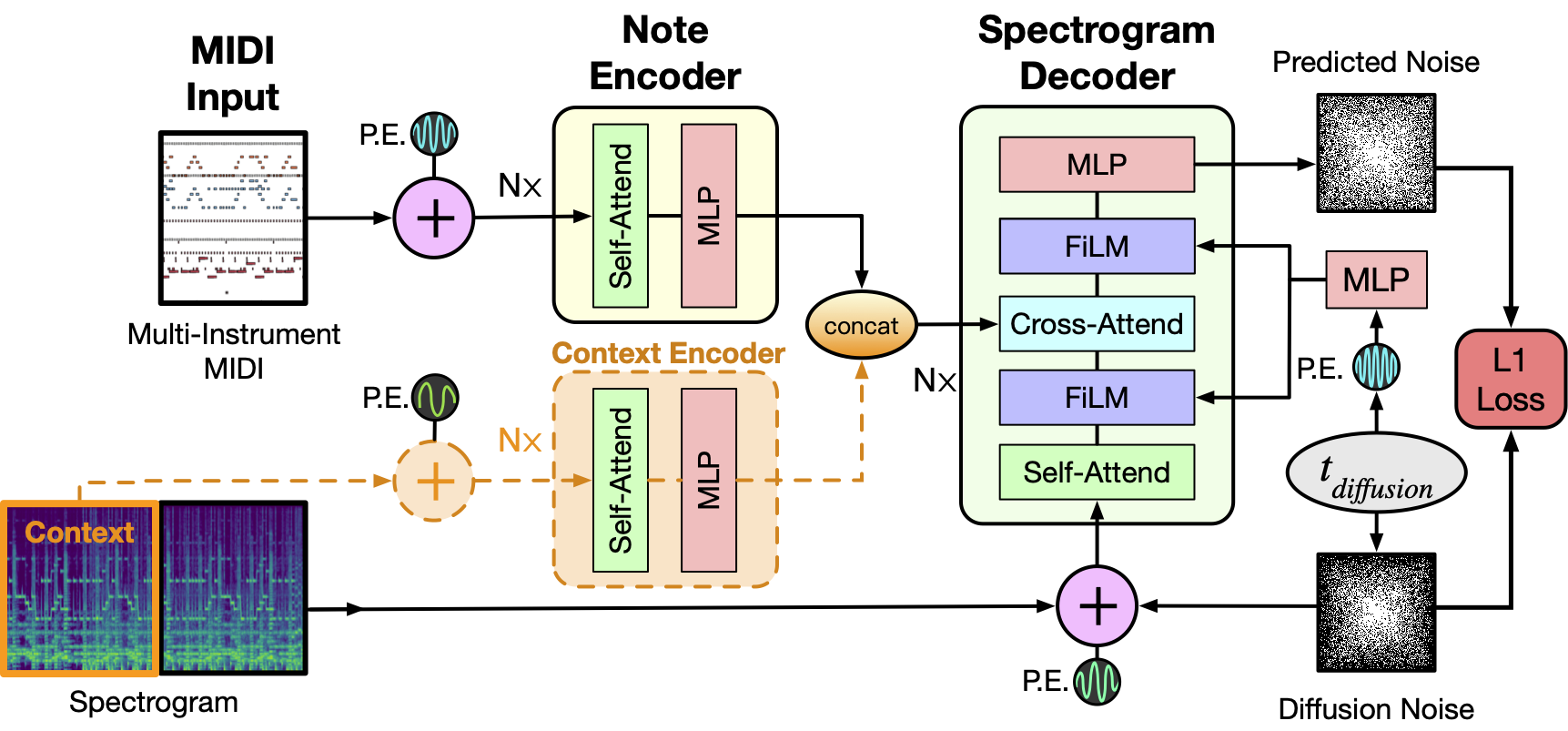
|
||||
|
||||
As depicted above the model takes as input a MIDI file and tokenizes it into a sequence of 5 second intervals. Each tokenized interval then together with positional encodings is passed through the Note Encoder and its representation is concatenated with the previous window's generated spectrogram representation obtained via the Context Encoder. For the initial 5 second window this is set to zero. The resulting context is then used as conditioning to sample the denoised Spectrogram from the MIDI window and we concatenate this spectrogram to the final output as well as use it for the context of the next MIDI window. The process repeats till we have gone over all the MIDI inputs. Finally a MelGAN decoder converts the potentially long spectrogram to audio which is the final result of this pipeline.
|
||||
|
||||
<Tip>
|
||||
|
||||
Make sure to check out the Schedulers [guide](../../using-diffusers/schedulers) to learn how to explore the tradeoff between scheduler speed and quality, and see the [reuse components across pipelines](../../using-diffusers/loading#reuse-components-across-pipelines) section to learn how to efficiently load the same components into multiple pipelines.
|
||||
|
||||
</Tip>
|
||||
|
||||
## SpectrogramDiffusionPipeline
|
||||
[[autodoc]] SpectrogramDiffusionPipeline
|
||||
- all
|
||||
- __call__
|
||||
|
||||
## AudioPipelineOutput
|
||||
[[autodoc]] pipelines.AudioPipelineOutput
|
||||
@@ -31,14 +31,14 @@ Make sure to check out the Stable Diffusion [Tips](overview#tips) section to lea
|
||||
|
||||
## StableDiffusionLDM3DPipeline
|
||||
|
||||
[[autodoc]] pipelines.stable_diffusion_ldm3d.pipeline_stable_diffusion_ldm3d.StableDiffusionLDM3DPipeline
|
||||
[[autodoc]] pipelines.stable_diffusion.pipeline_stable_diffusion_ldm3d.StableDiffusionLDM3DPipeline
|
||||
- all
|
||||
- __call__
|
||||
|
||||
|
||||
## LDM3DPipelineOutput
|
||||
|
||||
[[autodoc]] pipelines.stable_diffusion_ldm3d.pipeline_stable_diffusion_ldm3d.LDM3DPipelineOutput
|
||||
[[autodoc]] pipelines.stable_diffusion.pipeline_stable_diffusion_ldm3d.LDM3DPipelineOutput
|
||||
- all
|
||||
- __call__
|
||||
|
||||
|
||||
@@ -20,7 +20,7 @@ The abstract from the paper is:
|
||||
|
||||
## Tips
|
||||
|
||||
- SDXL Turbo uses the exact same architecture as [SDXL](./stable_diffusion_xl), which means it also has the same API. Please refer to the [SDXL](./stable_diffusion_xl) API reference for more details.
|
||||
- SDXL Turbo uses the exact same architecture as [SDXL](./stable_diffusion_xl).
|
||||
- SDXL Turbo should disable guidance scale by setting `guidance_scale=0.0`
|
||||
- SDXL Turbo should use `timestep_spacing='trailing'` for the scheduler and use between 1 and 4 steps.
|
||||
- SDXL Turbo has been trained to generate images of size 512x512.
|
||||
@@ -28,8 +28,26 @@ The abstract from the paper is:
|
||||
|
||||
<Tip>
|
||||
|
||||
To learn how to use SDXL Turbo for various tasks, how to optimize performance, and other usage examples, take a look at the [SDXL Turbo](../../../using-diffusers/sdxl_turbo) guide.
|
||||
To learn how to use SDXL Turbo for various tasks, how to optimize performance, and other usage examples, take a look at the [Stable Diffusion XL](../../../using-diffusers/sdxl_turbo) guide.
|
||||
|
||||
Check out the [Stability AI](https://huggingface.co/stabilityai) Hub organization for the official base and refiner model checkpoints!
|
||||
|
||||
</Tip>
|
||||
|
||||
## StableDiffusionXLPipeline
|
||||
|
||||
[[autodoc]] StableDiffusionXLPipeline
|
||||
- all
|
||||
- __call__
|
||||
|
||||
## StableDiffusionXLImg2ImgPipeline
|
||||
|
||||
[[autodoc]] StableDiffusionXLImg2ImgPipeline
|
||||
- all
|
||||
- __call__
|
||||
|
||||
## StableDiffusionXLInpaintPipeline
|
||||
|
||||
[[autodoc]] StableDiffusionXLInpaintPipeline
|
||||
- all
|
||||
- __call__
|
||||
|
||||
33
docs/source/en/api/pipelines/stochastic_karras_ve.md
Normal file
33
docs/source/en/api/pipelines/stochastic_karras_ve.md
Normal file
@@ -0,0 +1,33 @@
|
||||
<!--Copyright 2023 The HuggingFace Team. All rights reserved.
|
||||
|
||||
Licensed under the Apache License, Version 2.0 (the "License"); you may not use this file except in compliance with
|
||||
the License. You may obtain a copy of the License at
|
||||
|
||||
http://www.apache.org/licenses/LICENSE-2.0
|
||||
|
||||
Unless required by applicable law or agreed to in writing, software distributed under the License is distributed on
|
||||
an "AS IS" BASIS, WITHOUT WARRANTIES OR CONDITIONS OF ANY KIND, either express or implied. See the License for the
|
||||
specific language governing permissions and limitations under the License.
|
||||
-->
|
||||
|
||||
# Stochastic Karras VE
|
||||
|
||||
[Elucidating the Design Space of Diffusion-Based Generative Models](https://huggingface.co/papers/2206.00364) is by Tero Karras, Miika Aittala, Timo Aila and Samuli Laine. This pipeline implements the stochastic sampling tailored to variance expanding (VE) models.
|
||||
|
||||
The abstract from the paper:
|
||||
|
||||
*We argue that the theory and practice of diffusion-based generative models are currently unnecessarily convoluted and seek to remedy the situation by presenting a design space that clearly separates the concrete design choices. This lets us identify several changes to both the sampling and training processes, as well as preconditioning of the score networks. Together, our improvements yield new state-of-the-art FID of 1.79 for CIFAR-10 in a class-conditional setting and 1.97 in an unconditional setting, with much faster sampling (35 network evaluations per image) than prior designs. To further demonstrate their modular nature, we show that our design changes dramatically improve both the efficiency and quality obtainable with pre-trained score networks from previous work, including improving the FID of a previously trained ImageNet-64 model from 2.07 to near-SOTA 1.55, and after re-training with our proposed improvements to a new SOTA of 1.36.*
|
||||
|
||||
<Tip>
|
||||
|
||||
Make sure to check out the Schedulers [guide](../../using-diffusers/schedulers) to learn how to explore the tradeoff between scheduler speed and quality, and see the [reuse components across pipelines](../../using-diffusers/loading#reuse-components-across-pipelines) section to learn how to efficiently load the same components into multiple pipelines.
|
||||
|
||||
</Tip>
|
||||
|
||||
## KarrasVePipeline
|
||||
[[autodoc]] KarrasVePipeline
|
||||
- all
|
||||
- __call__
|
||||
|
||||
## ImagePipelineOutput
|
||||
[[autodoc]] pipelines.ImagePipelineOutput
|
||||
54
docs/source/en/api/pipelines/versatile_diffusion.md
Normal file
54
docs/source/en/api/pipelines/versatile_diffusion.md
Normal file
@@ -0,0 +1,54 @@
|
||||
<!--Copyright 2023 The HuggingFace Team. All rights reserved.
|
||||
|
||||
Licensed under the Apache License, Version 2.0 (the "License"); you may not use this file except in compliance with
|
||||
the License. You may obtain a copy of the License at
|
||||
|
||||
http://www.apache.org/licenses/LICENSE-2.0
|
||||
|
||||
Unless required by applicable law or agreed to in writing, software distributed under the License is distributed on
|
||||
an "AS IS" BASIS, WITHOUT WARRANTIES OR CONDITIONS OF ANY KIND, either express or implied. See the License for the
|
||||
specific language governing permissions and limitations under the License.
|
||||
-->
|
||||
|
||||
# Versatile Diffusion
|
||||
|
||||
Versatile Diffusion was proposed in [Versatile Diffusion: Text, Images and Variations All in One Diffusion Model](https://huggingface.co/papers/2211.08332) by Xingqian Xu, Zhangyang Wang, Eric Zhang, Kai Wang, Humphrey Shi.
|
||||
|
||||
The abstract from the paper is:
|
||||
|
||||
*Recent advances in diffusion models have set an impressive milestone in many generation tasks, and trending works such as DALL-E2, Imagen, and Stable Diffusion have attracted great interest. Despite the rapid landscape changes, recent new approaches focus on extensions and performance rather than capacity, thus requiring separate models for separate tasks. In this work, we expand the existing single-flow diffusion pipeline into a multi-task multimodal network, dubbed Versatile Diffusion (VD), that handles multiple flows of text-to-image, image-to-text, and variations in one unified model. The pipeline design of VD instantiates a unified multi-flow diffusion framework, consisting of sharable and swappable layer modules that enable the crossmodal generality beyond images and text. Through extensive experiments, we demonstrate that VD successfully achieves the following: a) VD outperforms the baseline approaches and handles all its base tasks with competitive quality; b) VD enables novel extensions such as disentanglement of style and semantics, dual- and multi-context blending, etc.; c) The success of our multi-flow multimodal framework over images and text may inspire further diffusion-based universal AI research.*
|
||||
|
||||
## Tips
|
||||
|
||||
You can load the more memory intensive "all-in-one" [`VersatileDiffusionPipeline`] that supports all the tasks or use the individual pipelines which are more memory efficient.
|
||||
|
||||
| **Pipeline** | **Supported tasks** |
|
||||
|------------------------------------------------------|-----------------------------------|
|
||||
| [`VersatileDiffusionPipeline`] | all of the below |
|
||||
| [`VersatileDiffusionTextToImagePipeline`] | text-to-image |
|
||||
| [`VersatileDiffusionImageVariationPipeline`] | image variation |
|
||||
| [`VersatileDiffusionDualGuidedPipeline`] | image-text dual guided generation |
|
||||
|
||||
<Tip>
|
||||
|
||||
Make sure to check out the Schedulers [guide](../../using-diffusers/schedulers) to learn how to explore the tradeoff between scheduler speed and quality, and see the [reuse components across pipelines](../../using-diffusers/loading#reuse-components-across-pipelines) section to learn how to efficiently load the same components into multiple pipelines.
|
||||
|
||||
</Tip>
|
||||
|
||||
## VersatileDiffusionPipeline
|
||||
[[autodoc]] VersatileDiffusionPipeline
|
||||
|
||||
## VersatileDiffusionTextToImagePipeline
|
||||
[[autodoc]] VersatileDiffusionTextToImagePipeline
|
||||
- all
|
||||
- __call__
|
||||
|
||||
## VersatileDiffusionImageVariationPipeline
|
||||
[[autodoc]] VersatileDiffusionImageVariationPipeline
|
||||
- all
|
||||
- __call__
|
||||
|
||||
## VersatileDiffusionDualGuidedPipeline
|
||||
[[autodoc]] VersatileDiffusionDualGuidedPipeline
|
||||
- all
|
||||
- __call__
|
||||
35
docs/source/en/api/pipelines/vq_diffusion.md
Normal file
35
docs/source/en/api/pipelines/vq_diffusion.md
Normal file
@@ -0,0 +1,35 @@
|
||||
<!--Copyright 2023 The HuggingFace Team. All rights reserved.
|
||||
|
||||
Licensed under the Apache License, Version 2.0 (the "License"); you may not use this file except in compliance with
|
||||
the License. You may obtain a copy of the License at
|
||||
|
||||
http://www.apache.org/licenses/LICENSE-2.0
|
||||
|
||||
Unless required by applicable law or agreed to in writing, software distributed under the License is distributed on
|
||||
an "AS IS" BASIS, WITHOUT WARRANTIES OR CONDITIONS OF ANY KIND, either express or implied. See the License for the
|
||||
specific language governing permissions and limitations under the License.
|
||||
-->
|
||||
|
||||
# VQ Diffusion
|
||||
|
||||
[Vector Quantized Diffusion Model for Text-to-Image Synthesis](https://huggingface.co/papers/2111.14822) is by Shuyang Gu, Dong Chen, Jianmin Bao, Fang Wen, Bo Zhang, Dongdong Chen, Lu Yuan, Baining Guo.
|
||||
|
||||
The abstract from the paper is:
|
||||
|
||||
*We present the vector quantized diffusion (VQ-Diffusion) model for text-to-image generation. This method is based on a vector quantized variational autoencoder (VQ-VAE) whose latent space is modeled by a conditional variant of the recently developed Denoising Diffusion Probabilistic Model (DDPM). We find that this latent-space method is well-suited for text-to-image generation tasks because it not only eliminates the unidirectional bias with existing methods but also allows us to incorporate a mask-and-replace diffusion strategy to avoid the accumulation of errors, which is a serious problem with existing methods. Our experiments show that the VQ-Diffusion produces significantly better text-to-image generation results when compared with conventional autoregressive (AR) models with similar numbers of parameters. Compared with previous GAN-based text-to-image methods, our VQ-Diffusion can handle more complex scenes and improve the synthesized image quality by a large margin. Finally, we show that the image generation computation in our method can be made highly efficient by reparameterization. With traditional AR methods, the text-to-image generation time increases linearly with the output image resolution and hence is quite time consuming even for normal size images. The VQ-Diffusion allows us to achieve a better trade-off between quality and speed. Our experiments indicate that the VQ-Diffusion model with the reparameterization is fifteen times faster than traditional AR methods while achieving a better image quality.*
|
||||
|
||||
The original codebase can be found at [microsoft/VQ-Diffusion](https://github.com/microsoft/VQ-Diffusion).
|
||||
|
||||
<Tip>
|
||||
|
||||
Make sure to check out the Schedulers [guide](../../using-diffusers/schedulers) to learn how to explore the tradeoff between scheduler speed and quality, and see the [reuse components across pipelines](../../using-diffusers/loading#reuse-components-across-pipelines) section to learn how to efficiently load the same components into multiple pipelines.
|
||||
|
||||
</Tip>
|
||||
|
||||
## VQDiffusionPipeline
|
||||
[[autodoc]] VQDiffusionPipeline
|
||||
- all
|
||||
- __call__
|
||||
|
||||
## ImagePipelineOutput
|
||||
[[autodoc]] pipelines.ImagePipelineOutput
|
||||
@@ -179,7 +179,7 @@ accelerate launch --mixed_precision="fp16" train_text_to_image_lora.py \
|
||||
--pretrained_model_name_or_path=$MODEL_NAME \
|
||||
--dataset_name=$DATASET_NAME \
|
||||
--dataloader_num_workers=8 \
|
||||
--resolution=512 \
|
||||
--resolution=512
|
||||
--center_crop \
|
||||
--random_flip \
|
||||
--train_batch_size=1 \
|
||||
@@ -214,4 +214,4 @@ image = pipeline("A pokemon with blue eyes").images[0]
|
||||
Congratulations on training a new model with LoRA! To learn more about how to use your new model, the following guides may be helpful:
|
||||
|
||||
- Learn how to [load different LoRA formats](../using-diffusers/loading_adapters#LoRA) trained using community trainers like Kohya and TheLastBen.
|
||||
- Learn how to use and [combine multiple LoRA's](../tutorials/using_peft_for_inference) with PEFT for inference.
|
||||
- Learn how to use and [combine multiple LoRA's](../tutorials/using_peft_for_inference) with PEFT for inference.
|
||||
@@ -12,7 +12,7 @@ specific language governing permissions and limitations under the License.
|
||||
|
||||
# T2I-Adapter
|
||||
|
||||
[T2I-Adapter](https://hf.co/papers/2302.08453) is a lightweight adapter model that provides an additional conditioning input image (line art, canny, sketch, depth, pose) to better control image generation. It is similar to a ControlNet, but it is a lot smaller (~77M parameters and ~300MB file size) because its only inserts weights into the UNet instead of copying and training it.
|
||||
[T2I-Adapter]((https://hf.co/papers/2302.08453)) is a lightweight adapter model that provides an additional conditioning input image (line art, canny, sketch, depth, pose) to better control image generation. It is similar to a ControlNet, but it is a lot smaller (~77M parameters and ~300MB file size) because its only inserts weights into the UNet instead of copying and training it.
|
||||
|
||||
The T2I-Adapter is only available for training with the Stable Diffusion XL (SDXL) model.
|
||||
|
||||
@@ -224,4 +224,4 @@ image.save("./output.png")
|
||||
|
||||
Congratulations on training a T2I-Adapter model! 🎉 To learn more:
|
||||
|
||||
- Read the [Efficient Controllable Generation for SDXL with T2I-Adapters](https://huggingface.co/blog/t2i-sdxl-adapters) blog post to learn more details about the experimental results from the T2I-Adapter team.
|
||||
- Read the [Efficient Controllable Generation for SDXL with T2I-Adapters](https://www.cs.cmu.edu/~custom-diffusion/) blog post to learn more details about the experimental results from the T2I-Adapter team.
|
||||
|
||||
@@ -186,7 +186,7 @@ accelerate launch train_unconditional.py \
|
||||
If you're training with more than one GPU, add the `--multi_gpu` parameter to the training command:
|
||||
|
||||
```bash
|
||||
accelerate launch --multi_gpu train_unconditional.py \
|
||||
accelerate launch --mixed_precision="fp16" --multi_gpu train_unconditional.py \
|
||||
--dataset_name="huggan/flowers-102-categories" \
|
||||
--output_dir="ddpm-ema-flowers-64" \
|
||||
--mixed_precision="fp16" \
|
||||
|
||||
@@ -1,318 +0,0 @@
|
||||
<!--Copyright 2023 The HuggingFace Team. All rights reserved.
|
||||
|
||||
Licensed under the Apache License, Version 2.0 (the "License"); you may not use this file except in compliance with
|
||||
the License. You may obtain a copy of the License at
|
||||
|
||||
http://www.apache.org/licenses/LICENSE-2.0
|
||||
|
||||
Unless required by applicable law or agreed to in writing, software distributed under the License is distributed on
|
||||
an "AS IS" BASIS, WITHOUT WARRANTIES OR CONDITIONS OF ANY KIND, either express or implied. See the License for the
|
||||
specific language governing permissions and limitations under the License.
|
||||
-->
|
||||
|
||||
# Accelerate inference of text-to-image diffusion models
|
||||
|
||||
Diffusion models are known to be slower than their counter parts, GANs, because of the iterative and sequential reverse diffusion process. Recent works try to address limitation with:
|
||||
|
||||
* progressive timestep distillation (such as [LCM LoRA](../using-diffusers/inference_with_lcm_lora.md))
|
||||
* model compression (such as [SSD-1B](https://huggingface.co/segmind/SSD-1B))
|
||||
* reusing adjacent features of the denoiser (such as [DeepCache](https://github.com/horseee/DeepCache))
|
||||
|
||||
In this tutorial, we focus on leveraging the power of PyTorch 2 to accelerate the inference latency of text-to-image diffusion pipeline, instead. We will use [Stable Diffusion XL (SDXL)](../using-diffusers/sdxl.md) as a case study, but the techniques we will discuss should extend to other text-to-image diffusion pipelines.
|
||||
|
||||
## Setup
|
||||
|
||||
Make sure you're on the latest version of `diffusers`:
|
||||
|
||||
```bash
|
||||
pip install -U diffusers
|
||||
```
|
||||
|
||||
Then upgrade the other required libraries too:
|
||||
|
||||
```bash
|
||||
pip install -U transformers accelerate peft
|
||||
```
|
||||
|
||||
To benefit from the fastest kernels, use PyTorch nightly. You can find the installation instructions [here](https://pytorch.org/).
|
||||
|
||||
To report the numbers shown below, we used an 80GB 400W A100 with its clock rate set to the maximum.
|
||||
|
||||
_This tutorial doesn't present the benchmarking code and focuses on how to perform the optimizations, instead. For the full benchmarking code, refer to: [https://github.com/huggingface/diffusion-fast](https://github.com/huggingface/diffusion-fast)._
|
||||
|
||||
## Baseline
|
||||
|
||||
Let's start with a baseline. Disable the use of a reduced precision and [`scaled_dot_product_attention`](../optimization/torch2.0.md):
|
||||
|
||||
```python
|
||||
from diffusers import StableDiffusionXLPipeline
|
||||
|
||||
# Load the pipeline in full-precision and place its model components on CUDA.
|
||||
pipe = StableDiffusionXLPipeline.from_pretrained(
|
||||
"stabilityai/stable-diffusion-xl-base-1.0"
|
||||
).to("cuda")
|
||||
|
||||
# Run the attention ops without efficiency.
|
||||
pipe.unet.set_default_attn_processor()
|
||||
pipe.vae.set_default_attn_processor()
|
||||
|
||||
prompt = "Astronaut in a jungle, cold color palette, muted colors, detailed, 8k"
|
||||
image = pipe(prompt, num_inference_steps=30).images[0]
|
||||
```
|
||||
|
||||
This takes 7.36 seconds:
|
||||
|
||||
<div align="center">
|
||||
|
||||
<img src="https://huggingface.co/datasets/sayakpaul/sample-datasets/resolve/main/progressive-acceleration-sdxl/SDXL%2C_Batch_Size%3A_1%2C_Steps%3A_30_0.png" width=500>
|
||||
|
||||
</div>
|
||||
|
||||
## Running inference in bfloat16
|
||||
|
||||
Enable the first optimization: use a reduced precision to run the inference.
|
||||
|
||||
```python
|
||||
from diffusers import StableDiffusionXLPipeline
|
||||
import torch
|
||||
|
||||
pipe = StableDiffusionXLPipeline.from_pretrained(
|
||||
"stabilityai/stable-diffusion-xl-base-1.0", torch_dtype=torch.bfloat16
|
||||
).to("cuda")
|
||||
|
||||
# Run the attention ops without efficiency.
|
||||
pipe.unet.set_default_attn_processor()
|
||||
pipe.vae.set_default_attn_processor()
|
||||
|
||||
prompt = "Astronaut in a jungle, cold color palette, muted colors, detailed, 8k"
|
||||
image = pipe(prompt, num_inference_steps=30).images[0]
|
||||
```
|
||||
|
||||
bfloat16 reduces the latency from 7.36 seconds to 4.63 seconds:
|
||||
|
||||
<div align="center">
|
||||
|
||||
<img src="https://huggingface.co/datasets/sayakpaul/sample-datasets/resolve/main/progressive-acceleration-sdxl/SDXL%2C_Batch_Size%3A_1%2C_Steps%3A_30_1.png" width=500>
|
||||
|
||||
</div>
|
||||
|
||||
**Why bfloat16?**
|
||||
|
||||
* Using a reduced numerical precision (such as float16, bfloat16) to run inference doesn’t affect the generation quality but significantly improves latency.
|
||||
* The benefits of using the bfloat16 numerical precision as compared to float16 are hardware-dependent. Modern generations of GPUs tend to favor bfloat16.
|
||||
* Furthermore, in our experiments, we bfloat16 to be much more resilient when used with quantization in comparison to float16.
|
||||
|
||||
We have a [dedicated guide](../optimization/fp16.md) for running inference in a reduced precision.
|
||||
|
||||
## Running attention efficiently
|
||||
|
||||
Attention blocks are intensive to run. But with PyTorch's [`scaled_dot_product_attention`](../optimization/torch2.0.md), we can run them efficiently.
|
||||
|
||||
```python
|
||||
from diffusers import StableDiffusionXLPipeline
|
||||
import torch
|
||||
|
||||
pipe = StableDiffusionXLPipeline.from_pretrained(
|
||||
"stabilityai/stable-diffusion-xl-base-1.0", torch_dtype=torch.bfloat16
|
||||
).to("cuda")
|
||||
|
||||
prompt = "Astronaut in a jungle, cold color palette, muted colors, detailed, 8k"
|
||||
image = pipe(prompt, num_inference_steps=30).images[0]
|
||||
```
|
||||
|
||||
`scaled_dot_product_attention` improves the latency from 4.63 seconds to 3.31 seconds.
|
||||
|
||||
<div align="center">
|
||||
|
||||
<img src="https://huggingface.co/datasets/sayakpaul/sample-datasets/resolve/main/progressive-acceleration-sdxl/SDXL%2C_Batch_Size%3A_1%2C_Steps%3A_30_2.png" width=500>
|
||||
|
||||
</div>
|
||||
|
||||
## Use faster kernels with torch.compile
|
||||
|
||||
Compile the UNet and the VAE to benefit from the faster kernels. First, configure a few compiler flags:
|
||||
|
||||
```python
|
||||
from diffusers import StableDiffusionXLPipeline
|
||||
import torch
|
||||
|
||||
torch._inductor.config.conv_1x1_as_mm = True
|
||||
torch._inductor.config.coordinate_descent_tuning = True
|
||||
torch._inductor.config.epilogue_fusion = False
|
||||
torch._inductor.config.coordinate_descent_check_all_directions = True
|
||||
```
|
||||
|
||||
For the full list of compiler flags, refer to [this file](https://github.com/pytorch/pytorch/blob/main/torch/_inductor/config.py).
|
||||
|
||||
It is also important to change the memory layout of the UNet and the VAE to “channels_last” when compiling them. This ensures maximum speed:
|
||||
|
||||
```python
|
||||
pipe.unet.to(memory_format=torch.channels_last)
|
||||
pipe.vae.to(memory_format=torch.channels_last)
|
||||
```
|
||||
|
||||
Then, compile and perform inference:
|
||||
|
||||
```python
|
||||
# Compile the UNet and VAE.
|
||||
pipe.unet = torch.compile(pipe.unet, mode="max-autotune", fullgraph=True)
|
||||
pipe.vae.decode = torch.compile(pipe.vae.decode, mode="max-autotune", fullgraph=True)
|
||||
|
||||
prompt = "Astronaut in a jungle, cold color palette, muted colors, detailed, 8k"
|
||||
|
||||
# First call to `pipe` will be slow, subsequent ones will be faster.
|
||||
image = pipe(prompt, num_inference_steps=30).images[0]
|
||||
```
|
||||
|
||||
`torch.compile` offers different backends and modes. As we’re aiming for maximum inference speed, we opt for the inductor backend using the “max-autotune”. “max-autotune” uses CUDA graphs and optimizes the compilation graph specifically for latency. Specifying fullgraph to be True ensures that there are no graph breaks in the underlying model, ensuring the fullest potential of `torch.compile`.
|
||||
|
||||
Using SDPA attention and compiling both the UNet and VAE reduces the latency from 3.31 seconds to 2.54 seconds.
|
||||
|
||||
<div align="center">
|
||||
|
||||
<img src="https://huggingface.co/datasets/sayakpaul/sample-datasets/resolve/main/progressive-acceleration-sdxl/SDXL%2C_Batch_Size%3A_1%2C_Steps%3A_30_3.png" width=500>
|
||||
|
||||
</div>
|
||||
|
||||
## Combine the projection matrices of attention
|
||||
|
||||
Both the UNet and the VAE used in SDXL make use of Transformer-like blocks. A Transformer block consists of attention blocks and feed-forward blocks.
|
||||
|
||||
In an attention block, the input is projected into three sub-spaces using three different projection matrices – Q, K, and V. In the naive implementation, these projections are performed separately on the input. But we can horizontally combine the projection matrices into a single matrix and perform the projection in one shot. This increases the size of the matmuls of the input projections and improves the impact of quantization (to be discussed next).
|
||||
|
||||
Enabling this kind of computation in Diffusers just takes a single line of code:
|
||||
|
||||
```python
|
||||
pipe.fuse_qkv_projections()
|
||||
```
|
||||
|
||||
It provides a minor boost from 2.54 seconds to 2.52 seconds.
|
||||
|
||||
<div align="center">
|
||||
|
||||
<img src="https://huggingface.co/datasets/sayakpaul/sample-datasets/resolve/main/progressive-acceleration-sdxl/SDXL%2C_Batch_Size%3A_1%2C_Steps%3A_30_4.png" width=500>
|
||||
|
||||
</div>
|
||||
|
||||
<Tip warning={true}>
|
||||
|
||||
Support for `fuse_qkv_projections()` is limited and experimental. As such, it's not available for many non-SD pipelines such as [Kandinsky](../using-diffusers/kandinsky.md). You can refer to [this PR](https://github.com/huggingface/diffusers/pull/6179) to get an idea about how to support this kind of computation.
|
||||
|
||||
</Tip>
|
||||
|
||||
## Dynamic quantization
|
||||
|
||||
Aapply [dynamic int8 quantization](https://pytorch.org/tutorials/recipes/recipes/dynamic_quantization.html) to both the UNet and the VAE. This is because quantization adds additional conversion overhead to the model that is hopefully made up for by faster matmuls (dynamic quantization). If the matmuls are too small, these techniques may degrade performance.
|
||||
|
||||
<Tip>
|
||||
|
||||
Through experimentation, we found that certain linear layers in the UNet and the VAE don’t benefit from dynamic int8 quantization. You can check out the full code for filtering those layers [here](https://github.com/huggingface/diffusion-fast/blob/0f169640b1db106fe6a479f78c1ed3bfaeba3386/utils/pipeline_utils.py#L16) (referred to as `dynamic_quant_filter_fn` below).
|
||||
|
||||
</Tip>
|
||||
|
||||
You will leverage the ultra-lightweight pure PyTorch library [torchao](https://github.com/pytorch-labs/ao) to use its user-friendly APIs for quantization.
|
||||
|
||||
First, configure all the compiler tags:
|
||||
|
||||
```python
|
||||
from diffusers import StableDiffusionXLPipeline
|
||||
import torch
|
||||
|
||||
# Notice the two new flags at the end.
|
||||
torch._inductor.config.conv_1x1_as_mm = True
|
||||
torch._inductor.config.coordinate_descent_tuning = True
|
||||
torch._inductor.config.epilogue_fusion = False
|
||||
torch._inductor.config.coordinate_descent_check_all_directions = True
|
||||
torch._inductor.config.force_fuse_int_mm_with_mul = True
|
||||
torch._inductor.config.use_mixed_mm = True
|
||||
```
|
||||
|
||||
Define the filtering functions:
|
||||
|
||||
```python
|
||||
def dynamic_quant_filter_fn(mod, *args):
|
||||
return (
|
||||
isinstance(mod, torch.nn.Linear)
|
||||
and mod.in_features > 16
|
||||
and (mod.in_features, mod.out_features)
|
||||
not in [
|
||||
(1280, 640),
|
||||
(1920, 1280),
|
||||
(1920, 640),
|
||||
(2048, 1280),
|
||||
(2048, 2560),
|
||||
(2560, 1280),
|
||||
(256, 128),
|
||||
(2816, 1280),
|
||||
(320, 640),
|
||||
(512, 1536),
|
||||
(512, 256),
|
||||
(512, 512),
|
||||
(640, 1280),
|
||||
(640, 1920),
|
||||
(640, 320),
|
||||
(640, 5120),
|
||||
(640, 640),
|
||||
(960, 320),
|
||||
(960, 640),
|
||||
]
|
||||
)
|
||||
|
||||
|
||||
def conv_filter_fn(mod, *args):
|
||||
return (
|
||||
isinstance(mod, torch.nn.Conv2d) and mod.kernel_size == (1, 1) and 128 in [mod.in_channels, mod.out_channels]
|
||||
)
|
||||
```
|
||||
|
||||
Then apply all the optimizations discussed so far:
|
||||
|
||||
```python
|
||||
# SDPA + bfloat16.
|
||||
pipe = StableDiffusionXLPipeline.from_pretrained(
|
||||
"stabilityai/stable-diffusion-xl-base-1.0", torch_dtype=torch.bfloat16
|
||||
).to("cuda")
|
||||
|
||||
# Combine attention projection matrices.
|
||||
pipe.fuse_qkv_projections()
|
||||
|
||||
# Change the memory layout.
|
||||
pipe.unet.to(memory_format=torch.channels_last)
|
||||
pipe.vae.to(memory_format=torch.channels_last)
|
||||
```
|
||||
|
||||
Since this quantization support is limited to linear layers only, we also turn suitable pointwise convolution layers into linear layers to maximize the benefit.
|
||||
|
||||
```python
|
||||
from torchao import swap_conv2d_1x1_to_linear
|
||||
|
||||
swap_conv2d_1x1_to_linear(pipe.unet, conv_filter_fn)
|
||||
swap_conv2d_1x1_to_linear(pipe.vae, conv_filter_fn)
|
||||
```
|
||||
|
||||
Apply dynamic quantization:
|
||||
|
||||
```python
|
||||
from torchao import apply_dynamic_quant
|
||||
|
||||
apply_dynamic_quant(pipe.unet, dynamic_quant_filter_fn)
|
||||
apply_dynamic_quant(pipe.vae, dynamic_quant_filter_fn)
|
||||
```
|
||||
|
||||
Finally, compile and perform inference:
|
||||
|
||||
```python
|
||||
pipe.unet = torch.compile(pipe.unet, mode="max-autotune", fullgraph=True)
|
||||
pipe.vae.decode = torch.compile(pipe.vae.decode, mode="max-autotune", fullgraph=True)
|
||||
|
||||
prompt = "Astronaut in a jungle, cold color palette, muted colors, detailed, 8k"
|
||||
image = pipe(prompt, num_inference_steps=30).images[0]
|
||||
```
|
||||
|
||||
Applying dynamic quantization improves the latency from 2.52 seconds to 2.43 seconds.
|
||||
|
||||
<div align="center">
|
||||
|
||||
<img src="https://huggingface.co/datasets/sayakpaul/sample-datasets/resolve/main/progressive-acceleration-sdxl/SDXL%2C_Batch_Size%3A_1%2C_Steps%3A_30_5.png" width=500>
|
||||
|
||||
</div>
|
||||
@@ -183,26 +183,3 @@ image = pipe(prompt, num_inference_steps=30, generator=torch.manual_seed(0)).ima
|
||||
# Gets the Unet back to the original state
|
||||
pipe.unfuse_lora()
|
||||
```
|
||||
|
||||
You can also fuse some adapters using `adapter_names` for faster generation:
|
||||
|
||||
```py
|
||||
pipe.load_lora_weights("nerijs/pixel-art-xl", weight_name="pixel-art-xl.safetensors", adapter_name="pixel")
|
||||
pipe.load_lora_weights("CiroN2022/toy-face", weight_name="toy_face_sdxl.safetensors", adapter_name="toy")
|
||||
|
||||
pipe.set_adapters(["pixel"], adapter_weights=[0.5, 1.0])
|
||||
# Fuses the LoRAs into the Unet
|
||||
pipe.fuse_lora(adapter_names=["pixel"])
|
||||
|
||||
prompt = "a hacker with a hoodie, pixel art"
|
||||
image = pipe(prompt, num_inference_steps=30, generator=torch.manual_seed(0)).images[0]
|
||||
|
||||
# Gets the Unet back to the original state
|
||||
pipe.unfuse_lora()
|
||||
|
||||
# Fuse all adapters
|
||||
pipe.fuse_lora(adapter_names=["pixel", "toy"])
|
||||
|
||||
prompt = "toy_face of a hacker with a hoodie, pixel art"
|
||||
image = pipe(prompt, num_inference_steps=30, generator=torch.manual_seed(0)).images[0]
|
||||
```
|
||||
|
||||
@@ -63,42 +63,3 @@ With callbacks, you can implement features such as dynamic CFG without having to
|
||||
🤗 Diffusers currently only supports `callback_on_step_end`, but feel free to open a [feature request](https://github.com/huggingface/diffusers/issues/new/choose) if you have a cool use-case and require a callback function with a different execution point!
|
||||
|
||||
</Tip>
|
||||
|
||||
|
||||
## Using Callbacks to interrupt the Diffusion Process
|
||||
|
||||
The following Pipelines support interrupting the diffusion process via callback
|
||||
|
||||
- [StableDiffusionPipeline](../api/pipelines/stable_diffusion/overview.md)
|
||||
- [StableDiffusionImg2ImgPipeline](..api/pipelines/stable_diffusion/img2img.md)
|
||||
- [StableDiffusionInpaintPipeline](..api/pipelines/stable_diffusion/inpaint.md)
|
||||
- [StableDiffusionXLPipeline](../api/pipelines/stable_diffusion/stable_diffusion_xl.md)
|
||||
- [StableDiffusionXLImg2ImgPipeline](../api/pipelines/stable_diffusion/stable_diffusion_xl.md)
|
||||
- [StableDiffusionXLInpaintPipeline](../api/pipelines/stable_diffusion/stable_diffusion_xl.md)
|
||||
|
||||
Interrupting the diffusion process is particularly useful when building UIs that work with Diffusers because it allows users to stop the generation process if they're unhappy with the intermediate results. You can incorporate this into your pipeline with a callback.
|
||||
|
||||
This callback function should take the following arguments: `pipe`, `i`, `t`, and `callback_kwargs` (this must be returned). Set the pipeline's `_interrupt` attribute to `True` to stop the diffusion process after a certain number of steps. You are also free to implement your own custom stopping logic inside the callback.
|
||||
|
||||
In this example, the diffusion process is stopped after 10 steps even though `num_inference_steps` is set to 50.
|
||||
|
||||
```python
|
||||
from diffusers import StableDiffusionPipeline
|
||||
|
||||
pipe = StableDiffusionPipeline.from_pretrained("runwayml/stable-diffusion-v1-5")
|
||||
pipe.enable_model_cpu_offload()
|
||||
num_inference_steps = 50
|
||||
|
||||
def interrupt_callback(pipe, i, t, callback_kwargs):
|
||||
stop_idx = 10
|
||||
if i == stop_idx:
|
||||
pipe._interrupt = True
|
||||
|
||||
return callback_kwargs
|
||||
|
||||
pipe(
|
||||
"A photo of a cat",
|
||||
num_inference_steps=num_inference_steps,
|
||||
callback_on_step_end=interrupt_callback,
|
||||
)
|
||||
```
|
||||
|
||||
@@ -203,7 +203,7 @@ def make_inpaint_condition(image, image_mask):
|
||||
image_mask = np.array(image_mask.convert("L")).astype(np.float32) / 255.0
|
||||
|
||||
assert image.shape[0:1] == image_mask.shape[0:1]
|
||||
image[image_mask > 0.5] = -1.0 # set as masked pixel
|
||||
image[image_mask > 0.5] = 1.0 # set as masked pixel
|
||||
image = np.expand_dims(image, 0).transpose(0, 3, 1, 2)
|
||||
image = torch.from_numpy(image)
|
||||
return image
|
||||
|
||||
@@ -485,69 +485,6 @@ image.save("sdxl_t2i.png")
|
||||
</div>
|
||||
</div>
|
||||
|
||||
You can use the IP-Adapter face model to apply specific faces to your images. It is an effective way to maintain consistent characters in your image generations.
|
||||
Weights are loaded with the same method used for the other IP-Adapters.
|
||||
|
||||
```python
|
||||
# Load ip-adapter-full-face_sd15.bin
|
||||
pipeline.load_ip_adapter("h94/IP-Adapter", subfolder="models", weight_name="ip-adapter-full-face_sd15.bin")
|
||||
```
|
||||
|
||||
<Tip>
|
||||
|
||||
It is recommended to use `DDIMScheduler` and `EulerDiscreteScheduler` for face model.
|
||||
|
||||
|
||||
</Tip>
|
||||
|
||||
```python
|
||||
import torch
|
||||
from diffusers import StableDiffusionPipeline, DDIMScheduler
|
||||
from diffusers.utils import load_image
|
||||
|
||||
noise_scheduler = DDIMScheduler(
|
||||
num_train_timesteps=1000,
|
||||
beta_start=0.00085,
|
||||
beta_end=0.012,
|
||||
beta_schedule="scaled_linear",
|
||||
clip_sample=False,
|
||||
set_alpha_to_one=False,
|
||||
steps_offset=1
|
||||
)
|
||||
|
||||
pipeline = StableDiffusionPipeline.from_pretrained(
|
||||
"runwayml/stable-diffusion-v1-5",
|
||||
torch_dtype=torch.float16,
|
||||
scheduler=noise_scheduler,
|
||||
).to("cuda")
|
||||
|
||||
pipeline.load_ip_adapter("h94/IP-Adapter", subfolder="models", weight_name="ip-adapter-full-face_sd15.bin")
|
||||
|
||||
pipeline.set_ip_adapter_scale(0.7)
|
||||
|
||||
image = load_image("https://huggingface.co/datasets/YiYiXu/testing-images/resolve/main/ai_face2.png")
|
||||
|
||||
generator = torch.Generator(device="cpu").manual_seed(33)
|
||||
|
||||
image = pipeline(
|
||||
prompt="A photo of a girl wearing a black dress, holding red roses in hand, upper body, behind is the Eiffel Tower",
|
||||
ip_adapter_image=image,
|
||||
negative_prompt="monochrome, lowres, bad anatomy, worst quality, low quality",
|
||||
num_inference_steps=50, num_images_per_prompt=1, width=512, height=704,
|
||||
generator=generator,
|
||||
).images[0]
|
||||
```
|
||||
|
||||
<div class="flex flex-row gap-4">
|
||||
<div class="flex-1">
|
||||
<img class="rounded-xl" src="https://huggingface.co/datasets/YiYiXu/testing-images/resolve/main/ai_face2.png"/>
|
||||
<figcaption class="mt-2 text-center text-sm text-gray-500">input image</figcaption>
|
||||
</div>
|
||||
<div class="flex-1">
|
||||
<img class="rounded-xl" src="https://huggingface.co/datasets/huggingface/documentation-images/resolve/main/diffusers/ipadapter_full_face_output.png"/>
|
||||
<figcaption class="mt-2 text-center text-sm text-gray-500">output image</figcaption>
|
||||
</div>
|
||||
</div>
|
||||
|
||||
### LCM-Lora
|
||||
|
||||
|
||||
@@ -174,4 +174,10 @@ Set `private=True` in the [`~diffusers.utils.PushToHubMixin.push_to_hub`] functi
|
||||
controlnet.push_to_hub("my-controlnet-model-private", private=True)
|
||||
```
|
||||
|
||||
Private repositories are only visible to you, and other users won't be able to clone the repository and your repository won't appear in search results. Even if a user has the URL to your private repository, they'll receive a `404 - Sorry, we can't find the page you are looking for`. You must be [logged in](https://huggingface.co/docs/huggingface_hub/quick-start#login) to load a model from a private repository.
|
||||
Private repositories are only visible to you, and other users won't be able to clone the repository and your repository won't appear in search results. Even if a user has the URL to your private repository, they'll receive a `404 - Sorry, we can't find the page you are looking for.`
|
||||
|
||||
To load a model, scheduler, or pipeline from private or gated repositories, set `use_auth_token=True`:
|
||||
|
||||
```py
|
||||
model = ControlNetModel.from_pretrained("your-namespace/my-controlnet-model-private", use_auth_token=True)
|
||||
```
|
||||
|
||||
@@ -41,20 +41,6 @@ Now, define four different `Generator`s and assign each `Generator` a seed (`0`
|
||||
generator = [torch.Generator(device="cuda").manual_seed(i) for i in range(4)]
|
||||
```
|
||||
|
||||
<Tip warning={true}>
|
||||
|
||||
To create a batched seed, you should use a list comprehension that iterates over the length specified in `range()`. This creates a unique `Generator` object for each image in the batch. If you only multiply the `Generator` by the batch size, this only creates one `Generator` object that is used sequentially for each image in the batch.
|
||||
|
||||
For example, if you want to use the same seed to create 4 identical images:
|
||||
|
||||
```py
|
||||
❌ [torch.Generator().manual_seed(seed)] * 4
|
||||
|
||||
✅ [torch.Generator().manual_seed(seed) for _ in range(4)]
|
||||
```
|
||||
|
||||
</Tip>
|
||||
|
||||
Generate the images and have a look:
|
||||
|
||||
```python
|
||||
|
||||
@@ -44,7 +44,7 @@ pipe = StableVideoDiffusionPipeline.from_pretrained(
|
||||
pipe.enable_model_cpu_offload()
|
||||
|
||||
# Load the conditioning image
|
||||
image = load_image("https://huggingface.co/datasets/huggingface/documentation-images/resolve/main/diffusers/svd/rocket.png")
|
||||
image = load_image("https://huggingface.co/datasets/huggingface/documentation-images/resolve/main/diffusers/svd/rocket.png?download=true")
|
||||
image = image.resize((1024, 576))
|
||||
|
||||
generator = torch.manual_seed(42)
|
||||
@@ -58,11 +58,6 @@ export_to_video(frames, "generated.mp4", fps=7)
|
||||
<source src="https://huggingface.co/datasets/huggingface/documentation-images/resolve/main/diffusers/svd/rocket_generated.mp4" type="video/mp4" />
|
||||
</video>
|
||||
|
||||
| **Source Image** | **Video** |
|
||||
|:------------:|:-----:|
|
||||
|  |  |
|
||||
|
||||
|
||||
<Tip>
|
||||
Since generating videos is more memory intensive we can use the `decode_chunk_size` argument to control how many frames are decoded at once. This will reduce the memory usage. It's recommended to tweak this value based on your GPU memory.
|
||||
Setting `decode_chunk_size=1` will decode one frame at a time and will use the least amount of memory but the video might have some flickering.
|
||||
@@ -125,7 +120,7 @@ pipe = StableVideoDiffusionPipeline.from_pretrained(
|
||||
pipe.enable_model_cpu_offload()
|
||||
|
||||
# Load the conditioning image
|
||||
image = load_image("https://huggingface.co/datasets/huggingface/documentation-images/resolve/main/diffusers/svd/rocket.png")
|
||||
image = load_image("https://huggingface.co/datasets/huggingface/documentation-images/resolve/main/diffusers/svd/rocket.png?download=true")
|
||||
image = image.resize((1024, 576))
|
||||
|
||||
generator = torch.manual_seed(42)
|
||||
@@ -133,5 +128,7 @@ frames = pipe(image, decode_chunk_size=8, generator=generator, motion_bucket_id=
|
||||
export_to_video(frames, "generated.mp4", fps=7)
|
||||
```
|
||||
|
||||
|
||||
<video width="1024" height="576" controls>
|
||||
<source src="https://huggingface.co/datasets/huggingface/documentation-images/resolve/main/diffusers/svd/rocket_generated_motion.mp4" type="video/mp4">
|
||||
</video>
|
||||
|
||||
|
||||
@@ -18,7 +18,8 @@ limitations under the License.
|
||||
Diffusers examples are a collection of scripts to demonstrate how to effectively use the `diffusers` library
|
||||
for a variety of use cases involving training or fine-tuning.
|
||||
|
||||
**Note**: If you are looking for **official** examples on how to use `diffusers` for inference, please have a look at [src/diffusers/pipelines](https://github.com/huggingface/diffusers/tree/main/src/diffusers/pipelines).
|
||||
**Note**: If you are looking for **official** examples on how to use `diffusers` for inference,
|
||||
please have a look at [src/diffusers/pipelines](https://github.com/huggingface/diffusers/tree/main/src/diffusers/pipelines).
|
||||
|
||||
Our examples aspire to be **self-contained**, **easy-to-tweak**, **beginner-friendly** and for **one-purpose-only**.
|
||||
More specifically, this means:
|
||||
@@ -26,10 +27,11 @@ More specifically, this means:
|
||||
- **Self-contained**: An example script shall only depend on "pip-install-able" Python packages that can be found in a `requirements.txt` file. Example scripts shall **not** depend on any local files. This means that one can simply download an example script, *e.g.* [train_unconditional.py](https://github.com/huggingface/diffusers/blob/main/examples/unconditional_image_generation/train_unconditional.py), install the required dependencies, *e.g.* [requirements.txt](https://github.com/huggingface/diffusers/blob/main/examples/unconditional_image_generation/requirements.txt) and execute the example script.
|
||||
- **Easy-to-tweak**: While we strive to present as many use cases as possible, the example scripts are just that - examples. It is expected that they won't work out-of-the box on your specific problem and that you will be required to change a few lines of code to adapt them to your needs. To help you with that, most of the examples fully expose the preprocessing of the data and the training loop to allow you to tweak and edit them as required.
|
||||
- **Beginner-friendly**: We do not aim for providing state-of-the-art training scripts for the newest models, but rather examples that can be used as a way to better understand diffusion models and how to use them with the `diffusers` library. We often purposefully leave out certain state-of-the-art methods if we consider them too complex for beginners.
|
||||
- **One-purpose-only**: Examples should show one task and one task only. Even if a task is from a modeling point of view very similar, *e.g.* image super-resolution and image modification tend to use the same model and training method, we want examples to showcase only one task to keep them as readable and easy-to-understand as possible.
|
||||
- **One-purpose-only**: Examples should show one task and one task only. Even if a task is from a modeling
|
||||
point of view very similar, *e.g.* image super-resolution and image modification tend to use the same model and training method, we want examples to showcase only one task to keep them as readable and easy-to-understand as possible.
|
||||
|
||||
We provide **official** examples that cover the most popular tasks of diffusion models.
|
||||
*Official* examples are **actively** maintained by the `diffusers` maintainers and we try to rigorously follow our example philosophy as defined above.
|
||||
*Official* examples are **actively** maintained by the `diffusers` maintainers and we try to rigorously follow our example philosophy as defined above.
|
||||
If you feel like another important example should exist, we are more than happy to welcome a [Feature Request](https://github.com/huggingface/diffusers/issues/new?assignees=&labels=&template=feature_request.md&title=) or directly a [Pull Request](https://github.com/huggingface/diffusers/compare) from you!
|
||||
|
||||
Training examples show how to pretrain or fine-tune diffusion models for a variety of tasks. Currently we support:
|
||||
@@ -37,7 +39,7 @@ Training examples show how to pretrain or fine-tune diffusion models for a varie
|
||||
| Task | 🤗 Accelerate | 🤗 Datasets | Colab
|
||||
|---|---|:---:|:---:|
|
||||
| [**Unconditional Image Generation**](./unconditional_image_generation) | ✅ | ✅ | [](https://colab.research.google.com/github/huggingface/notebooks/blob/main/diffusers/training_example.ipynb)
|
||||
| [**Text-to-Image fine-tuning**](./text_to_image) | ✅ | ✅ |
|
||||
| [**Text-to-Image fine-tuning**](./text_to_image) | ✅ | ✅ |
|
||||
| [**Textual Inversion**](./textual_inversion) | ✅ | - | [](https://colab.research.google.com/github/huggingface/notebooks/blob/main/diffusers/sd_textual_inversion_training.ipynb)
|
||||
| [**Dreambooth**](./dreambooth) | ✅ | - | [](https://colab.research.google.com/github/huggingface/notebooks/blob/main/diffusers/sd_dreambooth_training.ipynb)
|
||||
| [**ControlNet**](./controlnet) | ✅ | ✅ | -
|
||||
|
||||
@@ -112,7 +112,7 @@ def save_model_card(
|
||||
repo_folder=None,
|
||||
vae_path=None,
|
||||
):
|
||||
img_str = "widget:\n"
|
||||
img_str = "widget:\n" if images else ""
|
||||
for i, image in enumerate(images):
|
||||
image.save(os.path.join(repo_folder, f"image_{i}.png"))
|
||||
img_str += f"""
|
||||
@@ -121,10 +121,6 @@ def save_model_card(
|
||||
url:
|
||||
"image_{i}.png"
|
||||
"""
|
||||
if not images:
|
||||
img_str += f"""
|
||||
- text: '{instance_prompt}'
|
||||
"""
|
||||
|
||||
trigger_str = f"You should use {instance_prompt} to trigger the image generation."
|
||||
diffusers_imports_pivotal = ""
|
||||
@@ -137,10 +133,10 @@ def save_model_card(
|
||||
diffusers_imports_pivotal = """from huggingface_hub import hf_hub_download
|
||||
from safetensors.torch import load_file
|
||||
"""
|
||||
diffusers_example_pivotal = f"""embedding_path = hf_hub_download(repo_id='{repo_id}', filename="embeddings.safetensors", repo_type="model")
|
||||
diffusers_example_pivotal = f"""embedding_path = hf_hub_download(repo_id="{repo_id}", filename="embeddings.safetensors", repo_type="model")
|
||||
state_dict = load_file(embedding_path)
|
||||
pipeline.load_textual_inversion(state_dict["clip_l"], token=["<s0>", "<s1>"], text_encoder=pipeline.text_encoder, tokenizer=pipeline.tokenizer)
|
||||
pipeline.load_textual_inversion(state_dict["clip_g"], token=["<s0>", "<s1>"], text_encoder=pipeline.text_encoder_2, tokenizer=pipeline.tokenizer_2)
|
||||
pipeline.load_textual_inversion(state_dict["clip_l"], token=["<s0>", "<s1>"], text_encoder=pipe.text_encoder, tokenizer=pipe.tokenizer)
|
||||
pipeline.load_textual_inversion(state_dict["clip_g"], token=["<s0>", "<s1>"], text_encoder=pipe.text_encoder_2, tokenizer=pipe.tokenizer_2)
|
||||
"""
|
||||
if token_abstraction_dict:
|
||||
for key, value in token_abstraction_dict.items():
|
||||
@@ -149,7 +145,8 @@ pipeline.load_textual_inversion(state_dict["clip_g"], token=["<s0>", "<s1>"], te
|
||||
to trigger concept `{key}` → use `{tokens}` in your prompt \n
|
||||
"""
|
||||
|
||||
yaml = f"""---
|
||||
yaml = f"""
|
||||
---
|
||||
tags:
|
||||
- stable-diffusion-xl
|
||||
- stable-diffusion-xl-diffusers
|
||||
@@ -162,7 +159,7 @@ base_model: {base_model}
|
||||
instance_prompt: {instance_prompt}
|
||||
license: openrail++
|
||||
---
|
||||
"""
|
||||
"""
|
||||
|
||||
model_card = f"""
|
||||
# SDXL LoRA DreamBooth - {repo_id}
|
||||
@@ -173,6 +170,14 @@ license: openrail++
|
||||
|
||||
### These are {repo_id} LoRA adaption weights for {base_model}.
|
||||
|
||||
The weights were trained using [DreamBooth](https://dreambooth.github.io/).
|
||||
|
||||
LoRA for the text encoder was enabled: {train_text_encoder}.
|
||||
|
||||
Pivotal tuning was enabled: {train_text_encoder_ti}.
|
||||
|
||||
Special VAE used for training: {vae_path}.
|
||||
|
||||
## Trigger words
|
||||
|
||||
{trigger_str}
|
||||
@@ -191,24 +196,11 @@ image = pipeline('{validation_prompt if validation_prompt else instance_prompt}'
|
||||
|
||||
For more details, including weighting, merging and fusing LoRAs, check the [documentation on loading LoRAs in diffusers](https://huggingface.co/docs/diffusers/main/en/using-diffusers/loading_adapters)
|
||||
|
||||
## Download model
|
||||
## Download model (use it with UIs such as AUTO1111, Comfy, SD.Next, Invoke)
|
||||
|
||||
### Use it with UIs such as AUTOMATIC1111, Comfy UI, SD.Next, Invoke
|
||||
Weights for this model are available in Safetensors format.
|
||||
|
||||
- Download the LoRA *.safetensors [here](/{repo_id}/blob/main/pytorch_lora_weights.safetensors). Rename it and place it on your Lora folder.
|
||||
- Download the text embeddings *.safetensors [here](/{repo_id}/blob/main/embeddings.safetensors). Rename it and place it on it on your embeddings folder.
|
||||
|
||||
All [Files & versions](/{repo_id}/tree/main).
|
||||
|
||||
## Details
|
||||
|
||||
The weights were trained using [🧨 diffusers Advanced Dreambooth Training Script](https://github.com/huggingface/diffusers/blob/main/examples/advanced_diffusion_training/train_dreambooth_lora_sdxl_advanced.py).
|
||||
|
||||
LoRA for the text encoder was enabled. {train_text_encoder}.
|
||||
|
||||
Pivotal tuning was enabled: {train_text_encoder_ti}.
|
||||
|
||||
Special VAE used for training: {vae_path}.
|
||||
[Download]({repo_id}/tree/main) them in the Files & versions tab.
|
||||
|
||||
"""
|
||||
with open(os.path.join(repo_folder, "README.md"), "w") as f:
|
||||
@@ -675,12 +667,6 @@ def parse_args(input_args=None):
|
||||
default=4,
|
||||
help=("The dimension of the LoRA update matrices."),
|
||||
)
|
||||
parser.add_argument(
|
||||
"--cache_latents",
|
||||
action="store_true",
|
||||
default=False,
|
||||
help="Cache the VAE latents",
|
||||
)
|
||||
|
||||
if input_args is not None:
|
||||
args = parser.parse_args(input_args)
|
||||
@@ -1184,7 +1170,6 @@ def main(args):
|
||||
revision=args.revision,
|
||||
variant=args.variant,
|
||||
)
|
||||
vae_scaling_factor = vae.config.scaling_factor
|
||||
unet = UNet2DConditionModel.from_pretrained(
|
||||
args.pretrained_model_name_or_path, subfolder="unet", revision=args.revision, variant=args.variant
|
||||
)
|
||||
@@ -1615,20 +1600,6 @@ def main(args):
|
||||
args.validation_prompt = args.validation_prompt.replace(token_abs, "".join(token_replacement))
|
||||
print("validation prompt:", args.validation_prompt)
|
||||
|
||||
if args.cache_latents:
|
||||
latents_cache = []
|
||||
for batch in tqdm(train_dataloader, desc="Caching latents"):
|
||||
with torch.no_grad():
|
||||
batch["pixel_values"] = batch["pixel_values"].to(
|
||||
accelerator.device, non_blocking=True, dtype=torch.float32
|
||||
)
|
||||
latents_cache.append(vae.encode(batch["pixel_values"]).latent_dist)
|
||||
|
||||
if args.validation_prompt is None:
|
||||
del vae
|
||||
if torch.cuda.is_available():
|
||||
torch.cuda.empty_cache()
|
||||
|
||||
# Scheduler and math around the number of training steps.
|
||||
overrode_max_train_steps = False
|
||||
num_update_steps_per_epoch = math.ceil(len(train_dataloader) / args.gradient_accumulation_steps)
|
||||
@@ -1744,7 +1715,9 @@ def main(args):
|
||||
unet.train()
|
||||
for step, batch in enumerate(train_dataloader):
|
||||
with accelerator.accumulate(unet):
|
||||
pixel_values = batch["pixel_values"].to(dtype=vae.dtype)
|
||||
prompts = batch["prompts"]
|
||||
# print(prompts)
|
||||
# encode batch prompts when custom prompts are provided for each image -
|
||||
if train_dataset.custom_instance_prompts:
|
||||
if freeze_text_encoder:
|
||||
@@ -1756,13 +1729,9 @@ def main(args):
|
||||
tokens_one = tokenize_prompt(tokenizer_one, prompts, add_special_tokens)
|
||||
tokens_two = tokenize_prompt(tokenizer_two, prompts, add_special_tokens)
|
||||
|
||||
if args.cache_latents:
|
||||
model_input = latents_cache[step].sample()
|
||||
else:
|
||||
pixel_values = batch["pixel_values"].to(dtype=vae.dtype)
|
||||
model_input = vae.encode(pixel_values).latent_dist.sample()
|
||||
|
||||
model_input = model_input * vae_scaling_factor
|
||||
# Convert images to latent space
|
||||
model_input = vae.encode(pixel_values).latent_dist.sample()
|
||||
model_input = model_input * vae.config.scaling_factor
|
||||
if args.pretrained_vae_model_name_or_path is None:
|
||||
model_input = model_input.to(weight_dtype)
|
||||
|
||||
@@ -2012,42 +1981,43 @@ def main(args):
|
||||
text_encoder_lora_layers=text_encoder_lora_layers,
|
||||
text_encoder_2_lora_layers=text_encoder_2_lora_layers,
|
||||
)
|
||||
|
||||
# Final inference
|
||||
# Load previous pipeline
|
||||
vae = AutoencoderKL.from_pretrained(
|
||||
vae_path,
|
||||
subfolder="vae" if args.pretrained_vae_model_name_or_path is None else None,
|
||||
revision=args.revision,
|
||||
variant=args.variant,
|
||||
torch_dtype=weight_dtype,
|
||||
)
|
||||
pipeline = StableDiffusionXLPipeline.from_pretrained(
|
||||
args.pretrained_model_name_or_path,
|
||||
vae=vae,
|
||||
revision=args.revision,
|
||||
variant=args.variant,
|
||||
torch_dtype=weight_dtype,
|
||||
)
|
||||
|
||||
# We train on the simplified learning objective. If we were previously predicting a variance, we need the scheduler to ignore it
|
||||
scheduler_args = {}
|
||||
|
||||
if "variance_type" in pipeline.scheduler.config:
|
||||
variance_type = pipeline.scheduler.config.variance_type
|
||||
|
||||
if variance_type in ["learned", "learned_range"]:
|
||||
variance_type = "fixed_small"
|
||||
|
||||
scheduler_args["variance_type"] = variance_type
|
||||
|
||||
pipeline.scheduler = DPMSolverMultistepScheduler.from_config(pipeline.scheduler.config, **scheduler_args)
|
||||
|
||||
# load attention processors
|
||||
pipeline.load_lora_weights(args.output_dir)
|
||||
|
||||
# run inference
|
||||
images = []
|
||||
if args.validation_prompt and args.num_validation_images > 0:
|
||||
# Final inference
|
||||
# Load previous pipeline
|
||||
vae = AutoencoderKL.from_pretrained(
|
||||
vae_path,
|
||||
subfolder="vae" if args.pretrained_vae_model_name_or_path is None else None,
|
||||
revision=args.revision,
|
||||
variant=args.variant,
|
||||
torch_dtype=weight_dtype,
|
||||
)
|
||||
pipeline = StableDiffusionXLPipeline.from_pretrained(
|
||||
args.pretrained_model_name_or_path,
|
||||
vae=vae,
|
||||
revision=args.revision,
|
||||
variant=args.variant,
|
||||
torch_dtype=weight_dtype,
|
||||
)
|
||||
|
||||
# We train on the simplified learning objective. If we were previously predicting a variance, we need the scheduler to ignore it
|
||||
scheduler_args = {}
|
||||
|
||||
if "variance_type" in pipeline.scheduler.config:
|
||||
variance_type = pipeline.scheduler.config.variance_type
|
||||
|
||||
if variance_type in ["learned", "learned_range"]:
|
||||
variance_type = "fixed_small"
|
||||
|
||||
scheduler_args["variance_type"] = variance_type
|
||||
|
||||
pipeline.scheduler = DPMSolverMultistepScheduler.from_config(pipeline.scheduler.config, **scheduler_args)
|
||||
|
||||
# load attention processors
|
||||
pipeline.load_lora_weights(args.output_dir)
|
||||
|
||||
# run inference
|
||||
pipeline = pipeline.to(accelerator.device)
|
||||
generator = torch.Generator(device=accelerator.device).manual_seed(args.seed) if args.seed else None
|
||||
images = [
|
||||
|
||||
@@ -1,326 +0,0 @@
|
||||
## Amused training
|
||||
|
||||
Amused can be finetuned on simple datasets relatively cheaply and quickly. Using 8bit optimizers, lora, and gradient accumulation, amused can be finetuned with as little as 5.5 GB. Here are a set of examples for finetuning amused on some relatively simple datasets. These training recipies are aggressively oriented towards minimal resources and fast verification -- i.e. the batch sizes are quite low and the learning rates are quite high. For optimal quality, you will probably want to increase the batch sizes and decrease learning rates.
|
||||
|
||||
All training examples use fp16 mixed precision and gradient checkpointing. We don't show 8 bit adam + lora as its about the same memory use as just using lora (bitsandbytes uses full precision optimizer states for weights below a minimum size).
|
||||
|
||||
### Finetuning the 256 checkpoint
|
||||
|
||||
These examples finetune on this [nouns](https://huggingface.co/datasets/m1guelpf/nouns) dataset.
|
||||
|
||||
Example results:
|
||||
|
||||
  
|
||||
|
||||
|
||||
#### Full finetuning
|
||||
|
||||
Batch size: 8, Learning rate: 1e-4, Gives decent results in 750-1000 steps
|
||||
|
||||
| Batch Size | Gradient Accumulation Steps | Effective Total Batch Size | Memory Used |
|
||||
|------------|-----------------------------|------------------|-------------|
|
||||
| 8 | 1 | 8 | 19.7 GB |
|
||||
| 4 | 2 | 8 | 18.3 GB |
|
||||
| 1 | 8 | 8 | 17.9 GB |
|
||||
|
||||
```sh
|
||||
accelerate launch train_amused.py \
|
||||
--output_dir <output path> \
|
||||
--train_batch_size <batch size> \
|
||||
--gradient_accumulation_steps <gradient accumulation steps> \
|
||||
--learning_rate 1e-4 \
|
||||
--pretrained_model_name_or_path amused/amused-256 \
|
||||
--instance_data_dataset 'm1guelpf/nouns' \
|
||||
--image_key image \
|
||||
--prompt_key text \
|
||||
--resolution 256 \
|
||||
--mixed_precision fp16 \
|
||||
--lr_scheduler constant \
|
||||
--validation_prompts \
|
||||
'a pixel art character with square red glasses, a baseball-shaped head and a orange-colored body on a dark background' \
|
||||
'a pixel art character with square orange glasses, a lips-shaped head and a red-colored body on a light background' \
|
||||
'a pixel art character with square blue glasses, a microwave-shaped head and a purple-colored body on a sunny background' \
|
||||
'a pixel art character with square red glasses, a baseball-shaped head and a blue-colored body on an orange background' \
|
||||
'a pixel art character with square red glasses' \
|
||||
'a pixel art character' \
|
||||
'square red glasses on a pixel art character' \
|
||||
'square red glasses on a pixel art character with a baseball-shaped head' \
|
||||
--max_train_steps 10000 \
|
||||
--checkpointing_steps 500 \
|
||||
--validation_steps 250 \
|
||||
--gradient_checkpointing
|
||||
```
|
||||
|
||||
#### Full finetuning + 8 bit adam
|
||||
|
||||
Note that this training config keeps the batch size low and the learning rate high to get results fast with low resources. However, due to 8 bit adam, it will diverge eventually. If you want to train for longer, you will have to up the batch size and lower the learning rate.
|
||||
|
||||
Batch size: 16, Learning rate: 2e-5, Gives decent results in ~750 steps
|
||||
|
||||
| Batch Size | Gradient Accumulation Steps | Effective Total Batch Size | Memory Used |
|
||||
|------------|-----------------------------|------------------|-------------|
|
||||
| 16 | 1 | 16 | 20.1 GB |
|
||||
| 8 | 2 | 16 | 15.6 GB |
|
||||
| 1 | 16 | 16 | 10.7 GB |
|
||||
|
||||
```sh
|
||||
accelerate launch train_amused.py \
|
||||
--output_dir <output path> \
|
||||
--train_batch_size <batch size> \
|
||||
--gradient_accumulation_steps <gradient accumulation steps> \
|
||||
--learning_rate 2e-5 \
|
||||
--use_8bit_adam \
|
||||
--pretrained_model_name_or_path amused/amused-256 \
|
||||
--instance_data_dataset 'm1guelpf/nouns' \
|
||||
--image_key image \
|
||||
--prompt_key text \
|
||||
--resolution 256 \
|
||||
--mixed_precision fp16 \
|
||||
--lr_scheduler constant \
|
||||
--validation_prompts \
|
||||
'a pixel art character with square red glasses, a baseball-shaped head and a orange-colored body on a dark background' \
|
||||
'a pixel art character with square orange glasses, a lips-shaped head and a red-colored body on a light background' \
|
||||
'a pixel art character with square blue glasses, a microwave-shaped head and a purple-colored body on a sunny background' \
|
||||
'a pixel art character with square red glasses, a baseball-shaped head and a blue-colored body on an orange background' \
|
||||
'a pixel art character with square red glasses' \
|
||||
'a pixel art character' \
|
||||
'square red glasses on a pixel art character' \
|
||||
'square red glasses on a pixel art character with a baseball-shaped head' \
|
||||
--max_train_steps 10000 \
|
||||
--checkpointing_steps 500 \
|
||||
--validation_steps 250 \
|
||||
--gradient_checkpointing
|
||||
```
|
||||
|
||||
#### Full finetuning + lora
|
||||
|
||||
Batch size: 16, Learning rate: 8e-4, Gives decent results in 1000-1250 steps
|
||||
|
||||
| Batch Size | Gradient Accumulation Steps | Effective Total Batch Size | Memory Used |
|
||||
|------------|-----------------------------|------------------|-------------|
|
||||
| 16 | 1 | 16 | 14.1 GB |
|
||||
| 8 | 2 | 16 | 10.1 GB |
|
||||
| 1 | 16 | 16 | 6.5 GB |
|
||||
|
||||
```sh
|
||||
accelerate launch train_amused.py \
|
||||
--output_dir <output path> \
|
||||
--train_batch_size <batch size> \
|
||||
--gradient_accumulation_steps <gradient accumulation steps> \
|
||||
--learning_rate 8e-4 \
|
||||
--use_lora \
|
||||
--pretrained_model_name_or_path amused/amused-256 \
|
||||
--instance_data_dataset 'm1guelpf/nouns' \
|
||||
--image_key image \
|
||||
--prompt_key text \
|
||||
--resolution 256 \
|
||||
--mixed_precision fp16 \
|
||||
--lr_scheduler constant \
|
||||
--validation_prompts \
|
||||
'a pixel art character with square red glasses, a baseball-shaped head and a orange-colored body on a dark background' \
|
||||
'a pixel art character with square orange glasses, a lips-shaped head and a red-colored body on a light background' \
|
||||
'a pixel art character with square blue glasses, a microwave-shaped head and a purple-colored body on a sunny background' \
|
||||
'a pixel art character with square red glasses, a baseball-shaped head and a blue-colored body on an orange background' \
|
||||
'a pixel art character with square red glasses' \
|
||||
'a pixel art character' \
|
||||
'square red glasses on a pixel art character' \
|
||||
'square red glasses on a pixel art character with a baseball-shaped head' \
|
||||
--max_train_steps 10000 \
|
||||
--checkpointing_steps 500 \
|
||||
--validation_steps 250 \
|
||||
--gradient_checkpointing
|
||||
```
|
||||
|
||||
### Finetuning the 512 checkpoint
|
||||
|
||||
These examples finetune on this [minecraft](https://huggingface.co/monadical-labs/minecraft-preview) dataset.
|
||||
|
||||
Example results:
|
||||
|
||||
  
|
||||
|
||||
#### Full finetuning
|
||||
|
||||
Batch size: 8, Learning rate: 8e-5, Gives decent results in 500-1000 steps
|
||||
|
||||
| Batch Size | Gradient Accumulation Steps | Effective Total Batch Size | Memory Used |
|
||||
|------------|-----------------------------|------------------|-------------|
|
||||
| 8 | 1 | 8 | 24.2 GB |
|
||||
| 4 | 2 | 8 | 19.7 GB |
|
||||
| 1 | 8 | 8 | 16.99 GB |
|
||||
|
||||
```sh
|
||||
accelerate launch train_amused.py \
|
||||
--output_dir <output path> \
|
||||
--train_batch_size <batch size> \
|
||||
--gradient_accumulation_steps <gradient accumulation steps> \
|
||||
--learning_rate 8e-5 \
|
||||
--pretrained_model_name_or_path amused/amused-512 \
|
||||
--instance_data_dataset 'monadical-labs/minecraft-preview' \
|
||||
--prompt_prefix 'minecraft ' \
|
||||
--image_key image \
|
||||
--prompt_key text \
|
||||
--resolution 512 \
|
||||
--mixed_precision fp16 \
|
||||
--lr_scheduler constant \
|
||||
--validation_prompts \
|
||||
'minecraft Avatar' \
|
||||
'minecraft character' \
|
||||
'minecraft' \
|
||||
'minecraft president' \
|
||||
'minecraft pig' \
|
||||
--max_train_steps 10000 \
|
||||
--checkpointing_steps 500 \
|
||||
--validation_steps 250 \
|
||||
--gradient_checkpointing
|
||||
```
|
||||
|
||||
#### Full finetuning + 8 bit adam
|
||||
|
||||
Batch size: 8, Learning rate: 5e-6, Gives decent results in 500-1000 steps
|
||||
|
||||
| Batch Size | Gradient Accumulation Steps | Effective Total Batch Size | Memory Used |
|
||||
|------------|-----------------------------|------------------|-------------|
|
||||
| 8 | 1 | 8 | 21.2 GB |
|
||||
| 4 | 2 | 8 | 13.3 GB |
|
||||
| 1 | 8 | 8 | 9.9 GB |
|
||||
|
||||
```sh
|
||||
accelerate launch train_amused.py \
|
||||
--output_dir <output path> \
|
||||
--train_batch_size <batch size> \
|
||||
--gradient_accumulation_steps <gradient accumulation steps> \
|
||||
--learning_rate 5e-6 \
|
||||
--pretrained_model_name_or_path amused/amused-512 \
|
||||
--instance_data_dataset 'monadical-labs/minecraft-preview' \
|
||||
--prompt_prefix 'minecraft ' \
|
||||
--image_key image \
|
||||
--prompt_key text \
|
||||
--resolution 512 \
|
||||
--mixed_precision fp16 \
|
||||
--lr_scheduler constant \
|
||||
--validation_prompts \
|
||||
'minecraft Avatar' \
|
||||
'minecraft character' \
|
||||
'minecraft' \
|
||||
'minecraft president' \
|
||||
'minecraft pig' \
|
||||
--max_train_steps 10000 \
|
||||
--checkpointing_steps 500 \
|
||||
--validation_steps 250 \
|
||||
--gradient_checkpointing
|
||||
```
|
||||
|
||||
#### Full finetuning + lora
|
||||
|
||||
Batch size: 8, Learning rate: 1e-4, Gives decent results in 500-1000 steps
|
||||
|
||||
| Batch Size | Gradient Accumulation Steps | Effective Total Batch Size | Memory Used |
|
||||
|------------|-----------------------------|------------------|-------------|
|
||||
| 8 | 1 | 8 | 12.7 GB |
|
||||
| 4 | 2 | 8 | 9.0 GB |
|
||||
| 1 | 8 | 8 | 5.6 GB |
|
||||
|
||||
```sh
|
||||
accelerate launch train_amused.py \
|
||||
--output_dir <output path> \
|
||||
--train_batch_size <batch size> \
|
||||
--gradient_accumulation_steps <gradient accumulation steps> \
|
||||
--learning_rate 1e-4 \
|
||||
--use_lora \
|
||||
--pretrained_model_name_or_path amused/amused-512 \
|
||||
--instance_data_dataset 'monadical-labs/minecraft-preview' \
|
||||
--prompt_prefix 'minecraft ' \
|
||||
--image_key image \
|
||||
--prompt_key text \
|
||||
--resolution 512 \
|
||||
--mixed_precision fp16 \
|
||||
--lr_scheduler constant \
|
||||
--validation_prompts \
|
||||
'minecraft Avatar' \
|
||||
'minecraft character' \
|
||||
'minecraft' \
|
||||
'minecraft president' \
|
||||
'minecraft pig' \
|
||||
--max_train_steps 10000 \
|
||||
--checkpointing_steps 500 \
|
||||
--validation_steps 250 \
|
||||
--gradient_checkpointing
|
||||
```
|
||||
|
||||
### Styledrop
|
||||
|
||||
[Styledrop](https://arxiv.org/abs/2306.00983) is an efficient finetuning method for learning a new style from just one or very few images. It has an optional first stage to generate human picked additional training samples. The additional training samples can be used to augment the initial images. Our examples exclude the optional additional image selection stage and instead we just finetune on a single image.
|
||||
|
||||
This is our example style image:
|
||||

|
||||
|
||||
Download it to your local directory with
|
||||
```sh
|
||||
wget https://huggingface.co/datasets/diffusers/docs-images/resolve/main/amused/A%20mushroom%20in%20%5BV%5D%20style.png
|
||||
```
|
||||
|
||||
#### 256
|
||||
|
||||
Example results:
|
||||
|
||||
|
||||
|
||||
Learning rate: 4e-4, Gives decent results in 1500-2000 steps
|
||||
|
||||
Memory used: 6.5 GB
|
||||
|
||||
```sh
|
||||
accelerate launch train_amused.py \
|
||||
--output_dir <output path> \
|
||||
--mixed_precision fp16 \
|
||||
--report_to wandb \
|
||||
--use_lora \
|
||||
--pretrained_model_name_or_path amused/amused-256 \
|
||||
--train_batch_size 1 \
|
||||
--lr_scheduler constant \
|
||||
--learning_rate 4e-4 \
|
||||
--validation_prompts \
|
||||
'A chihuahua walking on the street in [V] style' \
|
||||
'A banana on the table in [V] style' \
|
||||
'A church on the street in [V] style' \
|
||||
'A tabby cat walking in the forest in [V] style' \
|
||||
--instance_data_image 'A mushroom in [V] style.png' \
|
||||
--max_train_steps 10000 \
|
||||
--checkpointing_steps 500 \
|
||||
--validation_steps 100 \
|
||||
--resolution 256
|
||||
```
|
||||
|
||||
#### 512
|
||||
|
||||
Example results:
|
||||
|
||||
|
||||
|
||||
Learning rate: 1e-3, Lora alpha 1, Gives decent results in 1500-2000 steps
|
||||
|
||||
Memory used: 5.6 GB
|
||||
|
||||
```
|
||||
accelerate launch train_amused.py \
|
||||
--output_dir <output path> \
|
||||
--mixed_precision fp16 \
|
||||
--report_to wandb \
|
||||
--use_lora \
|
||||
--pretrained_model_name_or_path amused/amused-512 \
|
||||
--train_batch_size 1 \
|
||||
--lr_scheduler constant \
|
||||
--learning_rate 1e-3 \
|
||||
--validation_prompts \
|
||||
'A chihuahua walking on the street in [V] style' \
|
||||
'A banana on the table in [V] style' \
|
||||
'A church on the street in [V] style' \
|
||||
'A tabby cat walking in the forest in [V] style' \
|
||||
--instance_data_image 'A mushroom in [V] style.png' \
|
||||
--max_train_steps 100000 \
|
||||
--checkpointing_steps 500 \
|
||||
--validation_steps 100 \
|
||||
--resolution 512 \
|
||||
--lora_alpha 1
|
||||
```
|
||||
@@ -1,972 +0,0 @@
|
||||
# coding=utf-8
|
||||
# Copyright 2023 The HuggingFace Inc. team.
|
||||
#
|
||||
# Licensed under the Apache License, Version 2.0 (the "License");
|
||||
# you may not use this file except in compliance with the License.
|
||||
# You may obtain a copy of the License at
|
||||
#
|
||||
# http://www.apache.org/licenses/LICENSE-2.0
|
||||
#
|
||||
# Unless required by applicable law or agreed to in writing, software
|
||||
# distributed under the License is distributed on an "AS IS" BASIS,
|
||||
# WITHOUT WARRANTIES OR CONDITIONS OF ANY KIND, either express or implied.
|
||||
# See the License for the specific language governing permissions and
|
||||
# limitations under the License.
|
||||
|
||||
import argparse
|
||||
import copy
|
||||
import logging
|
||||
import math
|
||||
import os
|
||||
import shutil
|
||||
from contextlib import nullcontext
|
||||
from pathlib import Path
|
||||
|
||||
import torch
|
||||
import torch.nn.functional as F
|
||||
from accelerate import Accelerator
|
||||
from accelerate.logging import get_logger
|
||||
from accelerate.utils import ProjectConfiguration, set_seed
|
||||
from datasets import load_dataset
|
||||
from peft import LoraConfig
|
||||
from peft.utils import get_peft_model_state_dict
|
||||
from PIL import Image
|
||||
from PIL.ImageOps import exif_transpose
|
||||
from torch.utils.data import DataLoader, Dataset, default_collate
|
||||
from torchvision import transforms
|
||||
from transformers import (
|
||||
CLIPTextModelWithProjection,
|
||||
CLIPTokenizer,
|
||||
)
|
||||
|
||||
import diffusers.optimization
|
||||
from diffusers import AmusedPipeline, AmusedScheduler, EMAModel, UVit2DModel, VQModel
|
||||
from diffusers.loaders import LoraLoaderMixin
|
||||
from diffusers.utils import is_wandb_available
|
||||
|
||||
|
||||
if is_wandb_available():
|
||||
import wandb
|
||||
|
||||
logger = get_logger(__name__, log_level="INFO")
|
||||
|
||||
|
||||
def parse_args():
|
||||
parser = argparse.ArgumentParser()
|
||||
parser.add_argument(
|
||||
"--pretrained_model_name_or_path",
|
||||
type=str,
|
||||
default=None,
|
||||
required=True,
|
||||
help="Path to pretrained model or model identifier from huggingface.co/models.",
|
||||
)
|
||||
parser.add_argument(
|
||||
"--revision",
|
||||
type=str,
|
||||
default=None,
|
||||
required=False,
|
||||
help="Revision of pretrained model identifier from huggingface.co/models.",
|
||||
)
|
||||
parser.add_argument(
|
||||
"--variant",
|
||||
type=str,
|
||||
default=None,
|
||||
help="Variant of the model files of the pretrained model identifier from huggingface.co/models, 'e.g.' fp16",
|
||||
)
|
||||
parser.add_argument(
|
||||
"--instance_data_dataset",
|
||||
type=str,
|
||||
default=None,
|
||||
required=False,
|
||||
help="A Hugging Face dataset containing the training images",
|
||||
)
|
||||
parser.add_argument(
|
||||
"--instance_data_dir",
|
||||
type=str,
|
||||
default=None,
|
||||
required=False,
|
||||
help="A folder containing the training data of instance images.",
|
||||
)
|
||||
parser.add_argument(
|
||||
"--instance_data_image", type=str, default=None, required=False, help="A single training image"
|
||||
)
|
||||
parser.add_argument(
|
||||
"--use_8bit_adam", action="store_true", help="Whether or not to use 8-bit Adam from bitsandbytes."
|
||||
)
|
||||
parser.add_argument(
|
||||
"--dataloader_num_workers",
|
||||
type=int,
|
||||
default=0,
|
||||
help=(
|
||||
"Number of subprocesses to use for data loading. 0 means that the data will be loaded in the main process."
|
||||
),
|
||||
)
|
||||
parser.add_argument(
|
||||
"--allow_tf32",
|
||||
action="store_true",
|
||||
help=(
|
||||
"Whether or not to allow TF32 on Ampere GPUs. Can be used to speed up training. For more information, see"
|
||||
" https://pytorch.org/docs/stable/notes/cuda.html#tensorfloat-32-tf32-on-ampere-devices"
|
||||
),
|
||||
)
|
||||
parser.add_argument("--use_ema", action="store_true", help="Whether to use EMA model.")
|
||||
parser.add_argument("--ema_decay", type=float, default=0.9999)
|
||||
parser.add_argument("--ema_update_after_step", type=int, default=0)
|
||||
parser.add_argument("--adam_beta1", type=float, default=0.9, help="The beta1 parameter for the Adam optimizer.")
|
||||
parser.add_argument("--adam_beta2", type=float, default=0.999, help="The beta2 parameter for the Adam optimizer.")
|
||||
parser.add_argument("--adam_weight_decay", type=float, default=1e-2, help="Weight decay to use.")
|
||||
parser.add_argument("--adam_epsilon", type=float, default=1e-08, help="Epsilon value for the Adam optimizer")
|
||||
parser.add_argument(
|
||||
"--output_dir",
|
||||
type=str,
|
||||
default="muse_training",
|
||||
help="The output directory where the model predictions and checkpoints will be written.",
|
||||
)
|
||||
parser.add_argument("--seed", type=int, default=None, help="A seed for reproducible training.")
|
||||
parser.add_argument(
|
||||
"--logging_dir",
|
||||
type=str,
|
||||
default="logs",
|
||||
help=(
|
||||
"[TensorBoard](https://www.tensorflow.org/tensorboard) log directory. Will default to"
|
||||
" *output_dir/runs/**CURRENT_DATETIME_HOSTNAME***."
|
||||
),
|
||||
)
|
||||
parser.add_argument(
|
||||
"--max_train_steps",
|
||||
type=int,
|
||||
default=None,
|
||||
help="Total number of training steps to perform. If provided, overrides num_train_epochs.",
|
||||
)
|
||||
parser.add_argument(
|
||||
"--checkpointing_steps",
|
||||
type=int,
|
||||
default=500,
|
||||
help=(
|
||||
"Save a checkpoint of the training state every X updates. Checkpoints can be used for resuming training via `--resume_from_checkpoint`. "
|
||||
"In the case that the checkpoint is better than the final trained model, the checkpoint can also be used for inference."
|
||||
"Using a checkpoint for inference requires separate loading of the original pipeline and the individual checkpointed model components."
|
||||
"See https://huggingface.co/docs/diffusers/main/en/training/dreambooth#performing-inference-using-a-saved-checkpoint for step by step"
|
||||
"instructions."
|
||||
),
|
||||
)
|
||||
parser.add_argument(
|
||||
"--logging_steps",
|
||||
type=int,
|
||||
default=50,
|
||||
)
|
||||
parser.add_argument(
|
||||
"--checkpoints_total_limit",
|
||||
type=int,
|
||||
default=None,
|
||||
help=(
|
||||
"Max number of checkpoints to store. Passed as `total_limit` to the `Accelerator` `ProjectConfiguration`."
|
||||
" See Accelerator::save_state https://huggingface.co/docs/accelerate/package_reference/accelerator#accelerate.Accelerator.save_state"
|
||||
" for more details"
|
||||
),
|
||||
)
|
||||
parser.add_argument(
|
||||
"--resume_from_checkpoint",
|
||||
type=str,
|
||||
default=None,
|
||||
help=(
|
||||
"Whether training should be resumed from a previous checkpoint. Use a path saved by"
|
||||
' `--checkpointing_steps`, or `"latest"` to automatically select the last available checkpoint.'
|
||||
),
|
||||
)
|
||||
parser.add_argument(
|
||||
"--train_batch_size", type=int, default=16, help="Batch size (per device) for the training dataloader."
|
||||
)
|
||||
parser.add_argument(
|
||||
"--gradient_accumulation_steps",
|
||||
type=int,
|
||||
default=1,
|
||||
help="Number of updates steps to accumulate before performing a backward/update pass.",
|
||||
)
|
||||
parser.add_argument(
|
||||
"--learning_rate",
|
||||
type=float,
|
||||
default=0.0003,
|
||||
help="Initial learning rate (after the potential warmup period) to use.",
|
||||
)
|
||||
parser.add_argument(
|
||||
"--scale_lr",
|
||||
action="store_true",
|
||||
default=False,
|
||||
help="Scale the learning rate by the number of GPUs, gradient accumulation steps, and batch size.",
|
||||
)
|
||||
parser.add_argument(
|
||||
"--lr_scheduler",
|
||||
type=str,
|
||||
default="constant",
|
||||
help=(
|
||||
'The scheduler type to use. Choose between ["linear", "cosine", "cosine_with_restarts", "polynomial",'
|
||||
' "constant", "constant_with_warmup"]'
|
||||
),
|
||||
)
|
||||
parser.add_argument(
|
||||
"--lr_warmup_steps", type=int, default=500, help="Number of steps for the warmup in the lr scheduler."
|
||||
)
|
||||
parser.add_argument(
|
||||
"--validation_steps",
|
||||
type=int,
|
||||
default=100,
|
||||
help=(
|
||||
"Run validation every X steps. Validation consists of running the prompt"
|
||||
" `args.validation_prompt` multiple times: `args.num_validation_images`"
|
||||
" and logging the images."
|
||||
),
|
||||
)
|
||||
parser.add_argument(
|
||||
"--mixed_precision",
|
||||
type=str,
|
||||
default=None,
|
||||
choices=["no", "fp16", "bf16"],
|
||||
help=(
|
||||
"Whether to use mixed precision. Choose between fp16 and bf16 (bfloat16). Bf16 requires PyTorch >="
|
||||
" 1.10.and an Nvidia Ampere GPU. Default to the value of accelerate config of the current system or the"
|
||||
" flag passed with the `accelerate.launch` command. Use this argument to override the accelerate config."
|
||||
),
|
||||
)
|
||||
parser.add_argument(
|
||||
"--report_to",
|
||||
type=str,
|
||||
default="wandb",
|
||||
help=(
|
||||
'The integration to report the results and logs to. Supported platforms are `"tensorboard"`'
|
||||
' (default), `"wandb"` and `"comet_ml"`. Use `"all"` to report to all integrations.'
|
||||
),
|
||||
)
|
||||
parser.add_argument("--validation_prompts", type=str, nargs="*")
|
||||
parser.add_argument(
|
||||
"--resolution",
|
||||
type=int,
|
||||
default=512,
|
||||
help=(
|
||||
"The resolution for input images, all the images in the train/validation dataset will be resized to this"
|
||||
" resolution"
|
||||
),
|
||||
)
|
||||
parser.add_argument("--split_vae_encode", type=int, required=False, default=None)
|
||||
parser.add_argument("--min_masking_rate", type=float, default=0.0)
|
||||
parser.add_argument("--cond_dropout_prob", type=float, default=0.0)
|
||||
parser.add_argument("--max_grad_norm", default=None, type=float, help="Max gradient norm.", required=False)
|
||||
parser.add_argument("--use_lora", action="store_true", help="Fine tune the model using LoRa")
|
||||
parser.add_argument("--text_encoder_use_lora", action="store_true", help="Fine tune the model using LoRa")
|
||||
parser.add_argument("--lora_r", default=16, type=int)
|
||||
parser.add_argument("--lora_alpha", default=32, type=int)
|
||||
parser.add_argument("--lora_target_modules", default=["to_q", "to_k", "to_v"], type=str, nargs="+")
|
||||
parser.add_argument("--text_encoder_lora_r", default=16, type=int)
|
||||
parser.add_argument("--text_encoder_lora_alpha", default=32, type=int)
|
||||
parser.add_argument("--text_encoder_lora_target_modules", default=["to_q", "to_k", "to_v"], type=str, nargs="+")
|
||||
parser.add_argument("--train_text_encoder", action="store_true")
|
||||
parser.add_argument("--image_key", type=str, required=False)
|
||||
parser.add_argument("--prompt_key", type=str, required=False)
|
||||
parser.add_argument(
|
||||
"--gradient_checkpointing",
|
||||
action="store_true",
|
||||
help="Whether or not to use gradient checkpointing to save memory at the expense of slower backward pass.",
|
||||
)
|
||||
parser.add_argument("--prompt_prefix", type=str, required=False, default=None)
|
||||
|
||||
args = parser.parse_args()
|
||||
|
||||
if args.report_to == "wandb":
|
||||
if not is_wandb_available():
|
||||
raise ImportError("Make sure to install wandb if you want to use it for logging during training.")
|
||||
|
||||
num_datasources = sum(
|
||||
[x is not None for x in [args.instance_data_dir, args.instance_data_image, args.instance_data_dataset]]
|
||||
)
|
||||
|
||||
if num_datasources != 1:
|
||||
raise ValueError(
|
||||
"provide one and only one of `--instance_data_dir`, `--instance_data_image`, or `--instance_data_dataset`"
|
||||
)
|
||||
|
||||
if args.instance_data_dir is not None:
|
||||
if not os.path.exists(args.instance_data_dir):
|
||||
raise ValueError(f"Does not exist: `--args.instance_data_dir` {args.instance_data_dir}")
|
||||
|
||||
if args.instance_data_image is not None:
|
||||
if not os.path.exists(args.instance_data_image):
|
||||
raise ValueError(f"Does not exist: `--args.instance_data_image` {args.instance_data_image}")
|
||||
|
||||
if args.instance_data_dataset is not None and (args.image_key is None or args.prompt_key is None):
|
||||
raise ValueError("`--instance_data_dataset` requires setting `--image_key` and `--prompt_key`")
|
||||
|
||||
return args
|
||||
|
||||
|
||||
class InstanceDataRootDataset(Dataset):
|
||||
def __init__(
|
||||
self,
|
||||
instance_data_root,
|
||||
tokenizer,
|
||||
size=512,
|
||||
):
|
||||
self.size = size
|
||||
self.tokenizer = tokenizer
|
||||
self.instance_images_path = list(Path(instance_data_root).iterdir())
|
||||
|
||||
def __len__(self):
|
||||
return len(self.instance_images_path)
|
||||
|
||||
def __getitem__(self, index):
|
||||
image_path = self.instance_images_path[index % len(self.instance_images_path)]
|
||||
instance_image = Image.open(image_path)
|
||||
rv = process_image(instance_image, self.size)
|
||||
|
||||
prompt = os.path.splitext(os.path.basename(image_path))[0]
|
||||
rv["prompt_input_ids"] = tokenize_prompt(self.tokenizer, prompt)[0]
|
||||
return rv
|
||||
|
||||
|
||||
class InstanceDataImageDataset(Dataset):
|
||||
def __init__(
|
||||
self,
|
||||
instance_data_image,
|
||||
train_batch_size,
|
||||
size=512,
|
||||
):
|
||||
self.value = process_image(Image.open(instance_data_image), size)
|
||||
self.train_batch_size = train_batch_size
|
||||
|
||||
def __len__(self):
|
||||
# Needed so a full batch of the data can be returned. Otherwise will return
|
||||
# batches of size 1
|
||||
return self.train_batch_size
|
||||
|
||||
def __getitem__(self, index):
|
||||
return self.value
|
||||
|
||||
|
||||
class HuggingFaceDataset(Dataset):
|
||||
def __init__(
|
||||
self,
|
||||
hf_dataset,
|
||||
tokenizer,
|
||||
image_key,
|
||||
prompt_key,
|
||||
prompt_prefix=None,
|
||||
size=512,
|
||||
):
|
||||
self.size = size
|
||||
self.image_key = image_key
|
||||
self.prompt_key = prompt_key
|
||||
self.tokenizer = tokenizer
|
||||
self.hf_dataset = hf_dataset
|
||||
self.prompt_prefix = prompt_prefix
|
||||
|
||||
def __len__(self):
|
||||
return len(self.hf_dataset)
|
||||
|
||||
def __getitem__(self, index):
|
||||
item = self.hf_dataset[index]
|
||||
|
||||
rv = process_image(item[self.image_key], self.size)
|
||||
|
||||
prompt = item[self.prompt_key]
|
||||
|
||||
if self.prompt_prefix is not None:
|
||||
prompt = self.prompt_prefix + prompt
|
||||
|
||||
rv["prompt_input_ids"] = tokenize_prompt(self.tokenizer, prompt)[0]
|
||||
|
||||
return rv
|
||||
|
||||
|
||||
def process_image(image, size):
|
||||
image = exif_transpose(image)
|
||||
|
||||
if not image.mode == "RGB":
|
||||
image = image.convert("RGB")
|
||||
|
||||
orig_height = image.height
|
||||
orig_width = image.width
|
||||
|
||||
image = transforms.Resize(size, interpolation=transforms.InterpolationMode.BILINEAR)(image)
|
||||
|
||||
c_top, c_left, _, _ = transforms.RandomCrop.get_params(image, output_size=(size, size))
|
||||
image = transforms.functional.crop(image, c_top, c_left, size, size)
|
||||
|
||||
image = transforms.ToTensor()(image)
|
||||
|
||||
micro_conds = torch.tensor(
|
||||
[orig_width, orig_height, c_top, c_left, 6.0],
|
||||
)
|
||||
|
||||
return {"image": image, "micro_conds": micro_conds}
|
||||
|
||||
|
||||
def tokenize_prompt(tokenizer, prompt):
|
||||
return tokenizer(
|
||||
prompt,
|
||||
truncation=True,
|
||||
padding="max_length",
|
||||
max_length=77,
|
||||
return_tensors="pt",
|
||||
).input_ids
|
||||
|
||||
|
||||
def encode_prompt(text_encoder, input_ids):
|
||||
outputs = text_encoder(input_ids, return_dict=True, output_hidden_states=True)
|
||||
encoder_hidden_states = outputs.hidden_states[-2]
|
||||
cond_embeds = outputs[0]
|
||||
return encoder_hidden_states, cond_embeds
|
||||
|
||||
|
||||
def main(args):
|
||||
if args.allow_tf32:
|
||||
torch.backends.cuda.matmul.allow_tf32 = True
|
||||
|
||||
logging_dir = Path(args.output_dir, args.logging_dir)
|
||||
|
||||
accelerator_project_config = ProjectConfiguration(project_dir=args.output_dir, logging_dir=logging_dir)
|
||||
|
||||
accelerator = Accelerator(
|
||||
gradient_accumulation_steps=args.gradient_accumulation_steps,
|
||||
mixed_precision=args.mixed_precision,
|
||||
log_with=args.report_to,
|
||||
project_config=accelerator_project_config,
|
||||
)
|
||||
|
||||
if accelerator.is_main_process:
|
||||
os.makedirs(args.output_dir, exist_ok=True)
|
||||
|
||||
# Make one log on every process with the configuration for debugging.
|
||||
logging.basicConfig(
|
||||
format="%(asctime)s - %(levelname)s - %(name)s - %(message)s",
|
||||
datefmt="%m/%d/%Y %H:%M:%S",
|
||||
level=logging.INFO,
|
||||
)
|
||||
logger.info(accelerator.state, main_process_only=False)
|
||||
|
||||
if accelerator.is_main_process:
|
||||
accelerator.init_trackers("amused", config=vars(copy.deepcopy(args)))
|
||||
|
||||
if args.seed is not None:
|
||||
set_seed(args.seed)
|
||||
|
||||
# TODO - will have to fix loading if training text encoder
|
||||
text_encoder = CLIPTextModelWithProjection.from_pretrained(
|
||||
args.pretrained_model_name_or_path, subfolder="text_encoder", revision=args.revision, variant=args.variant
|
||||
)
|
||||
tokenizer = CLIPTokenizer.from_pretrained(
|
||||
args.pretrained_model_name_or_path, subfolder="tokenizer", revision=args.revision, variant=args.variant
|
||||
)
|
||||
vq_model = VQModel.from_pretrained(
|
||||
args.pretrained_model_name_or_path, subfolder="vqvae", revision=args.revision, variant=args.variant
|
||||
)
|
||||
|
||||
if args.train_text_encoder:
|
||||
if args.text_encoder_use_lora:
|
||||
lora_config = LoraConfig(
|
||||
r=args.text_encoder_lora_r,
|
||||
lora_alpha=args.text_encoder_lora_alpha,
|
||||
target_modules=args.text_encoder_lora_target_modules,
|
||||
)
|
||||
text_encoder.add_adapter(lora_config)
|
||||
text_encoder.train()
|
||||
text_encoder.requires_grad_(True)
|
||||
else:
|
||||
text_encoder.eval()
|
||||
text_encoder.requires_grad_(False)
|
||||
|
||||
vq_model.requires_grad_(False)
|
||||
|
||||
model = UVit2DModel.from_pretrained(
|
||||
args.pretrained_model_name_or_path,
|
||||
subfolder="transformer",
|
||||
revision=args.revision,
|
||||
variant=args.variant,
|
||||
)
|
||||
|
||||
if args.use_lora:
|
||||
lora_config = LoraConfig(
|
||||
r=args.lora_r,
|
||||
lora_alpha=args.lora_alpha,
|
||||
target_modules=args.lora_target_modules,
|
||||
)
|
||||
model.add_adapter(lora_config)
|
||||
|
||||
model.train()
|
||||
|
||||
if args.gradient_checkpointing:
|
||||
model.enable_gradient_checkpointing()
|
||||
if args.train_text_encoder:
|
||||
text_encoder.gradient_checkpointing_enable()
|
||||
|
||||
if args.use_ema:
|
||||
ema = EMAModel(
|
||||
model.parameters(),
|
||||
decay=args.ema_decay,
|
||||
update_after_step=args.ema_update_after_step,
|
||||
model_cls=UVit2DModel,
|
||||
model_config=model.config,
|
||||
)
|
||||
|
||||
def save_model_hook(models, weights, output_dir):
|
||||
if accelerator.is_main_process:
|
||||
transformer_lora_layers_to_save = None
|
||||
text_encoder_lora_layers_to_save = None
|
||||
|
||||
for model_ in models:
|
||||
if isinstance(model_, type(accelerator.unwrap_model(model))):
|
||||
if args.use_lora:
|
||||
transformer_lora_layers_to_save = get_peft_model_state_dict(model_)
|
||||
else:
|
||||
model_.save_pretrained(os.path.join(output_dir, "transformer"))
|
||||
elif isinstance(model_, type(accelerator.unwrap_model(text_encoder))):
|
||||
if args.text_encoder_use_lora:
|
||||
text_encoder_lora_layers_to_save = get_peft_model_state_dict(model_)
|
||||
else:
|
||||
model_.save_pretrained(os.path.join(output_dir, "text_encoder"))
|
||||
else:
|
||||
raise ValueError(f"unexpected save model: {model_.__class__}")
|
||||
|
||||
# make sure to pop weight so that corresponding model is not saved again
|
||||
weights.pop()
|
||||
|
||||
if transformer_lora_layers_to_save is not None or text_encoder_lora_layers_to_save is not None:
|
||||
LoraLoaderMixin.save_lora_weights(
|
||||
output_dir,
|
||||
transformer_lora_layers=transformer_lora_layers_to_save,
|
||||
text_encoder_lora_layers=text_encoder_lora_layers_to_save,
|
||||
)
|
||||
|
||||
if args.use_ema:
|
||||
ema.save_pretrained(os.path.join(output_dir, "ema_model"))
|
||||
|
||||
def load_model_hook(models, input_dir):
|
||||
transformer = None
|
||||
text_encoder_ = None
|
||||
|
||||
while len(models) > 0:
|
||||
model_ = models.pop()
|
||||
|
||||
if isinstance(model_, type(accelerator.unwrap_model(model))):
|
||||
if args.use_lora:
|
||||
transformer = model_
|
||||
else:
|
||||
load_model = UVit2DModel.from_pretrained(os.path.join(input_dir, "transformer"))
|
||||
model_.load_state_dict(load_model.state_dict())
|
||||
del load_model
|
||||
elif isinstance(model, type(accelerator.unwrap_model(text_encoder))):
|
||||
if args.text_encoder_use_lora:
|
||||
text_encoder_ = model_
|
||||
else:
|
||||
load_model = CLIPTextModelWithProjection.from_pretrained(os.path.join(input_dir, "text_encoder"))
|
||||
model_.load_state_dict(load_model.state_dict())
|
||||
del load_model
|
||||
else:
|
||||
raise ValueError(f"unexpected save model: {model.__class__}")
|
||||
|
||||
if transformer is not None or text_encoder_ is not None:
|
||||
lora_state_dict, network_alphas = LoraLoaderMixin.lora_state_dict(input_dir)
|
||||
LoraLoaderMixin.load_lora_into_text_encoder(
|
||||
lora_state_dict, network_alphas=network_alphas, text_encoder=text_encoder_
|
||||
)
|
||||
LoraLoaderMixin.load_lora_into_transformer(
|
||||
lora_state_dict, network_alphas=network_alphas, transformer=transformer
|
||||
)
|
||||
|
||||
if args.use_ema:
|
||||
load_from = EMAModel.from_pretrained(os.path.join(input_dir, "ema_model"), model_cls=UVit2DModel)
|
||||
ema.load_state_dict(load_from.state_dict())
|
||||
del load_from
|
||||
|
||||
accelerator.register_load_state_pre_hook(load_model_hook)
|
||||
accelerator.register_save_state_pre_hook(save_model_hook)
|
||||
|
||||
if args.scale_lr:
|
||||
args.learning_rate = (
|
||||
args.learning_rate * args.train_batch_size * accelerator.num_processes * args.gradient_accumulation_steps
|
||||
)
|
||||
|
||||
if args.use_8bit_adam:
|
||||
try:
|
||||
import bitsandbytes as bnb
|
||||
except ImportError:
|
||||
raise ImportError(
|
||||
"Please install bitsandbytes to use 8-bit Adam. You can do so by running `pip install bitsandbytes`"
|
||||
)
|
||||
|
||||
optimizer_cls = bnb.optim.AdamW8bit
|
||||
else:
|
||||
optimizer_cls = torch.optim.AdamW
|
||||
|
||||
# no decay on bias and layernorm and embedding
|
||||
no_decay = ["bias", "layer_norm.weight", "mlm_ln.weight", "embeddings.weight"]
|
||||
optimizer_grouped_parameters = [
|
||||
{
|
||||
"params": [p for n, p in model.named_parameters() if not any(nd in n for nd in no_decay)],
|
||||
"weight_decay": args.adam_weight_decay,
|
||||
},
|
||||
{
|
||||
"params": [p for n, p in model.named_parameters() if any(nd in n for nd in no_decay)],
|
||||
"weight_decay": 0.0,
|
||||
},
|
||||
]
|
||||
|
||||
if args.train_text_encoder:
|
||||
optimizer_grouped_parameters.append(
|
||||
{"params": text_encoder.parameters(), "weight_decay": args.adam_weight_decay}
|
||||
)
|
||||
|
||||
optimizer = optimizer_cls(
|
||||
optimizer_grouped_parameters,
|
||||
lr=args.learning_rate,
|
||||
betas=(args.adam_beta1, args.adam_beta2),
|
||||
weight_decay=args.adam_weight_decay,
|
||||
eps=args.adam_epsilon,
|
||||
)
|
||||
|
||||
logger.info("Creating dataloaders and lr_scheduler")
|
||||
|
||||
total_batch_size = args.train_batch_size * accelerator.num_processes * args.gradient_accumulation_steps
|
||||
|
||||
if args.instance_data_dir is not None:
|
||||
dataset = InstanceDataRootDataset(
|
||||
instance_data_root=args.instance_data_dir,
|
||||
tokenizer=tokenizer,
|
||||
size=args.resolution,
|
||||
)
|
||||
elif args.instance_data_image is not None:
|
||||
dataset = InstanceDataImageDataset(
|
||||
instance_data_image=args.instance_data_image,
|
||||
train_batch_size=args.train_batch_size,
|
||||
size=args.resolution,
|
||||
)
|
||||
elif args.instance_data_dataset is not None:
|
||||
dataset = HuggingFaceDataset(
|
||||
hf_dataset=load_dataset(args.instance_data_dataset, split="train"),
|
||||
tokenizer=tokenizer,
|
||||
image_key=args.image_key,
|
||||
prompt_key=args.prompt_key,
|
||||
prompt_prefix=args.prompt_prefix,
|
||||
size=args.resolution,
|
||||
)
|
||||
else:
|
||||
assert False
|
||||
|
||||
train_dataloader = DataLoader(
|
||||
dataset,
|
||||
batch_size=args.train_batch_size,
|
||||
shuffle=True,
|
||||
num_workers=args.dataloader_num_workers,
|
||||
collate_fn=default_collate,
|
||||
)
|
||||
train_dataloader.num_batches = len(train_dataloader)
|
||||
|
||||
lr_scheduler = diffusers.optimization.get_scheduler(
|
||||
args.lr_scheduler,
|
||||
optimizer=optimizer,
|
||||
num_training_steps=args.max_train_steps * accelerator.num_processes,
|
||||
num_warmup_steps=args.lr_warmup_steps * accelerator.num_processes,
|
||||
)
|
||||
|
||||
logger.info("Preparing model, optimizer and dataloaders")
|
||||
|
||||
if args.train_text_encoder:
|
||||
model, optimizer, lr_scheduler, train_dataloader, text_encoder = accelerator.prepare(
|
||||
model, optimizer, lr_scheduler, train_dataloader, text_encoder
|
||||
)
|
||||
else:
|
||||
model, optimizer, lr_scheduler, train_dataloader = accelerator.prepare(
|
||||
model, optimizer, lr_scheduler, train_dataloader
|
||||
)
|
||||
|
||||
train_dataloader.num_batches = len(train_dataloader)
|
||||
|
||||
weight_dtype = torch.float32
|
||||
if accelerator.mixed_precision == "fp16":
|
||||
weight_dtype = torch.float16
|
||||
elif accelerator.mixed_precision == "bf16":
|
||||
weight_dtype = torch.bfloat16
|
||||
|
||||
if not args.train_text_encoder:
|
||||
text_encoder.to(device=accelerator.device, dtype=weight_dtype)
|
||||
|
||||
vq_model.to(device=accelerator.device)
|
||||
|
||||
if args.use_ema:
|
||||
ema.to(accelerator.device)
|
||||
|
||||
with nullcontext() if args.train_text_encoder else torch.no_grad():
|
||||
empty_embeds, empty_clip_embeds = encode_prompt(
|
||||
text_encoder, tokenize_prompt(tokenizer, "").to(text_encoder.device, non_blocking=True)
|
||||
)
|
||||
|
||||
# There is a single image, we can just pre-encode the single prompt
|
||||
if args.instance_data_image is not None:
|
||||
prompt = os.path.splitext(os.path.basename(args.instance_data_image))[0]
|
||||
encoder_hidden_states, cond_embeds = encode_prompt(
|
||||
text_encoder, tokenize_prompt(tokenizer, prompt).to(text_encoder.device, non_blocking=True)
|
||||
)
|
||||
encoder_hidden_states = encoder_hidden_states.repeat(args.train_batch_size, 1, 1)
|
||||
cond_embeds = cond_embeds.repeat(args.train_batch_size, 1)
|
||||
|
||||
# We need to recalculate our total training steps as the size of the training dataloader may have changed.
|
||||
num_update_steps_per_epoch = math.ceil(train_dataloader.num_batches / args.gradient_accumulation_steps)
|
||||
# Afterwards we recalculate our number of training epochs.
|
||||
# Note: We are not doing epoch based training here, but just using this for book keeping and being able to
|
||||
# reuse the same training loop with other datasets/loaders.
|
||||
num_train_epochs = math.ceil(args.max_train_steps / num_update_steps_per_epoch)
|
||||
|
||||
# Train!
|
||||
logger.info("***** Running training *****")
|
||||
logger.info(f" Num training steps = {args.max_train_steps}")
|
||||
logger.info(f" Instantaneous batch size per device = { args.train_batch_size}")
|
||||
logger.info(f" Total train batch size (w. parallel, distributed & accumulation) = {total_batch_size}")
|
||||
logger.info(f" Gradient Accumulation steps = {args.gradient_accumulation_steps}")
|
||||
|
||||
resume_from_checkpoint = args.resume_from_checkpoint
|
||||
if resume_from_checkpoint:
|
||||
if resume_from_checkpoint == "latest":
|
||||
# Get the most recent checkpoint
|
||||
dirs = os.listdir(args.output_dir)
|
||||
dirs = [d for d in dirs if d.startswith("checkpoint")]
|
||||
dirs = sorted(dirs, key=lambda x: int(x.split("-")[1]))
|
||||
if len(dirs) > 0:
|
||||
resume_from_checkpoint = os.path.join(args.output_dir, dirs[-1])
|
||||
else:
|
||||
resume_from_checkpoint = None
|
||||
|
||||
if resume_from_checkpoint is None:
|
||||
accelerator.print(
|
||||
f"Checkpoint '{args.resume_from_checkpoint}' does not exist. Starting a new training run."
|
||||
)
|
||||
else:
|
||||
accelerator.print(f"Resuming from checkpoint {resume_from_checkpoint}")
|
||||
|
||||
if resume_from_checkpoint is None:
|
||||
global_step = 0
|
||||
first_epoch = 0
|
||||
else:
|
||||
accelerator.load_state(resume_from_checkpoint)
|
||||
global_step = int(os.path.basename(resume_from_checkpoint).split("-")[1])
|
||||
first_epoch = global_step // num_update_steps_per_epoch
|
||||
|
||||
# As stated above, we are not doing epoch based training here, but just using this for book keeping and being able to
|
||||
# reuse the same training loop with other datasets/loaders.
|
||||
for epoch in range(first_epoch, num_train_epochs):
|
||||
for batch in train_dataloader:
|
||||
with torch.no_grad():
|
||||
micro_conds = batch["micro_conds"].to(accelerator.device, non_blocking=True)
|
||||
pixel_values = batch["image"].to(accelerator.device, non_blocking=True)
|
||||
|
||||
batch_size = pixel_values.shape[0]
|
||||
|
||||
split_batch_size = args.split_vae_encode if args.split_vae_encode is not None else batch_size
|
||||
num_splits = math.ceil(batch_size / split_batch_size)
|
||||
image_tokens = []
|
||||
for i in range(num_splits):
|
||||
start_idx = i * split_batch_size
|
||||
end_idx = min((i + 1) * split_batch_size, batch_size)
|
||||
bs = pixel_values.shape[0]
|
||||
image_tokens.append(
|
||||
vq_model.quantize(vq_model.encode(pixel_values[start_idx:end_idx]).latents)[2][2].reshape(
|
||||
bs, -1
|
||||
)
|
||||
)
|
||||
image_tokens = torch.cat(image_tokens, dim=0)
|
||||
|
||||
batch_size, seq_len = image_tokens.shape
|
||||
|
||||
timesteps = torch.rand(batch_size, device=image_tokens.device)
|
||||
mask_prob = torch.cos(timesteps * math.pi * 0.5)
|
||||
mask_prob = mask_prob.clip(args.min_masking_rate)
|
||||
|
||||
num_token_masked = (seq_len * mask_prob).round().clamp(min=1)
|
||||
batch_randperm = torch.rand(batch_size, seq_len, device=image_tokens.device).argsort(dim=-1)
|
||||
mask = batch_randperm < num_token_masked.unsqueeze(-1)
|
||||
|
||||
mask_id = accelerator.unwrap_model(model).config.vocab_size - 1
|
||||
input_ids = torch.where(mask, mask_id, image_tokens)
|
||||
labels = torch.where(mask, image_tokens, -100)
|
||||
|
||||
if args.cond_dropout_prob > 0.0:
|
||||
assert encoder_hidden_states is not None
|
||||
|
||||
batch_size = encoder_hidden_states.shape[0]
|
||||
|
||||
mask = (
|
||||
torch.zeros((batch_size, 1, 1), device=encoder_hidden_states.device).float().uniform_(0, 1)
|
||||
< args.cond_dropout_prob
|
||||
)
|
||||
|
||||
empty_embeds_ = empty_embeds.expand(batch_size, -1, -1)
|
||||
encoder_hidden_states = torch.where(
|
||||
(encoder_hidden_states * mask).bool(), encoder_hidden_states, empty_embeds_
|
||||
)
|
||||
|
||||
empty_clip_embeds_ = empty_clip_embeds.expand(batch_size, -1)
|
||||
cond_embeds = torch.where((cond_embeds * mask.squeeze(-1)).bool(), cond_embeds, empty_clip_embeds_)
|
||||
|
||||
bs = input_ids.shape[0]
|
||||
vae_scale_factor = 2 ** (len(vq_model.config.block_out_channels) - 1)
|
||||
resolution = args.resolution // vae_scale_factor
|
||||
input_ids = input_ids.reshape(bs, resolution, resolution)
|
||||
|
||||
if "prompt_input_ids" in batch:
|
||||
with nullcontext() if args.train_text_encoder else torch.no_grad():
|
||||
encoder_hidden_states, cond_embeds = encode_prompt(
|
||||
text_encoder, batch["prompt_input_ids"].to(accelerator.device, non_blocking=True)
|
||||
)
|
||||
|
||||
# Train Step
|
||||
with accelerator.accumulate(model):
|
||||
codebook_size = accelerator.unwrap_model(model).config.codebook_size
|
||||
|
||||
logits = (
|
||||
model(
|
||||
input_ids=input_ids,
|
||||
encoder_hidden_states=encoder_hidden_states,
|
||||
micro_conds=micro_conds,
|
||||
pooled_text_emb=cond_embeds,
|
||||
)
|
||||
.reshape(bs, codebook_size, -1)
|
||||
.permute(0, 2, 1)
|
||||
.reshape(-1, codebook_size)
|
||||
)
|
||||
|
||||
loss = F.cross_entropy(
|
||||
logits,
|
||||
labels.view(-1),
|
||||
ignore_index=-100,
|
||||
reduction="mean",
|
||||
)
|
||||
|
||||
# Gather the losses across all processes for logging (if we use distributed training).
|
||||
avg_loss = accelerator.gather(loss.repeat(args.train_batch_size)).mean()
|
||||
avg_masking_rate = accelerator.gather(mask_prob.repeat(args.train_batch_size)).mean()
|
||||
|
||||
accelerator.backward(loss)
|
||||
|
||||
if args.max_grad_norm is not None and accelerator.sync_gradients:
|
||||
accelerator.clip_grad_norm_(model.parameters(), args.max_grad_norm)
|
||||
|
||||
optimizer.step()
|
||||
lr_scheduler.step()
|
||||
|
||||
optimizer.zero_grad(set_to_none=True)
|
||||
|
||||
# Checks if the accelerator has performed an optimization step behind the scenes
|
||||
if accelerator.sync_gradients:
|
||||
if args.use_ema:
|
||||
ema.step(model.parameters())
|
||||
|
||||
if (global_step + 1) % args.logging_steps == 0:
|
||||
logs = {
|
||||
"step_loss": avg_loss.item(),
|
||||
"lr": lr_scheduler.get_last_lr()[0],
|
||||
"avg_masking_rate": avg_masking_rate.item(),
|
||||
}
|
||||
accelerator.log(logs, step=global_step + 1)
|
||||
|
||||
logger.info(
|
||||
f"Step: {global_step + 1} "
|
||||
f"Loss: {avg_loss.item():0.4f} "
|
||||
f"LR: {lr_scheduler.get_last_lr()[0]:0.6f}"
|
||||
)
|
||||
|
||||
if (global_step + 1) % args.checkpointing_steps == 0:
|
||||
save_checkpoint(args, accelerator, global_step + 1)
|
||||
|
||||
if (global_step + 1) % args.validation_steps == 0 and accelerator.is_main_process:
|
||||
if args.use_ema:
|
||||
ema.store(model.parameters())
|
||||
ema.copy_to(model.parameters())
|
||||
|
||||
with torch.no_grad():
|
||||
logger.info("Generating images...")
|
||||
|
||||
model.eval()
|
||||
|
||||
if args.train_text_encoder:
|
||||
text_encoder.eval()
|
||||
|
||||
scheduler = AmusedScheduler.from_pretrained(
|
||||
args.pretrained_model_name_or_path,
|
||||
subfolder="scheduler",
|
||||
revision=args.revision,
|
||||
variant=args.variant,
|
||||
)
|
||||
|
||||
pipe = AmusedPipeline(
|
||||
transformer=accelerator.unwrap_model(model),
|
||||
tokenizer=tokenizer,
|
||||
text_encoder=text_encoder,
|
||||
vqvae=vq_model,
|
||||
scheduler=scheduler,
|
||||
)
|
||||
|
||||
pil_images = pipe(prompt=args.validation_prompts).images
|
||||
wandb_images = [
|
||||
wandb.Image(image, caption=args.validation_prompts[i])
|
||||
for i, image in enumerate(pil_images)
|
||||
]
|
||||
|
||||
wandb.log({"generated_images": wandb_images}, step=global_step + 1)
|
||||
|
||||
model.train()
|
||||
|
||||
if args.train_text_encoder:
|
||||
text_encoder.train()
|
||||
|
||||
if args.use_ema:
|
||||
ema.restore(model.parameters())
|
||||
|
||||
global_step += 1
|
||||
|
||||
# Stop training if max steps is reached
|
||||
if global_step >= args.max_train_steps:
|
||||
break
|
||||
# End for
|
||||
|
||||
accelerator.wait_for_everyone()
|
||||
|
||||
# Evaluate and save checkpoint at the end of training
|
||||
save_checkpoint(args, accelerator, global_step)
|
||||
|
||||
# Save the final trained checkpoint
|
||||
if accelerator.is_main_process:
|
||||
model = accelerator.unwrap_model(model)
|
||||
if args.use_ema:
|
||||
ema.copy_to(model.parameters())
|
||||
model.save_pretrained(args.output_dir)
|
||||
|
||||
accelerator.end_training()
|
||||
|
||||
|
||||
def save_checkpoint(args, accelerator, global_step):
|
||||
output_dir = args.output_dir
|
||||
|
||||
# _before_ saving state, check if this save would set us over the `checkpoints_total_limit`
|
||||
if accelerator.is_main_process and args.checkpoints_total_limit is not None:
|
||||
checkpoints = os.listdir(output_dir)
|
||||
checkpoints = [d for d in checkpoints if d.startswith("checkpoint")]
|
||||
checkpoints = sorted(checkpoints, key=lambda x: int(x.split("-")[1]))
|
||||
|
||||
# before we save the new checkpoint, we need to have at _most_ `checkpoints_total_limit - 1` checkpoints
|
||||
if len(checkpoints) >= args.checkpoints_total_limit:
|
||||
num_to_remove = len(checkpoints) - args.checkpoints_total_limit + 1
|
||||
removing_checkpoints = checkpoints[0:num_to_remove]
|
||||
|
||||
logger.info(
|
||||
f"{len(checkpoints)} checkpoints already exist, removing {len(removing_checkpoints)} checkpoints"
|
||||
)
|
||||
logger.info(f"removing checkpoints: {', '.join(removing_checkpoints)}")
|
||||
|
||||
for removing_checkpoint in removing_checkpoints:
|
||||
removing_checkpoint = os.path.join(output_dir, removing_checkpoint)
|
||||
shutil.rmtree(removing_checkpoint)
|
||||
|
||||
save_path = Path(output_dir) / f"checkpoint-{global_step}"
|
||||
accelerator.save_state(save_path)
|
||||
logger.info(f"Saved state to {save_path}")
|
||||
|
||||
|
||||
if __name__ == "__main__":
|
||||
main(parse_args())
|
||||
@@ -8,14 +8,13 @@ If a community doesn't work as expected, please open an issue and ping the autho
|
||||
|
||||
| Example | Description | Code Example | Colab | Author |
|
||||
|:--------------------------------------------------------------------------------------------------------------------------------------|:---------------------------------------------------------------------------------------------------------------------------------------------------------------------------------------------------------------------------------------------------------------------------------------------------------------------------------------------------------------------------------------------------------------------------------------------------------------------------------------------------------|:------------------------------------------------------------------------------------------|:-------------------------------------------------------------------------------------------------------------------------------------------------------------------------------------------------------------------|--------------------------------------------------------------:|
|
||||
| Marigold Monocular Depth Estimation | A universal monocular depth estimator, utilizing Stable Diffusion, delivering sharp predictions in the wild. (See the [project page](https://marigoldmonodepth.github.io) and [full codebase](https://github.com/prs-eth/marigold) for more details.) | [Marigold Depth Estimation](#marigold-depth-estimation) | [](https://huggingface.co/spaces/toshas/marigold) [](https://colab.research.google.com/drive/12G8reD13DdpMie5ZQlaFNo2WCGeNUH-u?usp=sharing) | [Bingxin Ke](https://github.com/markkua) and [Anton Obukhov](https://github.com/toshas) |
|
||||
| LLM-grounded Diffusion (LMD+) | LMD greatly improves the prompt following ability of text-to-image generation models by introducing an LLM as a front-end prompt parser and layout planner. [Project page.](https://llm-grounded-diffusion.github.io/) [See our full codebase (also with diffusers).](https://github.com/TonyLianLong/LLM-groundedDiffusion) | [LLM-grounded Diffusion (LMD+)](#llm-grounded-diffusion) | [Huggingface Demo](https://huggingface.co/spaces/longlian/llm-grounded-diffusion) [](https://colab.research.google.com/drive/1SXzMSeAB-LJYISb2yrUOdypLz4OYWUKj) | [Long (Tony) Lian](https://tonylian.com/) |
|
||||
| CLIP Guided Stable Diffusion | Doing CLIP guidance for text to image generation with Stable Diffusion | [CLIP Guided Stable Diffusion](#clip-guided-stable-diffusion) | [](https://colab.research.google.com/github/huggingface/notebooks/blob/main/diffusers/CLIP_Guided_Stable_diffusion_with_diffusers.ipynb) | [Suraj Patil](https://github.com/patil-suraj/) |
|
||||
| LLM-grounded Diffusion (LMD+) | LMD greatly improves the prompt following ability of text-to-image generation models by introducing an LLM as a front-end prompt parser and layout planner. [Project page.](https://llm-grounded-diffusion.github.io/) [See our full codebase (also with diffusers).](https://github.com/TonyLianLong/LLM-groundedDiffusion) | [LLM-grounded Diffusion (LMD+)](#llm-grounded-diffusion) | [Huggingface Demo](https://huggingface.co/spaces/longlian/llm-grounded-diffusion) [](https://colab.research.google.com/drive/1SXzMSeAB-LJYISb2yrUOdypLz4OYWUKj) | [Long (Tony) Lian](https://tonylian.com/) |
|
||||
| CLIP Guided Stable Diffusion | Doing CLIP guidance for text to image generation with Stable Diffusion | [CLIP Guided Stable Diffusion](#clip-guided-stable-diffusion) | [](https://colab.research.google.com/github/huggingface/notebooks/blob/main/diffusers/CLIP_Guided_Stable_diffusion_with_diffusers.ipynb) | [Suraj Patil](https://github.com/patil-suraj/) |
|
||||
| One Step U-Net (Dummy) | Example showcasing of how to use Community Pipelines (see https://github.com/huggingface/diffusers/issues/841) | [One Step U-Net](#one-step-unet) | - | [Patrick von Platen](https://github.com/patrickvonplaten/) |
|
||||
| Stable Diffusion Interpolation | Interpolate the latent space of Stable Diffusion between different prompts/seeds | [Stable Diffusion Interpolation](#stable-diffusion-interpolation) | - | [Nate Raw](https://github.com/nateraw/) |
|
||||
| Stable Diffusion Mega | **One** Stable Diffusion Pipeline with all functionalities of [Text2Image](https://github.com/huggingface/diffusers/blob/main/src/diffusers/pipelines/stable_diffusion/pipeline_stable_diffusion.py), [Image2Image](https://github.com/huggingface/diffusers/blob/main/src/diffusers/pipelines/stable_diffusion/pipeline_stable_diffusion_img2img.py) and [Inpainting](https://github.com/huggingface/diffusers/blob/main/src/diffusers/pipelines/stable_diffusion/pipeline_stable_diffusion_inpaint.py) | [Stable Diffusion Mega](#stable-diffusion-mega) | - | [Patrick von Platen](https://github.com/patrickvonplaten/) |
|
||||
| Long Prompt Weighting Stable Diffusion | **One** Stable Diffusion Pipeline without tokens length limit, and support parsing weighting in prompt. | [Long Prompt Weighting Stable Diffusion](#long-prompt-weighting-stable-diffusion) | - | [SkyTNT](https://github.com/SkyTNT) |
|
||||
| Speech to Image | Using automatic-speech-recognition to transcribe text and Stable Diffusion to generate images | [Speech to Image](#speech-to-image) | - | [Mikail Duzenli](https://github.com/MikailINTech)
|
||||
| Speech to Image | Using automatic-speech-recognition to transcribe text and Stable Diffusion to generate images | [Speech to Image](#speech-to-image) | - | [Mikail Duzenli](https://github.com/MikailINTech)
|
||||
| Wild Card Stable Diffusion | Stable Diffusion Pipeline that supports prompts that contain wildcard terms (indicated by surrounding double underscores), with values instantiated randomly from a corresponding txt file or a dictionary of possible values | [Wildcard Stable Diffusion](#wildcard-stable-diffusion) | - | [Shyam Sudhakaran](https://github.com/shyamsn97) |
|
||||
| [Composable Stable Diffusion](https://energy-based-model.github.io/Compositional-Visual-Generation-with-Composable-Diffusion-Models/) | Stable Diffusion Pipeline that supports prompts that contain "|" in prompts (as an AND condition) and weights (separated by "|" as well) to positively / negatively weight prompts. | [Composable Stable Diffusion](#composable-stable-diffusion) | - | [Mark Rich](https://github.com/MarkRich) |
|
||||
| Seed Resizing Stable Diffusion | Stable Diffusion Pipeline that supports resizing an image and retaining the concepts of the 512 by 512 generation. | [Seed Resizing](#seed-resizing) | - | [Mark Rich](https://github.com/MarkRich) |
|
||||
@@ -25,34 +24,32 @@ If a community doesn't work as expected, please open an issue and ping the autho
|
||||
| Text Based Inpainting Stable Diffusion | Stable Diffusion Inpainting Pipeline that enables passing a text prompt to generate the mask for inpainting | [Text Based Inpainting Stable Diffusion](#image-to-image-inpainting-stable-diffusion) | - | [Dhruv Karan](https://github.com/unography) |
|
||||
| Bit Diffusion | Diffusion on discrete data | [Bit Diffusion](#bit-diffusion) | - | [Stuti R.](https://github.com/kingstut) |
|
||||
| K-Diffusion Stable Diffusion | Run Stable Diffusion with any of [K-Diffusion's samplers](https://github.com/crowsonkb/k-diffusion/blob/master/k_diffusion/sampling.py) | [Stable Diffusion with K Diffusion](#stable-diffusion-with-k-diffusion) | - | [Patrick von Platen](https://github.com/patrickvonplaten/) |
|
||||
| Checkpoint Merger Pipeline | Diffusion Pipeline that enables merging of saved model checkpoints | [Checkpoint Merger Pipeline](#checkpoint-merger-pipeline) | - | [Naga Sai Abhinay Devarinti](https://github.com/Abhinay1997/) |
|
||||
| Checkpoint Merger Pipeline | Diffusion Pipeline that enables merging of saved model checkpoints | [Checkpoint Merger Pipeline](#checkpoint-merger-pipeline) | - | [Naga Sai Abhinay Devarinti](https://github.com/Abhinay1997/) |
|
||||
Stable Diffusion v1.1-1.4 Comparison | Run all 4 model checkpoints for Stable Diffusion and compare their results together | [Stable Diffusion Comparison](#stable-diffusion-comparisons) | - | [Suvaditya Mukherjee](https://github.com/suvadityamuk) |
|
||||
MagicMix | Diffusion Pipeline for semantic mixing of an image and a text prompt | [MagicMix](#magic-mix) | - | [Partho Das](https://github.com/daspartho) |
|
||||
| Stable UnCLIP | Diffusion Pipeline for combining prior model (generate clip image embedding from text, UnCLIPPipeline `"kakaobrain/karlo-v1-alpha"`) and decoder pipeline (decode clip image embedding to image, StableDiffusionImageVariationPipeline `"lambdalabs/sd-image-variations-diffusers"` ). | [Stable UnCLIP](#stable-unclip) | - | [Ray Wang](https://wrong.wang) |
|
||||
| UnCLIP Text Interpolation Pipeline | Diffusion Pipeline that allows passing two prompts and produces images while interpolating between the text-embeddings of the two prompts | [UnCLIP Text Interpolation Pipeline](#unclip-text-interpolation-pipeline) | - | [Naga Sai Abhinay Devarinti](https://github.com/Abhinay1997/) |
|
||||
| UnCLIP Image Interpolation Pipeline | Diffusion Pipeline that allows passing two images/image_embeddings and produces images while interpolating between their image-embeddings | [UnCLIP Image Interpolation Pipeline](#unclip-image-interpolation-pipeline) | - | [Naga Sai Abhinay Devarinti](https://github.com/Abhinay1997/) |
|
||||
| UnCLIP Text Interpolation Pipeline | Diffusion Pipeline that allows passing two prompts and produces images while interpolating between the text-embeddings of the two prompts | [UnCLIP Text Interpolation Pipeline](#unclip-text-interpolation-pipeline) | - | [Naga Sai Abhinay Devarinti](https://github.com/Abhinay1997/) |
|
||||
| UnCLIP Image Interpolation Pipeline | Diffusion Pipeline that allows passing two images/image_embeddings and produces images while interpolating between their image-embeddings | [UnCLIP Image Interpolation Pipeline](#unclip-image-interpolation-pipeline) | - | [Naga Sai Abhinay Devarinti](https://github.com/Abhinay1997/) |
|
||||
| DDIM Noise Comparative Analysis Pipeline | Investigating how the diffusion models learn visual concepts from each noise level (which is a contribution of [P2 weighting (CVPR 2022)](https://arxiv.org/abs/2204.00227)) | [DDIM Noise Comparative Analysis Pipeline](#ddim-noise-comparative-analysis-pipeline) | - | [Aengus (Duc-Anh)](https://github.com/aengusng8) |
|
||||
| CLIP Guided Img2Img Stable Diffusion Pipeline | Doing CLIP guidance for image to image generation with Stable Diffusion | [CLIP Guided Img2Img Stable Diffusion](#clip-guided-img2img-stable-diffusion) | - | [Nipun Jindal](https://github.com/nipunjindal/) |
|
||||
| CLIP Guided Img2Img Stable Diffusion Pipeline | Doing CLIP guidance for image to image generation with Stable Diffusion | [CLIP Guided Img2Img Stable Diffusion](#clip-guided-img2img-stable-diffusion) | - | [Nipun Jindal](https://github.com/nipunjindal/) |
|
||||
| TensorRT Stable Diffusion Text to Image Pipeline | Accelerates the Stable Diffusion Text2Image Pipeline using TensorRT | [TensorRT Stable Diffusion Text to Image Pipeline](#tensorrt-text2image-stable-diffusion-pipeline) | - | [Asfiya Baig](https://github.com/asfiyab-nvidia) |
|
||||
| EDICT Image Editing Pipeline | Diffusion pipeline for text-guided image editing | [EDICT Image Editing Pipeline](#edict-image-editing-pipeline) | - | [Joqsan Azocar](https://github.com/Joqsan) |
|
||||
| Stable Diffusion RePaint | Stable Diffusion pipeline using [RePaint](https://arxiv.org/abs/2201.0986) for inpainting. | [Stable Diffusion RePaint](#stable-diffusion-repaint ) | - | [Markus Pobitzer](https://github.com/Markus-Pobitzer) |
|
||||
| EDICT Image Editing Pipeline | Diffusion pipeline for text-guided image editing | [EDICT Image Editing Pipeline](#edict-image-editing-pipeline) | - | [Joqsan Azocar](https://github.com/Joqsan) |
|
||||
| Stable Diffusion RePaint | Stable Diffusion pipeline using [RePaint](https://arxiv.org/abs/2201.0986) for inpainting. | [Stable Diffusion RePaint](#stable-diffusion-repaint ) | - | [Markus Pobitzer](https://github.com/Markus-Pobitzer) |
|
||||
| TensorRT Stable Diffusion Image to Image Pipeline | Accelerates the Stable Diffusion Image2Image Pipeline using TensorRT | [TensorRT Stable Diffusion Image to Image Pipeline](#tensorrt-image2image-stable-diffusion-pipeline) | - | [Asfiya Baig](https://github.com/asfiyab-nvidia) |
|
||||
| Stable Diffusion IPEX Pipeline | Accelerate Stable Diffusion inference pipeline with BF16/FP32 precision on Intel Xeon CPUs with [IPEX](https://github.com/intel/intel-extension-for-pytorch) | [Stable Diffusion on IPEX](#stable-diffusion-on-ipex) | - | [Yingjie Han](https://github.com/yingjie-han/) |
|
||||
| CLIP Guided Images Mixing Stable Diffusion Pipeline | Сombine images using usual diffusion models. | [CLIP Guided Images Mixing Using Stable Diffusion](#clip-guided-images-mixing-with-stable-diffusion) | - | [Karachev Denis](https://github.com/TheDenk) |
|
||||
| Stable Diffusion IPEX Pipeline | Accelerate Stable Diffusion inference pipeline with BF16/FP32 precision on Intel Xeon CPUs with [IPEX](https://github.com/intel/intel-extension-for-pytorch) | [Stable Diffusion on IPEX](#stable-diffusion-on-ipex) | - | [Yingjie Han](https://github.com/yingjie-han/) |
|
||||
| CLIP Guided Images Mixing Stable Diffusion Pipeline | Сombine images using usual diffusion models. | [CLIP Guided Images Mixing Using Stable Diffusion](#clip-guided-images-mixing-with-stable-diffusion) | - | [Karachev Denis](https://github.com/TheDenk) |
|
||||
| TensorRT Stable Diffusion Inpainting Pipeline | Accelerates the Stable Diffusion Inpainting Pipeline using TensorRT | [TensorRT Stable Diffusion Inpainting Pipeline](#tensorrt-inpainting-stable-diffusion-pipeline) | - | [Asfiya Baig](https://github.com/asfiyab-nvidia) |
|
||||
| IADB Pipeline | Implementation of [Iterative α-(de)Blending: a Minimalist Deterministic Diffusion Model](https://arxiv.org/abs/2305.03486) | [IADB Pipeline](#iadb-pipeline) | - | [Thomas Chambon](https://github.com/tchambon)
|
||||
| IADB Pipeline | Implementation of [Iterative α-(de)Blending: a Minimalist Deterministic Diffusion Model](https://arxiv.org/abs/2305.03486) | [IADB Pipeline](#iadb-pipeline) | - | [Thomas Chambon](https://github.com/tchambon)
|
||||
| Zero1to3 Pipeline | Implementation of [Zero-1-to-3: Zero-shot One Image to 3D Object](https://arxiv.org/abs/2303.11328) | [Zero1to3 Pipeline](#Zero1to3-pipeline) | - | [Xin Kong](https://github.com/kxhit) |
|
||||
| Stable Diffusion XL Long Weighted Prompt Pipeline | A pipeline support unlimited length of prompt and negative prompt, use A1111 style of prompt weighting | [Stable Diffusion XL Long Weighted Prompt Pipeline](#stable-diffusion-xl-long-weighted-prompt-pipeline) | [](https://colab.research.google.com/drive/1LsqilswLR40XLLcp6XFOl5nKb_wOe26W?usp=sharing) | [Andrew Zhu](https://xhinker.medium.com/) |
|
||||
FABRIC - Stable Diffusion with feedback Pipeline | pipeline supports feedback from liked and disliked images | [Stable Diffusion Fabric Pipeline](#stable-diffusion-fabric-pipeline) | - | [Shauray Singh](https://shauray8.github.io/about_shauray/) |
|
||||
sketch inpaint - Inpainting with non-inpaint Stable Diffusion | sketch inpaint much like in automatic1111 | [Masked Im2Im Stable Diffusion Pipeline](#stable-diffusion-masked-im2im) | - | [Anatoly Belikov](https://github.com/noskill) |
|
||||
prompt-to-prompt | change parts of a prompt and retain image structure (see [paper page](https://prompt-to-prompt.github.io/)) | [Prompt2Prompt Pipeline](#prompt2prompt-pipeline) | - | [Umer H. Adil](https://twitter.com/UmerHAdil) |
|
||||
Stable Diffusion XL Long Weighted Prompt Pipeline | A pipeline support unlimited length of prompt and negative prompt, use A1111 style of prompt weighting | [Stable Diffusion XL Long Weighted Prompt Pipeline](#stable-diffusion-xl-long-weighted-prompt-pipeline) | - | [Andrew Zhu](https://xhinker.medium.com/) |
|
||||
FABRIC - Stable Diffusion with feedback Pipeline | pipeline supports feedback from liked and disliked images | [Stable Diffusion Fabric Pipeline](#stable-diffusion-fabric-pipeline) | - | [Shauray Singh](https://shauray8.github.io/about_shauray/) |
|
||||
sketch inpaint - Inpainting with non-inpaint Stable Diffusion | sketch inpaint much like in automatic1111 | [Masked Im2Im Stable Diffusion Pipeline](#stable-diffusion-masked-im2im) | - | [Anatoly Belikov](https://github.com/noskill) |
|
||||
prompt-to-prompt | change parts of a prompt and retain image structure (see [paper page](https://prompt-to-prompt.github.io/)) | [Prompt2Prompt Pipeline](#prompt2prompt-pipeline) | - | [Umer H. Adil](https://twitter.com/UmerHAdil) |
|
||||
| Latent Consistency Pipeline | Implementation of [Latent Consistency Models: Synthesizing High-Resolution Images with Few-Step Inference](https://arxiv.org/abs/2310.04378) | [Latent Consistency Pipeline](#latent-consistency-pipeline) | - | [Simian Luo](https://github.com/luosiallen) |
|
||||
| Latent Consistency Img2img Pipeline | Img2img pipeline for Latent Consistency Models | [Latent Consistency Img2Img Pipeline](#latent-consistency-img2img-pipeline) | - | [Logan Zoellner](https://github.com/nagolinc) |
|
||||
| Latent Consistency Interpolation Pipeline | Interpolate the latent space of Latent Consistency Models with multiple prompts | [Latent Consistency Interpolation Pipeline](#latent-consistency-interpolation-pipeline) | [](https://colab.research.google.com/drive/1pK3NrLWJSiJsBynLns1K1-IDTW9zbPvl?usp=sharing) | [Aryan V S](https://github.com/a-r-r-o-w) |
|
||||
| SDE Drag Pipeline | The pipeline supports drag editing of images using stochastic differential equations | [SDE Drag Pipeline](#sde-drag-pipeline) | - | [NieShen](https://github.com/NieShenRuc) [Fengqi Zhu](https://github.com/Monohydroxides) |
|
||||
| Regional Prompting Pipeline | Assign multiple prompts for different regions | [Regional Prompting Pipeline](#regional-prompting-pipeline) | - | [hako-mikan](https://github.com/hako-mikan) |
|
||||
| LDM3D-sr (LDM3D upscaler) | Upscale low resolution RGB and depth inputs to high resolution | [StableDiffusionUpscaleLDM3D Pipeline](https://github.com/estelleafl/diffusers/tree/ldm3d_upscaler_community/examples/community#stablediffusionupscaleldm3d-pipeline) | - | [Estelle Aflalo](https://github.com/estelleafl) |
|
||||
| AnimateDiff ControlNet Pipeline | Combines AnimateDiff with precise motion control using ControlNets | [AnimateDiff ControlNet Pipeline](#animatediff-controlnet-pipeline) | [](https://colab.research.google.com/drive/1SKboYeGjEQmQPWoFC0aLYpBlYdHXkvAu?usp=sharing) | [Aryan V S](https://github.com/a-r-r-o-w) and [Edoardo Botta](https://github.com/EdoardoBotta) |
|
||||
| DemoFusion Pipeline | Implementation of [DemoFusion: Democratising High-Resolution Image Generation With No $$$](https://arxiv.org/abs/2311.16973) | [DemoFusion Pipeline](#DemoFusion) | - | [Ruoyi Du](https://github.com/RuoyiDu) |
|
||||
|
||||
To load a custom pipeline you just need to pass the `custom_pipeline` argument to `DiffusionPipeline`, as one of the files in `diffusers/examples/community`. Feel free to send a PR with your own pipelines, we will merge them quickly.
|
||||
@@ -62,53 +59,6 @@ pipe = DiffusionPipeline.from_pretrained("runwayml/stable-diffusion-v1-5", custo
|
||||
|
||||
## Example usages
|
||||
|
||||
### Marigold Depth Estimation
|
||||
|
||||
Marigold is a universal monocular depth estimator that delivers accurate and sharp predictions in the wild. Based on Stable Diffusion, it is trained exclusively with synthetic depth data and excels in zero-shot adaptation to real-world imagery. This pipeline is an official implementation of the inference process. More details can be found on our [project page](https://marigoldmonodepth.github.io) and [full codebase](https://github.com/prs-eth/marigold) (also implemented with diffusers).
|
||||
|
||||
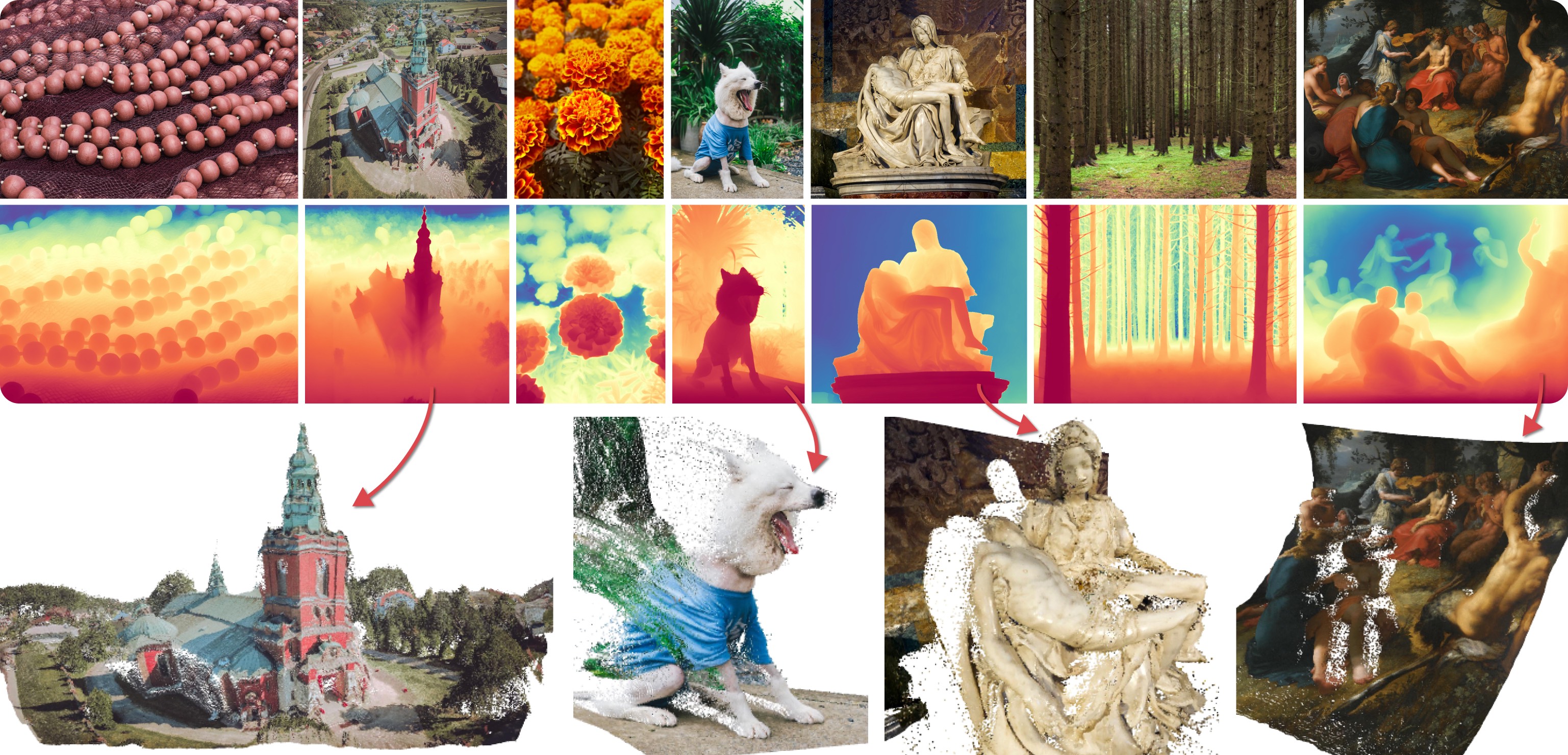
|
||||
|
||||
This depth estimation pipeline processes a single input image through multiple diffusion denoising stages to estimate depth maps. These maps are subsequently merged to produce the final output. Below is an example code snippet, including optional arguments:
|
||||
|
||||
```python
|
||||
import numpy as np
|
||||
from PIL import Image
|
||||
from diffusers import DiffusionPipeline
|
||||
from diffusers.utils import load_image
|
||||
|
||||
pipe = DiffusionPipeline.from_pretrained(
|
||||
"Bingxin/Marigold",
|
||||
custom_pipeline="marigold_depth_estimation"
|
||||
# torch_dtype=torch.float16, # (optional) Run with half-precision (16-bit float).
|
||||
)
|
||||
|
||||
pipe.to("cuda")
|
||||
|
||||
img_path_or_url = "https://share.phys.ethz.ch/~pf/bingkedata/marigold/pipeline_example.jpg"
|
||||
image: Image.Image = load_image(img_path_or_url)
|
||||
|
||||
pipeline_output = pipe(
|
||||
image, # Input image.
|
||||
# denoising_steps=10, # (optional) Number of denoising steps of each inference pass. Default: 10.
|
||||
# ensemble_size=10, # (optional) Number of inference passes in the ensemble. Default: 10.
|
||||
# processing_res=768, # (optional) Maximum resolution of processing. If set to 0: will not resize at all. Defaults to 768.
|
||||
# match_input_res=True, # (optional) Resize depth prediction to match input resolution.
|
||||
# batch_size=0, # (optional) Inference batch size, no bigger than `num_ensemble`. If set to 0, the script will automatically decide the proper batch size. Defaults to 0.
|
||||
# color_map="Spectral", # (optional) Colormap used to colorize the depth map. Defaults to "Spectral".
|
||||
# show_progress_bar=True, # (optional) If true, will show progress bars of the inference progress.
|
||||
)
|
||||
|
||||
depth: np.ndarray = pipeline_output.depth_np # Predicted depth map
|
||||
depth_colored: Image.Image = pipeline_output.depth_colored # Colorized prediction
|
||||
|
||||
# Save as uint16 PNG
|
||||
depth_uint16 = (depth * 65535.0).astype(np.uint16)
|
||||
Image.fromarray(depth_uint16).save("./depth_map.png", mode="I;16")
|
||||
|
||||
# Save colorized depth map
|
||||
depth_colored.save("./depth_colored.png")
|
||||
```
|
||||
|
||||
### LLM-grounded Diffusion
|
||||
|
||||
LMD and LMD+ greatly improves the prompt understanding ability of text-to-image generation models by introducing an LLM as a front-end prompt parser and layout planner. It improves spatial reasoning, the understanding of negation, attribute binding, generative numeracy, etc. in a unified manner without explicitly aiming for each. LMD is completely training-free (i.e., uses SD model off-the-shelf). LMD+ takes in additional adapters for better control. This is a reproduction of LMD+ model used in our work. [Project page.](https://llm-grounded-diffusion.github.io/) [See our full codebase (also with diffusers).](https://github.com/TonyLianLong/LLM-groundedDiffusion)
|
||||
@@ -126,7 +76,7 @@ import torch
|
||||
from diffusers import DiffusionPipeline
|
||||
|
||||
pipe = DiffusionPipeline.from_pretrained(
|
||||
"longlian/lmd_plus",
|
||||
"longlian/lmd_plus",
|
||||
custom_pipeline="llm_grounded_diffusion",
|
||||
custom_revision="main",
|
||||
variant="fp16", torch_dtype=torch.float16
|
||||
@@ -161,7 +111,7 @@ import torch
|
||||
from diffusers import DiffusionPipeline
|
||||
|
||||
pipe = DiffusionPipeline.from_pretrained(
|
||||
"longlian/lmd_plus",
|
||||
"longlian/lmd_plus",
|
||||
custom_pipeline="llm_grounded_diffusion",
|
||||
variant="fp16", torch_dtype=torch.float16
|
||||
)
|
||||
@@ -188,7 +138,7 @@ images[0].save("./lmd_plus_generation.jpg")
|
||||
|
||||
### CLIP Guided Stable Diffusion
|
||||
|
||||
CLIP guided stable diffusion can help to generate more realistic images
|
||||
CLIP guided stable diffusion can help to generate more realistic images
|
||||
by guiding stable diffusion at every denoising step with an additional CLIP model.
|
||||
|
||||
The following code requires roughly 12GB of GPU RAM.
|
||||
@@ -208,7 +158,7 @@ guided_pipeline = DiffusionPipeline.from_pretrained(
|
||||
custom_pipeline="clip_guided_stable_diffusion",
|
||||
clip_model=clip_model,
|
||||
feature_extractor=feature_extractor,
|
||||
|
||||
|
||||
torch_dtype=torch.float16,
|
||||
)
|
||||
guided_pipeline.enable_attention_slicing()
|
||||
@@ -229,7 +179,7 @@ for i in range(4):
|
||||
generator=generator,
|
||||
).images[0]
|
||||
images.append(image)
|
||||
|
||||
|
||||
# save images locally
|
||||
for i, img in enumerate(images):
|
||||
img.save(f"./clip_guided_sd/image_{i}.png")
|
||||
@@ -283,7 +233,7 @@ frame_filepaths = pipe.walk(
|
||||
)
|
||||
```
|
||||
|
||||
The output of the `walk(...)` function returns a list of images saved under the folder as defined in `output_dir`. You can use these images to create videos of stable diffusion.
|
||||
The output of the `walk(...)` function returns a list of images saved under the folder as defined in `output_dir`. You can use these images to create videos of stable diffusion.
|
||||
|
||||
> **Please have a look at https://github.com/nateraw/stable-diffusion-videos for more in-detail information on how to create videos using stable diffusion as well as more feature-complete functionality.**
|
||||
|
||||
@@ -359,7 +309,7 @@ import torch
|
||||
pipe = DiffusionPipeline.from_pretrained(
|
||||
'hakurei/waifu-diffusion',
|
||||
custom_pipeline="lpw_stable_diffusion",
|
||||
|
||||
|
||||
torch_dtype=torch.float16
|
||||
)
|
||||
pipe=pipe.to("cuda")
|
||||
@@ -426,7 +376,7 @@ diffuser_pipeline = DiffusionPipeline.from_pretrained(
|
||||
custom_pipeline="speech_to_image_diffusion",
|
||||
speech_model=model,
|
||||
speech_processor=processor,
|
||||
|
||||
|
||||
torch_dtype=torch.float16,
|
||||
)
|
||||
|
||||
@@ -484,7 +434,7 @@ import torch
|
||||
pipe = DiffusionPipeline.from_pretrained(
|
||||
"CompVis/stable-diffusion-v1-4",
|
||||
custom_pipeline="wildcard_stable_diffusion",
|
||||
|
||||
|
||||
torch_dtype=torch.float16,
|
||||
)
|
||||
prompt = "__animal__ sitting on a __object__ wearing a __clothing__"
|
||||
@@ -498,7 +448,7 @@ out = pipe(
|
||||
)
|
||||
```
|
||||
|
||||
### Composable Stable diffusion
|
||||
### Composable Stable diffusion
|
||||
|
||||
[Composable Stable Diffusion](https://energy-based-model.github.io/Compositional-Visual-Generation-with-Composable-Diffusion-Models/) proposes conjunction and negation (negative prompts) operators for compositional generation with conditional diffusion models.
|
||||
|
||||
@@ -548,7 +498,7 @@ tvu.save_image(grid, f'{prompt}_{args.weights}' + '.png')
|
||||
```
|
||||
|
||||
### Imagic Stable Diffusion
|
||||
Allows you to edit an image using stable diffusion.
|
||||
Allows you to edit an image using stable diffusion.
|
||||
|
||||
```python
|
||||
import requests
|
||||
@@ -562,6 +512,7 @@ device = torch.device('cpu' if not has_cuda else 'cuda')
|
||||
pipe = DiffusionPipeline.from_pretrained(
|
||||
"CompVis/stable-diffusion-v1-4",
|
||||
safety_checker=None,
|
||||
use_auth_token=True,
|
||||
custom_pipeline="imagic_stable_diffusion",
|
||||
scheduler = DDIMScheduler(beta_start=0.00085, beta_end=0.012, beta_schedule="scaled_linear", clip_sample=False, set_alpha_to_one=False)
|
||||
).to(device)
|
||||
@@ -588,7 +539,7 @@ image = res.images[0]
|
||||
image.save('./imagic/imagic_image_alpha_2.png')
|
||||
```
|
||||
|
||||
### Seed Resizing
|
||||
### Seed Resizing
|
||||
Test seed resizing. Originally generate an image in 512 by 512, then generate image with same seed at 512 by 592 using seed resizing. Finally, generate 512 by 592 using original stable diffusion pipeline.
|
||||
|
||||
```python
|
||||
@@ -601,6 +552,7 @@ device = th.device('cpu' if not has_cuda else 'cuda')
|
||||
|
||||
pipe = DiffusionPipeline.from_pretrained(
|
||||
"CompVis/stable-diffusion-v1-4",
|
||||
use_auth_token=True,
|
||||
custom_pipeline="seed_resize_stable_diffusion"
|
||||
).to(device)
|
||||
|
||||
@@ -636,6 +588,7 @@ generator = th.Generator("cuda").manual_seed(0)
|
||||
|
||||
pipe = DiffusionPipeline.from_pretrained(
|
||||
"CompVis/stable-diffusion-v1-4",
|
||||
use_auth_token=True,
|
||||
custom_pipeline="/home/mark/open_source/diffusers/examples/community/"
|
||||
).to(device)
|
||||
|
||||
@@ -654,6 +607,7 @@ image.save('./seed_resize/seed_resize_{w}_{h}_image.png'.format(w=width, h=heigh
|
||||
|
||||
pipe_compare = DiffusionPipeline.from_pretrained(
|
||||
"CompVis/stable-diffusion-v1-4",
|
||||
use_auth_token=True,
|
||||
custom_pipeline="/home/mark/open_source/diffusers/examples/community/"
|
||||
).to(device)
|
||||
|
||||
@@ -716,14 +670,14 @@ diffuser_pipeline = DiffusionPipeline.from_pretrained(
|
||||
detection_pipeline=language_detection_pipeline,
|
||||
translation_model=trans_model,
|
||||
translation_tokenizer=trans_tokenizer,
|
||||
|
||||
|
||||
torch_dtype=torch.float16,
|
||||
)
|
||||
|
||||
diffuser_pipeline.enable_attention_slicing()
|
||||
diffuser_pipeline = diffuser_pipeline.to(device)
|
||||
|
||||
prompt = ["a photograph of an astronaut riding a horse",
|
||||
prompt = ["a photograph of an astronaut riding a horse",
|
||||
"Una casa en la playa",
|
||||
"Ein Hund, der Orange isst",
|
||||
"Un restaurant parisien"]
|
||||
@@ -764,7 +718,7 @@ mask_image = PIL.Image.open(mask_path).convert("RGB").resize((512, 512))
|
||||
pipe = DiffusionPipeline.from_pretrained(
|
||||
"runwayml/stable-diffusion-inpainting",
|
||||
custom_pipeline="img2img_inpainting",
|
||||
|
||||
|
||||
torch_dtype=torch.float16
|
||||
)
|
||||
pipe = pipe.to("cuda")
|
||||
@@ -807,8 +761,8 @@ prompt = "a cup" # the masked out region will be replaced with this
|
||||
image = pipe(image=image, text=text, prompt=prompt).images[0]
|
||||
```
|
||||
|
||||
### Bit Diffusion
|
||||
Based https://arxiv.org/abs/2208.04202, this is used for diffusion on discrete data - eg, discreate image data, DNA sequence data. An unconditional discreate image can be generated like this:
|
||||
### Bit Diffusion
|
||||
Based https://arxiv.org/abs/2208.04202, this is used for diffusion on discrete data - eg, discreate image data, DNA sequence data. An unconditional discreate image can be generated like this:
|
||||
|
||||
```python
|
||||
from diffusers import DiffusionPipeline
|
||||
@@ -886,8 +840,8 @@ Usage:-
|
||||
```python
|
||||
from diffusers import DiffusionPipeline
|
||||
|
||||
#Return a CheckpointMergerPipeline class that allows you to merge checkpoints.
|
||||
#The checkpoint passed here is ignored. But still pass one of the checkpoints you plan to
|
||||
#Return a CheckpointMergerPipeline class that allows you to merge checkpoints.
|
||||
#The checkpoint passed here is ignored. But still pass one of the checkpoints you plan to
|
||||
#merge for convenience
|
||||
pipe = DiffusionPipeline.from_pretrained("CompVis/stable-diffusion-v1-4", custom_pipeline="checkpoint_merger")
|
||||
|
||||
@@ -910,16 +864,16 @@ image = merged_pipe(prompt).images[0]
|
||||
```
|
||||
Some examples along with the merge details:
|
||||
|
||||
1. "CompVis/stable-diffusion-v1-4" + "hakurei/waifu-diffusion" ; Sigmoid interpolation; alpha = 0.8
|
||||
1. "CompVis/stable-diffusion-v1-4" + "hakurei/waifu-diffusion" ; Sigmoid interpolation; alpha = 0.8
|
||||
|
||||

|
||||
|
||||
2. "hakurei/waifu-diffusion" + "prompthero/openjourney" ; Inverse Sigmoid interpolation; alpha = 0.8
|
||||
2. "hakurei/waifu-diffusion" + "prompthero/openjourney" ; Inverse Sigmoid interpolation; alpha = 0.8
|
||||
|
||||

|
||||
|
||||
|
||||
3. "CompVis/stable-diffusion-v1-4" + "hakurei/waifu-diffusion" + "prompthero/openjourney"; Add Difference interpolation; alpha = 0.5
|
||||
3. "CompVis/stable-diffusion-v1-4" + "hakurei/waifu-diffusion" + "prompthero/openjourney"; Add Difference interpolation; alpha = 0.5
|
||||
|
||||

|
||||
|
||||
@@ -986,8 +940,8 @@ pipe = DiffusionPipeline.from_pretrained(
|
||||
|
||||
img = Image.open('phone.jpg')
|
||||
mix_img = pipe(
|
||||
img,
|
||||
prompt = 'bed',
|
||||
img,
|
||||
prompt = 'bed',
|
||||
kmin = 0.3,
|
||||
kmax = 0.5,
|
||||
mix_factor = 0.5,
|
||||
@@ -1098,7 +1052,7 @@ print(pipeline.prior_scheduler)
|
||||
|
||||
### UnCLIP Text Interpolation Pipeline
|
||||
|
||||
This Diffusion Pipeline takes two prompts and interpolates between the two input prompts using spherical interpolation ( slerp ). The input prompts are converted to text embeddings by the pipeline's text_encoder and the interpolation is done on the resulting text_embeddings over the number of steps specified. Defaults to 5 steps.
|
||||
This Diffusion Pipeline takes two prompts and interpolates between the two input prompts using spherical interpolation ( slerp ). The input prompts are converted to text embeddings by the pipeline's text_encoder and the interpolation is done on the resulting text_embeddings over the number of steps specified. Defaults to 5 steps.
|
||||
|
||||
```python
|
||||
import torch
|
||||
@@ -1135,7 +1089,7 @@ The resulting images in order:-
|
||||
|
||||
### UnCLIP Image Interpolation Pipeline
|
||||
|
||||
This Diffusion Pipeline takes two images or an image_embeddings tensor of size 2 and interpolates between their embeddings using spherical interpolation ( slerp ). The input images/image_embeddings are converted to image embeddings by the pipeline's image_encoder and the interpolation is done on the resulting image_embeddings over the number of steps specified. Defaults to 5 steps.
|
||||
This Diffusion Pipeline takes two images or an image_embeddings tensor of size 2 and interpolates between their embeddings using spherical interpolation ( slerp ). The input images/image_embeddings are converted to image embeddings by the pipeline's image_encoder and the interpolation is done on the resulting image_embeddings over the number of steps specified. Defaults to 5 steps.
|
||||
|
||||
```python
|
||||
import torch
|
||||
@@ -1176,8 +1130,8 @@ The resulting images in order:-
|
||||

|
||||
|
||||
### DDIM Noise Comparative Analysis Pipeline
|
||||
#### **Research question: What visual concepts do the diffusion models learn from each noise level during training?**
|
||||
The [P2 weighting (CVPR 2022)](https://arxiv.org/abs/2204.00227) paper proposed an approach to answer the above question, which is their second contribution.
|
||||
#### **Research question: What visual concepts do the diffusion models learn from each noise level during training?**
|
||||
The [P2 weighting (CVPR 2022)](https://arxiv.org/abs/2204.00227) paper proposed an approach to answer the above question, which is their second contribution.
|
||||
The approach consists of the following steps:
|
||||
|
||||
1. The input is an image x0.
|
||||
@@ -1219,7 +1173,7 @@ Here is the result of this pipeline (which is DDIM) on CelebA-HQ dataset.
|
||||
|
||||
### CLIP Guided Img2Img Stable Diffusion
|
||||
|
||||
CLIP guided Img2Img stable diffusion can help to generate more realistic images with an initial image
|
||||
CLIP guided Img2Img stable diffusion can help to generate more realistic images with an initial image
|
||||
by guiding stable diffusion at every denoising step with an additional CLIP model.
|
||||
|
||||
The following code requires roughly 12GB of GPU RAM.
|
||||
@@ -1371,8 +1325,8 @@ target_prompt = "A golden retriever"
|
||||
|
||||
# run the pipeline
|
||||
result_image = pipeline(
|
||||
base_prompt=base_prompt,
|
||||
target_prompt=target_prompt,
|
||||
base_prompt=base_prompt,
|
||||
target_prompt=target_prompt,
|
||||
image=cropped_image,
|
||||
)
|
||||
|
||||
@@ -1586,7 +1540,7 @@ python -m pip install intel_extension_for_pytorch==<version_name> -f https://dev
|
||||
pipe = DiffusionPipeline.from_pretrained("runwayml/stable-diffusion-v1-5", custom_pipeline="stable_diffusion_ipex")
|
||||
# For Float32
|
||||
pipe.prepare_for_ipex(prompt, dtype=torch.float32, height=512, width=512) #value of image height/width should be consistent with the pipeline inference
|
||||
# For BFloat16
|
||||
# For BFloat16
|
||||
pipe.prepare_for_ipex(prompt, dtype=torch.bfloat16, height=512, width=512) #value of image height/width should be consistent with the pipeline inference
|
||||
```
|
||||
|
||||
@@ -1594,7 +1548,7 @@ Then you can use the ipex pipeline in a similar way to the default stable diffus
|
||||
```python
|
||||
# For Float32
|
||||
image = pipe(prompt, num_inference_steps=20, height=512, width=512).images[0] #value of image height/width should be consistent with 'prepare_for_ipex()'
|
||||
# For BFloat16
|
||||
# For BFloat16
|
||||
with torch.cpu.amp.autocast(enabled=True, dtype=torch.bfloat16):
|
||||
image = pipe(prompt, num_inference_steps=20, height=512, width=512).images[0] #value of image height/width should be consistent with 'prepare_for_ipex()'
|
||||
```
|
||||
@@ -1653,25 +1607,24 @@ latency = elapsed_time(pipe4)
|
||||
print("Latency of StableDiffusionPipeline--fp32",latency)
|
||||
|
||||
```
|
||||
|
||||
|
||||
### CLIP Guided Images Mixing With Stable Diffusion
|
||||
|
||||

|
||||
|
||||
CLIP guided stable diffusion images mixing pipeline allows to combine two images using standard diffusion models.
|
||||
This approach is using (optional) CoCa model to avoid writing image description.
|
||||
CLIP guided stable diffusion images mixing pipeline allows to combine two images using standard diffusion models.
|
||||
This approach is using (optional) CoCa model to avoid writing image description.
|
||||
[More code examples](https://github.com/TheDenk/images_mixing)
|
||||
|
||||
|
||||
### Stable Diffusion XL Long Weighted Prompt Pipeline
|
||||
|
||||
This SDXL pipeline support unlimited length prompt and negative prompt, compatible with A1111 prompt weighted style.
|
||||
This SDXL pipeline support unlimited length prompt and negative prompt, compatible with A1111 prompt weighted style.
|
||||
|
||||
You can provide both `prompt` and `prompt_2`. If only one prompt is provided, `prompt_2` will be a copy of the provided `prompt`. Here is a sample code to use this pipeline.
|
||||
You can provide both `prompt` and `prompt_2`. if only one prompt is provided, `prompt_2` will be a copy of the provided `prompt`. Here is a sample code to use this pipeline.
|
||||
|
||||
```python
|
||||
from diffusers import DiffusionPipeline
|
||||
from diffusers.utils import load_image
|
||||
import torch
|
||||
|
||||
pipe = DiffusionPipeline.from_pretrained(
|
||||
@@ -1682,52 +1635,25 @@ pipe = DiffusionPipeline.from_pretrained(
|
||||
, custom_pipeline = "lpw_stable_diffusion_xl",
|
||||
)
|
||||
|
||||
prompt = "photo of a cute (white) cat running on the grass" * 20
|
||||
prompt2 = "chasing (birds:1.5)" * 20
|
||||
prompt = "photo of a cute (white) cat running on the grass"*20
|
||||
prompt2 = "chasing (birds:1.5)"*20
|
||||
prompt = f"{prompt},{prompt2}"
|
||||
neg_prompt = "blur, low quality, carton, animate"
|
||||
|
||||
pipe.to("cuda")
|
||||
|
||||
# text2img
|
||||
t2i_images = pipe(
|
||||
prompt=prompt,
|
||||
negative_prompt=neg_prompt,
|
||||
).images # alternatively, you can call the .text2img() function
|
||||
|
||||
# img2img
|
||||
input_image = load_image("/path/to/local/image.png") # or URL to your input image
|
||||
i2i_images = pipe.img2img(
|
||||
prompt=prompt,
|
||||
negative_prompt=neg_prompt,
|
||||
image=input_image,
|
||||
strength=0.8, # higher strength will result in more variation compared to original image
|
||||
).images
|
||||
|
||||
# inpaint
|
||||
input_mask = load_image("/path/to/local/mask.png") # or URL to your input inpainting mask
|
||||
inpaint_images = pipe.inpaint(
|
||||
prompt="photo of a cute (black) cat running on the grass" * 20,
|
||||
negative_prompt=neg_prompt,
|
||||
image=input_image,
|
||||
mask=input_mask,
|
||||
strength=0.6, # higher strength will result in more variation compared to original image
|
||||
).images
|
||||
images = pipe(
|
||||
prompt = prompt
|
||||
, negative_prompt = neg_prompt
|
||||
).images[0]
|
||||
|
||||
pipe.to("cpu")
|
||||
torch.cuda.empty_cache()
|
||||
|
||||
from IPython.display import display # assuming you are using this code in a notebook
|
||||
display(t2i_images[0])
|
||||
display(i2i_images[0])
|
||||
display(inpaint_images[0])
|
||||
images
|
||||
```
|
||||
|
||||
In the above code, the `prompt2` is appended to the `prompt`, which is more than 77 tokens. "birds" are showing up in the result.
|
||||
In the above code, the `prompt2` is appended to the `prompt`, which is more than 77 tokens. "birds" are showing up in the result.
|
||||

|
||||
|
||||
For more results, checkout [PR #6114](https://github.com/huggingface/diffusers/pull/6114).
|
||||
|
||||
## Example Images Mixing (with CoCa)
|
||||
```python
|
||||
import requests
|
||||
@@ -1777,7 +1703,7 @@ mixing_pipeline.enable_attention_slicing()
|
||||
mixing_pipeline = mixing_pipeline.to("cuda")
|
||||
|
||||
# Pipeline running
|
||||
generator = torch.Generator(device="cuda").manual_seed(17)
|
||||
generator = torch.Generator(device="cuda").manual_seed(17)
|
||||
|
||||
def download_image(url):
|
||||
response = requests.get(url)
|
||||
@@ -1806,7 +1732,7 @@ pipe_images = mixing_pipeline(
|
||||
### Stable Diffusion Mixture Tiling
|
||||
|
||||
This pipeline uses the Mixture. Refer to the [Mixture](https://arxiv.org/abs/2302.02412) paper for more details.
|
||||
|
||||
|
||||
```python
|
||||
from diffusers import LMSDiscreteScheduler, DiffusionPipeline
|
||||
|
||||
@@ -1879,7 +1805,7 @@ image.save('tensorrt_inpaint_mecha_robot.png')
|
||||
### Stable Diffusion Mixture Canvas
|
||||
|
||||
This pipeline uses the Mixture. Refer to the [Mixture](https://arxiv.org/abs/2302.02412) paper for more details.
|
||||
|
||||
|
||||
```python
|
||||
from PIL import Image
|
||||
from diffusers import LMSDiscreteScheduler, DiffusionPipeline
|
||||
@@ -2088,7 +2014,7 @@ Reference Image
|
||||
|
||||

|
||||
|
||||
Output Image
|
||||
Output Image
|
||||
|
||||
`prompt: 1 girl`
|
||||
|
||||
@@ -2099,7 +2025,7 @@ Reference Image
|
||||

|
||||
|
||||
|
||||
Output Image
|
||||
Output Image
|
||||
|
||||
`prompt: A dog`
|
||||
|
||||
@@ -2180,7 +2106,7 @@ Let's have a look at the images (*512X512*)
|
||||
|
||||
| Without Feedback | With Feedback (1st image) |
|
||||
|---------------------|---------------------|
|
||||
|  |  |
|
||||
|  |  |
|
||||
|
||||
|
||||
### Masked Im2Im Stable Diffusion Pipeline
|
||||
@@ -2333,7 +2259,7 @@ pipe.to(torch_device="cuda", torch_dtype=torch.float32)
|
||||
prompt = "Self-portrait oil painting, a beautiful cyborg with golden hair, 8k"
|
||||
|
||||
# Can be set to 1~50 steps. LCM support fast inference even <= 4 steps. Recommend: 1~8 steps.
|
||||
num_inference_steps = 4
|
||||
num_inference_steps = 4
|
||||
|
||||
images = pipe(prompt=prompt, num_inference_steps=num_inference_steps, guidance_scale=8.0, lcm_origin_steps=50, output_type="pil").images
|
||||
```
|
||||
@@ -2369,7 +2295,7 @@ input_image=Image.open("myimg.png")
|
||||
strength = 0.5 #strength =0 (no change) strength=1 (completely overwrite image)
|
||||
|
||||
# Can be set to 1~50 steps. LCM support fast inference even <= 4 steps. Recommend: 1~8 steps.
|
||||
num_inference_steps = 4
|
||||
num_inference_steps = 4
|
||||
|
||||
images = pipe(prompt=prompt, image=input_image, strength=strength, num_inference_steps=num_inference_steps, guidance_scale=8.0, lcm_origin_steps=50, output_type="pil").images
|
||||
```
|
||||
@@ -2422,7 +2348,7 @@ assert len(images) == (len(prompts) - 1) * num_interpolation_steps
|
||||
```
|
||||
|
||||
### StableDiffusionUpscaleLDM3D Pipeline
|
||||
[LDM3D-VR](https://arxiv.org/pdf/2311.03226.pdf) is an extended version of LDM3D.
|
||||
[LDM3D-VR](https://arxiv.org/pdf/2311.03226.pdf) is an extended version of LDM3D.
|
||||
|
||||
The abstract from the paper is:
|
||||
*Latent diffusion models have proven to be state-of-the-art in the creation and manipulation of visual outputs. However, as far as we know, the generation of depth maps jointly with RGB is still limited. We introduce LDM3D-VR, a suite of diffusion models targeting virtual reality development that includes LDM3D-pano and LDM3D-SR. These models enable the generation of panoramic RGBD based on textual prompts and the upscaling of low-resolution inputs to high-resolution RGBD, respectively. Our models are fine-tuned from existing pretrained models on datasets containing panoramic/high-resolution RGB images, depth maps and captions. Both models are evaluated in comparison to existing related methods*
|
||||
@@ -2463,8 +2389,8 @@ upscaled_depth.save(f"upscaled_lemons_depth.png")
|
||||
'''
|
||||
|
||||
### ControlNet + T2I Adapter Pipeline
|
||||
This pipelines combines both ControlNet and T2IAdapter into a single pipeline, where the forward pass is executed once.
|
||||
It receives `control_image` and `adapter_image`, as well as `controlnet_conditioning_scale` and `adapter_conditioning_scale`, for the ControlNet and Adapter modules, respectively. Whenever `adapter_conditioning_scale = 0` or `controlnet_conditioning_scale = 0`, it will act as a full ControlNet module or as a full T2IAdapter module, respectively.
|
||||
This pipelines combines both ControlNet and T2IAdapter into a single pipeline, where the forward pass is executed once.
|
||||
It receives `control_image` and `adapter_image`, as well as `controlnet_conditioning_scale` and `adapter_conditioning_scale`, for the ControlNet and Adapter modules, respectively. Whenever `adapter_conditioning_scale = 0` or `controlnet_conditioning_scale = 0`, it will act as a full ControlNet module or as a full T2IAdapter module, respectively.
|
||||
|
||||
```py
|
||||
import cv2
|
||||
@@ -2615,7 +2541,7 @@ pipe = RegionalPromptingStableDiffusionPipeline.from_single_file(model_path, vae
|
||||
rp_args = {
|
||||
"mode":"rows",
|
||||
"div": "1;1;1"
|
||||
}
|
||||
}
|
||||
|
||||
prompt ="""
|
||||
green hair twintail BREAK
|
||||
@@ -2644,7 +2570,7 @@ for image in images:
|
||||
### Cols, Rows mode
|
||||
In the Cols, Rows mode, you can split the screen vertically and horizontally and assign prompts to each region. The split ratio can be specified by 'div', and you can set the division ratio like '3;3;2' or '0.1;0.5'. Furthermore, as will be described later, you can also subdivide the split Cols, Rows to specify more complex regions.
|
||||
|
||||
In this image, the image is divided into three parts, and a separate prompt is applied to each. The prompts are divided by 'BREAK', and each is applied to the respective region.
|
||||
In this image, the image is divided into three parts, and a separate prompt is applied to each. The prompts are divided by 'BREAK', and each is applied to the respective region.
|
||||

|
||||
```
|
||||
green hair twintail BREAK
|
||||
@@ -2702,7 +2628,7 @@ prompt ="""
|
||||
a girl in street with shirt, tie, skirt BREAK
|
||||
red, shirt BREAK
|
||||
green, tie BREAK
|
||||
blue , skirt
|
||||
blue , skirt
|
||||
"""
|
||||
```
|
||||

|
||||
@@ -2721,7 +2647,7 @@ If only one input is given for multiple regions, they are all assumed to be the
|
||||
The difference is that in Prompt, duplicate regions are added, whereas in Prompt-EX, duplicate regions are overwritten sequentially. Since they are processed in order, setting a TARGET with a large regions first makes it easier for the effect of small regions to remain unmuffled.
|
||||
|
||||
### Accuracy
|
||||
In the case of a 512 x 512 image, Attention mode reduces the size of the region to about 8 x 8 pixels deep in the U-Net, so that small regions get mixed up; Latent mode calculates 64*64, so that the region is exact.
|
||||
In the case of a 512 x 512 image, Attention mode reduces the size of the region to about 8 x 8 pixels deep in the U-Net, so that small regions get mixed up; Latent mode calculates 64*64, so that the region is exact.
|
||||
```
|
||||
girl hair twintail frills,ribbons, dress, face BREAK
|
||||
girl, ,face
|
||||
@@ -2752,13 +2678,13 @@ Negative prompts are equally effective across all regions, but it is possible to
|
||||
To activate Regional Prompter, it is necessary to enter settings in rp_args. The items that can be set are as follows. rp_args is a dictionary type.
|
||||
|
||||
### Input Parameters
|
||||
Parameters are specified through the `rp_arg`(dictionary type).
|
||||
Parameters are specified through the `rp_arg`(dictionary type).
|
||||
|
||||
```
|
||||
rp_args = {
|
||||
"mode":"rows",
|
||||
"div": "1;1;1"
|
||||
}
|
||||
}
|
||||
|
||||
pipe(prompt =prompt, rp_args = rp_args)
|
||||
```
|
||||
@@ -2837,7 +2763,7 @@ The Pipeline supports `compel` syntax. Input prompts using the `compel` structur
|
||||
|
||||
def get_kernel(self):
|
||||
return self.k
|
||||
|
||||
|
||||
self.kernel_size = kernel_size
|
||||
self.conv = Blurkernel(blur_type='gaussian',
|
||||
kernel_size=kernel_size,
|
||||
@@ -2912,75 +2838,11 @@ The Pipeline supports `compel` syntax. Input prompts using the `compel` structur
|
||||
* 
|
||||
* The reconstruction is perceptually similar to the source image, but different in details.
|
||||
* In dps_pipeline.py, we also provide a super-resolution example, which should produce:
|
||||
* Downsampled image:
|
||||
* Downsampled image:
|
||||
* 
|
||||
* Reconstructed image:
|
||||
* 
|
||||
|
||||
### AnimateDiff ControlNet Pipeline
|
||||
|
||||
This pipeline combines AnimateDiff and ControlNet. Enjoy precise motion control for your videos! Refer to [this](https://github.com/huggingface/diffusers/issues/5866) issue for more details.
|
||||
|
||||
```py
|
||||
import torch
|
||||
from diffusers import AutoencoderKL, ControlNetModel, MotionAdapter
|
||||
from diffusers.pipelines import DiffusionPipeline
|
||||
from diffusers.schedulers import DPMSolverMultistepScheduler
|
||||
from PIL import Image
|
||||
|
||||
motion_id = "guoyww/animatediff-motion-adapter-v1-5-2"
|
||||
adapter = MotionAdapter.from_pretrained(motion_id)
|
||||
controlnet = ControlNetModel.from_pretrained("lllyasviel/control_v11p_sd15_openpose", torch_dtype=torch.float16)
|
||||
vae = AutoencoderKL.from_pretrained("stabilityai/sd-vae-ft-mse", torch_dtype=torch.float16)
|
||||
|
||||
model_id = "SG161222/Realistic_Vision_V5.1_noVAE"
|
||||
pipe = DiffusionPipeline.from_pretrained(
|
||||
model_id,
|
||||
motion_adapter=adapter,
|
||||
controlnet=controlnet,
|
||||
vae=vae,
|
||||
custom_pipeline="pipeline_animatediff_controlnet",
|
||||
).to(device="cuda", dtype=torch.float16)
|
||||
pipe.scheduler = DPMSolverMultistepScheduler.from_pretrained(
|
||||
model_id, subfolder="scheduler", clip_sample=False, timestep_spacing="linspace", steps_offset=1
|
||||
)
|
||||
pipe.enable_vae_slicing()
|
||||
|
||||
conditioning_frames = []
|
||||
for i in range(1, 16 + 1):
|
||||
conditioning_frames.append(Image.open(f"frame_{i}.png"))
|
||||
|
||||
prompt = "astronaut in space, dancing"
|
||||
negative_prompt = "bad quality, worst quality, jpeg artifacts, ugly"
|
||||
result = pipe(
|
||||
prompt=prompt,
|
||||
negative_prompt=negative_prompt,
|
||||
width=512,
|
||||
height=768,
|
||||
conditioning_frames=conditioning_frames,
|
||||
num_inference_steps=12,
|
||||
).frames[0]
|
||||
|
||||
from diffusers.utils import export_to_gif
|
||||
export_to_gif(result.frames[0], "result.gif")
|
||||
```
|
||||
|
||||
<table>
|
||||
<tr><td colspan="2" align=center><b>Conditioning Frames</b></td></tr>
|
||||
<tr align=center>
|
||||
<td align=center><img src="https://user-images.githubusercontent.com/7365912/265043418-23291941-864d-495a-8ba8-d02e05756396.gif" alt="input-frames"></td>
|
||||
</tr>
|
||||
<tr><td colspan="2" align=center><b>AnimateDiff model: SG161222/Realistic_Vision_V5.1_noVAE</b></td></tr>
|
||||
<tr>
|
||||
<td align=center><img src="https://github.com/huggingface/diffusers/assets/72266394/baf301e2-d03c-4129-bd84-203a1de2b2be" alt="gif-1"></td>
|
||||
<td align=center><img src="https://github.com/huggingface/diffusers/assets/72266394/9f923475-ecaf-452b-92c8-4e42171182d8" alt="gif-2"></td>
|
||||
</tr>
|
||||
<tr><td colspan="2" align=center><b>AnimateDiff model: CardosAnime</b></td></tr>
|
||||
<tr>
|
||||
<td align=center><img src="https://github.com/huggingface/diffusers/assets/72266394/b2c41028-38a0-45d6-86ed-fec7446b87f7" alt="gif-1"></td>
|
||||
<td align=center><img src="https://github.com/huggingface/diffusers/assets/72266394/eb7d2952-72e4-44fa-b664-077c79b4fc70" alt="gif-2"></td>
|
||||
</tr>
|
||||
</table>
|
||||
### DemoFusion
|
||||
This pipeline is the official implementation of [DemoFusion: Democratising High-Resolution Image Generation With No $$$](https://arxiv.org/abs/2311.16973).
|
||||
The original repo can be found at [repo](https://github.com/PRIS-CV/DemoFusion).
|
||||
@@ -3007,7 +2869,7 @@ The original repo can be found at [repo](https://github.com/PRIS-CV/DemoFusion).
|
||||
|
||||
- `show_image` (`bool`, defaults to False):
|
||||
Determine whether to show intermediate results during generation.
|
||||
```py
|
||||
```
|
||||
from diffusers import DiffusionPipeline
|
||||
|
||||
pipe = DiffusionPipeline.from_pretrained(
|
||||
@@ -3022,24 +2884,24 @@ prompt = "Envision a portrait of an elderly woman, her face a canvas of time, fr
|
||||
negative_prompt = "blurry, ugly, duplicate, poorly drawn, deformed, mosaic"
|
||||
|
||||
images = pipe(
|
||||
prompt,
|
||||
prompt,
|
||||
negative_prompt=negative_prompt,
|
||||
height=3072,
|
||||
width=3072,
|
||||
view_batch_size=16,
|
||||
height=3072,
|
||||
width=3072,
|
||||
view_batch_size=16,
|
||||
stride=64,
|
||||
num_inference_steps=50,
|
||||
num_inference_steps=50,
|
||||
guidance_scale=7.5,
|
||||
cosine_scale_1=3,
|
||||
cosine_scale_2=1,
|
||||
cosine_scale_3=1,
|
||||
cosine_scale_1=3,
|
||||
cosine_scale_2=1,
|
||||
cosine_scale_3=1,
|
||||
sigma=0.8,
|
||||
multi_decoder=True,
|
||||
multi_decoder=True,
|
||||
show_image=True
|
||||
)
|
||||
```
|
||||
You can display and save the generated images as:
|
||||
```py
|
||||
```
|
||||
def image_grid(imgs, save_path=None):
|
||||
|
||||
w = 0
|
||||
@@ -3057,48 +2919,9 @@ def image_grid(imgs, save_path=None):
|
||||
if save_path != None:
|
||||
img.save(save_path + "/img_{}.jpg".format((i + 1) * 1024))
|
||||
w += w_
|
||||
|
||||
|
||||
return grid
|
||||
|
||||
image_grid(images, save_path="./outputs/")
|
||||
```
|
||||

|
||||
|
||||
### SDE Drag pipeline
|
||||
|
||||
This pipeline provides drag-and-drop image editing using stochastic differential equations. It enables image editing by inputting prompt, image, mask_image, source_points, and target_points.
|
||||
|
||||

|
||||
|
||||
See [paper](https://arxiv.org/abs/2311.01410), [paper page](https://ml-gsai.github.io/SDE-Drag-demo/), [original repo](https://github.com/ML-GSAI/SDE-Drag) for more infomation.
|
||||
|
||||
```py
|
||||
import PIL
|
||||
import torch
|
||||
from diffusers import DDIMScheduler, DiffusionPipeline
|
||||
|
||||
# Load the pipeline
|
||||
model_path = "runwayml/stable-diffusion-v1-5"
|
||||
scheduler = DDIMScheduler.from_pretrained(model_path, subfolder="scheduler")
|
||||
pipe = DiffusionPipeline.from_pretrained(model_path, scheduler=scheduler, custom_pipeline="sde_drag")
|
||||
pipe.to('cuda')
|
||||
|
||||
# To save GPU memory, torch.float16 can be used, but it may compromise image quality.
|
||||
# If not training LoRA, please avoid using torch.float16
|
||||
# pipe.to(torch.float16)
|
||||
|
||||
# Provide prompt, image, mask image, and the starting and target points for drag editing.
|
||||
prompt = "prompt of the image"
|
||||
image = PIL.Image.open('/path/to/image')
|
||||
mask_image = PIL.Image.open('/path/to/mask_image')
|
||||
source_points = [[123, 456]]
|
||||
target_points = [[234, 567]]
|
||||
|
||||
# train_lora is optional, and in most cases, using train_lora can better preserve consistency with the original image.
|
||||
pipe.train_lora(prompt, image)
|
||||
|
||||
output = pipe(prompt, image, mask_image, source_points, target_points)
|
||||
output_image = PIL.Image.fromarray(output)
|
||||
output_image.save("./output.png")
|
||||
|
||||
```
|
||||
|
||||
@@ -5,11 +5,10 @@ from typing import Dict, List, Union
|
||||
import safetensors.torch
|
||||
import torch
|
||||
from huggingface_hub import snapshot_download
|
||||
from huggingface_hub.utils import validate_hf_hub_args
|
||||
|
||||
from diffusers import DiffusionPipeline, __version__
|
||||
from diffusers.schedulers.scheduling_utils import SCHEDULER_CONFIG_NAME
|
||||
from diffusers.utils import CONFIG_NAME, ONNX_WEIGHTS_NAME, WEIGHTS_NAME
|
||||
from diffusers.utils import CONFIG_NAME, DIFFUSERS_CACHE, ONNX_WEIGHTS_NAME, WEIGHTS_NAME
|
||||
|
||||
|
||||
class CheckpointMergerPipeline(DiffusionPipeline):
|
||||
@@ -58,7 +57,6 @@ class CheckpointMergerPipeline(DiffusionPipeline):
|
||||
return (temp_dict, meta_keys)
|
||||
|
||||
@torch.no_grad()
|
||||
@validate_hf_hub_args
|
||||
def merge(self, pretrained_model_name_or_path_list: List[Union[str, os.PathLike]], **kwargs):
|
||||
"""
|
||||
Returns a new pipeline object of the class 'DiffusionPipeline' with the merged checkpoints(weights) of the models passed
|
||||
@@ -71,7 +69,7 @@ class CheckpointMergerPipeline(DiffusionPipeline):
|
||||
**kwargs:
|
||||
Supports all the default DiffusionPipeline.get_config_dict kwargs viz..
|
||||
|
||||
cache_dir, resume_download, force_download, proxies, local_files_only, token, revision, torch_dtype, device_map.
|
||||
cache_dir, resume_download, force_download, proxies, local_files_only, use_auth_token, revision, torch_dtype, device_map.
|
||||
|
||||
alpha - The interpolation parameter. Ranges from 0 to 1. It affects the ratio in which the checkpoints are merged. A 0.8 alpha
|
||||
would mean that the first model checkpoints would affect the final result far less than an alpha of 0.2
|
||||
@@ -83,12 +81,12 @@ class CheckpointMergerPipeline(DiffusionPipeline):
|
||||
|
||||
"""
|
||||
# Default kwargs from DiffusionPipeline
|
||||
cache_dir = kwargs.pop("cache_dir", None)
|
||||
cache_dir = kwargs.pop("cache_dir", DIFFUSERS_CACHE)
|
||||
resume_download = kwargs.pop("resume_download", False)
|
||||
force_download = kwargs.pop("force_download", False)
|
||||
proxies = kwargs.pop("proxies", None)
|
||||
local_files_only = kwargs.pop("local_files_only", False)
|
||||
token = kwargs.pop("token", None)
|
||||
use_auth_token = kwargs.pop("use_auth_token", None)
|
||||
revision = kwargs.pop("revision", None)
|
||||
torch_dtype = kwargs.pop("torch_dtype", None)
|
||||
device_map = kwargs.pop("device_map", None)
|
||||
@@ -125,7 +123,7 @@ class CheckpointMergerPipeline(DiffusionPipeline):
|
||||
force_download=force_download,
|
||||
proxies=proxies,
|
||||
local_files_only=local_files_only,
|
||||
token=token,
|
||||
use_auth_token=use_auth_token,
|
||||
revision=revision,
|
||||
)
|
||||
config_dicts.append(config_dict)
|
||||
@@ -161,7 +159,7 @@ class CheckpointMergerPipeline(DiffusionPipeline):
|
||||
resume_download=resume_download,
|
||||
proxies=proxies,
|
||||
local_files_only=local_files_only,
|
||||
token=token,
|
||||
use_auth_token=use_auth_token,
|
||||
revision=revision,
|
||||
allow_patterns=allow_patterns,
|
||||
user_agent=user_agent,
|
||||
|
||||
@@ -11,11 +11,10 @@ import os
|
||||
from typing import Any, Callable, Dict, List, Optional, Tuple, Union
|
||||
|
||||
import torch
|
||||
from PIL import Image
|
||||
from transformers import CLIPTextModel, CLIPTextModelWithProjection, CLIPTokenizer
|
||||
|
||||
from diffusers import DiffusionPipeline, StableDiffusionXLPipeline
|
||||
from diffusers.image_processor import PipelineImageInput, VaeImageProcessor
|
||||
from diffusers.image_processor import VaeImageProcessor
|
||||
from diffusers.loaders import FromSingleFileMixin, LoraLoaderMixin, TextualInversionLoaderMixin
|
||||
from diffusers.models import AutoencoderKL, UNet2DConditionModel
|
||||
from diffusers.models.attention_processor import (
|
||||
@@ -24,7 +23,7 @@ from diffusers.models.attention_processor import (
|
||||
LoRAXFormersAttnProcessor,
|
||||
XFormersAttnProcessor,
|
||||
)
|
||||
from diffusers.pipelines.stable_diffusion_xl.pipeline_output import StableDiffusionXLPipelineOutput
|
||||
from diffusers.pipelines.stable_diffusion_xl import StableDiffusionXLPipelineOutput
|
||||
from diffusers.schedulers import KarrasDiffusionSchedulers
|
||||
from diffusers.utils import (
|
||||
is_accelerate_available,
|
||||
@@ -462,65 +461,6 @@ def rescale_noise_cfg(noise_cfg, noise_pred_text, guidance_rescale=0.0):
|
||||
return noise_cfg
|
||||
|
||||
|
||||
# Copied from diffusers.pipelines.stable_diffusion.pipeline_stable_diffusion_img2img.retrieve_latents
|
||||
def retrieve_latents(
|
||||
encoder_output: torch.Tensor, generator: Optional[torch.Generator] = None, sample_mode: str = "sample"
|
||||
):
|
||||
if hasattr(encoder_output, "latent_dist") and sample_mode == "sample":
|
||||
return encoder_output.latent_dist.sample(generator)
|
||||
elif hasattr(encoder_output, "latent_dist") and sample_mode == "argmax":
|
||||
return encoder_output.latent_dist.mode()
|
||||
elif hasattr(encoder_output, "latents"):
|
||||
return encoder_output.latents
|
||||
else:
|
||||
raise AttributeError("Could not access latents of provided encoder_output")
|
||||
|
||||
|
||||
# Copied from diffusers.pipelines.stable_diffusion.pipeline_stable_diffusion.retrieve_timesteps
|
||||
def retrieve_timesteps(
|
||||
scheduler,
|
||||
num_inference_steps: Optional[int] = None,
|
||||
device: Optional[Union[str, torch.device]] = None,
|
||||
timesteps: Optional[List[int]] = None,
|
||||
**kwargs,
|
||||
):
|
||||
"""
|
||||
Calls the scheduler's `set_timesteps` method and retrieves timesteps from the scheduler after the call. Handles
|
||||
custom timesteps. Any kwargs will be supplied to `scheduler.set_timesteps`.
|
||||
|
||||
Args:
|
||||
scheduler (`SchedulerMixin`):
|
||||
The scheduler to get timesteps from.
|
||||
num_inference_steps (`int`):
|
||||
The number of diffusion steps used when generating samples with a pre-trained model. If used,
|
||||
`timesteps` must be `None`.
|
||||
device (`str` or `torch.device`, *optional*):
|
||||
The device to which the timesteps should be moved to. If `None`, the timesteps are not moved.
|
||||
timesteps (`List[int]`, *optional*):
|
||||
Custom timesteps used to support arbitrary spacing between timesteps. If `None`, then the default
|
||||
timestep spacing strategy of the scheduler is used. If `timesteps` is passed, `num_inference_steps`
|
||||
must be `None`.
|
||||
|
||||
Returns:
|
||||
`Tuple[torch.Tensor, int]`: A tuple where the first element is the timestep schedule from the scheduler and the
|
||||
second element is the number of inference steps.
|
||||
"""
|
||||
if timesteps is not None:
|
||||
accepts_timesteps = "timesteps" in set(inspect.signature(scheduler.set_timesteps).parameters.keys())
|
||||
if not accepts_timesteps:
|
||||
raise ValueError(
|
||||
f"The current scheduler class {scheduler.__class__}'s `set_timesteps` does not support custom"
|
||||
f" timestep schedules. Please check whether you are using the correct scheduler."
|
||||
)
|
||||
scheduler.set_timesteps(timesteps=timesteps, device=device, **kwargs)
|
||||
timesteps = scheduler.timesteps
|
||||
num_inference_steps = len(timesteps)
|
||||
else:
|
||||
scheduler.set_timesteps(num_inference_steps, device=device, **kwargs)
|
||||
timesteps = scheduler.timesteps
|
||||
return timesteps, num_inference_steps
|
||||
|
||||
|
||||
class SDXLLongPromptWeightingPipeline(DiffusionPipeline, FromSingleFileMixin, LoraLoaderMixin):
|
||||
r"""
|
||||
Pipeline for text-to-image generation using Stable Diffusion XL.
|
||||
@@ -586,9 +526,6 @@ class SDXLLongPromptWeightingPipeline(DiffusionPipeline, FromSingleFileMixin, Lo
|
||||
self.register_to_config(force_zeros_for_empty_prompt=force_zeros_for_empty_prompt)
|
||||
self.vae_scale_factor = 2 ** (len(self.vae.config.block_out_channels) - 1)
|
||||
self.image_processor = VaeImageProcessor(vae_scale_factor=self.vae_scale_factor)
|
||||
self.mask_processor = VaeImageProcessor(
|
||||
vae_scale_factor=self.vae_scale_factor, do_normalize=False, do_binarize=True, do_convert_grayscale=True
|
||||
)
|
||||
self.default_sample_size = self.unet.config.sample_size
|
||||
|
||||
add_watermarker = add_watermarker if add_watermarker is not None else is_invisible_watermark_available()
|
||||
@@ -876,7 +813,6 @@ class SDXLLongPromptWeightingPipeline(DiffusionPipeline, FromSingleFileMixin, Lo
|
||||
prompt_2,
|
||||
height,
|
||||
width,
|
||||
strength,
|
||||
callback_steps,
|
||||
negative_prompt=None,
|
||||
negative_prompt_2=None,
|
||||
@@ -888,9 +824,6 @@ class SDXLLongPromptWeightingPipeline(DiffusionPipeline, FromSingleFileMixin, Lo
|
||||
if height % 8 != 0 or width % 8 != 0:
|
||||
raise ValueError(f"`height` and `width` have to be divisible by 8 but are {height} and {width}.")
|
||||
|
||||
if strength < 0 or strength > 1:
|
||||
raise ValueError(f"The value of strength should in [0.0, 1.0] but is {strength}")
|
||||
|
||||
if (callback_steps is None) or (
|
||||
callback_steps is not None and (not isinstance(callback_steps, int) or callback_steps <= 0)
|
||||
):
|
||||
@@ -947,263 +880,23 @@ class SDXLLongPromptWeightingPipeline(DiffusionPipeline, FromSingleFileMixin, Lo
|
||||
"If `negative_prompt_embeds` are provided, `negative_pooled_prompt_embeds` also have to be passed. Make sure to generate `negative_pooled_prompt_embeds` from the same text encoder that was used to generate `negative_prompt_embeds`."
|
||||
)
|
||||
|
||||
def get_timesteps(self, num_inference_steps, strength, device, denoising_start=None):
|
||||
# get the original timestep using init_timestep
|
||||
if denoising_start is None:
|
||||
init_timestep = min(int(num_inference_steps * strength), num_inference_steps)
|
||||
t_start = max(num_inference_steps - init_timestep, 0)
|
||||
else:
|
||||
t_start = 0
|
||||
|
||||
timesteps = self.scheduler.timesteps[t_start * self.scheduler.order :]
|
||||
|
||||
# Strength is irrelevant if we directly request a timestep to start at;
|
||||
# that is, strength is determined by the denoising_start instead.
|
||||
if denoising_start is not None:
|
||||
discrete_timestep_cutoff = int(
|
||||
round(
|
||||
self.scheduler.config.num_train_timesteps
|
||||
- (denoising_start * self.scheduler.config.num_train_timesteps)
|
||||
)
|
||||
# Copied from diffusers.pipelines.stable_diffusion.pipeline_stable_diffusion.StableDiffusionPipeline.prepare_latents
|
||||
def prepare_latents(self, batch_size, num_channels_latents, height, width, dtype, device, generator, latents=None):
|
||||
shape = (batch_size, num_channels_latents, height // self.vae_scale_factor, width // self.vae_scale_factor)
|
||||
if isinstance(generator, list) and len(generator) != batch_size:
|
||||
raise ValueError(
|
||||
f"You have passed a list of generators of length {len(generator)}, but requested an effective batch"
|
||||
f" size of {batch_size}. Make sure the batch size matches the length of the generators."
|
||||
)
|
||||
|
||||
num_inference_steps = (timesteps < discrete_timestep_cutoff).sum().item()
|
||||
if self.scheduler.order == 2 and num_inference_steps % 2 == 0:
|
||||
# if the scheduler is a 2nd order scheduler we might have to do +1
|
||||
# because `num_inference_steps` might be even given that every timestep
|
||||
# (except the highest one) is duplicated. If `num_inference_steps` is even it would
|
||||
# mean that we cut the timesteps in the middle of the denoising step
|
||||
# (between 1st and 2nd devirative) which leads to incorrect results. By adding 1
|
||||
# we ensure that the denoising process always ends after the 2nd derivate step of the scheduler
|
||||
num_inference_steps = num_inference_steps + 1
|
||||
|
||||
# because t_n+1 >= t_n, we slice the timesteps starting from the end
|
||||
timesteps = timesteps[-num_inference_steps:]
|
||||
return timesteps, num_inference_steps
|
||||
|
||||
return timesteps, num_inference_steps - t_start
|
||||
|
||||
def prepare_latents(
|
||||
self,
|
||||
image,
|
||||
mask,
|
||||
width,
|
||||
height,
|
||||
num_channels_latents,
|
||||
timestep,
|
||||
batch_size,
|
||||
num_images_per_prompt,
|
||||
dtype,
|
||||
device,
|
||||
generator=None,
|
||||
add_noise=True,
|
||||
latents=None,
|
||||
is_strength_max=True,
|
||||
return_noise=False,
|
||||
return_image_latents=False,
|
||||
):
|
||||
batch_size *= num_images_per_prompt
|
||||
|
||||
if image is None:
|
||||
shape = (batch_size, num_channels_latents, height // self.vae_scale_factor, width // self.vae_scale_factor)
|
||||
if isinstance(generator, list) and len(generator) != batch_size:
|
||||
raise ValueError(
|
||||
f"You have passed a list of generators of length {len(generator)}, but requested an effective batch"
|
||||
f" size of {batch_size}. Make sure the batch size matches the length of the generators."
|
||||
)
|
||||
|
||||
if latents is None:
|
||||
latents = randn_tensor(shape, generator=generator, device=device, dtype=dtype)
|
||||
else:
|
||||
latents = latents.to(device)
|
||||
|
||||
# scale the initial noise by the standard deviation required by the scheduler
|
||||
latents = latents * self.scheduler.init_noise_sigma
|
||||
return latents
|
||||
|
||||
elif mask is None:
|
||||
if not isinstance(image, (torch.Tensor, Image.Image, list)):
|
||||
raise ValueError(
|
||||
f"`image` has to be of type `torch.Tensor`, `PIL.Image.Image` or list but is {type(image)}"
|
||||
)
|
||||
|
||||
# Offload text encoder if `enable_model_cpu_offload` was enabled
|
||||
if hasattr(self, "final_offload_hook") and self.final_offload_hook is not None:
|
||||
self.text_encoder_2.to("cpu")
|
||||
torch.cuda.empty_cache()
|
||||
|
||||
image = image.to(device=device, dtype=dtype)
|
||||
|
||||
if image.shape[1] == 4:
|
||||
init_latents = image
|
||||
|
||||
else:
|
||||
# make sure the VAE is in float32 mode, as it overflows in float16
|
||||
if self.vae.config.force_upcast:
|
||||
image = image.float()
|
||||
self.vae.to(dtype=torch.float32)
|
||||
|
||||
if isinstance(generator, list) and len(generator) != batch_size:
|
||||
raise ValueError(
|
||||
f"You have passed a list of generators of length {len(generator)}, but requested an effective batch"
|
||||
f" size of {batch_size}. Make sure the batch size matches the length of the generators."
|
||||
)
|
||||
|
||||
elif isinstance(generator, list):
|
||||
init_latents = [
|
||||
retrieve_latents(self.vae.encode(image[i : i + 1]), generator=generator[i])
|
||||
for i in range(batch_size)
|
||||
]
|
||||
init_latents = torch.cat(init_latents, dim=0)
|
||||
else:
|
||||
init_latents = retrieve_latents(self.vae.encode(image), generator=generator)
|
||||
|
||||
if self.vae.config.force_upcast:
|
||||
self.vae.to(dtype)
|
||||
|
||||
init_latents = init_latents.to(dtype)
|
||||
init_latents = self.vae.config.scaling_factor * init_latents
|
||||
|
||||
if batch_size > init_latents.shape[0] and batch_size % init_latents.shape[0] == 0:
|
||||
# expand init_latents for batch_size
|
||||
additional_image_per_prompt = batch_size // init_latents.shape[0]
|
||||
init_latents = torch.cat([init_latents] * additional_image_per_prompt, dim=0)
|
||||
elif batch_size > init_latents.shape[0] and batch_size % init_latents.shape[0] != 0:
|
||||
raise ValueError(
|
||||
f"Cannot duplicate `image` of batch size {init_latents.shape[0]} to {batch_size} text prompts."
|
||||
)
|
||||
else:
|
||||
init_latents = torch.cat([init_latents], dim=0)
|
||||
|
||||
if add_noise:
|
||||
shape = init_latents.shape
|
||||
noise = randn_tensor(shape, generator=generator, device=device, dtype=dtype)
|
||||
# get latents
|
||||
init_latents = self.scheduler.add_noise(init_latents, noise, timestep)
|
||||
|
||||
latents = init_latents
|
||||
return latents
|
||||
|
||||
if latents is None:
|
||||
latents = randn_tensor(shape, generator=generator, device=device, dtype=dtype)
|
||||
else:
|
||||
shape = (batch_size, num_channels_latents, height // self.vae_scale_factor, width // self.vae_scale_factor)
|
||||
if isinstance(generator, list) and len(generator) != batch_size:
|
||||
raise ValueError(
|
||||
f"You have passed a list of generators of length {len(generator)}, but requested an effective batch"
|
||||
f" size of {batch_size}. Make sure the batch size matches the length of the generators."
|
||||
)
|
||||
latents = latents.to(device)
|
||||
|
||||
if (image is None or timestep is None) and not is_strength_max:
|
||||
raise ValueError(
|
||||
"Since strength < 1. initial latents are to be initialised as a combination of Image + Noise."
|
||||
"However, either the image or the noise timestep has not been provided."
|
||||
)
|
||||
|
||||
if image.shape[1] == 4:
|
||||
image_latents = image.to(device=device, dtype=dtype)
|
||||
image_latents = image_latents.repeat(batch_size // image_latents.shape[0], 1, 1, 1)
|
||||
elif return_image_latents or (latents is None and not is_strength_max):
|
||||
image = image.to(device=device, dtype=dtype)
|
||||
image_latents = self._encode_vae_image(image=image, generator=generator)
|
||||
image_latents = image_latents.repeat(batch_size // image_latents.shape[0], 1, 1, 1)
|
||||
|
||||
if latents is None and add_noise:
|
||||
noise = randn_tensor(shape, generator=generator, device=device, dtype=dtype)
|
||||
# if strength is 1. then initialise the latents to noise, else initial to image + noise
|
||||
latents = noise if is_strength_max else self.scheduler.add_noise(image_latents, noise, timestep)
|
||||
# if pure noise then scale the initial latents by the Scheduler's init sigma
|
||||
latents = latents * self.scheduler.init_noise_sigma if is_strength_max else latents
|
||||
elif add_noise:
|
||||
noise = latents.to(device)
|
||||
latents = noise * self.scheduler.init_noise_sigma
|
||||
else:
|
||||
noise = randn_tensor(shape, generator=generator, device=device, dtype=dtype)
|
||||
latents = image_latents.to(device)
|
||||
|
||||
outputs = (latents,)
|
||||
|
||||
if return_noise:
|
||||
outputs += (noise,)
|
||||
|
||||
if return_image_latents:
|
||||
outputs += (image_latents,)
|
||||
|
||||
return outputs
|
||||
|
||||
def _encode_vae_image(self, image: torch.Tensor, generator: torch.Generator):
|
||||
dtype = image.dtype
|
||||
if self.vae.config.force_upcast:
|
||||
image = image.float()
|
||||
self.vae.to(dtype=torch.float32)
|
||||
|
||||
if isinstance(generator, list):
|
||||
image_latents = [
|
||||
retrieve_latents(self.vae.encode(image[i : i + 1]), generator=generator[i])
|
||||
for i in range(image.shape[0])
|
||||
]
|
||||
image_latents = torch.cat(image_latents, dim=0)
|
||||
else:
|
||||
image_latents = retrieve_latents(self.vae.encode(image), generator=generator)
|
||||
|
||||
if self.vae.config.force_upcast:
|
||||
self.vae.to(dtype)
|
||||
|
||||
image_latents = image_latents.to(dtype)
|
||||
image_latents = self.vae.config.scaling_factor * image_latents
|
||||
|
||||
return image_latents
|
||||
|
||||
def prepare_mask_latents(
|
||||
self, mask, masked_image, batch_size, height, width, dtype, device, generator, do_classifier_free_guidance
|
||||
):
|
||||
# resize the mask to latents shape as we concatenate the mask to the latents
|
||||
# we do that before converting to dtype to avoid breaking in case we're using cpu_offload
|
||||
# and half precision
|
||||
mask = torch.nn.functional.interpolate(
|
||||
mask, size=(height // self.vae_scale_factor, width // self.vae_scale_factor)
|
||||
)
|
||||
mask = mask.to(device=device, dtype=dtype)
|
||||
|
||||
# duplicate mask and masked_image_latents for each generation per prompt, using mps friendly method
|
||||
if mask.shape[0] < batch_size:
|
||||
if not batch_size % mask.shape[0] == 0:
|
||||
raise ValueError(
|
||||
"The passed mask and the required batch size don't match. Masks are supposed to be duplicated to"
|
||||
f" a total batch size of {batch_size}, but {mask.shape[0]} masks were passed. Make sure the number"
|
||||
" of masks that you pass is divisible by the total requested batch size."
|
||||
)
|
||||
mask = mask.repeat(batch_size // mask.shape[0], 1, 1, 1)
|
||||
|
||||
mask = torch.cat([mask] * 2) if do_classifier_free_guidance else mask
|
||||
|
||||
if masked_image is not None and masked_image.shape[1] == 4:
|
||||
masked_image_latents = masked_image
|
||||
else:
|
||||
masked_image_latents = None
|
||||
|
||||
if masked_image is not None:
|
||||
if masked_image_latents is None:
|
||||
masked_image = masked_image.to(device=device, dtype=dtype)
|
||||
masked_image_latents = self._encode_vae_image(masked_image, generator=generator)
|
||||
|
||||
if masked_image_latents.shape[0] < batch_size:
|
||||
if not batch_size % masked_image_latents.shape[0] == 0:
|
||||
raise ValueError(
|
||||
"The passed images and the required batch size don't match. Images are supposed to be duplicated"
|
||||
f" to a total batch size of {batch_size}, but {masked_image_latents.shape[0]} images were passed."
|
||||
" Make sure the number of images that you pass is divisible by the total requested batch size."
|
||||
)
|
||||
masked_image_latents = masked_image_latents.repeat(
|
||||
batch_size // masked_image_latents.shape[0], 1, 1, 1
|
||||
)
|
||||
|
||||
masked_image_latents = (
|
||||
torch.cat([masked_image_latents] * 2) if do_classifier_free_guidance else masked_image_latents
|
||||
)
|
||||
|
||||
# aligning device to prevent device errors when concating it with the latent model input
|
||||
masked_image_latents = masked_image_latents.to(device=device, dtype=dtype)
|
||||
|
||||
return mask, masked_image_latents
|
||||
# scale the initial noise by the standard deviation required by the scheduler
|
||||
latents = latents * self.scheduler.init_noise_sigma
|
||||
return latents
|
||||
|
||||
def _get_add_time_ids(self, original_size, crops_coords_top_left, target_size, dtype):
|
||||
add_time_ids = list(original_size + crops_coords_top_left + target_size)
|
||||
@@ -1241,52 +934,15 @@ class SDXLLongPromptWeightingPipeline(DiffusionPipeline, FromSingleFileMixin, Lo
|
||||
self.vae.decoder.conv_in.to(dtype)
|
||||
self.vae.decoder.mid_block.to(dtype)
|
||||
|
||||
@property
|
||||
def guidance_scale(self):
|
||||
return self._guidance_scale
|
||||
|
||||
@property
|
||||
def guidance_rescale(self):
|
||||
return self._guidance_rescale
|
||||
|
||||
# here `guidance_scale` is defined analog to the guidance weight `w` of equation (2)
|
||||
# of the Imagen paper: https://arxiv.org/pdf/2205.11487.pdf . `guidance_scale = 1`
|
||||
# corresponds to doing no classifier free guidance.
|
||||
@property
|
||||
def do_classifier_free_guidance(self):
|
||||
return self._guidance_scale > 1 and self.unet.config.time_cond_proj_dim is None
|
||||
|
||||
@property
|
||||
def cross_attention_kwargs(self):
|
||||
return self._cross_attention_kwargs
|
||||
|
||||
@property
|
||||
def denoising_end(self):
|
||||
return self._denoising_end
|
||||
|
||||
@property
|
||||
def denoising_start(self):
|
||||
return self._denoising_start
|
||||
|
||||
@property
|
||||
def num_timesteps(self):
|
||||
return self._num_timesteps
|
||||
|
||||
@torch.no_grad()
|
||||
@replace_example_docstring(EXAMPLE_DOC_STRING)
|
||||
def __call__(
|
||||
self,
|
||||
prompt: str = None,
|
||||
prompt_2: Optional[str] = None,
|
||||
image: Optional[PipelineImageInput] = None,
|
||||
mask_image: Optional[PipelineImageInput] = None,
|
||||
masked_image_latents: Optional[torch.FloatTensor] = None,
|
||||
height: Optional[int] = None,
|
||||
width: Optional[int] = None,
|
||||
strength: float = 0.8,
|
||||
num_inference_steps: int = 50,
|
||||
timesteps: List[int] = None,
|
||||
denoising_start: Optional[float] = None,
|
||||
denoising_end: Optional[float] = None,
|
||||
guidance_scale: float = 5.0,
|
||||
negative_prompt: Optional[str] = None,
|
||||
@@ -1319,46 +975,20 @@ class SDXLLongPromptWeightingPipeline(DiffusionPipeline, FromSingleFileMixin, Lo
|
||||
prompt_2 (`str`):
|
||||
The prompt to be sent to the `tokenizer_2` and `text_encoder_2`. If not defined, `prompt` is
|
||||
used in both text-encoders
|
||||
image (`PipelineImageInput`, *optional*):
|
||||
`Image`, or tensor representing an image batch, that will be used as the starting point for the
|
||||
process.
|
||||
mask_image (`PipelineImageInput`, *optional*):
|
||||
`Image`, or tensor representing an image batch, to mask `image`. White pixels in the mask will be
|
||||
replaced by noise and therefore repainted, while black pixels will be preserved. If `mask_image` is a
|
||||
PIL image, it will be converted to a single channel (luminance) before use. If it's a tensor, it should
|
||||
contain one color channel (L) instead of 3, so the expected shape would be `(B, H, W, 1)`.
|
||||
height (`int`, *optional*, defaults to self.unet.config.sample_size * self.vae_scale_factor):
|
||||
The height in pixels of the generated image.
|
||||
width (`int`, *optional*, defaults to self.unet.config.sample_size * self.vae_scale_factor):
|
||||
The width in pixels of the generated image.
|
||||
strength (`float`, *optional*, defaults to 0.8):
|
||||
Conceptually, indicates how much to transform the reference `image`. Must be between 0 and 1.
|
||||
`image` will be used as a starting point, adding more noise to it the larger the `strength`. The
|
||||
number of denoising steps depends on the amount of noise initially added. When `strength` is 1, added
|
||||
noise will be maximum and the denoising process will run for the full number of iterations specified in
|
||||
`num_inference_steps`. A value of 1, therefore, essentially ignores `image`.
|
||||
num_inference_steps (`int`, *optional*, defaults to 50):
|
||||
The number of denoising steps. More denoising steps usually lead to a higher quality image at the
|
||||
expense of slower inference.
|
||||
timesteps (`List[int]`, *optional*):
|
||||
Custom timesteps to use for the denoising process with schedulers which support a `timesteps` argument
|
||||
in their `set_timesteps` method. If not defined, the default behavior when `num_inference_steps` is
|
||||
passed will be used. Must be in descending order.
|
||||
denoising_start (`float`, *optional*):
|
||||
When specified, indicates the fraction (between 0.0 and 1.0) of the total denoising process to be
|
||||
bypassed before it is initiated. Consequently, the initial part of the denoising process is skipped and
|
||||
it is assumed that the passed `image` is a partly denoised image. Note that when this is specified,
|
||||
strength will be ignored. The `denoising_start` parameter is particularly beneficial when this pipeline
|
||||
is integrated into a "Mixture of Denoisers" multi-pipeline setup, as detailed in [**Refine Image
|
||||
Quality**](https://huggingface.co/docs/diffusers/using-diffusers/sdxl#refine-image-quality).
|
||||
denoising_end (`float`, *optional*):
|
||||
When specified, determines the fraction (between 0.0 and 1.0) of the total denoising process to be
|
||||
completed before it is intentionally prematurely terminated. As a result, the returned sample will
|
||||
still retain a substantial amount of noise (ca. final 20% of timesteps still needed) and should be
|
||||
denoised by a successor pipeline that has `denoising_start` set to 0.8 so that it only denoises the
|
||||
final 20% of the scheduler. The denoising_end parameter should ideally be utilized when this pipeline
|
||||
forms a part of a "Mixture of Denoisers" multi-pipeline setup, as elaborated in [**Refine Image
|
||||
Quality**](https://huggingface.co/docs/diffusers/using-diffusers/sdxl#refine-image-quality).
|
||||
still retain a substantial amount of noise as determined by the discrete timesteps selected by the
|
||||
scheduler. The denoising_end parameter should ideally be utilized when this pipeline forms a part of a
|
||||
"Mixture of Denoisers" multi-pipeline setup, as elaborated in [**Refining the Image
|
||||
Output**](https://huggingface.co/docs/diffusers/api/pipelines/stable_diffusion/stable_diffusion_xl#refining-the-image-output)
|
||||
guidance_scale (`float`, *optional*, defaults to 5.0):
|
||||
Guidance scale as defined in [Classifier-Free Diffusion Guidance](https://arxiv.org/abs/2207.12598).
|
||||
`guidance_scale` is defined as `w` of equation 2. of [Imagen
|
||||
@@ -1454,7 +1084,6 @@ class SDXLLongPromptWeightingPipeline(DiffusionPipeline, FromSingleFileMixin, Lo
|
||||
prompt_2,
|
||||
height,
|
||||
width,
|
||||
strength,
|
||||
callback_steps,
|
||||
negative_prompt,
|
||||
negative_prompt_2,
|
||||
@@ -1464,12 +1093,6 @@ class SDXLLongPromptWeightingPipeline(DiffusionPipeline, FromSingleFileMixin, Lo
|
||||
negative_pooled_prompt_embeds,
|
||||
)
|
||||
|
||||
self._guidance_scale = guidance_scale
|
||||
self._guidance_rescale = guidance_rescale
|
||||
self._cross_attention_kwargs = cross_attention_kwargs
|
||||
self._denoising_end = denoising_end
|
||||
self._denoising_start = denoising_start
|
||||
|
||||
# 2. Define call parameters
|
||||
if prompt is not None and isinstance(prompt, str):
|
||||
batch_size = 1
|
||||
@@ -1498,126 +1121,28 @@ class SDXLLongPromptWeightingPipeline(DiffusionPipeline, FromSingleFileMixin, Lo
|
||||
) = get_weighted_text_embeddings_sdxl(
|
||||
pipe=self, prompt=prompt, neg_prompt=negative_prompt, num_images_per_prompt=num_images_per_prompt
|
||||
)
|
||||
dtype = prompt_embeds.dtype
|
||||
|
||||
if isinstance(image, Image.Image):
|
||||
image = self.image_processor.preprocess(image, height=height, width=width)
|
||||
if image is not None:
|
||||
image = image.to(device=self.device, dtype=dtype)
|
||||
|
||||
if isinstance(mask_image, Image.Image):
|
||||
mask = self.mask_processor.preprocess(mask_image, height=height, width=width)
|
||||
else:
|
||||
mask = mask_image
|
||||
if mask_image is not None:
|
||||
mask = mask.to(device=self.device, dtype=dtype)
|
||||
|
||||
if masked_image_latents is not None:
|
||||
masked_image = masked_image_latents
|
||||
elif image.shape[1] == 4:
|
||||
# if image is in latent space, we can't mask it
|
||||
masked_image = None
|
||||
else:
|
||||
masked_image = image * (mask < 0.5)
|
||||
else:
|
||||
mask = None
|
||||
|
||||
# 4. Prepare timesteps
|
||||
def denoising_value_valid(dnv):
|
||||
return isinstance(self.denoising_end, float) and 0 < dnv < 1
|
||||
self.scheduler.set_timesteps(num_inference_steps, device=device)
|
||||
|
||||
timesteps, num_inference_steps = retrieve_timesteps(self.scheduler, num_inference_steps, device, timesteps)
|
||||
if image is not None:
|
||||
timesteps, num_inference_steps = self.get_timesteps(
|
||||
num_inference_steps,
|
||||
strength,
|
||||
device,
|
||||
denoising_start=self.denoising_start if denoising_value_valid else None,
|
||||
)
|
||||
|
||||
# check that number of inference steps is not < 1 - as this doesn't make sense
|
||||
if num_inference_steps < 1:
|
||||
raise ValueError(
|
||||
f"After adjusting the num_inference_steps by strength parameter: {strength}, the number of pipeline"
|
||||
f"steps is {num_inference_steps} which is < 1 and not appropriate for this pipeline."
|
||||
)
|
||||
|
||||
latent_timestep = timesteps[:1].repeat(batch_size * num_images_per_prompt)
|
||||
is_strength_max = strength == 1.0
|
||||
add_noise = True if self.denoising_start is None else False
|
||||
timesteps = self.scheduler.timesteps
|
||||
|
||||
# 5. Prepare latent variables
|
||||
num_channels_latents = self.vae.config.latent_channels
|
||||
num_channels_unet = self.unet.config.in_channels
|
||||
return_image_latents = num_channels_unet == 4
|
||||
|
||||
num_channels_latents = self.unet.config.in_channels
|
||||
latents = self.prepare_latents(
|
||||
image=image,
|
||||
mask=mask,
|
||||
width=width,
|
||||
height=height,
|
||||
num_channels_latents=num_channels_unet,
|
||||
timestep=latent_timestep,
|
||||
batch_size=batch_size,
|
||||
num_images_per_prompt=num_images_per_prompt,
|
||||
dtype=prompt_embeds.dtype,
|
||||
device=device,
|
||||
generator=generator,
|
||||
add_noise=add_noise,
|
||||
latents=latents,
|
||||
is_strength_max=is_strength_max,
|
||||
return_noise=True,
|
||||
return_image_latents=return_image_latents,
|
||||
batch_size * num_images_per_prompt,
|
||||
num_channels_latents,
|
||||
height,
|
||||
width,
|
||||
prompt_embeds.dtype,
|
||||
device,
|
||||
generator,
|
||||
latents,
|
||||
)
|
||||
|
||||
if mask is not None:
|
||||
if return_image_latents:
|
||||
latents, noise, image_latents = latents
|
||||
else:
|
||||
latents, noise = latents
|
||||
|
||||
# 5.1. Prepare mask latent variables
|
||||
if mask is not None:
|
||||
mask, masked_image_latents = self.prepare_mask_latents(
|
||||
mask=mask,
|
||||
masked_image=masked_image,
|
||||
batch_size=batch_size * num_images_per_prompt,
|
||||
height=height,
|
||||
width=width,
|
||||
dtype=prompt_embeds.dtype,
|
||||
device=device,
|
||||
generator=generator,
|
||||
do_classifier_free_guidance=self.do_classifier_free_guidance,
|
||||
)
|
||||
|
||||
# 8. Check that sizes of mask, masked image and latents match
|
||||
if num_channels_unet == 9:
|
||||
# default case for runwayml/stable-diffusion-inpainting
|
||||
num_channels_mask = mask.shape[1]
|
||||
num_channels_masked_image = masked_image_latents.shape[1]
|
||||
if num_channels_latents + num_channels_mask + num_channels_masked_image != num_channels_unet:
|
||||
raise ValueError(
|
||||
f"Incorrect configuration settings! The config of `pipeline.unet`: {self.unet.config} expects"
|
||||
f" {self.unet.config.in_channels} but received `num_channels_latents`: {num_channels_latents} +"
|
||||
f" `num_channels_mask`: {num_channels_mask} + `num_channels_masked_image`: {num_channels_masked_image}"
|
||||
f" = {num_channels_latents+num_channels_masked_image+num_channels_mask}. Please verify the config of"
|
||||
" `pipeline.unet` or your `mask_image` or `image` input."
|
||||
)
|
||||
elif num_channels_unet != 4:
|
||||
raise ValueError(
|
||||
f"The unet {self.unet.__class__} should have either 4 or 9 input channels, not {self.unet.config.in_channels}."
|
||||
)
|
||||
|
||||
# 6. Prepare extra step kwargs. TODO: Logic should ideally just be moved out of the pipeline
|
||||
extra_step_kwargs = self.prepare_extra_step_kwargs(generator, eta)
|
||||
|
||||
height, width = latents.shape[-2:]
|
||||
height = height * self.vae_scale_factor
|
||||
width = width * self.vae_scale_factor
|
||||
|
||||
original_size = original_size or (height, width)
|
||||
target_size = target_size or (height, width)
|
||||
|
||||
# 7. Prepare added time ids & embeddings
|
||||
add_text_embeds = pooled_prompt_embeds
|
||||
add_time_ids = self._get_add_time_ids(
|
||||
@@ -1633,41 +1158,20 @@ class SDXLLongPromptWeightingPipeline(DiffusionPipeline, FromSingleFileMixin, Lo
|
||||
add_text_embeds = add_text_embeds.to(device)
|
||||
add_time_ids = add_time_ids.to(device).repeat(batch_size * num_images_per_prompt, 1)
|
||||
|
||||
# 8. Denoising loop
|
||||
num_warmup_steps = max(len(timesteps) - num_inference_steps * self.scheduler.order, 0)
|
||||
|
||||
# 7.1 Apply denoising_end
|
||||
if (
|
||||
self.denoising_end is not None
|
||||
and self.denoising_start is not None
|
||||
and denoising_value_valid(self.denoising_end)
|
||||
and denoising_value_valid(self.denoising_start)
|
||||
and self.denoising_start >= self.denoising_end
|
||||
):
|
||||
raise ValueError(
|
||||
f"`denoising_start`: {self.denoising_start} cannot be larger than or equal to `denoising_end`: "
|
||||
+ f" {self.denoising_end} when using type float."
|
||||
)
|
||||
elif self.denoising_end is not None and denoising_value_valid(self.denoising_end):
|
||||
if denoising_end is not None and isinstance(denoising_end, float) and denoising_end > 0 and denoising_end < 1:
|
||||
discrete_timestep_cutoff = int(
|
||||
round(
|
||||
self.scheduler.config.num_train_timesteps
|
||||
- (self.denoising_end * self.scheduler.config.num_train_timesteps)
|
||||
- (denoising_end * self.scheduler.config.num_train_timesteps)
|
||||
)
|
||||
)
|
||||
num_inference_steps = len(list(filter(lambda ts: ts >= discrete_timestep_cutoff, timesteps)))
|
||||
timesteps = timesteps[:num_inference_steps]
|
||||
|
||||
# 8. Optionally get Guidance Scale Embedding
|
||||
timestep_cond = None
|
||||
if self.unet.config.time_cond_proj_dim is not None:
|
||||
guidance_scale_tensor = torch.tensor(self.guidance_scale - 1).repeat(batch_size * num_images_per_prompt)
|
||||
timestep_cond = self.get_guidance_scale_embedding(
|
||||
guidance_scale_tensor, embedding_dim=self.unet.config.time_cond_proj_dim
|
||||
).to(device=device, dtype=latents.dtype)
|
||||
|
||||
self._num_timesteps = len(timesteps)
|
||||
|
||||
# 9. Denoising loop
|
||||
with self.progress_bar(total=num_inference_steps) as progress_bar:
|
||||
for i, t in enumerate(timesteps):
|
||||
# expand the latents if we are doing classifier free guidance
|
||||
@@ -1675,17 +1179,13 @@ class SDXLLongPromptWeightingPipeline(DiffusionPipeline, FromSingleFileMixin, Lo
|
||||
|
||||
latent_model_input = self.scheduler.scale_model_input(latent_model_input, t)
|
||||
|
||||
if mask is not None and num_channels_unet == 9:
|
||||
latent_model_input = torch.cat([latent_model_input, mask, masked_image_latents], dim=1)
|
||||
|
||||
# predict the noise residual
|
||||
added_cond_kwargs = {"text_embeds": add_text_embeds, "time_ids": add_time_ids}
|
||||
noise_pred = self.unet(
|
||||
latent_model_input,
|
||||
t,
|
||||
encoder_hidden_states=prompt_embeds,
|
||||
timestep_cond=timestep_cond,
|
||||
cross_attention_kwargs=self.cross_attention_kwargs,
|
||||
cross_attention_kwargs=cross_attention_kwargs,
|
||||
added_cond_kwargs=added_cond_kwargs,
|
||||
return_dict=False,
|
||||
)[0]
|
||||
@@ -1702,22 +1202,6 @@ class SDXLLongPromptWeightingPipeline(DiffusionPipeline, FromSingleFileMixin, Lo
|
||||
# compute the previous noisy sample x_t -> x_t-1
|
||||
latents = self.scheduler.step(noise_pred, t, latents, **extra_step_kwargs, return_dict=False)[0]
|
||||
|
||||
if mask is not None and num_channels_unet == 4:
|
||||
init_latents_proper = image_latents
|
||||
|
||||
if self.do_classifier_free_guidance:
|
||||
init_mask, _ = mask.chunk(2)
|
||||
else:
|
||||
init_mask = mask
|
||||
|
||||
if i < len(timesteps) - 1:
|
||||
noise_timestep = timesteps[i + 1]
|
||||
init_latents_proper = self.scheduler.add_noise(
|
||||
init_latents_proper, noise, torch.tensor([noise_timestep])
|
||||
)
|
||||
|
||||
latents = (1 - init_mask) * init_latents_proper + init_mask * latents
|
||||
|
||||
# call the callback, if provided
|
||||
if i == len(timesteps) - 1 or ((i + 1) > num_warmup_steps and (i + 1) % self.scheduler.order == 0):
|
||||
progress_bar.update()
|
||||
@@ -1757,204 +1241,6 @@ class SDXLLongPromptWeightingPipeline(DiffusionPipeline, FromSingleFileMixin, Lo
|
||||
|
||||
return StableDiffusionXLPipelineOutput(images=image)
|
||||
|
||||
def text2img(
|
||||
self,
|
||||
prompt: str = None,
|
||||
prompt_2: Optional[str] = None,
|
||||
height: Optional[int] = None,
|
||||
width: Optional[int] = None,
|
||||
num_inference_steps: int = 50,
|
||||
timesteps: List[int] = None,
|
||||
denoising_start: Optional[float] = None,
|
||||
denoising_end: Optional[float] = None,
|
||||
guidance_scale: float = 5.0,
|
||||
negative_prompt: Optional[str] = None,
|
||||
negative_prompt_2: Optional[str] = None,
|
||||
num_images_per_prompt: Optional[int] = 1,
|
||||
eta: float = 0.0,
|
||||
generator: Optional[Union[torch.Generator, List[torch.Generator]]] = None,
|
||||
latents: Optional[torch.FloatTensor] = None,
|
||||
prompt_embeds: Optional[torch.FloatTensor] = None,
|
||||
negative_prompt_embeds: Optional[torch.FloatTensor] = None,
|
||||
pooled_prompt_embeds: Optional[torch.FloatTensor] = None,
|
||||
negative_pooled_prompt_embeds: Optional[torch.FloatTensor] = None,
|
||||
output_type: Optional[str] = "pil",
|
||||
return_dict: bool = True,
|
||||
callback: Optional[Callable[[int, int, torch.FloatTensor], None]] = None,
|
||||
callback_steps: int = 1,
|
||||
cross_attention_kwargs: Optional[Dict[str, Any]] = None,
|
||||
guidance_rescale: float = 0.0,
|
||||
original_size: Optional[Tuple[int, int]] = None,
|
||||
crops_coords_top_left: Tuple[int, int] = (0, 0),
|
||||
target_size: Optional[Tuple[int, int]] = None,
|
||||
):
|
||||
return self.__call__(
|
||||
prompt=prompt,
|
||||
prompt_2=prompt_2,
|
||||
height=height,
|
||||
width=width,
|
||||
num_inference_steps=num_inference_steps,
|
||||
timesteps=timesteps,
|
||||
denoising_start=denoising_start,
|
||||
denoising_end=denoising_end,
|
||||
guidance_scale=guidance_scale,
|
||||
negative_prompt=negative_prompt,
|
||||
negative_prompt_2=negative_prompt_2,
|
||||
num_images_per_prompt=num_images_per_prompt,
|
||||
eta=eta,
|
||||
generator=generator,
|
||||
latents=latents,
|
||||
prompt_embeds=prompt_embeds,
|
||||
negative_prompt_embeds=negative_prompt_embeds,
|
||||
pooled_prompt_embeds=pooled_prompt_embeds,
|
||||
negative_pooled_prompt_embeds=negative_pooled_prompt_embeds,
|
||||
output_type=output_type,
|
||||
return_dict=return_dict,
|
||||
callback=callback,
|
||||
callback_steps=callback_steps,
|
||||
cross_attention_kwargs=cross_attention_kwargs,
|
||||
guidance_rescale=guidance_rescale,
|
||||
original_size=original_size,
|
||||
crops_coords_top_left=crops_coords_top_left,
|
||||
target_size=target_size,
|
||||
)
|
||||
|
||||
def img2img(
|
||||
self,
|
||||
prompt: str = None,
|
||||
prompt_2: Optional[str] = None,
|
||||
image: Optional[PipelineImageInput] = None,
|
||||
height: Optional[int] = None,
|
||||
width: Optional[int] = None,
|
||||
strength: float = 0.8,
|
||||
num_inference_steps: int = 50,
|
||||
timesteps: List[int] = None,
|
||||
denoising_start: Optional[float] = None,
|
||||
denoising_end: Optional[float] = None,
|
||||
guidance_scale: float = 5.0,
|
||||
negative_prompt: Optional[str] = None,
|
||||
negative_prompt_2: Optional[str] = None,
|
||||
num_images_per_prompt: Optional[int] = 1,
|
||||
eta: float = 0.0,
|
||||
generator: Optional[Union[torch.Generator, List[torch.Generator]]] = None,
|
||||
latents: Optional[torch.FloatTensor] = None,
|
||||
prompt_embeds: Optional[torch.FloatTensor] = None,
|
||||
negative_prompt_embeds: Optional[torch.FloatTensor] = None,
|
||||
pooled_prompt_embeds: Optional[torch.FloatTensor] = None,
|
||||
negative_pooled_prompt_embeds: Optional[torch.FloatTensor] = None,
|
||||
output_type: Optional[str] = "pil",
|
||||
return_dict: bool = True,
|
||||
callback: Optional[Callable[[int, int, torch.FloatTensor], None]] = None,
|
||||
callback_steps: int = 1,
|
||||
cross_attention_kwargs: Optional[Dict[str, Any]] = None,
|
||||
guidance_rescale: float = 0.0,
|
||||
original_size: Optional[Tuple[int, int]] = None,
|
||||
crops_coords_top_left: Tuple[int, int] = (0, 0),
|
||||
target_size: Optional[Tuple[int, int]] = None,
|
||||
):
|
||||
return self.__call__(
|
||||
prompt=prompt,
|
||||
prompt_2=prompt_2,
|
||||
image=image,
|
||||
height=height,
|
||||
width=width,
|
||||
strength=strength,
|
||||
num_inference_steps=num_inference_steps,
|
||||
timesteps=timesteps,
|
||||
denoising_start=denoising_start,
|
||||
denoising_end=denoising_end,
|
||||
guidance_scale=guidance_scale,
|
||||
negative_prompt=negative_prompt,
|
||||
negative_prompt_2=negative_prompt_2,
|
||||
num_images_per_prompt=num_images_per_prompt,
|
||||
eta=eta,
|
||||
generator=generator,
|
||||
latents=latents,
|
||||
prompt_embeds=prompt_embeds,
|
||||
negative_prompt_embeds=negative_prompt_embeds,
|
||||
pooled_prompt_embeds=pooled_prompt_embeds,
|
||||
negative_pooled_prompt_embeds=negative_pooled_prompt_embeds,
|
||||
output_type=output_type,
|
||||
return_dict=return_dict,
|
||||
callback=callback,
|
||||
callback_steps=callback_steps,
|
||||
cross_attention_kwargs=cross_attention_kwargs,
|
||||
guidance_rescale=guidance_rescale,
|
||||
original_size=original_size,
|
||||
crops_coords_top_left=crops_coords_top_left,
|
||||
target_size=target_size,
|
||||
)
|
||||
|
||||
def inpaint(
|
||||
self,
|
||||
prompt: str = None,
|
||||
prompt_2: Optional[str] = None,
|
||||
image: Optional[PipelineImageInput] = None,
|
||||
mask_image: Optional[PipelineImageInput] = None,
|
||||
masked_image_latents: Optional[torch.FloatTensor] = None,
|
||||
height: Optional[int] = None,
|
||||
width: Optional[int] = None,
|
||||
strength: float = 0.8,
|
||||
num_inference_steps: int = 50,
|
||||
timesteps: List[int] = None,
|
||||
denoising_start: Optional[float] = None,
|
||||
denoising_end: Optional[float] = None,
|
||||
guidance_scale: float = 5.0,
|
||||
negative_prompt: Optional[str] = None,
|
||||
negative_prompt_2: Optional[str] = None,
|
||||
num_images_per_prompt: Optional[int] = 1,
|
||||
eta: float = 0.0,
|
||||
generator: Optional[Union[torch.Generator, List[torch.Generator]]] = None,
|
||||
latents: Optional[torch.FloatTensor] = None,
|
||||
prompt_embeds: Optional[torch.FloatTensor] = None,
|
||||
negative_prompt_embeds: Optional[torch.FloatTensor] = None,
|
||||
pooled_prompt_embeds: Optional[torch.FloatTensor] = None,
|
||||
negative_pooled_prompt_embeds: Optional[torch.FloatTensor] = None,
|
||||
output_type: Optional[str] = "pil",
|
||||
return_dict: bool = True,
|
||||
callback: Optional[Callable[[int, int, torch.FloatTensor], None]] = None,
|
||||
callback_steps: int = 1,
|
||||
cross_attention_kwargs: Optional[Dict[str, Any]] = None,
|
||||
guidance_rescale: float = 0.0,
|
||||
original_size: Optional[Tuple[int, int]] = None,
|
||||
crops_coords_top_left: Tuple[int, int] = (0, 0),
|
||||
target_size: Optional[Tuple[int, int]] = None,
|
||||
):
|
||||
return self.__call__(
|
||||
prompt=prompt,
|
||||
prompt_2=prompt_2,
|
||||
image=image,
|
||||
mask_image=mask_image,
|
||||
masked_image_latents=masked_image_latents,
|
||||
height=height,
|
||||
width=width,
|
||||
strength=strength,
|
||||
num_inference_steps=num_inference_steps,
|
||||
timesteps=timesteps,
|
||||
denoising_start=denoising_start,
|
||||
denoising_end=denoising_end,
|
||||
guidance_scale=guidance_scale,
|
||||
negative_prompt=negative_prompt,
|
||||
negative_prompt_2=negative_prompt_2,
|
||||
num_images_per_prompt=num_images_per_prompt,
|
||||
eta=eta,
|
||||
generator=generator,
|
||||
latents=latents,
|
||||
prompt_embeds=prompt_embeds,
|
||||
negative_prompt_embeds=negative_prompt_embeds,
|
||||
pooled_prompt_embeds=pooled_prompt_embeds,
|
||||
negative_pooled_prompt_embeds=negative_pooled_prompt_embeds,
|
||||
output_type=output_type,
|
||||
return_dict=return_dict,
|
||||
callback=callback,
|
||||
callback_steps=callback_steps,
|
||||
cross_attention_kwargs=cross_attention_kwargs,
|
||||
guidance_rescale=guidance_rescale,
|
||||
original_size=original_size,
|
||||
crops_coords_top_left=crops_coords_top_left,
|
||||
target_size=target_size,
|
||||
)
|
||||
|
||||
# Overrride to properly handle the loading and unloading of the additional text encoder.
|
||||
def load_lora_weights(self, pretrained_model_name_or_path_or_dict: Union[str, Dict[str, torch.Tensor]], **kwargs):
|
||||
# We could have accessed the unet config from `lora_state_dict()` too. We pass
|
||||
|
||||
@@ -1,602 +0,0 @@
|
||||
# Copyright 2023 Bingxin Ke, ETH Zurich and The HuggingFace Team. All rights reserved.
|
||||
#
|
||||
# Licensed under the Apache License, Version 2.0 (the "License");
|
||||
# you may not use this file except in compliance with the License.
|
||||
# You may obtain a copy of the License at
|
||||
#
|
||||
# http://www.apache.org/licenses/LICENSE-2.0
|
||||
#
|
||||
# Unless required by applicable law or agreed to in writing, software
|
||||
# distributed under the License is distributed on an "AS IS" BASIS,
|
||||
# WITHOUT WARRANTIES OR CONDITIONS OF ANY KIND, either express or implied.
|
||||
# See the License for the specific language governing permissions and
|
||||
# limitations under the License.
|
||||
# --------------------------------------------------------------------------
|
||||
# If you find this code useful, we kindly ask you to cite our paper in your work.
|
||||
# Please find bibtex at: https://github.com/prs-eth/Marigold#-citation
|
||||
# More information about the method can be found at https://marigoldmonodepth.github.io
|
||||
# --------------------------------------------------------------------------
|
||||
|
||||
|
||||
import math
|
||||
from typing import Dict, Union
|
||||
|
||||
import matplotlib
|
||||
import numpy as np
|
||||
import torch
|
||||
from PIL import Image
|
||||
from scipy.optimize import minimize
|
||||
from torch.utils.data import DataLoader, TensorDataset
|
||||
from tqdm.auto import tqdm
|
||||
from transformers import CLIPTextModel, CLIPTokenizer
|
||||
|
||||
from diffusers import (
|
||||
AutoencoderKL,
|
||||
DDIMScheduler,
|
||||
DiffusionPipeline,
|
||||
UNet2DConditionModel,
|
||||
)
|
||||
from diffusers.utils import BaseOutput, check_min_version
|
||||
|
||||
|
||||
# Will error if the minimal version of diffusers is not installed. Remove at your own risks.
|
||||
check_min_version("0.20.1.dev0")
|
||||
|
||||
|
||||
class MarigoldDepthOutput(BaseOutput):
|
||||
"""
|
||||
Output class for Marigold monocular depth prediction pipeline.
|
||||
|
||||
Args:
|
||||
depth_np (`np.ndarray`):
|
||||
Predicted depth map, with depth values in the range of [0, 1].
|
||||
depth_colored (`PIL.Image.Image`):
|
||||
Colorized depth map, with the shape of [3, H, W] and values in [0, 1].
|
||||
uncertainty (`None` or `np.ndarray`):
|
||||
Uncalibrated uncertainty(MAD, median absolute deviation) coming from ensembling.
|
||||
"""
|
||||
|
||||
depth_np: np.ndarray
|
||||
depth_colored: Image.Image
|
||||
uncertainty: Union[None, np.ndarray]
|
||||
|
||||
|
||||
class MarigoldPipeline(DiffusionPipeline):
|
||||
"""
|
||||
Pipeline for monocular depth estimation using Marigold: https://marigoldmonodepth.github.io.
|
||||
|
||||
This model inherits from [`DiffusionPipeline`]. Check the superclass documentation for the generic methods the
|
||||
library implements for all the pipelines (such as downloading or saving, running on a particular device, etc.)
|
||||
|
||||
Args:
|
||||
unet (`UNet2DConditionModel`):
|
||||
Conditional U-Net to denoise the depth latent, conditioned on image latent.
|
||||
vae (`AutoencoderKL`):
|
||||
Variational Auto-Encoder (VAE) Model to encode and decode images and depth maps
|
||||
to and from latent representations.
|
||||
scheduler (`DDIMScheduler`):
|
||||
A scheduler to be used in combination with `unet` to denoise the encoded image latents.
|
||||
text_encoder (`CLIPTextModel`):
|
||||
Text-encoder, for empty text embedding.
|
||||
tokenizer (`CLIPTokenizer`):
|
||||
CLIP tokenizer.
|
||||
"""
|
||||
|
||||
rgb_latent_scale_factor = 0.18215
|
||||
depth_latent_scale_factor = 0.18215
|
||||
|
||||
def __init__(
|
||||
self,
|
||||
unet: UNet2DConditionModel,
|
||||
vae: AutoencoderKL,
|
||||
scheduler: DDIMScheduler,
|
||||
text_encoder: CLIPTextModel,
|
||||
tokenizer: CLIPTokenizer,
|
||||
):
|
||||
super().__init__()
|
||||
|
||||
self.register_modules(
|
||||
unet=unet,
|
||||
vae=vae,
|
||||
scheduler=scheduler,
|
||||
text_encoder=text_encoder,
|
||||
tokenizer=tokenizer,
|
||||
)
|
||||
|
||||
self.empty_text_embed = None
|
||||
|
||||
@torch.no_grad()
|
||||
def __call__(
|
||||
self,
|
||||
input_image: Image,
|
||||
denoising_steps: int = 10,
|
||||
ensemble_size: int = 10,
|
||||
processing_res: int = 768,
|
||||
match_input_res: bool = True,
|
||||
batch_size: int = 0,
|
||||
color_map: str = "Spectral",
|
||||
show_progress_bar: bool = True,
|
||||
ensemble_kwargs: Dict = None,
|
||||
) -> MarigoldDepthOutput:
|
||||
"""
|
||||
Function invoked when calling the pipeline.
|
||||
|
||||
Args:
|
||||
input_image (`Image`):
|
||||
Input RGB (or gray-scale) image.
|
||||
processing_res (`int`, *optional*, defaults to `768`):
|
||||
Maximum resolution of processing.
|
||||
If set to 0: will not resize at all.
|
||||
match_input_res (`bool`, *optional*, defaults to `True`):
|
||||
Resize depth prediction to match input resolution.
|
||||
Only valid if `limit_input_res` is not None.
|
||||
denoising_steps (`int`, *optional*, defaults to `10`):
|
||||
Number of diffusion denoising steps (DDIM) during inference.
|
||||
ensemble_size (`int`, *optional*, defaults to `10`):
|
||||
Number of predictions to be ensembled.
|
||||
batch_size (`int`, *optional*, defaults to `0`):
|
||||
Inference batch size, no bigger than `num_ensemble`.
|
||||
If set to 0, the script will automatically decide the proper batch size.
|
||||
show_progress_bar (`bool`, *optional*, defaults to `True`):
|
||||
Display a progress bar of diffusion denoising.
|
||||
color_map (`str`, *optional*, defaults to `"Spectral"`):
|
||||
Colormap used to colorize the depth map.
|
||||
ensemble_kwargs (`dict`, *optional*, defaults to `None`):
|
||||
Arguments for detailed ensembling settings.
|
||||
Returns:
|
||||
`MarigoldDepthOutput`: Output class for Marigold monocular depth prediction pipeline, including:
|
||||
- **depth_np** (`np.ndarray`) Predicted depth map, with depth values in the range of [0, 1]
|
||||
- **depth_colored** (`PIL.Image.Image`) Colorized depth map, with the shape of [3, H, W] and values in [0, 1]
|
||||
- **uncertainty** (`None` or `np.ndarray`) Uncalibrated uncertainty(MAD, median absolute deviation)
|
||||
coming from ensembling. None if `ensemble_size = 1`
|
||||
"""
|
||||
|
||||
device = self.device
|
||||
input_size = input_image.size
|
||||
|
||||
if not match_input_res:
|
||||
assert processing_res is not None, "Value error: `resize_output_back` is only valid with "
|
||||
assert processing_res >= 0
|
||||
assert denoising_steps >= 1
|
||||
assert ensemble_size >= 1
|
||||
|
||||
# ----------------- Image Preprocess -----------------
|
||||
# Resize image
|
||||
if processing_res > 0:
|
||||
input_image = self.resize_max_res(input_image, max_edge_resolution=processing_res)
|
||||
# Convert the image to RGB, to 1.remove the alpha channel 2.convert B&W to 3-channel
|
||||
input_image = input_image.convert("RGB")
|
||||
image = np.asarray(input_image)
|
||||
|
||||
# Normalize rgb values
|
||||
rgb = np.transpose(image, (2, 0, 1)) # [H, W, rgb] -> [rgb, H, W]
|
||||
rgb_norm = rgb / 255.0
|
||||
rgb_norm = torch.from_numpy(rgb_norm).to(self.dtype)
|
||||
rgb_norm = rgb_norm.to(device)
|
||||
assert rgb_norm.min() >= 0.0 and rgb_norm.max() <= 1.0
|
||||
|
||||
# ----------------- Predicting depth -----------------
|
||||
# Batch repeated input image
|
||||
duplicated_rgb = torch.stack([rgb_norm] * ensemble_size)
|
||||
single_rgb_dataset = TensorDataset(duplicated_rgb)
|
||||
if batch_size > 0:
|
||||
_bs = batch_size
|
||||
else:
|
||||
_bs = self._find_batch_size(
|
||||
ensemble_size=ensemble_size,
|
||||
input_res=max(rgb_norm.shape[1:]),
|
||||
dtype=self.dtype,
|
||||
)
|
||||
|
||||
single_rgb_loader = DataLoader(single_rgb_dataset, batch_size=_bs, shuffle=False)
|
||||
|
||||
# Predict depth maps (batched)
|
||||
depth_pred_ls = []
|
||||
if show_progress_bar:
|
||||
iterable = tqdm(single_rgb_loader, desc=" " * 2 + "Inference batches", leave=False)
|
||||
else:
|
||||
iterable = single_rgb_loader
|
||||
for batch in iterable:
|
||||
(batched_img,) = batch
|
||||
depth_pred_raw = self.single_infer(
|
||||
rgb_in=batched_img,
|
||||
num_inference_steps=denoising_steps,
|
||||
show_pbar=show_progress_bar,
|
||||
)
|
||||
depth_pred_ls.append(depth_pred_raw.detach().clone())
|
||||
depth_preds = torch.concat(depth_pred_ls, axis=0).squeeze()
|
||||
torch.cuda.empty_cache() # clear vram cache for ensembling
|
||||
|
||||
# ----------------- Test-time ensembling -----------------
|
||||
if ensemble_size > 1:
|
||||
depth_pred, pred_uncert = self.ensemble_depths(depth_preds, **(ensemble_kwargs or {}))
|
||||
else:
|
||||
depth_pred = depth_preds
|
||||
pred_uncert = None
|
||||
|
||||
# ----------------- Post processing -----------------
|
||||
# Scale prediction to [0, 1]
|
||||
min_d = torch.min(depth_pred)
|
||||
max_d = torch.max(depth_pred)
|
||||
depth_pred = (depth_pred - min_d) / (max_d - min_d)
|
||||
|
||||
# Convert to numpy
|
||||
depth_pred = depth_pred.cpu().numpy().astype(np.float32)
|
||||
|
||||
# Resize back to original resolution
|
||||
if match_input_res:
|
||||
pred_img = Image.fromarray(depth_pred)
|
||||
pred_img = pred_img.resize(input_size)
|
||||
depth_pred = np.asarray(pred_img)
|
||||
|
||||
# Clip output range
|
||||
depth_pred = depth_pred.clip(0, 1)
|
||||
|
||||
# Colorize
|
||||
depth_colored = self.colorize_depth_maps(
|
||||
depth_pred, 0, 1, cmap=color_map
|
||||
).squeeze() # [3, H, W], value in (0, 1)
|
||||
depth_colored = (depth_colored * 255).astype(np.uint8)
|
||||
depth_colored_hwc = self.chw2hwc(depth_colored)
|
||||
depth_colored_img = Image.fromarray(depth_colored_hwc)
|
||||
return MarigoldDepthOutput(
|
||||
depth_np=depth_pred,
|
||||
depth_colored=depth_colored_img,
|
||||
uncertainty=pred_uncert,
|
||||
)
|
||||
|
||||
def _encode_empty_text(self):
|
||||
"""
|
||||
Encode text embedding for empty prompt.
|
||||
"""
|
||||
prompt = ""
|
||||
text_inputs = self.tokenizer(
|
||||
prompt,
|
||||
padding="do_not_pad",
|
||||
max_length=self.tokenizer.model_max_length,
|
||||
truncation=True,
|
||||
return_tensors="pt",
|
||||
)
|
||||
text_input_ids = text_inputs.input_ids.to(self.text_encoder.device)
|
||||
self.empty_text_embed = self.text_encoder(text_input_ids)[0].to(self.dtype)
|
||||
|
||||
@torch.no_grad()
|
||||
def single_infer(self, rgb_in: torch.Tensor, num_inference_steps: int, show_pbar: bool) -> torch.Tensor:
|
||||
"""
|
||||
Perform an individual depth prediction without ensembling.
|
||||
|
||||
Args:
|
||||
rgb_in (`torch.Tensor`):
|
||||
Input RGB image.
|
||||
num_inference_steps (`int`):
|
||||
Number of diffusion denoisign steps (DDIM) during inference.
|
||||
show_pbar (`bool`):
|
||||
Display a progress bar of diffusion denoising.
|
||||
Returns:
|
||||
`torch.Tensor`: Predicted depth map.
|
||||
"""
|
||||
device = rgb_in.device
|
||||
|
||||
# Set timesteps
|
||||
self.scheduler.set_timesteps(num_inference_steps, device=device)
|
||||
timesteps = self.scheduler.timesteps # [T]
|
||||
|
||||
# Encode image
|
||||
rgb_latent = self._encode_rgb(rgb_in)
|
||||
|
||||
# Initial depth map (noise)
|
||||
depth_latent = torch.randn(rgb_latent.shape, device=device, dtype=self.dtype) # [B, 4, h, w]
|
||||
|
||||
# Batched empty text embedding
|
||||
if self.empty_text_embed is None:
|
||||
self._encode_empty_text()
|
||||
batch_empty_text_embed = self.empty_text_embed.repeat((rgb_latent.shape[0], 1, 1)) # [B, 2, 1024]
|
||||
|
||||
# Denoising loop
|
||||
if show_pbar:
|
||||
iterable = tqdm(
|
||||
enumerate(timesteps),
|
||||
total=len(timesteps),
|
||||
leave=False,
|
||||
desc=" " * 4 + "Diffusion denoising",
|
||||
)
|
||||
else:
|
||||
iterable = enumerate(timesteps)
|
||||
|
||||
for i, t in iterable:
|
||||
unet_input = torch.cat([rgb_latent, depth_latent], dim=1) # this order is important
|
||||
|
||||
# predict the noise residual
|
||||
noise_pred = self.unet(unet_input, t, encoder_hidden_states=batch_empty_text_embed).sample # [B, 4, h, w]
|
||||
|
||||
# compute the previous noisy sample x_t -> x_t-1
|
||||
depth_latent = self.scheduler.step(noise_pred, t, depth_latent).prev_sample
|
||||
torch.cuda.empty_cache()
|
||||
depth = self._decode_depth(depth_latent)
|
||||
|
||||
# clip prediction
|
||||
depth = torch.clip(depth, -1.0, 1.0)
|
||||
# shift to [0, 1]
|
||||
depth = (depth + 1.0) / 2.0
|
||||
|
||||
return depth
|
||||
|
||||
def _encode_rgb(self, rgb_in: torch.Tensor) -> torch.Tensor:
|
||||
"""
|
||||
Encode RGB image into latent.
|
||||
|
||||
Args:
|
||||
rgb_in (`torch.Tensor`):
|
||||
Input RGB image to be encoded.
|
||||
|
||||
Returns:
|
||||
`torch.Tensor`: Image latent.
|
||||
"""
|
||||
# encode
|
||||
h = self.vae.encoder(rgb_in)
|
||||
moments = self.vae.quant_conv(h)
|
||||
mean, logvar = torch.chunk(moments, 2, dim=1)
|
||||
# scale latent
|
||||
rgb_latent = mean * self.rgb_latent_scale_factor
|
||||
return rgb_latent
|
||||
|
||||
def _decode_depth(self, depth_latent: torch.Tensor) -> torch.Tensor:
|
||||
"""
|
||||
Decode depth latent into depth map.
|
||||
|
||||
Args:
|
||||
depth_latent (`torch.Tensor`):
|
||||
Depth latent to be decoded.
|
||||
|
||||
Returns:
|
||||
`torch.Tensor`: Decoded depth map.
|
||||
"""
|
||||
# scale latent
|
||||
depth_latent = depth_latent / self.depth_latent_scale_factor
|
||||
# decode
|
||||
z = self.vae.post_quant_conv(depth_latent)
|
||||
stacked = self.vae.decoder(z)
|
||||
# mean of output channels
|
||||
depth_mean = stacked.mean(dim=1, keepdim=True)
|
||||
return depth_mean
|
||||
|
||||
@staticmethod
|
||||
def resize_max_res(img: Image.Image, max_edge_resolution: int) -> Image.Image:
|
||||
"""
|
||||
Resize image to limit maximum edge length while keeping aspect ratio.
|
||||
|
||||
Args:
|
||||
img (`Image.Image`):
|
||||
Image to be resized.
|
||||
max_edge_resolution (`int`):
|
||||
Maximum edge length (pixel).
|
||||
|
||||
Returns:
|
||||
`Image.Image`: Resized image.
|
||||
"""
|
||||
original_width, original_height = img.size
|
||||
downscale_factor = min(max_edge_resolution / original_width, max_edge_resolution / original_height)
|
||||
|
||||
new_width = int(original_width * downscale_factor)
|
||||
new_height = int(original_height * downscale_factor)
|
||||
|
||||
resized_img = img.resize((new_width, new_height))
|
||||
return resized_img
|
||||
|
||||
@staticmethod
|
||||
def colorize_depth_maps(depth_map, min_depth, max_depth, cmap="Spectral", valid_mask=None):
|
||||
"""
|
||||
Colorize depth maps.
|
||||
"""
|
||||
assert len(depth_map.shape) >= 2, "Invalid dimension"
|
||||
|
||||
if isinstance(depth_map, torch.Tensor):
|
||||
depth = depth_map.detach().clone().squeeze().numpy()
|
||||
elif isinstance(depth_map, np.ndarray):
|
||||
depth = depth_map.copy().squeeze()
|
||||
# reshape to [ (B,) H, W ]
|
||||
if depth.ndim < 3:
|
||||
depth = depth[np.newaxis, :, :]
|
||||
|
||||
# colorize
|
||||
cm = matplotlib.colormaps[cmap]
|
||||
depth = ((depth - min_depth) / (max_depth - min_depth)).clip(0, 1)
|
||||
img_colored_np = cm(depth, bytes=False)[:, :, :, 0:3] # value from 0 to 1
|
||||
img_colored_np = np.rollaxis(img_colored_np, 3, 1)
|
||||
|
||||
if valid_mask is not None:
|
||||
if isinstance(depth_map, torch.Tensor):
|
||||
valid_mask = valid_mask.detach().numpy()
|
||||
valid_mask = valid_mask.squeeze() # [H, W] or [B, H, W]
|
||||
if valid_mask.ndim < 3:
|
||||
valid_mask = valid_mask[np.newaxis, np.newaxis, :, :]
|
||||
else:
|
||||
valid_mask = valid_mask[:, np.newaxis, :, :]
|
||||
valid_mask = np.repeat(valid_mask, 3, axis=1)
|
||||
img_colored_np[~valid_mask] = 0
|
||||
|
||||
if isinstance(depth_map, torch.Tensor):
|
||||
img_colored = torch.from_numpy(img_colored_np).float()
|
||||
elif isinstance(depth_map, np.ndarray):
|
||||
img_colored = img_colored_np
|
||||
|
||||
return img_colored
|
||||
|
||||
@staticmethod
|
||||
def chw2hwc(chw):
|
||||
assert 3 == len(chw.shape)
|
||||
if isinstance(chw, torch.Tensor):
|
||||
hwc = torch.permute(chw, (1, 2, 0))
|
||||
elif isinstance(chw, np.ndarray):
|
||||
hwc = np.moveaxis(chw, 0, -1)
|
||||
return hwc
|
||||
|
||||
@staticmethod
|
||||
def _find_batch_size(ensemble_size: int, input_res: int, dtype: torch.dtype) -> int:
|
||||
"""
|
||||
Automatically search for suitable operating batch size.
|
||||
|
||||
Args:
|
||||
ensemble_size (`int`):
|
||||
Number of predictions to be ensembled.
|
||||
input_res (`int`):
|
||||
Operating resolution of the input image.
|
||||
|
||||
Returns:
|
||||
`int`: Operating batch size.
|
||||
"""
|
||||
# Search table for suggested max. inference batch size
|
||||
bs_search_table = [
|
||||
# tested on A100-PCIE-80GB
|
||||
{"res": 768, "total_vram": 79, "bs": 35, "dtype": torch.float32},
|
||||
{"res": 1024, "total_vram": 79, "bs": 20, "dtype": torch.float32},
|
||||
# tested on A100-PCIE-40GB
|
||||
{"res": 768, "total_vram": 39, "bs": 15, "dtype": torch.float32},
|
||||
{"res": 1024, "total_vram": 39, "bs": 8, "dtype": torch.float32},
|
||||
{"res": 768, "total_vram": 39, "bs": 30, "dtype": torch.float16},
|
||||
{"res": 1024, "total_vram": 39, "bs": 15, "dtype": torch.float16},
|
||||
# tested on RTX3090, RTX4090
|
||||
{"res": 512, "total_vram": 23, "bs": 20, "dtype": torch.float32},
|
||||
{"res": 768, "total_vram": 23, "bs": 7, "dtype": torch.float32},
|
||||
{"res": 1024, "total_vram": 23, "bs": 3, "dtype": torch.float32},
|
||||
{"res": 512, "total_vram": 23, "bs": 40, "dtype": torch.float16},
|
||||
{"res": 768, "total_vram": 23, "bs": 18, "dtype": torch.float16},
|
||||
{"res": 1024, "total_vram": 23, "bs": 10, "dtype": torch.float16},
|
||||
# tested on GTX1080Ti
|
||||
{"res": 512, "total_vram": 10, "bs": 5, "dtype": torch.float32},
|
||||
{"res": 768, "total_vram": 10, "bs": 2, "dtype": torch.float32},
|
||||
{"res": 512, "total_vram": 10, "bs": 10, "dtype": torch.float16},
|
||||
{"res": 768, "total_vram": 10, "bs": 5, "dtype": torch.float16},
|
||||
{"res": 1024, "total_vram": 10, "bs": 3, "dtype": torch.float16},
|
||||
]
|
||||
|
||||
if not torch.cuda.is_available():
|
||||
return 1
|
||||
|
||||
total_vram = torch.cuda.mem_get_info()[1] / 1024.0**3
|
||||
filtered_bs_search_table = [s for s in bs_search_table if s["dtype"] == dtype]
|
||||
for settings in sorted(
|
||||
filtered_bs_search_table,
|
||||
key=lambda k: (k["res"], -k["total_vram"]),
|
||||
):
|
||||
if input_res <= settings["res"] and total_vram >= settings["total_vram"]:
|
||||
bs = settings["bs"]
|
||||
if bs > ensemble_size:
|
||||
bs = ensemble_size
|
||||
elif bs > math.ceil(ensemble_size / 2) and bs < ensemble_size:
|
||||
bs = math.ceil(ensemble_size / 2)
|
||||
return bs
|
||||
|
||||
return 1
|
||||
|
||||
@staticmethod
|
||||
def ensemble_depths(
|
||||
input_images: torch.Tensor,
|
||||
regularizer_strength: float = 0.02,
|
||||
max_iter: int = 2,
|
||||
tol: float = 1e-3,
|
||||
reduction: str = "median",
|
||||
max_res: int = None,
|
||||
):
|
||||
"""
|
||||
To ensemble multiple affine-invariant depth images (up to scale and shift),
|
||||
by aligning estimating the scale and shift
|
||||
"""
|
||||
|
||||
def inter_distances(tensors: torch.Tensor):
|
||||
"""
|
||||
To calculate the distance between each two depth maps.
|
||||
"""
|
||||
distances = []
|
||||
for i, j in torch.combinations(torch.arange(tensors.shape[0])):
|
||||
arr1 = tensors[i : i + 1]
|
||||
arr2 = tensors[j : j + 1]
|
||||
distances.append(arr1 - arr2)
|
||||
dist = torch.concatenate(distances, dim=0)
|
||||
return dist
|
||||
|
||||
device = input_images.device
|
||||
dtype = input_images.dtype
|
||||
np_dtype = np.float32
|
||||
|
||||
original_input = input_images.clone()
|
||||
n_img = input_images.shape[0]
|
||||
ori_shape = input_images.shape
|
||||
|
||||
if max_res is not None:
|
||||
scale_factor = torch.min(max_res / torch.tensor(ori_shape[-2:]))
|
||||
if scale_factor < 1:
|
||||
downscaler = torch.nn.Upsample(scale_factor=scale_factor, mode="nearest")
|
||||
input_images = downscaler(torch.from_numpy(input_images)).numpy()
|
||||
|
||||
# init guess
|
||||
_min = np.min(input_images.reshape((n_img, -1)).cpu().numpy(), axis=1)
|
||||
_max = np.max(input_images.reshape((n_img, -1)).cpu().numpy(), axis=1)
|
||||
s_init = 1.0 / (_max - _min).reshape((-1, 1, 1))
|
||||
t_init = (-1 * s_init.flatten() * _min.flatten()).reshape((-1, 1, 1))
|
||||
x = np.concatenate([s_init, t_init]).reshape(-1).astype(np_dtype)
|
||||
|
||||
input_images = input_images.to(device)
|
||||
|
||||
# objective function
|
||||
def closure(x):
|
||||
l = len(x)
|
||||
s = x[: int(l / 2)]
|
||||
t = x[int(l / 2) :]
|
||||
s = torch.from_numpy(s).to(dtype=dtype).to(device)
|
||||
t = torch.from_numpy(t).to(dtype=dtype).to(device)
|
||||
|
||||
transformed_arrays = input_images * s.view((-1, 1, 1)) + t.view((-1, 1, 1))
|
||||
dists = inter_distances(transformed_arrays)
|
||||
sqrt_dist = torch.sqrt(torch.mean(dists**2))
|
||||
|
||||
if "mean" == reduction:
|
||||
pred = torch.mean(transformed_arrays, dim=0)
|
||||
elif "median" == reduction:
|
||||
pred = torch.median(transformed_arrays, dim=0).values
|
||||
else:
|
||||
raise ValueError
|
||||
|
||||
near_err = torch.sqrt((0 - torch.min(pred)) ** 2)
|
||||
far_err = torch.sqrt((1 - torch.max(pred)) ** 2)
|
||||
|
||||
err = sqrt_dist + (near_err + far_err) * regularizer_strength
|
||||
err = err.detach().cpu().numpy().astype(np_dtype)
|
||||
return err
|
||||
|
||||
res = minimize(
|
||||
closure,
|
||||
x,
|
||||
method="BFGS",
|
||||
tol=tol,
|
||||
options={"maxiter": max_iter, "disp": False},
|
||||
)
|
||||
x = res.x
|
||||
l = len(x)
|
||||
s = x[: int(l / 2)]
|
||||
t = x[int(l / 2) :]
|
||||
|
||||
# Prediction
|
||||
s = torch.from_numpy(s).to(dtype=dtype).to(device)
|
||||
t = torch.from_numpy(t).to(dtype=dtype).to(device)
|
||||
transformed_arrays = original_input * s.view(-1, 1, 1) + t.view(-1, 1, 1)
|
||||
if "mean" == reduction:
|
||||
aligned_images = torch.mean(transformed_arrays, dim=0)
|
||||
std = torch.std(transformed_arrays, dim=0)
|
||||
uncertainty = std
|
||||
elif "median" == reduction:
|
||||
aligned_images = torch.median(transformed_arrays, dim=0).values
|
||||
# MAD (median absolute deviation) as uncertainty indicator
|
||||
abs_dev = torch.abs(transformed_arrays - aligned_images)
|
||||
mad = torch.median(abs_dev, dim=0).values
|
||||
uncertainty = mad
|
||||
else:
|
||||
raise ValueError(f"Unknown reduction method: {reduction}")
|
||||
|
||||
# Scale and shift to [0, 1]
|
||||
_min = torch.min(aligned_images)
|
||||
_max = torch.max(aligned_images)
|
||||
aligned_images = (aligned_images - _min) / (_max - _min)
|
||||
uncertainty /= _max - _min
|
||||
|
||||
return aligned_images, uncertainty
|
||||
File diff suppressed because it is too large
Load Diff
@@ -73,14 +73,7 @@ class RegionalPromptingStableDiffusionPipeline(StableDiffusionPipeline):
|
||||
requires_safety_checker: bool = True,
|
||||
):
|
||||
super().__init__(
|
||||
vae,
|
||||
text_encoder,
|
||||
tokenizer,
|
||||
unet,
|
||||
scheduler,
|
||||
safety_checker,
|
||||
feature_extractor,
|
||||
requires_safety_checker,
|
||||
vae, text_encoder, tokenizer, unet, scheduler, safety_checker, feature_extractor, requires_safety_checker
|
||||
)
|
||||
self.register_modules(
|
||||
vae=vae,
|
||||
@@ -109,22 +102,22 @@ class RegionalPromptingStableDiffusionPipeline(StableDiffusionPipeline):
|
||||
return_dict: bool = True,
|
||||
rp_args: Dict[str, str] = None,
|
||||
):
|
||||
active = KBRK in prompt[0] if isinstance(prompt, list) else KBRK in prompt
|
||||
active = KBRK in prompt[0] if type(prompt) == list else KBRK in prompt # noqa: E721
|
||||
if negative_prompt is None:
|
||||
negative_prompt = "" if isinstance(prompt, str) else [""] * len(prompt)
|
||||
negative_prompt = "" if type(prompt) == str else [""] * len(prompt) # noqa: E721
|
||||
|
||||
device = self._execution_device
|
||||
regions = 0
|
||||
|
||||
self.power = int(rp_args["power"]) if "power" in rp_args else 1
|
||||
|
||||
prompts = prompt if isinstance(prompt, list) else [prompt]
|
||||
n_prompts = negative_prompt if isinstance(prompt, str) else [negative_prompt]
|
||||
prompts = prompt if type(prompt) == list else [prompt] # noqa: E721
|
||||
n_prompts = negative_prompt if type(negative_prompt) == list else [negative_prompt] # noqa: E721
|
||||
self.batch = batch = num_images_per_prompt * len(prompts)
|
||||
all_prompts_cn, all_prompts_p = promptsmaker(prompts, num_images_per_prompt)
|
||||
all_n_prompts_cn, _ = promptsmaker(n_prompts, num_images_per_prompt)
|
||||
|
||||
equal = len(all_prompts_cn) == len(all_n_prompts_cn)
|
||||
cn = len(all_prompts_cn) == len(all_n_prompts_cn)
|
||||
|
||||
if Compel:
|
||||
compel = Compel(tokenizer=self.tokenizer, text_encoder=self.text_encoder)
|
||||
@@ -136,7 +129,7 @@ class RegionalPromptingStableDiffusionPipeline(StableDiffusionPipeline):
|
||||
return torch.cat(embl)
|
||||
|
||||
conds = getcompelembs(all_prompts_cn)
|
||||
unconds = getcompelembs(all_n_prompts_cn)
|
||||
unconds = getcompelembs(all_n_prompts_cn) if cn else getcompelembs(n_prompts)
|
||||
embs = getcompelembs(prompts)
|
||||
n_embs = getcompelembs(n_prompts)
|
||||
prompt = negative_prompt = None
|
||||
@@ -144,7 +137,7 @@ class RegionalPromptingStableDiffusionPipeline(StableDiffusionPipeline):
|
||||
conds = self.encode_prompt(prompts, device, 1, True)[0]
|
||||
unconds = (
|
||||
self.encode_prompt(n_prompts, device, 1, True)[0]
|
||||
if equal
|
||||
if cn
|
||||
else self.encode_prompt(all_n_prompts_cn, device, 1, True)[0]
|
||||
)
|
||||
embs = n_embs = None
|
||||
@@ -213,11 +206,8 @@ class RegionalPromptingStableDiffusionPipeline(StableDiffusionPipeline):
|
||||
else:
|
||||
px, nx = hidden_states.chunk(2)
|
||||
|
||||
if equal:
|
||||
hidden_states = torch.cat(
|
||||
[px for i in range(regions)] + [nx for i in range(regions)],
|
||||
0,
|
||||
)
|
||||
if cn:
|
||||
hidden_states = torch.cat([px for i in range(regions)] + [nx for i in range(regions)], 0)
|
||||
encoder_hidden_states = torch.cat([conds] + [unconds])
|
||||
else:
|
||||
hidden_states = torch.cat([px for i in range(regions)] + [nx], 0)
|
||||
@@ -299,9 +289,9 @@ class RegionalPromptingStableDiffusionPipeline(StableDiffusionPipeline):
|
||||
if any(x in mode for x in ["COL", "ROW"]):
|
||||
reshaped = hidden_states.reshape(hidden_states.size()[0], h, w, hidden_states.size()[2])
|
||||
center = reshaped.shape[0] // 2
|
||||
px = reshaped[0:center] if equal else reshaped[0:-batch]
|
||||
nx = reshaped[center:] if equal else reshaped[-batch:]
|
||||
outs = [px, nx] if equal else [px]
|
||||
px = reshaped[0:center] if cn else reshaped[0:-batch]
|
||||
nx = reshaped[center:] if cn else reshaped[-batch:]
|
||||
outs = [px, nx] if cn else [px]
|
||||
for out in outs:
|
||||
c = 0
|
||||
for i, ocell in enumerate(ocells):
|
||||
@@ -331,16 +321,15 @@ class RegionalPromptingStableDiffusionPipeline(StableDiffusionPipeline):
|
||||
:,
|
||||
]
|
||||
c += 1
|
||||
px, nx = (px[0:batch], nx[0:batch]) if equal else (px[0:batch], nx)
|
||||
px, nx = (px[0:batch], nx[0:batch]) if cn else (px[0:batch], nx)
|
||||
hidden_states = torch.cat([nx, px], 0) if revers else torch.cat([px, nx], 0)
|
||||
hidden_states = hidden_states.reshape(xshape)
|
||||
|
||||
#### Regional Prompting Prompt mode
|
||||
elif "PRO" in mode:
|
||||
px, nx = (
|
||||
torch.chunk(hidden_states) if equal else hidden_states[0:-batch],
|
||||
hidden_states[-batch:],
|
||||
)
|
||||
center = reshaped.shape[0] // 2
|
||||
px = reshaped[0:center] if cn else reshaped[0:-batch]
|
||||
nx = reshaped[center:] if cn else reshaped[-batch:]
|
||||
|
||||
if (h, w) in self.attnmasks and self.maskready:
|
||||
|
||||
@@ -351,8 +340,8 @@ class RegionalPromptingStableDiffusionPipeline(StableDiffusionPipeline):
|
||||
out[b] = out[b] + out[r * batch + b]
|
||||
return out
|
||||
|
||||
px, nx = (mask(px), mask(nx)) if equal else (mask(px), nx)
|
||||
px, nx = (px[0:batch], nx[0:batch]) if equal else (px[0:batch], nx)
|
||||
px, nx = (mask(px), mask(nx)) if cn else (mask(px), nx)
|
||||
px, nx = (px[0:batch], nx[0:batch]) if cn else (px[0:batch], nx)
|
||||
hidden_states = torch.cat([nx, px], 0) if revers else torch.cat([px, nx], 0)
|
||||
return hidden_states
|
||||
|
||||
@@ -389,15 +378,7 @@ class RegionalPromptingStableDiffusionPipeline(StableDiffusionPipeline):
|
||||
save_mask = False
|
||||
|
||||
if mode == "PROMPT" and save_mask:
|
||||
saveattnmaps(
|
||||
self,
|
||||
output,
|
||||
height,
|
||||
width,
|
||||
thresholds,
|
||||
num_inference_steps // 2,
|
||||
regions,
|
||||
)
|
||||
saveattnmaps(self, output, height, width, thresholds, num_inference_steps // 2, regions)
|
||||
|
||||
return output
|
||||
|
||||
@@ -456,11 +437,7 @@ def make_cells(ratios):
|
||||
def make_emblist(self, prompts):
|
||||
with torch.no_grad():
|
||||
tokens = self.tokenizer(
|
||||
prompts,
|
||||
max_length=self.tokenizer.model_max_length,
|
||||
padding=True,
|
||||
truncation=True,
|
||||
return_tensors="pt",
|
||||
prompts, max_length=self.tokenizer.model_max_length, padding=True, truncation=True, return_tensors="pt"
|
||||
).input_ids.to(self.device)
|
||||
embs = self.text_encoder(tokens, output_hidden_states=True).last_hidden_state.to(self.device, dtype=self.dtype)
|
||||
return embs
|
||||
@@ -586,15 +563,7 @@ def tokendealer(self, all_prompts):
|
||||
|
||||
|
||||
def scaled_dot_product_attention(
|
||||
self,
|
||||
query,
|
||||
key,
|
||||
value,
|
||||
attn_mask=None,
|
||||
dropout_p=0.0,
|
||||
is_causal=False,
|
||||
scale=None,
|
||||
getattn=False,
|
||||
self, query, key, value, attn_mask=None, dropout_p=0.0, is_causal=False, scale=None, getattn=False
|
||||
) -> torch.Tensor:
|
||||
# Efficient implementation equivalent to the following:
|
||||
L, S = query.size(-2), key.size(-2)
|
||||
|
||||
@@ -1,594 +0,0 @@
|
||||
import math
|
||||
import tempfile
|
||||
from typing import List, Optional
|
||||
|
||||
import numpy as np
|
||||
import PIL.Image
|
||||
import torch
|
||||
from accelerate import Accelerator
|
||||
from torchvision import transforms
|
||||
from tqdm.auto import tqdm
|
||||
from transformers import CLIPTextModel, CLIPTokenizer
|
||||
|
||||
from diffusers import AutoencoderKL, DiffusionPipeline, DPMSolverMultistepScheduler, UNet2DConditionModel
|
||||
from diffusers.loaders import AttnProcsLayers, LoraLoaderMixin
|
||||
from diffusers.models.attention_processor import (
|
||||
AttnAddedKVProcessor,
|
||||
AttnAddedKVProcessor2_0,
|
||||
LoRAAttnAddedKVProcessor,
|
||||
LoRAAttnProcessor,
|
||||
LoRAAttnProcessor2_0,
|
||||
SlicedAttnAddedKVProcessor,
|
||||
)
|
||||
from diffusers.optimization import get_scheduler
|
||||
|
||||
|
||||
class SdeDragPipeline(DiffusionPipeline):
|
||||
r"""
|
||||
Pipeline for image drag-and-drop editing using stochastic differential equations: https://arxiv.org/abs/2311.01410.
|
||||
Please refer to the [official repository](https://github.com/ML-GSAI/SDE-Drag) for more information.
|
||||
|
||||
This model inherits from [`DiffusionPipeline`]. Check the superclass documentation for the generic methods the
|
||||
library implements for all the pipelines (such as downloading or saving, running on a particular device, etc.)
|
||||
|
||||
Args:
|
||||
vae ([`AutoencoderKL`]):
|
||||
Variational Auto-Encoder (VAE) Model to encode and decode images to and from latent representations.
|
||||
text_encoder ([`CLIPTextModel`]):
|
||||
Frozen text-encoder. Stable Diffusion uses the text portion of
|
||||
[CLIP](https://huggingface.co/docs/transformers/model_doc/clip#transformers.CLIPTextModel), specifically
|
||||
the [clip-vit-large-patch14](https://huggingface.co/openai/clip-vit-large-patch14) variant.
|
||||
tokenizer (`CLIPTokenizer`):
|
||||
Tokenizer of class
|
||||
[CLIPTokenizer](https://huggingface.co/docs/transformers/v4.21.0/en/model_doc/clip#transformers.CLIPTokenizer).
|
||||
unet ([`UNet2DConditionModel`]): Conditional U-Net architecture to denoise the encoded image latents.
|
||||
scheduler ([`SchedulerMixin`]):
|
||||
A scheduler to be used in combination with `unet` to denoise the encoded image latents. Please use
|
||||
[`DDIMScheduler`].
|
||||
"""
|
||||
|
||||
def __init__(
|
||||
self,
|
||||
vae: AutoencoderKL,
|
||||
text_encoder: CLIPTextModel,
|
||||
tokenizer: CLIPTokenizer,
|
||||
unet: UNet2DConditionModel,
|
||||
scheduler: DPMSolverMultistepScheduler,
|
||||
):
|
||||
super().__init__()
|
||||
|
||||
self.register_modules(vae=vae, text_encoder=text_encoder, tokenizer=tokenizer, unet=unet, scheduler=scheduler)
|
||||
|
||||
@torch.no_grad()
|
||||
def __call__(
|
||||
self,
|
||||
prompt: str,
|
||||
image: PIL.Image.Image,
|
||||
mask_image: PIL.Image.Image,
|
||||
source_points: List[List[int]],
|
||||
target_points: List[List[int]],
|
||||
t0: Optional[float] = 0.6,
|
||||
steps: Optional[int] = 200,
|
||||
step_size: Optional[int] = 2,
|
||||
image_scale: Optional[float] = 0.3,
|
||||
adapt_radius: Optional[int] = 5,
|
||||
min_lora_scale: Optional[float] = 0.5,
|
||||
generator: Optional[torch.Generator] = None,
|
||||
):
|
||||
r"""
|
||||
Function invoked when calling the pipeline for image editing.
|
||||
Args:
|
||||
prompt (`str`, *required*):
|
||||
The prompt to guide the image editing.
|
||||
image (`PIL.Image.Image`, *required*):
|
||||
Which will be edited, parts of the image will be masked out with `mask_image` and edited
|
||||
according to `prompt`.
|
||||
mask_image (`PIL.Image.Image`, *required*):
|
||||
To mask `image`. White pixels in the mask will be edited, while black pixels will be preserved.
|
||||
source_points (`List[List[int]]`, *required*):
|
||||
Used to mark the starting positions of drag editing in the image, with each pixel represented as a
|
||||
`List[int]` of length 2.
|
||||
target_points (`List[List[int]]`, *required*):
|
||||
Used to mark the target positions of drag editing in the image, with each pixel represented as a
|
||||
`List[int]` of length 2.
|
||||
t0 (`float`, *optional*, defaults to 0.6):
|
||||
The time parameter. Higher t0 improves the fidelity while lowering the faithfulness of the edited images
|
||||
and vice versa.
|
||||
steps (`int`, *optional*, defaults to 200):
|
||||
The number of sampling iterations.
|
||||
step_size (`int`, *optional*, defaults to 2):
|
||||
The drag diatance of each drag step.
|
||||
image_scale (`float`, *optional*, defaults to 0.3):
|
||||
To avoid duplicating the content, use image_scale to perturbs the source.
|
||||
adapt_radius (`int`, *optional*, defaults to 5):
|
||||
The size of the region for copy and paste operations during each step of the drag process.
|
||||
min_lora_scale (`float`, *optional*, defaults to 0.5):
|
||||
A lora scale that will be applied to all LoRA layers of the text encoder if LoRA layers are loaded.
|
||||
min_lora_scale specifies the minimum LoRA scale during the image drag-editing process.
|
||||
generator ('torch.Generator', *optional*, defaults to None):
|
||||
To make generation deterministic(https://pytorch.org/docs/stable/generated/torch.Generator.html).
|
||||
Examples:
|
||||
```py
|
||||
>>> import PIL
|
||||
>>> import torch
|
||||
>>> from diffusers import DDIMScheduler, DiffusionPipeline
|
||||
|
||||
>>> # Load the pipeline
|
||||
>>> model_path = "runwayml/stable-diffusion-v1-5"
|
||||
>>> scheduler = DDIMScheduler.from_pretrained(model_path, subfolder="scheduler")
|
||||
>>> pipe = DiffusionPipeline.from_pretrained(model_path, scheduler=scheduler, custom_pipeline="sde_drag")
|
||||
>>> pipe.to('cuda')
|
||||
|
||||
>>> # To save GPU memory, torch.float16 can be used, but it may compromise image quality.
|
||||
>>> # If not training LoRA, please avoid using torch.float16
|
||||
>>> # pipe.to(torch.float16)
|
||||
|
||||
>>> # Provide prompt, image, mask image, and the starting and target points for drag editing.
|
||||
>>> prompt = "prompt of the image"
|
||||
>>> image = PIL.Image.open('/path/to/image')
|
||||
>>> mask_image = PIL.Image.open('/path/to/mask_image')
|
||||
>>> source_points = [[123, 456]]
|
||||
>>> target_points = [[234, 567]]
|
||||
|
||||
>>> # train_lora is optional, and in most cases, using train_lora can better preserve consistency with the original image.
|
||||
>>> pipe.train_lora(prompt, image)
|
||||
|
||||
>>> output = pipe(prompt, image, mask_image, source_points, target_points)
|
||||
>>> output_image = PIL.Image.fromarray(output)
|
||||
>>> output_image.save("./output.png")
|
||||
```
|
||||
"""
|
||||
|
||||
self.scheduler.set_timesteps(steps)
|
||||
|
||||
noise_scale = (1 - image_scale**2) ** (0.5)
|
||||
|
||||
text_embeddings = self._get_text_embed(prompt)
|
||||
uncond_embeddings = self._get_text_embed([""])
|
||||
text_embeddings = torch.cat([uncond_embeddings, text_embeddings])
|
||||
|
||||
latent = self._get_img_latent(image)
|
||||
|
||||
mask = mask_image.resize((latent.shape[3], latent.shape[2]))
|
||||
mask = torch.tensor(np.array(mask))
|
||||
mask = mask.unsqueeze(0).expand_as(latent).to(self.device)
|
||||
|
||||
source_points = torch.tensor(source_points).div(torch.tensor([8]), rounding_mode="trunc")
|
||||
target_points = torch.tensor(target_points).div(torch.tensor([8]), rounding_mode="trunc")
|
||||
|
||||
distance = target_points - source_points
|
||||
distance_norm_max = torch.norm(distance.float(), dim=1, keepdim=True).max()
|
||||
|
||||
if distance_norm_max <= step_size:
|
||||
drag_num = 1
|
||||
else:
|
||||
drag_num = distance_norm_max.div(torch.tensor([step_size]), rounding_mode="trunc")
|
||||
if (distance_norm_max / drag_num - step_size).abs() > (
|
||||
distance_norm_max / (drag_num + 1) - step_size
|
||||
).abs():
|
||||
drag_num += 1
|
||||
|
||||
latents = []
|
||||
for i in tqdm(range(int(drag_num)), desc="SDE Drag"):
|
||||
source_new = source_points + (i / drag_num * distance).to(torch.int)
|
||||
target_new = source_points + ((i + 1) / drag_num * distance).to(torch.int)
|
||||
|
||||
latent, noises, hook_latents, lora_scales, cfg_scales = self._forward(
|
||||
latent, steps, t0, min_lora_scale, text_embeddings, generator
|
||||
)
|
||||
latent = self._copy_and_paste(
|
||||
latent,
|
||||
source_new,
|
||||
target_new,
|
||||
adapt_radius,
|
||||
latent.shape[2] - 1,
|
||||
latent.shape[3] - 1,
|
||||
image_scale,
|
||||
noise_scale,
|
||||
generator,
|
||||
)
|
||||
latent = self._backward(
|
||||
latent, mask, steps, t0, noises, hook_latents, lora_scales, cfg_scales, text_embeddings, generator
|
||||
)
|
||||
|
||||
latents.append(latent)
|
||||
|
||||
result_image = 1 / 0.18215 * latents[-1]
|
||||
|
||||
with torch.no_grad():
|
||||
result_image = self.vae.decode(result_image).sample
|
||||
|
||||
result_image = (result_image / 2 + 0.5).clamp(0, 1)
|
||||
result_image = result_image.cpu().permute(0, 2, 3, 1).numpy()[0]
|
||||
result_image = (result_image * 255).astype(np.uint8)
|
||||
|
||||
return result_image
|
||||
|
||||
def train_lora(self, prompt, image, lora_step=100, lora_rank=16, generator=None):
|
||||
accelerator = Accelerator(gradient_accumulation_steps=1, mixed_precision="fp16")
|
||||
|
||||
self.vae.requires_grad_(False)
|
||||
self.text_encoder.requires_grad_(False)
|
||||
self.unet.requires_grad_(False)
|
||||
|
||||
unet_lora_attn_procs = {}
|
||||
for name, attn_processor in self.unet.attn_processors.items():
|
||||
cross_attention_dim = None if name.endswith("attn1.processor") else self.unet.config.cross_attention_dim
|
||||
if name.startswith("mid_block"):
|
||||
hidden_size = self.unet.config.block_out_channels[-1]
|
||||
elif name.startswith("up_blocks"):
|
||||
block_id = int(name[len("up_blocks.")])
|
||||
hidden_size = list(reversed(self.unet.config.block_out_channels))[block_id]
|
||||
elif name.startswith("down_blocks"):
|
||||
block_id = int(name[len("down_blocks.")])
|
||||
hidden_size = self.unet.config.block_out_channels[block_id]
|
||||
else:
|
||||
raise NotImplementedError("name must start with up_blocks, mid_blocks, or down_blocks")
|
||||
|
||||
if isinstance(attn_processor, (AttnAddedKVProcessor, SlicedAttnAddedKVProcessor, AttnAddedKVProcessor2_0)):
|
||||
lora_attn_processor_class = LoRAAttnAddedKVProcessor
|
||||
else:
|
||||
lora_attn_processor_class = (
|
||||
LoRAAttnProcessor2_0
|
||||
if hasattr(torch.nn.functional, "scaled_dot_product_attention")
|
||||
else LoRAAttnProcessor
|
||||
)
|
||||
unet_lora_attn_procs[name] = lora_attn_processor_class(
|
||||
hidden_size=hidden_size, cross_attention_dim=cross_attention_dim, rank=lora_rank
|
||||
)
|
||||
|
||||
self.unet.set_attn_processor(unet_lora_attn_procs)
|
||||
unet_lora_layers = AttnProcsLayers(self.unet.attn_processors)
|
||||
params_to_optimize = unet_lora_layers.parameters()
|
||||
|
||||
optimizer = torch.optim.AdamW(
|
||||
params_to_optimize,
|
||||
lr=2e-4,
|
||||
betas=(0.9, 0.999),
|
||||
weight_decay=1e-2,
|
||||
eps=1e-08,
|
||||
)
|
||||
|
||||
lr_scheduler = get_scheduler(
|
||||
"constant",
|
||||
optimizer=optimizer,
|
||||
num_warmup_steps=0,
|
||||
num_training_steps=lora_step,
|
||||
num_cycles=1,
|
||||
power=1.0,
|
||||
)
|
||||
|
||||
unet_lora_layers = accelerator.prepare_model(unet_lora_layers)
|
||||
optimizer = accelerator.prepare_optimizer(optimizer)
|
||||
lr_scheduler = accelerator.prepare_scheduler(lr_scheduler)
|
||||
|
||||
with torch.no_grad():
|
||||
text_inputs = self._tokenize_prompt(prompt, tokenizer_max_length=None)
|
||||
text_embedding = self._encode_prompt(
|
||||
text_inputs.input_ids, text_inputs.attention_mask, text_encoder_use_attention_mask=False
|
||||
)
|
||||
|
||||
image_transforms = transforms.Compose(
|
||||
[
|
||||
transforms.ToTensor(),
|
||||
transforms.Normalize([0.5], [0.5]),
|
||||
]
|
||||
)
|
||||
|
||||
image = image_transforms(image).to(self.device, dtype=self.vae.dtype)
|
||||
image = image.unsqueeze(dim=0)
|
||||
latents_dist = self.vae.encode(image).latent_dist
|
||||
|
||||
for _ in tqdm(range(lora_step), desc="Train LoRA"):
|
||||
self.unet.train()
|
||||
model_input = latents_dist.sample() * self.vae.config.scaling_factor
|
||||
|
||||
# Sample noise that we'll add to the latents
|
||||
noise = torch.randn(
|
||||
model_input.size(),
|
||||
dtype=model_input.dtype,
|
||||
layout=model_input.layout,
|
||||
device=model_input.device,
|
||||
generator=generator,
|
||||
)
|
||||
bsz, channels, height, width = model_input.shape
|
||||
|
||||
# Sample a random timestep for each image
|
||||
timesteps = torch.randint(
|
||||
0, self.scheduler.config.num_train_timesteps, (bsz,), device=model_input.device, generator=generator
|
||||
)
|
||||
timesteps = timesteps.long()
|
||||
|
||||
# Add noise to the model input according to the noise magnitude at each timestep
|
||||
# (this is the forward diffusion process)
|
||||
noisy_model_input = self.scheduler.add_noise(model_input, noise, timesteps)
|
||||
|
||||
# Predict the noise residual
|
||||
model_pred = self.unet(noisy_model_input, timesteps, text_embedding).sample
|
||||
|
||||
# Get the target for loss depending on the prediction type
|
||||
if self.scheduler.config.prediction_type == "epsilon":
|
||||
target = noise
|
||||
elif self.scheduler.config.prediction_type == "v_prediction":
|
||||
target = self.scheduler.get_velocity(model_input, noise, timesteps)
|
||||
else:
|
||||
raise ValueError(f"Unknown prediction type {self.scheduler.config.prediction_type}")
|
||||
|
||||
loss = torch.nn.functional.mse_loss(model_pred.float(), target.float(), reduction="mean")
|
||||
accelerator.backward(loss)
|
||||
optimizer.step()
|
||||
lr_scheduler.step()
|
||||
optimizer.zero_grad()
|
||||
|
||||
with tempfile.TemporaryDirectory() as save_lora_dir:
|
||||
LoraLoaderMixin.save_lora_weights(
|
||||
save_directory=save_lora_dir,
|
||||
unet_lora_layers=unet_lora_layers,
|
||||
text_encoder_lora_layers=None,
|
||||
)
|
||||
|
||||
self.unet.load_attn_procs(save_lora_dir)
|
||||
|
||||
def _tokenize_prompt(self, prompt, tokenizer_max_length=None):
|
||||
if tokenizer_max_length is not None:
|
||||
max_length = tokenizer_max_length
|
||||
else:
|
||||
max_length = self.tokenizer.model_max_length
|
||||
|
||||
text_inputs = self.tokenizer(
|
||||
prompt,
|
||||
truncation=True,
|
||||
padding="max_length",
|
||||
max_length=max_length,
|
||||
return_tensors="pt",
|
||||
)
|
||||
|
||||
return text_inputs
|
||||
|
||||
def _encode_prompt(self, input_ids, attention_mask, text_encoder_use_attention_mask=False):
|
||||
text_input_ids = input_ids.to(self.device)
|
||||
|
||||
if text_encoder_use_attention_mask:
|
||||
attention_mask = attention_mask.to(self.device)
|
||||
else:
|
||||
attention_mask = None
|
||||
|
||||
prompt_embeds = self.text_encoder(
|
||||
text_input_ids,
|
||||
attention_mask=attention_mask,
|
||||
)
|
||||
prompt_embeds = prompt_embeds[0]
|
||||
|
||||
return prompt_embeds
|
||||
|
||||
@torch.no_grad()
|
||||
def _get_text_embed(self, prompt):
|
||||
text_input = self.tokenizer(
|
||||
prompt,
|
||||
padding="max_length",
|
||||
max_length=self.tokenizer.model_max_length,
|
||||
truncation=True,
|
||||
return_tensors="pt",
|
||||
)
|
||||
text_embeddings = self.text_encoder(text_input.input_ids.to(self.device))[0]
|
||||
return text_embeddings
|
||||
|
||||
def _copy_and_paste(
|
||||
self, latent, source_new, target_new, adapt_radius, max_height, max_width, image_scale, noise_scale, generator
|
||||
):
|
||||
def adaption_r(source, target, adapt_radius, max_height, max_width):
|
||||
r_x_lower = min(adapt_radius, source[0], target[0])
|
||||
r_x_upper = min(adapt_radius, max_width - source[0], max_width - target[0])
|
||||
r_y_lower = min(adapt_radius, source[1], target[1])
|
||||
r_y_upper = min(adapt_radius, max_height - source[1], max_height - target[1])
|
||||
return r_x_lower, r_x_upper, r_y_lower, r_y_upper
|
||||
|
||||
for source_, target_ in zip(source_new, target_new):
|
||||
r_x_lower, r_x_upper, r_y_lower, r_y_upper = adaption_r(
|
||||
source_, target_, adapt_radius, max_height, max_width
|
||||
)
|
||||
|
||||
source_feature = latent[
|
||||
:, :, source_[1] - r_y_lower : source_[1] + r_y_upper, source_[0] - r_x_lower : source_[0] + r_x_upper
|
||||
].clone()
|
||||
|
||||
latent[
|
||||
:, :, source_[1] - r_y_lower : source_[1] + r_y_upper, source_[0] - r_x_lower : source_[0] + r_x_upper
|
||||
] = image_scale * source_feature + noise_scale * torch.randn(
|
||||
latent.shape[0],
|
||||
4,
|
||||
r_y_lower + r_y_upper,
|
||||
r_x_lower + r_x_upper,
|
||||
device=self.device,
|
||||
generator=generator,
|
||||
)
|
||||
|
||||
latent[
|
||||
:, :, target_[1] - r_y_lower : target_[1] + r_y_upper, target_[0] - r_x_lower : target_[0] + r_x_upper
|
||||
] = source_feature * 1.1
|
||||
return latent
|
||||
|
||||
@torch.no_grad()
|
||||
def _get_img_latent(self, image, height=None, weight=None):
|
||||
data = image.convert("RGB")
|
||||
if height is not None:
|
||||
data = data.resize((weight, height))
|
||||
transform = transforms.ToTensor()
|
||||
data = transform(data).unsqueeze(0)
|
||||
data = (data * 2.0) - 1.0
|
||||
data = data.to(self.device, dtype=self.vae.dtype)
|
||||
latent = self.vae.encode(data).latent_dist.sample()
|
||||
latent = 0.18215 * latent
|
||||
return latent
|
||||
|
||||
@torch.no_grad()
|
||||
def _get_eps(self, latent, timestep, guidance_scale, text_embeddings, lora_scale=None):
|
||||
latent_model_input = torch.cat([latent] * 2) if guidance_scale > 1.0 else latent
|
||||
text_embeddings = text_embeddings if guidance_scale > 1.0 else text_embeddings.chunk(2)[1]
|
||||
|
||||
cross_attention_kwargs = None if lora_scale is None else {"scale": lora_scale}
|
||||
|
||||
with torch.no_grad():
|
||||
noise_pred = self.unet(
|
||||
latent_model_input,
|
||||
timestep,
|
||||
encoder_hidden_states=text_embeddings,
|
||||
cross_attention_kwargs=cross_attention_kwargs,
|
||||
).sample
|
||||
|
||||
if guidance_scale > 1.0:
|
||||
noise_pred_uncond, noise_pred_text = noise_pred.chunk(2)
|
||||
elif guidance_scale == 1.0:
|
||||
noise_pred_text = noise_pred
|
||||
noise_pred_uncond = 0.0
|
||||
else:
|
||||
raise NotImplementedError(guidance_scale)
|
||||
noise_pred = noise_pred_uncond + guidance_scale * (noise_pred_text - noise_pred_uncond)
|
||||
|
||||
return noise_pred
|
||||
|
||||
def _forward_sde(
|
||||
self, timestep, sample, guidance_scale, text_embeddings, steps, eta=1.0, lora_scale=None, generator=None
|
||||
):
|
||||
num_train_timesteps = len(self.scheduler)
|
||||
alphas_cumprod = self.scheduler.alphas_cumprod
|
||||
initial_alpha_cumprod = torch.tensor(1.0)
|
||||
|
||||
prev_timestep = timestep + num_train_timesteps // steps
|
||||
|
||||
alpha_prod_t = alphas_cumprod[timestep] if timestep >= 0 else initial_alpha_cumprod
|
||||
alpha_prod_t_prev = alphas_cumprod[prev_timestep]
|
||||
|
||||
beta_prod_t_prev = 1 - alpha_prod_t_prev
|
||||
|
||||
x_prev = (alpha_prod_t_prev / alpha_prod_t) ** (0.5) * sample + (1 - alpha_prod_t_prev / alpha_prod_t) ** (
|
||||
0.5
|
||||
) * torch.randn(
|
||||
sample.size(), dtype=sample.dtype, layout=sample.layout, device=self.device, generator=generator
|
||||
)
|
||||
eps = self._get_eps(x_prev, prev_timestep, guidance_scale, text_embeddings, lora_scale)
|
||||
|
||||
sigma_t_prev = (
|
||||
eta
|
||||
* (1 - alpha_prod_t) ** (0.5)
|
||||
* (1 - alpha_prod_t_prev / (1 - alpha_prod_t_prev) * (1 - alpha_prod_t) / alpha_prod_t) ** (0.5)
|
||||
)
|
||||
|
||||
pred_original_sample = (x_prev - beta_prod_t_prev ** (0.5) * eps) / alpha_prod_t_prev ** (0.5)
|
||||
pred_sample_direction_coeff = (1 - alpha_prod_t - sigma_t_prev**2) ** (0.5)
|
||||
|
||||
noise = (
|
||||
sample - alpha_prod_t ** (0.5) * pred_original_sample - pred_sample_direction_coeff * eps
|
||||
) / sigma_t_prev
|
||||
|
||||
return x_prev, noise
|
||||
|
||||
def _sample(
|
||||
self,
|
||||
timestep,
|
||||
sample,
|
||||
guidance_scale,
|
||||
text_embeddings,
|
||||
steps,
|
||||
sde=False,
|
||||
noise=None,
|
||||
eta=1.0,
|
||||
lora_scale=None,
|
||||
generator=None,
|
||||
):
|
||||
num_train_timesteps = len(self.scheduler)
|
||||
alphas_cumprod = self.scheduler.alphas_cumprod
|
||||
final_alpha_cumprod = torch.tensor(1.0)
|
||||
|
||||
eps = self._get_eps(sample, timestep, guidance_scale, text_embeddings, lora_scale)
|
||||
|
||||
prev_timestep = timestep - num_train_timesteps // steps
|
||||
|
||||
alpha_prod_t = alphas_cumprod[timestep]
|
||||
alpha_prod_t_prev = alphas_cumprod[prev_timestep] if prev_timestep >= 0 else final_alpha_cumprod
|
||||
|
||||
beta_prod_t = 1 - alpha_prod_t
|
||||
|
||||
sigma_t = (
|
||||
eta
|
||||
* ((1 - alpha_prod_t_prev) / (1 - alpha_prod_t)) ** (0.5)
|
||||
* (1 - alpha_prod_t / alpha_prod_t_prev) ** (0.5)
|
||||
if sde
|
||||
else 0
|
||||
)
|
||||
|
||||
pred_original_sample = (sample - beta_prod_t ** (0.5) * eps) / alpha_prod_t ** (0.5)
|
||||
pred_sample_direction_coeff = (1 - alpha_prod_t_prev - sigma_t**2) ** (0.5)
|
||||
|
||||
noise = (
|
||||
torch.randn(
|
||||
sample.size(), dtype=sample.dtype, layout=sample.layout, device=self.device, generator=generator
|
||||
)
|
||||
if noise is None
|
||||
else noise
|
||||
)
|
||||
latent = (
|
||||
alpha_prod_t_prev ** (0.5) * pred_original_sample + pred_sample_direction_coeff * eps + sigma_t * noise
|
||||
)
|
||||
|
||||
return latent
|
||||
|
||||
def _forward(self, latent, steps, t0, lora_scale_min, text_embeddings, generator):
|
||||
def scale_schedule(begin, end, n, length, type="linear"):
|
||||
if type == "constant":
|
||||
return end
|
||||
elif type == "linear":
|
||||
return begin + (end - begin) * n / length
|
||||
elif type == "cos":
|
||||
factor = (1 - math.cos(n * math.pi / length)) / 2
|
||||
return (1 - factor) * begin + factor * end
|
||||
else:
|
||||
raise NotImplementedError(type)
|
||||
|
||||
noises = []
|
||||
latents = []
|
||||
lora_scales = []
|
||||
cfg_scales = []
|
||||
latents.append(latent)
|
||||
t0 = int(t0 * steps)
|
||||
t_begin = steps - t0
|
||||
|
||||
length = len(self.scheduler.timesteps[t_begin - 1 : -1]) - 1
|
||||
index = 1
|
||||
for t in self.scheduler.timesteps[t_begin:].flip(dims=[0]):
|
||||
lora_scale = scale_schedule(1, lora_scale_min, index, length, type="cos")
|
||||
cfg_scale = scale_schedule(1, 3.0, index, length, type="linear")
|
||||
latent, noise = self._forward_sde(
|
||||
t, latent, cfg_scale, text_embeddings, steps, lora_scale=lora_scale, generator=generator
|
||||
)
|
||||
|
||||
noises.append(noise)
|
||||
latents.append(latent)
|
||||
lora_scales.append(lora_scale)
|
||||
cfg_scales.append(cfg_scale)
|
||||
index += 1
|
||||
return latent, noises, latents, lora_scales, cfg_scales
|
||||
|
||||
def _backward(
|
||||
self, latent, mask, steps, t0, noises, hook_latents, lora_scales, cfg_scales, text_embeddings, generator
|
||||
):
|
||||
t0 = int(t0 * steps)
|
||||
t_begin = steps - t0
|
||||
|
||||
hook_latent = hook_latents.pop()
|
||||
latent = torch.where(mask > 128, latent, hook_latent)
|
||||
for t in self.scheduler.timesteps[t_begin - 1 : -1]:
|
||||
latent = self._sample(
|
||||
t,
|
||||
latent,
|
||||
cfg_scales.pop(),
|
||||
text_embeddings,
|
||||
steps,
|
||||
sde=True,
|
||||
noise=noises.pop(),
|
||||
lora_scale=lora_scales.pop(),
|
||||
generator=generator,
|
||||
)
|
||||
hook_latent = hook_latents.pop()
|
||||
latent = torch.where(mask > 128, latent, hook_latent)
|
||||
return latent
|
||||
@@ -28,7 +28,6 @@ import PIL.Image
|
||||
import tensorrt as trt
|
||||
import torch
|
||||
from huggingface_hub import snapshot_download
|
||||
from huggingface_hub.utils import validate_hf_hub_args
|
||||
from onnx import shape_inference
|
||||
from polygraphy import cuda
|
||||
from polygraphy.backend.common import bytes_from_path
|
||||
@@ -50,9 +49,8 @@ from diffusers.pipelines.stable_diffusion import (
|
||||
StableDiffusionPipelineOutput,
|
||||
StableDiffusionSafetyChecker,
|
||||
)
|
||||
from diffusers.pipelines.stable_diffusion.pipeline_stable_diffusion_img2img import retrieve_latents
|
||||
from diffusers.schedulers import DDIMScheduler
|
||||
from diffusers.utils import logging
|
||||
from diffusers.utils import DIFFUSERS_CACHE, logging
|
||||
|
||||
|
||||
"""
|
||||
@@ -609,7 +607,7 @@ class TorchVAEEncoder(torch.nn.Module):
|
||||
self.vae_encoder = model
|
||||
|
||||
def forward(self, x):
|
||||
return retrieve_latents(self.vae_encoder.encode(x))
|
||||
return self.vae_encoder.encode(x).latent_dist.sample()
|
||||
|
||||
|
||||
class VAEEncoder(BaseModel):
|
||||
@@ -780,13 +778,12 @@ class TensorRTStableDiffusionImg2ImgPipeline(StableDiffusionImg2ImgPipeline):
|
||||
self.models["vae_encoder"] = make_VAEEncoder(self.vae, **models_args)
|
||||
|
||||
@classmethod
|
||||
@validate_hf_hub_args
|
||||
def set_cached_folder(cls, pretrained_model_name_or_path: Optional[Union[str, os.PathLike]], **kwargs):
|
||||
cache_dir = kwargs.pop("cache_dir", None)
|
||||
cache_dir = kwargs.pop("cache_dir", DIFFUSERS_CACHE)
|
||||
resume_download = kwargs.pop("resume_download", False)
|
||||
proxies = kwargs.pop("proxies", None)
|
||||
local_files_only = kwargs.pop("local_files_only", False)
|
||||
token = kwargs.pop("token", None)
|
||||
use_auth_token = kwargs.pop("use_auth_token", None)
|
||||
revision = kwargs.pop("revision", None)
|
||||
|
||||
cls.cached_folder = (
|
||||
@@ -798,7 +795,7 @@ class TensorRTStableDiffusionImg2ImgPipeline(StableDiffusionImg2ImgPipeline):
|
||||
resume_download=resume_download,
|
||||
proxies=proxies,
|
||||
local_files_only=local_files_only,
|
||||
token=token,
|
||||
use_auth_token=use_auth_token,
|
||||
revision=revision,
|
||||
)
|
||||
)
|
||||
@@ -1005,7 +1002,7 @@ class TensorRTStableDiffusionImg2ImgPipeline(StableDiffusionImg2ImgPipeline):
|
||||
"""
|
||||
self.generator = generator
|
||||
self.denoising_steps = num_inference_steps
|
||||
self._guidance_scale = guidance_scale
|
||||
self.guidance_scale = guidance_scale
|
||||
|
||||
# Pre-compute latent input scales and linear multistep coefficients
|
||||
self.scheduler.set_timesteps(self.denoising_steps, device=self.torch_device)
|
||||
|
||||
@@ -28,7 +28,6 @@ import PIL.Image
|
||||
import tensorrt as trt
|
||||
import torch
|
||||
from huggingface_hub import snapshot_download
|
||||
from huggingface_hub.utils import validate_hf_hub_args
|
||||
from onnx import shape_inference
|
||||
from polygraphy import cuda
|
||||
from polygraphy.backend.common import bytes_from_path
|
||||
@@ -52,7 +51,7 @@ from diffusers.pipelines.stable_diffusion import (
|
||||
)
|
||||
from diffusers.pipelines.stable_diffusion.pipeline_stable_diffusion_inpaint import prepare_mask_and_masked_image
|
||||
from diffusers.schedulers import DDIMScheduler
|
||||
from diffusers.utils import logging
|
||||
from diffusers.utils import DIFFUSERS_CACHE, logging
|
||||
|
||||
|
||||
"""
|
||||
@@ -780,13 +779,12 @@ class TensorRTStableDiffusionInpaintPipeline(StableDiffusionInpaintPipeline):
|
||||
self.models["vae_encoder"] = make_VAEEncoder(self.vae, **models_args)
|
||||
|
||||
@classmethod
|
||||
@validate_hf_hub_args
|
||||
def set_cached_folder(cls, pretrained_model_name_or_path: Optional[Union[str, os.PathLike]], **kwargs):
|
||||
cache_dir = kwargs.pop("cache_dir", None)
|
||||
cache_dir = kwargs.pop("cache_dir", DIFFUSERS_CACHE)
|
||||
resume_download = kwargs.pop("resume_download", False)
|
||||
proxies = kwargs.pop("proxies", None)
|
||||
local_files_only = kwargs.pop("local_files_only", False)
|
||||
token = kwargs.pop("token", None)
|
||||
use_auth_token = kwargs.pop("use_auth_token", None)
|
||||
revision = kwargs.pop("revision", None)
|
||||
|
||||
cls.cached_folder = (
|
||||
@@ -798,7 +796,7 @@ class TensorRTStableDiffusionInpaintPipeline(StableDiffusionInpaintPipeline):
|
||||
resume_download=resume_download,
|
||||
proxies=proxies,
|
||||
local_files_only=local_files_only,
|
||||
token=token,
|
||||
use_auth_token=use_auth_token,
|
||||
revision=revision,
|
||||
)
|
||||
)
|
||||
|
||||
@@ -27,7 +27,6 @@ import onnx_graphsurgeon as gs
|
||||
import tensorrt as trt
|
||||
import torch
|
||||
from huggingface_hub import snapshot_download
|
||||
from huggingface_hub.utils import validate_hf_hub_args
|
||||
from onnx import shape_inference
|
||||
from polygraphy import cuda
|
||||
from polygraphy.backend.common import bytes_from_path
|
||||
@@ -50,7 +49,7 @@ from diffusers.pipelines.stable_diffusion import (
|
||||
StableDiffusionSafetyChecker,
|
||||
)
|
||||
from diffusers.schedulers import DDIMScheduler
|
||||
from diffusers.utils import logging
|
||||
from diffusers.utils import DIFFUSERS_CACHE, logging
|
||||
|
||||
|
||||
"""
|
||||
@@ -692,13 +691,12 @@ class TensorRTStableDiffusionPipeline(StableDiffusionPipeline):
|
||||
self.models["vae"] = make_VAE(self.vae, **models_args)
|
||||
|
||||
@classmethod
|
||||
@validate_hf_hub_args
|
||||
def set_cached_folder(cls, pretrained_model_name_or_path: Optional[Union[str, os.PathLike]], **kwargs):
|
||||
cache_dir = kwargs.pop("cache_dir", None)
|
||||
cache_dir = kwargs.pop("cache_dir", DIFFUSERS_CACHE)
|
||||
resume_download = kwargs.pop("resume_download", False)
|
||||
proxies = kwargs.pop("proxies", None)
|
||||
local_files_only = kwargs.pop("local_files_only", False)
|
||||
token = kwargs.pop("token", None)
|
||||
use_auth_token = kwargs.pop("use_auth_token", None)
|
||||
revision = kwargs.pop("revision", None)
|
||||
|
||||
cls.cached_folder = (
|
||||
@@ -710,7 +708,7 @@ class TensorRTStableDiffusionPipeline(StableDiffusionPipeline):
|
||||
resume_download=resume_download,
|
||||
proxies=proxies,
|
||||
local_files_only=local_files_only,
|
||||
token=token,
|
||||
use_auth_token=use_auth_token,
|
||||
revision=revision,
|
||||
)
|
||||
)
|
||||
|
||||
@@ -94,7 +94,7 @@ accelerate launch train_lcm_distill_lora_sd_wds.py \
|
||||
--mixed_precision=fp16 \
|
||||
--resolution=512 \
|
||||
--lora_rank=64 \
|
||||
--learning_rate=1e-4 --loss_type="huber" --adam_weight_decay=0.0 \
|
||||
--learning_rate=1e-6 --loss_type="huber" --adam_weight_decay=0.0 \
|
||||
--max_train_steps=1000 \
|
||||
--max_train_samples=4000000 \
|
||||
--dataloader_num_workers=8 \
|
||||
|
||||
@@ -96,7 +96,7 @@ accelerate launch train_lcm_distill_lora_sdxl_wds.py \
|
||||
--mixed_precision=fp16 \
|
||||
--resolution=1024 \
|
||||
--lora_rank=64 \
|
||||
--learning_rate=1e-4 --loss_type="huber" --use_fix_crop_and_size --adam_weight_decay=0.0 \
|
||||
--learning_rate=1e-6 --loss_type="huber" --use_fix_crop_and_size --adam_weight_decay=0.0 \
|
||||
--max_train_steps=1000 \
|
||||
--max_train_samples=4000000 \
|
||||
--dataloader_num_workers=8 \
|
||||
@@ -111,38 +111,4 @@ accelerate launch train_lcm_distill_lora_sdxl_wds.py \
|
||||
--report_to=wandb \
|
||||
--seed=453645634 \
|
||||
--push_to_hub \
|
||||
```
|
||||
|
||||
We provide another version for LCM LoRA SDXL that follows best practices of `peft` and leverages the `datasets` library for quick experimentation. The script doesn't load two UNets unlike `train_lcm_distill_lora_sdxl_wds.py` which reduces the memory requirements quite a bit.
|
||||
|
||||
Below is an example training command that trains an LCM LoRA on the [Pokemons dataset](https://huggingface.co/datasets/lambdalabs/pokemon-blip-captions):
|
||||
|
||||
```bash
|
||||
export MODEL_NAME="stabilityai/stable-diffusion-xl-base-1.0"
|
||||
export DATASET_NAME="lambdalabs/pokemon-blip-captions"
|
||||
export VAE_PATH="madebyollin/sdxl-vae-fp16-fix"
|
||||
|
||||
accelerate launch train_lcm_distill_lora_sdxl.py \
|
||||
--pretrained_teacher_model=${MODEL_NAME} \
|
||||
--pretrained_vae_model_name_or_path=${VAE_PATH} \
|
||||
--output_dir="pokemons-lora-lcm-sdxl" \
|
||||
--mixed_precision="fp16" \
|
||||
--dataset_name=$DATASET_NAME \
|
||||
--resolution=1024 \
|
||||
--train_batch_size=24 \
|
||||
--gradient_accumulation_steps=1 \
|
||||
--gradient_checkpointing \
|
||||
--use_8bit_adam \
|
||||
--lora_rank=64 \
|
||||
--learning_rate=1e-4 \
|
||||
--report_to="wandb" \
|
||||
--lr_scheduler="constant" \
|
||||
--lr_warmup_steps=0 \
|
||||
--max_train_steps=3000 \
|
||||
--checkpointing_steps=500 \
|
||||
--validation_steps=50 \
|
||||
--seed="0" \
|
||||
--report_to="wandb" \
|
||||
--push_to_hub
|
||||
```
|
||||
|
||||
```
|
||||
@@ -1,112 +0,0 @@
|
||||
# coding=utf-8
|
||||
# Copyright 2023 HuggingFace Inc.
|
||||
#
|
||||
# Licensed under the Apache License, Version 2.0 (the "License");
|
||||
# you may not use this file except in compliance with the License.
|
||||
# You may obtain a copy of the License at
|
||||
#
|
||||
# http://www.apache.org/licenses/LICENSE-2.0
|
||||
#
|
||||
# Unless required by applicable law or agreed to in writing, software
|
||||
# distributed under the License is distributed on an "AS IS" BASIS,
|
||||
# WITHOUT WARRANTIES OR CONDITIONS OF ANY KIND, either express or implied.
|
||||
# See the License for the specific language governing permissions and
|
||||
# limitations under the License.
|
||||
|
||||
import logging
|
||||
import os
|
||||
import sys
|
||||
import tempfile
|
||||
|
||||
import safetensors
|
||||
|
||||
|
||||
sys.path.append("..")
|
||||
from test_examples_utils import ExamplesTestsAccelerate, run_command # noqa: E402
|
||||
|
||||
|
||||
logging.basicConfig(level=logging.DEBUG)
|
||||
|
||||
logger = logging.getLogger()
|
||||
stream_handler = logging.StreamHandler(sys.stdout)
|
||||
logger.addHandler(stream_handler)
|
||||
|
||||
|
||||
class TextToImageLCM(ExamplesTestsAccelerate):
|
||||
def test_text_to_image_lcm_lora_sdxl(self):
|
||||
with tempfile.TemporaryDirectory() as tmpdir:
|
||||
test_args = f"""
|
||||
examples/consistency_distillation/train_lcm_distill_lora_sdxl.py
|
||||
--pretrained_teacher_model hf-internal-testing/tiny-stable-diffusion-xl-pipe
|
||||
--dataset_name hf-internal-testing/dummy_image_text_data
|
||||
--resolution 64
|
||||
--lora_rank 4
|
||||
--train_batch_size 1
|
||||
--gradient_accumulation_steps 1
|
||||
--max_train_steps 2
|
||||
--learning_rate 5.0e-04
|
||||
--scale_lr
|
||||
--lr_scheduler constant
|
||||
--lr_warmup_steps 0
|
||||
--output_dir {tmpdir}
|
||||
""".split()
|
||||
|
||||
run_command(self._launch_args + test_args)
|
||||
# save_pretrained smoke test
|
||||
self.assertTrue(os.path.isfile(os.path.join(tmpdir, "pytorch_lora_weights.safetensors")))
|
||||
|
||||
# make sure the state_dict has the correct naming in the parameters.
|
||||
lora_state_dict = safetensors.torch.load_file(os.path.join(tmpdir, "pytorch_lora_weights.safetensors"))
|
||||
is_lora = all("lora" in k for k in lora_state_dict.keys())
|
||||
self.assertTrue(is_lora)
|
||||
|
||||
def test_text_to_image_lcm_lora_sdxl_checkpointing(self):
|
||||
with tempfile.TemporaryDirectory() as tmpdir:
|
||||
test_args = f"""
|
||||
examples/consistency_distillation/train_lcm_distill_lora_sdxl.py
|
||||
--pretrained_teacher_model hf-internal-testing/tiny-stable-diffusion-xl-pipe
|
||||
--dataset_name hf-internal-testing/dummy_image_text_data
|
||||
--resolution 64
|
||||
--lora_rank 4
|
||||
--train_batch_size 1
|
||||
--gradient_accumulation_steps 1
|
||||
--max_train_steps 7
|
||||
--checkpointing_steps 2
|
||||
--learning_rate 5.0e-04
|
||||
--scale_lr
|
||||
--lr_scheduler constant
|
||||
--lr_warmup_steps 0
|
||||
--output_dir {tmpdir}
|
||||
""".split()
|
||||
|
||||
run_command(self._launch_args + test_args)
|
||||
|
||||
self.assertEqual(
|
||||
{x for x in os.listdir(tmpdir) if "checkpoint" in x},
|
||||
{"checkpoint-2", "checkpoint-4", "checkpoint-6"},
|
||||
)
|
||||
|
||||
test_args = f"""
|
||||
examples/consistency_distillation/train_lcm_distill_lora_sdxl.py
|
||||
--pretrained_teacher_model hf-internal-testing/tiny-stable-diffusion-xl-pipe
|
||||
--dataset_name hf-internal-testing/dummy_image_text_data
|
||||
--resolution 64
|
||||
--lora_rank 4
|
||||
--train_batch_size 1
|
||||
--gradient_accumulation_steps 1
|
||||
--max_train_steps 9
|
||||
--checkpointing_steps 2
|
||||
--resume_from_checkpoint latest
|
||||
--learning_rate 5.0e-04
|
||||
--scale_lr
|
||||
--lr_scheduler constant
|
||||
--lr_warmup_steps 0
|
||||
--output_dir {tmpdir}
|
||||
""".split()
|
||||
|
||||
run_command(self._launch_args + test_args)
|
||||
|
||||
self.assertEqual(
|
||||
{x for x in os.listdir(tmpdir) if "checkpoint" in x},
|
||||
{"checkpoint-2", "checkpoint-4", "checkpoint-6", "checkpoint-8"},
|
||||
)
|
||||
@@ -38,7 +38,7 @@ from accelerate import Accelerator
|
||||
from accelerate.logging import get_logger
|
||||
from accelerate.utils import ProjectConfiguration, set_seed
|
||||
from braceexpand import braceexpand
|
||||
from huggingface_hub import create_repo, upload_folder
|
||||
from huggingface_hub import create_repo
|
||||
from packaging import version
|
||||
from peft import LoraConfig, get_peft_model, get_peft_model_state_dict
|
||||
from torch.utils.data import default_collate
|
||||
@@ -156,7 +156,7 @@ class WebdatasetFilter:
|
||||
return False
|
||||
|
||||
|
||||
class SDText2ImageDataset:
|
||||
class Text2ImageDataset:
|
||||
def __init__(
|
||||
self,
|
||||
train_shards_path_or_url: Union[str, List[str]],
|
||||
@@ -359,43 +359,19 @@ def scalings_for_boundary_conditions(timestep, sigma_data=0.5, timestep_scaling=
|
||||
|
||||
|
||||
# Compare LCMScheduler.step, Step 4
|
||||
def get_predicted_original_sample(model_output, timesteps, sample, prediction_type, alphas, sigmas):
|
||||
alphas = extract_into_tensor(alphas, timesteps, sample.shape)
|
||||
sigmas = extract_into_tensor(sigmas, timesteps, sample.shape)
|
||||
def predicted_origin(model_output, timesteps, sample, prediction_type, alphas, sigmas):
|
||||
if prediction_type == "epsilon":
|
||||
sigmas = extract_into_tensor(sigmas, timesteps, sample.shape)
|
||||
alphas = extract_into_tensor(alphas, timesteps, sample.shape)
|
||||
pred_x_0 = (sample - sigmas * model_output) / alphas
|
||||
elif prediction_type == "sample":
|
||||
pred_x_0 = model_output
|
||||
elif prediction_type == "v_prediction":
|
||||
pred_x_0 = alphas * sample - sigmas * model_output
|
||||
pred_x_0 = alphas[timesteps] * sample - sigmas[timesteps] * model_output
|
||||
else:
|
||||
raise ValueError(
|
||||
f"Prediction type {prediction_type} is not supported; currently, `epsilon`, `sample`, and `v_prediction`"
|
||||
f" are supported."
|
||||
)
|
||||
raise ValueError(f"Prediction type {prediction_type} currently not supported.")
|
||||
|
||||
return pred_x_0
|
||||
|
||||
|
||||
# Based on step 4 in DDIMScheduler.step
|
||||
def get_predicted_noise(model_output, timesteps, sample, prediction_type, alphas, sigmas):
|
||||
alphas = extract_into_tensor(alphas, timesteps, sample.shape)
|
||||
sigmas = extract_into_tensor(sigmas, timesteps, sample.shape)
|
||||
if prediction_type == "epsilon":
|
||||
pred_epsilon = model_output
|
||||
elif prediction_type == "sample":
|
||||
pred_epsilon = (sample - alphas * model_output) / sigmas
|
||||
elif prediction_type == "v_prediction":
|
||||
pred_epsilon = alphas * model_output + sigmas * sample
|
||||
else:
|
||||
raise ValueError(
|
||||
f"Prediction type {prediction_type} is not supported; currently, `epsilon`, `sample`, and `v_prediction`"
|
||||
f" are supported."
|
||||
)
|
||||
|
||||
return pred_epsilon
|
||||
|
||||
|
||||
def extract_into_tensor(a, t, x_shape):
|
||||
b, *_ = t.shape
|
||||
out = a.gather(-1, t)
|
||||
@@ -447,7 +423,7 @@ def import_model_class_from_model_name_or_path(
|
||||
pretrained_model_name_or_path: str, revision: str, subfolder: str = "text_encoder"
|
||||
):
|
||||
text_encoder_config = PretrainedConfig.from_pretrained(
|
||||
pretrained_model_name_or_path, subfolder=subfolder, revision=revision
|
||||
pretrained_model_name_or_path, subfolder=subfolder, revision=revision, use_auth_token=True
|
||||
)
|
||||
model_class = text_encoder_config.architectures[0]
|
||||
|
||||
@@ -847,7 +823,7 @@ def main(args):
|
||||
os.makedirs(args.output_dir, exist_ok=True)
|
||||
|
||||
if args.push_to_hub:
|
||||
repo_id = create_repo(
|
||||
create_repo(
|
||||
repo_id=args.hub_model_id or Path(args.output_dir).name,
|
||||
exist_ok=True,
|
||||
token=args.hub_token,
|
||||
@@ -859,35 +835,34 @@ def main(args):
|
||||
args.pretrained_teacher_model, subfolder="scheduler", revision=args.teacher_revision
|
||||
)
|
||||
|
||||
# DDPMScheduler calculates the alpha and sigma noise schedules (based on the alpha bars) for us
|
||||
# The scheduler calculates the alpha and sigma schedule for us
|
||||
alpha_schedule = torch.sqrt(noise_scheduler.alphas_cumprod)
|
||||
sigma_schedule = torch.sqrt(1 - noise_scheduler.alphas_cumprod)
|
||||
# Initialize the DDIM ODE solver for distillation.
|
||||
solver = DDIMSolver(
|
||||
noise_scheduler.alphas_cumprod.numpy(),
|
||||
timesteps=noise_scheduler.config.num_train_timesteps,
|
||||
ddim_timesteps=args.num_ddim_timesteps,
|
||||
)
|
||||
|
||||
# 2. Load tokenizers from SD 1.X/2.X checkpoint.
|
||||
# 2. Load tokenizers from SD-XL checkpoint.
|
||||
tokenizer = AutoTokenizer.from_pretrained(
|
||||
args.pretrained_teacher_model, subfolder="tokenizer", revision=args.teacher_revision, use_fast=False
|
||||
)
|
||||
|
||||
# 3. Load text encoders from SD 1.X/2.X checkpoint.
|
||||
# 3. Load text encoders from SD-1.5 checkpoint.
|
||||
# import correct text encoder classes
|
||||
text_encoder = CLIPTextModel.from_pretrained(
|
||||
args.pretrained_teacher_model, subfolder="text_encoder", revision=args.teacher_revision
|
||||
)
|
||||
|
||||
# 4. Load VAE from SD 1.X/2.X checkpoint
|
||||
# 4. Load VAE from SD-XL checkpoint (or more stable VAE)
|
||||
vae = AutoencoderKL.from_pretrained(
|
||||
args.pretrained_teacher_model,
|
||||
subfolder="vae",
|
||||
revision=args.teacher_revision,
|
||||
)
|
||||
|
||||
# 5. Load teacher U-Net from SD 1.X/2.X checkpoint
|
||||
# 5. Load teacher U-Net from SD-XL checkpoint
|
||||
teacher_unet = UNet2DConditionModel.from_pretrained(
|
||||
args.pretrained_teacher_model, subfolder="unet", revision=args.teacher_revision
|
||||
)
|
||||
@@ -897,7 +872,7 @@ def main(args):
|
||||
text_encoder.requires_grad_(False)
|
||||
teacher_unet.requires_grad_(False)
|
||||
|
||||
# 7. Create online student U-Net.
|
||||
# 7. Create online (`unet`) student U-Nets.
|
||||
unet = UNet2DConditionModel.from_pretrained(
|
||||
args.pretrained_teacher_model, subfolder="unet", revision=args.teacher_revision
|
||||
)
|
||||
@@ -960,7 +935,6 @@ def main(args):
|
||||
# Also move the alpha and sigma noise schedules to accelerator.device.
|
||||
alpha_schedule = alpha_schedule.to(accelerator.device)
|
||||
sigma_schedule = sigma_schedule.to(accelerator.device)
|
||||
# Move the ODE solver to accelerator.device.
|
||||
solver = solver.to(accelerator.device)
|
||||
|
||||
# 10. Handle saving and loading of checkpoints
|
||||
@@ -1037,14 +1011,13 @@ def main(args):
|
||||
eps=args.adam_epsilon,
|
||||
)
|
||||
|
||||
# 13. Dataset creation and data processing
|
||||
# Here, we compute not just the text embeddings but also the additional embeddings
|
||||
# needed for the SD XL UNet to operate.
|
||||
def compute_embeddings(prompt_batch, proportion_empty_prompts, text_encoder, tokenizer, is_train=True):
|
||||
prompt_embeds = encode_prompt(prompt_batch, text_encoder, tokenizer, proportion_empty_prompts, is_train)
|
||||
return {"prompt_embeds": prompt_embeds}
|
||||
|
||||
dataset = SDText2ImageDataset(
|
||||
dataset = Text2ImageDataset(
|
||||
train_shards_path_or_url=args.train_shards_path_or_url,
|
||||
num_train_examples=args.max_train_samples,
|
||||
per_gpu_batch_size=args.train_batch_size,
|
||||
@@ -1064,7 +1037,6 @@ def main(args):
|
||||
tokenizer=tokenizer,
|
||||
)
|
||||
|
||||
# 14. LR Scheduler creation
|
||||
# Scheduler and math around the number of training steps.
|
||||
overrode_max_train_steps = False
|
||||
num_update_steps_per_epoch = math.ceil(train_dataloader.num_batches / args.gradient_accumulation_steps)
|
||||
@@ -1079,7 +1051,6 @@ def main(args):
|
||||
num_training_steps=args.max_train_steps,
|
||||
)
|
||||
|
||||
# 15. Prepare for training
|
||||
# Prepare everything with our `accelerator`.
|
||||
unet, optimizer, lr_scheduler = accelerator.prepare(unet, optimizer, lr_scheduler)
|
||||
|
||||
@@ -1101,7 +1072,7 @@ def main(args):
|
||||
).input_ids.to(accelerator.device)
|
||||
uncond_prompt_embeds = text_encoder(uncond_input_ids)[0]
|
||||
|
||||
# 16. Train!
|
||||
# Train!
|
||||
total_batch_size = args.train_batch_size * accelerator.num_processes * args.gradient_accumulation_steps
|
||||
|
||||
logger.info("***** Running training *****")
|
||||
@@ -1152,7 +1123,6 @@ def main(args):
|
||||
for epoch in range(first_epoch, args.num_train_epochs):
|
||||
for step, batch in enumerate(train_dataloader):
|
||||
with accelerator.accumulate(unet):
|
||||
# 1. Load and process the image and text conditioning
|
||||
image, text = batch
|
||||
|
||||
image = image.to(accelerator.device, non_blocking=True)
|
||||
@@ -1170,37 +1140,37 @@ def main(args):
|
||||
|
||||
latents = latents * vae.config.scaling_factor
|
||||
latents = latents.to(weight_dtype)
|
||||
|
||||
# Sample noise that we'll add to the latents
|
||||
noise = torch.randn_like(latents)
|
||||
bsz = latents.shape[0]
|
||||
|
||||
# 2. Sample a random timestep for each image t_n from the ODE solver timesteps without bias.
|
||||
# For the DDIM solver, the timestep schedule is [T - 1, T - k - 1, T - 2 * k - 1, ...]
|
||||
# Sample a random timestep for each image t_n ~ U[0, N - k - 1] without bias.
|
||||
topk = noise_scheduler.config.num_train_timesteps // args.num_ddim_timesteps
|
||||
index = torch.randint(0, args.num_ddim_timesteps, (bsz,), device=latents.device).long()
|
||||
start_timesteps = solver.ddim_timesteps[index]
|
||||
timesteps = start_timesteps - topk
|
||||
timesteps = torch.where(timesteps < 0, torch.zeros_like(timesteps), timesteps)
|
||||
|
||||
# 3. Get boundary scalings for start_timesteps and (end) timesteps.
|
||||
# 20.4.4. Get boundary scalings for start_timesteps and (end) timesteps.
|
||||
c_skip_start, c_out_start = scalings_for_boundary_conditions(start_timesteps)
|
||||
c_skip_start, c_out_start = [append_dims(x, latents.ndim) for x in [c_skip_start, c_out_start]]
|
||||
c_skip, c_out = scalings_for_boundary_conditions(timesteps)
|
||||
c_skip, c_out = [append_dims(x, latents.ndim) for x in [c_skip, c_out]]
|
||||
|
||||
# 4. Sample noise from the prior and add it to the latents according to the noise magnitude at each
|
||||
# timestep (this is the forward diffusion process) [z_{t_{n + k}} in Algorithm 1]
|
||||
noise = torch.randn_like(latents)
|
||||
# 20.4.5. Add noise to the latents according to the noise magnitude at each timestep
|
||||
# (this is the forward diffusion process) [z_{t_{n + k}} in Algorithm 1]
|
||||
noisy_model_input = noise_scheduler.add_noise(latents, noise, start_timesteps)
|
||||
|
||||
# 5. Sample a random guidance scale w from U[w_min, w_max]
|
||||
# Note that for LCM-LoRA distillation it is not necessary to use a guidance scale embedding
|
||||
# 20.4.6. Sample a random guidance scale w from U[w_min, w_max] and embed it
|
||||
w = (args.w_max - args.w_min) * torch.rand((bsz,)) + args.w_min
|
||||
w = w.reshape(bsz, 1, 1, 1)
|
||||
w = w.to(device=latents.device, dtype=latents.dtype)
|
||||
|
||||
# 6. Prepare prompt embeds and unet_added_conditions
|
||||
# 20.4.8. Prepare prompt embeds and unet_added_conditions
|
||||
prompt_embeds = encoded_text.pop("prompt_embeds")
|
||||
|
||||
# 7. Get online LCM prediction on z_{t_{n + k}} (noisy_model_input), w, c, t_{n + k} (start_timesteps)
|
||||
# 20.4.9. Get online LCM prediction on z_{t_{n + k}}, w, c, t_{n + k}
|
||||
noise_pred = unet(
|
||||
noisy_model_input,
|
||||
start_timesteps,
|
||||
@@ -1209,7 +1179,7 @@ def main(args):
|
||||
added_cond_kwargs=encoded_text,
|
||||
).sample
|
||||
|
||||
pred_x_0 = get_predicted_original_sample(
|
||||
pred_x_0 = predicted_origin(
|
||||
noise_pred,
|
||||
start_timesteps,
|
||||
noisy_model_input,
|
||||
@@ -1220,27 +1190,17 @@ def main(args):
|
||||
|
||||
model_pred = c_skip_start * noisy_model_input + c_out_start * pred_x_0
|
||||
|
||||
# 8. Compute the conditional and unconditional teacher model predictions to get CFG estimates of the
|
||||
# predicted noise eps_0 and predicted original sample x_0, then run the ODE solver using these
|
||||
# estimates to predict the data point in the augmented PF-ODE trajectory corresponding to the next ODE
|
||||
# solver timestep.
|
||||
# 20.4.10. Use the ODE solver to predict the kth step in the augmented PF-ODE trajectory after
|
||||
# noisy_latents with both the conditioning embedding c and unconditional embedding 0
|
||||
# Get teacher model prediction on noisy_latents and conditional embedding
|
||||
with torch.no_grad():
|
||||
with torch.autocast("cuda"):
|
||||
# 1. Get teacher model prediction on noisy_model_input z_{t_{n + k}} and conditional embedding c
|
||||
cond_teacher_output = teacher_unet(
|
||||
noisy_model_input.to(weight_dtype),
|
||||
start_timesteps,
|
||||
encoder_hidden_states=prompt_embeds.to(weight_dtype),
|
||||
).sample
|
||||
cond_pred_x0 = get_predicted_original_sample(
|
||||
cond_teacher_output,
|
||||
start_timesteps,
|
||||
noisy_model_input,
|
||||
noise_scheduler.config.prediction_type,
|
||||
alpha_schedule,
|
||||
sigma_schedule,
|
||||
)
|
||||
cond_pred_noise = get_predicted_noise(
|
||||
cond_pred_x0 = predicted_origin(
|
||||
cond_teacher_output,
|
||||
start_timesteps,
|
||||
noisy_model_input,
|
||||
@@ -1249,21 +1209,13 @@ def main(args):
|
||||
sigma_schedule,
|
||||
)
|
||||
|
||||
# 2. Get teacher model prediction on noisy_model_input z_{t_{n + k}} and unconditional embedding 0
|
||||
# Get teacher model prediction on noisy_latents and unconditional embedding
|
||||
uncond_teacher_output = teacher_unet(
|
||||
noisy_model_input.to(weight_dtype),
|
||||
start_timesteps,
|
||||
encoder_hidden_states=uncond_prompt_embeds.to(weight_dtype),
|
||||
).sample
|
||||
uncond_pred_x0 = get_predicted_original_sample(
|
||||
uncond_teacher_output,
|
||||
start_timesteps,
|
||||
noisy_model_input,
|
||||
noise_scheduler.config.prediction_type,
|
||||
alpha_schedule,
|
||||
sigma_schedule,
|
||||
)
|
||||
uncond_pred_noise = get_predicted_noise(
|
||||
uncond_pred_x0 = predicted_origin(
|
||||
uncond_teacher_output,
|
||||
start_timesteps,
|
||||
noisy_model_input,
|
||||
@@ -1272,17 +1224,12 @@ def main(args):
|
||||
sigma_schedule,
|
||||
)
|
||||
|
||||
# 3. Calculate the CFG estimate of x_0 (pred_x0) and eps_0 (pred_noise)
|
||||
# Note that this uses the LCM paper's CFG formulation rather than the Imagen CFG formulation
|
||||
# 20.4.11. Perform "CFG" to get x_prev estimate (using the LCM paper's CFG formulation)
|
||||
pred_x0 = cond_pred_x0 + w * (cond_pred_x0 - uncond_pred_x0)
|
||||
pred_noise = cond_pred_noise + w * (cond_pred_noise - uncond_pred_noise)
|
||||
# 4. Run one step of the ODE solver to estimate the next point x_prev on the
|
||||
# augmented PF-ODE trajectory (solving backward in time)
|
||||
# Note that the DDIM step depends on both the predicted x_0 and source noise eps_0.
|
||||
pred_noise = cond_teacher_output + w * (cond_teacher_output - uncond_teacher_output)
|
||||
x_prev = solver.ddim_step(pred_x0, pred_noise, index)
|
||||
|
||||
# 9. Get target LCM prediction on x_prev, w, c, t_n (timesteps)
|
||||
# Note that we do not use a separate target network for LCM-LoRA distillation.
|
||||
# 20.4.12. Get target LCM prediction on x_prev, w, c, t_n
|
||||
with torch.no_grad():
|
||||
with torch.autocast("cuda", dtype=weight_dtype):
|
||||
target_noise_pred = unet(
|
||||
@@ -1291,7 +1238,7 @@ def main(args):
|
||||
timestep_cond=None,
|
||||
encoder_hidden_states=prompt_embeds.float(),
|
||||
).sample
|
||||
pred_x_0 = get_predicted_original_sample(
|
||||
pred_x_0 = predicted_origin(
|
||||
target_noise_pred,
|
||||
timesteps,
|
||||
x_prev,
|
||||
@@ -1301,7 +1248,7 @@ def main(args):
|
||||
)
|
||||
target = c_skip * x_prev + c_out * pred_x_0
|
||||
|
||||
# 10. Calculate loss
|
||||
# 20.4.13. Calculate loss
|
||||
if args.loss_type == "l2":
|
||||
loss = F.mse_loss(model_pred.float(), target.float(), reduction="mean")
|
||||
elif args.loss_type == "huber":
|
||||
@@ -1309,7 +1256,7 @@ def main(args):
|
||||
torch.sqrt((model_pred.float() - target.float()) ** 2 + args.huber_c**2) - args.huber_c
|
||||
)
|
||||
|
||||
# 11. Backpropagate on the online student model (`unet`)
|
||||
# 20.4.14. Backpropagate on the online student model (`unet`)
|
||||
accelerator.backward(loss)
|
||||
if accelerator.sync_gradients:
|
||||
accelerator.clip_grad_norm_(unet.parameters(), args.max_grad_norm)
|
||||
@@ -1366,14 +1313,6 @@ def main(args):
|
||||
lora_state_dict = get_peft_model_state_dict(unet, adapter_name="default")
|
||||
StableDiffusionPipeline.save_lora_weights(os.path.join(args.output_dir, "unet_lora"), lora_state_dict)
|
||||
|
||||
if args.push_to_hub:
|
||||
upload_folder(
|
||||
repo_id=repo_id,
|
||||
folder_path=args.output_dir,
|
||||
commit_message="End of training",
|
||||
ignore_patterns=["step_*", "epoch_*"],
|
||||
)
|
||||
|
||||
accelerator.end_training()
|
||||
|
||||
|
||||
|
||||
File diff suppressed because it is too large
Load Diff
@@ -39,7 +39,7 @@ from accelerate import Accelerator
|
||||
from accelerate.logging import get_logger
|
||||
from accelerate.utils import ProjectConfiguration, set_seed
|
||||
from braceexpand import braceexpand
|
||||
from huggingface_hub import create_repo, upload_folder
|
||||
from huggingface_hub import create_repo
|
||||
from packaging import version
|
||||
from peft import LoraConfig, get_peft_model, get_peft_model_state_dict
|
||||
from torch.utils.data import default_collate
|
||||
@@ -162,7 +162,7 @@ class WebdatasetFilter:
|
||||
return False
|
||||
|
||||
|
||||
class SDXLText2ImageDataset:
|
||||
class Text2ImageDataset:
|
||||
def __init__(
|
||||
self,
|
||||
train_shards_path_or_url: Union[str, List[str]],
|
||||
@@ -346,43 +346,19 @@ def scalings_for_boundary_conditions(timestep, sigma_data=0.5, timestep_scaling=
|
||||
|
||||
|
||||
# Compare LCMScheduler.step, Step 4
|
||||
def get_predicted_original_sample(model_output, timesteps, sample, prediction_type, alphas, sigmas):
|
||||
alphas = extract_into_tensor(alphas, timesteps, sample.shape)
|
||||
sigmas = extract_into_tensor(sigmas, timesteps, sample.shape)
|
||||
def predicted_origin(model_output, timesteps, sample, prediction_type, alphas, sigmas):
|
||||
if prediction_type == "epsilon":
|
||||
sigmas = extract_into_tensor(sigmas, timesteps, sample.shape)
|
||||
alphas = extract_into_tensor(alphas, timesteps, sample.shape)
|
||||
pred_x_0 = (sample - sigmas * model_output) / alphas
|
||||
elif prediction_type == "sample":
|
||||
pred_x_0 = model_output
|
||||
elif prediction_type == "v_prediction":
|
||||
pred_x_0 = alphas * sample - sigmas * model_output
|
||||
pred_x_0 = alphas[timesteps] * sample - sigmas[timesteps] * model_output
|
||||
else:
|
||||
raise ValueError(
|
||||
f"Prediction type {prediction_type} is not supported; currently, `epsilon`, `sample`, and `v_prediction`"
|
||||
f" are supported."
|
||||
)
|
||||
raise ValueError(f"Prediction type {prediction_type} currently not supported.")
|
||||
|
||||
return pred_x_0
|
||||
|
||||
|
||||
# Based on step 4 in DDIMScheduler.step
|
||||
def get_predicted_noise(model_output, timesteps, sample, prediction_type, alphas, sigmas):
|
||||
alphas = extract_into_tensor(alphas, timesteps, sample.shape)
|
||||
sigmas = extract_into_tensor(sigmas, timesteps, sample.shape)
|
||||
if prediction_type == "epsilon":
|
||||
pred_epsilon = model_output
|
||||
elif prediction_type == "sample":
|
||||
pred_epsilon = (sample - alphas * model_output) / sigmas
|
||||
elif prediction_type == "v_prediction":
|
||||
pred_epsilon = alphas * model_output + sigmas * sample
|
||||
else:
|
||||
raise ValueError(
|
||||
f"Prediction type {prediction_type} is not supported; currently, `epsilon`, `sample`, and `v_prediction`"
|
||||
f" are supported."
|
||||
)
|
||||
|
||||
return pred_epsilon
|
||||
|
||||
|
||||
def extract_into_tensor(a, t, x_shape):
|
||||
b, *_ = t.shape
|
||||
out = a.gather(-1, t)
|
||||
@@ -421,7 +397,7 @@ def import_model_class_from_model_name_or_path(
|
||||
pretrained_model_name_or_path: str, revision: str, subfolder: str = "text_encoder"
|
||||
):
|
||||
text_encoder_config = PretrainedConfig.from_pretrained(
|
||||
pretrained_model_name_or_path, subfolder=subfolder, revision=revision
|
||||
pretrained_model_name_or_path, subfolder=subfolder, revision=revision, use_auth_token=True
|
||||
)
|
||||
model_class = text_encoder_config.architectures[0]
|
||||
|
||||
@@ -842,7 +818,7 @@ def main(args):
|
||||
os.makedirs(args.output_dir, exist_ok=True)
|
||||
|
||||
if args.push_to_hub:
|
||||
repo_id = create_repo(
|
||||
create_repo(
|
||||
repo_id=args.hub_model_id or Path(args.output_dir).name,
|
||||
exist_ok=True,
|
||||
token=args.hub_token,
|
||||
@@ -854,10 +830,9 @@ def main(args):
|
||||
args.pretrained_teacher_model, subfolder="scheduler", revision=args.teacher_revision
|
||||
)
|
||||
|
||||
# DDPMScheduler calculates the alpha and sigma noise schedules (based on the alpha bars) for us
|
||||
# The scheduler calculates the alpha and sigma schedule for us
|
||||
alpha_schedule = torch.sqrt(noise_scheduler.alphas_cumprod)
|
||||
sigma_schedule = torch.sqrt(1 - noise_scheduler.alphas_cumprod)
|
||||
# Initialize the DDIM ODE solver for distillation.
|
||||
solver = DDIMSolver(
|
||||
noise_scheduler.alphas_cumprod.numpy(),
|
||||
timesteps=noise_scheduler.config.num_train_timesteps,
|
||||
@@ -911,7 +886,7 @@ def main(args):
|
||||
text_encoder_two.requires_grad_(False)
|
||||
teacher_unet.requires_grad_(False)
|
||||
|
||||
# 7. Create online student U-Net.
|
||||
# 7. Create online (`unet`) student U-Nets.
|
||||
unet = UNet2DConditionModel.from_pretrained(
|
||||
args.pretrained_teacher_model, subfolder="unet", revision=args.teacher_revision
|
||||
)
|
||||
@@ -975,7 +950,6 @@ def main(args):
|
||||
# Also move the alpha and sigma noise schedules to accelerator.device.
|
||||
alpha_schedule = alpha_schedule.to(accelerator.device)
|
||||
sigma_schedule = sigma_schedule.to(accelerator.device)
|
||||
# Move the ODE solver to accelerator.device.
|
||||
solver = solver.to(accelerator.device)
|
||||
|
||||
# 10. Handle saving and loading of checkpoints
|
||||
@@ -1083,7 +1057,7 @@ def main(args):
|
||||
|
||||
return {"prompt_embeds": prompt_embeds, **unet_added_cond_kwargs}
|
||||
|
||||
dataset = SDXLText2ImageDataset(
|
||||
dataset = Text2ImageDataset(
|
||||
train_shards_path_or_url=args.train_shards_path_or_url,
|
||||
num_train_examples=args.max_train_samples,
|
||||
per_gpu_batch_size=args.train_batch_size,
|
||||
@@ -1201,7 +1175,6 @@ def main(args):
|
||||
for epoch in range(first_epoch, args.num_train_epochs):
|
||||
for step, batch in enumerate(train_dataloader):
|
||||
with accelerator.accumulate(unet):
|
||||
# 1. Load and process the image, text, and micro-conditioning (original image size, crop coordinates)
|
||||
image, text, orig_size, crop_coords = batch
|
||||
|
||||
image = image.to(accelerator.device, non_blocking=True)
|
||||
@@ -1223,37 +1196,37 @@ def main(args):
|
||||
latents = latents * vae.config.scaling_factor
|
||||
if args.pretrained_vae_model_name_or_path is None:
|
||||
latents = latents.to(weight_dtype)
|
||||
|
||||
# Sample noise that we'll add to the latents
|
||||
noise = torch.randn_like(latents)
|
||||
bsz = latents.shape[0]
|
||||
|
||||
# 2. Sample a random timestep for each image t_n from the ODE solver timesteps without bias.
|
||||
# For the DDIM solver, the timestep schedule is [T - 1, T - k - 1, T - 2 * k - 1, ...]
|
||||
# Sample a random timestep for each image t_n ~ U[0, N - k - 1] without bias.
|
||||
topk = noise_scheduler.config.num_train_timesteps // args.num_ddim_timesteps
|
||||
index = torch.randint(0, args.num_ddim_timesteps, (bsz,), device=latents.device).long()
|
||||
start_timesteps = solver.ddim_timesteps[index]
|
||||
timesteps = start_timesteps - topk
|
||||
timesteps = torch.where(timesteps < 0, torch.zeros_like(timesteps), timesteps)
|
||||
|
||||
# 3. Get boundary scalings for start_timesteps and (end) timesteps.
|
||||
# 20.4.4. Get boundary scalings for start_timesteps and (end) timesteps.
|
||||
c_skip_start, c_out_start = scalings_for_boundary_conditions(start_timesteps)
|
||||
c_skip_start, c_out_start = [append_dims(x, latents.ndim) for x in [c_skip_start, c_out_start]]
|
||||
c_skip, c_out = scalings_for_boundary_conditions(timesteps)
|
||||
c_skip, c_out = [append_dims(x, latents.ndim) for x in [c_skip, c_out]]
|
||||
|
||||
# 4. Sample noise from the prior and add it to the latents according to the noise magnitude at each
|
||||
# timestep (this is the forward diffusion process) [z_{t_{n + k}} in Algorithm 1]
|
||||
noise = torch.randn_like(latents)
|
||||
# 20.4.5. Add noise to the latents according to the noise magnitude at each timestep
|
||||
# (this is the forward diffusion process) [z_{t_{n + k}} in Algorithm 1]
|
||||
noisy_model_input = noise_scheduler.add_noise(latents, noise, start_timesteps)
|
||||
|
||||
# 5. Sample a random guidance scale w from U[w_min, w_max]
|
||||
# Note that for LCM-LoRA distillation it is not necessary to use a guidance scale embedding
|
||||
# 20.4.6. Sample a random guidance scale w from U[w_min, w_max] and embed it
|
||||
w = (args.w_max - args.w_min) * torch.rand((bsz,)) + args.w_min
|
||||
w = w.reshape(bsz, 1, 1, 1)
|
||||
w = w.to(device=latents.device, dtype=latents.dtype)
|
||||
|
||||
# 6. Prepare prompt embeds and unet_added_conditions
|
||||
# 20.4.8. Prepare prompt embeds and unet_added_conditions
|
||||
prompt_embeds = encoded_text.pop("prompt_embeds")
|
||||
|
||||
# 7. Get online LCM prediction on z_{t_{n + k}} (noisy_model_input), w, c, t_{n + k} (start_timesteps)
|
||||
# 20.4.9. Get online LCM prediction on z_{t_{n + k}}, w, c, t_{n + k}
|
||||
noise_pred = unet(
|
||||
noisy_model_input,
|
||||
start_timesteps,
|
||||
@@ -1262,7 +1235,7 @@ def main(args):
|
||||
added_cond_kwargs=encoded_text,
|
||||
).sample
|
||||
|
||||
pred_x_0 = get_predicted_original_sample(
|
||||
pred_x_0 = predicted_origin(
|
||||
noise_pred,
|
||||
start_timesteps,
|
||||
noisy_model_input,
|
||||
@@ -1273,28 +1246,18 @@ def main(args):
|
||||
|
||||
model_pred = c_skip_start * noisy_model_input + c_out_start * pred_x_0
|
||||
|
||||
# 8. Compute the conditional and unconditional teacher model predictions to get CFG estimates of the
|
||||
# predicted noise eps_0 and predicted original sample x_0, then run the ODE solver using these
|
||||
# estimates to predict the data point in the augmented PF-ODE trajectory corresponding to the next ODE
|
||||
# solver timestep.
|
||||
# 20.4.10. Use the ODE solver to predict the kth step in the augmented PF-ODE trajectory after
|
||||
# noisy_latents with both the conditioning embedding c and unconditional embedding 0
|
||||
# Get teacher model prediction on noisy_latents and conditional embedding
|
||||
with torch.no_grad():
|
||||
with torch.autocast("cuda"):
|
||||
# 1. Get teacher model prediction on noisy_model_input z_{t_{n + k}} and conditional embedding c
|
||||
cond_teacher_output = teacher_unet(
|
||||
noisy_model_input.to(weight_dtype),
|
||||
start_timesteps,
|
||||
encoder_hidden_states=prompt_embeds.to(weight_dtype),
|
||||
added_cond_kwargs={k: v.to(weight_dtype) for k, v in encoded_text.items()},
|
||||
).sample
|
||||
cond_pred_x0 = get_predicted_original_sample(
|
||||
cond_teacher_output,
|
||||
start_timesteps,
|
||||
noisy_model_input,
|
||||
noise_scheduler.config.prediction_type,
|
||||
alpha_schedule,
|
||||
sigma_schedule,
|
||||
)
|
||||
cond_pred_noise = get_predicted_noise(
|
||||
cond_pred_x0 = predicted_origin(
|
||||
cond_teacher_output,
|
||||
start_timesteps,
|
||||
noisy_model_input,
|
||||
@@ -1303,7 +1266,7 @@ def main(args):
|
||||
sigma_schedule,
|
||||
)
|
||||
|
||||
# 2. Get teacher model prediction on noisy_model_input z_{t_{n + k}} and unconditional embedding 0
|
||||
# Get teacher model prediction on noisy_latents and unconditional embedding
|
||||
uncond_added_conditions = copy.deepcopy(encoded_text)
|
||||
uncond_added_conditions["text_embeds"] = uncond_pooled_prompt_embeds
|
||||
uncond_teacher_output = teacher_unet(
|
||||
@@ -1312,15 +1275,7 @@ def main(args):
|
||||
encoder_hidden_states=uncond_prompt_embeds.to(weight_dtype),
|
||||
added_cond_kwargs={k: v.to(weight_dtype) for k, v in uncond_added_conditions.items()},
|
||||
).sample
|
||||
uncond_pred_x0 = get_predicted_original_sample(
|
||||
uncond_teacher_output,
|
||||
start_timesteps,
|
||||
noisy_model_input,
|
||||
noise_scheduler.config.prediction_type,
|
||||
alpha_schedule,
|
||||
sigma_schedule,
|
||||
)
|
||||
uncond_pred_noise = get_predicted_noise(
|
||||
uncond_pred_x0 = predicted_origin(
|
||||
uncond_teacher_output,
|
||||
start_timesteps,
|
||||
noisy_model_input,
|
||||
@@ -1329,17 +1284,12 @@ def main(args):
|
||||
sigma_schedule,
|
||||
)
|
||||
|
||||
# 3. Calculate the CFG estimate of x_0 (pred_x0) and eps_0 (pred_noise)
|
||||
# Note that this uses the LCM paper's CFG formulation rather than the Imagen CFG formulation
|
||||
# 20.4.11. Perform "CFG" to get x_prev estimate (using the LCM paper's CFG formulation)
|
||||
pred_x0 = cond_pred_x0 + w * (cond_pred_x0 - uncond_pred_x0)
|
||||
pred_noise = cond_pred_noise + w * (cond_pred_noise - uncond_pred_noise)
|
||||
# 4. Run one step of the ODE solver to estimate the next point x_prev on the
|
||||
# augmented PF-ODE trajectory (solving backward in time)
|
||||
# Note that the DDIM step depends on both the predicted x_0 and source noise eps_0.
|
||||
pred_noise = cond_teacher_output + w * (cond_teacher_output - uncond_teacher_output)
|
||||
x_prev = solver.ddim_step(pred_x0, pred_noise, index)
|
||||
|
||||
# 9. Get target LCM prediction on x_prev, w, c, t_n (timesteps)
|
||||
# Note that we do not use a separate target network for LCM-LoRA distillation.
|
||||
# 20.4.12. Get target LCM prediction on x_prev, w, c, t_n
|
||||
with torch.no_grad():
|
||||
with torch.autocast("cuda", enabled=True, dtype=weight_dtype):
|
||||
target_noise_pred = unet(
|
||||
@@ -1349,7 +1299,7 @@ def main(args):
|
||||
encoder_hidden_states=prompt_embeds.float(),
|
||||
added_cond_kwargs=encoded_text,
|
||||
).sample
|
||||
pred_x_0 = get_predicted_original_sample(
|
||||
pred_x_0 = predicted_origin(
|
||||
target_noise_pred,
|
||||
timesteps,
|
||||
x_prev,
|
||||
@@ -1359,7 +1309,7 @@ def main(args):
|
||||
)
|
||||
target = c_skip * x_prev + c_out * pred_x_0
|
||||
|
||||
# 10. Calculate loss
|
||||
# 20.4.13. Calculate loss
|
||||
if args.loss_type == "l2":
|
||||
loss = F.mse_loss(model_pred.float(), target.float(), reduction="mean")
|
||||
elif args.loss_type == "huber":
|
||||
@@ -1367,7 +1317,7 @@ def main(args):
|
||||
torch.sqrt((model_pred.float() - target.float()) ** 2 + args.huber_c**2) - args.huber_c
|
||||
)
|
||||
|
||||
# 11. Backpropagate on the online student model (`unet`)
|
||||
# 20.4.14. Backpropagate on the online student model (`unet`)
|
||||
accelerator.backward(loss)
|
||||
if accelerator.sync_gradients:
|
||||
accelerator.clip_grad_norm_(unet.parameters(), args.max_grad_norm)
|
||||
@@ -1424,14 +1374,6 @@ def main(args):
|
||||
lora_state_dict = get_peft_model_state_dict(unet, adapter_name="default")
|
||||
StableDiffusionXLPipeline.save_lora_weights(os.path.join(args.output_dir, "unet_lora"), lora_state_dict)
|
||||
|
||||
if args.push_to_hub:
|
||||
upload_folder(
|
||||
repo_id=repo_id,
|
||||
folder_path=args.output_dir,
|
||||
commit_message="End of training",
|
||||
ignore_patterns=["step_*", "epoch_*"],
|
||||
)
|
||||
|
||||
accelerator.end_training()
|
||||
|
||||
|
||||
|
||||
@@ -38,7 +38,7 @@ from accelerate import Accelerator
|
||||
from accelerate.logging import get_logger
|
||||
from accelerate.utils import ProjectConfiguration, set_seed
|
||||
from braceexpand import braceexpand
|
||||
from huggingface_hub import create_repo, upload_folder
|
||||
from huggingface_hub import create_repo
|
||||
from packaging import version
|
||||
from torch.utils.data import default_collate
|
||||
from torchvision import transforms
|
||||
@@ -138,7 +138,7 @@ class WebdatasetFilter:
|
||||
return False
|
||||
|
||||
|
||||
class SDText2ImageDataset:
|
||||
class Text2ImageDataset:
|
||||
def __init__(
|
||||
self,
|
||||
train_shards_path_or_url: Union[str, List[str]],
|
||||
@@ -336,43 +336,19 @@ def scalings_for_boundary_conditions(timestep, sigma_data=0.5, timestep_scaling=
|
||||
|
||||
|
||||
# Compare LCMScheduler.step, Step 4
|
||||
def get_predicted_original_sample(model_output, timesteps, sample, prediction_type, alphas, sigmas):
|
||||
alphas = extract_into_tensor(alphas, timesteps, sample.shape)
|
||||
sigmas = extract_into_tensor(sigmas, timesteps, sample.shape)
|
||||
def predicted_origin(model_output, timesteps, sample, prediction_type, alphas, sigmas):
|
||||
if prediction_type == "epsilon":
|
||||
sigmas = extract_into_tensor(sigmas, timesteps, sample.shape)
|
||||
alphas = extract_into_tensor(alphas, timesteps, sample.shape)
|
||||
pred_x_0 = (sample - sigmas * model_output) / alphas
|
||||
elif prediction_type == "sample":
|
||||
pred_x_0 = model_output
|
||||
elif prediction_type == "v_prediction":
|
||||
pred_x_0 = alphas * sample - sigmas * model_output
|
||||
pred_x_0 = alphas[timesteps] * sample - sigmas[timesteps] * model_output
|
||||
else:
|
||||
raise ValueError(
|
||||
f"Prediction type {prediction_type} is not supported; currently, `epsilon`, `sample`, and `v_prediction`"
|
||||
f" are supported."
|
||||
)
|
||||
raise ValueError(f"Prediction type {prediction_type} currently not supported.")
|
||||
|
||||
return pred_x_0
|
||||
|
||||
|
||||
# Based on step 4 in DDIMScheduler.step
|
||||
def get_predicted_noise(model_output, timesteps, sample, prediction_type, alphas, sigmas):
|
||||
alphas = extract_into_tensor(alphas, timesteps, sample.shape)
|
||||
sigmas = extract_into_tensor(sigmas, timesteps, sample.shape)
|
||||
if prediction_type == "epsilon":
|
||||
pred_epsilon = model_output
|
||||
elif prediction_type == "sample":
|
||||
pred_epsilon = (sample - alphas * model_output) / sigmas
|
||||
elif prediction_type == "v_prediction":
|
||||
pred_epsilon = alphas * model_output + sigmas * sample
|
||||
else:
|
||||
raise ValueError(
|
||||
f"Prediction type {prediction_type} is not supported; currently, `epsilon`, `sample`, and `v_prediction`"
|
||||
f" are supported."
|
||||
)
|
||||
|
||||
return pred_epsilon
|
||||
|
||||
|
||||
def extract_into_tensor(a, t, x_shape):
|
||||
b, *_ = t.shape
|
||||
out = a.gather(-1, t)
|
||||
@@ -424,7 +400,7 @@ def import_model_class_from_model_name_or_path(
|
||||
pretrained_model_name_or_path: str, revision: str, subfolder: str = "text_encoder"
|
||||
):
|
||||
text_encoder_config = PretrainedConfig.from_pretrained(
|
||||
pretrained_model_name_or_path, subfolder=subfolder, revision=revision
|
||||
pretrained_model_name_or_path, subfolder=subfolder, revision=revision, use_auth_token=True
|
||||
)
|
||||
model_class = text_encoder_config.architectures[0]
|
||||
|
||||
@@ -835,7 +811,7 @@ def main(args):
|
||||
os.makedirs(args.output_dir, exist_ok=True)
|
||||
|
||||
if args.push_to_hub:
|
||||
repo_id = create_repo(
|
||||
create_repo(
|
||||
repo_id=args.hub_model_id or Path(args.output_dir).name,
|
||||
exist_ok=True,
|
||||
token=args.hub_token,
|
||||
@@ -847,35 +823,34 @@ def main(args):
|
||||
args.pretrained_teacher_model, subfolder="scheduler", revision=args.teacher_revision
|
||||
)
|
||||
|
||||
# DDPMScheduler calculates the alpha and sigma noise schedules (based on the alpha bars) for us
|
||||
# The scheduler calculates the alpha and sigma schedule for us
|
||||
alpha_schedule = torch.sqrt(noise_scheduler.alphas_cumprod)
|
||||
sigma_schedule = torch.sqrt(1 - noise_scheduler.alphas_cumprod)
|
||||
# Initialize the DDIM ODE solver for distillation.
|
||||
solver = DDIMSolver(
|
||||
noise_scheduler.alphas_cumprod.numpy(),
|
||||
timesteps=noise_scheduler.config.num_train_timesteps,
|
||||
ddim_timesteps=args.num_ddim_timesteps,
|
||||
)
|
||||
|
||||
# 2. Load tokenizers from SD 1.X/2.X checkpoint.
|
||||
# 2. Load tokenizers from SD-XL checkpoint.
|
||||
tokenizer = AutoTokenizer.from_pretrained(
|
||||
args.pretrained_teacher_model, subfolder="tokenizer", revision=args.teacher_revision, use_fast=False
|
||||
)
|
||||
|
||||
# 3. Load text encoders from SD 1.X/2.X checkpoint.
|
||||
# 3. Load text encoders from SD-1.5 checkpoint.
|
||||
# import correct text encoder classes
|
||||
text_encoder = CLIPTextModel.from_pretrained(
|
||||
args.pretrained_teacher_model, subfolder="text_encoder", revision=args.teacher_revision
|
||||
)
|
||||
|
||||
# 4. Load VAE from SD 1.X/2.X checkpoint
|
||||
# 4. Load VAE from SD-XL checkpoint (or more stable VAE)
|
||||
vae = AutoencoderKL.from_pretrained(
|
||||
args.pretrained_teacher_model,
|
||||
subfolder="vae",
|
||||
revision=args.teacher_revision,
|
||||
)
|
||||
|
||||
# 5. Load teacher U-Net from SD 1.X/2.X checkpoint
|
||||
# 5. Load teacher U-Net from SD-XL checkpoint
|
||||
teacher_unet = UNet2DConditionModel.from_pretrained(
|
||||
args.pretrained_teacher_model, subfolder="unet", revision=args.teacher_revision
|
||||
)
|
||||
@@ -885,18 +860,17 @@ def main(args):
|
||||
text_encoder.requires_grad_(False)
|
||||
teacher_unet.requires_grad_(False)
|
||||
|
||||
# 7. Create online student U-Net. This will be updated by the optimizer (e.g. via backpropagation.)
|
||||
# 8. Create online (`unet`) student U-Nets. This will be updated by the optimizer (e.g. via backpropagation.)
|
||||
# Add `time_cond_proj_dim` to the student U-Net if `teacher_unet.config.time_cond_proj_dim` is None
|
||||
if teacher_unet.config.time_cond_proj_dim is None:
|
||||
teacher_unet.config["time_cond_proj_dim"] = args.unet_time_cond_proj_dim
|
||||
time_cond_proj_dim = teacher_unet.config.time_cond_proj_dim
|
||||
unet = UNet2DConditionModel(**teacher_unet.config)
|
||||
# load teacher_unet weights into unet
|
||||
unet.load_state_dict(teacher_unet.state_dict(), strict=False)
|
||||
unet.train()
|
||||
|
||||
# 8. Create target student U-Net. This will be updated via EMA updates (polyak averaging).
|
||||
# Initialize from (online) unet
|
||||
# 9. Create target (`ema_unet`) student U-Net parameters. This will be updated via EMA updates (polyak averaging).
|
||||
# Initialize from unet
|
||||
target_unet = UNet2DConditionModel(**teacher_unet.config)
|
||||
target_unet.load_state_dict(unet.state_dict())
|
||||
target_unet.train()
|
||||
@@ -913,7 +887,7 @@ def main(args):
|
||||
f"Controlnet loaded as datatype {accelerator.unwrap_model(unet).dtype}. {low_precision_error_string}"
|
||||
)
|
||||
|
||||
# 9. Handle mixed precision and device placement
|
||||
# 10. Handle mixed precision and device placement
|
||||
# For mixed precision training we cast all non-trainable weigths to half-precision
|
||||
# as these weights are only used for inference, keeping weights in full precision is not required.
|
||||
weight_dtype = torch.float32
|
||||
@@ -940,7 +914,7 @@ def main(args):
|
||||
sigma_schedule = sigma_schedule.to(accelerator.device)
|
||||
solver = solver.to(accelerator.device)
|
||||
|
||||
# 10. Handle saving and loading of checkpoints
|
||||
# 11. Handle saving and loading of checkpoints
|
||||
# `accelerate` 0.16.0 will have better support for customized saving
|
||||
if version.parse(accelerate.__version__) >= version.parse("0.16.0"):
|
||||
# create custom saving & loading hooks so that `accelerator.save_state(...)` serializes in a nice format
|
||||
@@ -974,7 +948,7 @@ def main(args):
|
||||
accelerator.register_save_state_pre_hook(save_model_hook)
|
||||
accelerator.register_load_state_pre_hook(load_model_hook)
|
||||
|
||||
# 11. Enable optimizations
|
||||
# 12. Enable optimizations
|
||||
if args.enable_xformers_memory_efficient_attention:
|
||||
if is_xformers_available():
|
||||
import xformers
|
||||
@@ -1020,14 +994,13 @@ def main(args):
|
||||
eps=args.adam_epsilon,
|
||||
)
|
||||
|
||||
# 13. Dataset creation and data processing
|
||||
# Here, we compute not just the text embeddings but also the additional embeddings
|
||||
# needed for the SD XL UNet to operate.
|
||||
def compute_embeddings(prompt_batch, proportion_empty_prompts, text_encoder, tokenizer, is_train=True):
|
||||
prompt_embeds = encode_prompt(prompt_batch, text_encoder, tokenizer, proportion_empty_prompts, is_train)
|
||||
return {"prompt_embeds": prompt_embeds}
|
||||
|
||||
dataset = SDText2ImageDataset(
|
||||
dataset = Text2ImageDataset(
|
||||
train_shards_path_or_url=args.train_shards_path_or_url,
|
||||
num_train_examples=args.max_train_samples,
|
||||
per_gpu_batch_size=args.train_batch_size,
|
||||
@@ -1047,7 +1020,6 @@ def main(args):
|
||||
tokenizer=tokenizer,
|
||||
)
|
||||
|
||||
# 14. LR Scheduler creation
|
||||
# Scheduler and math around the number of training steps.
|
||||
overrode_max_train_steps = False
|
||||
num_update_steps_per_epoch = math.ceil(train_dataloader.num_batches / args.gradient_accumulation_steps)
|
||||
@@ -1062,7 +1034,6 @@ def main(args):
|
||||
num_training_steps=args.max_train_steps,
|
||||
)
|
||||
|
||||
# 15. Prepare for training
|
||||
# Prepare everything with our `accelerator`.
|
||||
unet, optimizer, lr_scheduler = accelerator.prepare(unet, optimizer, lr_scheduler)
|
||||
|
||||
@@ -1084,7 +1055,7 @@ def main(args):
|
||||
).input_ids.to(accelerator.device)
|
||||
uncond_prompt_embeds = text_encoder(uncond_input_ids)[0]
|
||||
|
||||
# 16. Train!
|
||||
# Train!
|
||||
total_batch_size = args.train_batch_size * accelerator.num_processes * args.gradient_accumulation_steps
|
||||
|
||||
logger.info("***** Running training *****")
|
||||
@@ -1135,7 +1106,6 @@ def main(args):
|
||||
for epoch in range(first_epoch, args.num_train_epochs):
|
||||
for step, batch in enumerate(train_dataloader):
|
||||
with accelerator.accumulate(unet):
|
||||
# 1. Load and process the image and text conditioning
|
||||
image, text = batch
|
||||
|
||||
image = image.to(accelerator.device, non_blocking=True)
|
||||
@@ -1153,39 +1123,40 @@ def main(args):
|
||||
|
||||
latents = latents * vae.config.scaling_factor
|
||||
latents = latents.to(weight_dtype)
|
||||
|
||||
# Sample noise that we'll add to the latents
|
||||
noise = torch.randn_like(latents)
|
||||
bsz = latents.shape[0]
|
||||
|
||||
# 2. Sample a random timestep for each image t_n from the ODE solver timesteps without bias.
|
||||
# For the DDIM solver, the timestep schedule is [T - 1, T - k - 1, T - 2 * k - 1, ...]
|
||||
# Sample a random timestep for each image t_n ~ U[0, N - k - 1] without bias.
|
||||
topk = noise_scheduler.config.num_train_timesteps // args.num_ddim_timesteps
|
||||
index = torch.randint(0, args.num_ddim_timesteps, (bsz,), device=latents.device).long()
|
||||
start_timesteps = solver.ddim_timesteps[index]
|
||||
timesteps = start_timesteps - topk
|
||||
timesteps = torch.where(timesteps < 0, torch.zeros_like(timesteps), timesteps)
|
||||
|
||||
# 3. Get boundary scalings for start_timesteps and (end) timesteps.
|
||||
# 20.4.4. Get boundary scalings for start_timesteps and (end) timesteps.
|
||||
c_skip_start, c_out_start = scalings_for_boundary_conditions(start_timesteps)
|
||||
c_skip_start, c_out_start = [append_dims(x, latents.ndim) for x in [c_skip_start, c_out_start]]
|
||||
c_skip, c_out = scalings_for_boundary_conditions(timesteps)
|
||||
c_skip, c_out = [append_dims(x, latents.ndim) for x in [c_skip, c_out]]
|
||||
|
||||
# 4. Sample noise from the prior and add it to the latents according to the noise magnitude at each
|
||||
# timestep (this is the forward diffusion process) [z_{t_{n + k}} in Algorithm 1]
|
||||
noise = torch.randn_like(latents)
|
||||
# 20.4.5. Add noise to the latents according to the noise magnitude at each timestep
|
||||
# (this is the forward diffusion process) [z_{t_{n + k}} in Algorithm 1]
|
||||
noisy_model_input = noise_scheduler.add_noise(latents, noise, start_timesteps)
|
||||
|
||||
# 5. Sample a random guidance scale w from U[w_min, w_max] and embed it
|
||||
# 20.4.6. Sample a random guidance scale w from U[w_min, w_max] and embed it
|
||||
w = (args.w_max - args.w_min) * torch.rand((bsz,)) + args.w_min
|
||||
w_embedding = guidance_scale_embedding(w, embedding_dim=time_cond_proj_dim)
|
||||
w_embedding = guidance_scale_embedding(w, embedding_dim=unet.config.time_cond_proj_dim)
|
||||
w = w.reshape(bsz, 1, 1, 1)
|
||||
# Move to U-Net device and dtype
|
||||
w = w.to(device=latents.device, dtype=latents.dtype)
|
||||
w_embedding = w_embedding.to(device=latents.device, dtype=latents.dtype)
|
||||
|
||||
# 6. Prepare prompt embeds and unet_added_conditions
|
||||
# 20.4.8. Prepare prompt embeds and unet_added_conditions
|
||||
prompt_embeds = encoded_text.pop("prompt_embeds")
|
||||
|
||||
# 7. Get online LCM prediction on z_{t_{n + k}} (noisy_model_input), w, c, t_{n + k} (start_timesteps)
|
||||
# 20.4.9. Get online LCM prediction on z_{t_{n + k}}, w, c, t_{n + k}
|
||||
noise_pred = unet(
|
||||
noisy_model_input,
|
||||
start_timesteps,
|
||||
@@ -1194,7 +1165,7 @@ def main(args):
|
||||
added_cond_kwargs=encoded_text,
|
||||
).sample
|
||||
|
||||
pred_x_0 = get_predicted_original_sample(
|
||||
pred_x_0 = predicted_origin(
|
||||
noise_pred,
|
||||
start_timesteps,
|
||||
noisy_model_input,
|
||||
@@ -1205,27 +1176,17 @@ def main(args):
|
||||
|
||||
model_pred = c_skip_start * noisy_model_input + c_out_start * pred_x_0
|
||||
|
||||
# 8. Compute the conditional and unconditional teacher model predictions to get CFG estimates of the
|
||||
# predicted noise eps_0 and predicted original sample x_0, then run the ODE solver using these
|
||||
# estimates to predict the data point in the augmented PF-ODE trajectory corresponding to the next ODE
|
||||
# solver timestep.
|
||||
# 20.4.10. Use the ODE solver to predict the kth step in the augmented PF-ODE trajectory after
|
||||
# noisy_latents with both the conditioning embedding c and unconditional embedding 0
|
||||
# Get teacher model prediction on noisy_latents and conditional embedding
|
||||
with torch.no_grad():
|
||||
with torch.autocast("cuda"):
|
||||
# 1. Get teacher model prediction on noisy_model_input z_{t_{n + k}} and conditional embedding c
|
||||
cond_teacher_output = teacher_unet(
|
||||
noisy_model_input.to(weight_dtype),
|
||||
start_timesteps,
|
||||
encoder_hidden_states=prompt_embeds.to(weight_dtype),
|
||||
).sample
|
||||
cond_pred_x0 = get_predicted_original_sample(
|
||||
cond_teacher_output,
|
||||
start_timesteps,
|
||||
noisy_model_input,
|
||||
noise_scheduler.config.prediction_type,
|
||||
alpha_schedule,
|
||||
sigma_schedule,
|
||||
)
|
||||
cond_pred_noise = get_predicted_noise(
|
||||
cond_pred_x0 = predicted_origin(
|
||||
cond_teacher_output,
|
||||
start_timesteps,
|
||||
noisy_model_input,
|
||||
@@ -1234,21 +1195,13 @@ def main(args):
|
||||
sigma_schedule,
|
||||
)
|
||||
|
||||
# 2. Get teacher model prediction on noisy_model_input z_{t_{n + k}} and unconditional embedding 0
|
||||
# Get teacher model prediction on noisy_latents and unconditional embedding
|
||||
uncond_teacher_output = teacher_unet(
|
||||
noisy_model_input.to(weight_dtype),
|
||||
start_timesteps,
|
||||
encoder_hidden_states=uncond_prompt_embeds.to(weight_dtype),
|
||||
).sample
|
||||
uncond_pred_x0 = get_predicted_original_sample(
|
||||
uncond_teacher_output,
|
||||
start_timesteps,
|
||||
noisy_model_input,
|
||||
noise_scheduler.config.prediction_type,
|
||||
alpha_schedule,
|
||||
sigma_schedule,
|
||||
)
|
||||
uncond_pred_noise = get_predicted_noise(
|
||||
uncond_pred_x0 = predicted_origin(
|
||||
uncond_teacher_output,
|
||||
start_timesteps,
|
||||
noisy_model_input,
|
||||
@@ -1257,16 +1210,12 @@ def main(args):
|
||||
sigma_schedule,
|
||||
)
|
||||
|
||||
# 3. Calculate the CFG estimate of x_0 (pred_x0) and eps_0 (pred_noise)
|
||||
# Note that this uses the LCM paper's CFG formulation rather than the Imagen CFG formulation
|
||||
# 20.4.11. Perform "CFG" to get x_prev estimate (using the LCM paper's CFG formulation)
|
||||
pred_x0 = cond_pred_x0 + w * (cond_pred_x0 - uncond_pred_x0)
|
||||
pred_noise = cond_pred_noise + w * (cond_pred_noise - uncond_pred_noise)
|
||||
# 4. Run one step of the ODE solver to estimate the next point x_prev on the
|
||||
# augmented PF-ODE trajectory (solving backward in time)
|
||||
# Note that the DDIM step depends on both the predicted x_0 and source noise eps_0.
|
||||
pred_noise = cond_teacher_output + w * (cond_teacher_output - uncond_teacher_output)
|
||||
x_prev = solver.ddim_step(pred_x0, pred_noise, index)
|
||||
|
||||
# 9. Get target LCM prediction on x_prev, w, c, t_n (timesteps)
|
||||
# 20.4.12. Get target LCM prediction on x_prev, w, c, t_n
|
||||
with torch.no_grad():
|
||||
with torch.autocast("cuda", dtype=weight_dtype):
|
||||
target_noise_pred = target_unet(
|
||||
@@ -1275,7 +1224,7 @@ def main(args):
|
||||
timestep_cond=w_embedding,
|
||||
encoder_hidden_states=prompt_embeds.float(),
|
||||
).sample
|
||||
pred_x_0 = get_predicted_original_sample(
|
||||
pred_x_0 = predicted_origin(
|
||||
target_noise_pred,
|
||||
timesteps,
|
||||
x_prev,
|
||||
@@ -1285,7 +1234,7 @@ def main(args):
|
||||
)
|
||||
target = c_skip * x_prev + c_out * pred_x_0
|
||||
|
||||
# 10. Calculate loss
|
||||
# 20.4.13. Calculate loss
|
||||
if args.loss_type == "l2":
|
||||
loss = F.mse_loss(model_pred.float(), target.float(), reduction="mean")
|
||||
elif args.loss_type == "huber":
|
||||
@@ -1293,7 +1242,7 @@ def main(args):
|
||||
torch.sqrt((model_pred.float() - target.float()) ** 2 + args.huber_c**2) - args.huber_c
|
||||
)
|
||||
|
||||
# 11. Backpropagate on the online student model (`unet`)
|
||||
# 20.4.14. Backpropagate on the online student model (`unet`)
|
||||
accelerator.backward(loss)
|
||||
if accelerator.sync_gradients:
|
||||
accelerator.clip_grad_norm_(unet.parameters(), args.max_grad_norm)
|
||||
@@ -1303,7 +1252,7 @@ def main(args):
|
||||
|
||||
# Checks if the accelerator has performed an optimization step behind the scenes
|
||||
if accelerator.sync_gradients:
|
||||
# 12. Make EMA update to target student model parameters (`target_unet`)
|
||||
# 20.4.15. Make EMA update to target student model parameters
|
||||
update_ema(target_unet.parameters(), unet.parameters(), args.ema_decay)
|
||||
progress_bar.update(1)
|
||||
global_step += 1
|
||||
@@ -1354,14 +1303,6 @@ def main(args):
|
||||
target_unet = accelerator.unwrap_model(target_unet)
|
||||
target_unet.save_pretrained(os.path.join(args.output_dir, "unet_target"))
|
||||
|
||||
if args.push_to_hub:
|
||||
upload_folder(
|
||||
repo_id=repo_id,
|
||||
folder_path=args.output_dir,
|
||||
commit_message="End of training",
|
||||
ignore_patterns=["step_*", "epoch_*"],
|
||||
)
|
||||
|
||||
accelerator.end_training()
|
||||
|
||||
|
||||
|
||||
@@ -39,7 +39,7 @@ from accelerate import Accelerator
|
||||
from accelerate.logging import get_logger
|
||||
from accelerate.utils import ProjectConfiguration, set_seed
|
||||
from braceexpand import braceexpand
|
||||
from huggingface_hub import create_repo, upload_folder
|
||||
from huggingface_hub import create_repo
|
||||
from packaging import version
|
||||
from torch.utils.data import default_collate
|
||||
from torchvision import transforms
|
||||
@@ -144,7 +144,7 @@ class WebdatasetFilter:
|
||||
return False
|
||||
|
||||
|
||||
class SDXLText2ImageDataset:
|
||||
class Text2ImageDataset:
|
||||
def __init__(
|
||||
self,
|
||||
train_shards_path_or_url: Union[str, List[str]],
|
||||
@@ -324,43 +324,19 @@ def scalings_for_boundary_conditions(timestep, sigma_data=0.5, timestep_scaling=
|
||||
|
||||
|
||||
# Compare LCMScheduler.step, Step 4
|
||||
def get_predicted_original_sample(model_output, timesteps, sample, prediction_type, alphas, sigmas):
|
||||
alphas = extract_into_tensor(alphas, timesteps, sample.shape)
|
||||
sigmas = extract_into_tensor(sigmas, timesteps, sample.shape)
|
||||
def predicted_origin(model_output, timesteps, sample, prediction_type, alphas, sigmas):
|
||||
if prediction_type == "epsilon":
|
||||
sigmas = extract_into_tensor(sigmas, timesteps, sample.shape)
|
||||
alphas = extract_into_tensor(alphas, timesteps, sample.shape)
|
||||
pred_x_0 = (sample - sigmas * model_output) / alphas
|
||||
elif prediction_type == "sample":
|
||||
pred_x_0 = model_output
|
||||
elif prediction_type == "v_prediction":
|
||||
pred_x_0 = alphas * sample - sigmas * model_output
|
||||
pred_x_0 = alphas[timesteps] * sample - sigmas[timesteps] * model_output
|
||||
else:
|
||||
raise ValueError(
|
||||
f"Prediction type {prediction_type} is not supported; currently, `epsilon`, `sample`, and `v_prediction`"
|
||||
f" are supported."
|
||||
)
|
||||
raise ValueError(f"Prediction type {prediction_type} currently not supported.")
|
||||
|
||||
return pred_x_0
|
||||
|
||||
|
||||
# Based on step 4 in DDIMScheduler.step
|
||||
def get_predicted_noise(model_output, timesteps, sample, prediction_type, alphas, sigmas):
|
||||
alphas = extract_into_tensor(alphas, timesteps, sample.shape)
|
||||
sigmas = extract_into_tensor(sigmas, timesteps, sample.shape)
|
||||
if prediction_type == "epsilon":
|
||||
pred_epsilon = model_output
|
||||
elif prediction_type == "sample":
|
||||
pred_epsilon = (sample - alphas * model_output) / sigmas
|
||||
elif prediction_type == "v_prediction":
|
||||
pred_epsilon = alphas * model_output + sigmas * sample
|
||||
else:
|
||||
raise ValueError(
|
||||
f"Prediction type {prediction_type} is not supported; currently, `epsilon`, `sample`, and `v_prediction`"
|
||||
f" are supported."
|
||||
)
|
||||
|
||||
return pred_epsilon
|
||||
|
||||
|
||||
def extract_into_tensor(a, t, x_shape):
|
||||
b, *_ = t.shape
|
||||
out = a.gather(-1, t)
|
||||
@@ -443,7 +419,7 @@ def import_model_class_from_model_name_or_path(
|
||||
pretrained_model_name_or_path: str, revision: str, subfolder: str = "text_encoder"
|
||||
):
|
||||
text_encoder_config = PretrainedConfig.from_pretrained(
|
||||
pretrained_model_name_or_path, subfolder=subfolder, revision=revision
|
||||
pretrained_model_name_or_path, subfolder=subfolder, revision=revision, use_auth_token=True
|
||||
)
|
||||
model_class = text_encoder_config.architectures[0]
|
||||
|
||||
@@ -875,7 +851,7 @@ def main(args):
|
||||
os.makedirs(args.output_dir, exist_ok=True)
|
||||
|
||||
if args.push_to_hub:
|
||||
repo_id = create_repo(
|
||||
create_repo(
|
||||
repo_id=args.hub_model_id or Path(args.output_dir).name,
|
||||
exist_ok=True,
|
||||
token=args.hub_token,
|
||||
@@ -887,10 +863,9 @@ def main(args):
|
||||
args.pretrained_teacher_model, subfolder="scheduler", revision=args.teacher_revision
|
||||
)
|
||||
|
||||
# DDPMScheduler calculates the alpha and sigma noise schedules (based on the alpha bars) for us
|
||||
# The scheduler calculates the alpha and sigma schedule for us
|
||||
alpha_schedule = torch.sqrt(noise_scheduler.alphas_cumprod)
|
||||
sigma_schedule = torch.sqrt(1 - noise_scheduler.alphas_cumprod)
|
||||
# Initialize the DDIM ODE solver for distillation.
|
||||
solver = DDIMSolver(
|
||||
noise_scheduler.alphas_cumprod.numpy(),
|
||||
timesteps=noise_scheduler.config.num_train_timesteps,
|
||||
@@ -944,18 +919,17 @@ def main(args):
|
||||
text_encoder_two.requires_grad_(False)
|
||||
teacher_unet.requires_grad_(False)
|
||||
|
||||
# 7. Create online student U-Net. This will be updated by the optimizer (e.g. via backpropagation.)
|
||||
# 8. Create online (`unet`) student U-Nets. This will be updated by the optimizer (e.g. via backpropagation.)
|
||||
# Add `time_cond_proj_dim` to the student U-Net if `teacher_unet.config.time_cond_proj_dim` is None
|
||||
if teacher_unet.config.time_cond_proj_dim is None:
|
||||
teacher_unet.config["time_cond_proj_dim"] = args.unet_time_cond_proj_dim
|
||||
time_cond_proj_dim = teacher_unet.config.time_cond_proj_dim
|
||||
unet = UNet2DConditionModel(**teacher_unet.config)
|
||||
# load teacher_unet weights into unet
|
||||
unet.load_state_dict(teacher_unet.state_dict(), strict=False)
|
||||
unet.train()
|
||||
|
||||
# 8. Create target student U-Net. This will be updated via EMA updates (polyak averaging).
|
||||
# Initialize from (online) unet
|
||||
# 9. Create target (`ema_unet`) student U-Net parameters. This will be updated via EMA updates (polyak averaging).
|
||||
# Initialize from unet
|
||||
target_unet = UNet2DConditionModel(**teacher_unet.config)
|
||||
target_unet.load_state_dict(unet.state_dict())
|
||||
target_unet.train()
|
||||
@@ -997,7 +971,6 @@ def main(args):
|
||||
# Also move the alpha and sigma noise schedules to accelerator.device.
|
||||
alpha_schedule = alpha_schedule.to(accelerator.device)
|
||||
sigma_schedule = sigma_schedule.to(accelerator.device)
|
||||
# Move the ODE solver to accelerator.device.
|
||||
solver = solver.to(accelerator.device)
|
||||
|
||||
# 10. Handle saving and loading of checkpoints
|
||||
@@ -1111,7 +1084,7 @@ def main(args):
|
||||
|
||||
return {"prompt_embeds": prompt_embeds, **unet_added_cond_kwargs}
|
||||
|
||||
dataset = SDXLText2ImageDataset(
|
||||
dataset = Text2ImageDataset(
|
||||
train_shards_path_or_url=args.train_shards_path_or_url,
|
||||
num_train_examples=args.max_train_samples,
|
||||
per_gpu_batch_size=args.train_batch_size,
|
||||
@@ -1229,7 +1202,6 @@ def main(args):
|
||||
for epoch in range(first_epoch, args.num_train_epochs):
|
||||
for step, batch in enumerate(train_dataloader):
|
||||
with accelerator.accumulate(unet):
|
||||
# 1. Load and process the image, text, and micro-conditioning (original image size, crop coordinates)
|
||||
image, text, orig_size, crop_coords = batch
|
||||
|
||||
image = image.to(accelerator.device, non_blocking=True)
|
||||
@@ -1251,39 +1223,38 @@ def main(args):
|
||||
latents = latents * vae.config.scaling_factor
|
||||
if args.pretrained_vae_model_name_or_path is None:
|
||||
latents = latents.to(weight_dtype)
|
||||
|
||||
# Sample noise that we'll add to the latents
|
||||
noise = torch.randn_like(latents)
|
||||
bsz = latents.shape[0]
|
||||
|
||||
# 2. Sample a random timestep for each image t_n from the ODE solver timesteps without bias.
|
||||
# For the DDIM solver, the timestep schedule is [T - 1, T - k - 1, T - 2 * k - 1, ...]
|
||||
# Sample a random timestep for each image t_n ~ U[0, N - k - 1] without bias.
|
||||
topk = noise_scheduler.config.num_train_timesteps // args.num_ddim_timesteps
|
||||
index = torch.randint(0, args.num_ddim_timesteps, (bsz,), device=latents.device).long()
|
||||
start_timesteps = solver.ddim_timesteps[index]
|
||||
timesteps = start_timesteps - topk
|
||||
timesteps = torch.where(timesteps < 0, torch.zeros_like(timesteps), timesteps)
|
||||
|
||||
# 3. Get boundary scalings for start_timesteps and (end) timesteps.
|
||||
# 20.4.4. Get boundary scalings for start_timesteps and (end) timesteps.
|
||||
c_skip_start, c_out_start = scalings_for_boundary_conditions(start_timesteps)
|
||||
c_skip_start, c_out_start = [append_dims(x, latents.ndim) for x in [c_skip_start, c_out_start]]
|
||||
c_skip, c_out = scalings_for_boundary_conditions(timesteps)
|
||||
c_skip, c_out = [append_dims(x, latents.ndim) for x in [c_skip, c_out]]
|
||||
|
||||
# 4. Sample noise from the prior and add it to the latents according to the noise magnitude at each
|
||||
# timestep (this is the forward diffusion process) [z_{t_{n + k}} in Algorithm 1]
|
||||
noise = torch.randn_like(latents)
|
||||
# 20.4.5. Add noise to the latents according to the noise magnitude at each timestep
|
||||
# (this is the forward diffusion process) [z_{t_{n + k}} in Algorithm 1]
|
||||
noisy_model_input = noise_scheduler.add_noise(latents, noise, start_timesteps)
|
||||
|
||||
# 5. Sample a random guidance scale w from U[w_min, w_max] and embed it
|
||||
# 20.4.6. Sample a random guidance scale w from U[w_min, w_max] and embed it
|
||||
w = (args.w_max - args.w_min) * torch.rand((bsz,)) + args.w_min
|
||||
w_embedding = guidance_scale_embedding(w, embedding_dim=time_cond_proj_dim)
|
||||
w_embedding = guidance_scale_embedding(w, embedding_dim=unet.config.time_cond_proj_dim)
|
||||
w = w.reshape(bsz, 1, 1, 1)
|
||||
# Move to U-Net device and dtype
|
||||
w = w.to(device=latents.device, dtype=latents.dtype)
|
||||
w_embedding = w_embedding.to(device=latents.device, dtype=latents.dtype)
|
||||
|
||||
# 6. Prepare prompt embeds and unet_added_conditions
|
||||
# 20.4.8. Prepare prompt embeds and unet_added_conditions
|
||||
prompt_embeds = encoded_text.pop("prompt_embeds")
|
||||
|
||||
# 7. Get online LCM prediction on z_{t_{n + k}} (noisy_model_input), w, c, t_{n + k} (start_timesteps)
|
||||
# 20.4.9. Get online LCM prediction on z_{t_{n + k}}, w, c, t_{n + k}
|
||||
noise_pred = unet(
|
||||
noisy_model_input,
|
||||
start_timesteps,
|
||||
@@ -1292,7 +1263,7 @@ def main(args):
|
||||
added_cond_kwargs=encoded_text,
|
||||
).sample
|
||||
|
||||
pred_x_0 = get_predicted_original_sample(
|
||||
pred_x_0 = predicted_origin(
|
||||
noise_pred,
|
||||
start_timesteps,
|
||||
noisy_model_input,
|
||||
@@ -1303,28 +1274,18 @@ def main(args):
|
||||
|
||||
model_pred = c_skip_start * noisy_model_input + c_out_start * pred_x_0
|
||||
|
||||
# 8. Compute the conditional and unconditional teacher model predictions to get CFG estimates of the
|
||||
# predicted noise eps_0 and predicted original sample x_0, then run the ODE solver using these
|
||||
# estimates to predict the data point in the augmented PF-ODE trajectory corresponding to the next ODE
|
||||
# solver timestep.
|
||||
# 20.4.10. Use the ODE solver to predict the kth step in the augmented PF-ODE trajectory after
|
||||
# noisy_latents with both the conditioning embedding c and unconditional embedding 0
|
||||
# Get teacher model prediction on noisy_latents and conditional embedding
|
||||
with torch.no_grad():
|
||||
with torch.autocast("cuda"):
|
||||
# 1. Get teacher model prediction on noisy_model_input z_{t_{n + k}} and conditional embedding c
|
||||
cond_teacher_output = teacher_unet(
|
||||
noisy_model_input.to(weight_dtype),
|
||||
start_timesteps,
|
||||
encoder_hidden_states=prompt_embeds.to(weight_dtype),
|
||||
added_cond_kwargs={k: v.to(weight_dtype) for k, v in encoded_text.items()},
|
||||
).sample
|
||||
cond_pred_x0 = get_predicted_original_sample(
|
||||
cond_teacher_output,
|
||||
start_timesteps,
|
||||
noisy_model_input,
|
||||
noise_scheduler.config.prediction_type,
|
||||
alpha_schedule,
|
||||
sigma_schedule,
|
||||
)
|
||||
cond_pred_noise = get_predicted_noise(
|
||||
cond_pred_x0 = predicted_origin(
|
||||
cond_teacher_output,
|
||||
start_timesteps,
|
||||
noisy_model_input,
|
||||
@@ -1333,7 +1294,7 @@ def main(args):
|
||||
sigma_schedule,
|
||||
)
|
||||
|
||||
# 2. Get teacher model prediction on noisy_model_input z_{t_{n + k}} and unconditional embedding 0
|
||||
# Get teacher model prediction on noisy_latents and unconditional embedding
|
||||
uncond_added_conditions = copy.deepcopy(encoded_text)
|
||||
uncond_added_conditions["text_embeds"] = uncond_pooled_prompt_embeds
|
||||
uncond_teacher_output = teacher_unet(
|
||||
@@ -1342,15 +1303,7 @@ def main(args):
|
||||
encoder_hidden_states=uncond_prompt_embeds.to(weight_dtype),
|
||||
added_cond_kwargs={k: v.to(weight_dtype) for k, v in uncond_added_conditions.items()},
|
||||
).sample
|
||||
uncond_pred_x0 = get_predicted_original_sample(
|
||||
uncond_teacher_output,
|
||||
start_timesteps,
|
||||
noisy_model_input,
|
||||
noise_scheduler.config.prediction_type,
|
||||
alpha_schedule,
|
||||
sigma_schedule,
|
||||
)
|
||||
uncond_pred_noise = get_predicted_noise(
|
||||
uncond_pred_x0 = predicted_origin(
|
||||
uncond_teacher_output,
|
||||
start_timesteps,
|
||||
noisy_model_input,
|
||||
@@ -1359,16 +1312,12 @@ def main(args):
|
||||
sigma_schedule,
|
||||
)
|
||||
|
||||
# 3. Calculate the CFG estimate of x_0 (pred_x0) and eps_0 (pred_noise)
|
||||
# Note that this uses the LCM paper's CFG formulation rather than the Imagen CFG formulation
|
||||
# 20.4.11. Perform "CFG" to get x_prev estimate (using the LCM paper's CFG formulation)
|
||||
pred_x0 = cond_pred_x0 + w * (cond_pred_x0 - uncond_pred_x0)
|
||||
pred_noise = cond_pred_noise + w * (cond_pred_noise - uncond_pred_noise)
|
||||
# 4. Run one step of the ODE solver to estimate the next point x_prev on the
|
||||
# augmented PF-ODE trajectory (solving backward in time)
|
||||
# Note that the DDIM step depends on both the predicted x_0 and source noise eps_0.
|
||||
pred_noise = cond_teacher_output + w * (cond_teacher_output - uncond_teacher_output)
|
||||
x_prev = solver.ddim_step(pred_x0, pred_noise, index)
|
||||
|
||||
# 9. Get target LCM prediction on x_prev, w, c, t_n (timesteps)
|
||||
# 20.4.12. Get target LCM prediction on x_prev, w, c, t_n
|
||||
with torch.no_grad():
|
||||
with torch.autocast("cuda", dtype=weight_dtype):
|
||||
target_noise_pred = target_unet(
|
||||
@@ -1378,7 +1327,7 @@ def main(args):
|
||||
encoder_hidden_states=prompt_embeds.float(),
|
||||
added_cond_kwargs=encoded_text,
|
||||
).sample
|
||||
pred_x_0 = get_predicted_original_sample(
|
||||
pred_x_0 = predicted_origin(
|
||||
target_noise_pred,
|
||||
timesteps,
|
||||
x_prev,
|
||||
@@ -1388,7 +1337,7 @@ def main(args):
|
||||
)
|
||||
target = c_skip * x_prev + c_out * pred_x_0
|
||||
|
||||
# 10. Calculate loss
|
||||
# 20.4.13. Calculate loss
|
||||
if args.loss_type == "l2":
|
||||
loss = F.mse_loss(model_pred.float(), target.float(), reduction="mean")
|
||||
elif args.loss_type == "huber":
|
||||
@@ -1396,7 +1345,7 @@ def main(args):
|
||||
torch.sqrt((model_pred.float() - target.float()) ** 2 + args.huber_c**2) - args.huber_c
|
||||
)
|
||||
|
||||
# 11. Backpropagate on the online student model (`unet`)
|
||||
# 20.4.14. Backpropagate on the online student model (`unet`)
|
||||
accelerator.backward(loss)
|
||||
if accelerator.sync_gradients:
|
||||
accelerator.clip_grad_norm_(unet.parameters(), args.max_grad_norm)
|
||||
@@ -1406,7 +1355,7 @@ def main(args):
|
||||
|
||||
# Checks if the accelerator has performed an optimization step behind the scenes
|
||||
if accelerator.sync_gradients:
|
||||
# 12. Make EMA update to target student model parameters (`target_unet`)
|
||||
# 20.4.15. Make EMA update to target student model parameters
|
||||
update_ema(target_unet.parameters(), unet.parameters(), args.ema_decay)
|
||||
progress_bar.update(1)
|
||||
global_step += 1
|
||||
@@ -1457,14 +1406,6 @@ def main(args):
|
||||
target_unet = accelerator.unwrap_model(target_unet)
|
||||
target_unet.save_pretrained(os.path.join(args.output_dir, "unet_target"))
|
||||
|
||||
if args.push_to_hub:
|
||||
upload_folder(
|
||||
repo_id=repo_id,
|
||||
folder_path=args.output_dir,
|
||||
commit_message="End of training",
|
||||
ignore_patterns=["step_*", "epoch_*"],
|
||||
)
|
||||
|
||||
accelerator.end_training()
|
||||
|
||||
|
||||
|
||||
@@ -65,7 +65,7 @@ class ControlNet(ExamplesTestsAccelerate):
|
||||
--train_batch_size=1
|
||||
--gradient_accumulation_steps=1
|
||||
--controlnet_model_name_or_path=hf-internal-testing/tiny-controlnet
|
||||
--max_train_steps=6
|
||||
--max_train_steps=9
|
||||
--checkpointing_steps=2
|
||||
""".split()
|
||||
|
||||
@@ -73,7 +73,7 @@ class ControlNet(ExamplesTestsAccelerate):
|
||||
|
||||
self.assertEqual(
|
||||
{x for x in os.listdir(tmpdir) if "checkpoint" in x},
|
||||
{"checkpoint-2", "checkpoint-4", "checkpoint-6"},
|
||||
{"checkpoint-2", "checkpoint-4", "checkpoint-6", "checkpoint-8"},
|
||||
)
|
||||
|
||||
resume_run_args = f"""
|
||||
@@ -85,15 +85,18 @@ class ControlNet(ExamplesTestsAccelerate):
|
||||
--train_batch_size=1
|
||||
--gradient_accumulation_steps=1
|
||||
--controlnet_model_name_or_path=hf-internal-testing/tiny-controlnet
|
||||
--max_train_steps=8
|
||||
--max_train_steps=11
|
||||
--checkpointing_steps=2
|
||||
--resume_from_checkpoint=checkpoint-6
|
||||
--checkpoints_total_limit=2
|
||||
--resume_from_checkpoint=checkpoint-8
|
||||
--checkpoints_total_limit=3
|
||||
""".split()
|
||||
|
||||
run_command(self._launch_args + resume_run_args)
|
||||
|
||||
self.assertEqual({x for x in os.listdir(tmpdir) if "checkpoint" in x}, {"checkpoint-6", "checkpoint-8"})
|
||||
self.assertEqual(
|
||||
{x for x in os.listdir(tmpdir) if "checkpoint" in x},
|
||||
{"checkpoint-8", "checkpoint-10", "checkpoint-12"},
|
||||
)
|
||||
|
||||
|
||||
class ControlNetSDXL(ExamplesTestsAccelerate):
|
||||
@@ -108,7 +111,7 @@ class ControlNetSDXL(ExamplesTestsAccelerate):
|
||||
--train_batch_size=1
|
||||
--gradient_accumulation_steps=1
|
||||
--controlnet_model_name_or_path=hf-internal-testing/tiny-controlnet-sdxl
|
||||
--max_train_steps=4
|
||||
--max_train_steps=9
|
||||
--checkpointing_steps=2
|
||||
""".split()
|
||||
|
||||
|
||||
@@ -76,7 +76,10 @@ class CustomDiffusion(ExamplesTestsAccelerate):
|
||||
|
||||
run_command(self._launch_args + test_args)
|
||||
|
||||
self.assertEqual({x for x in os.listdir(tmpdir) if "checkpoint" in x}, {"checkpoint-4", "checkpoint-6"})
|
||||
self.assertEqual(
|
||||
{x for x in os.listdir(tmpdir) if "checkpoint" in x},
|
||||
{"checkpoint-4", "checkpoint-6"},
|
||||
)
|
||||
|
||||
def test_custom_diffusion_checkpointing_checkpoints_total_limit_removes_multiple_checkpoints(self):
|
||||
with tempfile.TemporaryDirectory() as tmpdir:
|
||||
@@ -90,7 +93,7 @@ class CustomDiffusion(ExamplesTestsAccelerate):
|
||||
--train_batch_size=1
|
||||
--modifier_token=<new1>
|
||||
--dataloader_num_workers=0
|
||||
--max_train_steps=4
|
||||
--max_train_steps=9
|
||||
--checkpointing_steps=2
|
||||
--no_safe_serialization
|
||||
""".split()
|
||||
@@ -99,7 +102,7 @@ class CustomDiffusion(ExamplesTestsAccelerate):
|
||||
|
||||
self.assertEqual(
|
||||
{x for x in os.listdir(tmpdir) if "checkpoint" in x},
|
||||
{"checkpoint-2", "checkpoint-4"},
|
||||
{"checkpoint-2", "checkpoint-4", "checkpoint-6", "checkpoint-8"},
|
||||
)
|
||||
|
||||
resume_run_args = f"""
|
||||
@@ -112,13 +115,16 @@ class CustomDiffusion(ExamplesTestsAccelerate):
|
||||
--train_batch_size=1
|
||||
--modifier_token=<new1>
|
||||
--dataloader_num_workers=0
|
||||
--max_train_steps=8
|
||||
--max_train_steps=11
|
||||
--checkpointing_steps=2
|
||||
--resume_from_checkpoint=checkpoint-4
|
||||
--checkpoints_total_limit=2
|
||||
--resume_from_checkpoint=checkpoint-8
|
||||
--checkpoints_total_limit=3
|
||||
--no_safe_serialization
|
||||
""".split()
|
||||
|
||||
run_command(self._launch_args + resume_run_args)
|
||||
|
||||
self.assertEqual({x for x in os.listdir(tmpdir) if "checkpoint" in x}, {"checkpoint-6", "checkpoint-8"})
|
||||
self.assertEqual(
|
||||
{x for x in os.listdir(tmpdir) if "checkpoint" in x},
|
||||
{"checkpoint-6", "checkpoint-8", "checkpoint-10"},
|
||||
)
|
||||
|
||||
@@ -44,7 +44,6 @@ write_basic_config()
|
||||
```
|
||||
|
||||
When running `accelerate config`, if we specify torch compile mode to True there can be dramatic speedups.
|
||||
Note also that we use PEFT library as backend for LoRA training, make sure to have `peft>=0.6.0` installed in your environment.
|
||||
|
||||
### Dog toy example
|
||||
|
||||
|
||||
@@ -47,7 +47,6 @@ write_basic_config()
|
||||
```
|
||||
|
||||
When running `accelerate config`, if we specify torch compile mode to True there can be dramatic speedups.
|
||||
Note also that we use PEFT library as backend for LoRA training, make sure to have `peft>=0.6.0` installed in your environment.
|
||||
|
||||
### Dog toy example
|
||||
|
||||
|
||||
@@ -4,4 +4,3 @@ transformers>=4.25.1
|
||||
ftfy
|
||||
tensorboard
|
||||
Jinja2
|
||||
peft==0.7.0
|
||||
@@ -4,4 +4,3 @@ transformers>=4.25.1
|
||||
ftfy
|
||||
tensorboard
|
||||
Jinja2
|
||||
peft==0.7.0
|
||||
@@ -89,7 +89,7 @@ class DreamBooth(ExamplesTestsAccelerate):
|
||||
|
||||
with tempfile.TemporaryDirectory() as tmpdir:
|
||||
# Run training script with checkpointing
|
||||
# max_train_steps == 4, checkpointing_steps == 2
|
||||
# max_train_steps == 5, checkpointing_steps == 2
|
||||
# Should create checkpoints at steps 2, 4
|
||||
|
||||
initial_run_args = f"""
|
||||
@@ -100,7 +100,7 @@ class DreamBooth(ExamplesTestsAccelerate):
|
||||
--resolution 64
|
||||
--train_batch_size 1
|
||||
--gradient_accumulation_steps 1
|
||||
--max_train_steps 4
|
||||
--max_train_steps 5
|
||||
--learning_rate 5.0e-04
|
||||
--scale_lr
|
||||
--lr_scheduler constant
|
||||
@@ -114,7 +114,7 @@ class DreamBooth(ExamplesTestsAccelerate):
|
||||
|
||||
# check can run the original fully trained output pipeline
|
||||
pipe = DiffusionPipeline.from_pretrained(tmpdir, safety_checker=None)
|
||||
pipe(instance_prompt, num_inference_steps=1)
|
||||
pipe(instance_prompt, num_inference_steps=2)
|
||||
|
||||
# check checkpoint directories exist
|
||||
self.assertTrue(os.path.isdir(os.path.join(tmpdir, "checkpoint-2")))
|
||||
@@ -123,7 +123,7 @@ class DreamBooth(ExamplesTestsAccelerate):
|
||||
# check can run an intermediate checkpoint
|
||||
unet = UNet2DConditionModel.from_pretrained(tmpdir, subfolder="checkpoint-2/unet")
|
||||
pipe = DiffusionPipeline.from_pretrained(pretrained_model_name_or_path, unet=unet, safety_checker=None)
|
||||
pipe(instance_prompt, num_inference_steps=1)
|
||||
pipe(instance_prompt, num_inference_steps=2)
|
||||
|
||||
# Remove checkpoint 2 so that we can check only later checkpoints exist after resuming
|
||||
shutil.rmtree(os.path.join(tmpdir, "checkpoint-2"))
|
||||
@@ -138,7 +138,7 @@ class DreamBooth(ExamplesTestsAccelerate):
|
||||
--resolution 64
|
||||
--train_batch_size 1
|
||||
--gradient_accumulation_steps 1
|
||||
--max_train_steps 6
|
||||
--max_train_steps 7
|
||||
--learning_rate 5.0e-04
|
||||
--scale_lr
|
||||
--lr_scheduler constant
|
||||
@@ -153,7 +153,7 @@ class DreamBooth(ExamplesTestsAccelerate):
|
||||
|
||||
# check can run new fully trained pipeline
|
||||
pipe = DiffusionPipeline.from_pretrained(tmpdir, safety_checker=None)
|
||||
pipe(instance_prompt, num_inference_steps=1)
|
||||
pipe(instance_prompt, num_inference_steps=2)
|
||||
|
||||
# check old checkpoints do not exist
|
||||
self.assertFalse(os.path.isdir(os.path.join(tmpdir, "checkpoint-2")))
|
||||
@@ -196,7 +196,7 @@ class DreamBooth(ExamplesTestsAccelerate):
|
||||
--resolution=64
|
||||
--train_batch_size=1
|
||||
--gradient_accumulation_steps=1
|
||||
--max_train_steps=4
|
||||
--max_train_steps=9
|
||||
--checkpointing_steps=2
|
||||
""".split()
|
||||
|
||||
@@ -204,7 +204,7 @@ class DreamBooth(ExamplesTestsAccelerate):
|
||||
|
||||
self.assertEqual(
|
||||
{x for x in os.listdir(tmpdir) if "checkpoint" in x},
|
||||
{"checkpoint-2", "checkpoint-4"},
|
||||
{"checkpoint-2", "checkpoint-4", "checkpoint-6", "checkpoint-8"},
|
||||
)
|
||||
|
||||
resume_run_args = f"""
|
||||
@@ -216,12 +216,15 @@ class DreamBooth(ExamplesTestsAccelerate):
|
||||
--resolution=64
|
||||
--train_batch_size=1
|
||||
--gradient_accumulation_steps=1
|
||||
--max_train_steps=8
|
||||
--max_train_steps=11
|
||||
--checkpointing_steps=2
|
||||
--resume_from_checkpoint=checkpoint-4
|
||||
--checkpoints_total_limit=2
|
||||
--resume_from_checkpoint=checkpoint-8
|
||||
--checkpoints_total_limit=3
|
||||
""".split()
|
||||
|
||||
run_command(self._launch_args + resume_run_args)
|
||||
|
||||
self.assertEqual({x for x in os.listdir(tmpdir) if "checkpoint" in x}, {"checkpoint-6", "checkpoint-8"})
|
||||
self.assertEqual(
|
||||
{x for x in os.listdir(tmpdir) if "checkpoint" in x},
|
||||
{"checkpoint-6", "checkpoint-8", "checkpoint-10"},
|
||||
)
|
||||
|
||||
@@ -135,13 +135,16 @@ class DreamBoothLoRA(ExamplesTestsAccelerate):
|
||||
--resolution=64
|
||||
--train_batch_size=1
|
||||
--gradient_accumulation_steps=1
|
||||
--max_train_steps=4
|
||||
--max_train_steps=9
|
||||
--checkpointing_steps=2
|
||||
""".split()
|
||||
|
||||
run_command(self._launch_args + test_args)
|
||||
|
||||
self.assertEqual({x for x in os.listdir(tmpdir) if "checkpoint" in x}, {"checkpoint-2", "checkpoint-4"})
|
||||
self.assertEqual(
|
||||
{x for x in os.listdir(tmpdir) if "checkpoint" in x},
|
||||
{"checkpoint-2", "checkpoint-4", "checkpoint-6", "checkpoint-8"},
|
||||
)
|
||||
|
||||
resume_run_args = f"""
|
||||
examples/dreambooth/train_dreambooth_lora.py
|
||||
@@ -152,15 +155,18 @@ class DreamBoothLoRA(ExamplesTestsAccelerate):
|
||||
--resolution=64
|
||||
--train_batch_size=1
|
||||
--gradient_accumulation_steps=1
|
||||
--max_train_steps=8
|
||||
--max_train_steps=11
|
||||
--checkpointing_steps=2
|
||||
--resume_from_checkpoint=checkpoint-4
|
||||
--checkpoints_total_limit=2
|
||||
--resume_from_checkpoint=checkpoint-8
|
||||
--checkpoints_total_limit=3
|
||||
""".split()
|
||||
|
||||
run_command(self._launch_args + resume_run_args)
|
||||
|
||||
self.assertEqual({x for x in os.listdir(tmpdir) if "checkpoint" in x}, {"checkpoint-6", "checkpoint-8"})
|
||||
self.assertEqual(
|
||||
{x for x in os.listdir(tmpdir) if "checkpoint" in x},
|
||||
{"checkpoint-6", "checkpoint-8", "checkpoint-10"},
|
||||
)
|
||||
|
||||
def test_dreambooth_lora_if_model(self):
|
||||
with tempfile.TemporaryDirectory() as tmpdir:
|
||||
@@ -322,7 +328,7 @@ class DreamBoothLoRASDXL(ExamplesTestsAccelerate):
|
||||
--resolution 64
|
||||
--train_batch_size 1
|
||||
--gradient_accumulation_steps 1
|
||||
--max_train_steps 6
|
||||
--max_train_steps 7
|
||||
--checkpointing_steps=2
|
||||
--checkpoints_total_limit=2
|
||||
--learning_rate 5.0e-04
|
||||
@@ -336,11 +342,14 @@ class DreamBoothLoRASDXL(ExamplesTestsAccelerate):
|
||||
|
||||
pipe = DiffusionPipeline.from_pretrained(pipeline_path)
|
||||
pipe.load_lora_weights(tmpdir)
|
||||
pipe("a prompt", num_inference_steps=1)
|
||||
pipe("a prompt", num_inference_steps=2)
|
||||
|
||||
# check checkpoint directories exist
|
||||
# checkpoint-2 should have been deleted
|
||||
self.assertEqual({x for x in os.listdir(tmpdir) if "checkpoint" in x}, {"checkpoint-4", "checkpoint-6"})
|
||||
self.assertEqual(
|
||||
{x for x in os.listdir(tmpdir) if "checkpoint" in x},
|
||||
# checkpoint-2 should have been deleted
|
||||
{"checkpoint-4", "checkpoint-6"},
|
||||
)
|
||||
|
||||
def test_dreambooth_lora_sdxl_text_encoder_checkpointing_checkpoints_total_limit(self):
|
||||
pipeline_path = "hf-internal-testing/tiny-stable-diffusion-xl-pipe"
|
||||
|
||||
@@ -16,6 +16,7 @@
|
||||
import argparse
|
||||
import copy
|
||||
import gc
|
||||
import itertools
|
||||
import logging
|
||||
import math
|
||||
import os
|
||||
@@ -34,8 +35,6 @@ from accelerate.utils import ProjectConfiguration, set_seed
|
||||
from huggingface_hub import create_repo, upload_folder
|
||||
from huggingface_hub.utils import insecure_hashlib
|
||||
from packaging import version
|
||||
from peft import LoraConfig
|
||||
from peft.utils import get_peft_model_state_dict
|
||||
from PIL import Image
|
||||
from PIL.ImageOps import exif_transpose
|
||||
from torch.utils.data import Dataset
|
||||
@@ -53,7 +52,14 @@ from diffusers import (
|
||||
UNet2DConditionModel,
|
||||
)
|
||||
from diffusers.loaders import LoraLoaderMixin
|
||||
from diffusers.models.attention_processor import (
|
||||
AttnAddedKVProcessor,
|
||||
AttnAddedKVProcessor2_0,
|
||||
SlicedAttnAddedKVProcessor,
|
||||
)
|
||||
from diffusers.models.lora import LoRALinearLayer
|
||||
from diffusers.optimization import get_scheduler
|
||||
from diffusers.training_utils import unet_lora_state_dict
|
||||
from diffusers.utils import check_min_version, is_wandb_available
|
||||
from diffusers.utils.import_utils import is_xformers_available
|
||||
|
||||
@@ -64,6 +70,39 @@ check_min_version("0.25.0.dev0")
|
||||
logger = get_logger(__name__)
|
||||
|
||||
|
||||
# TODO: This function should be removed once training scripts are rewritten in PEFT
|
||||
def text_encoder_lora_state_dict(text_encoder):
|
||||
state_dict = {}
|
||||
|
||||
def text_encoder_attn_modules(text_encoder):
|
||||
from transformers import CLIPTextModel, CLIPTextModelWithProjection
|
||||
|
||||
attn_modules = []
|
||||
|
||||
if isinstance(text_encoder, (CLIPTextModel, CLIPTextModelWithProjection)):
|
||||
for i, layer in enumerate(text_encoder.text_model.encoder.layers):
|
||||
name = f"text_model.encoder.layers.{i}.self_attn"
|
||||
mod = layer.self_attn
|
||||
attn_modules.append((name, mod))
|
||||
|
||||
return attn_modules
|
||||
|
||||
for name, module in text_encoder_attn_modules(text_encoder):
|
||||
for k, v in module.q_proj.lora_linear_layer.state_dict().items():
|
||||
state_dict[f"{name}.q_proj.lora_linear_layer.{k}"] = v
|
||||
|
||||
for k, v in module.k_proj.lora_linear_layer.state_dict().items():
|
||||
state_dict[f"{name}.k_proj.lora_linear_layer.{k}"] = v
|
||||
|
||||
for k, v in module.v_proj.lora_linear_layer.state_dict().items():
|
||||
state_dict[f"{name}.v_proj.lora_linear_layer.{k}"] = v
|
||||
|
||||
for k, v in module.out_proj.lora_linear_layer.state_dict().items():
|
||||
state_dict[f"{name}.out_proj.lora_linear_layer.{k}"] = v
|
||||
|
||||
return state_dict
|
||||
|
||||
|
||||
def save_model_card(
|
||||
repo_id: str,
|
||||
images=None,
|
||||
@@ -825,23 +864,79 @@ def main(args):
|
||||
text_encoder.gradient_checkpointing_enable()
|
||||
|
||||
# now we will add new LoRA weights to the attention layers
|
||||
unet_lora_config = LoraConfig(
|
||||
r=args.rank,
|
||||
lora_alpha=args.rank,
|
||||
init_lora_weights="gaussian",
|
||||
target_modules=["to_k", "to_q", "to_v", "to_out.0", "add_k_proj", "add_v_proj"],
|
||||
)
|
||||
unet.add_adapter(unet_lora_config)
|
||||
# It's important to realize here how many attention weights will be added and of which sizes
|
||||
# The sizes of the attention layers consist only of two different variables:
|
||||
# 1) - the "hidden_size", which is increased according to `unet.config.block_out_channels`.
|
||||
# 2) - the "cross attention size", which is set to `unet.config.cross_attention_dim`.
|
||||
|
||||
# The text encoder comes from 🤗 transformers, we will also attach adapters to it.
|
||||
if args.train_text_encoder:
|
||||
text_lora_config = LoraConfig(
|
||||
r=args.rank,
|
||||
lora_alpha=args.rank,
|
||||
init_lora_weights="gaussian",
|
||||
target_modules=["q_proj", "k_proj", "v_proj", "out_proj"],
|
||||
# Let's first see how many attention processors we will have to set.
|
||||
# For Stable Diffusion, it should be equal to:
|
||||
# - down blocks (2x attention layers) * (2x transformer layers) * (3x down blocks) = 12
|
||||
# - mid blocks (2x attention layers) * (1x transformer layers) * (1x mid blocks) = 2
|
||||
# - up blocks (2x attention layers) * (3x transformer layers) * (3x up blocks) = 18
|
||||
# => 32 layers
|
||||
|
||||
# Set correct lora layers
|
||||
unet_lora_parameters = []
|
||||
for attn_processor_name, attn_processor in unet.attn_processors.items():
|
||||
# Parse the attention module.
|
||||
attn_module = unet
|
||||
for n in attn_processor_name.split(".")[:-1]:
|
||||
attn_module = getattr(attn_module, n)
|
||||
|
||||
# Set the `lora_layer` attribute of the attention-related matrices.
|
||||
attn_module.to_q.set_lora_layer(
|
||||
LoRALinearLayer(
|
||||
in_features=attn_module.to_q.in_features, out_features=attn_module.to_q.out_features, rank=args.rank
|
||||
)
|
||||
)
|
||||
text_encoder.add_adapter(text_lora_config)
|
||||
attn_module.to_k.set_lora_layer(
|
||||
LoRALinearLayer(
|
||||
in_features=attn_module.to_k.in_features, out_features=attn_module.to_k.out_features, rank=args.rank
|
||||
)
|
||||
)
|
||||
attn_module.to_v.set_lora_layer(
|
||||
LoRALinearLayer(
|
||||
in_features=attn_module.to_v.in_features, out_features=attn_module.to_v.out_features, rank=args.rank
|
||||
)
|
||||
)
|
||||
attn_module.to_out[0].set_lora_layer(
|
||||
LoRALinearLayer(
|
||||
in_features=attn_module.to_out[0].in_features,
|
||||
out_features=attn_module.to_out[0].out_features,
|
||||
rank=args.rank,
|
||||
)
|
||||
)
|
||||
|
||||
# Accumulate the LoRA params to optimize.
|
||||
unet_lora_parameters.extend(attn_module.to_q.lora_layer.parameters())
|
||||
unet_lora_parameters.extend(attn_module.to_k.lora_layer.parameters())
|
||||
unet_lora_parameters.extend(attn_module.to_v.lora_layer.parameters())
|
||||
unet_lora_parameters.extend(attn_module.to_out[0].lora_layer.parameters())
|
||||
|
||||
if isinstance(attn_processor, (AttnAddedKVProcessor, SlicedAttnAddedKVProcessor, AttnAddedKVProcessor2_0)):
|
||||
attn_module.add_k_proj.set_lora_layer(
|
||||
LoRALinearLayer(
|
||||
in_features=attn_module.add_k_proj.in_features,
|
||||
out_features=attn_module.add_k_proj.out_features,
|
||||
rank=args.rank,
|
||||
)
|
||||
)
|
||||
attn_module.add_v_proj.set_lora_layer(
|
||||
LoRALinearLayer(
|
||||
in_features=attn_module.add_v_proj.in_features,
|
||||
out_features=attn_module.add_v_proj.out_features,
|
||||
rank=args.rank,
|
||||
)
|
||||
)
|
||||
unet_lora_parameters.extend(attn_module.add_k_proj.lora_layer.parameters())
|
||||
unet_lora_parameters.extend(attn_module.add_v_proj.lora_layer.parameters())
|
||||
|
||||
# The text encoder comes from 🤗 transformers, so we cannot directly modify it.
|
||||
# So, instead, we monkey-patch the forward calls of its attention-blocks.
|
||||
if args.train_text_encoder:
|
||||
# ensure that dtype is float32, even if rest of the model that isn't trained is loaded in fp16
|
||||
text_lora_parameters = LoraLoaderMixin._modify_text_encoder(text_encoder, dtype=torch.float32, rank=args.rank)
|
||||
|
||||
# create custom saving & loading hooks so that `accelerator.save_state(...)` serializes in a nice format
|
||||
def save_model_hook(models, weights, output_dir):
|
||||
@@ -853,9 +948,9 @@ def main(args):
|
||||
|
||||
for model in models:
|
||||
if isinstance(model, type(accelerator.unwrap_model(unet))):
|
||||
unet_lora_layers_to_save = get_peft_model_state_dict(model)
|
||||
unet_lora_layers_to_save = unet_lora_state_dict(model)
|
||||
elif isinstance(model, type(accelerator.unwrap_model(text_encoder))):
|
||||
text_encoder_lora_layers_to_save = get_peft_model_state_dict(model)
|
||||
text_encoder_lora_layers_to_save = text_encoder_lora_state_dict(model)
|
||||
else:
|
||||
raise ValueError(f"unexpected save model: {model.__class__}")
|
||||
|
||||
@@ -915,10 +1010,11 @@ def main(args):
|
||||
optimizer_class = torch.optim.AdamW
|
||||
|
||||
# Optimizer creation
|
||||
params_to_optimize = list(filter(lambda p: p.requires_grad, unet.parameters()))
|
||||
if args.train_text_encoder:
|
||||
params_to_optimize = params_to_optimize + list(filter(lambda p: p.requires_grad, text_encoder.parameters()))
|
||||
|
||||
params_to_optimize = (
|
||||
itertools.chain(unet_lora_parameters, text_lora_parameters)
|
||||
if args.train_text_encoder
|
||||
else unet_lora_parameters
|
||||
)
|
||||
optimizer = optimizer_class(
|
||||
params_to_optimize,
|
||||
lr=args.learning_rate,
|
||||
@@ -1161,7 +1257,12 @@ def main(args):
|
||||
|
||||
accelerator.backward(loss)
|
||||
if accelerator.sync_gradients:
|
||||
accelerator.clip_grad_norm_(params_to_optimize, args.max_grad_norm)
|
||||
params_to_clip = (
|
||||
itertools.chain(unet_lora_parameters, text_lora_parameters)
|
||||
if args.train_text_encoder
|
||||
else unet_lora_parameters
|
||||
)
|
||||
accelerator.clip_grad_norm_(params_to_clip, args.max_grad_norm)
|
||||
optimizer.step()
|
||||
lr_scheduler.step()
|
||||
optimizer.zero_grad()
|
||||
@@ -1284,19 +1385,19 @@ def main(args):
|
||||
if accelerator.is_main_process:
|
||||
unet = accelerator.unwrap_model(unet)
|
||||
unet = unet.to(torch.float32)
|
||||
unet_lora_layers = unet_lora_state_dict(unet)
|
||||
|
||||
unet_lora_state_dict = get_peft_model_state_dict(unet)
|
||||
|
||||
if args.train_text_encoder:
|
||||
if text_encoder is not None and args.train_text_encoder:
|
||||
text_encoder = accelerator.unwrap_model(text_encoder)
|
||||
text_encoder_state_dict = get_peft_model_state_dict(text_encoder)
|
||||
text_encoder = text_encoder.to(torch.float32)
|
||||
text_encoder_lora_layers = text_encoder_lora_state_dict(text_encoder)
|
||||
else:
|
||||
text_encoder_state_dict = None
|
||||
text_encoder_lora_layers = None
|
||||
|
||||
LoraLoaderMixin.save_lora_weights(
|
||||
save_directory=args.output_dir,
|
||||
unet_lora_layers=unet_lora_state_dict,
|
||||
text_encoder_lora_layers=text_encoder_state_dict,
|
||||
unet_lora_layers=unet_lora_layers,
|
||||
text_encoder_lora_layers=text_encoder_lora_layers,
|
||||
)
|
||||
|
||||
# Final inference
|
||||
|
||||
@@ -34,8 +34,6 @@ from accelerate.utils import DistributedDataParallelKwargs, ProjectConfiguration
|
||||
from huggingface_hub import create_repo, upload_folder
|
||||
from huggingface_hub.utils import insecure_hashlib
|
||||
from packaging import version
|
||||
from peft import LoraConfig
|
||||
from peft.utils import get_peft_model_state_dict
|
||||
from PIL import Image
|
||||
from PIL.ImageOps import exif_transpose
|
||||
from torch.utils.data import Dataset
|
||||
@@ -52,9 +50,10 @@ from diffusers import (
|
||||
UNet2DConditionModel,
|
||||
)
|
||||
from diffusers.loaders import LoraLoaderMixin
|
||||
from diffusers.models.lora import LoRALinearLayer
|
||||
from diffusers.optimization import get_scheduler
|
||||
from diffusers.training_utils import compute_snr
|
||||
from diffusers.utils import check_min_version, convert_state_dict_to_diffusers, is_wandb_available
|
||||
from diffusers.training_utils import compute_snr, unet_lora_state_dict
|
||||
from diffusers.utils import check_min_version, is_wandb_available
|
||||
from diffusers.utils.import_utils import is_xformers_available
|
||||
|
||||
|
||||
@@ -64,6 +63,39 @@ check_min_version("0.25.0.dev0")
|
||||
logger = get_logger(__name__)
|
||||
|
||||
|
||||
# TODO: This function should be removed once training scripts are rewritten in PEFT
|
||||
def text_encoder_lora_state_dict(text_encoder):
|
||||
state_dict = {}
|
||||
|
||||
def text_encoder_attn_modules(text_encoder):
|
||||
from transformers import CLIPTextModel, CLIPTextModelWithProjection
|
||||
|
||||
attn_modules = []
|
||||
|
||||
if isinstance(text_encoder, (CLIPTextModel, CLIPTextModelWithProjection)):
|
||||
for i, layer in enumerate(text_encoder.text_model.encoder.layers):
|
||||
name = f"text_model.encoder.layers.{i}.self_attn"
|
||||
mod = layer.self_attn
|
||||
attn_modules.append((name, mod))
|
||||
|
||||
return attn_modules
|
||||
|
||||
for name, module in text_encoder_attn_modules(text_encoder):
|
||||
for k, v in module.q_proj.lora_linear_layer.state_dict().items():
|
||||
state_dict[f"{name}.q_proj.lora_linear_layer.{k}"] = v
|
||||
|
||||
for k, v in module.k_proj.lora_linear_layer.state_dict().items():
|
||||
state_dict[f"{name}.k_proj.lora_linear_layer.{k}"] = v
|
||||
|
||||
for k, v in module.v_proj.lora_linear_layer.state_dict().items():
|
||||
state_dict[f"{name}.v_proj.lora_linear_layer.{k}"] = v
|
||||
|
||||
for k, v in module.out_proj.lora_linear_layer.state_dict().items():
|
||||
state_dict[f"{name}.out_proj.lora_linear_layer.{k}"] = v
|
||||
|
||||
return state_dict
|
||||
|
||||
|
||||
def save_model_card(
|
||||
repo_id: str,
|
||||
images=None,
|
||||
@@ -977,36 +1009,54 @@ def main(args):
|
||||
text_encoder_two.gradient_checkpointing_enable()
|
||||
|
||||
# now we will add new LoRA weights to the attention layers
|
||||
unet_lora_config = LoraConfig(
|
||||
r=args.rank,
|
||||
lora_alpha=args.rank,
|
||||
init_lora_weights="gaussian",
|
||||
target_modules=["to_k", "to_q", "to_v", "to_out.0"],
|
||||
)
|
||||
unet.add_adapter(unet_lora_config)
|
||||
# Set correct lora layers
|
||||
unet_lora_parameters = []
|
||||
for attn_processor_name, attn_processor in unet.attn_processors.items():
|
||||
# Parse the attention module.
|
||||
attn_module = unet
|
||||
for n in attn_processor_name.split(".")[:-1]:
|
||||
attn_module = getattr(attn_module, n)
|
||||
|
||||
# Set the `lora_layer` attribute of the attention-related matrices.
|
||||
attn_module.to_q.set_lora_layer(
|
||||
LoRALinearLayer(
|
||||
in_features=attn_module.to_q.in_features, out_features=attn_module.to_q.out_features, rank=args.rank
|
||||
)
|
||||
)
|
||||
attn_module.to_k.set_lora_layer(
|
||||
LoRALinearLayer(
|
||||
in_features=attn_module.to_k.in_features, out_features=attn_module.to_k.out_features, rank=args.rank
|
||||
)
|
||||
)
|
||||
attn_module.to_v.set_lora_layer(
|
||||
LoRALinearLayer(
|
||||
in_features=attn_module.to_v.in_features, out_features=attn_module.to_v.out_features, rank=args.rank
|
||||
)
|
||||
)
|
||||
attn_module.to_out[0].set_lora_layer(
|
||||
LoRALinearLayer(
|
||||
in_features=attn_module.to_out[0].in_features,
|
||||
out_features=attn_module.to_out[0].out_features,
|
||||
rank=args.rank,
|
||||
)
|
||||
)
|
||||
|
||||
# Accumulate the LoRA params to optimize.
|
||||
unet_lora_parameters.extend(attn_module.to_q.lora_layer.parameters())
|
||||
unet_lora_parameters.extend(attn_module.to_k.lora_layer.parameters())
|
||||
unet_lora_parameters.extend(attn_module.to_v.lora_layer.parameters())
|
||||
unet_lora_parameters.extend(attn_module.to_out[0].lora_layer.parameters())
|
||||
|
||||
# The text encoder comes from 🤗 transformers, so we cannot directly modify it.
|
||||
# So, instead, we monkey-patch the forward calls of its attention-blocks.
|
||||
if args.train_text_encoder:
|
||||
text_lora_config = LoraConfig(
|
||||
r=args.rank,
|
||||
lora_alpha=args.rank,
|
||||
init_lora_weights="gaussian",
|
||||
target_modules=["q_proj", "k_proj", "v_proj", "out_proj"],
|
||||
# ensure that dtype is float32, even if rest of the model that isn't trained is loaded in fp16
|
||||
text_lora_parameters_one = LoraLoaderMixin._modify_text_encoder(
|
||||
text_encoder_one, dtype=torch.float32, rank=args.rank
|
||||
)
|
||||
text_lora_parameters_two = LoraLoaderMixin._modify_text_encoder(
|
||||
text_encoder_two, dtype=torch.float32, rank=args.rank
|
||||
)
|
||||
text_encoder_one.add_adapter(text_lora_config)
|
||||
text_encoder_two.add_adapter(text_lora_config)
|
||||
|
||||
# Make sure the trainable params are in float32.
|
||||
if args.mixed_precision == "fp16":
|
||||
models = [unet]
|
||||
if args.train_text_encoder:
|
||||
models.extend([text_encoder_one, text_encoder_two])
|
||||
for model in models:
|
||||
for param in model.parameters():
|
||||
# only upcast trainable parameters (LoRA) into fp32
|
||||
if param.requires_grad:
|
||||
param.data = param.to(torch.float32)
|
||||
|
||||
# create custom saving & loading hooks so that `accelerator.save_state(...)` serializes in a nice format
|
||||
def save_model_hook(models, weights, output_dir):
|
||||
@@ -1019,15 +1069,11 @@ def main(args):
|
||||
|
||||
for model in models:
|
||||
if isinstance(model, type(accelerator.unwrap_model(unet))):
|
||||
unet_lora_layers_to_save = convert_state_dict_to_diffusers(get_peft_model_state_dict(model))
|
||||
unet_lora_layers_to_save = unet_lora_state_dict(model)
|
||||
elif isinstance(model, type(accelerator.unwrap_model(text_encoder_one))):
|
||||
text_encoder_one_lora_layers_to_save = convert_state_dict_to_diffusers(
|
||||
get_peft_model_state_dict(model)
|
||||
)
|
||||
text_encoder_one_lora_layers_to_save = text_encoder_lora_state_dict(model)
|
||||
elif isinstance(model, type(accelerator.unwrap_model(text_encoder_two))):
|
||||
text_encoder_two_lora_layers_to_save = convert_state_dict_to_diffusers(
|
||||
get_peft_model_state_dict(model)
|
||||
)
|
||||
text_encoder_two_lora_layers_to_save = text_encoder_lora_state_dict(model)
|
||||
else:
|
||||
raise ValueError(f"unexpected save model: {model.__class__}")
|
||||
|
||||
@@ -1084,12 +1130,6 @@ def main(args):
|
||||
args.learning_rate * args.gradient_accumulation_steps * args.train_batch_size * accelerator.num_processes
|
||||
)
|
||||
|
||||
unet_lora_parameters = list(filter(lambda p: p.requires_grad, unet.parameters()))
|
||||
|
||||
if args.train_text_encoder:
|
||||
text_lora_parameters_one = list(filter(lambda p: p.requires_grad, text_encoder_one.parameters()))
|
||||
text_lora_parameters_two = list(filter(lambda p: p.requires_grad, text_encoder_two.parameters()))
|
||||
|
||||
# Optimization parameters
|
||||
unet_lora_parameters_with_lr = {"params": unet_lora_parameters, "lr": args.learning_rate}
|
||||
if args.train_text_encoder:
|
||||
@@ -1619,17 +1659,13 @@ def main(args):
|
||||
if accelerator.is_main_process:
|
||||
unet = accelerator.unwrap_model(unet)
|
||||
unet = unet.to(torch.float32)
|
||||
unet_lora_layers = convert_state_dict_to_diffusers(get_peft_model_state_dict(unet))
|
||||
unet_lora_layers = unet_lora_state_dict(unet)
|
||||
|
||||
if args.train_text_encoder:
|
||||
text_encoder_one = accelerator.unwrap_model(text_encoder_one)
|
||||
text_encoder_lora_layers = convert_state_dict_to_diffusers(
|
||||
get_peft_model_state_dict(text_encoder_one.to(torch.float32))
|
||||
)
|
||||
text_encoder_lora_layers = text_encoder_lora_state_dict(text_encoder_one.to(torch.float32))
|
||||
text_encoder_two = accelerator.unwrap_model(text_encoder_two)
|
||||
text_encoder_2_lora_layers = convert_state_dict_to_diffusers(
|
||||
get_peft_model_state_dict(text_encoder_two.to(torch.float32))
|
||||
)
|
||||
text_encoder_2_lora_layers = text_encoder_lora_state_dict(text_encoder_two.to(torch.float32))
|
||||
else:
|
||||
text_encoder_lora_layers = None
|
||||
text_encoder_2_lora_layers = None
|
||||
|
||||
@@ -71,7 +71,7 @@ accelerate launch train_instruct_pix2pix_sdxl.py \
|
||||
|
||||
We recommend this type of validation as it can be useful for model debugging. Note that you need `wandb` installed to use this. You can install `wandb` by running `pip install wandb`.
|
||||
|
||||
[Here](https://wandb.ai/sayakpaul/instruct-pix2pix-sdxl-new/runs/sw53gxmc), you can find an example training run that includes some validation samples and the training hyperparameters.
|
||||
[Here](https://wandb.ai/sayakpaul/instruct-pix2pix/runs/ctr3kovq), you can find an example training run that includes some validation samples and the training hyperparameters.
|
||||
|
||||
***Note: In the original paper, the authors observed that even when the model is trained with an image resolution of 256x256, it generalizes well to bigger resolutions such as 512x512. This is likely because of the larger dataset they used during training.***
|
||||
|
||||
|
||||
@@ -40,7 +40,7 @@ class InstructPix2Pix(ExamplesTestsAccelerate):
|
||||
--resolution=64
|
||||
--random_flip
|
||||
--train_batch_size=1
|
||||
--max_train_steps=6
|
||||
--max_train_steps=7
|
||||
--checkpointing_steps=2
|
||||
--checkpoints_total_limit=2
|
||||
--output_dir {tmpdir}
|
||||
@@ -63,7 +63,7 @@ class InstructPix2Pix(ExamplesTestsAccelerate):
|
||||
--resolution=64
|
||||
--random_flip
|
||||
--train_batch_size=1
|
||||
--max_train_steps=4
|
||||
--max_train_steps=9
|
||||
--checkpointing_steps=2
|
||||
--output_dir {tmpdir}
|
||||
--seed=0
|
||||
@@ -74,7 +74,7 @@ class InstructPix2Pix(ExamplesTestsAccelerate):
|
||||
# check checkpoint directories exist
|
||||
self.assertEqual(
|
||||
{x for x in os.listdir(tmpdir) if "checkpoint" in x},
|
||||
{"checkpoint-2", "checkpoint-4"},
|
||||
{"checkpoint-2", "checkpoint-4", "checkpoint-6", "checkpoint-8"},
|
||||
)
|
||||
|
||||
resume_run_args = f"""
|
||||
@@ -84,12 +84,12 @@ class InstructPix2Pix(ExamplesTestsAccelerate):
|
||||
--resolution=64
|
||||
--random_flip
|
||||
--train_batch_size=1
|
||||
--max_train_steps=8
|
||||
--max_train_steps=11
|
||||
--checkpointing_steps=2
|
||||
--output_dir {tmpdir}
|
||||
--seed=0
|
||||
--resume_from_checkpoint=checkpoint-4
|
||||
--checkpoints_total_limit=2
|
||||
--resume_from_checkpoint=checkpoint-8
|
||||
--checkpoints_total_limit=3
|
||||
""".split()
|
||||
|
||||
run_command(self._launch_args + resume_run_args)
|
||||
@@ -97,5 +97,5 @@ class InstructPix2Pix(ExamplesTestsAccelerate):
|
||||
# check checkpoint directories exist
|
||||
self.assertEqual(
|
||||
{x for x in os.listdir(tmpdir) if "checkpoint" in x},
|
||||
{"checkpoint-6", "checkpoint-8"},
|
||||
{"checkpoint-6", "checkpoint-8", "checkpoint-10"},
|
||||
)
|
||||
|
||||
@@ -1,7 +1,7 @@
|
||||
# Research projects
|
||||
|
||||
This folder contains various research projects using 🧨 Diffusers.
|
||||
They are not really maintained by the core maintainers of this library and often require a specific version of Diffusers that is indicated in the requirements file of each folder.
|
||||
This folder contains various research projects using 🧨 Diffusers.
|
||||
They are not really maintained by the core maintainers of this library and often require a specific version of Diffusers that is indicated in the requirements file of each folder.
|
||||
Updating them to the most recent version of the library will require some work.
|
||||
|
||||
To use any of them, just run the command
|
||||
|
||||
@@ -420,7 +420,7 @@ def import_model_class_from_model_name_or_path(
|
||||
pretrained_model_name_or_path: str, revision: str, subfolder: str = "text_encoder"
|
||||
):
|
||||
text_encoder_config = PretrainedConfig.from_pretrained(
|
||||
pretrained_model_name_or_path, subfolder=subfolder, revision=revision
|
||||
pretrained_model_name_or_path, subfolder=subfolder, revision=revision, use_auth_token=True
|
||||
)
|
||||
model_class = text_encoder_config.architectures[0]
|
||||
|
||||
@@ -975,7 +975,7 @@ def main(args):
|
||||
revision=args.revision,
|
||||
)
|
||||
unet = UNet2DConditionModel.from_pretrained(
|
||||
args.pretrained_model_name_or_path, subfolder="unet", revision=args.revision
|
||||
args.pretrained_model_name_or_path, subfolder="unet", revision=args.revision, use_auth_token=True
|
||||
)
|
||||
|
||||
if args.controlnet_model_name_or_path:
|
||||
|
||||
@@ -1,16 +0,0 @@
|
||||
# ControlNet-XS
|
||||
|
||||
ControlNet-XS was introduced in [ControlNet-XS](https://vislearn.github.io/ControlNet-XS/) by Denis Zavadski and Carsten Rother. It is based on the observation that the control model in the [original ControlNet](https://huggingface.co/papers/2302.05543) can be made much smaller and still produce good results.
|
||||
|
||||
Like the original ControlNet model, you can provide an additional control image to condition and control Stable Diffusion generation. For example, if you provide a depth map, the ControlNet model generates an image that'll preserve the spatial information from the depth map. It is a more flexible and accurate way to control the image generation process.
|
||||
|
||||
ControlNet-XS generates images with comparable quality to a regular ControlNet, but it is 20-25% faster ([see benchmark](https://github.com/UmerHA/controlnet-xs-benchmark/blob/main/Speed%20Benchmark.ipynb) with StableDiffusion-XL) and uses ~45% less memory.
|
||||
|
||||
Here's the overview from the [project page](https://vislearn.github.io/ControlNet-XS/):
|
||||
|
||||
*With increasing computing capabilities, current model architectures appear to follow the trend of simply upscaling all components without validating the necessity for doing so. In this project we investigate the size and architectural design of ControlNet [Zhang et al., 2023] for controlling the image generation process with stable diffusion-based models. We show that a new architecture with as little as 1% of the parameters of the base model achieves state-of-the art results, considerably better than ControlNet in terms of FID score. Hence we call it ControlNet-XS. We provide the code for controlling StableDiffusion-XL [Podell et al., 2023] (Model B, 48M Parameters) and StableDiffusion 2.1 [Rombach et al. 2022] (Model B, 14M Parameters), all under openrail license.*
|
||||
|
||||
This model was contributed by [UmerHA](https://twitter.com/UmerHAdil). ❤️
|
||||
|
||||
|
||||
> 🧠 Make sure to check out the Schedulers [guide](https://huggingface.co/docs/diffusers/main/en/using-diffusers/schedulers) to learn how to explore the tradeoff between scheduler speed and quality, and see the [reuse components across pipelines](https://huggingface.co/docs/diffusers/main/en/using-diffusers/loading#reuse-components-across-pipelines) section to learn how to efficiently load the same components into multiple pipelines.
|
||||
@@ -1,15 +0,0 @@
|
||||
# ControlNet-XS with Stable Diffusion XL
|
||||
|
||||
ControlNet-XS was introduced in [ControlNet-XS](https://vislearn.github.io/ControlNet-XS/) by Denis Zavadski and Carsten Rother. It is based on the observation that the control model in the [original ControlNet](https://huggingface.co/papers/2302.05543) can be made much smaller and still produce good results.
|
||||
|
||||
Like the original ControlNet model, you can provide an additional control image to condition and control Stable Diffusion generation. For example, if you provide a depth map, the ControlNet model generates an image that'll preserve the spatial information from the depth map. It is a more flexible and accurate way to control the image generation process.
|
||||
|
||||
ControlNet-XS generates images with comparable quality to a regular ControlNet, but it is 20-25% faster ([see benchmark](https://github.com/UmerHA/controlnet-xs-benchmark/blob/main/Speed%20Benchmark.ipynb)) and uses ~45% less memory.
|
||||
|
||||
Here's the overview from the [project page](https://vislearn.github.io/ControlNet-XS/):
|
||||
|
||||
*With increasing computing capabilities, current model architectures appear to follow the trend of simply upscaling all components without validating the necessity for doing so. In this project we investigate the size and architectural design of ControlNet [Zhang et al., 2023] for controlling the image generation process with stable diffusion-based models. We show that a new architecture with as little as 1% of the parameters of the base model achieves state-of-the art results, considerably better than ControlNet in terms of FID score. Hence we call it ControlNet-XS. We provide the code for controlling StableDiffusion-XL [Podell et al., 2023] (Model B, 48M Parameters) and StableDiffusion 2.1 [Rombach et al. 2022] (Model B, 14M Parameters), all under openrail license.*
|
||||
|
||||
This model was contributed by [UmerHA](https://twitter.com/UmerHAdil). ❤️
|
||||
|
||||
> 🧠 Make sure to check out the Schedulers [guide](https://huggingface.co/docs/diffusers/main/en/using-diffusers/schedulers) to learn how to explore the tradeoff between scheduler speed and quality, and see the [reuse components across pipelines](https://huggingface.co/docs/diffusers/main/en/using-diffusers/loading#reuse-components-across-pipelines) section to learn how to efficiently load the same components into multiple pipelines.
|
||||
File diff suppressed because it is too large
Load Diff
@@ -1,58 +0,0 @@
|
||||
# !pip install opencv-python transformers accelerate
|
||||
import argparse
|
||||
|
||||
import cv2
|
||||
import numpy as np
|
||||
import torch
|
||||
from controlnetxs import ControlNetXSModel
|
||||
from PIL import Image
|
||||
from pipeline_controlnet_xs import StableDiffusionControlNetXSPipeline
|
||||
|
||||
from diffusers.utils import load_image
|
||||
|
||||
|
||||
parser = argparse.ArgumentParser()
|
||||
parser.add_argument(
|
||||
"--prompt", type=str, default="aerial view, a futuristic research complex in a bright foggy jungle, hard lighting"
|
||||
)
|
||||
parser.add_argument("--negative_prompt", type=str, default="low quality, bad quality, sketches")
|
||||
parser.add_argument("--controlnet_conditioning_scale", type=float, default=0.7)
|
||||
parser.add_argument(
|
||||
"--image_path",
|
||||
type=str,
|
||||
default="https://hf.co/datasets/hf-internal-testing/diffusers-images/resolve/main/sd_controlnet/hf-logo.png",
|
||||
)
|
||||
parser.add_argument("--num_inference_steps", type=int, default=50)
|
||||
|
||||
args = parser.parse_args()
|
||||
|
||||
prompt = args.prompt
|
||||
negative_prompt = args.negative_prompt
|
||||
# download an image
|
||||
image = load_image(args.image_path)
|
||||
|
||||
# initialize the models and pipeline
|
||||
controlnet_conditioning_scale = args.controlnet_conditioning_scale
|
||||
controlnet = ControlNetXSModel.from_pretrained("UmerHA/ConrolNetXS-SD2.1-canny", torch_dtype=torch.float16)
|
||||
pipe = StableDiffusionControlNetXSPipeline.from_pretrained(
|
||||
"stabilityai/stable-diffusion-2-1", controlnet=controlnet, torch_dtype=torch.float16
|
||||
)
|
||||
pipe.enable_model_cpu_offload()
|
||||
|
||||
# get canny image
|
||||
image = np.array(image)
|
||||
image = cv2.Canny(image, 100, 200)
|
||||
image = image[:, :, None]
|
||||
image = np.concatenate([image, image, image], axis=2)
|
||||
canny_image = Image.fromarray(image)
|
||||
|
||||
num_inference_steps = args.num_inference_steps
|
||||
|
||||
# generate image
|
||||
image = pipe(
|
||||
prompt,
|
||||
controlnet_conditioning_scale=controlnet_conditioning_scale,
|
||||
image=canny_image,
|
||||
num_inference_steps=num_inference_steps,
|
||||
).images[0]
|
||||
image.save("cnxs_sd.canny.png")
|
||||
@@ -1,57 +0,0 @@
|
||||
# !pip install opencv-python transformers accelerate
|
||||
import argparse
|
||||
|
||||
import cv2
|
||||
import numpy as np
|
||||
import torch
|
||||
from controlnetxs import ControlNetXSModel
|
||||
from PIL import Image
|
||||
from pipeline_controlnet_xs import StableDiffusionControlNetXSPipeline
|
||||
|
||||
from diffusers.utils import load_image
|
||||
|
||||
|
||||
parser = argparse.ArgumentParser()
|
||||
parser.add_argument(
|
||||
"--prompt", type=str, default="aerial view, a futuristic research complex in a bright foggy jungle, hard lighting"
|
||||
)
|
||||
parser.add_argument("--negative_prompt", type=str, default="low quality, bad quality, sketches")
|
||||
parser.add_argument("--controlnet_conditioning_scale", type=float, default=0.7)
|
||||
parser.add_argument(
|
||||
"--image_path",
|
||||
type=str,
|
||||
default="https://hf.co/datasets/hf-internal-testing/diffusers-images/resolve/main/sd_controlnet/hf-logo.png",
|
||||
)
|
||||
parser.add_argument("--num_inference_steps", type=int, default=50)
|
||||
|
||||
args = parser.parse_args()
|
||||
|
||||
prompt = args.prompt
|
||||
negative_prompt = args.negative_prompt
|
||||
# download an image
|
||||
image = load_image(args.image_path)
|
||||
# initialize the models and pipeline
|
||||
controlnet_conditioning_scale = args.controlnet_conditioning_scale
|
||||
controlnet = ControlNetXSModel.from_pretrained("UmerHA/ConrolNetXS-SDXL-canny", torch_dtype=torch.float16)
|
||||
pipe = StableDiffusionControlNetXSPipeline.from_pretrained(
|
||||
"stabilityai/stable-diffusion-xl-base-1.0", controlnet=controlnet, torch_dtype=torch.float16
|
||||
)
|
||||
pipe.enable_model_cpu_offload()
|
||||
|
||||
# get canny image
|
||||
image = np.array(image)
|
||||
image = cv2.Canny(image, 100, 200)
|
||||
image = image[:, :, None]
|
||||
image = np.concatenate([image, image, image], axis=2)
|
||||
canny_image = Image.fromarray(image)
|
||||
|
||||
num_inference_steps = args.num_inference_steps
|
||||
|
||||
# generate image
|
||||
image = pipe(
|
||||
prompt,
|
||||
controlnet_conditioning_scale=controlnet_conditioning_scale,
|
||||
image=canny_image,
|
||||
num_inference_steps=num_inference_steps,
|
||||
).images[0]
|
||||
image.save("cnxs_sdxl.canny.png")
|
||||
@@ -1,901 +0,0 @@
|
||||
# Copyright 2023 The HuggingFace Team. All rights reserved.
|
||||
#
|
||||
# Licensed under the Apache License, Version 2.0 (the "License");
|
||||
# you may not use this file except in compliance with the License.
|
||||
# You may obtain a copy of the License at
|
||||
#
|
||||
# http://www.apache.org/licenses/LICENSE-2.0
|
||||
#
|
||||
# Unless required by applicable law or agreed to in writing, software
|
||||
# distributed under the License is distributed on an "AS IS" BASIS,
|
||||
# WITHOUT WARRANTIES OR CONDITIONS OF ANY KIND, either express or implied.
|
||||
# See the License for the specific language governing permissions and
|
||||
# limitations under the License.
|
||||
|
||||
import inspect
|
||||
from typing import Any, Callable, Dict, List, Optional, Union
|
||||
|
||||
import numpy as np
|
||||
import PIL.Image
|
||||
import torch
|
||||
import torch.nn.functional as F
|
||||
from controlnetxs import ControlNetXSModel
|
||||
from transformers import CLIPImageProcessor, CLIPTextModel, CLIPTokenizer
|
||||
|
||||
from diffusers.image_processor import PipelineImageInput, VaeImageProcessor
|
||||
from diffusers.loaders import FromSingleFileMixin, LoraLoaderMixin, TextualInversionLoaderMixin
|
||||
from diffusers.models import AutoencoderKL, UNet2DConditionModel
|
||||
from diffusers.models.lora import adjust_lora_scale_text_encoder
|
||||
from diffusers.pipelines.pipeline_utils import DiffusionPipeline
|
||||
from diffusers.pipelines.stable_diffusion.pipeline_output import StableDiffusionPipelineOutput
|
||||
from diffusers.pipelines.stable_diffusion.safety_checker import StableDiffusionSafetyChecker
|
||||
from diffusers.schedulers import KarrasDiffusionSchedulers
|
||||
from diffusers.utils import (
|
||||
USE_PEFT_BACKEND,
|
||||
deprecate,
|
||||
logging,
|
||||
scale_lora_layers,
|
||||
unscale_lora_layers,
|
||||
)
|
||||
from diffusers.utils.torch_utils import is_compiled_module, is_torch_version, randn_tensor
|
||||
|
||||
|
||||
logger = logging.get_logger(__name__) # pylint: disable=invalid-name
|
||||
|
||||
|
||||
class StableDiffusionControlNetXSPipeline(
|
||||
DiffusionPipeline, TextualInversionLoaderMixin, LoraLoaderMixin, FromSingleFileMixin
|
||||
):
|
||||
r"""
|
||||
Pipeline for text-to-image generation using Stable Diffusion with ControlNet-XS guidance.
|
||||
|
||||
This model inherits from [`DiffusionPipeline`]. Check the superclass documentation for the generic methods
|
||||
implemented for all pipelines (downloading, saving, running on a particular device, etc.).
|
||||
|
||||
The pipeline also inherits the following loading methods:
|
||||
- [`~loaders.TextualInversionLoaderMixin.load_textual_inversion`] for loading textual inversion embeddings
|
||||
- [`~loaders.LoraLoaderMixin.load_lora_weights`] for loading LoRA weights
|
||||
- [`~loaders.LoraLoaderMixin.save_lora_weights`] for saving LoRA weights
|
||||
- [`~loaders.FromSingleFileMixin.from_single_file`] for loading `.ckpt` files
|
||||
|
||||
Args:
|
||||
vae ([`AutoencoderKL`]):
|
||||
Variational Auto-Encoder (VAE) model to encode and decode images to and from latent representations.
|
||||
text_encoder ([`~transformers.CLIPTextModel`]):
|
||||
Frozen text-encoder ([clip-vit-large-patch14](https://huggingface.co/openai/clip-vit-large-patch14)).
|
||||
tokenizer ([`~transformers.CLIPTokenizer`]):
|
||||
A `CLIPTokenizer` to tokenize text.
|
||||
unet ([`UNet2DConditionModel`]):
|
||||
A `UNet2DConditionModel` to denoise the encoded image latents.
|
||||
controlnet ([`ControlNetXSModel`]):
|
||||
Provides additional conditioning to the `unet` during the denoising process.
|
||||
scheduler ([`SchedulerMixin`]):
|
||||
A scheduler to be used in combination with `unet` to denoise the encoded image latents. Can be one of
|
||||
[`DDIMScheduler`], [`LMSDiscreteScheduler`], or [`PNDMScheduler`].
|
||||
safety_checker ([`StableDiffusionSafetyChecker`]):
|
||||
Classification module that estimates whether generated images could be considered offensive or harmful.
|
||||
Please refer to the [model card](https://huggingface.co/runwayml/stable-diffusion-v1-5) for more details
|
||||
about a model's potential harms.
|
||||
feature_extractor ([`~transformers.CLIPImageProcessor`]):
|
||||
A `CLIPImageProcessor` to extract features from generated images; used as inputs to the `safety_checker`.
|
||||
"""
|
||||
|
||||
model_cpu_offload_seq = "text_encoder->unet->vae>controlnet"
|
||||
_optional_components = ["safety_checker", "feature_extractor"]
|
||||
_exclude_from_cpu_offload = ["safety_checker"]
|
||||
|
||||
def __init__(
|
||||
self,
|
||||
vae: AutoencoderKL,
|
||||
text_encoder: CLIPTextModel,
|
||||
tokenizer: CLIPTokenizer,
|
||||
unet: UNet2DConditionModel,
|
||||
controlnet: ControlNetXSModel,
|
||||
scheduler: KarrasDiffusionSchedulers,
|
||||
safety_checker: StableDiffusionSafetyChecker,
|
||||
feature_extractor: CLIPImageProcessor,
|
||||
requires_safety_checker: bool = True,
|
||||
):
|
||||
super().__init__()
|
||||
|
||||
if safety_checker is None and requires_safety_checker:
|
||||
logger.warning(
|
||||
f"You have disabled the safety checker for {self.__class__} by passing `safety_checker=None`. Ensure"
|
||||
" that you abide to the conditions of the Stable Diffusion license and do not expose unfiltered"
|
||||
" results in services or applications open to the public. Both the diffusers team and Hugging Face"
|
||||
" strongly recommend to keep the safety filter enabled in all public facing circumstances, disabling"
|
||||
" it only for use-cases that involve analyzing network behavior or auditing its results. For more"
|
||||
" information, please have a look at https://github.com/huggingface/diffusers/pull/254 ."
|
||||
)
|
||||
|
||||
if safety_checker is not None and feature_extractor is None:
|
||||
raise ValueError(
|
||||
"Make sure to define a feature extractor when loading {self.__class__} if you want to use the safety"
|
||||
" checker. If you do not want to use the safety checker, you can pass `'safety_checker=None'` instead."
|
||||
)
|
||||
|
||||
vae_compatible, cnxs_condition_downsample_factor, vae_downsample_factor = controlnet._check_if_vae_compatible(
|
||||
vae
|
||||
)
|
||||
if not vae_compatible:
|
||||
raise ValueError(
|
||||
f"The downsampling factors of the VAE ({vae_downsample_factor}) and the conditioning part of ControlNetXS model {cnxs_condition_downsample_factor} need to be equal. Consider building the ControlNetXS model with different `conditioning_block_sizes`."
|
||||
)
|
||||
|
||||
self.register_modules(
|
||||
vae=vae,
|
||||
text_encoder=text_encoder,
|
||||
tokenizer=tokenizer,
|
||||
unet=unet,
|
||||
controlnet=controlnet,
|
||||
scheduler=scheduler,
|
||||
safety_checker=safety_checker,
|
||||
feature_extractor=feature_extractor,
|
||||
)
|
||||
self.vae_scale_factor = 2 ** (len(self.vae.config.block_out_channels) - 1)
|
||||
self.image_processor = VaeImageProcessor(vae_scale_factor=self.vae_scale_factor, do_convert_rgb=True)
|
||||
self.control_image_processor = VaeImageProcessor(
|
||||
vae_scale_factor=self.vae_scale_factor, do_convert_rgb=True, do_normalize=False
|
||||
)
|
||||
self.register_to_config(requires_safety_checker=requires_safety_checker)
|
||||
|
||||
# Copied from diffusers.pipelines.stable_diffusion.pipeline_stable_diffusion.StableDiffusionPipeline.enable_vae_slicing
|
||||
def enable_vae_slicing(self):
|
||||
r"""
|
||||
Enable sliced VAE decoding. When this option is enabled, the VAE will split the input tensor in slices to
|
||||
compute decoding in several steps. This is useful to save some memory and allow larger batch sizes.
|
||||
"""
|
||||
self.vae.enable_slicing()
|
||||
|
||||
# Copied from diffusers.pipelines.stable_diffusion.pipeline_stable_diffusion.StableDiffusionPipeline.disable_vae_slicing
|
||||
def disable_vae_slicing(self):
|
||||
r"""
|
||||
Disable sliced VAE decoding. If `enable_vae_slicing` was previously enabled, this method will go back to
|
||||
computing decoding in one step.
|
||||
"""
|
||||
self.vae.disable_slicing()
|
||||
|
||||
# Copied from diffusers.pipelines.stable_diffusion.pipeline_stable_diffusion.StableDiffusionPipeline.enable_vae_tiling
|
||||
def enable_vae_tiling(self):
|
||||
r"""
|
||||
Enable tiled VAE decoding. When this option is enabled, the VAE will split the input tensor into tiles to
|
||||
compute decoding and encoding in several steps. This is useful for saving a large amount of memory and to allow
|
||||
processing larger images.
|
||||
"""
|
||||
self.vae.enable_tiling()
|
||||
|
||||
# Copied from diffusers.pipelines.stable_diffusion.pipeline_stable_diffusion.StableDiffusionPipeline.disable_vae_tiling
|
||||
def disable_vae_tiling(self):
|
||||
r"""
|
||||
Disable tiled VAE decoding. If `enable_vae_tiling` was previously enabled, this method will go back to
|
||||
computing decoding in one step.
|
||||
"""
|
||||
self.vae.disable_tiling()
|
||||
|
||||
# Copied from diffusers.pipelines.stable_diffusion.pipeline_stable_diffusion.StableDiffusionPipeline._encode_prompt
|
||||
def _encode_prompt(
|
||||
self,
|
||||
prompt,
|
||||
device,
|
||||
num_images_per_prompt,
|
||||
do_classifier_free_guidance,
|
||||
negative_prompt=None,
|
||||
prompt_embeds: Optional[torch.FloatTensor] = None,
|
||||
negative_prompt_embeds: Optional[torch.FloatTensor] = None,
|
||||
lora_scale: Optional[float] = None,
|
||||
**kwargs,
|
||||
):
|
||||
deprecation_message = "`_encode_prompt()` is deprecated and it will be removed in a future version. Use `encode_prompt()` instead. Also, be aware that the output format changed from a concatenated tensor to a tuple."
|
||||
deprecate("_encode_prompt()", "1.0.0", deprecation_message, standard_warn=False)
|
||||
|
||||
prompt_embeds_tuple = self.encode_prompt(
|
||||
prompt=prompt,
|
||||
device=device,
|
||||
num_images_per_prompt=num_images_per_prompt,
|
||||
do_classifier_free_guidance=do_classifier_free_guidance,
|
||||
negative_prompt=negative_prompt,
|
||||
prompt_embeds=prompt_embeds,
|
||||
negative_prompt_embeds=negative_prompt_embeds,
|
||||
lora_scale=lora_scale,
|
||||
**kwargs,
|
||||
)
|
||||
|
||||
# concatenate for backwards comp
|
||||
prompt_embeds = torch.cat([prompt_embeds_tuple[1], prompt_embeds_tuple[0]])
|
||||
|
||||
return prompt_embeds
|
||||
|
||||
# Copied from diffusers.pipelines.stable_diffusion.pipeline_stable_diffusion.StableDiffusionPipeline.encode_prompt
|
||||
def encode_prompt(
|
||||
self,
|
||||
prompt,
|
||||
device,
|
||||
num_images_per_prompt,
|
||||
do_classifier_free_guidance,
|
||||
negative_prompt=None,
|
||||
prompt_embeds: Optional[torch.FloatTensor] = None,
|
||||
negative_prompt_embeds: Optional[torch.FloatTensor] = None,
|
||||
lora_scale: Optional[float] = None,
|
||||
clip_skip: Optional[int] = None,
|
||||
):
|
||||
r"""
|
||||
Encodes the prompt into text encoder hidden states.
|
||||
|
||||
Args:
|
||||
prompt (`str` or `List[str]`, *optional*):
|
||||
prompt to be encoded
|
||||
device: (`torch.device`):
|
||||
torch device
|
||||
num_images_per_prompt (`int`):
|
||||
number of images that should be generated per prompt
|
||||
do_classifier_free_guidance (`bool`):
|
||||
whether to use classifier free guidance or not
|
||||
negative_prompt (`str` or `List[str]`, *optional*):
|
||||
The prompt or prompts not to guide the image generation. If not defined, one has to pass
|
||||
`negative_prompt_embeds` instead. Ignored when not using guidance (i.e., ignored if `guidance_scale` is
|
||||
less than `1`).
|
||||
prompt_embeds (`torch.FloatTensor`, *optional*):
|
||||
Pre-generated text embeddings. Can be used to easily tweak text inputs, *e.g.* prompt weighting. If not
|
||||
provided, text embeddings will be generated from `prompt` input argument.
|
||||
negative_prompt_embeds (`torch.FloatTensor`, *optional*):
|
||||
Pre-generated negative text embeddings. Can be used to easily tweak text inputs, *e.g.* prompt
|
||||
weighting. If not provided, negative_prompt_embeds will be generated from `negative_prompt` input
|
||||
argument.
|
||||
lora_scale (`float`, *optional*):
|
||||
A LoRA scale that will be applied to all LoRA layers of the text encoder if LoRA layers are loaded.
|
||||
clip_skip (`int`, *optional*):
|
||||
Number of layers to be skipped from CLIP while computing the prompt embeddings. A value of 1 means that
|
||||
the output of the pre-final layer will be used for computing the prompt embeddings.
|
||||
"""
|
||||
# set lora scale so that monkey patched LoRA
|
||||
# function of text encoder can correctly access it
|
||||
if lora_scale is not None and isinstance(self, LoraLoaderMixin):
|
||||
self._lora_scale = lora_scale
|
||||
|
||||
# dynamically adjust the LoRA scale
|
||||
if not USE_PEFT_BACKEND:
|
||||
adjust_lora_scale_text_encoder(self.text_encoder, lora_scale)
|
||||
else:
|
||||
scale_lora_layers(self.text_encoder, lora_scale)
|
||||
|
||||
if prompt is not None and isinstance(prompt, str):
|
||||
batch_size = 1
|
||||
elif prompt is not None and isinstance(prompt, list):
|
||||
batch_size = len(prompt)
|
||||
else:
|
||||
batch_size = prompt_embeds.shape[0]
|
||||
|
||||
if prompt_embeds is None:
|
||||
# textual inversion: procecss multi-vector tokens if necessary
|
||||
if isinstance(self, TextualInversionLoaderMixin):
|
||||
prompt = self.maybe_convert_prompt(prompt, self.tokenizer)
|
||||
|
||||
text_inputs = self.tokenizer(
|
||||
prompt,
|
||||
padding="max_length",
|
||||
max_length=self.tokenizer.model_max_length,
|
||||
truncation=True,
|
||||
return_tensors="pt",
|
||||
)
|
||||
text_input_ids = text_inputs.input_ids
|
||||
untruncated_ids = self.tokenizer(prompt, padding="longest", return_tensors="pt").input_ids
|
||||
|
||||
if untruncated_ids.shape[-1] >= text_input_ids.shape[-1] and not torch.equal(
|
||||
text_input_ids, untruncated_ids
|
||||
):
|
||||
removed_text = self.tokenizer.batch_decode(
|
||||
untruncated_ids[:, self.tokenizer.model_max_length - 1 : -1]
|
||||
)
|
||||
logger.warning(
|
||||
"The following part of your input was truncated because CLIP can only handle sequences up to"
|
||||
f" {self.tokenizer.model_max_length} tokens: {removed_text}"
|
||||
)
|
||||
|
||||
if hasattr(self.text_encoder.config, "use_attention_mask") and self.text_encoder.config.use_attention_mask:
|
||||
attention_mask = text_inputs.attention_mask.to(device)
|
||||
else:
|
||||
attention_mask = None
|
||||
|
||||
if clip_skip is None:
|
||||
prompt_embeds = self.text_encoder(text_input_ids.to(device), attention_mask=attention_mask)
|
||||
prompt_embeds = prompt_embeds[0]
|
||||
else:
|
||||
prompt_embeds = self.text_encoder(
|
||||
text_input_ids.to(device), attention_mask=attention_mask, output_hidden_states=True
|
||||
)
|
||||
# Access the `hidden_states` first, that contains a tuple of
|
||||
# all the hidden states from the encoder layers. Then index into
|
||||
# the tuple to access the hidden states from the desired layer.
|
||||
prompt_embeds = prompt_embeds[-1][-(clip_skip + 1)]
|
||||
# We also need to apply the final LayerNorm here to not mess with the
|
||||
# representations. The `last_hidden_states` that we typically use for
|
||||
# obtaining the final prompt representations passes through the LayerNorm
|
||||
# layer.
|
||||
prompt_embeds = self.text_encoder.text_model.final_layer_norm(prompt_embeds)
|
||||
|
||||
if self.text_encoder is not None:
|
||||
prompt_embeds_dtype = self.text_encoder.dtype
|
||||
elif self.unet is not None:
|
||||
prompt_embeds_dtype = self.unet.dtype
|
||||
else:
|
||||
prompt_embeds_dtype = prompt_embeds.dtype
|
||||
|
||||
prompt_embeds = prompt_embeds.to(dtype=prompt_embeds_dtype, device=device)
|
||||
|
||||
bs_embed, seq_len, _ = prompt_embeds.shape
|
||||
# duplicate text embeddings for each generation per prompt, using mps friendly method
|
||||
prompt_embeds = prompt_embeds.repeat(1, num_images_per_prompt, 1)
|
||||
prompt_embeds = prompt_embeds.view(bs_embed * num_images_per_prompt, seq_len, -1)
|
||||
|
||||
# get unconditional embeddings for classifier free guidance
|
||||
if do_classifier_free_guidance and negative_prompt_embeds is None:
|
||||
uncond_tokens: List[str]
|
||||
if negative_prompt is None:
|
||||
uncond_tokens = [""] * batch_size
|
||||
elif prompt is not None and type(prompt) is not type(negative_prompt):
|
||||
raise TypeError(
|
||||
f"`negative_prompt` should be the same type to `prompt`, but got {type(negative_prompt)} !="
|
||||
f" {type(prompt)}."
|
||||
)
|
||||
elif isinstance(negative_prompt, str):
|
||||
uncond_tokens = [negative_prompt]
|
||||
elif batch_size != len(negative_prompt):
|
||||
raise ValueError(
|
||||
f"`negative_prompt`: {negative_prompt} has batch size {len(negative_prompt)}, but `prompt`:"
|
||||
f" {prompt} has batch size {batch_size}. Please make sure that passed `negative_prompt` matches"
|
||||
" the batch size of `prompt`."
|
||||
)
|
||||
else:
|
||||
uncond_tokens = negative_prompt
|
||||
|
||||
# textual inversion: procecss multi-vector tokens if necessary
|
||||
if isinstance(self, TextualInversionLoaderMixin):
|
||||
uncond_tokens = self.maybe_convert_prompt(uncond_tokens, self.tokenizer)
|
||||
|
||||
max_length = prompt_embeds.shape[1]
|
||||
uncond_input = self.tokenizer(
|
||||
uncond_tokens,
|
||||
padding="max_length",
|
||||
max_length=max_length,
|
||||
truncation=True,
|
||||
return_tensors="pt",
|
||||
)
|
||||
|
||||
if hasattr(self.text_encoder.config, "use_attention_mask") and self.text_encoder.config.use_attention_mask:
|
||||
attention_mask = uncond_input.attention_mask.to(device)
|
||||
else:
|
||||
attention_mask = None
|
||||
|
||||
negative_prompt_embeds = self.text_encoder(
|
||||
uncond_input.input_ids.to(device),
|
||||
attention_mask=attention_mask,
|
||||
)
|
||||
negative_prompt_embeds = negative_prompt_embeds[0]
|
||||
|
||||
if do_classifier_free_guidance:
|
||||
# duplicate unconditional embeddings for each generation per prompt, using mps friendly method
|
||||
seq_len = negative_prompt_embeds.shape[1]
|
||||
|
||||
negative_prompt_embeds = negative_prompt_embeds.to(dtype=prompt_embeds_dtype, device=device)
|
||||
|
||||
negative_prompt_embeds = negative_prompt_embeds.repeat(1, num_images_per_prompt, 1)
|
||||
negative_prompt_embeds = negative_prompt_embeds.view(batch_size * num_images_per_prompt, seq_len, -1)
|
||||
|
||||
if isinstance(self, LoraLoaderMixin) and USE_PEFT_BACKEND:
|
||||
# Retrieve the original scale by scaling back the LoRA layers
|
||||
unscale_lora_layers(self.text_encoder, lora_scale)
|
||||
|
||||
return prompt_embeds, negative_prompt_embeds
|
||||
|
||||
# Copied from diffusers.pipelines.stable_diffusion.pipeline_stable_diffusion.StableDiffusionPipeline.run_safety_checker
|
||||
def run_safety_checker(self, image, device, dtype):
|
||||
if self.safety_checker is None:
|
||||
has_nsfw_concept = None
|
||||
else:
|
||||
if torch.is_tensor(image):
|
||||
feature_extractor_input = self.image_processor.postprocess(image, output_type="pil")
|
||||
else:
|
||||
feature_extractor_input = self.image_processor.numpy_to_pil(image)
|
||||
safety_checker_input = self.feature_extractor(feature_extractor_input, return_tensors="pt").to(device)
|
||||
image, has_nsfw_concept = self.safety_checker(
|
||||
images=image, clip_input=safety_checker_input.pixel_values.to(dtype)
|
||||
)
|
||||
return image, has_nsfw_concept
|
||||
|
||||
# Copied from diffusers.pipelines.stable_diffusion.pipeline_stable_diffusion.StableDiffusionPipeline.decode_latents
|
||||
def decode_latents(self, latents):
|
||||
deprecation_message = "The decode_latents method is deprecated and will be removed in 1.0.0. Please use VaeImageProcessor.postprocess(...) instead"
|
||||
deprecate("decode_latents", "1.0.0", deprecation_message, standard_warn=False)
|
||||
|
||||
latents = 1 / self.vae.config.scaling_factor * latents
|
||||
image = self.vae.decode(latents, return_dict=False)[0]
|
||||
image = (image / 2 + 0.5).clamp(0, 1)
|
||||
# we always cast to float32 as this does not cause significant overhead and is compatible with bfloat16
|
||||
image = image.cpu().permute(0, 2, 3, 1).float().numpy()
|
||||
return image
|
||||
|
||||
# Copied from diffusers.pipelines.stable_diffusion.pipeline_stable_diffusion.StableDiffusionPipeline.prepare_extra_step_kwargs
|
||||
def prepare_extra_step_kwargs(self, generator, eta):
|
||||
# prepare extra kwargs for the scheduler step, since not all schedulers have the same signature
|
||||
# eta (η) is only used with the DDIMScheduler, it will be ignored for other schedulers.
|
||||
# eta corresponds to η in DDIM paper: https://arxiv.org/abs/2010.02502
|
||||
# and should be between [0, 1]
|
||||
|
||||
accepts_eta = "eta" in set(inspect.signature(self.scheduler.step).parameters.keys())
|
||||
extra_step_kwargs = {}
|
||||
if accepts_eta:
|
||||
extra_step_kwargs["eta"] = eta
|
||||
|
||||
# check if the scheduler accepts generator
|
||||
accepts_generator = "generator" in set(inspect.signature(self.scheduler.step).parameters.keys())
|
||||
if accepts_generator:
|
||||
extra_step_kwargs["generator"] = generator
|
||||
return extra_step_kwargs
|
||||
|
||||
def check_inputs(
|
||||
self,
|
||||
prompt,
|
||||
image,
|
||||
callback_steps,
|
||||
negative_prompt=None,
|
||||
prompt_embeds=None,
|
||||
negative_prompt_embeds=None,
|
||||
controlnet_conditioning_scale=1.0,
|
||||
control_guidance_start=0.0,
|
||||
control_guidance_end=1.0,
|
||||
):
|
||||
if (callback_steps is None) or (
|
||||
callback_steps is not None and (not isinstance(callback_steps, int) or callback_steps <= 0)
|
||||
):
|
||||
raise ValueError(
|
||||
f"`callback_steps` has to be a positive integer but is {callback_steps} of type"
|
||||
f" {type(callback_steps)}."
|
||||
)
|
||||
|
||||
if prompt is not None and prompt_embeds is not None:
|
||||
raise ValueError(
|
||||
f"Cannot forward both `prompt`: {prompt} and `prompt_embeds`: {prompt_embeds}. Please make sure to"
|
||||
" only forward one of the two."
|
||||
)
|
||||
elif prompt is None and prompt_embeds is None:
|
||||
raise ValueError(
|
||||
"Provide either `prompt` or `prompt_embeds`. Cannot leave both `prompt` and `prompt_embeds` undefined."
|
||||
)
|
||||
elif prompt is not None and (not isinstance(prompt, str) and not isinstance(prompt, list)):
|
||||
raise ValueError(f"`prompt` has to be of type `str` or `list` but is {type(prompt)}")
|
||||
|
||||
if negative_prompt is not None and negative_prompt_embeds is not None:
|
||||
raise ValueError(
|
||||
f"Cannot forward both `negative_prompt`: {negative_prompt} and `negative_prompt_embeds`:"
|
||||
f" {negative_prompt_embeds}. Please make sure to only forward one of the two."
|
||||
)
|
||||
|
||||
if prompt_embeds is not None and negative_prompt_embeds is not None:
|
||||
if prompt_embeds.shape != negative_prompt_embeds.shape:
|
||||
raise ValueError(
|
||||
"`prompt_embeds` and `negative_prompt_embeds` must have the same shape when passed directly, but"
|
||||
f" got: `prompt_embeds` {prompt_embeds.shape} != `negative_prompt_embeds`"
|
||||
f" {negative_prompt_embeds.shape}."
|
||||
)
|
||||
|
||||
# Check `image`
|
||||
is_compiled = hasattr(F, "scaled_dot_product_attention") and isinstance(
|
||||
self.controlnet, torch._dynamo.eval_frame.OptimizedModule
|
||||
)
|
||||
if (
|
||||
isinstance(self.controlnet, ControlNetXSModel)
|
||||
or is_compiled
|
||||
and isinstance(self.controlnet._orig_mod, ControlNetXSModel)
|
||||
):
|
||||
self.check_image(image, prompt, prompt_embeds)
|
||||
else:
|
||||
assert False
|
||||
|
||||
# Check `controlnet_conditioning_scale`
|
||||
if (
|
||||
isinstance(self.controlnet, ControlNetXSModel)
|
||||
or is_compiled
|
||||
and isinstance(self.controlnet._orig_mod, ControlNetXSModel)
|
||||
):
|
||||
if not isinstance(controlnet_conditioning_scale, float):
|
||||
raise TypeError("For single controlnet: `controlnet_conditioning_scale` must be type `float`.")
|
||||
else:
|
||||
assert False
|
||||
|
||||
start, end = control_guidance_start, control_guidance_end
|
||||
if start >= end:
|
||||
raise ValueError(
|
||||
f"control guidance start: {start} cannot be larger or equal to control guidance end: {end}."
|
||||
)
|
||||
if start < 0.0:
|
||||
raise ValueError(f"control guidance start: {start} can't be smaller than 0.")
|
||||
if end > 1.0:
|
||||
raise ValueError(f"control guidance end: {end} can't be larger than 1.0.")
|
||||
|
||||
def check_image(self, image, prompt, prompt_embeds):
|
||||
image_is_pil = isinstance(image, PIL.Image.Image)
|
||||
image_is_tensor = isinstance(image, torch.Tensor)
|
||||
image_is_np = isinstance(image, np.ndarray)
|
||||
image_is_pil_list = isinstance(image, list) and isinstance(image[0], PIL.Image.Image)
|
||||
image_is_tensor_list = isinstance(image, list) and isinstance(image[0], torch.Tensor)
|
||||
image_is_np_list = isinstance(image, list) and isinstance(image[0], np.ndarray)
|
||||
|
||||
if (
|
||||
not image_is_pil
|
||||
and not image_is_tensor
|
||||
and not image_is_np
|
||||
and not image_is_pil_list
|
||||
and not image_is_tensor_list
|
||||
and not image_is_np_list
|
||||
):
|
||||
raise TypeError(
|
||||
f"image must be passed and be one of PIL image, numpy array, torch tensor, list of PIL images, list of numpy arrays or list of torch tensors, but is {type(image)}"
|
||||
)
|
||||
|
||||
if image_is_pil:
|
||||
image_batch_size = 1
|
||||
else:
|
||||
image_batch_size = len(image)
|
||||
|
||||
if prompt is not None and isinstance(prompt, str):
|
||||
prompt_batch_size = 1
|
||||
elif prompt is not None and isinstance(prompt, list):
|
||||
prompt_batch_size = len(prompt)
|
||||
elif prompt_embeds is not None:
|
||||
prompt_batch_size = prompt_embeds.shape[0]
|
||||
|
||||
if image_batch_size != 1 and image_batch_size != prompt_batch_size:
|
||||
raise ValueError(
|
||||
f"If image batch size is not 1, image batch size must be same as prompt batch size. image batch size: {image_batch_size}, prompt batch size: {prompt_batch_size}"
|
||||
)
|
||||
|
||||
def prepare_image(
|
||||
self,
|
||||
image,
|
||||
width,
|
||||
height,
|
||||
batch_size,
|
||||
num_images_per_prompt,
|
||||
device,
|
||||
dtype,
|
||||
do_classifier_free_guidance=False,
|
||||
):
|
||||
image = self.control_image_processor.preprocess(image, height=height, width=width).to(dtype=torch.float32)
|
||||
image_batch_size = image.shape[0]
|
||||
|
||||
if image_batch_size == 1:
|
||||
repeat_by = batch_size
|
||||
else:
|
||||
# image batch size is the same as prompt batch size
|
||||
repeat_by = num_images_per_prompt
|
||||
|
||||
image = image.repeat_interleave(repeat_by, dim=0)
|
||||
|
||||
image = image.to(device=device, dtype=dtype)
|
||||
|
||||
if do_classifier_free_guidance:
|
||||
image = torch.cat([image] * 2)
|
||||
|
||||
return image
|
||||
|
||||
# Copied from diffusers.pipelines.stable_diffusion.pipeline_stable_diffusion.StableDiffusionPipeline.prepare_latents
|
||||
def prepare_latents(self, batch_size, num_channels_latents, height, width, dtype, device, generator, latents=None):
|
||||
shape = (batch_size, num_channels_latents, height // self.vae_scale_factor, width // self.vae_scale_factor)
|
||||
if isinstance(generator, list) and len(generator) != batch_size:
|
||||
raise ValueError(
|
||||
f"You have passed a list of generators of length {len(generator)}, but requested an effective batch"
|
||||
f" size of {batch_size}. Make sure the batch size matches the length of the generators."
|
||||
)
|
||||
|
||||
if latents is None:
|
||||
latents = randn_tensor(shape, generator=generator, device=device, dtype=dtype)
|
||||
else:
|
||||
latents = latents.to(device)
|
||||
|
||||
# scale the initial noise by the standard deviation required by the scheduler
|
||||
latents = latents * self.scheduler.init_noise_sigma
|
||||
return latents
|
||||
|
||||
# Copied from diffusers.pipelines.stable_diffusion.pipeline_stable_diffusion.StableDiffusionPipeline.enable_freeu
|
||||
def enable_freeu(self, s1: float, s2: float, b1: float, b2: float):
|
||||
r"""Enables the FreeU mechanism as in https://arxiv.org/abs/2309.11497.
|
||||
|
||||
The suffixes after the scaling factors represent the stages where they are being applied.
|
||||
|
||||
Please refer to the [official repository](https://github.com/ChenyangSi/FreeU) for combinations of the values
|
||||
that are known to work well for different pipelines such as Stable Diffusion v1, v2, and Stable Diffusion XL.
|
||||
|
||||
Args:
|
||||
s1 (`float`):
|
||||
Scaling factor for stage 1 to attenuate the contributions of the skip features. This is done to
|
||||
mitigate "oversmoothing effect" in the enhanced denoising process.
|
||||
s2 (`float`):
|
||||
Scaling factor for stage 2 to attenuate the contributions of the skip features. This is done to
|
||||
mitigate "oversmoothing effect" in the enhanced denoising process.
|
||||
b1 (`float`): Scaling factor for stage 1 to amplify the contributions of backbone features.
|
||||
b2 (`float`): Scaling factor for stage 2 to amplify the contributions of backbone features.
|
||||
"""
|
||||
if not hasattr(self, "unet"):
|
||||
raise ValueError("The pipeline must have `unet` for using FreeU.")
|
||||
self.unet.enable_freeu(s1=s1, s2=s2, b1=b1, b2=b2)
|
||||
|
||||
# Copied from diffusers.pipelines.stable_diffusion.pipeline_stable_diffusion.StableDiffusionPipeline.disable_freeu
|
||||
def disable_freeu(self):
|
||||
"""Disables the FreeU mechanism if enabled."""
|
||||
self.unet.disable_freeu()
|
||||
|
||||
@torch.no_grad()
|
||||
def __call__(
|
||||
self,
|
||||
prompt: Union[str, List[str]] = None,
|
||||
image: PipelineImageInput = None,
|
||||
height: Optional[int] = None,
|
||||
width: Optional[int] = None,
|
||||
num_inference_steps: int = 50,
|
||||
guidance_scale: float = 7.5,
|
||||
negative_prompt: Optional[Union[str, List[str]]] = None,
|
||||
num_images_per_prompt: Optional[int] = 1,
|
||||
eta: float = 0.0,
|
||||
generator: Optional[Union[torch.Generator, List[torch.Generator]]] = None,
|
||||
latents: Optional[torch.FloatTensor] = None,
|
||||
prompt_embeds: Optional[torch.FloatTensor] = None,
|
||||
negative_prompt_embeds: Optional[torch.FloatTensor] = None,
|
||||
output_type: Optional[str] = "pil",
|
||||
return_dict: bool = True,
|
||||
callback: Optional[Callable[[int, int, torch.FloatTensor], None]] = None,
|
||||
callback_steps: int = 1,
|
||||
cross_attention_kwargs: Optional[Dict[str, Any]] = None,
|
||||
controlnet_conditioning_scale: Union[float, List[float]] = 1.0,
|
||||
control_guidance_start: float = 0.0,
|
||||
control_guidance_end: float = 1.0,
|
||||
clip_skip: Optional[int] = None,
|
||||
):
|
||||
r"""
|
||||
The call function to the pipeline for generation.
|
||||
|
||||
Args:
|
||||
prompt (`str` or `List[str]`, *optional*):
|
||||
The prompt or prompts to guide image generation. If not defined, you need to pass `prompt_embeds`.
|
||||
image (`torch.FloatTensor`, `PIL.Image.Image`, `np.ndarray`, `List[torch.FloatTensor]`, `List[PIL.Image.Image]`, `List[np.ndarray]`,
|
||||
`List[List[torch.FloatTensor]]`, `List[List[np.ndarray]]` or `List[List[PIL.Image.Image]]`):
|
||||
The ControlNet input condition to provide guidance to the `unet` for generation. If the type is
|
||||
specified as `torch.FloatTensor`, it is passed to ControlNet as is. `PIL.Image.Image` can also be
|
||||
accepted as an image. The dimensions of the output image defaults to `image`'s dimensions. If height
|
||||
and/or width are passed, `image` is resized accordingly. If multiple ControlNets are specified in
|
||||
`init`, images must be passed as a list such that each element of the list can be correctly batched for
|
||||
input to a single ControlNet.
|
||||
height (`int`, *optional*, defaults to `self.unet.config.sample_size * self.vae_scale_factor`):
|
||||
The height in pixels of the generated image.
|
||||
width (`int`, *optional*, defaults to `self.unet.config.sample_size * self.vae_scale_factor`):
|
||||
The width in pixels of the generated image.
|
||||
num_inference_steps (`int`, *optional*, defaults to 50):
|
||||
The number of denoising steps. More denoising steps usually lead to a higher quality image at the
|
||||
expense of slower inference.
|
||||
guidance_scale (`float`, *optional*, defaults to 7.5):
|
||||
A higher guidance scale value encourages the model to generate images closely linked to the text
|
||||
`prompt` at the expense of lower image quality. Guidance scale is enabled when `guidance_scale > 1`.
|
||||
negative_prompt (`str` or `List[str]`, *optional*):
|
||||
The prompt or prompts to guide what to not include in image generation. If not defined, you need to
|
||||
pass `negative_prompt_embeds` instead. Ignored when not using guidance (`guidance_scale < 1`).
|
||||
num_images_per_prompt (`int`, *optional*, defaults to 1):
|
||||
The number of images to generate per prompt.
|
||||
eta (`float`, *optional*, defaults to 0.0):
|
||||
Corresponds to parameter eta (η) from the [DDIM](https://arxiv.org/abs/2010.02502) paper. Only applies
|
||||
to the [`~schedulers.DDIMScheduler`], and is ignored in other schedulers.
|
||||
generator (`torch.Generator` or `List[torch.Generator]`, *optional*):
|
||||
A [`torch.Generator`](https://pytorch.org/docs/stable/generated/torch.Generator.html) to make
|
||||
generation deterministic.
|
||||
latents (`torch.FloatTensor`, *optional*):
|
||||
Pre-generated noisy latents sampled from a Gaussian distribution, to be used as inputs for image
|
||||
generation. Can be used to tweak the same generation with different prompts. If not provided, a latents
|
||||
tensor is generated by sampling using the supplied random `generator`.
|
||||
prompt_embeds (`torch.FloatTensor`, *optional*):
|
||||
Pre-generated text embeddings. Can be used to easily tweak text inputs (prompt weighting). If not
|
||||
provided, text embeddings are generated from the `prompt` input argument.
|
||||
negative_prompt_embeds (`torch.FloatTensor`, *optional*):
|
||||
Pre-generated negative text embeddings. Can be used to easily tweak text inputs (prompt weighting). If
|
||||
not provided, `negative_prompt_embeds` are generated from the `negative_prompt` input argument.
|
||||
output_type (`str`, *optional*, defaults to `"pil"`):
|
||||
The output format of the generated image. Choose between `PIL.Image` or `np.array`.
|
||||
return_dict (`bool`, *optional*, defaults to `True`):
|
||||
Whether or not to return a [`~pipelines.stable_diffusion.StableDiffusionPipelineOutput`] instead of a
|
||||
plain tuple.
|
||||
callback (`Callable`, *optional*):
|
||||
A function that calls every `callback_steps` steps during inference. The function is called with the
|
||||
following arguments: `callback(step: int, timestep: int, latents: torch.FloatTensor)`.
|
||||
callback_steps (`int`, *optional*, defaults to 1):
|
||||
The frequency at which the `callback` function is called. If not specified, the callback is called at
|
||||
every step.
|
||||
cross_attention_kwargs (`dict`, *optional*):
|
||||
A kwargs dictionary that if specified is passed along to the [`AttentionProcessor`] as defined in
|
||||
[`self.processor`](https://github.com/huggingface/diffusers/blob/main/src/diffusers/models/attention_processor.py).
|
||||
controlnet_conditioning_scale (`float` or `List[float]`, *optional*, defaults to 1.0):
|
||||
The outputs of the ControlNet are multiplied by `controlnet_conditioning_scale` before they are added
|
||||
to the residual in the original `unet`. If multiple ControlNets are specified in `init`, you can set
|
||||
the corresponding scale as a list.
|
||||
control_guidance_start (`float` or `List[float]`, *optional*, defaults to 0.0):
|
||||
The percentage of total steps at which the ControlNet starts applying.
|
||||
control_guidance_end (`float` or `List[float]`, *optional*, defaults to 1.0):
|
||||
The percentage of total steps at which the ControlNet stops applying.
|
||||
clip_skip (`int`, *optional*):
|
||||
Number of layers to be skipped from CLIP while computing the prompt embeddings. A value of 1 means that
|
||||
the output of the pre-final layer will be used for computing the prompt embeddings.
|
||||
|
||||
Examples:
|
||||
|
||||
Returns:
|
||||
[`~pipelines.stable_diffusion.StableDiffusionPipelineOutput`] or `tuple`:
|
||||
If `return_dict` is `True`, [`~pipelines.stable_diffusion.StableDiffusionPipelineOutput`] is returned,
|
||||
otherwise a `tuple` is returned where the first element is a list with the generated images and the
|
||||
second element is a list of `bool`s indicating whether the corresponding generated image contains
|
||||
"not-safe-for-work" (nsfw) content.
|
||||
"""
|
||||
controlnet = self.controlnet._orig_mod if is_compiled_module(self.controlnet) else self.controlnet
|
||||
|
||||
# 1. Check inputs. Raise error if not correct
|
||||
self.check_inputs(
|
||||
prompt,
|
||||
image,
|
||||
callback_steps,
|
||||
negative_prompt,
|
||||
prompt_embeds,
|
||||
negative_prompt_embeds,
|
||||
controlnet_conditioning_scale,
|
||||
control_guidance_start,
|
||||
control_guidance_end,
|
||||
)
|
||||
|
||||
# 2. Define call parameters
|
||||
if prompt is not None and isinstance(prompt, str):
|
||||
batch_size = 1
|
||||
elif prompt is not None and isinstance(prompt, list):
|
||||
batch_size = len(prompt)
|
||||
else:
|
||||
batch_size = prompt_embeds.shape[0]
|
||||
|
||||
device = self._execution_device
|
||||
# here `guidance_scale` is defined analog to the guidance weight `w` of equation (2)
|
||||
# of the Imagen paper: https://arxiv.org/pdf/2205.11487.pdf . `guidance_scale = 1`
|
||||
# corresponds to doing no classifier free guidance.
|
||||
do_classifier_free_guidance = guidance_scale > 1.0
|
||||
|
||||
# 3. Encode input prompt
|
||||
text_encoder_lora_scale = (
|
||||
cross_attention_kwargs.get("scale", None) if cross_attention_kwargs is not None else None
|
||||
)
|
||||
prompt_embeds, negative_prompt_embeds = self.encode_prompt(
|
||||
prompt,
|
||||
device,
|
||||
num_images_per_prompt,
|
||||
do_classifier_free_guidance,
|
||||
negative_prompt,
|
||||
prompt_embeds=prompt_embeds,
|
||||
negative_prompt_embeds=negative_prompt_embeds,
|
||||
lora_scale=text_encoder_lora_scale,
|
||||
clip_skip=clip_skip,
|
||||
)
|
||||
# For classifier free guidance, we need to do two forward passes.
|
||||
# Here we concatenate the unconditional and text embeddings into a single batch
|
||||
# to avoid doing two forward passes
|
||||
if do_classifier_free_guidance:
|
||||
prompt_embeds = torch.cat([negative_prompt_embeds, prompt_embeds])
|
||||
|
||||
# 4. Prepare image
|
||||
if isinstance(controlnet, ControlNetXSModel):
|
||||
image = self.prepare_image(
|
||||
image=image,
|
||||
width=width,
|
||||
height=height,
|
||||
batch_size=batch_size * num_images_per_prompt,
|
||||
num_images_per_prompt=num_images_per_prompt,
|
||||
device=device,
|
||||
dtype=controlnet.dtype,
|
||||
do_classifier_free_guidance=do_classifier_free_guidance,
|
||||
)
|
||||
height, width = image.shape[-2:]
|
||||
else:
|
||||
assert False
|
||||
|
||||
# 5. Prepare timesteps
|
||||
self.scheduler.set_timesteps(num_inference_steps, device=device)
|
||||
timesteps = self.scheduler.timesteps
|
||||
|
||||
# 6. Prepare latent variables
|
||||
num_channels_latents = self.unet.config.in_channels
|
||||
latents = self.prepare_latents(
|
||||
batch_size * num_images_per_prompt,
|
||||
num_channels_latents,
|
||||
height,
|
||||
width,
|
||||
prompt_embeds.dtype,
|
||||
device,
|
||||
generator,
|
||||
latents,
|
||||
)
|
||||
|
||||
# 7. Prepare extra step kwargs. TODO: Logic should ideally just be moved out of the pipeline
|
||||
extra_step_kwargs = self.prepare_extra_step_kwargs(generator, eta)
|
||||
|
||||
# 8. Denoising loop
|
||||
num_warmup_steps = len(timesteps) - num_inference_steps * self.scheduler.order
|
||||
is_unet_compiled = is_compiled_module(self.unet)
|
||||
is_controlnet_compiled = is_compiled_module(self.controlnet)
|
||||
is_torch_higher_equal_2_1 = is_torch_version(">=", "2.1")
|
||||
with self.progress_bar(total=num_inference_steps) as progress_bar:
|
||||
for i, t in enumerate(timesteps):
|
||||
# Relevant thread:
|
||||
# https://dev-discuss.pytorch.org/t/cudagraphs-in-pytorch-2-0/1428
|
||||
if (is_unet_compiled and is_controlnet_compiled) and is_torch_higher_equal_2_1:
|
||||
torch._inductor.cudagraph_mark_step_begin()
|
||||
# expand the latents if we are doing classifier free guidance
|
||||
latent_model_input = torch.cat([latents] * 2) if do_classifier_free_guidance else latents
|
||||
latent_model_input = self.scheduler.scale_model_input(latent_model_input, t)
|
||||
|
||||
# predict the noise residual
|
||||
dont_control = (
|
||||
i / len(timesteps) < control_guidance_start or (i + 1) / len(timesteps) > control_guidance_end
|
||||
)
|
||||
if dont_control:
|
||||
noise_pred = self.unet(
|
||||
sample=latent_model_input,
|
||||
timestep=t,
|
||||
encoder_hidden_states=prompt_embeds,
|
||||
cross_attention_kwargs=cross_attention_kwargs,
|
||||
return_dict=True,
|
||||
).sample
|
||||
else:
|
||||
noise_pred = self.controlnet(
|
||||
base_model=self.unet,
|
||||
sample=latent_model_input,
|
||||
timestep=t,
|
||||
encoder_hidden_states=prompt_embeds,
|
||||
controlnet_cond=image,
|
||||
conditioning_scale=controlnet_conditioning_scale,
|
||||
cross_attention_kwargs=cross_attention_kwargs,
|
||||
return_dict=True,
|
||||
).sample
|
||||
|
||||
# perform guidance
|
||||
if do_classifier_free_guidance:
|
||||
noise_pred_uncond, noise_pred_text = noise_pred.chunk(2)
|
||||
noise_pred = noise_pred_uncond + guidance_scale * (noise_pred_text - noise_pred_uncond)
|
||||
|
||||
latents = self.scheduler.step(noise_pred, t, latents, **extra_step_kwargs, return_dict=False)[0]
|
||||
|
||||
# call the callback, if provided
|
||||
if i == len(timesteps) - 1 or ((i + 1) > num_warmup_steps and (i + 1) % self.scheduler.order == 0):
|
||||
progress_bar.update()
|
||||
if callback is not None and i % callback_steps == 0:
|
||||
step_idx = i // getattr(self.scheduler, "order", 1)
|
||||
callback(step_idx, t, latents)
|
||||
|
||||
# If we do sequential model offloading, let's offload unet and controlnet
|
||||
# manually for max memory savings
|
||||
if hasattr(self, "final_offload_hook") and self.final_offload_hook is not None:
|
||||
self.unet.to("cpu")
|
||||
self.controlnet.to("cpu")
|
||||
torch.cuda.empty_cache()
|
||||
|
||||
if not output_type == "latent":
|
||||
image = self.vae.decode(latents / self.vae.config.scaling_factor, return_dict=False, generator=generator)[
|
||||
0
|
||||
]
|
||||
image, has_nsfw_concept = self.run_safety_checker(image, device, prompt_embeds.dtype)
|
||||
else:
|
||||
image = latents
|
||||
has_nsfw_concept = None
|
||||
|
||||
if has_nsfw_concept is None:
|
||||
do_denormalize = [True] * image.shape[0]
|
||||
else:
|
||||
do_denormalize = [not has_nsfw for has_nsfw in has_nsfw_concept]
|
||||
|
||||
image = self.image_processor.postprocess(image, output_type=output_type, do_denormalize=do_denormalize)
|
||||
|
||||
# Offload all models
|
||||
self.maybe_free_model_hooks()
|
||||
|
||||
if not return_dict:
|
||||
return (image, has_nsfw_concept)
|
||||
|
||||
return StableDiffusionPipelineOutput(images=image, nsfw_content_detected=has_nsfw_concept)
|
||||
File diff suppressed because it is too large
Load Diff
@@ -1,6 +1,6 @@
|
||||
## [Deprecated] Multi Token Textual Inversion
|
||||
|
||||
**IMPORTART: This research project is deprecated. Multi Token Textual Inversion is now supported natively in [the official textual inversion example](https://github.com/huggingface/diffusers/tree/main/examples/textual_inversion#running-locally-with-pytorch).**
|
||||
**IMPORTART: This research project is deprecated. Multi Token Textual Inversion is now supported natively in [the officail textual inversion example](https://github.com/huggingface/diffusers/tree/main/examples/textual_inversion#running-locally-with-pytorch).**
|
||||
|
||||
The author of this project is [Isamu Isozaki](https://github.com/isamu-isozaki) - please make sure to tag the author for issue and PRs as well as @patrickvonplaten.
|
||||
|
||||
@@ -17,9 +17,9 @@ Feel free to add these options to your training! In practice num_vec_per_token a
|
||||
[Textual inversion](https://arxiv.org/abs/2208.01618) is a method to personalize text2image models like stable diffusion on your own images using just 3-5 examples.
|
||||
The `textual_inversion.py` script shows how to implement the training procedure and adapt it for stable diffusion.
|
||||
|
||||
## Running on Colab
|
||||
## Running on Colab
|
||||
|
||||
Colab for training
|
||||
Colab for training
|
||||
[](https://colab.research.google.com/github/huggingface/notebooks/blob/main/diffusers/sd_textual_inversion_training.ipynb)
|
||||
|
||||
Colab for inference
|
||||
@@ -53,7 +53,7 @@ accelerate config
|
||||
|
||||
### Cat toy example
|
||||
|
||||
You need to accept the model license before downloading or using the weights. In this example we'll use model version `v1-5`, so you'll need to visit [its card](https://huggingface.co/runwayml/stable-diffusion-v1-5), read the license and tick the checkbox if you agree.
|
||||
You need to accept the model license before downloading or using the weights. In this example we'll use model version `v1-5`, so you'll need to visit [its card](https://huggingface.co/runwayml/stable-diffusion-v1-5), read the license and tick the checkbox if you agree.
|
||||
|
||||
You have to be a registered user in 🤗 Hugging Face Hub, and you'll also need to use an access token for the code to work. For more information on access tokens, please refer to [this section of the documentation](https://huggingface.co/docs/hub/security-tokens).
|
||||
|
||||
@@ -63,7 +63,7 @@ Run the following command to authenticate your token
|
||||
huggingface-cli login
|
||||
```
|
||||
|
||||
If you have already cloned the repo, then you won't need to go through these steps.
|
||||
If you have already cloned the repo, then you won't need to go through these steps.
|
||||
|
||||
<br>
|
||||
|
||||
Some files were not shown because too many files have changed in this diff Show More
Reference in New Issue
Block a user