mirror of
https://github.com/huggingface/diffusers.git
synced 2026-04-20 22:51:23 +08:00
Compare commits
1 Commits
dynamic-te
...
fast-gpu-m
| Author | SHA1 | Date | |
|---|---|---|---|

|
b59c02fb66 |
@@ -1,38 +0,0 @@
|
||||
name: "\U0001F31F Remote VAE"
|
||||
description: Feedback for remote VAE pilot
|
||||
labels: [ "Remote VAE" ]
|
||||
|
||||
body:
|
||||
- type: textarea
|
||||
id: positive
|
||||
validations:
|
||||
required: true
|
||||
attributes:
|
||||
label: Did you like the remote VAE solution?
|
||||
description: |
|
||||
If you liked it, we would appreciate it if you could elaborate what you liked.
|
||||
|
||||
- type: textarea
|
||||
id: feedback
|
||||
validations:
|
||||
required: true
|
||||
attributes:
|
||||
label: What can be improved about the current solution?
|
||||
description: |
|
||||
Let us know the things you would like to see improved. Note that we will work optimizing the solution once the pilot is over and we have usage.
|
||||
|
||||
- type: textarea
|
||||
id: others
|
||||
validations:
|
||||
required: true
|
||||
attributes:
|
||||
label: What other VAEs you would like to see if the pilot goes well?
|
||||
description: |
|
||||
Provide a list of the VAEs you would like to see in the future if the pilot goes well.
|
||||
|
||||
- type: textarea
|
||||
id: additional-info
|
||||
attributes:
|
||||
label: Notify the members of the team
|
||||
description: |
|
||||
Tag the following folks when submitting this feedback: @hlky @sayakpaul
|
||||
1
.github/workflows/benchmark.yml
vendored
1
.github/workflows/benchmark.yml
vendored
@@ -38,7 +38,6 @@ jobs:
|
||||
python -m venv /opt/venv && export PATH="/opt/venv/bin:$PATH"
|
||||
python -m uv pip install -e [quality,test]
|
||||
python -m uv pip install pandas peft
|
||||
python -m uv pip uninstall transformers && python -m uv pip install transformers==4.48.0
|
||||
- name: Environment
|
||||
run: |
|
||||
python utils/print_env.py
|
||||
|
||||
15
.github/workflows/nightly_tests.yml
vendored
15
.github/workflows/nightly_tests.yml
vendored
@@ -265,7 +265,7 @@ jobs:
|
||||
|
||||
- name: Run PyTorch CUDA tests
|
||||
env:
|
||||
HF_TOKEN: ${{ secrets.DIFFUSERS_HF_HUB_READ_TOKEN }}
|
||||
HF_TOKEN: ${{ secrets.HF_TOKEN }}
|
||||
# https://pytorch.org/docs/stable/notes/randomness.html#avoiding-nondeterministic-algorithms
|
||||
CUBLAS_WORKSPACE_CONFIG: :16:8
|
||||
run: |
|
||||
@@ -414,16 +414,10 @@ jobs:
|
||||
config:
|
||||
- backend: "bitsandbytes"
|
||||
test_location: "bnb"
|
||||
additional_deps: ["peft"]
|
||||
- backend: "gguf"
|
||||
test_location: "gguf"
|
||||
additional_deps: []
|
||||
- backend: "torchao"
|
||||
test_location: "torchao"
|
||||
additional_deps: []
|
||||
- backend: "optimum_quanto"
|
||||
test_location: "quanto"
|
||||
additional_deps: []
|
||||
runs-on:
|
||||
group: aws-g6e-xlarge-plus
|
||||
container:
|
||||
@@ -441,9 +435,6 @@ jobs:
|
||||
python -m venv /opt/venv && export PATH="/opt/venv/bin:$PATH"
|
||||
python -m uv pip install -e [quality,test]
|
||||
python -m uv pip install -U ${{ matrix.config.backend }}
|
||||
if [ "${{ join(matrix.config.additional_deps, ' ') }}" != "" ]; then
|
||||
python -m uv pip install ${{ join(matrix.config.additional_deps, ' ') }}
|
||||
fi
|
||||
python -m uv pip install pytest-reportlog
|
||||
- name: Environment
|
||||
run: |
|
||||
@@ -514,7 +505,7 @@ jobs:
|
||||
# shell: arch -arch arm64 bash {0}
|
||||
# env:
|
||||
# HF_HOME: /System/Volumes/Data/mnt/cache
|
||||
# HF_TOKEN: ${{ secrets.DIFFUSERS_HF_HUB_READ_TOKEN }}
|
||||
# HF_TOKEN: ${{ secrets.HF_TOKEN }}
|
||||
# run: |
|
||||
# ${CONDA_RUN} python -m pytest -n 1 -s -v --make-reports=tests_torch_mps \
|
||||
# --report-log=tests_torch_mps.log \
|
||||
@@ -570,7 +561,7 @@ jobs:
|
||||
# shell: arch -arch arm64 bash {0}
|
||||
# env:
|
||||
# HF_HOME: /System/Volumes/Data/mnt/cache
|
||||
# HF_TOKEN: ${{ secrets.DIFFUSERS_HF_HUB_READ_TOKEN }}
|
||||
# HF_TOKEN: ${{ secrets.HF_TOKEN }}
|
||||
# run: |
|
||||
# ${CONDA_RUN} python -m pytest -n 1 -s -v --make-reports=tests_torch_mps \
|
||||
# --report-log=tests_torch_mps.log \
|
||||
|
||||
17
.github/workflows/pr_style_bot.yml
vendored
17
.github/workflows/pr_style_bot.yml
vendored
@@ -1,17 +0,0 @@
|
||||
name: PR Style Bot
|
||||
|
||||
on:
|
||||
issue_comment:
|
||||
types: [created]
|
||||
|
||||
permissions:
|
||||
contents: write
|
||||
pull-requests: write
|
||||
|
||||
jobs:
|
||||
style:
|
||||
uses: huggingface/huggingface_hub/.github/workflows/style-bot-action.yml@main
|
||||
with:
|
||||
python_quality_dependencies: "[quality]"
|
||||
secrets:
|
||||
bot_token: ${{ secrets.GITHUB_TOKEN }}
|
||||
7
.github/workflows/pr_tests.yml
vendored
7
.github/workflows/pr_tests.yml
vendored
@@ -2,7 +2,8 @@ name: Fast tests for PRs
|
||||
|
||||
on:
|
||||
pull_request:
|
||||
branches: [main]
|
||||
branches:
|
||||
- main
|
||||
paths:
|
||||
- "src/diffusers/**.py"
|
||||
- "benchmarks/**.py"
|
||||
@@ -63,7 +64,6 @@ jobs:
|
||||
run: |
|
||||
python utils/check_copies.py
|
||||
python utils/check_dummies.py
|
||||
python utils/check_support_list.py
|
||||
make deps_table_check_updated
|
||||
- name: Check if failure
|
||||
if: ${{ failure() }}
|
||||
@@ -120,8 +120,7 @@ jobs:
|
||||
run: |
|
||||
python -m venv /opt/venv && export PATH="/opt/venv/bin:$PATH"
|
||||
python -m uv pip install -e [quality,test]
|
||||
pip uninstall transformers -y && python -m uv pip install -U transformers@git+https://github.com/huggingface/transformers.git --no-deps
|
||||
pip uninstall accelerate -y && python -m uv pip install -U accelerate@git+https://github.com/huggingface/accelerate.git --no-deps
|
||||
python -m uv pip install accelerate
|
||||
|
||||
- name: Environment
|
||||
run: |
|
||||
|
||||
296
.github/workflows/pr_tests_gpu.yml
vendored
296
.github/workflows/pr_tests_gpu.yml
vendored
@@ -1,296 +0,0 @@
|
||||
name: Fast GPU Tests on PR
|
||||
|
||||
on:
|
||||
pull_request:
|
||||
branches: main
|
||||
paths:
|
||||
- "src/diffusers/models/modeling_utils.py"
|
||||
- "src/diffusers/models/model_loading_utils.py"
|
||||
- "src/diffusers/pipelines/pipeline_utils.py"
|
||||
- "src/diffusers/pipeline_loading_utils.py"
|
||||
- "src/diffusers/loaders/lora_base.py"
|
||||
- "src/diffusers/loaders/lora_pipeline.py"
|
||||
- "src/diffusers/loaders/peft.py"
|
||||
- "tests/pipelines/test_pipelines_common.py"
|
||||
- "tests/models/test_modeling_common.py"
|
||||
workflow_dispatch:
|
||||
|
||||
concurrency:
|
||||
group: ${{ github.workflow }}-${{ github.head_ref || github.run_id }}
|
||||
cancel-in-progress: true
|
||||
|
||||
env:
|
||||
DIFFUSERS_IS_CI: yes
|
||||
OMP_NUM_THREADS: 8
|
||||
MKL_NUM_THREADS: 8
|
||||
HF_HUB_ENABLE_HF_TRANSFER: 1
|
||||
PYTEST_TIMEOUT: 600
|
||||
PIPELINE_USAGE_CUTOFF: 1000000000 # set high cutoff so that only always-test pipelines run
|
||||
|
||||
jobs:
|
||||
check_code_quality:
|
||||
runs-on: ubuntu-22.04
|
||||
steps:
|
||||
- uses: actions/checkout@v3
|
||||
- name: Set up Python
|
||||
uses: actions/setup-python@v4
|
||||
with:
|
||||
python-version: "3.8"
|
||||
- name: Install dependencies
|
||||
run: |
|
||||
python -m pip install --upgrade pip
|
||||
pip install .[quality]
|
||||
- name: Check quality
|
||||
run: make quality
|
||||
- name: Check if failure
|
||||
if: ${{ failure() }}
|
||||
run: |
|
||||
echo "Quality check failed. Please ensure the right dependency versions are installed with 'pip install -e .[quality]' and run 'make style && make quality'" >> $GITHUB_STEP_SUMMARY
|
||||
|
||||
check_repository_consistency:
|
||||
needs: check_code_quality
|
||||
runs-on: ubuntu-22.04
|
||||
steps:
|
||||
- uses: actions/checkout@v3
|
||||
- name: Set up Python
|
||||
uses: actions/setup-python@v4
|
||||
with:
|
||||
python-version: "3.8"
|
||||
- name: Install dependencies
|
||||
run: |
|
||||
python -m pip install --upgrade pip
|
||||
pip install .[quality]
|
||||
- name: Check repo consistency
|
||||
run: |
|
||||
python utils/check_copies.py
|
||||
python utils/check_dummies.py
|
||||
python utils/check_support_list.py
|
||||
make deps_table_check_updated
|
||||
- name: Check if failure
|
||||
if: ${{ failure() }}
|
||||
run: |
|
||||
echo "Repo consistency check failed. Please ensure the right dependency versions are installed with 'pip install -e .[quality]' and run 'make fix-copies'" >> $GITHUB_STEP_SUMMARY
|
||||
|
||||
setup_torch_cuda_pipeline_matrix:
|
||||
needs: [check_code_quality, check_repository_consistency]
|
||||
name: Setup Torch Pipelines CUDA Slow Tests Matrix
|
||||
runs-on:
|
||||
group: aws-general-8-plus
|
||||
container:
|
||||
image: diffusers/diffusers-pytorch-cpu
|
||||
outputs:
|
||||
pipeline_test_matrix: ${{ steps.fetch_pipeline_matrix.outputs.pipeline_test_matrix }}
|
||||
steps:
|
||||
- name: Checkout diffusers
|
||||
uses: actions/checkout@v3
|
||||
with:
|
||||
fetch-depth: 2
|
||||
- name: Install dependencies
|
||||
run: |
|
||||
python -m venv /opt/venv && export PATH="/opt/venv/bin:$PATH"
|
||||
python -m uv pip install -e [quality,test]
|
||||
- name: Environment
|
||||
run: |
|
||||
python utils/print_env.py
|
||||
- name: Fetch Pipeline Matrix
|
||||
id: fetch_pipeline_matrix
|
||||
run: |
|
||||
matrix=$(python utils/fetch_torch_cuda_pipeline_test_matrix.py)
|
||||
echo $matrix
|
||||
echo "pipeline_test_matrix=$matrix" >> $GITHUB_OUTPUT
|
||||
- name: Pipeline Tests Artifacts
|
||||
if: ${{ always() }}
|
||||
uses: actions/upload-artifact@v4
|
||||
with:
|
||||
name: test-pipelines.json
|
||||
path: reports
|
||||
|
||||
torch_pipelines_cuda_tests:
|
||||
name: Torch Pipelines CUDA Tests
|
||||
needs: setup_torch_cuda_pipeline_matrix
|
||||
strategy:
|
||||
fail-fast: false
|
||||
max-parallel: 8
|
||||
matrix:
|
||||
module: ${{ fromJson(needs.setup_torch_cuda_pipeline_matrix.outputs.pipeline_test_matrix) }}
|
||||
runs-on:
|
||||
group: aws-g4dn-2xlarge
|
||||
container:
|
||||
image: diffusers/diffusers-pytorch-cuda
|
||||
options: --shm-size "16gb" --ipc host --gpus 0
|
||||
steps:
|
||||
- name: Checkout diffusers
|
||||
uses: actions/checkout@v3
|
||||
with:
|
||||
fetch-depth: 2
|
||||
|
||||
- name: NVIDIA-SMI
|
||||
run: |
|
||||
nvidia-smi
|
||||
- name: Install dependencies
|
||||
run: |
|
||||
python -m venv /opt/venv && export PATH="/opt/venv/bin:$PATH"
|
||||
python -m uv pip install -e [quality,test]
|
||||
pip uninstall accelerate -y && python -m uv pip install -U accelerate@git+https://github.com/huggingface/accelerate.git
|
||||
pip uninstall transformers -y && python -m uv pip install -U transformers@git+https://github.com/huggingface/transformers.git --no-deps
|
||||
|
||||
- name: Environment
|
||||
run: |
|
||||
python utils/print_env.py
|
||||
- name: Extract tests
|
||||
id: extract_tests
|
||||
run: |
|
||||
pattern=$(python utils/extract_tests_from_mixin.py --type pipeline)
|
||||
echo "$pattern" > /tmp/test_pattern.txt
|
||||
echo "pattern_file=/tmp/test_pattern.txt" >> $GITHUB_OUTPUT
|
||||
|
||||
- name: PyTorch CUDA checkpoint tests on Ubuntu
|
||||
env:
|
||||
HF_TOKEN: ${{ secrets.DIFFUSERS_HF_HUB_READ_TOKEN }}
|
||||
# https://pytorch.org/docs/stable/notes/randomness.html#avoiding-nondeterministic-algorithms
|
||||
CUBLAS_WORKSPACE_CONFIG: :16:8
|
||||
run: |
|
||||
if [ "${{ matrix.module }}" = "ip_adapters" ]; then
|
||||
python -m pytest -n 1 --max-worker-restart=0 --dist=loadfile \
|
||||
-s -v -k "not Flax and not Onnx" \
|
||||
--make-reports=tests_pipeline_${{ matrix.module }}_cuda \
|
||||
tests/pipelines/${{ matrix.module }}
|
||||
else
|
||||
pattern=$(cat ${{ steps.extract_tests.outputs.pattern_file }})
|
||||
python -m pytest -n 1 --max-worker-restart=0 --dist=loadfile \
|
||||
-s -v -k "not Flax and not Onnx and $pattern" \
|
||||
--make-reports=tests_pipeline_${{ matrix.module }}_cuda \
|
||||
tests/pipelines/${{ matrix.module }}
|
||||
fi
|
||||
|
||||
- name: Failure short reports
|
||||
if: ${{ failure() }}
|
||||
run: |
|
||||
cat reports/tests_pipeline_${{ matrix.module }}_cuda_stats.txt
|
||||
cat reports/tests_pipeline_${{ matrix.module }}_cuda_failures_short.txt
|
||||
- name: Test suite reports artifacts
|
||||
if: ${{ always() }}
|
||||
uses: actions/upload-artifact@v4
|
||||
with:
|
||||
name: pipeline_${{ matrix.module }}_test_reports
|
||||
path: reports
|
||||
|
||||
torch_cuda_tests:
|
||||
name: Torch CUDA Tests
|
||||
needs: [check_code_quality, check_repository_consistency]
|
||||
runs-on:
|
||||
group: aws-g4dn-2xlarge
|
||||
container:
|
||||
image: diffusers/diffusers-pytorch-cuda
|
||||
options: --shm-size "16gb" --ipc host --gpus 0
|
||||
defaults:
|
||||
run:
|
||||
shell: bash
|
||||
strategy:
|
||||
fail-fast: false
|
||||
max-parallel: 2
|
||||
matrix:
|
||||
module: [models, schedulers, lora, others]
|
||||
steps:
|
||||
- name: Checkout diffusers
|
||||
uses: actions/checkout@v3
|
||||
with:
|
||||
fetch-depth: 2
|
||||
|
||||
- name: Install dependencies
|
||||
run: |
|
||||
python -m venv /opt/venv && export PATH="/opt/venv/bin:$PATH"
|
||||
python -m uv pip install -e [quality,test]
|
||||
python -m uv pip install peft@git+https://github.com/huggingface/peft.git
|
||||
pip uninstall accelerate -y && python -m uv pip install -U accelerate@git+https://github.com/huggingface/accelerate.git
|
||||
pip uninstall transformers -y && python -m uv pip install -U transformers@git+https://github.com/huggingface/transformers.git --no-deps
|
||||
|
||||
- name: Environment
|
||||
run: |
|
||||
python utils/print_env.py
|
||||
|
||||
- name: Extract tests
|
||||
id: extract_tests
|
||||
run: |
|
||||
pattern=$(python utils/extract_tests_from_mixin.py --type ${{ matrix.module }})
|
||||
echo "$pattern" > /tmp/test_pattern.txt
|
||||
echo "pattern_file=/tmp/test_pattern.txt" >> $GITHUB_OUTPUT
|
||||
|
||||
- name: Run PyTorch CUDA tests
|
||||
env:
|
||||
HF_TOKEN: ${{ secrets.DIFFUSERS_HF_HUB_READ_TOKEN }}
|
||||
# https://pytorch.org/docs/stable/notes/randomness.html#avoiding-nondeterministic-algorithms
|
||||
CUBLAS_WORKSPACE_CONFIG: :16:8
|
||||
run: |
|
||||
pattern=$(cat ${{ steps.extract_tests.outputs.pattern_file }})
|
||||
if [ -z "$pattern" ]; then
|
||||
python -m pytest -n 1 -sv --max-worker-restart=0 --dist=loadfile -k "not Flax and not Onnx" tests/${{ matrix.module }} \
|
||||
--make-reports=tests_torch_cuda_${{ matrix.module }}
|
||||
else
|
||||
python -m pytest -n 1 -sv --max-worker-restart=0 --dist=loadfile -k "not Flax and not Onnx and $pattern" tests/${{ matrix.module }} \
|
||||
--make-reports=tests_torch_cuda_${{ matrix.module }}
|
||||
fi
|
||||
|
||||
- name: Failure short reports
|
||||
if: ${{ failure() }}
|
||||
run: |
|
||||
cat reports/tests_torch_cuda_${{ matrix.module }}_stats.txt
|
||||
cat reports/tests_torch_cuda_${{ matrix.module }}_failures_short.txt
|
||||
|
||||
- name: Test suite reports artifacts
|
||||
if: ${{ always() }}
|
||||
uses: actions/upload-artifact@v4
|
||||
with:
|
||||
name: torch_cuda_test_reports_${{ matrix.module }}
|
||||
path: reports
|
||||
|
||||
run_examples_tests:
|
||||
name: Examples PyTorch CUDA tests on Ubuntu
|
||||
needs: [check_code_quality, check_repository_consistency]
|
||||
runs-on:
|
||||
group: aws-g4dn-2xlarge
|
||||
|
||||
container:
|
||||
image: diffusers/diffusers-pytorch-cuda
|
||||
options: --gpus 0 --shm-size "16gb" --ipc host
|
||||
steps:
|
||||
- name: Checkout diffusers
|
||||
uses: actions/checkout@v3
|
||||
with:
|
||||
fetch-depth: 2
|
||||
|
||||
- name: NVIDIA-SMI
|
||||
run: |
|
||||
nvidia-smi
|
||||
- name: Install dependencies
|
||||
run: |
|
||||
python -m venv /opt/venv && export PATH="/opt/venv/bin:$PATH"
|
||||
pip uninstall transformers -y && python -m uv pip install -U transformers@git+https://github.com/huggingface/transformers.git --no-deps
|
||||
python -m uv pip install -e [quality,test,training]
|
||||
|
||||
- name: Environment
|
||||
run: |
|
||||
python -m venv /opt/venv && export PATH="/opt/venv/bin:$PATH"
|
||||
python utils/print_env.py
|
||||
|
||||
- name: Run example tests on GPU
|
||||
env:
|
||||
HF_TOKEN: ${{ secrets.DIFFUSERS_HF_HUB_READ_TOKEN }}
|
||||
run: |
|
||||
python -m venv /opt/venv && export PATH="/opt/venv/bin:$PATH"
|
||||
python -m uv pip install timm
|
||||
python -m pytest -n 1 --max-worker-restart=0 --dist=loadfile -s -v --make-reports=examples_torch_cuda examples/
|
||||
|
||||
- name: Failure short reports
|
||||
if: ${{ failure() }}
|
||||
run: |
|
||||
cat reports/examples_torch_cuda_stats.txt
|
||||
cat reports/examples_torch_cuda_failures_short.txt
|
||||
|
||||
- name: Test suite reports artifacts
|
||||
if: ${{ always() }}
|
||||
uses: actions/upload-artifact@v4
|
||||
with:
|
||||
name: examples_test_reports
|
||||
path: reports
|
||||
|
||||
12
.github/workflows/push_tests.yml
vendored
12
.github/workflows/push_tests.yml
vendored
@@ -187,7 +187,7 @@ jobs:
|
||||
|
||||
- name: Run Flax TPU tests
|
||||
env:
|
||||
HF_TOKEN: ${{ secrets.DIFFUSERS_HF_HUB_READ_TOKEN }}
|
||||
HF_TOKEN: ${{ secrets.HF_TOKEN }}
|
||||
run: |
|
||||
python -m pytest -n 0 \
|
||||
-s -v -k "Flax" \
|
||||
@@ -235,7 +235,7 @@ jobs:
|
||||
|
||||
- name: Run ONNXRuntime CUDA tests
|
||||
env:
|
||||
HF_TOKEN: ${{ secrets.DIFFUSERS_HF_HUB_READ_TOKEN }}
|
||||
HF_TOKEN: ${{ secrets.HF_TOKEN }}
|
||||
run: |
|
||||
python -m pytest -n 1 --max-worker-restart=0 --dist=loadfile \
|
||||
-s -v -k "Onnx" \
|
||||
@@ -283,7 +283,7 @@ jobs:
|
||||
python utils/print_env.py
|
||||
- name: Run example tests on GPU
|
||||
env:
|
||||
HF_TOKEN: ${{ secrets.DIFFUSERS_HF_HUB_READ_TOKEN }}
|
||||
HF_TOKEN: ${{ secrets.HF_TOKEN }}
|
||||
RUN_COMPILE: yes
|
||||
run: |
|
||||
python -m pytest -n 1 --max-worker-restart=0 --dist=loadfile -s -v -k "compile" --make-reports=tests_torch_compile_cuda tests/
|
||||
@@ -326,7 +326,7 @@ jobs:
|
||||
python utils/print_env.py
|
||||
- name: Run example tests on GPU
|
||||
env:
|
||||
HF_TOKEN: ${{ secrets.DIFFUSERS_HF_HUB_READ_TOKEN }}
|
||||
HF_TOKEN: ${{ secrets.HF_TOKEN }}
|
||||
run: |
|
||||
python -m pytest -n 1 --max-worker-restart=0 --dist=loadfile -s -v -k "xformers" --make-reports=tests_torch_xformers_cuda tests/
|
||||
- name: Failure short reports
|
||||
@@ -349,6 +349,7 @@ jobs:
|
||||
container:
|
||||
image: diffusers/diffusers-pytorch-cuda
|
||||
options: --gpus 0 --shm-size "16gb" --ipc host
|
||||
|
||||
steps:
|
||||
- name: Checkout diffusers
|
||||
uses: actions/checkout@v3
|
||||
@@ -358,6 +359,7 @@ jobs:
|
||||
- name: NVIDIA-SMI
|
||||
run: |
|
||||
nvidia-smi
|
||||
|
||||
- name: Install dependencies
|
||||
run: |
|
||||
python -m venv /opt/venv && export PATH="/opt/venv/bin:$PATH"
|
||||
@@ -370,7 +372,7 @@ jobs:
|
||||
|
||||
- name: Run example tests on GPU
|
||||
env:
|
||||
HF_TOKEN: ${{ secrets.DIFFUSERS_HF_HUB_READ_TOKEN }}
|
||||
HF_TOKEN: ${{ secrets.HF_TOKEN }}
|
||||
run: |
|
||||
python -m venv /opt/venv && export PATH="/opt/venv/bin:$PATH"
|
||||
python -m uv pip install timm
|
||||
|
||||
16
.github/workflows/release_tests_fast.yml
vendored
16
.github/workflows/release_tests_fast.yml
vendored
@@ -81,7 +81,7 @@ jobs:
|
||||
python utils/print_env.py
|
||||
- name: Slow PyTorch CUDA checkpoint tests on Ubuntu
|
||||
env:
|
||||
HF_TOKEN: ${{ secrets.DIFFUSERS_HF_HUB_READ_TOKEN }}
|
||||
HF_TOKEN: ${{ secrets.HF_TOKEN }}
|
||||
# https://pytorch.org/docs/stable/notes/randomness.html#avoiding-nondeterministic-algorithms
|
||||
CUBLAS_WORKSPACE_CONFIG: :16:8
|
||||
run: |
|
||||
@@ -135,7 +135,7 @@ jobs:
|
||||
|
||||
- name: Run PyTorch CUDA tests
|
||||
env:
|
||||
HF_TOKEN: ${{ secrets.DIFFUSERS_HF_HUB_READ_TOKEN }}
|
||||
HF_TOKEN: ${{ secrets.HF_TOKEN }}
|
||||
# https://pytorch.org/docs/stable/notes/randomness.html#avoiding-nondeterministic-algorithms
|
||||
CUBLAS_WORKSPACE_CONFIG: :16:8
|
||||
run: |
|
||||
@@ -186,7 +186,7 @@ jobs:
|
||||
|
||||
- name: Run PyTorch CUDA tests
|
||||
env:
|
||||
HF_TOKEN: ${{ secrets.DIFFUSERS_HF_HUB_READ_TOKEN }}
|
||||
HF_TOKEN: ${{ secrets.HF_TOKEN }}
|
||||
# https://pytorch.org/docs/stable/notes/randomness.html#avoiding-nondeterministic-algorithms
|
||||
CUBLAS_WORKSPACE_CONFIG: :16:8
|
||||
run: |
|
||||
@@ -241,7 +241,7 @@ jobs:
|
||||
|
||||
- name: Run slow Flax TPU tests
|
||||
env:
|
||||
HF_TOKEN: ${{ secrets.DIFFUSERS_HF_HUB_READ_TOKEN }}
|
||||
HF_TOKEN: ${{ secrets.HF_TOKEN }}
|
||||
run: |
|
||||
python -m pytest -n 0 \
|
||||
-s -v -k "Flax" \
|
||||
@@ -289,7 +289,7 @@ jobs:
|
||||
|
||||
- name: Run slow ONNXRuntime CUDA tests
|
||||
env:
|
||||
HF_TOKEN: ${{ secrets.DIFFUSERS_HF_HUB_READ_TOKEN }}
|
||||
HF_TOKEN: ${{ secrets.HF_TOKEN }}
|
||||
run: |
|
||||
python -m pytest -n 1 --max-worker-restart=0 --dist=loadfile \
|
||||
-s -v -k "Onnx" \
|
||||
@@ -337,7 +337,7 @@ jobs:
|
||||
python utils/print_env.py
|
||||
- name: Run example tests on GPU
|
||||
env:
|
||||
HF_TOKEN: ${{ secrets.DIFFUSERS_HF_HUB_READ_TOKEN }}
|
||||
HF_TOKEN: ${{ secrets.HF_TOKEN }}
|
||||
RUN_COMPILE: yes
|
||||
run: |
|
||||
python -m pytest -n 1 --max-worker-restart=0 --dist=loadfile -s -v -k "compile" --make-reports=tests_torch_compile_cuda tests/
|
||||
@@ -380,7 +380,7 @@ jobs:
|
||||
python utils/print_env.py
|
||||
- name: Run example tests on GPU
|
||||
env:
|
||||
HF_TOKEN: ${{ secrets.DIFFUSERS_HF_HUB_READ_TOKEN }}
|
||||
HF_TOKEN: ${{ secrets.HF_TOKEN }}
|
||||
run: |
|
||||
python -m pytest -n 1 --max-worker-restart=0 --dist=loadfile -s -v -k "xformers" --make-reports=tests_torch_xformers_cuda tests/
|
||||
- name: Failure short reports
|
||||
@@ -426,7 +426,7 @@ jobs:
|
||||
|
||||
- name: Run example tests on GPU
|
||||
env:
|
||||
HF_TOKEN: ${{ secrets.DIFFUSERS_HF_HUB_READ_TOKEN }}
|
||||
HF_TOKEN: ${{ secrets.HF_TOKEN }}
|
||||
run: |
|
||||
python -m venv /opt/venv && export PATH="/opt/venv/bin:$PATH"
|
||||
python -m uv pip install timm
|
||||
|
||||
14
.github/workflows/run_tests_from_a_pr.yml
vendored
14
.github/workflows/run_tests_from_a_pr.yml
vendored
@@ -7,8 +7,8 @@ on:
|
||||
default: 'diffusers/diffusers-pytorch-cuda'
|
||||
description: 'Name of the Docker image'
|
||||
required: true
|
||||
pr_number:
|
||||
description: 'PR number to test on'
|
||||
branch:
|
||||
description: 'PR Branch to test on'
|
||||
required: true
|
||||
test:
|
||||
description: 'Tests to run (e.g.: `tests/models`).'
|
||||
@@ -43,8 +43,8 @@ jobs:
|
||||
exit 1
|
||||
fi
|
||||
|
||||
if [[ ! "$PY_TEST" =~ ^tests/(models|pipelines|lora) ]]; then
|
||||
echo "Error: The input string must contain either 'models', 'pipelines', or 'lora' after 'tests/'."
|
||||
if [[ ! "$PY_TEST" =~ ^tests/(models|pipelines) ]]; then
|
||||
echo "Error: The input string must contain either 'models' or 'pipelines' after 'tests/'."
|
||||
exit 1
|
||||
fi
|
||||
|
||||
@@ -53,13 +53,13 @@ jobs:
|
||||
exit 1
|
||||
fi
|
||||
echo "$PY_TEST"
|
||||
|
||||
shell: bash -e {0}
|
||||
|
||||
- name: Checkout PR branch
|
||||
uses: actions/checkout@v4
|
||||
with:
|
||||
ref: refs/pull/${{ inputs.pr_number }}/head
|
||||
ref: ${{ github.event.inputs.branch }}
|
||||
repository: ${{ github.event.pull_request.head.repo.full_name }}
|
||||
|
||||
|
||||
- name: Install pytest
|
||||
run: |
|
||||
|
||||
3
.github/workflows/trufflehog.yml
vendored
3
.github/workflows/trufflehog.yml
vendored
@@ -13,6 +13,3 @@ jobs:
|
||||
fetch-depth: 0
|
||||
- name: Secret Scanning
|
||||
uses: trufflesecurity/trufflehog@main
|
||||
with:
|
||||
extra_args: --results=verified,unknown
|
||||
|
||||
|
||||
@@ -76,21 +76,9 @@
|
||||
- local: advanced_inference/outpaint
|
||||
title: Outpainting
|
||||
title: Advanced inference
|
||||
- sections:
|
||||
- local: hybrid_inference/overview
|
||||
title: Overview
|
||||
- local: hybrid_inference/vae_decode
|
||||
title: VAE Decode
|
||||
- local: hybrid_inference/vae_encode
|
||||
title: VAE Encode
|
||||
- local: hybrid_inference/api_reference
|
||||
title: API Reference
|
||||
title: Hybrid Inference
|
||||
- sections:
|
||||
- local: using-diffusers/cogvideox
|
||||
title: CogVideoX
|
||||
- local: using-diffusers/consisid
|
||||
title: ConsisID
|
||||
- local: using-diffusers/sdxl
|
||||
title: Stable Diffusion XL
|
||||
- local: using-diffusers/sdxl_turbo
|
||||
@@ -99,8 +87,6 @@
|
||||
title: Kandinsky
|
||||
- local: using-diffusers/ip_adapter
|
||||
title: IP-Adapter
|
||||
- local: using-diffusers/omnigen
|
||||
title: OmniGen
|
||||
- local: using-diffusers/pag
|
||||
title: PAG
|
||||
- local: using-diffusers/controlnet
|
||||
@@ -175,8 +161,6 @@
|
||||
title: gguf
|
||||
- local: quantization/torchao
|
||||
title: torchao
|
||||
- local: quantization/quanto
|
||||
title: quanto
|
||||
title: Quantization Methods
|
||||
- sections:
|
||||
- local: optimization/fp16
|
||||
@@ -195,8 +179,6 @@
|
||||
title: TGATE
|
||||
- local: optimization/xdit
|
||||
title: xDiT
|
||||
- local: optimization/para_attn
|
||||
title: ParaAttention
|
||||
- sections:
|
||||
- local: using-diffusers/stable_diffusion_jax_how_to
|
||||
title: JAX/Flax
|
||||
@@ -286,16 +268,10 @@
|
||||
title: AuraFlowTransformer2DModel
|
||||
- local: api/models/cogvideox_transformer3d
|
||||
title: CogVideoXTransformer3DModel
|
||||
- local: api/models/consisid_transformer3d
|
||||
title: ConsisIDTransformer3DModel
|
||||
- local: api/models/cogview3plus_transformer2d
|
||||
title: CogView3PlusTransformer2DModel
|
||||
- local: api/models/cogview4_transformer2d
|
||||
title: CogView4Transformer2DModel
|
||||
- local: api/models/dit_transformer2d
|
||||
title: DiTTransformer2DModel
|
||||
- local: api/models/easyanimate_transformer3d
|
||||
title: EasyAnimateTransformer3DModel
|
||||
- local: api/models/flux_transformer
|
||||
title: FluxTransformer2DModel
|
||||
- local: api/models/hunyuan_transformer2d
|
||||
@@ -306,14 +282,10 @@
|
||||
title: LatteTransformer3DModel
|
||||
- local: api/models/lumina_nextdit2d
|
||||
title: LuminaNextDiT2DModel
|
||||
- local: api/models/lumina2_transformer2d
|
||||
title: Lumina2Transformer2DModel
|
||||
- local: api/models/ltx_video_transformer3d
|
||||
title: LTXVideoTransformer3DModel
|
||||
- local: api/models/mochi_transformer3d
|
||||
title: MochiTransformer3DModel
|
||||
- local: api/models/omnigen_transformer
|
||||
title: OmniGenTransformer2DModel
|
||||
- local: api/models/pixart_transformer2d
|
||||
title: PixArtTransformer2DModel
|
||||
- local: api/models/prior_transformer
|
||||
@@ -328,8 +300,6 @@
|
||||
title: Transformer2DModel
|
||||
- local: api/models/transformer_temporal
|
||||
title: TransformerTemporalModel
|
||||
- local: api/models/wan_transformer_3d
|
||||
title: WanTransformer3DModel
|
||||
title: Transformers
|
||||
- sections:
|
||||
- local: api/models/stable_cascade_unet
|
||||
@@ -358,12 +328,8 @@
|
||||
title: AutoencoderKLHunyuanVideo
|
||||
- local: api/models/autoencoderkl_ltx_video
|
||||
title: AutoencoderKLLTXVideo
|
||||
- local: api/models/autoencoderkl_magvit
|
||||
title: AutoencoderKLMagvit
|
||||
- local: api/models/autoencoderkl_mochi
|
||||
title: AutoencoderKLMochi
|
||||
- local: api/models/autoencoder_kl_wan
|
||||
title: AutoencoderKLWan
|
||||
- local: api/models/asymmetricautoencoderkl
|
||||
title: AsymmetricAutoencoderKL
|
||||
- local: api/models/autoencoder_dc
|
||||
@@ -404,10 +370,6 @@
|
||||
title: CogVideoX
|
||||
- local: api/pipelines/cogview3
|
||||
title: CogView3
|
||||
- local: api/pipelines/cogview4
|
||||
title: CogView4
|
||||
- local: api/pipelines/consisid
|
||||
title: ConsisID
|
||||
- local: api/pipelines/consistency_models
|
||||
title: Consistency Models
|
||||
- local: api/pipelines/controlnet
|
||||
@@ -438,8 +400,6 @@
|
||||
title: DiffEdit
|
||||
- local: api/pipelines/dit
|
||||
title: DiT
|
||||
- local: api/pipelines/easyanimate
|
||||
title: EasyAnimate
|
||||
- local: api/pipelines/flux
|
||||
title: Flux
|
||||
- local: api/pipelines/control_flux_inpaint
|
||||
@@ -470,8 +430,6 @@
|
||||
title: LEDITS++
|
||||
- local: api/pipelines/ltx_video
|
||||
title: LTXVideo
|
||||
- local: api/pipelines/lumina2
|
||||
title: Lumina 2.0
|
||||
- local: api/pipelines/lumina
|
||||
title: Lumina-T2X
|
||||
- local: api/pipelines/marigold
|
||||
@@ -482,8 +440,6 @@
|
||||
title: MultiDiffusion
|
||||
- local: api/pipelines/musicldm
|
||||
title: MusicLDM
|
||||
- local: api/pipelines/omnigen
|
||||
title: OmniGen
|
||||
- local: api/pipelines/pag
|
||||
title: PAG
|
||||
- local: api/pipelines/paint_by_example
|
||||
@@ -496,8 +452,6 @@
|
||||
title: PixArt-Σ
|
||||
- local: api/pipelines/sana
|
||||
title: Sana
|
||||
- local: api/pipelines/sana_sprint
|
||||
title: Sana Sprint
|
||||
- local: api/pipelines/self_attention_guidance
|
||||
title: Self-Attention Guidance
|
||||
- local: api/pipelines/semantic_stable_diffusion
|
||||
@@ -558,8 +512,6 @@
|
||||
title: UniDiffuser
|
||||
- local: api/pipelines/value_guided_sampling
|
||||
title: Value-guided sampling
|
||||
- local: api/pipelines/wan
|
||||
title: Wan
|
||||
- local: api/pipelines/wuerstchen
|
||||
title: Wuerstchen
|
||||
title: Pipelines
|
||||
@@ -569,10 +521,6 @@
|
||||
title: Overview
|
||||
- local: api/schedulers/cm_stochastic_iterative
|
||||
title: CMStochasticIterativeScheduler
|
||||
- local: api/schedulers/ddim_cogvideox
|
||||
title: CogVideoXDDIMScheduler
|
||||
- local: api/schedulers/multistep_dpm_solver_cogvideox
|
||||
title: CogVideoXDPMScheduler
|
||||
- local: api/schedulers/consistency_decoder
|
||||
title: ConsistencyDecoderScheduler
|
||||
- local: api/schedulers/cosine_dpm
|
||||
@@ -642,8 +590,6 @@
|
||||
title: Attention Processor
|
||||
- local: api/activations
|
||||
title: Custom activation functions
|
||||
- local: api/cache
|
||||
title: Caching methods
|
||||
- local: api/normalization
|
||||
title: Custom normalization layers
|
||||
- local: api/utilities
|
||||
|
||||
@@ -25,16 +25,3 @@ Customized activation functions for supporting various models in 🤗 Diffusers.
|
||||
## ApproximateGELU
|
||||
|
||||
[[autodoc]] models.activations.ApproximateGELU
|
||||
|
||||
|
||||
## SwiGLU
|
||||
|
||||
[[autodoc]] models.activations.SwiGLU
|
||||
|
||||
## FP32SiLU
|
||||
|
||||
[[autodoc]] models.activations.FP32SiLU
|
||||
|
||||
## LinearActivation
|
||||
|
||||
[[autodoc]] models.activations.LinearActivation
|
||||
|
||||
@@ -147,20 +147,3 @@ An attention processor is a class for applying different types of attention mech
|
||||
## XLAFlashAttnProcessor2_0
|
||||
|
||||
[[autodoc]] models.attention_processor.XLAFlashAttnProcessor2_0
|
||||
|
||||
## XFormersJointAttnProcessor
|
||||
|
||||
[[autodoc]] models.attention_processor.XFormersJointAttnProcessor
|
||||
|
||||
## IPAdapterXFormersAttnProcessor
|
||||
|
||||
[[autodoc]] models.attention_processor.IPAdapterXFormersAttnProcessor
|
||||
|
||||
## FluxIPAdapterJointAttnProcessor2_0
|
||||
|
||||
[[autodoc]] models.attention_processor.FluxIPAdapterJointAttnProcessor2_0
|
||||
|
||||
|
||||
## XLAFluxFlashAttnProcessor2_0
|
||||
|
||||
[[autodoc]] models.attention_processor.XLAFluxFlashAttnProcessor2_0
|
||||
@@ -1,82 +0,0 @@
|
||||
<!-- Copyright 2024 The HuggingFace Team. All rights reserved.
|
||||
|
||||
Licensed under the Apache License, Version 2.0 (the "License"); you may not use this file except in compliance with
|
||||
the License. You may obtain a copy of the License at
|
||||
|
||||
http://www.apache.org/licenses/LICENSE-2.0
|
||||
|
||||
Unless required by applicable law or agreed to in writing, software distributed under the License is distributed on
|
||||
an "AS IS" BASIS, WITHOUT WARRANTIES OR CONDITIONS OF ANY KIND, either express or implied. See the License for the
|
||||
specific language governing permissions and limitations under the License. -->
|
||||
|
||||
# Caching methods
|
||||
|
||||
## Pyramid Attention Broadcast
|
||||
|
||||
[Pyramid Attention Broadcast](https://huggingface.co/papers/2408.12588) from Xuanlei Zhao, Xiaolong Jin, Kai Wang, Yang You.
|
||||
|
||||
Pyramid Attention Broadcast (PAB) is a method that speeds up inference in diffusion models by systematically skipping attention computations between successive inference steps and reusing cached attention states. The attention states are not very different between successive inference steps. The most prominent difference is in the spatial attention blocks, not as much in the temporal attention blocks, and finally the least in the cross attention blocks. Therefore, many cross attention computation blocks can be skipped, followed by the temporal and spatial attention blocks. By combining other techniques like sequence parallelism and classifier-free guidance parallelism, PAB achieves near real-time video generation.
|
||||
|
||||
Enable PAB with [`~PyramidAttentionBroadcastConfig`] on any pipeline. For some benchmarks, refer to [this](https://github.com/huggingface/diffusers/pull/9562) pull request.
|
||||
|
||||
```python
|
||||
import torch
|
||||
from diffusers import CogVideoXPipeline, PyramidAttentionBroadcastConfig
|
||||
|
||||
pipe = CogVideoXPipeline.from_pretrained("THUDM/CogVideoX-5b", torch_dtype=torch.bfloat16)
|
||||
pipe.to("cuda")
|
||||
|
||||
# Increasing the value of `spatial_attention_timestep_skip_range[0]` or decreasing the value of
|
||||
# `spatial_attention_timestep_skip_range[1]` will decrease the interval in which pyramid attention
|
||||
# broadcast is active, leader to slower inference speeds. However, large intervals can lead to
|
||||
# poorer quality of generated videos.
|
||||
config = PyramidAttentionBroadcastConfig(
|
||||
spatial_attention_block_skip_range=2,
|
||||
spatial_attention_timestep_skip_range=(100, 800),
|
||||
current_timestep_callback=lambda: pipe.current_timestep,
|
||||
)
|
||||
pipe.transformer.enable_cache(config)
|
||||
```
|
||||
|
||||
## Faster Cache
|
||||
|
||||
[FasterCache](https://huggingface.co/papers/2410.19355) from Zhengyao Lv, Chenyang Si, Junhao Song, Zhenyu Yang, Yu Qiao, Ziwei Liu, Kwan-Yee K. Wong.
|
||||
|
||||
FasterCache is a method that speeds up inference in diffusion transformers by:
|
||||
- Reusing attention states between successive inference steps, due to high similarity between them
|
||||
- Skipping unconditional branch prediction used in classifier-free guidance by revealing redundancies between unconditional and conditional branch outputs for the same timestep, and therefore approximating the unconditional branch output using the conditional branch output
|
||||
|
||||
```python
|
||||
import torch
|
||||
from diffusers import CogVideoXPipeline, FasterCacheConfig
|
||||
|
||||
pipe = CogVideoXPipeline.from_pretrained("THUDM/CogVideoX-5b", torch_dtype=torch.bfloat16)
|
||||
pipe.to("cuda")
|
||||
|
||||
config = FasterCacheConfig(
|
||||
spatial_attention_block_skip_range=2,
|
||||
spatial_attention_timestep_skip_range=(-1, 681),
|
||||
current_timestep_callback=lambda: pipe.current_timestep,
|
||||
attention_weight_callback=lambda _: 0.3,
|
||||
unconditional_batch_skip_range=5,
|
||||
unconditional_batch_timestep_skip_range=(-1, 781),
|
||||
tensor_format="BFCHW",
|
||||
)
|
||||
pipe.transformer.enable_cache(config)
|
||||
```
|
||||
|
||||
### CacheMixin
|
||||
|
||||
[[autodoc]] CacheMixin
|
||||
|
||||
### PyramidAttentionBroadcastConfig
|
||||
|
||||
[[autodoc]] PyramidAttentionBroadcastConfig
|
||||
|
||||
[[autodoc]] apply_pyramid_attention_broadcast
|
||||
|
||||
### FasterCacheConfig
|
||||
|
||||
[[autodoc]] FasterCacheConfig
|
||||
|
||||
[[autodoc]] apply_faster_cache
|
||||
@@ -20,10 +20,6 @@ LoRA is a fast and lightweight training method that inserts and trains a signifi
|
||||
- [`FluxLoraLoaderMixin`] provides similar functions for [Flux](https://huggingface.co/docs/diffusers/main/en/api/pipelines/flux).
|
||||
- [`CogVideoXLoraLoaderMixin`] provides similar functions for [CogVideoX](https://huggingface.co/docs/diffusers/main/en/api/pipelines/cogvideox).
|
||||
- [`Mochi1LoraLoaderMixin`] provides similar functions for [Mochi](https://huggingface.co/docs/diffusers/main/en/api/pipelines/mochi).
|
||||
- [`LTXVideoLoraLoaderMixin`] provides similar functions for [LTX-Video](https://huggingface.co/docs/diffusers/main/en/api/pipelines/ltx_video).
|
||||
- [`SanaLoraLoaderMixin`] provides similar functions for [Sana](https://huggingface.co/docs/diffusers/main/en/api/pipelines/sana).
|
||||
- [`HunyuanVideoLoraLoaderMixin`] provides similar functions for [HunyuanVideo](https://huggingface.co/docs/diffusers/main/en/api/pipelines/hunyuan_video).
|
||||
- [`Lumina2LoraLoaderMixin`] provides similar functions for [Lumina2](https://huggingface.co/docs/diffusers/main/en/api/pipelines/lumina2).
|
||||
- [`AmusedLoraLoaderMixin`] is for the [`AmusedPipeline`].
|
||||
- [`LoraBaseMixin`] provides a base class with several utility methods to fuse, unfuse, unload, LoRAs and more.
|
||||
|
||||
@@ -57,22 +53,6 @@ To learn more about how to load LoRA weights, see the [LoRA](../../using-diffuse
|
||||
|
||||
[[autodoc]] loaders.lora_pipeline.Mochi1LoraLoaderMixin
|
||||
|
||||
## LTXVideoLoraLoaderMixin
|
||||
|
||||
[[autodoc]] loaders.lora_pipeline.LTXVideoLoraLoaderMixin
|
||||
|
||||
## SanaLoraLoaderMixin
|
||||
|
||||
[[autodoc]] loaders.lora_pipeline.SanaLoraLoaderMixin
|
||||
|
||||
## HunyuanVideoLoraLoaderMixin
|
||||
|
||||
[[autodoc]] loaders.lora_pipeline.HunyuanVideoLoraLoaderMixin
|
||||
|
||||
## Lumina2LoraLoaderMixin
|
||||
|
||||
[[autodoc]] loaders.lora_pipeline.Lumina2LoraLoaderMixin
|
||||
|
||||
## AmusedLoraLoaderMixin
|
||||
|
||||
[[autodoc]] loaders.lora_pipeline.AmusedLoraLoaderMixin
|
||||
|
||||
@@ -1,32 +0,0 @@
|
||||
<!-- Copyright 2024 The HuggingFace Team. All rights reserved.
|
||||
|
||||
Licensed under the Apache License, Version 2.0 (the "License"); you may not use this file except in compliance with
|
||||
the License. You may obtain a copy of the License at
|
||||
|
||||
http://www.apache.org/licenses/LICENSE-2.0
|
||||
|
||||
Unless required by applicable law or agreed to in writing, software distributed under the License is distributed on
|
||||
an "AS IS" BASIS, WITHOUT WARRANTIES OR CONDITIONS OF ANY KIND, either express or implied. See the License for the
|
||||
specific language governing permissions and limitations under the License. -->
|
||||
|
||||
# AutoencoderKLWan
|
||||
|
||||
The 3D variational autoencoder (VAE) model with KL loss used in [Wan 2.1](https://github.com/Wan-Video/Wan2.1) by the Alibaba Wan Team.
|
||||
|
||||
The model can be loaded with the following code snippet.
|
||||
|
||||
```python
|
||||
from diffusers import AutoencoderKLWan
|
||||
|
||||
vae = AutoencoderKLWan.from_pretrained("Wan-AI/Wan2.1-T2V-1.3B-Diffusers", subfolder="vae", torch_dtype=torch.float32)
|
||||
```
|
||||
|
||||
## AutoencoderKLWan
|
||||
|
||||
[[autodoc]] AutoencoderKLWan
|
||||
- decode
|
||||
- all
|
||||
|
||||
## DecoderOutput
|
||||
|
||||
[[autodoc]] models.autoencoders.vae.DecoderOutput
|
||||
@@ -1,37 +0,0 @@
|
||||
<!--Copyright 2025 The HuggingFace Team. All rights reserved.
|
||||
|
||||
Licensed under the Apache License, Version 2.0 (the "License"); you may not use this file except in compliance with
|
||||
the License. You may obtain a copy of the License at
|
||||
|
||||
http://www.apache.org/licenses/LICENSE-2.0
|
||||
|
||||
Unless required by applicable law or agreed to in writing, software distributed under the License is distributed on
|
||||
an "AS IS" BASIS, WITHOUT WARRANTIES OR CONDITIONS OF ANY KIND, either express or implied. See the License for the
|
||||
specific language governing permissions and limitations under the License. -->
|
||||
|
||||
# AutoencoderKLMagvit
|
||||
|
||||
The 3D variational autoencoder (VAE) model with KL loss used in [EasyAnimate](https://github.com/aigc-apps/EasyAnimate) was introduced by Alibaba PAI.
|
||||
|
||||
The model can be loaded with the following code snippet.
|
||||
|
||||
```python
|
||||
from diffusers import AutoencoderKLMagvit
|
||||
|
||||
vae = AutoencoderKLMagvit.from_pretrained("alibaba-pai/EasyAnimateV5.1-12b-zh", subfolder="vae", torch_dtype=torch.float16).to("cuda")
|
||||
```
|
||||
|
||||
## AutoencoderKLMagvit
|
||||
|
||||
[[autodoc]] AutoencoderKLMagvit
|
||||
- decode
|
||||
- encode
|
||||
- all
|
||||
|
||||
## AutoencoderKLOutput
|
||||
|
||||
[[autodoc]] models.autoencoders.autoencoder_kl.AutoencoderKLOutput
|
||||
|
||||
## DecoderOutput
|
||||
|
||||
[[autodoc]] models.autoencoders.vae.DecoderOutput
|
||||
@@ -1,30 +0,0 @@
|
||||
<!--Copyright 2024 The HuggingFace Team. All rights reserved.
|
||||
|
||||
Licensed under the Apache License, Version 2.0 (the "License"); you may not use this file except in compliance with
|
||||
the License. You may obtain a copy of the License at
|
||||
|
||||
http://www.apache.org/licenses/LICENSE-2.0
|
||||
|
||||
Unless required by applicable law or agreed to in writing, software distributed under the License is distributed on
|
||||
an "AS IS" BASIS, WITHOUT WARRANTIES OR CONDITIONS OF ANY KIND, either express or implied. See the License for the
|
||||
specific language governing permissions and limitations under the License. -->
|
||||
|
||||
# CogView4Transformer2DModel
|
||||
|
||||
A Diffusion Transformer model for 2D data from [CogView4]()
|
||||
|
||||
The model can be loaded with the following code snippet.
|
||||
|
||||
```python
|
||||
from diffusers import CogView4Transformer2DModel
|
||||
|
||||
transformer = CogView4Transformer2DModel.from_pretrained("THUDM/CogView4-6B", subfolder="transformer", torch_dtype=torch.bfloat16).to("cuda")
|
||||
```
|
||||
|
||||
## CogView4Transformer2DModel
|
||||
|
||||
[[autodoc]] CogView4Transformer2DModel
|
||||
|
||||
## Transformer2DModelOutput
|
||||
|
||||
[[autodoc]] models.modeling_outputs.Transformer2DModelOutput
|
||||
@@ -1,30 +0,0 @@
|
||||
<!--Copyright 2024 The HuggingFace Team. All rights reserved.
|
||||
|
||||
Licensed under the Apache License, Version 2.0 (the "License"); you may not use this file except in compliance with
|
||||
the License. You may obtain a copy of the License at
|
||||
|
||||
http://www.apache.org/licenses/LICENSE-2.0
|
||||
|
||||
Unless required by applicable law or agreed to in writing, software distributed under the License is distributed on
|
||||
an "AS IS" BASIS, WITHOUT WARRANTIES OR CONDITIONS OF ANY KIND, either express or implied. See the License for the
|
||||
specific language governing permissions and limitations under the License. -->
|
||||
|
||||
# ConsisIDTransformer3DModel
|
||||
|
||||
A Diffusion Transformer model for 3D data from [ConsisID](https://github.com/PKU-YuanGroup/ConsisID) was introduced in [Identity-Preserving Text-to-Video Generation by Frequency Decomposition](https://arxiv.org/pdf/2411.17440) by Peking University & University of Rochester & etc.
|
||||
|
||||
The model can be loaded with the following code snippet.
|
||||
|
||||
```python
|
||||
from diffusers import ConsisIDTransformer3DModel
|
||||
|
||||
transformer = ConsisIDTransformer3DModel.from_pretrained("BestWishYsh/ConsisID-preview", subfolder="transformer", torch_dtype=torch.bfloat16).to("cuda")
|
||||
```
|
||||
|
||||
## ConsisIDTransformer3DModel
|
||||
|
||||
[[autodoc]] ConsisIDTransformer3DModel
|
||||
|
||||
## Transformer2DModelOutput
|
||||
|
||||
[[autodoc]] models.modeling_outputs.Transformer2DModelOutput
|
||||
@@ -1,30 +0,0 @@
|
||||
<!--Copyright 2025 The HuggingFace Team. All rights reserved.
|
||||
|
||||
Licensed under the Apache License, Version 2.0 (the "License"); you may not use this file except in compliance with
|
||||
the License. You may obtain a copy of the License at
|
||||
|
||||
http://www.apache.org/licenses/LICENSE-2.0
|
||||
|
||||
Unless required by applicable law or agreed to in writing, software distributed under the License is distributed on
|
||||
an "AS IS" BASIS, WITHOUT WARRANTIES OR CONDITIONS OF ANY KIND, either express or implied. See the License for the
|
||||
specific language governing permissions and limitations under the License. -->
|
||||
|
||||
# EasyAnimateTransformer3DModel
|
||||
|
||||
A Diffusion Transformer model for 3D data from [EasyAnimate](https://github.com/aigc-apps/EasyAnimate) was introduced by Alibaba PAI.
|
||||
|
||||
The model can be loaded with the following code snippet.
|
||||
|
||||
```python
|
||||
from diffusers import EasyAnimateTransformer3DModel
|
||||
|
||||
transformer = EasyAnimateTransformer3DModel.from_pretrained("alibaba-pai/EasyAnimateV5.1-12b-zh", subfolder="transformer", torch_dtype=torch.float16).to("cuda")
|
||||
```
|
||||
|
||||
## EasyAnimateTransformer3DModel
|
||||
|
||||
[[autodoc]] EasyAnimateTransformer3DModel
|
||||
|
||||
## Transformer2DModelOutput
|
||||
|
||||
[[autodoc]] models.modeling_outputs.Transformer2DModelOutput
|
||||
@@ -1,30 +0,0 @@
|
||||
<!-- Copyright 2024 The HuggingFace Team. All rights reserved.
|
||||
|
||||
Licensed under the Apache License, Version 2.0 (the "License"); you may not use this file except in compliance with
|
||||
the License. You may obtain a copy of the License at
|
||||
|
||||
http://www.apache.org/licenses/LICENSE-2.0
|
||||
|
||||
Unless required by applicable law or agreed to in writing, software distributed under the License is distributed on
|
||||
an "AS IS" BASIS, WITHOUT WARRANTIES OR CONDITIONS OF ANY KIND, either express or implied. See the License for the
|
||||
specific language governing permissions and limitations under the License. -->
|
||||
|
||||
# Lumina2Transformer2DModel
|
||||
|
||||
A Diffusion Transformer model for 3D video-like data was introduced in [Lumina Image 2.0](https://huggingface.co/Alpha-VLLM/Lumina-Image-2.0) by Alpha-VLLM.
|
||||
|
||||
The model can be loaded with the following code snippet.
|
||||
|
||||
```python
|
||||
from diffusers import Lumina2Transformer2DModel
|
||||
|
||||
transformer = Lumina2Transformer2DModel.from_pretrained("Alpha-VLLM/Lumina-Image-2.0", subfolder="transformer", torch_dtype=torch.bfloat16)
|
||||
```
|
||||
|
||||
## Lumina2Transformer2DModel
|
||||
|
||||
[[autodoc]] Lumina2Transformer2DModel
|
||||
|
||||
## Transformer2DModelOutput
|
||||
|
||||
[[autodoc]] models.modeling_outputs.Transformer2DModelOutput
|
||||
@@ -1,30 +0,0 @@
|
||||
<!--Copyright 2024 The HuggingFace Team. All rights reserved.
|
||||
|
||||
Licensed under the Apache License, Version 2.0 (the "License"); you may not use this file except in compliance with
|
||||
the License. You may obtain a copy of the License at
|
||||
|
||||
http://www.apache.org/licenses/LICENSE-2.0
|
||||
|
||||
Unless required by applicable law or agreed to in writing, software distributed under the License is distributed on
|
||||
an "AS IS" BASIS, WITHOUT WARRANTIES OR CONDITIONS OF ANY KIND, either express or implied. See the License for the
|
||||
specific language governing permissions and limitations under the License.
|
||||
-->
|
||||
|
||||
# OmniGenTransformer2DModel
|
||||
|
||||
A Transformer model that accepts multimodal instructions to generate images for [OmniGen](https://github.com/VectorSpaceLab/OmniGen/).
|
||||
|
||||
The abstract from the paper is:
|
||||
|
||||
*The emergence of Large Language Models (LLMs) has unified language generation tasks and revolutionized human-machine interaction. However, in the realm of image generation, a unified model capable of handling various tasks within a single framework remains largely unexplored. In this work, we introduce OmniGen, a new diffusion model for unified image generation. OmniGen is characterized by the following features: 1) Unification: OmniGen not only demonstrates text-to-image generation capabilities but also inherently supports various downstream tasks, such as image editing, subject-driven generation, and visual conditional generation. 2) Simplicity: The architecture of OmniGen is highly simplified, eliminating the need for additional plugins. Moreover, compared to existing diffusion models, it is more user-friendly and can complete complex tasks end-to-end through instructions without the need for extra intermediate steps, greatly simplifying the image generation workflow. 3) Knowledge Transfer: Benefit from learning in a unified format, OmniGen effectively transfers knowledge across different tasks, manages unseen tasks and domains, and exhibits novel capabilities. We also explore the model’s reasoning capabilities and potential applications of the chain-of-thought mechanism. This work represents the first attempt at a general-purpose image generation model, and we will release our resources at https://github.com/VectorSpaceLab/OmniGen to foster future advancements.*
|
||||
|
||||
```python
|
||||
import torch
|
||||
from diffusers import OmniGenTransformer2DModel
|
||||
|
||||
transformer = OmniGenTransformer2DModel.from_pretrained("Shitao/OmniGen-v1-diffusers", subfolder="transformer", torch_dtype=torch.bfloat16)
|
||||
```
|
||||
|
||||
## OmniGenTransformer2DModel
|
||||
|
||||
[[autodoc]] OmniGenTransformer2DModel
|
||||
@@ -1,30 +0,0 @@
|
||||
<!-- Copyright 2024 The HuggingFace Team. All rights reserved.
|
||||
|
||||
Licensed under the Apache License, Version 2.0 (the "License"); you may not use this file except in compliance with
|
||||
the License. You may obtain a copy of the License at
|
||||
|
||||
http://www.apache.org/licenses/LICENSE-2.0
|
||||
|
||||
Unless required by applicable law or agreed to in writing, software distributed under the License is distributed on
|
||||
an "AS IS" BASIS, WITHOUT WARRANTIES OR CONDITIONS OF ANY KIND, either express or implied. See the License for the
|
||||
specific language governing permissions and limitations under the License. -->
|
||||
|
||||
# WanTransformer3DModel
|
||||
|
||||
A Diffusion Transformer model for 3D video-like data was introduced in [Wan 2.1](https://github.com/Wan-Video/Wan2.1) by the Alibaba Wan Team.
|
||||
|
||||
The model can be loaded with the following code snippet.
|
||||
|
||||
```python
|
||||
from diffusers import WanTransformer3DModel
|
||||
|
||||
transformer = WanTransformer3DModel.from_pretrained("Wan-AI/Wan2.1-T2V-1.3B-Diffusers", subfolder="transformer", torch_dtype=torch.bfloat16)
|
||||
```
|
||||
|
||||
## WanTransformer3DModel
|
||||
|
||||
[[autodoc]] WanTransformer3DModel
|
||||
|
||||
## Transformer2DModelOutput
|
||||
|
||||
[[autodoc]] models.modeling_outputs.Transformer2DModelOutput
|
||||
@@ -29,43 +29,3 @@ Customized normalization layers for supporting various models in 🤗 Diffusers.
|
||||
## AdaGroupNorm
|
||||
|
||||
[[autodoc]] models.normalization.AdaGroupNorm
|
||||
|
||||
## AdaLayerNormContinuous
|
||||
|
||||
[[autodoc]] models.normalization.AdaLayerNormContinuous
|
||||
|
||||
## RMSNorm
|
||||
|
||||
[[autodoc]] models.normalization.RMSNorm
|
||||
|
||||
## GlobalResponseNorm
|
||||
|
||||
[[autodoc]] models.normalization.GlobalResponseNorm
|
||||
|
||||
|
||||
## LuminaLayerNormContinuous
|
||||
[[autodoc]] models.normalization.LuminaLayerNormContinuous
|
||||
|
||||
## SD35AdaLayerNormZeroX
|
||||
[[autodoc]] models.normalization.SD35AdaLayerNormZeroX
|
||||
|
||||
## AdaLayerNormZeroSingle
|
||||
[[autodoc]] models.normalization.AdaLayerNormZeroSingle
|
||||
|
||||
## LuminaRMSNormZero
|
||||
[[autodoc]] models.normalization.LuminaRMSNormZero
|
||||
|
||||
## LpNorm
|
||||
[[autodoc]] models.normalization.LpNorm
|
||||
|
||||
## CogView3PlusAdaLayerNormZeroTextImage
|
||||
[[autodoc]] models.normalization.CogView3PlusAdaLayerNormZeroTextImage
|
||||
|
||||
## CogVideoXLayerNormZero
|
||||
[[autodoc]] models.normalization.CogVideoXLayerNormZero
|
||||
|
||||
## MochiRMSNormZero
|
||||
[[autodoc]] models.transformers.transformer_mochi.MochiRMSNormZero
|
||||
|
||||
## MochiRMSNorm
|
||||
[[autodoc]] models.normalization.MochiRMSNorm
|
||||
@@ -12,10 +12,6 @@ specific language governing permissions and limitations under the License.
|
||||
|
||||
# Text-to-Video Generation with AnimateDiff
|
||||
|
||||
<div class="flex flex-wrap space-x-1">
|
||||
<img alt="LoRA" src="https://img.shields.io/badge/LoRA-d8b4fe?style=flat"/>
|
||||
</div>
|
||||
|
||||
## Overview
|
||||
|
||||
[AnimateDiff: Animate Your Personalized Text-to-Image Diffusion Models without Specific Tuning](https://arxiv.org/abs/2307.04725) by Yuwei Guo, Ceyuan Yang, Anyi Rao, Yaohui Wang, Yu Qiao, Dahua Lin, Bo Dai.
|
||||
|
||||
@@ -15,10 +15,6 @@
|
||||
|
||||
# CogVideoX
|
||||
|
||||
<div class="flex flex-wrap space-x-1">
|
||||
<img alt="LoRA" src="https://img.shields.io/badge/LoRA-d8b4fe?style=flat"/>
|
||||
</div>
|
||||
|
||||
[CogVideoX: Text-to-Video Diffusion Models with An Expert Transformer](https://arxiv.org/abs/2408.06072) from Tsinghua University & ZhipuAI, by Zhuoyi Yang, Jiayan Teng, Wendi Zheng, Ming Ding, Shiyu Huang, Jiazheng Xu, Yuanming Yang, Wenyi Hong, Xiaohan Zhang, Guanyu Feng, Da Yin, Xiaotao Gu, Yuxuan Zhang, Weihan Wang, Yean Cheng, Ting Liu, Bin Xu, Yuxiao Dong, Jie Tang.
|
||||
|
||||
The abstract from the paper is:
|
||||
|
||||
@@ -1,34 +0,0 @@
|
||||
<!--Copyright 2024 The HuggingFace Team. All rights reserved.
|
||||
#
|
||||
# Licensed under the Apache License, Version 2.0 (the "License");
|
||||
# you may not use this file except in compliance with the License.
|
||||
# You may obtain a copy of the License at
|
||||
#
|
||||
# http://www.apache.org/licenses/LICENSE-2.0
|
||||
#
|
||||
# Unless required by applicable law or agreed to in writing, software
|
||||
# distributed under the License is distributed on an "AS IS" BASIS,
|
||||
# WITHOUT WARRANTIES OR CONDITIONS OF ANY KIND, either express or implied.
|
||||
# See the License for the specific language governing permissions and
|
||||
# limitations under the License.
|
||||
-->
|
||||
|
||||
# CogView4
|
||||
|
||||
<Tip>
|
||||
|
||||
Make sure to check out the Schedulers [guide](../../using-diffusers/schedulers) to learn how to explore the tradeoff between scheduler speed and quality, and see the [reuse components across pipelines](../../using-diffusers/loading#reuse-a-pipeline) section to learn how to efficiently load the same components into multiple pipelines.
|
||||
|
||||
</Tip>
|
||||
|
||||
This pipeline was contributed by [zRzRzRzRzRzRzR](https://github.com/zRzRzRzRzRzRzR). The original codebase can be found [here](https://huggingface.co/THUDM). The original weights can be found under [hf.co/THUDM](https://huggingface.co/THUDM).
|
||||
|
||||
## CogView4Pipeline
|
||||
|
||||
[[autodoc]] CogView4Pipeline
|
||||
- all
|
||||
- __call__
|
||||
|
||||
## CogView4PipelineOutput
|
||||
|
||||
[[autodoc]] pipelines.cogview4.pipeline_output.CogView4PipelineOutput
|
||||
@@ -1,64 +0,0 @@
|
||||
<!--Copyright 2024 The HuggingFace Team. All rights reserved.
|
||||
#
|
||||
# Licensed under the Apache License, Version 2.0 (the "License");
|
||||
# you may not use this file except in compliance with the License.
|
||||
# You may obtain a copy of the License at
|
||||
#
|
||||
# http://www.apache.org/licenses/LICENSE-2.0
|
||||
#
|
||||
# Unless required by applicable law or agreed to in writing, software
|
||||
# distributed under the License is distributed on an "AS IS" BASIS,
|
||||
# WITHOUT WARRANTIES OR CONDITIONS OF ANY KIND, either express or implied.
|
||||
# See the License for the specific language governing permissions and
|
||||
# limitations under the License.
|
||||
-->
|
||||
|
||||
# ConsisID
|
||||
|
||||
<div class="flex flex-wrap space-x-1">
|
||||
<img alt="LoRA" src="https://img.shields.io/badge/LoRA-d8b4fe?style=flat"/>
|
||||
</div>
|
||||
|
||||
[Identity-Preserving Text-to-Video Generation by Frequency Decomposition](https://arxiv.org/abs/2411.17440) from Peking University & University of Rochester & etc, by Shenghai Yuan, Jinfa Huang, Xianyi He, Yunyang Ge, Yujun Shi, Liuhan Chen, Jiebo Luo, Li Yuan.
|
||||
|
||||
The abstract from the paper is:
|
||||
|
||||
*Identity-preserving text-to-video (IPT2V) generation aims to create high-fidelity videos with consistent human identity. It is an important task in video generation but remains an open problem for generative models. This paper pushes the technical frontier of IPT2V in two directions that have not been resolved in the literature: (1) A tuning-free pipeline without tedious case-by-case finetuning, and (2) A frequency-aware heuristic identity-preserving Diffusion Transformer (DiT)-based control scheme. To achieve these goals, we propose **ConsisID**, a tuning-free DiT-based controllable IPT2V model to keep human-**id**entity **consis**tent in the generated video. Inspired by prior findings in frequency analysis of vision/diffusion transformers, it employs identity-control signals in the frequency domain, where facial features can be decomposed into low-frequency global features (e.g., profile, proportions) and high-frequency intrinsic features (e.g., identity markers that remain unaffected by pose changes). First, from a low-frequency perspective, we introduce a global facial extractor, which encodes the reference image and facial key points into a latent space, generating features enriched with low-frequency information. These features are then integrated into the shallow layers of the network to alleviate training challenges associated with DiT. Second, from a high-frequency perspective, we design a local facial extractor to capture high-frequency details and inject them into the transformer blocks, enhancing the model's ability to preserve fine-grained features. To leverage the frequency information for identity preservation, we propose a hierarchical training strategy, transforming a vanilla pre-trained video generation model into an IPT2V model. Extensive experiments demonstrate that our frequency-aware heuristic scheme provides an optimal control solution for DiT-based models. Thanks to this scheme, our **ConsisID** achieves excellent results in generating high-quality, identity-preserving videos, making strides towards more effective IPT2V. The model weight of ConsID is publicly available at https://github.com/PKU-YuanGroup/ConsisID.*
|
||||
|
||||
<Tip>
|
||||
|
||||
Make sure to check out the Schedulers [guide](../../using-diffusers/schedulers.md) to learn how to explore the tradeoff between scheduler speed and quality, and see the [reuse components across pipelines](../../using-diffusers/loading.md#reuse-a-pipeline) section to learn how to efficiently load the same components into multiple pipelines.
|
||||
|
||||
</Tip>
|
||||
|
||||
This pipeline was contributed by [SHYuanBest](https://github.com/SHYuanBest). The original codebase can be found [here](https://github.com/PKU-YuanGroup/ConsisID). The original weights can be found under [hf.co/BestWishYsh](https://huggingface.co/BestWishYsh).
|
||||
|
||||
There are two official ConsisID checkpoints for identity-preserving text-to-video.
|
||||
|
||||
| checkpoints | recommended inference dtype |
|
||||
|:---:|:---:|
|
||||
| [`BestWishYsh/ConsisID-preview`](https://huggingface.co/BestWishYsh/ConsisID-preview) | torch.bfloat16 |
|
||||
| [`BestWishYsh/ConsisID-1.5`](https://huggingface.co/BestWishYsh/ConsisID-preview) | torch.bfloat16 |
|
||||
|
||||
### Memory optimization
|
||||
|
||||
ConsisID requires about 44 GB of GPU memory to decode 49 frames (6 seconds of video at 8 FPS) with output resolution 720x480 (W x H), which makes it not possible to run on consumer GPUs or free-tier T4 Colab. The following memory optimizations could be used to reduce the memory footprint. For replication, you can refer to [this](https://gist.github.com/SHYuanBest/bc4207c36f454f9e969adbb50eaf8258) script.
|
||||
|
||||
| Feature (overlay the previous) | Max Memory Allocated | Max Memory Reserved |
|
||||
| :----------------------------- | :------------------- | :------------------ |
|
||||
| - | 37 GB | 44 GB |
|
||||
| enable_model_cpu_offload | 22 GB | 25 GB |
|
||||
| enable_sequential_cpu_offload | 16 GB | 22 GB |
|
||||
| vae.enable_slicing | 16 GB | 22 GB |
|
||||
| vae.enable_tiling | 5 GB | 7 GB |
|
||||
|
||||
## ConsisIDPipeline
|
||||
|
||||
[[autodoc]] ConsisIDPipeline
|
||||
|
||||
- all
|
||||
- __call__
|
||||
|
||||
## ConsisIDPipelineOutput
|
||||
|
||||
[[autodoc]] pipelines.consisid.pipeline_output.ConsisIDPipelineOutput
|
||||
@@ -12,10 +12,6 @@ specific language governing permissions and limitations under the License.
|
||||
|
||||
# FluxControlInpaint
|
||||
|
||||
<div class="flex flex-wrap space-x-1">
|
||||
<img alt="LoRA" src="https://img.shields.io/badge/LoRA-d8b4fe?style=flat"/>
|
||||
</div>
|
||||
|
||||
FluxControlInpaintPipeline is an implementation of Inpainting for Flux.1 Depth/Canny models. It is a pipeline that allows you to inpaint images using the Flux.1 Depth/Canny models. The pipeline takes an image and a mask as input and returns the inpainted image.
|
||||
|
||||
FLUX.1 Depth and Canny [dev] is a 12 billion parameter rectified flow transformer capable of generating an image based on a text description while following the structure of a given input image. **This is not a ControlNet model**.
|
||||
|
||||
@@ -12,10 +12,6 @@ specific language governing permissions and limitations under the License.
|
||||
|
||||
# ControlNet
|
||||
|
||||
<div class="flex flex-wrap space-x-1">
|
||||
<img alt="LoRA" src="https://img.shields.io/badge/LoRA-d8b4fe?style=flat"/>
|
||||
</div>
|
||||
|
||||
ControlNet was introduced in [Adding Conditional Control to Text-to-Image Diffusion Models](https://huggingface.co/papers/2302.05543) by Lvmin Zhang, Anyi Rao, and Maneesh Agrawala.
|
||||
|
||||
With a ControlNet model, you can provide an additional control image to condition and control Stable Diffusion generation. For example, if you provide a depth map, the ControlNet model generates an image that'll preserve the spatial information from the depth map. It is a more flexible and accurate way to control the image generation process.
|
||||
|
||||
@@ -12,10 +12,6 @@ specific language governing permissions and limitations under the License.
|
||||
|
||||
# ControlNet with Flux.1
|
||||
|
||||
<div class="flex flex-wrap space-x-1">
|
||||
<img alt="LoRA" src="https://img.shields.io/badge/LoRA-d8b4fe?style=flat"/>
|
||||
</div>
|
||||
|
||||
FluxControlNetPipeline is an implementation of ControlNet for Flux.1.
|
||||
|
||||
ControlNet was introduced in [Adding Conditional Control to Text-to-Image Diffusion Models](https://huggingface.co/papers/2302.05543) by Lvmin Zhang, Anyi Rao, and Maneesh Agrawala.
|
||||
|
||||
@@ -12,10 +12,6 @@ specific language governing permissions and limitations under the License.
|
||||
|
||||
# ControlNet with Stable Diffusion 3
|
||||
|
||||
<div class="flex flex-wrap space-x-1">
|
||||
<img alt="LoRA" src="https://img.shields.io/badge/LoRA-d8b4fe?style=flat"/>
|
||||
</div>
|
||||
|
||||
StableDiffusion3ControlNetPipeline is an implementation of ControlNet for Stable Diffusion 3.
|
||||
|
||||
ControlNet was introduced in [Adding Conditional Control to Text-to-Image Diffusion Models](https://huggingface.co/papers/2302.05543) by Lvmin Zhang, Anyi Rao, and Maneesh Agrawala.
|
||||
|
||||
@@ -12,10 +12,6 @@ specific language governing permissions and limitations under the License.
|
||||
|
||||
# ControlNet with Stable Diffusion XL
|
||||
|
||||
<div class="flex flex-wrap space-x-1">
|
||||
<img alt="LoRA" src="https://img.shields.io/badge/LoRA-d8b4fe?style=flat"/>
|
||||
</div>
|
||||
|
||||
ControlNet was introduced in [Adding Conditional Control to Text-to-Image Diffusion Models](https://huggingface.co/papers/2302.05543) by Lvmin Zhang, Anyi Rao, and Maneesh Agrawala.
|
||||
|
||||
With a ControlNet model, you can provide an additional control image to condition and control Stable Diffusion generation. For example, if you provide a depth map, the ControlNet model generates an image that'll preserve the spatial information from the depth map. It is a more flexible and accurate way to control the image generation process.
|
||||
|
||||
@@ -12,10 +12,6 @@ specific language governing permissions and limitations under the License.
|
||||
|
||||
# ControlNetUnion
|
||||
|
||||
<div class="flex flex-wrap space-x-1">
|
||||
<img alt="LoRA" src="https://img.shields.io/badge/LoRA-d8b4fe?style=flat"/>
|
||||
</div>
|
||||
|
||||
ControlNetUnionModel is an implementation of ControlNet for Stable Diffusion XL.
|
||||
|
||||
The ControlNet model was introduced in [ControlNetPlus](https://github.com/xinsir6/ControlNetPlus) by xinsir6. It supports multiple conditioning inputs without increasing computation.
|
||||
|
||||
@@ -12,10 +12,6 @@ specific language governing permissions and limitations under the License.
|
||||
|
||||
# ControlNet-XS
|
||||
|
||||
<div class="flex flex-wrap space-x-1">
|
||||
<img alt="LoRA" src="https://img.shields.io/badge/LoRA-d8b4fe?style=flat"/>
|
||||
</div>
|
||||
|
||||
ControlNet-XS was introduced in [ControlNet-XS](https://vislearn.github.io/ControlNet-XS/) by Denis Zavadski and Carsten Rother. It is based on the observation that the control model in the [original ControlNet](https://huggingface.co/papers/2302.05543) can be made much smaller and still produce good results.
|
||||
|
||||
Like the original ControlNet model, you can provide an additional control image to condition and control Stable Diffusion generation. For example, if you provide a depth map, the ControlNet model generates an image that'll preserve the spatial information from the depth map. It is a more flexible and accurate way to control the image generation process.
|
||||
|
||||
@@ -12,11 +12,6 @@ specific language governing permissions and limitations under the License.
|
||||
|
||||
# DeepFloyd IF
|
||||
|
||||
<div class="flex flex-wrap space-x-1">
|
||||
<img alt="LoRA" src="https://img.shields.io/badge/LoRA-d8b4fe?style=flat"/>
|
||||
<img alt="MPS" src="https://img.shields.io/badge/MPS-000000?style=flat&logo=apple&logoColor=white%22">
|
||||
</div>
|
||||
|
||||
## Overview
|
||||
|
||||
DeepFloyd IF is a novel state-of-the-art open-source text-to-image model with a high degree of photorealism and language understanding.
|
||||
|
||||
@@ -1,88 +0,0 @@
|
||||
<!--Copyright 2025 The HuggingFace Team. All rights reserved.
|
||||
#
|
||||
# Licensed under the Apache License, Version 2.0 (the "License");
|
||||
# you may not use this file except in compliance with the License.
|
||||
# You may obtain a copy of the License at
|
||||
#
|
||||
# http://www.apache.org/licenses/LICENSE-2.0
|
||||
#
|
||||
# Unless required by applicable law or agreed to in writing, software
|
||||
# distributed under the License is distributed on an "AS IS" BASIS,
|
||||
# WITHOUT WARRANTIES OR CONDITIONS OF ANY KIND, either express or implied.
|
||||
# See the License for the specific language governing permissions and
|
||||
# limitations under the License.
|
||||
-->
|
||||
|
||||
# EasyAnimate
|
||||
[EasyAnimate](https://github.com/aigc-apps/EasyAnimate) by Alibaba PAI.
|
||||
|
||||
The description from it's GitHub page:
|
||||
*EasyAnimate is a pipeline based on the transformer architecture, designed for generating AI images and videos, and for training baseline models and Lora models for Diffusion Transformer. We support direct prediction from pre-trained EasyAnimate models, allowing for the generation of videos with various resolutions, approximately 6 seconds in length, at 8fps (EasyAnimateV5.1, 1 to 49 frames). Additionally, users can train their own baseline and Lora models for specific style transformations.*
|
||||
|
||||
This pipeline was contributed by [bubbliiiing](https://github.com/bubbliiiing). The original codebase can be found [here](https://huggingface.co/alibaba-pai). The original weights can be found under [hf.co/alibaba-pai](https://huggingface.co/alibaba-pai).
|
||||
|
||||
There are two official EasyAnimate checkpoints for text-to-video and video-to-video.
|
||||
|
||||
| checkpoints | recommended inference dtype |
|
||||
|:---:|:---:|
|
||||
| [`alibaba-pai/EasyAnimateV5.1-12b-zh`](https://huggingface.co/alibaba-pai/EasyAnimateV5.1-12b-zh) | torch.float16 |
|
||||
| [`alibaba-pai/EasyAnimateV5.1-12b-zh-InP`](https://huggingface.co/alibaba-pai/EasyAnimateV5.1-12b-zh-InP) | torch.float16 |
|
||||
|
||||
There is one official EasyAnimate checkpoints available for image-to-video and video-to-video.
|
||||
|
||||
| checkpoints | recommended inference dtype |
|
||||
|:---:|:---:|
|
||||
| [`alibaba-pai/EasyAnimateV5.1-12b-zh-InP`](https://huggingface.co/alibaba-pai/EasyAnimateV5.1-12b-zh-InP) | torch.float16 |
|
||||
|
||||
There are two official EasyAnimate checkpoints available for control-to-video.
|
||||
|
||||
| checkpoints | recommended inference dtype |
|
||||
|:---:|:---:|
|
||||
| [`alibaba-pai/EasyAnimateV5.1-12b-zh-Control`](https://huggingface.co/alibaba-pai/EasyAnimateV5.1-12b-zh-Control) | torch.float16 |
|
||||
| [`alibaba-pai/EasyAnimateV5.1-12b-zh-Control-Camera`](https://huggingface.co/alibaba-pai/EasyAnimateV5.1-12b-zh-Control-Camera) | torch.float16 |
|
||||
|
||||
For the EasyAnimateV5.1 series:
|
||||
- Text-to-video (T2V) and Image-to-video (I2V) works for multiple resolutions. The width and height can vary from 256 to 1024.
|
||||
- Both T2V and I2V models support generation with 1~49 frames and work best at this value. Exporting videos at 8 FPS is recommended.
|
||||
|
||||
## Quantization
|
||||
|
||||
Quantization helps reduce the memory requirements of very large models by storing model weights in a lower precision data type. However, quantization may have varying impact on video quality depending on the video model.
|
||||
|
||||
Refer to the [Quantization](../../quantization/overview) overview to learn more about supported quantization backends and selecting a quantization backend that supports your use case. The example below demonstrates how to load a quantized [`EasyAnimatePipeline`] for inference with bitsandbytes.
|
||||
|
||||
```py
|
||||
import torch
|
||||
from diffusers import BitsAndBytesConfig as DiffusersBitsAndBytesConfig, EasyAnimateTransformer3DModel, EasyAnimatePipeline
|
||||
from diffusers.utils import export_to_video
|
||||
|
||||
quant_config = DiffusersBitsAndBytesConfig(load_in_8bit=True)
|
||||
transformer_8bit = EasyAnimateTransformer3DModel.from_pretrained(
|
||||
"alibaba-pai/EasyAnimateV5.1-12b-zh",
|
||||
subfolder="transformer",
|
||||
quantization_config=quant_config,
|
||||
torch_dtype=torch.float16,
|
||||
)
|
||||
|
||||
pipeline = EasyAnimatePipeline.from_pretrained(
|
||||
"alibaba-pai/EasyAnimateV5.1-12b-zh",
|
||||
transformer=transformer_8bit,
|
||||
torch_dtype=torch.float16,
|
||||
device_map="balanced",
|
||||
)
|
||||
|
||||
prompt = "A cat walks on the grass, realistic style."
|
||||
negative_prompt = "bad detailed"
|
||||
video = pipeline(prompt=prompt, negative_prompt=negative_prompt, num_frames=49, num_inference_steps=30).frames[0]
|
||||
export_to_video(video, "cat.mp4", fps=8)
|
||||
```
|
||||
|
||||
## EasyAnimatePipeline
|
||||
|
||||
[[autodoc]] EasyAnimatePipeline
|
||||
- all
|
||||
- __call__
|
||||
|
||||
## EasyAnimatePipelineOutput
|
||||
|
||||
[[autodoc]] pipelines.easyanimate.pipeline_output.EasyAnimatePipelineOutput
|
||||
@@ -12,11 +12,6 @@ specific language governing permissions and limitations under the License.
|
||||
|
||||
# Flux
|
||||
|
||||
<div class="flex flex-wrap space-x-1">
|
||||
<img alt="LoRA" src="https://img.shields.io/badge/LoRA-d8b4fe?style=flat"/>
|
||||
<img alt="MPS" src="https://img.shields.io/badge/MPS-000000?style=flat&logo=apple&logoColor=white%22">
|
||||
</div>
|
||||
|
||||
Flux is a series of text-to-image generation models based on diffusion transformers. To know more about Flux, check out the original [blog post](https://blackforestlabs.ai/announcing-black-forest-labs/) by the creators of Flux, Black Forest Labs.
|
||||
|
||||
Original model checkpoints for Flux can be found [here](https://huggingface.co/black-forest-labs). Original inference code can be found [here](https://github.com/black-forest-labs/flux).
|
||||
@@ -314,120 +309,7 @@ image.save("output.png")
|
||||
|
||||
When unloading the Control LoRA weights, call `pipe.unload_lora_weights(reset_to_overwritten_params=True)` to reset the `pipe.transformer` completely back to its original form. The resultant pipeline can then be used with methods like [`DiffusionPipeline.from_pipe`]. More details about this argument are available in [this PR](https://github.com/huggingface/diffusers/pull/10397).
|
||||
|
||||
## IP-Adapter
|
||||
|
||||
<Tip>
|
||||
|
||||
Check out [IP-Adapter](../../../using-diffusers/ip_adapter) to learn more about how IP-Adapters work.
|
||||
|
||||
</Tip>
|
||||
|
||||
An IP-Adapter lets you prompt Flux with images, in addition to the text prompt. This is especially useful when describing complex concepts that are difficult to articulate through text alone and you have reference images.
|
||||
|
||||
```python
|
||||
import torch
|
||||
from diffusers import FluxPipeline
|
||||
from diffusers.utils import load_image
|
||||
|
||||
pipe = FluxPipeline.from_pretrained(
|
||||
"black-forest-labs/FLUX.1-dev", torch_dtype=torch.bfloat16
|
||||
).to("cuda")
|
||||
|
||||
image = load_image("https://huggingface.co/datasets/huggingface/documentation-images/resolve/main/diffusers/flux_ip_adapter_input.jpg").resize((1024, 1024))
|
||||
|
||||
pipe.load_ip_adapter(
|
||||
"XLabs-AI/flux-ip-adapter",
|
||||
weight_name="ip_adapter.safetensors",
|
||||
image_encoder_pretrained_model_name_or_path="openai/clip-vit-large-patch14"
|
||||
)
|
||||
pipe.set_ip_adapter_scale(1.0)
|
||||
|
||||
image = pipe(
|
||||
width=1024,
|
||||
height=1024,
|
||||
prompt="wearing sunglasses",
|
||||
negative_prompt="",
|
||||
true_cfg=4.0,
|
||||
generator=torch.Generator().manual_seed(4444),
|
||||
ip_adapter_image=image,
|
||||
).images[0]
|
||||
|
||||
image.save('flux_ip_adapter_output.jpg')
|
||||
```
|
||||
|
||||
<div class="justify-center">
|
||||
<img src="https://huggingface.co/datasets/huggingface/documentation-images/resolve/main/diffusers/flux_ip_adapter_output.jpg"/>
|
||||
<figcaption class="mt-2 text-sm text-center text-gray-500">IP-Adapter examples with prompt "wearing sunglasses"</figcaption>
|
||||
</div>
|
||||
|
||||
## Optimize
|
||||
|
||||
Flux is a very large model and requires ~50GB of RAM/VRAM to load all the modeling components. Enable some of the optimizations below to lower the memory requirements.
|
||||
|
||||
### Group offloading
|
||||
|
||||
[Group offloading](../../optimization/memory#group-offloading) lowers VRAM usage by offloading groups of internal layers rather than the whole model or weights. You need to use [`~hooks.apply_group_offloading`] on all the model components of a pipeline. The `offload_type` parameter allows you to toggle between block and leaf-level offloading. Setting it to `leaf_level` offloads the lowest leaf-level parameters to the CPU instead of offloading at the module-level.
|
||||
|
||||
On CUDA devices that support asynchronous data streaming, set `use_stream=True` to overlap data transfer and computation to accelerate inference.
|
||||
|
||||
> [!TIP]
|
||||
> It is possible to mix block and leaf-level offloading for different components in a pipeline.
|
||||
|
||||
```py
|
||||
import torch
|
||||
from diffusers import FluxPipeline
|
||||
from diffusers.hooks import apply_group_offloading
|
||||
|
||||
model_id = "black-forest-labs/FLUX.1-dev"
|
||||
dtype = torch.bfloat16
|
||||
pipe = FluxPipeline.from_pretrained(
|
||||
model_id,
|
||||
torch_dtype=dtype,
|
||||
)
|
||||
|
||||
apply_group_offloading(
|
||||
pipe.transformer,
|
||||
offload_type="leaf_level",
|
||||
offload_device=torch.device("cpu"),
|
||||
onload_device=torch.device("cuda"),
|
||||
use_stream=True,
|
||||
)
|
||||
apply_group_offloading(
|
||||
pipe.text_encoder,
|
||||
offload_device=torch.device("cpu"),
|
||||
onload_device=torch.device("cuda"),
|
||||
offload_type="leaf_level",
|
||||
use_stream=True,
|
||||
)
|
||||
apply_group_offloading(
|
||||
pipe.text_encoder_2,
|
||||
offload_device=torch.device("cpu"),
|
||||
onload_device=torch.device("cuda"),
|
||||
offload_type="leaf_level",
|
||||
use_stream=True,
|
||||
)
|
||||
apply_group_offloading(
|
||||
pipe.vae,
|
||||
offload_device=torch.device("cpu"),
|
||||
onload_device=torch.device("cuda"),
|
||||
offload_type="leaf_level",
|
||||
use_stream=True,
|
||||
)
|
||||
|
||||
prompt="A cat wearing sunglasses and working as a lifeguard at pool."
|
||||
|
||||
generator = torch.Generator().manual_seed(181201)
|
||||
image = pipe(
|
||||
prompt,
|
||||
width=576,
|
||||
height=1024,
|
||||
num_inference_steps=30,
|
||||
generator=generator
|
||||
).images[0]
|
||||
image
|
||||
```
|
||||
|
||||
### Running FP16 inference
|
||||
## Running FP16 inference
|
||||
|
||||
Flux can generate high-quality images with FP16 (i.e. to accelerate inference on Turing/Volta GPUs) but produces different outputs compared to FP32/BF16. The issue is that some activations in the text encoders have to be clipped when running in FP16, which affects the overall image. Forcing text encoders to run with FP32 inference thus removes this output difference. See [here](https://github.com/huggingface/diffusers/pull/9097#issuecomment-2272292516) for details.
|
||||
|
||||
@@ -456,7 +338,7 @@ out = pipe(
|
||||
out.save("image.png")
|
||||
```
|
||||
|
||||
### Quantization
|
||||
## Quantization
|
||||
|
||||
Quantization helps reduce the memory requirements of very large models by storing model weights in a lower precision data type. However, quantization may have varying impact on video quality depending on the video model.
|
||||
|
||||
|
||||
@@ -14,10 +14,6 @@
|
||||
|
||||
# HunyuanVideo
|
||||
|
||||
<div class="flex flex-wrap space-x-1">
|
||||
<img alt="LoRA" src="https://img.shields.io/badge/LoRA-d8b4fe?style=flat"/>
|
||||
</div>
|
||||
|
||||
[HunyuanVideo](https://www.arxiv.org/abs/2412.03603) by Tencent.
|
||||
|
||||
*Recent advancements in video generation have significantly impacted daily life for both individuals and industries. However, the leading video generation models remain closed-source, resulting in a notable performance gap between industry capabilities and those available to the public. In this report, we introduce HunyuanVideo, an innovative open-source video foundation model that demonstrates performance in video generation comparable to, or even surpassing, that of leading closed-source models. HunyuanVideo encompasses a comprehensive framework that integrates several key elements, including data curation, advanced architectural design, progressive model scaling and training, and an efficient infrastructure tailored for large-scale model training and inference. As a result, we successfully trained a video generative model with over 13 billion parameters, making it the largest among all open-source models. We conducted extensive experiments and implemented a series of targeted designs to ensure high visual quality, motion dynamics, text-video alignment, and advanced filming techniques. According to evaluations by professionals, HunyuanVideo outperforms previous state-of-the-art models, including Runway Gen-3, Luma 1.6, and three top-performing Chinese video generative models. By releasing the code for the foundation model and its applications, we aim to bridge the gap between closed-source and open-source communities. This initiative will empower individuals within the community to experiment with their ideas, fostering a more dynamic and vibrant video generation ecosystem. The code is publicly available at [this https URL](https://github.com/tencent/HunyuanVideo).*
|
||||
@@ -36,23 +32,6 @@ Recommendations for inference:
|
||||
- For smaller resolution videos, try lower values of `shift` (between `2.0` to `5.0`) in the [Scheduler](https://huggingface.co/docs/diffusers/main/en/api/schedulers/flow_match_euler_discrete#diffusers.FlowMatchEulerDiscreteScheduler.shift). For larger resolution images, try higher values (between `7.0` and `12.0`). The default value is `7.0` for HunyuanVideo.
|
||||
- For more information about supported resolutions and other details, please refer to the original repository [here](https://github.com/Tencent/HunyuanVideo/).
|
||||
|
||||
## Available models
|
||||
|
||||
The following models are available for the [`HunyuanVideoPipeline`](text-to-video) pipeline:
|
||||
|
||||
| Model name | Description |
|
||||
|:---|:---|
|
||||
| [`hunyuanvideo-community/HunyuanVideo`](https://huggingface.co/hunyuanvideo-community/HunyuanVideo) | Official HunyuanVideo (guidance-distilled). Performs best at multiple resolutions and frames. Performs best with `guidance_scale=6.0`, `true_cfg_scale=1.0` and without a negative prompt. |
|
||||
| [`https://huggingface.co/Skywork/SkyReels-V1-Hunyuan-T2V`](https://huggingface.co/Skywork/SkyReels-V1-Hunyuan-T2V) | Skywork's custom finetune of HunyuanVideo (de-distilled). Performs best with `97x544x960` resolution, `guidance_scale=1.0`, `true_cfg_scale=6.0` and a negative prompt. |
|
||||
|
||||
The following models are available for the image-to-video pipeline:
|
||||
|
||||
| Model name | Description |
|
||||
|:---|:---|
|
||||
| [`Skywork/SkyReels-V1-Hunyuan-I2V`](https://huggingface.co/Skywork/SkyReels-V1-Hunyuan-I2V) | Skywork's custom finetune of HunyuanVideo (de-distilled). Performs best with `97x544x960` resolution. Performs best at `97x544x960` resolution, `guidance_scale=1.0`, `true_cfg_scale=6.0` and a negative prompt. |
|
||||
| [`hunyuanvideo-community/HunyuanVideo-I2V-33ch`](https://huggingface.co/hunyuanvideo-community/HunyuanVideo-I2V) | Tecent's official HunyuanVideo 33-channel I2V model. Performs best at resolutions of 480, 720, 960, 1280. A higher `shift` value when initializing the scheduler is recommended (good values are between 7 and 20). |
|
||||
| [`hunyuanvideo-community/HunyuanVideo-I2V`](https://huggingface.co/hunyuanvideo-community/HunyuanVideo-I2V) | Tecent's official HunyuanVideo 16-channel I2V model. Performs best at resolutions of 480, 720, 960, 1280. A higher `shift` value when initializing the scheduler is recommended (good values are between 7 and 20) |
|
||||
|
||||
## Quantization
|
||||
|
||||
Quantization helps reduce the memory requirements of very large models by storing model weights in a lower precision data type. However, quantization may have varying impact on video quality depending on the video model.
|
||||
|
||||
@@ -9,10 +9,6 @@ specific language governing permissions and limitations under the License.
|
||||
|
||||
# Kandinsky 3
|
||||
|
||||
<div class="flex flex-wrap space-x-1">
|
||||
<img alt="LoRA" src="https://img.shields.io/badge/LoRA-d8b4fe?style=flat"/>
|
||||
</div>
|
||||
|
||||
Kandinsky 3 is created by [Vladimir Arkhipkin](https://github.com/oriBetelgeuse),[Anastasia Maltseva](https://github.com/NastyaMittseva),[Igor Pavlov](https://github.com/boomb0om),[Andrei Filatov](https://github.com/anvilarth),[Arseniy Shakhmatov](https://github.com/cene555),[Andrey Kuznetsov](https://github.com/kuznetsoffandrey),[Denis Dimitrov](https://github.com/denndimitrov), [Zein Shaheen](https://github.com/zeinsh)
|
||||
|
||||
The description from it's GitHub page:
|
||||
|
||||
@@ -12,11 +12,6 @@ specific language governing permissions and limitations under the License.
|
||||
|
||||
# Kolors: Effective Training of Diffusion Model for Photorealistic Text-to-Image Synthesis
|
||||
|
||||
<div class="flex flex-wrap space-x-1">
|
||||
<img alt="LoRA" src="https://img.shields.io/badge/LoRA-d8b4fe?style=flat"/>
|
||||
<img alt="MPS" src="https://img.shields.io/badge/MPS-000000?style=flat&logo=apple&logoColor=white%22">
|
||||
</div>
|
||||
|
||||

|
||||
|
||||
Kolors is a large-scale text-to-image generation model based on latent diffusion, developed by [the Kuaishou Kolors team](https://github.com/Kwai-Kolors/Kolors). Trained on billions of text-image pairs, Kolors exhibits significant advantages over both open-source and closed-source models in visual quality, complex semantic accuracy, and text rendering for both Chinese and English characters. Furthermore, Kolors supports both Chinese and English inputs, demonstrating strong performance in understanding and generating Chinese-specific content. For more details, please refer to this [technical report](https://github.com/Kwai-Kolors/Kolors/blob/master/imgs/Kolors_paper.pdf).
|
||||
|
||||
@@ -12,10 +12,6 @@ specific language governing permissions and limitations under the License.
|
||||
|
||||
# Latent Consistency Models
|
||||
|
||||
<div class="flex flex-wrap space-x-1">
|
||||
<img alt="LoRA" src="https://img.shields.io/badge/LoRA-d8b4fe?style=flat"/>
|
||||
</div>
|
||||
|
||||
Latent Consistency Models (LCMs) were proposed in [Latent Consistency Models: Synthesizing High-Resolution Images with Few-Step Inference](https://huggingface.co/papers/2310.04378) by Simian Luo, Yiqin Tan, Longbo Huang, Jian Li, and Hang Zhao.
|
||||
|
||||
The abstract of the paper is as follows:
|
||||
|
||||
@@ -12,10 +12,6 @@ specific language governing permissions and limitations under the License.
|
||||
|
||||
# LEDITS++
|
||||
|
||||
<div class="flex flex-wrap space-x-1">
|
||||
<img alt="LoRA" src="https://img.shields.io/badge/LoRA-d8b4fe?style=flat"/>
|
||||
</div>
|
||||
|
||||
LEDITS++ was proposed in [LEDITS++: Limitless Image Editing using Text-to-Image Models](https://huggingface.co/papers/2311.16711) by Manuel Brack, Felix Friedrich, Katharina Kornmeier, Linoy Tsaban, Patrick Schramowski, Kristian Kersting, Apolinário Passos.
|
||||
|
||||
The abstract from the paper is:
|
||||
|
||||
@@ -14,11 +14,6 @@
|
||||
|
||||
# LTX Video
|
||||
|
||||
<div class="flex flex-wrap space-x-1">
|
||||
<img alt="LoRA" src="https://img.shields.io/badge/LoRA-d8b4fe?style=flat"/>
|
||||
<img alt="MPS" src="https://img.shields.io/badge/MPS-000000?style=flat&logo=apple&logoColor=white%22">
|
||||
</div>
|
||||
|
||||
[LTX Video](https://huggingface.co/Lightricks/LTX-Video) is the first DiT-based video generation model capable of generating high-quality videos in real-time. It produces 24 FPS videos at a 768x512 resolution faster than they can be watched. Trained on a large-scale dataset of diverse videos, the model generates high-resolution videos with realistic and varied content. We provide a model for both text-to-video as well as image + text-to-video usecases.
|
||||
|
||||
<Tip>
|
||||
@@ -33,7 +28,6 @@ Available models:
|
||||
|:-------------:|:-----------------:|
|
||||
| [`LTX Video 0.9.0`](https://huggingface.co/Lightricks/LTX-Video/blob/main/ltx-video-2b-v0.9.safetensors) | `torch.bfloat16` |
|
||||
| [`LTX Video 0.9.1`](https://huggingface.co/Lightricks/LTX-Video/blob/main/ltx-video-2b-v0.9.1.safetensors) | `torch.bfloat16` |
|
||||
| [`LTX Video 0.9.5`](https://huggingface.co/Lightricks/LTX-Video/blob/main/ltx-video-2b-v0.9.5.safetensors) | `torch.bfloat16` |
|
||||
|
||||
Note: The recommended dtype is for the transformer component. The VAE and text encoders can be either `torch.float32`, `torch.bfloat16` or `torch.float16` but the recommended dtype is `torch.bfloat16` as used in the original repository.
|
||||
|
||||
@@ -198,12 +192,6 @@ export_to_video(video, "ship.mp4", fps=24)
|
||||
- all
|
||||
- __call__
|
||||
|
||||
## LTXConditionPipeline
|
||||
|
||||
[[autodoc]] LTXConditionPipeline
|
||||
- all
|
||||
- __call__
|
||||
|
||||
## LTXPipelineOutput
|
||||
|
||||
[[autodoc]] pipelines.ltx.pipeline_output.LTXPipelineOutput
|
||||
|
||||
@@ -58,10 +58,10 @@ Use [`torch.compile`](https://huggingface.co/docs/diffusers/main/en/tutorials/fa
|
||||
First, load the pipeline:
|
||||
|
||||
```python
|
||||
from diffusers import LuminaPipeline
|
||||
from diffusers import LuminaText2ImgPipeline
|
||||
import torch
|
||||
|
||||
pipeline = LuminaPipeline.from_pretrained(
|
||||
pipeline = LuminaText2ImgPipeline.from_pretrained(
|
||||
"Alpha-VLLM/Lumina-Next-SFT-diffusers", torch_dtype=torch.bfloat16
|
||||
).to("cuda")
|
||||
```
|
||||
@@ -86,11 +86,11 @@ image = pipeline(prompt="Upper body of a young woman in a Victorian-era outfit w
|
||||
|
||||
Quantization helps reduce the memory requirements of very large models by storing model weights in a lower precision data type. However, quantization may have varying impact on video quality depending on the video model.
|
||||
|
||||
Refer to the [Quantization](../../quantization/overview) overview to learn more about supported quantization backends and selecting a quantization backend that supports your use case. The example below demonstrates how to load a quantized [`LuminaPipeline`] for inference with bitsandbytes.
|
||||
Refer to the [Quantization](../../quantization/overview) overview to learn more about supported quantization backends and selecting a quantization backend that supports your use case. The example below demonstrates how to load a quantized [`LuminaText2ImgPipeline`] for inference with bitsandbytes.
|
||||
|
||||
```py
|
||||
import torch
|
||||
from diffusers import BitsAndBytesConfig as DiffusersBitsAndBytesConfig, Transformer2DModel, LuminaPipeline
|
||||
from diffusers import BitsAndBytesConfig as DiffusersBitsAndBytesConfig, Transformer2DModel, LuminaText2ImgPipeline
|
||||
from transformers import BitsAndBytesConfig as BitsAndBytesConfig, T5EncoderModel
|
||||
|
||||
quant_config = BitsAndBytesConfig(load_in_8bit=True)
|
||||
@@ -109,7 +109,7 @@ transformer_8bit = Transformer2DModel.from_pretrained(
|
||||
torch_dtype=torch.float16,
|
||||
)
|
||||
|
||||
pipeline = LuminaPipeline.from_pretrained(
|
||||
pipeline = LuminaText2ImgPipeline.from_pretrained(
|
||||
"Alpha-VLLM/Lumina-Next-SFT-diffusers",
|
||||
text_encoder=text_encoder_8bit,
|
||||
transformer=transformer_8bit,
|
||||
@@ -122,9 +122,9 @@ image = pipeline(prompt).images[0]
|
||||
image.save("lumina.png")
|
||||
```
|
||||
|
||||
## LuminaPipeline
|
||||
## LuminaText2ImgPipeline
|
||||
|
||||
[[autodoc]] LuminaPipeline
|
||||
[[autodoc]] LuminaText2ImgPipeline
|
||||
- all
|
||||
- __call__
|
||||
|
||||
|
||||
@@ -1,87 +0,0 @@
|
||||
<!-- Copyright 2024 The HuggingFace Team. All rights reserved.
|
||||
#
|
||||
# Licensed under the Apache License, Version 2.0 (the "License");
|
||||
# you may not use this file except in compliance with the License.
|
||||
# You may obtain a copy of the License at
|
||||
#
|
||||
# http://www.apache.org/licenses/LICENSE-2.0
|
||||
#
|
||||
# Unless required by applicable law or agreed to in writing, software
|
||||
# distributed under the License is distributed on an "AS IS" BASIS,
|
||||
# WITHOUT WARRANTIES OR CONDITIONS OF ANY KIND, either express or implied.
|
||||
# See the License for the specific language governing permissions and
|
||||
# limitations under the License. -->
|
||||
|
||||
# Lumina2
|
||||
|
||||
<div class="flex flex-wrap space-x-1">
|
||||
<img alt="LoRA" src="https://img.shields.io/badge/LoRA-d8b4fe?style=flat"/>
|
||||
</div>
|
||||
|
||||
[Lumina Image 2.0: A Unified and Efficient Image Generative Model](https://huggingface.co/Alpha-VLLM/Lumina-Image-2.0) is a 2 billion parameter flow-based diffusion transformer capable of generating diverse images from text descriptions.
|
||||
|
||||
The abstract from the paper is:
|
||||
|
||||
*We introduce Lumina-Image 2.0, an advanced text-to-image model that surpasses previous state-of-the-art methods across multiple benchmarks, while also shedding light on its potential to evolve into a generalist vision intelligence model. Lumina-Image 2.0 exhibits three key properties: (1) Unification – it adopts a unified architecture that treats text and image tokens as a joint sequence, enabling natural cross-modal interactions and facilitating task expansion. Besides, since high-quality captioners can provide semantically better-aligned text-image training pairs, we introduce a unified captioning system, UniCaptioner, which generates comprehensive and precise captions for the model. This not only accelerates model convergence but also enhances prompt adherence, variable-length prompt handling, and task generalization via prompt templates. (2) Efficiency – to improve the efficiency of the unified architecture, we develop a set of optimization techniques that improve semantic learning and fine-grained texture generation during training while incorporating inference-time acceleration strategies without compromising image quality. (3) Transparency – we open-source all training details, code, and models to ensure full reproducibility, aiming to bridge the gap between well-resourced closed-source research teams and independent developers.*
|
||||
|
||||
<Tip>
|
||||
|
||||
Make sure to check out the Schedulers [guide](../../using-diffusers/schedulers) to learn how to explore the tradeoff between scheduler speed and quality, and see the [reuse components across pipelines](../../using-diffusers/loading#reuse-a-pipeline) section to learn how to efficiently load the same components into multiple pipelines.
|
||||
|
||||
</Tip>
|
||||
|
||||
## Using Single File loading with Lumina Image 2.0
|
||||
|
||||
Single file loading for Lumina Image 2.0 is available for the `Lumina2Transformer2DModel`
|
||||
|
||||
```python
|
||||
import torch
|
||||
from diffusers import Lumina2Transformer2DModel, Lumina2Pipeline
|
||||
|
||||
ckpt_path = "https://huggingface.co/Alpha-VLLM/Lumina-Image-2.0/blob/main/consolidated.00-of-01.pth"
|
||||
transformer = Lumina2Transformer2DModel.from_single_file(
|
||||
ckpt_path, torch_dtype=torch.bfloat16
|
||||
)
|
||||
|
||||
pipe = Lumina2Pipeline.from_pretrained(
|
||||
"Alpha-VLLM/Lumina-Image-2.0", transformer=transformer, torch_dtype=torch.bfloat16
|
||||
)
|
||||
pipe.enable_model_cpu_offload()
|
||||
image = pipe(
|
||||
"a cat holding a sign that says hello",
|
||||
generator=torch.Generator("cpu").manual_seed(0),
|
||||
).images[0]
|
||||
image.save("lumina-single-file.png")
|
||||
|
||||
```
|
||||
|
||||
## Using GGUF Quantized Checkpoints with Lumina Image 2.0
|
||||
|
||||
GGUF Quantized checkpoints for the `Lumina2Transformer2DModel` can be loaded via `from_single_file` with the `GGUFQuantizationConfig`
|
||||
|
||||
```python
|
||||
from diffusers import Lumina2Transformer2DModel, Lumina2Pipeline, GGUFQuantizationConfig
|
||||
|
||||
ckpt_path = "https://huggingface.co/calcuis/lumina-gguf/blob/main/lumina2-q4_0.gguf"
|
||||
transformer = Lumina2Transformer2DModel.from_single_file(
|
||||
ckpt_path,
|
||||
quantization_config=GGUFQuantizationConfig(compute_dtype=torch.bfloat16),
|
||||
torch_dtype=torch.bfloat16,
|
||||
)
|
||||
|
||||
pipe = Lumina2Pipeline.from_pretrained(
|
||||
"Alpha-VLLM/Lumina-Image-2.0", transformer=transformer, torch_dtype=torch.bfloat16
|
||||
)
|
||||
pipe.enable_model_cpu_offload()
|
||||
image = pipe(
|
||||
"a cat holding a sign that says hello",
|
||||
generator=torch.Generator("cpu").manual_seed(0),
|
||||
).images[0]
|
||||
image.save("lumina-gguf.png")
|
||||
```
|
||||
|
||||
## Lumina2Pipeline
|
||||
|
||||
[[autodoc]] Lumina2Pipeline
|
||||
- all
|
||||
- __call__
|
||||
@@ -1,6 +1,4 @@
|
||||
<!--
|
||||
Copyright 2023-2025 Marigold Team, ETH Zürich. All rights reserved.
|
||||
Copyright 2024-2025 The HuggingFace Team. All rights reserved.
|
||||
<!--Copyright 2024 Marigold authors and The HuggingFace Team. All rights reserved.
|
||||
|
||||
Licensed under the Apache License, Version 2.0 (the "License"); you may not use this file except in compliance with
|
||||
the License. You may obtain a copy of the License at
|
||||
@@ -12,120 +10,67 @@ an "AS IS" BASIS, WITHOUT WARRANTIES OR CONDITIONS OF ANY KIND, either express o
|
||||
specific language governing permissions and limitations under the License.
|
||||
-->
|
||||
|
||||
# Marigold Computer Vision
|
||||
# Marigold Pipelines for Computer Vision Tasks
|
||||
|
||||
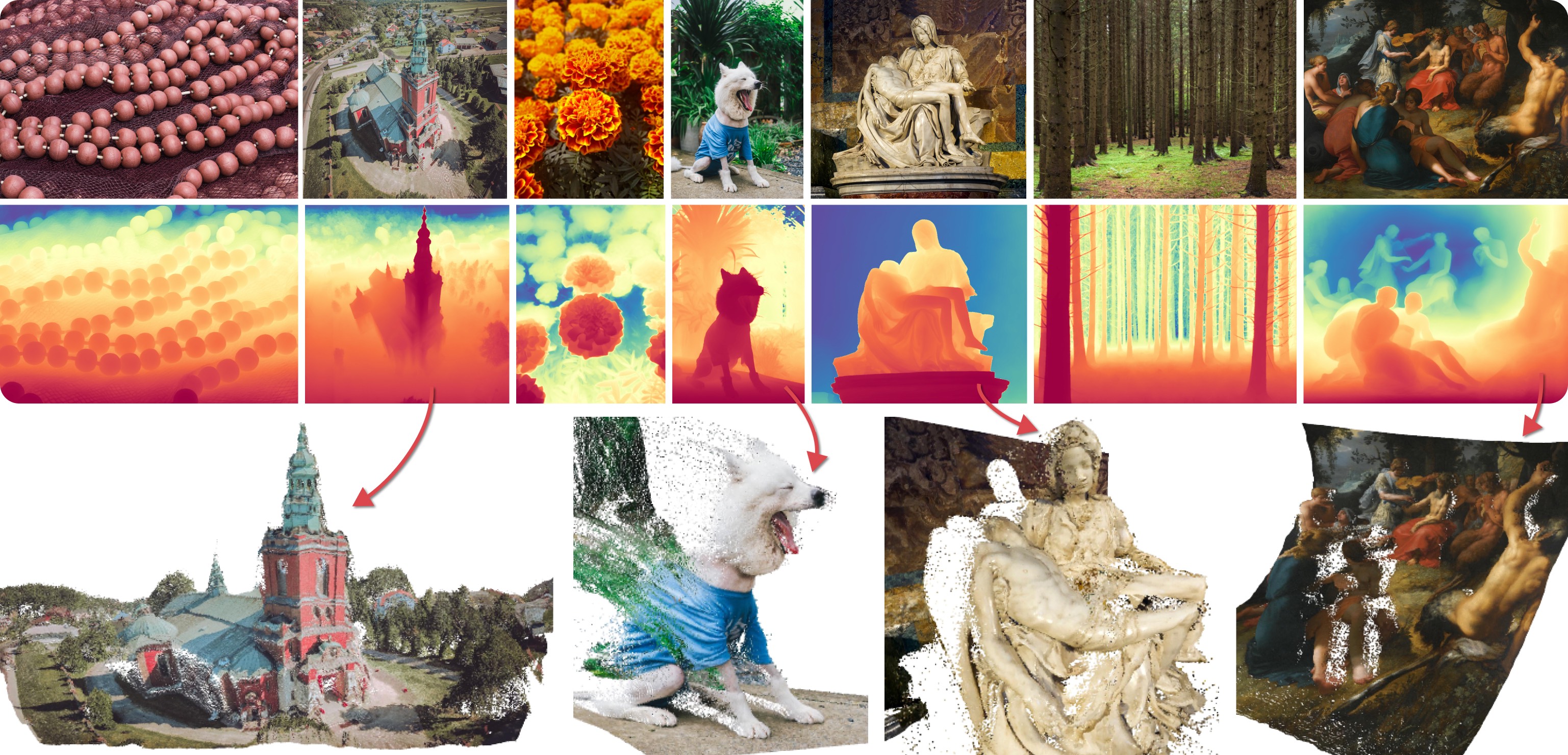
|
||||
|
||||
Marigold was proposed in
|
||||
[Repurposing Diffusion-Based Image Generators for Monocular Depth Estimation](https://huggingface.co/papers/2312.02145),
|
||||
a CVPR 2024 Oral paper by
|
||||
[Bingxin Ke](http://www.kebingxin.com/),
|
||||
[Anton Obukhov](https://www.obukhov.ai/),
|
||||
[Shengyu Huang](https://shengyuh.github.io/),
|
||||
[Nando Metzger](https://nandometzger.github.io/),
|
||||
[Rodrigo Caye Daudt](https://rcdaudt.github.io/), and
|
||||
[Konrad Schindler](https://scholar.google.com/citations?user=FZuNgqIAAAAJ&hl=en).
|
||||
The core idea is to **repurpose the generative prior of Text-to-Image Latent Diffusion Models (LDMs) for traditional
|
||||
computer vision tasks**.
|
||||
This approach was explored by fine-tuning Stable Diffusion for **Monocular Depth Estimation**, as demonstrated in the
|
||||
teaser above.
|
||||
Marigold was proposed in [Repurposing Diffusion-Based Image Generators for Monocular Depth Estimation](https://huggingface.co/papers/2312.02145), a CVPR 2024 Oral paper by [Bingxin Ke](http://www.kebingxin.com/), [Anton Obukhov](https://www.obukhov.ai/), [Shengyu Huang](https://shengyuh.github.io/), [Nando Metzger](https://nandometzger.github.io/), [Rodrigo Caye Daudt](https://rcdaudt.github.io/), and [Konrad Schindler](https://scholar.google.com/citations?user=FZuNgqIAAAAJ&hl=en).
|
||||
The idea is to repurpose the rich generative prior of Text-to-Image Latent Diffusion Models (LDMs) for traditional computer vision tasks.
|
||||
Initially, this idea was explored to fine-tune Stable Diffusion for Monocular Depth Estimation, as shown in the teaser above.
|
||||
Later,
|
||||
- [Tianfu Wang](https://tianfwang.github.io/) trained the first Latent Consistency Model (LCM) of Marigold, which unlocked fast single-step inference;
|
||||
- [Kevin Qu](https://www.linkedin.com/in/kevin-qu-b3417621b/?locale=en_US) extended the approach to Surface Normals Estimation;
|
||||
- [Anton Obukhov](https://www.obukhov.ai/) contributed the pipelines and documentation into diffusers (enabled and supported by [YiYi Xu](https://yiyixuxu.github.io/) and [Sayak Paul](https://sayak.dev/)).
|
||||
|
||||
Marigold was later extended in the follow-up paper,
|
||||
[Marigold: Affordable Adaptation of Diffusion-Based Image Generators for Image Analysis](https://huggingface.co/papers/2312.02145),
|
||||
authored by
|
||||
[Bingxin Ke](http://www.kebingxin.com/),
|
||||
[Kevin Qu](https://www.linkedin.com/in/kevin-qu-b3417621b/?locale=en_US),
|
||||
[Tianfu Wang](https://tianfwang.github.io/),
|
||||
[Nando Metzger](https://nandometzger.github.io/),
|
||||
[Shengyu Huang](https://shengyuh.github.io/),
|
||||
[Bo Li](https://www.linkedin.com/in/bobboli0202/),
|
||||
[Anton Obukhov](https://www.obukhov.ai/), and
|
||||
[Konrad Schindler](https://scholar.google.com/citations?user=FZuNgqIAAAAJ&hl=en).
|
||||
This work expanded Marigold to support new modalities such as **Surface Normals** and **Intrinsic Image Decomposition**
|
||||
(IID), introduced a training protocol for **Latent Consistency Models** (LCM), and demonstrated **High-Resolution** (HR)
|
||||
processing capability.
|
||||
The abstract from the paper is:
|
||||
|
||||
<Tip>
|
||||
|
||||
The early Marigold models (`v1-0` and earlier) were optimized for best results with at least 10 inference steps.
|
||||
LCM models were later developed to enable high-quality inference in just 1 to 4 steps.
|
||||
Marigold models `v1-1` and later use the DDIM scheduler to achieve optimal
|
||||
results in as few as 1 to 4 steps.
|
||||
|
||||
</Tip>
|
||||
*Monocular depth estimation is a fundamental computer vision task. Recovering 3D depth from a single image is geometrically ill-posed and requires scene understanding, so it is not surprising that the rise of deep learning has led to a breakthrough. The impressive progress of monocular depth estimators has mirrored the growth in model capacity, from relatively modest CNNs to large Transformer architectures. Still, monocular depth estimators tend to struggle when presented with images with unfamiliar content and layout, since their knowledge of the visual world is restricted by the data seen during training, and challenged by zero-shot generalization to new domains. This motivates us to explore whether the extensive priors captured in recent generative diffusion models can enable better, more generalizable depth estimation. We introduce Marigold, a method for affine-invariant monocular depth estimation that is derived from Stable Diffusion and retains its rich prior knowledge. The estimator can be fine-tuned in a couple of days on a single GPU using only synthetic training data. It delivers state-of-the-art performance across a wide range of datasets, including over 20% performance gains in specific cases. Project page: https://marigoldmonodepth.github.io.*
|
||||
|
||||
## Available Pipelines
|
||||
|
||||
Each pipeline is tailored for a specific computer vision task, processing an input RGB image and generating a
|
||||
corresponding prediction.
|
||||
Currently, the following computer vision tasks are implemented:
|
||||
Each pipeline supports one Computer Vision task, which takes an input RGB image as input and produces a *prediction* of the modality of interest, such as a depth map of the input image.
|
||||
Currently, the following tasks are implemented:
|
||||
|
||||
| Pipeline | Predicted Modalities | Demos |
|
||||
|---------------------------------------------------------------------------------------------------------------------------------------------|------------------------------------------------------------------------------------------------------------------|:--------------------------------------------------------------------------------------------------------------------------------------------------:|
|
||||
| [MarigoldDepthPipeline](https://github.com/huggingface/diffusers/blob/main/src/diffusers/pipelines/marigold/pipeline_marigold_depth.py) | [Depth](https://en.wikipedia.org/wiki/Depth_map), [Disparity](https://en.wikipedia.org/wiki/Binocular_disparity) | [Fast Demo (LCM)](https://huggingface.co/spaces/prs-eth/marigold-lcm), [Slow Original Demo (DDIM)](https://huggingface.co/spaces/prs-eth/marigold) |
|
||||
| [MarigoldNormalsPipeline](https://github.com/huggingface/diffusers/blob/main/src/diffusers/pipelines/marigold/pipeline_marigold_normals.py) | [Surface normals](https://en.wikipedia.org/wiki/Normal_mapping) | [Fast Demo (LCM)](https://huggingface.co/spaces/prs-eth/marigold-normals-lcm) |
|
||||
|
||||
| Pipeline | Recommended Model Checkpoints | Spaces (Interactive Apps) | Predicted Modalities |
|
||||
|---------------------------------------------------------------------------------------------------------------------------------------------------|---------------------------------------------------------------------------------------------------------------------------------------------------------------------------------------------------------|:------------------------------------------------------------------------------------:|------------------------------------------------------------------------------------------------------------------------------------------------------------------------------------|
|
||||
| [MarigoldDepthPipeline](https://github.com/huggingface/diffusers/blob/main/src/diffusers/pipelines/marigold/pipeline_marigold_depth.py) | [prs-eth/marigold-depth-v1-1](https://huggingface.co/prs-eth/marigold-depth-v1-1) | [Depth Estimation](https://huggingface.co/spaces/prs-eth/marigold) | [Depth](https://en.wikipedia.org/wiki/Depth_map), [Disparity](https://en.wikipedia.org/wiki/Binocular_disparity) |
|
||||
| [MarigoldNormalsPipeline](https://github.com/huggingface/diffusers/blob/main/src/diffusers/pipelines/marigold/pipeline_marigold_normals.py) | [prs-eth/marigold-normals-v1-1](https://huggingface.co/prs-eth/marigold-normals-v1-1) | [Surface Normals Estimation](https://huggingface.co/spaces/prs-eth/marigold-normals) | [Surface normals](https://en.wikipedia.org/wiki/Normal_mapping) |
|
||||
| [MarigoldIntrinsicsPipeline](https://github.com/huggingface/diffusers/blob/main/src/diffusers/pipelines/marigold/pipeline_marigold_intrinsics.py) | [prs-eth/marigold-iid-appearance-v1-1](https://huggingface.co/prs-eth/marigold-iid-appearance-v1-1),<br>[prs-eth/marigold-iid-lighting-v1-1](https://huggingface.co/prs-eth/marigold-iid-lighting-v1-1) | [Intrinsic Image Decomposition](https://huggingface.co/spaces/prs-eth/marigold-iid) | [Albedo](https://en.wikipedia.org/wiki/Albedo), [Materials](https://www.n.aiq3d.com/wiki/roughnessmetalnessao-map), [Lighting](https://en.wikipedia.org/wiki/Diffuse_reflection) |
|
||||
|
||||
## Available Checkpoints
|
||||
|
||||
All original checkpoints are available under the [PRS-ETH](https://huggingface.co/prs-eth/) organization on Hugging Face.
|
||||
They are designed for use with diffusers pipelines and the [original codebase](https://github.com/prs-eth/marigold), which can also be used to train
|
||||
new model checkpoints.
|
||||
The following is a summary of the recommended checkpoints, all of which produce reliable results with 1 to 4 steps.
|
||||
|
||||
| Checkpoint | Modality | Comment |
|
||||
|-----------------------------------------------------------------------------------------------------|--------------|--------------------------------------------------------------------------------------------------------------------------------------------------------------------------------------|
|
||||
| [prs-eth/marigold-depth-v1-1](https://huggingface.co/prs-eth/marigold-depth-v1-1) | Depth | Affine-invariant depth prediction assigns each pixel a value between 0 (near plane) and 1 (far plane), with both planes determined by the model during inference. |
|
||||
| [prs-eth/marigold-normals-v0-1](https://huggingface.co/prs-eth/marigold-normals-v0-1) | Normals | The surface normals predictions are unit-length 3D vectors in the screen space camera, with values in the range from -1 to 1. |
|
||||
| [prs-eth/marigold-iid-appearance-v1-1](https://huggingface.co/prs-eth/marigold-iid-appearance-v1-1) | Intrinsics | InteriorVerse decomposition is comprised of Albedo and two BRDF material properties: Roughness and Metallicity. |
|
||||
| [prs-eth/marigold-iid-lighting-v1-1](https://huggingface.co/prs-eth/marigold-iid-lighting-v1-1) | Intrinsics | HyperSim decomposition of an image  \\(I\\)  is comprised of Albedo  \\(A\\), Diffuse shading  \\(S\\), and Non-diffuse residual  \\(R\\):  \\(I = A*S+R\\). |
|
||||
The original checkpoints can be found under the [PRS-ETH](https://huggingface.co/prs-eth/) Hugging Face organization.
|
||||
|
||||
<Tip>
|
||||
|
||||
Make sure to check out the Schedulers [guide](../../using-diffusers/schedulers) to learn how to explore the tradeoff
|
||||
between scheduler speed and quality, and see the [reuse components across pipelines](../../using-diffusers/loading#reuse-a-pipeline) section to learn how to
|
||||
efficiently load the same components into multiple pipelines.
|
||||
Also, to know more about reducing the memory usage of this pipeline, refer to the ["Reduce memory usage"] section
|
||||
[here](../../using-diffusers/svd#reduce-memory-usage).
|
||||
Make sure to check out the Schedulers [guide](../../using-diffusers/schedulers) to learn how to explore the tradeoff between scheduler speed and quality, and see the [reuse components across pipelines](../../using-diffusers/loading#reuse-a-pipeline) section to learn how to efficiently load the same components into multiple pipelines. Also, to know more about reducing the memory usage of this pipeline, refer to the ["Reduce memory usage"] section [here](../../using-diffusers/svd#reduce-memory-usage).
|
||||
|
||||
</Tip>
|
||||
|
||||
<Tip warning={true}>
|
||||
|
||||
Marigold pipelines were designed and tested with the scheduler embedded in the model checkpoint.
|
||||
The optimal number of inference steps varies by scheduler, with no universal value that works best across all cases.
|
||||
To accommodate this, the `num_inference_steps` parameter in the pipeline's `__call__` method defaults to `None` (see the
|
||||
API reference).
|
||||
Unless set explicitly, it inherits the value from the `default_denoising_steps` field in the checkpoint configuration
|
||||
file (`model_index.json`).
|
||||
This ensures high-quality predictions when invoking the pipeline with only the `image` argument.
|
||||
Marigold pipelines were designed and tested only with `DDIMScheduler` and `LCMScheduler`.
|
||||
Depending on the scheduler, the number of inference steps required to get reliable predictions varies, and there is no universal value that works best across schedulers.
|
||||
Because of that, the default value of `num_inference_steps` in the `__call__` method of the pipeline is set to `None` (see the API reference).
|
||||
Unless set explicitly, its value will be taken from the checkpoint configuration `model_index.json`.
|
||||
This is done to ensure high-quality predictions when calling the pipeline with just the `image` argument.
|
||||
|
||||
</Tip>
|
||||
|
||||
See also Marigold [usage examples](../../using-diffusers/marigold_usage).
|
||||
|
||||
## Marigold Depth Prediction API
|
||||
See also Marigold [usage examples](marigold_usage).
|
||||
|
||||
## MarigoldDepthPipeline
|
||||
[[autodoc]] MarigoldDepthPipeline
|
||||
- all
|
||||
- __call__
|
||||
|
||||
## MarigoldNormalsPipeline
|
||||
[[autodoc]] MarigoldNormalsPipeline
|
||||
- all
|
||||
- __call__
|
||||
|
||||
## MarigoldDepthOutput
|
||||
[[autodoc]] pipelines.marigold.pipeline_marigold_depth.MarigoldDepthOutput
|
||||
|
||||
[[autodoc]] pipelines.marigold.marigold_image_processing.MarigoldImageProcessor.visualize_depth
|
||||
|
||||
## Marigold Normals Estimation API
|
||||
[[autodoc]] MarigoldNormalsPipeline
|
||||
- __call__
|
||||
|
||||
[[autodoc]] pipelines.marigold.pipeline_marigold_normals.MarigoldNormalsOutput
|
||||
|
||||
[[autodoc]] pipelines.marigold.marigold_image_processing.MarigoldImageProcessor.visualize_normals
|
||||
|
||||
## Marigold Intrinsic Image Decomposition API
|
||||
|
||||
[[autodoc]] MarigoldIntrinsicsPipeline
|
||||
- __call__
|
||||
|
||||
[[autodoc]] pipelines.marigold.pipeline_marigold_intrinsics.MarigoldIntrinsicsOutput
|
||||
|
||||
[[autodoc]] pipelines.marigold.marigold_image_processing.MarigoldImageProcessor.visualize_intrinsics
|
||||
## MarigoldNormalsOutput
|
||||
[[autodoc]] pipelines.marigold.pipeline_marigold_normals.MarigoldNormalsOutput
|
||||
@@ -15,10 +15,6 @@
|
||||
|
||||
# Mochi 1 Preview
|
||||
|
||||
<div class="flex flex-wrap space-x-1">
|
||||
<img alt="LoRA" src="https://img.shields.io/badge/LoRA-d8b4fe?style=flat"/>
|
||||
</div>
|
||||
|
||||
> [!TIP]
|
||||
> Only a research preview of the model weights is available at the moment.
|
||||
|
||||
@@ -119,7 +115,7 @@ export_to_video(frames, "mochi.mp4", fps=30)
|
||||
|
||||
## Reproducing the results from the Genmo Mochi repo
|
||||
|
||||
The [Genmo Mochi implementation](https://github.com/genmoai/mochi/tree/main) uses different precision values for each stage in the inference process. The text encoder and VAE use `torch.float32`, while the DiT uses `torch.bfloat16` with the [attention kernel](https://pytorch.org/docs/stable/generated/torch.nn.attention.sdpa_kernel.html#torch.nn.attention.sdpa_kernel) set to `EFFICIENT_ATTENTION`. Diffusers pipelines currently do not support setting different `dtypes` for different stages of the pipeline. In order to run inference in the same way as the original implementation, please refer to the following example.
|
||||
The [Genmo Mochi implementation](https://github.com/genmoai/mochi/tree/main) uses different precision values for each stage in the inference process. The text encoder and VAE use `torch.float32`, while the DiT uses `torch.bfloat16` with the [attention kernel](https://pytorch.org/docs/stable/generated/torch.nn.attention.sdpa_kernel.html#torch.nn.attention.sdpa_kernel) set to `EFFICIENT_ATTENTION`. Diffusers pipelines currently do not support setting different `dtypes` for different stages of the pipeline. In order to run inference in the same way as the the original implementation, please refer to the following example.
|
||||
|
||||
<Tip>
|
||||
The original Mochi implementation zeros out empty prompts. However, enabling this option and placing the entire pipeline under autocast can lead to numerical overflows with the T5 text encoder.
|
||||
|
||||
@@ -1,80 +0,0 @@
|
||||
<!--Copyright 2024 The HuggingFace Team. All rights reserved.
|
||||
#
|
||||
# Licensed under the Apache License, Version 2.0 (the "License");
|
||||
# you may not use this file except in compliance with the License.
|
||||
# You may obtain a copy of the License at
|
||||
#
|
||||
# http://www.apache.org/licenses/LICENSE-2.0
|
||||
#
|
||||
# Unless required by applicable law or agreed to in writing, software
|
||||
# distributed under the License is distributed on an "AS IS" BASIS,
|
||||
# WITHOUT WARRANTIES OR CONDITIONS OF ANY KIND, either express or implied.
|
||||
# See the License for the specific language governing permissions and
|
||||
# limitations under the License.
|
||||
-->
|
||||
|
||||
# OmniGen
|
||||
|
||||
[OmniGen: Unified Image Generation](https://arxiv.org/pdf/2409.11340) from BAAI, by Shitao Xiao, Yueze Wang, Junjie Zhou, Huaying Yuan, Xingrun Xing, Ruiran Yan, Chaofan Li, Shuting Wang, Tiejun Huang, Zheng Liu.
|
||||
|
||||
The abstract from the paper is:
|
||||
|
||||
*The emergence of Large Language Models (LLMs) has unified language generation tasks and revolutionized human-machine interaction. However, in the realm of image generation, a unified model capable of handling various tasks within a single framework remains largely unexplored. In this work, we introduce OmniGen, a new diffusion model for unified image generation. OmniGen is characterized by the following features: 1) Unification: OmniGen not only demonstrates text-to-image generation capabilities but also inherently supports various downstream tasks, such as image editing, subject-driven generation, and visual conditional generation. 2) Simplicity: The architecture of OmniGen is highly simplified, eliminating the need for additional plugins. Moreover, compared to existing diffusion models, it is more user-friendly and can complete complex tasks end-to-end through instructions without the need for extra intermediate steps, greatly simplifying the image generation workflow. 3) Knowledge Transfer: Benefit from learning in a unified format, OmniGen effectively transfers knowledge across different tasks, manages unseen tasks and domains, and exhibits novel capabilities. We also explore the model’s reasoning capabilities and potential applications of the chain-of-thought mechanism. This work represents the first attempt at a general-purpose image generation model, and we will release our resources at https://github.com/VectorSpaceLab/OmniGen to foster future advancements.*
|
||||
|
||||
<Tip>
|
||||
|
||||
Make sure to check out the Schedulers [guide](../../using-diffusers/schedulers.md) to learn how to explore the tradeoff between scheduler speed and quality, and see the [reuse components across pipelines](../../using-diffusers/loading.md#reuse-a-pipeline) section to learn how to efficiently load the same components into multiple pipelines.
|
||||
|
||||
</Tip>
|
||||
|
||||
This pipeline was contributed by [staoxiao](https://github.com/staoxiao). The original codebase can be found [here](https://github.com/VectorSpaceLab/OmniGen). The original weights can be found under [hf.co/shitao](https://huggingface.co/Shitao/OmniGen-v1).
|
||||
|
||||
## Inference
|
||||
|
||||
First, load the pipeline:
|
||||
|
||||
```python
|
||||
import torch
|
||||
from diffusers import OmniGenPipeline
|
||||
|
||||
pipe = OmniGenPipeline.from_pretrained("Shitao/OmniGen-v1-diffusers", torch_dtype=torch.bfloat16)
|
||||
pipe.to("cuda")
|
||||
```
|
||||
|
||||
For text-to-image, pass a text prompt. By default, OmniGen generates a 1024x1024 image.
|
||||
You can try setting the `height` and `width` parameters to generate images with different size.
|
||||
|
||||
```python
|
||||
prompt = "Realistic photo. A young woman sits on a sofa, holding a book and facing the camera. She wears delicate silver hoop earrings adorned with tiny, sparkling diamonds that catch the light, with her long chestnut hair cascading over her shoulders. Her eyes are focused and gentle, framed by long, dark lashes. She is dressed in a cozy cream sweater, which complements her warm, inviting smile. Behind her, there is a table with a cup of water in a sleek, minimalist blue mug. The background is a serene indoor setting with soft natural light filtering through a window, adorned with tasteful art and flowers, creating a cozy and peaceful ambiance. 4K, HD."
|
||||
image = pipe(
|
||||
prompt=prompt,
|
||||
height=1024,
|
||||
width=1024,
|
||||
guidance_scale=3,
|
||||
generator=torch.Generator(device="cpu").manual_seed(111),
|
||||
).images[0]
|
||||
image.save("output.png")
|
||||
```
|
||||
|
||||
OmniGen supports multimodal inputs.
|
||||
When the input includes an image, you need to add a placeholder `<img><|image_1|></img>` in the text prompt to represent the image.
|
||||
It is recommended to enable `use_input_image_size_as_output` to keep the edited image the same size as the original image.
|
||||
|
||||
```python
|
||||
prompt="<img><|image_1|></img> Remove the woman's earrings. Replace the mug with a clear glass filled with sparkling iced cola."
|
||||
input_images=[load_image("https://raw.githubusercontent.com/VectorSpaceLab/OmniGen/main/imgs/docs_img/t2i_woman_with_book.png")]
|
||||
image = pipe(
|
||||
prompt=prompt,
|
||||
input_images=input_images,
|
||||
guidance_scale=2,
|
||||
img_guidance_scale=1.6,
|
||||
use_input_image_size_as_output=True,
|
||||
generator=torch.Generator(device="cpu").manual_seed(222)).images[0]
|
||||
image.save("output.png")
|
||||
```
|
||||
|
||||
## OmniGenPipeline
|
||||
|
||||
[[autodoc]] OmniGenPipeline
|
||||
- all
|
||||
- __call__
|
||||
@@ -54,7 +54,7 @@ The table below lists all the pipelines currently available in 🤗 Diffusers an
|
||||
| [DiT](dit) | text2image |
|
||||
| [Flux](flux) | text2image |
|
||||
| [Hunyuan-DiT](hunyuandit) | text2image |
|
||||
| [I2VGen-XL](i2vgenxl) | image2video |
|
||||
| [I2VGen-XL](i2vgenxl) | text2video |
|
||||
| [InstructPix2Pix](pix2pix) | image editing |
|
||||
| [Kandinsky 2.1](kandinsky) | text2image, image2image, inpainting, interpolation |
|
||||
| [Kandinsky 2.2](kandinsky_v22) | text2image, image2image, inpainting |
|
||||
@@ -65,7 +65,7 @@ The table below lists all the pipelines currently available in 🤗 Diffusers an
|
||||
| [Latte](latte) | text2image |
|
||||
| [LEDITS++](ledits_pp) | image editing |
|
||||
| [Lumina-T2X](lumina) | text2image |
|
||||
| [Marigold](marigold) | depth-estimation, normals-estimation, intrinsic-decomposition |
|
||||
| [Marigold](marigold) | depth |
|
||||
| [MultiDiffusion](panorama) | text2image |
|
||||
| [MusicLDM](musicldm) | text2audio |
|
||||
| [PAG](pag) | text2image |
|
||||
|
||||
@@ -12,10 +12,6 @@ specific language governing permissions and limitations under the License.
|
||||
|
||||
# Perturbed-Attention Guidance
|
||||
|
||||
<div class="flex flex-wrap space-x-1">
|
||||
<img alt="LoRA" src="https://img.shields.io/badge/LoRA-d8b4fe?style=flat"/>
|
||||
</div>
|
||||
|
||||
[Perturbed-Attention Guidance (PAG)](https://ku-cvlab.github.io/Perturbed-Attention-Guidance/) is a new diffusion sampling guidance that improves sample quality across both unconditional and conditional settings, achieving this without requiring further training or the integration of external modules.
|
||||
|
||||
PAG was introduced in [Self-Rectifying Diffusion Sampling with Perturbed-Attention Guidance](https://huggingface.co/papers/2403.17377) by Donghoon Ahn, Hyoungwon Cho, Jaewon Min, Wooseok Jang, Jungwoo Kim, SeonHwa Kim, Hyun Hee Park, Kyong Hwan Jin and Seungryong Kim.
|
||||
|
||||
@@ -12,10 +12,6 @@ specific language governing permissions and limitations under the License.
|
||||
|
||||
# MultiDiffusion
|
||||
|
||||
<div class="flex flex-wrap space-x-1">
|
||||
<img alt="LoRA" src="https://img.shields.io/badge/LoRA-d8b4fe?style=flat"/>
|
||||
</div>
|
||||
|
||||
[MultiDiffusion: Fusing Diffusion Paths for Controlled Image Generation](https://huggingface.co/papers/2302.08113) is by Omer Bar-Tal, Lior Yariv, Yaron Lipman, and Tali Dekel.
|
||||
|
||||
The abstract from the paper is:
|
||||
|
||||
@@ -12,10 +12,6 @@ specific language governing permissions and limitations under the License.
|
||||
|
||||
# Image-to-Video Generation with PIA (Personalized Image Animator)
|
||||
|
||||
<div class="flex flex-wrap space-x-1">
|
||||
<img alt="LoRA" src="https://img.shields.io/badge/LoRA-d8b4fe?style=flat"/>
|
||||
</div>
|
||||
|
||||
## Overview
|
||||
|
||||
[PIA: Your Personalized Image Animator via Plug-and-Play Modules in Text-to-Image Models](https://arxiv.org/abs/2312.13964) by Yiming Zhang, Zhening Xing, Yanhong Zeng, Youqing Fang, Kai Chen
|
||||
|
||||
@@ -12,10 +12,6 @@ specific language governing permissions and limitations under the License.
|
||||
|
||||
# InstructPix2Pix
|
||||
|
||||
<div class="flex flex-wrap space-x-1">
|
||||
<img alt="LoRA" src="https://img.shields.io/badge/LoRA-d8b4fe?style=flat"/>
|
||||
</div>
|
||||
|
||||
[InstructPix2Pix: Learning to Follow Image Editing Instructions](https://huggingface.co/papers/2211.09800) is by Tim Brooks, Aleksander Holynski and Alexei A. Efros.
|
||||
|
||||
The abstract from the paper is:
|
||||
|
||||
@@ -14,11 +14,6 @@
|
||||
|
||||
# SanaPipeline
|
||||
|
||||
<div class="flex flex-wrap space-x-1">
|
||||
<img alt="LoRA" src="https://img.shields.io/badge/LoRA-d8b4fe?style=flat"/>
|
||||
<img alt="MPS" src="https://img.shields.io/badge/MPS-000000?style=flat&logo=apple&logoColor=white%22">
|
||||
</div>
|
||||
|
||||
[SANA: Efficient High-Resolution Image Synthesis with Linear Diffusion Transformers](https://huggingface.co/papers/2410.10629) from NVIDIA and MIT HAN Lab, by Enze Xie, Junsong Chen, Junyu Chen, Han Cai, Haotian Tang, Yujun Lin, Zhekai Zhang, Muyang Li, Ligeng Zhu, Yao Lu, Song Han.
|
||||
|
||||
The abstract from the paper is:
|
||||
|
||||
@@ -1,100 +0,0 @@
|
||||
<!-- Copyright 2024 The HuggingFace Team. All rights reserved.
|
||||
#
|
||||
# Licensed under the Apache License, Version 2.0 (the "License");
|
||||
# you may not use this file except in compliance with the License.
|
||||
# You may obtain a copy of the License at
|
||||
#
|
||||
# http://www.apache.org/licenses/LICENSE-2.0
|
||||
#
|
||||
# Unless required by applicable law or agreed to in writing, software
|
||||
# distributed under the License is distributed on an "AS IS" BASIS,
|
||||
# WITHOUT WARRANTIES OR CONDITIONS OF ANY KIND, either express or implied.
|
||||
# See the License for the specific language governing permissions and
|
||||
# limitations under the License. -->
|
||||
|
||||
# SanaSprintPipeline
|
||||
|
||||
<div class="flex flex-wrap space-x-1">
|
||||
<img alt="LoRA" src="https://img.shields.io/badge/LoRA-d8b4fe?style=flat"/>
|
||||
</div>
|
||||
|
||||
[SANA-Sprint: One-Step Diffusion with Continuous-Time Consistency Distillation](https://huggingface.co/papers/2503.09641) from NVIDIA, MIT HAN Lab, and Hugging Face by Junsong Chen, Shuchen Xue, Yuyang Zhao, Jincheng Yu, Sayak Paul, Junyu Chen, Han Cai, Enze Xie, Song Han
|
||||
|
||||
The abstract from the paper is:
|
||||
|
||||
*This paper presents SANA-Sprint, an efficient diffusion model for ultra-fast text-to-image (T2I) generation. SANA-Sprint is built on a pre-trained foundation model and augmented with hybrid distillation, dramatically reducing inference steps from 20 to 1-4. We introduce three key innovations: (1) We propose a training-free approach that transforms a pre-trained flow-matching model for continuous-time consistency distillation (sCM), eliminating costly training from scratch and achieving high training efficiency. Our hybrid distillation strategy combines sCM with latent adversarial distillation (LADD): sCM ensures alignment with the teacher model, while LADD enhances single-step generation fidelity. (2) SANA-Sprint is a unified step-adaptive model that achieves high-quality generation in 1-4 steps, eliminating step-specific training and improving efficiency. (3) We integrate ControlNet with SANA-Sprint for real-time interactive image generation, enabling instant visual feedback for user interaction. SANA-Sprint establishes a new Pareto frontier in speed-quality tradeoffs, achieving state-of-the-art performance with 7.59 FID and 0.74 GenEval in only 1 step — outperforming FLUX-schnell (7.94 FID / 0.71 GenEval) while being 10× faster (0.1s vs 1.1s on H100). It also achieves 0.1s (T2I) and 0.25s (ControlNet) latency for 1024×1024 images on H100, and 0.31s (T2I) on an RTX 4090, showcasing its exceptional efficiency and potential for AI-powered consumer applications (AIPC). Code and pre-trained models will be open-sourced.*
|
||||
|
||||
<Tip>
|
||||
|
||||
Make sure to check out the Schedulers [guide](../../using-diffusers/schedulers) to learn how to explore the tradeoff between scheduler speed and quality, and see the [reuse components across pipelines](../../using-diffusers/loading#reuse-a-pipeline) section to learn how to efficiently load the same components into multiple pipelines.
|
||||
|
||||
</Tip>
|
||||
|
||||
This pipeline was contributed by [lawrence-cj](https://github.com/lawrence-cj), [shuchen Xue](https://github.com/scxue) and [Enze Xie](https://github.com/xieenze). The original codebase can be found [here](https://github.com/NVlabs/Sana). The original weights can be found under [hf.co/Efficient-Large-Model](https://huggingface.co/Efficient-Large-Model/).
|
||||
|
||||
Available models:
|
||||
|
||||
| Model | Recommended dtype |
|
||||
|:-------------------------------------------------------------------------------------------------------------------------------------------:|:-----------------:|
|
||||
| [`Efficient-Large-Model/Sana_Sprint_1.6B_1024px_diffusers`](https://huggingface.co/Efficient-Large-Model/Sana_Sprint_1.6B_1024px_diffusers) | `torch.bfloat16` |
|
||||
| [`Efficient-Large-Model/Sana_Sprint_0.6B_1024px_diffusers`](https://huggingface.co/Efficient-Large-Model/Sana_Sprint_0.6B_1024px_diffusers) | `torch.bfloat16` |
|
||||
|
||||
Refer to [this](https://huggingface.co/collections/Efficient-Large-Model/sana-sprint-67d6810d65235085b3b17c76) collection for more information.
|
||||
|
||||
Note: The recommended dtype mentioned is for the transformer weights. The text encoder must stay in `torch.bfloat16` and VAE weights must stay in `torch.bfloat16` or `torch.float32` for the model to work correctly. Please refer to the inference example below to see how to load the model with the recommended dtype.
|
||||
|
||||
|
||||
## Quantization
|
||||
|
||||
Quantization helps reduce the memory requirements of very large models by storing model weights in a lower precision data type. However, quantization may have varying impact on video quality depending on the video model.
|
||||
|
||||
Refer to the [Quantization](../../quantization/overview) overview to learn more about supported quantization backends and selecting a quantization backend that supports your use case. The example below demonstrates how to load a quantized [`SanaSprintPipeline`] for inference with bitsandbytes.
|
||||
|
||||
```py
|
||||
import torch
|
||||
from diffusers import BitsAndBytesConfig as DiffusersBitsAndBytesConfig, SanaTransformer2DModel, SanaSprintPipeline
|
||||
from transformers import BitsAndBytesConfig as BitsAndBytesConfig, AutoModel
|
||||
|
||||
quant_config = BitsAndBytesConfig(load_in_8bit=True)
|
||||
text_encoder_8bit = AutoModel.from_pretrained(
|
||||
"Efficient-Large-Model/Sana_Sprint_1.6B_1024px_diffusers",
|
||||
subfolder="text_encoder",
|
||||
quantization_config=quant_config,
|
||||
torch_dtype=torch.bfloat16,
|
||||
)
|
||||
|
||||
quant_config = DiffusersBitsAndBytesConfig(load_in_8bit=True)
|
||||
transformer_8bit = SanaTransformer2DModel.from_pretrained(
|
||||
"Efficient-Large-Model/Sana_Sprint_1.6B_1024px_diffusers",
|
||||
subfolder="transformer",
|
||||
quantization_config=quant_config,
|
||||
torch_dtype=torch.bfloat16,
|
||||
)
|
||||
|
||||
pipeline = SanaSprintPipeline.from_pretrained(
|
||||
"Efficient-Large-Model/Sana_Sprint_1.6B_1024px_diffusers",
|
||||
text_encoder=text_encoder_8bit,
|
||||
transformer=transformer_8bit,
|
||||
torch_dtype=torch.bfloat16,
|
||||
device_map="balanced",
|
||||
)
|
||||
|
||||
prompt = "a tiny astronaut hatching from an egg on the moon"
|
||||
image = pipeline(prompt).images[0]
|
||||
image.save("sana.png")
|
||||
```
|
||||
|
||||
## Setting `max_timesteps`
|
||||
|
||||
Users can tweak the `max_timesteps` value for experimenting with the visual quality of the generated outputs. The default `max_timesteps` value was obtained with an inference-time search process. For more details about it, check out the paper.
|
||||
|
||||
## SanaSprintPipeline
|
||||
|
||||
[[autodoc]] SanaSprintPipeline
|
||||
- all
|
||||
- __call__
|
||||
|
||||
|
||||
## SanaPipelineOutput
|
||||
|
||||
[[autodoc]] pipelines.sana.pipeline_output.SanaPipelineOutput
|
||||
@@ -12,10 +12,6 @@ specific language governing permissions and limitations under the License.
|
||||
|
||||
# Depth-to-image
|
||||
|
||||
<div class="flex flex-wrap space-x-1">
|
||||
<img alt="LoRA" src="https://img.shields.io/badge/LoRA-d8b4fe?style=flat"/>
|
||||
</div>
|
||||
|
||||
The Stable Diffusion model can also infer depth based on an image using [MiDaS](https://github.com/isl-org/MiDaS). This allows you to pass a text prompt and an initial image to condition the generation of new images as well as a `depth_map` to preserve the image structure.
|
||||
|
||||
<Tip>
|
||||
|
||||
@@ -12,10 +12,6 @@ specific language governing permissions and limitations under the License.
|
||||
|
||||
# Image-to-image
|
||||
|
||||
<div class="flex flex-wrap space-x-1">
|
||||
<img alt="LoRA" src="https://img.shields.io/badge/LoRA-d8b4fe?style=flat"/>
|
||||
</div>
|
||||
|
||||
The Stable Diffusion model can also be applied to image-to-image generation by passing a text prompt and an initial image to condition the generation of new images.
|
||||
|
||||
The [`StableDiffusionImg2ImgPipeline`] uses the diffusion-denoising mechanism proposed in [SDEdit: Guided Image Synthesis and Editing with Stochastic Differential Equations](https://huggingface.co/papers/2108.01073) by Chenlin Meng, Yutong He, Yang Song, Jiaming Song, Jiajun Wu, Jun-Yan Zhu, Stefano Ermon.
|
||||
|
||||
@@ -12,10 +12,6 @@ specific language governing permissions and limitations under the License.
|
||||
|
||||
# Inpainting
|
||||
|
||||
<div class="flex flex-wrap space-x-1">
|
||||
<img alt="LoRA" src="https://img.shields.io/badge/LoRA-d8b4fe?style=flat"/>
|
||||
</div>
|
||||
|
||||
The Stable Diffusion model can also be applied to inpainting which lets you edit specific parts of an image by providing a mask and a text prompt using Stable Diffusion.
|
||||
|
||||
## Tips
|
||||
|
||||
@@ -12,10 +12,6 @@ specific language governing permissions and limitations under the License.
|
||||
|
||||
# Text-to-(RGB, depth)
|
||||
|
||||
<div class="flex flex-wrap space-x-1">
|
||||
<img alt="LoRA" src="https://img.shields.io/badge/LoRA-d8b4fe?style=flat"/>
|
||||
</div>
|
||||
|
||||
LDM3D was proposed in [LDM3D: Latent Diffusion Model for 3D](https://huggingface.co/papers/2305.10853) by Gabriela Ben Melech Stan, Diana Wofk, Scottie Fox, Alex Redden, Will Saxton, Jean Yu, Estelle Aflalo, Shao-Yen Tseng, Fabio Nonato, Matthias Muller, and Vasudev Lal. LDM3D generates an image and a depth map from a given text prompt unlike the existing text-to-image diffusion models such as [Stable Diffusion](./overview) which only generates an image. With almost the same number of parameters, LDM3D achieves to create a latent space that can compress both the RGB images and the depth maps.
|
||||
|
||||
Two checkpoints are available for use:
|
||||
|
||||
@@ -12,10 +12,6 @@ specific language governing permissions and limitations under the License.
|
||||
|
||||
# Stable Diffusion pipelines
|
||||
|
||||
<div class="flex flex-wrap space-x-1">
|
||||
<img alt="LoRA" src="https://img.shields.io/badge/LoRA-d8b4fe?style=flat"/>
|
||||
</div>
|
||||
|
||||
Stable Diffusion is a text-to-image latent diffusion model created by the researchers and engineers from [CompVis](https://github.com/CompVis), [Stability AI](https://stability.ai/) and [LAION](https://laion.ai/). Latent diffusion applies the diffusion process over a lower dimensional latent space to reduce memory and compute complexity. This specific type of diffusion model was proposed in [High-Resolution Image Synthesis with Latent Diffusion Models](https://huggingface.co/papers/2112.10752) by Robin Rombach, Andreas Blattmann, Dominik Lorenz, Patrick Esser, Björn Ommer.
|
||||
|
||||
Stable Diffusion is trained on 512x512 images from a subset of the LAION-5B dataset. This model uses a frozen CLIP ViT-L/14 text encoder to condition the model on text prompts. With its 860M UNet and 123M text encoder, the model is relatively lightweight and can run on consumer GPUs.
|
||||
|
||||
@@ -12,11 +12,6 @@ specific language governing permissions and limitations under the License.
|
||||
|
||||
# Stable Diffusion 3
|
||||
|
||||
<div class="flex flex-wrap space-x-1">
|
||||
<img alt="LoRA" src="https://img.shields.io/badge/LoRA-d8b4fe?style=flat"/>
|
||||
<img alt="MPS" src="https://img.shields.io/badge/MPS-000000?style=flat&logo=apple&logoColor=white%22">
|
||||
</div>
|
||||
|
||||
Stable Diffusion 3 (SD3) was proposed in [Scaling Rectified Flow Transformers for High-Resolution Image Synthesis](https://arxiv.org/pdf/2403.03206.pdf) by Patrick Esser, Sumith Kulal, Andreas Blattmann, Rahim Entezari, Jonas Muller, Harry Saini, Yam Levi, Dominik Lorenz, Axel Sauer, Frederic Boesel, Dustin Podell, Tim Dockhorn, Zion English, Kyle Lacey, Alex Goodwin, Yannik Marek, and Robin Rombach.
|
||||
|
||||
The abstract from the paper is:
|
||||
|
||||
@@ -12,11 +12,6 @@ specific language governing permissions and limitations under the License.
|
||||
|
||||
# Stable Diffusion XL
|
||||
|
||||
<div class="flex flex-wrap space-x-1">
|
||||
<img alt="LoRA" src="https://img.shields.io/badge/LoRA-d8b4fe?style=flat"/>
|
||||
<img alt="MPS" src="https://img.shields.io/badge/MPS-000000?style=flat&logo=apple&logoColor=white%22">
|
||||
</div>
|
||||
|
||||
Stable Diffusion XL (SDXL) was proposed in [SDXL: Improving Latent Diffusion Models for High-Resolution Image Synthesis](https://huggingface.co/papers/2307.01952) by Dustin Podell, Zion English, Kyle Lacey, Andreas Blattmann, Tim Dockhorn, Jonas Müller, Joe Penna, and Robin Rombach.
|
||||
|
||||
The abstract from the paper is:
|
||||
|
||||
@@ -12,10 +12,6 @@ specific language governing permissions and limitations under the License.
|
||||
|
||||
# Text-to-image
|
||||
|
||||
<div class="flex flex-wrap space-x-1">
|
||||
<img alt="LoRA" src="https://img.shields.io/badge/LoRA-d8b4fe?style=flat"/>
|
||||
</div>
|
||||
|
||||
The Stable Diffusion model was created by researchers and engineers from [CompVis](https://github.com/CompVis), [Stability AI](https://stability.ai/), [Runway](https://github.com/runwayml), and [LAION](https://laion.ai/). The [`StableDiffusionPipeline`] is capable of generating photorealistic images given any text input. It's trained on 512x512 images from a subset of the LAION-5B dataset. This model uses a frozen CLIP ViT-L/14 text encoder to condition the model on text prompts. With its 860M UNet and 123M text encoder, the model is relatively lightweight and can run on consumer GPUs. Latent diffusion is the research on top of which Stable Diffusion was built. It was proposed in [High-Resolution Image Synthesis with Latent Diffusion Models](https://huggingface.co/papers/2112.10752) by Robin Rombach, Andreas Blattmann, Dominik Lorenz, Patrick Esser, Björn Ommer.
|
||||
|
||||
The abstract from the paper is:
|
||||
|
||||
@@ -12,10 +12,6 @@ specific language governing permissions and limitations under the License.
|
||||
|
||||
# Super-resolution
|
||||
|
||||
<div class="flex flex-wrap space-x-1">
|
||||
<img alt="LoRA" src="https://img.shields.io/badge/LoRA-d8b4fe?style=flat"/>
|
||||
</div>
|
||||
|
||||
The Stable Diffusion upscaler diffusion model was created by the researchers and engineers from [CompVis](https://github.com/CompVis), [Stability AI](https://stability.ai/), and [LAION](https://laion.ai/). It is used to enhance the resolution of input images by a factor of 4.
|
||||
|
||||
<Tip>
|
||||
|
||||
@@ -12,10 +12,6 @@ specific language governing permissions and limitations under the License.
|
||||
|
||||
# Stable unCLIP
|
||||
|
||||
<div class="flex flex-wrap space-x-1">
|
||||
<img alt="LoRA" src="https://img.shields.io/badge/LoRA-d8b4fe?style=flat"/>
|
||||
</div>
|
||||
|
||||
Stable unCLIP checkpoints are finetuned from [Stable Diffusion 2.1](./stable_diffusion/stable_diffusion_2) checkpoints to condition on CLIP image embeddings.
|
||||
Stable unCLIP still conditions on text embeddings. Given the two separate conditionings, stable unCLIP can be used
|
||||
for text guided image variation. When combined with an unCLIP prior, it can also be used for full text to image generation.
|
||||
|
||||
@@ -18,10 +18,6 @@ specific language governing permissions and limitations under the License.
|
||||
|
||||
# Text-to-video
|
||||
|
||||
<div class="flex flex-wrap space-x-1">
|
||||
<img alt="LoRA" src="https://img.shields.io/badge/LoRA-d8b4fe?style=flat"/>
|
||||
</div>
|
||||
|
||||
[ModelScope Text-to-Video Technical Report](https://arxiv.org/abs/2308.06571) is by Jiuniu Wang, Hangjie Yuan, Dayou Chen, Yingya Zhang, Xiang Wang, Shiwei Zhang.
|
||||
|
||||
The abstract from the paper is:
|
||||
|
||||
@@ -12,10 +12,6 @@ specific language governing permissions and limitations under the License.
|
||||
|
||||
# Text2Video-Zero
|
||||
|
||||
<div class="flex flex-wrap space-x-1">
|
||||
<img alt="LoRA" src="https://img.shields.io/badge/LoRA-d8b4fe?style=flat"/>
|
||||
</div>
|
||||
|
||||
[Text2Video-Zero: Text-to-Image Diffusion Models are Zero-Shot Video Generators](https://huggingface.co/papers/2303.13439) is by Levon Khachatryan, Andranik Movsisyan, Vahram Tadevosyan, Roberto Henschel, [Zhangyang Wang](https://www.ece.utexas.edu/people/faculty/atlas-wang), Shant Navasardyan, [Humphrey Shi](https://www.humphreyshi.com).
|
||||
|
||||
Text2Video-Zero enables zero-shot video generation using either:
|
||||
|
||||
@@ -12,10 +12,6 @@ specific language governing permissions and limitations under the License.
|
||||
|
||||
# UniDiffuser
|
||||
|
||||
<div class="flex flex-wrap space-x-1">
|
||||
<img alt="LoRA" src="https://img.shields.io/badge/LoRA-d8b4fe?style=flat"/>
|
||||
</div>
|
||||
|
||||
The UniDiffuser model was proposed in [One Transformer Fits All Distributions in Multi-Modal Diffusion at Scale](https://huggingface.co/papers/2303.06555) by Fan Bao, Shen Nie, Kaiwen Xue, Chongxuan Li, Shi Pu, Yaole Wang, Gang Yue, Yue Cao, Hang Su, Jun Zhu.
|
||||
|
||||
The abstract from the paper is:
|
||||
|
||||
@@ -1,465 +0,0 @@
|
||||
<!-- Copyright 2024 The HuggingFace Team. All rights reserved.
|
||||
#
|
||||
# Licensed under the Apache License, Version 2.0 (the "License");
|
||||
# you may not use this file except in compliance with the License.
|
||||
# You may obtain a copy of the License at
|
||||
#
|
||||
# http://www.apache.org/licenses/LICENSE-2.0
|
||||
#
|
||||
# Unless required by applicable law or agreed to in writing, software
|
||||
# distributed under the License is distributed on an "AS IS" BASIS,
|
||||
# WITHOUT WARRANTIES OR CONDITIONS OF ANY KIND, either express or implied.
|
||||
# See the License for the specific language governing permissions and
|
||||
# limitations under the License. -->
|
||||
|
||||
# Wan
|
||||
|
||||
<div class="flex flex-wrap space-x-1">
|
||||
<img alt="LoRA" src="https://img.shields.io/badge/LoRA-d8b4fe?style=flat"/>
|
||||
</div>
|
||||
|
||||
[Wan 2.1](https://github.com/Wan-Video/Wan2.1) by the Alibaba Wan Team.
|
||||
|
||||
<!-- TODO(aryan): update abstract once paper is out -->
|
||||
|
||||
## Generating Videos with Wan 2.1
|
||||
|
||||
We will first need to install some addtional dependencies.
|
||||
|
||||
```shell
|
||||
pip install -u ftfy imageio-ffmpeg imageio
|
||||
```
|
||||
|
||||
### Text to Video Generation
|
||||
|
||||
The following example requires 11GB VRAM to run and uses the smaller `Wan-AI/Wan2.1-T2V-1.3B-Diffusers` model. You can switch it out
|
||||
for the larger `Wan2.1-I2V-14B-720P-Diffusers` or `Wan-AI/Wan2.1-I2V-14B-480P-Diffusers` if you have at least 35GB VRAM available.
|
||||
|
||||
```python
|
||||
from diffusers import WanPipeline
|
||||
from diffusers.utils import export_to_video
|
||||
|
||||
# Available models: Wan-AI/Wan2.1-I2V-14B-720P-Diffusers or Wan-AI/Wan2.1-I2V-14B-480P-Diffusers
|
||||
model_id = "Wan-AI/Wan2.1-T2V-1.3B-Diffusers"
|
||||
|
||||
pipe = WanPipeline.from_pretrained(model_id, torch_dtype=torch.bfloat16)
|
||||
pipe.enable_model_cpu_offload()
|
||||
|
||||
prompt = "A cat and a dog baking a cake together in a kitchen. The cat is carefully measuring flour, while the dog is stirring the batter with a wooden spoon. The kitchen is cozy, with sunlight streaming through the window."
|
||||
negative_prompt = "Bright tones, overexposed, static, blurred details, subtitles, style, works, paintings, images, static, overall gray, worst quality, low quality, JPEG compression residue, ugly, incomplete, extra fingers, poorly drawn hands, poorly drawn faces, deformed, disfigured, misshapen limbs, fused fingers, still picture, messy background, three legs, many people in the background, walking backwards"
|
||||
num_frames = 33
|
||||
|
||||
frames = pipe(prompt=prompt, negative_prompt=negative_prompt, num_frames=num_frames).frames[0]
|
||||
export_to_video(frames, "wan-t2v.mp4", fps=16)
|
||||
```
|
||||
|
||||
<Tip>
|
||||
You can improve the quality of the generated video by running the decoding step in full precision.
|
||||
</Tip>
|
||||
|
||||
```python
|
||||
from diffusers import WanPipeline, AutoencoderKLWan
|
||||
from diffusers.utils import export_to_video
|
||||
|
||||
model_id = "Wan-AI/Wan2.1-T2V-1.3B-Diffusers"
|
||||
|
||||
vae = AutoencoderKLWan.from_pretrained(model_id, subfolder="vae", torch_dtype=torch.float32)
|
||||
pipe = WanPipeline.from_pretrained(model_id, vae=vae, torch_dtype=torch.bfloat16)
|
||||
|
||||
# replace this with pipe.to("cuda") if you have sufficient VRAM
|
||||
pipe.enable_model_cpu_offload()
|
||||
|
||||
prompt = "A cat and a dog baking a cake together in a kitchen. The cat is carefully measuring flour, while the dog is stirring the batter with a wooden spoon. The kitchen is cozy, with sunlight streaming through the window."
|
||||
negative_prompt = "Bright tones, overexposed, static, blurred details, subtitles, style, works, paintings, images, static, overall gray, worst quality, low quality, JPEG compression residue, ugly, incomplete, extra fingers, poorly drawn hands, poorly drawn faces, deformed, disfigured, misshapen limbs, fused fingers, still picture, messy background, three legs, many people in the background, walking backwards"
|
||||
num_frames = 33
|
||||
|
||||
frames = pipe(prompt=prompt, num_frames=num_frames).frames[0]
|
||||
export_to_video(frames, "wan-t2v.mp4", fps=16)
|
||||
```
|
||||
|
||||
### Image to Video Generation
|
||||
|
||||
The Image to Video pipeline requires loading the `AutoencoderKLWan` and the `CLIPVisionModel` components in full precision. The following example will need at least
|
||||
35GB of VRAM to run.
|
||||
|
||||
```python
|
||||
import torch
|
||||
import numpy as np
|
||||
from diffusers import AutoencoderKLWan, WanImageToVideoPipeline
|
||||
from diffusers.utils import export_to_video, load_image
|
||||
from transformers import CLIPVisionModel
|
||||
|
||||
# Available models: Wan-AI/Wan2.1-I2V-14B-480P-Diffusers, Wan-AI/Wan2.1-I2V-14B-720P-Diffusers
|
||||
model_id = "Wan-AI/Wan2.1-I2V-14B-480P-Diffusers"
|
||||
image_encoder = CLIPVisionModel.from_pretrained(
|
||||
model_id, subfolder="image_encoder", torch_dtype=torch.float32
|
||||
)
|
||||
vae = AutoencoderKLWan.from_pretrained(model_id, subfolder="vae", torch_dtype=torch.float32)
|
||||
pipe = WanImageToVideoPipeline.from_pretrained(
|
||||
model_id, vae=vae, image_encoder=image_encoder, torch_dtype=torch.bfloat16
|
||||
)
|
||||
|
||||
# replace this with pipe.to("cuda") if you have sufficient VRAM
|
||||
pipe.enable_model_cpu_offload()
|
||||
|
||||
image = load_image(
|
||||
"https://huggingface.co/datasets/huggingface/documentation-images/resolve/main/diffusers/astronaut.jpg"
|
||||
)
|
||||
|
||||
max_area = 480 * 832
|
||||
aspect_ratio = image.height / image.width
|
||||
mod_value = pipe.vae_scale_factor_spatial * pipe.transformer.config.patch_size[1]
|
||||
height = round(np.sqrt(max_area * aspect_ratio)) // mod_value * mod_value
|
||||
width = round(np.sqrt(max_area / aspect_ratio)) // mod_value * mod_value
|
||||
image = image.resize((width, height))
|
||||
|
||||
prompt = (
|
||||
"An astronaut hatching from an egg, on the surface of the moon, the darkness and depth of space realised in "
|
||||
"the background. High quality, ultrarealistic detail and breath-taking movie-like camera shot."
|
||||
)
|
||||
negative_prompt = "Bright tones, overexposed, static, blurred details, subtitles, style, works, paintings, images, static, overall gray, worst quality, low quality, JPEG compression residue, ugly, incomplete, extra fingers, poorly drawn hands, poorly drawn faces, deformed, disfigured, misshapen limbs, fused fingers, still picture, messy background, three legs, many people in the background, walking backwards"
|
||||
|
||||
num_frames = 33
|
||||
|
||||
output = pipe(
|
||||
image=image,
|
||||
prompt=prompt,
|
||||
negative_prompt=negative_prompt,
|
||||
height=height,
|
||||
width=width,
|
||||
num_frames=num_frames,
|
||||
guidance_scale=5.0,
|
||||
).frames[0]
|
||||
export_to_video(output, "wan-i2v.mp4", fps=16)
|
||||
```
|
||||
|
||||
### Video to Video Generation
|
||||
|
||||
```python
|
||||
import torch
|
||||
from diffusers.utils import load_video, export_to_video
|
||||
from diffusers import AutoencoderKLWan, WanVideoToVideoPipeline, UniPCMultistepScheduler
|
||||
|
||||
# Available models: Wan-AI/Wan2.1-T2V-14B-Diffusers, Wan-AI/Wan2.1-T2V-1.3B-Diffusers
|
||||
model_id = "Wan-AI/Wan2.1-T2V-1.3B-Diffusers"
|
||||
vae = AutoencoderKLWan.from_pretrained(
|
||||
model_id, subfolder="vae", torch_dtype=torch.float32
|
||||
)
|
||||
pipe = WanVideoToVideoPipeline.from_pretrained(
|
||||
model_id, vae=vae, torch_dtype=torch.bfloat16
|
||||
)
|
||||
flow_shift = 3.0 # 5.0 for 720P, 3.0 for 480P
|
||||
pipe.scheduler = UniPCMultistepScheduler.from_config(
|
||||
pipe.scheduler.config, flow_shift=flow_shift
|
||||
)
|
||||
# change to pipe.to("cuda") if you have sufficient VRAM
|
||||
pipe.enable_model_cpu_offload()
|
||||
|
||||
prompt = "A robot standing on a mountain top. The sun is setting in the background"
|
||||
negative_prompt = "Bright tones, overexposed, static, blurred details, subtitles, style, works, paintings, images, static, overall gray, worst quality, low quality, JPEG compression residue, ugly, incomplete, extra fingers, poorly drawn hands, poorly drawn faces, deformed, disfigured, misshapen limbs, fused fingers, still picture, messy background, three legs, many people in the background, walking backwards"
|
||||
video = load_video(
|
||||
"https://huggingface.co/datasets/huggingface/documentation-images/resolve/main/diffusers/hiker.mp4"
|
||||
)
|
||||
output = pipe(
|
||||
video=video,
|
||||
prompt=prompt,
|
||||
negative_prompt=negative_prompt,
|
||||
height=480,
|
||||
width=512,
|
||||
guidance_scale=7.0,
|
||||
strength=0.7,
|
||||
).frames[0]
|
||||
|
||||
export_to_video(output, "wan-v2v.mp4", fps=16)
|
||||
```
|
||||
|
||||
## Memory Optimizations for Wan 2.1
|
||||
|
||||
Base inference with the large 14B Wan 2.1 models can take up to 35GB of VRAM when generating videos at 720p resolution. We'll outline a few memory optimizations we can apply to reduce the VRAM required to run the model.
|
||||
|
||||
We'll use `Wan-AI/Wan2.1-I2V-14B-720P-Diffusers` model in these examples to demonstrate the memory savings, but the techniques are applicable to all model checkpoints.
|
||||
|
||||
### Group Offloading the Transformer and UMT5 Text Encoder
|
||||
|
||||
Find more information about group offloading [here](../optimization/memory.md)
|
||||
|
||||
#### Block Level Group Offloading
|
||||
|
||||
We can reduce our VRAM requirements by applying group offloading to the larger model components of the pipeline; the `WanTransformer3DModel` and `UMT5EncoderModel`. Group offloading will break up the individual modules of a model and offload/onload them onto your GPU as needed during inference. In this example, we'll apply `block_level` offloading, which will group the modules in a model into blocks of size `num_blocks_per_group` and offload/onload them to GPU. Moving to between CPU and GPU does add latency to the inference process. You can trade off between latency and memory savings by increasing or decreasing the `num_blocks_per_group`.
|
||||
|
||||
The following example will now only require 14GB of VRAM to run, but will take approximately 30 minutes to generate a video.
|
||||
|
||||
```python
|
||||
import torch
|
||||
import numpy as np
|
||||
from diffusers import AutoencoderKLWan, WanTransformer3DModel, WanImageToVideoPipeline
|
||||
from diffusers.hooks.group_offloading import apply_group_offloading
|
||||
from diffusers.utils import export_to_video, load_image
|
||||
from transformers import UMT5EncoderModel, CLIPVisionModel
|
||||
|
||||
# Available models: Wan-AI/Wan2.1-I2V-14B-480P-Diffusers, Wan-AI/Wan2.1-I2V-14B-720P-Diffusers
|
||||
model_id = "Wan-AI/Wan2.1-I2V-14B-720P-Diffusers"
|
||||
image_encoder = CLIPVisionModel.from_pretrained(
|
||||
model_id, subfolder="image_encoder", torch_dtype=torch.float32
|
||||
)
|
||||
|
||||
text_encoder = UMT5EncoderModel.from_pretrained(model_id, subfolder="text_encoder", torch_dtype=torch.bfloat16)
|
||||
vae = AutoencoderKLWan.from_pretrained(model_id, subfolder="vae", torch_dtype=torch.float32)
|
||||
transformer = WanTransformer3DModel.from_pretrained(model_id, subfolder="transformer", torch_dtype=torch.bfloat16)
|
||||
|
||||
onload_device = torch.device("cuda")
|
||||
offload_device = torch.device("cpu")
|
||||
|
||||
apply_group_offloading(text_encoder,
|
||||
onload_device=onload_device,
|
||||
offload_device=offload_device,
|
||||
offload_type="block_level",
|
||||
num_blocks_per_group=4
|
||||
)
|
||||
|
||||
transformer.enable_group_offload(
|
||||
onload_device=onload_device,
|
||||
offload_device=offload_device,
|
||||
offload_type="block_level",
|
||||
num_blocks_per_group=4,
|
||||
)
|
||||
pipe = WanImageToVideoPipeline.from_pretrained(
|
||||
model_id,
|
||||
vae=vae,
|
||||
transformer=transformer,
|
||||
text_encoder=text_encoder,
|
||||
image_encoder=image_encoder,
|
||||
torch_dtype=torch.bfloat16
|
||||
)
|
||||
# Since we've offloaded the larger models alrady, we can move the rest of the model components to GPU
|
||||
pipe.to("cuda")
|
||||
|
||||
image = load_image(
|
||||
"https://huggingface.co/datasets/huggingface/documentation-images/resolve/main/diffusers/astronaut.jpg"
|
||||
)
|
||||
|
||||
max_area = 720 * 832
|
||||
aspect_ratio = image.height / image.width
|
||||
mod_value = pipe.vae_scale_factor_spatial * pipe.transformer.config.patch_size[1]
|
||||
height = round(np.sqrt(max_area * aspect_ratio)) // mod_value * mod_value
|
||||
width = round(np.sqrt(max_area / aspect_ratio)) // mod_value * mod_value
|
||||
image = image.resize((width, height))
|
||||
|
||||
prompt = (
|
||||
"An astronaut hatching from an egg, on the surface of the moon, the darkness and depth of space realised in "
|
||||
"the background. High quality, ultrarealistic detail and breath-taking movie-like camera shot."
|
||||
)
|
||||
negative_prompt = "Bright tones, overexposed, static, blurred details, subtitles, style, works, paintings, images, static, overall gray, worst quality, low quality, JPEG compression residue, ugly, incomplete, extra fingers, poorly drawn hands, poorly drawn faces, deformed, disfigured, misshapen limbs, fused fingers, still picture, messy background, three legs, many people in the background, walking backwards"
|
||||
|
||||
num_frames = 33
|
||||
|
||||
output = pipe(
|
||||
image=image,
|
||||
prompt=prompt,
|
||||
negative_prompt=negative_prompt,
|
||||
height=height,
|
||||
width=width,
|
||||
num_frames=num_frames,
|
||||
guidance_scale=5.0,
|
||||
).frames[0]
|
||||
|
||||
export_to_video(output, "wan-i2v.mp4", fps=16)
|
||||
```
|
||||
|
||||
#### Block Level Group Offloading with CUDA Streams
|
||||
|
||||
We can speed up group offloading inference, by enabling the use of [CUDA streams](https://pytorch.org/docs/stable/generated/torch.cuda.Stream.html). However, using CUDA streams requires moving the model parameters into pinned memory. This allocation is handled by Pytorch under the hood, and can result in a significant spike in CPU RAM usage. Please consider this option if your CPU RAM is atleast 2X the size of the model you are group offloading.
|
||||
|
||||
In the following example we will use CUDA streams when group offloading the `WanTransformer3DModel`. When testing on an A100, this example will require 14GB of VRAM, 52GB of CPU RAM, but will generate a video in approximately 9 minutes.
|
||||
|
||||
```python
|
||||
import torch
|
||||
import numpy as np
|
||||
from diffusers import AutoencoderKLWan, WanTransformer3DModel, WanImageToVideoPipeline
|
||||
from diffusers.hooks.group_offloading import apply_group_offloading
|
||||
from diffusers.utils import export_to_video, load_image
|
||||
from transformers import UMT5EncoderModel, CLIPVisionModel
|
||||
|
||||
# Available models: Wan-AI/Wan2.1-I2V-14B-480P-Diffusers, Wan-AI/Wan2.1-I2V-14B-720P-Diffusers
|
||||
model_id = "Wan-AI/Wan2.1-I2V-14B-720P-Diffusers"
|
||||
image_encoder = CLIPVisionModel.from_pretrained(
|
||||
model_id, subfolder="image_encoder", torch_dtype=torch.float32
|
||||
)
|
||||
|
||||
text_encoder = UMT5EncoderModel.from_pretrained(model_id, subfolder="text_encoder", torch_dtype=torch.bfloat16)
|
||||
vae = AutoencoderKLWan.from_pretrained(model_id, subfolder="vae", torch_dtype=torch.float32)
|
||||
transformer = WanTransformer3DModel.from_pretrained(model_id, subfolder="transformer", torch_dtype=torch.bfloat16)
|
||||
|
||||
onload_device = torch.device("cuda")
|
||||
offload_device = torch.device("cpu")
|
||||
|
||||
apply_group_offloading(text_encoder,
|
||||
onload_device=onload_device,
|
||||
offload_device=offload_device,
|
||||
offload_type="block_level",
|
||||
num_blocks_per_group=4
|
||||
)
|
||||
|
||||
transformer.enable_group_offload(
|
||||
onload_device=onload_device,
|
||||
offload_device=offload_device,
|
||||
offload_type="leaf_level",
|
||||
use_stream=True
|
||||
)
|
||||
pipe = WanImageToVideoPipeline.from_pretrained(
|
||||
model_id,
|
||||
vae=vae,
|
||||
transformer=transformer,
|
||||
text_encoder=text_encoder,
|
||||
image_encoder=image_encoder,
|
||||
torch_dtype=torch.bfloat16
|
||||
)
|
||||
# Since we've offloaded the larger models alrady, we can move the rest of the model components to GPU
|
||||
pipe.to("cuda")
|
||||
|
||||
image = load_image(
|
||||
"https://huggingface.co/datasets/huggingface/documentation-images/resolve/main/diffusers/astronaut.jpg"
|
||||
)
|
||||
|
||||
max_area = 720 * 832
|
||||
aspect_ratio = image.height / image.width
|
||||
mod_value = pipe.vae_scale_factor_spatial * pipe.transformer.config.patch_size[1]
|
||||
height = round(np.sqrt(max_area * aspect_ratio)) // mod_value * mod_value
|
||||
width = round(np.sqrt(max_area / aspect_ratio)) // mod_value * mod_value
|
||||
image = image.resize((width, height))
|
||||
|
||||
prompt = (
|
||||
"An astronaut hatching from an egg, on the surface of the moon, the darkness and depth of space realised in "
|
||||
"the background. High quality, ultrarealistic detail and breath-taking movie-like camera shot."
|
||||
)
|
||||
negative_prompt = "Bright tones, overexposed, static, blurred details, subtitles, style, works, paintings, images, static, overall gray, worst quality, low quality, JPEG compression residue, ugly, incomplete, extra fingers, poorly drawn hands, poorly drawn faces, deformed, disfigured, misshapen limbs, fused fingers, still picture, messy background, three legs, many people in the background, walking backwards"
|
||||
|
||||
num_frames = 33
|
||||
|
||||
output = pipe(
|
||||
image=image,
|
||||
prompt=prompt,
|
||||
negative_prompt=negative_prompt,
|
||||
height=height,
|
||||
width=width,
|
||||
num_frames=num_frames,
|
||||
guidance_scale=5.0,
|
||||
).frames[0]
|
||||
|
||||
export_to_video(output, "wan-i2v.mp4", fps=16)
|
||||
```
|
||||
|
||||
### Applying Layerwise Casting to the Transformer
|
||||
|
||||
Find more information about layerwise casting [here](../optimization/memory.md)
|
||||
|
||||
In this example, we will model offloading with layerwise casting. Layerwise casting will downcast each layer's weights to `torch.float8_e4m3fn`, temporarily upcast to `torch.bfloat16` during the forward pass of the layer, then revert to `torch.float8_e4m3fn` afterward. This approach reduces memory requirements by approximately 50% while introducing a minor quality reduction in the generated video due to the precision trade-off.
|
||||
|
||||
This example will require 20GB of VRAM.
|
||||
|
||||
```python
|
||||
import torch
|
||||
import numpy as np
|
||||
from diffusers import AutoencoderKLWan, WanTransformer3DModel, WanImageToVideoPipeline
|
||||
from diffusers.hooks.group_offloading import apply_group_offloading
|
||||
from diffusers.utils import export_to_video, load_image
|
||||
from transformers import UMT5EncoderModel, CLIPVisionModel
|
||||
|
||||
model_id = "Wan-AI/Wan2.1-I2V-14B-720P-Diffusers"
|
||||
image_encoder = CLIPVisionModel.from_pretrained(
|
||||
model_id, subfolder="image_encoder", torch_dtype=torch.float32
|
||||
)
|
||||
text_encoder = UMT5EncoderModel.from_pretrained(model_id, subfolder="text_encoder", torch_dtype=torch.bfloat16)
|
||||
vae = AutoencoderKLWan.from_pretrained(model_id, subfolder="vae", torch_dtype=torch.float32)
|
||||
|
||||
transformer = WanTransformer3DModel.from_pretrained(model_id, subfolder="transformer", torch_dtype=torch.bfloat16)
|
||||
transformer.enable_layerwise_casting(storage_dtype=torch.float8_e4m3fn, compute_dtype=torch.bfloat16)
|
||||
|
||||
pipe = WanImageToVideoPipeline.from_pretrained(
|
||||
model_id,
|
||||
vae=vae,
|
||||
transformer=transformer,
|
||||
text_encoder=text_encoder,
|
||||
image_encoder=image_encoder,
|
||||
torch_dtype=torch.bfloat16
|
||||
)
|
||||
pipe.enable_model_cpu_offload()
|
||||
image = load_image("https://huggingface.co/datasets/huggingface/documentation-images/resolve/main/diffusers/astronaut.jpg")
|
||||
|
||||
max_area = 720 * 832
|
||||
aspect_ratio = image.height / image.width
|
||||
mod_value = pipe.vae_scale_factor_spatial * pipe.transformer.config.patch_size[1]
|
||||
height = round(np.sqrt(max_area * aspect_ratio)) // mod_value * mod_value
|
||||
width = round(np.sqrt(max_area / aspect_ratio)) // mod_value * mod_value
|
||||
image = image.resize((width, height))
|
||||
prompt = (
|
||||
"An astronaut hatching from an egg, on the surface of the moon, the darkness and depth of space realised in "
|
||||
"the background. High quality, ultrarealistic detail and breath-taking movie-like camera shot."
|
||||
)
|
||||
negative_prompt = "Bright tones, overexposed, static, blurred details, subtitles, style, works, paintings, images, static, overall gray, worst quality, low quality, JPEG compression residue, ugly, incomplete, extra fingers, poorly drawn hands, poorly drawn faces, deformed, disfigured, misshapen limbs, fused fingers, still picture, messy background, three legs, many people in the background, walking backwards"
|
||||
num_frames = 33
|
||||
|
||||
output = pipe(
|
||||
image=image,
|
||||
prompt=prompt,
|
||||
negative_prompt=negative_prompt,
|
||||
height=height,
|
||||
width=width,
|
||||
num_frames=num_frames,
|
||||
num_inference_steps=50,
|
||||
guidance_scale=5.0,
|
||||
).frames[0]
|
||||
export_to_video(output, "wan-i2v.mp4", fps=16)
|
||||
```
|
||||
|
||||
## Using a Custom Scheduler
|
||||
|
||||
Wan can be used with many different schedulers, each with their own benefits regarding speed and generation quality. By default, Wan uses the `UniPCMultistepScheduler(prediction_type="flow_prediction", use_flow_sigmas=True, flow_shift=3.0)` scheduler. You can use a different scheduler as follows:
|
||||
|
||||
```python
|
||||
from diffusers import FlowMatchEulerDiscreteScheduler, UniPCMultistepScheduler, WanPipeline
|
||||
|
||||
scheduler_a = FlowMatchEulerDiscreteScheduler(shift=5.0)
|
||||
scheduler_b = UniPCMultistepScheduler(prediction_type="flow_prediction", use_flow_sigmas=True, flow_shift=4.0)
|
||||
|
||||
pipe = WanPipeline.from_pretrained("Wan-AI/Wan2.1-T2V-1.3B-Diffusers", scheduler=<CUSTOM_SCHEDULER_HERE>)
|
||||
|
||||
# or,
|
||||
pipe.scheduler = <CUSTOM_SCHEDULER_HERE>
|
||||
```
|
||||
|
||||
## Using Single File Loading with Wan 2.1
|
||||
|
||||
The `WanTransformer3DModel` and `AutoencoderKLWan` models support loading checkpoints in their original format via the `from_single_file` loading
|
||||
method.
|
||||
|
||||
```python
|
||||
import torch
|
||||
from diffusers import WanPipeline, WanTransformer3DModel
|
||||
|
||||
ckpt_path = "https://huggingface.co/Comfy-Org/Wan_2.1_ComfyUI_repackaged/blob/main/split_files/diffusion_models/wan2.1_t2v_1.3B_bf16.safetensors"
|
||||
transformer = WanTransformer3DModel.from_single_file(ckpt_path, torch_dtype=torch.bfloat16)
|
||||
|
||||
pipe = WanPipeline.from_pretrained("Wan-AI/Wan2.1-T2V-1.3B-Diffusers", transformer=transformer)
|
||||
```
|
||||
|
||||
## Recommendations for Inference
|
||||
- Keep `AutencoderKLWan` in `torch.float32` for better decoding quality.
|
||||
- `num_frames` should satisfy the following constraint: `(num_frames - 1) % 4 == 0`
|
||||
- For smaller resolution videos, try lower values of `shift` (between `2.0` to `5.0`) in the [Scheduler](https://huggingface.co/docs/diffusers/main/en/api/schedulers/flow_match_euler_discrete#diffusers.FlowMatchEulerDiscreteScheduler.shift). For larger resolution videos, try higher values (between `7.0` and `12.0`). The default value is `3.0` for Wan.
|
||||
|
||||
## WanPipeline
|
||||
|
||||
[[autodoc]] WanPipeline
|
||||
- all
|
||||
- __call__
|
||||
|
||||
## WanImageToVideoPipeline
|
||||
|
||||
[[autodoc]] WanImageToVideoPipeline
|
||||
- all
|
||||
- __call__
|
||||
|
||||
## WanPipelineOutput
|
||||
|
||||
[[autodoc]] pipelines.wan.pipeline_output.WanPipelineOutput
|
||||
@@ -12,10 +12,6 @@ specific language governing permissions and limitations under the License.
|
||||
|
||||
# Würstchen
|
||||
|
||||
<div class="flex flex-wrap space-x-1">
|
||||
<img alt="LoRA" src="https://img.shields.io/badge/LoRA-d8b4fe?style=flat"/>
|
||||
</div>
|
||||
|
||||
<img src="https://github.com/dome272/Wuerstchen/assets/61938694/0617c863-165a-43ee-9303-2a17299a0cf9">
|
||||
|
||||
[Wuerstchen: An Efficient Architecture for Large-Scale Text-to-Image Diffusion Models](https://huggingface.co/papers/2306.00637) is by Pablo Pernias, Dominic Rampas, Mats L. Richter and Christopher Pal and Marc Aubreville.
|
||||
|
||||
@@ -31,11 +31,6 @@ Learn how to quantize models in the [Quantization](../quantization/overview) gui
|
||||
## GGUFQuantizationConfig
|
||||
|
||||
[[autodoc]] GGUFQuantizationConfig
|
||||
|
||||
## QuantoConfig
|
||||
|
||||
[[autodoc]] QuantoConfig
|
||||
|
||||
## TorchAoConfig
|
||||
|
||||
[[autodoc]] TorchAoConfig
|
||||
|
||||
@@ -1,19 +0,0 @@
|
||||
<!--Copyright 2024 The HuggingFace Team. All rights reserved.
|
||||
|
||||
Licensed under the Apache License, Version 2.0 (the "License"); you may not use this file except in compliance with
|
||||
the License. You may obtain a copy of the License at
|
||||
|
||||
http://www.apache.org/licenses/LICENSE-2.0
|
||||
|
||||
Unless required by applicable law or agreed to in writing, software distributed under the License is distributed on
|
||||
an "AS IS" BASIS, WITHOUT WARRANTIES OR CONDITIONS OF ANY KIND, either express or implied. See the License for the
|
||||
specific language governing permissions and limitations under the License.
|
||||
-->
|
||||
|
||||
# CogVideoXDDIMScheduler
|
||||
|
||||
`CogVideoXDDIMScheduler` is based on [Denoising Diffusion Implicit Models](https://huggingface.co/papers/2010.02502), specifically for CogVideoX models.
|
||||
|
||||
## CogVideoXDDIMScheduler
|
||||
|
||||
[[autodoc]] CogVideoXDDIMScheduler
|
||||
@@ -1,19 +0,0 @@
|
||||
<!--Copyright 2024 The HuggingFace Team. All rights reserved.
|
||||
|
||||
Licensed under the Apache License, Version 2.0 (the "License"); you may not use this file except in compliance with
|
||||
the License. You may obtain a copy of the License at
|
||||
|
||||
http://www.apache.org/licenses/LICENSE-2.0
|
||||
|
||||
Unless required by applicable law or agreed to in writing, software distributed under the License is distributed on
|
||||
an "AS IS" BASIS, WITHOUT WARRANTIES OR CONDITIONS OF ANY KIND, either express or implied. See the License for the
|
||||
specific language governing permissions and limitations under the License.
|
||||
-->
|
||||
|
||||
# CogVideoXDPMScheduler
|
||||
|
||||
`CogVideoXDPMScheduler` is based on [DPM-Solver: A Fast ODE Solver for Diffusion Probabilistic Model Sampling in Around 10 Steps](https://huggingface.co/papers/2206.00927) and [DPM-Solver++: Fast Solver for Guided Sampling of Diffusion Probabilistic Models](https://huggingface.co/papers/2211.01095), specifically for CogVideoX models.
|
||||
|
||||
## CogVideoXDPMScheduler
|
||||
|
||||
[[autodoc]] CogVideoXDPMScheduler
|
||||
@@ -41,11 +41,3 @@ Utility and helper functions for working with 🤗 Diffusers.
|
||||
## randn_tensor
|
||||
|
||||
[[autodoc]] utils.torch_utils.randn_tensor
|
||||
|
||||
## apply_layerwise_casting
|
||||
|
||||
[[autodoc]] hooks.layerwise_casting.apply_layerwise_casting
|
||||
|
||||
## apply_group_offloading
|
||||
|
||||
[[autodoc]] hooks.group_offloading.apply_group_offloading
|
||||
|
||||
@@ -16,11 +16,6 @@ specific language governing permissions and limitations under the License.
|
||||
<img src="https://colab.research.google.com/assets/colab-badge.svg" alt="Open In Colab"/>
|
||||
</a>
|
||||
|
||||
> [!TIP]
|
||||
> This document has now grown outdated given the emergence of existing evaluation frameworks for diffusion models for image generation. Please check
|
||||
> out works like [HEIM](https://crfm.stanford.edu/helm/heim/latest/), [T2I-Compbench](https://arxiv.org/abs/2307.06350),
|
||||
> [GenEval](https://arxiv.org/abs/2310.11513).
|
||||
|
||||
Evaluation of generative models like [Stable Diffusion](https://huggingface.co/docs/diffusers/stable_diffusion) is subjective in nature. But as practitioners and researchers, we often have to make careful choices amongst many different possibilities. So, when working with different generative models (like GANs, Diffusion, etc.), how do we choose one over the other?
|
||||
|
||||
Qualitative evaluation of such models can be error-prone and might incorrectly influence a decision.
|
||||
|
||||
@@ -1,9 +0,0 @@
|
||||
# Hybrid Inference API Reference
|
||||
|
||||
## Remote Decode
|
||||
|
||||
[[autodoc]] utils.remote_utils.remote_decode
|
||||
|
||||
## Remote Encode
|
||||
|
||||
[[autodoc]] utils.remote_utils.remote_encode
|
||||
@@ -1,60 +0,0 @@
|
||||
<!--Copyright 2024 The HuggingFace Team. All rights reserved.
|
||||
|
||||
Licensed under the Apache License, Version 2.0 (the "License"); you may not use this file except in compliance with
|
||||
the License. You may obtain a copy of the License at
|
||||
|
||||
http://www.apache.org/licenses/LICENSE-2.0
|
||||
|
||||
Unless required by applicable law or agreed to in writing, software distributed under the License is distributed on
|
||||
an "AS IS" BASIS, WITHOUT WARRANTIES OR CONDITIONS OF ANY KIND, either express or implied. See the License for the
|
||||
specific language governing permissions and limitations under the License.
|
||||
-->
|
||||
|
||||
# Hybrid Inference
|
||||
|
||||
**Empowering local AI builders with Hybrid Inference**
|
||||
|
||||
|
||||
> [!TIP]
|
||||
> Hybrid Inference is an [experimental feature](https://huggingface.co/blog/remote_vae).
|
||||
> Feedback can be provided [here](https://github.com/huggingface/diffusers/issues/new?template=remote-vae-pilot-feedback.yml).
|
||||
|
||||
|
||||
|
||||
## Why use Hybrid Inference?
|
||||
|
||||
Hybrid Inference offers a fast and simple way to offload local generation requirements.
|
||||
|
||||
- 🚀 **Reduced Requirements:** Access powerful models without expensive hardware.
|
||||
- 💎 **Without Compromise:** Achieve the highest quality without sacrificing performance.
|
||||
- 💰 **Cost Effective:** It's free! 🤑
|
||||
- 🎯 **Diverse Use Cases:** Fully compatible with Diffusers 🧨 and the wider community.
|
||||
- 🔧 **Developer-Friendly:** Simple requests, fast responses.
|
||||
|
||||
---
|
||||
|
||||
## Available Models
|
||||
|
||||
* **VAE Decode 🖼️:** Quickly decode latent representations into high-quality images without compromising performance or workflow speed.
|
||||
* **VAE Encode 🔢:** Efficiently encode images into latent representations for generation and training.
|
||||
* **Text Encoders 📃 (coming soon):** Compute text embeddings for your prompts quickly and accurately, ensuring a smooth and high-quality workflow.
|
||||
|
||||
---
|
||||
|
||||
## Integrations
|
||||
|
||||
* **[SD.Next](https://github.com/vladmandic/sdnext):** All-in-one UI with direct supports Hybrid Inference.
|
||||
* **[ComfyUI-HFRemoteVae](https://github.com/kijai/ComfyUI-HFRemoteVae):** ComfyUI node for Hybrid Inference.
|
||||
|
||||
## Changelog
|
||||
|
||||
- March 10 2025: Added VAE encode
|
||||
- March 2 2025: Initial release with VAE decoding
|
||||
|
||||
## Contents
|
||||
|
||||
The documentation is organized into three sections:
|
||||
|
||||
* **VAE Decode** Learn the basics of how to use VAE Decode with Hybrid Inference.
|
||||
* **VAE Encode** Learn the basics of how to use VAE Encode with Hybrid Inference.
|
||||
* **API Reference** Dive into task-specific settings and parameters.
|
||||
@@ -1,345 +0,0 @@
|
||||
# Getting Started: VAE Decode with Hybrid Inference
|
||||
|
||||
VAE decode is an essential component of diffusion models - turning latent representations into images or videos.
|
||||
|
||||
## Memory
|
||||
|
||||
These tables demonstrate the VRAM requirements for VAE decode with SD v1 and SD XL on different GPUs.
|
||||
|
||||
For the majority of these GPUs the memory usage % dictates other models (text encoders, UNet/Transformer) must be offloaded, or tiled decoding has to be used which increases time taken and impacts quality.
|
||||
|
||||
<details><summary>SD v1.5</summary>
|
||||
|
||||
| GPU | Resolution | Time (seconds) | Memory (%) | Tiled Time (secs) | Tiled Memory (%) |
|
||||
| --- | --- | --- | --- | --- | --- |
|
||||
| NVIDIA GeForce RTX 4090 | 512x512 | 0.031 | 5.60% | 0.031 (0%) | 5.60% |
|
||||
| NVIDIA GeForce RTX 4090 | 1024x1024 | 0.148 | 20.00% | 0.301 (+103%) | 5.60% |
|
||||
| NVIDIA GeForce RTX 4080 | 512x512 | 0.05 | 8.40% | 0.050 (0%) | 8.40% |
|
||||
| NVIDIA GeForce RTX 4080 | 1024x1024 | 0.224 | 30.00% | 0.356 (+59%) | 8.40% |
|
||||
| NVIDIA GeForce RTX 4070 Ti | 512x512 | 0.066 | 11.30% | 0.066 (0%) | 11.30% |
|
||||
| NVIDIA GeForce RTX 4070 Ti | 1024x1024 | 0.284 | 40.50% | 0.454 (+60%) | 11.40% |
|
||||
| NVIDIA GeForce RTX 3090 | 512x512 | 0.062 | 5.20% | 0.062 (0%) | 5.20% |
|
||||
| NVIDIA GeForce RTX 3090 | 1024x1024 | 0.253 | 18.50% | 0.464 (+83%) | 5.20% |
|
||||
| NVIDIA GeForce RTX 3080 | 512x512 | 0.07 | 12.80% | 0.070 (0%) | 12.80% |
|
||||
| NVIDIA GeForce RTX 3080 | 1024x1024 | 0.286 | 45.30% | 0.466 (+63%) | 12.90% |
|
||||
| NVIDIA GeForce RTX 3070 | 512x512 | 0.102 | 15.90% | 0.102 (0%) | 15.90% |
|
||||
| NVIDIA GeForce RTX 3070 | 1024x1024 | 0.421 | 56.30% | 0.746 (+77%) | 16.00% |
|
||||
|
||||
</details>
|
||||
|
||||
<details><summary>SDXL</summary>
|
||||
|
||||
| GPU | Resolution | Time (seconds) | Memory Consumed (%) | Tiled Time (seconds) | Tiled Memory (%) |
|
||||
| --- | --- | --- | --- | --- | --- |
|
||||
| NVIDIA GeForce RTX 4090 | 512x512 | 0.057 | 10.00% | 0.057 (0%) | 10.00% |
|
||||
| NVIDIA GeForce RTX 4090 | 1024x1024 | 0.256 | 35.50% | 0.257 (+0.4%) | 35.50% |
|
||||
| NVIDIA GeForce RTX 4080 | 512x512 | 0.092 | 15.00% | 0.092 (0%) | 15.00% |
|
||||
| NVIDIA GeForce RTX 4080 | 1024x1024 | 0.406 | 53.30% | 0.406 (0%) | 53.30% |
|
||||
| NVIDIA GeForce RTX 4070 Ti | 512x512 | 0.121 | 20.20% | 0.120 (-0.8%) | 20.20% |
|
||||
| NVIDIA GeForce RTX 4070 Ti | 1024x1024 | 0.519 | 72.00% | 0.519 (0%) | 72.00% |
|
||||
| NVIDIA GeForce RTX 3090 | 512x512 | 0.107 | 10.50% | 0.107 (0%) | 10.50% |
|
||||
| NVIDIA GeForce RTX 3090 | 1024x1024 | 0.459 | 38.00% | 0.460 (+0.2%) | 38.00% |
|
||||
| NVIDIA GeForce RTX 3080 | 512x512 | 0.121 | 25.60% | 0.121 (0%) | 25.60% |
|
||||
| NVIDIA GeForce RTX 3080 | 1024x1024 | 0.524 | 93.00% | 0.524 (0%) | 93.00% |
|
||||
| NVIDIA GeForce RTX 3070 | 512x512 | 0.183 | 31.80% | 0.183 (0%) | 31.80% |
|
||||
| NVIDIA GeForce RTX 3070 | 1024x1024 | 0.794 | 96.40% | 0.794 (0%) | 96.40% |
|
||||
|
||||
</details>
|
||||
|
||||
## Available VAEs
|
||||
|
||||
| | **Endpoint** | **Model** |
|
||||
|:-:|:-----------:|:--------:|
|
||||
| **Stable Diffusion v1** | [https://q1bj3bpq6kzilnsu.us-east-1.aws.endpoints.huggingface.cloud](https://q1bj3bpq6kzilnsu.us-east-1.aws.endpoints.huggingface.cloud) | [`stabilityai/sd-vae-ft-mse`](https://hf.co/stabilityai/sd-vae-ft-mse) |
|
||||
| **Stable Diffusion XL** | [https://x2dmsqunjd6k9prw.us-east-1.aws.endpoints.huggingface.cloud](https://x2dmsqunjd6k9prw.us-east-1.aws.endpoints.huggingface.cloud) | [`madebyollin/sdxl-vae-fp16-fix`](https://hf.co/madebyollin/sdxl-vae-fp16-fix) |
|
||||
| **Flux** | [https://whhx50ex1aryqvw6.us-east-1.aws.endpoints.huggingface.cloud](https://whhx50ex1aryqvw6.us-east-1.aws.endpoints.huggingface.cloud) | [`black-forest-labs/FLUX.1-schnell`](https://hf.co/black-forest-labs/FLUX.1-schnell) |
|
||||
| **HunyuanVideo** | [https://o7ywnmrahorts457.us-east-1.aws.endpoints.huggingface.cloud](https://o7ywnmrahorts457.us-east-1.aws.endpoints.huggingface.cloud) | [`hunyuanvideo-community/HunyuanVideo`](https://hf.co/hunyuanvideo-community/HunyuanVideo) |
|
||||
|
||||
|
||||
> [!TIP]
|
||||
> Model support can be requested [here](https://github.com/huggingface/diffusers/issues/new?template=remote-vae-pilot-feedback.yml).
|
||||
|
||||
|
||||
## Code
|
||||
|
||||
> [!TIP]
|
||||
> Install `diffusers` from `main` to run the code: `pip install git+https://github.com/huggingface/diffusers@main`
|
||||
|
||||
|
||||
A helper method simplifies interacting with Hybrid Inference.
|
||||
|
||||
```python
|
||||
from diffusers.utils.remote_utils import remote_decode
|
||||
```
|
||||
|
||||
### Basic example
|
||||
|
||||
Here, we show how to use the remote VAE on random tensors.
|
||||
|
||||
<details><summary>Code</summary>
|
||||
|
||||
```python
|
||||
image = remote_decode(
|
||||
endpoint="https://q1bj3bpq6kzilnsu.us-east-1.aws.endpoints.huggingface.cloud/",
|
||||
tensor=torch.randn([1, 4, 64, 64], dtype=torch.float16),
|
||||
scaling_factor=0.18215,
|
||||
)
|
||||
```
|
||||
|
||||
</details>
|
||||
|
||||
<figure class="image flex flex-col items-center justify-center text-center m-0 w-full">
|
||||
<img src="https://huggingface.co/datasets/huggingface/documentation-images/resolve/main/blog/remote_vae/output.png"/>
|
||||
</figure>
|
||||
|
||||
Usage for Flux is slightly different. Flux latents are packed so we need to send the `height` and `width`.
|
||||
|
||||
<details><summary>Code</summary>
|
||||
|
||||
```python
|
||||
image = remote_decode(
|
||||
endpoint="https://whhx50ex1aryqvw6.us-east-1.aws.endpoints.huggingface.cloud/",
|
||||
tensor=torch.randn([1, 4096, 64], dtype=torch.float16),
|
||||
height=1024,
|
||||
width=1024,
|
||||
scaling_factor=0.3611,
|
||||
shift_factor=0.1159,
|
||||
)
|
||||
```
|
||||
|
||||
</details>
|
||||
|
||||
<figure class="image flex flex-col items-center justify-center text-center m-0 w-full">
|
||||
<img src="https://huggingface.co/datasets/huggingface/documentation-images/resolve/main/blog/remote_vae/flux_random_latent.png"/>
|
||||
</figure>
|
||||
|
||||
Finally, an example for HunyuanVideo.
|
||||
|
||||
<details><summary>Code</summary>
|
||||
|
||||
```python
|
||||
video = remote_decode(
|
||||
endpoint="https://o7ywnmrahorts457.us-east-1.aws.endpoints.huggingface.cloud/",
|
||||
tensor=torch.randn([1, 16, 3, 40, 64], dtype=torch.float16),
|
||||
output_type="mp4",
|
||||
)
|
||||
with open("video.mp4", "wb") as f:
|
||||
f.write(video)
|
||||
```
|
||||
|
||||
</details>
|
||||
|
||||
<figure class="image flex flex-col items-center justify-center text-center m-0 w-full">
|
||||
<video
|
||||
alt="queue.mp4"
|
||||
autoplay loop autobuffer muted playsinline
|
||||
>
|
||||
<source src="https://huggingface.co/datasets/huggingface/documentation-images/resolve/main/blog/remote_vae/video_1.mp4" type="video/mp4">
|
||||
</video>
|
||||
</figure>
|
||||
|
||||
|
||||
### Generation
|
||||
|
||||
But we want to use the VAE on an actual pipeline to get an actual image, not random noise. The example below shows how to do it with SD v1.5.
|
||||
|
||||
<details><summary>Code</summary>
|
||||
|
||||
```python
|
||||
from diffusers import StableDiffusionPipeline
|
||||
|
||||
pipe = StableDiffusionPipeline.from_pretrained(
|
||||
"stable-diffusion-v1-5/stable-diffusion-v1-5",
|
||||
torch_dtype=torch.float16,
|
||||
variant="fp16",
|
||||
vae=None,
|
||||
).to("cuda")
|
||||
|
||||
prompt = "Strawberry ice cream, in a stylish modern glass, coconut, splashing milk cream and honey, in a gradient purple background, fluid motion, dynamic movement, cinematic lighting, Mysterious"
|
||||
|
||||
latent = pipe(
|
||||
prompt=prompt,
|
||||
output_type="latent",
|
||||
).images
|
||||
image = remote_decode(
|
||||
endpoint="https://q1bj3bpq6kzilnsu.us-east-1.aws.endpoints.huggingface.cloud/",
|
||||
tensor=latent,
|
||||
scaling_factor=0.18215,
|
||||
)
|
||||
image.save("test.jpg")
|
||||
```
|
||||
|
||||
</details>
|
||||
|
||||
<figure class="image flex flex-col items-center justify-center text-center m-0 w-full">
|
||||
<img src="https://huggingface.co/datasets/huggingface/documentation-images/resolve/main/blog/remote_vae/test.jpg"/>
|
||||
</figure>
|
||||
|
||||
Here’s another example with Flux.
|
||||
|
||||
<details><summary>Code</summary>
|
||||
|
||||
```python
|
||||
from diffusers import FluxPipeline
|
||||
|
||||
pipe = FluxPipeline.from_pretrained(
|
||||
"black-forest-labs/FLUX.1-schnell",
|
||||
torch_dtype=torch.bfloat16,
|
||||
vae=None,
|
||||
).to("cuda")
|
||||
|
||||
prompt = "Strawberry ice cream, in a stylish modern glass, coconut, splashing milk cream and honey, in a gradient purple background, fluid motion, dynamic movement, cinematic lighting, Mysterious"
|
||||
|
||||
latent = pipe(
|
||||
prompt=prompt,
|
||||
guidance_scale=0.0,
|
||||
num_inference_steps=4,
|
||||
output_type="latent",
|
||||
).images
|
||||
image = remote_decode(
|
||||
endpoint="https://whhx50ex1aryqvw6.us-east-1.aws.endpoints.huggingface.cloud/",
|
||||
tensor=latent,
|
||||
height=1024,
|
||||
width=1024,
|
||||
scaling_factor=0.3611,
|
||||
shift_factor=0.1159,
|
||||
)
|
||||
image.save("test.jpg")
|
||||
```
|
||||
|
||||
</details>
|
||||
|
||||
<figure class="image flex flex-col items-center justify-center text-center m-0 w-full">
|
||||
<img src="https://huggingface.co/datasets/huggingface/documentation-images/resolve/main/blog/remote_vae/test_1.jpg"/>
|
||||
</figure>
|
||||
|
||||
Here’s an example with HunyuanVideo.
|
||||
|
||||
<details><summary>Code</summary>
|
||||
|
||||
```python
|
||||
from diffusers import HunyuanVideoPipeline, HunyuanVideoTransformer3DModel
|
||||
|
||||
model_id = "hunyuanvideo-community/HunyuanVideo"
|
||||
transformer = HunyuanVideoTransformer3DModel.from_pretrained(
|
||||
model_id, subfolder="transformer", torch_dtype=torch.bfloat16
|
||||
)
|
||||
pipe = HunyuanVideoPipeline.from_pretrained(
|
||||
model_id, transformer=transformer, vae=None, torch_dtype=torch.float16
|
||||
).to("cuda")
|
||||
|
||||
latent = pipe(
|
||||
prompt="A cat walks on the grass, realistic",
|
||||
height=320,
|
||||
width=512,
|
||||
num_frames=61,
|
||||
num_inference_steps=30,
|
||||
output_type="latent",
|
||||
).frames
|
||||
|
||||
video = remote_decode(
|
||||
endpoint="https://o7ywnmrahorts457.us-east-1.aws.endpoints.huggingface.cloud/",
|
||||
tensor=latent,
|
||||
output_type="mp4",
|
||||
)
|
||||
|
||||
if isinstance(video, bytes):
|
||||
with open("video.mp4", "wb") as f:
|
||||
f.write(video)
|
||||
```
|
||||
|
||||
</details>
|
||||
|
||||
<figure class="image flex flex-col items-center justify-center text-center m-0 w-full">
|
||||
<video
|
||||
alt="queue.mp4"
|
||||
autoplay loop autobuffer muted playsinline
|
||||
>
|
||||
<source src="https://huggingface.co/datasets/huggingface/documentation-images/resolve/main/blog/remote_vae/video.mp4" type="video/mp4">
|
||||
</video>
|
||||
</figure>
|
||||
|
||||
|
||||
### Queueing
|
||||
|
||||
One of the great benefits of using a remote VAE is that we can queue multiple generation requests. While the current latent is being processed for decoding, we can already queue another one. This helps improve concurrency.
|
||||
|
||||
|
||||
<details><summary>Code</summary>
|
||||
|
||||
```python
|
||||
import queue
|
||||
import threading
|
||||
from IPython.display import display
|
||||
from diffusers import StableDiffusionPipeline
|
||||
|
||||
def decode_worker(q: queue.Queue):
|
||||
while True:
|
||||
item = q.get()
|
||||
if item is None:
|
||||
break
|
||||
image = remote_decode(
|
||||
endpoint="https://q1bj3bpq6kzilnsu.us-east-1.aws.endpoints.huggingface.cloud/",
|
||||
tensor=item,
|
||||
scaling_factor=0.18215,
|
||||
)
|
||||
display(image)
|
||||
q.task_done()
|
||||
|
||||
q = queue.Queue()
|
||||
thread = threading.Thread(target=decode_worker, args=(q,), daemon=True)
|
||||
thread.start()
|
||||
|
||||
def decode(latent: torch.Tensor):
|
||||
q.put(latent)
|
||||
|
||||
prompts = [
|
||||
"Blueberry ice cream, in a stylish modern glass , ice cubes, nuts, mint leaves, splashing milk cream, in a gradient purple background, fluid motion, dynamic movement, cinematic lighting, Mysterious",
|
||||
"Lemonade in a glass, mint leaves, in an aqua and white background, flowers, ice cubes, halo, fluid motion, dynamic movement, soft lighting, digital painting, rule of thirds composition, Art by Greg rutkowski, Coby whitmore",
|
||||
"Comic book art, beautiful, vintage, pastel neon colors, extremely detailed pupils, delicate features, light on face, slight smile, Artgerm, Mary Blair, Edmund Dulac, long dark locks, bangs, glowing, fashionable style, fairytale ambience, hot pink.",
|
||||
"Masterpiece, vanilla cone ice cream garnished with chocolate syrup, crushed nuts, choco flakes, in a brown background, gold, cinematic lighting, Art by WLOP",
|
||||
"A bowl of milk, falling cornflakes, berries, blueberries, in a white background, soft lighting, intricate details, rule of thirds, octane render, volumetric lighting",
|
||||
"Cold Coffee with cream, crushed almonds, in a glass, choco flakes, ice cubes, wet, in a wooden background, cinematic lighting, hyper realistic painting, art by Carne Griffiths, octane render, volumetric lighting, fluid motion, dynamic movement, muted colors,",
|
||||
]
|
||||
|
||||
pipe = StableDiffusionPipeline.from_pretrained(
|
||||
"Lykon/dreamshaper-8",
|
||||
torch_dtype=torch.float16,
|
||||
vae=None,
|
||||
).to("cuda")
|
||||
|
||||
pipe.unet = pipe.unet.to(memory_format=torch.channels_last)
|
||||
pipe.unet = torch.compile(pipe.unet, mode="reduce-overhead", fullgraph=True)
|
||||
|
||||
_ = pipe(
|
||||
prompt=prompts[0],
|
||||
output_type="latent",
|
||||
)
|
||||
|
||||
for prompt in prompts:
|
||||
latent = pipe(
|
||||
prompt=prompt,
|
||||
output_type="latent",
|
||||
).images
|
||||
decode(latent)
|
||||
|
||||
q.put(None)
|
||||
thread.join()
|
||||
```
|
||||
|
||||
</details>
|
||||
|
||||
|
||||
<figure class="image flex flex-col items-center justify-center text-center m-0 w-full">
|
||||
<video
|
||||
alt="queue.mp4"
|
||||
autoplay loop autobuffer muted playsinline
|
||||
>
|
||||
<source src="https://huggingface.co/datasets/huggingface/documentation-images/resolve/main/blog/remote_vae/queue.mp4" type="video/mp4">
|
||||
</video>
|
||||
</figure>
|
||||
|
||||
## Integrations
|
||||
|
||||
* **[SD.Next](https://github.com/vladmandic/sdnext):** All-in-one UI with direct supports Hybrid Inference.
|
||||
* **[ComfyUI-HFRemoteVae](https://github.com/kijai/ComfyUI-HFRemoteVae):** ComfyUI node for Hybrid Inference.
|
||||
@@ -1,183 +0,0 @@
|
||||
# Getting Started: VAE Encode with Hybrid Inference
|
||||
|
||||
VAE encode is used for training, image-to-image and image-to-video - turning into images or videos into latent representations.
|
||||
|
||||
## Memory
|
||||
|
||||
These tables demonstrate the VRAM requirements for VAE encode with SD v1 and SD XL on different GPUs.
|
||||
|
||||
For the majority of these GPUs the memory usage % dictates other models (text encoders, UNet/Transformer) must be offloaded, or tiled encoding has to be used which increases time taken and impacts quality.
|
||||
|
||||
<details><summary>SD v1.5</summary>
|
||||
|
||||
| GPU | Resolution | Time (seconds) | Memory (%) | Tiled Time (secs) | Tiled Memory (%) |
|
||||
|:------------------------------|:-------------|-----------------:|-------------:|--------------------:|-------------------:|
|
||||
| NVIDIA GeForce RTX 4090 | 512x512 | 0.015 | 3.51901 | 0.015 | 3.51901 |
|
||||
| NVIDIA GeForce RTX 4090 | 256x256 | 0.004 | 1.3154 | 0.005 | 1.3154 |
|
||||
| NVIDIA GeForce RTX 4090 | 2048x2048 | 0.402 | 47.1852 | 0.496 | 3.51901 |
|
||||
| NVIDIA GeForce RTX 4090 | 1024x1024 | 0.078 | 12.2658 | 0.094 | 3.51901 |
|
||||
| NVIDIA GeForce RTX 4080 SUPER | 512x512 | 0.023 | 5.30105 | 0.023 | 5.30105 |
|
||||
| NVIDIA GeForce RTX 4080 SUPER | 256x256 | 0.006 | 1.98152 | 0.006 | 1.98152 |
|
||||
| NVIDIA GeForce RTX 4080 SUPER | 2048x2048 | 0.574 | 71.08 | 0.656 | 5.30105 |
|
||||
| NVIDIA GeForce RTX 4080 SUPER | 1024x1024 | 0.111 | 18.4772 | 0.14 | 5.30105 |
|
||||
| NVIDIA GeForce RTX 3090 | 512x512 | 0.032 | 3.52782 | 0.032 | 3.52782 |
|
||||
| NVIDIA GeForce RTX 3090 | 256x256 | 0.01 | 1.31869 | 0.009 | 1.31869 |
|
||||
| NVIDIA GeForce RTX 3090 | 2048x2048 | 0.742 | 47.3033 | 0.954 | 3.52782 |
|
||||
| NVIDIA GeForce RTX 3090 | 1024x1024 | 0.136 | 12.2965 | 0.207 | 3.52782 |
|
||||
| NVIDIA GeForce RTX 3080 | 512x512 | 0.036 | 8.51761 | 0.036 | 8.51761 |
|
||||
| NVIDIA GeForce RTX 3080 | 256x256 | 0.01 | 3.18387 | 0.01 | 3.18387 |
|
||||
| NVIDIA GeForce RTX 3080 | 2048x2048 | 0.863 | 86.7424 | 1.191 | 8.51761 |
|
||||
| NVIDIA GeForce RTX 3080 | 1024x1024 | 0.157 | 29.6888 | 0.227 | 8.51761 |
|
||||
| NVIDIA GeForce RTX 3070 | 512x512 | 0.051 | 10.6941 | 0.051 | 10.6941 |
|
||||
| NVIDIA GeForce RTX 3070 | 256x256 | 0.015 | 3.99743 | 0.015 | 3.99743 |
|
||||
| NVIDIA GeForce RTX 3070 | 2048x2048 | 1.217 | 96.054 | 1.482 | 10.6941 |
|
||||
| NVIDIA GeForce RTX 3070 | 1024x1024 | 0.223 | 37.2751 | 0.327 | 10.6941 |
|
||||
|
||||
|
||||
</details>
|
||||
|
||||
<details><summary>SDXL</summary>
|
||||
|
||||
| GPU | Resolution | Time (seconds) | Memory Consumed (%) | Tiled Time (seconds) | Tiled Memory (%) |
|
||||
|:------------------------------|:-------------|-----------------:|----------------------:|-----------------------:|-------------------:|
|
||||
| NVIDIA GeForce RTX 4090 | 512x512 | 0.029 | 4.95707 | 0.029 | 4.95707 |
|
||||
| NVIDIA GeForce RTX 4090 | 256x256 | 0.007 | 2.29666 | 0.007 | 2.29666 |
|
||||
| NVIDIA GeForce RTX 4090 | 2048x2048 | 0.873 | 66.3452 | 0.863 | 15.5649 |
|
||||
| NVIDIA GeForce RTX 4090 | 1024x1024 | 0.142 | 15.5479 | 0.143 | 15.5479 |
|
||||
| NVIDIA GeForce RTX 4080 SUPER | 512x512 | 0.044 | 7.46735 | 0.044 | 7.46735 |
|
||||
| NVIDIA GeForce RTX 4080 SUPER | 256x256 | 0.01 | 3.4597 | 0.01 | 3.4597 |
|
||||
| NVIDIA GeForce RTX 4080 SUPER | 2048x2048 | 1.317 | 87.1615 | 1.291 | 23.447 |
|
||||
| NVIDIA GeForce RTX 4080 SUPER | 1024x1024 | 0.213 | 23.4215 | 0.214 | 23.4215 |
|
||||
| NVIDIA GeForce RTX 3090 | 512x512 | 0.058 | 5.65638 | 0.058 | 5.65638 |
|
||||
| NVIDIA GeForce RTX 3090 | 256x256 | 0.016 | 2.45081 | 0.016 | 2.45081 |
|
||||
| NVIDIA GeForce RTX 3090 | 2048x2048 | 1.755 | 77.8239 | 1.614 | 18.4193 |
|
||||
| NVIDIA GeForce RTX 3090 | 1024x1024 | 0.265 | 18.4023 | 0.265 | 18.4023 |
|
||||
| NVIDIA GeForce RTX 3080 | 512x512 | 0.064 | 13.6568 | 0.064 | 13.6568 |
|
||||
| NVIDIA GeForce RTX 3080 | 256x256 | 0.018 | 5.91728 | 0.018 | 5.91728 |
|
||||
| NVIDIA GeForce RTX 3080 | 2048x2048 | OOM | OOM | 1.866 | 44.4717 |
|
||||
| NVIDIA GeForce RTX 3080 | 1024x1024 | 0.302 | 44.4308 | 0.302 | 44.4308 |
|
||||
| NVIDIA GeForce RTX 3070 | 512x512 | 0.093 | 17.1465 | 0.093 | 17.1465 |
|
||||
| NVIDIA GeForce RTX 3070 | 256x256 | 0.025 | 7.42931 | 0.026 | 7.42931 |
|
||||
| NVIDIA GeForce RTX 3070 | 2048x2048 | OOM | OOM | 2.674 | 55.8355 |
|
||||
| NVIDIA GeForce RTX 3070 | 1024x1024 | 0.443 | 55.7841 | 0.443 | 55.7841 |
|
||||
|
||||
</details>
|
||||
|
||||
## Available VAEs
|
||||
|
||||
| | **Endpoint** | **Model** |
|
||||
|:-:|:-----------:|:--------:|
|
||||
| **Stable Diffusion v1** | [https://qc6479g0aac6qwy9.us-east-1.aws.endpoints.huggingface.cloud](https://qc6479g0aac6qwy9.us-east-1.aws.endpoints.huggingface.cloud) | [`stabilityai/sd-vae-ft-mse`](https://hf.co/stabilityai/sd-vae-ft-mse) |
|
||||
| **Stable Diffusion XL** | [https://xjqqhmyn62rog84g.us-east-1.aws.endpoints.huggingface.cloud](https://xjqqhmyn62rog84g.us-east-1.aws.endpoints.huggingface.cloud) | [`madebyollin/sdxl-vae-fp16-fix`](https://hf.co/madebyollin/sdxl-vae-fp16-fix) |
|
||||
| **Flux** | [https://ptccx55jz97f9zgo.us-east-1.aws.endpoints.huggingface.cloud](https://ptccx55jz97f9zgo.us-east-1.aws.endpoints.huggingface.cloud) | [`black-forest-labs/FLUX.1-schnell`](https://hf.co/black-forest-labs/FLUX.1-schnell) |
|
||||
|
||||
|
||||
> [!TIP]
|
||||
> Model support can be requested [here](https://github.com/huggingface/diffusers/issues/new?template=remote-vae-pilot-feedback.yml).
|
||||
|
||||
|
||||
## Code
|
||||
|
||||
> [!TIP]
|
||||
> Install `diffusers` from `main` to run the code: `pip install git+https://github.com/huggingface/diffusers@main`
|
||||
|
||||
|
||||
A helper method simplifies interacting with Hybrid Inference.
|
||||
|
||||
```python
|
||||
from diffusers.utils.remote_utils import remote_encode
|
||||
```
|
||||
|
||||
### Basic example
|
||||
|
||||
Let's encode an image, then decode it to demonstrate.
|
||||
|
||||
<figure class="image flex flex-col items-center justify-center text-center m-0 w-full">
|
||||
<img src="https://huggingface.co/datasets/huggingface/documentation-images/resolve/main/diffusers/astronaut.jpg"/>
|
||||
</figure>
|
||||
|
||||
<details><summary>Code</summary>
|
||||
|
||||
```python
|
||||
from diffusers.utils import load_image
|
||||
from diffusers.utils.remote_utils import remote_decode
|
||||
|
||||
image = load_image("https://huggingface.co/datasets/huggingface/documentation-images/resolve/main/diffusers/astronaut.jpg?download=true")
|
||||
|
||||
latent = remote_encode(
|
||||
endpoint="https://ptccx55jz97f9zgo.us-east-1.aws.endpoints.huggingface.cloud/",
|
||||
scaling_factor=0.3611,
|
||||
shift_factor=0.1159,
|
||||
)
|
||||
|
||||
decoded = remote_decode(
|
||||
endpoint="https://whhx50ex1aryqvw6.us-east-1.aws.endpoints.huggingface.cloud/",
|
||||
tensor=latent,
|
||||
scaling_factor=0.3611,
|
||||
shift_factor=0.1159,
|
||||
)
|
||||
```
|
||||
|
||||
</details>
|
||||
|
||||
<figure class="image flex flex-col items-center justify-center text-center m-0 w-full">
|
||||
<img src="https://huggingface.co/datasets/huggingface/documentation-images/resolve/main/blog/remote_vae/decoded.png"/>
|
||||
</figure>
|
||||
|
||||
|
||||
### Generation
|
||||
|
||||
Now let's look at a generation example, we'll encode the image, generate then remotely decode too!
|
||||
|
||||
<details><summary>Code</summary>
|
||||
|
||||
```python
|
||||
import torch
|
||||
from diffusers import StableDiffusionImg2ImgPipeline
|
||||
from diffusers.utils import load_image
|
||||
from diffusers.utils.remote_utils import remote_decode, remote_encode
|
||||
|
||||
pipe = StableDiffusionImg2ImgPipeline.from_pretrained(
|
||||
"stable-diffusion-v1-5/stable-diffusion-v1-5",
|
||||
torch_dtype=torch.float16,
|
||||
variant="fp16",
|
||||
vae=None,
|
||||
).to("cuda")
|
||||
|
||||
init_image = load_image(
|
||||
"https://raw.githubusercontent.com/CompVis/stable-diffusion/main/assets/stable-samples/img2img/sketch-mountains-input.jpg"
|
||||
)
|
||||
init_image = init_image.resize((768, 512))
|
||||
|
||||
init_latent = remote_encode(
|
||||
endpoint="https://qc6479g0aac6qwy9.us-east-1.aws.endpoints.huggingface.cloud/",
|
||||
image=init_image,
|
||||
scaling_factor=0.18215,
|
||||
)
|
||||
|
||||
prompt = "A fantasy landscape, trending on artstation"
|
||||
latent = pipe(
|
||||
prompt=prompt,
|
||||
image=init_latent,
|
||||
strength=0.75,
|
||||
output_type="latent",
|
||||
).images
|
||||
|
||||
image = remote_decode(
|
||||
endpoint="https://q1bj3bpq6kzilnsu.us-east-1.aws.endpoints.huggingface.cloud/",
|
||||
tensor=latent,
|
||||
scaling_factor=0.18215,
|
||||
)
|
||||
image.save("fantasy_landscape.jpg")
|
||||
```
|
||||
|
||||
</details>
|
||||
|
||||
<figure class="image flex flex-col items-center justify-center text-center m-0 w-full">
|
||||
<img src="https://huggingface.co/datasets/huggingface/documentation-images/resolve/main/blog/remote_vae/fantasy_landscape.png"/>
|
||||
</figure>
|
||||
|
||||
## Integrations
|
||||
|
||||
* **[SD.Next](https://github.com/vladmandic/sdnext):** All-in-one UI with direct supports Hybrid Inference.
|
||||
* **[ComfyUI-HFRemoteVae](https://github.com/kijai/ComfyUI-HFRemoteVae):** ComfyUI node for Hybrid Inference.
|
||||
@@ -23,60 +23,32 @@ You should install 🤗 Diffusers in a [virtual environment](https://docs.python
|
||||
If you're unfamiliar with Python virtual environments, take a look at this [guide](https://packaging.python.org/guides/installing-using-pip-and-virtual-environments/).
|
||||
A virtual environment makes it easier to manage different projects and avoid compatibility issues between dependencies.
|
||||
|
||||
Create a virtual environment with Python or [uv](https://docs.astral.sh/uv/) (refer to [Installation](https://docs.astral.sh/uv/getting-started/installation/) for installation instructions), a fast Rust-based Python package and project manager.
|
||||
|
||||
<hfoptions id="install">
|
||||
<hfoption id="uv">
|
||||
Start by creating a virtual environment in your project directory:
|
||||
|
||||
```bash
|
||||
uv venv my-env
|
||||
source my-env/bin/activate
|
||||
python -m venv .env
|
||||
```
|
||||
|
||||
</hfoption>
|
||||
<hfoption id="Python">
|
||||
Activate the virtual environment:
|
||||
|
||||
```bash
|
||||
python -m venv my-env
|
||||
source my-env/bin/activate
|
||||
source .env/bin/activate
|
||||
```
|
||||
|
||||
</hfoption>
|
||||
</hfoptions>
|
||||
|
||||
You should also install 🤗 Transformers because 🤗 Diffusers relies on its models.
|
||||
You should also install 🤗 Transformers because 🤗 Diffusers relies on its models:
|
||||
|
||||
|
||||
<frameworkcontent>
|
||||
<pt>
|
||||
|
||||
PyTorch only supports Python 3.8 - 3.11 on Windows. Install Diffusers with uv.
|
||||
|
||||
```bash
|
||||
uv install diffusers["torch"] transformers
|
||||
```
|
||||
|
||||
You can also install Diffusers with pip.
|
||||
|
||||
Note - PyTorch only supports Python 3.8 - 3.11 on Windows.
|
||||
```bash
|
||||
pip install diffusers["torch"] transformers
|
||||
```
|
||||
|
||||
</pt>
|
||||
<jax>
|
||||
|
||||
Install Diffusers with uv.
|
||||
|
||||
```bash
|
||||
uv pip install diffusers["flax"] transformers
|
||||
```
|
||||
|
||||
You can also install Diffusers with pip.
|
||||
|
||||
```bash
|
||||
pip install diffusers["flax"] transformers
|
||||
```
|
||||
|
||||
</jax>
|
||||
</frameworkcontent>
|
||||
|
||||
@@ -161,10 +133,10 @@ Your Python environment will find the `main` version of 🤗 Diffusers on the ne
|
||||
|
||||
Model weights and files are downloaded from the Hub to a cache which is usually your home directory. You can change the cache location by specifying the `HF_HOME` or `HUGGINFACE_HUB_CACHE` environment variables or configuring the `cache_dir` parameter in methods like [`~DiffusionPipeline.from_pretrained`].
|
||||
|
||||
Cached files allow you to run 🤗 Diffusers offline. To prevent 🤗 Diffusers from connecting to the internet, set the `HF_HUB_OFFLINE` environment variable to `1` and 🤗 Diffusers will only load previously downloaded files in the cache.
|
||||
Cached files allow you to run 🤗 Diffusers offline. To prevent 🤗 Diffusers from connecting to the internet, set the `HF_HUB_OFFLINE` environment variable to `True` and 🤗 Diffusers will only load previously downloaded files in the cache.
|
||||
|
||||
```shell
|
||||
export HF_HUB_OFFLINE=1
|
||||
export HF_HUB_OFFLINE=True
|
||||
```
|
||||
|
||||
For more details about managing and cleaning the cache, take a look at the [caching](https://huggingface.co/docs/huggingface_hub/guides/manage-cache) guide.
|
||||
@@ -179,16 +151,14 @@ Telemetry is only sent when loading models and pipelines from the Hub,
|
||||
and it is not collected if you're loading local files.
|
||||
|
||||
We understand that not everyone wants to share additional information,and we respect your privacy.
|
||||
You can disable telemetry collection by setting the `HF_HUB_DISABLE_TELEMETRY` environment variable from your terminal:
|
||||
You can disable telemetry collection by setting the `DISABLE_TELEMETRY` environment variable from your terminal:
|
||||
|
||||
On Linux/MacOS:
|
||||
|
||||
```bash
|
||||
export HF_HUB_DISABLE_TELEMETRY=1
|
||||
export DISABLE_TELEMETRY=YES
|
||||
```
|
||||
|
||||
On Windows:
|
||||
|
||||
```bash
|
||||
set HF_HUB_DISABLE_TELEMETRY=1
|
||||
set DISABLE_TELEMETRY=YES
|
||||
```
|
||||
|
||||
@@ -158,103 +158,6 @@ In order to properly offload models after they're called, it is required to run
|
||||
|
||||
</Tip>
|
||||
|
||||
## Group offloading
|
||||
|
||||
Group offloading is the middle ground between sequential and model offloading. It works by offloading groups of internal layers (either `torch.nn.ModuleList` or `torch.nn.Sequential`), which uses less memory than model-level offloading. It is also faster than sequential-level offloading because the number of device synchronizations is reduced.
|
||||
|
||||
To enable group offloading, call the [`~ModelMixin.enable_group_offload`] method on the model if it is a Diffusers model implementation. For any other model implementation, use [`~hooks.group_offloading.apply_group_offloading`]:
|
||||
|
||||
```python
|
||||
import torch
|
||||
from diffusers import CogVideoXPipeline
|
||||
from diffusers.hooks import apply_group_offloading
|
||||
from diffusers.utils import export_to_video
|
||||
|
||||
# Load the pipeline
|
||||
onload_device = torch.device("cuda")
|
||||
offload_device = torch.device("cpu")
|
||||
pipe = CogVideoXPipeline.from_pretrained("THUDM/CogVideoX-5b", torch_dtype=torch.bfloat16)
|
||||
|
||||
# We can utilize the enable_group_offload method for Diffusers model implementations
|
||||
pipe.transformer.enable_group_offload(onload_device=onload_device, offload_device=offload_device, offload_type="leaf_level", use_stream=True)
|
||||
|
||||
# For any other model implementations, the apply_group_offloading function can be used
|
||||
apply_group_offloading(pipe.text_encoder, onload_device=onload_device, offload_type="block_level", num_blocks_per_group=2)
|
||||
apply_group_offloading(pipe.vae, onload_device=onload_device, offload_type="leaf_level")
|
||||
|
||||
prompt = (
|
||||
"A panda, dressed in a small, red jacket and a tiny hat, sits on a wooden stool in a serene bamboo forest. "
|
||||
"The panda's fluffy paws strum a miniature acoustic guitar, producing soft, melodic tunes. Nearby, a few other "
|
||||
"pandas gather, watching curiously and some clapping in rhythm. Sunlight filters through the tall bamboo, "
|
||||
"casting a gentle glow on the scene. The panda's face is expressive, showing concentration and joy as it plays. "
|
||||
"The background includes a small, flowing stream and vibrant green foliage, enhancing the peaceful and magical "
|
||||
"atmosphere of this unique musical performance."
|
||||
)
|
||||
video = pipe(prompt=prompt, guidance_scale=6, num_inference_steps=50).frames[0]
|
||||
# This utilized about 14.79 GB. It can be further reduced by using tiling and using leaf_level offloading throughout the pipeline.
|
||||
print(f"Max memory reserved: {torch.cuda.max_memory_allocated() / 1024**3:.2f} GB")
|
||||
export_to_video(video, "output.mp4", fps=8)
|
||||
```
|
||||
|
||||
Group offloading (for CUDA devices with support for asynchronous data transfer streams) overlaps data transfer and computation to reduce the overall execution time compared to sequential offloading. This is enabled using layer prefetching with CUDA streams. The next layer to be executed is loaded onto the accelerator device while the current layer is being executed - this increases the memory requirements slightly. Group offloading also supports leaf-level offloading (equivalent to sequential CPU offloading) but can be made much faster when using streams.
|
||||
|
||||
<Tip>
|
||||
|
||||
- Group offloading may not work with all models out-of-the-box. If the forward implementations of the model contain weight-dependent device-casting of inputs, it may clash with the offloading mechanism's handling of device-casting.
|
||||
- The `offload_type` parameter can be set to either `block_level` or `leaf_level`. `block_level` offloads groups of `torch::nn::ModuleList` or `torch::nn:Sequential` modules based on a configurable attribute `num_blocks_per_group`. For example, if you set `num_blocks_per_group=2` on a standard transformer model containing 40 layers, it will onload/offload 2 layers at a time for a total of 20 onload/offloads. This drastically reduces the VRAM requirements. `leaf_level` offloads individual layers at the lowest level, which is equivalent to sequential offloading. However, unlike sequential offloading, group offloading can be made much faster when using streams, with minimal compromise to end-to-end generation time.
|
||||
- The `use_stream` parameter can be used with CUDA devices to enable prefetching layers for onload. It defaults to `False`. Layer prefetching allows overlapping computation and data transfer of model weights, which drastically reduces the overall execution time compared to other offloading methods. However, it can increase the CPU RAM usage significantly. Ensure that available CPU RAM that is at least twice the size of the model when setting `use_stream=True`. You can find more information about CUDA streams [here](https://pytorch.org/docs/stable/generated/torch.cuda.Stream.html)
|
||||
- If specifying `use_stream=True` on VAEs with tiling enabled, make sure to do a dummy forward pass (possibly with dummy inputs) before the actual inference to avoid device-mismatch errors. This may not work on all implementations. Please open an issue if you encounter any problems.
|
||||
- The parameter `low_cpu_mem_usage` can be set to `True` to reduce CPU memory usage when using streams for group offloading. This is useful when the CPU memory is the bottleneck, but it may counteract the benefits of using streams and increase the overall execution time. The CPU memory savings come from creating pinned-tensors on-the-fly instead of pre-pinning them. This parameter is better suited for using `leaf_level` offloading.
|
||||
|
||||
For more information about available parameters and an explanation of how group offloading works, refer to [`~hooks.group_offloading.apply_group_offloading`].
|
||||
|
||||
</Tip>
|
||||
|
||||
## FP8 layerwise weight-casting
|
||||
|
||||
PyTorch supports `torch.float8_e4m3fn` and `torch.float8_e5m2` as weight storage dtypes, but they can't be used for computation in many different tensor operations due to unimplemented kernel support. However, you can use these dtypes to store model weights in fp8 precision and upcast them on-the-fly when the layers are used in the forward pass. This is known as layerwise weight-casting.
|
||||
|
||||
Typically, inference on most models is done with `torch.float16` or `torch.bfloat16` weight/computation precision. Layerwise weight-casting cuts down the memory footprint of the model weights by approximately half.
|
||||
|
||||
```python
|
||||
import torch
|
||||
from diffusers import CogVideoXPipeline, CogVideoXTransformer3DModel
|
||||
from diffusers.utils import export_to_video
|
||||
|
||||
model_id = "THUDM/CogVideoX-5b"
|
||||
|
||||
# Load the model in bfloat16 and enable layerwise casting
|
||||
transformer = CogVideoXTransformer3DModel.from_pretrained(model_id, subfolder="transformer", torch_dtype=torch.bfloat16)
|
||||
transformer.enable_layerwise_casting(storage_dtype=torch.float8_e4m3fn, compute_dtype=torch.bfloat16)
|
||||
|
||||
# Load the pipeline
|
||||
pipe = CogVideoXPipeline.from_pretrained(model_id, transformer=transformer, torch_dtype=torch.bfloat16)
|
||||
pipe.to("cuda")
|
||||
|
||||
prompt = (
|
||||
"A panda, dressed in a small, red jacket and a tiny hat, sits on a wooden stool in a serene bamboo forest. "
|
||||
"The panda's fluffy paws strum a miniature acoustic guitar, producing soft, melodic tunes. Nearby, a few other "
|
||||
"pandas gather, watching curiously and some clapping in rhythm. Sunlight filters through the tall bamboo, "
|
||||
"casting a gentle glow on the scene. The panda's face is expressive, showing concentration and joy as it plays. "
|
||||
"The background includes a small, flowing stream and vibrant green foliage, enhancing the peaceful and magical "
|
||||
"atmosphere of this unique musical performance."
|
||||
)
|
||||
video = pipe(prompt=prompt, guidance_scale=6, num_inference_steps=50).frames[0]
|
||||
export_to_video(video, "output.mp4", fps=8)
|
||||
```
|
||||
|
||||
In the above example, layerwise casting is enabled on the transformer component of the pipeline. By default, certain layers are skipped from the FP8 weight casting because it can lead to significant degradation of generation quality. The normalization and modulation related weight parameters are also skipped by default.
|
||||
|
||||
However, you gain more control and flexibility by directly utilizing the [`~hooks.layerwise_casting.apply_layerwise_casting`] function instead of [`~ModelMixin.enable_layerwise_casting`].
|
||||
|
||||
<Tip>
|
||||
|
||||
- Layerwise casting may not work with all models out-of-the-box. Sometimes, the forward implementations of the model might contain internal typecasting of weight values. Such implementations are not supported due to the currently simplistic implementation of layerwise casting, which assumes that the forward pass is independent of the weight precision and that the input dtypes are always in `compute_dtype`. An example of an incompatible implementation can be found [here](https://github.com/huggingface/transformers/blob/7f5077e53682ca855afc826162b204ebf809f1f9/src/transformers/models/t5/modeling_t5.py#L294-L299).
|
||||
- Layerwise casting may fail on custom modeling implementations that make use of [PEFT](https://github.com/huggingface/peft) layers. Some minimal checks to handle this case is implemented but is not extensively tested or guaranteed to work in all cases.
|
||||
- It can be also be applied partially to specific layers of a model. Partially applying layerwise casting can either be done manually by calling the `apply_layerwise_casting` function on specific internal modules, or by specifying the `skip_modules_pattern` and `skip_modules_classes` parameters for a root module. These parameters are particularly useful for layers such as normalization and modulation.
|
||||
|
||||
</Tip>
|
||||
|
||||
## Channels-last memory format
|
||||
|
||||
The channels-last memory format is an alternative way of ordering NCHW tensors in memory to preserve dimension ordering. Channels-last tensors are ordered in such a way that the channels become the densest dimension (storing images pixel-per-pixel). Since not all operators currently support the channels-last format, it may result in worst performance but you should still try and see if it works for your model.
|
||||
|
||||
@@ -12,9 +12,6 @@ specific language governing permissions and limitations under the License.
|
||||
|
||||
# Metal Performance Shaders (MPS)
|
||||
|
||||
> [!TIP]
|
||||
> Pipelines with a <img alt="MPS" src="https://img.shields.io/badge/MPS-000000?style=flat&logo=apple&logoColor=white%22"> badge indicate a model can take advantage of the MPS backend on Apple silicon devices for faster inference. Feel free to open a [Pull Request](https://github.com/huggingface/diffusers/compare) to add this badge to pipelines that are missing it.
|
||||
|
||||
🤗 Diffusers is compatible with Apple silicon (M1/M2 chips) using the PyTorch [`mps`](https://pytorch.org/docs/stable/notes/mps.html) device, which uses the Metal framework to leverage the GPU on MacOS devices. You'll need to have:
|
||||
|
||||
- macOS computer with Apple silicon (M1/M2) hardware
|
||||
@@ -40,7 +37,7 @@ image
|
||||
|
||||
<Tip warning={true}>
|
||||
|
||||
The PyTorch [mps](https://pytorch.org/docs/stable/notes/mps.html) backend does not support NDArray sizes greater than `2**32`. Please open an [Issue](https://github.com/huggingface/diffusers/issues/new/choose) if you encounter this problem so we can investigate.
|
||||
Generating multiple prompts in a batch can [crash](https://github.com/huggingface/diffusers/issues/363) or fail to work reliably. We believe this is related to the [`mps`](https://github.com/pytorch/pytorch/issues/84039) backend in PyTorch. While this is being investigated, you should iterate instead of batching.
|
||||
|
||||
</Tip>
|
||||
|
||||
@@ -62,10 +59,6 @@ If you're using **PyTorch 1.13**, you need to "prime" the pipeline with an addit
|
||||
|
||||
## Troubleshoot
|
||||
|
||||
This section lists some common issues with using the `mps` backend and how to solve them.
|
||||
|
||||
### Attention slicing
|
||||
|
||||
M1/M2 performance is very sensitive to memory pressure. When this occurs, the system automatically swaps if it needs to which significantly degrades performance.
|
||||
|
||||
To prevent this from happening, we recommend *attention slicing* to reduce memory pressure during inference and prevent swapping. This is especially relevant if your computer has less than 64GB of system RAM, or if you generate images at non-standard resolutions larger than 512×512 pixels. Call the [`~DiffusionPipeline.enable_attention_slicing`] function on your pipeline:
|
||||
@@ -79,7 +72,3 @@ pipeline.enable_attention_slicing()
|
||||
```
|
||||
|
||||
Attention slicing performs the costly attention operation in multiple steps instead of all at once. It usually improves performance by ~20% in computers without universal memory, but we've observed *better performance* in most Apple silicon computers unless you have 64GB of RAM or more.
|
||||
|
||||
### Batch inference
|
||||
|
||||
Generating multiple prompts in a batch can crash or fail to work reliably. If this is the case, try iterating instead of batching.
|
||||
@@ -1,497 +0,0 @@
|
||||
# ParaAttention
|
||||
|
||||
<div class="flex justify-center">
|
||||
<img src="https://huggingface.co/datasets/huggingface/documentation-images/resolve/main/diffusers/para-attn/flux-performance.png">
|
||||
</div>
|
||||
<div class="flex justify-center">
|
||||
<img src="https://huggingface.co/datasets/huggingface/documentation-images/resolve/main/diffusers/para-attn/hunyuan-video-performance.png">
|
||||
</div>
|
||||
|
||||
|
||||
Large image and video generation models, such as [FLUX.1-dev](https://huggingface.co/black-forest-labs/FLUX.1-dev) and [HunyuanVideo](https://huggingface.co/tencent/HunyuanVideo), can be an inference challenge for real-time applications and deployment because of their size.
|
||||
|
||||
[ParaAttention](https://github.com/chengzeyi/ParaAttention) is a library that implements **context parallelism** and **first block cache**, and can be combined with other techniques (torch.compile, fp8 dynamic quantization), to accelerate inference.
|
||||
|
||||
This guide will show you how to apply ParaAttention to FLUX.1-dev and HunyuanVideo on NVIDIA L20 GPUs.
|
||||
No optimizations are applied for our baseline benchmark, except for HunyuanVideo to avoid out-of-memory errors.
|
||||
|
||||
Our baseline benchmark shows that FLUX.1-dev is able to generate a 1024x1024 resolution image in 28 steps in 26.36 seconds, and HunyuanVideo is able to generate 129 frames at 720p resolution in 30 steps in 3675.71 seconds.
|
||||
|
||||
> [!TIP]
|
||||
> For even faster inference with context parallelism, try using NVIDIA A100 or H100 GPUs (if available) with NVLink support, especially when there is a large number of GPUs.
|
||||
|
||||
## First Block Cache
|
||||
|
||||
Caching the output of the transformers blocks in the model and reusing them in the next inference steps reduces the computation cost and makes inference faster.
|
||||
|
||||
However, it is hard to decide when to reuse the cache to ensure quality generated images or videos. ParaAttention directly uses the **residual difference of the first transformer block output** to approximate the difference among model outputs. When the difference is small enough, the residual difference of previous inference steps is reused. In other words, the denoising step is skipped.
|
||||
|
||||
This achieves a 2x speedup on FLUX.1-dev and HunyuanVideo inference with very good quality.
|
||||
|
||||
<figure>
|
||||
<img src="https://huggingface.co/datasets/huggingface/documentation-images/resolve/main/diffusers/para-attn/ada-cache.png" alt="Cache in Diffusion Transformer" />
|
||||
<figcaption>How AdaCache works, First Block Cache is a variant of it</figcaption>
|
||||
</figure>
|
||||
|
||||
<hfoptions id="first-block-cache">
|
||||
<hfoption id="FLUX-1.dev">
|
||||
|
||||
To apply first block cache on FLUX.1-dev, call `apply_cache_on_pipe` as shown below. 0.08 is the default residual difference value for FLUX models.
|
||||
|
||||
```python
|
||||
import time
|
||||
import torch
|
||||
from diffusers import FluxPipeline
|
||||
|
||||
pipe = FluxPipeline.from_pretrained(
|
||||
"black-forest-labs/FLUX.1-dev",
|
||||
torch_dtype=torch.bfloat16,
|
||||
).to("cuda")
|
||||
|
||||
from para_attn.first_block_cache.diffusers_adapters import apply_cache_on_pipe
|
||||
|
||||
apply_cache_on_pipe(pipe, residual_diff_threshold=0.08)
|
||||
|
||||
# Enable memory savings
|
||||
# pipe.enable_model_cpu_offload()
|
||||
# pipe.enable_sequential_cpu_offload()
|
||||
|
||||
begin = time.time()
|
||||
image = pipe(
|
||||
"A cat holding a sign that says hello world",
|
||||
num_inference_steps=28,
|
||||
).images[0]
|
||||
end = time.time()
|
||||
print(f"Time: {end - begin:.2f}s")
|
||||
|
||||
print("Saving image to flux.png")
|
||||
image.save("flux.png")
|
||||
```
|
||||
|
||||
| Optimizations | Original | FBCache rdt=0.06 | FBCache rdt=0.08 | FBCache rdt=0.10 | FBCache rdt=0.12 |
|
||||
| - | - | - | - | - | - |
|
||||
| Preview |  |  |  |  |  |
|
||||
| Wall Time (s) | 26.36 | 21.83 | 17.01 | 16.00 | 13.78 |
|
||||
|
||||
First Block Cache reduced the inference speed to 17.01 seconds compared to the baseline, or 1.55x faster, while maintaining nearly zero quality loss.
|
||||
|
||||
</hfoption>
|
||||
<hfoption id="HunyuanVideo">
|
||||
|
||||
To apply First Block Cache on HunyuanVideo, `apply_cache_on_pipe` as shown below. 0.06 is the default residual difference value for HunyuanVideo models.
|
||||
|
||||
```python
|
||||
import time
|
||||
import torch
|
||||
from diffusers import HunyuanVideoPipeline, HunyuanVideoTransformer3DModel
|
||||
from diffusers.utils import export_to_video
|
||||
|
||||
model_id = "tencent/HunyuanVideo"
|
||||
transformer = HunyuanVideoTransformer3DModel.from_pretrained(
|
||||
model_id,
|
||||
subfolder="transformer",
|
||||
torch_dtype=torch.bfloat16,
|
||||
revision="refs/pr/18",
|
||||
)
|
||||
pipe = HunyuanVideoPipeline.from_pretrained(
|
||||
model_id,
|
||||
transformer=transformer,
|
||||
torch_dtype=torch.float16,
|
||||
revision="refs/pr/18",
|
||||
).to("cuda")
|
||||
|
||||
from para_attn.first_block_cache.diffusers_adapters import apply_cache_on_pipe
|
||||
|
||||
apply_cache_on_pipe(pipe, residual_diff_threshold=0.6)
|
||||
|
||||
pipe.vae.enable_tiling()
|
||||
|
||||
begin = time.time()
|
||||
output = pipe(
|
||||
prompt="A cat walks on the grass, realistic",
|
||||
height=720,
|
||||
width=1280,
|
||||
num_frames=129,
|
||||
num_inference_steps=30,
|
||||
).frames[0]
|
||||
end = time.time()
|
||||
print(f"Time: {end - begin:.2f}s")
|
||||
|
||||
print("Saving video to hunyuan_video.mp4")
|
||||
export_to_video(output, "hunyuan_video.mp4", fps=15)
|
||||
```
|
||||
|
||||
<video controls>
|
||||
<source src="https://huggingface.co/datasets/huggingface/documentation-images/resolve/main/diffusers/para-attn/hunyuan-video-original.mp4" type="video/mp4">
|
||||
Your browser does not support the video tag.
|
||||
</video>
|
||||
|
||||
<small> HunyuanVideo without FBCache </small>
|
||||
|
||||
<video controls>
|
||||
<source src="https://huggingface.co/datasets/huggingface/documentation-images/resolve/main/diffusers/para-attn/hunyuan-video-fbc.mp4" type="video/mp4">
|
||||
Your browser does not support the video tag.
|
||||
</video>
|
||||
|
||||
<small> HunyuanVideo with FBCache </small>
|
||||
|
||||
First Block Cache reduced the inference speed to 2271.06 seconds compared to the baseline, or 1.62x faster, while maintaining nearly zero quality loss.
|
||||
|
||||
</hfoption>
|
||||
</hfoptions>
|
||||
|
||||
## fp8 quantization
|
||||
|
||||
fp8 with dynamic quantization further speeds up inference and reduces memory usage. Both the activations and weights must be quantized in order to use the 8-bit [NVIDIA Tensor Cores](https://www.nvidia.com/en-us/data-center/tensor-cores/).
|
||||
|
||||
Use `float8_weight_only` and `float8_dynamic_activation_float8_weight` to quantize the text encoder and transformer model.
|
||||
|
||||
The default quantization method is per tensor quantization, but if your GPU supports row-wise quantization, you can also try it for better accuracy.
|
||||
|
||||
Install [torchao](https://github.com/pytorch/ao/tree/main) with the command below.
|
||||
|
||||
```bash
|
||||
pip3 install -U torch torchao
|
||||
```
|
||||
|
||||
[torch.compile](https://pytorch.org/tutorials/intermediate/torch_compile_tutorial.html) with `mode="max-autotune-no-cudagraphs"` or `mode="max-autotune"` selects the best kernel for performance. Compilation can take a long time if it's the first time the model is called, but it is worth it once the model has been compiled.
|
||||
|
||||
This example only quantizes the transformer model, but you can also quantize the text encoder to reduce memory usage even more.
|
||||
|
||||
> [!TIP]
|
||||
> Dynamic quantization can significantly change the distribution of the model output, so you need to change the `residual_diff_threshold` to a larger value for it to take effect.
|
||||
|
||||
<hfoptions id="fp8-quantization">
|
||||
<hfoption id="FLUX-1.dev">
|
||||
|
||||
```python
|
||||
import time
|
||||
import torch
|
||||
from diffusers import FluxPipeline
|
||||
|
||||
pipe = FluxPipeline.from_pretrained(
|
||||
"black-forest-labs/FLUX.1-dev",
|
||||
torch_dtype=torch.bfloat16,
|
||||
).to("cuda")
|
||||
|
||||
from para_attn.first_block_cache.diffusers_adapters import apply_cache_on_pipe
|
||||
|
||||
apply_cache_on_pipe(
|
||||
pipe,
|
||||
residual_diff_threshold=0.12, # Use a larger value to make the cache take effect
|
||||
)
|
||||
|
||||
from torchao.quantization import quantize_, float8_dynamic_activation_float8_weight, float8_weight_only
|
||||
|
||||
quantize_(pipe.text_encoder, float8_weight_only())
|
||||
quantize_(pipe.transformer, float8_dynamic_activation_float8_weight())
|
||||
pipe.transformer = torch.compile(
|
||||
pipe.transformer, mode="max-autotune-no-cudagraphs",
|
||||
)
|
||||
|
||||
# Enable memory savings
|
||||
# pipe.enable_model_cpu_offload()
|
||||
# pipe.enable_sequential_cpu_offload()
|
||||
|
||||
for i in range(2):
|
||||
begin = time.time()
|
||||
image = pipe(
|
||||
"A cat holding a sign that says hello world",
|
||||
num_inference_steps=28,
|
||||
).images[0]
|
||||
end = time.time()
|
||||
if i == 0:
|
||||
print(f"Warm up time: {end - begin:.2f}s")
|
||||
else:
|
||||
print(f"Time: {end - begin:.2f}s")
|
||||
|
||||
print("Saving image to flux.png")
|
||||
image.save("flux.png")
|
||||
```
|
||||
|
||||
fp8 dynamic quantization and torch.compile reduced the inference speed to 7.56 seconds compared to the baseline, or 3.48x faster.
|
||||
|
||||
</hfoption>
|
||||
<hfoption id="HunyuanVideo">
|
||||
|
||||
```python
|
||||
import time
|
||||
import torch
|
||||
from diffusers import HunyuanVideoPipeline, HunyuanVideoTransformer3DModel
|
||||
from diffusers.utils import export_to_video
|
||||
|
||||
model_id = "tencent/HunyuanVideo"
|
||||
transformer = HunyuanVideoTransformer3DModel.from_pretrained(
|
||||
model_id,
|
||||
subfolder="transformer",
|
||||
torch_dtype=torch.bfloat16,
|
||||
revision="refs/pr/18",
|
||||
)
|
||||
pipe = HunyuanVideoPipeline.from_pretrained(
|
||||
model_id,
|
||||
transformer=transformer,
|
||||
torch_dtype=torch.float16,
|
||||
revision="refs/pr/18",
|
||||
).to("cuda")
|
||||
|
||||
from para_attn.first_block_cache.diffusers_adapters import apply_cache_on_pipe
|
||||
|
||||
apply_cache_on_pipe(pipe)
|
||||
|
||||
from torchao.quantization import quantize_, float8_dynamic_activation_float8_weight, float8_weight_only
|
||||
|
||||
quantize_(pipe.text_encoder, float8_weight_only())
|
||||
quantize_(pipe.transformer, float8_dynamic_activation_float8_weight())
|
||||
pipe.transformer = torch.compile(
|
||||
pipe.transformer, mode="max-autotune-no-cudagraphs",
|
||||
)
|
||||
|
||||
# Enable memory savings
|
||||
pipe.vae.enable_tiling()
|
||||
# pipe.enable_model_cpu_offload()
|
||||
# pipe.enable_sequential_cpu_offload()
|
||||
|
||||
for i in range(2):
|
||||
begin = time.time()
|
||||
output = pipe(
|
||||
prompt="A cat walks on the grass, realistic",
|
||||
height=720,
|
||||
width=1280,
|
||||
num_frames=129,
|
||||
num_inference_steps=1 if i == 0 else 30,
|
||||
).frames[0]
|
||||
end = time.time()
|
||||
if i == 0:
|
||||
print(f"Warm up time: {end - begin:.2f}s")
|
||||
else:
|
||||
print(f"Time: {end - begin:.2f}s")
|
||||
|
||||
print("Saving video to hunyuan_video.mp4")
|
||||
export_to_video(output, "hunyuan_video.mp4", fps=15)
|
||||
```
|
||||
|
||||
A NVIDIA L20 GPU only has 48GB memory and could face out-of-memory (OOM) errors after compilation and if `enable_model_cpu_offload` isn't called because HunyuanVideo has very large activation tensors when running with high resolution and large number of frames. For GPUs with less than 80GB of memory, you can try reducing the resolution and number of frames to avoid OOM errors.
|
||||
|
||||
Large video generation models are usually bottlenecked by the attention computations rather than the fully connected layers. These models don't significantly benefit from quantization and torch.compile.
|
||||
|
||||
</hfoption>
|
||||
</hfoptions>
|
||||
|
||||
## Context Parallelism
|
||||
|
||||
Context Parallelism parallelizes inference and scales with multiple GPUs. The ParaAttention compositional design allows you to combine Context Parallelism with First Block Cache and dynamic quantization.
|
||||
|
||||
> [!TIP]
|
||||
> Refer to the [ParaAttention](https://github.com/chengzeyi/ParaAttention/tree/main) repository for detailed instructions and examples of how to scale inference with multiple GPUs.
|
||||
|
||||
If the inference process needs to be persistent and serviceable, it is suggested to use [torch.multiprocessing](https://pytorch.org/docs/stable/multiprocessing.html) to write your own inference processor. This can eliminate the overhead of launching the process and loading and recompiling the model.
|
||||
|
||||
<hfoptions id="context-parallelism">
|
||||
<hfoption id="FLUX-1.dev">
|
||||
|
||||
The code sample below combines First Block Cache, fp8 dynamic quantization, torch.compile, and Context Parallelism for the fastest inference speed.
|
||||
|
||||
```python
|
||||
import time
|
||||
import torch
|
||||
import torch.distributed as dist
|
||||
from diffusers import FluxPipeline
|
||||
|
||||
dist.init_process_group()
|
||||
|
||||
torch.cuda.set_device(dist.get_rank())
|
||||
|
||||
pipe = FluxPipeline.from_pretrained(
|
||||
"black-forest-labs/FLUX.1-dev",
|
||||
torch_dtype=torch.bfloat16,
|
||||
).to("cuda")
|
||||
|
||||
from para_attn.context_parallel import init_context_parallel_mesh
|
||||
from para_attn.context_parallel.diffusers_adapters import parallelize_pipe
|
||||
from para_attn.parallel_vae.diffusers_adapters import parallelize_vae
|
||||
|
||||
mesh = init_context_parallel_mesh(
|
||||
pipe.device.type,
|
||||
max_ring_dim_size=2,
|
||||
)
|
||||
parallelize_pipe(
|
||||
pipe,
|
||||
mesh=mesh,
|
||||
)
|
||||
parallelize_vae(pipe.vae, mesh=mesh._flatten())
|
||||
|
||||
from para_attn.first_block_cache.diffusers_adapters import apply_cache_on_pipe
|
||||
|
||||
apply_cache_on_pipe(
|
||||
pipe,
|
||||
residual_diff_threshold=0.12, # Use a larger value to make the cache take effect
|
||||
)
|
||||
|
||||
from torchao.quantization import quantize_, float8_dynamic_activation_float8_weight, float8_weight_only
|
||||
|
||||
quantize_(pipe.text_encoder, float8_weight_only())
|
||||
quantize_(pipe.transformer, float8_dynamic_activation_float8_weight())
|
||||
torch._inductor.config.reorder_for_compute_comm_overlap = True
|
||||
pipe.transformer = torch.compile(
|
||||
pipe.transformer, mode="max-autotune-no-cudagraphs",
|
||||
)
|
||||
|
||||
# Enable memory savings
|
||||
# pipe.enable_model_cpu_offload(gpu_id=dist.get_rank())
|
||||
# pipe.enable_sequential_cpu_offload(gpu_id=dist.get_rank())
|
||||
|
||||
for i in range(2):
|
||||
begin = time.time()
|
||||
image = pipe(
|
||||
"A cat holding a sign that says hello world",
|
||||
num_inference_steps=28,
|
||||
output_type="pil" if dist.get_rank() == 0 else "pt",
|
||||
).images[0]
|
||||
end = time.time()
|
||||
if dist.get_rank() == 0:
|
||||
if i == 0:
|
||||
print(f"Warm up time: {end - begin:.2f}s")
|
||||
else:
|
||||
print(f"Time: {end - begin:.2f}s")
|
||||
|
||||
if dist.get_rank() == 0:
|
||||
print("Saving image to flux.png")
|
||||
image.save("flux.png")
|
||||
|
||||
dist.destroy_process_group()
|
||||
```
|
||||
|
||||
Save to `run_flux.py` and launch it with [torchrun](https://pytorch.org/docs/stable/elastic/run.html).
|
||||
|
||||
```bash
|
||||
# Use --nproc_per_node to specify the number of GPUs
|
||||
torchrun --nproc_per_node=2 run_flux.py
|
||||
```
|
||||
|
||||
Inference speed is reduced to 8.20 seconds compared to the baseline, or 3.21x faster, with 2 NVIDIA L20 GPUs. On 4 L20s, inference speed is 3.90 seconds, or 6.75x faster.
|
||||
|
||||
</hfoption>
|
||||
<hfoption id="HunyuanVideo">
|
||||
|
||||
The code sample below combines First Block Cache and Context Parallelism for the fastest inference speed.
|
||||
|
||||
```python
|
||||
import time
|
||||
import torch
|
||||
import torch.distributed as dist
|
||||
from diffusers import HunyuanVideoPipeline, HunyuanVideoTransformer3DModel
|
||||
from diffusers.utils import export_to_video
|
||||
|
||||
dist.init_process_group()
|
||||
|
||||
torch.cuda.set_device(dist.get_rank())
|
||||
|
||||
model_id = "tencent/HunyuanVideo"
|
||||
transformer = HunyuanVideoTransformer3DModel.from_pretrained(
|
||||
model_id,
|
||||
subfolder="transformer",
|
||||
torch_dtype=torch.bfloat16,
|
||||
revision="refs/pr/18",
|
||||
)
|
||||
pipe = HunyuanVideoPipeline.from_pretrained(
|
||||
model_id,
|
||||
transformer=transformer,
|
||||
torch_dtype=torch.float16,
|
||||
revision="refs/pr/18",
|
||||
).to("cuda")
|
||||
|
||||
from para_attn.context_parallel import init_context_parallel_mesh
|
||||
from para_attn.context_parallel.diffusers_adapters import parallelize_pipe
|
||||
from para_attn.parallel_vae.diffusers_adapters import parallelize_vae
|
||||
|
||||
mesh = init_context_parallel_mesh(
|
||||
pipe.device.type,
|
||||
)
|
||||
parallelize_pipe(
|
||||
pipe,
|
||||
mesh=mesh,
|
||||
)
|
||||
parallelize_vae(pipe.vae, mesh=mesh._flatten())
|
||||
|
||||
from para_attn.first_block_cache.diffusers_adapters import apply_cache_on_pipe
|
||||
|
||||
apply_cache_on_pipe(pipe)
|
||||
|
||||
# from torchao.quantization import quantize_, float8_dynamic_activation_float8_weight, float8_weight_only
|
||||
#
|
||||
# torch._inductor.config.reorder_for_compute_comm_overlap = True
|
||||
#
|
||||
# quantize_(pipe.text_encoder, float8_weight_only())
|
||||
# quantize_(pipe.transformer, float8_dynamic_activation_float8_weight())
|
||||
# pipe.transformer = torch.compile(
|
||||
# pipe.transformer, mode="max-autotune-no-cudagraphs",
|
||||
# )
|
||||
|
||||
# Enable memory savings
|
||||
pipe.vae.enable_tiling()
|
||||
# pipe.enable_model_cpu_offload(gpu_id=dist.get_rank())
|
||||
# pipe.enable_sequential_cpu_offload(gpu_id=dist.get_rank())
|
||||
|
||||
for i in range(2):
|
||||
begin = time.time()
|
||||
output = pipe(
|
||||
prompt="A cat walks on the grass, realistic",
|
||||
height=720,
|
||||
width=1280,
|
||||
num_frames=129,
|
||||
num_inference_steps=1 if i == 0 else 30,
|
||||
output_type="pil" if dist.get_rank() == 0 else "pt",
|
||||
).frames[0]
|
||||
end = time.time()
|
||||
if dist.get_rank() == 0:
|
||||
if i == 0:
|
||||
print(f"Warm up time: {end - begin:.2f}s")
|
||||
else:
|
||||
print(f"Time: {end - begin:.2f}s")
|
||||
|
||||
if dist.get_rank() == 0:
|
||||
print("Saving video to hunyuan_video.mp4")
|
||||
export_to_video(output, "hunyuan_video.mp4", fps=15)
|
||||
|
||||
dist.destroy_process_group()
|
||||
```
|
||||
|
||||
Save to `run_hunyuan_video.py` and launch it with [torchrun](https://pytorch.org/docs/stable/elastic/run.html).
|
||||
|
||||
```bash
|
||||
# Use --nproc_per_node to specify the number of GPUs
|
||||
torchrun --nproc_per_node=8 run_hunyuan_video.py
|
||||
```
|
||||
|
||||
Inference speed is reduced to 649.23 seconds compared to the baseline, or 5.66x faster, with 8 NVIDIA L20 GPUs.
|
||||
|
||||
</hfoption>
|
||||
</hfoptions>
|
||||
|
||||
## Benchmarks
|
||||
|
||||
<hfoptions id="conclusion">
|
||||
<hfoption id="FLUX-1.dev">
|
||||
|
||||
| GPU Type | Number of GPUs | Optimizations | Wall Time (s) | Speedup |
|
||||
| - | - | - | - | - |
|
||||
| NVIDIA L20 | 1 | Baseline | 26.36 | 1.00x |
|
||||
| NVIDIA L20 | 1 | FBCache (rdt=0.08) | 17.01 | 1.55x |
|
||||
| NVIDIA L20 | 1 | FP8 DQ | 13.40 | 1.96x |
|
||||
| NVIDIA L20 | 1 | FBCache (rdt=0.12) + FP8 DQ | 7.56 | 3.48x |
|
||||
| NVIDIA L20 | 2 | FBCache (rdt=0.12) + FP8 DQ + CP | 4.92 | 5.35x |
|
||||
| NVIDIA L20 | 4 | FBCache (rdt=0.12) + FP8 DQ + CP | 3.90 | 6.75x |
|
||||
|
||||
</hfoption>
|
||||
<hfoption id="HunyuanVideo">
|
||||
|
||||
| GPU Type | Number of GPUs | Optimizations | Wall Time (s) | Speedup |
|
||||
| - | - | - | - | - |
|
||||
| NVIDIA L20 | 1 | Baseline | 3675.71 | 1.00x |
|
||||
| NVIDIA L20 | 1 | FBCache | 2271.06 | 1.62x |
|
||||
| NVIDIA L20 | 2 | FBCache + CP | 1132.90 | 3.24x |
|
||||
| NVIDIA L20 | 4 | FBCache + CP | 718.15 | 5.12x |
|
||||
| NVIDIA L20 | 8 | FBCache + CP | 649.23 | 5.66x |
|
||||
|
||||
</hfoption>
|
||||
</hfoptions>
|
||||
@@ -36,6 +36,5 @@ Diffusers currently supports the following quantization methods.
|
||||
- [BitsandBytes](./bitsandbytes)
|
||||
- [TorchAO](./torchao)
|
||||
- [GGUF](./gguf)
|
||||
- [Quanto](./quanto.md)
|
||||
|
||||
[This resource](https://huggingface.co/docs/transformers/main/en/quantization/overview#when-to-use-what) provides a good overview of the pros and cons of different quantization techniques.
|
||||
|
||||
@@ -1,148 +0,0 @@
|
||||
<!--Copyright 2025 The HuggingFace Team. All rights reserved.
|
||||
|
||||
Licensed under the Apache License, Version 2.0 (the "License"); you may not use this file except in compliance with
|
||||
the License. You may obtain a copy of the License at
|
||||
|
||||
http://www.apache.org/licenses/LICENSE-2.0
|
||||
|
||||
Unless required by applicable law or agreed to in writing, software distributed under the License is distributed on
|
||||
an "AS IS" BASIS, WITHOUT WARRANTIES OR CONDITIONS OF ANY KIND, either express or implied. See the License for the
|
||||
specific language governing permissions and limitations under the License.
|
||||
|
||||
-->
|
||||
|
||||
# Quanto
|
||||
|
||||
[Quanto](https://github.com/huggingface/optimum-quanto) is a PyTorch quantization backend for [Optimum](https://huggingface.co/docs/optimum/en/index). It has been designed with versatility and simplicity in mind:
|
||||
|
||||
- All features are available in eager mode (works with non-traceable models)
|
||||
- Supports quantization aware training
|
||||
- Quantized models are compatible with `torch.compile`
|
||||
- Quantized models are Device agnostic (e.g CUDA,XPU,MPS,CPU)
|
||||
|
||||
In order to use the Quanto backend, you will first need to install `optimum-quanto>=0.2.6` and `accelerate`
|
||||
|
||||
```shell
|
||||
pip install optimum-quanto accelerate
|
||||
```
|
||||
|
||||
Now you can quantize a model by passing the `QuantoConfig` object to the `from_pretrained()` method. Although the Quanto library does allow quantizing `nn.Conv2d` and `nn.LayerNorm` modules, currently, Diffusers only supports quantizing the weights in the `nn.Linear` layers of a model. The following snippet demonstrates how to apply `float8` quantization with Quanto.
|
||||
|
||||
```python
|
||||
import torch
|
||||
from diffusers import FluxTransformer2DModel, QuantoConfig
|
||||
|
||||
model_id = "black-forest-labs/FLUX.1-dev"
|
||||
quantization_config = QuantoConfig(weights_dtype="float8")
|
||||
transformer = FluxTransformer2DModel.from_pretrained(
|
||||
model_id,
|
||||
subfolder="transformer",
|
||||
quantization_config=quantization_config,
|
||||
torch_dtype=torch.bfloat16,
|
||||
)
|
||||
|
||||
pipe = FluxPipeline.from_pretrained(model_id, transformer=transformer, torch_dtype=torch_dtype)
|
||||
pipe.to("cuda")
|
||||
|
||||
prompt = "A cat holding a sign that says hello world"
|
||||
image = pipe(
|
||||
prompt, num_inference_steps=50, guidance_scale=4.5, max_sequence_length=512
|
||||
).images[0]
|
||||
image.save("output.png")
|
||||
```
|
||||
|
||||
## Skipping Quantization on specific modules
|
||||
|
||||
It is possible to skip applying quantization on certain modules using the `modules_to_not_convert` argument in the `QuantoConfig`. Please ensure that the modules passed in to this argument match the keys of the modules in the `state_dict`
|
||||
|
||||
```python
|
||||
import torch
|
||||
from diffusers import FluxTransformer2DModel, QuantoConfig
|
||||
|
||||
model_id = "black-forest-labs/FLUX.1-dev"
|
||||
quantization_config = QuantoConfig(weights_dtype="float8", modules_to_not_convert=["proj_out"])
|
||||
transformer = FluxTransformer2DModel.from_pretrained(
|
||||
model_id,
|
||||
subfolder="transformer",
|
||||
quantization_config=quantization_config,
|
||||
torch_dtype=torch.bfloat16,
|
||||
)
|
||||
```
|
||||
|
||||
## Using `from_single_file` with the Quanto Backend
|
||||
|
||||
`QuantoConfig` is compatible with `~FromOriginalModelMixin.from_single_file`.
|
||||
|
||||
```python
|
||||
import torch
|
||||
from diffusers import FluxTransformer2DModel, QuantoConfig
|
||||
|
||||
ckpt_path = "https://huggingface.co/black-forest-labs/FLUX.1-dev/blob/main/flux1-dev.safetensors"
|
||||
quantization_config = QuantoConfig(weights_dtype="float8")
|
||||
transformer = FluxTransformer2DModel.from_single_file(ckpt_path, quantization_config=quantization_config, torch_dtype=torch.bfloat16)
|
||||
```
|
||||
|
||||
## Saving Quantized models
|
||||
|
||||
Diffusers supports serializing Quanto models using the `~ModelMixin.save_pretrained` method.
|
||||
|
||||
The serialization and loading requirements are different for models quantized directly with the Quanto library and models quantized
|
||||
with Diffusers using Quanto as the backend. It is currently not possible to load models quantized directly with Quanto into Diffusers using `~ModelMixin.from_pretrained`
|
||||
|
||||
```python
|
||||
import torch
|
||||
from diffusers import FluxTransformer2DModel, QuantoConfig
|
||||
|
||||
model_id = "black-forest-labs/FLUX.1-dev"
|
||||
quantization_config = QuantoConfig(weights_dtype="float8")
|
||||
transformer = FluxTransformer2DModel.from_pretrained(
|
||||
model_id,
|
||||
subfolder="transformer",
|
||||
quantization_config=quantization_config,
|
||||
torch_dtype=torch.bfloat16,
|
||||
)
|
||||
# save quantized model to reuse
|
||||
transformer.save_pretrained("<your quantized model save path>")
|
||||
|
||||
# you can reload your quantized model with
|
||||
model = FluxTransformer2DModel.from_pretrained("<your quantized model save path>")
|
||||
```
|
||||
|
||||
## Using `torch.compile` with Quanto
|
||||
|
||||
Currently the Quanto backend supports `torch.compile` for the following quantization types:
|
||||
|
||||
- `int8` weights
|
||||
|
||||
```python
|
||||
import torch
|
||||
from diffusers import FluxPipeline, FluxTransformer2DModel, QuantoConfig
|
||||
|
||||
model_id = "black-forest-labs/FLUX.1-dev"
|
||||
quantization_config = QuantoConfig(weights_dtype="int8")
|
||||
transformer = FluxTransformer2DModel.from_pretrained(
|
||||
model_id,
|
||||
subfolder="transformer",
|
||||
quantization_config=quantization_config,
|
||||
torch_dtype=torch.bfloat16,
|
||||
)
|
||||
transformer = torch.compile(transformer, mode="max-autotune", fullgraph=True)
|
||||
|
||||
pipe = FluxPipeline.from_pretrained(
|
||||
model_id, transformer=transformer, torch_dtype=torch_dtype
|
||||
)
|
||||
pipe.to("cuda")
|
||||
images = pipe("A cat holding a sign that says hello").images[0]
|
||||
images.save("flux-quanto-compile.png")
|
||||
```
|
||||
|
||||
## Supported Quantization Types
|
||||
|
||||
### Weights
|
||||
|
||||
- float8
|
||||
- int8
|
||||
- int4
|
||||
- int2
|
||||
|
||||
|
||||
@@ -126,7 +126,7 @@ image = pipe(prompt, num_inference_steps=30, guidance_scale=7.0).images[0]
|
||||
image.save("output.png")
|
||||
```
|
||||
|
||||
If you are using `torch<=2.6.0`, some quantization methods, such as `uint4wo`, cannot be loaded directly and may result in an `UnpicklingError` when trying to load the models, but work as expected when saving them. In order to work around this, one can load the state dict manually into the model. Note, however, that this requires using `weights_only=False` in `torch.load`, so it should be run only if the weights were obtained from a trustable source.
|
||||
Some quantization methods, such as `uint4wo`, cannot be loaded directly and may result in an `UnpicklingError` when trying to load the models, but work as expected when saving them. In order to work around this, one can load the state dict manually into the model. Note, however, that this requires using `weights_only=False` in `torch.load`, so it should be run only if the weights were obtained from a trustable source.
|
||||
|
||||
```python
|
||||
import torch
|
||||
|
||||
@@ -339,10 +339,7 @@ import torch
|
||||
from huggingface_hub.repocard import RepoCard
|
||||
from diffusers import DiffusionPipeline
|
||||
|
||||
pipeline = DiffusionPipeline.from_pretrained(
|
||||
"CompVis/stable-diffusion-v1-4", torch_dtype=torch.float16,
|
||||
).to("cuda")
|
||||
model_id = "sayakpaul/custom-diffusion-cat-wooden-pot"
|
||||
pipeline = DiffusionPipeline.from_pretrained("sayakpaul/custom-diffusion-cat-wooden-pot", torch_dtype=torch.float16).to("cuda")
|
||||
pipeline.unet.load_attn_procs(model_id, weight_name="pytorch_custom_diffusion_weights.bin")
|
||||
pipeline.load_textual_inversion(model_id, weight_name="<new1>.bin")
|
||||
pipeline.load_textual_inversion(model_id, weight_name="<new2>.bin")
|
||||
|
||||
@@ -221,7 +221,3 @@ pipe.delete_adapters("toy")
|
||||
pipe.get_active_adapters()
|
||||
["pixel"]
|
||||
```
|
||||
|
||||
## PeftInputAutocastDisableHook
|
||||
|
||||
[[autodoc]] hooks.layerwise_casting.PeftInputAutocastDisableHook
|
||||
|
||||
@@ -157,84 +157,6 @@ pipeline(
|
||||
)
|
||||
```
|
||||
|
||||
## IP Adapter Cutoff
|
||||
|
||||
IP Adapter is an image prompt adapter that can be used for diffusion models without any changes to the underlying model. We can use the IP Adapter Cutoff Callback to disable the IP Adapter after a certain number of steps. To set up the callback, you need to specify the number of denoising steps after which the callback comes into effect. You can do so by using either one of these two arguments:
|
||||
|
||||
- `cutoff_step_ratio`: Float number with the ratio of the steps.
|
||||
- `cutoff_step_index`: Integer number with the exact number of the step.
|
||||
|
||||
We need to download the diffusion model and load the ip_adapter for it as follows:
|
||||
|
||||
```py
|
||||
from diffusers import AutoPipelineForText2Image
|
||||
from diffusers.utils import load_image
|
||||
import torch
|
||||
|
||||
pipeline = AutoPipelineForText2Image.from_pretrained("stabilityai/stable-diffusion-xl-base-1.0", torch_dtype=torch.float16).to("cuda")
|
||||
pipeline.load_ip_adapter("h94/IP-Adapter", subfolder="sdxl_models", weight_name="ip-adapter_sdxl.bin")
|
||||
pipeline.set_ip_adapter_scale(0.6)
|
||||
```
|
||||
The setup for the callback should look something like this:
|
||||
|
||||
```py
|
||||
|
||||
from diffusers import AutoPipelineForText2Image
|
||||
from diffusers.callbacks import IPAdapterScaleCutoffCallback
|
||||
from diffusers.utils import load_image
|
||||
import torch
|
||||
|
||||
|
||||
pipeline = AutoPipelineForText2Image.from_pretrained(
|
||||
"stabilityai/stable-diffusion-xl-base-1.0",
|
||||
torch_dtype=torch.float16
|
||||
).to("cuda")
|
||||
|
||||
|
||||
pipeline.load_ip_adapter(
|
||||
"h94/IP-Adapter",
|
||||
subfolder="sdxl_models",
|
||||
weight_name="ip-adapter_sdxl.bin"
|
||||
)
|
||||
|
||||
pipeline.set_ip_adapter_scale(0.6)
|
||||
|
||||
|
||||
callback = IPAdapterScaleCutoffCallback(
|
||||
cutoff_step_ratio=None,
|
||||
cutoff_step_index=5
|
||||
)
|
||||
|
||||
image = load_image(
|
||||
"https://huggingface.co/datasets/huggingface/documentation-images/resolve/main/diffusers/ip_adapter_diner.png"
|
||||
)
|
||||
|
||||
generator = torch.Generator(device="cuda").manual_seed(2628670641)
|
||||
|
||||
images = pipeline(
|
||||
prompt="a tiger sitting in a chair drinking orange juice",
|
||||
ip_adapter_image=image,
|
||||
negative_prompt="deformed, ugly, wrong proportion, low res, bad anatomy, worst quality, low quality",
|
||||
generator=generator,
|
||||
num_inference_steps=50,
|
||||
callback_on_step_end=callback,
|
||||
).images
|
||||
|
||||
images[0].save("custom_callback_img.png")
|
||||
```
|
||||
|
||||
<div class="flex gap-4">
|
||||
<div>
|
||||
<img class="rounded-xl" src="https://huggingface.co/datasets/huggingface/documentation-images/resolve/main/diffusers/without_callback.png" alt="generated image of a tiger sitting in a chair drinking orange juice" />
|
||||
<figcaption class="mt-2 text-center text-sm text-gray-500">without IPAdapterScaleCutoffCallback</figcaption>
|
||||
</div>
|
||||
<div>
|
||||
<img class="rounded-xl" src="https://huggingface.co/datasets/huggingface/documentation-images/resolve/main/diffusers/with_callback2.png" alt="generated image of a tiger sitting in a chair drinking orange juice with ip adapter callback" />
|
||||
<figcaption class="mt-2 text-center text-sm text-gray-500">with IPAdapterScaleCutoffCallback</figcaption>
|
||||
</div>
|
||||
</div>
|
||||
|
||||
|
||||
## Display image after each generation step
|
||||
|
||||
> [!TIP]
|
||||
|
||||
@@ -1,96 +0,0 @@
|
||||
<!--Copyright 2024 The HuggingFace Team. All rights reserved.
|
||||
|
||||
Licensed under the Apache License, Version 2.0 (the "License"); you may not use this file except in compliance with
|
||||
the License. You may obtain a copy of the License at
|
||||
|
||||
http://www.apache.org/licenses/LICENSE-2.0
|
||||
|
||||
Unless required by applicable law or agreed to in writing, software distributed under the License is distributed on
|
||||
an "AS IS" BASIS, WITHOUT WARRANTIES OR CONDITIONS OF ANY KIND, either express or implied. See the License for the
|
||||
specific language governing permissions and limitations under the License.
|
||||
-->
|
||||
# ConsisID
|
||||
|
||||
[ConsisID](https://github.com/PKU-YuanGroup/ConsisID) is an identity-preserving text-to-video generation model that keeps the face consistent in the generated video by frequency decomposition. The main features of ConsisID are:
|
||||
|
||||
- Frequency decomposition: The characteristics of the DiT architecture are analyzed from the frequency domain perspective, and based on these characteristics, a reasonable control information injection method is designed.
|
||||
- Consistency training strategy: A coarse-to-fine training strategy, dynamic masking loss, and dynamic cross-face loss further enhance the model's generalization ability and identity preservation performance.
|
||||
- Inference without finetuning: Previous methods required case-by-case finetuning of the input ID before inference, leading to significant time and computational costs. In contrast, ConsisID is tuning-free.
|
||||
|
||||
This guide will walk you through using ConsisID for use cases.
|
||||
|
||||
## Load Model Checkpoints
|
||||
|
||||
Model weights may be stored in separate subfolders on the Hub or locally, in which case, you should use the [`~DiffusionPipeline.from_pretrained`] method.
|
||||
|
||||
```python
|
||||
# !pip install consisid_eva_clip insightface facexlib
|
||||
import torch
|
||||
from diffusers import ConsisIDPipeline
|
||||
from diffusers.pipelines.consisid.consisid_utils import prepare_face_models, process_face_embeddings_infer
|
||||
from huggingface_hub import snapshot_download
|
||||
|
||||
# Download ckpts
|
||||
snapshot_download(repo_id="BestWishYsh/ConsisID-preview", local_dir="BestWishYsh/ConsisID-preview")
|
||||
|
||||
# Load face helper model to preprocess input face image
|
||||
face_helper_1, face_helper_2, face_clip_model, face_main_model, eva_transform_mean, eva_transform_std = prepare_face_models("BestWishYsh/ConsisID-preview", device="cuda", dtype=torch.bfloat16)
|
||||
|
||||
# Load consisid base model
|
||||
pipe = ConsisIDPipeline.from_pretrained("BestWishYsh/ConsisID-preview", torch_dtype=torch.bfloat16)
|
||||
pipe.to("cuda")
|
||||
```
|
||||
|
||||
## Identity-Preserving Text-to-Video
|
||||
|
||||
For identity-preserving text-to-video, pass a text prompt and an image contain clear face (e.g., preferably half-body or full-body). By default, ConsisID generates a 720x480 video for the best results.
|
||||
|
||||
```python
|
||||
from diffusers.utils import export_to_video
|
||||
|
||||
prompt = "The video captures a boy walking along a city street, filmed in black and white on a classic 35mm camera. His expression is thoughtful, his brow slightly furrowed as if he's lost in contemplation. The film grain adds a textured, timeless quality to the image, evoking a sense of nostalgia. Around him, the cityscape is filled with vintage buildings, cobblestone sidewalks, and softly blurred figures passing by, their outlines faint and indistinct. Streetlights cast a gentle glow, while shadows play across the boy's path, adding depth to the scene. The lighting highlights the boy's subtle smile, hinting at a fleeting moment of curiosity. The overall cinematic atmosphere, complete with classic film still aesthetics and dramatic contrasts, gives the scene an evocative and introspective feel."
|
||||
image = "https://huggingface.co/datasets/huggingface/documentation-images/resolve/main/diffusers/consisid/consisid_input.png?download=true"
|
||||
|
||||
id_cond, id_vit_hidden, image, face_kps = process_face_embeddings_infer(face_helper_1, face_clip_model, face_helper_2, eva_transform_mean, eva_transform_std, face_main_model, "cuda", torch.bfloat16, image, is_align_face=True)
|
||||
|
||||
video = pipe(image=image, prompt=prompt, num_inference_steps=50, guidance_scale=6.0, use_dynamic_cfg=False, id_vit_hidden=id_vit_hidden, id_cond=id_cond, kps_cond=face_kps, generator=torch.Generator("cuda").manual_seed(42))
|
||||
export_to_video(video.frames[0], "output.mp4", fps=8)
|
||||
```
|
||||
<table>
|
||||
<tr>
|
||||
<th style="text-align: center;">Face Image</th>
|
||||
<th style="text-align: center;">Video</th>
|
||||
<th style="text-align: center;">Description</th
|
||||
</tr>
|
||||
<tr>
|
||||
<td><img src="https://huggingface.co/datasets/huggingface/documentation-images/resolve/main/diffusers/consisid/consisid_image_0.png?download=true" style="height: auto; width: 600px;"></td>
|
||||
<td><img src="https://huggingface.co/datasets/huggingface/documentation-images/resolve/main/diffusers/consisid/consisid_output_0.gif?download=true" style="height: auto; width: 2000px;"></td>
|
||||
<td>The video, in a beautifully crafted animated style, features a confident woman riding a horse through a lush forest clearing. Her expression is focused yet serene as she adjusts her wide-brimmed hat with a practiced hand. She wears a flowy bohemian dress, which moves gracefully with the rhythm of the horse, the fabric flowing fluidly in the animated motion. The dappled sunlight filters through the trees, casting soft, painterly patterns on the forest floor. Her posture is poised, showing both control and elegance as she guides the horse with ease. The animation's gentle, fluid style adds a dreamlike quality to the scene, with the woman’s calm demeanor and the peaceful surroundings evoking a sense of freedom and harmony.</td>
|
||||
</tr>
|
||||
<tr>
|
||||
<td><img src="https://huggingface.co/datasets/huggingface/documentation-images/resolve/main/diffusers/consisid/consisid_image_1.png?download=true" style="height: auto; width: 600px;"></td>
|
||||
<td><img src="https://huggingface.co/datasets/huggingface/documentation-images/resolve/main/diffusers/consisid/consisid_output_1.gif?download=true" style="height: auto; width: 2000px;"></td>
|
||||
<td>The video, in a captivating animated style, shows a woman standing in the center of a snowy forest, her eyes narrowed in concentration as she extends her hand forward. She is dressed in a deep blue cloak, her breath visible in the cold air, which is rendered with soft, ethereal strokes. A faint smile plays on her lips as she summons a wisp of ice magic, watching with focus as the surrounding trees and ground begin to shimmer and freeze, covered in delicate ice crystals. The animation’s fluid motion brings the magic to life, with the frost spreading outward in intricate, sparkling patterns. The environment is painted with soft, watercolor-like hues, enhancing the magical, dreamlike atmosphere. The overall mood is serene yet powerful, with the quiet winter air amplifying the delicate beauty of the frozen scene.</td>
|
||||
</tr>
|
||||
<tr>
|
||||
<td><img src="https://huggingface.co/datasets/huggingface/documentation-images/resolve/main/diffusers/consisid/consisid_image_2.png?download=true" style="height: auto; width: 600px;"></td>
|
||||
<td><img src="https://huggingface.co/datasets/huggingface/documentation-images/resolve/main/diffusers/consisid/consisid_output_2.gif?download=true" style="height: auto; width: 2000px;"></td>
|
||||
<td>The animation features a whimsical portrait of a balloon seller standing in a gentle breeze, captured with soft, hazy brushstrokes that evoke the feel of a serene spring day. His face is framed by a gentle smile, his eyes squinting slightly against the sun, while a few wisps of hair flutter in the wind. He is dressed in a light, pastel-colored shirt, and the balloons around him sway with the wind, adding a sense of playfulness to the scene. The background blurs softly, with hints of a vibrant market or park, enhancing the light-hearted, yet tender mood of the moment.</td>
|
||||
</tr>
|
||||
<tr>
|
||||
<td><img src="https://huggingface.co/datasets/huggingface/documentation-images/resolve/main/diffusers/consisid/consisid_image_3.png?download=true" style="height: auto; width: 600px;"></td>
|
||||
<td><img src="https://huggingface.co/datasets/huggingface/documentation-images/resolve/main/diffusers/consisid/consisid_output_3.gif?download=true" style="height: auto; width: 2000px;"></td>
|
||||
<td>The video captures a boy walking along a city street, filmed in black and white on a classic 35mm camera. His expression is thoughtful, his brow slightly furrowed as if he's lost in contemplation. The film grain adds a textured, timeless quality to the image, evoking a sense of nostalgia. Around him, the cityscape is filled with vintage buildings, cobblestone sidewalks, and softly blurred figures passing by, their outlines faint and indistinct. Streetlights cast a gentle glow, while shadows play across the boy's path, adding depth to the scene. The lighting highlights the boy's subtle smile, hinting at a fleeting moment of curiosity. The overall cinematic atmosphere, complete with classic film still aesthetics and dramatic contrasts, gives the scene an evocative and introspective feel.</td>
|
||||
</tr>
|
||||
<tr>
|
||||
<td><img src="https://huggingface.co/datasets/huggingface/documentation-images/resolve/main/diffusers/consisid/consisid_image_4.png?download=true" style="height: auto; width: 600px;"></td>
|
||||
<td><img src="https://huggingface.co/datasets/huggingface/documentation-images/resolve/main/diffusers/consisid/consisid_output_4.gif?download=true" style="height: auto; width: 2000px;"></td>
|
||||
<td>The video features a baby wearing a bright superhero cape, standing confidently with arms raised in a powerful pose. The baby has a determined look on their face, with eyes wide and lips pursed in concentration, as if ready to take on a challenge. The setting appears playful, with colorful toys scattered around and a soft rug underfoot, while sunlight streams through a nearby window, highlighting the fluttering cape and adding to the impression of heroism. The overall atmosphere is lighthearted and fun, with the baby's expressions capturing a mix of innocence and an adorable attempt at bravery, as if truly ready to save the day.</td>
|
||||
</tr>
|
||||
</table>
|
||||
|
||||
## Resources
|
||||
|
||||
Learn more about ConsisID with the following resources.
|
||||
- A [video](https://www.youtube.com/watch?v=PhlgC-bI5SQ) demonstrating ConsisID's main features.
|
||||
- The research paper, [Identity-Preserving Text-to-Video Generation by Frequency Decomposition](https://hf.co/papers/2411.17440) for more details.
|
||||
@@ -461,12 +461,12 @@ Chain it to an upscaler pipeline to increase the image resolution:
|
||||
from diffusers import StableDiffusionLatentUpscalePipeline
|
||||
|
||||
upscaler = StableDiffusionLatentUpscalePipeline.from_pretrained(
|
||||
"stabilityai/sd-x2-latent-upscaler", torch_dtype=torch.float16, use_safetensors=True
|
||||
"stabilityai/sd-x2-latent-upscaler", torch_dtype=torch.float16, variant="fp16", use_safetensors=True
|
||||
)
|
||||
upscaler.enable_model_cpu_offload()
|
||||
upscaler.enable_xformers_memory_efficient_attention()
|
||||
|
||||
image_2 = upscaler(prompt, image=image_1).images[0]
|
||||
image_2 = upscaler(prompt, image=image_1, output_type="latent").images[0]
|
||||
```
|
||||
|
||||
Finally, chain it to a super-resolution pipeline to further enhance the resolution:
|
||||
|
||||
@@ -95,23 +95,6 @@ Use the Space below to gauge a pipeline's memory requirements before you downloa
|
||||
></iframe>
|
||||
</div>
|
||||
|
||||
### Specifying Component-Specific Data Types
|
||||
|
||||
You can customize the data types for individual sub-models by passing a dictionary to the `torch_dtype` parameter. This allows you to load different components of a pipeline in different floating point precisions. For instance, if you want to load the transformer with `torch.bfloat16` and all other components with `torch.float16`, you can pass a dictionary mapping:
|
||||
|
||||
```python
|
||||
from diffusers import HunyuanVideoPipeline
|
||||
import torch
|
||||
|
||||
pipe = HunyuanVideoPipeline.from_pretrained(
|
||||
"hunyuanvideo-community/HunyuanVideo",
|
||||
torch_dtype={'transformer': torch.bfloat16, 'default': torch.float16},
|
||||
)
|
||||
print(pipe.transformer.dtype, pipe.vae.dtype) # (torch.bfloat16, torch.float16)
|
||||
```
|
||||
|
||||
If a component is not explicitly specified in the dictionary and no `default` is provided, it will be loaded with `torch.float32`.
|
||||
|
||||
### Local pipeline
|
||||
|
||||
To load a pipeline locally, use [git-lfs](https://git-lfs.github.com/) to manually download a checkpoint to your local disk.
|
||||
|
||||
@@ -194,59 +194,6 @@ Currently, [`~loaders.StableDiffusionLoraLoaderMixin.set_adapters`] only support
|
||||
|
||||
</Tip>
|
||||
|
||||
### Hotswapping LoRA adapters
|
||||
|
||||
A common use case when serving multiple adapters is to load one adapter first, generate images, load another adapter, generate more images, load another adapter, etc. This workflow normally requires calling [`~loaders.StableDiffusionLoraLoaderMixin.load_lora_weights`], [`~loaders.StableDiffusionLoraLoaderMixin.set_adapters`], and possibly [`~loaders.peft.PeftAdapterMixin.delete_adapters`] to save memory. Moreover, if the model is compiled using `torch.compile`, performing these steps requires recompilation, which takes time.
|
||||
|
||||
To better support this common workflow, you can "hotswap" a LoRA adapter, to avoid accumulating memory and in some cases, recompilation. It requires an adapter to already be loaded, and the new adapter weights are swapped in-place for the existing adapter.
|
||||
|
||||
Pass `hotswap=True` when loading a LoRA adapter to enable this feature. It is important to indicate the name of the existing adapter, (`default_0` is the default adapter name), to be swapped. If you loaded the first adapter with a different name, use that name instead.
|
||||
|
||||
```python
|
||||
pipe = ...
|
||||
# load adapter 1 as normal
|
||||
pipeline.load_lora_weights(file_name_adapter_1)
|
||||
# generate some images with adapter 1
|
||||
...
|
||||
# now hot swap the 2nd adapter
|
||||
pipeline.load_lora_weights(file_name_adapter_2, hotswap=True, adapter_name="default_0")
|
||||
# generate images with adapter 2
|
||||
```
|
||||
|
||||
|
||||
<Tip warning={true}>
|
||||
|
||||
Hotswapping is not currently supported for LoRA adapters that target the text encoder.
|
||||
|
||||
</Tip>
|
||||
|
||||
For compiled models, it is often (though not always if the second adapter targets identical LoRA ranks and scales) necessary to call [`~loaders.lora_base.LoraBaseMixin.enable_lora_hotswap`] to avoid recompilation. Use [`~loaders.lora_base.LoraBaseMixin.enable_lora_hotswap`] _before_ loading the first adapter, and `torch.compile` should be called _after_ loading the first adapter.
|
||||
|
||||
```python
|
||||
pipe = ...
|
||||
# call this extra method
|
||||
pipe.enable_lora_hotswap(target_rank=max_rank)
|
||||
# now load adapter 1
|
||||
pipe.load_lora_weights(file_name_adapter_1)
|
||||
# now compile the unet of the pipeline
|
||||
pipe.unet = torch.compile(pipeline.unet, ...)
|
||||
# generate some images with adapter 1
|
||||
...
|
||||
# now hot swap adapter 2
|
||||
pipeline.load_lora_weights(file_name_adapter_2, hotswap=True, adapter_name="default_0")
|
||||
# generate images with adapter 2
|
||||
```
|
||||
|
||||
The `target_rank=max_rank` argument is important for setting the maximum rank among all LoRA adapters that will be loaded. If you have one adapter with rank 8 and another with rank 16, pass `target_rank=16`. You should use a higher value if in doubt. By default, this value is 128.
|
||||
|
||||
However, there can be situations where recompilation is unavoidable. For example, if the hotswapped adapter targets more layers than the initial adapter, then recompilation is triggered. Try to load the adapter that targets the most layers first. Refer to the PEFT docs on [hotswapping](https://huggingface.co/docs/peft/main/en/package_reference/hotswap#peft.utils.hotswap.hotswap_adapter) for more details about the limitations of this feature.
|
||||
|
||||
<Tip>
|
||||
|
||||
Move your code inside the `with torch._dynamo.config.patch(error_on_recompile=True)` context manager to detect if a model was recompiled. If you detect recompilation despite following all the steps above, please open an issue with [Diffusers](https://github.com/huggingface/diffusers/issues) with a reproducible example.
|
||||
|
||||
</Tip>
|
||||
|
||||
### Kohya and TheLastBen
|
||||
|
||||
Other popular LoRA trainers from the community include those by [Kohya](https://github.com/kohya-ss/sd-scripts/) and [TheLastBen](https://github.com/TheLastBen/fast-stable-diffusion). These trainers create different LoRA checkpoints than those trained by 🤗 Diffusers, but they can still be loaded in the same way.
|
||||
|
||||
@@ -1,6 +1,4 @@
|
||||
<!--
|
||||
Copyright 2023-2025 Marigold Team, ETH Zürich. All rights reserved.
|
||||
Copyright 2024-2025 The HuggingFace Team. All rights reserved.
|
||||
<!--Copyright 2024 Marigold authors and The HuggingFace Team. All rights reserved.
|
||||
|
||||
Licensed under the Apache License, Version 2.0 (the "License"); you may not use this file except in compliance with
|
||||
the License. You may obtain a copy of the License at
|
||||
@@ -12,38 +10,31 @@ an "AS IS" BASIS, WITHOUT WARRANTIES OR CONDITIONS OF ANY KIND, either express o
|
||||
specific language governing permissions and limitations under the License.
|
||||
-->
|
||||
|
||||
# Marigold Computer Vision
|
||||
# Marigold Pipelines for Computer Vision Tasks
|
||||
|
||||
**Marigold** is a diffusion-based [method](https://huggingface.co/papers/2312.02145) and a collection of [pipelines](../api/pipelines/marigold) designed for
|
||||
dense computer vision tasks, including **monocular depth prediction**, **surface normals estimation**, and **intrinsic
|
||||
image decomposition**.
|
||||
[Marigold](../api/pipelines/marigold) is a novel diffusion-based dense prediction approach, and a set of pipelines for various computer vision tasks, such as monocular depth estimation.
|
||||
|
||||
This guide will walk you through using Marigold to generate fast and high-quality predictions for images and videos.
|
||||
This guide will show you how to use Marigold to obtain fast and high-quality predictions for images and videos.
|
||||
|
||||
Each pipeline is tailored for a specific computer vision task, processing an input RGB image and generating a
|
||||
corresponding prediction.
|
||||
Currently, the following computer vision tasks are implemented:
|
||||
Each pipeline supports one Computer Vision task, which takes an input RGB image as input and produces a *prediction* of the modality of interest, such as a depth map of the input image.
|
||||
Currently, the following tasks are implemented:
|
||||
|
||||
| Pipeline | Recommended Model Checkpoints | Spaces (Interactive Apps) | Predicted Modalities |
|
||||
|---------------------------------------------------------------------------------------------------------------------------------------------------|---------------------------------------------------------------------------------------------------------------------------------------------------------------------------------------------------------|:------------------------------------------------------------------------------------:|------------------------------------------------------------------------------------------------------------------------------------------------------------------------------------|
|
||||
| [MarigoldDepthPipeline](https://github.com/huggingface/diffusers/blob/main/src/diffusers/pipelines/marigold/pipeline_marigold_depth.py) | [prs-eth/marigold-depth-v1-1](https://huggingface.co/prs-eth/marigold-depth-v1-1) | [Depth Estimation](https://huggingface.co/spaces/prs-eth/marigold) | [Depth](https://en.wikipedia.org/wiki/Depth_map), [Disparity](https://en.wikipedia.org/wiki/Binocular_disparity) |
|
||||
| [MarigoldNormalsPipeline](https://github.com/huggingface/diffusers/blob/main/src/diffusers/pipelines/marigold/pipeline_marigold_normals.py) | [prs-eth/marigold-normals-v1-1](https://huggingface.co/prs-eth/marigold-normals-v1-1) | [Surface Normals Estimation](https://huggingface.co/spaces/prs-eth/marigold-normals) | [Surface normals](https://en.wikipedia.org/wiki/Normal_mapping) |
|
||||
| [MarigoldIntrinsicsPipeline](https://github.com/huggingface/diffusers/blob/main/src/diffusers/pipelines/marigold/pipeline_marigold_intrinsics.py) | [prs-eth/marigold-iid-appearance-v1-1](https://huggingface.co/prs-eth/marigold-iid-appearance-v1-1),<br>[prs-eth/marigold-iid-lighting-v1-1](https://huggingface.co/prs-eth/marigold-iid-lighting-v1-1) | [Intrinsic Image Decomposition](https://huggingface.co/spaces/prs-eth/marigold-iid) | [Albedo](https://en.wikipedia.org/wiki/Albedo), [Materials](https://www.n.aiq3d.com/wiki/roughnessmetalnessao-map), [Lighting](https://en.wikipedia.org/wiki/Diffuse_reflection) |
|
||||
| Pipeline | Predicted Modalities | Demos |
|
||||
|---------------------------------------------------------------------------------------------------------------------------------------------|------------------------------------------------------------------------------------------------------------------|:--------------------------------------------------------------------------------------------------------------------------------------------------:|
|
||||
| [MarigoldDepthPipeline](https://github.com/huggingface/diffusers/blob/main/src/diffusers/pipelines/marigold/pipeline_marigold_depth.py) | [Depth](https://en.wikipedia.org/wiki/Depth_map), [Disparity](https://en.wikipedia.org/wiki/Binocular_disparity) | [Fast Demo (LCM)](https://huggingface.co/spaces/prs-eth/marigold-lcm), [Slow Original Demo (DDIM)](https://huggingface.co/spaces/prs-eth/marigold) |
|
||||
| [MarigoldNormalsPipeline](https://github.com/huggingface/diffusers/blob/main/src/diffusers/pipelines/marigold/pipeline_marigold_normals.py) | [Surface normals](https://en.wikipedia.org/wiki/Normal_mapping) | [Fast Demo (LCM)](https://huggingface.co/spaces/prs-eth/marigold-normals-lcm) |
|
||||
|
||||
All original checkpoints are available under the [PRS-ETH](https://huggingface.co/prs-eth/) organization on Hugging Face.
|
||||
They are designed for use with diffusers pipelines and the [original codebase](https://github.com/prs-eth/marigold), which can also be used to train
|
||||
new model checkpoints.
|
||||
The following is a summary of the recommended checkpoints, all of which produce reliable results with 1 to 4 steps.
|
||||
The original checkpoints can be found under the [PRS-ETH](https://huggingface.co/prs-eth/) Hugging Face organization.
|
||||
These checkpoints are meant to work with diffusers pipelines and the [original codebase](https://github.com/prs-eth/marigold).
|
||||
The original code can also be used to train new checkpoints.
|
||||
|
||||
| Checkpoint | Modality | Comment |
|
||||
|-----------------------------------------------------------------------------------------------------|--------------|-------------------------------------------------------------------------------------------------------------------------------------------------------------------|
|
||||
| [prs-eth/marigold-depth-v1-1](https://huggingface.co/prs-eth/marigold-depth-v1-1) | Depth | Affine-invariant depth prediction assigns each pixel a value between 0 (near plane) and 1 (far plane), with both planes determined by the model during inference. |
|
||||
| [prs-eth/marigold-normals-v0-1](https://huggingface.co/prs-eth/marigold-normals-v0-1) | Normals | The surface normals predictions are unit-length 3D vectors in the screen space camera, with values in the range from -1 to 1. |
|
||||
| [prs-eth/marigold-iid-appearance-v1-1](https://huggingface.co/prs-eth/marigold-iid-appearance-v1-1) | Intrinsics | InteriorVerse decomposition is comprised of Albedo and two BRDF material properties: Roughness and Metallicity. |
|
||||
| [prs-eth/marigold-iid-lighting-v1-1](https://huggingface.co/prs-eth/marigold-iid-lighting-v1-1) | Intrinsics | HyperSim decomposition of an image \\(I\\) is comprised of Albedo \\(A\\), Diffuse shading \\(S\\), and Non-diffuse residual \\(R\\): \\(I = A*S+R\\). |
|
||||
|
||||
The examples below are mostly given for depth prediction, but they can be universally applied to other supported
|
||||
modalities.
|
||||
| Checkpoint | Modality | Comment |
|
||||
|-----------------------------------------------------------------------------------------------|----------|--------------------------------------------------------------------------------------------------------------------------------------------------------------------------------------------------------------------------------------------------------------------------------------------------------------------------------------------------------------------------------------------------------------------------------------------------------------------------------------------------------------------------------------------------------------------------------------------------------|
|
||||
| [prs-eth/marigold-v1-0](https://huggingface.co/prs-eth/marigold-v1-0) | Depth | The first Marigold Depth checkpoint, which predicts *affine-invariant depth* maps. The performance of this checkpoint in benchmarks was studied in the original [paper](https://huggingface.co/papers/2312.02145). Designed to be used with the `DDIMScheduler` at inference, it requires at least 10 steps to get reliable predictions. Affine-invariant depth prediction has a range of values in each pixel between 0 (near plane) and 1 (far plane); both planes are chosen by the model as part of the inference process. See the `MarigoldImageProcessor` reference for visualization utilities. |
|
||||
| [prs-eth/marigold-depth-lcm-v1-0](https://huggingface.co/prs-eth/marigold-depth-lcm-v1-0) | Depth | The fast Marigold Depth checkpoint, fine-tuned from `prs-eth/marigold-v1-0`. Designed to be used with the `LCMScheduler` at inference, it requires as little as 1 step to get reliable predictions. The prediction reliability saturates at 4 steps and declines after that. |
|
||||
| [prs-eth/marigold-normals-v0-1](https://huggingface.co/prs-eth/marigold-normals-v0-1) | Normals | A preview checkpoint for the Marigold Normals pipeline. Designed to be used with the `DDIMScheduler` at inference, it requires at least 10 steps to get reliable predictions. The surface normals predictions are unit-length 3D vectors with values in the range from -1 to 1. *This checkpoint will be phased out after the release of `v1-0` version.* |
|
||||
| [prs-eth/marigold-normals-lcm-v0-1](https://huggingface.co/prs-eth/marigold-normals-lcm-v0-1) | Normals | The fast Marigold Normals checkpoint, fine-tuned from `prs-eth/marigold-normals-v0-1`. Designed to be used with the `LCMScheduler` at inference, it requires as little as 1 step to get reliable predictions. The prediction reliability saturates at 4 steps and declines after that. *This checkpoint will be phased out after the release of `v1-0` version.* |
|
||||
The examples below are mostly given for depth prediction, but they can be universally applied with other supported modalities.
|
||||
We showcase the predictions using the same input image of Albert Einstein generated by Midjourney.
|
||||
This makes it easier to compare visualizations of the predictions across various modalities and checkpoints.
|
||||
|
||||
@@ -56,21 +47,19 @@ This makes it easier to compare visualizations of the predictions across various
|
||||
</div>
|
||||
</div>
|
||||
|
||||
## Depth Prediction
|
||||
### Depth Prediction Quick Start
|
||||
|
||||
To get a depth prediction, load the `prs-eth/marigold-depth-v1-1` checkpoint into [`MarigoldDepthPipeline`],
|
||||
put the image through the pipeline, and save the predictions:
|
||||
To get the first depth prediction, load `prs-eth/marigold-depth-lcm-v1-0` checkpoint into `MarigoldDepthPipeline` pipeline, put the image through the pipeline, and save the predictions:
|
||||
|
||||
```python
|
||||
import diffusers
|
||||
import torch
|
||||
|
||||
pipe = diffusers.MarigoldDepthPipeline.from_pretrained(
|
||||
"prs-eth/marigold-depth-v1-1", variant="fp16", torch_dtype=torch.float16
|
||||
"prs-eth/marigold-depth-lcm-v1-0", variant="fp16", torch_dtype=torch.float16
|
||||
).to("cuda")
|
||||
|
||||
image = diffusers.utils.load_image("https://marigoldmonodepth.github.io/images/einstein.jpg")
|
||||
|
||||
depth = pipe(image)
|
||||
|
||||
vis = pipe.image_processor.visualize_depth(depth.prediction)
|
||||
@@ -80,13 +69,10 @@ depth_16bit = pipe.image_processor.export_depth_to_16bit_png(depth.prediction)
|
||||
depth_16bit[0].save("einstein_depth_16bit.png")
|
||||
```
|
||||
|
||||
The [`~pipelines.marigold.marigold_image_processing.MarigoldImageProcessor.visualize_depth`] function applies one of
|
||||
[matplotlib's colormaps](https://matplotlib.org/stable/users/explain/colors/colormaps.html) (`Spectral` by default) to map the predicted pixel values from a single-channel `[0, 1]`
|
||||
depth range into an RGB image.
|
||||
With the `Spectral` colormap, pixels with near depth are painted red, and far pixels are blue.
|
||||
The visualization function for depth [`~pipelines.marigold.marigold_image_processing.MarigoldImageProcessor.visualize_depth`] applies one of [matplotlib's colormaps](https://matplotlib.org/stable/users/explain/colors/colormaps.html) (`Spectral` by default) to map the predicted pixel values from a single-channel `[0, 1]` depth range into an RGB image.
|
||||
With the `Spectral` colormap, pixels with near depth are painted red, and far pixels are assigned blue color.
|
||||
The 16-bit PNG file stores the single channel values mapped linearly from the `[0, 1]` range into `[0, 65535]`.
|
||||
Below are the raw and the visualized predictions. The darker and closer areas (mustache) are easier to distinguish in
|
||||
the visualization.
|
||||
Below are the raw and the visualized predictions; as can be seen, dark areas (mustache) are easier to distinguish in the visualization:
|
||||
|
||||
<div class="flex gap-4">
|
||||
<div style="flex: 1 1 50%; max-width: 50%;">
|
||||
@@ -103,33 +89,28 @@ the visualization.
|
||||
</div>
|
||||
</div>
|
||||
|
||||
## Surface Normals Estimation
|
||||
### Surface Normals Prediction Quick Start
|
||||
|
||||
Load the `prs-eth/marigold-normals-v1-1` checkpoint into [`MarigoldNormalsPipeline`], put the image through the
|
||||
pipeline, and save the predictions:
|
||||
Load `prs-eth/marigold-normals-lcm-v0-1` checkpoint into `MarigoldNormalsPipeline` pipeline, put the image through the pipeline, and save the predictions:
|
||||
|
||||
```python
|
||||
import diffusers
|
||||
import torch
|
||||
|
||||
pipe = diffusers.MarigoldNormalsPipeline.from_pretrained(
|
||||
"prs-eth/marigold-normals-v1-1", variant="fp16", torch_dtype=torch.float16
|
||||
"prs-eth/marigold-normals-lcm-v0-1", variant="fp16", torch_dtype=torch.float16
|
||||
).to("cuda")
|
||||
|
||||
image = diffusers.utils.load_image("https://marigoldmonodepth.github.io/images/einstein.jpg")
|
||||
|
||||
normals = pipe(image)
|
||||
|
||||
vis = pipe.image_processor.visualize_normals(normals.prediction)
|
||||
vis[0].save("einstein_normals.png")
|
||||
```
|
||||
|
||||
The [`~pipelines.marigold.marigold_image_processing.MarigoldImageProcessor.visualize_normals`] maps the three-dimensional
|
||||
prediction with pixel values in the range `[-1, 1]` into an RGB image.
|
||||
The visualization function supports flipping surface normals axes to make the visualization compatible with other
|
||||
choices of the frame of reference.
|
||||
Conceptually, each pixel is painted according to the surface normal vector in the frame of reference, where `X` axis
|
||||
points right, `Y` axis points up, and `Z` axis points at the viewer.
|
||||
The visualization function for normals [`~pipelines.marigold.marigold_image_processing.MarigoldImageProcessor.visualize_normals`] maps the three-dimensional prediction with pixel values in the range `[-1, 1]` into an RGB image.
|
||||
The visualization function supports flipping surface normals axes to make the visualization compatible with other choices of the frame of reference.
|
||||
Conceptually, each pixel is painted according to the surface normal vector in the frame of reference, where `X` axis points right, `Y` axis points up, and `Z` axis points at the viewer.
|
||||
Below is the visualized prediction:
|
||||
|
||||
<div class="flex gap-4" style="justify-content: center; width: 100%;">
|
||||
@@ -141,121 +122,25 @@ Below is the visualized prediction:
|
||||
</div>
|
||||
</div>
|
||||
|
||||
In this example, the nose tip almost certainly has a point on the surface, in which the surface normal vector points
|
||||
straight at the viewer, meaning that its coordinates are `[0, 0, 1]`.
|
||||
In this example, the nose tip almost certainly has a point on the surface, in which the surface normal vector points straight at the viewer, meaning that its coordinates are `[0, 0, 1]`.
|
||||
This vector maps to the RGB `[128, 128, 255]`, which corresponds to the violet-blue color.
|
||||
Similarly, a surface normal on the cheek in the right part of the image has a large `X` component, which increases the
|
||||
red hue.
|
||||
Similarly, a surface normal on the cheek in the right part of the image has a large `X` component, which increases the red hue.
|
||||
Points on the shoulders pointing up with a large `Y` promote green color.
|
||||
|
||||
## Intrinsic Image Decomposition
|
||||
### Speeding up inference
|
||||
|
||||
Marigold provides two models for Intrinsic Image Decomposition (IID): "Appearance" and "Lighting".
|
||||
Each model produces Albedo maps, derived from InteriorVerse and Hypersim annotations, respectively.
|
||||
|
||||
- The "Appearance" model also estimates Material properties: Roughness and Metallicity.
|
||||
- The "Lighting" model generates Diffuse Shading and Non-diffuse Residual.
|
||||
|
||||
Here is the sample code saving predictions made by the "Appearance" model:
|
||||
|
||||
```python
|
||||
import diffusers
|
||||
import torch
|
||||
|
||||
pipe = diffusers.MarigoldIntrinsicsPipeline.from_pretrained(
|
||||
"prs-eth/marigold-iid-appearance-v1-1", variant="fp16", torch_dtype=torch.float16
|
||||
).to("cuda")
|
||||
|
||||
image = diffusers.utils.load_image("https://marigoldmonodepth.github.io/images/einstein.jpg")
|
||||
|
||||
intrinsics = pipe(image)
|
||||
|
||||
vis = pipe.image_processor.visualize_intrinsics(intrinsics.prediction, pipe.target_properties)
|
||||
vis[0]["albedo"].save("einstein_albedo.png")
|
||||
vis[0]["roughness"].save("einstein_roughness.png")
|
||||
vis[0]["metallicity"].save("einstein_metallicity.png")
|
||||
```
|
||||
|
||||
Another example demonstrating the predictions made by the "Lighting" model:
|
||||
|
||||
```python
|
||||
import diffusers
|
||||
import torch
|
||||
|
||||
pipe = diffusers.MarigoldIntrinsicsPipeline.from_pretrained(
|
||||
"prs-eth/marigold-iid-lighting-v1-1", variant="fp16", torch_dtype=torch.float16
|
||||
).to("cuda")
|
||||
|
||||
image = diffusers.utils.load_image("https://marigoldmonodepth.github.io/images/einstein.jpg")
|
||||
|
||||
intrinsics = pipe(image)
|
||||
|
||||
vis = pipe.image_processor.visualize_intrinsics(intrinsics.prediction, pipe.target_properties)
|
||||
vis[0]["albedo"].save("einstein_albedo.png")
|
||||
vis[0]["shading"].save("einstein_shading.png")
|
||||
vis[0]["residual"].save("einstein_residual.png")
|
||||
```
|
||||
|
||||
Both models share the same pipeline while supporting different decomposition types.
|
||||
The exact decomposition parameterization (e.g., sRGB vs. linear space) is stored in the
|
||||
`pipe.target_properties` dictionary, which is passed into the
|
||||
[`~pipelines.marigold.marigold_image_processing.MarigoldImageProcessor.visualize_intrinsics`] function.
|
||||
|
||||
Below are some examples showcasing the predicted decomposition outputs.
|
||||
All modalities can be inspected in the
|
||||
[Intrinsic Image Decomposition](https://huggingface.co/spaces/prs-eth/marigold-iid) Space.
|
||||
|
||||
<div class="flex gap-4">
|
||||
<div style="flex: 1 1 50%; max-width: 50%;">
|
||||
<img class="rounded-xl" src="https://huggingface.co/datasets/huggingface/documentation-images/resolve/8c7986eaaab5eb9604eb88336311f46a7b0ff5ab/marigold/marigold_einstein_albedo.png"/>
|
||||
<figcaption class="mt-1 text-center text-sm text-gray-500">
|
||||
Predicted albedo ("Appearance" model)
|
||||
</figcaption>
|
||||
</div>
|
||||
<div style="flex: 1 1 50%; max-width: 50%;">
|
||||
<img class="rounded-xl" src="https://huggingface.co/datasets/huggingface/documentation-images/resolve/8c7986eaaab5eb9604eb88336311f46a7b0ff5ab/marigold/marigold_einstein_diffuse.png"/>
|
||||
<figcaption class="mt-1 text-center text-sm text-gray-500">
|
||||
Predicted diffuse shading ("Lighting" model)
|
||||
</figcaption>
|
||||
</div>
|
||||
</div>
|
||||
|
||||
## Speeding up inference
|
||||
|
||||
The above quick start snippets are already optimized for quality and speed, loading the checkpoint, utilizing the
|
||||
`fp16` variant of weights and computation, and performing the default number (4) of denoising diffusion steps.
|
||||
The first step to accelerate inference, at the expense of prediction quality, is to reduce the denoising diffusion
|
||||
steps to the minimum:
|
||||
The above quick start snippets are already optimized for speed: they load the LCM checkpoint, use the `fp16` variant of weights and computation, and perform just one denoising diffusion step.
|
||||
The `pipe(image)` call completes in 280ms on RTX 3090 GPU.
|
||||
Internally, the input image is encoded with the Stable Diffusion VAE encoder, then the U-Net performs one denoising step, and finally, the prediction latent is decoded with the VAE decoder into pixel space.
|
||||
In this case, two out of three module calls are dedicated to converting between pixel and latent space of LDM.
|
||||
Because Marigold's latent space is compatible with the base Stable Diffusion, it is possible to speed up the pipeline call by more than 3x (85ms on RTX 3090) by using a [lightweight replacement of the SD VAE](../api/models/autoencoder_tiny):
|
||||
|
||||
```diff
|
||||
import diffusers
|
||||
import torch
|
||||
|
||||
pipe = diffusers.MarigoldDepthPipeline.from_pretrained(
|
||||
"prs-eth/marigold-depth-v1-1", variant="fp16", torch_dtype=torch.float16
|
||||
).to("cuda")
|
||||
|
||||
image = diffusers.utils.load_image("https://marigoldmonodepth.github.io/images/einstein.jpg")
|
||||
|
||||
- depth = pipe(image)
|
||||
+ depth = pipe(image, num_inference_steps=1)
|
||||
```
|
||||
|
||||
With this change, the `pipe` call completes in 280ms on RTX 3090 GPU.
|
||||
Internally, the input image is first encoded using the Stable Diffusion VAE encoder, followed by a single denoising
|
||||
step performed by the U-Net.
|
||||
Finally, the prediction latent is decoded with the VAE decoder into pixel space.
|
||||
In this setup, two out of three module calls are dedicated to converting between the pixel and latent spaces of the LDM.
|
||||
Since Marigold's latent space is compatible with Stable Diffusion 2.0, inference can be accelerated by more than 3x,
|
||||
reducing the call time to 85ms on an RTX 3090, by using a [lightweight replacement of the SD VAE](../api/models/autoencoder_tiny).
|
||||
Note that using a lightweight VAE may slightly reduce the visual quality of the predictions.
|
||||
|
||||
```diff
|
||||
import diffusers
|
||||
import torch
|
||||
|
||||
pipe = diffusers.MarigoldDepthPipeline.from_pretrained(
|
||||
"prs-eth/marigold-depth-v1-1", variant="fp16", torch_dtype=torch.float16
|
||||
"prs-eth/marigold-depth-lcm-v1-0", variant="fp16", torch_dtype=torch.float16
|
||||
).to("cuda")
|
||||
|
||||
+ pipe.vae = diffusers.AutoencoderTiny.from_pretrained(
|
||||
@@ -263,77 +148,78 @@ Note that using a lightweight VAE may slightly reduce the visual quality of the
|
||||
+ ).cuda()
|
||||
|
||||
image = diffusers.utils.load_image("https://marigoldmonodepth.github.io/images/einstein.jpg")
|
||||
|
||||
depth = pipe(image, num_inference_steps=1)
|
||||
depth = pipe(image)
|
||||
```
|
||||
|
||||
So far, we have optimized the number of diffusion steps and model components. Self-attention operations account for a
|
||||
significant portion of computations.
|
||||
Speeding them up can be achieved by using a more efficient attention processor:
|
||||
As suggested in [Optimizations](../optimization/torch2.0#torch.compile), adding `torch.compile` may squeeze extra performance depending on the target hardware:
|
||||
|
||||
```diff
|
||||
import diffusers
|
||||
import torch
|
||||
+ from diffusers.models.attention_processor import AttnProcessor2_0
|
||||
|
||||
pipe = diffusers.MarigoldDepthPipeline.from_pretrained(
|
||||
"prs-eth/marigold-depth-v1-1", variant="fp16", torch_dtype=torch.float16
|
||||
"prs-eth/marigold-depth-lcm-v1-0", variant="fp16", torch_dtype=torch.float16
|
||||
).to("cuda")
|
||||
|
||||
+ pipe.vae.set_attn_processor(AttnProcessor2_0())
|
||||
+ pipe.unet.set_attn_processor(AttnProcessor2_0())
|
||||
|
||||
image = diffusers.utils.load_image("https://marigoldmonodepth.github.io/images/einstein.jpg")
|
||||
|
||||
depth = pipe(image, num_inference_steps=1)
|
||||
```
|
||||
|
||||
Finally, as suggested in [Optimizations](../optimization/torch2.0#torch.compile), enabling `torch.compile` can further enhance performance depending on
|
||||
the target hardware.
|
||||
However, compilation incurs a significant overhead during the first pipeline invocation, making it beneficial only when
|
||||
the same pipeline instance is called repeatedly, such as within a loop.
|
||||
|
||||
```diff
|
||||
import diffusers
|
||||
import torch
|
||||
from diffusers.models.attention_processor import AttnProcessor2_0
|
||||
|
||||
pipe = diffusers.MarigoldDepthPipeline.from_pretrained(
|
||||
"prs-eth/marigold-depth-v1-1", variant="fp16", torch_dtype=torch.float16
|
||||
).to("cuda")
|
||||
|
||||
pipe.vae.set_attn_processor(AttnProcessor2_0())
|
||||
pipe.unet.set_attn_processor(AttnProcessor2_0())
|
||||
|
||||
+ pipe.vae = torch.compile(pipe.vae, mode="reduce-overhead", fullgraph=True)
|
||||
+ pipe.unet = torch.compile(pipe.unet, mode="reduce-overhead", fullgraph=True)
|
||||
|
||||
image = diffusers.utils.load_image("https://marigoldmonodepth.github.io/images/einstein.jpg")
|
||||
|
||||
depth = pipe(image, num_inference_steps=1)
|
||||
depth = pipe(image)
|
||||
```
|
||||
|
||||
## Qualitative Comparison with Depth Anything
|
||||
|
||||
With the above speed optimizations, Marigold delivers predictions with more details and faster than [Depth Anything](https://huggingface.co/docs/transformers/main/en/model_doc/depth_anything) with the largest checkpoint [LiheYoung/depth-anything-large-hf](https://huggingface.co/LiheYoung/depth-anything-large-hf):
|
||||
|
||||
<div class="flex gap-4">
|
||||
<div style="flex: 1 1 50%; max-width: 50%;">
|
||||
<img class="rounded-xl" src="https://huggingface.co/datasets/huggingface/documentation-images/resolve/main/marigold/marigold_einstein_lcm_depth.png"/>
|
||||
<figcaption class="mt-1 text-center text-sm text-gray-500">
|
||||
Marigold LCM fp16 with Tiny AutoEncoder
|
||||
</figcaption>
|
||||
</div>
|
||||
<div style="flex: 1 1 50%; max-width: 50%;">
|
||||
<img class="rounded-xl" src="https://huggingface.co/datasets/huggingface/documentation-images/resolve/main/marigold/einstein_depthanything_large.png"/>
|
||||
<figcaption class="mt-1 text-center text-sm text-gray-500">
|
||||
Depth Anything Large
|
||||
</figcaption>
|
||||
</div>
|
||||
</div>
|
||||
|
||||
## Maximizing Precision and Ensembling
|
||||
|
||||
Marigold pipelines have a built-in ensembling mechanism combining multiple predictions from different random latents.
|
||||
This is a brute-force way of improving the precision of predictions, capitalizing on the generative nature of diffusion.
|
||||
The ensembling path is activated automatically when the `ensemble_size` argument is set greater or equal than `3`.
|
||||
The ensembling path is activated automatically when the `ensemble_size` argument is set greater than `1`.
|
||||
When aiming for maximum precision, it makes sense to adjust `num_inference_steps` simultaneously with `ensemble_size`.
|
||||
The recommended values vary across checkpoints but primarily depend on the scheduler type.
|
||||
The effect of ensembling is particularly well-seen with surface normals:
|
||||
|
||||
```diff
|
||||
import diffusers
|
||||
```python
|
||||
import diffusers
|
||||
|
||||
pipe = diffusers.MarigoldNormalsPipeline.from_pretrained("prs-eth/marigold-normals-v1-1").to("cuda")
|
||||
model_path = "prs-eth/marigold-normals-v1-0"
|
||||
|
||||
image = diffusers.utils.load_image("https://marigoldmonodepth.github.io/images/einstein.jpg")
|
||||
model_paper_kwargs = {
|
||||
diffusers.schedulers.DDIMScheduler: {
|
||||
"num_inference_steps": 10,
|
||||
"ensemble_size": 10,
|
||||
},
|
||||
diffusers.schedulers.LCMScheduler: {
|
||||
"num_inference_steps": 4,
|
||||
"ensemble_size": 5,
|
||||
},
|
||||
}
|
||||
|
||||
- depth = pipe(image)
|
||||
+ depth = pipe(image, num_inference_steps=10, ensemble_size=5)
|
||||
image = diffusers.utils.load_image("https://marigoldmonodepth.github.io/images/einstein.jpg")
|
||||
|
||||
vis = pipe.image_processor.visualize_normals(depth.prediction)
|
||||
vis[0].save("einstein_normals.png")
|
||||
pipe = diffusers.MarigoldNormalsPipeline.from_pretrained(model_path).to("cuda")
|
||||
pipe_kwargs = model_paper_kwargs[type(pipe.scheduler)]
|
||||
|
||||
depth = pipe(image, **pipe_kwargs)
|
||||
|
||||
vis = pipe.image_processor.visualize_normals(depth.prediction)
|
||||
vis[0].save("einstein_normals.png")
|
||||
```
|
||||
|
||||
<div class="flex gap-4">
|
||||
@@ -351,16 +237,93 @@ The effect of ensembling is particularly well-seen with surface normals:
|
||||
</div>
|
||||
</div>
|
||||
|
||||
As can be seen, all areas with fine-grained structurers, such as hair, got more conservative and on average more
|
||||
correct predictions.
|
||||
As can be seen, all areas with fine-grained structurers, such as hair, got more conservative and on average more correct predictions.
|
||||
Such a result is more suitable for precision-sensitive downstream tasks, such as 3D reconstruction.
|
||||
|
||||
## Quantitative Evaluation
|
||||
|
||||
To evaluate Marigold quantitatively in standard leaderboards and benchmarks (such as NYU, KITTI, and other datasets), follow the evaluation protocol outlined in the paper: load the full precision fp32 model and use appropriate values for `num_inference_steps` and `ensemble_size`.
|
||||
Optionally seed randomness to ensure reproducibility. Maximizing `batch_size` will deliver maximum device utilization.
|
||||
|
||||
```python
|
||||
import diffusers
|
||||
import torch
|
||||
|
||||
device = "cuda"
|
||||
seed = 2024
|
||||
model_path = "prs-eth/marigold-v1-0"
|
||||
|
||||
model_paper_kwargs = {
|
||||
diffusers.schedulers.DDIMScheduler: {
|
||||
"num_inference_steps": 50,
|
||||
"ensemble_size": 10,
|
||||
},
|
||||
diffusers.schedulers.LCMScheduler: {
|
||||
"num_inference_steps": 4,
|
||||
"ensemble_size": 10,
|
||||
},
|
||||
}
|
||||
|
||||
image = diffusers.utils.load_image("https://marigoldmonodepth.github.io/images/einstein.jpg")
|
||||
|
||||
generator = torch.Generator(device=device).manual_seed(seed)
|
||||
pipe = diffusers.MarigoldDepthPipeline.from_pretrained(model_path).to(device)
|
||||
pipe_kwargs = model_paper_kwargs[type(pipe.scheduler)]
|
||||
|
||||
depth = pipe(image, generator=generator, **pipe_kwargs)
|
||||
|
||||
# evaluate metrics
|
||||
```
|
||||
|
||||
## Using Predictive Uncertainty
|
||||
|
||||
The ensembling mechanism built into Marigold pipelines combines multiple predictions obtained from different random latents.
|
||||
As a side effect, it can be used to quantify epistemic (model) uncertainty; simply specify `ensemble_size` greater than 1 and set `output_uncertainty=True`.
|
||||
The resulting uncertainty will be available in the `uncertainty` field of the output.
|
||||
It can be visualized as follows:
|
||||
|
||||
```python
|
||||
import diffusers
|
||||
import torch
|
||||
|
||||
pipe = diffusers.MarigoldDepthPipeline.from_pretrained(
|
||||
"prs-eth/marigold-depth-lcm-v1-0", variant="fp16", torch_dtype=torch.float16
|
||||
).to("cuda")
|
||||
|
||||
image = diffusers.utils.load_image("https://marigoldmonodepth.github.io/images/einstein.jpg")
|
||||
depth = pipe(
|
||||
image,
|
||||
ensemble_size=10, # any number greater than 1; higher values yield higher precision
|
||||
output_uncertainty=True,
|
||||
)
|
||||
|
||||
uncertainty = pipe.image_processor.visualize_uncertainty(depth.uncertainty)
|
||||
uncertainty[0].save("einstein_depth_uncertainty.png")
|
||||
```
|
||||
|
||||
<div class="flex gap-4">
|
||||
<div style="flex: 1 1 50%; max-width: 50%;">
|
||||
<img class="rounded-xl" src="https://huggingface.co/datasets/huggingface/documentation-images/resolve/main/marigold/marigold_einstein_depth_uncertainty.png"/>
|
||||
<figcaption class="mt-1 text-center text-sm text-gray-500">
|
||||
Depth uncertainty
|
||||
</figcaption>
|
||||
</div>
|
||||
<div style="flex: 1 1 50%; max-width: 50%;">
|
||||
<img class="rounded-xl" src="https://huggingface.co/datasets/huggingface/documentation-images/resolve/main/marigold/marigold_einstein_normals_uncertainty.png"/>
|
||||
<figcaption class="mt-1 text-center text-sm text-gray-500">
|
||||
Surface normals uncertainty
|
||||
</figcaption>
|
||||
</div>
|
||||
</div>
|
||||
|
||||
The interpretation of uncertainty is easy: higher values (white) correspond to pixels, where the model struggles to make consistent predictions.
|
||||
Evidently, the depth model is the least confident around edges with discontinuity, where the object depth changes drastically.
|
||||
The surface normals model is the least confident in fine-grained structures, such as hair, and dark areas, such as the collar.
|
||||
|
||||
## Frame-by-frame Video Processing with Temporal Consistency
|
||||
|
||||
Due to Marigold's generative nature, each prediction is unique and defined by the random noise sampled for the latent
|
||||
initialization.
|
||||
This becomes an obvious drawback compared to traditional end-to-end dense regression networks, as exemplified in the
|
||||
following videos:
|
||||
Due to Marigold's generative nature, each prediction is unique and defined by the random noise sampled for the latent initialization.
|
||||
This becomes an obvious drawback compared to traditional end-to-end dense regression networks, as exemplified in the following videos:
|
||||
|
||||
<div class="flex gap-4">
|
||||
<div style="flex: 1 1 50%; max-width: 50%;">
|
||||
@@ -373,32 +336,26 @@ following videos:
|
||||
</div>
|
||||
</div>
|
||||
|
||||
To address this issue, it is possible to pass `latents` argument to the pipelines, which defines the starting point of
|
||||
diffusion.
|
||||
Empirically, we found that a convex combination of the very same starting point noise latent and the latent
|
||||
corresponding to the previous frame prediction give sufficiently smooth results, as implemented in the snippet below:
|
||||
To address this issue, it is possible to pass `latents` argument to the pipelines, which defines the starting point of diffusion.
|
||||
Empirically, we found that a convex combination of the very same starting point noise latent and the latent corresponding to the previous frame prediction give sufficiently smooth results, as implemented in the snippet below:
|
||||
|
||||
```python
|
||||
import imageio
|
||||
import diffusers
|
||||
import torch
|
||||
from diffusers.models.attention_processor import AttnProcessor2_0
|
||||
from PIL import Image
|
||||
from tqdm import tqdm
|
||||
import diffusers
|
||||
import torch
|
||||
|
||||
device = "cuda"
|
||||
path_in = "https://huggingface.co/spaces/prs-eth/marigold-lcm/resolve/c7adb5427947d2680944f898cd91d386bf0d4924/files/video/obama.mp4"
|
||||
path_in = "obama.mp4"
|
||||
path_out = "obama_depth.gif"
|
||||
|
||||
pipe = diffusers.MarigoldDepthPipeline.from_pretrained(
|
||||
"prs-eth/marigold-depth-v1-1", variant="fp16", torch_dtype=torch.float16
|
||||
"prs-eth/marigold-depth-lcm-v1-0", variant="fp16", torch_dtype=torch.float16
|
||||
).to(device)
|
||||
pipe.vae = diffusers.AutoencoderTiny.from_pretrained(
|
||||
"madebyollin/taesd", torch_dtype=torch.float16
|
||||
).to(device)
|
||||
pipe.unet.set_attn_processor(AttnProcessor2_0())
|
||||
pipe.vae = torch.compile(pipe.vae, mode="reduce-overhead", fullgraph=True)
|
||||
pipe.unet = torch.compile(pipe.unet, mode="reduce-overhead", fullgraph=True)
|
||||
pipe.set_progress_bar_config(disable=True)
|
||||
|
||||
with imageio.get_reader(path_in) as reader:
|
||||
@@ -416,11 +373,7 @@ with imageio.get_reader(path_in) as reader:
|
||||
latents = 0.9 * latents + 0.1 * last_frame_latent
|
||||
|
||||
depth = pipe(
|
||||
frame,
|
||||
num_inference_steps=1,
|
||||
match_input_resolution=False,
|
||||
latents=latents,
|
||||
output_latent=True,
|
||||
frame, match_input_resolution=False, latents=latents, output_latent=True
|
||||
)
|
||||
last_frame_latent = depth.latent
|
||||
out.append(pipe.image_processor.visualize_depth(depth.prediction)[0])
|
||||
@@ -429,8 +382,7 @@ with imageio.get_reader(path_in) as reader:
|
||||
```
|
||||
|
||||
Here, the diffusion process starts from the given computed latent.
|
||||
The pipeline sets `output_latent=True` to access `out.latent` and computes its contribution to the next frame's latent
|
||||
initialization.
|
||||
The pipeline sets `output_latent=True` to access `out.latent` and computes its contribution to the next frame's latent initialization.
|
||||
The result is much more stable now:
|
||||
|
||||
<div class="flex gap-4">
|
||||
@@ -462,7 +414,7 @@ image = diffusers.utils.load_image(
|
||||
)
|
||||
|
||||
pipe = diffusers.MarigoldDepthPipeline.from_pretrained(
|
||||
"prs-eth/marigold-depth-v1-1", torch_dtype=torch.float16, variant="fp16"
|
||||
"prs-eth/marigold-depth-lcm-v1-0", torch_dtype=torch.float16, variant="fp16"
|
||||
).to(device)
|
||||
|
||||
depth_image = pipe(image, generator=generator).prediction
|
||||
@@ -511,95 +463,4 @@ controlnet_out[0].save("motorcycle_controlnet_out.png")
|
||||
</div>
|
||||
</div>
|
||||
|
||||
## Quantitative Evaluation
|
||||
|
||||
To evaluate Marigold quantitatively in standard leaderboards and benchmarks (such as NYU, KITTI, and other datasets),
|
||||
follow the evaluation protocol outlined in the paper: load the full precision fp32 model and use appropriate values
|
||||
for `num_inference_steps` and `ensemble_size`.
|
||||
Optionally seed randomness to ensure reproducibility.
|
||||
Maximizing `batch_size` will deliver maximum device utilization.
|
||||
|
||||
```python
|
||||
import diffusers
|
||||
import torch
|
||||
|
||||
device = "cuda"
|
||||
seed = 2024
|
||||
|
||||
generator = torch.Generator(device=device).manual_seed(seed)
|
||||
pipe = diffusers.MarigoldDepthPipeline.from_pretrained("prs-eth/marigold-depth-v1-1").to(device)
|
||||
|
||||
image = diffusers.utils.load_image("https://marigoldmonodepth.github.io/images/einstein.jpg")
|
||||
|
||||
depth = pipe(
|
||||
image,
|
||||
num_inference_steps=4, # set according to the evaluation protocol from the paper
|
||||
ensemble_size=10, # set according to the evaluation protocol from the paper
|
||||
generator=generator,
|
||||
)
|
||||
|
||||
# evaluate metrics
|
||||
```
|
||||
|
||||
## Using Predictive Uncertainty
|
||||
|
||||
The ensembling mechanism built into Marigold pipelines combines multiple predictions obtained from different random
|
||||
latents.
|
||||
As a side effect, it can be used to quantify epistemic (model) uncertainty; simply specify `ensemble_size` greater
|
||||
or equal than 3 and set `output_uncertainty=True`.
|
||||
The resulting uncertainty will be available in the `uncertainty` field of the output.
|
||||
It can be visualized as follows:
|
||||
|
||||
```python
|
||||
import diffusers
|
||||
import torch
|
||||
|
||||
pipe = diffusers.MarigoldDepthPipeline.from_pretrained(
|
||||
"prs-eth/marigold-depth-v1-1", variant="fp16", torch_dtype=torch.float16
|
||||
).to("cuda")
|
||||
|
||||
image = diffusers.utils.load_image("https://marigoldmonodepth.github.io/images/einstein.jpg")
|
||||
|
||||
depth = pipe(
|
||||
image,
|
||||
ensemble_size=10, # any number >= 3
|
||||
output_uncertainty=True,
|
||||
)
|
||||
|
||||
uncertainty = pipe.image_processor.visualize_uncertainty(depth.uncertainty)
|
||||
uncertainty[0].save("einstein_depth_uncertainty.png")
|
||||
```
|
||||
|
||||
<div class="flex gap-4">
|
||||
<div style="flex: 1 1 33%; max-width: 33%;">
|
||||
<img class="rounded-xl" src="https://huggingface.co/datasets/huggingface/documentation-images/resolve/main/marigold/marigold_einstein_depth_uncertainty.png"/>
|
||||
<figcaption class="mt-1 text-center text-sm text-gray-500">
|
||||
Depth uncertainty
|
||||
</figcaption>
|
||||
</div>
|
||||
<div style="flex: 1 1 33%; max-width: 33%;">
|
||||
<img class="rounded-xl" src="https://huggingface.co/datasets/huggingface/documentation-images/resolve/main/marigold/marigold_einstein_normals_uncertainty.png"/>
|
||||
<figcaption class="mt-1 text-center text-sm text-gray-500">
|
||||
Surface normals uncertainty
|
||||
</figcaption>
|
||||
</div>
|
||||
<div style="flex: 1 1 33%; max-width: 33%;">
|
||||
<img class="rounded-xl" src="https://huggingface.co/datasets/huggingface/documentation-images/resolve/4f83035d84a24e5ec44fdda129b1d51eba12ce04/marigold/marigold_einstein_albedo_uncertainty.png"/>
|
||||
<figcaption class="mt-1 text-center text-sm text-gray-500">
|
||||
Albedo uncertainty
|
||||
</figcaption>
|
||||
</div>
|
||||
</div>
|
||||
|
||||
The interpretation of uncertainty is easy: higher values (white) correspond to pixels, where the model struggles to
|
||||
make consistent predictions.
|
||||
- The depth model exhibits the most uncertainty around discontinuities, where object depth changes abruptly.
|
||||
- The surface normals model is least confident in fine-grained structures like hair and in dark regions such as the
|
||||
collar area.
|
||||
- Albedo uncertainty is represented as an RGB image, as it captures uncertainty independently for each color channel,
|
||||
unlike depth and surface normals. It is also higher in shaded regions and at discontinuities.
|
||||
|
||||
## Conclusion
|
||||
|
||||
We hope Marigold proves valuable for your downstream tasks, whether as part of a broader generative workflow or for
|
||||
perception-based applications like 3D reconstruction.
|
||||
Hopefully, you will find Marigold useful for solving your downstream tasks, be it a part of a more broad generative workflow, or a perception task, such as 3D reconstruction.
|
||||
|
||||
@@ -1,317 +0,0 @@
|
||||
<!--Copyright 2024 The HuggingFace Team. All rights reserved.
|
||||
|
||||
Licensed under the Apache License, Version 2.0 (the "License"); you may not use this file except in compliance with
|
||||
the License. You may obtain a copy of the License at
|
||||
|
||||
http://www.apache.org/licenses/LICENSE-2.0
|
||||
|
||||
Unless required by applicable law or agreed to in writing, software distributed under the License is distributed on
|
||||
an "AS IS" BASIS, WITHOUT WARRANTIES OR CONDITIONS OF ANY KIND, either express or implied. See the License for the
|
||||
specific language governing permissions and limitations under the License.
|
||||
-->
|
||||
# OmniGen
|
||||
|
||||
OmniGen is an image generation model. Unlike existing text-to-image models, OmniGen is a single model designed to handle a variety of tasks (e.g., text-to-image, image editing, controllable generation). It has the following features:
|
||||
- Minimalist model architecture, consisting of only a VAE and a transformer module, for joint modeling of text and images.
|
||||
- Support for multimodal inputs. It can process any text-image mixed data as instructions for image generation, rather than relying solely on text.
|
||||
|
||||
For more information, please refer to the [paper](https://arxiv.org/pdf/2409.11340).
|
||||
This guide will walk you through using OmniGen for various tasks and use cases.
|
||||
|
||||
## Load model checkpoints
|
||||
|
||||
Model weights may be stored in separate subfolders on the Hub or locally, in which case, you should use the [`~DiffusionPipeline.from_pretrained`] method.
|
||||
|
||||
```python
|
||||
import torch
|
||||
from diffusers import OmniGenPipeline
|
||||
|
||||
pipe = OmniGenPipeline.from_pretrained("Shitao/OmniGen-v1-diffusers", torch_dtype=torch.bfloat16)
|
||||
```
|
||||
|
||||
## Text-to-image
|
||||
|
||||
For text-to-image, pass a text prompt. By default, OmniGen generates a 1024x1024 image.
|
||||
You can try setting the `height` and `width` parameters to generate images with different size.
|
||||
|
||||
```python
|
||||
import torch
|
||||
from diffusers import OmniGenPipeline
|
||||
|
||||
pipe = OmniGenPipeline.from_pretrained(
|
||||
"Shitao/OmniGen-v1-diffusers",
|
||||
torch_dtype=torch.bfloat16
|
||||
)
|
||||
pipe.to("cuda")
|
||||
|
||||
prompt = "Realistic photo. A young woman sits on a sofa, holding a book and facing the camera. She wears delicate silver hoop earrings adorned with tiny, sparkling diamonds that catch the light, with her long chestnut hair cascading over her shoulders. Her eyes are focused and gentle, framed by long, dark lashes. She is dressed in a cozy cream sweater, which complements her warm, inviting smile. Behind her, there is a table with a cup of water in a sleek, minimalist blue mug. The background is a serene indoor setting with soft natural light filtering through a window, adorned with tasteful art and flowers, creating a cozy and peaceful ambiance. 4K, HD."
|
||||
image = pipe(
|
||||
prompt=prompt,
|
||||
height=1024,
|
||||
width=1024,
|
||||
guidance_scale=3,
|
||||
generator=torch.Generator(device="cpu").manual_seed(111),
|
||||
).images[0]
|
||||
image.save("output.png")
|
||||
```
|
||||
|
||||
<div class="flex justify-center">
|
||||
<img src="https://raw.githubusercontent.com/VectorSpaceLab/OmniGen/main/imgs/docs_img/t2i_woman_with_book.png" alt="generated image"/>
|
||||
</div>
|
||||
|
||||
## Image edit
|
||||
|
||||
OmniGen supports multimodal inputs.
|
||||
When the input includes an image, you need to add a placeholder `<img><|image_1|></img>` in the text prompt to represent the image.
|
||||
It is recommended to enable `use_input_image_size_as_output` to keep the edited image the same size as the original image.
|
||||
|
||||
```python
|
||||
import torch
|
||||
from diffusers import OmniGenPipeline
|
||||
from diffusers.utils import load_image
|
||||
|
||||
pipe = OmniGenPipeline.from_pretrained(
|
||||
"Shitao/OmniGen-v1-diffusers",
|
||||
torch_dtype=torch.bfloat16
|
||||
)
|
||||
pipe.to("cuda")
|
||||
|
||||
prompt="<img><|image_1|></img> Remove the woman's earrings. Replace the mug with a clear glass filled with sparkling iced cola."
|
||||
input_images=[load_image("https://raw.githubusercontent.com/VectorSpaceLab/OmniGen/main/imgs/docs_img/t2i_woman_with_book.png")]
|
||||
image = pipe(
|
||||
prompt=prompt,
|
||||
input_images=input_images,
|
||||
guidance_scale=2,
|
||||
img_guidance_scale=1.6,
|
||||
use_input_image_size_as_output=True,
|
||||
generator=torch.Generator(device="cpu").manual_seed(222)
|
||||
).images[0]
|
||||
image.save("output.png")
|
||||
```
|
||||
|
||||
<div class="flex flex-row gap-4">
|
||||
<div class="flex-1">
|
||||
<img class="rounded-xl" src="https://raw.githubusercontent.com/VectorSpaceLab/OmniGen/main/imgs/docs_img/t2i_woman_with_book.png"/>
|
||||
<figcaption class="mt-2 text-center text-sm text-gray-500">original image</figcaption>
|
||||
</div>
|
||||
<div class="flex-1">
|
||||
<img class="rounded-xl" src="https://raw.githubusercontent.com/VectorSpaceLab/OmniGen/main/imgs/docs_img/edit.png"/>
|
||||
<figcaption class="mt-2 text-center text-sm text-gray-500">edited image</figcaption>
|
||||
</div>
|
||||
</div>
|
||||
|
||||
OmniGen has some interesting features, such as visual reasoning, as shown in the example below.
|
||||
|
||||
```python
|
||||
prompt="If the woman is thirsty, what should she take? Find it in the image and highlight it in blue. <img><|image_1|></img>"
|
||||
input_images=[load_image("https://raw.githubusercontent.com/VectorSpaceLab/OmniGen/main/imgs/docs_img/edit.png")]
|
||||
image = pipe(
|
||||
prompt=prompt,
|
||||
input_images=input_images,
|
||||
guidance_scale=2,
|
||||
img_guidance_scale=1.6,
|
||||
use_input_image_size_as_output=True,
|
||||
generator=torch.Generator(device="cpu").manual_seed(0)
|
||||
).images[0]
|
||||
image.save("output.png")
|
||||
```
|
||||
|
||||
<div class="flex justify-center">
|
||||
<img src="https://raw.githubusercontent.com/VectorSpaceLab/OmniGen/main/imgs/docs_img/reasoning.png" alt="generated image"/>
|
||||
</div>
|
||||
|
||||
## Controllable generation
|
||||
|
||||
OmniGen can handle several classic computer vision tasks. As shown below, OmniGen can detect human skeletons in input images, which can be used as control conditions to generate new images.
|
||||
|
||||
```python
|
||||
import torch
|
||||
from diffusers import OmniGenPipeline
|
||||
from diffusers.utils import load_image
|
||||
|
||||
pipe = OmniGenPipeline.from_pretrained(
|
||||
"Shitao/OmniGen-v1-diffusers",
|
||||
torch_dtype=torch.bfloat16
|
||||
)
|
||||
pipe.to("cuda")
|
||||
|
||||
prompt="Detect the skeleton of human in this image: <img><|image_1|></img>"
|
||||
input_images=[load_image("https://raw.githubusercontent.com/VectorSpaceLab/OmniGen/main/imgs/docs_img/edit.png")]
|
||||
image1 = pipe(
|
||||
prompt=prompt,
|
||||
input_images=input_images,
|
||||
guidance_scale=2,
|
||||
img_guidance_scale=1.6,
|
||||
use_input_image_size_as_output=True,
|
||||
generator=torch.Generator(device="cpu").manual_seed(333)
|
||||
).images[0]
|
||||
image1.save("image1.png")
|
||||
|
||||
prompt="Generate a new photo using the following picture and text as conditions: <img><|image_1|></img>\n A young boy is sitting on a sofa in the library, holding a book. His hair is neatly combed, and a faint smile plays on his lips, with a few freckles scattered across his cheeks. The library is quiet, with rows of shelves filled with books stretching out behind him."
|
||||
input_images=[load_image("https://raw.githubusercontent.com/VectorSpaceLab/OmniGen/main/imgs/docs_img/skeletal.png")]
|
||||
image2 = pipe(
|
||||
prompt=prompt,
|
||||
input_images=input_images,
|
||||
guidance_scale=2,
|
||||
img_guidance_scale=1.6,
|
||||
use_input_image_size_as_output=True,
|
||||
generator=torch.Generator(device="cpu").manual_seed(333)
|
||||
).images[0]
|
||||
image2.save("image2.png")
|
||||
```
|
||||
|
||||
<div class="flex flex-row gap-4">
|
||||
<div class="flex-1">
|
||||
<img class="rounded-xl" src="https://raw.githubusercontent.com/VectorSpaceLab/OmniGen/main/imgs/docs_img/edit.png"/>
|
||||
<figcaption class="mt-2 text-center text-sm text-gray-500">original image</figcaption>
|
||||
</div>
|
||||
<div class="flex-1">
|
||||
<img class="rounded-xl" src="https://raw.githubusercontent.com/VectorSpaceLab/OmniGen/main/imgs/docs_img/skeletal.png"/>
|
||||
<figcaption class="mt-2 text-center text-sm text-gray-500">detected skeleton</figcaption>
|
||||
</div>
|
||||
<div class="flex-1">
|
||||
<img class="rounded-xl" src="https://raw.githubusercontent.com/VectorSpaceLab/OmniGen/main/imgs/docs_img/skeletal2img.png"/>
|
||||
<figcaption class="mt-2 text-center text-sm text-gray-500">skeleton to image</figcaption>
|
||||
</div>
|
||||
</div>
|
||||
|
||||
|
||||
OmniGen can also directly use relevant information from input images to generate new images.
|
||||
|
||||
```python
|
||||
import torch
|
||||
from diffusers import OmniGenPipeline
|
||||
from diffusers.utils import load_image
|
||||
|
||||
pipe = OmniGenPipeline.from_pretrained(
|
||||
"Shitao/OmniGen-v1-diffusers",
|
||||
torch_dtype=torch.bfloat16
|
||||
)
|
||||
pipe.to("cuda")
|
||||
|
||||
prompt="Following the pose of this image <img><|image_1|></img>, generate a new photo: A young boy is sitting on a sofa in the library, holding a book. His hair is neatly combed, and a faint smile plays on his lips, with a few freckles scattered across his cheeks. The library is quiet, with rows of shelves filled with books stretching out behind him."
|
||||
input_images=[load_image("https://raw.githubusercontent.com/VectorSpaceLab/OmniGen/main/imgs/docs_img/edit.png")]
|
||||
image = pipe(
|
||||
prompt=prompt,
|
||||
input_images=input_images,
|
||||
guidance_scale=2,
|
||||
img_guidance_scale=1.6,
|
||||
use_input_image_size_as_output=True,
|
||||
generator=torch.Generator(device="cpu").manual_seed(0)
|
||||
).images[0]
|
||||
image.save("output.png")
|
||||
```
|
||||
|
||||
<div class="flex flex-row gap-4">
|
||||
<div class="flex-1">
|
||||
<img class="rounded-xl" src="https://raw.githubusercontent.com/VectorSpaceLab/OmniGen/main/imgs/docs_img/same_pose.png"/>
|
||||
<figcaption class="mt-2 text-center text-sm text-gray-500">generated image</figcaption>
|
||||
</div>
|
||||
</div>
|
||||
|
||||
## ID and object preserving
|
||||
|
||||
OmniGen can generate multiple images based on the people and objects in the input image and supports inputting multiple images simultaneously.
|
||||
Additionally, OmniGen can extract desired objects from an image containing multiple objects based on instructions.
|
||||
|
||||
```python
|
||||
import torch
|
||||
from diffusers import OmniGenPipeline
|
||||
from diffusers.utils import load_image
|
||||
|
||||
pipe = OmniGenPipeline.from_pretrained(
|
||||
"Shitao/OmniGen-v1-diffusers",
|
||||
torch_dtype=torch.bfloat16
|
||||
)
|
||||
pipe.to("cuda")
|
||||
|
||||
prompt="A man and a woman are sitting at a classroom desk. The man is the man with yellow hair in <img><|image_1|></img>. The woman is the woman on the left of <img><|image_2|></img>"
|
||||
input_image_1 = load_image("https://raw.githubusercontent.com/VectorSpaceLab/OmniGen/main/imgs/docs_img/3.png")
|
||||
input_image_2 = load_image("https://raw.githubusercontent.com/VectorSpaceLab/OmniGen/main/imgs/docs_img/4.png")
|
||||
input_images=[input_image_1, input_image_2]
|
||||
image = pipe(
|
||||
prompt=prompt,
|
||||
input_images=input_images,
|
||||
height=1024,
|
||||
width=1024,
|
||||
guidance_scale=2.5,
|
||||
img_guidance_scale=1.6,
|
||||
generator=torch.Generator(device="cpu").manual_seed(666)
|
||||
).images[0]
|
||||
image.save("output.png")
|
||||
```
|
||||
|
||||
<div class="flex flex-row gap-4">
|
||||
<div class="flex-1">
|
||||
<img class="rounded-xl" src="https://raw.githubusercontent.com/VectorSpaceLab/OmniGen/main/imgs/docs_img/3.png"/>
|
||||
<figcaption class="mt-2 text-center text-sm text-gray-500">input_image_1</figcaption>
|
||||
</div>
|
||||
<div class="flex-1">
|
||||
<img class="rounded-xl" src="https://raw.githubusercontent.com/VectorSpaceLab/OmniGen/main/imgs/docs_img/4.png"/>
|
||||
<figcaption class="mt-2 text-center text-sm text-gray-500">input_image_2</figcaption>
|
||||
</div>
|
||||
<div class="flex-1">
|
||||
<img class="rounded-xl" src="https://raw.githubusercontent.com/VectorSpaceLab/OmniGen/main/imgs/docs_img/id2.png"/>
|
||||
<figcaption class="mt-2 text-center text-sm text-gray-500">generated image</figcaption>
|
||||
</div>
|
||||
</div>
|
||||
|
||||
```py
|
||||
import torch
|
||||
from diffusers import OmniGenPipeline
|
||||
from diffusers.utils import load_image
|
||||
|
||||
pipe = OmniGenPipeline.from_pretrained(
|
||||
"Shitao/OmniGen-v1-diffusers",
|
||||
torch_dtype=torch.bfloat16
|
||||
)
|
||||
pipe.to("cuda")
|
||||
|
||||
prompt="A woman is walking down the street, wearing a white long-sleeve blouse with lace details on the sleeves, paired with a blue pleated skirt. The woman is <img><|image_1|></img>. The long-sleeve blouse and a pleated skirt are <img><|image_2|></img>."
|
||||
input_image_1 = load_image("https://raw.githubusercontent.com/VectorSpaceLab/OmniGen/main/imgs/docs_img/emma.jpeg")
|
||||
input_image_2 = load_image("https://raw.githubusercontent.com/VectorSpaceLab/OmniGen/main/imgs/docs_img/dress.jpg")
|
||||
input_images=[input_image_1, input_image_2]
|
||||
image = pipe(
|
||||
prompt=prompt,
|
||||
input_images=input_images,
|
||||
height=1024,
|
||||
width=1024,
|
||||
guidance_scale=2.5,
|
||||
img_guidance_scale=1.6,
|
||||
generator=torch.Generator(device="cpu").manual_seed(666)
|
||||
).images[0]
|
||||
image.save("output.png")
|
||||
```
|
||||
|
||||
<div class="flex flex-row gap-4">
|
||||
<div class="flex-1">
|
||||
<img class="rounded-xl" src="https://raw.githubusercontent.com/VectorSpaceLab/OmniGen/main/imgs/docs_img/emma.jpeg"/>
|
||||
<figcaption class="mt-2 text-center text-sm text-gray-500">person image</figcaption>
|
||||
</div>
|
||||
<div class="flex-1">
|
||||
<img class="rounded-xl" src="https://raw.githubusercontent.com/VectorSpaceLab/OmniGen/main/imgs/docs_img/dress.jpg"/>
|
||||
<figcaption class="mt-2 text-center text-sm text-gray-500">clothe image</figcaption>
|
||||
</div>
|
||||
<div class="flex-1">
|
||||
<img class="rounded-xl" src="https://raw.githubusercontent.com/VectorSpaceLab/OmniGen/main/imgs/docs_img/tryon.png"/>
|
||||
<figcaption class="mt-2 text-center text-sm text-gray-500">generated image</figcaption>
|
||||
</div>
|
||||
</div>
|
||||
|
||||
## Optimization when using multiple images
|
||||
|
||||
For text-to-image task, OmniGen requires minimal memory and time costs (9GB memory and 31s for a 1024x1024 image on A800 GPU).
|
||||
However, when using input images, the computational cost increases.
|
||||
|
||||
Here are some guidelines to help you reduce computational costs when using multiple images. The experiments are conducted on an A800 GPU with two input images.
|
||||
|
||||
Like other pipelines, you can reduce memory usage by offloading the model: `pipe.enable_model_cpu_offload()` or `pipe.enable_sequential_cpu_offload() `.
|
||||
In OmniGen, you can also decrease computational overhead by reducing the `max_input_image_size`.
|
||||
The memory consumption for different image sizes is shown in the table below:
|
||||
|
||||
| Method | Memory Usage |
|
||||
|---------------------------|--------------|
|
||||
| max_input_image_size=1024 | 40GB |
|
||||
| max_input_image_size=512 | 17GB |
|
||||
| max_input_image_size=256 | 14GB |
|
||||
|
||||
@@ -215,7 +215,7 @@ image
|
||||
|
||||
Prompt weighting provides a way to emphasize or de-emphasize certain parts of a prompt, allowing for more control over the generated image. A prompt can include several concepts, which gets turned into contextualized text embeddings. The embeddings are used by the model to condition its cross-attention layers to generate an image (read the Stable Diffusion [blog post](https://huggingface.co/blog/stable_diffusion) to learn more about how it works).
|
||||
|
||||
Prompt weighting works by increasing or decreasing the scale of the text embedding vector that corresponds to its concept in the prompt because you may not necessarily want the model to focus on all concepts equally. The easiest way to prepare the prompt embeddings is to use [Stable Diffusion Long Prompt Weighted Embedding](https://github.com/xhinker/sd_embed) (sd_embed). Once you have the prompt-weighted embeddings, you can pass them to any pipeline that has a [prompt_embeds](https://huggingface.co/docs/diffusers/en/api/pipelines/stable_diffusion/text2img#diffusers.StableDiffusionPipeline.__call__.prompt_embeds) (and optionally [negative_prompt_embeds](https://huggingface.co/docs/diffusers/en/api/pipelines/stable_diffusion/text2img#diffusers.StableDiffusionPipeline.__call__.negative_prompt_embeds)) parameter, such as [`StableDiffusionPipeline`], [`StableDiffusionControlNetPipeline`], and [`StableDiffusionXLPipeline`].
|
||||
Prompt weighting works by increasing or decreasing the scale of the text embedding vector that corresponds to its concept in the prompt because you may not necessarily want the model to focus on all concepts equally. The easiest way to prepare the prompt-weighted embeddings is to use [Compel](https://github.com/damian0815/compel), a text prompt-weighting and blending library. Once you have the prompt-weighted embeddings, you can pass them to any pipeline that has a [`prompt_embeds`](https://huggingface.co/docs/diffusers/en/api/pipelines/stable_diffusion/text2img#diffusers.StableDiffusionPipeline.__call__.prompt_embeds) (and optionally [`negative_prompt_embeds`](https://huggingface.co/docs/diffusers/en/api/pipelines/stable_diffusion/text2img#diffusers.StableDiffusionPipeline.__call__.negative_prompt_embeds)) parameter, such as [`StableDiffusionPipeline`], [`StableDiffusionControlNetPipeline`], and [`StableDiffusionXLPipeline`].
|
||||
|
||||
<Tip>
|
||||
|
||||
@@ -223,99 +223,136 @@ If your favorite pipeline doesn't have a `prompt_embeds` parameter, please open
|
||||
|
||||
</Tip>
|
||||
|
||||
This guide will show you how to weight your prompts with sd_embed.
|
||||
This guide will show you how to weight and blend your prompts with Compel in 🤗 Diffusers.
|
||||
|
||||
Before you begin, make sure you have the latest version of sd_embed installed:
|
||||
|
||||
```bash
|
||||
pip install git+https://github.com/xhinker/sd_embed.git@main
|
||||
```
|
||||
|
||||
For this example, let's use [`StableDiffusionXLPipeline`].
|
||||
Before you begin, make sure you have the latest version of Compel installed:
|
||||
|
||||
```py
|
||||
from diffusers import StableDiffusionXLPipeline, UniPCMultistepScheduler
|
||||
# uncomment to install in Colab
|
||||
#!pip install compel --upgrade
|
||||
```
|
||||
|
||||
For this guide, let's generate an image with the prompt `"a red cat playing with a ball"` using the [`StableDiffusionPipeline`]:
|
||||
|
||||
```py
|
||||
from diffusers import StableDiffusionPipeline, UniPCMultistepScheduler
|
||||
import torch
|
||||
|
||||
pipe = StableDiffusionXLPipeline.from_pretrained("Lykon/dreamshaper-xl-1-0", torch_dtype=torch.float16)
|
||||
pipe = StableDiffusionPipeline.from_pretrained("CompVis/stable-diffusion-v1-4", use_safetensors=True)
|
||||
pipe.scheduler = UniPCMultistepScheduler.from_config(pipe.scheduler.config)
|
||||
pipe.to("cuda")
|
||||
```
|
||||
|
||||
To upweight or downweight a concept, surround the text with parentheses. More parentheses applies a heavier weight on the text. You can also append a numerical multiplier to the text to indicate how much you want to increase or decrease its weights by.
|
||||
prompt = "a red cat playing with a ball"
|
||||
|
||||
| format | multiplier |
|
||||
|---|---|
|
||||
| `(hippo)` | increase by 1.1x |
|
||||
| `((hippo))` | increase by 1.21x |
|
||||
| `(hippo:1.5)` | increase by 1.5x |
|
||||
| `(hippo:0.5)` | decrease by 4x |
|
||||
generator = torch.Generator(device="cpu").manual_seed(33)
|
||||
|
||||
Create a prompt and use a combination of parentheses and numerical multipliers to upweight various text.
|
||||
|
||||
```py
|
||||
from sd_embed.embedding_funcs import get_weighted_text_embeddings_sdxl
|
||||
|
||||
prompt = """A whimsical and creative image depicting a hybrid creature that is a mix of a waffle and a hippopotamus.
|
||||
This imaginative creature features the distinctive, bulky body of a hippo,
|
||||
but with a texture and appearance resembling a golden-brown, crispy waffle.
|
||||
The creature might have elements like waffle squares across its skin and a syrup-like sheen.
|
||||
It's set in a surreal environment that playfully combines a natural water habitat of a hippo with elements of a breakfast table setting,
|
||||
possibly including oversized utensils or plates in the background.
|
||||
The image should evoke a sense of playful absurdity and culinary fantasy.
|
||||
"""
|
||||
|
||||
neg_prompt = """\
|
||||
skin spots,acnes,skin blemishes,age spot,(ugly:1.2),(duplicate:1.2),(morbid:1.21),(mutilated:1.2),\
|
||||
(tranny:1.2),mutated hands,(poorly drawn hands:1.5),blurry,(bad anatomy:1.2),(bad proportions:1.3),\
|
||||
extra limbs,(disfigured:1.2),(missing arms:1.2),(extra legs:1.2),(fused fingers:1.5),\
|
||||
(too many fingers:1.5),(unclear eyes:1.2),lowers,bad hands,missing fingers,extra digit,\
|
||||
bad hands,missing fingers,(extra arms and legs),(worst quality:2),(low quality:2),\
|
||||
(normal quality:2),lowres,((monochrome)),((grayscale))
|
||||
"""
|
||||
```
|
||||
|
||||
Use the `get_weighted_text_embeddings_sdxl` function to generate the prompt embeddings and the negative prompt embeddings. It'll also generated the pooled and negative pooled prompt embeddings since you're using the SDXL model.
|
||||
|
||||
> [!TIP]
|
||||
> You can safely ignore the error message below about the token index length exceeding the models maximum sequence length. All your tokens will be used in the embedding process.
|
||||
>
|
||||
> ```
|
||||
> Token indices sequence length is longer than the specified maximum sequence length for this model
|
||||
> ```
|
||||
|
||||
```py
|
||||
(
|
||||
prompt_embeds,
|
||||
prompt_neg_embeds,
|
||||
pooled_prompt_embeds,
|
||||
negative_pooled_prompt_embeds
|
||||
) = get_weighted_text_embeddings_sdxl(
|
||||
pipe,
|
||||
prompt=prompt,
|
||||
neg_prompt=neg_prompt
|
||||
)
|
||||
|
||||
image = pipe(
|
||||
prompt_embeds=prompt_embeds,
|
||||
negative_prompt_embeds=prompt_neg_embeds,
|
||||
pooled_prompt_embeds=pooled_prompt_embeds,
|
||||
negative_pooled_prompt_embeds=negative_pooled_prompt_embeds,
|
||||
num_inference_steps=30,
|
||||
height=1024,
|
||||
width=1024 + 512,
|
||||
guidance_scale=4.0,
|
||||
generator=torch.Generator("cuda").manual_seed(2)
|
||||
).images[0]
|
||||
image = pipe(prompt, generator=generator, num_inference_steps=20).images[0]
|
||||
image
|
||||
```
|
||||
|
||||
<div class="flex justify-center">
|
||||
<img src="https://huggingface.co/datasets/huggingface/documentation-images/resolve/main/diffusers/sd_embed_sdxl.png"/>
|
||||
<img class="rounded-xl" src="https://huggingface.co/datasets/hf-internal-testing/diffusers-images/resolve/main/compel/forest_0.png"/>
|
||||
</div>
|
||||
|
||||
> [!TIP]
|
||||
> Refer to the [sd_embed](https://github.com/xhinker/sd_embed) repository for additional details about long prompt weighting for FLUX.1, Stable Cascade, and Stable Diffusion 1.5.
|
||||
### Weighting
|
||||
|
||||
You'll notice there is no "ball" in the image! Let's use compel to upweight the concept of "ball" in the prompt. Create a [`Compel`](https://github.com/damian0815/compel/blob/main/doc/compel.md#compel-objects) object, and pass it a tokenizer and text encoder:
|
||||
|
||||
```py
|
||||
from compel import Compel
|
||||
|
||||
compel_proc = Compel(tokenizer=pipe.tokenizer, text_encoder=pipe.text_encoder)
|
||||
```
|
||||
|
||||
compel uses `+` or `-` to increase or decrease the weight of a word in the prompt. To increase the weight of "ball":
|
||||
|
||||
<Tip>
|
||||
|
||||
`+` corresponds to the value `1.1`, `++` corresponds to `1.1^2`, and so on. Similarly, `-` corresponds to `0.9` and `--` corresponds to `0.9^2`. Feel free to experiment with adding more `+` or `-` in your prompt!
|
||||
|
||||
</Tip>
|
||||
|
||||
```py
|
||||
prompt = "a red cat playing with a ball++"
|
||||
```
|
||||
|
||||
Pass the prompt to `compel_proc` to create the new prompt embeddings which are passed to the pipeline:
|
||||
|
||||
```py
|
||||
prompt_embeds = compel_proc(prompt)
|
||||
generator = torch.manual_seed(33)
|
||||
|
||||
image = pipe(prompt_embeds=prompt_embeds, generator=generator, num_inference_steps=20).images[0]
|
||||
image
|
||||
```
|
||||
|
||||
<div class="flex justify-center">
|
||||
<img class="rounded-xl" src="https://huggingface.co/datasets/hf-internal-testing/diffusers-images/resolve/main/compel/forest_1.png"/>
|
||||
</div>
|
||||
|
||||
To downweight parts of the prompt, use the `-` suffix:
|
||||
|
||||
```py
|
||||
prompt = "a red------- cat playing with a ball"
|
||||
prompt_embeds = compel_proc(prompt)
|
||||
|
||||
generator = torch.manual_seed(33)
|
||||
|
||||
image = pipe(prompt_embeds=prompt_embeds, generator=generator, num_inference_steps=20).images[0]
|
||||
image
|
||||
```
|
||||
|
||||
<div class="flex justify-center">
|
||||
<img class="rounded-xl" src="https://huggingface.co/datasets/huggingface/documentation-images/resolve/main/diffusers/compel-neg.png"/>
|
||||
</div>
|
||||
|
||||
You can even up or downweight multiple concepts in the same prompt:
|
||||
|
||||
```py
|
||||
prompt = "a red cat++ playing with a ball----"
|
||||
prompt_embeds = compel_proc(prompt)
|
||||
|
||||
generator = torch.manual_seed(33)
|
||||
|
||||
image = pipe(prompt_embeds=prompt_embeds, generator=generator, num_inference_steps=20).images[0]
|
||||
image
|
||||
```
|
||||
|
||||
<div class="flex justify-center">
|
||||
<img class="rounded-xl" src="https://huggingface.co/datasets/huggingface/documentation-images/resolve/main/diffusers/compel-pos-neg.png"/>
|
||||
</div>
|
||||
|
||||
### Blending
|
||||
|
||||
You can also create a weighted *blend* of prompts by adding `.blend()` to a list of prompts and passing it some weights. Your blend may not always produce the result you expect because it breaks some assumptions about how the text encoder functions, so just have fun and experiment with it!
|
||||
|
||||
```py
|
||||
prompt_embeds = compel_proc('("a red cat playing with a ball", "jungle").blend(0.7, 0.8)')
|
||||
generator = torch.Generator(device="cuda").manual_seed(33)
|
||||
|
||||
image = pipe(prompt_embeds=prompt_embeds, generator=generator, num_inference_steps=20).images[0]
|
||||
image
|
||||
```
|
||||
|
||||
<div class="flex justify-center">
|
||||
<img class="rounded-xl" src="https://huggingface.co/datasets/huggingface/documentation-images/resolve/main/diffusers/compel-blend.png"/>
|
||||
</div>
|
||||
|
||||
### Conjunction
|
||||
|
||||
A conjunction diffuses each prompt independently and concatenates their results by their weighted sum. Add `.and()` to the end of a list of prompts to create a conjunction:
|
||||
|
||||
```py
|
||||
prompt_embeds = compel_proc('["a red cat", "playing with a", "ball"].and()')
|
||||
generator = torch.Generator(device="cuda").manual_seed(55)
|
||||
|
||||
image = pipe(prompt_embeds=prompt_embeds, generator=generator, num_inference_steps=20).images[0]
|
||||
image
|
||||
```
|
||||
|
||||
<div class="flex justify-center">
|
||||
<img class="rounded-xl" src="https://huggingface.co/datasets/huggingface/documentation-images/resolve/main/diffusers/compel-conj.png"/>
|
||||
</div>
|
||||
|
||||
### Textual inversion
|
||||
|
||||
@@ -326,63 +363,35 @@ Create a pipeline and use the [`~loaders.TextualInversionLoaderMixin.load_textua
|
||||
```py
|
||||
import torch
|
||||
from diffusers import StableDiffusionPipeline
|
||||
from compel import Compel, DiffusersTextualInversionManager
|
||||
|
||||
pipe = StableDiffusionPipeline.from_pretrained(
|
||||
"stable-diffusion-v1-5/stable-diffusion-v1-5",
|
||||
torch_dtype=torch.float16,
|
||||
).to("cuda")
|
||||
"stable-diffusion-v1-5/stable-diffusion-v1-5", torch_dtype=torch.float16,
|
||||
use_safetensors=True, variant="fp16").to("cuda")
|
||||
pipe.load_textual_inversion("sd-concepts-library/midjourney-style")
|
||||
```
|
||||
|
||||
Add the `<midjourney-style>` text to the prompt to trigger the textual inversion.
|
||||
Compel provides a `DiffusersTextualInversionManager` class to simplify prompt weighting with textual inversion. Instantiate `DiffusersTextualInversionManager` and pass it to the `Compel` class:
|
||||
|
||||
```py
|
||||
from sd_embed.embedding_funcs import get_weighted_text_embeddings_sd15
|
||||
|
||||
prompt = """<midjourney-style> A whimsical and creative image depicting a hybrid creature that is a mix of a waffle and a hippopotamus.
|
||||
This imaginative creature features the distinctive, bulky body of a hippo,
|
||||
but with a texture and appearance resembling a golden-brown, crispy waffle.
|
||||
The creature might have elements like waffle squares across its skin and a syrup-like sheen.
|
||||
It's set in a surreal environment that playfully combines a natural water habitat of a hippo with elements of a breakfast table setting,
|
||||
possibly including oversized utensils or plates in the background.
|
||||
The image should evoke a sense of playful absurdity and culinary fantasy.
|
||||
"""
|
||||
|
||||
neg_prompt = """\
|
||||
skin spots,acnes,skin blemishes,age spot,(ugly:1.2),(duplicate:1.2),(morbid:1.21),(mutilated:1.2),\
|
||||
(tranny:1.2),mutated hands,(poorly drawn hands:1.5),blurry,(bad anatomy:1.2),(bad proportions:1.3),\
|
||||
extra limbs,(disfigured:1.2),(missing arms:1.2),(extra legs:1.2),(fused fingers:1.5),\
|
||||
(too many fingers:1.5),(unclear eyes:1.2),lowers,bad hands,missing fingers,extra digit,\
|
||||
bad hands,missing fingers,(extra arms and legs),(worst quality:2),(low quality:2),\
|
||||
(normal quality:2),lowres,((monochrome)),((grayscale))
|
||||
"""
|
||||
textual_inversion_manager = DiffusersTextualInversionManager(pipe)
|
||||
compel_proc = Compel(
|
||||
tokenizer=pipe.tokenizer,
|
||||
text_encoder=pipe.text_encoder,
|
||||
textual_inversion_manager=textual_inversion_manager)
|
||||
```
|
||||
|
||||
Use the `get_weighted_text_embeddings_sd15` function to generate the prompt embeddings and the negative prompt embeddings.
|
||||
Incorporate the concept to condition a prompt with using the `<concept>` syntax:
|
||||
|
||||
```py
|
||||
(
|
||||
prompt_embeds,
|
||||
prompt_neg_embeds,
|
||||
) = get_weighted_text_embeddings_sd15(
|
||||
pipe,
|
||||
prompt=prompt,
|
||||
neg_prompt=neg_prompt
|
||||
)
|
||||
prompt_embeds = compel_proc('("A red cat++ playing with a ball <midjourney-style>")')
|
||||
|
||||
image = pipe(
|
||||
prompt_embeds=prompt_embeds,
|
||||
negative_prompt_embeds=prompt_neg_embeds,
|
||||
height=768,
|
||||
width=896,
|
||||
guidance_scale=4.0,
|
||||
generator=torch.Generator("cuda").manual_seed(2)
|
||||
).images[0]
|
||||
image = pipe(prompt_embeds=prompt_embeds).images[0]
|
||||
image
|
||||
```
|
||||
|
||||
<div class="flex justify-center">
|
||||
<img src="https://huggingface.co/datasets/huggingface/documentation-images/resolve/main/diffusers/sd_embed_textual_inversion.png"/>
|
||||
<img class="rounded-xl" src="https://huggingface.co/datasets/huggingface/documentation-images/resolve/main/diffusers/compel-text-inversion.png"/>
|
||||
</div>
|
||||
|
||||
### DreamBooth
|
||||
@@ -392,44 +401,70 @@ image
|
||||
```py
|
||||
import torch
|
||||
from diffusers import DiffusionPipeline, UniPCMultistepScheduler
|
||||
from compel import Compel
|
||||
|
||||
pipe = DiffusionPipeline.from_pretrained("sd-dreambooth-library/dndcoverart-v1", torch_dtype=torch.float16).to("cuda")
|
||||
pipe.scheduler = UniPCMultistepScheduler.from_config(pipe.scheduler.config)
|
||||
```
|
||||
|
||||
Depending on the model you use, you'll need to incorporate the model's unique identifier into your prompt. For example, the `dndcoverart-v1` model uses the identifier `dndcoverart`:
|
||||
Create a `Compel` class with a tokenizer and text encoder, and pass your prompt to it. Depending on the model you use, you'll need to incorporate the model's unique identifier into your prompt. For example, the `dndcoverart-v1` model uses the identifier `dndcoverart`:
|
||||
|
||||
```py
|
||||
from sd_embed.embedding_funcs import get_weighted_text_embeddings_sd15
|
||||
|
||||
prompt = """dndcoverart of A whimsical and creative image depicting a hybrid creature that is a mix of a waffle and a hippopotamus.
|
||||
This imaginative creature features the distinctive, bulky body of a hippo,
|
||||
but with a texture and appearance resembling a golden-brown, crispy waffle.
|
||||
The creature might have elements like waffle squares across its skin and a syrup-like sheen.
|
||||
It's set in a surreal environment that playfully combines a natural water habitat of a hippo with elements of a breakfast table setting,
|
||||
possibly including oversized utensils or plates in the background.
|
||||
The image should evoke a sense of playful absurdity and culinary fantasy.
|
||||
"""
|
||||
|
||||
neg_prompt = """\
|
||||
skin spots,acnes,skin blemishes,age spot,(ugly:1.2),(duplicate:1.2),(morbid:1.21),(mutilated:1.2),\
|
||||
(tranny:1.2),mutated hands,(poorly drawn hands:1.5),blurry,(bad anatomy:1.2),(bad proportions:1.3),\
|
||||
extra limbs,(disfigured:1.2),(missing arms:1.2),(extra legs:1.2),(fused fingers:1.5),\
|
||||
(too many fingers:1.5),(unclear eyes:1.2),lowers,bad hands,missing fingers,extra digit,\
|
||||
bad hands,missing fingers,(extra arms and legs),(worst quality:2),(low quality:2),\
|
||||
(normal quality:2),lowres,((monochrome)),((grayscale))
|
||||
"""
|
||||
|
||||
(
|
||||
prompt_embeds
|
||||
, prompt_neg_embeds
|
||||
) = get_weighted_text_embeddings_sd15(
|
||||
pipe
|
||||
, prompt = prompt
|
||||
, neg_prompt = neg_prompt
|
||||
)
|
||||
compel_proc = Compel(tokenizer=pipe.tokenizer, text_encoder=pipe.text_encoder)
|
||||
prompt_embeds = compel_proc('("magazine cover of a dndcoverart dragon, high quality, intricate details, larry elmore art style").and()')
|
||||
image = pipe(prompt_embeds=prompt_embeds).images[0]
|
||||
image
|
||||
```
|
||||
|
||||
<div class="flex justify-center">
|
||||
<img src="https://huggingface.co/datasets/huggingface/documentation-images/resolve/main/diffusers/sd_embed_dreambooth.png"/>
|
||||
<img class="rounded-xl" src="https://huggingface.co/datasets/huggingface/documentation-images/resolve/main/diffusers/compel-dreambooth.png"/>
|
||||
</div>
|
||||
|
||||
### Stable Diffusion XL
|
||||
|
||||
Stable Diffusion XL (SDXL) has two tokenizers and text encoders so it's usage is a bit different. To address this, you should pass both tokenizers and encoders to the `Compel` class:
|
||||
|
||||
```py
|
||||
from compel import Compel, ReturnedEmbeddingsType
|
||||
from diffusers import DiffusionPipeline
|
||||
from diffusers.utils import make_image_grid
|
||||
import torch
|
||||
|
||||
pipeline = DiffusionPipeline.from_pretrained(
|
||||
"stabilityai/stable-diffusion-xl-base-1.0",
|
||||
variant="fp16",
|
||||
use_safetensors=True,
|
||||
torch_dtype=torch.float16
|
||||
).to("cuda")
|
||||
|
||||
compel = Compel(
|
||||
tokenizer=[pipeline.tokenizer, pipeline.tokenizer_2] ,
|
||||
text_encoder=[pipeline.text_encoder, pipeline.text_encoder_2],
|
||||
returned_embeddings_type=ReturnedEmbeddingsType.PENULTIMATE_HIDDEN_STATES_NON_NORMALIZED,
|
||||
requires_pooled=[False, True]
|
||||
)
|
||||
```
|
||||
|
||||
This time, let's upweight "ball" by a factor of 1.5 for the first prompt, and downweight "ball" by 0.6 for the second prompt. The [`StableDiffusionXLPipeline`] also requires [`pooled_prompt_embeds`](https://huggingface.co/docs/diffusers/en/api/pipelines/stable_diffusion/stable_diffusion_xl#diffusers.StableDiffusionXLInpaintPipeline.__call__.pooled_prompt_embeds) (and optionally [`negative_pooled_prompt_embeds`](https://huggingface.co/docs/diffusers/en/api/pipelines/stable_diffusion/stable_diffusion_xl#diffusers.StableDiffusionXLInpaintPipeline.__call__.negative_pooled_prompt_embeds)) so you should pass those to the pipeline along with the conditioning tensors:
|
||||
|
||||
```py
|
||||
# apply weights
|
||||
prompt = ["a red cat playing with a (ball)1.5", "a red cat playing with a (ball)0.6"]
|
||||
conditioning, pooled = compel(prompt)
|
||||
|
||||
# generate image
|
||||
generator = [torch.Generator().manual_seed(33) for _ in range(len(prompt))]
|
||||
images = pipeline(prompt_embeds=conditioning, pooled_prompt_embeds=pooled, generator=generator, num_inference_steps=30).images
|
||||
make_image_grid(images, rows=1, cols=2)
|
||||
```
|
||||
|
||||
<div class="flex gap-4">
|
||||
<div>
|
||||
<img class="rounded-xl" src="https://huggingface.co/datasets/hf-internal-testing/diffusers-images/resolve/main/compel/sdxl_ball1.png"/>
|
||||
<figcaption class="mt-2 text-center text-sm text-gray-500">"a red cat playing with a (ball)1.5"</figcaption>
|
||||
</div>
|
||||
<div>
|
||||
<img class="rounded-xl" src="https://huggingface.co/datasets/hf-internal-testing/diffusers-images/resolve/main/compel/sdxl_ball2.png"/>
|
||||
<figcaption class="mt-2 text-center text-sm text-gray-500">"a red cat playing with a (ball)0.6"</figcaption>
|
||||
</div>
|
||||
</div>
|
||||
|
||||
@@ -106,7 +106,7 @@ Let's try it out!
|
||||
|
||||
## Deconstruct the Stable Diffusion pipeline
|
||||
|
||||
Stable Diffusion is a text-to-image *latent diffusion* model. It is called a latent diffusion model because it works with a lower-dimensional representation of the image instead of the actual pixel space, which makes it more memory efficient. The encoder compresses the image into a smaller representation, and a decoder converts the compressed representation back into an image. For text-to-image models, you'll need a tokenizer and an encoder to generate text embeddings. From the previous example, you already know you need a UNet model and a scheduler.
|
||||
Stable Diffusion is a text-to-image *latent diffusion* model. It is called a latent diffusion model because it works with a lower-dimensional representation of the image instead of the actual pixel space, which makes it more memory efficient. The encoder compresses the image into a smaller representation, and a decoder to convert the compressed representation back into an image. For text-to-image models, you'll need a tokenizer and an encoder to generate text embeddings. From the previous example, you already know you need a UNet model and a scheduler.
|
||||
|
||||
As you can see, this is already more complex than the DDPM pipeline which only contains a UNet model. The Stable Diffusion model has three separate pretrained models.
|
||||
|
||||
|
||||
@@ -66,6 +66,12 @@ from accelerate.utils import write_basic_config
|
||||
write_basic_config()
|
||||
```
|
||||
|
||||
## 원을 채우는 데이터셋
|
||||
|
||||
원본 데이터셋은 ControlNet [repo](https://huggingface.co/lllyasviel/ControlNet/blob/main/training/fill50k.zip)에 올라와있지만, 우리는 [여기](https://huggingface.co/datasets/fusing/fill50k)에 새롭게 다시 올려서 🤗 Datasets 과 호환가능합니다. 그래서 학습 스크립트 상에서 데이터 불러오기를 다룰 수 있습니다.
|
||||
|
||||
우리의 학습 예시는 원래 ControlNet의 학습에 쓰였던 [`stable-diffusion-v1-5/stable-diffusion-v1-5`](https://huggingface.co/stable-diffusion-v1-5/stable-diffusion-v1-5)을 사용합니다. 그렇지만 ControlNet은 대응되는 어느 Stable Diffusion 모델([`CompVis/stable-diffusion-v1-4`](https://huggingface.co/CompVis/stable-diffusion-v1-4)) 혹은 [`stabilityai/stable-diffusion-2-1`](https://huggingface.co/stabilityai/stable-diffusion-2-1)의 증가를 위해 학습될 수 있습니다.
|
||||
|
||||
자체 데이터셋을 사용하기 위해서는 [학습을 위한 데이터셋 생성하기](create_dataset) 가이드를 확인하세요.
|
||||
|
||||
## 학습
|
||||
|
||||
@@ -5,8 +5,6 @@
|
||||
title: 快速入门
|
||||
- local: stable_diffusion
|
||||
title: 有效和高效的扩散
|
||||
- local: consisid
|
||||
title: 身份保持的文本到视频生成
|
||||
- local: installation
|
||||
title: 安装
|
||||
title: 开始
|
||||
|
||||
Some files were not shown because too many files have changed in this diff Show More
Reference in New Issue
Block a user