mirror of
https://github.com/huggingface/diffusers.git
synced 2025-12-09 05:54:24 +08:00
Compare commits
123 Commits
sf-clip-ch
...
add-sharde
| Author | SHA1 | Date | |
|---|---|---|---|

|
4397463f3c | ||
|
|
2b4dde0958 | ||
|
|
715a7da1b2 | ||
|
|
14d224d4e6 | ||
|
|
540399f540 | ||
|
|
f088027e93 | ||
|
|
464fe95605 | ||
|
|
c6e08ecd46 | ||
|
|
4ad7a1f5fd | ||
|
|
1f81fbe274 | ||
|
|
f7742b0b68 | ||
|
|
3e960d1eaa | ||
|
|
1287b16958 | ||
|
|
1c098292d2 | ||
|
|
6bdbd988a1 | ||
|
|
589931ca79 | ||
|
|
675be88f00 | ||
|
|
df4ad6f4ac | ||
|
|
bc90c28bc9 | ||
|
|
f040c27d4c | ||
|
|
138fac703a | ||
|
|
2a022583b1 | ||
|
|
468ae09ed8 | ||
|
|
3fca52022f | ||
|
|
c375903db5 | ||
|
|
b9d52fca1d | ||
|
|
2ada094bff | ||
|
|
85b03604ea | ||
|
|
f1f542bdd4 | ||
|
|
a9c403c001 | ||
|
|
e7b9a0762b | ||
|
|
5e90a2596b | ||
|
|
8eb17315c8 | ||
|
|
1b73947c47 | ||
|
|
4bac3411a7 | ||
|
|
77e4ee7006 | ||
|
|
c71c19c5e6 | ||
|
|
adc31940a9 | ||
|
|
963ee05d16 | ||
|
|
668e34c6e0 | ||
|
|
25d7bb3ea6 | ||
|
|
394b8fb996 | ||
|
|
a1d55e14ba | ||
|
|
e5564d45bf | ||
|
|
2921a20194 | ||
|
|
3376252d71 | ||
|
|
16170c69ae | ||
|
|
4408047ac5 | ||
|
|
34fab8b511 | ||
|
|
298ce67999 | ||
|
|
d2e7a19fd5 | ||
|
|
cd3082008e | ||
|
|
f3209b5b55 | ||
|
|
96399c3ec6 | ||
|
|
10d3220abe | ||
|
|
f69511ecc6 | ||
|
|
d2b10b1f4f | ||
|
|
23a2cd3337 | ||
|
|
4edde134f6 | ||
|
|
074a7cc3c5 | ||
|
|
6bfd13f07a | ||
|
|
eeb70033a6 | ||
|
|
c4a4750cb3 | ||
|
|
a6375d4101 | ||
|
|
8e1b7a084a | ||
|
|
6946facf69 | ||
|
|
130dd936bb | ||
|
|
a899e42fc7 | ||
|
|
f96e4a16ad | ||
|
|
9c6e9684a2 | ||
|
|
2e4841ef1e | ||
|
|
8bea943714 | ||
|
|
614d0c64e9 | ||
|
|
b1a2c0d577 | ||
|
|
06ee907b73 | ||
|
|
896fb6d8d7 | ||
|
|
7f51f286a5 | ||
|
|
829f6defa4 | ||
|
|
24bdf4b215 | ||
|
|
95e0c3757d | ||
|
|
6cf0be5d3d | ||
|
|
ec068f9b5b | ||
|
|
0240d4191a | ||
|
|
04717fd861 | ||
|
|
6fd458e99d | ||
|
|
1066fe4cbc | ||
|
|
d38f69ea25 | ||
|
|
0a1c13af79 | ||
|
|
0028c34432 | ||
|
|
d457beed92 | ||
|
|
1d9a6a81b9 | ||
|
|
4e0984db6c | ||
|
|
83bc6c94ea | ||
|
|
0d68ddf327 | ||
|
|
7d887118b9 | ||
|
|
b63c956860 | ||
|
|
716b2062bf | ||
|
|
5fd6825d25 | ||
|
|
e0fae6fd73 | ||
|
|
ec1aded12e | ||
|
|
151a56b80e | ||
|
|
a3faf3f260 | ||
|
|
867a2b0cf9 | ||
|
|
98730c5dd7 | ||
|
|
7ebd359446 | ||
|
|
d3881f35b7 | ||
|
|
48207d6689 | ||
|
|
2f6f426f66 | ||
|
|
a0542c1917 | ||
|
|
a8ad6664c2 | ||
|
|
14f7b545bd | ||
|
|
07cd20041c | ||
|
|
6ddbf6222c | ||
|
|
3ff39e8e86 | ||
|
|
6be43bd855 | ||
|
|
dc89434bdc | ||
|
|
4d633bfe9a | ||
|
|
174cf868ea | ||
|
|
413604405f | ||
|
|
bc108e1533 | ||
|
|
86555c9f59 | ||
|
|
983dec3bf7 | ||
|
|
f9fa8a868c |
50
.github/ISSUE_TEMPLATE/bug-report.yml
vendored
50
.github/ISSUE_TEMPLATE/bug-report.yml
vendored
@@ -57,50 +57,50 @@ body:
|
||||
description: |
|
||||
Your issue will be replied to more quickly if you can figure out the right person to tag with @.
|
||||
If you know how to use git blame, that is the easiest way, otherwise, here is a rough guide of **who to tag**.
|
||||
|
||||
|
||||
All issues are read by one of the core maintainers, so if you don't know who to tag, just leave this blank and
|
||||
a core maintainer will ping the right person.
|
||||
|
||||
|
||||
Please tag a maximum of 2 people.
|
||||
|
||||
Questions on DiffusionPipeline (Saving, Loading, From pretrained, ...):
|
||||
|
||||
Questions on pipelines:
|
||||
- Stable Diffusion @yiyixuxu @DN6 @sayakpaul
|
||||
- Stable Diffusion XL @yiyixuxu @sayakpaul @DN6
|
||||
- Kandinsky @yiyixuxu
|
||||
- ControlNet @sayakpaul @yiyixuxu @DN6
|
||||
- T2I Adapter @sayakpaul @yiyixuxu @DN6
|
||||
- IF @DN6
|
||||
- Text-to-Video / Video-to-Video @DN6 @sayakpaul
|
||||
- Wuerstchen @DN6
|
||||
- Stable Diffusion @yiyixuxu @DN6 @sayakpaul
|
||||
- Stable Diffusion XL @yiyixuxu @sayakpaul @DN6
|
||||
- Kandinsky @yiyixuxu
|
||||
- ControlNet @sayakpaul @yiyixuxu @DN6
|
||||
- T2I Adapter @sayakpaul @yiyixuxu @DN6
|
||||
- IF @DN6
|
||||
- Text-to-Video / Video-to-Video @DN6 @sayakpaul
|
||||
- Wuerstchen @DN6
|
||||
- Other: @yiyixuxu @DN6
|
||||
|
||||
Questions on models:
|
||||
- UNet @DN6 @yiyixuxu @sayakpaul
|
||||
- VAE @sayakpaul @DN6 @yiyixuxu
|
||||
- Transformers/Attention @DN6 @yiyixuxu @sayakpaul @DN6
|
||||
- UNet @DN6 @yiyixuxu @sayakpaul
|
||||
- VAE @sayakpaul @DN6 @yiyixuxu
|
||||
- Transformers/Attention @DN6 @yiyixuxu @sayakpaul @DN6
|
||||
|
||||
Questions on Schedulers: @yiyixuxu
|
||||
Questions on Schedulers: @yiyixuxu
|
||||
|
||||
Questions on LoRA: @sayakpaul
|
||||
Questions on LoRA: @sayakpaul
|
||||
|
||||
Questions on Textual Inversion: @sayakpaul
|
||||
Questions on Textual Inversion: @sayakpaul
|
||||
|
||||
Questions on Training:
|
||||
- DreamBooth @sayakpaul
|
||||
- Text-to-Image Fine-tuning @sayakpaul
|
||||
- Textual Inversion @sayakpaul
|
||||
- ControlNet @sayakpaul
|
||||
Questions on Training:
|
||||
- DreamBooth @sayakpaul
|
||||
- Text-to-Image Fine-tuning @sayakpaul
|
||||
- Textual Inversion @sayakpaul
|
||||
- ControlNet @sayakpaul
|
||||
|
||||
Questions on Tests: @DN6 @sayakpaul @yiyixuxu
|
||||
Questions on Tests: @DN6 @sayakpaul @yiyixuxu
|
||||
|
||||
Questions on Documentation: @stevhliu
|
||||
|
||||
Questions on JAX- and MPS-related things: @pcuenca
|
||||
|
||||
Questions on audio pipelines: @DN6
|
||||
|
||||
Questions on audio pipelines: @DN6
|
||||
|
||||
|
||||
|
||||
|
||||
placeholder: "@Username ..."
|
||||
|
||||
4
.github/PULL_REQUEST_TEMPLATE.md
vendored
4
.github/PULL_REQUEST_TEMPLATE.md
vendored
@@ -38,9 +38,9 @@ members/contributors who may be interested in your PR.
|
||||
|
||||
Core library:
|
||||
|
||||
- Schedulers: @yiyixuxu
|
||||
- Schedulers: @yiyixuxu
|
||||
- Pipelines: @sayakpaul @yiyixuxu @DN6
|
||||
- Training examples: @sayakpaul
|
||||
- Training examples: @sayakpaul
|
||||
- Docs: @stevhliu and @sayakpaul
|
||||
- JAX and MPS: @pcuenca
|
||||
- Audio: @sanchit-gandhi
|
||||
|
||||
89
.github/workflows/mirror_community_pipeline.yml
vendored
Normal file
89
.github/workflows/mirror_community_pipeline.yml
vendored
Normal file
@@ -0,0 +1,89 @@
|
||||
name: Mirror Community Pipeline
|
||||
|
||||
on:
|
||||
# Push changes on the main branch
|
||||
push:
|
||||
branches:
|
||||
- main
|
||||
paths:
|
||||
- 'examples/community/**.py'
|
||||
|
||||
# And on tag creation (e.g. `v0.28.1`)
|
||||
tags:
|
||||
- '*'
|
||||
|
||||
# Manual trigger with ref input
|
||||
workflow_dispatch:
|
||||
inputs:
|
||||
ref:
|
||||
description: "Either 'main' or a tag ref"
|
||||
required: true
|
||||
default: 'main'
|
||||
|
||||
jobs:
|
||||
mirror_community_pipeline:
|
||||
runs-on: ubuntu-latest
|
||||
steps:
|
||||
# Checkout to correct ref
|
||||
# If workflow dispatch
|
||||
# If ref is 'main', set:
|
||||
# CHECKOUT_REF=refs/heads/main
|
||||
# PATH_IN_REPO=main
|
||||
# Else it must be a tag. Set:
|
||||
# CHECKOUT_REF=refs/tags/{tag}
|
||||
# PATH_IN_REPO={tag}
|
||||
# If not workflow dispatch
|
||||
# If ref is 'refs/heads/main' => set 'main'
|
||||
# Else it must be a tag => set {tag}
|
||||
- name: Set checkout_ref and path_in_repo
|
||||
run: |
|
||||
if [ "${{ github.event_name }}" == "workflow_dispatch" ]; then
|
||||
if [ -z "${{ github.event.inputs.ref }}" ]; then
|
||||
echo "Error: Missing ref input"
|
||||
exit 1
|
||||
elif [ "${{ github.event.inputs.ref }}" == "main" ]; then
|
||||
echo "CHECKOUT_REF=refs/heads/main" >> $GITHUB_ENV
|
||||
echo "PATH_IN_REPO=main" >> $GITHUB_ENV
|
||||
else
|
||||
echo "CHECKOUT_REF=refs/tags/${{ github.event.inputs.ref }}" >> $GITHUB_ENV
|
||||
echo "PATH_IN_REPO=${{ github.event.inputs.ref }}" >> $GITHUB_ENV
|
||||
fi
|
||||
elif [ "${{ github.ref }}" == "refs/heads/main" ]; then
|
||||
echo "CHECKOUT_REF=${{ github.ref }}" >> $GITHUB_ENV
|
||||
echo "PATH_IN_REPO=main" >> $GITHUB_ENV
|
||||
else
|
||||
# e.g. refs/tags/v0.28.1 -> v0.28.1
|
||||
echo "CHECKOUT_REF=${{ github.ref }}" >> $GITHUB_ENV
|
||||
echo "PATH_IN_REPO=$(echo ${{ github.ref }} | sed 's/^refs\/tags\///')" >> $GITHUB_ENV
|
||||
fi
|
||||
- name: Print env vars
|
||||
run: |
|
||||
echo "CHECKOUT_REF: ${{ env.CHECKOUT_REF }}"
|
||||
echo "PATH_IN_REPO: ${{ env.PATH_IN_REPO }}"
|
||||
- uses: actions/checkout@v3
|
||||
with:
|
||||
ref: ${{ env.CHECKOUT_REF }}
|
||||
|
||||
# Setup + install dependencies
|
||||
- name: Set up Python
|
||||
uses: actions/setup-python@v4
|
||||
with:
|
||||
python-version: "3.10"
|
||||
- name: Install dependencies
|
||||
run: |
|
||||
python -m pip install --upgrade pip
|
||||
pip install --upgrade huggingface_hub
|
||||
|
||||
# Check secret is set
|
||||
- name: whoami
|
||||
run: huggingface-cli whoami
|
||||
env:
|
||||
HF_TOKEN: ${{ secrets.HF_TOKEN_MIRROR_COMMUNITY_PIPELINES }}
|
||||
|
||||
# Push to HF! (under subfolder based on checkout ref)
|
||||
# https://huggingface.co/datasets/diffusers/community-pipelines-mirror
|
||||
- name: Mirror community pipeline to HF
|
||||
run: huggingface-cli upload diffusers/community-pipelines-mirror ./examples/community ${PATH_IN_REPO} --repo-type dataset
|
||||
env:
|
||||
PATH_IN_REPO: ${{ env.PATH_IN_REPO }}
|
||||
HF_TOKEN: ${{ secrets.HF_TOKEN_MIRROR_COMMUNITY_PIPELINES }}
|
||||
2
.github/workflows/nightly_tests.yml
vendored
2
.github/workflows/nightly_tests.yml
vendored
@@ -59,7 +59,7 @@ jobs:
|
||||
runs-on: [single-gpu, nvidia-gpu, t4, ci]
|
||||
container:
|
||||
image: diffusers/diffusers-pytorch-cuda
|
||||
options: --shm-size "16gb" --ipc host -v /mnt/hf_cache:/mnt/cache/ --gpus 0
|
||||
options: --shm-size "16gb" --ipc host -v /mnt/cache/.cache/huggingface/diffusers:/mnt/cache/ --gpus 0
|
||||
steps:
|
||||
- name: Checkout diffusers
|
||||
uses: actions/checkout@v3
|
||||
|
||||
@@ -11,12 +11,12 @@ jobs:
|
||||
|
||||
steps:
|
||||
- uses: actions/checkout@v3
|
||||
|
||||
|
||||
- name: Setup Python
|
||||
uses: actions/setup-python@v4
|
||||
with:
|
||||
python-version: '3.8'
|
||||
|
||||
|
||||
- name: Notify Slack about the release
|
||||
env:
|
||||
SLACK_WEBHOOK_URL: ${{ secrets.SLACK_WEBHOOK_URL }}
|
||||
|
||||
1
.github/workflows/pr_dependency_test.yml
vendored
1
.github/workflows/pr_dependency_test.yml
vendored
@@ -33,4 +33,3 @@ jobs:
|
||||
run: |
|
||||
python -m venv /opt/venv && export PATH="/opt/venv/bin:$PATH"
|
||||
pytest tests/others/test_dependencies.py
|
||||
|
||||
18
.github/workflows/pr_test_peft_backend.yml
vendored
18
.github/workflows/pr_test_peft_backend.yml
vendored
@@ -111,3 +111,21 @@ jobs:
|
||||
-s -v \
|
||||
--make-reports=tests_${{ matrix.config.report }} \
|
||||
tests/lora/
|
||||
python -m pytest -n 4 --max-worker-restart=0 --dist=loadfile \
|
||||
-s -v \
|
||||
--make-reports=tests_models_lora_${{ matrix.config.report }} \
|
||||
tests/models/ -k "lora"
|
||||
|
||||
|
||||
- name: Failure short reports
|
||||
if: ${{ failure() }}
|
||||
run: |
|
||||
cat reports/tests_${{ matrix.config.report }}_failures_short.txt
|
||||
cat reports/tests_models_lora_${{ matrix.config.report }}_failures_short.txt
|
||||
|
||||
- name: Test suite reports artifacts
|
||||
if: ${{ always() }}
|
||||
uses: actions/upload-artifact@v2
|
||||
with:
|
||||
name: pr_${{ matrix.config.report }}_test_reports
|
||||
path: reports
|
||||
20
.github/workflows/push_tests.yml
vendored
20
.github/workflows/push_tests.yml
vendored
@@ -62,7 +62,7 @@ jobs:
|
||||
runs-on: [single-gpu, nvidia-gpu, t4, ci]
|
||||
container:
|
||||
image: diffusers/diffusers-pytorch-cuda
|
||||
options: --shm-size "16gb" --ipc host -v /mnt/cache/.cache/huggingface/diffusers:/mnt/cache/ --gpus 0 --privileged
|
||||
options: --shm-size "16gb" --ipc host -v /mnt/cache/.cache/huggingface/diffusers:/mnt/cache/ --gpus 0
|
||||
steps:
|
||||
- name: Checkout diffusers
|
||||
uses: actions/checkout@v3
|
||||
@@ -71,12 +71,6 @@ jobs:
|
||||
- name: NVIDIA-SMI
|
||||
run: |
|
||||
nvidia-smi
|
||||
- name: Tailscale
|
||||
uses: huggingface/tailscale-action@v1
|
||||
with:
|
||||
authkey: ${{ secrets.TAILSCALE_SSH_AUTHKEY }}
|
||||
slackChannel: ${{ secrets.SLACK_CIFEEDBACK_CHANNEL }}
|
||||
slackToken: ${{ secrets.SLACK_CIFEEDBACK_BOT_TOKEN }}
|
||||
- name: Install dependencies
|
||||
run: |
|
||||
python -m venv /opt/venv && export PATH="/opt/venv/bin:$PATH"
|
||||
@@ -95,18 +89,11 @@ jobs:
|
||||
-s -v -k "not Flax and not Onnx" \
|
||||
--make-reports=tests_pipeline_${{ matrix.module }}_cuda \
|
||||
tests/pipelines/${{ matrix.module }}
|
||||
- name: Tailscale Wait
|
||||
if: ${{ failure() || runner.debug == '1' }}
|
||||
uses: huggingface/tailscale-action@v1
|
||||
with:
|
||||
waitForSSH: true
|
||||
authkey: ${{ secrets.TAILSCALE_SSH_AUTHKEY }}
|
||||
- name: Failure short reports
|
||||
if: ${{ failure() }}
|
||||
run: |
|
||||
cat reports/tests_pipeline_${{ matrix.module }}_cuda_stats.txt
|
||||
cat reports/tests_pipeline_${{ matrix.module }}_cuda_failures_short.txt
|
||||
|
||||
- name: Test suite reports artifacts
|
||||
if: ${{ always() }}
|
||||
uses: actions/upload-artifact@v2
|
||||
@@ -202,12 +189,17 @@ jobs:
|
||||
-s -v -k "not Flax and not Onnx and not PEFTLoRALoading" \
|
||||
--make-reports=tests_peft_cuda \
|
||||
tests/lora/
|
||||
python -m pytest -n 1 --max-worker-restart=0 --dist=loadfile \
|
||||
-s -v -k "lora and not Flax and not Onnx and not PEFTLoRALoading" \
|
||||
--make-reports=tests_peft_cuda_models_lora \
|
||||
tests/models/
|
||||
|
||||
- name: Failure short reports
|
||||
if: ${{ failure() }}
|
||||
run: |
|
||||
cat reports/tests_peft_cuda_stats.txt
|
||||
cat reports/tests_peft_cuda_failures_short.txt
|
||||
cat reports/tests_peft_cuda_models_lora_failures_short.txt
|
||||
|
||||
- name: Test suite reports artifacts
|
||||
if: ${{ always() }}
|
||||
|
||||
12
.github/workflows/pypi_publish.yaml
vendored
12
.github/workflows/pypi_publish.yaml
vendored
@@ -29,7 +29,7 @@ jobs:
|
||||
LATEST_BRANCH=$(python utils/fetch_latest_release_branch.py)
|
||||
echo "Latest branch: $LATEST_BRANCH"
|
||||
echo "latest_branch=$LATEST_BRANCH" >> $GITHUB_ENV
|
||||
|
||||
|
||||
- name: Set latest branch output
|
||||
id: set_latest_branch
|
||||
run: echo "::set-output name=latest_branch::${{ env.latest_branch }}"
|
||||
@@ -43,27 +43,27 @@ jobs:
|
||||
uses: actions/checkout@v3
|
||||
with:
|
||||
ref: ${{ needs.find-and-checkout-latest-branch.outputs.latest_branch }}
|
||||
|
||||
|
||||
- name: Setup Python
|
||||
uses: actions/setup-python@v4
|
||||
with:
|
||||
python-version: "3.8"
|
||||
|
||||
|
||||
- name: Install dependencies
|
||||
run: |
|
||||
python -m pip install --upgrade pip
|
||||
pip install -U setuptools wheel twine
|
||||
pip install -U torch --index-url https://download.pytorch.org/whl/cpu
|
||||
pip install -U transformers
|
||||
|
||||
|
||||
- name: Build the dist files
|
||||
run: python setup.py bdist_wheel && python setup.py sdist
|
||||
|
||||
|
||||
- name: Publish to the test PyPI
|
||||
env:
|
||||
TWINE_USERNAME: ${{ secrets.TEST_PYPI_USERNAME }}
|
||||
TWINE_PASSWORD: ${{ secrets.TEST_PYPI_PASSWORD }}
|
||||
run: twine upload dist/* -r pypitest --repository-url=https://test.pypi.org/legacy/
|
||||
run: twine upload dist/* -r pypitest --repository-url=https://test.pypi.org/legacy/
|
||||
|
||||
- name: Test installing diffusers and importing
|
||||
run: |
|
||||
|
||||
16
.github/workflows/run_tests_from_a_pr.yml
vendored
16
.github/workflows/run_tests_from_a_pr.yml
vendored
@@ -7,7 +7,7 @@ on:
|
||||
default: 'diffusers/diffusers-pytorch-cuda'
|
||||
description: 'Name of the Docker image'
|
||||
required: true
|
||||
branch:
|
||||
branch:
|
||||
description: 'PR Branch to test on'
|
||||
required: true
|
||||
test:
|
||||
@@ -34,19 +34,19 @@ jobs:
|
||||
steps:
|
||||
- name: Validate test files input
|
||||
id: validate_test_files
|
||||
env:
|
||||
env:
|
||||
PY_TEST: ${{ github.event.inputs.test }}
|
||||
run: |
|
||||
if [[ ! "$PY_TEST" =~ ^tests/ ]]; then
|
||||
echo "Error: The input string must start with 'tests/'."
|
||||
exit 1
|
||||
fi
|
||||
|
||||
|
||||
if [[ ! "$PY_TEST" =~ ^tests/(models|pipelines) ]]; then
|
||||
echo "Error: The input string must contain either 'models' or 'pipelines' after 'tests/'."
|
||||
exit 1
|
||||
fi
|
||||
|
||||
|
||||
if [[ "$PY_TEST" == *";"* ]]; then
|
||||
echo "Error: The input string must not contain ';'."
|
||||
exit 1
|
||||
@@ -60,14 +60,14 @@ jobs:
|
||||
repository: ${{ github.event.pull_request.head.repo.full_name }}
|
||||
|
||||
|
||||
- name: Install pytest
|
||||
run: |
|
||||
- name: Install pytest
|
||||
run: |
|
||||
python -m venv /opt/venv && export PATH="/opt/venv/bin:$PATH"
|
||||
python -m uv pip install -e [quality,test]
|
||||
python -m uv pip install peft
|
||||
|
||||
|
||||
- name: Run tests
|
||||
env:
|
||||
env:
|
||||
PY_TEST: ${{ github.event.inputs.test }}
|
||||
run: |
|
||||
pytest "$PY_TEST"
|
||||
4
.github/workflows/ssh-runner.yml
vendored
4
.github/workflows/ssh-runner.yml
vendored
@@ -25,7 +25,7 @@ jobs:
|
||||
runs-on: [single-gpu, nvidia-gpu, "${{ github.event.inputs.runner_type }}", ci]
|
||||
container:
|
||||
image: ${{ github.event.inputs.docker_image }}
|
||||
options: --gpus all --privileged --ipc host -v /mnt/cache/.cache/huggingface:/mnt/cache/
|
||||
options: --shm-size "16gb" --ipc host -v /mnt/cache/.cache/huggingface/diffusers:/mnt/cache/ --gpus 0 --privileged
|
||||
|
||||
steps:
|
||||
- name: Checkout diffusers
|
||||
@@ -38,7 +38,7 @@ jobs:
|
||||
nvidia-smi
|
||||
|
||||
- name: Tailscale # In order to be able to SSH when a test fails
|
||||
uses: huggingface/tailscale-action@v1
|
||||
uses: huggingface/tailscale-action@main
|
||||
with:
|
||||
authkey: ${{ secrets.TAILSCALE_SSH_AUTHKEY }}
|
||||
slackChannel: ${{ secrets.SLACK_CIFEEDBACK_CHANNEL }}
|
||||
|
||||
15
.github/workflows/trufflehog.yml
vendored
Normal file
15
.github/workflows/trufflehog.yml
vendored
Normal file
@@ -0,0 +1,15 @@
|
||||
on:
|
||||
push:
|
||||
|
||||
name: Secret Leaks
|
||||
|
||||
jobs:
|
||||
trufflehog:
|
||||
runs-on: ubuntu-latest
|
||||
steps:
|
||||
- name: Checkout code
|
||||
uses: actions/checkout@v4
|
||||
with:
|
||||
fetch-depth: 0
|
||||
- name: Secret Scanning
|
||||
uses: trufflesecurity/trufflehog@main
|
||||
@@ -245,7 +245,7 @@ The official training examples are maintained by the Diffusers' core maintainers
|
||||
This is because of the same reasons put forward in [6. Contribute a community pipeline](#6-contribute-a-community-pipeline) for official pipelines vs. community pipelines: It is not feasible for the core maintainers to maintain all possible training methods for diffusion models.
|
||||
If the Diffusers core maintainers and the community consider a certain training paradigm to be too experimental or not popular enough, the corresponding training code should be put in the `research_projects` folder and maintained by the author.
|
||||
|
||||
Both official training and research examples consist of a directory that contains one or more training scripts, a requirements.txt file, and a README.md file. In order for the user to make use of the
|
||||
Both official training and research examples consist of a directory that contains one or more training scripts, a `requirements.txt` file, and a `README.md` file. In order for the user to make use of the
|
||||
training examples, it is required to clone the repository:
|
||||
|
||||
```bash
|
||||
@@ -255,7 +255,8 @@ git clone https://github.com/huggingface/diffusers
|
||||
as well as to install all additional dependencies required for training:
|
||||
|
||||
```bash
|
||||
pip install -r /examples/<your-example-folder>/requirements.txt
|
||||
cd diffusers
|
||||
pip install -r examples/<your-example-folder>/requirements.txt
|
||||
```
|
||||
|
||||
Therefore when adding an example, the `requirements.txt` file shall define all pip dependencies required for your training example so that once all those are installed, the user can run the example's training script. See, for example, the [DreamBooth `requirements.txt` file](https://github.com/huggingface/diffusers/blob/main/examples/dreambooth/requirements.txt).
|
||||
@@ -502,4 +503,4 @@ $ git push --set-upstream origin your-branch-for-syncing
|
||||
|
||||
### Style guide
|
||||
|
||||
For documentation strings, 🧨 Diffusers follows the [Google style](https://google.github.io/styleguide/pyguide.html).
|
||||
For documentation strings, 🧨 Diffusers follows the [Google style](https://google.github.io/styleguide/pyguide.html).
|
||||
@@ -63,14 +63,14 @@ Let's walk through more detailed design decisions for each class.
|
||||
Pipelines are designed to be easy to use (therefore do not follow [*Simple over easy*](#simple-over-easy) 100%), are not feature complete, and should loosely be seen as examples of how to use [models](#models) and [schedulers](#schedulers) for inference.
|
||||
|
||||
The following design principles are followed:
|
||||
- Pipelines follow the single-file policy. All pipelines can be found in individual directories under src/diffusers/pipelines. One pipeline folder corresponds to one diffusion paper/project/release. Multiple pipeline files can be gathered in one pipeline folder, as it’s done for [`src/diffusers/pipelines/stable-diffusion`](https://github.com/huggingface/diffusers/tree/main/src/diffusers/pipelines/stable_diffusion). If pipelines share similar functionality, one can make use of the [#Copied from mechanism](https://github.com/huggingface/diffusers/blob/125d783076e5bd9785beb05367a2d2566843a271/src/diffusers/pipelines/stable_diffusion/pipeline_stable_diffusion_img2img.py#L251).
|
||||
- Pipelines follow the single-file policy. All pipelines can be found in individual directories under src/diffusers/pipelines. One pipeline folder corresponds to one diffusion paper/project/release. Multiple pipeline files can be gathered in one pipeline folder, as it’s done for [`src/diffusers/pipelines/stable-diffusion`](https://github.com/huggingface/diffusers/tree/main/src/diffusers/pipelines/stable_diffusion). If pipelines share similar functionality, one can make use of the [# Copied from mechanism](https://github.com/huggingface/diffusers/blob/125d783076e5bd9785beb05367a2d2566843a271/src/diffusers/pipelines/stable_diffusion/pipeline_stable_diffusion_img2img.py#L251).
|
||||
- Pipelines all inherit from [`DiffusionPipeline`].
|
||||
- Every pipeline consists of different model and scheduler components, that are documented in the [`model_index.json` file](https://huggingface.co/runwayml/stable-diffusion-v1-5/blob/main/model_index.json), are accessible under the same name as attributes of the pipeline and can be shared between pipelines with [`DiffusionPipeline.components`](https://huggingface.co/docs/diffusers/main/en/api/diffusion_pipeline#diffusers.DiffusionPipeline.components) function.
|
||||
- Every pipeline should be loadable via the [`DiffusionPipeline.from_pretrained`](https://huggingface.co/docs/diffusers/main/en/api/diffusion_pipeline#diffusers.DiffusionPipeline.from_pretrained) function.
|
||||
- Pipelines should be used **only** for inference.
|
||||
- Pipelines should be very readable, self-explanatory, and easy to tweak.
|
||||
- Pipelines should be designed to build on top of each other and be easy to integrate into higher-level APIs.
|
||||
- Pipelines are **not** intended to be feature-complete user interfaces. For future complete user interfaces one should rather have a look at [InvokeAI](https://github.com/invoke-ai/InvokeAI), [Diffuzers](https://github.com/abhishekkrthakur/diffuzers), and [lama-cleaner](https://github.com/Sanster/lama-cleaner).
|
||||
- Pipelines are **not** intended to be feature-complete user interfaces. For feature-complete user interfaces one should rather have a look at [InvokeAI](https://github.com/invoke-ai/InvokeAI), [Diffuzers](https://github.com/abhishekkrthakur/diffuzers), and [lama-cleaner](https://github.com/Sanster/lama-cleaner).
|
||||
- Every pipeline should have one and only one way to run it via a `__call__` method. The naming of the `__call__` arguments should be shared across all pipelines.
|
||||
- Pipelines should be named after the task they are intended to solve.
|
||||
- In almost all cases, novel diffusion pipelines shall be implemented in a new pipeline folder/file.
|
||||
@@ -81,7 +81,7 @@ Models are designed as configurable toolboxes that are natural extensions of [Py
|
||||
|
||||
The following design principles are followed:
|
||||
- Models correspond to **a type of model architecture**. *E.g.* the [`UNet2DConditionModel`] class is used for all UNet variations that expect 2D image inputs and are conditioned on some context.
|
||||
- All models can be found in [`src/diffusers/models`](https://github.com/huggingface/diffusers/tree/main/src/diffusers/models) and every model architecture shall be defined in its file, e.g. [`unet_2d_condition.py`](https://github.com/huggingface/diffusers/blob/main/src/diffusers/models/unet_2d_condition.py), [`transformer_2d.py`](https://github.com/huggingface/diffusers/blob/main/src/diffusers/models/transformer_2d.py), etc...
|
||||
- All models can be found in [`src/diffusers/models`](https://github.com/huggingface/diffusers/tree/main/src/diffusers/models) and every model architecture shall be defined in its file, e.g. [`unets/unet_2d_condition.py`](https://github.com/huggingface/diffusers/blob/main/src/diffusers/models/unets/unet_2d_condition.py), [`transformers/transformer_2d.py`](https://github.com/huggingface/diffusers/blob/main/src/diffusers/models/transformers/transformer_2d.py), etc...
|
||||
- Models **do not** follow the single-file policy and should make use of smaller model building blocks, such as [`attention.py`](https://github.com/huggingface/diffusers/blob/main/src/diffusers/models/attention.py), [`resnet.py`](https://github.com/huggingface/diffusers/blob/main/src/diffusers/models/resnet.py), [`embeddings.py`](https://github.com/huggingface/diffusers/blob/main/src/diffusers/models/embeddings.py), etc... **Note**: This is in stark contrast to Transformers' modeling files and shows that models do not really follow the single-file policy.
|
||||
- Models intend to expose complexity, just like PyTorch's `Module` class, and give clear error messages.
|
||||
- Models all inherit from `ModelMixin` and `ConfigMixin`.
|
||||
@@ -90,7 +90,7 @@ The following design principles are followed:
|
||||
- To integrate new model checkpoints whose general architecture can be classified as an architecture that already exists in Diffusers, the existing model architecture shall be adapted to make it work with the new checkpoint. One should only create a new file if the model architecture is fundamentally different.
|
||||
- Models should be designed to be easily extendable to future changes. This can be achieved by limiting public function arguments, configuration arguments, and "foreseeing" future changes, *e.g.* it is usually better to add `string` "...type" arguments that can easily be extended to new future types instead of boolean `is_..._type` arguments. Only the minimum amount of changes shall be made to existing architectures to make a new model checkpoint work.
|
||||
- The model design is a difficult trade-off between keeping code readable and concise and supporting many model checkpoints. For most parts of the modeling code, classes shall be adapted for new model checkpoints, while there are some exceptions where it is preferred to add new classes to make sure the code is kept concise and
|
||||
readable long-term, such as [UNet blocks](https://github.com/huggingface/diffusers/blob/main/src/diffusers/models/unet_2d_blocks.py) and [Attention processors](https://github.com/huggingface/diffusers/blob/main/src/diffusers/models/attention_processor.py).
|
||||
readable long-term, such as [UNet blocks](https://github.com/huggingface/diffusers/blob/main/src/diffusers/models/unets/unet_2d_blocks.py) and [Attention processors](https://github.com/huggingface/diffusers/blob/main/src/diffusers/models/attention_processor.py).
|
||||
|
||||
### Schedulers
|
||||
|
||||
@@ -100,11 +100,11 @@ The following design principles are followed:
|
||||
- All schedulers are found in [`src/diffusers/schedulers`](https://github.com/huggingface/diffusers/tree/main/src/diffusers/schedulers).
|
||||
- Schedulers are **not** allowed to import from large utils files and shall be kept very self-contained.
|
||||
- One scheduler Python file corresponds to one scheduler algorithm (as might be defined in a paper).
|
||||
- If schedulers share similar functionalities, we can make use of the `#Copied from` mechanism.
|
||||
- If schedulers share similar functionalities, we can make use of the `# Copied from` mechanism.
|
||||
- Schedulers all inherit from `SchedulerMixin` and `ConfigMixin`.
|
||||
- Schedulers can be easily swapped out with the [`ConfigMixin.from_config`](https://huggingface.co/docs/diffusers/main/en/api/configuration#diffusers.ConfigMixin.from_config) method as explained in detail [here](./docs/source/en/using-diffusers/schedulers.md).
|
||||
- Every scheduler has to have a `set_num_inference_steps`, and a `step` function. `set_num_inference_steps(...)` has to be called before every denoising process, *i.e.* before `step(...)` is called.
|
||||
- Every scheduler exposes the timesteps to be "looped over" via a `timesteps` attribute, which is an array of timesteps the model will be called upon.
|
||||
- The `step(...)` function takes a predicted model output and the "current" sample (x_t) and returns the "previous", slightly more denoised sample (x_t-1).
|
||||
- Given the complexity of diffusion schedulers, the `step` function does not expose all the complexity and can be a bit of a "black box".
|
||||
- In almost all cases, novel schedulers shall be implemented in a new scheduling file.
|
||||
- In almost all cases, novel schedulers shall be implemented in a new scheduling file.
|
||||
24
README.md
24
README.md
@@ -20,21 +20,11 @@ limitations under the License.
|
||||
<br>
|
||||
<p>
|
||||
<p align="center">
|
||||
<a href="https://github.com/huggingface/diffusers/blob/main/LICENSE">
|
||||
<img alt="GitHub" src="https://img.shields.io/github/license/huggingface/datasets.svg?color=blue">
|
||||
</a>
|
||||
<a href="https://github.com/huggingface/diffusers/releases">
|
||||
<img alt="GitHub release" src="https://img.shields.io/github/release/huggingface/diffusers.svg">
|
||||
</a>
|
||||
<a href="https://pepy.tech/project/diffusers">
|
||||
<img alt="GitHub release" src="https://static.pepy.tech/badge/diffusers/month">
|
||||
</a>
|
||||
<a href="CODE_OF_CONDUCT.md">
|
||||
<img alt="Contributor Covenant" src="https://img.shields.io/badge/Contributor%20Covenant-2.1-4baaaa.svg">
|
||||
</a>
|
||||
<a href="https://twitter.com/diffuserslib">
|
||||
<img alt="X account" src="https://img.shields.io/twitter/url/https/twitter.com/diffuserslib.svg?style=social&label=Follow%20%40diffuserslib">
|
||||
</a>
|
||||
<a href="https://github.com/huggingface/diffusers/blob/main/LICENSE"><img alt="GitHub" src="https://img.shields.io/github/license/huggingface/datasets.svg?color=blue"></a>
|
||||
<a href="https://github.com/huggingface/diffusers/releases"><img alt="GitHub release" src="https://img.shields.io/github/release/huggingface/diffusers.svg"></a>
|
||||
<a href="https://pepy.tech/project/diffusers"><img alt="GitHub release" src="https://static.pepy.tech/badge/diffusers/month"></a>
|
||||
<a href="CODE_OF_CONDUCT.md"><img alt="Contributor Covenant" src="https://img.shields.io/badge/Contributor%20Covenant-2.1-4baaaa.svg"></a>
|
||||
<a href="https://twitter.com/diffuserslib"><img alt="X account" src="https://img.shields.io/twitter/url/https/twitter.com/diffuserslib.svg?style=social&label=Follow%20%40diffuserslib"></a>
|
||||
</p>
|
||||
|
||||
🤗 Diffusers is the go-to library for state-of-the-art pretrained diffusion models for generating images, audio, and even 3D structures of molecules. Whether you're looking for a simple inference solution or training your own diffusion models, 🤗 Diffusers is a modular toolbox that supports both. Our library is designed with a focus on [usability over performance](https://huggingface.co/docs/diffusers/conceptual/philosophy#usability-over-performance), [simple over easy](https://huggingface.co/docs/diffusers/conceptual/philosophy#simple-over-easy), and [customizability over abstractions](https://huggingface.co/docs/diffusers/conceptual/philosophy#tweakable-contributorfriendly-over-abstraction).
|
||||
@@ -77,7 +67,7 @@ Please refer to the [How to use Stable Diffusion in Apple Silicon](https://huggi
|
||||
|
||||
## Quickstart
|
||||
|
||||
Generating outputs is super easy with 🤗 Diffusers. To generate an image from text, use the `from_pretrained` method to load any pretrained diffusion model (browse the [Hub](https://huggingface.co/models?library=diffusers&sort=downloads) for 25.000+ checkpoints):
|
||||
Generating outputs is super easy with 🤗 Diffusers. To generate an image from text, use the `from_pretrained` method to load any pretrained diffusion model (browse the [Hub](https://huggingface.co/models?library=diffusers&sort=downloads) for 27.000+ checkpoints):
|
||||
|
||||
```python
|
||||
from diffusers import DiffusionPipeline
|
||||
@@ -219,7 +209,7 @@ Also, say 👋 in our public Discord channel <a href="https://discord.gg/G7tWnz9
|
||||
- https://github.com/deep-floyd/IF
|
||||
- https://github.com/bentoml/BentoML
|
||||
- https://github.com/bmaltais/kohya_ss
|
||||
- +11.000 other amazing GitHub repositories 💪
|
||||
- +12.000 other amazing GitHub repositories 💪
|
||||
|
||||
Thank you for using us ❤️.
|
||||
|
||||
|
||||
@@ -42,7 +42,7 @@ RUN python3.10 -m pip install --no-cache-dir --upgrade pip uv==0.1.11 && \
|
||||
huggingface-hub \
|
||||
Jinja2 \
|
||||
librosa \
|
||||
numpy \
|
||||
numpy==1.26.4 \
|
||||
scipy \
|
||||
tensorboard \
|
||||
transformers \
|
||||
|
||||
@@ -40,7 +40,7 @@ RUN python3 -m pip install --no-cache-dir --upgrade pip uv==0.1.11 && \
|
||||
huggingface-hub \
|
||||
Jinja2 \
|
||||
librosa \
|
||||
numpy \
|
||||
numpy==1.26.4 \
|
||||
scipy \
|
||||
tensorboard \
|
||||
transformers
|
||||
|
||||
@@ -41,8 +41,8 @@ RUN python3 -m pip install --no-cache-dir --upgrade pip uv==0.1.11 && \
|
||||
hf-doc-builder \
|
||||
huggingface-hub \
|
||||
Jinja2 \
|
||||
librosa \
|
||||
numpy \
|
||||
librosa \
|
||||
numpy==1.26.4 \
|
||||
scipy \
|
||||
tensorboard \
|
||||
transformers
|
||||
|
||||
@@ -40,7 +40,7 @@ RUN python3 -m pip install --no-cache-dir --upgrade pip uv==0.1.11 && \
|
||||
huggingface-hub \
|
||||
Jinja2 \
|
||||
librosa \
|
||||
numpy \
|
||||
numpy==1.26.4 \
|
||||
scipy \
|
||||
tensorboard \
|
||||
transformers
|
||||
|
||||
@@ -40,7 +40,7 @@ RUN python3.10 -m pip install --no-cache-dir --upgrade pip uv==0.1.11 && \
|
||||
huggingface-hub \
|
||||
Jinja2 \
|
||||
librosa \
|
||||
numpy \
|
||||
numpy==1.26.4 \
|
||||
scipy \
|
||||
tensorboard \
|
||||
transformers
|
||||
|
||||
@@ -39,7 +39,7 @@ RUN python3.10 -m pip install --no-cache-dir --upgrade pip uv==0.1.11 && \
|
||||
huggingface-hub \
|
||||
Jinja2 \
|
||||
librosa \
|
||||
numpy \
|
||||
numpy==1.26.4 \
|
||||
scipy \
|
||||
tensorboard \
|
||||
transformers
|
||||
|
||||
@@ -40,7 +40,7 @@ RUN python3.10 -m pip install --no-cache-dir --upgrade pip uv==0.1.11 && \
|
||||
huggingface-hub \
|
||||
Jinja2 \
|
||||
librosa \
|
||||
numpy \
|
||||
numpy==1.26.4 \
|
||||
scipy \
|
||||
tensorboard \
|
||||
transformers matplotlib
|
||||
|
||||
@@ -39,7 +39,7 @@ RUN python3.10 -m pip install --no-cache-dir --upgrade pip uv==0.1.11 && \
|
||||
huggingface-hub \
|
||||
Jinja2 \
|
||||
librosa \
|
||||
numpy \
|
||||
numpy==1.26.4 \
|
||||
scipy \
|
||||
tensorboard \
|
||||
transformers \
|
||||
|
||||
@@ -39,7 +39,7 @@ RUN python3.10 -m pip install --no-cache-dir --upgrade pip uv==0.1.11 && \
|
||||
huggingface-hub \
|
||||
Jinja2 \
|
||||
librosa \
|
||||
numpy \
|
||||
numpy==1.26.4 \
|
||||
scipy \
|
||||
tensorboard \
|
||||
transformers \
|
||||
|
||||
@@ -21,6 +21,8 @@
|
||||
title: Load LoRAs for inference
|
||||
- local: tutorials/fast_diffusion
|
||||
title: Accelerate inference of text-to-image diffusion models
|
||||
- local: tutorials/inference_with_big_models
|
||||
title: Working with big models
|
||||
title: Tutorials
|
||||
- sections:
|
||||
- local: using-diffusers/loading
|
||||
@@ -81,6 +83,8 @@
|
||||
title: Kandinsky
|
||||
- local: using-diffusers/ip_adapter
|
||||
title: IP-Adapter
|
||||
- local: using-diffusers/pag
|
||||
title: PAG
|
||||
- local: using-diffusers/controlnet
|
||||
title: ControlNet
|
||||
- local: using-diffusers/t2i_adapter
|
||||
@@ -107,7 +111,8 @@
|
||||
title: Create a dataset for training
|
||||
- local: training/adapt_a_model
|
||||
title: Adapt a model to a new task
|
||||
- sections:
|
||||
- isExpanded: false
|
||||
sections:
|
||||
- local: training/unconditional_training
|
||||
title: Unconditional image generation
|
||||
- local: training/text2image
|
||||
@@ -125,8 +130,8 @@
|
||||
- local: training/instructpix2pix
|
||||
title: InstructPix2Pix
|
||||
title: Models
|
||||
isExpanded: false
|
||||
- sections:
|
||||
- isExpanded: false
|
||||
sections:
|
||||
- local: training/text_inversion
|
||||
title: Textual Inversion
|
||||
- local: training/dreambooth
|
||||
@@ -140,7 +145,6 @@
|
||||
- local: training/ddpo
|
||||
title: Reinforcement learning training with DDPO
|
||||
title: Methods
|
||||
isExpanded: false
|
||||
title: Training
|
||||
- sections:
|
||||
- local: optimization/fp16
|
||||
@@ -187,7 +191,8 @@
|
||||
title: Evaluating Diffusion Models
|
||||
title: Conceptual Guides
|
||||
- sections:
|
||||
- sections:
|
||||
- isExpanded: false
|
||||
sections:
|
||||
- local: api/configuration
|
||||
title: Configuration
|
||||
- local: api/logging
|
||||
@@ -195,8 +200,8 @@
|
||||
- local: api/outputs
|
||||
title: Outputs
|
||||
title: Main Classes
|
||||
isExpanded: false
|
||||
- sections:
|
||||
- isExpanded: false
|
||||
sections:
|
||||
- local: api/loaders/ip_adapter
|
||||
title: IP-Adapter
|
||||
- local: api/loaders/lora
|
||||
@@ -210,8 +215,8 @@
|
||||
- local: api/loaders/peft
|
||||
title: PEFT
|
||||
title: Loaders
|
||||
isExpanded: false
|
||||
- sections:
|
||||
- isExpanded: false
|
||||
sections:
|
||||
- local: api/models/overview
|
||||
title: Overview
|
||||
- local: api/models/unet
|
||||
@@ -237,16 +242,26 @@
|
||||
- local: api/models/consistency_decoder_vae
|
||||
title: ConsistencyDecoderVAE
|
||||
- local: api/models/transformer2d
|
||||
title: Transformer2D
|
||||
title: Transformer2DModel
|
||||
- local: api/models/pixart_transformer2d
|
||||
title: PixArtTransformer2DModel
|
||||
- local: api/models/dit_transformer2d
|
||||
title: DiTTransformer2DModel
|
||||
- local: api/models/hunyuan_transformer2d
|
||||
title: HunyuanDiT2DModel
|
||||
- local: api/models/transformer_temporal
|
||||
title: Transformer Temporal
|
||||
title: TransformerTemporalModel
|
||||
- local: api/models/sd3_transformer2d
|
||||
title: SD3Transformer2DModel
|
||||
- local: api/models/prior_transformer
|
||||
title: Prior Transformer
|
||||
title: PriorTransformer
|
||||
- local: api/models/controlnet
|
||||
title: ControlNet
|
||||
title: ControlNetModel
|
||||
- local: api/models/controlnet_sd3
|
||||
title: SD3ControlNetModel
|
||||
title: Models
|
||||
isExpanded: false
|
||||
- sections:
|
||||
- isExpanded: false
|
||||
sections:
|
||||
- local: api/pipelines/overview
|
||||
title: Overview
|
||||
- local: api/pipelines/amused
|
||||
@@ -267,6 +282,8 @@
|
||||
title: Consistency Models
|
||||
- local: api/pipelines/controlnet
|
||||
title: ControlNet
|
||||
- local: api/pipelines/controlnet_sd3
|
||||
title: ControlNet with Stable Diffusion 3
|
||||
- local: api/pipelines/controlnet_sdxl
|
||||
title: ControlNet with Stable Diffusion XL
|
||||
- local: api/pipelines/controlnetxs
|
||||
@@ -285,6 +302,8 @@
|
||||
title: DiffEdit
|
||||
- local: api/pipelines/dit
|
||||
title: DiT
|
||||
- local: api/pipelines/hunyuandit
|
||||
title: Hunyuan-DiT
|
||||
- local: api/pipelines/i2vgenxl
|
||||
title: I2VGen-XL
|
||||
- local: api/pipelines/pix2pix
|
||||
@@ -307,6 +326,8 @@
|
||||
title: MultiDiffusion
|
||||
- local: api/pipelines/musicldm
|
||||
title: MusicLDM
|
||||
- local: api/pipelines/pag
|
||||
title: PAG
|
||||
- local: api/pipelines/paint_by_example
|
||||
title: Paint by Example
|
||||
- local: api/pipelines/pia
|
||||
@@ -342,6 +363,8 @@
|
||||
title: Safe Stable Diffusion
|
||||
- local: api/pipelines/stable_diffusion/stable_diffusion_2
|
||||
title: Stable Diffusion 2
|
||||
- local: api/pipelines/stable_diffusion/stable_diffusion_3
|
||||
title: Stable Diffusion 3
|
||||
- local: api/pipelines/stable_diffusion/stable_diffusion_xl
|
||||
title: Stable Diffusion XL
|
||||
- local: api/pipelines/stable_diffusion/sdxl_turbo
|
||||
@@ -374,8 +397,8 @@
|
||||
- local: api/pipelines/wuerstchen
|
||||
title: Wuerstchen
|
||||
title: Pipelines
|
||||
isExpanded: false
|
||||
- sections:
|
||||
- isExpanded: false
|
||||
sections:
|
||||
- local: api/schedulers/overview
|
||||
title: Overview
|
||||
- local: api/schedulers/cm_stochastic_iterative
|
||||
@@ -406,6 +429,8 @@
|
||||
title: EulerAncestralDiscreteScheduler
|
||||
- local: api/schedulers/euler
|
||||
title: EulerDiscreteScheduler
|
||||
- local: api/schedulers/flow_match_euler_discrete
|
||||
title: FlowMatchEulerDiscreteScheduler
|
||||
- local: api/schedulers/heun
|
||||
title: HeunDiscreteScheduler
|
||||
- local: api/schedulers/ipndm
|
||||
@@ -435,8 +460,8 @@
|
||||
- local: api/schedulers/vq_diffusion
|
||||
title: VQDiffusionScheduler
|
||||
title: Schedulers
|
||||
isExpanded: false
|
||||
- sections:
|
||||
- isExpanded: false
|
||||
sections:
|
||||
- local: api/internal_classes_overview
|
||||
title: Overview
|
||||
- local: api/attnprocessor
|
||||
@@ -452,5 +477,4 @@
|
||||
- local: api/video_processor
|
||||
title: Video Processor
|
||||
title: Internal classes
|
||||
isExpanded: false
|
||||
title: API
|
||||
title: API
|
||||
|
||||
@@ -41,12 +41,6 @@ An attention processor is a class for applying different types of attention mech
|
||||
## FusedAttnProcessor2_0
|
||||
[[autodoc]] models.attention_processor.FusedAttnProcessor2_0
|
||||
|
||||
## LoRAAttnAddedKVProcessor
|
||||
[[autodoc]] models.attention_processor.LoRAAttnAddedKVProcessor
|
||||
|
||||
## LoRAXFormersAttnProcessor
|
||||
[[autodoc]] models.attention_processor.LoRAXFormersAttnProcessor
|
||||
|
||||
## SlicedAttnProcessor
|
||||
[[autodoc]] models.attention_processor.SlicedAttnProcessor
|
||||
|
||||
|
||||
@@ -10,13 +10,17 @@ an "AS IS" BASIS, WITHOUT WARRANTIES OR CONDITIONS OF ANY KIND, either express o
|
||||
specific language governing permissions and limitations under the License.
|
||||
-->
|
||||
|
||||
# Loading Pipelines and Models via `from_single_file`
|
||||
# Single files
|
||||
|
||||
The `from_single_file` method allows you to load supported pipelines using a single checkpoint file as opposed to Diffusers' multiple folders format. This is useful if you are working with Stable Diffusion Web UI's (such as A1111) that rely on a single file format to distribute all the components of a model.
|
||||
The [`~loaders.FromSingleFileMixin.from_single_file`] method allows you to load:
|
||||
|
||||
The `from_single_file` method also supports loading models in their originally distributed format. This means that supported models that have been finetuned with other services can be loaded directly into Diffusers model objects and pipelines.
|
||||
* a model stored in a single file, which is useful if you're working with models from the diffusion ecosystem, like Automatic1111, and commonly rely on a single-file layout to store and share models
|
||||
* a model stored in their originally distributed layout, which is useful if you're working with models finetuned with other services, and want to load it directly into Diffusers model objects and pipelines
|
||||
|
||||
## Pipelines that currently support `from_single_file` loading
|
||||
> [!TIP]
|
||||
> Read the [Model files and layouts](../../using-diffusers/other-formats) guide to learn more about the Diffusers-multifolder layout versus the single-file layout, and how to load models stored in these different layouts.
|
||||
|
||||
## Supported pipelines
|
||||
|
||||
- [`StableDiffusionPipeline`]
|
||||
- [`StableDiffusionImg2ImgPipeline`]
|
||||
@@ -31,6 +35,7 @@ The `from_single_file` method also supports loading models in their originally d
|
||||
- [`StableDiffusionXLInstructPix2PixPipeline`]
|
||||
- [`StableDiffusionXLControlNetPipeline`]
|
||||
- [`StableDiffusionXLKDiffusionPipeline`]
|
||||
- [`StableDiffusion3Pipeline`]
|
||||
- [`LatentConsistencyModelPipeline`]
|
||||
- [`LatentConsistencyModelImg2ImgPipeline`]
|
||||
- [`StableDiffusionControlNetXSPipeline`]
|
||||
@@ -39,217 +44,13 @@ The `from_single_file` method also supports loading models in their originally d
|
||||
- [`LEditsPPPipelineStableDiffusionXL`]
|
||||
- [`PIAPipeline`]
|
||||
|
||||
## Models that currently support `from_single_file` loading
|
||||
## Supported models
|
||||
|
||||
- [`UNet2DConditionModel`]
|
||||
- [`StableCascadeUNet`]
|
||||
- [`AutoencoderKL`]
|
||||
- [`ControlNetModel`]
|
||||
|
||||
## Usage Examples
|
||||
|
||||
## Loading a Pipeline using `from_single_file`
|
||||
|
||||
```python
|
||||
from diffusers import StableDiffusionXLPipeline
|
||||
|
||||
ckpt_path = "https://huggingface.co/stabilityai/stable-diffusion-xl-base-1.0/blob/main/sd_xl_base_1.0_0.9vae.safetensors"
|
||||
pipe = StableDiffusionXLPipeline.from_single_file(ckpt_path)
|
||||
```
|
||||
|
||||
## Setting components in a Pipeline using `from_single_file`
|
||||
|
||||
Set components of a pipeline by passing them directly to the `from_single_file` method. For example, here we are swapping out the pipeline's default scheduler with the `DDIMScheduler`.
|
||||
|
||||
```python
|
||||
from diffusers import StableDiffusionXLPipeline, DDIMScheduler
|
||||
|
||||
ckpt_path = "https://huggingface.co/stabilityai/stable-diffusion-xl-base-1.0/blob/main/sd_xl_base_1.0_0.9vae.safetensors"
|
||||
|
||||
scheduler = DDIMScheduler()
|
||||
pipe = StableDiffusionXLPipeline.from_single_file(ckpt_path, scheduler=scheduler)
|
||||
|
||||
```
|
||||
|
||||
Here we are passing in a ControlNet model to the `StableDiffusionControlNetPipeline`.
|
||||
|
||||
```python
|
||||
from diffusers import StableDiffusionControlNetPipeline, ControlNetModel
|
||||
|
||||
ckpt_path = "https://huggingface.co/runwayml/stable-diffusion-v1-5/blob/main/v1-5-pruned-emaonly.safetensors"
|
||||
|
||||
controlnet = ControlNetModel.from_pretrained("lllyasviel/control_v11p_sd15_canny")
|
||||
pipe = StableDiffusionControlNetPipeline.from_single_file(ckpt_path, controlnet=controlnet)
|
||||
|
||||
```
|
||||
|
||||
## Loading a Model using `from_single_file`
|
||||
|
||||
```python
|
||||
from diffusers import StableCascadeUNet
|
||||
|
||||
ckpt_path = "https://huggingface.co/stabilityai/stable-cascade/blob/main/stage_b_lite.safetensors"
|
||||
model = StableCascadeUNet.from_single_file(ckpt_path)
|
||||
|
||||
```
|
||||
|
||||
## Using a Diffusers model repository to configure single file loading
|
||||
|
||||
Under the hood, `from_single_file` will try to automatically determine a model repository to use to configure the components of a pipeline. You can also explicitly set the model repository to configure the pipeline with the `config` argument.
|
||||
|
||||
```python
|
||||
from diffusers import StableDiffusionXLPipeline
|
||||
|
||||
ckpt_path = "https://huggingface.co/segmind/SSD-1B/blob/main/SSD-1B.safetensors"
|
||||
repo_id = "segmind/SSD-1B"
|
||||
|
||||
pipe = StableDiffusionXLPipeline.from_single_file(ckpt_path, config=repo_id)
|
||||
|
||||
```
|
||||
|
||||
In the example above, since we explicitly passed `repo_id="segmind/SSD-1B"` to the `config` argument, it will use this [configuration file](https://huggingface.co/segmind/SSD-1B/blob/main/unet/config.json) from the `unet` subfolder in `"segmind/SSD-1B"` to configure the `unet` component of the pipeline; Similarly, it will use the `config.json` file from `vae` subfolder to configure the `vae` model, `config.json` file from `text_encoder` folder to configure `text_encoder` and so on.
|
||||
|
||||
<Tip>
|
||||
|
||||
Most of the time you do not need to explicitly set a `config` argument. `from_single_file` will automatically map the checkpoint to the appropriate model repository. However, this option can be useful in cases where model components in the checkpoint might have been changed from what was originally distributed, or in cases where a checkpoint file might not have the necessary metadata to correctly determine the configuration to use for the pipeline.
|
||||
|
||||
</Tip>
|
||||
|
||||
## Override configuration options when using single file loading
|
||||
|
||||
Override the default model or pipeline configuration options by providing the relevant arguments directly to the `from_single_file` method. Any argument supported by the model or pipeline class can be configured in this way:
|
||||
|
||||
### Setting a pipeline configuration option
|
||||
|
||||
```python
|
||||
from diffusers import StableDiffusionXLInstructPix2PixPipeline
|
||||
|
||||
ckpt_path = "https://huggingface.co/stabilityai/cosxl/blob/main/cosxl_edit.safetensors"
|
||||
pipe = StableDiffusionXLInstructPix2PixPipeline.from_single_file(ckpt_path, config="diffusers/sdxl-instructpix2pix-768", is_cosxl_edit=True)
|
||||
|
||||
```
|
||||
|
||||
### Setting a model configuration option
|
||||
|
||||
```python
|
||||
from diffusers import UNet2DConditionModel
|
||||
|
||||
ckpt_path = "https://huggingface.co/stabilityai/stable-diffusion-xl-base-1.0/blob/main/sd_xl_base_1.0_0.9vae.safetensors"
|
||||
model = UNet2DConditionModel.from_single_file(ckpt_path, upcast_attention=True)
|
||||
|
||||
```
|
||||
|
||||
<Tip>
|
||||
|
||||
To learn more about how to load single file weights, see the [Load different Stable Diffusion formats](../../using-diffusers/other-formats) loading guide.
|
||||
|
||||
</Tip>
|
||||
|
||||
## Working with local files
|
||||
|
||||
As of `diffusers>=0.28.0` the `from_single_file` method will attempt to configure a pipeline or model by first inferring the model type from the keys in the checkpoint file. This inferred model type is then used to determine the appropriate model repository on the Hugging Face Hub to configure the model or pipeline.
|
||||
|
||||
For example, any single file checkpoint based on the Stable Diffusion XL base model will use the [`stabilityai/stable-diffusion-xl-base-1.0`](https://huggingface.co/stabilityai/stable-diffusion-xl-base-1.0) model repository to configure the pipeline.
|
||||
|
||||
If you are working in an environment with restricted internet access, it is recommended that you download the config files and checkpoints for the model to your preferred directory and pass the local paths to the `pretrained_model_link_or_path` and `config` arguments of the `from_single_file` method.
|
||||
|
||||
```python
|
||||
from huggingface_hub import hf_hub_download, snapshot_download
|
||||
|
||||
my_local_checkpoint_path = hf_hub_download(
|
||||
repo_id="segmind/SSD-1B",
|
||||
filename="SSD-1B.safetensors"
|
||||
)
|
||||
|
||||
my_local_config_path = snapshot_download(
|
||||
repo_id="segmind/SSD-1B",
|
||||
allowed_patterns=["*.json", "**/*.json", "*.txt", "**/*.txt"]
|
||||
)
|
||||
|
||||
pipe = StableDiffusionXLPipeline.from_single_file(my_local_checkpoint_path, config=my_local_config_path, local_files_only=True)
|
||||
|
||||
```
|
||||
|
||||
By default this will download the checkpoints and config files to the [Hugging Face Hub cache directory](https://huggingface.co/docs/huggingface_hub/en/guides/manage-cache). You can also specify a local directory to download the files to by passing the `local_dir` argument to the `hf_hub_download` and `snapshot_download` functions.
|
||||
|
||||
```python
|
||||
from huggingface_hub import hf_hub_download, snapshot_download
|
||||
|
||||
my_local_checkpoint_path = hf_hub_download(
|
||||
repo_id="segmind/SSD-1B",
|
||||
filename="SSD-1B.safetensors"
|
||||
local_dir="my_local_checkpoints"
|
||||
)
|
||||
|
||||
my_local_config_path = snapshot_download(
|
||||
repo_id="segmind/SSD-1B",
|
||||
allowed_patterns=["*.json", "**/*.json", "*.txt", "**/*.txt"]
|
||||
local_dir="my_local_config"
|
||||
)
|
||||
|
||||
pipe = StableDiffusionXLPipeline.from_single_file(my_local_checkpoint_path, config=my_local_config_path, local_files_only=True)
|
||||
|
||||
```
|
||||
|
||||
## Working with local files on file systems that do not support symlinking
|
||||
|
||||
By default the `from_single_file` method relies on the `huggingface_hub` caching mechanism to fetch and store checkpoints and config files for models and pipelines. If you are working with a file system that does not support symlinking, it is recommended that you first download the checkpoint file to a local directory and disable symlinking by passing the `local_dir_use_symlink=False` argument to the `hf_hub_download` and `snapshot_download` functions.
|
||||
|
||||
```python
|
||||
from huggingface_hub import hf_hub_download, snapshot_download
|
||||
|
||||
my_local_checkpoint_path = hf_hub_download(
|
||||
repo_id="segmind/SSD-1B",
|
||||
filename="SSD-1B.safetensors"
|
||||
local_dir="my_local_checkpoints",
|
||||
local_dir_use_symlinks=False
|
||||
)
|
||||
print("My local checkpoint: ", my_local_checkpoint_path)
|
||||
|
||||
my_local_config_path = snapshot_download(
|
||||
repo_id="segmind/SSD-1B",
|
||||
allowed_patterns=["*.json", "**/*.json", "*.txt", "**/*.txt"]
|
||||
local_dir_use_symlinks=False,
|
||||
)
|
||||
print("My local config: ", my_local_config_path)
|
||||
|
||||
```
|
||||
|
||||
Then pass the local paths to the `pretrained_model_link_or_path` and `config` arguments of the `from_single_file` method.
|
||||
|
||||
```python
|
||||
pipe = StableDiffusionXLPipeline.from_single_file(my_local_checkpoint_path, config=my_local_config_path, local_files_only=True)
|
||||
|
||||
```
|
||||
|
||||
<Tip>
|
||||
|
||||
As of `huggingface_hub>=0.23.0` the `local_dir_use_symlinks` argument isn't necessary for the `hf_hub_download` and `snapshot_download` functions.
|
||||
|
||||
</Tip>
|
||||
|
||||
## Using the original configuration file of a model
|
||||
|
||||
If you would like to configure the model components in a pipeline using the orignal YAML configuration file, you can pass a local path or url to the original configuration file via the `original_config` argument.
|
||||
|
||||
```python
|
||||
from diffusers import StableDiffusionXLPipeline
|
||||
|
||||
ckpt_path = "https://huggingface.co/stabilityai/stable-diffusion-xl-base-1.0/blob/main/sd_xl_base_1.0_0.9vae.safetensors"
|
||||
repo_id = "stabilityai/stable-diffusion-xl-base-1.0"
|
||||
original_config = "https://raw.githubusercontent.com/Stability-AI/generative-models/main/configs/inference/sd_xl_base.yaml"
|
||||
|
||||
pipe = StableDiffusionXLPipeline.from_single_file(ckpt_path, original_config=original_config)
|
||||
```
|
||||
|
||||
<Tip>
|
||||
|
||||
When using `original_config` with `local_files_only=True`, Diffusers will attempt to infer the components of the pipeline based on the type signatures of pipeline class, rather than attempting to fetch the configuration files from a model repository on the Hugging Face Hub. This is to prevent backward breaking changes in existing code that might not be able to connect to the internet to fetch the necessary configuration files.
|
||||
|
||||
This is not as reliable as providing a path to a local model repository using the `config` argument and might lead to errors when configuring the pipeline. To avoid this, please run the pipeline with `local_files_only=False` once to download the appropriate pipeline configuration files to the local cache.
|
||||
|
||||
</Tip>
|
||||
|
||||
- [`SD3Transformer2DModel`]
|
||||
|
||||
## FromSingleFileMixin
|
||||
|
||||
|
||||
@@ -10,7 +10,7 @@ an "AS IS" BASIS, WITHOUT WARRANTIES OR CONDITIONS OF ANY KIND, either express o
|
||||
specific language governing permissions and limitations under the License.
|
||||
-->
|
||||
|
||||
# ControlNet
|
||||
# ControlNetModel
|
||||
|
||||
The ControlNet model was introduced in [Adding Conditional Control to Text-to-Image Diffusion Models](https://huggingface.co/papers/2302.05543) by Lvmin Zhang, Anyi Rao, Maneesh Agrawala. It provides a greater degree of control over text-to-image generation by conditioning the model on additional inputs such as edge maps, depth maps, segmentation maps, and keypoints for pose detection.
|
||||
|
||||
|
||||
42
docs/source/en/api/models/controlnet_sd3.md
Normal file
42
docs/source/en/api/models/controlnet_sd3.md
Normal file
@@ -0,0 +1,42 @@
|
||||
<!--Copyright 2024 The HuggingFace Team and The InstantX Team. All rights reserved.
|
||||
|
||||
Licensed under the Apache License, Version 2.0 (the "License"); you may not use this file except in compliance with
|
||||
the License. You may obtain a copy of the License at
|
||||
|
||||
http://www.apache.org/licenses/LICENSE-2.0
|
||||
|
||||
Unless required by applicable law or agreed to in writing, software distributed under the License is distributed on
|
||||
an "AS IS" BASIS, WITHOUT WARRANTIES OR CONDITIONS OF ANY KIND, either express or implied. See the License for the
|
||||
specific language governing permissions and limitations under the License.
|
||||
-->
|
||||
|
||||
# SD3ControlNetModel
|
||||
|
||||
SD3ControlNetModel is an implementation of ControlNet for Stable Diffusion 3.
|
||||
|
||||
The ControlNet model was introduced in [Adding Conditional Control to Text-to-Image Diffusion Models](https://huggingface.co/papers/2302.05543) by Lvmin Zhang, Anyi Rao, Maneesh Agrawala. It provides a greater degree of control over text-to-image generation by conditioning the model on additional inputs such as edge maps, depth maps, segmentation maps, and keypoints for pose detection.
|
||||
|
||||
The abstract from the paper is:
|
||||
|
||||
*We present ControlNet, a neural network architecture to add spatial conditioning controls to large, pretrained text-to-image diffusion models. ControlNet locks the production-ready large diffusion models, and reuses their deep and robust encoding layers pretrained with billions of images as a strong backbone to learn a diverse set of conditional controls. The neural architecture is connected with "zero convolutions" (zero-initialized convolution layers) that progressively grow the parameters from zero and ensure that no harmful noise could affect the finetuning. We test various conditioning controls, eg, edges, depth, segmentation, human pose, etc, with Stable Diffusion, using single or multiple conditions, with or without prompts. We show that the training of ControlNets is robust with small (<50k) and large (>1m) datasets. Extensive results show that ControlNet may facilitate wider applications to control image diffusion models.*
|
||||
|
||||
## Loading from the original format
|
||||
|
||||
By default the [`SD3ControlNetModel`] should be loaded with [`~ModelMixin.from_pretrained`].
|
||||
|
||||
```py
|
||||
from diffusers import StableDiffusion3ControlNetPipeline
|
||||
from diffusers.models import SD3ControlNetModel, SD3MultiControlNetModel
|
||||
|
||||
controlnet = SD3ControlNetModel.from_pretrained("InstantX/SD3-Controlnet-Canny")
|
||||
pipe = StableDiffusion3ControlNetPipeline.from_pretrained("stabilityai/stable-diffusion-3-medium-diffusers", controlnet=controlnet)
|
||||
```
|
||||
|
||||
## SD3ControlNetModel
|
||||
|
||||
[[autodoc]] SD3ControlNetModel
|
||||
|
||||
## SD3ControlNetOutput
|
||||
|
||||
[[autodoc]] models.controlnet_sd3.SD3ControlNetOutput
|
||||
|
||||
19
docs/source/en/api/models/dit_transformer2d.md
Normal file
19
docs/source/en/api/models/dit_transformer2d.md
Normal file
@@ -0,0 +1,19 @@
|
||||
<!--Copyright 2024 The HuggingFace Team. All rights reserved.
|
||||
|
||||
Licensed under the Apache License, Version 2.0 (the "License"); you may not use this file except in compliance with
|
||||
the License. You may obtain a copy of the License at
|
||||
|
||||
http://www.apache.org/licenses/LICENSE-2.0
|
||||
|
||||
Unless required by applicable law or agreed to in writing, software distributed under the License is distributed on
|
||||
an "AS IS" BASIS, WITHOUT WARRANTIES OR CONDITIONS OF ANY KIND, either express or implied. See the License for the
|
||||
specific language governing permissions and limitations under the License.
|
||||
-->
|
||||
|
||||
# DiTTransformer2DModel
|
||||
|
||||
A Transformer model for image-like data from [DiT](https://huggingface.co/papers/2212.09748).
|
||||
|
||||
## DiTTransformer2DModel
|
||||
|
||||
[[autodoc]] DiTTransformer2DModel
|
||||
20
docs/source/en/api/models/hunyuan_transformer2d.md
Normal file
20
docs/source/en/api/models/hunyuan_transformer2d.md
Normal file
@@ -0,0 +1,20 @@
|
||||
<!--Copyright 2024 The HuggingFace Team. All rights reserved.
|
||||
|
||||
Licensed under the Apache License, Version 2.0 (the "License"); you may not use this file except in compliance with
|
||||
the License. You may obtain a copy of the License at
|
||||
|
||||
http://www.apache.org/licenses/LICENSE-2.0
|
||||
|
||||
Unless required by applicable law or agreed to in writing, software distributed under the License is distributed on
|
||||
an "AS IS" BASIS, WITHOUT WARRANTIES OR CONDITIONS OF ANY KIND, either express or implied. See the License for the
|
||||
specific language governing permissions and limitations under the License.
|
||||
-->
|
||||
|
||||
# HunyuanDiT2DModel
|
||||
|
||||
A Diffusion Transformer model for 2D data from [Hunyuan-DiT](https://github.com/Tencent/HunyuanDiT).
|
||||
|
||||
## HunyuanDiT2DModel
|
||||
|
||||
[[autodoc]] HunyuanDiT2DModel
|
||||
|
||||
19
docs/source/en/api/models/pixart_transformer2d.md
Normal file
19
docs/source/en/api/models/pixart_transformer2d.md
Normal file
@@ -0,0 +1,19 @@
|
||||
<!--Copyright 2024 The HuggingFace Team. All rights reserved.
|
||||
|
||||
Licensed under the Apache License, Version 2.0 (the "License"); you may not use this file except in compliance with
|
||||
the License. You may obtain a copy of the License at
|
||||
|
||||
http://www.apache.org/licenses/LICENSE-2.0
|
||||
|
||||
Unless required by applicable law or agreed to in writing, software distributed under the License is distributed on
|
||||
an "AS IS" BASIS, WITHOUT WARRANTIES OR CONDITIONS OF ANY KIND, either express or implied. See the License for the
|
||||
specific language governing permissions and limitations under the License.
|
||||
-->
|
||||
|
||||
# PixArtTransformer2DModel
|
||||
|
||||
A Transformer model for image-like data from [PixArt-Alpha](https://huggingface.co/papers/2310.00426) and [PixArt-Sigma](https://huggingface.co/papers/2403.04692).
|
||||
|
||||
## PixArtTransformer2DModel
|
||||
|
||||
[[autodoc]] PixArtTransformer2DModel
|
||||
@@ -10,7 +10,7 @@ an "AS IS" BASIS, WITHOUT WARRANTIES OR CONDITIONS OF ANY KIND, either express o
|
||||
specific language governing permissions and limitations under the License.
|
||||
-->
|
||||
|
||||
# Prior Transformer
|
||||
# PriorTransformer
|
||||
|
||||
The Prior Transformer was originally introduced in [Hierarchical Text-Conditional Image Generation with CLIP Latents](https://huggingface.co/papers/2204.06125) by Ramesh et al. It is used to predict CLIP image embeddings from CLIP text embeddings; image embeddings are predicted through a denoising diffusion process.
|
||||
|
||||
|
||||
19
docs/source/en/api/models/sd3_transformer2d.md
Normal file
19
docs/source/en/api/models/sd3_transformer2d.md
Normal file
@@ -0,0 +1,19 @@
|
||||
<!--Copyright 2024 The HuggingFace Team. All rights reserved.
|
||||
|
||||
Licensed under the Apache License, Version 2.0 (the "License"); you may not use this file except in compliance with
|
||||
the License. You may obtain a copy of the License at
|
||||
|
||||
http://www.apache.org/licenses/LICENSE-2.0
|
||||
|
||||
Unless required by applicable law or agreed to in writing, software distributed under the License is distributed on
|
||||
an "AS IS" BASIS, WITHOUT WARRANTIES OR CONDITIONS OF ANY KIND, either express or implied. See the License for the
|
||||
specific language governing permissions and limitations under the License.
|
||||
-->
|
||||
|
||||
# SD3 Transformer Model
|
||||
|
||||
The Transformer model introduced in [Stable Diffusion 3](https://hf.co/papers/2403.03206). Its novelty lies in the MMDiT transformer block.
|
||||
|
||||
## SD3Transformer2DModel
|
||||
|
||||
[[autodoc]] SD3Transformer2DModel
|
||||
@@ -10,7 +10,7 @@ an "AS IS" BASIS, WITHOUT WARRANTIES OR CONDITIONS OF ANY KIND, either express o
|
||||
specific language governing permissions and limitations under the License.
|
||||
-->
|
||||
|
||||
# Transformer2D
|
||||
# Transformer2DModel
|
||||
|
||||
A Transformer model for image-like data from [CompVis](https://huggingface.co/CompVis) that is based on the [Vision Transformer](https://huggingface.co/papers/2010.11929) introduced by Dosovitskiy et al. The [`Transformer2DModel`] accepts discrete (classes of vector embeddings) or continuous (actual embeddings) inputs.
|
||||
|
||||
|
||||
@@ -10,7 +10,7 @@ an "AS IS" BASIS, WITHOUT WARRANTIES OR CONDITIONS OF ANY KIND, either express o
|
||||
specific language governing permissions and limitations under the License.
|
||||
-->
|
||||
|
||||
# Transformer Temporal
|
||||
# TransformerTemporalModel
|
||||
|
||||
A Transformer model for video-like data.
|
||||
|
||||
|
||||
@@ -16,7 +16,7 @@ aMUSEd was introduced in [aMUSEd: An Open MUSE Reproduction](https://huggingface
|
||||
|
||||
Amused is a lightweight text to image model based off of the [MUSE](https://arxiv.org/abs/2301.00704) architecture. Amused is particularly useful in applications that require a lightweight and fast model such as generating many images quickly at once.
|
||||
|
||||
Amused is a vqvae token based transformer that can generate an image in fewer forward passes than many diffusion models. In contrast with muse, it uses the smaller text encoder CLIP-L/14 instead of t5-xxl. Due to its small parameter count and few forward pass generation process, amused can generate many images quickly. This benefit is seen particularly at larger batch sizes.
|
||||
Amused is a vqvae token based transformer that can generate an image in fewer forward passes than many diffusion models. In contrast with muse, it uses the smaller text encoder CLIP-L/14 instead of t5-xxl. Due to its small parameter count and few forward pass generation process, amused can generate many images quickly. This benefit is seen particularly at larger batch sizes.
|
||||
|
||||
The abstract from the paper is:
|
||||
|
||||
|
||||
@@ -78,7 +78,6 @@ output = pipe(
|
||||
)
|
||||
frames = output.frames[0]
|
||||
export_to_gif(frames, "animation.gif")
|
||||
|
||||
```
|
||||
|
||||
Here are some sample outputs:
|
||||
@@ -165,7 +164,7 @@ from PIL import Image
|
||||
adapter = MotionAdapter.from_pretrained("guoyww/animatediff-motion-adapter-v1-5-2", torch_dtype=torch.float16)
|
||||
# load SD 1.5 based finetuned model
|
||||
model_id = "SG161222/Realistic_Vision_V5.1_noVAE"
|
||||
pipe = AnimateDiffVideoToVideoPipeline.from_pretrained(model_id, motion_adapter=adapter, torch_dtype=torch.float16).to("cuda")
|
||||
pipe = AnimateDiffVideoToVideoPipeline.from_pretrained(model_id, motion_adapter=adapter, torch_dtype=torch.float16)
|
||||
scheduler = DDIMScheduler.from_pretrained(
|
||||
model_id,
|
||||
subfolder="scheduler",
|
||||
@@ -303,7 +302,6 @@ output = pipe(
|
||||
)
|
||||
frames = output.frames[0]
|
||||
export_to_gif(frames, "animation.gif")
|
||||
|
||||
```
|
||||
|
||||
<table>
|
||||
@@ -378,7 +376,6 @@ output = pipe(
|
||||
)
|
||||
frames = output.frames[0]
|
||||
export_to_gif(frames, "animation.gif")
|
||||
|
||||
```
|
||||
|
||||
<table>
|
||||
|
||||
@@ -20,8 +20,8 @@ The abstract of the paper is the following:
|
||||
|
||||
*Although audio generation shares commonalities across different types of audio, such as speech, music, and sound effects, designing models for each type requires careful consideration of specific objectives and biases that can significantly differ from those of other types. To bring us closer to a unified perspective of audio generation, this paper proposes a framework that utilizes the same learning method for speech, music, and sound effect generation. Our framework introduces a general representation of audio, called "language of audio" (LOA). Any audio can be translated into LOA based on AudioMAE, a self-supervised pre-trained representation learning model. In the generation process, we translate any modalities into LOA by using a GPT-2 model, and we perform self-supervised audio generation learning with a latent diffusion model conditioned on LOA. The proposed framework naturally brings advantages such as in-context learning abilities and reusable self-supervised pretrained AudioMAE and latent diffusion models. Experiments on the major benchmarks of text-to-audio, text-to-music, and text-to-speech demonstrate state-of-the-art or competitive performance against previous approaches. Our code, pretrained model, and demo are available at [this https URL](https://audioldm.github.io/audioldm2).*
|
||||
|
||||
This pipeline was contributed by [sanchit-gandhi](https://huggingface.co/sanchit-gandhi) and [Nguyễn Công Tú Anh](https://github.com/tuanh123789). The original codebase can be
|
||||
found at [haoheliu/audioldm2](https://github.com/haoheliu/audioldm2).
|
||||
This pipeline was contributed by [sanchit-gandhi](https://huggingface.co/sanchit-gandhi) and [Nguyễn Công Tú Anh](https://github.com/tuanh123789). The original codebase can be
|
||||
found at [haoheliu/audioldm2](https://github.com/haoheliu/audioldm2).
|
||||
|
||||
## Tips
|
||||
|
||||
|
||||
@@ -12,7 +12,7 @@ specific language governing permissions and limitations under the License.
|
||||
|
||||
# BLIP-Diffusion
|
||||
|
||||
BLIP-Diffusion was proposed in [BLIP-Diffusion: Pre-trained Subject Representation for Controllable Text-to-Image Generation and Editing](https://arxiv.org/abs/2305.14720). It enables zero-shot subject-driven generation and control-guided zero-shot generation.
|
||||
BLIP-Diffusion was proposed in [BLIP-Diffusion: Pre-trained Subject Representation for Controllable Text-to-Image Generation and Editing](https://arxiv.org/abs/2305.14720). It enables zero-shot subject-driven generation and control-guided zero-shot generation.
|
||||
|
||||
|
||||
The abstract from the paper is:
|
||||
|
||||
39
docs/source/en/api/pipelines/controlnet_sd3.md
Normal file
39
docs/source/en/api/pipelines/controlnet_sd3.md
Normal file
@@ -0,0 +1,39 @@
|
||||
<!--Copyright 2023 The HuggingFace Team and The InstantX Team. All rights reserved.
|
||||
|
||||
Licensed under the Apache License, Version 2.0 (the "License"); you may not use this file except in compliance with
|
||||
the License. You may obtain a copy of the License at
|
||||
|
||||
http://www.apache.org/licenses/LICENSE-2.0
|
||||
|
||||
Unless required by applicable law or agreed to in writing, software distributed under the License is distributed on
|
||||
an "AS IS" BASIS, WITHOUT WARRANTIES OR CONDITIONS OF ANY KIND, either express or implied. See the License for the
|
||||
specific language governing permissions and limitations under the License.
|
||||
-->
|
||||
|
||||
# ControlNet with Stable Diffusion 3
|
||||
|
||||
StableDiffusion3ControlNetPipeline is an implementation of ControlNet for Stable Diffusion 3.
|
||||
|
||||
ControlNet was introduced in [Adding Conditional Control to Text-to-Image Diffusion Models](https://huggingface.co/papers/2302.05543) by Lvmin Zhang, Anyi Rao, and Maneesh Agrawala.
|
||||
|
||||
With a ControlNet model, you can provide an additional control image to condition and control Stable Diffusion generation. For example, if you provide a depth map, the ControlNet model generates an image that'll preserve the spatial information from the depth map. It is a more flexible and accurate way to control the image generation process.
|
||||
|
||||
The abstract from the paper is:
|
||||
|
||||
*We present ControlNet, a neural network architecture to add spatial conditioning controls to large, pretrained text-to-image diffusion models. ControlNet locks the production-ready large diffusion models, and reuses their deep and robust encoding layers pretrained with billions of images as a strong backbone to learn a diverse set of conditional controls. The neural architecture is connected with "zero convolutions" (zero-initialized convolution layers) that progressively grow the parameters from zero and ensure that no harmful noise could affect the finetuning. We test various conditioning controls, eg, edges, depth, segmentation, human pose, etc, with Stable Diffusion, using single or multiple conditions, with or without prompts. We show that the training of ControlNets is robust with small (<50k) and large (>1m) datasets. Extensive results show that ControlNet may facilitate wider applications to control image diffusion models.*
|
||||
|
||||
This code is implemented by [The InstantX Team](https://huggingface.co/InstantX). You can find pre-trained checkpoints for SD3-ControlNet on [The InstantX Team](https://huggingface.co/InstantX) Hub profile.
|
||||
|
||||
<Tip>
|
||||
|
||||
Make sure to check out the Schedulers [guide](../../using-diffusers/schedulers) to learn how to explore the tradeoff between scheduler speed and quality, and see the [reuse components across pipelines](../../using-diffusers/loading#reuse-components-across-pipelines) section to learn how to efficiently load the same components into multiple pipelines.
|
||||
|
||||
</Tip>
|
||||
|
||||
## StableDiffusion3ControlNetPipeline
|
||||
[[autodoc]] StableDiffusion3ControlNetPipeline
|
||||
- all
|
||||
- __call__
|
||||
|
||||
## StableDiffusion3PipelineOutput
|
||||
[[autodoc]] pipelines.stable_diffusion_3.pipeline_output.StableDiffusion3PipelineOutput
|
||||
95
docs/source/en/api/pipelines/hunyuandit.md
Normal file
95
docs/source/en/api/pipelines/hunyuandit.md
Normal file
@@ -0,0 +1,95 @@
|
||||
<!--Copyright 2024 The HuggingFace Team. All rights reserved.
|
||||
|
||||
Licensed under the Apache License, Version 2.0 (the "License"); you may not use this file except in compliance with
|
||||
the License. You may obtain a copy of the License at
|
||||
|
||||
http://www.apache.org/licenses/LICENSE-2.0
|
||||
|
||||
Unless required by applicable law or agreed to in writing, software distributed under the License is distributed on
|
||||
an "AS IS" BASIS, WITHOUT WARRANTIES OR CONDITIONS OF ANY KIND, either express or implied. See the License for the
|
||||
specific language governing permissions and limitations under the License.
|
||||
-->
|
||||
|
||||
# Hunyuan-DiT
|
||||

|
||||
|
||||
[Hunyuan-DiT : A Powerful Multi-Resolution Diffusion Transformer with Fine-Grained Chinese Understanding](https://arxiv.org/abs/2405.08748) from Tencent Hunyuan.
|
||||
|
||||
The abstract from the paper is:
|
||||
|
||||
*We present Hunyuan-DiT, a text-to-image diffusion transformer with fine-grained understanding of both English and Chinese. To construct Hunyuan-DiT, we carefully design the transformer structure, text encoder, and positional encoding. We also build from scratch a whole data pipeline to update and evaluate data for iterative model optimization. For fine-grained language understanding, we train a Multimodal Large Language Model to refine the captions of the images. Finally, Hunyuan-DiT can perform multi-turn multimodal dialogue with users, generating and refining images according to the context. Through our holistic human evaluation protocol with more than 50 professional human evaluators, Hunyuan-DiT sets a new state-of-the-art in Chinese-to-image generation compared with other open-source models.*
|
||||
|
||||
|
||||
You can find the original codebase at [Tencent/HunyuanDiT](https://github.com/Tencent/HunyuanDiT) and all the available checkpoints at [Tencent-Hunyuan](https://huggingface.co/Tencent-Hunyuan/HunyuanDiT).
|
||||
|
||||
**Highlights**: HunyuanDiT supports Chinese/English-to-image, multi-resolution generation.
|
||||
|
||||
HunyuanDiT has the following components:
|
||||
* It uses a diffusion transformer as the backbone
|
||||
* It combines two text encoders, a bilingual CLIP and a multilingual T5 encoder
|
||||
|
||||
<Tip>
|
||||
|
||||
Make sure to check out the Schedulers [guide](../../using-diffusers/schedulers.md) to learn how to explore the tradeoff between scheduler speed and quality, and see the [reuse components across pipelines](../../using-diffusers/loading.md#reuse-a-pipeline) section to learn how to efficiently load the same components into multiple pipelines.
|
||||
|
||||
</Tip>
|
||||
|
||||
## Optimization
|
||||
|
||||
You can optimize the pipeline's runtime and memory consumption with torch.compile and feed-forward chunking. To learn about other optimization methods, check out the [Speed up inference](../../optimization/fp16) and [Reduce memory usage](../../optimization/memory) guides.
|
||||
|
||||
### Inference
|
||||
|
||||
Use [`torch.compile`](https://huggingface.co/docs/diffusers/main/en/tutorials/fast_diffusion#torchcompile) to reduce the inference latency.
|
||||
|
||||
First, load the pipeline:
|
||||
|
||||
```python
|
||||
from diffusers import HunyuanDiTPipeline
|
||||
import torch
|
||||
|
||||
pipeline = HunyuanDiTPipeline.from_pretrained(
|
||||
"Tencent-Hunyuan/HunyuanDiT-Diffusers", torch_dtype=torch.float16
|
||||
).to("cuda")
|
||||
```
|
||||
|
||||
Then change the memory layout of the pipelines `transformer` and `vae` components to `torch.channels-last`:
|
||||
|
||||
```python
|
||||
pipeline.transformer.to(memory_format=torch.channels_last)
|
||||
pipeline.vae.to(memory_format=torch.channels_last)
|
||||
```
|
||||
|
||||
Finally, compile the components and run inference:
|
||||
|
||||
```python
|
||||
pipeline.transformer = torch.compile(pipeline.transformer, mode="max-autotune", fullgraph=True)
|
||||
pipeline.vae.decode = torch.compile(pipeline.vae.decode, mode="max-autotune", fullgraph=True)
|
||||
|
||||
image = pipeline(prompt="一个宇航员在骑马").images[0]
|
||||
```
|
||||
|
||||
The [benchmark](https://gist.github.com/sayakpaul/29d3a14905cfcbf611fe71ebd22e9b23) results on a 80GB A100 machine are:
|
||||
|
||||
```bash
|
||||
With torch.compile(): Average inference time: 12.470 seconds.
|
||||
Without torch.compile(): Average inference time: 20.570 seconds.
|
||||
```
|
||||
|
||||
### Memory optimization
|
||||
|
||||
By loading the T5 text encoder in 8 bits, you can run the pipeline in just under 6 GBs of GPU VRAM. Refer to [this script](https://gist.github.com/sayakpaul/3154605f6af05b98a41081aaba5ca43e) for details.
|
||||
|
||||
Furthermore, you can use the [`~HunyuanDiT2DModel.enable_forward_chunking`] method to reduce memory usage. Feed-forward chunking runs the feed-forward layers in a transformer block in a loop instead of all at once. This gives you a trade-off between memory consumption and inference runtime.
|
||||
|
||||
```diff
|
||||
+ pipeline.transformer.enable_forward_chunking(chunk_size=1, dim=1)
|
||||
```
|
||||
|
||||
|
||||
## HunyuanDiTPipeline
|
||||
|
||||
[[autodoc]] HunyuanDiTPipeline
|
||||
- all
|
||||
- __call__
|
||||
|
||||
@@ -11,12 +11,12 @@ specific language governing permissions and limitations under the License.
|
||||
|
||||
Kandinsky 3 is created by [Vladimir Arkhipkin](https://github.com/oriBetelgeuse),[Anastasia Maltseva](https://github.com/NastyaMittseva),[Igor Pavlov](https://github.com/boomb0om),[Andrei Filatov](https://github.com/anvilarth),[Arseniy Shakhmatov](https://github.com/cene555),[Andrey Kuznetsov](https://github.com/kuznetsoffandrey),[Denis Dimitrov](https://github.com/denndimitrov), [Zein Shaheen](https://github.com/zeinsh)
|
||||
|
||||
The description from it's Github page:
|
||||
The description from it's GitHub page:
|
||||
|
||||
*Kandinsky 3.0 is an open-source text-to-image diffusion model built upon the Kandinsky2-x model family. In comparison to its predecessors, enhancements have been made to the text understanding and visual quality of the model, achieved by increasing the size of the text encoder and Diffusion U-Net models, respectively.*
|
||||
|
||||
Its architecture includes 3 main components:
|
||||
1. [FLAN-UL2](https://huggingface.co/google/flan-ul2), which is an encoder decoder model based on the T5 architecture.
|
||||
1. [FLAN-UL2](https://huggingface.co/google/flan-ul2), which is an encoder decoder model based on the T5 architecture.
|
||||
2. New U-Net architecture featuring BigGAN-deep blocks doubles depth while maintaining the same number of parameters.
|
||||
3. Sber-MoVQGAN is a decoder proven to have superior results in image restoration.
|
||||
|
||||
|
||||
@@ -25,11 +25,11 @@ You can find additional information about LEDITS++ on the [project page](https:/
|
||||
</Tip>
|
||||
|
||||
<Tip warning={true}>
|
||||
Due to some backward compatability issues with the current diffusers implementation of [`~schedulers.DPMSolverMultistepScheduler`] this implementation of LEdits++ can no longer guarantee perfect inversion.
|
||||
This issue is unlikely to have any noticeable effects on applied use-cases. However, we provide an alternative implementation that guarantees perfect inversion in a dedicated [GitHub repo](https://github.com/ml-research/ledits_pp).
|
||||
Due to some backward compatability issues with the current diffusers implementation of [`~schedulers.DPMSolverMultistepScheduler`] this implementation of LEdits++ can no longer guarantee perfect inversion.
|
||||
This issue is unlikely to have any noticeable effects on applied use-cases. However, we provide an alternative implementation that guarantees perfect inversion in a dedicated [GitHub repo](https://github.com/ml-research/ledits_pp).
|
||||
</Tip>
|
||||
|
||||
We provide two distinct pipelines based on different pre-trained models.
|
||||
We provide two distinct pipelines based on different pre-trained models.
|
||||
|
||||
## LEditsPPPipelineStableDiffusion
|
||||
[[autodoc]] pipelines.ledits_pp.LEditsPPPipelineStableDiffusion
|
||||
|
||||
@@ -14,10 +14,10 @@ specific language governing permissions and limitations under the License.
|
||||
|
||||
|
||||
|
||||
Marigold was proposed in [Repurposing Diffusion-Based Image Generators for Monocular Depth Estimation](https://huggingface.co/papers/2312.02145), a CVPR 2024 Oral paper by [Bingxin Ke](http://www.kebingxin.com/), [Anton Obukhov](https://www.obukhov.ai/), [Shengyu Huang](https://shengyuh.github.io/), [Nando Metzger](https://nandometzger.github.io/), [Rodrigo Caye Daudt](https://rcdaudt.github.io/), and [Konrad Schindler](https://scholar.google.com/citations?user=FZuNgqIAAAAJ&hl=en).
|
||||
The idea is to repurpose the rich generative prior of Text-to-Image Latent Diffusion Models (LDMs) for traditional computer vision tasks.
|
||||
Initially, this idea was explored to fine-tune Stable Diffusion for Monocular Depth Estimation, as shown in the teaser above.
|
||||
Later,
|
||||
Marigold was proposed in [Repurposing Diffusion-Based Image Generators for Monocular Depth Estimation](https://huggingface.co/papers/2312.02145), a CVPR 2024 Oral paper by [Bingxin Ke](http://www.kebingxin.com/), [Anton Obukhov](https://www.obukhov.ai/), [Shengyu Huang](https://shengyuh.github.io/), [Nando Metzger](https://nandometzger.github.io/), [Rodrigo Caye Daudt](https://rcdaudt.github.io/), and [Konrad Schindler](https://scholar.google.com/citations?user=FZuNgqIAAAAJ&hl=en).
|
||||
The idea is to repurpose the rich generative prior of Text-to-Image Latent Diffusion Models (LDMs) for traditional computer vision tasks.
|
||||
Initially, this idea was explored to fine-tune Stable Diffusion for Monocular Depth Estimation, as shown in the teaser above.
|
||||
Later,
|
||||
- [Tianfu Wang](https://tianfwang.github.io/) trained the first Latent Consistency Model (LCM) of Marigold, which unlocked fast single-step inference;
|
||||
- [Kevin Qu](https://www.linkedin.com/in/kevin-qu-b3417621b/?locale=en_US) extended the approach to Surface Normals Estimation;
|
||||
- [Anton Obukhov](https://www.obukhov.ai/) contributed the pipelines and documentation into diffusers (enabled and supported by [YiYi Xu](https://yiyixuxu.github.io/) and [Sayak Paul](https://sayak.dev/)).
|
||||
@@ -28,7 +28,7 @@ The abstract from the paper is:
|
||||
|
||||
## Available Pipelines
|
||||
|
||||
Each pipeline supports one Computer Vision task, which takes an input RGB image as input and produces a *prediction* of the modality of interest, such as a depth map of the input image.
|
||||
Each pipeline supports one Computer Vision task, which takes an input RGB image as input and produces a *prediction* of the modality of interest, such as a depth map of the input image.
|
||||
Currently, the following tasks are implemented:
|
||||
|
||||
| Pipeline | Predicted Modalities | Demos |
|
||||
@@ -39,7 +39,7 @@ Currently, the following tasks are implemented:
|
||||
|
||||
## Available Checkpoints
|
||||
|
||||
The original checkpoints can be found under the [PRS-ETH](https://huggingface.co/prs-eth/) Hugging Face organization.
|
||||
The original checkpoints can be found under the [PRS-ETH](https://huggingface.co/prs-eth/) Hugging Face organization.
|
||||
|
||||
<Tip>
|
||||
|
||||
@@ -49,11 +49,11 @@ Make sure to check out the Schedulers [guide](../../using-diffusers/schedulers)
|
||||
|
||||
<Tip warning={true}>
|
||||
|
||||
Marigold pipelines were designed and tested only with `DDIMScheduler` and `LCMScheduler`.
|
||||
Marigold pipelines were designed and tested only with `DDIMScheduler` and `LCMScheduler`.
|
||||
Depending on the scheduler, the number of inference steps required to get reliable predictions varies, and there is no universal value that works best across schedulers.
|
||||
Because of that, the default value of `num_inference_steps` in the `__call__` method of the pipeline is set to `None` (see the API reference).
|
||||
Unless set explicitly, its value will be taken from the checkpoint configuration `model_index.json`.
|
||||
This is done to ensure high-quality predictions when calling the pipeline with just the `image` argument.
|
||||
Because of that, the default value of `num_inference_steps` in the `__call__` method of the pipeline is set to `None` (see the API reference).
|
||||
Unless set explicitly, its value will be taken from the checkpoint configuration `model_index.json`.
|
||||
This is done to ensure high-quality predictions when calling the pipeline with just the `image` argument.
|
||||
|
||||
</Tip>
|
||||
|
||||
|
||||
41
docs/source/en/api/pipelines/pag.md
Normal file
41
docs/source/en/api/pipelines/pag.md
Normal file
@@ -0,0 +1,41 @@
|
||||
<!--Copyright 2024 The HuggingFace Team. All rights reserved.
|
||||
|
||||
Licensed under the Apache License, Version 2.0 (the "License"); you may not use this file except in compliance with
|
||||
the License. You may obtain a copy of the License at
|
||||
|
||||
http://www.apache.org/licenses/LICENSE-2.0
|
||||
|
||||
Unless required by applicable law or agreed to in writing, software distributed under the License is distributed on
|
||||
an "AS IS" BASIS, WITHOUT WARRANTIES OR CONDITIONS OF ANY KIND, either express or implied. See the License for the
|
||||
specific language governing permissions and limitations under the License.
|
||||
-->
|
||||
|
||||
# Perturbed-Attention Guidance
|
||||
|
||||
[Perturbed-Attention Guidance (PAG)](https://ku-cvlab.github.io/Perturbed-Attention-Guidance/) is a new diffusion sampling guidance that improves sample quality across both unconditional and conditional settings, achieving this without requiring further training or the integration of external modules.
|
||||
|
||||
PAG was introduced in [Self-Rectifying Diffusion Sampling with Perturbed-Attention Guidance](https://huggingface.co/papers/2403.17377) by Donghoon Ahn, Hyoungwon Cho, Jaewon Min, Wooseok Jang, Jungwoo Kim, SeonHwa Kim, Hyun Hee Park, Kyong Hwan Jin and Seungryong Kim.
|
||||
|
||||
The abstract from the paper is:
|
||||
|
||||
*Recent studies have demonstrated that diffusion models are capable of generating high-quality samples, but their quality heavily depends on sampling guidance techniques, such as classifier guidance (CG) and classifier-free guidance (CFG). These techniques are often not applicable in unconditional generation or in various downstream tasks such as image restoration. In this paper, we propose a novel sampling guidance, called Perturbed-Attention Guidance (PAG), which improves diffusion sample quality across both unconditional and conditional settings, achieving this without requiring additional training or the integration of external modules. PAG is designed to progressively enhance the structure of samples throughout the denoising process. It involves generating intermediate samples with degraded structure by substituting selected self-attention maps in diffusion U-Net with an identity matrix, by considering the self-attention mechanisms' ability to capture structural information, and guiding the denoising process away from these degraded samples. In both ADM and Stable Diffusion, PAG surprisingly improves sample quality in conditional and even unconditional scenarios. Moreover, PAG significantly improves the baseline performance in various downstream tasks where existing guidances such as CG or CFG cannot be fully utilized, including ControlNet with empty prompts and image restoration such as inpainting and deblurring.*
|
||||
|
||||
## StableDiffusionXLPAGPipeline
|
||||
[[autodoc]] StableDiffusionXLPAGPipeline
|
||||
- all
|
||||
- __call__
|
||||
|
||||
## StableDiffusionXLPAGImg2ImgPipeline
|
||||
[[autodoc]] StableDiffusionXLPAGImg2ImgPipeline
|
||||
- all
|
||||
- __call__
|
||||
|
||||
## StableDiffusionXLPAGInpaintPipeline
|
||||
[[autodoc]] StableDiffusionXLPAGInpaintPipeline
|
||||
- all
|
||||
- __call__
|
||||
|
||||
## StableDiffusionXLControlNetPAGPipeline
|
||||
[[autodoc]] StableDiffusionXLControlNetPAGPipeline
|
||||
- all
|
||||
- __call__
|
||||
@@ -37,7 +37,7 @@ Make sure to check out the Schedulers [guide](../../using-diffusers/schedulers.m
|
||||
|
||||
## Inference with under 8GB GPU VRAM
|
||||
|
||||
Run the [`PixArtAlphaPipeline`] with under 8GB GPU VRAM by loading the text encoder in 8-bit precision. Let's walk through a full-fledged example.
|
||||
Run the [`PixArtAlphaPipeline`] with under 8GB GPU VRAM by loading the text encoder in 8-bit precision. Let's walk through a full-fledged example.
|
||||
|
||||
First, install the [bitsandbytes](https://github.com/TimDettmers/bitsandbytes) library:
|
||||
|
||||
@@ -75,10 +75,10 @@ with torch.no_grad():
|
||||
prompt_embeds, prompt_attention_mask, negative_embeds, negative_prompt_attention_mask = pipe.encode_prompt(prompt)
|
||||
```
|
||||
|
||||
Since text embeddings have been computed, remove the `text_encoder` and `pipe` from the memory, and free up som GPU VRAM:
|
||||
Since text embeddings have been computed, remove the `text_encoder` and `pipe` from the memory, and free up some GPU VRAM:
|
||||
|
||||
```python
|
||||
import gc
|
||||
import gc
|
||||
|
||||
def flush():
|
||||
gc.collect()
|
||||
@@ -99,7 +99,7 @@ pipe = PixArtAlphaPipeline.from_pretrained(
|
||||
).to("cuda")
|
||||
|
||||
latents = pipe(
|
||||
negative_prompt=None,
|
||||
negative_prompt=None,
|
||||
prompt_embeds=prompt_embeds,
|
||||
negative_prompt_embeds=negative_embeds,
|
||||
prompt_attention_mask=prompt_attention_mask,
|
||||
@@ -146,4 +146,3 @@ While loading the `text_encoder`, you set `load_in_8bit` to `True`. You could al
|
||||
[[autodoc]] PixArtAlphaPipeline
|
||||
- all
|
||||
- __call__
|
||||
|
||||
@@ -39,7 +39,7 @@ Make sure to check out the Schedulers [guide](../../using-diffusers/schedulers)
|
||||
|
||||
## Inference with under 8GB GPU VRAM
|
||||
|
||||
Run the [`PixArtSigmaPipeline`] with under 8GB GPU VRAM by loading the text encoder in 8-bit precision. Let's walk through a full-fledged example.
|
||||
Run the [`PixArtSigmaPipeline`] with under 8GB GPU VRAM by loading the text encoder in 8-bit precision. Let's walk through a full-fledged example.
|
||||
|
||||
First, install the [bitsandbytes](https://github.com/TimDettmers/bitsandbytes) library:
|
||||
|
||||
@@ -59,7 +59,6 @@ text_encoder = T5EncoderModel.from_pretrained(
|
||||
subfolder="text_encoder",
|
||||
load_in_8bit=True,
|
||||
device_map="auto",
|
||||
|
||||
)
|
||||
pipe = PixArtSigmaPipeline.from_pretrained(
|
||||
"PixArt-alpha/PixArt-Sigma-XL-2-1024-MS",
|
||||
@@ -77,10 +76,10 @@ with torch.no_grad():
|
||||
prompt_embeds, prompt_attention_mask, negative_embeds, negative_prompt_attention_mask = pipe.encode_prompt(prompt)
|
||||
```
|
||||
|
||||
Since text embeddings have been computed, remove the `text_encoder` and `pipe` from the memory, and free up som GPU VRAM:
|
||||
Since text embeddings have been computed, remove the `text_encoder` and `pipe` from the memory, and free up some GPU VRAM:
|
||||
|
||||
```python
|
||||
import gc
|
||||
import gc
|
||||
|
||||
def flush():
|
||||
gc.collect()
|
||||
@@ -101,7 +100,7 @@ pipe = PixArtSigmaPipeline.from_pretrained(
|
||||
).to("cuda")
|
||||
|
||||
latents = pipe(
|
||||
negative_prompt=None,
|
||||
negative_prompt=None,
|
||||
prompt_embeds=prompt_embeds,
|
||||
negative_prompt_embeds=negative_embeds,
|
||||
prompt_attention_mask=prompt_attention_mask,
|
||||
@@ -148,4 +147,3 @@ While loading the `text_encoder`, you set `load_in_8bit` to `True`. You could al
|
||||
[[autodoc]] PixArtSigmaPipeline
|
||||
- all
|
||||
- __call__
|
||||
|
||||
@@ -12,7 +12,7 @@ specific language governing permissions and limitations under the License.
|
||||
|
||||
# K-Diffusion
|
||||
|
||||
[k-diffusion](https://github.com/crowsonkb/k-diffusion) is a popular library created by [Katherine Crowson](https://github.com/crowsonkb/). We provide `StableDiffusionKDiffusionPipeline` and `StableDiffusionXLKDiffusionPipeline` that allow you to run Stable DIffusion with samplers from k-diffusion.
|
||||
[k-diffusion](https://github.com/crowsonkb/k-diffusion) is a popular library created by [Katherine Crowson](https://github.com/crowsonkb/). We provide `StableDiffusionKDiffusionPipeline` and `StableDiffusionXLKDiffusionPipeline` that allow you to run Stable DIffusion with samplers from k-diffusion.
|
||||
|
||||
Note that most the samplers from k-diffusion are implemented in Diffusers and we recommend using existing schedulers. You can find a mapping between k-diffusion samplers and schedulers in Diffusers [here](https://huggingface.co/docs/diffusers/api/schedulers/overview)
|
||||
|
||||
|
||||
@@ -12,11 +12,11 @@ specific language governing permissions and limitations under the License.
|
||||
|
||||
# Text-to-(RGB, depth)
|
||||
|
||||
LDM3D was proposed in [LDM3D: Latent Diffusion Model for 3D](https://huggingface.co/papers/2305.10853) by Gabriela Ben Melech Stan, Diana Wofk, Scottie Fox, Alex Redden, Will Saxton, Jean Yu, Estelle Aflalo, Shao-Yen Tseng, Fabio Nonato, Matthias Muller, and Vasudev Lal. LDM3D generates an image and a depth map from a given text prompt unlike the existing text-to-image diffusion models such as [Stable Diffusion](./overview) which only generates an image. With almost the same number of parameters, LDM3D achieves to create a latent space that can compress both the RGB images and the depth maps.
|
||||
LDM3D was proposed in [LDM3D: Latent Diffusion Model for 3D](https://huggingface.co/papers/2305.10853) by Gabriela Ben Melech Stan, Diana Wofk, Scottie Fox, Alex Redden, Will Saxton, Jean Yu, Estelle Aflalo, Shao-Yen Tseng, Fabio Nonato, Matthias Muller, and Vasudev Lal. LDM3D generates an image and a depth map from a given text prompt unlike the existing text-to-image diffusion models such as [Stable Diffusion](./overview) which only generates an image. With almost the same number of parameters, LDM3D achieves to create a latent space that can compress both the RGB images and the depth maps.
|
||||
|
||||
Two checkpoints are available for use:
|
||||
- [ldm3d-original](https://huggingface.co/Intel/ldm3d). The original checkpoint used in the [paper](https://arxiv.org/pdf/2305.10853.pdf)
|
||||
- [ldm3d-4c](https://huggingface.co/Intel/ldm3d-4c). The new version of LDM3D using 4 channels inputs instead of 6-channels inputs and finetuned on higher resolution images.
|
||||
- [ldm3d-4c](https://huggingface.co/Intel/ldm3d-4c). The new version of LDM3D using 4 channels inputs instead of 6-channels inputs and finetuned on higher resolution images.
|
||||
|
||||
|
||||
The abstract from the paper is:
|
||||
@@ -44,7 +44,7 @@ Make sure to check out the Stable Diffusion [Tips](overview#tips) section to lea
|
||||
|
||||
# Upscaler
|
||||
|
||||
[LDM3D-VR](https://arxiv.org/pdf/2311.03226.pdf) is an extended version of LDM3D.
|
||||
[LDM3D-VR](https://arxiv.org/pdf/2311.03226.pdf) is an extended version of LDM3D.
|
||||
|
||||
The abstract from the paper is:
|
||||
*Latent diffusion models have proven to be state-of-the-art in the creation and manipulation of visual outputs. However, as far as we know, the generation of depth maps jointly with RGB is still limited. We introduce LDM3D-VR, a suite of diffusion models targeting virtual reality development that includes LDM3D-pano and LDM3D-SR. These models enable the generation of panoramic RGBD based on textual prompts and the upscaling of low-resolution inputs to high-resolution RGBD, respectively. Our models are fine-tuned from existing pretrained models on datasets containing panoramic/high-resolution RGB images, depth maps and captions. Both models are evaluated in comparison to existing related methods*
|
||||
|
||||
@@ -177,7 +177,7 @@ inpaint = StableDiffusionInpaintPipeline(**text2img.components)
|
||||
|
||||
The Stable Diffusion pipelines are automatically supported in [Gradio](https://github.com/gradio-app/gradio/), a library that makes creating beautiful and user-friendly machine learning apps on the web a breeze. First, make sure you have Gradio installed:
|
||||
|
||||
```
|
||||
```sh
|
||||
pip install -U gradio
|
||||
```
|
||||
|
||||
@@ -209,4 +209,4 @@ gr.Interface.from_pipeline(pipe).launch()
|
||||
```
|
||||
|
||||
By default, the web demo runs on a local server. If you'd like to share it with others, you can generate a temporary public
|
||||
link by setting `share=True` in `launch()`. Or, you can host your demo on [Hugging Face Spaces](https://huggingface.co/spaces)https://huggingface.co/spaces for a permanent link.
|
||||
link by setting `share=True` in `launch()`. Or, you can host your demo on [Hugging Face Spaces](https://huggingface.co/spaces)https://huggingface.co/spaces for a permanent link.
|
||||
@@ -48,7 +48,7 @@ from diffusers import DiffusionPipeline, DPMSolverMultistepScheduler
|
||||
import torch
|
||||
|
||||
repo_id = "stabilityai/stable-diffusion-2-base"
|
||||
pipe = DiffusionPipeline.from_pretrained(repo_id, torch_dtype=torch.float16, revision="fp16")
|
||||
pipe = DiffusionPipeline.from_pretrained(repo_id, torch_dtype=torch.float16, variant="fp16")
|
||||
|
||||
pipe.scheduler = DPMSolverMultistepScheduler.from_config(pipe.scheduler.config)
|
||||
pipe = pipe.to("cuda")
|
||||
@@ -72,7 +72,7 @@ init_image = load_image(img_url).resize((512, 512))
|
||||
mask_image = load_image(mask_url).resize((512, 512))
|
||||
|
||||
repo_id = "stabilityai/stable-diffusion-2-inpainting"
|
||||
pipe = DiffusionPipeline.from_pretrained(repo_id, torch_dtype=torch.float16, revision="fp16")
|
||||
pipe = DiffusionPipeline.from_pretrained(repo_id, torch_dtype=torch.float16, variant="fp16")
|
||||
|
||||
pipe.scheduler = DPMSolverMultistepScheduler.from_config(pipe.scheduler.config)
|
||||
pipe = pipe.to("cuda")
|
||||
|
||||
@@ -0,0 +1,315 @@
|
||||
<!--Copyright 2024 The HuggingFace Team. All rights reserved.
|
||||
|
||||
Licensed under the Apache License, Version 2.0 (the "License"); you may not use this file except in compliance with
|
||||
the License. You may obtain a copy of the License at
|
||||
|
||||
http://www.apache.org/licenses/LICENSE-2.0
|
||||
|
||||
Unless required by applicable law or agreed to in writing, software distributed under the License is distributed on
|
||||
an "AS IS" BASIS, WITHOUT WARRANTIES OR CONDITIONS OF ANY KIND, either express or implied. See the License for the
|
||||
specific language governing permissions and limitations under the License.
|
||||
-->
|
||||
|
||||
# Stable Diffusion 3
|
||||
|
||||
Stable Diffusion 3 (SD3) was proposed in [Scaling Rectified Flow Transformers for High-Resolution Image Synthesis](https://arxiv.org/pdf/2403.03206.pdf) by Patrick Esser, Sumith Kulal, Andreas Blattmann, Rahim Entezari, Jonas Muller, Harry Saini, Yam Levi, Dominik Lorenz, Axel Sauer, Frederic Boesel, Dustin Podell, Tim Dockhorn, Zion English, Kyle Lacey, Alex Goodwin, Yannik Marek, and Robin Rombach.
|
||||
|
||||
The abstract from the paper is:
|
||||
|
||||
*Diffusion models create data from noise by inverting the forward paths of data towards noise and have emerged as a powerful generative modeling technique for high-dimensional, perceptual data such as images and videos. Rectified flow is a recent generative model formulation that connects data and noise in a straight line. Despite its better theoretical properties and conceptual simplicity, it is not yet decisively established as standard practice. In this work, we improve existing noise sampling techniques for training rectified flow models by biasing them towards perceptually relevant scales. Through a large-scale study, we demonstrate the superior performance of this approach compared to established diffusion formulations for high-resolution text-to-image synthesis. Additionally, we present a novel transformer-based architecture for text-to-image generation that uses separate weights for the two modalities and enables a bidirectional flow of information between image and text tokens, improving text comprehension typography, and human preference ratings. We demonstrate that this architecture follows predictable scaling trends and correlates lower validation loss to improved text-to-image synthesis as measured by various metrics and human evaluations.*
|
||||
|
||||
|
||||
## Usage Example
|
||||
|
||||
_As the model is gated, before using it with diffusers you first need to go to the [Stable Diffusion 3 Medium Hugging Face page](https://huggingface.co/stabilityai/stable-diffusion-3-medium-diffusers), fill in the form and accept the gate. Once you are in, you need to login so that your system knows you’ve accepted the gate._
|
||||
|
||||
Use the command below to log in:
|
||||
|
||||
```bash
|
||||
huggingface-cli login
|
||||
```
|
||||
|
||||
<Tip>
|
||||
|
||||
The SD3 pipeline uses three text encoders to generate an image. Model offloading is necessary in order for it to run on most commodity hardware. Please use the `torch.float16` data type for additional memory savings.
|
||||
|
||||
</Tip>
|
||||
|
||||
```python
|
||||
import torch
|
||||
from diffusers import StableDiffusion3Pipeline
|
||||
|
||||
pipe = StableDiffusion3Pipeline.from_pretrained("stabilityai/stable-diffusion-3-medium-diffusers", torch_dtype=torch.float16)
|
||||
pipe.to("cuda")
|
||||
|
||||
image = pipe(
|
||||
prompt="a photo of a cat holding a sign that says hello world",
|
||||
negative_prompt="",
|
||||
num_inference_steps=28,
|
||||
height=1024,
|
||||
width=1024,
|
||||
guidance_scale=7.0,
|
||||
).images[0]
|
||||
|
||||
image.save("sd3_hello_world.png")
|
||||
```
|
||||
|
||||
## Memory Optimisations for SD3
|
||||
|
||||
SD3 uses three text encoders, one if which is the very large T5-XXL model. This makes it challenging to run the model on GPUs with less than 24GB of VRAM, even when using `fp16` precision. The following section outlines a few memory optimizations in Diffusers that make it easier to run SD3 on low resource hardware.
|
||||
|
||||
### Running Inference with Model Offloading
|
||||
|
||||
The most basic memory optimization available in Diffusers allows you to offload the components of the model to CPU during inference in order to save memory, while seeing a slight increase in inference latency. Model offloading will only move a model component onto the GPU when it needs to be executed, while keeping the remaining components on the CPU.
|
||||
|
||||
```python
|
||||
import torch
|
||||
from diffusers import StableDiffusion3Pipeline
|
||||
|
||||
pipe = StableDiffusion3Pipeline.from_pretrained("stabilityai/stable-diffusion-3-medium-diffusers", torch_dtype=torch.float16)
|
||||
pipe.enable_model_cpu_offload()
|
||||
|
||||
image = pipe(
|
||||
prompt="a photo of a cat holding a sign that says hello world",
|
||||
negative_prompt="",
|
||||
num_inference_steps=28,
|
||||
height=1024,
|
||||
width=1024,
|
||||
guidance_scale=7.0,
|
||||
).images[0]
|
||||
|
||||
image.save("sd3_hello_world.png")
|
||||
```
|
||||
|
||||
### Dropping the T5 Text Encoder during Inference
|
||||
|
||||
Removing the memory-intensive 4.7B parameter T5-XXL text encoder during inference can significantly decrease the memory requirements for SD3 with only a slight loss in performance.
|
||||
|
||||
```python
|
||||
import torch
|
||||
from diffusers import StableDiffusion3Pipeline
|
||||
|
||||
pipe = StableDiffusion3Pipeline.from_pretrained(
|
||||
"stabilityai/stable-diffusion-3-medium-diffusers",
|
||||
text_encoder_3=None,
|
||||
tokenizer_3=None,
|
||||
torch_dtype=torch.float16
|
||||
)
|
||||
pipe.to("cuda")
|
||||
|
||||
image = pipe(
|
||||
prompt="a photo of a cat holding a sign that says hello world",
|
||||
negative_prompt="",
|
||||
num_inference_steps=28,
|
||||
height=1024,
|
||||
width=1024,
|
||||
guidance_scale=7.0,
|
||||
).images[0]
|
||||
|
||||
image.save("sd3_hello_world-no-T5.png")
|
||||
```
|
||||
|
||||
### Using a Quantized Version of the T5 Text Encoder
|
||||
|
||||
We can leverage the `bitsandbytes` library to load and quantize the T5-XXL text encoder to 8-bit precision. This allows you to keep using all three text encoders while only slightly impacting performance.
|
||||
|
||||
First install the `bitsandbytes` library.
|
||||
|
||||
```shell
|
||||
pip install bitsandbytes
|
||||
```
|
||||
|
||||
Then load the T5-XXL model using the `BitsAndBytesConfig`.
|
||||
|
||||
```python
|
||||
import torch
|
||||
from diffusers import StableDiffusion3Pipeline
|
||||
from transformers import T5EncoderModel, BitsAndBytesConfig
|
||||
|
||||
quantization_config = BitsAndBytesConfig(load_in_8bit=True)
|
||||
|
||||
model_id = "stabilityai/stable-diffusion-3-medium-diffusers"
|
||||
text_encoder = T5EncoderModel.from_pretrained(
|
||||
model_id,
|
||||
subfolder="text_encoder_3",
|
||||
quantization_config=quantization_config,
|
||||
)
|
||||
pipe = StableDiffusion3Pipeline.from_pretrained(
|
||||
model_id,
|
||||
text_encoder_3=text_encoder,
|
||||
device_map="balanced",
|
||||
torch_dtype=torch.float16
|
||||
)
|
||||
|
||||
image = pipe(
|
||||
prompt="a photo of a cat holding a sign that says hello world",
|
||||
negative_prompt="",
|
||||
num_inference_steps=28,
|
||||
height=1024,
|
||||
width=1024,
|
||||
guidance_scale=7.0,
|
||||
).images[0]
|
||||
|
||||
image.save("sd3_hello_world-8bit-T5.png")
|
||||
```
|
||||
|
||||
You can find the end-to-end script [here](https://gist.github.com/sayakpaul/82acb5976509851f2db1a83456e504f1).
|
||||
|
||||
## Performance Optimizations for SD3
|
||||
|
||||
### Using Torch Compile to Speed Up Inference
|
||||
|
||||
Using compiled components in the SD3 pipeline can speed up inference by as much as 4X. The following code snippet demonstrates how to compile the Transformer and VAE components of the SD3 pipeline.
|
||||
|
||||
```python
|
||||
import torch
|
||||
from diffusers import StableDiffusion3Pipeline
|
||||
|
||||
torch.set_float32_matmul_precision("high")
|
||||
|
||||
torch._inductor.config.conv_1x1_as_mm = True
|
||||
torch._inductor.config.coordinate_descent_tuning = True
|
||||
torch._inductor.config.epilogue_fusion = False
|
||||
torch._inductor.config.coordinate_descent_check_all_directions = True
|
||||
|
||||
pipe = StableDiffusion3Pipeline.from_pretrained(
|
||||
"stabilityai/stable-diffusion-3-medium-diffusers",
|
||||
torch_dtype=torch.float16
|
||||
).to("cuda")
|
||||
pipe.set_progress_bar_config(disable=True)
|
||||
|
||||
pipe.transformer.to(memory_format=torch.channels_last)
|
||||
pipe.vae.to(memory_format=torch.channels_last)
|
||||
|
||||
pipe.transformer = torch.compile(pipe.transformer, mode="max-autotune", fullgraph=True)
|
||||
pipe.vae.decode = torch.compile(pipe.vae.decode, mode="max-autotune", fullgraph=True)
|
||||
|
||||
# Warm Up
|
||||
prompt = "a photo of a cat holding a sign that says hello world"
|
||||
for _ in range(3):
|
||||
_ = pipe(prompt=prompt, generator=torch.manual_seed(1))
|
||||
|
||||
# Run Inference
|
||||
image = pipe(prompt=prompt, generator=torch.manual_seed(1)).images[0]
|
||||
image.save("sd3_hello_world.png")
|
||||
```
|
||||
|
||||
Check out the full script [here](https://gist.github.com/sayakpaul/508d89d7aad4f454900813da5d42ca97).
|
||||
|
||||
## Using Long Prompts with the T5 Text Encoder
|
||||
|
||||
By default, the T5 Text Encoder prompt uses a maximum sequence length of `256`. This can be adjusted by setting the `max_sequence_length` to accept fewer or more tokens. Keep in mind that longer sequences require additional resources and result in longer generation times, such as during batch inference.
|
||||
|
||||
```python
|
||||
prompt = "A whimsical and creative image depicting a hybrid creature that is a mix of a waffle and a hippopotamus, basking in a river of melted butter amidst a breakfast-themed landscape. It features the distinctive, bulky body shape of a hippo. However, instead of the usual grey skin, the creature’s body resembles a golden-brown, crispy waffle fresh off the griddle. The skin is textured with the familiar grid pattern of a waffle, each square filled with a glistening sheen of syrup. The environment combines the natural habitat of a hippo with elements of a breakfast table setting, a river of warm, melted butter, with oversized utensils or plates peeking out from the lush, pancake-like foliage in the background, a towering pepper mill standing in for a tree. As the sun rises in this fantastical world, it casts a warm, buttery glow over the scene. The creature, content in its butter river, lets out a yawn. Nearby, a flock of birds take flight"
|
||||
|
||||
image = pipe(
|
||||
prompt=prompt,
|
||||
negative_prompt="",
|
||||
num_inference_steps=28,
|
||||
guidance_scale=4.5,
|
||||
max_sequence_length=512,
|
||||
).images[0]
|
||||
```
|
||||
|
||||
### Sending a different prompt to the T5 Text Encoder
|
||||
|
||||
You can send a different prompt to the CLIP Text Encoders and the T5 Text Encoder to prevent the prompt from being truncated by the CLIP Text Encoders and to improve generation.
|
||||
|
||||
<Tip>
|
||||
|
||||
The prompt with the CLIP Text Encoders is still truncated to the 77 token limit.
|
||||
|
||||
</Tip>
|
||||
|
||||
```python
|
||||
prompt = "A whimsical and creative image depicting a hybrid creature that is a mix of a waffle and a hippopotamus, basking in a river of melted butter amidst a breakfast-themed landscape. A river of warm, melted butter, pancake-like foliage in the background, a towering pepper mill standing in for a tree."
|
||||
|
||||
prompt_3 = "A whimsical and creative image depicting a hybrid creature that is a mix of a waffle and a hippopotamus, basking in a river of melted butter amidst a breakfast-themed landscape. It features the distinctive, bulky body shape of a hippo. However, instead of the usual grey skin, the creature’s body resembles a golden-brown, crispy waffle fresh off the griddle. The skin is textured with the familiar grid pattern of a waffle, each square filled with a glistening sheen of syrup. The environment combines the natural habitat of a hippo with elements of a breakfast table setting, a river of warm, melted butter, with oversized utensils or plates peeking out from the lush, pancake-like foliage in the background, a towering pepper mill standing in for a tree. As the sun rises in this fantastical world, it casts a warm, buttery glow over the scene. The creature, content in its butter river, lets out a yawn. Nearby, a flock of birds take flight"
|
||||
|
||||
image = pipe(
|
||||
prompt=prompt,
|
||||
prompt_3=prompt_3,
|
||||
negative_prompt="",
|
||||
num_inference_steps=28,
|
||||
guidance_scale=4.5,
|
||||
max_sequence_length=512,
|
||||
).images[0]
|
||||
```
|
||||
|
||||
## Tiny AutoEncoder for Stable Diffusion 3
|
||||
|
||||
Tiny AutoEncoder for Stable Diffusion (TAESD3) is a tiny distilled version of Stable Diffusion 3's VAE by [Ollin Boer Bohan](https://github.com/madebyollin/taesd) that can decode [`StableDiffusion3Pipeline`] latents almost instantly.
|
||||
|
||||
To use with Stable Diffusion 3:
|
||||
|
||||
```python
|
||||
import torch
|
||||
from diffusers import StableDiffusion3Pipeline, AutoencoderTiny
|
||||
|
||||
pipe = StableDiffusion3Pipeline.from_pretrained(
|
||||
"stabilityai/stable-diffusion-3-medium-diffusers", torch_dtype=torch.float16
|
||||
)
|
||||
pipe.vae = AutoencoderTiny.from_pretrained("madebyollin/taesd3", torch_dtype=torch.float16)
|
||||
pipe = pipe.to("cuda")
|
||||
|
||||
prompt = "slice of delicious New York-style berry cheesecake"
|
||||
image = pipe(prompt, num_inference_steps=25).images[0]
|
||||
image.save("cheesecake.png")
|
||||
```
|
||||
|
||||
## Loading the original checkpoints via `from_single_file`
|
||||
|
||||
The `SD3Transformer2DModel` and `StableDiffusion3Pipeline` classes support loading the original checkpoints via the `from_single_file` method. This method allows you to load the original checkpoint files that were used to train the models.
|
||||
|
||||
## Loading the original checkpoints for the `SD3Transformer2DModel`
|
||||
|
||||
```python
|
||||
from diffusers import SD3Transformer2DModel
|
||||
|
||||
model = SD3Transformer2DModel.from_single_file("https://huggingface.co/stabilityai/stable-diffusion-3-medium/blob/main/sd3_medium.safetensors")
|
||||
```
|
||||
|
||||
## Loading the single checkpoint for the `StableDiffusion3Pipeline`
|
||||
|
||||
### Loading the single file checkpoint without T5
|
||||
|
||||
```python
|
||||
import torch
|
||||
from diffusers import StableDiffusion3Pipeline
|
||||
|
||||
pipe = StableDiffusion3Pipeline.from_single_file(
|
||||
"https://huggingface.co/stabilityai/stable-diffusion-3-medium/blob/main/sd3_medium_incl_clips.safetensors",
|
||||
torch_dtype=torch.float16,
|
||||
text_encoder_3=None
|
||||
)
|
||||
pipe.enable_model_cpu_offload()
|
||||
|
||||
image = pipe("a picture of a cat holding a sign that says hello world").images[0]
|
||||
image.save('sd3-single-file.png')
|
||||
```
|
||||
|
||||
### Loading the single file checkpoint with T5
|
||||
|
||||
> [!TIP]
|
||||
> The following example loads a checkpoint stored in a 8-bit floating point format which requires PyTorch 2.3 or later.
|
||||
|
||||
```python
|
||||
import torch
|
||||
from diffusers import StableDiffusion3Pipeline
|
||||
|
||||
pipe = StableDiffusion3Pipeline.from_single_file(
|
||||
"https://huggingface.co/stabilityai/stable-diffusion-3-medium/blob/main/sd3_medium_incl_clips_t5xxlfp8.safetensors",
|
||||
torch_dtype=torch.float16,
|
||||
)
|
||||
pipe.enable_model_cpu_offload()
|
||||
|
||||
image = pipe("a picture of a cat holding a sign that says hello world").images[0]
|
||||
image.save('sd3-single-file-t5-fp8.png')
|
||||
```
|
||||
|
||||
## StableDiffusion3Pipeline
|
||||
|
||||
[[autodoc]] StableDiffusion3Pipeline
|
||||
- all
|
||||
- __call__
|
||||
@@ -155,28 +155,28 @@ To generate a video from prompt with additional pose control
|
||||
imageio.mimsave("video.mp4", result, fps=4)
|
||||
```
|
||||
- #### SDXL Support
|
||||
|
||||
|
||||
Since our attention processor also works with SDXL, it can be utilized to generate a video from prompt using ControlNet models powered by SDXL:
|
||||
```python
|
||||
import torch
|
||||
from diffusers import StableDiffusionXLControlNetPipeline, ControlNetModel
|
||||
from diffusers.pipelines.text_to_video_synthesis.pipeline_text_to_video_zero import CrossFrameAttnProcessor
|
||||
|
||||
|
||||
controlnet_model_id = 'thibaud/controlnet-openpose-sdxl-1.0'
|
||||
model_id = 'stabilityai/stable-diffusion-xl-base-1.0'
|
||||
|
||||
|
||||
controlnet = ControlNetModel.from_pretrained(controlnet_model_id, torch_dtype=torch.float16)
|
||||
pipe = StableDiffusionControlNetPipeline.from_pretrained(
|
||||
model_id, controlnet=controlnet, torch_dtype=torch.float16
|
||||
).to('cuda')
|
||||
|
||||
|
||||
# Set the attention processor
|
||||
pipe.unet.set_attn_processor(CrossFrameAttnProcessor(batch_size=2))
|
||||
pipe.controlnet.set_attn_processor(CrossFrameAttnProcessor(batch_size=2))
|
||||
|
||||
|
||||
# fix latents for all frames
|
||||
latents = torch.randn((1, 4, 128, 128), device="cuda", dtype=torch.float16).repeat(len(pose_images), 1, 1, 1)
|
||||
|
||||
|
||||
prompt = "Darth Vader dancing in a desert"
|
||||
result = pipe(prompt=[prompt] * len(pose_images), image=pose_images, latents=latents).images
|
||||
imageio.mimsave("video.mp4", result, fps=4)
|
||||
|
||||
@@ -12,7 +12,7 @@ specific language governing permissions and limitations under the License.
|
||||
|
||||
# EDMDPMSolverMultistepScheduler
|
||||
|
||||
`EDMDPMSolverMultistepScheduler` is a [Karras formulation](https://huggingface.co/papers/2206.00364) of `DPMSolverMultistep`, a multistep scheduler from [DPM-Solver: A Fast ODE Solver for Diffusion Probabilistic Model Sampling in Around 10 Steps](https://huggingface.co/papers/2206.00927) and [DPM-Solver++: Fast Solver for Guided Sampling of Diffusion Probabilistic Models](https://huggingface.co/papers/2211.01095) by Cheng Lu, Yuhao Zhou, Fan Bao, Jianfei Chen, Chongxuan Li, and Jun Zhu.
|
||||
`EDMDPMSolverMultistepScheduler` is a [Karras formulation](https://huggingface.co/papers/2206.00364) of `DPMSolverMultistepScheduler`, a multistep scheduler from [DPM-Solver: A Fast ODE Solver for Diffusion Probabilistic Model Sampling in Around 10 Steps](https://huggingface.co/papers/2206.00927) and [DPM-Solver++: Fast Solver for Guided Sampling of Diffusion Probabilistic Models](https://huggingface.co/papers/2211.01095) by Cheng Lu, Yuhao Zhou, Fan Bao, Jianfei Chen, Chongxuan Li, and Jun Zhu.
|
||||
|
||||
DPMSolver (and the improved version DPMSolver++) is a fast dedicated high-order solver for diffusion ODEs with convergence order guarantee. Empirically, DPMSolver sampling with only 20 steps can generate high-quality
|
||||
samples, and it can generate quite good samples even in 10 steps.
|
||||
|
||||
18
docs/source/en/api/schedulers/flow_match_euler_discrete.md
Normal file
18
docs/source/en/api/schedulers/flow_match_euler_discrete.md
Normal file
@@ -0,0 +1,18 @@
|
||||
<!--Copyright 2024 The HuggingFace Team. All rights reserved.
|
||||
|
||||
Licensed under the Apache License, Version 2.0 (the "License"); you may not use this file except in compliance with
|
||||
the License. You may obtain a copy of the License at
|
||||
|
||||
http://www.apache.org/licenses/LICENSE-2.0
|
||||
|
||||
Unless required by applicable law or agreed to in writing, software distributed under the License is distributed on
|
||||
an "AS IS" BASIS, WITHOUT WARRANTIES OR CONDITIONS OF ANY KIND, either express or implied. See the License for the
|
||||
specific language governing permissions and limitations under the License.
|
||||
-->
|
||||
|
||||
# FlowMatchEulerDiscreteScheduler
|
||||
|
||||
`FlowMatchEulerDiscreteScheduler` is based on the flow-matching sampling introduced in [Stable Diffusion 3](https://arxiv.org/abs/2403.03206).
|
||||
|
||||
## FlowMatchEulerDiscreteScheduler
|
||||
[[autodoc]] FlowMatchEulerDiscreteScheduler
|
||||
@@ -12,7 +12,7 @@ specific language governing permissions and limitations under the License.
|
||||
|
||||
# DPMSolverMultistepScheduler
|
||||
|
||||
`DPMSolverMultistep` is a multistep scheduler from [DPM-Solver: A Fast ODE Solver for Diffusion Probabilistic Model Sampling in Around 10 Steps](https://huggingface.co/papers/2206.00927) and [DPM-Solver++: Fast Solver for Guided Sampling of Diffusion Probabilistic Models](https://huggingface.co/papers/2211.01095) by Cheng Lu, Yuhao Zhou, Fan Bao, Jianfei Chen, Chongxuan Li, and Jun Zhu.
|
||||
`DPMSolverMultistepScheduler` is a multistep scheduler from [DPM-Solver: A Fast ODE Solver for Diffusion Probabilistic Model Sampling in Around 10 Steps](https://huggingface.co/papers/2206.00927) and [DPM-Solver++: Fast Solver for Guided Sampling of Diffusion Probabilistic Models](https://huggingface.co/papers/2211.01095) by Cheng Lu, Yuhao Zhou, Fan Bao, Jianfei Chen, Chongxuan Li, and Jun Zhu.
|
||||
|
||||
DPMSolver (and the improved version DPMSolver++) is a fast dedicated high-order solver for diffusion ODEs with convergence order guarantee. Empirically, DPMSolver sampling with only 20 steps can generate high-quality
|
||||
samples, and it can generate quite good samples even in 10 steps.
|
||||
|
||||
@@ -10,7 +10,7 @@ an "AS IS" BASIS, WITHOUT WARRANTIES OR CONDITIONS OF ANY KIND, either express o
|
||||
specific language governing permissions and limitations under the License.
|
||||
-->
|
||||
|
||||
# TCDScheduler
|
||||
# TCDScheduler
|
||||
|
||||
[Trajectory Consistency Distillation](https://huggingface.co/papers/2402.19159) by Jianbin Zheng, Minghui Hu, Zhongyi Fan, Chaoyue Wang, Changxing Ding, Dacheng Tao and Tat-Jen Cham introduced a Strategic Stochastic Sampling (Algorithm 4) that is capable of generating good samples in a small number of steps. Distinguishing it as an advanced iteration of the multistep scheduler (Algorithm 1) in the [Consistency Models](https://huggingface.co/papers/2303.01469), Strategic Stochastic Sampling specifically tailored for the trajectory consistency function.
|
||||
|
||||
|
||||
@@ -22,14 +22,13 @@ We enormously value feedback from the community, so please do not be afraid to s
|
||||
|
||||
## Overview
|
||||
|
||||
You can contribute in many ways ranging from answering questions on issues to adding new diffusion models to
|
||||
the core library.
|
||||
You can contribute in many ways ranging from answering questions on issues and discussions to adding new diffusion models to the core library.
|
||||
|
||||
In the following, we give an overview of different ways to contribute, ranked by difficulty in ascending order. All of them are valuable to the community.
|
||||
|
||||
* 1. Asking and answering questions on [the Diffusers discussion forum](https://discuss.huggingface.co/c/discussion-related-to-httpsgithubcomhuggingfacediffusers) or on [Discord](https://discord.gg/G7tWnz98XR).
|
||||
* 2. Opening new issues on [the GitHub Issues tab](https://github.com/huggingface/diffusers/issues/new/choose).
|
||||
* 3. Answering issues on [the GitHub Issues tab](https://github.com/huggingface/diffusers/issues).
|
||||
* 2. Opening new issues on [the GitHub Issues tab](https://github.com/huggingface/diffusers/issues/new/choose) or new discussions on [the GitHub Discussions tab](https://github.com/huggingface/diffusers/discussions/new/choose).
|
||||
* 3. Answering issues on [the GitHub Issues tab](https://github.com/huggingface/diffusers/issues) or discussions on [the GitHub Discussions tab](https://github.com/huggingface/diffusers/discussions).
|
||||
* 4. Fix a simple issue, marked by the "Good first issue" label, see [here](https://github.com/huggingface/diffusers/issues?q=is%3Aopen+is%3Aissue+label%3A%22good+first+issue%22).
|
||||
* 5. Contribute to the [documentation](https://github.com/huggingface/diffusers/tree/main/docs/source).
|
||||
* 6. Contribute a [Community Pipeline](https://github.com/huggingface/diffusers/issues?q=is%3Aopen+is%3Aissue+label%3Acommunity-examples).
|
||||
@@ -63,7 +62,7 @@ In the same spirit, you are of immense help to the community by answering such q
|
||||
|
||||
**Please** keep in mind that the more effort you put into asking or answering a question, the higher
|
||||
the quality of the publicly documented knowledge. In the same way, well-posed and well-answered questions create a high-quality knowledge database accessible to everybody, while badly posed questions or answers reduce the overall quality of the public knowledge database.
|
||||
In short, a high quality question or answer is *precise*, *concise*, *relevant*, *easy-to-understand*, *accessible*, and *well-formated/well-posed*. For more information, please have a look through the [How to write a good issue](#how-to-write-a-good-issue) section.
|
||||
In short, a high quality question or answer is *precise*, *concise*, *relevant*, *easy-to-understand*, *accessible*, and *well-formatted/well-posed*. For more information, please have a look through the [How to write a good issue](#how-to-write-a-good-issue) section.
|
||||
|
||||
**NOTE about channels**:
|
||||
[*The forum*](https://discuss.huggingface.co/c/discussion-related-to-httpsgithubcomhuggingfacediffusers/63) is much better indexed by search engines, such as Google. Posts are ranked by popularity rather than chronologically. Hence, it's easier to look up questions and answers that we posted some time ago.
|
||||
@@ -99,7 +98,7 @@ This means in more detail:
|
||||
- Format your code.
|
||||
- Do not include any external libraries except for Diffusers depending on them.
|
||||
- **Always** provide all necessary information about your environment; for this, you can run: `diffusers-cli env` in your shell and copy-paste the displayed information to the issue.
|
||||
- Explain the issue. If the reader doesn't know what the issue is and why it is an issue, she cannot solve it.
|
||||
- Explain the issue. If the reader doesn't know what the issue is and why it is an issue, (s)he cannot solve it.
|
||||
- **Always** make sure the reader can reproduce your issue with as little effort as possible. If your code snippet cannot be run because of missing libraries or undefined variables, the reader cannot help you. Make sure your reproducible code snippet is as minimal as possible and can be copy-pasted into a simple Python shell.
|
||||
- If in order to reproduce your issue a model and/or dataset is required, make sure the reader has access to that model or dataset. You can always upload your model or dataset to the [Hub](https://huggingface.co) to make it easily downloadable. Try to keep your model and dataset as small as possible, to make the reproduction of your issue as effortless as possible.
|
||||
|
||||
@@ -288,7 +287,7 @@ The official training examples are maintained by the Diffusers' core maintainers
|
||||
This is because of the same reasons put forward in [6. Contribute a community pipeline](#6-contribute-a-community-pipeline) for official pipelines vs. community pipelines: It is not feasible for the core maintainers to maintain all possible training methods for diffusion models.
|
||||
If the Diffusers core maintainers and the community consider a certain training paradigm to be too experimental or not popular enough, the corresponding training code should be put in the `research_projects` folder and maintained by the author.
|
||||
|
||||
Both official training and research examples consist of a directory that contains one or more training scripts, a requirements.txt file, and a README.md file. In order for the user to make use of the
|
||||
Both official training and research examples consist of a directory that contains one or more training scripts, a `requirements.txt` file, and a `README.md` file. In order for the user to make use of the
|
||||
training examples, it is required to clone the repository:
|
||||
|
||||
```bash
|
||||
@@ -298,7 +297,8 @@ git clone https://github.com/huggingface/diffusers
|
||||
as well as to install all additional dependencies required for training:
|
||||
|
||||
```bash
|
||||
pip install -r /examples/<your-example-folder>/requirements.txt
|
||||
cd diffusers
|
||||
pip install -r examples/<your-example-folder>/requirements.txt
|
||||
```
|
||||
|
||||
Therefore when adding an example, the `requirements.txt` file shall define all pip dependencies required for your training example so that once all those are installed, the user can run the example's training script. See, for example, the [DreamBooth `requirements.txt` file](https://github.com/huggingface/diffusers/blob/main/examples/dreambooth/requirements.txt).
|
||||
@@ -316,7 +316,7 @@ Once an example script works, please make sure to add a comprehensive `README.md
|
||||
- A link to some training results (logs, models, etc.) that show what the user can expect as shown [here](https://api.wandb.ai/report/patrickvonplaten/xm6cd5q5).
|
||||
- If you are adding a non-official/research training example, **please don't forget** to add a sentence that you are maintaining this training example which includes your git handle as shown [here](https://github.com/huggingface/diffusers/tree/main/examples/research_projects/intel_opts#diffusers-examples-with-intel-optimizations).
|
||||
|
||||
If you are contributing to the official training examples, please also make sure to add a test to [examples/test_examples.py](https://github.com/huggingface/diffusers/blob/main/examples/test_examples.py). This is not necessary for non-official training examples.
|
||||
If you are contributing to the official training examples, please also make sure to add a test to its folder such as [examples/dreambooth/test_dreambooth.py](https://github.com/huggingface/diffusers/blob/main/examples/dreambooth/test_dreambooth.py). This is not necessary for non-official training examples.
|
||||
|
||||
### 8. Fixing a "Good second issue"
|
||||
|
||||
@@ -418,7 +418,7 @@ You will need basic `git` proficiency to be able to contribute to
|
||||
manual. Type `git --help` in a shell and enjoy. If you prefer books, [Pro
|
||||
Git](https://git-scm.com/book/en/v2) is a very good reference.
|
||||
|
||||
Follow these steps to start contributing ([supported Python versions](https://github.com/huggingface/diffusers/blob/main/setup.py#L244)):
|
||||
Follow these steps to start contributing ([supported Python versions](https://github.com/huggingface/diffusers/blob/83bc6c94eaeb6f7704a2a428931cf2d9ad973ae9/setup.py#L270)):
|
||||
|
||||
1. Fork the [repository](https://github.com/huggingface/diffusers) by
|
||||
clicking on the 'Fork' button on the repository's page. This creates a copy of the code
|
||||
@@ -565,4 +565,4 @@ $ git push --set-upstream origin your-branch-for-syncing
|
||||
|
||||
### Style guide
|
||||
|
||||
For documentation strings, 🧨 Diffusers follows the [Google style](https://google.github.io/styleguide/pyguide.html).
|
||||
For documentation strings, 🧨 Diffusers follows the [Google style](https://google.github.io/styleguide/pyguide.html).
|
||||
@@ -63,7 +63,7 @@ Let's walk through more in-detail design decisions for each class.
|
||||
Pipelines are designed to be easy to use (therefore do not follow [*Simple over easy*](#simple-over-easy) 100%), are not feature complete, and should loosely be seen as examples of how to use [models](#models) and [schedulers](#schedulers) for inference.
|
||||
|
||||
The following design principles are followed:
|
||||
- Pipelines follow the single-file policy. All pipelines can be found in individual directories under src/diffusers/pipelines. One pipeline folder corresponds to one diffusion paper/project/release. Multiple pipeline files can be gathered in one pipeline folder, as it’s done for [`src/diffusers/pipelines/stable-diffusion`](https://github.com/huggingface/diffusers/tree/main/src/diffusers/pipelines/stable_diffusion). If pipelines share similar functionality, one can make use of the [#Copied from mechanism](https://github.com/huggingface/diffusers/blob/125d783076e5bd9785beb05367a2d2566843a271/src/diffusers/pipelines/stable_diffusion/pipeline_stable_diffusion_img2img.py#L251).
|
||||
- Pipelines follow the single-file policy. All pipelines can be found in individual directories under src/diffusers/pipelines. One pipeline folder corresponds to one diffusion paper/project/release. Multiple pipeline files can be gathered in one pipeline folder, as it’s done for [`src/diffusers/pipelines/stable-diffusion`](https://github.com/huggingface/diffusers/tree/main/src/diffusers/pipelines/stable_diffusion). If pipelines share similar functionality, one can make use of the [# Copied from mechanism](https://github.com/huggingface/diffusers/blob/125d783076e5bd9785beb05367a2d2566843a271/src/diffusers/pipelines/stable_diffusion/pipeline_stable_diffusion_img2img.py#L251).
|
||||
- Pipelines all inherit from [`DiffusionPipeline`].
|
||||
- Every pipeline consists of different model and scheduler components, that are documented in the [`model_index.json` file](https://huggingface.co/runwayml/stable-diffusion-v1-5/blob/main/model_index.json), are accessible under the same name as attributes of the pipeline and can be shared between pipelines with [`DiffusionPipeline.components`](https://huggingface.co/docs/diffusers/main/en/api/diffusion_pipeline#diffusers.DiffusionPipeline.components) function.
|
||||
- Every pipeline should be loadable via the [`DiffusionPipeline.from_pretrained`](https://huggingface.co/docs/diffusers/main/en/api/diffusion_pipeline#diffusers.DiffusionPipeline.from_pretrained) function.
|
||||
@@ -81,7 +81,7 @@ Models are designed as configurable toolboxes that are natural extensions of [Py
|
||||
|
||||
The following design principles are followed:
|
||||
- Models correspond to **a type of model architecture**. *E.g.* the [`UNet2DConditionModel`] class is used for all UNet variations that expect 2D image inputs and are conditioned on some context.
|
||||
- All models can be found in [`src/diffusers/models`](https://github.com/huggingface/diffusers/tree/main/src/diffusers/models) and every model architecture shall be defined in its file, e.g. [`unet_2d_condition.py`](https://github.com/huggingface/diffusers/blob/main/src/diffusers/models/unet_2d_condition.py), [`transformer_2d.py`](https://github.com/huggingface/diffusers/blob/main/src/diffusers/models/transformer_2d.py), etc...
|
||||
- All models can be found in [`src/diffusers/models`](https://github.com/huggingface/diffusers/tree/main/src/diffusers/models) and every model architecture shall be defined in its file, e.g. [`unets/unet_2d_condition.py`](https://github.com/huggingface/diffusers/blob/main/src/diffusers/models/unets/unet_2d_condition.py), [`transformers/transformer_2d.py`](https://github.com/huggingface/diffusers/blob/main/src/diffusers/models/transformers/transformer_2d.py), etc...
|
||||
- Models **do not** follow the single-file policy and should make use of smaller model building blocks, such as [`attention.py`](https://github.com/huggingface/diffusers/blob/main/src/diffusers/models/attention.py), [`resnet.py`](https://github.com/huggingface/diffusers/blob/main/src/diffusers/models/resnet.py), [`embeddings.py`](https://github.com/huggingface/diffusers/blob/main/src/diffusers/models/embeddings.py), etc... **Note**: This is in stark contrast to Transformers' modeling files and shows that models do not really follow the single-file policy.
|
||||
- Models intend to expose complexity, just like PyTorch's `Module` class, and give clear error messages.
|
||||
- Models all inherit from `ModelMixin` and `ConfigMixin`.
|
||||
@@ -90,7 +90,7 @@ The following design principles are followed:
|
||||
- To integrate new model checkpoints whose general architecture can be classified as an architecture that already exists in Diffusers, the existing model architecture shall be adapted to make it work with the new checkpoint. One should only create a new file if the model architecture is fundamentally different.
|
||||
- Models should be designed to be easily extendable to future changes. This can be achieved by limiting public function arguments, configuration arguments, and "foreseeing" future changes, *e.g.* it is usually better to add `string` "...type" arguments that can easily be extended to new future types instead of boolean `is_..._type` arguments. Only the minimum amount of changes shall be made to existing architectures to make a new model checkpoint work.
|
||||
- The model design is a difficult trade-off between keeping code readable and concise and supporting many model checkpoints. For most parts of the modeling code, classes shall be adapted for new model checkpoints, while there are some exceptions where it is preferred to add new classes to make sure the code is kept concise and
|
||||
readable long-term, such as [UNet blocks](https://github.com/huggingface/diffusers/blob/main/src/diffusers/models/unet_2d_blocks.py) and [Attention processors](https://github.com/huggingface/diffusers/blob/main/src/diffusers/models/attention_processor.py).
|
||||
readable long-term, such as [UNet blocks](https://github.com/huggingface/diffusers/blob/main/src/diffusers/models/unets/unet_2d_blocks.py) and [Attention processors](https://github.com/huggingface/diffusers/blob/main/src/diffusers/models/attention_processor.py).
|
||||
|
||||
### Schedulers
|
||||
|
||||
@@ -100,11 +100,11 @@ The following design principles are followed:
|
||||
- All schedulers are found in [`src/diffusers/schedulers`](https://github.com/huggingface/diffusers/tree/main/src/diffusers/schedulers).
|
||||
- Schedulers are **not** allowed to import from large utils files and shall be kept very self-contained.
|
||||
- One scheduler Python file corresponds to one scheduler algorithm (as might be defined in a paper).
|
||||
- If schedulers share similar functionalities, we can make use of the `#Copied from` mechanism.
|
||||
- If schedulers share similar functionalities, we can make use of the `# Copied from` mechanism.
|
||||
- Schedulers all inherit from `SchedulerMixin` and `ConfigMixin`.
|
||||
- Schedulers can be easily swapped out with the [`ConfigMixin.from_config`](https://huggingface.co/docs/diffusers/main/en/api/configuration#diffusers.ConfigMixin.from_config) method as explained in detail [here](../using-diffusers/schedulers.md).
|
||||
- Schedulers can be easily swapped out with the [`ConfigMixin.from_config`](https://huggingface.co/docs/diffusers/main/en/api/configuration#diffusers.ConfigMixin.from_config) method as explained in detail [here](../using-diffusers/schedulers).
|
||||
- Every scheduler has to have a `set_num_inference_steps`, and a `step` function. `set_num_inference_steps(...)` has to be called before every denoising process, *i.e.* before `step(...)` is called.
|
||||
- Every scheduler exposes the timesteps to be "looped over" via a `timesteps` attribute, which is an array of timesteps the model will be called upon.
|
||||
- The `step(...)` function takes a predicted model output and the "current" sample (x_t) and returns the "previous", slightly more denoised sample (x_t-1).
|
||||
- Given the complexity of diffusion schedulers, the `step` function does not expose all the complexity and can be a bit of a "black box".
|
||||
- In almost all cases, novel schedulers shall be implemented in a new scheduling file.
|
||||
- In almost all cases, novel schedulers shall be implemented in a new scheduling file.
|
||||
@@ -36,7 +36,7 @@ Then load and enable the [`DeepCacheSDHelper`](https://github.com/horseee/DeepCa
|
||||
image = pipe("a photo of an astronaut on a moon").images[0]
|
||||
```
|
||||
|
||||
The `set_params` method accepts two arguments: `cache_interval` and `cache_branch_id`. `cache_interval` means the frequency of feature caching, specified as the number of steps between each cache operation. `cache_branch_id` identifies which branch of the network (ordered from the shallowest to the deepest layer) is responsible for executing the caching processes.
|
||||
The `set_params` method accepts two arguments: `cache_interval` and `cache_branch_id`. `cache_interval` means the frequency of feature caching, specified as the number of steps between each cache operation. `cache_branch_id` identifies which branch of the network (ordered from the shallowest to the deepest layer) is responsible for executing the caching processes.
|
||||
Opting for a lower `cache_branch_id` or a larger `cache_interval` can lead to faster inference speed at the expense of reduced image quality (ablation experiments of these two hyperparameters can be found in the [paper](https://arxiv.org/abs/2312.00858)). Once those arguments are set, use the `enable` or `disable` methods to activate or deactivate the `DeepCacheSDHelper`.
|
||||
|
||||
<div class="flex justify-center">
|
||||
|
||||
@@ -26,7 +26,7 @@ pipeline.unet.config["in_channels"]
|
||||
9
|
||||
```
|
||||
|
||||
To adapt your text-to-image model for inpainting, you'll need to change the number of `in_channels` from 4 to 9.
|
||||
To adapt your text-to-image model for inpainting, you'll need to change the number of `in_channels` from 4 to 9.
|
||||
|
||||
Initialize a [`UNet2DConditionModel`] with the pretrained text-to-image model weights, and change `in_channels` to 9. Changing the number of `in_channels` means you need to set `ignore_mismatched_sizes=True` and `low_cpu_mem_usage=False` to avoid a size mismatch error because the shape is different now.
|
||||
|
||||
|
||||
@@ -349,7 +349,7 @@ control_image = load_image("./conditioning_image_1.png")
|
||||
prompt = "pale golden rod circle with old lace background"
|
||||
|
||||
generator = torch.manual_seed(0)
|
||||
image = pipe(prompt, num_inference_steps=20, generator=generator, image=control_image).images[0]
|
||||
image = pipeline(prompt, num_inference_steps=20, generator=generator, image=control_image).images[0]
|
||||
image.save("./output.png")
|
||||
```
|
||||
|
||||
@@ -363,4 +363,4 @@ The SDXL training script is discussed in more detail in the [SDXL training](sdxl
|
||||
|
||||
Congratulations on training your own ControlNet! To learn more about how to use your new model, the following guides may be helpful:
|
||||
|
||||
- Learn how to [use a ControlNet](../using-diffusers/controlnet) for inference on a variety of tasks.
|
||||
- Learn how to [use a ControlNet](../using-diffusers/controlnet) for inference on a variety of tasks.
|
||||
|
||||
@@ -9,7 +9,7 @@ This guide will show you two ways to create a dataset to finetune on:
|
||||
|
||||
<Tip>
|
||||
|
||||
💡 Learn more about how to create an image dataset for training in the [Create an image dataset](https://huggingface.co/docs/datasets/image_dataset) guide.
|
||||
💡 Learn more about how to create an image dataset for training in the [Create an image dataset](https://huggingface.co/docs/datasets/image_dataset) guide.
|
||||
|
||||
</Tip>
|
||||
|
||||
@@ -39,7 +39,7 @@ accelerate launch train_unconditional.py \
|
||||
|
||||
</Tip>
|
||||
|
||||
Start by creating a dataset with the [`ImageFolder`](https://huggingface.co/docs/datasets/image_load#imagefolder) feature, which creates an `image` column containing the PIL-encoded images.
|
||||
Start by creating a dataset with the [`ImageFolder`](https://huggingface.co/docs/datasets/image_load#imagefolder) feature, which creates an `image` column containing the PIL-encoded images.
|
||||
|
||||
You can use the `data_dir` or `data_files` parameters to specify the location of the dataset. The `data_files` parameter supports mapping specific files to dataset splits like `train` or `test`:
|
||||
|
||||
|
||||
@@ -52,76 +52,6 @@ To learn more, take a look at the [Distributed Inference with 🤗 Accelerate](h
|
||||
|
||||
</Tip>
|
||||
|
||||
### Device placement
|
||||
|
||||
> [!WARNING]
|
||||
> This feature is experimental and its APIs might change in the future.
|
||||
|
||||
With Accelerate, you can use the `device_map` to determine how to distribute the models of a pipeline across multiple devices. This is useful in situations where you have more than one GPU.
|
||||
|
||||
For example, if you have two 8GB GPUs, then using [`~DiffusionPipeline.enable_model_cpu_offload`] may not work so well because:
|
||||
|
||||
* it only works on a single GPU
|
||||
* a single model might not fit on a single GPU ([`~DiffusionPipeline.enable_sequential_cpu_offload`] might work but it will be extremely slow and it is also limited to a single GPU)
|
||||
|
||||
To make use of both GPUs, you can use the "balanced" device placement strategy which splits the models across all available GPUs.
|
||||
|
||||
> [!WARNING]
|
||||
> Only the "balanced" strategy is supported at the moment, and we plan to support additional mapping strategies in the future.
|
||||
|
||||
```diff
|
||||
from diffusers import DiffusionPipeline
|
||||
import torch
|
||||
|
||||
pipeline = DiffusionPipeline.from_pretrained(
|
||||
- "runwayml/stable-diffusion-v1-5", torch_dtype=torch.float16, use_safetensors=True,
|
||||
+ "runwayml/stable-diffusion-v1-5", torch_dtype=torch.float16, use_safetensors=True, device_map="balanced"
|
||||
)
|
||||
image = pipeline("a dog").images[0]
|
||||
image
|
||||
```
|
||||
|
||||
You can also pass a dictionary to enforce the maximum GPU memory that can be used on each device:
|
||||
|
||||
```diff
|
||||
from diffusers import DiffusionPipeline
|
||||
import torch
|
||||
|
||||
max_memory = {0:"1GB", 1:"1GB"}
|
||||
pipeline = DiffusionPipeline.from_pretrained(
|
||||
"runwayml/stable-diffusion-v1-5",
|
||||
torch_dtype=torch.float16,
|
||||
use_safetensors=True,
|
||||
device_map="balanced",
|
||||
+ max_memory=max_memory
|
||||
)
|
||||
image = pipeline("a dog").images[0]
|
||||
image
|
||||
```
|
||||
|
||||
If a device is not present in `max_memory`, then it will be completely ignored and will not participate in the device placement.
|
||||
|
||||
By default, Diffusers uses the maximum memory of all devices. If the models don't fit on the GPUs, they are offloaded to the CPU. If the CPU doesn't have enough memory, then you might see an error. In that case, you could defer to using [`~DiffusionPipeline.enable_sequential_cpu_offload`] and [`~DiffusionPipeline.enable_model_cpu_offload`].
|
||||
|
||||
Call [`~DiffusionPipeline.reset_device_map`] to reset the `device_map` of a pipeline. This is also necessary if you want to use methods like `to()`, [`~DiffusionPipeline.enable_sequential_cpu_offload`], and [`~DiffusionPipeline.enable_model_cpu_offload`] on a pipeline that was device-mapped.
|
||||
|
||||
```py
|
||||
pipeline.reset_device_map()
|
||||
```
|
||||
|
||||
Once a pipeline has been device-mapped, you can also access its device map via `hf_device_map`:
|
||||
|
||||
```py
|
||||
print(pipeline.hf_device_map)
|
||||
```
|
||||
|
||||
An example device map would look like so:
|
||||
|
||||
|
||||
```bash
|
||||
{'unet': 1, 'vae': 1, 'safety_checker': 0, 'text_encoder': 0}
|
||||
```
|
||||
|
||||
## PyTorch Distributed
|
||||
|
||||
PyTorch supports [`DistributedDataParallel`](https://pytorch.org/docs/stable/generated/torch.nn.parallel.DistributedDataParallel.html) which enables data parallelism.
|
||||
@@ -176,3 +106,6 @@ Once you've completed the inference script, use the `--nproc_per_node` argument
|
||||
```bash
|
||||
torchrun run_distributed.py --nproc_per_node=2
|
||||
```
|
||||
|
||||
> [!TIP]
|
||||
> You can use `device_map` within a [`DiffusionPipeline`] to distribute its model-level components on multiple devices. Refer to the [Device placement](../tutorials/inference_with_big_models#device-placement) guide to learn more.
|
||||
@@ -533,7 +533,7 @@ python train_dreambooth_lora.py \
|
||||
--resolution=256 \
|
||||
--train_batch_size=4 \
|
||||
--gradient_accumulation_steps=1 \
|
||||
--learning_rate=1e-6 \
|
||||
--learning_rate=1e-6 \
|
||||
--max_train_steps=2000 \
|
||||
--validation_prompt="a sks dog" \
|
||||
--validation_epochs=100 \
|
||||
|
||||
@@ -181,7 +181,7 @@ accelerate launch --mixed_precision="fp16" train_text_to_image.py \
|
||||
--max_train_steps=15000 \
|
||||
--learning_rate=1e-05 \
|
||||
--max_grad_norm=1 \
|
||||
--enable_xformers_memory_efficient_attention
|
||||
--enable_xformers_memory_efficient_attention \
|
||||
--lr_scheduler="constant" --lr_warmup_steps=0 \
|
||||
--output_dir="sd-naruto-model" \
|
||||
--push_to_hub
|
||||
|
||||
@@ -34,13 +34,10 @@ Install [PyTorch nightly](https://pytorch.org/) to benefit from the latest and f
|
||||
pip3 install --pre torch --index-url https://download.pytorch.org/whl/nightly/cu121
|
||||
```
|
||||
|
||||
<Tip>
|
||||
> [!TIP]
|
||||
> The results reported below are from a 80GB 400W A100 with its clock rate set to the maximum.
|
||||
> If you're interested in the full benchmarking code, take a look at [huggingface/diffusion-fast](https://github.com/huggingface/diffusion-fast).
|
||||
|
||||
The results reported below are from a 80GB 400W A100 with its clock rate set to the maximum. <br>
|
||||
|
||||
If you're interested in the full benchmarking code, take a look at [huggingface/diffusion-fast](https://github.com/huggingface/diffusion-fast).
|
||||
|
||||
</Tip>
|
||||
|
||||
## Baseline
|
||||
|
||||
@@ -170,6 +167,9 @@ Using SDPA attention and compiling both the UNet and VAE cuts the latency from 3
|
||||
<img src="https://huggingface.co/datasets/sayakpaul/sample-datasets/resolve/main/progressive-acceleration-sdxl/SDXL%2C_Batch_Size%3A_1%2C_Steps%3A_30_3.png" width=500>
|
||||
</div>
|
||||
|
||||
> [!TIP]
|
||||
> From PyTorch 2.3.1, you can control the caching behavior of `torch.compile()`. This is particularly beneficial for compilation modes like `"max-autotune"` which performs a grid-search over several compilation flags to find the optimal configuration. Learn more in the [Compile Time Caching in torch.compile](https://pytorch.org/tutorials/recipes/torch_compile_caching_tutorial.html) tutorial.
|
||||
|
||||
### Prevent graph breaks
|
||||
|
||||
Specifying `fullgraph=True` ensures there are no graph breaks in the underlying model to take full advantage of `torch.compile` without any performance degradation. For the UNet and VAE, this means changing how you access the return variables.
|
||||
@@ -222,7 +222,7 @@ First, configure all the compiler tags:
|
||||
|
||||
```python
|
||||
from diffusers import StableDiffusionXLPipeline
|
||||
import torch
|
||||
import torch
|
||||
|
||||
# Notice the two new flags at the end.
|
||||
torch._inductor.config.conv_1x1_as_mm = True
|
||||
|
||||
139
docs/source/en/tutorials/inference_with_big_models.md
Normal file
139
docs/source/en/tutorials/inference_with_big_models.md
Normal file
@@ -0,0 +1,139 @@
|
||||
<!--Copyright 2024 The HuggingFace Team. All rights reserved.
|
||||
|
||||
Licensed under the Apache License, Version 2.0 (the "License"); you may not use this file except in compliance with
|
||||
the License. You may obtain a copy of the License at
|
||||
|
||||
http://www.apache.org/licenses/LICENSE-2.0
|
||||
|
||||
Unless required by applicable law or agreed to in writing, software distributed under the License is distributed on
|
||||
an "AS IS" BASIS, WITHOUT WARRANTIES OR CONDITIONS OF ANY KIND, either express or implied. See the License for the
|
||||
specific language governing permissions and limitations under the License.
|
||||
-->
|
||||
|
||||
# Working with big models
|
||||
|
||||
A modern diffusion model, like [Stable Diffusion XL (SDXL)](../using-diffusers/sdxl), is not just a single model, but a collection of multiple models. SDXL has four different model-level components:
|
||||
|
||||
* A variational autoencoder (VAE)
|
||||
* Two text encoders
|
||||
* A UNet for denoising
|
||||
|
||||
Usually, the text encoders and the denoiser are much larger compared to the VAE.
|
||||
|
||||
As models get bigger and better, it’s possible your model is so big that even a single copy won’t fit in memory. But that doesn’t mean it can’t be loaded. If you have more than one GPU, there is more memory available to store your model. In this case, it’s better to split your model checkpoint into several smaller *checkpoint shards*.
|
||||
|
||||
When a text encoder checkpoint has multiple shards, like [T5-xxl for SD3](https://huggingface.co/stabilityai/stable-diffusion-3-medium-diffusers/tree/main/text_encoder_3), it is automatically handled by the [Transformers](https://huggingface.co/docs/transformers/index) library as it is a required dependency of Diffusers when using the [`StableDiffusion3Pipeline`]. More specifically, Transformers will automatically handle the loading of multiple shards within the requested model class and get it ready so that inference can be performed.
|
||||
|
||||
The denoiser checkpoint can also have multiple shards and supports inference thanks to the [Accelerate](https://huggingface.co/docs/accelerate/index) library.
|
||||
|
||||
> [!TIP]
|
||||
> Refer to the [Handling big models for inference](https://huggingface.co/docs/accelerate/main/en/concept_guides/big_model_inference) guide for general guidance when working with big models that are hard to fit into memory.
|
||||
|
||||
For example, let's save a sharded checkpoint for the [SDXL UNet](https://huggingface.co/stabilityai/stable-diffusion-xl-base-1.0/tree/main/unet):
|
||||
|
||||
```python
|
||||
from diffusers import UNet2DConditionModel
|
||||
|
||||
unet = UNet2DConditionModel.from_pretrained(
|
||||
"stabilityai/stable-diffusion-xl-base-1.0", subfolder="unet"
|
||||
)
|
||||
unet.save_pretrained("sdxl-unet-sharded", max_shard_size="5GB")
|
||||
```
|
||||
|
||||
The size of the fp32 variant of the SDXL UNet checkpoint is ~10.4GB. Set the `max_shard_size` parameter to 5GB to create 3 shards. After saving, you can load them in [`StableDiffusionXLPipeline`]:
|
||||
|
||||
```python
|
||||
from diffusers import UNet2DConditionModel, StableDiffusionXLPipeline
|
||||
import torch
|
||||
|
||||
unet = UNet2DConditionModel.from_pretrained(
|
||||
"sayakpaul/sdxl-unet-sharded", torch_dtype=torch.float16
|
||||
)
|
||||
pipeline = StableDiffusionXLPipeline.from_pretrained(
|
||||
"stabilityai/stable-diffusion-xl-base-1.0", unet=unet, torch_dtype=torch.float16
|
||||
).to("cuda")
|
||||
|
||||
image = pipeline("a cute dog running on the grass", num_inference_steps=30).images[0]
|
||||
image.save("dog.png")
|
||||
```
|
||||
|
||||
If placing all the model-level components on the GPU at once is not feasible, use [`~DiffusionPipeline.enable_model_cpu_offload`] to help you:
|
||||
|
||||
```diff
|
||||
- pipeline.to("cuda")
|
||||
+ pipeline.enable_model_cpu_offload()
|
||||
```
|
||||
|
||||
In general, we recommend sharding when a checkpoint is more than 5GB (in fp32).
|
||||
|
||||
## Device placement
|
||||
|
||||
On distributed setups, you can run inference across multiple GPUs with Accelerate.
|
||||
|
||||
> [!WARNING]
|
||||
> This feature is experimental and its APIs might change in the future.
|
||||
|
||||
With Accelerate, you can use the `device_map` to determine how to distribute the models of a pipeline across multiple devices. This is useful in situations where you have more than one GPU.
|
||||
|
||||
For example, if you have two 8GB GPUs, then using [`~DiffusionPipeline.enable_model_cpu_offload`] may not work so well because:
|
||||
|
||||
* it only works on a single GPU
|
||||
* a single model might not fit on a single GPU ([`~DiffusionPipeline.enable_sequential_cpu_offload`] might work but it will be extremely slow and it is also limited to a single GPU)
|
||||
|
||||
To make use of both GPUs, you can use the "balanced" device placement strategy which splits the models across all available GPUs.
|
||||
|
||||
> [!WARNING]
|
||||
> Only the "balanced" strategy is supported at the moment, and we plan to support additional mapping strategies in the future.
|
||||
|
||||
```diff
|
||||
from diffusers import DiffusionPipeline
|
||||
import torch
|
||||
|
||||
pipeline = DiffusionPipeline.from_pretrained(
|
||||
- "runwayml/stable-diffusion-v1-5", torch_dtype=torch.float16, use_safetensors=True,
|
||||
+ "runwayml/stable-diffusion-v1-5", torch_dtype=torch.float16, use_safetensors=True, device_map="balanced"
|
||||
)
|
||||
image = pipeline("a dog").images[0]
|
||||
image
|
||||
```
|
||||
|
||||
You can also pass a dictionary to enforce the maximum GPU memory that can be used on each device:
|
||||
|
||||
```diff
|
||||
from diffusers import DiffusionPipeline
|
||||
import torch
|
||||
|
||||
max_memory = {0:"1GB", 1:"1GB"}
|
||||
pipeline = DiffusionPipeline.from_pretrained(
|
||||
"runwayml/stable-diffusion-v1-5",
|
||||
torch_dtype=torch.float16,
|
||||
use_safetensors=True,
|
||||
device_map="balanced",
|
||||
+ max_memory=max_memory
|
||||
)
|
||||
image = pipeline("a dog").images[0]
|
||||
image
|
||||
```
|
||||
|
||||
If a device is not present in `max_memory`, then it will be completely ignored and will not participate in the device placement.
|
||||
|
||||
By default, Diffusers uses the maximum memory of all devices. If the models don't fit on the GPUs, they are offloaded to the CPU. If the CPU doesn't have enough memory, then you might see an error. In that case, you could defer to using [`~DiffusionPipeline.enable_sequential_cpu_offload`] and [`~DiffusionPipeline.enable_model_cpu_offload`].
|
||||
|
||||
Call [`~DiffusionPipeline.reset_device_map`] to reset the `device_map` of a pipeline. This is also necessary if you want to use methods like `to()`, [`~DiffusionPipeline.enable_sequential_cpu_offload`], and [`~DiffusionPipeline.enable_model_cpu_offload`] on a pipeline that was device-mapped.
|
||||
|
||||
```py
|
||||
pipeline.reset_device_map()
|
||||
```
|
||||
|
||||
Once a pipeline has been device-mapped, you can also access its device map via `hf_device_map`:
|
||||
|
||||
```py
|
||||
print(pipeline.hf_device_map)
|
||||
```
|
||||
|
||||
An example device map would look like so:
|
||||
|
||||
|
||||
```bash
|
||||
{'unet': 1, 'vae': 1, 'safety_checker': 0, 'text_encoder': 0}
|
||||
```
|
||||
@@ -188,7 +188,7 @@ def latents_to_rgb(latents):
|
||||
```py
|
||||
def decode_tensors(pipe, step, timestep, callback_kwargs):
|
||||
latents = callback_kwargs["latents"]
|
||||
|
||||
|
||||
image = latents_to_rgb(latents)
|
||||
image.save(f"{step}.png")
|
||||
|
||||
|
||||
@@ -506,7 +506,7 @@ make_image_grid([original_image, canny_image], rows=1, cols=2)
|
||||
</div>
|
||||
|
||||
For human pose estimation, install [controlnet_aux](https://github.com/patrickvonplaten/controlnet_aux):
|
||||
|
||||
|
||||
```py
|
||||
# uncomment to install the necessary library in Colab
|
||||
#!pip install -q controlnet-aux
|
||||
|
||||
@@ -147,11 +147,11 @@ prompt = "cat, hiding in the leaves, ((rain)), zazie rainyday, beautiful eyes, m
|
||||
neg_prompt = "(deformed iris, deformed pupils, semi-realistic, cgi, 3d, render, sketch, cartoon, drawing, anime, mutated hands and fingers:1.4), (deformed, distorted, disfigured:1.3), poorly drawn, bad anatomy, wrong anatomy, extra limb, missing limb, floating limbs, disconnected limbs, mutation, mutated, ugly, disgusting, amputation"
|
||||
generator = torch.Generator(device="cpu").manual_seed(20)
|
||||
out_lpw = pipe_lpw(
|
||||
prompt,
|
||||
negative_prompt=neg_prompt,
|
||||
prompt,
|
||||
negative_prompt=neg_prompt,
|
||||
width=512,
|
||||
height=512,
|
||||
max_embeddings_multiples=3,
|
||||
max_embeddings_multiples=3,
|
||||
num_inference_steps=50,
|
||||
generator=generator,
|
||||
).images[0]
|
||||
|
||||
@@ -235,7 +235,7 @@ image = pipe(
|
||||
mask_image=mask_image,
|
||||
generator=generator,
|
||||
num_inference_steps=4,
|
||||
guidance_scale=4,
|
||||
guidance_scale=4,
|
||||
).images[0]
|
||||
image
|
||||
```
|
||||
@@ -497,7 +497,7 @@ pipe = StableDiffusionXLAdapterPipeline.from_pretrained(
|
||||
unet=unet,
|
||||
adapter=adapter,
|
||||
torch_dtype=torch.float16,
|
||||
variant="fp16",
|
||||
variant="fp16",
|
||||
).to("cuda")
|
||||
|
||||
pipe.scheduler = LCMScheduler.from_config(pipe.scheduler.config)
|
||||
@@ -512,7 +512,7 @@ image = pipe(
|
||||
image=canny_image,
|
||||
num_inference_steps=4,
|
||||
guidance_scale=5,
|
||||
adapter_conditioning_scale=0.8,
|
||||
adapter_conditioning_scale=0.8,
|
||||
adapter_conditioning_factor=1,
|
||||
generator=generator,
|
||||
).images[0]
|
||||
@@ -554,10 +554,10 @@ canny_image = Image.fromarray(image).resize((1024, 1024))
|
||||
adapter = T2IAdapter.from_pretrained("TencentARC/t2i-adapter-canny-sdxl-1.0", torch_dtype=torch.float16, varient="fp16").to("cuda")
|
||||
|
||||
pipe = StableDiffusionXLAdapterPipeline.from_pretrained(
|
||||
"stabilityai/stable-diffusion-xl-base-1.0",
|
||||
"stabilityai/stable-diffusion-xl-base-1.0",
|
||||
adapter=adapter,
|
||||
torch_dtype=torch.float16,
|
||||
variant="fp16",
|
||||
variant="fp16",
|
||||
).to("cuda")
|
||||
|
||||
pipe.scheduler = LCMScheduler.from_config(pipe.scheduler.config)
|
||||
@@ -573,8 +573,8 @@ image = pipe(
|
||||
negative_prompt=negative_prompt,
|
||||
image=canny_image,
|
||||
num_inference_steps=4,
|
||||
guidance_scale=1.5,
|
||||
adapter_conditioning_scale=0.8,
|
||||
guidance_scale=1.5,
|
||||
adapter_conditioning_scale=0.8,
|
||||
adapter_conditioning_factor=1,
|
||||
generator=generator,
|
||||
).images[0]
|
||||
|
||||
@@ -445,8 +445,8 @@ generator = torch.Generator(device="cpu").manual_seed(42)
|
||||
|
||||
images = pipeline(
|
||||
prompt="A photo of a girl",
|
||||
ip_adapter_image_embeds=[id_embeds],
|
||||
negative_prompt="monochrome, lowres, bad anatomy, worst quality, low quality",
|
||||
ip_adapter_image_embeds=[id_embeds],
|
||||
negative_prompt="monochrome, lowres, bad anatomy, worst quality, low quality",
|
||||
num_inference_steps=20, num_images_per_prompt=1,
|
||||
generator=generator
|
||||
).images
|
||||
@@ -661,7 +661,7 @@ image
|
||||
|
||||
### Style & layout control
|
||||
|
||||
[InstantStyle](https://arxiv.org/abs/2404.02733) is a plug-and-play method on top of IP-Adapter, which disentangles style and layout from image prompt to control image generation. This way, you can generate images following only the style or layout from image prompt, with significantly improved diversity. This is achieved by only activating IP-Adapters to specific parts of the model.
|
||||
[InstantStyle](https://arxiv.org/abs/2404.02733) is a plug-and-play method on top of IP-Adapter, which disentangles style and layout from image prompt to control image generation. This way, you can generate images following only the style or layout from image prompt, with significantly improved diversity. This is achieved by only activating IP-Adapters to specific parts of the model.
|
||||
|
||||
By default IP-Adapters are inserted to all layers of the model. Use the [`~loaders.IPAdapterMixin.set_ip_adapter_scale`] method with a dictionary to assign scales to IP-Adapter at different layers.
|
||||
|
||||
|
||||
@@ -81,14 +81,14 @@ pipeline = StableDiffusionImg2ImgPipeline.from_pretrained("runwayml/stable-diffu
|
||||
Use the Space below to gauge a pipeline's memory requirements before you download and load it to see if it runs on your hardware.
|
||||
|
||||
<div class="block dark:hidden">
|
||||
<iframe
|
||||
<iframe
|
||||
src="https://diffusers-compute-pipeline-size.hf.space?__theme=light"
|
||||
width="850"
|
||||
height="1600"
|
||||
></iframe>
|
||||
</div>
|
||||
<div class="hidden dark:block">
|
||||
<iframe
|
||||
<iframe
|
||||
src="https://diffusers-compute-pipeline-size.hf.space?__theme=dark"
|
||||
width="850"
|
||||
height="1600"
|
||||
@@ -138,11 +138,11 @@ Now pass the new scheduler and VAE to the [`StableDiffusionXLPipeline`].
|
||||
|
||||
```py
|
||||
pipeline = StableDiffusionXLPipeline.from_pretrained(
|
||||
"stabilityai/stable-diffusion-xl-base-1.0",
|
||||
scheduler=scheduler,
|
||||
vae=vae,
|
||||
torch_dtype=torch.float16,
|
||||
variant="fp16",
|
||||
"stabilityai/stable-diffusion-xl-base-1.0",
|
||||
scheduler=scheduler,
|
||||
vae=vae,
|
||||
torch_dtype=torch.float16,
|
||||
variant="fp16",
|
||||
use_safetensors=True
|
||||
).to("cuda")
|
||||
```
|
||||
@@ -178,7 +178,7 @@ pipe_sd.to("cuda")
|
||||
generator = torch.Generator(device="cpu").manual_seed(33)
|
||||
out_sd = pipe_sd(
|
||||
prompt="bear eats pizza",
|
||||
negative_prompt="wrong white balance, dark, sketches,worst quality,low quality",
|
||||
negative_prompt="wrong white balance, dark, sketches,worst quality,low quality",
|
||||
ip_adapter_image=image,
|
||||
num_inference_steps=50,
|
||||
generator=generator,
|
||||
@@ -284,7 +284,7 @@ pipe.sag_unload_ip_adapter()
|
||||
generator = torch.Generator(device="cpu").manual_seed(33)
|
||||
out_sd = pipe_sd(
|
||||
prompt="bear eats pizza",
|
||||
negative_prompt="wrong white balance, dark, sketches,worst quality,low quality",
|
||||
negative_prompt="wrong white balance, dark, sketches,worst quality,low quality",
|
||||
ip_adapter_image=image,
|
||||
num_inference_steps=50,
|
||||
generator=generator,
|
||||
|
||||
@@ -166,7 +166,7 @@ For both [`~loaders.LoraLoaderMixin.load_lora_weights`] and [`~loaders.UNet2DCon
|
||||
For more granular control on the amount of LoRA weights used per layer, you can use [`~loaders.LoraLoaderMixin.set_adapters`] and pass a dictionary specifying by how much to scale the weights in each layer by.
|
||||
```python
|
||||
pipe = ... # create pipeline
|
||||
pipe.load_lora_weights(..., adapter_name="my_adapter")
|
||||
pipe.load_lora_weights(..., adapter_name="my_adapter")
|
||||
scales = {
|
||||
"text_encoder": 0.5,
|
||||
"text_encoder_2": 0.5, # only usable if pipe has a 2nd text encoder
|
||||
|
||||
@@ -12,7 +12,7 @@ specific language governing permissions and limitations under the License.
|
||||
|
||||
# Marigold Pipelines for Computer Vision Tasks
|
||||
|
||||
[Marigold](marigold) is a novel diffusion-based dense prediction approach, and a set of pipelines for various computer vision tasks, such as monocular depth estimation.
|
||||
[Marigold](../api/pipelines/marigold) is a novel diffusion-based dense prediction approach, and a set of pipelines for various computer vision tasks, such as monocular depth estimation.
|
||||
|
||||
This guide will show you how to use Marigold to obtain fast and high-quality predictions for images and videos.
|
||||
|
||||
@@ -31,7 +31,7 @@ The original code can also be used to train new checkpoints.
|
||||
| Checkpoint | Modality | Comment |
|
||||
|-----------------------------------------------------------------------------------------------|----------|--------------------------------------------------------------------------------------------------------------------------------------------------------------------------------------------------------------------------------------------------------------------------------------------------------------------------------------------------------------------------------------------------------------------------------------------------------------------------------------------------------------------------------------------------------------------------------------------------------|
|
||||
| [prs-eth/marigold-v1-0](https://huggingface.co/prs-eth/marigold-v1-0) | Depth | The first Marigold Depth checkpoint, which predicts *affine-invariant depth* maps. The performance of this checkpoint in benchmarks was studied in the original [paper](https://huggingface.co/papers/2312.02145). Designed to be used with the `DDIMScheduler` at inference, it requires at least 10 steps to get reliable predictions. Affine-invariant depth prediction has a range of values in each pixel between 0 (near plane) and 1 (far plane); both planes are chosen by the model as part of the inference process. See the `MarigoldImageProcessor` reference for visualization utilities. |
|
||||
| [prs-eth/marigold-lcm-v1-0](https://huggingface.co/prs-eth/marigold-lcm-v1-0) | Depth | The fast Marigold Depth checkpoint, fine-tuned from `prs-eth/marigold-v1-0`. Designed to be used with the `LCMScheduler` at inference, it requires as little as 1 step to get reliable predictions. The prediction reliability saturates at 4 steps and declines after that. |
|
||||
| [prs-eth/marigold-depth-lcm-v1-0](https://huggingface.co/prs-eth/marigold-depth-lcm-v1-0) | Depth | The fast Marigold Depth checkpoint, fine-tuned from `prs-eth/marigold-v1-0`. Designed to be used with the `LCMScheduler` at inference, it requires as little as 1 step to get reliable predictions. The prediction reliability saturates at 4 steps and declines after that. |
|
||||
| [prs-eth/marigold-normals-v0-1](https://huggingface.co/prs-eth/marigold-normals-v0-1) | Normals | A preview checkpoint for the Marigold Normals pipeline. Designed to be used with the `DDIMScheduler` at inference, it requires at least 10 steps to get reliable predictions. The surface normals predictions are unit-length 3D vectors with values in the range from -1 to 1. *This checkpoint will be phased out after the release of `v1-0` version.* |
|
||||
| [prs-eth/marigold-normals-lcm-v0-1](https://huggingface.co/prs-eth/marigold-normals-lcm-v0-1) | Normals | The fast Marigold Normals checkpoint, fine-tuned from `prs-eth/marigold-normals-v0-1`. Designed to be used with the `LCMScheduler` at inference, it requires as little as 1 step to get reliable predictions. The prediction reliability saturates at 4 steps and declines after that. *This checkpoint will be phased out after the release of `v1-0` version.* |
|
||||
The examples below are mostly given for depth prediction, but they can be universally applied with other supported modalities.
|
||||
@@ -76,13 +76,13 @@ Below are the raw and the visualized predictions; as can be seen, dark areas (mu
|
||||
|
||||
<div class="flex gap-4">
|
||||
<div style="flex: 1 1 50%; max-width: 50%;">
|
||||
<img class="rounded-xl" src="https://huggingface.co/datasets/huggingface/documentation-images/resolve/6838ae9b9148cfe22ce9bb4c0ab0907c757c4010/marigold/marigold_einstein_lcm_depth_16bit.png"/>
|
||||
<img class="rounded-xl" src="https://huggingface.co/datasets/huggingface/documentation-images/resolve/main/marigold/marigold_einstein_lcm_depth_16bit.png"/>
|
||||
<figcaption class="mt-1 text-center text-sm text-gray-500">
|
||||
Predicted depth (16-bit PNG)
|
||||
</figcaption>
|
||||
</div>
|
||||
<div style="flex: 1 1 50%; max-width: 50%;">
|
||||
<img class="rounded-xl" src="https://huggingface.co/datasets/huggingface/documentation-images/resolve/6838ae9b9148cfe22ce9bb4c0ab0907c757c4010/marigold/marigold_einstein_lcm_depth.png"/>
|
||||
<img class="rounded-xl" src="https://huggingface.co/datasets/huggingface/documentation-images/resolve/main/marigold/marigold_einstein_lcm_depth.png"/>
|
||||
<figcaption class="mt-1 text-center text-sm text-gray-500">
|
||||
Predicted depth visualization (Spectral)
|
||||
</figcaption>
|
||||
@@ -115,7 +115,7 @@ Below is the visualized prediction:
|
||||
|
||||
<div class="flex gap-4" style="justify-content: center; width: 100%;">
|
||||
<div style="flex: 1 1 50%; max-width: 50%;">
|
||||
<img class="rounded-xl" src="https://huggingface.co/datasets/huggingface/documentation-images/resolve/6838ae9b9148cfe22ce9bb4c0ab0907c757c4010/marigold/marigold_einstein_lcm_normals.png"/>
|
||||
<img class="rounded-xl" src="https://huggingface.co/datasets/huggingface/documentation-images/resolve/main/marigold/marigold_einstein_lcm_normals.png"/>
|
||||
<figcaption class="mt-1 text-center text-sm text-gray-500">
|
||||
Predicted surface normals visualization
|
||||
</figcaption>
|
||||
@@ -133,36 +133,36 @@ The above quick start snippets are already optimized for speed: they load the LC
|
||||
The `pipe(image)` call completes in 280ms on RTX 3090 GPU.
|
||||
Internally, the input image is encoded with the Stable Diffusion VAE encoder, then the U-Net performs one denoising step, and finally, the prediction latent is decoded with the VAE decoder into pixel space.
|
||||
In this case, two out of three module calls are dedicated to converting between pixel and latent space of LDM.
|
||||
Because Marigold's latent space is compatible with the base Stable Diffusion, it is possible to speed up the pipeline call by more than 3x (85ms on RTX 3090) by using a [lightweight replacement of the SD VAE](autoencoder_tiny):
|
||||
Because Marigold's latent space is compatible with the base Stable Diffusion, it is possible to speed up the pipeline call by more than 3x (85ms on RTX 3090) by using a [lightweight replacement of the SD VAE](../api/models/autoencoder_tiny):
|
||||
|
||||
```diff
|
||||
import diffusers
|
||||
import torch
|
||||
|
||||
|
||||
pipe = diffusers.MarigoldDepthPipeline.from_pretrained(
|
||||
"prs-eth/marigold-depth-lcm-v1-0", variant="fp16", torch_dtype=torch.float16
|
||||
).to("cuda")
|
||||
|
||||
|
||||
+ pipe.vae = diffusers.AutoencoderTiny.from_pretrained(
|
||||
+ "madebyollin/taesd", torch_dtype=torch.float16
|
||||
+ ).cuda()
|
||||
|
||||
|
||||
image = diffusers.utils.load_image("https://marigoldmonodepth.github.io/images/einstein.jpg")
|
||||
depth = pipe(image)
|
||||
```
|
||||
|
||||
As suggested in [Optimizations](torch2.0), adding `torch.compile` may squeeze extra performance depending on the target hardware:
|
||||
As suggested in [Optimizations](../optimization/torch2.0#torch.compile), adding `torch.compile` may squeeze extra performance depending on the target hardware:
|
||||
|
||||
```diff
|
||||
import diffusers
|
||||
import torch
|
||||
|
||||
|
||||
pipe = diffusers.MarigoldDepthPipeline.from_pretrained(
|
||||
"prs-eth/marigold-depth-lcm-v1-0", variant="fp16", torch_dtype=torch.float16
|
||||
).to("cuda")
|
||||
|
||||
|
||||
+ pipe.unet = torch.compile(pipe.unet, mode="reduce-overhead", fullgraph=True)
|
||||
|
||||
|
||||
image = diffusers.utils.load_image("https://marigoldmonodepth.github.io/images/einstein.jpg")
|
||||
depth = pipe(image)
|
||||
```
|
||||
@@ -173,13 +173,13 @@ With the above speed optimizations, Marigold delivers predictions with more deta
|
||||
|
||||
<div class="flex gap-4">
|
||||
<div style="flex: 1 1 50%; max-width: 50%;">
|
||||
<img class="rounded-xl" src="https://huggingface.co/datasets/huggingface/documentation-images/resolve/6838ae9b9148cfe22ce9bb4c0ab0907c757c4010/marigold/marigold_einstein_lcm_depth.png"/>
|
||||
<img class="rounded-xl" src="https://huggingface.co/datasets/huggingface/documentation-images/resolve/main/marigold/marigold_einstein_lcm_depth.png"/>
|
||||
<figcaption class="mt-1 text-center text-sm text-gray-500">
|
||||
Marigold LCM fp16 with Tiny AutoEncoder
|
||||
</figcaption>
|
||||
</div>
|
||||
<div style="flex: 1 1 50%; max-width: 50%;">
|
||||
<img class="rounded-xl" src="https://huggingface.co/datasets/huggingface/documentation-images/resolve/bfe7cb56ca1cc0811b328212472350879dfa7f8b/marigold/einstein_depthanything_large.png"/>
|
||||
<img class="rounded-xl" src="https://huggingface.co/datasets/huggingface/documentation-images/resolve/main/marigold/einstein_depthanything_large.png"/>
|
||||
<figcaption class="mt-1 text-center text-sm text-gray-500">
|
||||
Depth Anything Large
|
||||
</figcaption>
|
||||
@@ -208,7 +208,7 @@ model_paper_kwargs = {
|
||||
diffusers.schedulers.LCMScheduler: {
|
||||
"num_inference_steps": 4,
|
||||
"ensemble_size": 5,
|
||||
},
|
||||
},
|
||||
}
|
||||
|
||||
image = diffusers.utils.load_image("https://marigoldmonodepth.github.io/images/einstein.jpg")
|
||||
@@ -224,13 +224,13 @@ vis[0].save("einstein_normals.png")
|
||||
|
||||
<div class="flex gap-4">
|
||||
<div style="flex: 1 1 50%; max-width: 50%;">
|
||||
<img class="rounded-xl" src="https://huggingface.co/datasets/huggingface/documentation-images/resolve/6838ae9b9148cfe22ce9bb4c0ab0907c757c4010/marigold/marigold_einstein_lcm_normals.png"/>
|
||||
<img class="rounded-xl" src="https://huggingface.co/datasets/huggingface/documentation-images/resolve/main/marigold/marigold_einstein_lcm_normals.png"/>
|
||||
<figcaption class="mt-1 text-center text-sm text-gray-500">
|
||||
Surface normals, no ensembling
|
||||
</figcaption>
|
||||
</div>
|
||||
<div style="flex: 1 1 50%; max-width: 50%;">
|
||||
<img class="rounded-xl" src="https://huggingface.co/datasets/huggingface/documentation-images/resolve/6838ae9b9148cfe22ce9bb4c0ab0907c757c4010/marigold/marigold_einstein_normals.png"/>
|
||||
<img class="rounded-xl" src="https://huggingface.co/datasets/huggingface/documentation-images/resolve/main/marigold/marigold_einstein_normals.png"/>
|
||||
<figcaption class="mt-1 text-center text-sm text-gray-500">
|
||||
Surface normals, with ensembling
|
||||
</figcaption>
|
||||
@@ -261,7 +261,7 @@ model_paper_kwargs = {
|
||||
diffusers.schedulers.LCMScheduler: {
|
||||
"num_inference_steps": 4,
|
||||
"ensemble_size": 10,
|
||||
},
|
||||
},
|
||||
}
|
||||
|
||||
image = diffusers.utils.load_image("https://marigoldmonodepth.github.io/images/einstein.jpg")
|
||||
@@ -303,13 +303,13 @@ uncertainty[0].save("einstein_depth_uncertainty.png")
|
||||
|
||||
<div class="flex gap-4">
|
||||
<div style="flex: 1 1 50%; max-width: 50%;">
|
||||
<img class="rounded-xl" src="https://huggingface.co/datasets/huggingface/documentation-images/resolve/6838ae9b9148cfe22ce9bb4c0ab0907c757c4010/marigold/marigold_einstein_depth_uncertainty.png"/>
|
||||
<img class="rounded-xl" src="https://huggingface.co/datasets/huggingface/documentation-images/resolve/main/marigold/marigold_einstein_depth_uncertainty.png"/>
|
||||
<figcaption class="mt-1 text-center text-sm text-gray-500">
|
||||
Depth uncertainty
|
||||
</figcaption>
|
||||
</div>
|
||||
<div style="flex: 1 1 50%; max-width: 50%;">
|
||||
<img class="rounded-xl" src="https://huggingface.co/datasets/huggingface/documentation-images/resolve/6838ae9b9148cfe22ce9bb4c0ab0907c757c4010/marigold/marigold_einstein_normals_uncertainty.png"/>
|
||||
<img class="rounded-xl" src="https://huggingface.co/datasets/huggingface/documentation-images/resolve/main/marigold/marigold_einstein_normals_uncertainty.png"/>
|
||||
<figcaption class="mt-1 text-center text-sm text-gray-500">
|
||||
Surface normals uncertainty
|
||||
</figcaption>
|
||||
@@ -327,11 +327,11 @@ This becomes an obvious drawback compared to traditional end-to-end dense regres
|
||||
|
||||
<div class="flex gap-4">
|
||||
<div style="flex: 1 1 50%; max-width: 50%;">
|
||||
<img class="rounded-xl" src="https://huggingface.co/datasets/huggingface/documentation-images/resolve/25024b5443a6c1357492751fd09355bd3f967845/marigold/marigold_obama.gif"/>
|
||||
<img class="rounded-xl" src="https://huggingface.co/datasets/huggingface/documentation-images/resolve/main/marigold/marigold_obama.gif"/>
|
||||
<figcaption class="mt-1 text-center text-sm text-gray-500">Input video</figcaption>
|
||||
</div>
|
||||
<div style="flex: 1 1 50%; max-width: 50%;">
|
||||
<img class="rounded-xl" src="https://huggingface.co/datasets/huggingface/documentation-images/resolve/25024b5443a6c1357492751fd09355bd3f967845/marigold/marigold_obama_depth_independent.gif"/>
|
||||
<img class="rounded-xl" src="https://huggingface.co/datasets/huggingface/documentation-images/resolve/main/marigold/marigold_obama_depth_independent.gif"/>
|
||||
<figcaption class="mt-1 text-center text-sm text-gray-500">Marigold Depth applied to input video frames independently</figcaption>
|
||||
</div>
|
||||
</div>
|
||||
@@ -351,7 +351,7 @@ path_in = "obama.mp4"
|
||||
path_out = "obama_depth.gif"
|
||||
|
||||
pipe = diffusers.MarigoldDepthPipeline.from_pretrained(
|
||||
"prs-eth/marigold-lcm-v1-0", variant="fp16", torch_dtype=torch.float16
|
||||
"prs-eth/marigold-depth-lcm-v1-0", variant="fp16", torch_dtype=torch.float16
|
||||
).to(device)
|
||||
pipe.vae = diffusers.AutoencoderTiny.from_pretrained(
|
||||
"madebyollin/taesd", torch_dtype=torch.float16
|
||||
@@ -387,11 +387,11 @@ The result is much more stable now:
|
||||
|
||||
<div class="flex gap-4">
|
||||
<div style="flex: 1 1 50%; max-width: 50%;">
|
||||
<img class="rounded-xl" src="https://huggingface.co/datasets/huggingface/documentation-images/resolve/25024b5443a6c1357492751fd09355bd3f967845/marigold/marigold_obama_depth_independent.gif"/>
|
||||
<img class="rounded-xl" src="https://huggingface.co/datasets/huggingface/documentation-images/resolve/main/marigold/marigold_obama_depth_independent.gif"/>
|
||||
<figcaption class="mt-1 text-center text-sm text-gray-500">Marigold Depth applied to input video frames independently</figcaption>
|
||||
</div>
|
||||
<div style="flex: 1 1 50%; max-width: 50%;">
|
||||
<img class="rounded-xl" src="https://huggingface.co/datasets/huggingface/documentation-images/resolve/25024b5443a6c1357492751fd09355bd3f967845/marigold/marigold_obama_depth_consistent.gif"/>
|
||||
<img class="rounded-xl" src="https://huggingface.co/datasets/huggingface/documentation-images/resolve/main/marigold/marigold_obama_depth_consistent.gif"/>
|
||||
<figcaption class="mt-1 text-center text-sm text-gray-500">Marigold Depth with forced latents initialization</figcaption>
|
||||
</div>
|
||||
</div>
|
||||
@@ -414,8 +414,8 @@ image = diffusers.utils.load_image(
|
||||
)
|
||||
|
||||
pipe = diffusers.MarigoldDepthPipeline.from_pretrained(
|
||||
"prs-eth/marigold-lcm-v1-0", torch_dtype=torch.float16, variant="fp16"
|
||||
).to("cuda")
|
||||
"prs-eth/marigold-depth-lcm-v1-0", torch_dtype=torch.float16, variant="fp16"
|
||||
).to(device)
|
||||
|
||||
depth_image = pipe(image, generator=generator).prediction
|
||||
depth_image = pipe.image_processor.visualize_depth(depth_image, color_map="binary")
|
||||
@@ -423,10 +423,10 @@ depth_image[0].save("motorcycle_controlnet_depth.png")
|
||||
|
||||
controlnet = diffusers.ControlNetModel.from_pretrained(
|
||||
"diffusers/controlnet-depth-sdxl-1.0", torch_dtype=torch.float16, variant="fp16"
|
||||
).to("cuda")
|
||||
).to(device)
|
||||
pipe = diffusers.StableDiffusionXLControlNetPipeline.from_pretrained(
|
||||
"SG161222/RealVisXL_V4.0", torch_dtype=torch.float16, variant="fp16", controlnet=controlnet
|
||||
).to("cuda")
|
||||
).to(device)
|
||||
pipe.scheduler = diffusers.DPMSolverMultistepScheduler.from_config(pipe.scheduler.config, use_karras_sigmas=True)
|
||||
|
||||
controlnet_out = pipe(
|
||||
@@ -450,13 +450,13 @@ controlnet_out[0].save("motorcycle_controlnet_out.png")
|
||||
</figcaption>
|
||||
</div>
|
||||
<div style="flex: 1 1 33%; max-width: 33%;">
|
||||
<img class="rounded-xl" src="https://huggingface.co/datasets/huggingface/documentation-images/resolve/8e61e31f9feb7756c0404ceff26f3f0e5d3fe610/marigold/motorcycle_controlnet_depth.png"/>
|
||||
<img class="rounded-xl" src="https://huggingface.co/datasets/huggingface/documentation-images/resolve/main/marigold/motorcycle_controlnet_depth.png"/>
|
||||
<figcaption class="mt-1 text-center text-sm text-gray-500">
|
||||
Depth in the format compatible with ControlNet
|
||||
</figcaption>
|
||||
</div>
|
||||
<div style="flex: 1 1 33%; max-width: 33%;">
|
||||
<img class="rounded-xl" src="https://huggingface.co/datasets/huggingface/documentation-images/resolve/8e61e31f9feb7756c0404ceff26f3f0e5d3fe610/marigold/motorcycle_controlnet_out.png"/>
|
||||
<img class="rounded-xl" src="https://huggingface.co/datasets/huggingface/documentation-images/resolve/main/marigold/motorcycle_controlnet_out.png"/>
|
||||
<figcaption class="mt-1 text-center text-sm text-gray-500">
|
||||
ControlNet generation, conditioned on depth and prompt: "high quality photo of a sports bike, city"
|
||||
</figcaption>
|
||||
|
||||
@@ -71,7 +71,7 @@ import torch
|
||||
|
||||
unet = UNet2DConditionModel.from_pretrained(
|
||||
"stabilityai/stable-diffusion-xl-base-1.0",
|
||||
torch_dtype=torch.float16,
|
||||
torch_dtype=torch.float16,
|
||||
use_safetensors=True,
|
||||
variant="fp16",
|
||||
subfolder="unet",
|
||||
@@ -138,7 +138,7 @@ from peft import PeftModel
|
||||
|
||||
base_unet = UNet2DConditionModel.from_pretrained(
|
||||
"stabilityai/stable-diffusion-xl-base-1.0",
|
||||
torch_dtype=torch.float16,
|
||||
torch_dtype=torch.float16,
|
||||
use_safetensors=True,
|
||||
variant="fp16",
|
||||
subfolder="unet",
|
||||
|
||||
@@ -267,3 +267,215 @@ pipeline.save_pretrained()
|
||||
```
|
||||
|
||||
Lastly, there are also Spaces, such as [SD To Diffusers](https://hf.co/spaces/diffusers/sd-to-diffusers) and [SD-XL To Diffusers](https://hf.co/spaces/diffusers/sdxl-to-diffusers), that provide a more user-friendly interface for converting models to Diffusers-multifolder layout. This is the easiest and most convenient option for converting layouts, and it'll open a PR on your model repository with the converted files. However, this option is not as reliable as running a script, and the Space may fail for more complicated models.
|
||||
|
||||
## Single-file layout usage
|
||||
|
||||
Now that you're familiar with the differences between the Diffusers-multifolder and single-file layout, this section shows you how to load models and pipeline components, customize configuration options for loading, and load local files with the [`~loaders.FromSingleFileMixin.from_single_file`] method.
|
||||
|
||||
### Load a pipeline or model
|
||||
|
||||
Pass the file path of the pipeline or model to the [`~loaders.FromSingleFileMixin.from_single_file`] method to load it.
|
||||
|
||||
<hfoptions id="pipeline-model">
|
||||
<hfoption id="pipeline">
|
||||
|
||||
```py
|
||||
from diffusers import StableDiffusionXLPipeline
|
||||
|
||||
ckpt_path = "https://huggingface.co/stabilityai/stable-diffusion-xl-base-1.0/blob/main/sd_xl_base_1.0_0.9vae.safetensors"
|
||||
pipeline = StableDiffusionXLPipeline.from_single_file(ckpt_path)
|
||||
```
|
||||
|
||||
</hfoption>
|
||||
<hfoption id="model">
|
||||
|
||||
```py
|
||||
from diffusers import StableCascadeUNet
|
||||
|
||||
ckpt_path = "https://huggingface.co/stabilityai/stable-cascade/blob/main/stage_b_lite.safetensors"
|
||||
model = StableCascadeUNet.from_single_file(ckpt_path)
|
||||
```
|
||||
|
||||
</hfoption>
|
||||
</hfoptions>
|
||||
|
||||
Customize components in the pipeline by passing them directly to the [`~loaders.FromSingleFileMixin.from_single_file`] method. For example, you can use a different scheduler in a pipeline.
|
||||
|
||||
```py
|
||||
from diffusers import StableDiffusionXLPipeline, DDIMScheduler
|
||||
|
||||
ckpt_path = "https://huggingface.co/stabilityai/stable-diffusion-xl-base-1.0/blob/main/sd_xl_base_1.0_0.9vae.safetensors"
|
||||
scheduler = DDIMScheduler()
|
||||
pipeline = StableDiffusionXLPipeline.from_single_file(ckpt_path, scheduler=scheduler)
|
||||
```
|
||||
|
||||
Or you could use a ControlNet model in the pipeline.
|
||||
|
||||
```py
|
||||
from diffusers import StableDiffusionControlNetPipeline, ControlNetModel
|
||||
|
||||
ckpt_path = "https://huggingface.co/runwayml/stable-diffusion-v1-5/blob/main/v1-5-pruned-emaonly.safetensors"
|
||||
controlnet = ControlNetModel.from_pretrained("lllyasviel/control_v11p_sd15_canny")
|
||||
pipeline = StableDiffusionControlNetPipeline.from_single_file(ckpt_path, controlnet=controlnet)
|
||||
```
|
||||
|
||||
### Customize configuration options
|
||||
|
||||
Models have a configuration file that define their attributes like the number of inputs in a UNet. Pipelines configuration options are available in the pipeline's class. For example, if you look at the [`StableDiffusionXLInstructPix2PixPipeline`] class, there is an option to scale the image latents with the `is_cosxl_edit` parameter.
|
||||
|
||||
These configuration files can be found in the models Hub repository or another location from which the configuration file originated (for example, a GitHub repository or locally on your device).
|
||||
|
||||
<hfoptions id="config-file">
|
||||
<hfoption id="Hub configuration file">
|
||||
|
||||
> [!TIP]
|
||||
> The [`~loaders.FromSingleFileMixin.from_single_file`] method automatically maps the checkpoint to the appropriate model repository, but there are cases where it is useful to use the `config` parameter. For example, if the model components in the checkpoint are different from the original checkpoint or if a checkpoint doesn't have the necessary metadata to correctly determine the configuration to use for the pipeline.
|
||||
|
||||
The [`~loaders.FromSingleFileMixin.from_single_file`] method automatically determines the configuration to use from the configuration file in the model repository. You could also explicitly specify the configuration to use by providing the repository id to the `config` parameter.
|
||||
|
||||
```py
|
||||
from diffusers import StableDiffusionXLPipeline
|
||||
|
||||
ckpt_path = "https://huggingface.co/segmind/SSD-1B/blob/main/SSD-1B.safetensors"
|
||||
repo_id = "segmind/SSD-1B"
|
||||
|
||||
pipeline = StableDiffusionXLPipeline.from_single_file(ckpt_path, config=repo_id)
|
||||
```
|
||||
|
||||
The model loads the configuration file for the [UNet](https://huggingface.co/segmind/SSD-1B/blob/main/unet/config.json), [VAE](https://huggingface.co/segmind/SSD-1B/blob/main/vae/config.json), and [text encoder](https://huggingface.co/segmind/SSD-1B/blob/main/text_encoder/config.json) from their respective subfolders in the repository.
|
||||
|
||||
</hfoption>
|
||||
<hfoption id="original configuration file">
|
||||
|
||||
The [`~loaders.FromSingleFileMixin.from_single_file`] method can also load the original configuration file of a pipeline that is stored elsewhere. Pass a local path or URL of the original configuration file to the `original_config` parameter.
|
||||
|
||||
```py
|
||||
from diffusers import StableDiffusionXLPipeline
|
||||
|
||||
ckpt_path = "https://huggingface.co/stabilityai/stable-diffusion-xl-base-1.0/blob/main/sd_xl_base_1.0_0.9vae.safetensors"
|
||||
original_config = "https://raw.githubusercontent.com/Stability-AI/generative-models/main/configs/inference/sd_xl_base.yaml"
|
||||
|
||||
pipeline = StableDiffusionXLPipeline.from_single_file(ckpt_path, original_config=original_config)
|
||||
```
|
||||
|
||||
> [!TIP]
|
||||
> Diffusers attempts to infer the pipeline components based on the type signatures of the pipeline class when you use `original_config` with `local_files_only=True`, instead of fetching the configuration files from the model repository on the Hub. This prevents backward breaking changes in code that can't connect to the internet to fetch the necessary configuration files.
|
||||
>
|
||||
> This is not as reliable as providing a path to a local model repository with the `config` parameter, and might lead to errors during pipeline configuration. To avoid errors, run the pipeline with `local_files_only=False` once to download the appropriate pipeline configuration files to the local cache.
|
||||
|
||||
</hfoption>
|
||||
</hfoptions>
|
||||
|
||||
While the configuration files specify the pipeline or models default parameters, you can override them by providing the parameters directly to the [`~loaders.FromSingleFileMixin.from_single_file`] method. Any parameter supported by the model or pipeline class can be configured in this way.
|
||||
|
||||
<hfoptions id="override">
|
||||
<hfoption id="pipeline">
|
||||
|
||||
For example, to scale the image latents in [`StableDiffusionXLInstructPix2PixPipeline`] pass the `is_cosxl_edit` parameter.
|
||||
|
||||
```python
|
||||
from diffusers import StableDiffusionXLInstructPix2PixPipeline
|
||||
|
||||
ckpt_path = "https://huggingface.co/stabilityai/cosxl/blob/main/cosxl_edit.safetensors"
|
||||
pipeline = StableDiffusionXLInstructPix2PixPipeline.from_single_file(ckpt_path, config="diffusers/sdxl-instructpix2pix-768", is_cosxl_edit=True)
|
||||
```
|
||||
|
||||
</hfoption>
|
||||
<hfoption id="model">
|
||||
|
||||
For example, to upcast the attention dimensions in a [`UNet2DConditionModel`] pass the `upcast_attention` parameter.
|
||||
|
||||
```python
|
||||
from diffusers import UNet2DConditionModel
|
||||
|
||||
ckpt_path = "https://huggingface.co/stabilityai/stable-diffusion-xl-base-1.0/blob/main/sd_xl_base_1.0_0.9vae.safetensors"
|
||||
model = UNet2DConditionModel.from_single_file(ckpt_path, upcast_attention=True)
|
||||
```
|
||||
|
||||
</hfoption>
|
||||
</hfoptions>
|
||||
|
||||
### Local files
|
||||
|
||||
In Diffusers>=v0.28.0, the [`~loaders.FromSingleFileMixin.from_single_file`] method attempts to configure a pipeline or model by inferring the model type from the keys in the checkpoint file. The inferred model type is used to determine the appropriate model repository on the Hugging Face Hub to configure the model or pipeline.
|
||||
|
||||
For example, any single file checkpoint based on the Stable Diffusion XL base model will use the [stabilityai/stable-diffusion-xl-base-1.0](https://huggingface.co/stabilityai/stable-diffusion-xl-base-1.0) model repository to configure the pipeline.
|
||||
|
||||
But if you're working in an environment with restricted internet access, you should download the configuration files with the [`~huggingface_hub.snapshot_download`] function, and the model checkpoint with the [`~huggingface_hub.hf_hub_download`] function. By default, these files are downloaded to the Hugging Face Hub [cache directory](https://huggingface.co/docs/huggingface_hub/en/guides/manage-cache), but you can specify a preferred directory to download the files to with the `local_dir` parameter.
|
||||
|
||||
Pass the configuration and checkpoint paths to the [`~loaders.FromSingleFileMixin.from_single_file`] method to load locally.
|
||||
|
||||
<hfoptions id="local">
|
||||
<hfoption id="Hub cache directory">
|
||||
|
||||
```python
|
||||
from huggingface_hub import hf_hub_download, snapshot_download
|
||||
|
||||
my_local_checkpoint_path = hf_hub_download(
|
||||
repo_id="segmind/SSD-1B",
|
||||
filename="SSD-1B.safetensors"
|
||||
)
|
||||
|
||||
my_local_config_path = snapshot_download(
|
||||
repo_id="segmind/SSD-1B",
|
||||
allowed_patterns=["*.json", "**/*.json", "*.txt", "**/*.txt"]
|
||||
)
|
||||
|
||||
pipeline = StableDiffusionXLPipeline.from_single_file(my_local_checkpoint_path, config=my_local_config_path, local_files_only=True)
|
||||
```
|
||||
|
||||
</hfoption>
|
||||
<hfoption id="specific local directory">
|
||||
|
||||
```python
|
||||
from huggingface_hub import hf_hub_download, snapshot_download
|
||||
|
||||
my_local_checkpoint_path = hf_hub_download(
|
||||
repo_id="segmind/SSD-1B",
|
||||
filename="SSD-1B.safetensors"
|
||||
local_dir="my_local_checkpoints"
|
||||
)
|
||||
|
||||
my_local_config_path = snapshot_download(
|
||||
repo_id="segmind/SSD-1B",
|
||||
allowed_patterns=["*.json", "**/*.json", "*.txt", "**/*.txt"]
|
||||
local_dir="my_local_config"
|
||||
)
|
||||
|
||||
pipeline = StableDiffusionXLPipeline.from_single_file(my_local_checkpoint_path, config=my_local_config_path, local_files_only=True)
|
||||
```
|
||||
|
||||
</hfoption>
|
||||
</hfoptions>
|
||||
|
||||
#### Local files without symlink
|
||||
|
||||
> [!TIP]
|
||||
> In huggingface_hub>=v0.23.0, the `local_dir_use_symlinks` argument isn't necessary for the [`~huggingface_hub.hf_hub_download`] and [`~huggingface_hub.snapshot_download`] functions.
|
||||
|
||||
The [`~loaders.FromSingleFileMixin.from_single_file`] method relies on the [huggingface_hub](https://hf.co/docs/huggingface_hub/index) caching mechanism to fetch and store checkpoints and configuration files for models and pipelines. If you're working with a file system that does not support symlinking, you should download the checkpoint file to a local directory first, and disable symlinking with the `local_dir_use_symlink=False` parameter in the [`~huggingface_hub.hf_hub_download`] function and [`~huggingface_hub.snapshot_download`] functions.
|
||||
|
||||
```python
|
||||
from huggingface_hub import hf_hub_download, snapshot_download
|
||||
|
||||
my_local_checkpoint_path = hf_hub_download(
|
||||
repo_id="segmind/SSD-1B",
|
||||
filename="SSD-1B.safetensors"
|
||||
local_dir="my_local_checkpoints",
|
||||
local_dir_use_symlinks=False
|
||||
)
|
||||
print("My local checkpoint: ", my_local_checkpoint_path)
|
||||
|
||||
my_local_config_path = snapshot_download(
|
||||
repo_id="segmind/SSD-1B",
|
||||
allowed_patterns=["*.json", "**/*.json", "*.txt", "**/*.txt"]
|
||||
local_dir_use_symlinks=False,
|
||||
)
|
||||
print("My local config: ", my_local_config_path)
|
||||
```
|
||||
|
||||
Then you can pass the local paths to the `pretrained_model_link_or_path` and `config` parameters.
|
||||
|
||||
```python
|
||||
pipeline = StableDiffusionXLPipeline.from_single_file(my_local_checkpoint_path, config=my_local_config_path, local_files_only=True)
|
||||
```
|
||||
|
||||
295
docs/source/en/using-diffusers/pag.md
Normal file
295
docs/source/en/using-diffusers/pag.md
Normal file
@@ -0,0 +1,295 @@
|
||||
<!--Copyright 2024 The HuggingFace Team. All rights reserved.
|
||||
|
||||
Licensed under the Apache License, Version 2.0 (the "License"); you may not use this file except in compliance with
|
||||
the License. You may obtain a copy of the License at
|
||||
|
||||
http://www.apache.org/licenses/LICENSE-2.0
|
||||
|
||||
Unless required by applicable law or agreed to in writing, software distributed under the License is distributed on
|
||||
an "AS IS" BASIS, WITHOUT WARRANTIES OR CONDITIONS OF ANY KIND, either express or implied. See the License for the
|
||||
specific language governing permissions and limitations under the License.
|
||||
-->
|
||||
|
||||
# Perturbed-Attention Guidance
|
||||
|
||||
[Perturbed-Attention Guidance (PAG)](https://ku-cvlab.github.io/Perturbed-Attention-Guidance/) is a new diffusion sampling guidance that improves sample quality across both unconditional and conditional settings, achieving this without requiring further training or the integration of external modules. PAG is designed to progressively enhance the structure of synthesized samples throughout the denoising process by considering the self-attention mechanisms' ability to capture structural information. It involves generating intermediate samples with degraded structure by substituting selected self-attention maps in diffusion U-Net with an identity matrix, and guiding the denoising process away from these degraded samples.
|
||||
|
||||
This guide will show you how to use PAG for various tasks and use cases.
|
||||
|
||||
|
||||
## General tasks
|
||||
|
||||
You can apply PAG to the [`StableDiffusionXLPipeline`] for tasks such as text-to-image, image-to-image, and inpainting. To enable PAG for a specific task, load the pipeline using the [AutoPipeline](../api/pipelines/auto_pipeline) API with the `enable_pag=True` flag and the `pag_applied_layers` argument.
|
||||
|
||||
> [!TIP]
|
||||
> 🤗 Diffusers currently only supports using PAG with selected SDXL pipelines, but feel free to open a [feature request](https://github.com/huggingface/diffusers/issues/new/choose) if you want to add PAG support to a new pipeline!
|
||||
|
||||
<hfoptions id="tasks">
|
||||
<hfoption id="Text-to-image">
|
||||
|
||||
```py
|
||||
from diffusers import AutoPipelineForText2Image
|
||||
from diffusers.utils import load_image
|
||||
import torch
|
||||
|
||||
pipeline = AutoPipelineForText2Image.from_pretrained(
|
||||
"stabilityai/stable-diffusion-xl-base-1.0",
|
||||
enable_pag=True,
|
||||
pag_applied_layers=["mid"],
|
||||
torch_dtype=torch.float16
|
||||
)
|
||||
pipeline.enable_model_cpu_offload()
|
||||
```
|
||||
|
||||
> [!TIP]
|
||||
> The `pag_applied_layers` argument allows you to specify which layers PAG is applied to. Additionally, you can use `set_pag_applied_layers` method to update these layers after the pipeline has been created. Check out the [pag_applied_layers](#pag_applied_layers) section to learn more about applying PAG to other layers.
|
||||
|
||||
To generate an image, you will also need to pass a `pag_scale`. When `pag_scale` increases, images gain more semantically coherent structures and exhibit fewer artifacts. However overly large guidance scale can lead to smoother textures and slight saturation in the images, similarly to CFG. `pag_scale=3.0` is used in the official demo and works well in most of the use cases, but feel free to experiment and select the appropriate value according to your needs! PAG is disabled when `pag_scale=0`.
|
||||
|
||||
```py
|
||||
prompt = "an insect robot preparing a delicious meal, anime style"
|
||||
|
||||
for pag_scale in [0.0, 3.0]:
|
||||
generator = torch.Generator(device="cpu").manual_seed(0)
|
||||
images = pipeline(
|
||||
prompt=prompt,
|
||||
num_inference_steps=25,
|
||||
guidance_scale=7.0,
|
||||
generator=generator,
|
||||
pag_scale=pag_scale,
|
||||
).images
|
||||
```
|
||||
|
||||
<div class="flex flex-row gap-4">
|
||||
<div class="flex-1">
|
||||
<img class="rounded-xl" src="https://huggingface.co/datasets/YiYiXu/testing-images/resolve/main/pag_0.0_cfg_7.0_mid.png"/>
|
||||
<figcaption class="mt-2 text-center text-sm text-gray-500">generated image without PAG</figcaption>
|
||||
</div>
|
||||
<div class="flex-1">
|
||||
<img class="rounded-xl" src="https://huggingface.co/datasets/YiYiXu/testing-images/resolve/main/pag_3.0_cfg_7.0_mid.png"/>
|
||||
<figcaption class="mt-2 text-center text-sm text-gray-500">generated image with PAG</figcaption>
|
||||
</div>
|
||||
</div>
|
||||
|
||||
</hfoption>
|
||||
<hfoption id="Image-to-image">
|
||||
|
||||
Similary, you can use PAG with image-to-image pipelines.
|
||||
|
||||
```py
|
||||
from diffusers import AutoPipelineForImage2Image
|
||||
from diffusers.utils import load_image
|
||||
import torch
|
||||
|
||||
pipeline = AutoPipelineForImage2Image.from_pretrained(
|
||||
"stabilityai/stable-diffusion-xl-base-1.0",
|
||||
enable_pag=True,
|
||||
pag_applied_layers=["mid"],
|
||||
torch_dtype=torch.float16
|
||||
)
|
||||
pipeline.enable_model_cpu_offload()
|
||||
|
||||
pag_scales = 4.0
|
||||
guidance_scales = 7.0
|
||||
|
||||
url = "https://huggingface.co/datasets/huggingface/documentation-images/resolve/main/diffusers/sdxl-text2img.png"
|
||||
init_image = load_image(url)
|
||||
prompt = "a dog catching a frisbee in the jungle"
|
||||
|
||||
generator = torch.Generator(device="cpu").manual_seed(0)
|
||||
image = pipeline(
|
||||
prompt,
|
||||
image=init_image,
|
||||
strength=0.8,
|
||||
guidance_scale=guidance_scale,
|
||||
pag_scale=pag_scale,
|
||||
generator=generator).images[0]
|
||||
```
|
||||
|
||||
</hfoption>
|
||||
<hfoption id="Inpainting">
|
||||
|
||||
```py
|
||||
from diffusers import AutoPipelineForInpainting
|
||||
from diffusers.utils import load_image
|
||||
import torch
|
||||
|
||||
pipeline = AutoPipelineForInpainting.from_pretrained(
|
||||
"stabilityai/stable-diffusion-xl-base-1.0",
|
||||
enable_pag=True,
|
||||
torch_dtype=torch.float16
|
||||
)
|
||||
pipeline.enable_model_cpu_offload()
|
||||
|
||||
img_url = "https://raw.githubusercontent.com/CompVis/latent-diffusion/main/data/inpainting_examples/overture-creations-5sI6fQgYIuo.png"
|
||||
mask_url = "https://raw.githubusercontent.com/CompVis/latent-diffusion/main/data/inpainting_examples/overture-creations-5sI6fQgYIuo_mask.png"
|
||||
init_image = load_image(img_url).convert("RGB")
|
||||
mask_image = load_image(mask_url).convert("RGB")
|
||||
|
||||
prompt = "A majestic tiger sitting on a bench"
|
||||
|
||||
pag_scales = 3.0
|
||||
guidance_scales = 7.5
|
||||
|
||||
generator = torch.Generator(device="cpu").manual_seed(1)
|
||||
images = pipeline(
|
||||
prompt=prompt,
|
||||
image=init_image,
|
||||
mask_image=mask_image,
|
||||
strength=0.8,
|
||||
num_inference_steps=50,
|
||||
guidance_scale=guidance_scale,
|
||||
generator=generator,
|
||||
pag_scale=pag_scale,
|
||||
).images
|
||||
images[0]
|
||||
```
|
||||
</hfoption>
|
||||
</hfoptions>
|
||||
|
||||
## PAG with ControlNet
|
||||
|
||||
To use PAG with ControlNet, first create a `controlnet`. Then, pass the `controlnet` and other PAG arguments to the `from_pretrained` method of the AutoPipeline for the specified task.
|
||||
|
||||
```py
|
||||
from diffusers import AutoPipelineForText2Image, ControlNetModel
|
||||
import torch
|
||||
|
||||
controlnet = ControlNetModel.from_pretrained(
|
||||
"diffusers/controlnet-canny-sdxl-1.0", torch_dtype=torch.float16
|
||||
)
|
||||
|
||||
pipeline = AutoPipelineForText2Image.from_pretrained(
|
||||
"stabilityai/stable-diffusion-xl-base-1.0",
|
||||
controlnet=controlnet,
|
||||
enable_pag=True,
|
||||
pag_applied_layers="mid",
|
||||
torch_dtype=torch.float16
|
||||
)
|
||||
pipeline.enable_model_cpu_offload()
|
||||
```
|
||||
|
||||
You can use the pipeline in the same way you normally use ControlNet pipelines, with the added option to specify a `pag_scale` parameter. Note that PAG works well for unconditional generation. In this example, we will generate an image without a prompt.
|
||||
|
||||
```py
|
||||
from diffusers.utils import load_image
|
||||
canny_image = load_image(
|
||||
"https://huggingface.co/datasets/YiYiXu/testing-images/resolve/main/pag_control_input.png"
|
||||
)
|
||||
|
||||
for pag_scale in [0.0, 3.0]:
|
||||
generator = torch.Generator(device="cpu").manual_seed(1)
|
||||
images = pipeline(
|
||||
prompt="",
|
||||
controlnet_conditioning_scale=controlnet_conditioning_scale,
|
||||
image=canny_image,
|
||||
num_inference_steps=50,
|
||||
guidance_scale=0,
|
||||
generator=generator,
|
||||
pag_scale=pag_scale,
|
||||
).images
|
||||
images[0]
|
||||
```
|
||||
|
||||
<div class="flex flex-row gap-4">
|
||||
<div class="flex-1">
|
||||
<img class="rounded-xl" src="https://huggingface.co/datasets/YiYiXu/testing-images/resolve/main/pag_0.0_controlnet.png"/>
|
||||
<figcaption class="mt-2 text-center text-sm text-gray-500">generated image without PAG</figcaption>
|
||||
</div>
|
||||
<div class="flex-1">
|
||||
<img class="rounded-xl" src="https://huggingface.co/datasets/YiYiXu/testing-images/resolve/main/pag_3.0_controlnet.png"/>
|
||||
<figcaption class="mt-2 text-center text-sm text-gray-500">generated image with PAG</figcaption>
|
||||
</div>
|
||||
</div>
|
||||
|
||||
## PAG with IP-Adapter
|
||||
|
||||
[IP-Adapter](https://hf.co/papers/2308.06721) is a popular model that can be plugged into diffusion models to enable image prompting without any changes to the underlying model. You can enable PAG on a pipeline with IP-Adapter loaded.
|
||||
|
||||
```py
|
||||
from diffusers import AutoPipelineForText2Image
|
||||
from diffusers.utils import load_image
|
||||
from transformers import CLIPVisionModelWithProjection
|
||||
import torch
|
||||
|
||||
image_encoder = CLIPVisionModelWithProjection.from_pretrained(
|
||||
"h94/IP-Adapter",
|
||||
subfolder="models/image_encoder",
|
||||
torch_dtype=torch.float16
|
||||
)
|
||||
|
||||
pipeline = AutoPipelineForText2Image.from_pretrained(
|
||||
"stabilityai/stable-diffusion-xl-base-1.0",
|
||||
image_encoder=image_encoder,
|
||||
enable_pag=True,
|
||||
torch_dtype=torch.float16
|
||||
).to("cuda")
|
||||
|
||||
pipeline.load_ip_adapter("h94/IP-Adapter", subfolder="sdxl_models", weight_name="ip-adapter-plus_sdxl_vit-h.bin")
|
||||
|
||||
pag_scales = 5.0
|
||||
ip_adapter_scales = 0.8
|
||||
|
||||
image = load_image("https://huggingface.co/datasets/huggingface/documentation-images/resolve/main/diffusers/ip_adapter_diner.png")
|
||||
|
||||
pipeline.set_ip_adapter_scale(ip_adapter_scale)
|
||||
generator = torch.Generator(device="cpu").manual_seed(0)
|
||||
images = pipeline(
|
||||
prompt="a polar bear sitting in a chair drinking a milkshake",
|
||||
ip_adapter_image=image,
|
||||
negative_prompt="deformed, ugly, wrong proportion, low res, bad anatomy, worst quality, low quality",
|
||||
num_inference_steps=25,
|
||||
guidance_scale=3.0,
|
||||
generator=generator,
|
||||
pag_scale=pag_scale,
|
||||
).images
|
||||
images[0]
|
||||
|
||||
```
|
||||
|
||||
PAG reduces artifacts and improves the overall compposition.
|
||||
|
||||
<div class="flex flex-row gap-4">
|
||||
<div class="flex-1">
|
||||
<img class="rounded-xl" src="https://huggingface.co/datasets/YiYiXu/testing-images/resolve/main/pag_0.0_ipa_0.8.png"/>
|
||||
<figcaption class="mt-2 text-center text-sm text-gray-500">generated image without PAG</figcaption>
|
||||
</div>
|
||||
<div class="flex-1">
|
||||
<img class="rounded-xl" src="https://huggingface.co/datasets/YiYiXu/testing-images/resolve/main/pag_5.0_ipa_0.8.png"/>
|
||||
<figcaption class="mt-2 text-center text-sm text-gray-500">generated image with PAG</figcaption>
|
||||
</div>
|
||||
</div>
|
||||
|
||||
|
||||
## Configure parameters
|
||||
|
||||
### pag_applied_layers
|
||||
|
||||
The `pag_applied_layers` argument allows you to specify which layers PAG is applied to. By default, it applies only to the mid blocks. Changing this setting will significantly impact the output. You can use the `set_pag_applied_layers` method to adjust the PAG layers after the pipeline is created, helping you find the optimal layers for your model.
|
||||
|
||||
As an example, here is the images generated with `pag_layers = ["down.block_2"]` and `pag_layers = ["down.block_2", "up.block_1.attentions_0"]`
|
||||
|
||||
```py
|
||||
prompt = "an insect robot preparing a delicious meal, anime style"
|
||||
pipeline.set_pag_applied_layers(pag_layers)
|
||||
generator = torch.Generator(device="cpu").manual_seed(0)
|
||||
images = pipeline(
|
||||
prompt=prompt,
|
||||
num_inference_steps=25,
|
||||
guidance_scale=guidance_scale,
|
||||
generator=generator,
|
||||
pag_scale=pag_scale,
|
||||
).images
|
||||
images[0]
|
||||
```
|
||||
|
||||
<div class="flex flex-row gap-4">
|
||||
<div class="flex-1">
|
||||
<img class="rounded-xl" src="https://huggingface.co/datasets/YiYiXu/testing-images/resolve/main/pag_3.0_cfg_7.0_down2_up1a0.png"/>
|
||||
<figcaption class="mt-2 text-center text-sm text-gray-500">down.block_2 + up.block1.attentions_0</figcaption>
|
||||
</div>
|
||||
<div class="flex-1">
|
||||
<img class="rounded-xl" src="https://huggingface.co/datasets/YiYiXu/testing-images/resolve/main/pag_3.0_cfg_7.0_down2.png"/>
|
||||
<figcaption class="mt-2 text-center text-sm text-gray-500">down.block_2</figcaption>
|
||||
</div>
|
||||
</div>
|
||||
@@ -134,7 +134,7 @@ sigmas = [14.615, 6.315, 3.771, 2.181, 1.342, 0.862, 0.555, 0.380, 0.234, 0.113,
|
||||
prompt = "anthropomorphic capybara wearing a suit and working with a computer"
|
||||
generator = torch.Generator(device='cuda').manual_seed(123)
|
||||
image = pipeline(
|
||||
prompt=prompt,
|
||||
prompt=prompt,
|
||||
num_inference_steps=10,
|
||||
sigmas=sigmas,
|
||||
generator=generator
|
||||
|
||||
@@ -186,7 +186,7 @@ scheduler, scheduler_state = FlaxDPMSolverMultistepScheduler.from_pretrained(
|
||||
pipeline, params = FlaxStableDiffusionPipeline.from_pretrained(
|
||||
"runwayml/stable-diffusion-v1-5",
|
||||
scheduler=scheduler,
|
||||
revision="bf16",
|
||||
variant="bf16",
|
||||
dtype=jax.numpy.bfloat16,
|
||||
)
|
||||
params["scheduler"] = scheduler_state
|
||||
|
||||
@@ -63,7 +63,7 @@ from diffusers import StableDiffusionXLPipeline, StableDiffusionXLImg2ImgPipelin
|
||||
import torch
|
||||
|
||||
pipeline = StableDiffusionXLPipeline.from_single_file(
|
||||
"https://huggingface.co/stabilityai/stable-diffusion-xl-base-1.0/blob/main/sd_xl_base_1.0.safetensors",
|
||||
"https://huggingface.co/stabilityai/stable-diffusion-xl-base-1.0/blob/main/sd_xl_base_1.0.safetensors",
|
||||
torch_dtype=torch.float16
|
||||
).to("cuda")
|
||||
|
||||
|
||||
@@ -63,7 +63,7 @@ Flax is a functional framework, so models are stateless and parameters are store
|
||||
dtype = jnp.bfloat16
|
||||
pipeline, params = FlaxStableDiffusionPipeline.from_pretrained(
|
||||
"CompVis/stable-diffusion-v1-4",
|
||||
revision="bf16",
|
||||
variant="bf16",
|
||||
dtype=dtype,
|
||||
)
|
||||
```
|
||||
|
||||
@@ -155,7 +155,7 @@ def get_inputs(batch_size=1):
|
||||
`batch_size=4`で開始し、どれだけメモリを消費したかを確認します:
|
||||
|
||||
```python
|
||||
from diffusers.utils import make_image_grid
|
||||
from diffusers.utils import make_image_grid
|
||||
|
||||
images = pipeline(**get_inputs(batch_size=4)).images
|
||||
make_image_grid(images, 2, 2)
|
||||
|
||||
@@ -117,9 +117,15 @@
|
||||
title: Token Merging
|
||||
title: 최적화/특수 하드웨어
|
||||
- sections:
|
||||
- local: conceptual/philosophy
|
||||
title: 철학
|
||||
- local: using-diffusers/controlling_generation
|
||||
title: 제어된 생성
|
||||
- local: in_translation
|
||||
- local: conceptual/contribution
|
||||
title: 어떻게 기여하나요?
|
||||
- local: conceptual/ethical_guidelines
|
||||
title: Diffusers의 윤리적 가이드라인
|
||||
- local: conceptual/evaluation
|
||||
title: Diffusion Models 평가하기
|
||||
title: 개념 가이드
|
||||
- sections:
|
||||
|
||||
@@ -34,7 +34,7 @@ Stable Diffusion XL은 Dustin Podell, Zion English, Kyle Lacey, Andreas Blattman
|
||||
SDXL을 사용하기 전에 `transformers`, `accelerate`, `safetensors` 와 `invisible_watermark`를 설치하세요.
|
||||
다음과 같이 라이브러리를 설치할 수 있습니다:
|
||||
|
||||
```
|
||||
```sh
|
||||
pip install transformers
|
||||
pip install accelerate
|
||||
pip install safetensors
|
||||
@@ -46,7 +46,7 @@ pip install invisible-watermark>=0.2.0
|
||||
Stable Diffusion XL로 이미지를 생성할 때 워터마크가 보이지 않도록 추가하는 것을 권장하는데, 이는 다운스트림(downstream) 어플리케이션에서 기계에 합성되었는지를 식별하는데 도움을 줄 수 있습니다. 그렇게 하려면 [invisible_watermark 라이브러리](https://pypi.org/project/invisible-watermark/)를 통해 설치해주세요:
|
||||
|
||||
|
||||
```
|
||||
```sh
|
||||
pip install invisible-watermark>=0.2.0
|
||||
```
|
||||
|
||||
@@ -75,11 +75,11 @@ prompt = "Astronaut in a jungle, cold color palette, muted colors, detailed, 8k"
|
||||
image = pipe(prompt=prompt).images[0]
|
||||
```
|
||||
|
||||
### Image-to-image
|
||||
### Image-to-image
|
||||
|
||||
*image-to-image*를 위해 다음과 같이 SDXL을 사용할 수 있습니다:
|
||||
|
||||
```py
|
||||
```py
|
||||
import torch
|
||||
from diffusers import StableDiffusionXLImg2ImgPipeline
|
||||
from diffusers.utils import load_image
|
||||
@@ -99,7 +99,7 @@ image = pipe(prompt, image=init_image).images[0]
|
||||
|
||||
*inpainting*를 위해 다음과 같이 SDXL을 사용할 수 있습니다:
|
||||
|
||||
```py
|
||||
```py
|
||||
import torch
|
||||
from diffusers import StableDiffusionXLInpaintPipeline
|
||||
from diffusers.utils import load_image
|
||||
@@ -352,7 +352,7 @@ out-of-memory 에러가 난다면, [`StableDiffusionXLPipeline.enable_model_cpu_
|
||||
|
||||
**참고** Stable Diffusion XL을 `torch`가 2.0 버전 미만에서 실행시키고 싶을 때, xformers 어텐션을 사용해주세요:
|
||||
|
||||
```
|
||||
```sh
|
||||
pip install xformers
|
||||
```
|
||||
|
||||
|
||||
512
docs/source/ko/conceptual/contribution.md
Normal file
512
docs/source/ko/conceptual/contribution.md
Normal file
@@ -0,0 +1,512 @@
|
||||
<!--Copyright 2024 The HuggingFace Team. All rights reserved.
|
||||
|
||||
Licensed under the Apache License, Version 2.0 (the "License"); you may not use this file except in compliance with
|
||||
the License. You may obtain a copy of the License at
|
||||
|
||||
http://www.apache.org/licenses/LICENSE-2.0
|
||||
|
||||
Unless required by applicable law or agreed to in writing, software distributed under the License is distributed on
|
||||
an "AS IS" BASIS, WITHOUT WARRANTIES OR CONDITIONS OF ANY KIND, either express or implied. See the License for the
|
||||
specific language governing permissions and limitations under the License.
|
||||
-->
|
||||
|
||||
# Diffusers에 기여하는 방법 🧨
|
||||
|
||||
오픈 소스 커뮤니티에서의 기여를 환영합니다! 누구나 참여할 수 있으며, 코드뿐만 아니라 질문에 답변하거나 문서를 개선하는 등 모든 유형의 참여가 가치 있고 감사히 여겨집니다. 질문에 답변하고 다른 사람들을 도와주며 소통하고 문서를 개선하는 것은 모두 커뮤니티에게 큰 도움이 됩니다. 따라서 관심이 있다면 두려워하지 말고 참여해보세요!
|
||||
|
||||
누구나 우리의 공개 Discord 채널에서 👋 인사하며 시작할 수 있도록 장려합니다. 우리는 diffusion 모델의 최신 동향을 논의하고 질문을 하며 개인 프로젝트를 자랑하고 기여에 대해 서로 도와주거나 그냥 어울리기 위해 모이는 곳입니다☕. <a href="https://Discord.gg/G7tWnz98XR"><img alt="Join us on Discord" src="https://img.shields.io/discord/823813159592001537?color=5865F2&logo=discord&logoColor=white"></a>
|
||||
|
||||
어떤 방식으로든 기여하려는 경우, 우리는 개방적이고 환영하며 친근한 커뮤니티의 일부가 되기 위해 노력하고 있습니다. 우리의 [행동 강령](https://github.com/huggingface/diffusers/blob/main/CODE_OF_CONDUCT.md)을 읽고 상호 작용 중에 이를 존중하도록 주의해주시기 바랍니다. 또한 프로젝트를 안내하는 [윤리 지침](https://huggingface.co/docs/diffusers/conceptual/ethical_guidelines)에 익숙해지고 동일한 투명성과 책임성의 원칙을 준수해주시기를 부탁드립니다.
|
||||
|
||||
우리는 커뮤니티로부터의 피드백을 매우 중요하게 생각하므로, 라이브러리를 개선하는 데 도움이 될 가치 있는 피드백이 있다고 생각되면 망설이지 말고 의견을 제시해주세요 - 모든 메시지, 댓글, 이슈, 풀 리퀘스트(PR)는 읽히고 고려됩니다.
|
||||
|
||||
## 개요
|
||||
|
||||
이슈에 있는 질문에 답변하는 것에서부터 코어 라이브러리에 새로운 diffusion 모델을 추가하는 것까지 다양한 방법으로 기여를 할 수 있습니다.
|
||||
|
||||
이어지는 부분에서 우리는 다양한 방법의 기여에 대한 개요를 난이도에 따라 오름차순으로 정리하였습니다. 모든 기여는 커뮤니티에게 가치가 있습니다.
|
||||
|
||||
1. [Diffusers 토론 포럼](https://discuss.huggingface.co/c/discussion-related-to-httpsgithubcomhuggingfacediffusers)이나 [Discord](https://discord.gg/G7tWnz98XR)에서 질문에 대답하거나 질문을 할 수 있습니다.
|
||||
2. [GitHub Issues 탭](https://github.com/huggingface/diffusers/issues/new/choose)에서 새로운 이슈를 열 수 있습니다.
|
||||
3. [GitHub Issues 탭](https://github.com/huggingface/diffusers/issues)에서 이슈에 대답할 수 있습니다.
|
||||
4. "Good first issue" 라벨이 지정된 간단한 이슈를 수정할 수 있습니다. [여기](https://github.com/huggingface/diffusers/issues?q=is%3Aopen+is%3Aissue+label%3A%22good+first+issue%22)를 참조하세요.
|
||||
5. [문서](https://github.com/huggingface/diffusers/tree/main/docs/source)에 기여할 수 있습니다.
|
||||
6. [Community Pipeline](https://github.com/huggingface/diffusers/issues?q=is%3Aopen+is%3Aissue+label%3Acommunity-examples)에 기여할 수 있습니다.
|
||||
7. [예제](https://github.com/huggingface/diffusers/tree/main/examples)에 기여할 수 있습니다.
|
||||
8. "Good second issue" 라벨이 지정된 어려운 이슈를 수정할 수 있습니다. [여기](https://github.com/huggingface/diffusers/issues?q=is%3Aopen+is%3Aissue+label%3A%22Good+second+issue%22)를 참조하세요.
|
||||
9. 새로운 파이프라인, 모델 또는 스케줄러를 추가할 수 있습니다. ["새로운 파이프라인/모델"](https://github.com/huggingface/diffusers/issues?q=is%3Aopen+is%3Aissue+label%3A%22New+pipeline%2Fmodel%22) 및 ["새로운 스케줄러"](https://github.com/huggingface/diffusers/issues?q=is%3Aopen+is%3Aissue+label%3A%22New+scheduler%22) 이슈를 참조하세요. 이 기여에 대해서는 [디자인 철학](https://github.com/huggingface/diffusers/blob/main/PHILOSOPHY.md)을 확인해주세요.
|
||||
|
||||
앞서 말한 대로, **모든 기여는 커뮤니티에게 가치가 있습니다**. 이어지는 부분에서 각 기여에 대해 조금 더 자세히 설명하겠습니다.
|
||||
|
||||
4부터 9까지의 모든 기여에는 PR을 열어야 합니다. [PR을 열기](#how-to-open-a-pr)에서 자세히 설명되어 있습니다.
|
||||
|
||||
### 1. Diffusers 토론 포럼이나 Diffusers Discord에서 질문하고 답변하기
|
||||
|
||||
Diffusers 라이브러리와 관련된 모든 질문이나 의견은 [토론 포럼](https://discuss.huggingface.co/c/discussion-related-to-httpsgithubcomhuggingfacediffusers/63)이나 [Discord](https://discord.gg/G7tWnz98XR)에서 할 수 있습니다. 이러한 질문과 의견에는 다음과 같은 내용이 포함됩니다(하지만 이에 국한되지는 않습니다):
|
||||
- 지식을 공유하기 위해서 훈련 또는 추론 실험에 대한 결과 보고
|
||||
- 개인 프로젝트 소개
|
||||
- 비공식 훈련 예제에 대한 질문
|
||||
- 프로젝트 제안
|
||||
- 일반적인 피드백
|
||||
- 논문 요약
|
||||
- Diffusers 라이브러리를 기반으로 하는 개인 프로젝트에 대한 도움 요청
|
||||
- 일반적인 질문
|
||||
- Diffusion 모델에 대한 윤리적 질문
|
||||
- ...
|
||||
|
||||
포럼이나 Discord에서 질문을 하면 커뮤니티가 지식을 공개적으로 공유하도록 장려되며, 미래에 동일한 질문을 가진 초보자에게도 도움이 될 수 있습니다. 따라서 궁금한 질문은 언제든지 하시기 바랍니다.
|
||||
또한, 이러한 질문에 답변하는 것은 커뮤니티에게 매우 큰 도움이 됩니다. 왜냐하면 이렇게 하면 모두가 학습할 수 있는 공개적인 지식을 문서화하기 때문입니다.
|
||||
|
||||
**주의**하십시오. 질문이나 답변에 투자하는 노력이 많을수록 공개적으로 문서화된 지식의 품질이 높아집니다. 마찬가지로, 잘 정의되고 잘 답변된 질문은 모두에게 접근 가능한 고품질 지식 데이터베이스를 만들어줍니다. 반면에 잘못된 질문이나 답변은 공개 지식 데이터베이스의 전반적인 품질을 낮출 수 있습니다.
|
||||
간단히 말해서, 고품질의 질문이나 답변은 *명확하고 간결하며 관련성이 있으며 이해하기 쉽고 접근 가능하며 잘 형식화되어 있어야* 합니다. 자세한 내용은 [좋은 이슈 작성 방법](#how-to-write-a-good-issue) 섹션을 참조하십시오.
|
||||
|
||||
**채널에 대한 참고사항**:
|
||||
[*포럼*](https://discuss.huggingface.co/c/discussion-related-to-httpsgithubcomhuggingfacediffusers/63)은 구글과 같은 검색 엔진에서 더 잘 색인화됩니다. 게시물은 인기에 따라 순위가 매겨지며, 시간순으로 정렬되지 않습니다. 따라서 이전에 게시한 질문과 답변을 쉽게 찾을 수 있습니다.
|
||||
또한, 포럼에 게시된 질문과 답변은 쉽게 링크할 수 있습니다.
|
||||
반면 *Discord*는 채팅 형식으로 되어 있어 빠른 대화를 유도합니다.
|
||||
질문에 대한 답변을 빠르게 받을 수는 있겠지만, 시간이 지나면 질문이 더 이상 보이지 않습니다. 또한, Discord에서 이전에 게시된 정보를 찾는 것은 훨씬 어렵습니다. 따라서 포럼을 사용하여 고품질의 질문과 답변을 하여 커뮤니티를 위한 오래 지속되는 지식을 만들기를 권장합니다. Discord에서의 토론이 매우 흥미로운 답변과 결론을 이끌어내는 경우, 해당 정보를 포럼에 게시하여 미래 독자들에게 더 쉽게 액세스할 수 있도록 권장합니다.
|
||||
|
||||
### 2. GitHub 이슈 탭에서 새로운 이슈 열기
|
||||
|
||||
🧨 Diffusers 라이브러리는 사용자들이 마주치는 문제를 알려주는 덕분에 견고하고 신뢰할 수 있습니다. 따라서 이슈를 보고해주셔서 감사합니다.
|
||||
|
||||
기억해주세요, GitHub 이슈는 Diffusers 라이브러리와 직접적으로 관련된 기술적인 질문, 버그 리포트, 기능 요청 또는 라이브러리 디자인에 대한 피드백에 사용됩니다.
|
||||
|
||||
간단히 말해서, Diffusers 라이브러리의 **코드와 관련되지 않은** 모든 것(문서 포함)은 GitHub가 아닌 [포럼](https://discuss.huggingface.co/c/discussion-related-to-httpsgithubcomhuggingfacediffusers/63)이나 [Discord](https://discord.gg/G7tWnz98XR)에서 질문해야 합니다.
|
||||
|
||||
**새로운 이슈를 열 때 다음 가이드라인을 고려해주세요**:
|
||||
- 이미 같은 이슈가 있는지 검색했는지 확인해주세요(GitHub의 이슈 탭에서 검색 기능을 사용하세요).
|
||||
- 다른(관련된) 이슈에 새로운 이슈를 보고하지 말아주세요. 다른 이슈와 관련이 높다면, 새로운 이슈를 열고 관련 이슈에 링크를 걸어주세요.
|
||||
- 이슈를 영어로 작성해주세요. 영어에 익숙하지 않다면, [DeepL](https://www.deepl.com/translator)과 같은 뛰어난 무료 온라인 번역 서비스를 사용하여 모국어에서 영어로 번역해주세요.
|
||||
- 이슈가 최신 Diffusers 버전으로 업데이트하면 해결될 수 있는지 확인해주세요. 이슈를 게시하기 전에 `python -c "import diffusers; print(diffusers.__version__)"` 명령을 실행하여 현재 사용 중인 Diffusers 버전이 최신 버전과 일치하거나 더 높은지 확인해주세요.
|
||||
- 새로운 이슈를 열 때 투자하는 노력이 많을수록 답변의 품질이 높아지고 Diffusers 이슈 전체의 품질도 향상됩니다.
|
||||
|
||||
#### 2.1 재현가능하고 최소한인 버그 리포트
|
||||
|
||||
새로운 이슈는 일반적으로 다음과 같은 내용을 포함합니다.
|
||||
|
||||
버그 보고서는 항상 재현 가능한 코드 조각을 포함하고 가능한 한 최소한이어야 하며 간결해야 합니다.
|
||||
자세히 말하면:
|
||||
- 버그를 가능한 한 좁혀야 합니다. **전체 코드 파일을 그냥 던지지 마세요**.
|
||||
- 코드의 서식을 지정해야 합니다.
|
||||
- Diffusers가 의존하는 외부 라이브러리를 제외한 다른 외부 라이브러리는 포함하지 마십시오.
|
||||
- **반드시** 환경에 대한 모든 필요한 정보를 제공해야 합니다. 이를 위해 쉘에서 `diffusers-cli env`를 실행하고 표시된 정보를 이슈에 복사하여 붙여넣을 수 있습니다.
|
||||
- 이슈를 설명해야 합니다. 독자가 문제가 무엇이며 왜 문제인지 모르면 해결할 수 없습니다.
|
||||
- **항상** 독자가 가능한 한 적은 노력으로 문제를 재현할 수 있도록 해야 합니다. 코드 조각이 라이브러리가 없거나 정의되지 않은 변수 때문에 실행되지 않는 경우 독자가 도움을 줄 수 없습니다. 재현 가능한 코드 조각이 가능한 한 최소화되고 간단한 Python 셸에 복사하여 붙여넣을 수 있도록 해야 합니다.
|
||||
- 문제를 재현하기 위해 모델과/또는 데이터셋이 필요한 경우 독자가 해당 모델이나 데이터셋에 접근할 수 있도록 해야 합니다. 모델이나 데이터셋을 [Hub](https://huggingface.co)에 업로드하여 쉽게 다운로드할 수 있도록 할 수 있습니다. 문제 재현을 가능한 한 쉽게하기 위해 모델과 데이터셋을 가능한 한 작게 유지하려고 노력하세요.
|
||||
|
||||
자세한 내용은 [좋은 이슈 작성 방법](#how-to-write-a-good-issue) 섹션을 참조하세요.
|
||||
|
||||
버그 보고서를 열려면 [여기](https://github.com/huggingface/diffusers/issues/new?assignees=&labels=bug&projects=&template=bug-report.yml)를 클릭하세요.
|
||||
|
||||
|
||||
#### 2.2. 기능 요청
|
||||
|
||||
세계적인 기능 요청은 다음 사항을 다룹니다:
|
||||
|
||||
1. 먼저 동기부여:
|
||||
* 라이브러리와 관련된 문제/불만이 있는가요? 그렇다면 왜 그런지 설명해주세요. 문제를 보여주는 코드 조각을 제공하는 것이 가장 좋습니다.
|
||||
* 프로젝트에 필요한 기능인가요? 우리는 그에 대해 듣고 싶습니다!
|
||||
* 커뮤니티에 도움이 될 수 있는 것을 작업했고 그것에 대해 생각하고 있는가요? 멋지네요! 어떤 문제를 해결했는지 알려주세요.
|
||||
2. 기능을 *상세히 설명하는* 문단을 작성해주세요;
|
||||
3. 미래 사용을 보여주는 **코드 조각**을 제공해주세요;
|
||||
4. 이것이 논문과 관련된 경우 링크를 첨부해주세요;
|
||||
5. 도움이 될 수 있는 추가 정보(그림, 스크린샷 등)를 첨부해주세요.
|
||||
|
||||
기능 요청은 [여기](https://github.com/huggingface/diffusers/issues/new?assignees=&labels=&template=feature_request.md&title=)에서 열 수 있습니다.
|
||||
|
||||
#### 2.3 피드백
|
||||
|
||||
라이브러리 디자인과 그것이 왜 좋은지 또는 나쁜지에 대한 이유에 대한 피드백은 핵심 메인테이너가 사용자 친화적인 라이브러리를 만드는 데 엄청난 도움이 됩니다. 현재 디자인 철학을 이해하려면 [여기](https://huggingface.co/docs/diffusers/conceptual/philosophy)를 참조해 주세요. 특정 디자인 선택이 현재 디자인 철학과 맞지 않는다고 생각되면, 그 이유와 어떻게 변경되어야 하는지 설명해 주세요. 반대로 특정 디자인 선택이 디자인 철학을 너무 따르기 때문에 사용 사례를 제한한다고 생각되면, 그 이유와 어떻게 변경되어야 하는지 설명해 주세요. 특정 디자인 선택이 매우 유용하다고 생각되면, 미래의 디자인 결정에 큰 도움이 되므로 이에 대한 의견을 남겨 주세요.
|
||||
|
||||
피드백에 관한 이슈는 [여기](https://github.com/huggingface/diffusers/issues/new?assignees=&labels=&template=feedback.md&title=)에서 열 수 있습니다.
|
||||
|
||||
#### 2.4 기술적인 질문
|
||||
|
||||
기술적인 질문은 주로 라이브러리의 특정 코드가 왜 특정 방식으로 작성되었는지 또는 코드의 특정 부분이 무엇을 하는지에 대한 질문입니다. 질문하신 코드 부분에 대한 링크를 제공하고 해당 코드 부분이 이해하기 어려운 이유에 대한 자세한 설명을 해주시기 바랍니다.
|
||||
|
||||
기술적인 질문에 관한 이슈를 [여기](https://github.com/huggingface/diffusers/issues/new?assignees=&labels=bug&template=bug-report.yml)에서 열 수 있습니다.
|
||||
|
||||
#### 2.5 새로운 모델, 스케줄러 또는 파이프라인 추가 제안
|
||||
|
||||
만약 diffusion 모델 커뮤니티에서 Diffusers 라이브러리에 추가하고 싶은 새로운 모델, 파이프라인 또는 스케줄러가 있다면, 다음 정보를 제공해주세요:
|
||||
|
||||
* Diffusion 파이프라인, 모델 또는 스케줄러에 대한 간단한 설명과 논문 또는 공개된 버전의 링크
|
||||
* 해당 모델의 오픈 소스 구현에 대한 링크
|
||||
* 모델 가중치가 있는 경우, 가중치의 링크
|
||||
|
||||
모델에 직접 기여하고자 하는 경우, 최선의 안내를 위해 우리에게 알려주세요. 또한, 가능하다면 구성 요소(모델, 스케줄러, 파이프라인 등)의 원래 저자를 GitHub 핸들로 태그하는 것을 잊지 마세요.
|
||||
|
||||
모델/파이프라인/스케줄러에 대한 요청을 [여기](https://github.com/huggingface/diffusers/issues/new?assignees=&labels=New+model%2Fpipeline%2Fscheduler&template=new-model-addition.yml)에서 열 수 있습니다.
|
||||
|
||||
### 3. GitHub 이슈 탭에서 문제에 대한 답변하기
|
||||
|
||||
GitHub에서 이슈에 대한 답변을 하기 위해서는 Diffusers에 대한 기술적인 지식이 필요할 수 있지만, 정확한 답변이 아니더라도 모두가 시도해기를 권장합니다. 이슈에 대한 고품질 답변을 제공하기 위한 몇 가지 팁:
|
||||
- 가능한 한 간결하고 최소한으로 유지합니다.
|
||||
- 주제에 집중합니다. 이슈에 대한 답변은 해당 이슈에 관련된 내용에만 집중해야 합니다.
|
||||
- 코드, 논문 또는 다른 소스를 제공하여 답변을 증명하거나 지지합니다.
|
||||
- 코드로 답변합니다. 간단한 코드 조각이 이슈에 대한 답변이거나 이슈를 해결하는 방법을 보여준다면, 완전히 재현 가능한 코드 조각을 제공해주세요.
|
||||
|
||||
또한, 많은 이슈들은 단순히 주제와 무관하거나 다른 이슈의 중복이거나 관련이 없는 경우가 많습니다. 이러한 이슈들에 대한 답변을 제공하고, 이슈 작성자에게 더 정확한 정보를 제공하거나, 중복된 이슈에 대한 링크를 제공하거나, [포럼](https://discuss.huggingface.co/c/discussion-related-to-httpsgithubcomhuggingfacediffusers/63) 이나 [Discord](https://discord.gg/G7tWnz98XR)로 리디렉션하는 것은 메인테이너에게 큰 도움이 됩니다.
|
||||
|
||||
이슈가 올바른 버그 보고서이고 소스 코드에서 수정이 필요하다고 확인한 경우, 다음 섹션을 살펴보세요.
|
||||
|
||||
다음 모든 기여에 대해서는 PR을 열여야 합니다. [PR 열기](#how-to-open-a-pr) 섹션에서 자세히 설명되어 있습니다.
|
||||
|
||||
### 4. "Good first issue" 고치기
|
||||
|
||||
*Good first issues*는 [Good first issue](https://github.com/huggingface/diffusers/issues?q=is%3Aopen+is%3Aissue+label%3A%22good+first+issue%22) 라벨로 표시됩니다. 일반적으로, 이슈는 이미 잠재적인 해결책이 어떻게 보이는지 설명하고 있어서 수정하기 쉽습니다.
|
||||
만약 이슈가 아직 닫히지 않았고 이 문제를 해결해보고 싶다면, "이 이슈를 해결해보고 싶습니다."라는 메시지를 남기면 됩니다. 일반적으로 세 가지 시나리오가 있습니다:
|
||||
- a.) 이슈 설명이 이미 해결책을 제안합니다. 이 경우, 해결책이 이해되고 합리적으로 보인다면, PR 또는 드래프트 PR을 열어서 수정할 수 있습니다.
|
||||
- b.) 이슈 설명이 해결책을 제안하지 않습니다. 이 경우, 어떤 해결책이 가능할지 물어볼 수 있고, Diffusers 팀의 누군가가 곧 답변해줄 것입니다. 만약 어떻게 수정할지 좋은 아이디어가 있다면, 직접 PR을 열어도 됩니다.
|
||||
- c.) 이미 이 문제를 해결하기 위해 열린 PR이 있지만, 이슈가 아직 닫히지 않았습니다. PR이 더 이상 진행되지 않았다면, 새로운 PR을 열고 이전 PR에 링크를 걸면 됩니다. PR은 종종 원래 기여자가 갑자기 시간을 내지 못해 더 이상 진행하지 못하는 경우에 더 이상 진행되지 않게 됩니다. 이는 오픈 소스에서 자주 발생하는 일이며 매우 정상적인 상황입니다. 이 경우, 커뮤니티는 새로 시도하고 기존 PR의 지식을 활용해주면 매우 기쁠 것입니다. 이미 PR이 있고 활성화되어 있다면, 제안을 해주거나 PR을 검토하거나 PR에 기여할 수 있는지 물어보는 등 작성자를 도와줄 수 있습니다.
|
||||
|
||||
|
||||
### 5. 문서에 기여하기
|
||||
|
||||
좋은 라이브러리는 항상 좋은 문서를 갖고 있습니다! 공식 문서는 라이브러리를 처음 사용하는 사용자들에게 첫 번째 접점 중 하나이며, 따라서 문서에 기여하는 것은 매우 가치 있는 기여입니다.
|
||||
|
||||
라이브러리에 기여하는 방법은 다양합니다:
|
||||
|
||||
- 맞춤법이나 문법 오류를 수정합니다.
|
||||
- 공식 문서가 이상하게 표시되거나 링크가 깨진 경우, 올바르게 수정하는 데 시간을 내주시면 매우 기쁠 것입니다.
|
||||
- 문서의 입력 또는 출력 텐서의 모양이나 차원을 수정합니다.
|
||||
- 이해하기 어렵거나 잘못된 문서를 명확하게 합니다.
|
||||
- 오래된 코드 예제를 업데이트합니다.
|
||||
- 문서를 다른 언어로 번역합니다.
|
||||
|
||||
[공식 Diffusers 문서 페이지](https://huggingface.co/docs/diffusers/index)에 표시된 모든 내용은 공식 문서의 일부이며, 해당 [문서 소스](https://github.com/huggingface/diffusers/tree/main/docs/source)에서 수정할 수 있습니다.
|
||||
|
||||
문서에 대한 변경 사항을 로컬에서 확인하는 방법은 [이 페이지](https://github.com/huggingface/diffusers/tree/main/docs)를 참조해주세요.
|
||||
|
||||
|
||||
### 6. 커뮤니티 파이프라인에 기여하기
|
||||
|
||||
> [!TIP]
|
||||
> 커뮤니티 파이프라인에 대해 자세히 알아보려면 [커뮤니티 파이프라인](../using-diffusers/custom_pipeline_overview#community-pipelines) 가이드를 읽어보세요. 커뮤니티 파이프라인이 왜 필요한지 궁금하다면 GitHub 이슈 [#841](https://github.com/huggingface/diffusers/issues/841)를 확인해보세요 (기본적으로, 우리는 diffusion 모델이 추론에 사용될 수 있는 모든 방법을 유지할 수 없지만 커뮤니티가 이를 구축하는 것을 방해하고 싶지 않습니다).
|
||||
|
||||
커뮤니티 파이프라인에 기여하는 것은 창의성과 작업을 커뮤니티와 공유하는 좋은 방법입니다. [`DiffusionPipeline`]을 기반으로 빌드하여 `custom_pipeline` 매개변수를 설정함으로써 누구나 로드하고 사용할 수 있도록 할 수 있습니다. 이 섹션에서는 UNet이 단일 순방향 패스만 수행하고 스케줄러를 한 번 호출하는 간단한 파이프라인 (단계별 파이프라인)을 만드는 방법을 안내합니다.
|
||||
|
||||
1. 커뮤니티 파이프라인을 위한 one_step_unet.py 파일을 생성하세요. 이 파일은 사용자에 의해 설치되는 패키지를 포함할 수 있지만, [`DiffusionPipeline`]에서 모델 가중치와 스케줄러 구성을 로드하기 위해 하나의 파이프라인 클래스만 있어야 합니다. `__init__` 함수에 UNet과 스케줄러를 추가하세요.
|
||||
|
||||
또한 [`~DiffusionPipeline.save_pretrained`]를 사용하여 파이프라인과 그 구성 요소를 저장할 수 있도록 `register_modules` 함수를 추가해야 합니다.
|
||||
|
||||
```py
|
||||
from diffusers import DiffusionPipeline
|
||||
import torch
|
||||
|
||||
class UnetSchedulerOneForwardPipeline(DiffusionPipeline):
|
||||
def __init__(self, unet, scheduler):
|
||||
super().__init__()
|
||||
|
||||
self.register_modules(unet=unet, scheduler=scheduler)
|
||||
```
|
||||
|
||||
1. forward 패스에서 (`__call__`로 정의하는 것을 추천합니다), 원하는 어떤 기능이든 추가할 수 있습니다. "one-step" 파이프라인의 경우, 무작위 이미지를 생성하고 `timestep=1`로 설정하여 UNet과 스케줄러를 한 번 호출합니다.
|
||||
|
||||
```py
|
||||
from diffusers import DiffusionPipeline
|
||||
import torch
|
||||
|
||||
class UnetSchedulerOneForwardPipeline(DiffusionPipeline):
|
||||
def __init__(self, unet, scheduler):
|
||||
super().__init__()
|
||||
|
||||
self.register_modules(unet=unet, scheduler=scheduler)
|
||||
|
||||
def __call__(self):
|
||||
image = torch.randn(
|
||||
(1, self.unet.config.in_channels, self.unet.config.sample_size, self.unet.config.sample_size),
|
||||
)
|
||||
timestep = 1
|
||||
|
||||
model_output = self.unet(image, timestep).sample
|
||||
scheduler_output = self.scheduler.step(model_output, timestep, image).prev_sample
|
||||
|
||||
return scheduler_output
|
||||
```
|
||||
|
||||
이제 UNet과 스케줄러를 전달하여 파이프라인을 실행하거나, 파이프라인 구조가 동일한 경우 사전 학습된 가중치를 로드할 수 있습니다.
|
||||
|
||||
```py
|
||||
from diffusers import DDPMScheduler, UNet2DModel
|
||||
|
||||
scheduler = DDPMScheduler()
|
||||
unet = UNet2DModel()
|
||||
|
||||
pipeline = UnetSchedulerOneForwardPipeline(unet=unet, scheduler=scheduler)
|
||||
output = pipeline()
|
||||
# load pretrained weights
|
||||
pipeline = UnetSchedulerOneForwardPipeline.from_pretrained("google/ddpm-cifar10-32", use_safetensors=True)
|
||||
output = pipeline()
|
||||
```
|
||||
|
||||
파이프라인을 GitHub 커뮤니티 파이프라인 또는 Hub 커뮤니티 파이프라인으로 공유할 수 있습니다.
|
||||
|
||||
<hfoptions id="pipeline type">
|
||||
<hfoption id="GitHub pipeline">
|
||||
|
||||
GitHub 파이프라인을 공유하려면 Diffusers [저장소](https://github.com/huggingface/diffusers)에서 PR을 열고 one_step_unet.py 파일을 [examples/community](https://github.com/huggingface/diffusers/tree/main/examples/community) 하위 폴더에 추가하세요.
|
||||
|
||||
</hfoption>
|
||||
<hfoption id="Hub pipeline">
|
||||
|
||||
Hub 파이프라인을 공유하려면, 허브에 모델 저장소를 생성하고 one_step_unet.py 파일을 업로드하세요.
|
||||
|
||||
</hfoption>
|
||||
</hfoptions>
|
||||
|
||||
### 7. 훈련 예제에 기여하기
|
||||
|
||||
Diffusers 예제는 [examples](https://github.com/huggingface/diffusers/tree/main/examples) 폴더에 있는 훈련 스크립트의 모음입니다.
|
||||
|
||||
두 가지 유형의 훈련 예제를 지원합니다:
|
||||
|
||||
- 공식 훈련 예제
|
||||
- 연구용 훈련 예제
|
||||
|
||||
연구용 훈련 예제는 [examples/research_projects](https://github.com/huggingface/diffusers/tree/main/examples/research_projects)에 위치하며, 공식 훈련 예제는 `research_projects` 및 `community` 폴더를 제외한 [examples](https://github.com/huggingface/diffusers/tree/main/examples)의 모든 폴더를 포함합니다.
|
||||
공식 훈련 예제는 Diffusers의 핵심 메인테이너가 유지 관리하며, 연구용 훈련 예제는 커뮤니티가 유지 관리합니다.
|
||||
이는 공식 파이프라인 vs 커뮤니티 파이프라인에 대한 [6. 커뮤니티 파이프라인 기여하기](#6-contribute-a-community-pipeline)에서 제시한 이유와 동일합니다: 핵심 메인테이너가 diffusion 모델의 모든 가능한 훈련 방법을 유지 관리하는 것은 현실적으로 불가능합니다.
|
||||
Diffusers 핵심 메인테잉너와 커뮤니티가 특정 훈련 패러다임을 너무 실험적이거나 충분히 인기 없는 것으로 간주하는 경우, 해당 훈련 코드는 `research_projects` 폴더에 넣고 작성자가 유지 관리해야 합니다.
|
||||
|
||||
공식 훈련 및 연구 예제는 하나 이상의 훈련 스크립트, requirements.txt 파일 및 README.md 파일을 포함하는 디렉토리로 구성됩니다. 사용자가 훈련 예제를 사용하려면 리포지토리를 복제해야 합니다:
|
||||
|
||||
```bash
|
||||
git clone https://github.com/huggingface/diffusers
|
||||
```
|
||||
|
||||
그리고 훈련에 필요한 모든 추가적인 의존성도 설치해야 합니다:
|
||||
|
||||
```bash
|
||||
pip install -r /examples/<your-example-folder>/requirements.txt
|
||||
```
|
||||
|
||||
따라서 예제를 추가할 때, `requirements.txt` 파일은 훈련 예제에 필요한 모든 pip 종속성을 정의해야 합니다. 이렇게 설치된 모든 종속성을 사용하여 사용자가 예제의 훈련 스크립트를 실행할 수 있어야 합니다. 예를 들어, [DreamBooth `requirements.txt` 파일](https://github.com/huggingface/diffusers/blob/main/examples/dreambooth/requirements.txt)을 참조하세요.
|
||||
|
||||
Diffusers 라이브러리의 훈련 예제는 다음 철학을 따라야 합니다:
|
||||
- 예제를 실행하는 데 필요한 모든 코드는 하나의 Python 파일에 있어야 합니다.
|
||||
- 사용자는 명령 줄에서 `python <your-example>.py --args`와 같이 예제를 실행할 수 있어야 합니다.
|
||||
- 예제는 간단하게 유지되어야 하며, Diffusers를 사용한 훈련 방법을 보여주는 **예시**로 사용되어야 합니다. 예제 스크립트의 목적은 최첨단 diffusion 모델을 만드는 것이 아니라, 너무 많은 사용자 정의 로직을 추가하지 않고 이미 알려진 훈련 방법을 재현하는 것입니다. 이 점의 부산물로서, 예제는 좋은 교육 자료로써의 역할을 하기 위해 노력합니다.
|
||||
|
||||
예제에 기여하기 위해서는, 이미 존재하는 예제인 [dreambooth](https://github.com/huggingface/diffusers/blob/main/examples/dreambooth/train_dreambooth.py)와 같은 예제를 참고하여 어떻게 보여야 하는지에 대한 아이디어를 얻는 것이 매우 권장됩니다.
|
||||
Diffusers와 긴밀하게 통합되어 있기 때문에, 기여자들이 [Accelerate 라이브러리](https://github.com/huggingface/accelerate)를 사용하는 것을 강력히 권장합니다.
|
||||
예제 스크립트가 작동하는 경우, 반드시 예제를 정확하게 사용하는 방법을 설명하는 포괄적인 `README.md`를 추가해야 합니다. 이 README에는 다음이 포함되어야 합니다:
|
||||
- [여기](https://github.com/huggingface/diffusers/tree/main/examples/dreambooth#running-locally-with-pytorch)에 표시된 예제 스크립트를 실행하는 방법에 대한 예제 명령어.
|
||||
- [여기](https://api.wandb.ai/report/patrickvonplaten/xm6cd5q5)에 표시된 훈련 결과 (로그, 모델 등)에 대한 링크로 사용자가 기대할 수 있는 내용을 보여줍니다.
|
||||
- 비공식/연구용 훈련 예제를 추가하는 경우, **반드시** git 핸들을 포함하여 이 훈련 예제를 유지 관리할 것임을 명시하는 문장을 추가해야 합니다. [여기](https://github.com/huggingface/diffusers/tree/main/examples/research_projects/intel_opts#diffusers-examples-with-intel-optimizations)에 표시된 것과 같습니다.
|
||||
|
||||
만약 공식 훈련 예제에 기여하는 경우, [examples/test_examples.py](https://github.com/huggingface/diffusers/blob/main/examples/test_examples.py)에 테스트를 추가하는 것도 확인해주세요. 비공식 훈련 예제에는 이 작업이 필요하지 않습니다.
|
||||
|
||||
### 8. "Good second issue" 고치기
|
||||
|
||||
"Good second issue"는 [Good second issue](https://github.com/huggingface/diffusers/issues?q=is%3Aopen+is%3Aissue+label%3A%22Good+second+issue%22) 라벨로 표시됩니다. Good second issue는 [Good first issues](https://github.com/huggingface/diffusers/issues?q=is%3Aopen+is%3Aissue+label%3A%22good+first+issue%22)보다 해결하기가 더 복잡합니다.
|
||||
이슈 설명은 일반적으로 이슈를 해결하는 방법에 대해 덜 구체적이며, 관심 있는 기여자는 라이브러리에 대한 꽤 깊은 이해가 필요합니다.
|
||||
Good second issue를 해결하고자 하는 경우, 해당 이슈를 해결하기 위해 PR을 열고 PR을 이슈에 링크하세요. 이미 해당 이슈에 대한 PR이 열려있지만 병합되지 않은 경우, 왜 병합되지 않았는지 이해하기 위해 살펴보고 개선된 PR을 열어보세요.
|
||||
Good second issue는 일반적으로 Good first issue 이슈보다 병합하기가 더 어려우므로, 핵심 메인테이너에게 도움을 요청하는 것이 좋습니다. PR이 거의 완료된 경우, 핵심 메인테이너는 PR에 참여하여 커밋하고 병합을 진행할 수 있습니다.
|
||||
|
||||
### 9. 파이프라인, 모델, 스케줄러 추가하기
|
||||
|
||||
파이프라인, 모델, 스케줄러는 Diffusers 라이브러리에서 가장 중요한 부분입니다.
|
||||
이들은 최첨단 diffusion 기술에 쉽게 접근하도록 하며, 따라서 커뮤니티가 강력한 생성형 AI 애플리케이션을 만들 수 있도록 합니다.
|
||||
|
||||
새로운 모델, 파이프라인 또는 스케줄러를 추가함으로써, 사용자 인터페이스에 새로운 강력한 사용 사례를 활성화할 수 있으며, 이는 전체 생성형 AI 생태계에 매우 중요한 가치를 제공할 수 있습니다.
|
||||
|
||||
Diffusers에는 세 가지 구성 요소에 대한 여러 개발 요청이 있습니다. 특정 구성 요소를 아직 정확히 어떤 것을 추가하고 싶은지 모르는 경우, 다음 링크를 참조하세요:
|
||||
- [모델 또는 파이프라인](https://github.com/huggingface/diffusers/issues?q=is%3Aopen+is%3Aissue+label%3A%22New+pipeline%2Fmodel%22)
|
||||
- [스케줄러](https://github.com/huggingface/diffusers/issues?q=is%3Aopen+is%3Aissue+label%3A%22New+scheduler%22)
|
||||
|
||||
|
||||
세 가지 구성 요소를 추가하기 전에, [철학 가이드](philosophy)를 읽어보는 것을 강력히 권장합니다. 세 가지 구성 요소 중 어느 것을 추가하든, 디자인 철학과 관련된 API 일관성을 유지하기 위해 우리의 디자인 철학과 크게 다른 구성 요소는 병합할 수 없습니다. 디자인 선택에 근본적으로 동의하지 않는 경우, [피드백 이슈](https://github.com/huggingface/diffusers/issues/new?assignees=&labels=&template=feedback.md&title=)를 열어 해당 디자인 패턴/선택이 라이브러리 전체에서 변경되어야 하는지, 디자인 철학을 업데이트해야 하는지에 대해 논의할 수 있습니다. 라이브러리 전체의 일관성은 우리에게 매우 중요합니다.
|
||||
|
||||
PR에 원본 코드베이스/논문 링크를 추가하고, 가능하면 PR에서 원래 작성자에게 직접 알림을 보내어 진행 상황을 따라갈 수 있도록 해주세요.
|
||||
|
||||
PR에서 막힌 경우나 도움이 필요한 경우, 첫 번째 리뷰나 도움을 요청하는 메시지를 남기는 것을 주저하지 마세요.
|
||||
|
||||
#### Copied from mechanism
|
||||
|
||||
`# Copied from mechanism` 은 파이프라인, 모델 또는 스케줄러 코드를 추가할 때 이해해야 할 독특하고 중요한 기능입니다. Diffusers 코드베이스 전체에서 이를 자주 볼 수 있는데, 이를 사용하는 이유는 코드베이스를 이해하기 쉽고 유지 관리하기 쉽게 유지하기 위함입니다. `# Copied from mechanism` 으로 표시된 코드는 복사한 코드와 정확히 동일하도록 강제됩니다. 이를 통해 `make fix-copies`를 실행할 때 많은 파일에 걸쳐 변경 사항을 쉽게 업데이트하고 전파할 수 있습니다.
|
||||
|
||||
예를 들어, 아래 코드 예제에서 [`~diffusers.pipelines.stable_diffusion.StableDiffusionPipelineOutput`]은 원래 코드이며, `AltDiffusionPipelineOutput`은 `# Copied from mechanism`을 사용하여 복사합니다. 유일한 차이점은 클래스 접두사를 `Stable`에서 `Alt`로 변경한 것입니다.
|
||||
|
||||
```py
|
||||
# Copied from diffusers.pipelines.stable_diffusion.pipeline_output.StableDiffusionPipelineOutput with Stable->Alt
|
||||
class AltDiffusionPipelineOutput(BaseOutput):
|
||||
"""
|
||||
Output class for Alt Diffusion pipelines.
|
||||
|
||||
Args:
|
||||
images (`List[PIL.Image.Image]` or `np.ndarray`)
|
||||
List of denoised PIL images of length `batch_size` or NumPy array of shape `(batch_size, height, width,
|
||||
num_channels)`.
|
||||
nsfw_content_detected (`List[bool]`)
|
||||
List indicating whether the corresponding generated image contains "not-safe-for-work" (nsfw) content or
|
||||
`None` if safety checking could not be performed.
|
||||
"""
|
||||
```
|
||||
|
||||
더 자세히 알고 싶다면 [~Don't~ Repeat Yourself*](https://huggingface.co/blog/transformers-design-philosophy#4-machine-learning-models-are-static) 블로그 포스트의 이 섹션을 읽어보세요.
|
||||
|
||||
## 좋은 이슈 작성 방법
|
||||
|
||||
**이슈를 잘 작성할수록 빠르게 해결될 가능성이 높아집니다.**
|
||||
|
||||
1. 이슈에 적절한 템플릿을 사용했는지 확인하세요. [새 이슈를 열 때](https://github.com/huggingface/diffusers/issues/new/choose) 올바른 템플릿을 선택해야 합니다. *버그 보고서*, *기능 요청*, *API 디자인에 대한 피드백*, *새로운 모델/파이프라인/스케줄러 추가*, *포럼*, 또는 빈 이슈 중에서 선택하세요. 이슈를 열 때 올바른 템플릿을 선택하는 것이 중요합니다.
|
||||
2. **명확성**: 이슈에 적합한 제목을 지정하세요. 이슈 설명을 가능한 간단하게 작성하세요. 이슈를 이해하고 해결하는 데 걸리는 시간을 줄이기 위해 가능한 한 명확하게 작성하세요. 하나의 이슈에 대해 여러 문제를 포함하지 않도록 주의하세요. 여러 문제를 발견한 경우, 각각의 이슈를 개별적으로 열어주세요. 버그인 경우, 어떤 버그인지 가능한 한 정확하게 설명해야 합니다. "diffusers에서 오류"와 같이 간단히 작성하지 마세요.
|
||||
3. **재현 가능성**: 재현 가능한 코드 조각이 없으면 해결할 수 없습니다. 버그를 발견한 경우, 유지 관리자는 그 버그를 재현할 수 있어야 합니다. 이슈에 재현 가능한 코드 조각을 포함해야 합니다. 코드 조각은 Python 인터프리터에 복사하여 붙여넣을 수 있는 형태여야 합니다. 코드 조각이 작동해야 합니다. 즉, 누락된 import나 이미지에 대한 링크가 없어야 합니다. 이슈에는 오류 메시지와 정확히 동일한 오류 메시지를 재현하기 위해 수정하지 않고 복사하여 붙여넣을 수 있는 코드 조각이 포함되어야 합니다. 이슈에 사용자의 로컬 모델 가중치나 로컬 데이터를 사용하는 경우, 독자가 액세스할 수 없는 경우 이슈를 해결할 수 없습니다. 데이터나 모델을 공유할 수 없는 경우, 더미 모델이나 더미 데이터를 만들어 사용해보세요.
|
||||
4. **간결성**: 가능한 한 간결하게 유지하여 독자가 문제를 빠르게 이해할 수 있도록 도와주세요. 문제와 관련이 없는 코드나 정보는 모두 제거해주세요. 버그를 발견한 경우, 문제를 설명하는 가장 간단한 코드 예제를 만들어보세요. 버그를 발견한 후에는 작업 흐름 전체를 문제에 던지는 것이 아니라, 에러가 발생하는 훈련 코드의 어느 부분이 문제인지 먼저 이해하고 몇 줄로 재현해보세요. 전체 데이터셋 대신 더미 데이터를 사용해보세요.
|
||||
5. 링크 추가하기. 특정한 이름, 메서드, 또는 모델을 참조하는 경우, 독자가 더 잘 이해할 수 있도록 링크를 제공해주세요. 특정 PR이나 이슈를 참조하는 경우, 해당 이슈에 링크를 걸어주세요. 독자가 무엇을 말하는지 알고 있다고 가정하지 마세요. 이슈에 링크를 추가할수록 좋습니다.
|
||||
6. 포맷팅. 파이썬 코드 구문으로 코드를 포맷팅하고, 일반 코드 구문으로 에러 메시지를 포맷팅해주세요. 자세한 내용은 [공식 GitHub 포맷팅 문서](https://docs.github.com/en/get-started/writing-on-github/getting-started-with-writing-and-formatting-on-github/basic-writing-and-formatting-syntax)를 참조하세요.
|
||||
7. 이슈를 해결해야 하는 티켓이 아니라, 잘 작성된 백과사전 항목으로 생각해보세요. 추가된 이슈는 공개적으로 사용 가능한 지식에 기여하는 것입니다. 잘 작성된 이슈를 추가함으로써 메인테이너가 문제를 해결하는 데 도움을 주는 것뿐만 아니라, 전체 커뮤니티가 라이브러리의 특정 측면을 더 잘 이해할 수 있도록 도움을 주는 것입니다.
|
||||
|
||||
## 좋은 PR 작성 방법
|
||||
|
||||
1. 카멜레온이 되세요. 기존의 디자인 패턴과 구문을 이해하고, 코드 추가가 기존 코드베이스에 매끄럽게 흐르도록 해야 합니다. 기존 디자인 패턴이나 사용자 인터페이스와 크게 다른 PR은 병합되지 않습니다.
|
||||
2. 초점을 맞추세요. 하나의 문제만 해결하는 PR을 작성해야 합니다. "추가하면서 다른 문제도 해결하기"에 빠지지 않도록 주의하세요. 여러 개의 관련 없는 문제를 해결하는 PR을 작성하는 것은 리뷰하기가 훨씬 어렵습니다.
|
||||
3. 도움이 되는 경우, 추가한 내용이 어떻게 사용되는지 예제 코드 조각을 추가해보세요.
|
||||
4. PR의 제목은 기여 내용을 요약해야 합니다.
|
||||
5. PR이 이슈를 해결하는 경우, PR 설명에 이슈 번호를 언급하여 연결되도록 해주세요 (이슈를 참조하는 사람들이 작업 중임을 알 수 있도록).
|
||||
6. 진행 중인 작업을 나타내려면 제목에 `[WIP]`를 접두사로 붙여주세요. 이는 중복 작업을 피하고, 병합 준비가 된 PR과 구분할 수 있도록 도움이 됩니다.
|
||||
7. [좋은 이슈를 작성하는 방법](#how-to-write-a-good-issue)에 설명된 대로 텍스트를 구성하고 형식을 지정해보세요.
|
||||
8. 기존 테스트가 통과하는지 확인하세요
|
||||
9. 높은 커버리지를 가진 테스트를 추가하세요. 품질 테스트가 없으면 병합할 수 없습니다.
|
||||
- 새로운 `@slow` 테스트를 추가하는 경우, 다음 명령을 사용하여 통과하는지 확인하세요.
|
||||
`RUN_SLOW=1 python -m pytest tests/test_my_new_model.py`.
|
||||
CircleCI는 느린 테스트를 실행하지 않지만, GitHub Actions는 매일 실행합니다!
|
||||
10. 모든 공개 메서드는 마크다운과 잘 작동하는 정보성 docstring을 가져야 합니다. 예시로 [`pipeline_latent_diffusion.py`](https://github.com/huggingface/diffusers/blob/main/src/diffusers/pipelines/latent_diffusion/pipeline_latent_diffusion.py)를 참조하세요.
|
||||
11. 레포지토리가 빠르게 성장하고 있기 때문에, 레포지토리에 큰 부담을 주는 파일이 추가되지 않도록 주의해야 합니다. 이미지, 비디오 및 기타 텍스트가 아닌 파일을 포함합니다. 이러한 파일을 배치하기 위해 hf.co 호스팅 `dataset`인 [`hf-internal-testing`](https://huggingface.co/hf-internal-testing) 또는 [huggingface/documentation-images](https://huggingface.co/datasets/huggingface/documentation-images)를 활용하는 것이 우선입니다.
|
||||
외부 기여인 경우, 이미지를 PR에 추가하고 Hugging Face 구성원에게 이미지를 이 데이터셋으로 이동하도록 요청하세요.
|
||||
|
||||
## PR을 열기 위한 방법
|
||||
|
||||
코드를 작성하기 전에, 이미 누군가가 같은 작업을 하고 있는지 확인하기 위해 기존의 PR이나 이슈를 검색하는 것이 좋습니다. 확실하지 않은 경우, 피드백을 받기 위해 이슈를 열어보는 것이 항상 좋은 아이디어입니다.
|
||||
|
||||
🧨 Diffusers에 기여하기 위해서는 기본적인 `git` 사용법을 알아야 합니다. `git`은 가장 쉬운 도구는 아니지만, 가장 훌륭한 매뉴얼을 가지고 있습니다. 셸에서 `git --help`을 입력하고 즐기세요. 책을 선호하는 경우, [Pro Git](https://git-scm.com/book/en/v2)은 매우 좋은 참고 자료입니다.
|
||||
|
||||
다음 단계를 따라 기여를 시작하세요 ([지원되는 Python 버전](https://github.com/huggingface/diffusers/blob/main/setup.py#L244)):
|
||||
|
||||
1. 저장소 페이지에서 'Fork' 버튼을 클릭하여 [저장소](https://github.com/huggingface/diffusers)를 포크합니다. 이렇게 하면 코드의 사본이 GitHub 사용자 계정에 생성됩니다.
|
||||
|
||||
2. 포크한 저장소를 로컬 디스크에 클론하고, 기본 저장소를 원격으로 추가하세요:
|
||||
|
||||
```bash
|
||||
$ git clone git@github.com:<your GitHub handle>/diffusers.git
|
||||
$ cd diffusers
|
||||
$ git remote add upstream https://github.com/huggingface/diffusers.git
|
||||
```
|
||||
|
||||
3. 개발 변경 사항을 보관할 새로운 브랜치를 생성하세요:
|
||||
|
||||
```bash
|
||||
$ git checkout -b a-descriptive-name-for-my-changes
|
||||
```
|
||||
|
||||
`main` 브랜치 위에서 **절대** 작업하지 마세요.
|
||||
|
||||
1. 가상 환경에서 다음 명령을 실행하여 개발 환경을 설정하세요:
|
||||
|
||||
```bash
|
||||
$ pip install -e ".[dev]"
|
||||
```
|
||||
|
||||
만약 저장소를 이미 클론한 경우, 가장 최신 변경 사항을 가져오기 위해 `git pull`을 실행해야 할 수도 있습니다.
|
||||
|
||||
5. 기능을 브랜치에서 개발하세요.
|
||||
|
||||
기능을 작업하는 동안 테스트 스위트가 통과되는지 확인해야 합니다. 다음과 같이 변경 사항에 영향을 받는 테스트를 실행해야 합니다:
|
||||
|
||||
```bash
|
||||
$ pytest tests/<TEST_TO_RUN>.py
|
||||
```
|
||||
|
||||
테스트를 실행하기 전에 테스트를 위해 필요한 의존성들을 설치하였는지 확인하세요. 다음의 커맨드를 통해서 확인할 수 있습니다:
|
||||
|
||||
```bash
|
||||
$ pip install -e ".[test]"
|
||||
```
|
||||
|
||||
다음 명령어로 전체 테스트 묶음 실행할 수도 있지만, Diffusers가 많이 성장하였기 때문에 결과를 적당한 시간 내에 생성하기 위해서는 강력한 컴퓨터가 필요합니다. 다음은 해당 명령어입니다:
|
||||
|
||||
```bash
|
||||
$ make test
|
||||
```
|
||||
|
||||
🧨 Diffusers는 소스 코드를 일관되게 포맷팅하기 위해 `black`과 `isort`를 사용합니다. 변경 사항을 적용한 후에는 다음과 같이 자동 스타일 수정 및 코드 검증을 적용할 수 있습니다:
|
||||
|
||||
|
||||
```bash
|
||||
$ make style
|
||||
```
|
||||
|
||||
🧨 Diffusers `ruff`와 몇개의 커스텀 스크립트를 이용하여 코딩 실수를 확인합니다. 품질 제어는 CI에서 작동하지만, 동일한 검사를 다음을 통해서도 할 수 있습니다:
|
||||
|
||||
```bash
|
||||
$ make quality
|
||||
```
|
||||
|
||||
변경사항에 대해 만족한다면 `git add`를 사용하여 변경된 파일을 추가하고 `git commit`을 사용하여 변경사항에 대해 로컬상으로 저장한다:
|
||||
|
||||
```bash
|
||||
$ git add modified_file.py
|
||||
$ git commit -m "A descriptive message about your changes."
|
||||
```
|
||||
|
||||
코드를 정기적으로 원본 저장소와 동기화하는 것은 좋은 아이디어입니다. 이렇게 하면 변경 사항을 빠르게 반영할 수 있습니다:
|
||||
|
||||
```bash
|
||||
$ git pull upstream main
|
||||
```
|
||||
|
||||
변경 사항을 계정에 푸시하려면 다음을 사용하세요:
|
||||
|
||||
```bash
|
||||
$ git push -u origin a-descriptive-name-for-my-changes
|
||||
```
|
||||
|
||||
6. 만족하셨다면, GitHub에서 포크한 웹페이지로 이동하여 'Pull request'를 클릭하여 변경사항을 프로젝트 메인테이너에게 검토를 요청합니다.
|
||||
|
||||
7. 메인테이너가 변경 사항을 요청하는 것은 괜찮습니다. 핵심 기여자들에게도 일어나는 일입니다! 따라서 변경 사항을 Pull request에서 볼 수 있도록 로컬 브랜치에서 작업하고 변경 사항을 포크에 푸시하면 자동으로 Pull request에 나타납니다.
|
||||
|
||||
### 테스트
|
||||
|
||||
라이브러리 동작과 여러 예제를 테스트하기 위해 포괄적인 테스트 묶음이 포함되어 있습니다. 라이브러리 테스트는 [tests 폴더](https://github.com/huggingface/diffusers/tree/main/tests)에서 찾을 수 있습니다.
|
||||
|
||||
`pytest`와 `pytest-xdist`를 선호하는 이유는 더 빠르기 때문입니다. 루트 디렉토리에서 라이브러리를 위해 `pytest`로 테스트를 실행하는 방법은 다음과 같습니다:
|
||||
|
||||
```bash
|
||||
$ python -m pytest -n auto --dist=loadfile -s -v ./tests/
|
||||
```
|
||||
|
||||
사실, `make test`는 이렇게 구현되어 있습니다!
|
||||
|
||||
작업 중인 기능만 테스트하기 위해 더 작은 테스트 세트를 지정할 수 있습니다.
|
||||
|
||||
기본적으로 느린 테스트는 건너뜁니다. `RUN_SLOW` 환경 변수를 `yes`로 설정하여 실행할 수 있습니다. 이는 많은 기가바이트의 모델을 다운로드합니다. 충분한 디스크 공간과 좋은 인터넷 연결 또는 많은 인내심이 필요합니다!
|
||||
|
||||
```bash
|
||||
$ RUN_SLOW=yes python -m pytest -n auto --dist=loadfile -s -v ./tests/
|
||||
```
|
||||
|
||||
`unittest`는 완전히 지원됩니다. 다음은 `unittest`를 사용하여 테스트를 실행하는 방법입니다:
|
||||
|
||||
```bash
|
||||
$ python -m unittest discover -s tests -t . -v
|
||||
$ python -m unittest discover -s examples -t examples -v
|
||||
```
|
||||
|
||||
### upstream(main)과 forked main 동기화하기
|
||||
|
||||
upstream 저장소에 불필요한 참조 노트를 추가하고 관련 개발자에게 알림을 보내는 것을 피하기 위해,
|
||||
forked 저장소의 main 브랜치를 동기화할 때 다음 단계를 따르세요:
|
||||
1. 가능한 경우, forked 저장소에서 브랜치와 PR을 사용하여 upstream과 동기화하는 것을 피하세요. 대신 forked main으로 직접 병합하세요.
|
||||
2. PR이 절대적으로 필요한 경우, 브랜치를 체크아웃한 후 다음 단계를 사용하세요:
|
||||
```bash
|
||||
$ git checkout -b your-branch-for-syncing
|
||||
$ git pull --squash --no-commit upstream main
|
||||
$ git commit -m '<your message without GitHub references>'
|
||||
$ git push --set-upstream origin your-branch-for-syncing
|
||||
```
|
||||
|
||||
### 스타일 가이드
|
||||
|
||||
Documentation string에 대해서는, 🧨 Diffusers는 [Google 스타일](https://google.github.io/styleguide/pyguide.html)을 따릅니다.
|
||||
63
docs/source/ko/conceptual/ethical_guidelines.md
Normal file
63
docs/source/ko/conceptual/ethical_guidelines.md
Normal file
@@ -0,0 +1,63 @@
|
||||
<!--Copyright 2024 The HuggingFace Team. All rights reserved.
|
||||
|
||||
Licensed under the Apache License, Version 2.0 (the "License"); you may not use this file except in compliance with
|
||||
the License. You may obtain a copy of the License at
|
||||
|
||||
http://www.apache.org/licenses/LICENSE-2.0
|
||||
|
||||
Unless required by applicable law or agreed to in writing, software distributed under the License is distributed on
|
||||
an "AS IS" BASIS, WITHOUT WARRANTIES OR CONDITIONS OF ANY KIND, either express or implied. See the License for the
|
||||
specific language governing permissions and limitations under the License.
|
||||
-->
|
||||
|
||||
# 🧨 Diffusers의 윤리 지침
|
||||
|
||||
## 서문
|
||||
|
||||
[Diffusers](https://huggingface.co/docs/diffusers/index)는 사전 훈련된 diffusion 모델을 제공하며 추론 및 훈련을 위한 모듈식 툴박스로 사용됩니다.
|
||||
|
||||
이 기술의 실제 적용과 사회에 미칠 수 있는 부정적인 영향을 고려하여 Diffusers 라이브러리의 개발, 사용자 기여 및 사용에 윤리 지침을 제공하는 것이 중요하다고 생각합니다.
|
||||
|
||||
이 기술을 사용하는 데 연관된 위험은 아직 조사 중이지만, 몇 가지 예를 들면: 예술가들에 대한 저작권 문제; 딥 페이크의 악용; 부적절한 맥락에서의 성적 콘텐츠 생성; 동의 없는 impersonation; 사회적인 편견으로 인해 억압되는 그룹들에 대한 해로운 영향입니다.
|
||||
우리는 위험을 지속적으로 추적하고 커뮤니티의 응답과 소중한 피드백에 따라 다음 지침을 조정할 것입니다.
|
||||
|
||||
|
||||
## 범위
|
||||
|
||||
Diffusers 커뮤니티는 프로젝트의 개발에 다음과 같은 윤리 지침을 적용하며, 특히 윤리적 문제와 관련된 민감한 주제에 대한 커뮤니티의 기여를 조정하는 데 도움을 줄 것입니다.
|
||||
|
||||
|
||||
## 윤리 지침
|
||||
|
||||
다음 윤리 지침은 일반적으로 적용되지만, 기술적 선택을 할 때 윤리적으로 민감한 문제를 다룰 때 주로 적용할 것입니다. 또한, 해당 기술의 최신 동향과 관련된 신규 위험에 따라 시간이 지남에 따라 이러한 윤리 원칙을 조정할 것을 약속합니다.
|
||||
|
||||
- **투명성**: 우리는 PR을 관리하고, 사용자에게 우리의 선택을 설명하며, 기술적 의사결정을 내릴 때 투명성을 유지할 것을 약속합니다.
|
||||
|
||||
- **일관성**: 우리는 프로젝트 관리에서 사용자들에게 동일한 수준의 관심을 보장하고 기술적으로 안정되고 일관된 상태를 유지할 것을 약속합니다.
|
||||
|
||||
- **간결성**: Diffusers 라이브러리를 사용하고 활용하기 쉽게 만들기 위해, 프로젝트의 목표를 간결하고 일관성 있게 유지할 것을 약속합니다.
|
||||
|
||||
- **접근성**: Diffusers 프로젝트는 기술적 전문 지식 없어도 프로젝트 운영에 참여할 수 있는 기여자의 진입장벽을 낮춥니다. 이를 통해 연구 결과물이 커뮤니티에 더 잘 접근할 수 있게 됩니다.
|
||||
|
||||
- **재현성**: 우리는 Diffusers 라이브러리를 통해 제공되는 업스트림(upstream) 코드, 모델 및 데이터셋의 재현성에 대해 투명하게 공개할 것을 목표로 합니다.
|
||||
|
||||
- **책임**: 우리는 커뮤니티와 팀워크를 통해, 이 기술의 잠재적인 위험과 위험을 예측하고 완화하는 데 대한 공동 책임을 가지고 있습니다.
|
||||
|
||||
|
||||
## 구현 사례: 안전 기능과 메커니즘
|
||||
|
||||
팀은 diffusion 기술과 관련된 잠재적인 윤리 및 사회적 위험에 대처하기 위한 기술적 및 비기술적 도구를 제공하고자 하고 있습니다. 또한, 커뮤니티의 참여는 이러한 기능의 구현하고 우리와 함께 인식을 높이는 데 매우 중요합니다.
|
||||
|
||||
- [**커뮤니티 탭**](https://huggingface.co/docs/hub/repositories-pull-requests-discussions): 이를 통해 커뮤니티는 프로젝트에 대해 토론하고 더 나은 협력을 할 수 있습니다.
|
||||
|
||||
- **편향 탐색 및 평가**: Hugging Face 팀은 Stable Diffusion 모델의 편향성을 대화형으로 보여주는 [space](https://huggingface.co/spaces/society-ethics/DiffusionBiasExplorer)을 제공합니다. 이런 의미에서, 우리는 편향 탐색 및 평가를 지원하고 장려합니다.
|
||||
|
||||
- **배포에서의 안전 유도**
|
||||
|
||||
- [**안전한 Stable Diffusion**](https://huggingface.co/docs/diffusers/main/en/api/pipelines/stable_diffusion/stable_diffusion_safe): 이는 필터되지 않은 웹 크롤링 데이터셋으로 훈련된 Stable Diffusion과 같은 모델이 부적절한 변질에 취약한 문제를 완화합니다. 관련 논문: [Safe Latent Diffusion: Mitigating Inappropriate Degeneration in Diffusion Models](https://arxiv.org/abs/2211.05105).
|
||||
|
||||
- [**안전 검사기**](https://github.com/huggingface/diffusers/blob/main/src/diffusers/pipelines/stable_diffusion/safety_checker.py): 이미지가 생성된 후에 이미자가 임베딩 공간에서 일련의 하드코딩된 유해 개념의 클래스일 확률을 확인하고 비교합니다. 유해 개념은 역공학을 방지하기 위해 의도적으로 숨겨져 있습니다.
|
||||
|
||||
- **Hub에서의 단계적인 배포**: 특히 민감한 상황에서는 일부 리포지토리에 대한 접근을 제한해야 합니다. 이 단계적인 배포는 중간 단계로, 리포지토리 작성자가 사용에 대한 더 많은 통제력을 갖게 합니다.
|
||||
|
||||
- **라이선싱**: [OpenRAILs](https://huggingface.co/blog/open_rail)와 같은 새로운 유형의 라이선싱을 통해 자유로운 접근을 보장하면서도 더 책임 있는 사용을 위한 일련의 제한을 둘 수 있습니다.
|
||||
554
docs/source/ko/conceptual/evaluation.md
Normal file
554
docs/source/ko/conceptual/evaluation.md
Normal file
@@ -0,0 +1,554 @@
|
||||
<!--Copyright 2024 The HuggingFace Team. All rights reserved.
|
||||
|
||||
Licensed under the Apache License, Version 2.0 (the "License"); you may not use this file except in compliance with
|
||||
the License. You may obtain a copy of the License at
|
||||
|
||||
http://www.apache.org/licenses/LICENSE-2.0
|
||||
|
||||
Unless required by applicable law or agreed to in writing, software distributed under the License is distributed on
|
||||
an "AS IS" BASIS, WITHOUT WARRANTIES OR CONDITIONS OF ANY KIND, either express or implied. See the License for the
|
||||
specific language governing permissions and limitations under the License.
|
||||
-->
|
||||
|
||||
# Diffusion 모델 평가하기[[evaluating-diffusion-models]]
|
||||
|
||||
<a target="_blank" href="https://colab.research.google.com/github/huggingface/notebooks/blob/main/diffusers/evaluation.ipynb">
|
||||
<img src="https://colab.research.google.com/assets/colab-badge.svg" alt="Open In Colab"/>
|
||||
</a>
|
||||
|
||||
[Stable Diffusion](https://huggingface.co/docs/diffusers/stable_diffusion)와 같은 생성 모델의 평가는 주관적인 성격을 가지고 있습니다. 그러나 실무자와 연구자로서 우리는 종종 다양한 가능성 중에서 신중한 선택을 해야 합니다. 그래서 다양한 생성 모델 (GAN, Diffusion 등)을 사용할 때 어떻게 선택해야 할까요?
|
||||
|
||||
정성적인 평가는 모델의 이미지 품질에 대한 주관적인 평가이므로 오류가 발생할 수 있고 결정에 잘못된 영향을 미칠 수 있습니다. 반면, 정량적인 평가는 이미지 품질과 직접적인 상관관계를 갖지 않을 수 있습니다. 따라서 일반적으로 정성적 평가와 정량적 평가를 모두 고려하는 것이 더 강력한 신호를 제공하여 모델 선택에 도움이 됩니다.
|
||||
|
||||
이 문서에서는 Diffusion 모델을 평가하기 위한 정성적 및 정량적 방법에 대해 상세히 설명합니다. 정량적 방법에 대해서는 특히 `diffusers`와 함께 구현하는 방법에 초점을 맞추었습니다.
|
||||
|
||||
이 문서에서 보여진 방법들은 기반 생성 모델을 고정시키고 다양한 [노이즈 스케줄러](https://huggingface.co/docs/diffusers/main/en/api/schedulers/overview)를 평가하는 데에도 사용할 수 있습니다.
|
||||
|
||||
## 시나리오[[scenarios]]
|
||||
다음과 같은 파이프라인을 사용하여 Diffusion 모델을 다룹니다:
|
||||
|
||||
- 텍스트로 안내된 이미지 생성 (예: [`StableDiffusionPipeline`](https://huggingface.co/docs/diffusers/main/en/api/pipelines/stable_diffusion/text2img)).
|
||||
- 입력 이미지에 추가로 조건을 건 텍스트로 안내된 이미지 생성 (예: [`StableDiffusionImg2ImgPipeline`](https://huggingface.co/docs/diffusers/main/en/api/pipelines/stable_diffusion/img2img) 및 [`StableDiffusionInstructPix2PixPipeline`](https://huggingface.co/docs/diffusers/main/en/api/pipelines/pix2pix)).
|
||||
- 클래스 조건화된 이미지 생성 모델 (예: [`DiTPipeline`](https://huggingface.co/docs/diffusers/main/en/api/pipelines/dit)).
|
||||
|
||||
## 정성적 평가[[qualitative-evaluation]]
|
||||
|
||||
정성적 평가는 일반적으로 생성된 이미지의 인간 평가를 포함합니다. 품질은 구성성, 이미지-텍스트 일치, 공간 관계 등과 같은 측면에서 측정됩니다. 일반적인 프롬프트는 주관적인 지표에 대한 일정한 기준을 제공합니다.
|
||||
DrawBench와 PartiPrompts는 정성적인 벤치마킹에 사용되는 프롬프트 데이터셋입니다. DrawBench와 PartiPrompts는 각각 [Imagen](https://imagen.research.google/)과 [Parti](https://parti.research.google/)에서 소개되었습니다.
|
||||
|
||||
[Parti 공식 웹사이트](https://parti.research.google/)에서 다음과 같이 설명하고 있습니다:
|
||||
|
||||
> PartiPrompts (P2)는 이 작업의 일부로 공개되는 영어로 된 1600개 이상의 다양한 프롬프트 세트입니다. P2는 다양한 범주와 도전 측면에서 모델의 능력을 측정하는 데 사용할 수 있습니다.
|
||||
|
||||
|
||||
|
||||
PartiPrompts는 다음과 같은 열을 가지고 있습니다:
|
||||
|
||||
- 프롬프트 (Prompt)
|
||||
- 프롬프트의 카테고리 (예: "Abstract", "World Knowledge" 등)
|
||||
- 난이도를 반영한 챌린지 (예: "Basic", "Complex", "Writing & Symbols" 등)
|
||||
|
||||
이러한 벤치마크는 서로 다른 이미지 생성 모델을 인간 평가로 비교할 수 있도록 합니다.
|
||||
|
||||
이를 위해 🧨 Diffusers 팀은 **Open Parti Prompts**를 구축했습니다. 이는 Parti Prompts를 기반으로 한 커뮤니티 기반의 질적 벤치마크로, 최첨단 오픈 소스 확산 모델을 비교하는 데 사용됩니다:
|
||||
- [Open Parti Prompts 게임](https://huggingface.co/spaces/OpenGenAI/open-parti-prompts): 10개의 parti prompt에 대해 4개의 생성된 이미지가 제시되며, 사용자는 프롬프트에 가장 적합한 이미지를 선택합니다.
|
||||
- [Open Parti Prompts 리더보드](https://huggingface.co/spaces/OpenGenAI/parti-prompts-leaderboard): 현재 최고의 오픈 소스 diffusion 모델들을 서로 비교하는 리더보드입니다.
|
||||
|
||||
이미지를 수동으로 비교하려면, `diffusers`를 사용하여 몇가지 PartiPrompts를 어떻게 활용할 수 있는지 알아봅시다.
|
||||
|
||||
다음은 몇 가지 다른 도전에서 샘플링한 프롬프트를 보여줍니다: Basic, Complex, Linguistic Structures, Imagination, Writing & Symbols. 여기서는 PartiPrompts를 [데이터셋](https://huggingface.co/datasets/nateraw/parti-prompts)으로 사용합니다.
|
||||
|
||||
```python
|
||||
from datasets import load_dataset
|
||||
|
||||
# prompts = load_dataset("nateraw/parti-prompts", split="train")
|
||||
# prompts = prompts.shuffle()
|
||||
# sample_prompts = [prompts[i]["Prompt"] for i in range(5)]
|
||||
|
||||
# Fixing these sample prompts in the interest of reproducibility.
|
||||
sample_prompts = [
|
||||
"a corgi",
|
||||
"a hot air balloon with a yin-yang symbol, with the moon visible in the daytime sky",
|
||||
"a car with no windows",
|
||||
"a cube made of porcupine",
|
||||
'The saying "BE EXCELLENT TO EACH OTHER" written on a red brick wall with a graffiti image of a green alien wearing a tuxedo. A yellow fire hydrant is on a sidewalk in the foreground.',
|
||||
]
|
||||
```
|
||||
이제 이런 프롬프트를 사용하여 Stable Diffusion ([v1-4 checkpoint](https://huggingface.co/CompVis/stable-diffusion-v1-4))를 사용한 이미지 생성을 할 수 있습니다 :
|
||||
|
||||
```python
|
||||
import torch
|
||||
|
||||
seed = 0
|
||||
generator = torch.manual_seed(seed)
|
||||
|
||||
images = sd_pipeline(sample_prompts, num_images_per_prompt=1, generator=generator).images
|
||||
```
|
||||
|
||||

|
||||
|
||||
|
||||
`num_images_per_prompt`를 설정하여 동일한 프롬프트에 대해 다른 이미지를 비교할 수도 있습니다. 다른 체크포인트([v1-5](https://huggingface.co/runwayml/stable-diffusion-v1-5))로 동일한 파이프라인을 실행하면 다음과 같은 결과가 나옵니다:
|
||||
|
||||

|
||||
|
||||
|
||||
다양한 모델을 사용하여 모든 프롬프트에서 생성된 여러 이미지들이 생성되면 (평가 과정에서) 이러한 결과물들은 사람 평가자들에게 점수를 매기기 위해 제시됩니다. DrawBench와 PartiPrompts 벤치마크에 대한 자세한 내용은 각각의 논문을 참조하십시오.
|
||||
|
||||
<Tip>
|
||||
|
||||
모델이 훈련 중일 때 추론 샘플을 살펴보는 것은 훈련 진행 상황을 측정하는 데 유용합니다. [훈련 스크립트](https://github.com/huggingface/diffusers/tree/main/examples/)에서는 TensorBoard와 Weights & Biases에 대한 추가 지원과 함께 이 유틸리티를 지원합니다.
|
||||
|
||||
</Tip>
|
||||
|
||||
## 정량적 평가[[quantitative-evaluation]]
|
||||
|
||||
이 섹션에서는 세 가지 다른 확산 파이프라인을 평가하는 방법을 안내합니다:
|
||||
|
||||
- CLIP 점수
|
||||
- CLIP 방향성 유사도
|
||||
- FID
|
||||
|
||||
### 텍스트 안내 이미지 생성[[text-guided-image-generation]]
|
||||
|
||||
[CLIP 점수](https://arxiv.org/abs/2104.08718)는 이미지-캡션 쌍의 호환성을 측정합니다. 높은 CLIP 점수는 높은 호환성🔼을 나타냅니다. CLIP 점수는 이미지와 캡션 사이의 의미적 유사성으로 생각할 수도 있습니다. CLIP 점수는 인간 판단과 높은 상관관계를 가지고 있습니다.
|
||||
|
||||
[`StableDiffusionPipeline`]을 일단 로드해봅시다:
|
||||
|
||||
```python
|
||||
from diffusers import StableDiffusionPipeline
|
||||
import torch
|
||||
|
||||
model_ckpt = "CompVis/stable-diffusion-v1-4"
|
||||
sd_pipeline = StableDiffusionPipeline.from_pretrained(model_ckpt, torch_dtype=torch.float16).to("cuda")
|
||||
```
|
||||
|
||||
여러 개의 프롬프트를 사용하여 이미지를 생성합니다:
|
||||
|
||||
```python
|
||||
prompts = [
|
||||
"a photo of an astronaut riding a horse on mars",
|
||||
"A high tech solarpunk utopia in the Amazon rainforest",
|
||||
"A pikachu fine dining with a view to the Eiffel Tower",
|
||||
"A mecha robot in a favela in expressionist style",
|
||||
"an insect robot preparing a delicious meal",
|
||||
"A small cabin on top of a snowy mountain in the style of Disney, artstation",
|
||||
]
|
||||
|
||||
images = sd_pipeline(prompts, num_images_per_prompt=1, output_type="np").images
|
||||
|
||||
print(images.shape)
|
||||
# (6, 512, 512, 3)
|
||||
```
|
||||
|
||||
그러고 나서 CLIP 점수를 계산합니다.
|
||||
|
||||
```python
|
||||
from torchmetrics.functional.multimodal import clip_score
|
||||
from functools import partial
|
||||
|
||||
clip_score_fn = partial(clip_score, model_name_or_path="openai/clip-vit-base-patch16")
|
||||
|
||||
def calculate_clip_score(images, prompts):
|
||||
images_int = (images * 255).astype("uint8")
|
||||
clip_score = clip_score_fn(torch.from_numpy(images_int).permute(0, 3, 1, 2), prompts).detach()
|
||||
return round(float(clip_score), 4)
|
||||
|
||||
sd_clip_score = calculate_clip_score(images, prompts)
|
||||
print(f"CLIP score: {sd_clip_score}")
|
||||
# CLIP score: 35.7038
|
||||
```
|
||||
|
||||
위의 예제에서는 각 프롬프트 당 하나의 이미지를 생성했습니다. 만약 프롬프트 당 여러 이미지를 생성한다면, 프롬프트 당 생성된 이미지의 평균 점수를 사용해야 합니다.
|
||||
|
||||
이제 [`StableDiffusionPipeline`]과 호환되는 두 개의 체크포인트를 비교하려면, 파이프라인을 호출할 때 generator를 전달해야 합니다. 먼저, 고정된 시드로 [v1-4 Stable Diffusion 체크포인트](https://huggingface.co/CompVis/stable-diffusion-v1-4)를 사용하여 이미지를 생성합니다:
|
||||
|
||||
```python
|
||||
seed = 0
|
||||
generator = torch.manual_seed(seed)
|
||||
|
||||
images = sd_pipeline(prompts, num_images_per_prompt=1, generator=generator, output_type="np").images
|
||||
```
|
||||
|
||||
그런 다음 [v1-5 checkpoint](https://huggingface.co/runwayml/stable-diffusion-v1-5)를 로드하여 이미지를 생성합니다:
|
||||
|
||||
```python
|
||||
model_ckpt_1_5 = "runwayml/stable-diffusion-v1-5"
|
||||
sd_pipeline_1_5 = StableDiffusionPipeline.from_pretrained(model_ckpt_1_5, torch_dtype=weight_dtype).to(device)
|
||||
|
||||
images_1_5 = sd_pipeline_1_5(prompts, num_images_per_prompt=1, generator=generator, output_type="np").images
|
||||
```
|
||||
|
||||
그리고 마지막으로 CLIP 점수를 비교합니다:
|
||||
|
||||
```python
|
||||
sd_clip_score_1_4 = calculate_clip_score(images, prompts)
|
||||
print(f"CLIP Score with v-1-4: {sd_clip_score_1_4}")
|
||||
# CLIP Score with v-1-4: 34.9102
|
||||
|
||||
sd_clip_score_1_5 = calculate_clip_score(images_1_5, prompts)
|
||||
print(f"CLIP Score with v-1-5: {sd_clip_score_1_5}")
|
||||
# CLIP Score with v-1-5: 36.2137
|
||||
```
|
||||
|
||||
[v1-5](https://huggingface.co/runwayml/stable-diffusion-v1-5) 체크포인트가 이전 버전보다 더 나은 성능을 보이는 것 같습니다. 그러나 CLIP 점수를 계산하기 위해 사용한 프롬프트의 수가 상당히 적습니다. 보다 실용적인 평가를 위해서는 이 수를 훨씬 높게 설정하고, 프롬프트를 다양하게 사용해야 합니다.
|
||||
|
||||
<Tip warning={true}>
|
||||
|
||||
이 점수에는 몇 가지 제한 사항이 있습니다. 훈련 데이터셋의 캡션은 웹에서 크롤링되어 이미지와 관련된 `alt` 및 유사한 태그에서 추출되었습니다. 이들은 인간이 이미지를 설명하는 데 사용할 수 있는 것과 일치하지 않을 수 있습니다. 따라서 여기서는 몇 가지 프롬프트를 "엔지니어링"해야 했습니다.
|
||||
|
||||
</Tip>
|
||||
|
||||
### 이미지 조건화된 텍스트-이미지 생성[[image-conditioned-text-to-image-generation]]
|
||||
|
||||
이 경우, 생성 파이프라인을 입력 이미지와 텍스트 프롬프트로 조건화합니다. [`StableDiffusionInstructPix2PixPipeline`]을 예로 들어보겠습니다. 이는 편집 지시문을 입력 프롬프트로 사용하고 편집할 입력 이미지를 사용합니다.
|
||||
|
||||
다음은 하나의 예시입니다:
|
||||
|
||||
|
||||
|
||||
모델을 평가하는 한 가지 전략은 두 이미지 캡션 간의 변경과([CLIP-Guided Domain Adaptation of Image Generators](https://arxiv.org/abs/2108.00946)에서 보여줍니다) 함께 두 이미지 사이의 변경의 일관성을 측정하는 것입니다 ([CLIP](https://huggingface.co/docs/transformers/model_doc/clip) 공간에서). 이를 "**CLIP 방향성 유사성**"이라고 합니다.
|
||||
|
||||
- 캡션 1은 편집할 이미지 (이미지 1)에 해당합니다.
|
||||
- 캡션 2는 편집된 이미지 (이미지 2)에 해당합니다. 편집 지시를 반영해야 합니다.
|
||||
|
||||
다음은 그림으로 된 개요입니다:
|
||||
|
||||
|
||||
|
||||
우리는 이 측정 항목을 구현하기 위해 미니 데이터 세트를 준비했습니다. 먼저 데이터 세트를 로드해 보겠습니다.
|
||||
|
||||
```python
|
||||
from datasets import load_dataset
|
||||
|
||||
dataset = load_dataset("sayakpaul/instructpix2pix-demo", split="train")
|
||||
dataset.features
|
||||
```
|
||||
|
||||
```bash
|
||||
{'input': Value(dtype='string', id=None),
|
||||
'edit': Value(dtype='string', id=None),
|
||||
'output': Value(dtype='string', id=None),
|
||||
'image': Image(decode=True, id=None)}
|
||||
```
|
||||
|
||||
여기에는 다음과 같은 항목이 있습니다:
|
||||
|
||||
- `input`은 `image`에 해당하는 캡션입니다.
|
||||
- `edit`은 편집 지시사항을 나타냅니다.
|
||||
- `output`은 `edit` 지시사항을 반영한 수정된 캡션입니다.
|
||||
|
||||
샘플을 살펴보겠습니다.
|
||||
|
||||
```python
|
||||
idx = 0
|
||||
print(f"Original caption: {dataset[idx]['input']}")
|
||||
print(f"Edit instruction: {dataset[idx]['edit']}")
|
||||
print(f"Modified caption: {dataset[idx]['output']}")
|
||||
```
|
||||
|
||||
```bash
|
||||
Original caption: 2. FAROE ISLANDS: An archipelago of 18 mountainous isles in the North Atlantic Ocean between Norway and Iceland, the Faroe Islands has 'everything you could hope for', according to Big 7 Travel. It boasts 'crystal clear waterfalls, rocky cliffs that seem to jut out of nowhere and velvety green hills'
|
||||
Edit instruction: make the isles all white marble
|
||||
Modified caption: 2. WHITE MARBLE ISLANDS: An archipelago of 18 mountainous white marble isles in the North Atlantic Ocean between Norway and Iceland, the White Marble Islands has 'everything you could hope for', according to Big 7 Travel. It boasts 'crystal clear waterfalls, rocky cliffs that seem to jut out of nowhere and velvety green hills'
|
||||
```
|
||||
|
||||
다음은 이미지입니다:
|
||||
|
||||
```python
|
||||
dataset[idx]["image"]
|
||||
```
|
||||
|
||||
|
||||
|
||||
먼저 편집 지시사항을 사용하여 데이터 세트의 이미지를 편집하고 방향 유사도를 계산합니다.
|
||||
|
||||
[`StableDiffusionInstructPix2PixPipeline`]를 먼저 로드합니다:
|
||||
|
||||
```python
|
||||
from diffusers import StableDiffusionInstructPix2PixPipeline
|
||||
|
||||
instruct_pix2pix_pipeline = StableDiffusionInstructPix2PixPipeline.from_pretrained(
|
||||
"timbrooks/instruct-pix2pix", torch_dtype=torch.float16
|
||||
).to(device)
|
||||
```
|
||||
|
||||
이제 편집을 수행합니다:
|
||||
|
||||
```python
|
||||
import numpy as np
|
||||
|
||||
|
||||
def edit_image(input_image, instruction):
|
||||
image = instruct_pix2pix_pipeline(
|
||||
instruction,
|
||||
image=input_image,
|
||||
output_type="np",
|
||||
generator=generator,
|
||||
).images[0]
|
||||
return image
|
||||
|
||||
input_images = []
|
||||
original_captions = []
|
||||
modified_captions = []
|
||||
edited_images = []
|
||||
|
||||
for idx in range(len(dataset)):
|
||||
input_image = dataset[idx]["image"]
|
||||
edit_instruction = dataset[idx]["edit"]
|
||||
edited_image = edit_image(input_image, edit_instruction)
|
||||
|
||||
input_images.append(np.array(input_image))
|
||||
original_captions.append(dataset[idx]["input"])
|
||||
modified_captions.append(dataset[idx]["output"])
|
||||
edited_images.append(edited_image)
|
||||
```
|
||||
방향 유사도를 계산하기 위해서는 먼저 CLIP의 이미지와 텍스트 인코더를 로드합니다:
|
||||
|
||||
```python
|
||||
from transformers import (
|
||||
CLIPTokenizer,
|
||||
CLIPTextModelWithProjection,
|
||||
CLIPVisionModelWithProjection,
|
||||
CLIPImageProcessor,
|
||||
)
|
||||
|
||||
clip_id = "openai/clip-vit-large-patch14"
|
||||
tokenizer = CLIPTokenizer.from_pretrained(clip_id)
|
||||
text_encoder = CLIPTextModelWithProjection.from_pretrained(clip_id).to(device)
|
||||
image_processor = CLIPImageProcessor.from_pretrained(clip_id)
|
||||
image_encoder = CLIPVisionModelWithProjection.from_pretrained(clip_id).to(device)
|
||||
```
|
||||
|
||||
주목할 점은 특정한 CLIP 체크포인트인 `openai/clip-vit-large-patch14`를 사용하고 있다는 것입니다. 이는 Stable Diffusion 사전 훈련이 이 CLIP 변형체와 함께 수행되었기 때문입니다. 자세한 내용은 [문서](https://huggingface.co/docs/transformers/model_doc/clip)를 참조하세요.
|
||||
|
||||
다음으로, 방향성 유사도를 계산하기 위해 PyTorch의 `nn.Module`을 준비합니다:
|
||||
|
||||
```python
|
||||
import torch.nn as nn
|
||||
import torch.nn.functional as F
|
||||
|
||||
|
||||
class DirectionalSimilarity(nn.Module):
|
||||
def __init__(self, tokenizer, text_encoder, image_processor, image_encoder):
|
||||
super().__init__()
|
||||
self.tokenizer = tokenizer
|
||||
self.text_encoder = text_encoder
|
||||
self.image_processor = image_processor
|
||||
self.image_encoder = image_encoder
|
||||
|
||||
def preprocess_image(self, image):
|
||||
image = self.image_processor(image, return_tensors="pt")["pixel_values"]
|
||||
return {"pixel_values": image.to(device)}
|
||||
|
||||
def tokenize_text(self, text):
|
||||
inputs = self.tokenizer(
|
||||
text,
|
||||
max_length=self.tokenizer.model_max_length,
|
||||
padding="max_length",
|
||||
truncation=True,
|
||||
return_tensors="pt",
|
||||
)
|
||||
return {"input_ids": inputs.input_ids.to(device)}
|
||||
|
||||
def encode_image(self, image):
|
||||
preprocessed_image = self.preprocess_image(image)
|
||||
image_features = self.image_encoder(**preprocessed_image).image_embeds
|
||||
image_features = image_features / image_features.norm(dim=1, keepdim=True)
|
||||
return image_features
|
||||
|
||||
def encode_text(self, text):
|
||||
tokenized_text = self.tokenize_text(text)
|
||||
text_features = self.text_encoder(**tokenized_text).text_embeds
|
||||
text_features = text_features / text_features.norm(dim=1, keepdim=True)
|
||||
return text_features
|
||||
|
||||
def compute_directional_similarity(self, img_feat_one, img_feat_two, text_feat_one, text_feat_two):
|
||||
sim_direction = F.cosine_similarity(img_feat_two - img_feat_one, text_feat_two - text_feat_one)
|
||||
return sim_direction
|
||||
|
||||
def forward(self, image_one, image_two, caption_one, caption_two):
|
||||
img_feat_one = self.encode_image(image_one)
|
||||
img_feat_two = self.encode_image(image_two)
|
||||
text_feat_one = self.encode_text(caption_one)
|
||||
text_feat_two = self.encode_text(caption_two)
|
||||
directional_similarity = self.compute_directional_similarity(
|
||||
img_feat_one, img_feat_two, text_feat_one, text_feat_two
|
||||
)
|
||||
return directional_similarity
|
||||
```
|
||||
|
||||
이제 `DirectionalSimilarity`를 사용해 보겠습니다.
|
||||
|
||||
```python
|
||||
dir_similarity = DirectionalSimilarity(tokenizer, text_encoder, image_processor, image_encoder)
|
||||
scores = []
|
||||
|
||||
for i in range(len(input_images)):
|
||||
original_image = input_images[i]
|
||||
original_caption = original_captions[i]
|
||||
edited_image = edited_images[i]
|
||||
modified_caption = modified_captions[i]
|
||||
|
||||
similarity_score = dir_similarity(original_image, edited_image, original_caption, modified_caption)
|
||||
scores.append(float(similarity_score.detach().cpu()))
|
||||
|
||||
print(f"CLIP directional similarity: {np.mean(scores)}")
|
||||
# CLIP directional similarity: 0.0797976553440094
|
||||
```
|
||||
|
||||
CLIP 점수와 마찬가지로, CLIP 방향 유사성이 높을수록 좋습니다.
|
||||
|
||||
`StableDiffusionInstructPix2PixPipeline`은 `image_guidance_scale`과 `guidance_scale`이라는 두 가지 인자를 노출시킵니다. 이 두 인자를 조정하여 최종 편집된 이미지의 품질을 제어할 수 있습니다. 이 두 인자의 영향을 실험해보고 방향 유사성에 미치는 영향을 확인해보기를 권장합니다.
|
||||
|
||||
이러한 메트릭의 개념을 확장하여 원본 이미지와 편집된 버전의 유사성을 측정할 수 있습니다. 이를 위해 `F.cosine_similarity(img_feat_two, img_feat_one)`을 사용할 수 있습니다. 이러한 종류의 편집에서는 이미지의 주요 의미가 최대한 보존되어야 합니다. 즉, 높은 유사성 점수를 얻어야 합니다.
|
||||
|
||||
[`StableDiffusionPix2PixZeroPipeline`](https://huggingface.co/docs/diffusers/main/en/api/pipelines/pix2pix_zero#diffusers.StableDiffusionPix2PixZeroPipeline)와 같은 유사한 파이프라인에도 이러한 메트릭을 사용할 수 있습니다.
|
||||
|
||||
<Tip>
|
||||
|
||||
CLIP 점수와 CLIP 방향 유사성 모두 CLIP 모델에 의존하기 때문에 평가가 편향될 수 있습니다
|
||||
|
||||
</Tip>
|
||||
|
||||
***IS, FID (나중에 설명할 예정), 또는 KID와 같은 메트릭을 확장하는 것은 어려울 수 있습니다***. 평가 중인 모델이 대규모 이미지 캡셔닝 데이터셋 (예: [LAION-5B 데이터셋](https://laion.ai/blog/laion-5b/))에서 사전 훈련되었을 때 이는 문제가 될 수 있습니다. 왜냐하면 이러한 메트릭의 기반에는 중간 이미지 특징을 추출하기 위해 ImageNet-1k 데이터셋에서 사전 훈련된 InceptionNet이 사용되기 때문입니다. Stable Diffusion의 사전 훈련 데이터셋은 InceptionNet의 사전 훈련 데이터셋과 겹치는 부분이 제한적일 수 있으므로 따라서 여기에는 좋은 후보가 아닙니다.
|
||||
|
||||
***위의 메트릭을 사용하면 클래스 조건이 있는 모델을 평가할 수 있습니다. 예를 들어, [DiT](https://huggingface.co/docs/diffusers/main/en/api/pipelines/dit). 이는 ImageNet-1k 클래스에 조건을 걸고 사전 훈련되었습니다.***
|
||||
|
||||
### 클래스 조건화 이미지 생성[[class-conditioned-image-generation]]
|
||||
|
||||
클래스 조건화 생성 모델은 일반적으로 [ImageNet-1k](https://huggingface.co/datasets/imagenet-1k)와 같은 클래스 레이블이 지정된 데이터셋에서 사전 훈련됩니다. 이러한 모델을 평가하는 인기있는 지표에는 Fréchet Inception Distance (FID), Kernel Inception Distance (KID) 및 Inception Score (IS)가 있습니다. 이 문서에서는 FID ([Heusel et al.](https://arxiv.org/abs/1706.08500))에 초점을 맞추고 있습니다. [`DiTPipeline`](https://huggingface.co/docs/diffusers/api/pipelines/dit)을 사용하여 FID를 계산하는 방법을 보여줍니다. 이는 내부적으로 [DiT 모델](https://arxiv.org/abs/2212.09748)을 사용합니다.
|
||||
|
||||
FID는 두 개의 이미지 데이터셋이 얼마나 유사한지를 측정하는 것을 목표로 합니다. [이 자료](https://mmgeneration.readthedocs.io/en/latest/quick_run.html#fid)에 따르면:
|
||||
|
||||
> Fréchet Inception Distance는 두 개의 이미지 데이터셋 간의 유사성을 측정하는 지표입니다. 시각적 품질에 대한 인간 판단과 잘 상관되는 것으로 나타났으며, 주로 생성적 적대 신경망의 샘플 품질을 평가하는 데 사용됩니다. FID는 Inception 네트워크의 특징 표현에 맞게 적합한 두 개의 가우시안 사이의 Fréchet 거리를 계산하여 구합니다.
|
||||
|
||||
이 두 개의 데이터셋은 실제 이미지 데이터셋과 가짜 이미지 데이터셋(우리의 경우 생성된 이미지)입니다. FID는 일반적으로 두 개의 큰 데이터셋으로 계산됩니다. 그러나 이 문서에서는 두 개의 미니 데이터셋으로 작업할 것입니다.
|
||||
|
||||
먼저 ImageNet-1k 훈련 세트에서 몇 개의 이미지를 다운로드해 봅시다:
|
||||
|
||||
```python
|
||||
from zipfile import ZipFile
|
||||
import requests
|
||||
|
||||
|
||||
def download(url, local_filepath):
|
||||
r = requests.get(url)
|
||||
with open(local_filepath, "wb") as f:
|
||||
f.write(r.content)
|
||||
return local_filepath
|
||||
|
||||
dummy_dataset_url = "https://hf.co/datasets/sayakpaul/sample-datasets/resolve/main/sample-imagenet-images.zip"
|
||||
local_filepath = download(dummy_dataset_url, dummy_dataset_url.split("/")[-1])
|
||||
|
||||
with ZipFile(local_filepath, "r") as zipper:
|
||||
zipper.extractall(".")
|
||||
```
|
||||
|
||||
```python
|
||||
from PIL import Image
|
||||
import os
|
||||
|
||||
dataset_path = "sample-imagenet-images"
|
||||
image_paths = sorted([os.path.join(dataset_path, x) for x in os.listdir(dataset_path)])
|
||||
|
||||
real_images = [np.array(Image.open(path).convert("RGB")) for path in image_paths]
|
||||
```
|
||||
|
||||
다음은 ImageNet-1k classes의 이미지 10개입니다 : "cassette_player", "chain_saw" (x2), "church", "gas_pump" (x3), "parachute" (x2), 그리고 "tench".
|
||||
|
||||
<p align="center">
|
||||
<img src="https://huggingface.co/datasets/diffusers/docs-images/resolve/main/evaluation_diffusion_models/real-images.png" alt="real-images"><br>
|
||||
<em>Real images.</em>
|
||||
</p>
|
||||
|
||||
이제 이미지가 로드되었으므로 이미지에 가벼운 전처리를 적용하여 FID 계산에 사용해 보겠습니다.
|
||||
|
||||
```python
|
||||
from torchvision.transforms import functional as F
|
||||
|
||||
|
||||
def preprocess_image(image):
|
||||
image = torch.tensor(image).unsqueeze(0)
|
||||
image = image.permute(0, 3, 1, 2) / 255.0
|
||||
return F.center_crop(image, (256, 256))
|
||||
|
||||
real_images = torch.cat([preprocess_image(image) for image in real_images])
|
||||
print(real_images.shape)
|
||||
# torch.Size([10, 3, 256, 256])
|
||||
```
|
||||
|
||||
이제 위에서 언급한 클래스에 따라 조건화 된 이미지를 생성하기 위해 [`DiTPipeline`](https://huggingface.co/docs/diffusers/api/pipelines/dit)를 로드합니다.
|
||||
|
||||
```python
|
||||
from diffusers import DiTPipeline, DPMSolverMultistepScheduler
|
||||
|
||||
dit_pipeline = DiTPipeline.from_pretrained("facebook/DiT-XL-2-256", torch_dtype=torch.float16)
|
||||
dit_pipeline.scheduler = DPMSolverMultistepScheduler.from_config(dit_pipeline.scheduler.config)
|
||||
dit_pipeline = dit_pipeline.to("cuda")
|
||||
|
||||
words = [
|
||||
"cassette player",
|
||||
"chainsaw",
|
||||
"chainsaw",
|
||||
"church",
|
||||
"gas pump",
|
||||
"gas pump",
|
||||
"gas pump",
|
||||
"parachute",
|
||||
"parachute",
|
||||
"tench",
|
||||
]
|
||||
|
||||
class_ids = dit_pipeline.get_label_ids(words)
|
||||
output = dit_pipeline(class_labels=class_ids, generator=generator, output_type="np")
|
||||
|
||||
fake_images = output.images
|
||||
fake_images = torch.tensor(fake_images)
|
||||
fake_images = fake_images.permute(0, 3, 1, 2)
|
||||
print(fake_images.shape)
|
||||
# torch.Size([10, 3, 256, 256])
|
||||
```
|
||||
|
||||
이제 [`torchmetrics`](https://torchmetrics.readthedocs.io/)를 사용하여 FID를 계산할 수 있습니다.
|
||||
|
||||
```python
|
||||
from torchmetrics.image.fid import FrechetInceptionDistance
|
||||
|
||||
fid = FrechetInceptionDistance(normalize=True)
|
||||
fid.update(real_images, real=True)
|
||||
fid.update(fake_images, real=False)
|
||||
|
||||
print(f"FID: {float(fid.compute())}")
|
||||
# FID: 177.7147216796875
|
||||
```
|
||||
|
||||
FID는 낮을수록 좋습니다. 여러 가지 요소가 FID에 영향을 줄 수 있습니다:
|
||||
|
||||
- 이미지의 수 (실제 이미지와 가짜 이미지 모두)
|
||||
- diffusion 과정에서 발생하는 무작위성
|
||||
- diffusion 과정에서의 추론 단계 수
|
||||
- diffusion 과정에서 사용되는 스케줄러
|
||||
|
||||
마지막 두 가지 요소에 대해서는, 다른 시드와 추론 단계에서 평가를 실행하고 평균 결과를 보고하는 것은 좋은 실천 방법입니다
|
||||
|
||||
<Tip warning={true}>
|
||||
|
||||
FID 결과는 많은 요소에 의존하기 때문에 취약할 수 있습니다:
|
||||
|
||||
* 계산 중 사용되는 특정 Inception 모델.
|
||||
* 계산의 구현 정확도.
|
||||
* 이미지 형식 (PNG 또는 JPG에서 시작하는 경우가 다릅니다).
|
||||
|
||||
이러한 사항을 염두에 두면, FID는 유사한 실행을 비교할 때 가장 유용하지만, 저자가 FID 측정 코드를 주의 깊게 공개하지 않는 한 논문 결과를 재현하기는 어렵습니다.
|
||||
|
||||
이러한 사항은 KID 및 IS와 같은 다른 관련 메트릭에도 적용됩니다.
|
||||
|
||||
</Tip>
|
||||
|
||||
마지막 단계로, `fake_images`를 시각적으로 검사해 봅시다.
|
||||
|
||||
<p align="center">
|
||||
<img src="https://huggingface.co/datasets/diffusers/docs-images/resolve/main/evaluation_diffusion_models/fake-images.png" alt="fake-images"><br>
|
||||
<em>Fake images.</em>
|
||||
</p>
|
||||
103
docs/source/ko/conceptual/philosophy.md
Normal file
103
docs/source/ko/conceptual/philosophy.md
Normal file
@@ -0,0 +1,103 @@
|
||||
<!--Copyright 2024 The HuggingFace Team. All rights reserved.
|
||||
|
||||
Licensed under the Apache License, Version 2.0 (the "License"); you may not use this file except in compliance with
|
||||
the License. You may obtain a copy of the License at
|
||||
|
||||
http://www.apache.org/licenses/LICENSE-2.0
|
||||
|
||||
Unless required by applicable law or agreed to in writing, software distributed under the License is distributed on
|
||||
an "AS IS" BASIS, WITHOUT WARRANTIES OR CONDITIONS OF ANY KIND, either express or implied. See the License for the
|
||||
specific language governing permissions and limitations under the License.
|
||||
-->
|
||||
|
||||
# 철학
|
||||
|
||||
🧨 Diffusers는 다양한 모달리티에서 **최신의** 사전 훈련된 diffusion 모델을 제공합니다.
|
||||
그 목적은 추론과 훈련을 위한 **모듈식 툴박스**로 사용되는 것입니다.
|
||||
|
||||
우리는 오랜 시간에 견딜 수 있는 라이브러리를 구축하는 것을 목표로 하고, 따라서 API 설계를 매우 중요시합니다.
|
||||
|
||||
간단히 말해서, Diffusers는 PyTorch의 자연스러운 확장이 되도록 구축되었습니다. 따라서 대부분의 설계 선택은 [PyTorch의 설계 원칙](https://pytorch.org/docs/stable/community/design.html#pytorch-design-philosophy)에 기반합니다. 이제 가장 중요한 것들을 살펴보겠습니다:
|
||||
|
||||
## 성능보다는 사용성을
|
||||
|
||||
- Diffusers는 많은 내장 성능 향상 기능을 갖고 있지만 (자세한 내용은 [메모리와 속도](https://huggingface.co/docs/diffusers/optimization/fp16) 참조), 모델은 항상 가장 높은 정밀도와 최소한의 최적화로 로드됩니다. 따라서 기본적인 diffusion 파이프라인은 따로 정의하지 않는다면 CPU에서 float32 정밀도로 인스턴스화됩니다. 이는 다양한 플랫폼과 가속기에서의 사용성을 보장하며, 라이브러리를 실행하기 위해 복잡한 설치가 필요하지 않음을 의미합니다.
|
||||
- Diffusers는 **가벼운** 패키지를 지향하기 때문에 필수 종속성은 거의 없지만 성능을 향상시킬 수 있는 많은 선택적 종속성이 있습니다 (`accelerate`, `safetensors`, `onnx` 등). 저희는 라이브러리를 가능한 한 가볍게 유지하여 다른 패키지에 대한 종속성 걱정이 없도록 노력하고 있습니다.
|
||||
- Diffusers는 간결하고 이해하기 쉬운 코드를 선호합니다. 이는 람다 함수나 고급 PyTorch 연산자와 같은 압축된 코드 구문을 자주 사용하지 않는 것을 의미합니다.
|
||||
|
||||
## 쉬움보다는 간단함을
|
||||
|
||||
PyTorch에서는 **명시적인 것이 암시적인 것보다 낫다**와 **단순한 것이 복잡한 것보다 낫다**라고 말합니다. 이 설계 철학은 라이브러리의 여러 부분에 반영되어 있습니다:
|
||||
- [`DiffusionPipeline.to`](https://huggingface.co/docs/diffusers/main/en/api/diffusion_pipeline#diffusers.DiffusionPipeline.to)와 같은 메서드를 사용하여 사용자가 장치 관리를 할 수 있도록 PyTorch의 API를 따릅니다.
|
||||
- 잘못된 입력을 조용히 수정하는 대신 간결한 오류 메시지를 발생시키는 것이 우선입니다. Diffusers는 라이브러리를 가능한 한 쉽게 사용할 수 있도록 하는 것보다 사용자를 가르치는 것을 목표로 합니다.
|
||||
- 복잡한 모델과 스케줄러 로직이 내부에서 마법처럼 처리하는 대신 노출됩니다. 스케줄러/샘플러는 서로에게 최소한의 종속성을 가지고 분리되어 있습니다. 이로써 사용자는 언롤된 노이즈 제거 루프를 작성해야 합니다. 그러나 이 분리는 디버깅을 더 쉽게하고 노이즈 제거 과정을 조정하거나 diffusers 모델이나 스케줄러를 교체하는 데 사용자에게 더 많은 제어권을 제공합니다.
|
||||
- diffusers 파이프라인의 따로 훈련된 구성 요소인 text encoder, unet 및 variational autoencoder는 각각 자체 모델 클래스를 갖습니다. 이로써 사용자는 서로 다른 모델의 구성 요소 간의 상호 작용을 처리해야 하며, 직렬화 형식은 모델 구성 요소를 다른 파일로 분리합니다. 그러나 이는 디버깅과 커스터마이징을 더 쉽게합니다. DreamBooth나 Textual Inversion 훈련은 Diffusers의 'diffusion 파이프라인의 단일 구성 요소들을 분리할 수 있는 능력' 덕분에 매우 간단합니다.
|
||||
|
||||
## 추상화보다는 수정 가능하고 기여하기 쉬움을
|
||||
|
||||
라이브러리의 대부분에 대해 Diffusers는 [Transformers 라이브러리](https://github.com/huggingface/transformers)의 중요한 설계 원칙을 채택합니다, 바로 성급한 추상화보다는 copy-pasted 코드를 선호한다는 것입니다. 이 설계 원칙은 [Don't repeat yourself (DRY)](https://en.wikipedia.org/wiki/Don%27t_repeat_yourself)와 같은 인기 있는 설계 원칙과는 대조적으로 매우 의견이 분분한데요.
|
||||
간단히 말해서, Transformers가 모델링 파일에 대해 수행하는 것처럼, Diffusers는 매우 낮은 수준의 추상화와 매우 독립적인 코드를 유지하는 것을 선호합니다. 함수, 긴 코드 블록, 심지어 클래스도 여러 파일에 복사할 수 있으며, 이는 처음에는 라이브러리를 유지할 수 없게 만드는 나쁜, 서투른 설계 선택으로 보일 수 있습니다. 하지만 이러한 설계는 매우 성공적이며, 커뮤니티 기반의 오픈 소스 기계 학습 라이브러리에 매우 적합합니다. 그 이유는 다음과 같습니다:
|
||||
- 기계 학습은 패러다임, 모델 아키텍처 및 알고리즘이 빠르게 변화하는 매우 빠르게 움직이는 분야이기 때문에 오랜 기간 지속되는 코드 추상화를 정의하기가 매우 어렵습니다.
|
||||
- 기계 학습 전문가들은 아이디어와 연구를 위해 기존 코드를 빠르게 조정할 수 있어야 하므로, 많은 추상화보다는 독립적인 코드를 선호합니다.
|
||||
- 오픈 소스 라이브러리는 커뮤니티 기여에 의존하므로, 기여하기 쉬운 라이브러리를 구축해야 합니다. 코드가 추상화되면 의존성이 많아지고 읽기 어렵고 기여하기 어려워집니다. 기여자들은 중요한 기능을 망가뜨릴까 두려워하여 매우 추상화된 라이브러리에 기여하지 않게 됩니다. 라이브러리에 기여하는 것이 다른 기본 코드를 망가뜨릴 수 없다면, 잠재적인 새로운 기여자에게 더욱 환영받을 수 있을 뿐만 아니라 여러 부분에 대해 병렬적으로 검토하고 기여하기가 더 쉬워집니다.
|
||||
|
||||
Hugging Face에서는 이 설계를 **단일 파일 정책**이라고 부르며, 특정 클래스의 대부분의 코드가 단일하고 독립적인 파일에 작성되어야 한다는 의미입니다. 철학에 대해 자세히 알아보려면 [이 블로그 글](https://huggingface.co/blog/transformers-design-philosophy)을 참조할 수 있습니다.
|
||||
|
||||
Diffusers에서는 이러한 철학을 파이프라인과 스케줄러에 모두 따르지만, diffusion 모델에 대해서는 일부만 따릅니다. 일부만 따르는 이유는 Diffusion 파이프라인인 [DDPM](https://huggingface.co/docs/diffusers/api/pipelines/ddpm), [Stable Diffusion](https://huggingface.co/docs/diffusers/api/pipelines/stable_diffusion/overview#stable-diffusion-pipelines), [unCLIP (DALL·E 2)](https://huggingface.co/docs/diffusers/api/pipelines/unclip) 및 [Imagen](https://imagen.research.google/) 등 대부분의 diffusion 파이프라인은 동일한 diffusion 모델인 [UNet](https://huggingface.co/docs/diffusers/api/models/unet2d-cond)에 의존하기 때문입니다.
|
||||
|
||||
좋아요, 이제 🧨 Diffusers가 설계된 방식을 대략적으로 이해했을 것입니다 🤗.
|
||||
우리는 이러한 설계 원칙을 일관되게 라이브러리 전체에 적용하려고 노력하고 있습니다. 그럼에도 불구하고 철학에 대한 일부 예외 사항이나 불행한 설계 선택이 있을 수 있습니다. 디자인에 대한 피드백이 있다면 [GitHub에서 직접](https://github.com/huggingface/diffusers/issues/new?assignees=&labels=&template=feedback.md&title=) 알려주시면 감사하겠습니다.
|
||||
|
||||
## 디자인 철학 자세히 알아보기
|
||||
|
||||
이제 디자인 철학의 세부 사항을 좀 더 자세히 살펴보겠습니다. Diffusers는 주로 세 가지 주요 클래스로 구성됩니다: [파이프라인](https://github.com/huggingface/diffusers/tree/main/src/diffusers/pipelines), [모델](https://github.com/huggingface/diffusers/tree/main/src/diffusers/models), 그리고 [스케줄러](https://github.com/huggingface/diffusers/tree/main/src/diffusers/schedulers). 각 클래스에 대한 더 자세한 설계 결정 사항을 살펴보겠습니다.
|
||||
|
||||
### 파이프라인
|
||||
|
||||
파이프라인은 사용하기 쉽도록 설계되었으며 (따라서 [*쉬움보다는 간단함을*](#쉬움보다는-간단함을)을 100% 따르지는 않음), feature-complete하지 않으며, 추론을 위한 [모델](#모델)과 [스케줄러](#스케줄러)를 사용하는 방법의 예시로 간주될 수 있습니다.
|
||||
|
||||
다음과 같은 설계 원칙을 따릅니다:
|
||||
- 파이프라인은 단일 파일 정책을 따릅니다. 모든 파이프라인은 src/diffusers/pipelines의 개별 디렉토리에 있습니다. 하나의 파이프라인 폴더는 하나의 diffusion 논문/프로젝트/릴리스에 해당합니다. 여러 파이프라인 파일은 하나의 파이프라인 폴더에 모을 수 있습니다. 예를 들어 [`src/diffusers/pipelines/stable-diffusion`](https://github.com/huggingface/diffusers/tree/main/src/diffusers/pipelines/stable_diffusion)에서 그렇게 하고 있습니다. 파이프라인이 유사한 기능을 공유하는 경우, [# Copied from mechanism](https://github.com/huggingface/diffusers/blob/125d783076e5bd9785beb05367a2d2566843a271/src/diffusers/pipelines/stable_diffusion/pipeline_stable_diffusion_img2img.py#L251)을 사용할 수 있습니다.
|
||||
- 파이프라인은 모두 [`DiffusionPipeline`]을 상속합니다.
|
||||
- 각 파이프라인은 서로 다른 모델 및 스케줄러 구성 요소로 구성되어 있으며, 이는 [`model_index.json` 파일](https://huggingface.co/runwayml/stable-diffusion-v1-5/blob/main/model_index.json)에 문서화되어 있으며, 파이프라인의 속성 이름과 동일한 이름으로 액세스할 수 있으며, [`DiffusionPipeline.components`](https://huggingface.co/docs/diffusers/main/en/api/diffusion_pipeline#diffusers.DiffusionPipeline.components) 함수를 통해 파이프라인 간에 공유할 수 있습니다.
|
||||
- 각 파이프라인은 [`DiffusionPipeline.from_pretrained`](https://huggingface.co/docs/diffusers/main/en/api/diffusion_pipeline#diffusers.DiffusionPipeline.from_pretrained) 함수를 통해 로드할 수 있어야 합니다.
|
||||
- 파이프라인은 추론에**만** 사용되어야 합니다.
|
||||
- 파이프라인은 매우 가독성이 좋고, 이해하기 쉽고, 쉽게 조정할 수 있도록 설계되어야 합니다.
|
||||
- 파이프라인은 서로 상호작용하고, 상위 수준 API에 쉽게 통합할 수 있도록 설계되어야 합니다.
|
||||
- 파이프라인은 사용자 인터페이스가 feature-complete하지 않게 하는 것을 목표로 합니다. future-complete한 사용자 인터페이스를 원한다면 [InvokeAI](https://github.com/invoke-ai/InvokeAI), [Diffuzers](https://github.com/abhishekkrthakur/diffuzers), [lama-cleaner](https://github.com/Sanster/lama-cleaner)를 참조해야 합니다.
|
||||
- 모든 파이프라인은 오로지 `__call__` 메서드를 통해 실행할 수 있어야 합니다. `__call__` 인자의 이름은 모든 파이프라인에서 공유되어야 합니다.
|
||||
- 파이프라인은 해결하고자 하는 작업의 이름으로 지정되어야 합니다.
|
||||
- 대부분의 경우에 새로운 diffusion 파이프라인은 새로운 파이프라인 폴더/파일에 구현되어야 합니다.
|
||||
|
||||
### 모델
|
||||
|
||||
모델은 [PyTorch의 Module 클래스](https://pytorch.org/docs/stable/generated/torch.nn.Module.html)의 자연스러운 확장이 되도록, 구성 가능한 툴박스로 설계되었습니다. 그리고 모델은 **단일 파일 정책**을 일부만 따릅니다.
|
||||
|
||||
다음과 같은 설계 원칙을 따릅니다:
|
||||
- 모델은 **모델 아키텍처 유형**에 해당합니다. 예를 들어 [`UNet2DConditionModel`] 클래스는 2D 이미지 입력을 기대하고 일부 context에 의존하는 모든 UNet 변형들에 사용됩니다.
|
||||
- 모든 모델은 [`src/diffusers/models`](https://github.com/huggingface/diffusers/tree/main/src/diffusers/models)에서 찾을 수 있으며, 각 모델 아키텍처는 해당 파일에 정의되어야 합니다. 예를 들어 [`unet_2d_condition.py`](https://github.com/huggingface/diffusers/blob/main/src/diffusers/models/unet_2d_condition.py), [`transformer_2d.py`](https://github.com/huggingface/diffusers/blob/main/src/diffusers/models/transformer_2d.py) 등이 있습니다.
|
||||
- 모델은 **단일 파일 정책**을 따르지 않으며, [`attention.py`](https://github.com/huggingface/diffusers/blob/main/src/diffusers/models/attention.py), [`resnet.py`](https://github.com/huggingface/diffusers/blob/main/src/diffusers/models/resnet.py), [`embeddings.py`](https://github.com/huggingface/diffusers/blob/main/src/diffusers/models/embeddings.py) 등과 같은 작은 모델 구성 요소를 사용해야 합니다. **참고**: 이는 Transformers의 모델링 파일과는 대조적으로 모델이 실제로 단일 파일 정책을 따르지 않음을 보여줍니다.
|
||||
- 모델은 PyTorch의 `Module` 클래스와 마찬가지로 복잡성을 노출하고 명확한 오류 메시지를 제공해야 합니다.
|
||||
- 모든 모델은 `ModelMixin`과 `ConfigMixin`을 상속합니다.
|
||||
- 모델은 주요 코드 변경이 필요하지 않고, 역호환성을 유지하며, 메모리 또는 컴퓨팅과 관련한 중요한 이득을 제공할 때 성능을 위해 최적화할 수 있습니다.
|
||||
- 모델은 기본적으로 가장 높은 정밀도와 가장 낮은 성능 설정을 가져야 합니다.
|
||||
- Diffusers에 이미 있는 모델 아키텍처로 분류할 수 있는 새로운 모델 체크포인트를 통합할 때는 기존 모델 아키텍처를 새로운 체크포인트와 호환되도록 수정해야 합니다. 새로운 파일을 만들어야 하는 경우는 모델 아키텍처가 근본적으로 다른 경우에만 해당합니다.
|
||||
- 모델은 미래의 변경 사항을 쉽게 확장할 수 있도록 설계되어야 합니다. 이는 공개 함수 인수들과 구성 인수들을 제한하고,미래의 변경 사항을 "예상"하는 것을 통해 달성할 수 있습니다. 예를 들어, 불리언 `is_..._type` 인수보다는 새로운 미래 유형에 쉽게 확장할 수 있는 문자열 "...type" 인수를 추가하는 것이 일반적으로 더 좋습니다. 새로운 모델 체크포인트가 작동하도록 하기 위해 기존 아키텍처에 최소한의 변경만을 가해야 합니다.
|
||||
- 모델 디자인은 코드의 가독성과 간결성을 유지하는 것과 많은 모델 체크포인트를 지원하는 것 사이의 어려운 균형 조절입니다. 모델링 코드의 대부분은 새로운 모델 체크포인트를 위해 클래스를 수정하는 것이 좋지만, [UNet 블록](https://github.com/huggingface/diffusers/blob/main/src/diffusers/models/unet_2d_blocks.py) 및 [Attention 프로세서](https://github.com/huggingface/diffusers/blob/main/src/diffusers/models/attention_processor.py)와 같이 코드를 장기적으로 간결하고 읽기 쉽게 유지하기 위해 새로운 클래스를 추가하는 예외도 있습니다.
|
||||
|
||||
### 스케줄러
|
||||
|
||||
스케줄러는 추론을 위한 노이즈 제거 과정을 안내하고 훈련을 위한 노이즈 스케줄을 정의하는 역할을 합니다. 스케줄러는 개별 클래스로 설계되어 있으며, 로드 가능한 구성 파일과 **단일 파일 정책**을 엄격히 따릅니다.
|
||||
|
||||
다음과 같은 설계 원칙을 따릅니다:
|
||||
- 모든 스케줄러는 [`src/diffusers/schedulers`](https://github.com/huggingface/diffusers/tree/main/src/diffusers/schedulers)에서 찾을 수 있습니다.
|
||||
- 스케줄러는 큰 유틸리티 파일에서 가져오지 **않아야** 하며, 자체 포함성을 유지해야 합니다.
|
||||
- 하나의 스케줄러 Python 파일은 하나의 스케줄러 알고리즘(논문에서 정의된 것과 같은)에 해당합니다.
|
||||
- 스케줄러가 유사한 기능을 공유하는 경우, `# Copied from` 메커니즘을 사용할 수 있습니다.
|
||||
- 모든 스케줄러는 `SchedulerMixin`과 `ConfigMixin`을 상속합니다.
|
||||
- [`ConfigMixin.from_config`](https://huggingface.co/docs/diffusers/main/en/api/configuration#diffusers.ConfigMixin.from_config) 메서드를 사용하여 스케줄러를 쉽게 교체할 수 있습니다. 자세한 내용은 [여기](../using-diffusers/schedulers.md)에서 설명합니다.
|
||||
- 모든 스케줄러는 `set_num_inference_steps`와 `step` 함수를 가져야 합니다. `set_num_inference_steps(...)`는 각 노이즈 제거 과정(즉, `step(...)`이 호출되기 전) 이전에 호출되어야 합니다.
|
||||
- 각 스케줄러는 모델이 호출될 타임스텝의 배열인 `timesteps` 속성을 통해 루프를 돌 수 있는 타임스텝을 노출합니다.
|
||||
- `step(...)` 함수는 예측된 모델 출력과 "현재" 샘플(x_t)을 입력으로 받고, "이전" 약간 더 노이즈가 제거된 샘플(x_t-1)을 반환합니다.
|
||||
- 노이즈 제거 스케줄러의 복잡성을 고려하여, `step` 함수는 모든 복잡성을 노출하지 않으며, "블랙 박스"일 수 있습니다.
|
||||
- 거의 모든 경우에 새로운 스케줄러는 새로운 스케줄링 파일에 구현되어야 합니다.
|
||||
@@ -93,13 +93,13 @@ cd diffusers
|
||||
|
||||
**PyTorch의 경우**
|
||||
|
||||
```
|
||||
```sh
|
||||
pip install -e ".[torch]"
|
||||
```
|
||||
|
||||
**Flax의 경우**
|
||||
|
||||
```
|
||||
```sh
|
||||
pip install -e ".[flax]"
|
||||
```
|
||||
|
||||
|
||||
@@ -158,7 +158,7 @@ Core ML 모델과 추론 코드는 🧨 Diffusers의 많은 기능, 옵션 및
|
||||
- Swift에 포팅된 스케줄러는 Stable Diffusion에서 사용하는 기본 스케줄러와 `diffusers` 구현에서 Swift로 포팅한 `DPMSolverMultistepScheduler` 두 개뿐입니다. 이들 중 약 절반의 스텝으로 동일한 품질을 생성하는 `DPMSolverMultistepScheduler`를 사용하는 것이 좋습니다.
|
||||
- 추론 코드에서 네거티브 프롬프트, classifier-free guidance scale 및 image-to-image 작업을 사용할 수 있습니다. depth guidance, ControlNet, latent upscalers와 같은 고급 기능은 아직 사용할 수 없습니다.
|
||||
|
||||
Apple의 [변환 및 추론 리포지토리](https://github.com/apple/ml-stable-diffusion)와 자체 [swift-coreml-diffusers](https://github.com/huggingface/swift-coreml-diffusers) 리포지토리는 다른 개발자들이 구축할 수 있는 기술적인 데모입니다.
|
||||
Apple의 [변환 및 추론 리포지토리](https://github.com/apple/ml-stable-diffusion)와 자체 [swift-coreml-diffusers](https://github.com/huggingface/swift-coreml-diffusers) 리포지토리는 다른 개발자들이 구축할 수 있는 기술적인 데모입니다.
|
||||
|
||||
누락된 기능이 있다고 생각되면 언제든지 기능을 요청하거나, 더 좋은 방법은 기여 PR을 열어주세요. :)
|
||||
|
||||
|
||||
@@ -58,7 +58,7 @@ outputs = pipeline(
|
||||
)
|
||||
```
|
||||
|
||||
더 많은 정보를 얻기 위해, Optimum Habana의 [문서](https://huggingface.co/docs/optimum/habana/usage_guides/stable_diffusion)와 공식 Github 저장소에 제공된 [예시](https://github.com/huggingface/optimum-habana/tree/main/examples/stable-diffusion)를 확인하세요.
|
||||
더 많은 정보를 얻기 위해, Optimum Habana의 [문서](https://huggingface.co/docs/optimum/habana/usage_guides/stable_diffusion)와 공식 GitHub 저장소에 제공된 [예시](https://github.com/huggingface/optimum-habana/tree/main/examples/stable-diffusion)를 확인하세요.
|
||||
|
||||
|
||||
## 벤치마크
|
||||
|
||||
@@ -19,13 +19,13 @@ specific language governing permissions and limitations under the License.
|
||||
|
||||
다음 명령어로 ONNX Runtime를 지원하는 🤗 Optimum를 설치합니다:
|
||||
|
||||
```
|
||||
```sh
|
||||
pip install optimum["onnxruntime"]
|
||||
```
|
||||
|
||||
## Stable Diffusion 추론
|
||||
|
||||
아래 코드는 ONNX 런타임을 사용하는 방법을 보여줍니다. `StableDiffusionPipeline` 대신 `OnnxStableDiffusionPipeline`을 사용해야 합니다.
|
||||
아래 코드는 ONNX 런타임을 사용하는 방법을 보여줍니다. `StableDiffusionPipeline` 대신 `OnnxStableDiffusionPipeline`을 사용해야 합니다.
|
||||
PyTorch 모델을 불러오고 즉시 ONNX 형식으로 변환하려는 경우 `export=True`로 설정합니다.
|
||||
|
||||
```python
|
||||
@@ -38,7 +38,7 @@ images = pipe(prompt).images[0]
|
||||
pipe.save_pretrained("./onnx-stable-diffusion-v1-5")
|
||||
```
|
||||
|
||||
파이프라인을 ONNX 형식으로 오프라인으로 내보내고 나중에 추론에 사용하려는 경우,
|
||||
파이프라인을 ONNX 형식으로 오프라인으로 내보내고 나중에 추론에 사용하려는 경우,
|
||||
[`optimum-cli export`](https://huggingface.co/docs/optimum/main/en/exporters/onnx/usage_guides/export_a_model#exporting-a-model-to-onnx-using-the-cli) 명령어를 사용할 수 있습니다:
|
||||
|
||||
```bash
|
||||
@@ -47,7 +47,7 @@ optimum-cli export onnx --model runwayml/stable-diffusion-v1-5 sd_v15_onnx/
|
||||
|
||||
그 다음 추론을 수행합니다:
|
||||
|
||||
```python
|
||||
```python
|
||||
from optimum.onnxruntime import ORTStableDiffusionPipeline
|
||||
|
||||
model_id = "sd_v15_onnx"
|
||||
|
||||
@@ -19,7 +19,7 @@ specific language governing permissions and limitations under the License.
|
||||
|
||||
다음 명령어로 🤗 Optimum을 설치합니다:
|
||||
|
||||
```
|
||||
```sh
|
||||
pip install optimum["openvino"]
|
||||
```
|
||||
|
||||
|
||||
@@ -12,6 +12,6 @@ specific language governing permissions and limitations under the License.
|
||||
|
||||
# 개요
|
||||
|
||||
노이즈가 많은 출력에서 적은 출력으로 만드는 과정으로 고품질 생성 모델의 출력을 만드는 각각의 반복되는 스텝은 많은 계산이 필요합니다. 🧨 Diffuser의 목표 중 하나는 모든 사람이 이 기술을 널리 이용할 수 있도록 하는 것이며, 여기에는 소비자 및 특수 하드웨어에서 빠른 추론을 가능하게 하는 것을 포함합니다.
|
||||
노이즈가 많은 출력에서 적은 출력으로 만드는 과정으로 고품질 생성 모델의 출력을 만드는 각각의 반복되는 스텝은 많은 계산이 필요합니다. 🧨 Diffuser의 목표 중 하나는 모든 사람이 이 기술을 널리 이용할 수 있도록 하는 것이며, 여기에는 소비자 및 특수 하드웨어에서 빠른 추론을 가능하게 하는 것을 포함합니다.
|
||||
|
||||
이 섹션에서는 추론 속도를 최적화하고 메모리 소비를 줄이기 위한 반정밀(half-precision) 가중치 및 sliced attention과 같은 팁과 요령을 다룹니다. 또한 [`torch.compile`](https://pytorch.org/tutorials/intermediate/torch_compile_tutorial.html) 또는 [ONNX Runtime](https://onnxruntime.ai/docs/)을 사용하여 PyTorch 코드의 속도를 높이고, [xFormers](https://facebookresearch.github.io/xformers/)를 사용하여 memory-efficient attention을 활성화하는 방법을 배울 수 있습니다. Apple Silicon, Intel 또는 Habana 프로세서와 같은 특정 하드웨어에서 추론을 실행하기 위한 가이드도 있습니다.
|
||||
@@ -96,17 +96,17 @@ We benchmarked the impact of using `tomesd` on [`StableDiffusionPipeline`] along
|
||||
| | 2 | OOM | 13 | 10.78 | | |
|
||||
| | 1 | OOM | 6.66 | 5.54 | | |
|
||||
|
||||
위의 표에서 볼 수 있듯이, 이미지 해상도가 높을수록 `tomesd`를 사용한 속도 향상이 더욱 두드러집니다. 또한 `tomesd`를 사용하면 1024x1024와 같은 더 높은 해상도에서 파이프라인을 실행할 수 있다는 점도 흥미롭습니다.
|
||||
위의 표에서 볼 수 있듯이, 이미지 해상도가 높을수록 `tomesd`를 사용한 속도 향상이 더욱 두드러집니다. 또한 `tomesd`를 사용하면 1024x1024와 같은 더 높은 해상도에서 파이프라인을 실행할 수 있다는 점도 흥미롭습니다.
|
||||
|
||||
[`torch.compile()`](https://huggingface.co/docs/diffusers/optimization/torch2.0)을 사용하면 추론 속도를 더욱 높일 수 있습니다.
|
||||
[`torch.compile()`](https://huggingface.co/docs/diffusers/optimization/torch2.0)을 사용하면 추론 속도를 더욱 높일 수 있습니다.
|
||||
|
||||
## 품질
|
||||
|
||||
As reported in [the paper](https://arxiv.org/abs/2303.17604), ToMe can preserve the quality of the generated images to a great extent while speeding up inference. By increasing the `ratio`, it is possible to further speed up inference, but that might come at the cost of a deterioration in the image quality.
|
||||
As reported in [the paper](https://arxiv.org/abs/2303.17604), ToMe can preserve the quality of the generated images to a great extent while speeding up inference. By increasing the `ratio`, it is possible to further speed up inference, but that might come at the cost of a deterioration in the image quality.
|
||||
|
||||
To test the quality of the generated samples using our setup, we sampled a few prompts from the “Parti Prompts” (introduced in [Parti](https://parti.research.google/)) and performed inference with the [`StableDiffusionPipeline`] in the following settings:
|
||||
|
||||
[논문](https://arxiv.org/abs/2303.17604)에 보고된 바와 같이, ToMe는 생성된 이미지의 품질을 상당 부분 보존하면서 추론 속도를 높일 수 있습니다. `ratio`을 높이면 추론 속도를 더 높일 수 있지만, 이미지 품질이 저하될 수 있습니다.
|
||||
[논문](https://arxiv.org/abs/2303.17604)에 보고된 바와 같이, ToMe는 생성된 이미지의 품질을 상당 부분 보존하면서 추론 속도를 높일 수 있습니다. `ratio`을 높이면 추론 속도를 더 높일 수 있지만, 이미지 품질이 저하될 수 있습니다.
|
||||
|
||||
해당 설정을 사용하여 생성된 샘플의 품질을 테스트하기 위해, "Parti 프롬프트"([Parti](https://parti.research.google/)에서 소개)에서 몇 가지 프롬프트를 샘플링하고 다음 설정에서 [`StableDiffusionPipeline`]을 사용하여 추론을 수행했습니다:
|
||||
|
||||
@@ -114,7 +114,7 @@ To test the quality of the generated samples using our setup, we sampled a few p
|
||||
- [`StableDiffusionPipeline`] + ToMe
|
||||
- [`StableDiffusionPipeline`] + ToMe + xformers
|
||||
|
||||
생성된 샘플의 품질이 크게 저하되는 것을 발견하지 못했습니다. 다음은 샘플입니다:
|
||||
생성된 샘플의 품질이 크게 저하되는 것을 발견하지 못했습니다. 다음은 샘플입니다:
|
||||
|
||||
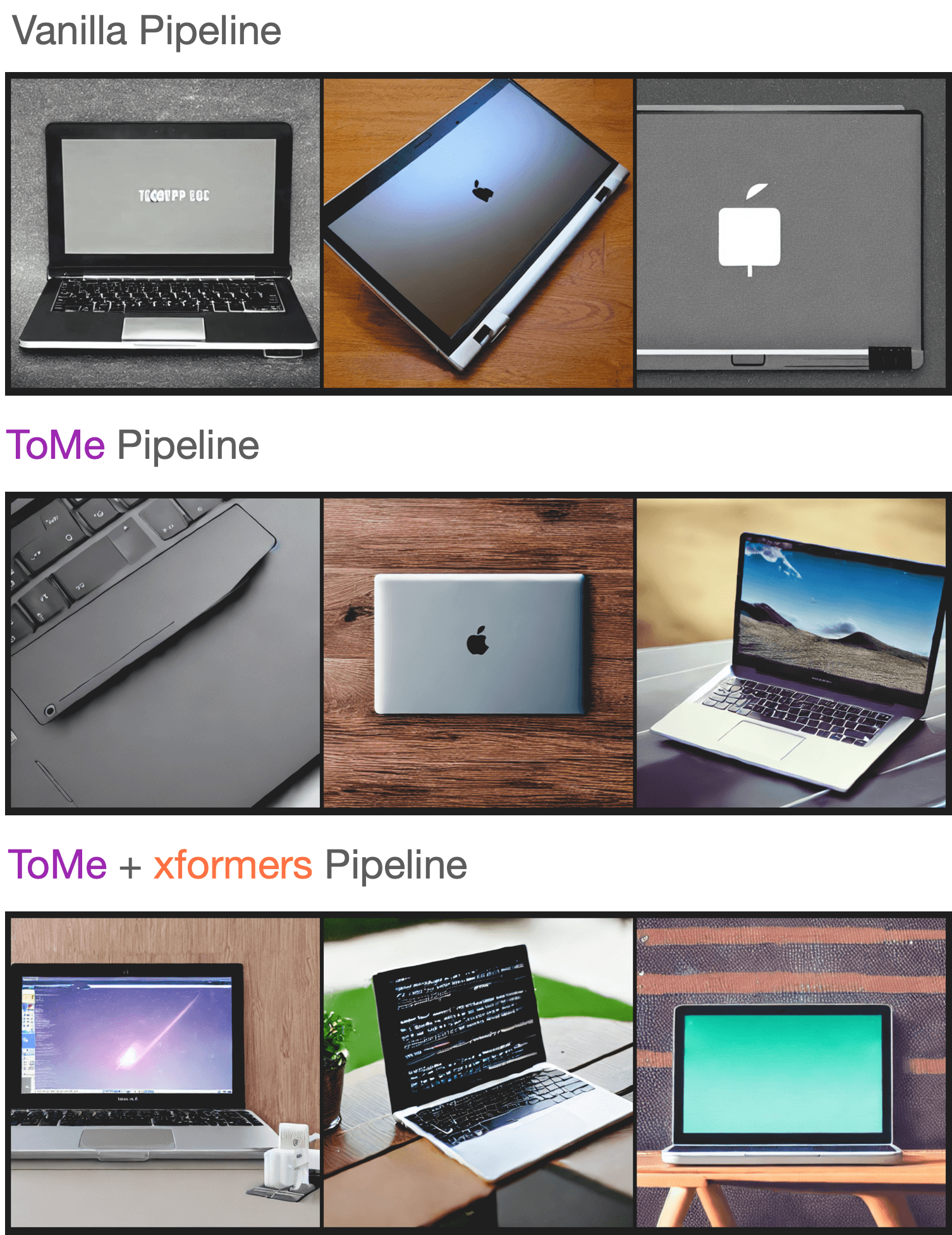
|
||||
|
||||
|
||||
@@ -30,7 +30,7 @@ pip install --upgrade torch diffusers
|
||||
1. **가속화된 트랜스포머 구현**
|
||||
|
||||
PyTorch 2.0에는 [`torch.nn.functional.scaled_dot_product_attention`](https://pytorch.org/docs/master/generated/torch.nn.functional.scaled_dot_product_attention) 함수를 통해 최적화된 memory-efficient attention의 구현이 포함되어 있습니다. 이는 입력 및 GPU 유형에 따라 여러 최적화를 자동으로 활성화합니다. 이는 [xFormers](https://github.com/facebookresearch/xformers)의 `memory_efficient_attention`과 유사하지만 기본적으로 PyTorch에 내장되어 있습니다.
|
||||
|
||||
|
||||
이러한 최적화는 PyTorch 2.0이 설치되어 있고 `torch.nn.functional.scaled_dot_product_attention`을 사용할 수 있는 경우 Diffusers에서 기본적으로 활성화됩니다. 이를 사용하려면 `torch 2.0`을 설치하고 파이프라인을 사용하기만 하면 됩니다. 예를 들어:
|
||||
|
||||
```Python
|
||||
@@ -84,7 +84,7 @@ pip install --upgrade torch diffusers
|
||||
```
|
||||
|
||||
GPU 유형에 따라 `compile()`은 가속화된 트랜스포머 최적화를 통해 **5% - 300%**의 _추가 성능 향상_을 얻을 수 있습니다. 그러나 컴파일은 Ampere(A100, 3090), Ada(4090) 및 Hopper(H100)와 같은 최신 GPU 아키텍처에서 더 많은 성능 향상을 가져올 수 있음을 참고하세요.
|
||||
|
||||
|
||||
컴파일은 완료하는 데 약간의 시간이 걸리므로, 파이프라인을 한 번 준비한 다음 동일한 유형의 추론 작업을 여러 번 수행해야 하는 상황에 가장 적합합니다. 다른 이미지 크기에서 컴파일된 파이프라인을 호출하면 시간적 비용이 많이 들 수 있는 컴파일 작업이 다시 트리거됩니다.
|
||||
|
||||
|
||||
@@ -94,9 +94,9 @@ PyTorch 2.0의 효율적인 어텐션 구현과 `torch.compile`을 사용하여
|
||||
|
||||
### 벤치마킹 코드
|
||||
|
||||
#### Stable Diffusion text-to-image
|
||||
#### Stable Diffusion text-to-image
|
||||
|
||||
```python
|
||||
```python
|
||||
from diffusers import DiffusionPipeline
|
||||
import torch
|
||||
|
||||
@@ -118,9 +118,9 @@ for _ in range(3):
|
||||
images = pipe(prompt=prompt).images
|
||||
```
|
||||
|
||||
#### Stable Diffusion image-to-image
|
||||
#### Stable Diffusion image-to-image
|
||||
|
||||
```python
|
||||
```python
|
||||
from diffusers import StableDiffusionImg2ImgPipeline
|
||||
import requests
|
||||
import torch
|
||||
@@ -153,7 +153,7 @@ for _ in range(3):
|
||||
|
||||
#### Stable Diffusion - inpainting
|
||||
|
||||
```python
|
||||
```python
|
||||
from diffusers import StableDiffusionInpaintPipeline
|
||||
import requests
|
||||
import torch
|
||||
@@ -191,9 +191,9 @@ for _ in range(3):
|
||||
image = pipe(prompt=prompt, image=init_image, mask_image=mask_image).images[0]
|
||||
```
|
||||
|
||||
#### ControlNet
|
||||
#### ControlNet
|
||||
|
||||
```python
|
||||
```python
|
||||
from diffusers import StableDiffusionControlNetPipeline, ControlNetModel
|
||||
import requests
|
||||
import torch
|
||||
@@ -231,7 +231,7 @@ for _ in range(3):
|
||||
|
||||
#### IF text-to-image + upscaling
|
||||
|
||||
```python
|
||||
```python
|
||||
from diffusers import DiffusionPipeline
|
||||
import torch
|
||||
|
||||
@@ -269,7 +269,7 @@ PyTorch 2.0 및 `torch.compile()`로 얻을 수 있는 가능한 속도 향상
|
||||
|
||||
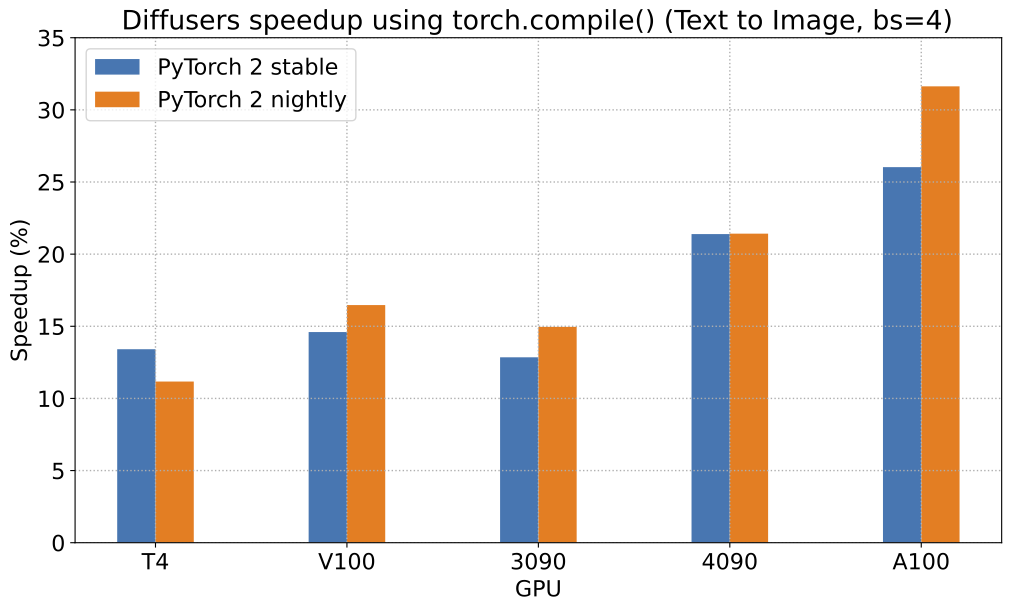
|
||||
|
||||
To give you an even better idea of how this speed-up holds for the other pipelines presented above, consider the following
|
||||
To give you an even better idea of how this speed-up holds for the other pipelines presented above, consider the following
|
||||
plot that shows the benchmarking numbers from an A100 across three different batch sizes
|
||||
(with PyTorch 2.0 nightly and `torch.compile()`):
|
||||
이 속도 향상이 위에 제시된 다른 파이프라인에 대해서도 어떻게 유지되는지 더 잘 이해하기 위해, 세 가지의 다른 배치 크기에 걸쳐 A100의 벤치마킹(PyTorch 2.0 nightly 및 `torch.compile() 사용) 수치를 보여주는 차트를 보입니다:
|
||||
@@ -434,8 +434,8 @@ _(위 차트의 벤치마크 메트릭은 **초당 iteration 수(iterations/seco
|
||||
|
||||
## 참고
|
||||
|
||||
* Follow [this PR](https://github.com/huggingface/diffusers/pull/3313) for more details on the environment used for conducting the benchmarks.
|
||||
* For the IF pipeline and batch sizes > 1, we only used a batch size of >1 in the first IF pipeline for text-to-image generation and NOT for upscaling. So, that means the two upscaling pipelines received a batch size of 1.
|
||||
* Follow [this PR](https://github.com/huggingface/diffusers/pull/3313) for more details on the environment used for conducting the benchmarks.
|
||||
* For the IF pipeline and batch sizes > 1, we only used a batch size of >1 in the first IF pipeline for text-to-image generation and NOT for upscaling. So, that means the two upscaling pipelines received a batch size of 1.
|
||||
|
||||
*Thanks to [Horace He](https://github.com/Chillee) from the PyTorch team for their support in improving our support of `torch.compile()` in Diffusers.*
|
||||
|
||||
|
||||
@@ -250,7 +250,7 @@ DDPMScheduler {
|
||||
>>> less_noisy_sample.shape
|
||||
```
|
||||
|
||||
`less_noisy_sample`을 다음 `timestep`으로 넘기면 노이즈가 더 줄어듭니다! 이제 이 모든 것을 한데 모아 전체 노이즈 제거 과정을 시각화해 보겠습니다.
|
||||
`less_noisy_sample`을 다음 `timestep`으로 넘기면 노이즈가 더 줄어듭니다! 이제 이 모든 것을 한데 모아 전체 노이즈 제거 과정을 시각화해 보겠습니다.
|
||||
|
||||
먼저 노이즈 제거된 이미지를 후처리하여 `PIL.Image`로 표시하는 함수를 만듭니다:
|
||||
|
||||
|
||||
Some files were not shown because too many files have changed in this diff Show More
Reference in New Issue
Block a user